
Vox clamantis in deserto







Liberty Mutual grant will help young homeless people in Boston

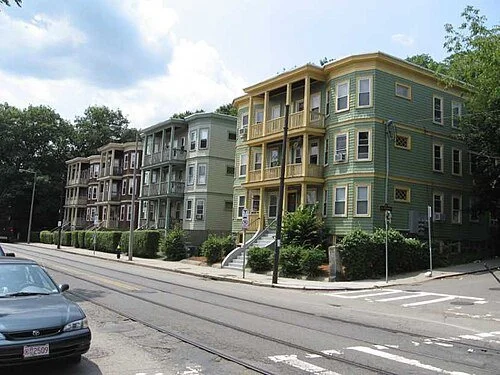
“Liberty House’’, in Boston’s Dorchester neigborhood
BOSTON
From The New England Council (newenglandcouncil.com)
“Liberty Mutual, the big Boston-based insurance company, has given the Boston-based nonprofit Bridge Over Troubled Waters its largest ever grant — $2.5 million. This grant will help the organization combat homelessness amongst teenagers and young adults and expand its supportive-housing initiatives.
“Bridge Over Troubled Waters is a nonprofit with an annual budget of over $10 million that provides services to over 2,000 people between the ages of 14-24 per year. In 2018, the nonprofit used a $1.1 million grant from Liberty Mutual’s foundation to open the ‘Liberty House,’ in Dorchester. ‘Liberty House,’ one of the many housing initiatives of the organization, is home to young people who took advantage of other Bridge programming and are now living independently, responsible for paying monthly rent as well as other bills. With this latest grant, Bridge Over Troubled Waters will use the funds to expand the ‘Liberty House’ arrangement, serve more homeless people, and upgrade computers and other equipment.
“‘I call them about legal work, real estate work … it’s not just financial,’ Elisabeth Jackson, Bridge Over Troubled Waters’s executive director, said of Liberty Mutual. ‘It’s really understanding what we do and what we’re trying to do with our young people.’
More than random

“Random Order” (acrylic paint on aluminum), by Ed Andrews, in his show “Transplant,’’ at Boston Sculptors Gallery, through Oct. 31.
The gallery says:
“Andrew's battles with leukemia, with the environment, with movement are defined against a traditional dictionary definition and crafted into sculptures of bronze, aluminum and stainless steel. The process is meticulous and intricate — cutting the metal into shapes, and hand painting and etching the material with acid to create his haunting patterns.’’
Mr. Andrews, a native of the Midwest., now lives in the semi-rural town of Glocester, R.I.
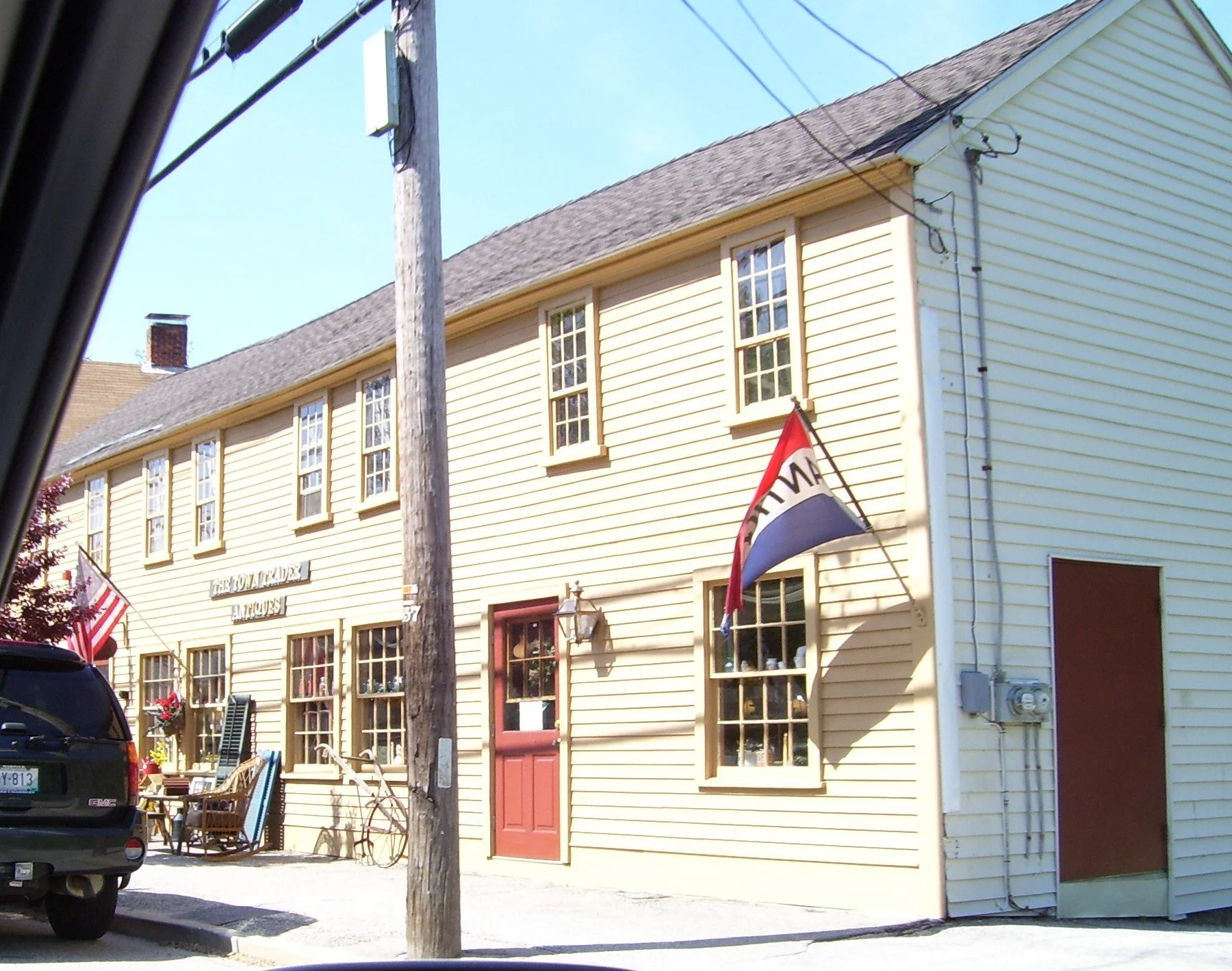
Antique store in the Glocester village of Chepachet, a farming community into the 20th Century
— Photo by Swampyank
Chris Powell: Why no one outbid the asset-stripper Alden for famous newspapers

MANCHESTER, Conn.
More complaining about Alden Global Capital's dismemberment of the storied newspapers it recently acquired from the Tribune chain appeared this month in a long and -- to journalists, anyway -– infuriating essay in The Atlantic magazine by its reporter McKay Coppins. {Alden, an asset-stripping operation, also owns the Boston Herald.}
This dismemberment, Coppins noted, includes the Chicago Tribune's former headquarters, the landmark Tribune Tower, which has been converted into an apartment building.
But at least what remains of the newspaper still has modest offices in an industrial area across town near the newspaper's press. Another former Tribune property, The Hartford Courant, no longer has even that much. Somehow Alden acquired the Courant's headquarters on Broad Street in Hartford and kicked the newspaper out even before acquiring the Courant itself and the other Tribune papers. The Courant now seems to be entirely a work-from-home operation, and like several other Connecticut papers, including the Journal Inquirer, now is printed by the Springfield Republican. The Courant's address has become a post office box.
From Los Angeles to Chicago to Baltimore to New York and to Hartford, how the mighty have fallen, though the journalists who remain in the formerly great papers of old soldier on bravely and sometimes well.
Of course, the dismemberment of the former Tribune papers is just part of the decline of serious state and local journalism generally. But while Alden may seem especially predatory in its liquidations, the company is not a cause but just a symptom of what has gone wrong with the news business -- and not just the rise of the Internet and the transfer of advertising there but, more so, the public's loss of interest in state and local news.
This is in large part a matter of declining demographics.
After all, newspapers survived major challenges from competing new technologies before -- first radio and then television, whose main products are entertainment, not news, and whose state and local news reporting always have been and remain weak. Even now anyone who wants to be well informed about state and local government and community events and to participate in public life has to subscribe to a newspaper.
While some places -- including Connecticut -- now have a few Internet sites providing state and local news, most are niche operations that don't attempt to serve any area comprehensively. They concentrate on government and their audiences tend to be smaller even than newspaper audiences. They are not any more profitable than most newspapers, and many are operated as nonprofits supported by donations, if sometimes large ones from foundations. This method of operation is hardly a business plan and may subject the internet sites to more political pressures than advertising subjects newspapers to.
But if more people wanted state and local news and commentary, newspapers and news-based Internet sites would have more readers, and as their audiences grew, they might become profitable from increased advertising.
The movement to convert newspapers to nonprofits and to operate Internet news sites that way presumes that substantial interest from the public is no longer attainable.
It is hard to argue with that presumption. After all, throughout the country and even in Connecticut most young people, the products of social promotion, graduate from high school without ever mastering basic math and English. Most gain little if any knowledge of the country's history and civics. Even in Connecticut, a comparatively wealthy and well-educated state, the typical high school graduate or college freshman cannot identify the three branches of government. (You know: the lawyers, the teacher unions, and the liquor stores.)
That is, most young people are not being prepared to become citizens in a democracy, much less followers of state and local news.
This may be the underlying reason that Alden is liquidating so much of the former Tribune papers, draining away their capital, like their real estate, and why no one outbid Alden for the Tribune papers with the confidence that solid journalism could be made profitable again. For the future isn't just disruptive technological change but also social change, which may be far more disruptive.
Chris Powell is a columnist for the Journal Inquirer, in Manchester.
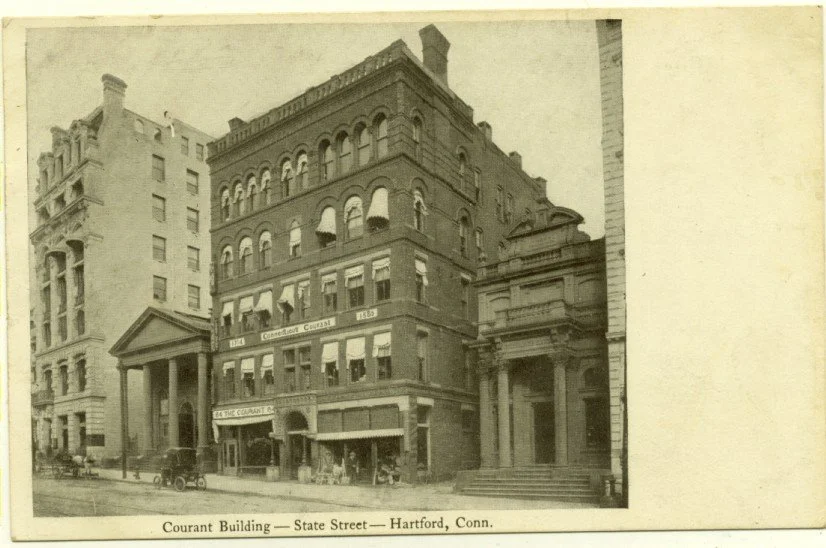
An earlier Hartford Courant Building, in about 1900

Philip K. Howard: Reframing Andrew Yang’s ideas for a new political party

Andrew Yang
Every so often, a citizen emerges to challenge the political establishment. Ross Perot’s 1992 presidential run drew on a public hunger for a new approach; he received 20 percent of the vote. In 2016 Donald Trump steamrolled traditional Republican candidates and changed the party’s face to his own. Andrew Yang is more a firecracker than a depth charge, but he has captured the public imagination with his refreshing candor and fearlessness.
Unlike Perot or Trump, Yang came from nowhere—no public reputation, no big money, no access to any part of the establishment. Yet, by force of his personality, Yang now has a pedestal in the political landscape. In his new book, Forward: Notes on the Future of Our Democracy, Yang plants the flag of a new political party. He argues that, though Americans are not as polarized as polls suggest, neither existing party will address the legitimate needs of the other side. He also says that the two parties are comfortable with their duopoly of failure—first you fail, then I fail—and therefore will not support disruptive electoral reforms such as ranked-choice voting.
Yang is not the first to suggest that our two political parties no longer represent most Americans. Frank DiStefano, in his recent essay in these pages, argued that the parties are on “a locked-in path to destruction and decline.” In my 2019 book, Try Common Sense, which Yang cites, I said that each party’s outmoded ideology precludes the overhauls needed to respond to public frustration.
It is no surprise that a plurality of voters now identifies as “independent” or as a member of a third party. But the electoral machinery makes it difficult for a would-be candidate to operate outside the two parties; and the primary system promotes extremists, not problem solvers.
Yang’s idea of a party is, initially, not one with its own candidates but a centrist movement that exercises influence on candidates from both parties. As DiStefano elaborates it, a movement that captures public imagination can eventually take over or supplant one of the parties. The challenge is to galvanize public support for this type of new overhaul movement in a political environment like today’s, which breeds deadlock, not solutions. While many Americans might be receptive to a new party, the current political shouting match has left them exhausted and cynical. There is a huge gulf today between wanting change and rolling up your sleeves to force change.
So, what does it take to engender the excitement needed for a new movement? Yang proposes a six-point platform for his Forward Party:
1. Ranked-choice voting, with open primaries: These arrangements would reduce the stranglehold of the two parties and defang the extremists.
2. Fact-based governing: The idea here is to evaluate programs objectively.
3. Human-centered capitalism: Yang wants to re-center business around employees and communities, not just owners.
4. Effective and modern government: Here Yang embraces the need to “fix the plumbing” of paralyzed government.
5. Universal Basic Income: Giving Americans $1,000 per month was Yang’s signature proposal in his presidential campaign—a proposal that was validated, he argues, by the Covid relief payments.
6. Grace and tolerance: Yang urges Americans to be more accepting of each other, not stay locked in a battle of identity politics.
By opening the door to a new party, Yang once again reveals solid leadership instincts. But a new movement requires a tougher, more focused platform. A list of centrist do-good reforms is unlikely to elicit the public passion needed to dislodge the current parties. Yang himself is a bold and disarming figure; his party must be as well. A new party needs a clarion call that can galvanize popular support—as the Progressive Movement did, for example, with its vision of public oversight of food and fair practices, or the New Deal with its idea of social safety nets. Successful movements also energize public passion by fingering villains, as the Tea Party and Occupy Wall Street did.
To get Americans out of their easy chairs, the new party must light a bonfire. Yet Yang’s platform is soporific, with no inspirational theme or evil targets. What’s the vision? Who are the enemies? Here is the way I would reframe Yang’s proposed Forward Party.
First, the clarion call for a new way of governing: Responsibility for America. Americans have lost their sense of self-determination. We should be re-empowered to make a difference. Revive individual responsibility at all levels of society. Replace mindless bureaucracy with accountability for results. Teachers should be free to do their best, with authority to maintain classroom discipline. Principals should be free to hold teachers accountable, and the same should hold true all the way up the chain of responsibility. Officials must be free to authorize action within a reasonable timeframe; and they, too, must be accountable up the chain of responsibility. Mayors and police chiefs should have authority to manage the police force and other departments, including authority to promote public employees who do their jobs and fire those who don’t.
Reviving human responsibility requires overhauling government’s operating systems, replacing thick rule books with simpler goals and principles managed by people who take responsibility for themselves and are accountable to others. This is not so hard: It is far easier to agree on goals than to bicker over endless details of implementation. Modern American government has become basically a bad form of central planning, tying Americans into knots of red tape. Ask any teacher or doctor. Restoring responsibility would empower officials and citizens to govern better and adapt to local needs.
Second, identify enemies and attack them. Powerful forces will resist a movement to revive responsibility. I see two main villains: public unions, which exist to block all accountability, and the political parties themselves, which have become organs of identity politics and special interests. It is impossible to fix broken government or revive a shared sense of national purpose without defeating these villains.
Public unions have made government unmanageable and must be outlawed. Public unions have preempted democratic governance. Citizens elect leaders to run the police force and schools, but these leaders have no authority to fulfill this responsibility. The Minneapolis mayor appointed the police chief; but under the police union’s collective-bargaining agreement, the mayor lacked authority to fire the rogue cop who killed George Floyd—or even to reassign the officer. Unlike private unions, which are dependent on the success of a private enterprise, public unions retain power even where they cause government to fail miserably.
Democracy is supposed to be a process of giving officials responsibility and holding them accountable. But public unions have broken the links: Today, there is zero accountability in the daily operations of American government. Without accountability, rote compliance with the thick rule books replaces individual responsibility for results. The bottom line today is a government bogged down in a bureaucratic jungle of dictates and entitlements. Nothing much works sensibly or fairly because no one is empowered to make things work.
As for political parties, they compete through failure, not achievement. Party leaders have basically given up on reforming government. Instead, they take turns in power pointing to the failures of the incumbent. In 2016 presidential candidate Donald Trump tapped into broad public frustrations with Washington. Trump’s erratic leadership opened a door through which Joe Biden entered, offering sanity. But Biden’s failures of execution in Afghanistan and on the Mexican border now empower Republicans to go on the attack and prepare for their own return.
This spiral of negative democratic competition is accelerated by the rise of extremism: Each side stokes fear of the extremists on the other (“Defund the police!” “Stop the steal!”). Actually fixing government is no longer the way the parties compete.
Each party will aggressively resist reforms that would revive responsibility. Public unions have a stranglehold on the Democratic Party. Identity groups on the left will resist any accommodation of other points of view, or what Andrew Yang calls “grace and tolerance.” Republicans have become a party of nihilism and offer no discernible governing vision. They will rail against any reform that empowers public officials, opens elections to moderate candidates, or imposes taxes for public projects.
The existing political parties are the problem, not the path to a solution. The new party envisioned by Yang must ultimately supplant one of them. The new party must ask its supporters to defeat the defenders of the status quo: They are not the agents but the enemies of a successful future. Generating public enthusiasm will require not a laundry basket of reforms but a spear with a sharp point. No matter which party is in charge, focus on its virtually unblemished recent record of failure.
America needs a new party. Its vision must be condensed into a new governing principle that resonates with American values and represents a clean break from bureaucratic paralysis—a principle like human responsibility, which can guide an overhaul of all levels of government.
The current state of American politics has squeezed all energy and hope out of our democracy. There’s no oxygen to serve as fuel for anyone who wants to do what is needed. Yang has cracked open a door, but we need a new vision to open it wide and attract a public enervated by decades of failure.
Philip K. Howard, a New York-based lawyer, author, civic and cultural leader and photographer, is founder of the government- and legal-reform nonprofit organization Common Good (commongood.org) and author, most recently, of Try Common Sense: Replacing the Failed Ideologies of Right and Left (2019). This essay first appeared in American Purpose.
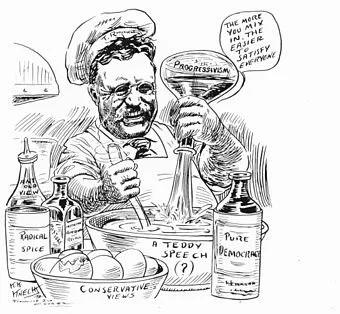
Theodore Roosevelt, the Progressive Party’s (aka “Bull Moose Party’’) presidential candidate in 1912, mixing ideologies in his speeches in this 1912 editorial cartoon by Karl K. Knecht (1883–1972) in the Evansville (Ind.) Courier. The former president’s running mate was California Gov. Hiram Johnson.

'Fear has softened'

”So often, so long I have thought of death
That the fear has softened. It has worn away.
Strange. Here in autumn again, late October,
I am late too, my woodshed still half empty,
And hurriedly I split these blocks in the rain,
Maple and beech….”
— From “Song: So Often , So Long Have I Thought,’’ by Hayden Carruth (1921-2008), native of Connecticut and long-time resident of Johnson, Vt.

Fog in the Lamoille River valley in Hyde Park, Vt., near Johnson
Battaglia/Corcoran/Rhodes and Simon: Adopting cheaper college learning materials
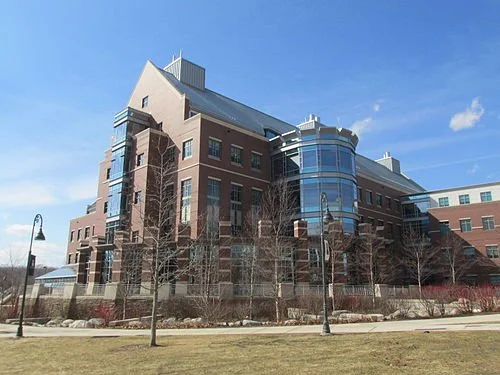
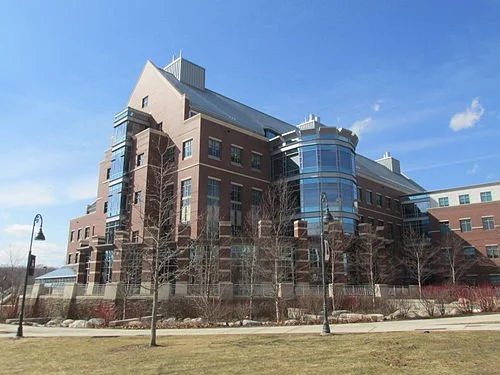
The formidable-looking Science Building at Eastern Connecticut State University, in Willimantic
From The New England Journal of Higher Education, a service of The New England Board of Higher Education (nebhe.org)
The 17-institution Connecticut State Colleges & Universities System (CSCU) formed a systemwide open educational resources (OER) Council in 2017 that was primarily focused on the adoption of no-cost or low-cost (NOLO) course materials as a means to provide equitable access to learning materials.
Our CSCU consortium of library directors partnered with the OER Council to construct a Web site, OpenCSCU, providing curated OER, a support network and a faculty-recognition program. The OER Council also has hosted annual OER workshops. Additionally, the CSCU system office funded a “mini-grant” program to further assist adoption. Much of the council’s focus and its connected OER efforts have been centered on equitable access to affordable learning materials. Over time, the council has expanded its focus to include open practices as a critical component to diversity, equity and inclusion in support of student success.
Even as we made strides in expanding the reach and focus of our OER efforts, the council recognized a communication gap persisted. The primary means of disseminating information from the council had been its representatives. We recognized that our institutions may have been at varying levels of engagement with OER and that our council representatives may have had competing priorities. It became clear that to better serve our institutions we needed to create a centralized communication channel to provide broader engagement and reach. Enter the blog.
With the OpenCSCU site established as a clearinghouse for OER-related information, it was a natural progression to take advantage of the existing technology for this new communications effort. Recognizing the limitations of our previous communications methods, which relied heavily on email, the council sought to better utilize the OpenCSCU Web site feature set. The website runs off the Springshare LibGuides platform and provides a blog option that is flexible and visually appealing. Creating posts with persistent URLs (such as “/blog” vs. system-generated code) and a consistent location would allow us to easily disseminate up-to-date content more widely beyond the confines of email, such as through social media channels and other means of link sharing.
The CSCU OER Council formed a task force to explore how the blog could support the council’s goals of broader dissemination of open practices, recognizing the work of practitioners and advocates and growing the open community.
Creating the blog
As the task force began its work, we felt compelled to establish guiding principles for this initiative. We wanted our OER efforts to be deeply rooted in equity as well as community members’ innovations and successes. A consistent piece of feedback we had received from our previous efforts was a call for more perspectives from faculty and less from staff and administration. (After all, our faculty are the primary audience.) As a result, we decided early on that our featured posts would focus on faculty practitioners and their application of open practices and principles within their courses but also would include perspectives of students, staff and administration.
The lengthiest discussions centered around determining editorial standards for the blog. The task force looked to established academic blogs for insights and inspiration. The New England Board for Higher Education and its New England Journal of Higher Education provided some invaluable guidance to help us move forward. The WICHE Cooperative for Educational Technologies (WCET) also shared documented standards for its long-running blog site, Frontiers.
As a result, our standards focused on acceptable content and tone, readability and accessibility, format, media usage, licensing and the editorial review process. As OER advocates, we emphasized the requirement of open licensing for submitted content.
The OER Council’s blog task force made a conscience decision to solicit selected authors versus issuing a broad call. Our intent was to recruit three to four innovative faculty to share their stories in Year One of launching this new initiative. This approach ensured that we had a full year of highly relevant content. In future years, we will be providing an online form for interested individuals to submit proposals.
In determining the quarterly release schedule, we considered how our featured blog posts might correspond with national and regional events such as the Open Ed Conference, Open Ed Week, and the Northeast OER Summit, to coincide with heightened interest in OER. In addition to our invited authors, we agreed that we would supplement the quarterly features with timely and relevant news and events, spotlighting professional development and grant opportunities
The future of the blog
On Sept. 21, the OpenCSCU Blog was launched. Its featured post was entitled “Presenting and Promoting Open Pedagogy Through Different Frameworks” by Nicolas Simon, an assistant professor at Eastern Connecticut State University who was joined by three of his students: Tara Nguyen, Jean Rienzo and Maya Vanderberg. With feedback still coming in, the editorial board has shifted to planning the next featured post and identifying newsworthy items to share in the interim.
We plan to present practical examples that can be replicated by others, including an in-depth look at open pedagogy, regaining intellectual property rights, and publishing an open text. Looking beyond the next scheduled releases, the editorial board in conjunction with the full OER Council have started to explore the next steps for the blog. In the short term, the editorial board will establish and publish criteria for selection. In the long term, we will explore how the blog can facilitate two-way conversations.
Overall, we intend to provide guidance and support to readers by demonstrating the value of open content and practices to better serve student success. As we share more content, we hope that our reader base will grow and that our blog posts will encourage conversation and innovation in open education. We hope to generate broader awareness of open practices and build a community of practice that not only validates and normalizes open pedagogy, but also inspires new efforts.
Hayley Battaglia is the serials & electronic resources librarian at Hilton C. Buley Library of Southern Connecticut State University. She is a member of the CSCU OER Advisory Council, chair of the OER Committee at Buley Library, a graduate of the Creative Commons Certificate Course and editor of the OpenCSCU Blog.
Kevin Corcoran is the executive director for digital learning at the Connecticut State Colleges & Universities System. He currently chairs the CSCU OER Advisory Council and the statewide Connecticut OER Coordinating Council and serves on the NEBHE OER Advisory Board.
Eileen Rhodes currently serves as the interim director of the Connecticut State Community College Library. Prior to this, she served as director of library services at Capital Community College in Hartford, Conn., for more than seven years. She is an OER advocate, initiating a “NOLO” labeling program at her college to identify courses with no-cost/low-cost course materials.
Nicolas P. Simon is an assistant professor of sociology at Eastern Connecticut State University. The supplemental works co-authored with his students have been featured in Introduction to Sociology, third edition, published by OpenStax.
Patty Wright: In Maine, vaccine mandate further stresses EMS service

Around turn of the 20th Century, view of Waldoboro looking northeast across Mill Street, the upper falls and Elm Street. Trees now cover much of that open land, which grazing animals had used.
— Original source: Robert N. Dennis collection of stereoscopic views.
Via Kaiser Health News
(kaiserhealthnews.org)
On a recent morning, Jerrad Dinsmore and Kevin LeCaptain of Waldoboro EMS in rural Maine drove their ambulance to a secluded house near the ocean, to measure the clotting levels of a woman in her 90s.
They told the woman, bundled under blankets to keep warm, they would contact her doctor with the result.
“Is there anything else we can do?” Dinsmore asked.
“No,” she said. “I’m all set.”
This wellness check, which took about 10 minutes, is one of the duties Dinsmore and LeCaptain perform in addition to the emergency calls they respond to as staffers with Waldoboro Emergency Medical Service.
EMS crews have been busier than ever this year, as people who delayed getting care during the covid-19 pandemic have grown progressively sicker.
But there’s limited workforce to meet the demand. Both nationally and in Maine, staffing issues have plagued the EMS system for years. It’s intense work that takes a lot of training and offers low pay. The requirement in Maine and elsewhere that paramedics and emergency medical technicians be vaccinated against covid is another stress on the workforce.
Dinsmore and LeCaptain spend more than 20 hours a week working for Waldoboro on top of their full-time EMS jobs in other towns. It’s common in Maine for EMS staffers to work for multiple departments, because most EMS crews need the help — and Waldoboro may soon need even more of it.
The department has already lost one EMS worker who quit because of Maine’s COVID-vaccine mandate for health-care workers, and may lose two more.
The stress of filling those vacancies keeps Town Manager Julie Keizer awake at night.
“So, we’re a 24-hour service,” Keizer said. “If I lose three people who were putting in 40 hours or over, that’s 120 hours I can’t cover. In Lincoln County, we already have a stressed system.”
The labor shortage almost forced Waldoboro to shut down ambulance service for a recent weekend. Keizer said she supports vaccination but believes Maine’s decision to mandate it threatens the ability of some EMS departments to function.
Maine is one of 10 states that require health-care workers to get vaccinated against covid or risk losing their jobs. Along with Oregon, Washington and Washington, D.C., it also explicitly includes the EMTs and paramedics who respond to 911 calls in that mandate. Some ambulance crews say it’s making an ongoing staffing crisis even worse.
Two hundred miles north of Waldoboro, on the border with Canada, is Fort Fairfield, a town of 3,200. Deputy Fire Chief Cody Fenderson explained that two workers got vaccinated after the mandate was issued in mid-August, but eight quit.
“That was extremely frustrating,” Fenderson said.
Now Fort Fairfield has only five full-time staffers available to fill 10 slots. Its roster of per-diem workers all have full-time jobs elsewhere, many with other EMS departments that are also facing shortages.
“You know, anybody who does ambulances is suffering,” said Fenderson. “It’s tough. I’m not sure what we’re going to do, and I don’t know what the answer is.”
In Maine’s largest city, Portland, the municipal first-responder workforce is around 200 people, and eight are expected to quit because of the vaccine mandate, according to the union president for firefighters, Chris Thomson.
That may not seem like a significant loss, but Thomson said those are full-time positions and those vacancies will have to be covered by other employees who are already exhausted by the pandemic and working overtime.
“You know, the union encourages people to get their vaccine. I personally got the vaccine. And we’re not in denial of how serious the pandemic is,” Thomson said. “But the firefighters and the nurses have been doing this for a year and a half, and I think that we’ve done it safely. And I think the only thing that really threatens the health of the public is short staffing.”
Thomson maintains that unvaccinated staffers should be allowed to stay on the job because they’re experts in infection control and wear personal protective equipment such as masks and gloves.
But Maine’s public safety commissioner, Mike Sauschuck, said EMS departments also risk staff shortages if workers are exposed to covid and have to isolate or quarantine.
“Win-win scenarios are often talked about but seldom realized,” he said. “So sure, you may have a situation where staffing concerns are a reality in communities. But for us, we do believe the broader impact, the safer impact on our system is through vaccination.”
Some EMS departments in Maine have complied fully with the mandate, with no one quitting. Andrew Turcotte, the fire chief and director of EMS for the city of Westbrook, said all 70 members of his staff are now vaccinated. He doesn’t see the new mandate as being any different from the vaccine requirements to attend school or enter the health care field.
“I think that we all have not only a social responsibility but a moral one,” Turcotte said. “We chose to get into the health care field, and with that comes responsibilities and accountabilities. That includes ensuring that you’re vaccinated.”
Statewide numbers released last week show close to 97% of EMS workers in Maine have gotten vaccinated. But that varies by county: Rural Piscataquis and Franklin counties reported that 18% and 10% of EMS employees, respectively, were still unvaccinated as of mid-October.
Not all EMS departments have reported their vaccination rates to the state. Waldoboro is in Lincoln County, where only eight of 12 departments have reported their rates. Among those eight, the rate of noncompliance was just 1.6%.
But in small departments like Waldoboro, the loss of even one staff member can create a huge logistical problem. Over the past few months, Waldoboro’s EMS director, Richard Lash, started working extra long days to help cover the vacancies. He’s 65 and is planning to retire next year.
“I’ve told my town manager that we’ll do the best we can do. But, you know, I can’t continue to work 120 hours a week to fill shifts,” said Lash. “I’m getting old. And I just can’t keep doing that.”
Patty Wright is a reporter for Maine Public Radio.
This story is from a reporting partnership that includes Maine Public Radio, NPR and KHN.

In Fort Fairfield, Aroostook Valley Country Club entrance showing U.S. and Canadian flags and border marker
'...and dangerous'

Closeup of Portland City Hall, built in 1909-1912. Like many of the city’s downtown buildings, it’s made of granite, in part as a result of the Great Fire of 1866, which destroyed much of downtown Portland. Granite doesn’t burn!
— Photo by Billy Hathorn
“I felt fighting discrimination was the most important thing I could do as an elected official. I said then and I believe now that any doctrine of superiority is scientifically false, moral condemnable, socially unjust and dangerous.’’
— Gerald E. Talbot (born 1931) a civil rights leader, author and politician from Portland, Maine. Talbot was the first Black legislator in the state, the founding president of the Portland chapter of the National Association for the Advancement of Colored People (NAACP), and was president of the Maine State Board of Education under Gov. Joseph Brennan. In 2020, the Riverton elementary school in Portland was renamed the Gerald E. Talbot Community School.

David Warsh: Trump keeps grifting; what next for Bloomberg?

Bloomberg’s headquarters tower on Lexington Avenue in Midtown Manhattan
SOMERVILLE, Mass.
Donald Trump is planning to start a social-media network to compete with Twitter and Facebook, which have kicked him off their platforms. Digital World Acquisition Co. (DWAC), a so-called blank-check company, or SPAC, plans to fund Truth Social, Trump’s venture, with the $290 million that the company has raised from institutional investors, merging itself out of existence in the process. DWAC shares closed Friday at $94, a ten-fold increase over their initial offering price a few days before, having traded as high as $175 during the day. Trump’s alternative to Twitter is scheduled to launch next month.
But Truth Social seems unlikely to succeed.
Whatever the case, investors in what by then will be listed as Trump Media & Technology Group will be able to continue trading with each other, after the DWAC evanesces. The Wall Street Journal on Oct. 23 explained the road ahead. Bloomberg Opinion columnist Matt Levine commented, “If you are in the business of raising money to fund a social media company that you haven’t built yet and perhaps never will, the SPAC format has a real appeal.” In other words, Trump Social is another example of pure Trump fleece.
Meanwhile, there is Bloomberg L.P., almost the polar opposite of what Trump intends.
By now the Bloomberg story is well known, thanks to Eleanor Randolph’s excellent 2019 biography: how the 38-year-old Salomon Brothers partner was first banished to the computer room, then squeezed out of the firm altogether after a merger, only to surface two years later, aided by MerrillLynch (which still owns 12 percent of the company), with a proprietary bond-price data base and a package of related computer analytics, a system he first called Market Master.
Bloomberg terminal-subscription growth (at $24,000 a year apiece!) was so explosive in the ‘80s that, by 1990, Bloomberg was able to start a news service, hiring Matthew Winkler, the WSJ reporter who had covered his rise, as its first editor-in-chief. Bundled with Bloomberg analytics, Bloomberg News grew by leaps and bounds as well, until it rivaled powerhouse Reuters, the world’s oldest and largest news agency. John Micklethwait, editor of The Economist, replaced Winkler and continued to build its staff, hiring newspaper veterans and various media stars, But Bloomberg News’s product remains almost entirely online, which limits its influence in some critical dimensions. I read it there; it is not the same as print.
True, there is Bloomberg Businessweek. Bloomberg bought the time-honored title from McGraw-Hill in 2009, at a fire-sale price, inserted his name, and gave it a complete makeover. The magazine arrives via postal mail, one day or another each week, and often many more days go by before I open its cover. When I do, I am always impressed by its contents, especially the decent, moderate Republican tone of its editorials, in sharp contrast to the over-the-top WSJ editorial page. But there is something about the weekly magazine format that no longer works, at least for those lacking leisure. The Economist fares only a little bit better at my breakfast table.
Bloomberg, 79, was elected three time mayor of New York City. He ran unsuccessfully for president in 2020. It is well-documented that he has long hoped to buy a newspaper – either the WSJ or the NYT. I’d like to know something about Donald Graham’s discussions with Bloomberg before Graham decided to sell The Washington Post to Amazon billionaire Jeff Bezos at a bargain price. My hunch is that Bezos’s four children loomed large in his thinking (Graham was a third-generation steward of what after 75 years had become a family paper.)
Today Bloomberg is worth $60 billion. So why doesn’t he start a print newspaper? Name it for something other than himself. Model it, loosely, on the Financial Times. Print it at first in a dozen US cities, where dense home-delivery audiences exist. He is still young enough to enjoy presiding over an influential print paper for a dozen years or more. He already employs most of a first-rate staff. Moreover, he has two daughters, Georgina and Emma, living interesting lives, waiting in the wings.
David Warsh, a veteran columnist and an economic historian, is proprietor of Somerville-based economicsprincipals.com, where this column originated.
Ripen, then leave
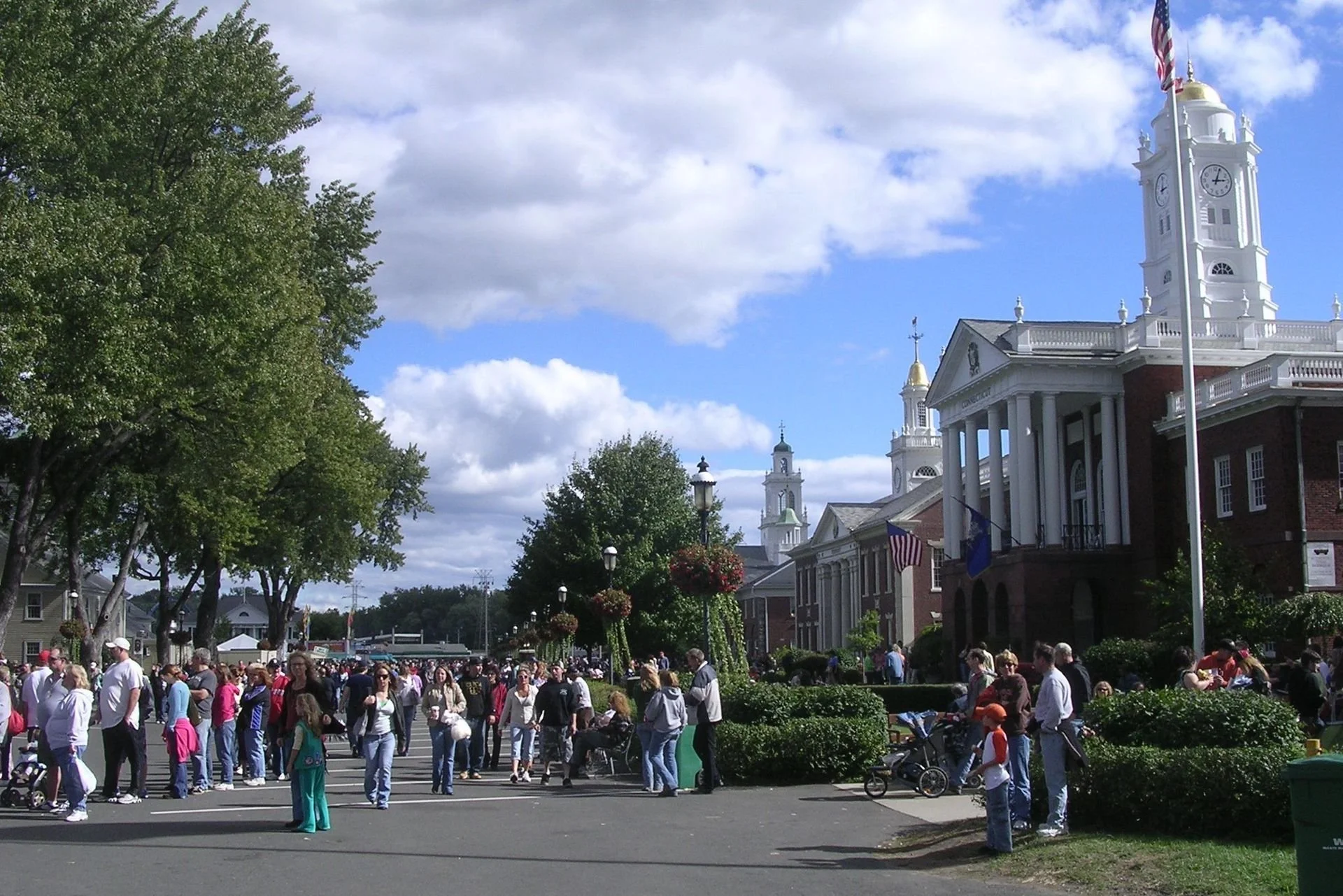
The Big E is New England's collective state fair. On the Avenue of the States, each of the six New England States owns its own plot of land and a replica state house.
— Photo by John Phelan
“Springfield, Massachusetts, is place to be from. Talented people ripen in Springfield, then move away to bigger cities to make their fortune.’’
James C. O’Connell, in Pioneer Valley Reader (1995)

Main Street in Springfield in 1908, when industry and other business there was booming.
Llewellyn King: The masterful Queen Elizabeth II

WEST WARWICK, R.I.
Bad news from the Royal Family: Queen Elizabeth II was advised last week by her doctors to rest and to cancel a trip to Northern Ireland and, sadly, to forego her nightly tipple, a martini.
The Queen is 95 and next year is her platinum jubilee – 70 years since she ascended the throne, on Feb. 6, 1952. Hers is an awesomely long rule -- the longest ever for a woman and right behind Louis XIV, whose reign of 72 years and 110 days is the longest in world history.
In Britain and around the world, there is a warmth of feeling and respect for Elizabeth that no other head of state or member of a royal family enjoys or is likely to acquire.
Of course, if you watch PBS, you will believe that every detail of the British Monarchy is of great interest and importance. It isn’t. There is reason to admire and revere the Queen as a great exemplar of an archaic office and as a superb public servant, but do we need to know all 1,000 years that lie behind the monarchy in Britain? They aren’t divine and most of today’s Royal Family, except for that doughty old lady, are dysfunctional.
But the public fascination with that whole tribe here and around the world goes on. Amazingly, there never seems to be any time when there isn’t something about the royals on PBS. Are we Americans all closet monarchists to the core? And British royalists at that.
The popular press tells us all about the transgressions of the younger royals and the BBC, and its fraternal American relation, PBS, tells us everything there is to be told about royal residences, carriages, jewels, historical oddities, clothes, and food. If you want to know about the crown the Queen wore for her coronation on June 2, 1953, I am sure that PBS has bought a program on it.
There are just two things about the Queen that we haven’t been told: How many matching hat and coat outfits does she own and how has she endured for so long the essential banality of royal public life? How many hundreds of thousands of wobbly women has she watched doing deep curtseys; how many heads of state has she chatted to about the weather; how many teachers has she congratulated on the nobility of their calling; how many tribal dancers has she watched and applauded?
That is dedication and she is still at it. Public servants worldwide take note.
The amazing thing is that while the privacy of other royals has been stripped bare – sometimes, as in the case of the late Princess Diana, with their encouragement -- the Queen has pulled off her entire reign by being public and obvious and yet aloof and private.
That is the stuff of royal leadership: Let everyone know you are on the job but remain remote, above and mysterious.
The Queen is masterful in her skill at being seen enough but heard hardly at all. It is a lesson that politicians with their endless appearances on television would be wise to learn: Less is more, except when it comes to the work, then more is more. For Elizabeth, during her extraordinarily long working life, more has always been more.
She is not a great intellectual. She doesn’t seem to have been a wholly successful mother and her private enjoyment, horses, is an elitist pursuit that is neither shared by many of her subjects at home nor her admirers around the world. I have heard her criticized by people close to her for these failings, but never by her globe-circling public.
The Royal Family is the greatest show on earth with all of its pomp, its ceremony and its foibles. But it is an enduring and endearing woman, who has kept the monarchy burnished through the years.
“I have in sincerity pledged myself to your service as so many of you are pledged to mine. Throughout all my life and with all my heart I shall strive to be worthy of your trust.”
That is what she said in a broadcast speech after her coronation at Westminster Abbey in 1953. And she has kept her word to the letter. God save the Queen. Long may she reign.
Llewellyn King is executive producer and host of White House Chronicle, on PBS. His email is llewellynking1@gmail.com and he’s based in Rhode Island and Washington, D.C., among other places.
Web site: whchronicle.com
Clean unto generations

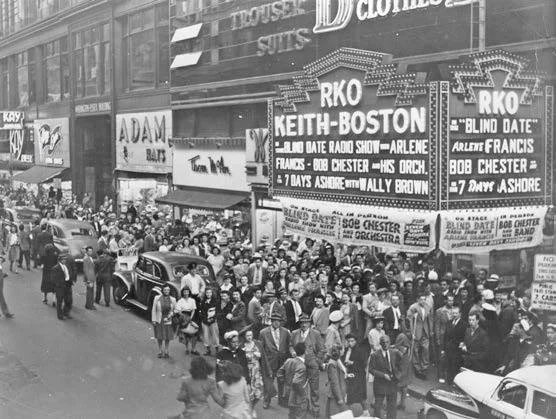
{“Stick the remnant of each bar of soap onto the next bar.} Theoretically, some of the atoms will remain in the bar until my very last shower. When I’m gone, my son can continue to use the bar as I have…and thus shall my zealous frugality be passed down from generation to generation as long as my descendants shall lather up.’’
From The Tightwad Gazette, founded in Leeds, Maine

Monument Hill in Leeds, Maine. There’s a Civil War monument barely visible here, left center.
Accents through time
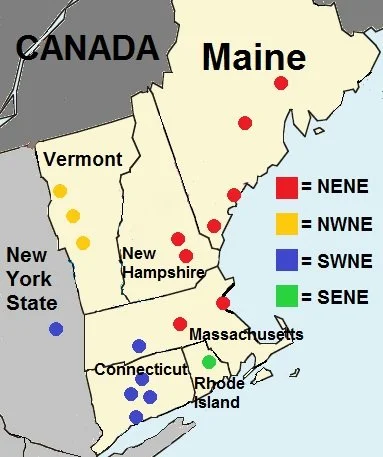
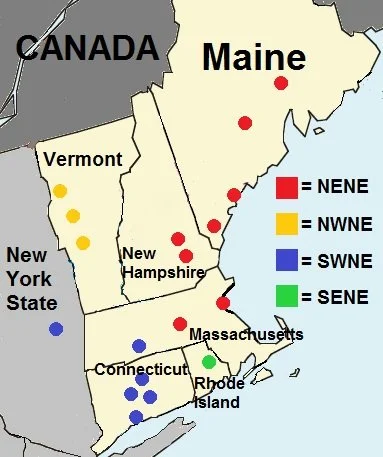
Northeastern (NENE), Northwestern (NWNE), Southwestern (SWNE), and Southeastern (SENE) New England English, as mapped by the Atlas of North American English.
From Robert Whitcomb’s “Digital Diary, in GoLocal24.com
There’s an amusing semi-controversy in the Boston mayoral race. It’s about City Councilor Annissa Essaibi George allegedly leaning into her Boston accent – or, more specifically, her accent from the Dorchester section of that city. That’s where she grew up, in a section of the city usually associated with Irish-Americans, though she herself is of Polish and Tunisian background. The accent has been described as an attempt to appeal to her predominately white base in her run against City Councilor Michelle Wu, who is originally from the Chicago area and whose base includes many people of color. Meanwhile, Boston’s white base continues to shrink.
So far, anyway, Mrs. George’s Dorchester/South Boston accent, which some find grating and some charming (Saturday Night Live has had fun with it over the years) hasn’t seemed to have helped her much: Ms. Wu remains far ahead in the polls.
But the matter got me thinking about accents. Mass media and demographic mixing have tended to dilute old accents, especially in places like Boston, with so many people having come in from around the world to work and/or attend the region’s multitude of colleges and universities.
In New England, the old accents are weakening. I think of the accents of my late father and his father. My paternal grandfather had a pronounced rural Yankee sound, almost a drawl, that recalled natives of the Maine Coast and even Cape Cod a century or more ago. My father had a milder version of the same thing. His five children retain only traces of it, mingled with my late mother’s Minnesota accent. She also had some (fake?) Southern tones from living in Florida half the year as a girl and then going to high school in Virginia. And my siblings and I have picked up fragments of accents and diction from the places we have lived outside New England.
Of course, even among old Yankee accents, there’s variety in the region. Language experts say much of this can be attributed to where the early colonists came from in England hundreds of years ago – say from the West Country, East Anglia or the Midlands.
Sometimes an accent that some might consider off-putting doesn’t bother others. Consider Franklin Roosevelt’s plummy Hudson River squire voice, which he made no effort to modify for political or other reasons. In part because he could express empathy, confidence and ingenuity to the masses, he became their tribune even as many others from his background were seen as greedy, arrogant and unfeeling about the challenges facing the middle class and the poor in the Great Depression.
But FDR’s accent might be an electoral killer these days.
While historic American accents have long been in decline, the waves of immigrants from non-English-speaking countries over the past few decades have added new and interesting ones to our language stew – and words, too. That English is such an avid absorber of words from other languages means that it has the largest vocabulary of any language – probably its greatest strength and something that’s made it the closest thing to an international language. We’re fortunate to have it as our main tongue.
Frightening farming

“The Giant Ghostly Sheep at Clark’s Farm, October, 12, 1914,’’ photo by Eben Parsons, at the Cape Ann Museum Library & Archives, Gloucester, Mass.
LeeAnn Hall: Build back public transit much better
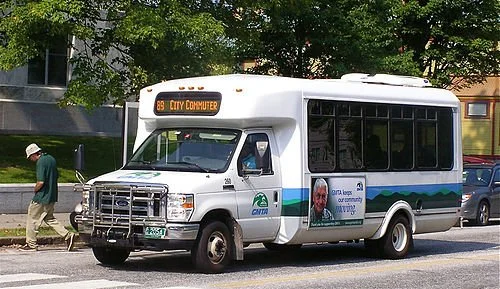
A Green Mountain Transit Authority bus in Montpelier, Vermont’s capital
Via OtherWords.org
If you follow the news about President Biden’s Build Back Better agenda, you might have heard a lot about its 10-year price tag. But you probably haven’t heard much about what it would actually do.
The bill will invest in care for children and seniors, cover more health care under Medicare, make the tax system more fair, and address the climate crisis. Those parts get some coverage, and they’re all worth doing.
But there’s one key thing that’s gotten almost no attention: the bill’s historic investment in public transit. This would have a tremendous positive impact on communities across the country.
The ongoing COVID-19 pandemic has hurt millions of families and their communities in many ways. One essential aspect of community life that faced an existential threat was public transportation. Systems all over the country faced massive revenue shortfalls and budget cuts.
Previous COVID rescue packages helped public transit bypass disaster. But when it comes to transit — the lifeblood of many communities and a key driver of economic growth — just avoiding disaster is not enough.
The pandemic dramatically showed that transit is vital to our communities. Essential workers depend on and operate transit, small businesses depend on transit, and historically marginalized communities depend on transit.
Transit is a key component of a more environmentally sustainable society and the road to equity for disenfranchised communities — in rural, urban, and suburban areas like. In essence, public transit has a huge impact.
Which is why what Democrats in Congress are doing right now is so vital. When you combine the bipartisan infrastructure bill already passed by the U.S. Senate with the Build Back Better plan, it results in the largest ever investment in public transit in the nation’s history.
Investments in public transit create jobs and help connect people to more job opportunities. By one estimate, every $1 billion invested in transit supports and creates more than 50,000 jobs. The larger the investment, the more people benefit.
For years, lawmakers in Washington neglected funding for buses and trains while fueling highways and cars. The result has been a transportation system that is inequitable, unsafe, unhealthy and unsustainable.
It also stunted the economic contributions of too many people, particularly in rural communities and communities of color, at a time when we can’t afford not to give everyone an opportunity to get the jobs they want.
Congress and the Biden administration can reverse this trend.
The Build Back Better plan is so much more than the numbers and political gamesmanship that is covered on TV every night. It’s something that will make people’s lives better — including by rebuilding a transit system that allows more people to move freely within their communities.
Transit is essential. Transit is our future. Congress must pass the Build Back Better plan without delay. Our communities can’t afford to wait any longer.
LeeAnn Hall is the executive director of Alliance for a Just Society and director of the National Campaign for Transit Justice.
We need all the light we can get

“Untitled Mosaic” (glass, concrete and steel), by Ann Gardner, in her show “Expanding the Perception of Light’’, at Heather Gaudio Fine Art, New Canaan, Conn., Nov. 20 through Jan. 8
The gallery says:
“Gardner’s artistic practice stems from a life-long exploration of light, color, pattern, and volume. Using one of the most ancient man-made materials, glass, her sculptures are presented in a range of formats, shapes, and scales. Gardner hand-cuts colored glass into tiny mosaic pieces and reassembles them onto steel armature structures. These come in a variety of forms, such as curved geometric shapes, tubular ovals, waved panels, star bursts or round compositions created in a series. Their volumes protrude into space and recede into themselves, thereby allowing for additional flickering of light, color, and reflection to take place. Some of the sculptures are mounted onto walls while others are free-standing or suspended from the ceiling.’’

One of many significant buildings in New Canaan: This Greek Revival house , built in 1836, was added to the National Register of Historic Places in 2004. The house was home to Maxwell E. Perkins (1884-1947), the legendary editor, early promoter and friend of Ernest Hemingway, F. Scott Fitzgerald Thomas Wolfe and some other famous 20th Century authors.
In 2019 the house was acquired by the New Canaan-based Onera Foundation, with the plan to convert the house into an architectural museum and exhibit space.

Enjoy sonic escapism at nonprofit station on the Cape

WOMR, in Provincetown, Mass., is a unique volunteer-driven and member-supported community radio station that broadcasts a wildly eclectic range of music and talk programming at 92.1 FM, in Provincetown, and also via its sister station, WMFR, at 91.3 FM, in Orleans, and streams live on womr.org. Next spring it will celebrate 40 years of continuous broadcasting, a remarkable achievement for a non-commercial station. The station recently added new programs as the pandemic waned. (Let’s hope the waning continues!)
One show caught our particular attention. It is intriguingly called Chill & Dream. The DJ, who goes by "Braintree Jim," recently told us that the music he plays is a form of sonic escapism and aural nostalgia. "People are searching for a refuge from the storm," he said. His show recalls pop tunes from the ‘60s, ‘70s and ‘80s and mixes those classics with a modern spin, what he calls a fusion of "chill wave" (a nod to so-called yacht rock of the 70s) and "dream pop" (a derivative form of ‘80s pop music). As he says, "it is a safe space from politics, pandemics and put-downs."
His live show on Saturday, Oct. 30, at 9 a.m, will capture that spirit. He plans on something that recalls the ‘70s. "It feels like we are reliving the ‘70s all over again -- talk of stagflation, higher energy costs, comparisons of Afghanistan to Vietnam. What's next? Browns and burnt oranges?" he wonders.
"We got through that period with music so I think recalling the music from 40-50 years ago may help us deal with the present. It will be a fun show, as the ‘70s were a fertile period of creativity. And the music still resonates, which is the main point. Music then had something to say. And it still connects. And we all need an escape. I am not sure I would look good in bell bottoms and platform shoes. But that's OK. We all need to chill and dream."
All shows are streamed live and you can go to womr.org to view the schedule of all the programming.
Another take on COVID-19

“MACRO vs micro’’, by Teddy Trocki-Ryba, of Jamestown, R.I., in the show of the same name at AS220, Providence, through Oct. 30.
It’s a fresh take on the experience of COVID-19 in public and in private. As explained in Trocki-Ryba's artist statement, "the work displayed … seeks to juxtapose the MACRO experience of community and government with the micro experience of family and individual life" during the pandemic.

Windmill in Jamestown, R.I., the increasingly affluent and still partly semi-rural town/island in Narragansett Bay