
Vox clamantis in deserto







Liz Szabo: Tracking a mysterious COVID-related ailment in children (Copy)

Image of SARS-CoV-2, the coronavirus responsible for COVID-19:
MIS-C is thought to be caused by an unusual biological response to infection in certain children.
Like most other kids with COVID-19, Dante and Michael DeMaino seemed to have no serious symptoms.
Infected in mid-February, both lost their senses of taste and smell. Dante, 9, had a low-grade fever for a day or so. Michael, 13, had a “tickle in his throat,” said their mother, Michele DeMaino, of Danvers, Mass.
At a follow-up appointment, “the pediatrician checked their hearts, their lungs, and everything sounded perfect,” DeMaino said.
Then, in late March, Dante developed another fever. After examining him, Dante’s doctor said his illness was likely “nothing to worry about” but told DeMaino to take him to the emergency room if his fever climbed above 104.
Two days later, Dante remained feverish, with a headache, and began throwing up. His mother took him to the ER, where his fever spiked to 104.5. In the hospital, Dante’s eyes became puffy, his eyelids turned red, his hands began to swell and a bright red rash spread across his body.
Hospital staffers diagnosed Dante with multisystem inflammatory syndrome in children, or MIS-C, a rare but life-threatening complication of COVID-19 in which a hyperactive immune system attacks a child’s body. Symptoms — fever, stomach pain, vomiting, diarrhea, bloodshot eyes, rash and dizziness — typically appear two to six weeks after what is usually a mild or even asymptomatic infection.
More than 5,200 of the 6.2 million U.S. children diagnosed with COVID have developed MIS-C. About 80% of MIS-C patients are treated in intensive-care units, 20% require mechanical ventilation, and 46 have died.
Throughout the pandemic, MIS-C has followed a predictable pattern, sending waves of children to the hospital about a month after a covid surge. Pediatric intensive care units — which treated thousands of young patients during the late-summer delta surge — are now struggling to save the latest round of extremely sick children.
The South has been hit especially hard. At the Medical University of South Carolina Shawn Jenkins Children’s Hospital, for example, doctors in September treated 37 children with COVID and nine with MIS-C — the highest monthly totals since the pandemic began.
Doctors have no way to prevent MIS-C, because they still don’t know exactly what causes it, said Dr. Michael Chang, an assistant professor of pediatrics at Children’s Memorial Hermann Hospital, in Houston. All doctors can do is urge parents to vaccinate eligible children and surround younger children with vaccinated people.
Given the massive scale of the pandemic, scientists around the world are now searching for answers.
Although most children who develop MIS-C were previously healthy, 80% develop heart complications. Dante’s coronary arteries became dilated, making it harder for his heart to pump blood and deliver nutrients to his organs. If not treated quickly, a child could go into shock. Some patients develop heart rhythm abnormalities or aneurysms, in which artery walls balloon out and threaten to burst.
“It was traumatic,” DeMaino said. “I stayed with him at the hospital the whole time.”
Such stories raise important questions about what causes MIS-C.
“It’s the same virus and the same family, so why does one child get MIS-C and the other doesn’t?” asked Dr. Natasha Halasa of the Vanderbilt Institute for Infection, Immunology and Inflammation.
Doctors have gotten better at diagnosing and treating MIS-C; the mortality rate has fallen from 2.4% to 0.7% since the beginning of the pandemic. Adults also can develop a post-COVID inflammatory syndrome, called MIS-A; it’s even rarer than MIS-C, with a mortality rate seven times as high as that seen in children.
Although MIS-C is new, doctors can treat it with decades-old therapies used for Kawasaki disease, a pediatric syndrome that also causes systemic inflammation. Although scientists have never identified the cause of Kawasaki disease, many suspect it develops after an infection.
Researchers at Boston Children’s Hospital and other institutions are looking for clues in children’s genes.
In a July study, the researchers identified rare genetic variants in three of 18 children studied. Significantly, the genes are all involved in “removing the brakes” from the immune system, which could contribute to the hyper-inflammation seen in MIS-C, said Dr. Janet Chou, chief of clinical immunology at Boston Children’s, who led the study.
Chou acknowledges that her study — which found genetic variants in just 17% of patients — doesn’t solve the puzzle. And it raises new questions: If these children are genetically susceptible to immune problems, why didn’t they become seriously ill from earlier childhood infections?
Some researchers say the increased rates of MIS-C among racial and ethnic minorities around the world — in the United States, France and the United Kingdom — must be driven by genetics.
Others note that rates of MIS-C mirror the higher COVID rates in these communities, which have been driven by socio-economic factors such as high-risk working and living conditions.
“I don’t know why some kids get this and some don’t,” said Dr. Dusan Bogunovic, a researcher at the Icahn School of Medicine at Mount Sinai who has studied antibody responses in MIS-C. “Is it due to genetics or environmental exposure? The truth may lie somewhere in between.”
A Hidden Enemy and a Leaky Gut
Most children with MIS-C test negative for COVID, suggesting that the body has already cleared the novel coronavirus from the nose and upper airways.
That led doctors to assume MIS-C was a “post-infectious” disease, developing after “the virus has completely gone away,” said Dr. Hamid Bassiri, a pediatric infectious diseases specialist and co-director of the immune dysregulation program at Children’s Hospital of Philadelphia.
Now, however, “there is emerging evidence that perhaps that is not the case,” Bassiri said.
Even if the virus has disappeared from a child’s nose, it could be lurking — and shedding — elsewhere in the body, Chou said. That might explain why symptoms occur so long after a child’s initial infection.
Dr. Lael Yonker noticed that children with MIS-C are far more likely to develop gastrointestinal symptoms — such as stomach pain, diarrhea and vomiting — than the breathing problems often seen in acute covid.
In some children with MIS-C, abdominal pain has been so severe that doctors misdiagnosed them with appendicitis; some actually underwent surgery before their doctors realized the true source of their pain.
Yonker, a pediatric pulmonologist at Boston’s MassGeneral Hospital for Children, recently found evidence that the source of those symptoms could be the coronavirus, which can survive in the gut for weeks after it disappears from the nasal passages, Yonker said.
In a May study in The Journal of Clinical Investigation, Yonker and her colleagues showed that more than half of patients with MIS-C had genetic material — called RNA — from the coronavirus in their stool.
The body breaks down viral RNA very quickly, Chou said, so it’s unlikely that genetic material from a covid infection would still be found in a child’s stool one month later. If it is, it’s most likely because the coronavirus has set up shop inside an organ, such as the gut.
While the coronavirus may thrive in our gut, it’s a terrible houseguest.
In some children, the virus irritates the intestinal lining, creating microscopic gaps that allow viral particles to escape into the bloodstream, Yonker said.
Blood tests in children with MIS-C found that they had a high level of the coronavirus spike antigen — an important protein that allows the virus to enter human cells. Scientists have devoted more time to studying the spike antigen than any other part of the virus; it’s the target of covid vaccines, as well as antibodies made naturally during infection.
“We don’t see live virus replicating in the blood,” Yonker said. “But spike proteins are breaking off and leaking into the blood.”
Viral particles in the blood could cause problems far beyond upset stomachs, Yonker said. It’s possible they stimulate the immune system into overdrive.
In her study, Yonker describes treating a critically ill 17-month-old boy who grew sicker despite standard treatments. She received regulatory permission to treat him with an experimental drug, larazotide, designed to heal leaky guts. It worked.
Yonker prescribed larazotide for four other children, including Dante, who also received a drug used to treat rheumatoid arthritis. He got better.
But most kids with MIS-C get better, even without experimental drugs. Without a comparison group, there’s no way to know if larazotide really works. That’s why Yonker is enrolling 20 children in a small randomized clinical trial of larazotide, which will provide stronger evidence.
A month after Dante DeMaino left the hospital, doctors examined his heart with an echocardiogram to check for lingering heart damage from MIS-C. To his mother’s relief, his heart had returned to normal. Now, more than six months later, Dante is an energetic 10-year-old who has resumed playing hockey and baseball, swimming and rollerblading.
Rogue Soldiers
Dr. Moshe Arditi has also drawn connections between children’s symptoms and what might be causing them.
Although the first doctors to treat MIS-C compared it to Kawasaki disease — which also causes red eyes, rashes and high fevers — Arditi notes that MIS-C more closely resembles toxic shock syndrome, a life-threatening condition caused by particular types of strep or staph bacteria releasing toxins into the blood. Both syndromes cause high fever, gastrointestinal distress, heart muscle dysfunction, plummeting blood pressure and neurological symptoms, such as headache and confusion.
Toxic shock can occur after childbirth or a wound infection, although the best-known cases occurred in the 1970s and ’80s in women who used a type of tampon no longer in use.
Toxins released by these bacteria can trigger a massive overreaction from key immune system fighters called T cells, which coordinate the immune system’s response, said Arditi, director of the pediatric infectious diseases division at Cedars-Sinai Medical Center.
T cells are tremendously powerful, so the body normally activates them in precise and controlled ways, Bassiri said. One of the most important lessons T cells need to learn is to target specific bad guys and leave civilians alone. In fact, a healthy immune system normally destroys many T cells that can’t distinguish between germs and healthy tissue in order to prevent autoimmune disease.
In a typical response to a foreign substance — known as an antigen — the immune system activates only about 0.01% of all T cells, Arditi said.
Toxins produced by certain viruses and the bacteria that cause toxic shock, however, contain “superantigens,” which bypass the body’s normal safeguards and attach directly to T cells. That allows superantigens to activate 20% to 30% of T cells at once, generating a dangerous swarm of white blood cells and inflammatory proteins called cytokines, Arditi said.
This massive inflammatory response causes damage throughout the body, from the heart to the blood vessels to the kidneys.
Although multiple studies have found that children with MIS-C have fewer total T cells than normal, Arditi’s team has found an explosive increase in a subtype of T cells capable of interacting with a superantigen.
Several independent research groups — including researchers at Yale School of Medicine, the National Institutes of Health and France’s University of Lyon — have confirmed Arditi’s findings, suggesting that something, most likely a superantigen, caused a huge increase in this T cell subtype.
Although Arditi has proposed that parts of the coronavirus spike protein could act like a superantigen, other scientists say the superantigen could come from other microbes, such as bacteria.
“People are now urgently looking for the source of the superantigen,” said Dr. Carrie Lucas, an assistant professor of immunobiology at Yale, whose team has identified changes in immune cells and proteins in the blood of children with MIS-C.
Uncertain Futures
One month after Dante left the hospital, doctors examined his heart with an echocardiogram to see if he had lingering damage.
To his mother’s relief, his heart had returned to normal.
Today, Dante is an energetic 10-year-old who has resumed playing hockey and baseball, swimming and rollerblading.
“He’s back to all these activities,” said DeMaino, noting that Dante’s doctors rechecked his heart six months after his illness and will check again after a year.
Like Dante, most other kids who survive MIS-C appear to recover fully, according to a March study in JAMA.
Such rapid recoveries suggest that MIS-C-related cardiovascular problems result from “severe inflammation and acute stress” rather than underlying heart disease, according to the authors of the study, called Overcoming COVID-19.
Although children who survive Kawasaki disease have a higher risk of long-term heart problems, doctors don’t know how MIS-C survivors will fare.
The NIH and Centers for Disease Control and Prevention have launched several long-term trials to study young covid patients and survivors. Researchers will study children’s immune systems to uncover clues to the cause of MIS-C, check their hearts for signs of long-term damage and monitor their health over time.
DeMaino said she remains far more worried about Dante’s health than he is.
“He doesn’t have a care in the world,” she said. “I was worried about the latest cardiology appointment, but he said, ‘Mom, I don’t have any problems breathing. I feel totally fine.’”
Liz Szabo is a Kaiser Health News journalist.
A refugee’s tale from Gambia brutality to Rhode Island

After its pandemic hiatus, The Providence Committee on Foreign Relations is embarking on its exciting dinner speaker series for 2021-2022 at the Hope Club, in Providence.
The first speaker, coming Tuesday, Oct. 26, is Omar Bah, who fled The Gambia after having been declared a wanted man because of articles he wrote criticizing the country’s dictator. Inspired by his experience, Mr. Bah founded the Refugee Dream Center in Providence to offer other refugees in Rhode Island post-resettlement support.
Preview his amazing story in a PBS profile via this link:
https://watch.ripbs.org/video/omar-bah-05lqhe/
The PCFR, chaired by health-care professional and state Representative Barbara Ann Fenton-Fung, says: “We're happy to have Omar join us on Tuesday night at the Hope Club, starting at 6 p.m. Due to COVID-related issues, tickets must be purchased by Sunday night. As a reminder, the PCFR has collectively agreed to require proof of vaccination to attend our events this fall, which will be requested at the door. Thank you for your cooperation in advance.
For tickets, please use this link

Don Pesci: In a place of unchecked, secretive power

Entrance to the MacDougall Walker Correctional Institution, in Suffield, Conn., where Brent McCall spent time.
Sham: Inside the Criminal Correction Racket, by Brent McCall ($12.95). {He was convicted of violent crimes.}
VERNON, Conn.
People who have never been inside a prison – most of us -- think: 1) the purpose of a prison is to provide punishment, not rehabilitation; 2) justice essentially means, “If you did the crime, you do the time; 3) every prisoner has duped himself or herself into thinking he or she is innocent and therefore any punishment, however unjust, is merited; 4) egotism does not stop at prison doors, and the notion that one should take a prisoner’s testimony as gospel truth over that of prison authorities is patently absurd; and 5) books written by prisoners nursing grievances should be taken with two tons of salt.
People convinced that the above propositions are indisputably true will not be persuaded otherwise by Brent McCall’s latest book, Sham, which presents a strong case that the administrative architecture of modern prisons, many of which put themselves forward as rehabilitation centers, have yet to throw off certain medieval characteristics. Sociologists who spend their days probing various administrative organizations – schools, the family, corporations, political parties, etc. -- should turn the pages of Sham with some interest, because prisons are among the first age-old repositories of unchecked, secretive and personalized administrative power.
When the cell door is locked and the key thrown away, also discarded is any critical word from prisoners concerning administrative justice or humane treatment. At its most primitive, punishment without mercy is terror. Central to terror is arbitrary, personalized treatment by an overpowering force. That is the message of Fyodor Dostoevsky’s partly autobiographical novel The Idiot.
Written twenty years after Dostoevsky’s own imprisonment, Prince Myshkin, the protagonist of the novel, tells a story of an execution that intentionally resembles Dostoyevsky’s own mock execution: “...But better if I tell you of another man I met last year...this man was led out along with others on to a scaffold and had his sentence of death by shooting read out to him, for political offenses. About twenty minutes later a reprieve was read out and a milder punishment substituted...he was dying at 27, healthy and strong...he says that nothing was more terrible at that moment than the nagging thought: "What if I didn't have to die!...I would turn every minute into an age, nothing would be wasted, every minute would be accounted for... (Part I, chapter 5).”
In The House of the Dead, Dostoevsky traces the path of a “diseased tyranny,” always related to the unbridled personal power of one man over another: “The human being, the member of society, is drowned forever in the tyrant, and it is practically impossible for him to regain human dignity, repentance, and regeneration...the power given to one man to inflict corporal punishment upon another is a social sore...it will inevitably lead to the disintegration of society.”
The subject of McCall’s Sham is not personal vindication. Sham is a brief against personal tyranny, the tyranny of an administrative organ hidden from public view and, deployed outside of administrative guidelines, inescapable. Sunshine, we are often told, is the best disinfectant. What is brought to light no longer festers in the dark. Prisons are meant to be, by design, dark. And prisoners are meant to be invisible. Any prisoner who flips on the light switch is bound to be greeted with sour disfavor.
Sham is McCall’s second book. I also reviewed his first, Down the Rabbit Hole: How the Culture of Corrections Encourages Crime, co-written with Michael Liebowitz, McCall’s friend and cellmate at (MacDougall-Walker CI in Suffield, Conn.) in February, 2018.
Following the publication of their first co-written book, the two co-authors were separated, McCall being shuttled off to Cheshire Correctional Institution. Both authors had been heard semi-regularly on Todd Feinberg’s radio talk show program at WTIC News/Talk 1080.
At the center of McCall’s disfavor was an embarrassing sham he had uncovered that involved salary padding on the part of prison officials. Both McCall and Liebowitz had agreed that none of their publications should be made available to other prisoners, a stipulation that since has been faithfully adhered to by all parties. The publications were intended to be corrective, not unnecessarily destructive to prison order or discipline. Both authors favor discipline when it is merited, just punishment and administrative order.
Indeed, the chief point of both books is that chaos on occasion replaces both discipline and order in some prisons because in some instances non-professional administrative staff and administrators find chaos, for a number of reasons, to be preferable to order and discipline.
Sham is jam-packed with such incidents. Such “troublesome themes,” McCall writes, play out time and again in many prisons, even when gross “dereliction of duty” presents clear and present dangers to both prisoners and guards.
An episode involving a guard and two quarreling prisoners in which the guard was clearly baiting the prisoners rather than repressing the quarrel, a clear dereliction of duty, induced McCall to write a letter to the Commissioner of prisons. Naturally, as on so many other occasions, McCall was not advised that the guard had been disciplined. Prisoners who had witnessed the quarrel drew the right conclusions from it, namely that order and disciple in the prison was not a high priority for administrators.
McCall writes that the same theme, always destructive of rehabilitation, “took place at MacDougall’s prison industries… First, there was obviously nothing of rehabilitative value in staff colluding with inmates to bilk Connecticut taxpayers out of fraudulent overtime hours (not to mention the various other kinds of thefts going on there).
“Secondly, I went from being ignored to being transferred, with the staff creating the climate that ostensibly made that transfer necessary… Finally, even after all this time, I have no idea whether any of the staff at MacDougall industries were ever held responsible for the crime they had committed or the CDOC [Connecticut Department of Corrections] directives they openly violated.”
True discipline should not be confused with a “foolish consistency,” the “the hobgoblin of little minds,” according to Ralph Waldo Emerson. In prison environments, the two often walk hand in hand.
Chapter 5 of Sham, headed “Correctional Lemmings”, carries a quote from George Orwell: “The heresy of heresies was common sense,” and it describes in meticulous deatail the orderly procession of chow lines at Cheshire CI. “On the whole,” McCall writes, “East Block’s chow procedure is one of the most orderly and well managed things I’ve ever seen the Connecticut Department of Corrections do.”
It is a choreographed dance, flawless in every step.
Then comes chow. The prisoners are seated, and chaos – disruptive conversations that run afoul of CDOC’s Code of Penal Discipline – follow in due course, while unperturbed guards pretend not to notice the disorder.
“Why regulate seemingly innocuous behavior, McCall ruminates, while ignoring misconduct that would likely get one arrested for breach of peace and disorderly conduct at the local Burger King?”
Why must arbitrariness rule like a king in prisons? Is not the arbitrary the enemy of discipline, precisely in the same way a foolish consistency is the enemy of constructive order?
McCall makes the attempt – most often successfully – to answer questions such as these.
Full of footnotes but lacking a proper index for quick reference, Sham is an easy read, because McCall writes well, and his analytic powers are fully mature. The purpose of analytical writing is to dispel the darkness and shed light.
After he had finished reading Witness, Whittaker Chambers’s account of his own rise from demon communism to the light, Andre Malraux told the former soviet operative, “You did not come back from hell with empty hands.”
Sham is brave, clear in its witness, and well worth a read.
Don Pesci is a Vernon-based columnist.
Group trip

Flocks of birds assembling before migration southwards (probably Common Starling)
“As if a cast of grain leapt back to the hand,
A landscapeful of small black birds, intent
On the far south, convene at some command….’’
— From “An Event,’’ by Richard Wilbur (1921-2017), New England-based, Pulitzer Prize-winning poet
Tree fundamentals

“Cathedral of the Forest (acrylic on wood), by Rose Olson, in her show “Rose Olson: New Works,’’ through Oct. 31 at Kingston Gallery, Boston. She has studios in Boston’s South End and in Beverly, on Massachusetts’s North Shore.
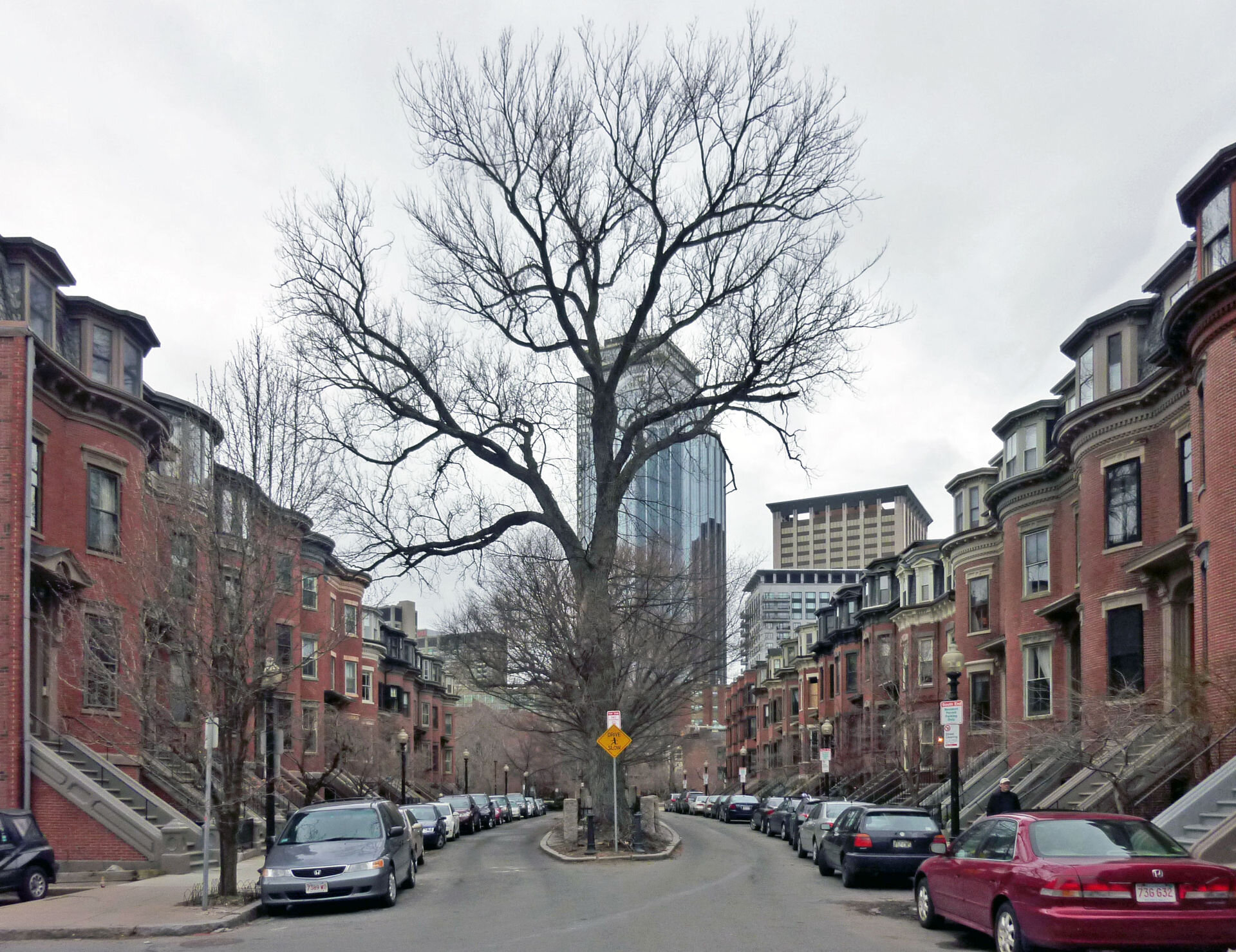
Braddock Park, in the South End
— Photo by Payton Chung

Veterans Memorial Bridge, looking toward Beverly from Salem

David Warsh: Pinning things down using history

SOMERVILLE, Mass.
In Natural Experiments of History, a collection of essays published a decade ago, editors Jared Diamond and James Robinson wrote, “The controlled and replicated laboratory experiment, in which the experimenter directly manipulates variables, is often considered the hallmark of the scientific method” – virtually the only approach employed in physics, chemistry, molecular biology.
Yet in fields considered scientific that are concerned with the past – evolutionary biology, paleontology, historical geology, epidemiology, astrophysics – manipulative experiments are not possible. Other paths to knowledge are therefore required, they explained, methods of “observing, describing, and explaining the real world, and of setting the individual explanations within a larger framework “– of “doing science,” in other words.
Studying “natural experiments” is one useful alternative, they continued – finding systems that are similar in many ways but which differ significantly with respect to factors whose influence can be compared quantitatively, aided by statistical analysis.
Thus this year’s Nobel Prize in Economic Sciences recognizes Joshua Angrist, 61, of the Massachusetts Institute of Technology; David Card, 64, of the University of California, Berkeley; and Guido Imbens, 58, of Stanford University, “for having shown that natural experiments can answer central questions for society.”
Angrist, burst on the scene in in 1990, when “Lifetime Earnings and the Vietnam Era Draft Lottery: Evidence from Social Security administrative records” appeared in the American Economic Review. The luck of the draw had, for a time, determined who would be drafted during America’s Vietnam War, but in the early 1980s, long after their wartime service was ended, the earnings of white veterans were about 15 percent less than the earnings of comparable nonveterans, Angrist showed.
About the same time, Card had a similar idea, studying the impact on the Miami labor market of the massive Mariel boatlift out of Cuba, but his paper appeared in the less prestigious Industrial and Labor Relations Review. Card then partnered with his colleague, Alan Krueger, to search for more natural experiments in labor markets. Their most important contribution, a careful study of differential responses in nearby eastern Pennsylvania to a minimum-wage increase in New Jersey, appeared as was Myth and Measurement: The New Economics of the Minimum Wage (Princeton, 1994). Angrist and Imbens, meanwhile, mainly explored methodological questions.
Given the rule that no more than three persons can share a given Nobel prize, and the lesser likelihood that separate prizes might be given in two different years, Krueger’s tragic suicide, in 2019, rendered it possible to cite, in a single award, Card, for empirical work, and Angrist and Imbens, for methodological contributions.
Princeton economist Orley Ashenfelter, who, with his mentor Richard Quandt, also of Princeton, more or less started it all, told National Public Radio’s Planet Money that “It’s a nice thing because the Nobel committee has been fixated on economic theory for so long, and now this is the second prize awarded for how economic analysis is now primarily done. Most economic analysis nowadays is applied and empirical.” [Work on randomized clinical trials was recognized in 2019.]
In 2010 Angrist and Jörn-Staffen Pischke described the movement as “the credibility revolution.” And in the The Age of the Applied Economist: the Transformation of Economics since the 1970s. (Duke, 2017), Matthew Panhans and John Singleton wrote that “[T]he missionary’s Bible today is less Mas-Colell et al and more Mostly Harmless Econometrics: An Empiricist’s Companion (Angrist and Pischke, Princeton, 2011)
Maybe so. Still, many of those “larger frameworks” must lie somewhere ahead.

“History,’’ by Frederick Dielman (1896)
That Dale Jorgenson, of Harvard University, would be recognized with a Nobel Prize was an all but foregone conclusion as recently as twenty years ago. Harvard University had hired him away from the University of California at Berkeley in 1969, along Zvi Griliches, from the University of Chicago, and Kenneth Arrow, from Stanford University (the year before). Arrow had received the Clark Medal in 1957, Griliches in 1965; Jorgenson was named in 1971. “[H]e is preeminently a master of the territory between economics and statistics, where both have to be applied in the study of concrete problems.” said the citation. With John Hicks, Arrow received the Nobel Prize the next year.
For the next thirty years, all three men brought imagination to bear on one problem after another. Griliches was named a Distinguished Fellow of the American Economic Association in 1994; he died in 1999. Jorgenson, named a Distinguished Fellow in 2001, began an ambitious new project in 2010 to continuously update measures of output and inputs of capital, labor, energy, materials and services for individual industries. Arrow returned to Stanford in 1979 and died in 2017.
Call Jorgenson’s contributions to growth accounting “normal science” if you like – mopping up, making sure, improving the measures introduced by Simon Kuznets, Ricard Stone, and Angus Deaton. It didn’t seem so at the time. The moving finger writes, and having writ, moves on.
xxx
Where are the women in economics, asked Tim Harford, economics columnist of the Financial Times the other day. They are everywhere, still small in numbers, especially at senior level, but their participation is steadily growing. AEA presidents include Alice Rivlin (1986); Anne Krueger (1996); Claudia Goldin (2013); Janet Yellen (2020); Christina Romer (2022), and Susan Athey, president elect (2023). Clark medals have been awarded to Athey (2007), Esther Duflo (2010), Amy Finkelstein (2012), Emi Nakamura (2019), and Melissa Dell (2020).
Not to mention that Yellen, having chaired the Federal Reserve Board for four years, today is secretary of the Treasury; that Fed governor Lael Brainerd is widely considered an eventual chair; that Cecilia Elena Rouse chairs of the Council of Economic Advisers; that Christine Lagarde is president of European Central Bank; and that Kristalina Georgieva is managing director of the International Monetary Fund, for a while longer, at least.
The latest woman to enter these upper ranks is Eva Mörk, a professor of economics at Uppsala University, apparently the first female to join the Committee of the Royal Swedish Academy of Sciences that recommends the Economics Sciences Prize, the last barrier to fall in an otherwise egalitarian institution. She stepped out from behind the table in Stockholm last week to deliver a strong TED-style talk (at minutes 5:30-18:30 in the recording) about the whys and wherefores of the award, and gave an interesting interview afterwards.
David Warsh, a veteran columnist and an economic historian, is proprietor of Somerville-based economicprincipals.com, where this column originated.
‘Facing a sheer sky’

“Medusa,’’ by Arnold Böcklin, circa 1878
“I had come to the house, in a cave of trees,
Facing a sheer sky.
Everything moved, — a bell hung ready to strike,
Sun and reflection moved wheeled by.’’
— From “Medusa,’’ by Louise Bogan (1897-1970), a native of Livermore Falls, Maine, who became, in 1945, the first woman U.S. poet laureate. She also wrote fiction and criticism, and was the regular poetry reviewer for The New Yorker.

The Jonathan Fairbanks House, in Dedham, Mass., built circa 1641, is the oldest surviving timber-frame house in North America.

Chris Powell: Stupid Facebook post by GOP legislator distracts from Connecticut’s real problems

MANCHESTER, Conn.
Connecticut was pretty normal this week. The cities again were full of shootings and other mayhem. Group home workers went on strike because, while they take care of people who are essentially wards of the state, their own compensation omits medical insurance.
Hundreds of health-care workers were suspended for refusing to get a COVID-19 vaccination. Tens of thousands of children went to school without learning much, since at home they have little in the way of parenting and thus no incentive to learn.
The two longstanding scandals in the state police -- the drunken retirement party at a brewery in Oxford and the fatal shooting of an unarmed and unresisting mentally ill 19-year-old in West Haven -- remained unresolved, the authorities apparently expecting them to be forgotten. They're probably right.
And Gov. Ned Lamont called for sticking with football at the University of Connecticut despite its worsening record and expense.
Nevertheless, the great political controversy of the week was something else -- a Facebook post by state Rep. Anne Dauphinais (R.-Killingly). It likened the governor to Adolf Hitler on account of the emergency powers that Lamont repeatedly has claimed and his party's majorities in the General Assembly have granted him in regard to the virus epidemic even though there no longer is any emergency -- at least none involving the epidemic.
Rather than apologize for her intemperance and hyperbole, Dauphinais "clarified" that she meant to liken the governor to the Hitler of the early years of his rule in Germany, not the Hitler of the era of world war and concentration camps. This wasn't much clarification, since the Nazi regime established concentration camps just weeks after gaining power in 1933 and unleashed wholesale murder on its adversaries just a year later, on June 30, 1934 -- the "Night of the Long Knives" -- more than five years before invading Poland.
But so what if a lowly state legislator from the minority party got hysterical on Facebook?
Her name calling did no actual harm to anyone. The governor's skin is far thicker than that. Indeed, to gain sympathy any politician might welcome becoming the target of such intemperance and thus gaining sympathy.
Besides, Dauphinais's hysteria wouldn't even have been noticed if other politicians didn't make such a show of deploring it over several days. The top two Democratic and top two Republican leaders of the General Assembly went so far as to issue a joint statement condemning the use of political analogies to Nazism. In separate statements they criticized Dauphinais by name.
They all seemed to feel pretty righteous about it.
But meanwhile they had little to say about the state's problems that really matter, problems affecting the state's quality of life, problems on display throughout the week. Maybe they should thank Dauphinais for the distraction she provided them.
xxx
Will his support for University of Connecticut football be Governor Lamont's Afghanistan? Is the state just throwing good money after bad?
Now that Hartford wants to tear up Brainard Airport for commercial development, could Pratt & Whitney Stadium in East Hartford be leveled and Rentschler Field rebuilt as the airport it once was, replacing Brainard?
And will anyone ever take responsibility for anything at UConn?
Probably not. For even if UConn football is a disaster forever, it will cost far less than the disasters of Connecticut's education and welfare policies.
Why get upset at UConn football when the more Connecticut spends in the name of education, the less education is produced and the poorer students do, or when the more that is spent on welfare and social programs, the less people become self-sufficient and the more they become dependent on government?
The problem with UConn football is that results are still the object of the program and the public easily can see them -- the weekly scores during football season and the losing record.
By contrast, the education scores -- the results of standardized tests -- are publicized only occasionally and not on the sports pages, while the results of welfare and social programs are never audited and reported at all. With education and welfare, results are no longer the objective. They have become an end in themselves.
Chris Powell is a columnist for the Journal Inquirer, in Manchester.

Pratt & Whitney (the aerospace company) Stadium at Rentschler Field, in East Hartford. It is primarily used for football and soccer, and is the home field of the University of Connecticut Huskies.
It’s about resilience
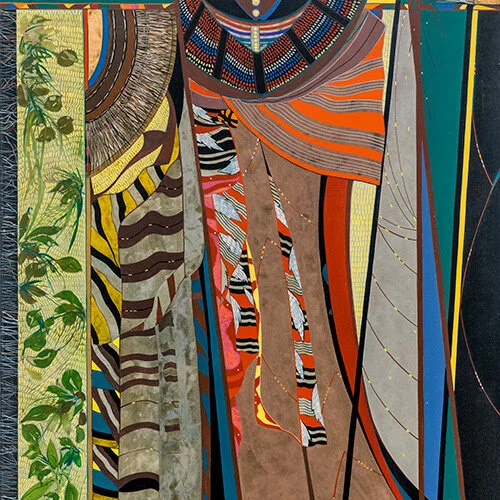
“Masai,’’ by Brenda Kingery, in her show “Weaving Villages,’’ at the Cahoon Museum of American Art, Cotuit, Mass. (on Cape Cod), through Dec. 19.
Ms. Kingery is a Chicksaw. “Each textile, dance, drum, and song is a living reminder of peoples’ resilience in the face of conflict,’’ she says.
The museum explain that this idea informed her artwork while “she traveled through the Ryukyuan Islands of Japan, Indigenous communities in Mexico and Central America, remote villages in Uganda, and Powwow celebrations in her native Oklahoma.”

Sunrise at Loop’s Beach, Cotuit
They only look dangerous

“The Gift No. 21,’’ by Han Feng, in the Schoolhouse Gallery of Provincetown’s group show “All Possible Worlds’’, through Dec. 5
Pies and wood


“Here in Maine we draw from pioneer beginnings to maintain that pies are to cut wood on. That is, you tuck away a piece of pie and it sustain you at your work, whereas food that digests on you is a sham and an imposter.’’
— John Gould (1908-2003), in Old Hundredth (1987). He was a Maine-based but nationally known humorist, book author and columnist. He did much of his work from his farm in Livermore Falls.

The farming and factory town of Livermore Falls in 1906

Llewellyn King: We can’t welcome all who want to emigrate here; identity politics threatens America

Illustration from Walter Crane's Columbia's Courtship: A Picture History of the United States in Twelve Emblematic Designs in Color with Accompanying Verses (1893). Back then, most immigrants were expected to assimilate into American culture, learning English, etc. A smaller percentage do now, with the rise of identity politics. and “multiculturalism.’’ Too many immigrants continue to see the countries they came from, as awful as they are, as home.

U.S. Border Patrol agents review documents of individuals suspected of attempted illegal entry from Mexico.
The American head and heart aren’t in alignment on immigration. They are savagely apart.
The head argues that all those people amassing on the U.S.-Mexico border, or living in camps across the English Channel, or trying to get into Turkey from Syria should be sent home. The heart argues that people anywhere denied a reasonable life in the place in which they were born are entitled to find what they seek: freedom from want. It argues, too, that immigrants have made us wealthy down through the centuries.
The head is adamant: Unfettered immigration is conquest one person at a time — one ragged child, one desperate mother, one hopeful man. Immigration is destabilizing much of the Middle East, particularly Jordan and Lebanon. It is threatening Europe and is changing the face of the United States.
Bad governance has an impact beyond the borders of the badly governed country.
Small stretches of sea that separate Malta, Greece, Italy and Spain’s Canary Islands from Africa haven’t deterred migrant crossings. If these migrants are accepted by European countries, they will bring with them their religion, their language, and their loyalty to the culture that they left behind.
Before the jet age and the communications revolution, an immigrant sought to be a new American, a new Briton, or a new Frenchman. Many of today’s immigrants don’t feel compelled to assimilate and can reside in North America or Europe but retain the aims and culture of the country from which they came.
I know Koreans who have lived in the United States for decades and speak no English — and have no need to. All their wants are met in Korean, from banking to television to shopping. I also know U.S.-born Salvadorans who talk about El Salvador as “my country.” The wheels have come off assimilation.
The receiving countries deserve some blame for those who remain alien. The prevailing identity politics doesn’t meld a nation. The “woke” reverence for every culture except its native culture and language is destructive.
The immigrants who flooded the United States in the 19th Century and the first half of the last century came to assimilate, with many refusing to teach their children their native tongues. Now immigrants think and feel as though they are the citizens of other countries. It is easy to do, and “multiculturalism” is the facilitator.
American hearts go out to those who are living in hell on the southern border: Frightened, in need of food, in need of places to sleep and to defecate, often sick, preyed on by criminals in their own number, and believing myths — especially the myth that when Donald Trump lost the presidential election, they would be welcome in the United States.
The heart says immigration is good for us and that we are all immigrants; that our generous inheritance, from the genius of the Founding Fathers to the syncopation of jazz and the blues to the techno-wonders of Elon Musk, is the product of immigration.
But my heart and my head, and those of many Americans, align in believing that we have to stop identity politics, treasure our American identity and explain to the world that the United States isn’t open to all, otherwise all would come.
The Trump administration failed to end illegal immigration with its incompetence, its bluster and its wall. So far, the Biden administration has done worse. It has allowed a myth to circulate around the world that if you get to Latin America, even to faraway Chile, you can get into the United States.
President Biden should demand that Vice President Kamala Harris, who he put in charge of the border, do her job and produce some ideas. Her declaration that she will work to strengthen the countries of Central America so that their people stay home is fantasy.
Even if Harris could do that, she should note that the new flood of migrants is coming from across the world — from Haiti to Pakistan and other parts of Asia. U.S. intelligence has failed, and the vice president fails daily to address this global problem, which will only get worse as the climate changes and the seas rise. The brain reels and the heart bleeds.
On Twitter: @llewellynking2
Llewellyn King is executive producer and host of White House Chronicle, on PBS. He’s based in Rhode Island and Washington, D.C.
Two tough New Yorkers transplanted to Vermont

Fall foliage at Lake Willoughby, in northern Vermont
“I was happy, but am now in possession of knowledge that this is wrong. Happiness isn’t so bad for a woman. She gets fatter, she gets older, she could lie down, nuzzling a regiment of men and little kids, she could just die of the pleasure. But men are different, they have to own money, or they have to be famous, or everybody on the block has to look up to them from the cellar stairs.’’
Grace Paley (1922-2007), American writer and teacher and native of the Bronx, in An Interest in Life. In later life, she lived in Thetford, Vt.

“If the environment were a bank, it would have been saved by now.’’
Bernie Sanders (born 1941), a native of Brooklyn who’s now a U.S. senator from Vermont (which has some of the strongest environmental protections in the country). He’s a former mayor Burlington.
‘Generational changes’

“Speak Spanish, Yo Hablo Inglés” (oil on stretched canvas and wood panel substrate, mounted on 7 aluminum panels), by Kukuli Velarde, in Ferrin Contemporary’s (North Adams, Mass.) new show, “In Dialogue: Cristina Córdova & Kukuli Velarde,” Oct. 18-Nov. 28.
The gallery says that Córdova and Velarde navigate their Latina identity and the world through their works. “Each explores subjects drawn from both their cultural histories and their roles as mothers, daughters and parents of young women documenting their own and their subjects’ generational changes.”

Main Street of the former industrial city and now major art center of North Adams, Mass. The Massachusetts Museum of Contemporary Art there is the largest such institution in the United States.

The motto refers to North Adams being at the western end of the five-mile-long Hoosac (Railroad) Tunnel.

Study to look at relationship of sea-level rise and flooding in hurricanes and nor’easters

Realistic 3D visualization for Eastham, Mass., along the Cape Cod National Seashore using advanced modeling results of a March 2018 nor'easter with 3 feet of sea-level rise
From ecoRI News (ecori.org)
KINGSTON, R.I. — Researchers at the University of Rhode Island and Pennsylvania State University were recently awarded a four-year, $1.5 million grant through the National Oceanic and Atmospheric Administration (NOAA) to study the effects of sea-level rise and how it may exacerbate the impact of extreme weather.
The project will draw on expertise from researchers at URI’s Graduate School of Oceanography, its College of the Environment and Life Sciences, the Department of Ocean Engineering, and the URI Coastal Resources Center.
Other collaborative participants include the Schoodic Institute, in Maine, and the National Park Service. The goal of the project is to help communities, the National Park Service, and the U.S. Fish & Wildlife Service adapt to a changing climate and more frequent and extreme weather.
The rate of sea-level rise is accelerating, according to NOAA. Since 1993, the average global sea level has increased by 3.4 inches. Sea level plays a role in flooding, shoreline erosion and other hazards, impacting nearly 40 percent of the U.S. population living in high-density coastal areas.
However, despite what is known about sea-level rise, there is a lack of research available when it comes to how the impacts of nor’easters and hurricanes may be amplified as a result.
“There are a number of studies that have been done looking at just sea-level rise or just extreme weather, but what we're really lacking in terms of clear understanding is the combined impact of these two phenomena,” said Isaac Ginis, a URI professor of oceanography who is leading the study. “This is especially important to us on the East Coast and in New England, where we’ve seen significant coastal flooding produced by waves and storm surge during nor’easters and hurricanes. How these effects are amplified by sea-level rise has been largely unexplored. This information gap inhibits our ability to properly plan for the future and is likely to lead to under-informed and ineffective adaptation measures.”
The project will expand the body of research related to the effects of extreme weather and sea-level rise on five New England national parks and two wildlife refuges — Cape Cod National Seashore, Boston Harbor Islands National Recreation Area and New Bedford Whaling National Historical Park, in Massachusetts; Ninigret National Wildlife Refuge, Trustom Pond National Wildlife Refuge and Roger Williams National Memorial, in Rhode Island; and Acadia National Park, in Maine, as well as their surrounding communities.
Using atmosphere, storm surge and wave/erosion modeling the team will provide high-resolution recreations of the impact of future storm and sea-level rise scenarios, identifying vulnerabilities in the ecosystems and infrastructure of the identified sites and their adjacent communities. The modeling will also include hazard, risk, and adaptability assessments, and mitigation scenarios.
Researchers will work closely with the National Park Service, U.S. Fish & Wildlife Service, and stakeholders at the community level to tailor the research and translate the science in a way that can be incorporated into local resource management and adaptation measures to improve coastal resilience and to protect communities, people, infrastructure, and ecosystems.
“Each community has their own needs,” said Ginis, “but our modeling results will produce tailored and tangible information for local decision-makers — state and local governments, emergency management officials, town and city planners, and other stakeholders — to address their specific needs and enable them to plan and adapt as the sea-level rises and climate continues to change.”
Taking historical data into account, as well as topography, geology, water depth, land elevation, natural processes such as shoreline changes, and human influence, the team will be able to project more than 50 years into the future, using 3D visualization to provide computer simulations illustrating storm hazards and identifying potentially effective mitigation measures.
Ultimately, the project will open an important dialogue among researchers, local stakeholders, and federal resource managers, and facilitate the development of science-based best practices that will guide future policies and resource management strategies.
Flood voyeurism
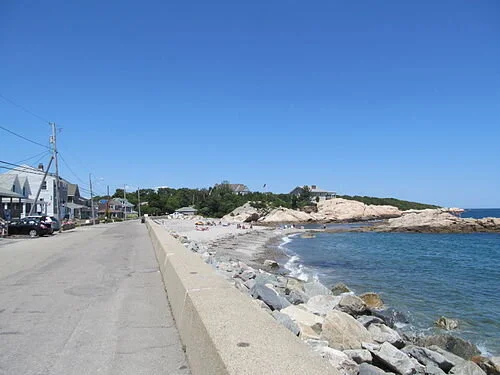
Glades Road in a frequently flooded section of Minot, a neighborhood of Scituate, Mass. “The Glades” is a summer compound of Massachusetts’s historically famous Adams family. Hit the links below to see the area in a more exciting situation.
Adapted from Robert Whitcomb’s “Digital Diary,’’ in GoLocal24.com
When I was kid, we much enjoyed the coastal flooding that accompanied Nor’easters in Cohasset, my hometown on Massachusetts Bay. Sometimes the water would cover some stretches of streets from which you couldn’t see the ocean because of the woods in the way. Sometimes we’d get to row on these roads. Cheap thrills indeed.
But a better show was in nearby Scituate, where a densely packed community on a point, with both summer and year-round houses, is massively flooded every few years. The houses shouldn’t be there, but federal flood insurance, which started in 1968, sustains this seeming idiocy even as rising sea level makes places such as Scituate more vulnerable.
After I got my driver’s license, I’d go to Scituate alone or with friends to watch the show and take some pictures.
Hit these links to get a sense of what we’d see:

Cambridge Trust commits $110 million to affordable housing in the very pricey Bay State

From The New England Council (newenglandcouncil.com)
“Cambridge Trust has committed $110 million to the Massachusetts Housing Partnership’s (MHP) multifamily construction loan pool to help construct affordable housing across the state. Cambridge Trust’s commitment marks the largest ever voluntary contribution to MHP.
“This commitment from Cambridge Trust was made possible through its acquisition of Wellesley Bank last year. While its contribution is voluntary, state-mandated taxes on bank acquisitions require the equivalent of just under 1 percent of the acquired bank’s assets to be contributed to MHP’s multifamily housing loan pool. Cambridge Trust’s contribution will help to finance rental apartment construction with the ultimate purpose of easing the current housing crunch. According to an estimate by MHP, the effort could help to finance 1,400 apartments over the next decade.
“‘We saw an opportunity to make a commitment and we jumped on it,’ said Tom Fontaine, Cambridge Trust’s Executive Vice President. ‘The prices are just out of control [in Greater Boston]. The land has so much value, and affordability becomes an issue.”’
“The New England Council celebrates Cambridge Trust’s efforts to provide affordable housing in Massachusetts.’’

An advertisement from the 1930s from the U.S. Housing Authority advocating slum clearance as a way to stop crime.
'They collide'

“Stalking Heron” (welded found steel scrap), by Madeleine Lord, in “Art Forward,’’ a group show of the National Association of Women Artists, at Galatea Fine Art, Boston, Nov. 5-Nov. 28.
The gallery says:
“Art Forward' is a group exhibition of 2D and 3D works that explore all things that have their turn to change with time. In us, past, present, future meet. They collide and synthesize cultures - allowing time to change, end, begin a new. Change is life, inconsistent as our future is time's excuse. The future frightens us, too profound and vague, but change is hopeful, healing, and leaves us smiling ahead.’’
Madeleine Lord is based in Dudley, Mass., south of Worcester and on the border with Connecticut. George Washington really did sleep there.

The Soldiers and Sailors Monument in Dudley, designed by renowned Canadian-born sculptor John A. Wilson, who eventually was based in the Chestnut Hill section of Newton, Mass. The statue is meant to honor veterans of all American wars.
Renowned Modernist architect Walter Gropius called Wilson’s studio “the most beautiful in the world."
Gorgeous Gloucester makes hay

“The Babson Meadows {in Gloucester, Mass.} at River” (1863, oil on canvas), by Fitz Henry Lane (1804-1865), at the Cape Ann Museum, Gloucester.
(Gift of Roger W. Babson, 1937)
David Warsh: Goldin's marriage manual for the next generation

SOMERVILLE, Mass.
For many people, the COVID-19 pandemic has been an eighteen-month interruption. Survive it, and get back to work. For those born after 1979, it may prove to have been a new beginning. Women and men born in the 21st Century may have found themselves beginning their lives together in the midst of yet another historic turning point.
That’s the argument that Claudia Goldin advances in Career and Family: Women’s Century-long Journey toward Equity (Princeton, 2021). As a reader who has been engaged as a practitioner in both career and family for many years, I aver that this is no ordinary book. What does greedy work have to do with it? And why is the work “greedy,” instead of “demanding” or “important?” Good question, but that is getting ahead of the story.
Goldin, a distinguished historian of the role of women in the American economy, begins her account in 1963, when Betty Friedan wrote a book about college-educated women who were frustrated as stay-at-home moms. Their problem, Friedan wrote, “has no name.” The Feminine Mystique caught the beginnings of a second wave of feminism that continues with puissant force today. Meanwhile, Goldin continues, a new “problem with no name” has arisen:
Now, more than ever, couples of all stripes are struggling to balance employment and family, their work lives and home lives. As a nation, we are collectively waking up to the importance of caregiving, to its value, for the present and future generations. We are starting to fully realize its cost in terms of lost income, flattened careers, and trade-offs between couples (heterosexual and same sex), as well as the particularly strenuous demands on single mothers and fathers. These realizations predated the pandemic but have been brought into sharp focus by it.
A University of Chicago-trained economist; the first woman tenured by Harvard’s economics department; author of five important books, including, with her partner, Harvard labor economist Lawrence Katz, The Race between Education and Technology (Harvard Belknap, 2010); recipient of an impressive garland of honors, among them the Nemmers award in economics; a former president of the American Economic Association: Goldin has written a chatty, readable sequel to Friedan, destined itself to become a paperback best-seller – all the more persuasive because it is rooted in the work of hundreds of other labor economists and economic historians over the years. Granted, Goldin is expert in the history of gender only in the United States; other nations will compile stories of their own. .
To begin with, Goldin distinguishes among the experiences of five roughly-defined generations of college-educated American women since the beginning of the twentieth century. Each cohort merits a chapter. The experiences of gay women were especially hard to pin down over the years, given changing norms.
In “Passing the Baton,” Goldin characterizes the first group, women born between 1878-97, as having had to choose between raising families and pursuing careers. Even the briefest biographies of the lives culled from Notable American Women make interesting reading: Jeannette Rankin, Helen Keller, Margaret Sanger, Katharine McCormick, Pearl Buck, Katharine White, Sadie Alexander, Frances Perkins. But most of that first generation of college women never became more prominent than as presidents of the League of Women Voters or the Garden Club. They were mothers and grandmothers the rest of their lives.
In “A Fork in the Road,” her account of the generation born between 1898 and 1923, Goldin dwells on 75-year-old Margaret Reid, whom she frequently passed at the library as a graduate student at Chicago, where Reid had earned a Ph.D. in in economics in 1934. (They never spoke; Goldin, a student of Robert Fogel, was working on slavery then.) Otherwise, this second generation was dominated by a pattern of jobs, then family. The notable of this generation tend to be actresses – Katharine Hepburn, Bette Davis, Rosalind Russell, Barbara Stanwyck – sometimes playing roles modeled on real-world careers, as when Hepburn played a world-roving journalist resembling Dorothy Thompson in Woman of the Year.
In “The Bridge Group,” Goldin discusses the generation born between 1924-1943, who raised families first and then found jobs – or didn’t find jobs. She begins by describing what it was like to read Mary McCarthy’s novel, The Group (in a paper-bag cover), as a 17-year-old commuting from home in East Queens to a summer job in Greenwich Village. It was a glimpse of her parents’ lives – the dark cloud of the Great Depression that hung over w US in the Thirties, the hiring bars and marriage bar that turned college-educated women out of the work-force at the first hint of second income.
“The Crossroads with Betty Friedan” is about the Fifties and the television shows, such as I Love Lucy, The Honeymooners, Leave It to Beaver and Father Knows Best that, amid other provocations, led Betty Friedan to famously ask, “Is that all there is?” Between the college graduation class of 1957 and the class of 1961, Goldin finds, in an enormous survey by the Women’s Bureau of the U.S. Labor Department, an inflection point. The winds shift, the mood changes. Women in small numbers begin to return to careers after their children are grown: Jeane Kirkpatrick, Erma Bombeck, Phyllis Schafly, Janet Napolitano and Goldin’s own mother, who became a successful elementary school principal. Friedan had been right, looking backwards, Goldin concludes, but wrong about what was about to happen.
In “The Quiet Revolution,” members of the generation born between 1944-1957 set out to pursue careers and then, perhaps, form families. The going is hard but they keep at it. The scene is set with a gag from the Mary Tyler Moore Show in 1972. Mary is leaving her childhood home with her father, on her way to her job as a television news reporter. He mother calls out, “Remember to take your pill, dear.” Father and daughter both reply, “I will.” Father scowls an embarrassed double-take. The show’s theme song concludes, “You’re going to make it after all.” The far-reaching consequences of the advent of dependable birth control for women’s new choices are thoroughly explored. This is, after all, Goldin’s own generation.
“Assisting the Revolution,” about the generation born between1958-78, is introduced by a recitation of the various roles played by Saturday Night Live star Tina Fey – comedian, actor, writer. Group Five had an easier time of it. They were admitted in increasing numbers to professional and graduate schools. They achieved parity with men in colleges and surpassed them in numbers. They threw themselves into careers. “But they had learned from their Group Four older sisters that the path to career must leave room for family, as deferral could lead to no children,” Golden writes. So they married more carefully and earlier, chose softer career paths, or froze their eggs. Life had become more complicated.
In her final chapters – “Mind the Gap,” “The Lawyer and the Pharmacist” and “On Call” – Goldin tackles the knotty problem. The gender earnings gap has persisted over fifty years, despite the enormous changes that have taken place. She explores the many different possible explanations, before concluding that the difference stems from the need in two-career families for flexibility – and the decision, most often by women, to be on-call, ready to leave the office for home. Children get sick, pipes break, school close for vacation, the baby-sitter leaves town.
The good news is that the terms of relationships are negotiable, not between equity-seeking partners, but with their employers as well. The offer of parental leave for fathers is only the most obvious example. Professional firms in many industries are addicted to the charrette – a furious round of last-minute collaborative work or competition to meet a deadline. Such customs can be given a name and reduced. Firms need to make a profit, it is true, but the name of the beast, the eighty-hour week, is “greedy work.”
It is up the members of the sixth group, their spouses and employers, to further work out the terms of this deal. The most intimate discussions in the way ahear will occur within and among families. Then come board rooms, labor negotiations, mass media, social media, and politics. Even in its hardcover edition, Career and Family is a bargain. I am going home to start to assemble another photograph album – grandparents, parents, sibs, girlfriends, wife, children, and grandchildren – this one to be an annotated family album.
David Warsh, a veteran columnist and an economic historian, is proprietor of Somerville-based economicprincipals.com, where this essay first ran.
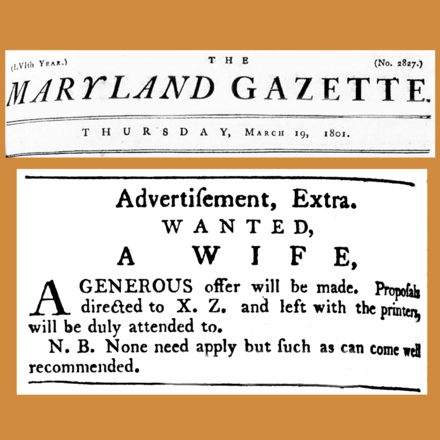
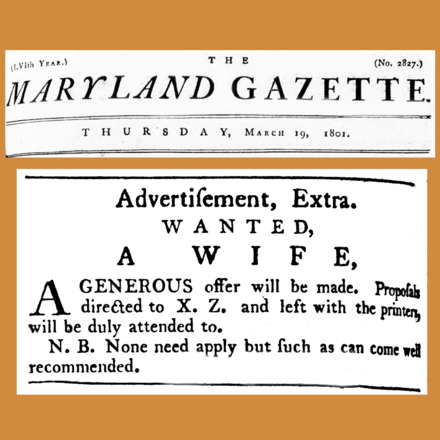
A "Wife Wanted" ad in an 1801 newspaper
"N.B." means "note well".