
Vox clamantis in deserto









Information on Scofield Thayer?

If anyone has information on Scofield Thayer’s (1889-1982) time at Butler Hospital, in Providence, where he was declared “insane” by Dr. Arthur H. Ruggles, M.D., superintendent of that hospital, and put under the guardianship of a partner at the Providence law firm of Edwards & Angell, please contact Robert Whitcomb at rwhitcomb4@cox.net.
Thayer was a very wealthy American editor, writer and publisher, best known for his art collection, now at the Metropolitan Museum of Art, and as a publisher and editor of the magazine The Dial during the 1920s. He published many emerging American and European writers and visual artists.
The erosion of the college 'bookstore'
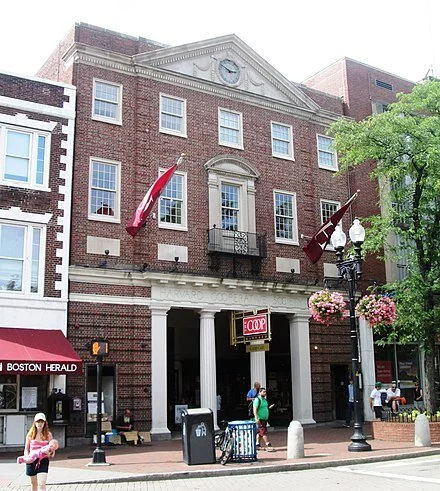
The Harvard /MIT Coop's (aka Harvard Cooperative Society) main store on Harvard Square was built in 1924 and designed by Perry, Shaw & Hepburn in the Colonial Revival style.
—Photo by Beyond My Ken
From Robert Whitcomb’s “Digital Diary,’’ in GoLocal24.com
It’s sad to see how college bookstores, once major and charming attractions in New England’s many college towns, are being ruined by the chains that have bought them. There are fewer and fewer books as they’re replaced by the likes of logoed sweatshirts, tacky tchotchkes and other junk.
The Brown “Bookstore’’ is particularly depressing. If you want to go to a real bookstore in Providence, I recommend Symposium Books, downtown, or Books on the Square and Paper Nautilus, on Wayland Square.
I guess that the Internet, by taking away the monopoly on textbook sales, helped drive a stake through the old college-bookstore business model. Even the once grand Harvard/MIT Coop bookstore is a skeleton of its former self.
Reading on a screen is not the same as reading on paper, which is easier on the eyes and better supports comprehension and memory of the material. I thought of this the other day in the Route 128 Amtrak/MBTA station, where there’s no longer a newsstand. For that matter, other than one helpful and lonely Amtrak clerk there are no longer any service people to buy tickets or coffee from, or ask a train-schedule question. Heading to the paperless and, for some, serviceless society.

Emerson College occupies this row of buildings across from the corner of Boston Common
— Photo by John Phelan
Even in the pouring rain in downtown Boston last Tuesday, it was fun to see a dozen Emerson College film students shooting scenes on the sidewalk across from the Common. Most appeared to be of East Asian ancestry and half of them had haired dyed green, purple or blue.
Don’t kick it

“Harrow 2” (iron), by Tom Waldron, in “Compelling Structure,’’ a joint show with Patrik Grijalvo, at Heather Gaudio Fine Art, New Canaan, Conn., through Nov. 13.
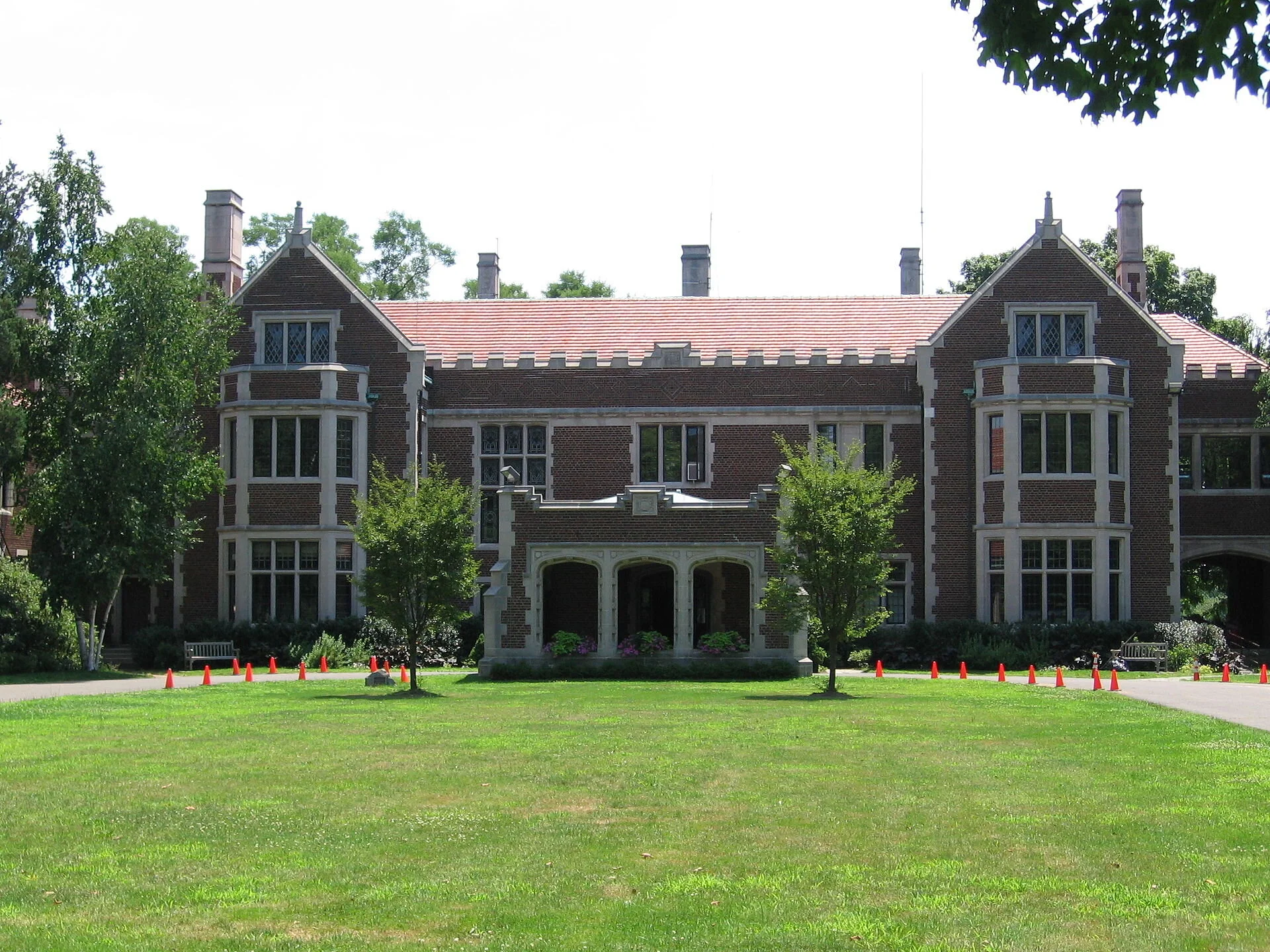
The Waveny estate in New Canaan, now a town park. The park's centerpiece is this “castle," built in 1912 by Lewis Lapham, a founder of the oil company Texaco, as mostly a summer place. It’s surrounded by 300 acres of fields, ponds and trails.

David Warsh: The exciting lives of former newspapermen

— Photo by Knowtex
SOMERVILLE, Mass.
After the Internet laid waste to old monopolies on printing presses and broadcast towers, new opportunities arose for inhabitants of newsrooms. That much I knew from personal experience. With it in mind, I have been reading Spooked: The Trump Dossier, Black Cube, and the Rise of Private Spies (Harper, 2021), by Barry Meier, a former reporter for The New York Times and The Wall Street Journal. Meier also wrote Pain Killer: A “Wonder” Drug’s Story of Addiction and Death (Rodale, 2003), the first book to dig in to the story of the Sackler family, before Empire of Pain: The Secret History of the Sackler Dynasty (Doubleday, 2021), by New Yorker writer Patrick Radden Keefe, eclipsed it earlier this year. In other words, Meier knows his way around. So does Lincoln Millstein, proprietor of The Quietside Journal, a hyperlocal Web site covering three small towns on the southwest side of Mt. Desert Island, in Downeast Maine.
Meier’s book is essentially a story about Glenn Simpson, a colorful star investigative reporter for the WSJ who quit in 2009 to establish Fusion GPS, a private investigative firm for hire. It was Fusion GPS that, while working first for Republican candidates in early 2016, then for Hillary Clinton’s presidential campaign, hired former MI6 agent Christopher Steele to investigate Donald Trump’s activities in Russia.
Meier, a careful reporter and vivid writer, doesn’t think much of Simpson, still less of Steele, but I found the book frustrating: there were too many stories about bad behavior in the far-flung private intelligence industry, too loosely stitched together, to make possible a satisfying conclusion about the circumstances in which the Steele dossier surfaced, other than information, proven or not, once assembled and packaged, wants to be free. William Cohan’s NYT review of Spooked was helpful: “[W]e are left, in the end, with a gun that doesn’t really go off.”
Meier did include in his book (and repeat in a NYT op-ed) a telling vignette about Fusion GPS co-founder Peter Fritsch, another former WSJ staffer who in his 15-year career at the paper had served as bureau chief in several cities around the world. At one point, Fritsch phones WSJ reporter John Carreyrou, ostensibly seeking guidance on the reputation of a whistleblower at a medical firm – without revealing that Fusion GPS had begun working for Elizabeth Holmes, of whose blood-testing start-up, Theranos, Carreyrou had begun an investigation.
Fritsch’s further efforts to undermine Carreyrou’s investigation failed. Simpson and Fritch tell their story of the Steele dossier in Crime in Progress (2019, Random House.) I’d like to someday read more personal accounts of their experiences in the private spy trade, I thought, as I put Spooked and Crime in Progress back on the shelf Given the authors’ new occupations, it doesn’t seem likely those accounts will be written.
By then, Meier’s story had got me thinking about Carreyrou himself. His brilliant reporting for the WSJ, and his 2018 best-seller, Bad Blood: Secrets and Lies in a Silicon Valley Startup (Knopf, 2018, led to Elizabeth Holmes’s trial on criminal charges that began last month in San Jose. Thanks to Twitter, I found, within an hour of its appearance, this interview with Carreyrou, now covering the trial online as an independent journalist.
My head spun at the thought of the leg-push and tradecraft required to practice journalism at these high altitudes. The changes wrought by the advent of the Web and social media have fundamentally expanded the business beyond the days when newspapers and broadcast news were the primary producers of news. In 1972, when I went to work for the WSJ, for example, the entire paper ordinarily contained only four bylines a day.
So I turned with some relief to The Quietside Journal, the Web site where retired Hearst executive Lincoln Millstein covers events in three small towns on Mt. Desert Island, Maine, for some 17,000 weekly readers. In an illuminating story about his enterprise, Millstein told Rick Edmonds, of the Poynter Institute, that he works six days a week, again employing pretty much the same skills he acquired when he covered Middletown, Conn., for The Hartford Courant forty years ago. (Millstein put the Economic Principals column in business in 1984, not long after he arrived as deputy business editor at The Boston Globe).
My case is different. Like many newspaper journalists in the 1980s, I worked four or five days a week at my day job and spent vacations and weekends writing books. I quit the day job in 2002, but kept the column and finished the book. (It was published in 2006 as Knowledge and the Wealth of Nations: A Story of Economic Discovery).
Economic Principals subscribers have kept the office open ever since; I gradually found another book to write; and so it has worked out pretty well. The ratio of time spent is reversed: four days a week for the book, two days for the column, producing, as best I can judge, something worth reading on Sunday morning. Eight paragraphs, sometimes more, occasionally fewer: It’s a living, an opportunity to keep after the story, still, as we used to say, the sport of kings.
David Warsh, a veteran columnist and an economic historian, is proprietor of Somerville-based economicprincipals.com, where this essay first ran.
‘Ever-evolving aggregate state’

“Shiver Me Timbers,’’ by Michael MacMahon, in his show “Wrack Line,’’ at the Umbrella Arts Center, Concord, Mass., through Oct. 31.
The gallery says:
“Wrack lines are linear piles of debris (both natural and manmade) that become situated on the edge of the landscape. The result of their coming in contact with and carried along by the forces of incoming waves and tides.
“The merging of economic need, curiosity, seen and unseen forces have brought peoples from different cultures and communities into contact across great distances. Whether through clashes or cooperative endeavors, these convergences have brought about the adaptation of living within a contemporary culture that is an ever-evolving aggregate state. Ideas of the self/home/the domestic space and the landscape come together in the paintings on view.’’
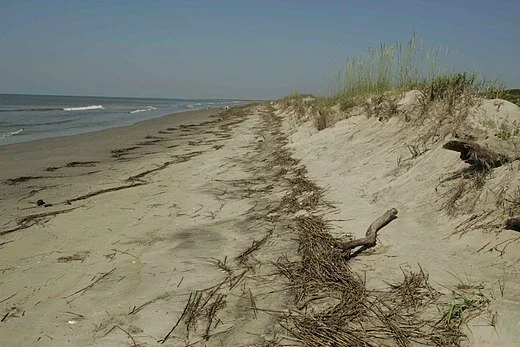
Debris in a wrack line
Caitlin Faulds: Sacred lotus joins other invasives to threaten waterways
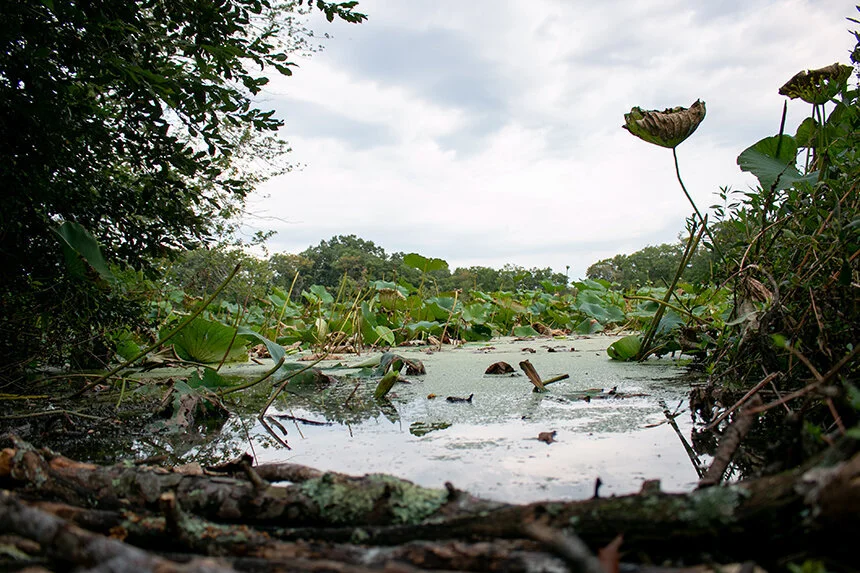
A shroud of invasive sacred lotuses blocks in the edge of Meshanticut Pond, at Meshanticut State Park, in Cranston, R.I. Despite previous attempts to cull their growth, they came back in full force this year.
— Photo by Caitlin Faulds/ecoRI News photos)

Sacred lotus flower
Fr0m ecoRI News (ecori.org)
CRANSTON, R.I.
The pond looks like a painting. A small boat and a family of swans — two juveniles, two adults — marked by gentle wakes on a glassy surface. Early red leaves gracing the tops of periphery trees, late-season lotuses still framing from the edge.
But at Meshanticut Pond, there is a battle brewing on the water between the boat and sacred lotus.
In the past seven years, after a Cranston resident planted it in memory of a relative, the lotus — an invasive species, endemic to Asia and relatively new to Rhode Island waterways — has overtaken the pond. Just a few oversized leaves at first, now hordes of water lilies encroaching on three sides of the shore.
But according to Keith Gazaille, project manager with SOLitude Lake Management — a water-quality and waterbody-restoration company that works throughout the eastern United States — it’s not the only aquatic invasive crowding out native plants in the pond.
Gazaille and aquatic technician Tanner Poole are out on Meshanticut Pond on a stormy Tuesday morning to continue the fight against a trifecta of invasives: variable watermilfoil, fanwort and sacred lotus.
“The lotus and the other invasive plants have the ability to really outcompete a lot of the native plant species,” Gazaille said. “It really reduces the diversity of the habitat.”
It provides some habitat for fish and other aquatic life. But a dense canopy of invasives reduces the variability of the habitat, and it can wreak havoc on the levels of dissolved oxygen below the canopy. As the crowd of plants switches between oxygen production and respiration, large fluctuations in oxygen can be a stressor for aquatic life.
A team was out here last year, Gazaille said, trying to ward off the growth. But the invasives have stuck around, determined.
“The growth has gotten to the point where it has raised the attention of residents and the city,” Gazaille said. “And so, I think there was a request to take some action.”
Today, he and Poole will be boating over half the pond, spraying a contact herbicide below the water to try once again to stop the spreading milfoil and fanwort.
“There’s not a lot of good — given the expanse of the infestation — non-chemical strategies, unfortunately,” he said.
Harvesting and manual removal of both plants can be counterproductive, according to Gazaille. They reproduce by fragmentation, he said, “so as they potentially break during those activities, you could be worsening the situation, and potentially spreading plant fragments downstream.”
The best option, he said, is to spray a contact herbicide on the vegetative portion of the plant. It is best to do this in the early fall, before they enter a natural stage of auto-fragmentation. Eliminating them now reduces the risk of downstream infestation. The treatment will leave the root intact, Gazaille said, but through repetitive treatment there can be a slow reduction in growth density.
“The lotus is another animal altogether,” Gazaille said.
They had hoped to spray its protruding leaves, too, with a systemic herbicide. That would spread through the plant, “kill the rhizome and prevent return of the plants all year,” he said.
But the impending rain would wash the chemicals off too early. They need 3-6 clear hours for it to be effective. They’ll be back in the next few weeks to finish off the other half of the pond and deal with the lotuses.
A late-season crowd of sacred lotuses and clouds of algae overtake swath of Meshanticut Pond.
Compared to some areas of the South, where the growing season is unimpeded by freezing temperatures, Gazaille has seen lotus completely overtake a water system. But for the Northeast, he said that Meshanticut Pond is dealing with a moderate- to high-level infestation.
They are trying to stop it there, but “the sacred lotus has been particularly hard to kill,” according to Christine Dudley, the Rhode Island Department of Environmental Management’s deputy chief of freshwater and diadromous fisheries.
And beyond Meshanticut, the battle against invasives is only getting worse.
“All over the world, really, but all over New England ponds are getting more and more infestations of invasives and more and more heavy algae and weed growth,” Dudley said.
There are a lot of different factors to blame. Usage around ponds has changed over the years, many have gotten more and more built up. Rising temperatures, eutrophication, lawn chemical use, released aquarium species, urban growth, and overburdened and leaching cesspools all play a role.
“It’s very difficult to tell someone that they can’t have a nice yard, or have a bigger house or a nicer house on a lake,” Dudley said. “But they really have to look to what’s happened over the years that has changed.”
There is legislation in the works to stop the sale of aquatic invasive species, but the reality on Meshanticut Pond and other Rhode Island waterbodies is invasives have already taken root. And the state can’t treat them all — it’s too expensive.
Cost varies based on the size, the weed type, the chemicals used, and the staff time needed. The 12-acre Meshanticut Pond alone cost $6,685 to treat, Dudley said — a price tag picked up by a federal grant program for habitat restoration.
Each year, DEM makes a list of priority treatment sites — based on which are in the worst shape, which are stocked with fish, and which bring in the most complaints, among other variables. But without behavior change and public attention to the causes, Dudley only sees the problem getting worse and a long road ahead as far as invasive treatments go.
“As far as I can see, it’ll be a continuing thing that we’ll have to fight and battle,” she said. “And … it’s not cheap.”
Caitlin Faulds is an ecoRI News journalist.
John O. Harney: Boston Fed chief departs and other regional comings and goings
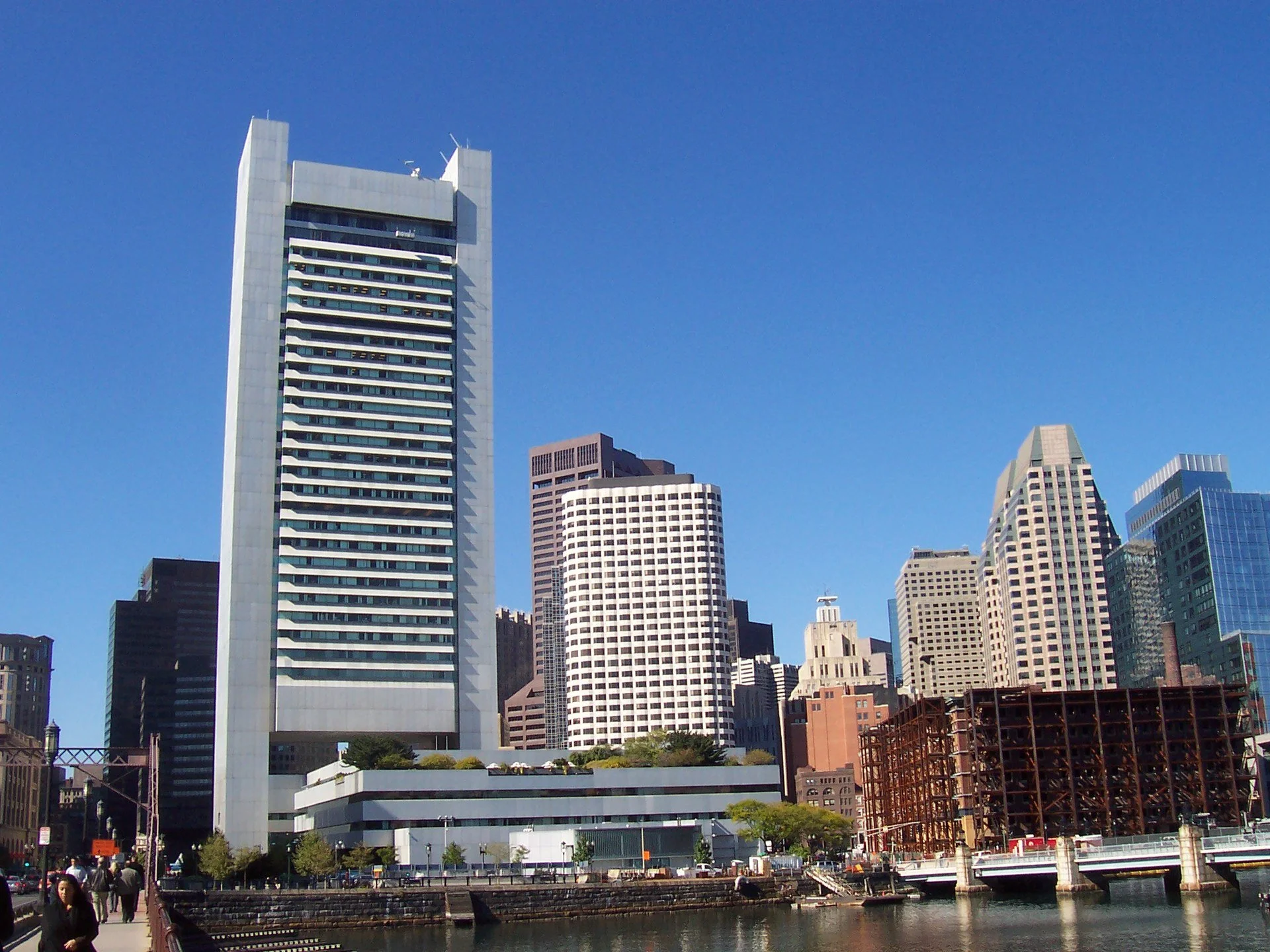
The Federal Reserve Bank of Boston is the tall building at the left.
From The New England Board of Higher Education (nebhe.org)
BOSTON
Boston Fed President and CEO Eric S. Rosengren, who had long planned to retire in June 2022, left the post Sept. 30 to deal with a worsening kidney condition. Rosengren announced that he has had the condition for many years and qualified for the kidney-transplant list in June 2020.
Rosengren worked 35 years at the Boston Fed and 14 as its president. Among his accomplishments, he championed the bank’s outreach to low- and moderate-income communities, hosted foreclosure-prevention workshops during the Great Recession, created a grant competition to support post-industrial New England communities and helped lead the Federal Reserve’s “Racism and the Economy” forums. Rosengren made the Boston Fed a key collaborator with NEBHE, including giving the keynote address at NEBHE’s major 2011 “New England Works” Summit on Bridging Higher Education and the Workforce. The Boston Fed announced that First Vice President and chief operating officer Kenneth C. Montgomery will serve as interim president and CEO.
The University of Rhode Island appointed Carlos Lopez Estrada, deputy director of administration and senior adviser to Pawtucket Mayor Donald R. Grebien, and Lauren Broccoli Burgess, a registered lobbyist and assistant director of government relations for the American Veterinary Medical Association, as the university’s directors of legislative and government relations. Lopez Estrada will focus on state and regional collaborations and Brocolli Burgess on federal government relations.
Lasell University appointed Lynne Celli as dean of graduate and professional studies. Celli joins Lasell from Endicott College, where she served as executive director of professional education and leadership, dean of graduate professional education, and associate dean for graduate education programs. She is also the former superintendent for Swampscott (Mass.) Public Schools.
Berkshire Community College (BCC) appointed Maureen McLaughlin as director of strategic initiatives. McLaughlin spent more than 20 years in the high-tech industry working on IPOs and acquisitions, as well as 10 years in public elementary schools supporting severe special needs students and students in crisis. BCC announced McLaughlin’s appointment among 10 new staff and faculty members.
Yale New Haven Health (YNHH) CEO Marna Borgstrom announced that she will retire next spring. She will be succeeded as head of the regional hospital system by current YNHH President and former Hospital of Saint Raphael CEO Christopher O’Connor.

— Photo by Beyond My Ken
The Massachusetts Museum of Contemporary Art (MASS MoCA) named Kristy Edmunds as its new director, succeeding founding director Joseph Thompson, who retired in late 2020 after 32 years leading the North Adams. Mass., museum. Edmunds has served as executive and artistic director at UCLA’s Center for the Art of Performance since 2011.
John O. Harney is executive editor of NEBHE’s New England Journal of Higher Education.
Before global warming

Plymouth Rock, where the Pilgrims almost certainly did not land first in what became the colony of Plymouth Plantation.
“They fell upon an ungenial climate, where there were nine months of winter and three months of cold weather, and that called out the best energies of the men, and of the women too, to get a mere subsistence out of the soil, with such a climate. In their efforts to do that they cultivated industry and frugality at the same time — which is the real foundation of the greatness of the Pilgrims.’’
— Ulysses S. Grant (1822-1885), U.S. president and Civil War general, in a speech at the Dec. 22, 1880 New England Society dinner.

Chris Powell: Left-wing Democrats’ ‘open borders’; give up on Haiti, etc.

Haitian coat of arms
MANCHESTER, Conn.
While President Biden, Connectiut Gov. Ned Lamont and their administrations cajole and coerce people to get vaccinated against the virus epidemic despite fears that the vaccines are really still experimental, the president's administration has just admitted to the country about 12,000 Haitians without documentation of vaccination and without virus testing.
{Editor’s note: Some southern New England cities have large numbers of Haitians and Haitian-Americans.}
U.S. citizens are finding that they need "vaccine passports" within their own country, but no such requirement is being made of foreigners crossing the southern border, either illegally or claiming refugee status.
Why has this been happening?
First, of course, it's because the Haitians who flash-mobbed the highway bridge in Del Rio, Texas, and other irregular border crossers have been confident that the Biden administration will not enforce immigration law. They have been proven correct.
Second, it has been happening because the Democratic Party, which now controls the federal government, can't face down its far-left faction, which favors open borders as moral principle, even now that having open borders means disregarding a more recent moral principle of the left -- vaccination coercion. That far-left faction long has ruled the party in Connecticut and so Connecticut has become a "sanctuary state," obstructing enforcement of immigration law and facilitating illegal immigration by awarding driver's licenses, other identification, and some public benefits to lawbreakers.
In politics nationally and in Connecticut, the desire for open borders now trumps public health.
What should be done about the Haitians and Haiti? Any solution starts with recognizing the country's history.
It is widely understood that Haiti long has been a disaster, recently because of earthquakes and hurricanes but, more profoundly, because of centuries -- of political instability and imperialism, first the imperialism of France, then Germany, and then the United States. From 1915 to 1934 the United States occupied and ran Haiti as brutally as any other imperial power might have done. Since the Marines departed, Haiti seldom has been capable of more than military coups, assassinations and dictatorships.
In recent years the placement in Haiti of a United Nations peacekeeping force also has failed to achieve political stability. The country is desperately poor, uneducated, malnourished, denuded, covered in earthquake rubble, gang- and crime-ridden, and, where there is ordinary politics, corrupt.
So it's no wonder that so many Haitians try to get out. But 11 million people remain there. Even sanctuary-crazed New Haven wouldn't welcome them all, and no other country wants to take in many more destitute people.
The most obvious solution might be a comprehensive intervention under the United Nations with a much larger force of soldiers and technicians and a 30-year charter to remake the country from scratch and brook no interference, though local advisory councils might be organized. This might be brutal sometimes but less brutal than the present. With a country as small as Haiti, couldn't a determined effort by the Developed World maintain public safety; build medical, educational, electrical, water, sanitation and judicial systems; facilitate agriculture; prevent starvation, and nurture self-sufficiency?
But since the record of intervention in Haiti is so miserable and the commitment of the Developed World so unreliable, maybe something new should be tried with Haiti -- that is, leaving the country alone with its misery, forcing Haitians to deal with it themselves and with whatever help international aid groups want to provide on the slim chance of making a difference.
While the latter option may sound horrible, the Developed World is tolerating many human disasters as bad as Haiti's or nearly so: China's persecution and genocide of the Uyghur people in the northwest of the country, the Myanmar military junta's persecution and genocide of the Rohingya Muslims and its murderous suppression of advocates of democracy; the civil wars in Yemen and Ethiopia, and, of course, the oppression being imposed on Afghanistan by the new Taliban regime.
The catastrophic and humiliating failure of 20 years of "nation building" by the United States in Afghanistan argues strongly for leaving all these disasters alone, at least until they break the firewalls of national borders.
Chris Powell is a columnist for the Journal Inquirer, in Manchester.

'Histories held captive'

“Intersection” (oil on canvas), by Jeff Bye, in his show “Shenandoah,’’ at Edgewater Gallery, Middlebury, Vt., through Oct. 31.
The gallery says:
“In Vermont we have landscape painters who seek to capture and honor the natural beauty of our state. Bye has a similar focus, but his landscapes are the interior landscapes of buildings that once were inhabited and were vital to the towns and communities in which they stood but now are vacant, their histories held captive behind locked doors and boarded windows.’’
Mass. company Sunovion's new Parkinson’s medication

From The New England Council (newenglandcouncil.com)
BOSTON
“Sunovion Pharmaceuticals, based in Marlboro (or Marlborough), Mass., has signed a deal with the Portuguese company Bial, granting it exclusive commercial license rights to Sunovion’s ‘Kynmobi’ Parkinson’s drug. The agreement allows Bial to handle the marketing applications and authorization procedures necessary for distribution and commercialization in Europe.
{Marlboro is a former industrial city that has become a high-tech center.}
“Sunovion will retain exclusive commercial rights to Kynmobi in North America and all other regions of the world excluding the European Union, the European Economic Area, and United Kingdom. An undisclosed amount in payment will be made to Sunovion for its supply of Kynmobi, and Bial hopes to submit a European marketing authorization application by the end of 2021. This deal comes at an important time, as more than 10 million people worldwide are predicted to be living with Parkinson’s disease by 2030.
“According to Sunovion’s press release, “Kynmobi is the first and only sub-lingual (under the tongue) therapy available for the on-demand treatment of [Parkinson’s] episodes in the U.S. and Canada.”
October: 'lavish'? 'scornful'?

The month of carnival of all the year,
When Nature lets the wild earth go its way,
And spend whole seasons on a single day.
The spring-time holds her white and purple dear;
October, lavish, flaunts them far and near;
The summer charily her reds doth lay
Like jewels on her costliest array;
October, scornful, burns them on a bier.
The winter hoards his pearls of frost in sign
Of kingdom: whiter pearls than winter knew,
Oar empress wore, in Egypt's ancient line,
October, feasting 'neath her dome of blue,
Drinks at a single draught, slow filtered through
Sunshiny air, as in a tingling wine!
— “October,’’ by Helen Hunt Jackson (1830-1885), American writer, born in Amherst, Mass., who lived much of her life Out West

Llewellyn King: Wind drought, gas shortages suggest worrisome winter coming for Europe

British wind farm rated capacity by region
(installed 2015 and 2020, projected by 2025)
WEST WARWICK
If you are thinking of going to Europe this winter, you might want to pack your long undies. A sweater or two as well.
Europe is facing its largest energy crisis in decades. Some countries will simply have no gas for heating and electricity production. Others won’t be able to pay for the gas which is available because prices are so high -- five times what they were. Much of this because Russia has severely curtailed the flow of gas into Europe, following on a wind drought.
Things are especially bad in Britain, which has been hit with a trifecta of woes. It started with a huge wind drought in and around the North Sea, normally one of the windiest places on earth. For the best part of six weeks, there simply wasn’t enough wind, and Britain is heavily invested in wind. Also, it has never installed much gas storage, which is one way of hedging against interruption.
Britain took to decarbonization with passion, confident of its great wind resource in the North Sea, where the wind is measured in degrees of gale force by the Met Office. The notoriously rough sea off Scotland hasn’t been getting its usual blow. Most European countries are 10-percent dependent on wind, but Britain relies on it for 20 percent of its power.
One result has been to propel gas prices into the stratosphere; consequently, the price of electricity has soared. Of 70 British electricity retailers, 30 have failed and others are expected to shut up shop as well. These aren’t generators but buyers and sellers of power, under a system which had been encouraged by the government when it broke up the state-owned Central Electricity Board during the Thatcher administration.
Britain, which opened the world’s first nuclear power station at Calder Hall in 1956, has been indecisive about new nuclear plants. Those now under construction are being built by Areva, a French company, which is partnering with the Chinese. This has raised questions about Chinese plans for a larger future role in British nuclear at a time when relations have soured with Beijing over Hong Kong and Chinese criticism of Britain’s right to send warships to the South China Sea, which it did in September.
One way or another, the input of electricity from nuclear in Britain has fallen from 26 percent at its peak to 20 percent today.
The biggest contribution to Britain’s problems, and to those of continental Europe, come from Russia limiting the amount of gas flowing into Europe. The supply is down 30 percent this year, and Russia looks set to starve Europe further if this is a cold winter as forecast.
Russia is in open dispute with Ukraine, which depends on Russia’s giant gas company, Gazprom, to supply gas for the Ukraine distribution system to other parts of Europe. At the heart of the Russian gas squeeze is the Nord Stream 2 pipeline, which has been completed but isn’t operating yet. It takes gas directly – 750 miles -- to Germany under the Baltic Sea and parallels an older line. Its effect will be to cripple Ukraine as a distributor.
The United States opposed the pipeline, but President Joe Biden reversed that in May. Ukraine feels betrayed, and much of Europe is uneasy.
Going forward, Europe will be more cautious of Russian supplies and less confident that the wind will always blow. Its Russian gas shortage has put pressure on international liquified natural gas markets, and counties are hurting from China to Brazil.
Britain has a separate crisis when it comes to gasoline, called petrol in the United Kingdom: There is an acute shortage of tanker drivers to get the fuel, which is plentiful, from Britain’s refineries to the pumps. British service stations are out of fuel or facing long lines of unhappy motorists.
This problem goes back to Brexit. Driving tankers is a hard, poorly paid job -- as is much road haulage -- and Britons have stopped doing it. The average age of British drivers is 56 and many are retiring.
The slack was taken up by eastern Europeans when Britain was part of the European Union. But after Brexit, these drivers were sent home as they no longer had the right to work in Britain.
So, the electricity and gas shortages are compounded by a gasoline shortage, which is quite a separate issue but adds to Britain’s woes as a winter of discontent looms.
Llewellyn King, a veteran columnist and international energy expert, is executive producer and host of White House Chronicle, on PBS. His email is llewellynking1@gmail.com. He’s based in Rhode Island and Washington, D.C.
Balancing individuals and community
“MACRO vs micro,” by Teddy Trocki-Ryba, in the intriguing and technologically complex show of the same name at AS220, in Providence, Oct. 2-Oct. 30.
Trocki-Ryba explains: "The work displayed in MACRO vs micro seeks to juxtapose the MACRO experience of community and government with the micro experience of family and individual life."
Better than manifestos
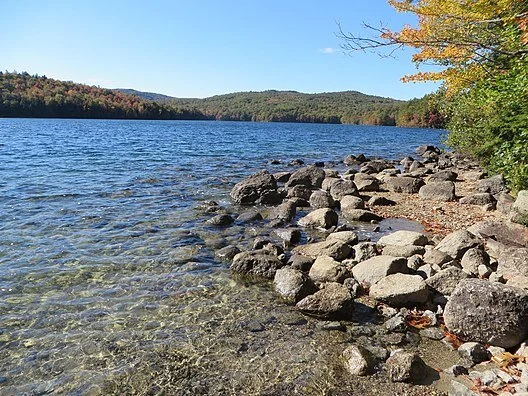
Nubanusit Lake, in the towns of Hancock and Nelson, N.H.

Hancock, N.H., Man Street in 1907
“If a community has good walking paths through fields and forests, people will use them. The right environment is a far better teacher than a heap of manifestos.’’
— Howard Mansfield (born 1957) in The Same Ax, Twice: Restoration and Renewal in a Throwaway Age. He lives in Hancock, N.H., with his wife, Sy Montgomery, who is well known for writing about animals.
In search of cheap help
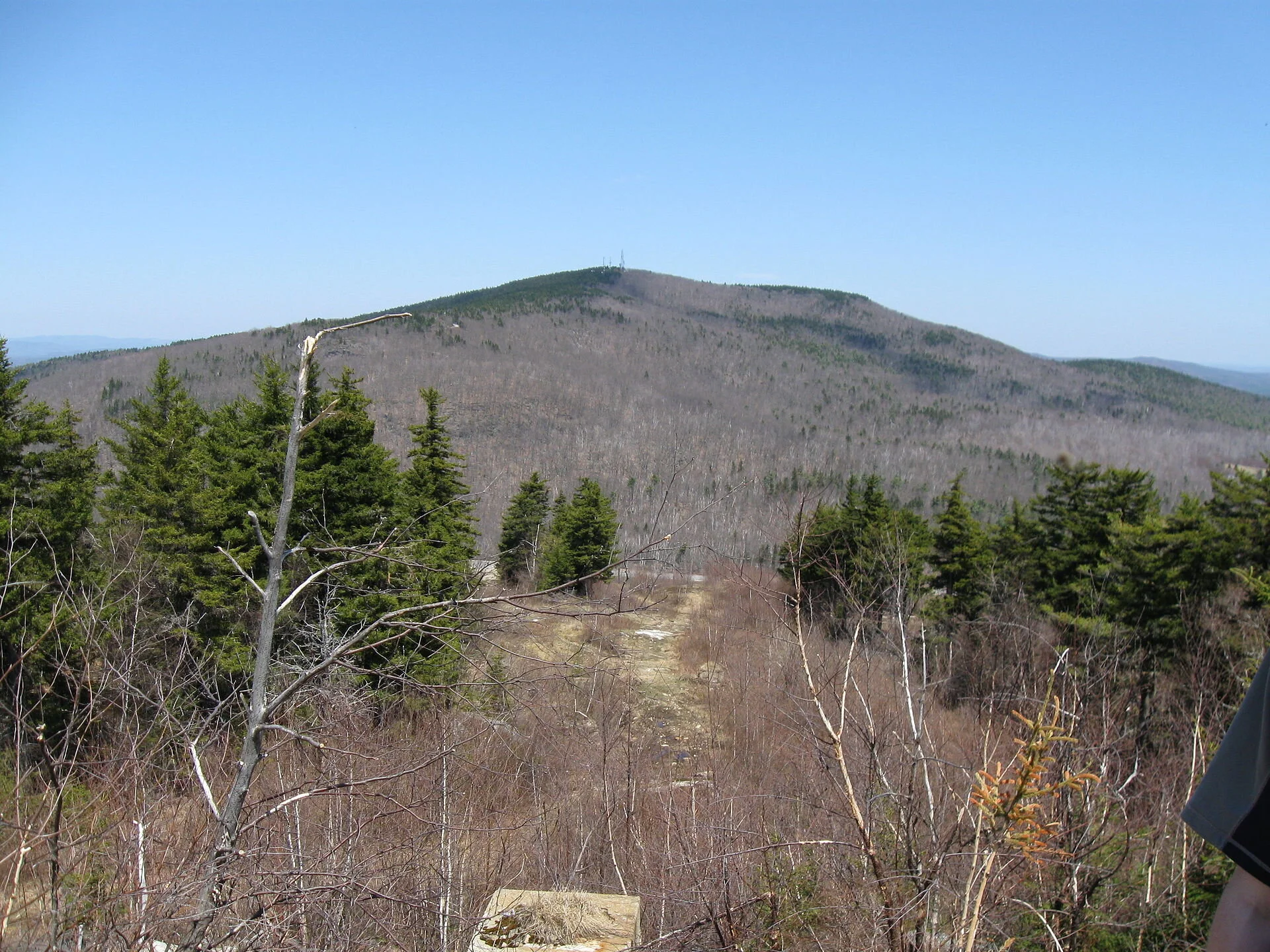
View of Pack Monadnock Mountain from Temple Mountain, on the eastern side of Sharon, N.H. Temple Mountain was the site of the privately owned Temple Mountain Ski Area from 1938 to 2001, when it was closed. In 2007, the state took it over and turned it into a park. The ski area’s proximity to Greater Boston made it very popular in its heyday, in the ‘50s and ‘60s.
— Photo by Ken Gallager
“I don't mind America becoming a Third World country. The weather is better in the Third World than it is where I live in New Hampshire. And household help will be much cheaper.”
P. J. O'Rourke (born 1947), American writer and satirist. He lives in Sharon, N.H. (population 352 in the 2010 Census.)

Bad for swimming but perhaps edible
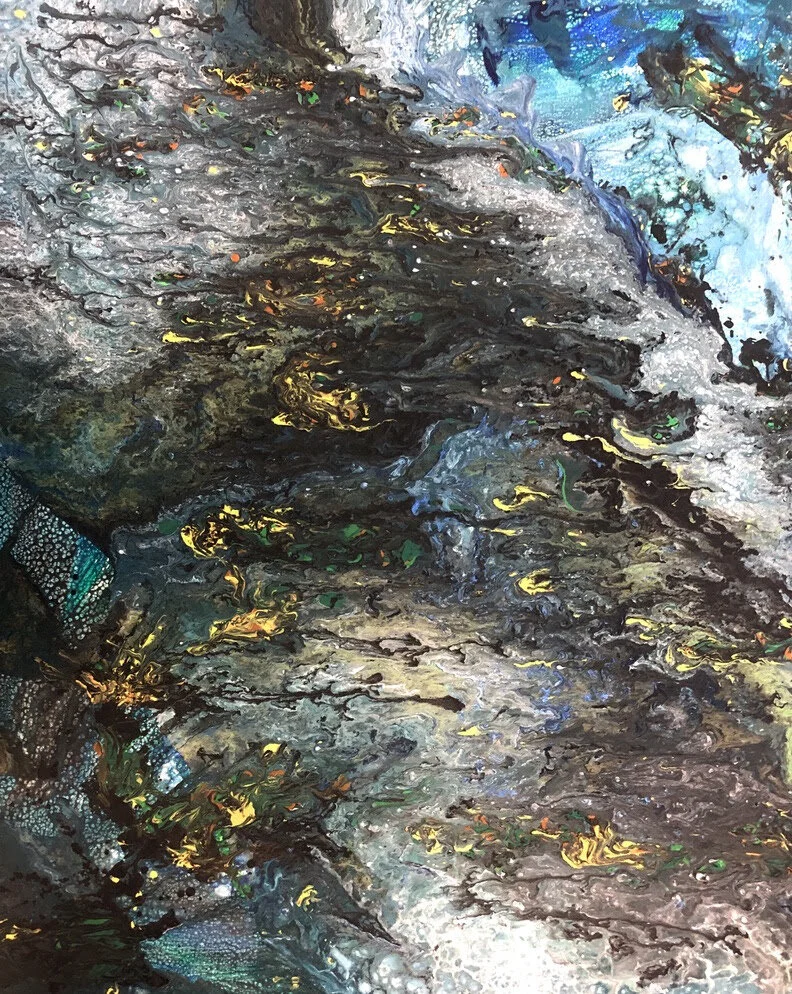
“Algae Bloom” (acrylic pouring on canvas), by Sandrine Colson, in her joint show with George Shaw, “Environmental Effects,’’ at Atlantic Works Gallery, Boston. Ms. Colson, a native of France, lives and works in Boston.

Judith Graham: With the arrival of Aduhelm, what is 'mild cognitive impairment'?

19th Century drawing of man with dementia
The approval of a controversial new drug for Alzheimer’s disease, Aduhelm, made by Cambridge, Mass.-based Biogen, is shining a spotlight on mild cognitive impairment — problems with memory, attention, language or other cognitive tasks that exceed changes expected with normal aging.
(Kendall Square in Cambridge, Biogen’s neighborhood, has become arguably the bio-tech center of the world.)
After initially indicating that it could be prescribed to anyone with dementia, the Food and Drug Administration now specifies that the prescription drug be given only to individuals with mild cognitive impairment or early-stage Alzheimer’s, the groups in which the medication was studied.
Yet this narrower recommendation raises questions. What does a diagnosis of mild cognitive impairment mean? Is Aduhelm appropriate for all people with mild cognitive impairment, or only some? And who should decide which patients qualify for treatment: dementia specialists or primary-care physicians?
Controversy surrounds Aduhelm because its effectiveness hasn’t been proved, its cost is high (an estimated $56,000 a year, not including expenses for imaging and monthly infusions), and its potential side-effects are significant (41 percent of patients in the drug’s clinical trials experienced brain swelling and bleeding).
Furthermore, an FDA advisory committee strongly recommended against Aduhelm’s approval, and Congress is investigating the process leading to the FDA’s decision. Medicare is studying whether it should cover the medication, and the Department of Veterans Affairs has declined to do so under most circumstances.
Clinical trials for Aduhelm excluded people over age 85; those taking blood thinners; those who had experienced a stroke; and those with cardiovascular disease or impaired kidney or liver function, among other conditions. If those criteria were broadly applied, 85 percent of people with mild cognitive impairment would not qualify to take the medication, according to a new research letter in the Journal of the American Medical Association.
Given these considerations, carefully selecting patients with mild cognitive impairment who might respond to Aduhelm is “becoming a priority,” said Dr. Kenneth Langa, a professor of medicine, health management and policy at the University of Michigan.
Dr. Ronald Petersen, who directs the Mayo Clinic’s Alzheimer’s Disease Research Center, said, “One of the biggest issues we’re dealing with since Aduhelm’s approval is, ‘Are appropriate patients going to be given this drug?’”
Here’s what people should know about mild cognitive impairment based on a review of research studies and conversations with leading experts:
Basics. Mild cognitive impairment is often referred to as a borderline state between normal cognition and dementia. But this can be misleading. Although a significant number of people with mild cognitive impairment eventually develop dementia — usually Alzheimer’s disease — many do not.
Cognitive symptoms — for instance, difficulties with short-term memory or planning — are often subtle but they persist and represent a decline from previous functioning. Yet a person with the condition may still be working or driving and appear entirely normal. By definition, mild cognitive impairment leaves intact a person’s ability to perform daily activities independently.
According to an American Academy of Neurology review of dozens of stuies, published in 2018, mild cognitive impairment affects nearly 7 percent of people ages 60 to 64, 10 percent of those 70 to 74 and 25 percent of 80-to-84-year-olds.
Causes. Mild cognitive impairment can be caused by biological processes (the accumulation of amyloid beta and tau proteins and changes in the brain’s structure) linked to Alzheimer’s disease. Between 40 percent and 60 percent of people with mild cognitive impairment have evidence of Alzheimer’s-related brain pathology, according to a 2019 review.
But cognitive symptoms can also be caused by other factors, including small strokes; poorly managed conditions, such as diabetes, depression and sleep apnea; responses to medications; thyroid disease; and unrecognized hearing loss. When these issues are treated, normal cognition may be restored or further decline forestalled.
Subtypes. During the past decade, experts have identified four subtypes of mild cognitive impairment. Each subtype appears to carry a different risk of progressing to Alzheimer’s disease, but precise estimates haven’t been established.
People with memory problems and multiple medical issues who are found to have changes in their brain through imaging tests are thought to be at greatest risk. “If biomarker tests converge and show abnormalities in amyloid, tau and neuro-degeneration, you can be pretty certain a person with MCI has the beginnings of Alzheimer’s in their brain and that disease will continue to evolve,” said Dr. Howard Chertkow, chairperson for cognitive neurology and innovation at Baycrest, an academic health-sciences center in Toronto that specializes in care for older adults.
Diagnosis. Usually, this process begins when older adults tell their doctors that “something isn’t right with my memory or my thinking” — a so-called subjective cognitive complaint. Short cognitive tests can confirm whether objective evidence of impairment exists. Other tests can determine whether a person is still able to perform daily activities successfully.
More sophisticated neuropsychological tests can be helpful if there is uncertainty about findings or a need to better assess the extent of impairment. But “there is a shortage of physicians with expertise in dementia — neurologists, geriatricians, geriatric psychiatrists” — who can undertake comprehensive evaluations, said Kathryn Phillips, director of health services research and health economics at the University of California-San Francisco School of Pharmacy.
The most important step is taking a careful medical history that documents whether a decline in functioning from an individual’s baseline has occurred and investigating possible causes such as sleep patterns, mental health concerns and inadequate management of chronic conditions that need attention.
Mild cognitive impairment “isn’t necessarily straightforward to recognize, because people’s thinking and memory changes over time [with advancing age] and the question becomes ‘Is this something more than that?’” said Dr. Zoe Arvanitakis, a neurologist and director of Rush University’s Rush Memory Clinic, in Chicago.
More than one set of tests is needed to rule out the possibility that someone performed poorly because they were nervous or sleep-deprived or had a bad day. “Administering tests to people over time can do a pretty good job of identifying who’s actually declining and who’s not,” Langa said.
Progression. Mild cognitive impairment doesn’t always progress to dementia, nor does it usually do so quickly. But this isn’t well understood. And estimates of progression vary, based on whether patients are seen in specialty dementia clinics or in community medical clinics and how long patients are followed.
A review of 41 studies found that 5 percent of patients treated in community settings each year went on to develop dementia. For those seen in dementia clinics — typically, patients with more serious symptoms — the rate was 10 percent. The American Academy of Neurology’s review found that after two years 15 percent of patients were observed to have dementia.
Progression to dementia isn’t the only path that people follow. A sizable portion of patients with mild cognitive impairment — from 14 percent to 38 percent — are discovered to have normal cognition upon further testing. Another portion remains stable over time. (In both cases, this may be because underlying risk factors — poor sleep, for instance, or poorly controlled diabetes or thyroid disease — have been addressed.) Still another group of patients fluctuate, sometimes improving and sometimes declining, with periods of stability in between.
“You really need to follow people over time — for up to 10 years — to have an idea of what is going on with them,” said Dr. Oscar Lopez, director of the Alzheimer’s Disease Research Center at the University of Pittsburgh.
Specialists versus generalists. Only people with mild cognitive impairment associated with Alzheimer’s should be considered for treatment with Aduhelm, experts agreed. “The question you want to ask your doctor is, ‘Do I have MCI [mild cognitive impairment] due to Alzheimer’s disease?’” Chertkow said.
Because this medication targets amyloid, a sticky protein that is a hallmark of Alzheimer’s, confirmation of amyloid accumulation through a PET scan or spinal tap should be a prerequisite. But the presence of amyloid isn’t determinative: One-third of older adults with normal cognition have been found to have amyloid deposits in their brains.
Because of these complexities, “I think, for the early rollout of a complex drug like this, treatment should be overseen by specialists, at least initially,” said Petersen of the Mayo Clinic. Arvanitakis of Rush University agreed. “If someone is really and truly interested in trying this medication, at this point I would recommend it be done under the care of a psychiatrist or neurologist or someone who really specializes in cognition,” she said.
Judith Graham is a Kaiser Health News reporter.
Judith Graham: khn.navigatingaging@gmail.com, @judith_graham

Creative walks through The Fells

“Winter Fire” (mono-printed fabric hand sewn with perle cotton), by Agusta Agustsson, in her show “Forest Bathing,’’ at Galatea Fine Art, Boston, through Oct. 1-Oct 31.
She explains:
"My walks through {The Middlesex} Fells on the edge of my city provide me with inspiration, material resources and spiritual sustenance. These pieces portray those moments seen from the corner of my eye, sensations rather than clear visions. It might be a branch of beech leaves seemingly afire in a sudden bolt of sunshine or the piney aroma as my feet tread my path. On my walk shapes and textures of common plants will catch my eye and come back to my studio to print fabric for my next piece. As I walk through well-worn paths I see the earth is capable of great renewal. I hope we as a species will allow it to happen.’’
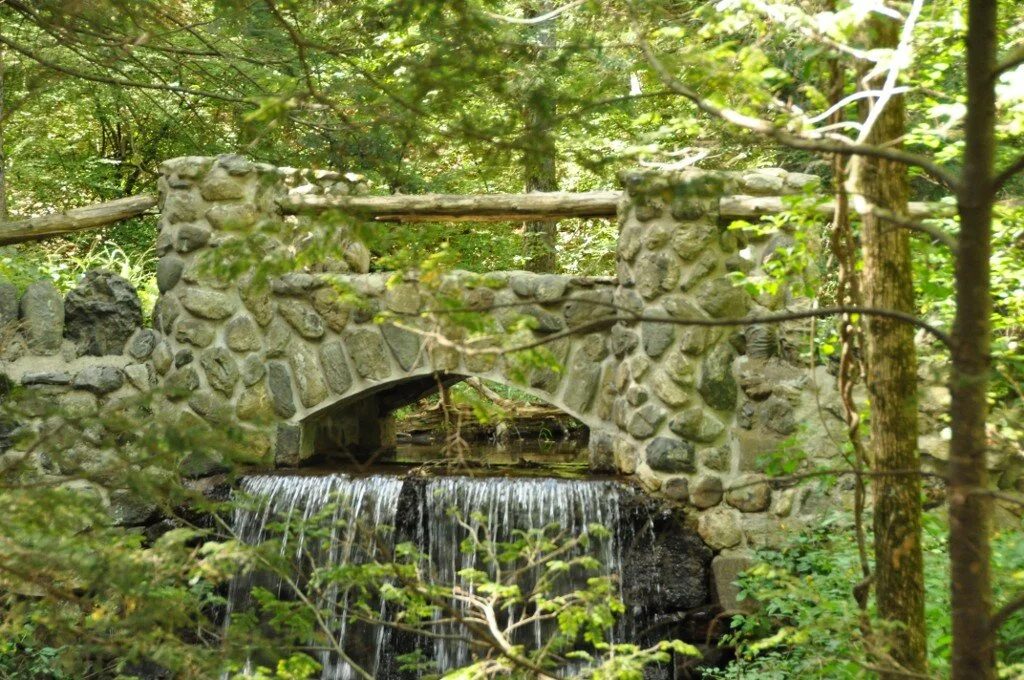
A stone foot bridge crossing an 18th Century dam in the Spot Pond Archeological District of the Middlesex Fells Reservation in Stoneham, Mass.
— Photo by User:Magicpiano
The Middlesex Fells Reservation, often called simply as The Fells, is a public recreation area covering more than 2,200 acres in Malden, Medford, Melrose, Stoneham and Winchester, Mass. The state park surrounds two inactive reservoirs, Spot Pond and the Fells Reservoir, and the three active reservoirs (North, Middle, and South) supplying Winchester.