
Vox clamantis in deserto





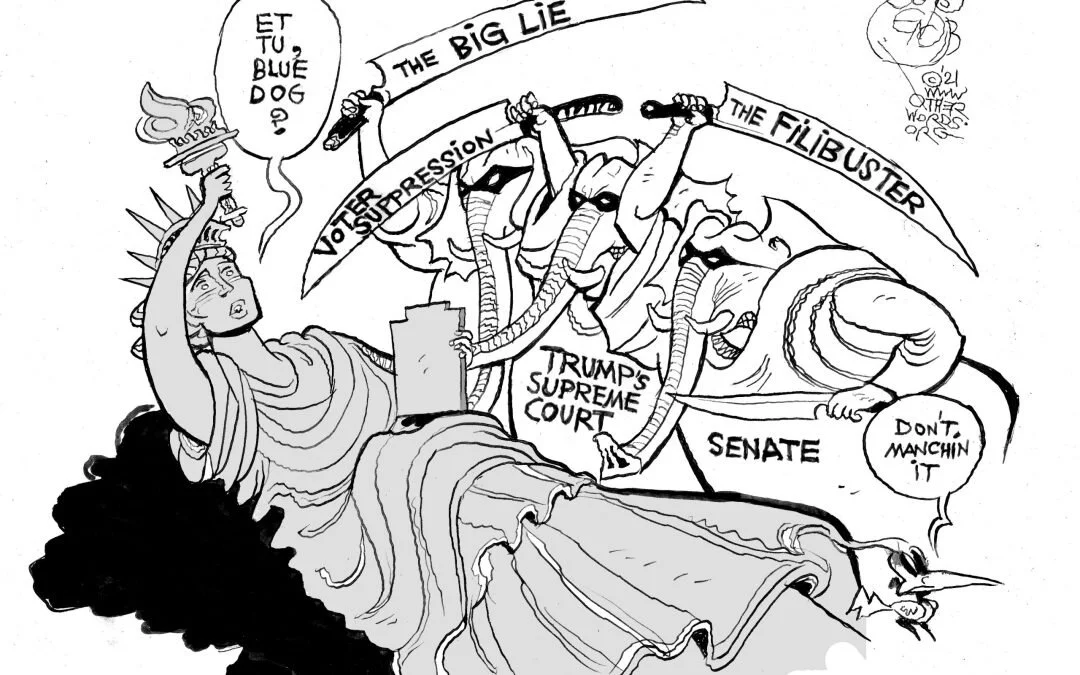
Phyllis Bennis: Triumph and tragedy of the Olympic Refugee Team

The Refugee Team competes under the Olympic Flag.
Via OtherWords.org
The Olympic Refugee Team filing into the stadium during Tokyo’s opening ceremonies provided a powerful, moving sight: almost 30 athletes, carrying the Olympic flag, striding alongside the delegations of almost every country in the world.
Instead of their home countries, these refugees represent the millions around the world who’ve been forcibly displaced from their homes. The team is made up of extraordinary individuals who have overcome huge obstacles just to survive — let alone train as world-class athletes.
They are swimmers, cyclists, judoken, wrestlers, runners, and more — from Iraq and Afghanistan, the Democratic Republic of Congo and Cameroon, Sudan and South Sudan, Syria, Venezuela, and beyond.
Several were part of the Olympics’ first Refugee Team five years ago, including Yusra Mardini, a Syrian swimmer and refugee from the country’s civil war.
Her incredible story went viral. When their overloaded dinghy broke down in the Aegean Sea, Yusra and her sister jumped overboard and swam for three hours, pushing it to safety. They saved the lives of dozens desperately trying to reach safety in Greece.
Yusra’s was only one of the stories of extraordinary trauma and triumph from Team Refugees. But unfortunately, the population represented by the team just keeps growing.
At the time of the Rio Olympics five years ago, 65 million people were forcibly displaced. This year, that figure has soared to over 82 million. If it were its own country, Refugee Nation would be the 20th most populous country on earth, right between Thailand and Germany.
There are many reasons people are forced to flee their homes — including war and violence, extreme weather and climate change, and economic injustice. The harsh reality is that mass displacement has become normalized, acceptable in today’s world.
Global warming and climate chaos are so severe that climate refugees are emerging everywhere. Wars, including many involving the United States, continue to push millions of people out of their homes. And abject poverty, skyrocketing inequality, and a global pandemic are all forcing more desperately poor people to flee in search of work, food, and safety.
It’s not enough to honor millions of refugees with an Olympic team of their own — they need rights, not medals. As long as millions remain displaced, it remains important to build broad and global movements to defend their rights.
The rights guaranteed by the Universal Declaration of Human Rights include “freedom of movement and residence within the borders of each State,” the right “to seek and to enjoy in other countries asylum from persecution,” and the right to return to their homes when hostilities are over.
Unfortunately, from the dangerous waters of the Mediterranean to the arid U.S.-Mexico border, those rights are often denied. It’s a grim thing indeed that there are more people displaced now than at any time since World War II — so many that Refugee Nation appears to be a permanent feature of the Olympics.
Still, the courage of these extraordinary young athletes at the Olympics keeps the plight of refugees — and the responsibility of our own governments for their plight — in front of the eyes of the world.
Team Refugees’ entrance to Tokyo’s Olympic stadium provided a moment of hope and a moment of internationalism. It was beautiful.
But how much more beautiful, how much better than medals, if those athletes — and the 82 million displaced people they represent — could go home after the games? To a home for themselves and their families, in their own country or abroad, safe from the wars and disasters and poverty that drove them out in the first place?
Phyllis Bennis directs the New Internationalism Project at the Institute for Policy Studies.
State of mind Out West

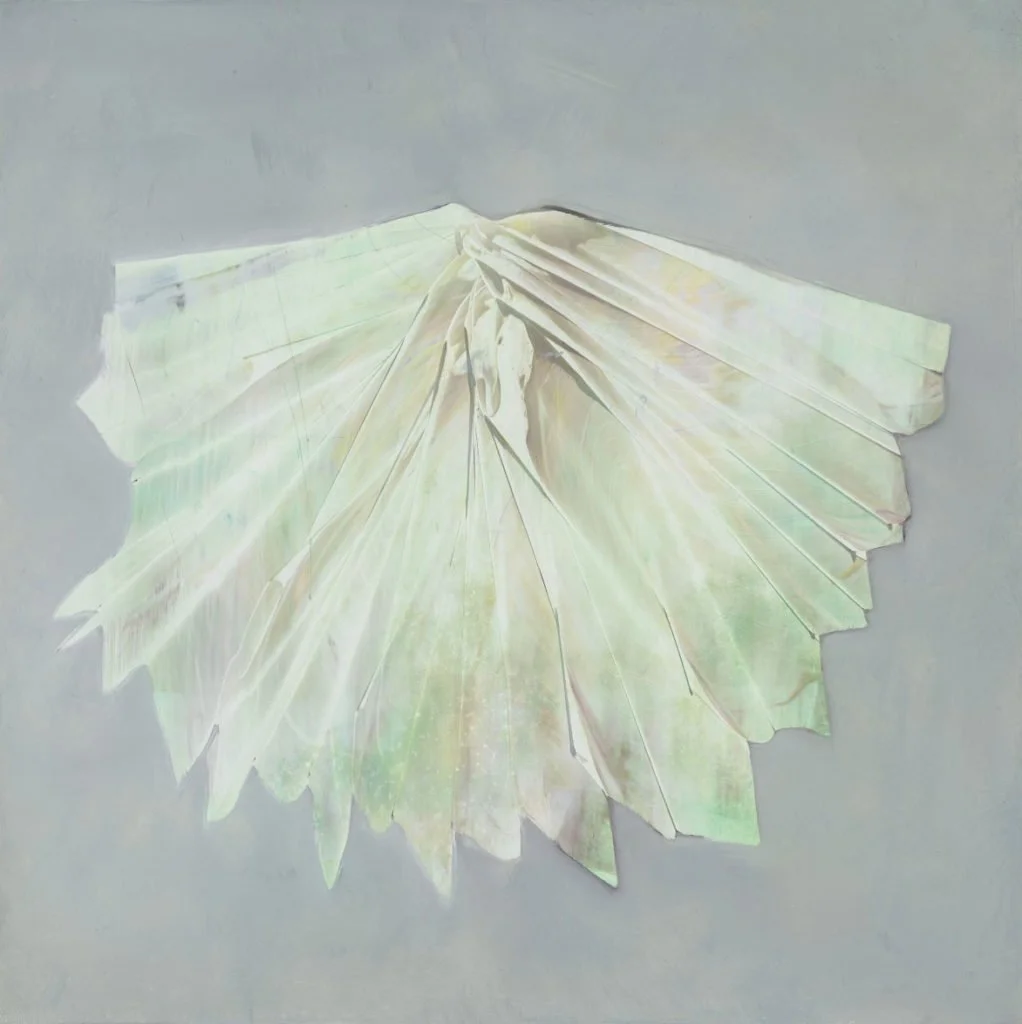
“Today” (oil on panel), by Susan Strauss, in her show “Western Painting,’’ at Periphery Space @ Paper Nautilus, Providence.
The gallery says:
“Strauss describes these as pivotal paintings as they were influenced by a change of place but also a state of mind brought about by the crisis of politics and COVID. Strauss traveled to northern Arizona to paint in the winter of 2019-2020 and stayed Out West through most of 2021 so far. Starting with daily painting, direct observation and walks through the landscape, she began working on a series of abstract paintings. Book sized; the small landscapes help you travel to the high desert. The larger works connect the elemental immediacy of the Western landscape and the timelessness of Eastern cosmology represented by the mandala.’’
Strauss has lived and maintained her studio in Westport, MA since 2005 and is part of the South Coast Artists open studio community and the Art Drive. She is a founding member of the Brickbottom Artists Building in Boston and has received grants from Mass Arts Lottery and Public Works RI. Her work has been exhibited in many group and solo shows throughout the New England area including Gallery at 4, Tiverton, RI, Dedee Shattuck Gallery, Westport, MA, Gallery NAGA, Boston, MA, Newport Art Museum, Newport, RI, New Bedford Art Museum, New Bedford, MA, Tufts University, UMass Boston, Boston University, Prince Street Gallery, New York, NY and Atlantic Gallery, New York, NY.
For more information about the show visit http://www.peripheryspace.com
to learn more about artist visit her website and social media
https://www.susanstrausspainting.com
Instagram @susanstrausspainting
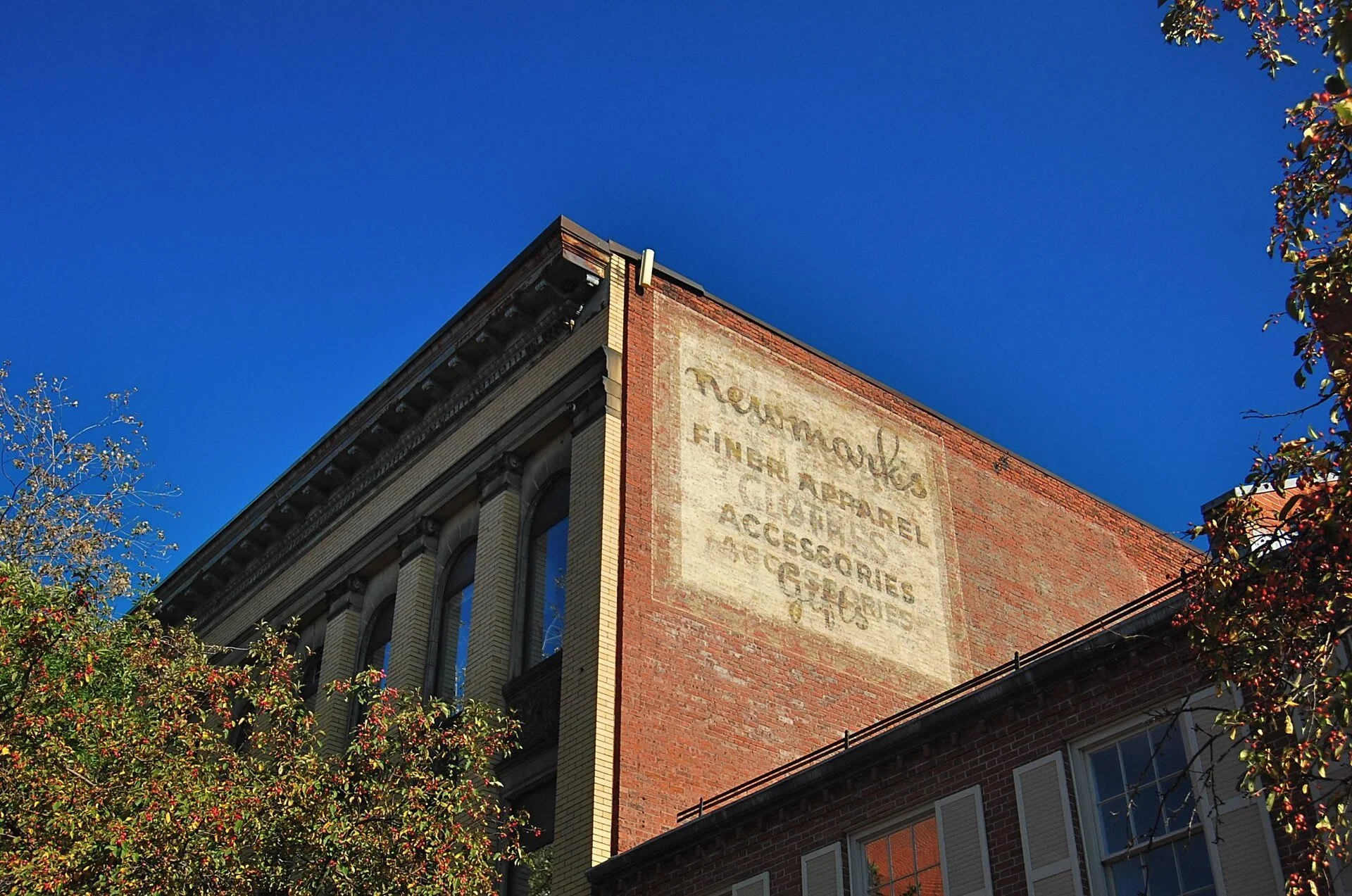
‘Irregular pile of architecture’
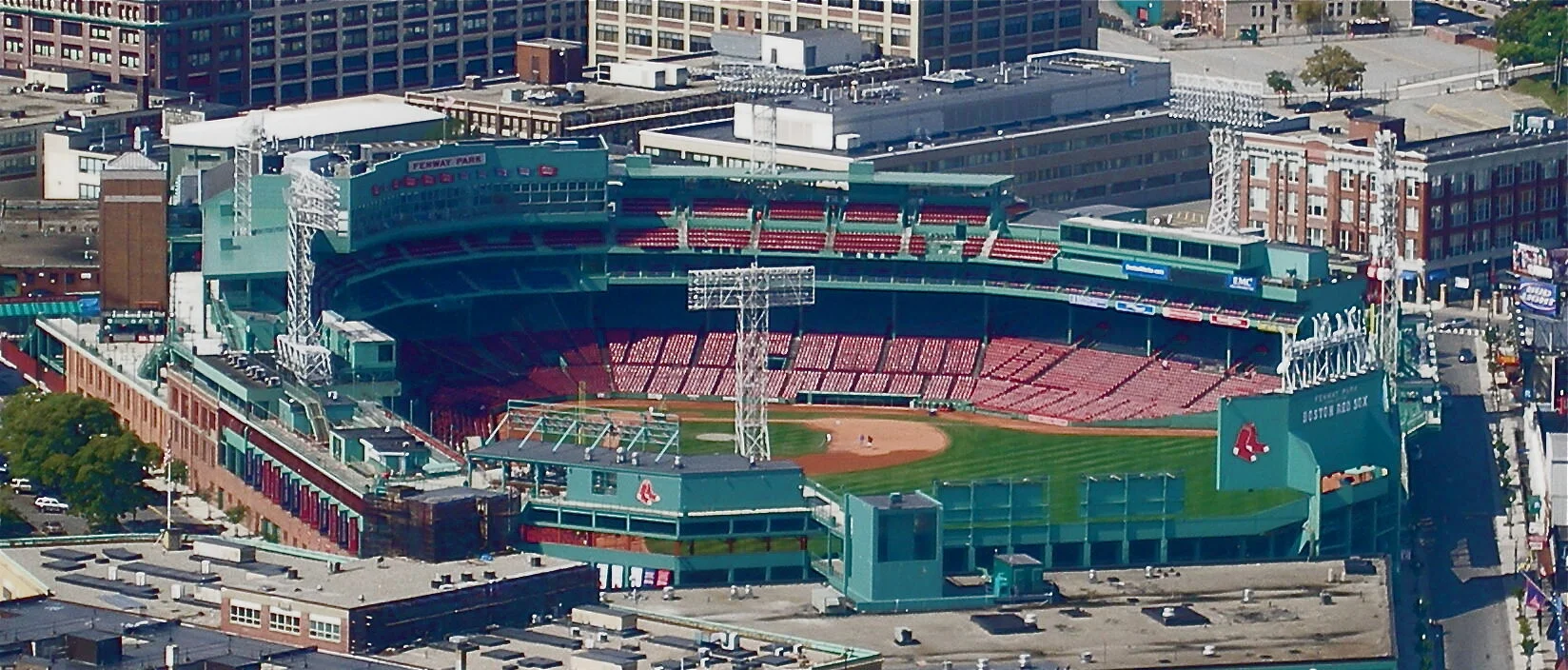
A view of Fenway Park and the surrounding neighborhood, as seen from the Prudential Tower.
— Photo by Aidan Siegel
The ballpark is the star. In the age of Tris Speaker and Babe Ruth, the era of Jimmie Foxx and Ted Williams, through the empty-seats epoch of Don Buddin and Willie Tasby and unto the decades of Carl Yastrzemski and Jim Rice, the ballpark is the star. A crazy-quilt violation of city planning principles, an irregular pile of architecture, a menace to marketing consultants, Fenway Park works. It works as a symbol of New England's pride, as a repository of evergreen hopes, as a tabernacle of lost innocence. It works as a place to watch baseball”.
Martin F. Nolan, now-retired Boston Globe reporter and editor.

Don Pesci: Connecticut could use some ‘moxie’

VERNON, Conn.
It does not take a majority to prevail... but rather an irate, tireless minority, keen on setting brushfires of freedom in the minds of men
– Sam Adams
Bob Whitcomb used to be the editorial page editor of The Providence Journal at a time when Moxie was plentiful in Connecticut. Sadly, that is no longer the case. Moxie in “The Nutmeg State” has become rarer than modest politicians. Whitcomb was my editor at The Providence Journal back in the day.
And this is one of my pet peeves – that journalism is no longer able to produce editorial-page editors such as Whitcomb, perhaps because journalism lacks “moxie.”
A piece in Whitcomb’s New England Diary tells us that Moxie is “a carbonated beverage brand that was among the first mass-produced soft drinks in the United States. It was created around 1876 by Augustin Thompson (born in Union, Maine) as a patent medicine called ‘Moxie Nerve Food’ and was produced in Lowell, Mass.”
The extravagant claims of patent medicine pushers in the post-Civil War period were, of course, patently absurd. But this was the age of P.T. Barnum and Woodrow Wilson, an early progressive and a racist who had a beef with the U.S. Constitution. The progressive beef, briefly, was that the Constitution served as a breakwater against the overweening ambitions of progressives to make the world anew from the ground up.
Ronald J. Pestritto tells us in his essay“Why the Early Progressives Rejected American Founding Principles’’ that the progressives “had in mind a variety of legislative programs aimed at regulating significant portions of the American economy and society, and at redistributing private property in the name of social justice. The Constitution, if interpreted and applied faithfully, stood in the way of this agenda.”
Progressive patent nonsense has been revived in our own time, but the post-progressive movement – pushed forward by political malcontents such as Rep. Alexandria Ocasio-Cortez (D.-N.Y.), Rep. Ayanna Pressley (D-Mass.), Rep. Ilhan Omar (D-Minn.) and Rep. Rashida Tlaib (D-Mich.), better known as “the squad” -- lacks the intellectual rigor that Wilson brought to his make-the-world-over project. See William Graham Sumner’s in Connecticut Commentary on “the absurd effort to make the world over.”
The era that gave us Wilson also made Moxie a national beverage, a saving grace for those of us who have acquired the requisite "acquired taste."
Moxie is not a first love. She is the one that you plan to marry after your first two loves have gone their ways without you.
I used to be able to buy Moxie in one of three grocery stores within reasonable driving distance of my house.
No more.
“You used to carry Moxie,” I told the soda manager at one of the stores. “No more?”
He mumbled something.
“I can’t decipher what you’re saying.”
He was double-masked, removed both, and then said, popping every plosive, “Moxie has been bought out by Coke. If you ask me in a few weeks, I’ll see what I can do.”
But Coronavirus swept over us, weeks went by, and Moxie, along with the smiles of middle-class workers, suppressed by masks, disappeared from the shelves of all three stores.
I gave up the struggle, but the irritation chafed. It is small irritants, not large deprivations, that produce revolutions. The French Revolution began as a protest in Paris over the lack of bread. The American Revolution began as a protest over a tax on tea. In both cases, irritant had been piled on irritant until something in the human breast shouted – revolution!
Autocrats in Connecticut had better give some thought to little irritations. Most of us have been free of masks for weeks. Our restaurants have re-opened. Waitresses and waiters, the wait staff much depleted but unmasked, have shown their welcoming faces to repeat customers.
We read those faces, smile back … and now, owing to a strain of Coronavirus more contagious but less disabling among the general population, the national business shutdown-industry has been pondering new impositions: punishments for people who, whatever their reasons, have yet to be vaccinated; possible future business shutdowns; yet more extensions of anti-constitutional gubernatorial executive powers, and “More mask,” the dying last words of Friedrich Nietzsche.
It is a matter of some debate whether revolutionary brushfires lit in the hearts of men, or a lack of moxie, will be the spark that produces a revolutionary restoration of constitutional rights and immunities.
The word “moxie”, the New England Diary tells us means “daring, or determination. It was a favorite word of the ruthless Joseph P. Kennedy, father of the famous political family that included President John F. Kennedy. If he liked someone, he’d say ‘he has moxie!’’ {small “m” in that generic use}.
Or, “Moxie makes you foxy.”
Unfortunately, Connecticut has no moxie and is not foxy.
Don Pesci is a Vernon-based columnist.
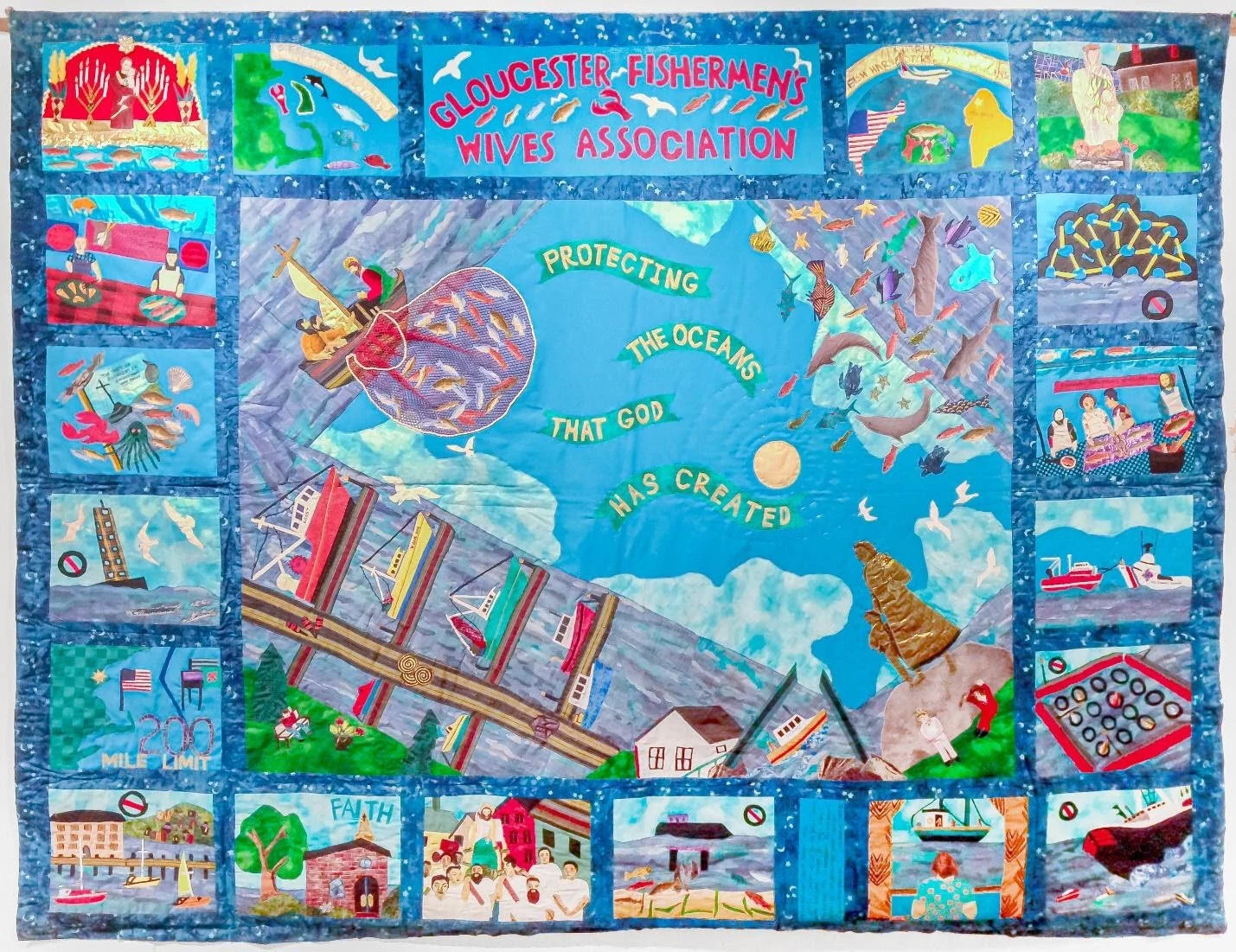
Quilting a message
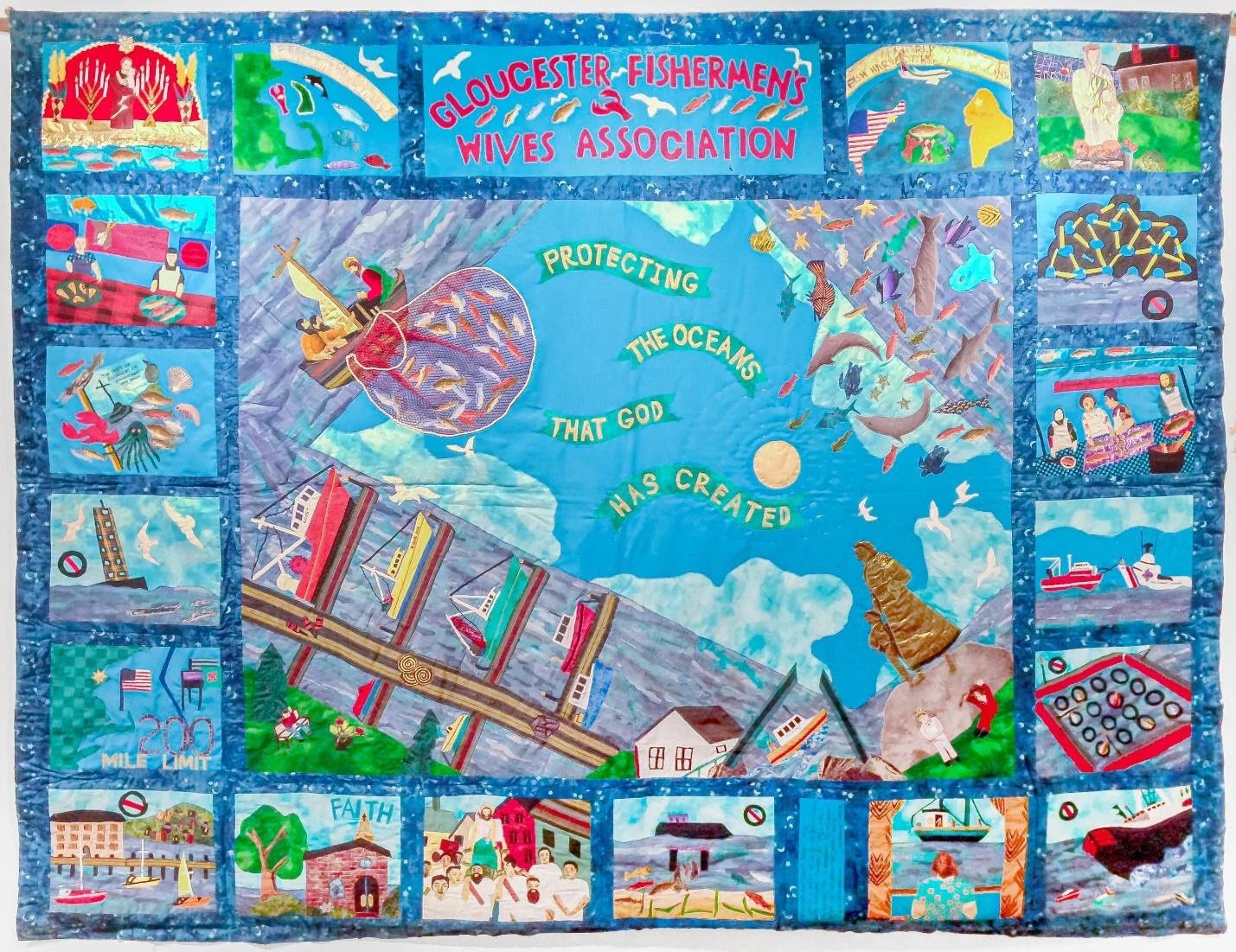
“Protecting the Oceans that God Has Created’’ is a narrative quilt made by members of the Gloucester Fishermen’s Wives Association in collaboration with Clara Wainwright in 1998. It can be seen at the Cape Ann Museum, Gloucester, through Sept. 26. It’s on loan from the Gloucester Fishermen’s Wives Association.
Wave action at Rough Point

The Rough Point mansion from Newport’s Cliff Walk.
From Robert Whitcomb’s “Digital Diary,’’ in GoLocal24.com
It’s nice when artists and others use New England’s innumerable beautiful outdoor spaces for exhibitions.
Thus it is with artist Melissa McGill’s coming show “In the Waves’’ at Newport’s Rough Point (which we used to call Rough Trade), the estate of late and deeply eccentric, indeed creepy (but philanthropic!) billionairess Doris Duke.
Ms. McGill has put out a call for young people to participate in the show, set for next month and meant to focus attention on global warming-caused sea-level rise and other man-caused environmental issues. Dodie Kazanjian, the founder of Art & Newport, is the curator of the exhibition.
This spectacle involves Ms. McGill painting waves on fabric made out of recycled plastic pulled from the ocean; plastic pollution has become a huge menace to sea life. The young people participating in the spectacle will use handles at the ends of long fabric strips to create motion to mimic that of waves.=
“I’m painting the waves in a very expressive way, with the different colors that reference the ocean at Rough Point,” Ms. McGill told the Newport Daily News’s Sean Flynn, in a fun article. “I have done studies and research so they really evoke the ocean there.” (Does the ocean at Rough Point really look that much different than the ocean anywhere?)=
For more information, please hit this link.
xxx
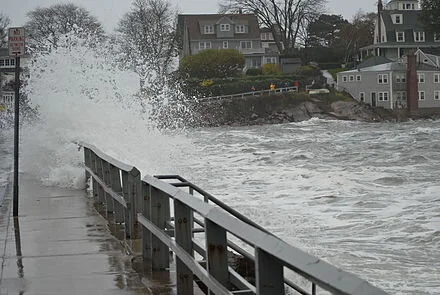
Coastal flooding in Marblehead, Mass., during Superstorm Sandy on Oct. 29, 2012
xxx
As the seas rise, more and more people will have to move back from the shore and abandon their homes on land that’s increasingly vulnerable to flooding. That land will be left as a buffer to mitigate damage from storms. How much of it can be turned into public open space, as parks, bringing something good from the situation?
By the way, although it was published back in 1999, Cornelia Dean’s prescient book Against the Tide: The Battle for America’s Beaches, remains a dramatic, prescriptive (and often alarming) guide to the issues around rising seas and coastal development. Ms. Dean, the former New York Times science editor, continues to study the not-very-slow-motion coastal crisis.
‘Scarred hopes outworn’
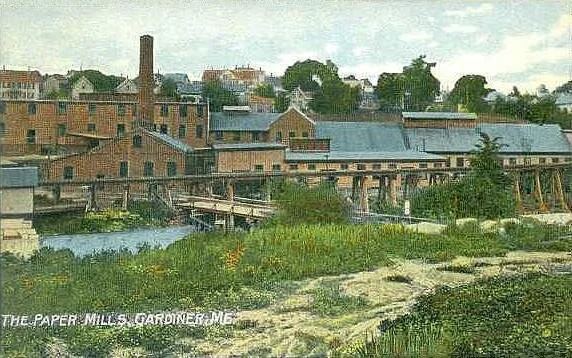
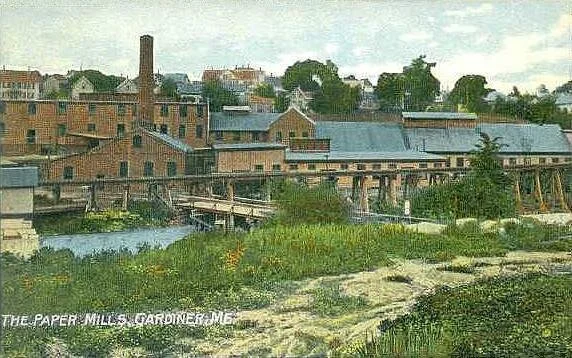
1909 postcard
Over the hill between the town below
And the forsaken upland hermitage
That held as much as he should ever know
On earth again of home, paused warily.
The road was his with not a native near;
And Eben, having leisure, said aloud,
For no man else in Tilbury Town to hear:
"Well, Mr. Flood, we have the harvest moon
Again, and we may not have many more;
The bird is on the wing, the poet says,
And you and I have said it here before.
Drink to the bird." He raised up to the light
The jug that he had gone so far to fill,
And answered huskily: "Well, Mr. Flood,
Since you propose it, I believe I will."
Alone, as if enduring to the end
A valiant armor of scarred hopes outworn,
He stood there in the middle of the road
Like Roland's ghost winding a silent horn.
Below him, in the town among the trees,
Where friends of other days had honored him,
A phantom salutation of the dead
Rang thinly till old Eben's eyes were dim.
Then, as a mother lays her sleeping child
Down tenderly, fearing it may awake,
He set the jug down slowly at his feet
With trembling care, knowing that most things break;
And only when assured that on firm earth
It stood, as the uncertain lives of men
Assuredly did not, he paced away,
And with his hand extended paused again:
"Well, Mr. Flood, we have not met like this
In a long time; and many a change has come
To both of us, I fear, since last it was
We had a drop together. Welcome home!"
Convivially returning with himself,
Again he raised the jug up to the light;
And with an acquiescent quaver said:
"Well, Mr. Flood, if you insist, I might.
"Only a very little, Mr. Flood—
For auld lang syne. No more, sir; that will do."
So, for the time, apparently it did,
And Eben evidently thought so too;
For soon amid the silver loneliness
Of night he lifted up his voice and sang,
Secure, with only two moons listening,
Until the whole harmonious landscape rang—
"For auld lang syne." The weary throat gave out,
The last word wavered; and the song being done,
He raised again the jug regretfully
And shook his head, and was again alone.
There was not much that was ahead of him,
And there was nothing in the town below—
Where strangers would have shut the many doors
That many friends had opened long ago.
— “Mr. Flood’s Party,’’ by Edwin Arlington Robinson (1869-1935). Tilbury Town is based on Robinson’s hometown of Gardiner, Maine.
‘She gives of her strength’

“Hold your hands out over the earth as over a flame. To all who love her, who open to her the doors of their veins, she gives of her strength, sustaining them with her own measureless tremor of dark life.’’
— Henry Beston (1888-1968), American writer and naturalist, in The Outermost House, the classic story of the time he spent living alone in a shack on Cape Cod’s Nauset Beach.
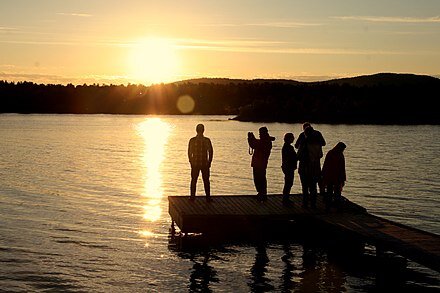
'Like a dream of beauty'
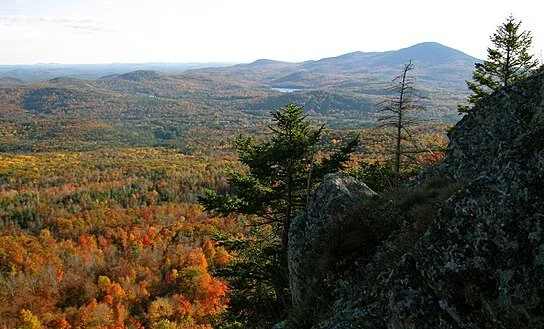
View of Mt. Kearsarge, in Wilmot and Warner, N.H.
“We must admit, spring is annoying, summer is not ours, autumn is best — and winter is New England’s truesy weather.’’
— Donald Hall (1928-2018), poet and essayist, in Here at Eagle Pond, inspired by his life on his ancestral farm in Wilmot, N.H.

“When summer gathers up her robes of glory, and like a dream of beauty glides away.’’
— Sarah Helen Whitman (1803-1878) from her Poems. She was an American poet, essayist, transcendentalist, and a romantic interest of Edgar Allan Poe. She was born and died in Providence.
What's that lurking in the woods?

“A View from Behind Me” (oil on canvas), by Brad Archambault, in the show “The Great Outdoors,’’ at the Brickbottom Artists Association, Somerville, Mass.
The gallery says:
“The past year has shown us how great ‘The Great Outdoors’ really is! The visual interest, the psychological and emotional connection, the freedom and also the safety it allowed. In this group exhibition, BAA members examine and interpret the outdoors from every angle: landscapes (natural and built), sea, sky, earth, weather.… Perspective is everything; even a window box or a bird feeder are ‘the great outdoors’ to a cat sitting at a closed window.’’

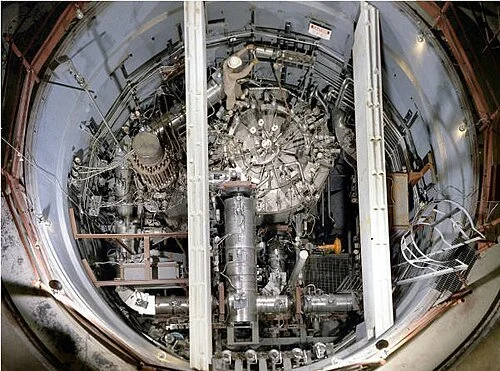
Llewellyn King: Nuclear literacy can save nuclear power

The Millstone Nuclear Power Station, on Long Island Sound in Waterford, Conn.
WEST WARWICK
In its first two decades of service, the Douglas DC-3 -- maybe the most amazing, safe and hardworking aircraft ever built -- was denounced in folk legend as wildly unsafe. It was branded a flying coffin by those who didn’t know the data.
The myth that it wasn’t airworthy matured into an out-and-out lie. In fact, the DC-3 was the workhorse that rapidly accelerated modern passenger aviation.
The DC-3 was saved by growing aviation literacy in the public. Can nuclear literacy save nuclear power, one of the greatest tools in containing global warming? I believe that it can. Literacy trumps myth and superstition.
While nuclear power has comparisons with the venerable DC-3, it is far more important than any single airplane. Those who turn their backs on nuclear power -- so needed as climate change accelerates – are akin to those who without knowledge were turning their backs on passenger aviation in 1935.
Today’s major public argument against nuclear power is that it leaves behind radioactive materials -- lumped together as nuclear waste – which will be radioactive for 10,000 years, about twice recorded human history.
This argument conjures up images of a monster, breaking out of its repository and marching the Earth, laying waste to whatever stands in its way -- a nuclear blob from a science fiction movie.
Truth is, in about 200 years, most high-level nuclear waste will have decayed into something less radioactively aggressive. In the first 30 years, it gets less toxic and more manageable.
As this explanation by William Reville, an eminent emeritus professor of biochemistry at University College Cork, published in the Irish Times, explains succinctly, “ The intense radioactivity reflects the preponderance of short-lived radioisotopes that are disintegrating quickly.
“This high rate of nuclear decay means the level of radioactivity declines quickly – the radioactivity of spent nuclear fuel reduces to 10-20 percent of its initial activity within six months of its removal from the reactor and within a few decades, the radioactivity reduces by a further factor of two. Radioactivity danger is largely gone within 100 years and within a few thousand years, the stored spent fuel is little more radioactive than the uranium ore that first came out of the ground to be fabricated into new fuel rods.”
Despite this science, when I advocate nuclear, which I have done for a long time, people roll their eyes and say, “What about the waste?” The waste does need to be stored safely, but it decays to a safe state quite quickly.
The most agonized-over nuclear material is the transuranic plutonium. Yes, it will last thousands of years, but it is easily shielded because it is an alpha emitter: It can’t penetrate human skin and can be blocked with a piece of notepaper. Natural uranium, found in rocks nearly everywhere, is an emitter, as is thorium, found in conjunction with rare earths. Radiation is everywhere. It isn’t the devil’s incarnation.
Those facing the climate crisis tend to shy away from nuclear and advocate only wind and solar. Little thought is given to the waste that these low-density energy sources are themselves going to produce.
Wind will create a huge volume of physical waste from the disposal of carbon-fiber turbine blades. These don’t recycle, unlike the steel towers on which the turbines rest. Eventually, tens of millions of tons of solar panels will make their way to landfills.
If you want to fret about waste -- and you should -- look to the garbage that is crowding the landfills, especially plastic which doesn’t break down. Look to the billions of tons of junk that is making its way into the oceans, killing marine life, and shudder.
The Earth can take a lot of nuclear waste from power plants, advanced medicine and reactors aboard navy ships and spacecraft. But can it take much more of the alternative?
Aviation literacy saved aviation from myth, even after disasters. Myth is a dangerous force when it is the foundation of policy.
If you want a good, safe myth, go with the tooth fairy.
Llewellyn King is executive producer and host of White House Chronicle, on PBS. His email is llewellynking1@gmail.com, and he’s based in Rhode Island and Washington, D.C.
Linda Gasparello
Co-host and Producer
"White House Chronicle" on PBS
Mobile: (202) 441-2703
Website: whchronicle.com
ReplyReply allForward
New England getting more goats
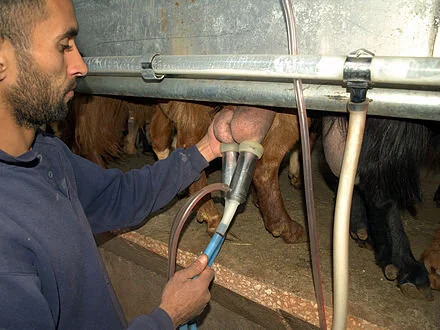
Milking a goat
Getting Their Goats
I spend quite a lot of time in rural upland New England, and have seen an increase in the number of farmers supplementing or even replacing the revenue from dairy cows and beef cattle with that from goats raised for their milk. The milk, and the cheese and yogurt made from it, is healthier for you than cows’ milk. And goats require less food and make fewer demands on the environment, including releasing less methane than cows. Further, they’re highly efficient at keeping land open; yes, goats really do feast on stuff that cows won’t touch.
Further, they’re much more entertaining: They have stronger personalities than cows. And look at the baby goat craze!

Goats are remarkably agile; some will climb trees to browse.
— Photo by Elgaard

Look at each other
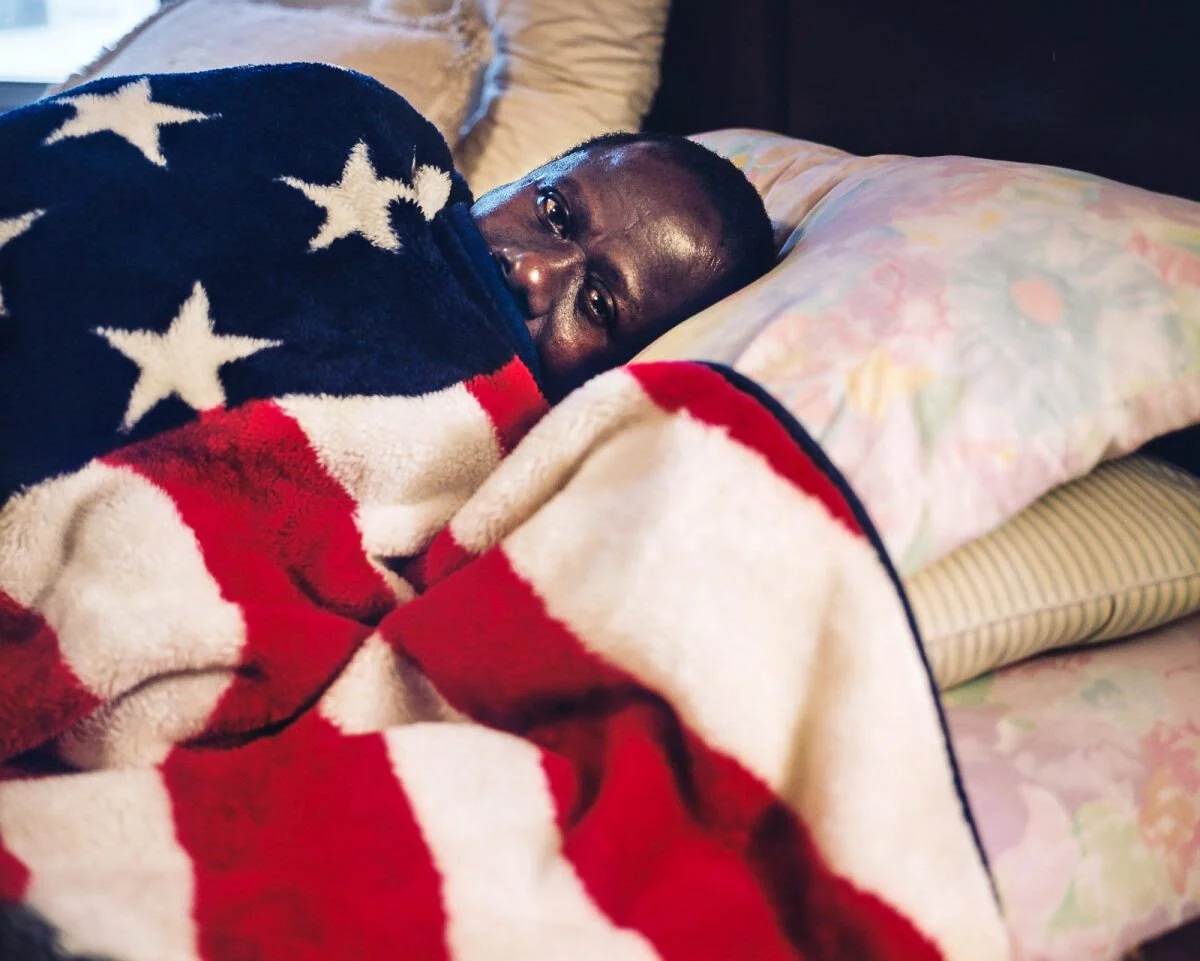
“‘C.B.’, 2011, Brockton, Massachusetts’’ (photograph printed on weatherproof vinyl) by Mary Beth Meehan, at WaterFire Arts Center, Providence, in her show “Eye to Eye: Photographs and Projects.’’
The gallery explains that Ms. Meehan photographs the diverse American landscape and experience, while urging us to pay attention to each other across differences of race, class, culture and religion. The photographs from the artist’s in-depth projects explore Brockton, Mass.; Providence; Newnan, Ga., and Silicon Valley, California.’’
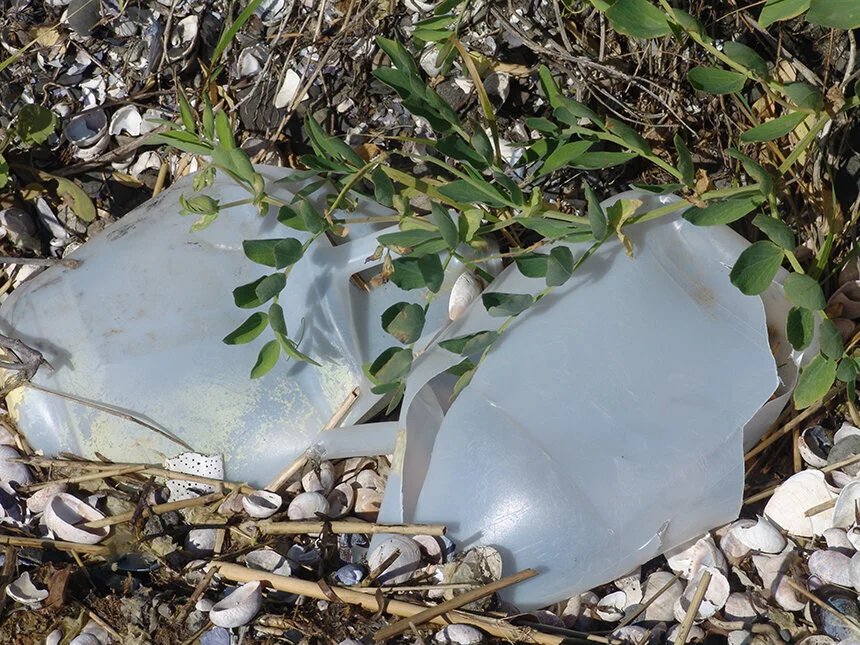
Frank Carini: Plastic pollution is burying a coastline
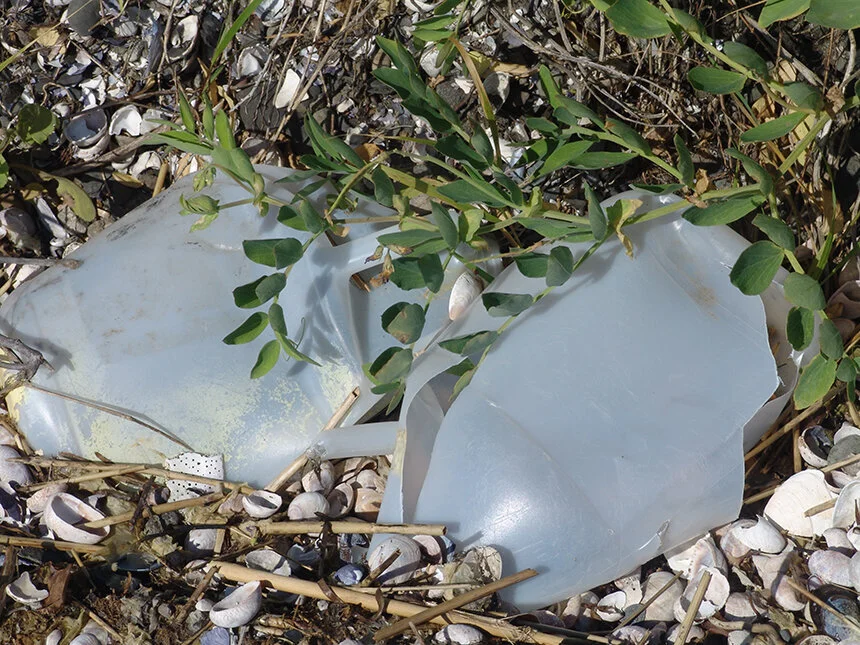
Rhode Island beach scene
—Photo by Frank Carini
From ecoRI News (ecori.org)
Dave McLaughlin has been organizing, leading and documenting Rhode Island shoreline cleanups for the past 15 years, and he’s noticed one item, which comes in all shapes, sizes and colors, becoming increasingly prevalent: plastic.
When the Middletown-based nonprofit he leads, Clean Ocean Access, began cleaning up Aquidneck Island’s coastline in 2006, staff and volunteers found bed frames, tires, refrigerators, glass bottles, aluminum cans and lots of fishing gear.
Today, a deluge of plastic now swamps the shoreline. McLaughlin said the petroleum-based tidal wave began about a decade ago. Besides the typical debris of plastic bags, straws, Capri Sun pouches, Styrofoam cups, candy wrappers and omnipresent cigarette butts — most filters are made of cellulose acetate, a plastic — this evolving pollution now features Jewel pods and the explosion of single-use plastics and multilayered packaging.
Multilayered packaging has several thin sheets of different materials, such as aluminum, paper and plastic, that are laminated together. It’s not made for recycling.
This growing amount of plastic packaging is washing up on shorelines worldwide, including along the Ocean State’s 420 miles of coast — arguably the state’s most important economic engine. In 2015, about 45 percent of plastic waste generated globally was from packaging materials, according to a 2018 white paper. A 2017 report found up to 56 percent of plastic packing manufactured in developing countries consists of multilayered materials.
It’s been estimated that every U.S. household uses nearly 60 pounds of multilayered packaging annually. Most isn’t or can’t be recycled, and much, like other plastic-related trash, ends up in the sea or washed up along the coast.
As of 2019, Clean Ocean Access had held 1,171 cleanups and removed nearly 69 tons of marine debris — about 118 pounds per cleanup — from Aquidneck Island’s shoreline and out of its coastal waters. Of the 14 most common items collected on land, half have been predominantly plastic: straws and stirrers; 6-pack holders; food wrappers; caps and lids; bottles; bags; and toys, according to the organization’s 2006-2019 Clean Report.
Of the 13 most common items pulled from the marine waters of Portsmouth, Middletown and Newport, five are plastic heavy: bleach and cleaning bottles; fishing line; sheets and tarps; strap bands; and buoys and floats.
All of these plastic items, on land and in the water, continue to break down into smaller and smaller toxic pieces that work their way up the food chain.
July Lewis, volunteer manager for Save The Bay, has been involved with shoreline cleanups since 2007. She said the one trend that is inescapable is the growing amount of microplastics and “tiny trash” — what she called pulverized pieces of bottle caps, cups and other plastics — that litter Rhode Island’s coastline.
“We are seeing more and more of it every year,” Lewis said. “It’s become part of the ecosystem.”
Peter Panagiotis, the well-known professional surfer better known as Peter Pan, has been surfing in Rhode Island waters, mostly along the coast of Narragansett, since 1963. He told ecoRI News that plastic now litters the coastline.
“There’s more plastic pollution, especially in the winter there is garbage everywhere,” the Pawtucket resident said. “Plastic pollution is the problem. There’s a lot more plastic garbage.”
Plastic debris makes up a growing amount of the material that is picked up annually during Save The Bay coastal cleanups. In 2019, 2,807 volunteers collected 7.8 tons of trash along 94 miles of shoreline — or about 5.5 pounds per person and 166 pounds per mile.
Of the material collected that year, plastic and foam pieces less than 2.5 centimeters long accounted for 27 percent of all the rubbish collected — 42,841 pieces of tiny trash. Microplastics, pieces less than 5 millimeters long (0.5 centimeters), are harder to see and pick up, but they are a growing presence.
The repulsive 2019 haul included plenty of other plastic: candy and chip wrappers (11,136); bags (6,213); straws and stirrers (4,629); lids (1,942); and utensils (1,050).
For nearly a decade, Geoff Dennis has been a one-man cleanup crew for the Little Compton shoreline. Dennis “got a taste for trash” while walking along Goosewing Beach in 2012.
“It really bothers me. The first time I walked with the dog, I came back with over 100 Mylar balloons,” he told ecoRI News in 2017. “If I can start a conversation with people about it, that’s great. But most people just don’t care.”
Between 2012 and 2020, the longtime quahogger picked up 35,607 pieces of trash along the banks of the Sakonnet River and at Goosewing Beach Preserve and a few other places. The vast majority of it was some form of plastic, from bottles to wads for shotgun shells.
In fact, the amount of plastic he has collected just along Little Compton waters is shocking:
Balloons made from the resin polyethylene terephthalate, a clear, strong and lightweight plastic belonging to the polyester family and commonly referred to as Mylar, a registered trademark owned by Dupont Tejjin Films (2012-20): 8,510. That total doesn’t include the 1,194 latex balloons he collected in 2019 and ’20.
Plastic bottle caps (2017 and 2020): 4,107.
Plastic shotgun shells (2017 and 2020): 1,552.
Plastic wads for shotgun shells (2017 and 2020): 527.
Plastic straws (2016-19): 1,526.
Plastic snack bags (2015-2020): 867.
Plastic bags (2018-2020): 440.
Plastic and foam cups (2018-2020): 386.
Plastic coffee cup lids (2020): 94
K-Cup pods (2019 and 2020): 210.
Plastic nips (2020): 207.
Plastic lighters (2017 and 2020): 188.
Plastic bottles and aluminum cans (2012-2020): 15,324.
In some places along Rhode Island’s marine waters, such as Fields Point in Providence, plastic pollution is now part of the shoreline environment. (Save The Bay)
Lewis noted that in some places, such as Fields Point, at the head of Narragansett Bay in Providence, plastic litter is indistinguishable from the natural world. She said most of this shoreline litter is generated from eating, drinking and smoking.
Save The Bay, too, is finding plenty of plastic flotsam and jetsam bobbing in Rhode Island’s coastal waters. The Providence-based organization is playing a leading role in establishing baseline data on the amount of microplastics within the Narragansett Bay watershed. The goal is to highlight this growing problem and draw attention to regional efforts to eliminate single-use plastics, such as cups, straws and bags.
The three staffers — Michael Jarbeau, Kate McPherson and David Prescott — largely responsible for conducting Save The Bay’s trawls for plastic have been surprised by how much they have found in local waters. When they started, they expected some microplastic trawls would come up empty. They’re still waiting for that to happen.
The crew has done more than 24 surface trawls, and every one has produced plastic bits, from nurdles, the raw building blocks for plastic bottles, bags and straws, to microfibers from polyester fleeces and other synthetic clothing to microbeads, which are used in exfoliating scrubs and in some toothpastes.
All of this overused plastic is changing the composition of Rhode Island’s marine waters. These petroleum byproducts don’t biodegrade. They remain in the environment for centuries. Their long-term impacts on environmental and public health aren’t close to being fully understood. Their impact on the natural world, however, has already been well documented.
Plastic bags float in Narragansett Bay, Block Island Sound and the Ocean State’s other marine waters like jellyfish. Turtles, whales and other sea animals often mistake them for food, causing many to starve or choke to death.
Adult seabirds inadvertently feed tiny trash to their chicks, often causing them to die when their stomachs become filled with fake food. As plastic breaks down into smaller fragments — microplastics may contain toxic chemicals as part of their original plastic material or adsorbed environmental contaminants such as PCBs — fish and shellfish become increasingly vulnerable to the toxins these polluted particles collect.
At least two-thirds of the world’s fish stocks are suffering from plastic ingestion, including local seafood favorites striped bass and quahogs.
On the positive side of the Ocean State’s shoreline trash problem, both McLaughlin and Lewis said they are seeing less dumping of big items, such as tires and appliances.
clean-ups by volunteers seem futile, a new batch will soon appear. Why aren't officers of the companies that make these plastics required to clean it up or pay someone to do so?
Frank Carini is editor of ecoRI News.
'Immortal force no longer needed'
— Photo by Neeme Sihv
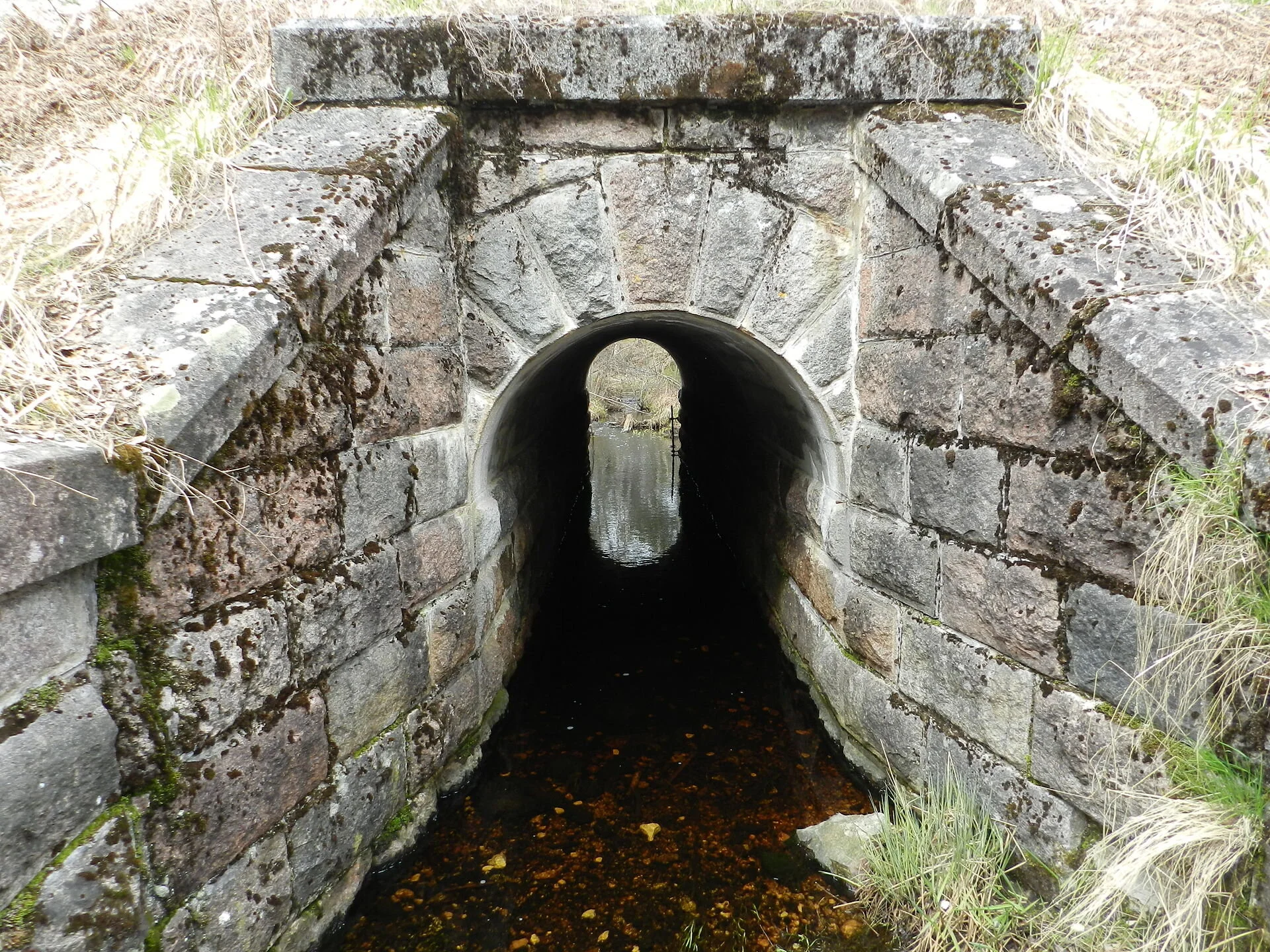
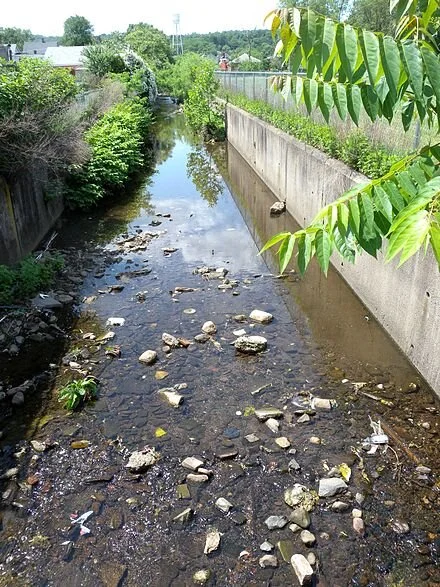
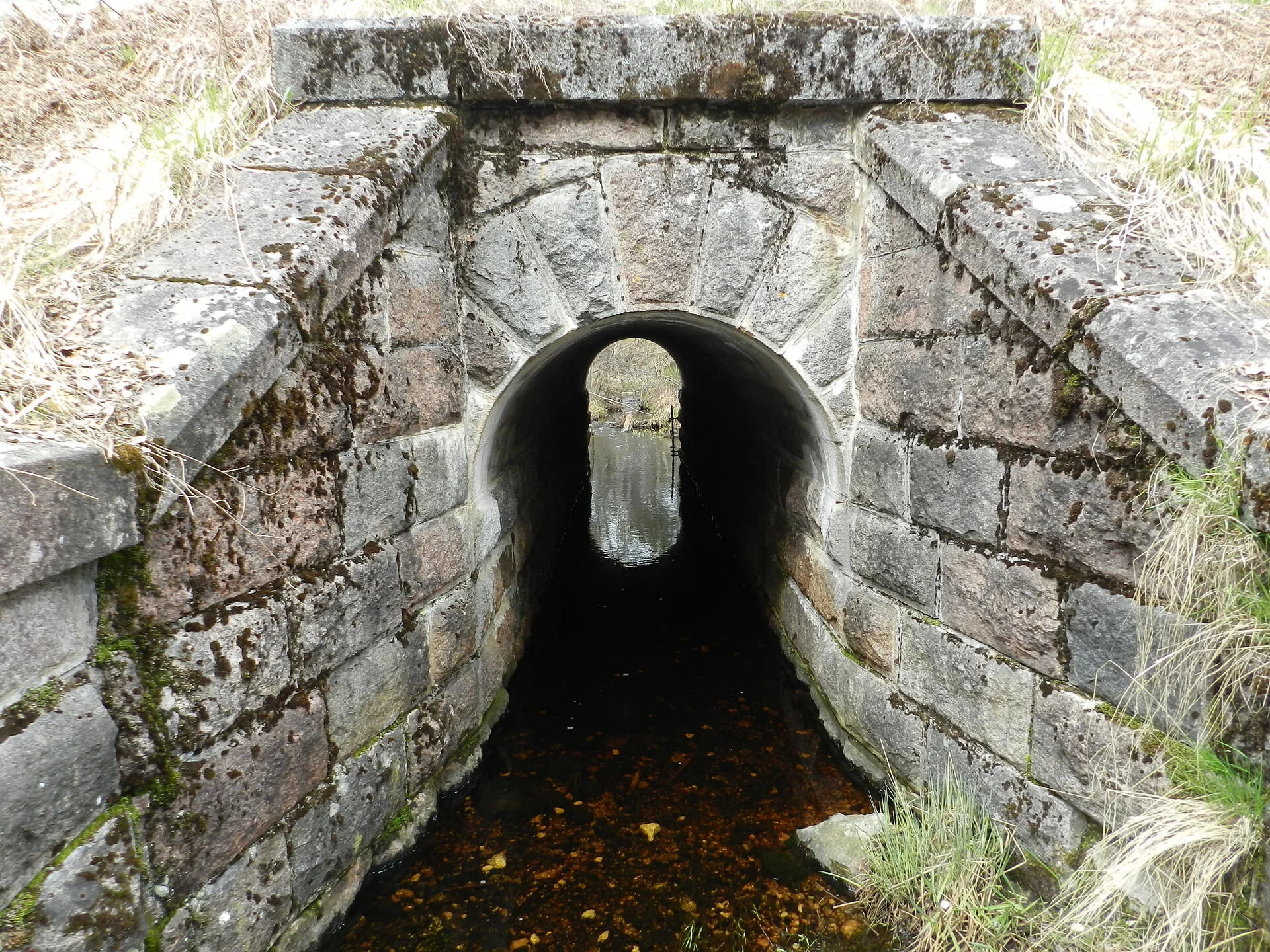
The farmhouse lingers, though averse to square
With the new city street it has to wear
A number in. But what about the brook
That held the house as in an elbow-crook?
I ask as one who knew the brook, its strength
And impulse, having dipped a finger length
And made it leap my knuckle, having tossed
A flower to try its currents where they crossed.
The meadow grass could be cemented down
From growing under pavements of a town;
The apple trees be sent to hearth-stone flame.
Is water wood to serve a brook the same?
How else dispose of an immortal force
No longer needed? Staunch it at its source
With cinder loads dumped down? The brook was thrown
Deep in a sewer dungeon under stone
In fetid darkness still to live and run—
And all for nothing it had ever done
Except forget to go in fear perhaps.
No one would know except for ancient maps
That such a brook ran water. But I wonder
If from its being kept forever under,
The thoughts may not have risen that so keep
This new-built city from both work and sleep.
“A Brook in the City,’’ by Robert Frost (1874-1963)
—
Chris Powell: Connecticut’s ‘self-defense’ terrorists

Bring them in.
MANCHESTER, Conn.
Connecticut has its own aspiring terrorist and subversive group, and it's not the Ku Klux Klan, the Proud Boys or even al-Qaeda.
No, it's the Self-Defense Brigade of "the Reverend" Cornell Lewis, of Hartford and Power Up Connecticut founder Keren Prescott, of Manchester, who are stomping around the state displaying guns and other weapons to show that they are serious about interfering with anyone they dislike and eventually overthrowing democratic government.
In candid interviews with the {Manchester} Journal Inquirer's Eric Bedner, Lewis and Prescott maintained that they aren't going to follow the laws and rules of decent conduct that apply to everyone else. Their politics elevates them above those things.
The Lewis-Prescott gang first paraded its guns at a protest June 9 at the site of construction of an Amazon warehouse in Windsor, Conn., in which two nooses had been found without any accompanying explanation. "There is nothing like Black people exercising their Second Amendment right to get folks moving," Prescott said. "We are tired of being nice."
Of course flaunting guns is a bit more threatening than whatever those unattended nooses meant.
Two days later on the Windsor town green the Lewis-Prescott gang broke up a "unity" rally against racism. Gang members, supposedly foes of racism, hurled racist taunts at the rally's organizers.
Prescott warns: "We are going to continue to disrupt."
Indeed, Lewis threatens the warehouse project with destruction. "We're going to close it down," he says. "They're not going to be able to work on that site for a while after we're finished with it."
Lewis's ambition goes farther. "Democracy," he says, "has failed the oppressed in this country. I believe democracy gave birth to and continues to nurture the endemic racism that the oppressed face. We must disrupt, dismantle, and then disperse the democratic system because it does not help us in our existential condition and the oppression we live with."
Of course, the country is full of self-obsessed loons who ordinarily are of little importance. The problem with the Lewis-Prescott gang is that state and local government officials, members of the clergy, and other well-meaning people, especially in Windsor and Manchester, have been humoring the gangsters either in the belief that their objectives have merit or out of fear of becoming their next target.
But the more the gangsters are humored, the more threatening they get.
The country and Connecticut are also full of racial disparities arising from pernicious government policies, such as social promotion in schools, subsidies for fatherlessness and exclusive zoning. But the Lewis-Prescott gang's obsession and fetish, the nooses found at the Amazon warehouse, could not be less relevant to racial justice. One of these days the worthies who have been humoring and helping to publicize the gang should find the courage to stop and leave them to the police and FBI.
xxx
For a few days six weeks ago the killing of Henryk Gudelski was a sensation in Connecticut. But it has disappeared from the news and discussion at the state Capitol, where legislators expressed concern about it before adjourning. Gudelski was the 53-year-old New Britain resident run down in the city June 29 by a stolen car apparently driven by a 17-year-old boy with a long criminal record who still had been freed by the juvenile-justice system.
Legislative leaders said they would review juvenile justice procedures but nothing has happened, probably because nobody in authority wants to press the crucial questions, which were implied by a former state legislator and criminal justice expert who discussed the case in a radio interview two weeks ago. Somebody, the former legislator acknowledged, had "really messed up."
Indeed — but exactly who, how, and why, and how can the public and its representatives find out as long as the juvenile justice system remains secret by law? How does that secrecy benefit justice?
Of course it doesn't. Secrecy benefits only the proprietors of the system.
But this secrecy will be preserved because in Connecticut exempting government employees and failed policies from accountability remains more important politically than Gudelski's life — and anyone else's.
Chris Powell is a columnist for the Journal Inquirer, in Manchester.
The mosquito air force

“Taking Flight’’ (mixed media on braced panel), by Fran Busse, at Alpers Fine Art, Andover, Mass. She’s based in West Concord, Mass.

Diversifying a rural N.H. college

The Lyons Academic Center at New England College, in Henniker, N.H.
Via The New England Council (newenglandcouncil.com)
BOSTON
“In a state where colleges and universities struggle to recruit racially diverse student bodies, New England College, whose main campus is in Henniker, N.H., has gained recognition for its commitment to recruiting diverse students. To date, 36.2 percent of the college’s 1,135 resident students identify as African-American, Hispanic, Asian, or more than one race.
“New England College’s success comes as a result of a recruitment strategy overseen by the college’s president, Michelle Perkins. Through this strategy, demographic data provided through standardized testing is purchased and then used to identify and target racially diverse students for recruitment. Moreover, New England College focuses this recruitment tactic on students from working-class communities in locations in and outside of New England, such as Philadelphia, New York and parts of Florida.
“When others doubted President Perkins’s goal of achieving campus diversity in a rural area of predominantly white New Hampshire, her response was simple: ‘I didn’t believe it.’
“‘We’ve invested a lot in identifying students from all over the country. A lot of them are first-generation college students. Usually, when you are a first-generation student, you have financial needs. We are very generous in our scholarship and grant programs,’ she explained.’’

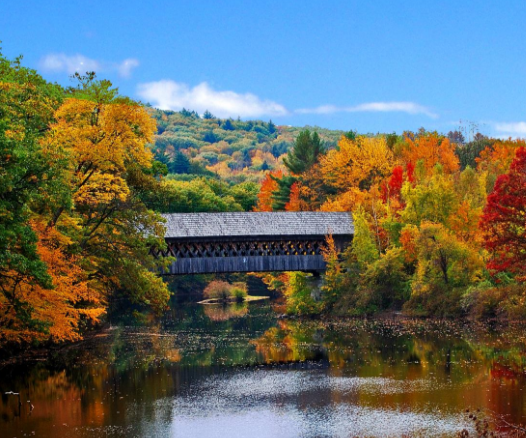
Henniker Bridge, over the Contoocook River, connects the college’s main campus with its athletic fields and the town center and is listed on the New Hampshire State Register of Historic Places.
— Photo by ctchmeifucan

New England College’s Institute of Art & Design in Manchester, N.H.
Seen from (a) space
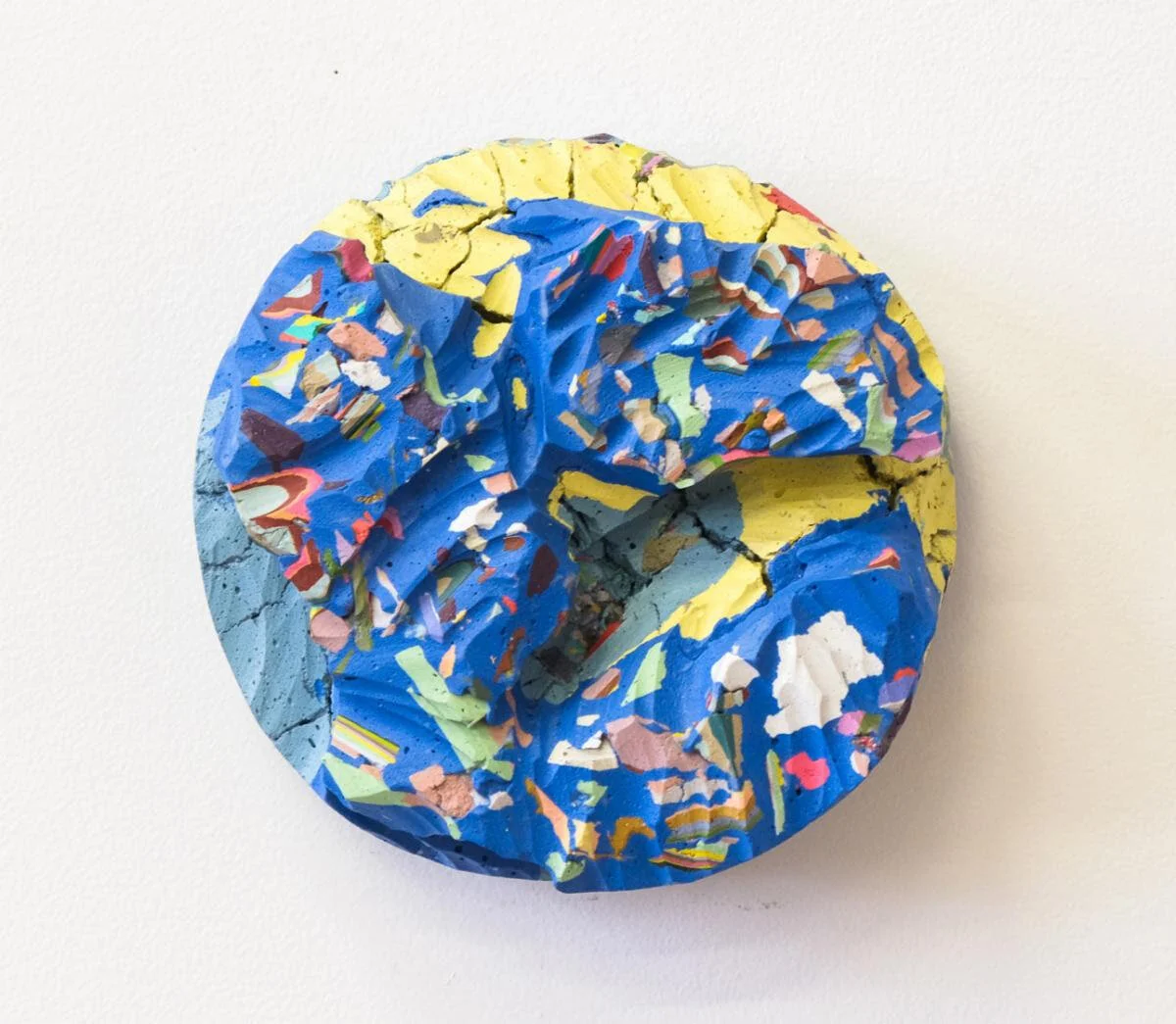
“Lucekke {a surname} Conglomerate” (paint, gypsum powder, resin), by John V. Ralston, in the “New England Regional Collective ‘‘ show at Galatea Fine Art, Boston, Aug. 6-Aug. 29