
Vox clamantis in deserto





Llewellyn King: A very tricky recovery coming up; beware Western drought effects
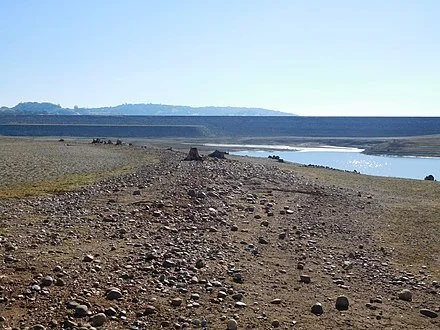
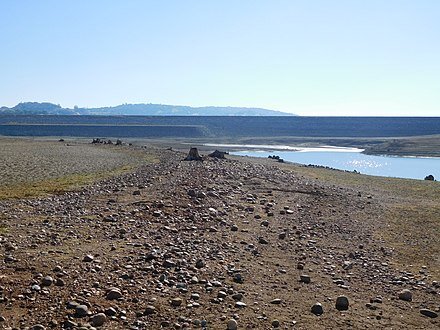
Folsom Lake reservoir during the California drought of 2015
WEST WARWICK, R.I.
After the long, dark night of the pandemic, many are predicting a rosy dawn, followed by a bright summer day. The feeling is that we, the people, have borne the battle and can now celebrate the victory.
But recoveries are tricky, and this recovery will be trickier than most because we are coming out of hibernation into a place changed radically from the one where we began our COVID-19-avoidance slumber. We isolated in one world and are reconnecting in another.
Enthusiasm flows from a sense of accumulated demand and already evident brisk economic activity.
There is a labor shortage despite unemployment at 5.8 percent. I have been following job offerings across the country (I review dozens at a time) and this would appear to be a good time to get a new job or change up. Employers are sounding desperate; they are paying more and being accommodating.
Unfortunately, tight labor markets and rising house prices are often a harbinger of inflation.
Yet there are some wondrous possibilities. On the plus side, we are awakening into a new world of technology-driven change.
In transportation, the surge in electric vehicles is here to stay. Ford’s announcement that next year it will offer an all-electric F-150 pickup truck is significant. It breaks down technical barriers and, significantly, it also breaks down social ones.
Working men and farmers who have been dubious about electric vehicles, regarding them as being only for effete liberals, now can embrace the electric vehicle revolution. The electric F-150 will be a milepost in the electrification of transportation and socially changing attitudes.
New materials, such as graphene nanotubes and new ways of production using additive manufacturing, known commonly as 3D printing, will change the factory floor as well as add to the possibility of on-site production and the deployment of new, small factories.
Interconnectivity, sped by 5G, and the massive deployment of sensors will have its impact from the checkout at the grocery store to medical diagnosis, much of it done remotely as part of the swing to telemedicine.
Already, Domino’s Pizza is testing autonomous delivery vehicles in Houston. Like those ubiquitous scooters in cities, this will spread on the ground -- and in the air, as drones get into the game.
COVID-19 has stimulated not just medical research but also a general interest in research which will in turn promote more public funding. The COVID -19 vaccine successes reestablished a certain level of confidence in medical science.
But there are old-economy realities ahead.
Real estate is in boom and bust simultaneously. The future of office towers is uncertain, and the future of big shopping centers is precarious. The possibility of home buyers finding affordable houses is remote. Want to start married life living in a tent pitched in an abandoned department store?
A surge of homelessness is expected to follow the ending of the moratorium on evictions. Tens of thousands may be evicted as they haven’t paid rent for a year and won’t be able to do so. An equal number will be sitting in the dark as utilities finally start disconnecting for unpaid bills. One utility, CPS Energy, in San Antonio, has $105 million in uncollected bills. Multiply that across the country.
The federal government has, as it were, shot its wad, in stimulus and can’t be expected to step in and help renters with their back rent or electricity customers with their accumulated bills.
There is another disrupter on the horizon. It is drought, the worst recorded, which is drying up California and much of the rest of the West.
Expect reduced food production, affecting the whole country with higher prices, a terrible wildfire season, and even a shortage of electricity as dams across the West (including Grand Coulee on the Columbia River and Hoover on the Colorado River) will cut electricity output because of low water.
The mighty Colorado -- the life force for so much in the West, including farming and electricity production -- is running seriously low and will continue to decline as summer progresses. Hardship in the West will be felt in the North, South and East.
A new Dust Bowl? Technology hasn’t yet learned to make rain.
Llewellyn King is executive producer and host of White House Chronicle, on PBS and his email is llewellynking1@gmail.com.
--
Co-host and Producer
"White House Chronicle" on PBS
Mobile: (202) 441-2703
Website: whchronicle.com
Robert Whitcomb <rwhitcomb51@gmail.com>
11:49 AM (3 hours ago)
to White, InsideSources, Llewellyn, Michael
Fine column!!
Llewellyn King
11:50 AM (3 hours ago)
to me
Thank you so much, Bob.
--
Executive Producer and Host
"White House Chronicle" on PBS;Columnist, InsideSources Syndicate;Contributor, Forbes; Energy CentralCommentator, SiriusXM Radio
Mobile: (202) 441-2702Website: whchronicle.com
Lost in the fungi

“Centennial,’’ by Riitta Ikonen, in the group photographic show “Foragers,’’ at Dedee Shattuck Gallery, Westport, Mass., through June 7.
The gallery explains:
”The work of these artists considers how we glean from the landscape— for food, inspiration, contemplation, and sources of beauty. Foraging is an act of engaging with wilderness to bring something home, an indistinct border crossed by the curious and observant.’’
'Sea of summer air'

Walnut Hill Park, in New Britain, Conn.
“All that is left of landscape lies at the bottom
of a sea of summer air; the town is drowned
under that sky, remote above the building
that in the picture scarcely clear the ground.’’
— From “The Prospect Before Us,’’ by Constance Carrier (1908-1991), Connecticut-based poet and high school teacher, most notably of Latin. This poem is based on the view from Walnut Hill Park, in New Britain, Conn., the old manufacturing city where she taught for years.
‘Hallowed ground’
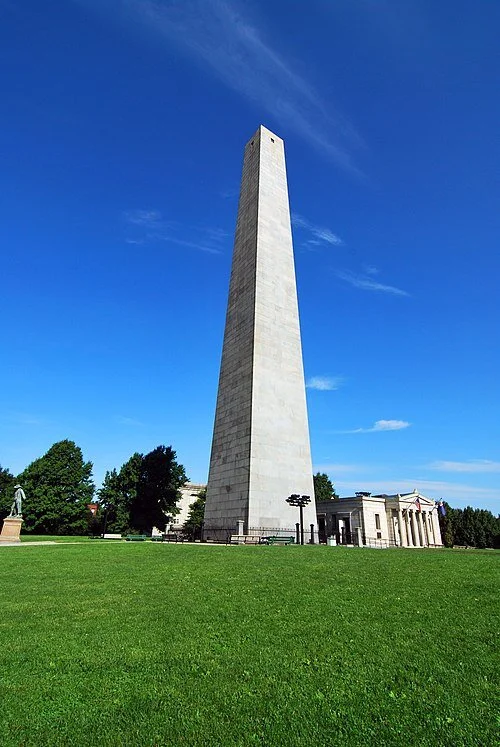
The Bunker Hill Monument, in Boston Charlestown section
“It is with profound respect that I tread upon this hallowed ground, where the blood of American patriots, the blood of {General and Dr. Joseph Warren} and his companions, gloriously spilled, revived the force of three million and secured the happiness of ten million who live now, and of so many others to be born. This blood has summoned the American continents to republican independence, and has awakened in the nations of Europe the necessity of, and assured for the future, I hope, the exercise of their rights."
— The Marquis de Lafayette (1757-1834) in his speech at the Bunker Hill Monument in 1825 to mark the start of construction of the Bunker Hill Monument, on the 50th anniversary of the Battle of Bunker Hill, the first big battle of the Revolutionary War. He is buried under dirt from Bunker Hill in the Picpus Cemetery, in Paris.
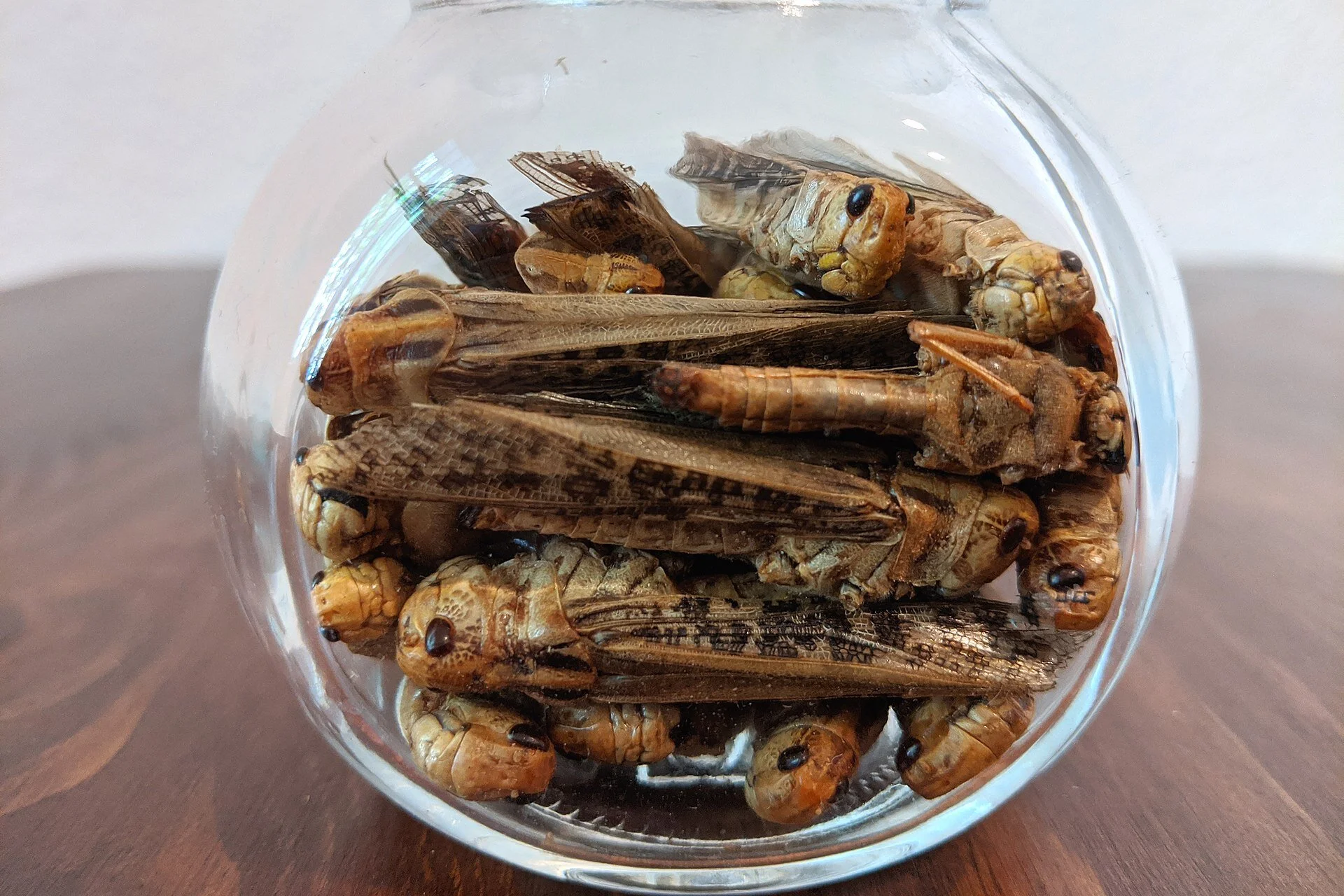
In the universe of the edible

Migratory locusts as food.
— Photo by Wilhelm Thomas Fiege

Still Scary to some. See: maineoysterbook.com
From Robert Whitcomb’s “Digital Diary,’’ in GoLocal24.com
“He was a bold man that first ate an oyster.’’
-- Jonathan Swift (1667-1745), Anglo-Irish satirist, essayist, poet and Anglican cleric
My friend Dr. Ed Iannuccilli’s recent funny column about postage stamps and insects (what a combo!) reminded me of how food fashions develop after initial revulsion. The arrival of the 17-year cicadas has restarted a modest American conversation about eating insects, which they do in parts of the Developing World. Cicadas, locusts and some other insects are edible and apparently healthy eating – high in protein, minerals and vitamins. And the supply seems bottomless….
Insects are said to taste like nuts or popcorn. Fire up the grill!
The idea of crunching into them revolts many. But why should it be more revolting than consuming our fellow mammals, who are a lot more sentient than bugs? For some reason this reminds me of being served whale meat when I was around 10 in a Scandinavian restaurant in Boston called Ola. It was oily and fishy. Back then, I thought of whales as a sort of glorified big fish. Shortly thereafter, I became very aware that they were highly intelligent and social and mammals like us.
Think of how gross certain things might appear as food, such as lobsters, eggs and shellfish. Nasty aesthetics! But we gobble them up. And there are mammal organs that, for example, the French and Asians enthusiastically consume that Americans wouldn’t touch. Try some brains and intestines? Kidneys? There are a lot of bugs out there to harvest, which would be better for us and the world than eating ever more mammals and birds.
Oh yes, and snake meat can be tasty, too. The old Massachusetts grocery company S.S. Pierce used to sell it in cans. And alligator is delicious and of course tastes like chicken….
To read Dr. Iannuccilli’s column, please hit this link.
Harris Meyer: Amidst intense controversy, FDA approves Biogen’s Alzheimer's drug
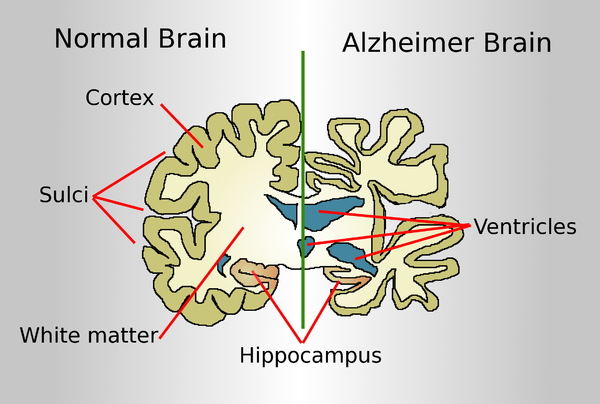
Drawing comparing a normal aged brain (left) and the brain of a person with Alzheimer's (right). Characteristics that separate the two are pointed out.
The Food and Drug Administration has approved the first treatment for Alzheimer’s disease, a drug developed by Biogen, which is based in Cambridge’s Kendall Square neighborhood. But the approval highlights a deep division over the drug’s benefits as well as criticism about the integrity of the FDA approval process.
The approval of aducanumab came despite a near-unanimous rejection of the product by an FDA advisory committee of outside experts in November. Doubts were raised when, in 2019, Biogen halted two large clinical trials of the drug after determining it wouldn’t reach its targets for efficacy. But the drugmaker later revised that assessment, stating that one trial showed that the drug reduced the decline in patients’ cognitive and functional ability by 22 percent.
Some FDA scientists in November joined with the company to present a document praising the intravenous drug. But other FDA officials and many outside experts say the evidence for the drug is shaky at best and that another large clinical trial is needed. A consumer advocacy group has called for a federal investigation into the FDA’s handling of the approval process for the product.
A lot is riding on the drug for Biogen. It is projected to carry a $50,000-a-year price tag and would be worth billions of dollars in revenue to the Cambridge company.
The FDA is under pressure because an estimated 6 million Americans are diagnosed with Alzheimer’s, a debilitating and ultimately fatal form of dementia, and there are no drugs on the market to treat the underlying disease. Although some drugs slightly mitigate symptoms, patients and their families are desperate for a medication that even modestly slows its progression.
Aducanumab helps the body produce antibodies that remove amyloid plaques from the brain, which has been associated with Alzheimer’s. It’s designed for patients with mild-to-moderate cognitive decline from Alzheimer’s, of which there are an estimated 2 million Americans. But it’s not clear whether eliminating the plaque improves brain function in Alzheimer’s patients. So far, nearly two dozen drugs based on the so-called amyloid hypothesis have failed in clinical trials.
Besides questions about whether the drug works, there also are safety issues. More than one-third of patients in one of the trials experienced brain swelling and nearly 20 percenty had brain bleeding, though those symptoms generally were mild and controllable. Because of those risks, patients receiving aducanumab have to undergo regular brain monitoring through expensive PET scans and MRI tests.
Some physicians who treat Alzheimer’s patients say they won’t prescribe the drug even if it’s approved.
“There’s a lot of hope among my patients that this is going to be a game changer,” said Dr. Matthew Schrag, an assistant professor of neurology at Vanderbilt University. “But the cognitive benefits of this drug are quite small, we don’t know the long-term safety risks, and there will be a lot of practical issues in deploying this therapy. We have to wait until we’re certain we’re doing the right thing for patients.”
Many aspects of aducanumab’s journey through the FDA approval process have been unusual. It’s “vanishingly rare” for a drug to continue on toward approval after its clinical trial was halted because unfavorable results showed that further testing was futile, said Dr. Peter Lurie, president of the Center for Science in the Public Interest and a former FDA associate commissioner. And it’s “mind-boggling,” he added, for the FDA to collaborate with a drugmaker in presenting a joint briefing document to an FDA advisory committee.
“A joint briefing document strikes me as completely inappropriate and an abdication of the FDA’s claim to being the best regulatory agency in the world,” Lurie said.
Three FDA advisory committee members who voted in November against approving the drug wrote in a recent JAMA commentary that the FDA’s “unusual degree of collaboration” with Biogen led to criticism that it “potentially compromised the FDA’s objectivity.” They cast doubt on both the drug’s safety and the revised efficacy data.
The FDA and Biogen declined to comment for this article.
Despite the uncertainties, the Alzheimer’s Association, the nation’s largest Alzheimer’s patient advocacy group, has pushed hard for FDA approval of aducanumab, mounting a major print and online ad campaign last month. The “More Time” campaign featured personal stories from patients and family members. In one ad, actor Samuel L. Jackson posted on Twitter, “If a drug could slow Alzheimer’s, giving me more time with my mom, I would have read to her more.”
But the association has drawn criticism for having its representatives testify before the FDA in support of the drug without disclosing that it received $525,000 in contributions last year from Biogen and its partner company, Eisai, and hundreds of thousands of dollars more in previous years. Other people who testified stated upfront whether or not they had financial conflicts.
Dr. Leslie Norins, founder of a group called Alzheimer’s Germ Quest that supports research, said the lack of disclosure hurts the Alzheimer’s Association’s credibility. “When the association asks the FDA to approve a drug, shouldn’t it have to reveal that it received millions of dollars from the drug company?” he asked.
But Joanne Pike, the Alzheimer’s Association’s chief strategy officer, who testified before the FDA advisory committee about aducanumab without disclosing the contributions, denied that the association was hiding anything or that it supported the drug’s approval because of the drugmakers’ money. Anyone can search the association’s website to find all corporate contributions, she said in an interview.
Pike said her association backs the drug’s approval because its potential to slow patients’ cognitive and functional decline offers substantial benefits to patients and their caregivers, its side effects are “manageable,” and it will spur the development of other, more effective Alzheimer’s treatments.
“History has shown that approvals of first drugs in a category benefit people because they invigorate the pipeline,” she said. “The first drug is a start, and the second and third and fourth treatment could do even better.”
Lurie disputed that. He said lowering the FDA’s standards and approving an ineffective or marginally effective drug merely encourages other manufacturers to develop similar, “me too” drugs that also don’t work well.
Anne Saint says she wouldn’t have risked putting her husband, Mike Saint, on the new Alzheimer’s drug aducanumab because of safety issues. Mike died in September at age 71. (MOLLY SAINT)
The Public Citizen Health Research Group, which opposes approval of aducanumab, has called for an investigation of the FDA’s “unprecedented and inappropriate close collaboration” with Biogen. It asked the inspector general of the Department of Health and Human Services to probe the approval process, which that office said it would consider.
The group also urged the acting FDA commissioner, Dr. Janet Woodcock, to remove Dr. Billy Dunn, an aducanumab advocate who testified about it to the advisory committee, from his position as director of the FDA’s Office of Neuroscience and hand over review of the drug to staffers who weren’t involved in the Biogen collaboration.
Woodcock refused, saying in a letter that FDA “interactions” with drugmakers make drug development “more efficient and more effective” and “do not interfere with the FDA’s independent perspective.”
Although it would be unusual for the FDA to approve a drug after rejection by an FDA advisory committee, it’s not unprecedented, Lurie said. Alternatively, the agency could approve it on a restricted basis, limiting it to a segment of the Alzheimer’s patient population and/or requiring Biogen to monitor patients.
“That will be tempting but shouldn’t be the way the problem is solved,” he said. “If the product doesn’t work, it doesn’t work. Once it’s on the market, it’s very difficult to get it off.”
If the drug is approved, Alzheimer’s patients and their families will have to make a difficult calculation, balancing the limited potential benefits with proven safety issues.
Anne Saint, whose husband, Mike, had Alzheimer’s for a decade and died in September at age 71, said that based on what she’s read about aducanumab, she wouldn’t have put him on the drug.
“Mike was having brain bleeds anyway, and I wouldn’t have risked him having any more side effects, with no sure positive outcome,” said Saint, who lives in Franklin, Tenn. “It sounds like maybe that drug’s not going to work, for a lot of money.”
Their adult daughter, Sarah Riley Saint, feels differently. “If this is the only hope, why not try it and see if it helps?” she said.
Harris Meyer is a Kaiser Health News reporter.
Turbine installation vessel to be used for 2 wind farms south of New England

A turbine installation vessel
From The New England Council (newenglandcouncil.com)
“Eversource and Ørsted reached an agreement to charter the first American-made turbine installation vessel, for two adjacent wind farms that the two companies are developing between Long Island, N.Y., and Martha’s Vineyard.
The $500 million vessel, being built by a consortium led by Dominion Energy in a Texas shipyard, will enable Eversource and Ørsted to be the first wind farm developers to use a ship that is qualified under the Jones Act to install offshore turbines. The ship, which can carry up to six turbines at one time, is expected to be ready by the end of 2023.
“Our competitors will be forced to use a feeder barge,” Eversource CEO Joe Nolan said. “That’s why this is a game-changer for us.”
The New England Council applauds both Eversource and Ørsted for this innovative initiative. Read more from the Boston Globe.
Chris Powell: There’s too much ‘cultural humility’
MANCHESTER, Conn.
While the Connecticut General Assembly has never been known for political courage, the racial obsession that lately has been taking over there should have prompted some legislators to talk back to it by now.
For it has gotten ridiculous -- and dangerous.
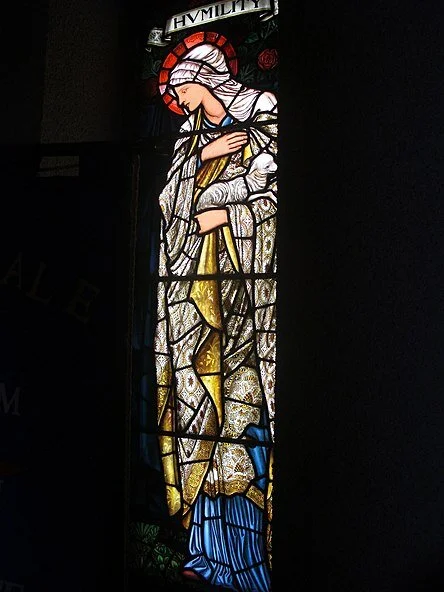
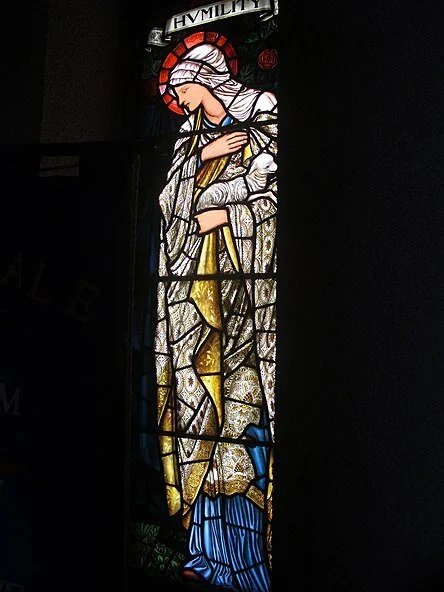
The much-touted legislation declaring racism rather than poverty to be a "public health crisis” contains new racial jargon that has caused some legislators to wonder what is going on, but most are going along with it anyway. The bill requires state government's higher education programs to include "cultural humility education” so as to increase retention of people of color.
The bill explains "cultural humility” as "a continuing commitment to self-evaluation and critique of one's own worldview with regard to differences in cultural traditions and belief systems, and awareness of, and active mitigation of, power imbalances between cultures.”
That's not much of explanation, but it implies that one culture is as good as another and that, accordingly, power should be balanced among cultures.
Try telling that to the young women of Afghanistan, who, thanks to the 20-year intervention of the U.S. military, for a few years have gotten a look at a culture that exalts democracy, equal opportunity and freedom of conscience. Upon the imminent departure of the U.S. military, those young women will be cast back into the sexual slavery of the Taliban's theocratic fascism.
Advocating "cultural humility education” during debate on the legislation last week, Sen. Marilyn Moore (D.-Bridgeport) said: "When I see a white woman, I see a white woman. ... I want you to see me as a Black woman and understand my journey and what I've been through.”
But of course that is the very definition, history, and danger of racism -- seeing people first according to race and making presumptions about them. What Moore wants is exactly what the country has been striving to get away from since the modern civil rights movement began 70 years ago.
What Moore proposes is rank stereotyping, the refusal to see people first as individuals, to judge them, as Martin Luther King Jr. urged, by "the content of their character.” For simply by race one cannot know what people have been through and who they are.
If Moore's arrogant presumption can be made, so can the Ku Klux Klan's. Racism isn't any more tolerable when Black people promote it, even though white people then are too scared to dispute it.
Indeed, the country's problem today is too much "cultural humility," the growing fear of standing up for values that make a civilization great and keep it improving -- values like parenting, education, self-sufficiency, and color blindness. What will the country be like when Moore's "cultural humility” overthrows that culture?
The unfortunate disparities among the races in Connecticut will not be closed by "cultural humility education” any more than they will be closed by the silly propagandizing over the supposed nooses that keep getting found at the Amazon warehouse under construction in Windsor. That propagandizing seems meant mainly to publicize certain Black politicians by virtue of their bellowing about it.
At their May 26 press conference Windsor Town Council member Nuchette Black-Burke complained that the nooses have "disrupted our quality of life.” But no one's quality of life has changed on account of the cat-and-mouse game in Windsor, even as the quality of life in predominantly minority neighborhoods in Connecticut is being diminished every day by worsening crime, which few notice.
Just hours after that press conference on the nooses, a man was fatally beaten in Hartford. No one has been arrested for it. It was Hartford's 14th murder of the year. New Haven has had at least 13, Bridgeport six. Do the nooses merit more attention than these murders just because they are unusual or politically useful even though they are meaningless?
The people bemoaning the nooses pretend not to realize that not one murder in the minority neighborhoods has yet involved a noose.
The surest way to make the nooses go away is to stop giving them the publicity their maker craves and knows that he can get from opportunistic politicians who will do anything for publicity as long as it's irrelevant.
Chris Powell is a columnist for the Journal Inquirer, in Manchester.
‘Sewn together’

— Photo by Staben
“America and I, the two of us
so sewn together that we both should
hang limp in rain, or whiplashed in storms,
wars and massacres.’’
— From “Leaving the Flag Out All Night,’’ by the late Napoleon St. Cyr, who was a poet as well as the publisher, editor and sole staff member of a literary magazine called The Small Pond Magazine of Literature, in Stratford, Conn.

Boothe Memorial Park and Museum, in Stratford, which owns it, Around 1914 two brothers, David Beach Boothe and Stephen Nichols Boothe, created the Boothe Memorial Museum, which has a collection of 20 architecturally unusual buildings. The structures include a carriage house, Americana Museum, miniature lighthouse, windmill, a clock tower museum, trolley station, chapel and a blacksmith shop.

Weather always innovating

“There is a sumptuous variety about the New England weather that compels the stranger’s admiration — and regret. The weather is always doing something there; always attending strictly to business; always getting up new designs and trying them on people to see how they will go. But it gets through more business in spring than in any other season. In the spring I have counted one hundred and thirty-six different kinds of weather inside of twenty-four hours.”’
— Mark Twain (1835-1910). The famed writer lived for many years in Connecticut. He once said his favorite place was Dublin, N.H., where late in life he summered.

—Photo by David McCandless
“June in New England is like a lover’s dream made tangible.’
— Gladys Taber (1899-1908), writer and resident of rural Connecticut and Cape Cod.
Braving the cold on a hot day

“Maine Surf” (tempera on board), by John Falter (1910-1982), at the National Museum of American Illustration, Newport, R.I. It’s the cover of the Aug. 14, 1948 Saturday Evening Post. Copyright the National Museum of American Illustration.
‘In the dewy air of June’
Ten o'clock: the broken moon
Hangs not yet a half hour high,
Yellow as a shield of brass,
In the dewy air of June,
Poised between the vaulted sky
And the ocean's liquid glass.
Earth lies in the shadow still;
Low black bushes, trees, and lawn
Night's ambrosial dews absorb;Through the foliage creeps a thrill,
Whispering of yon spectral dawn
And the hidden climbing orb.
Higher, higher, gathering light,
Veiling with a golden gauze
All the trembling atmosphere,
See, the rayless disk grows white!
Hark, the glittering billows pause!
Faint, far sounds possess the ear.
Elves on such a night as this
Spin their rings upon the grass;
On the beach the water-fay
Greets her lover with a kiss;
Through the air swift spirits pass,
Laugh, caress, and float away.
Shut thy lids and thou shalt see
Angel faces wreathed with light,
Mystic forms long vanished hence.
Ah, too fine, too rare, they be
For the grosser mortal sight,
And they foil our waking sense.
Yet we feel them floating near,
Know that we are not alone,
Though our open eyes behold
Nothing save the moon's bright sphere,
In the vacant heavens shown,
And the ocean's path of gold.
“— A June Night’’, by Emma Lazarus (1849-1887)
Police escort
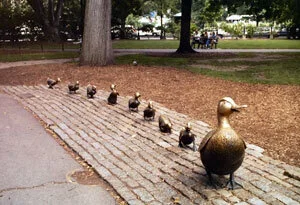
Bronze statue of Mr. McCloskey’s ducklings and Mrs. Mallard by Nancy Schön is a popular attraction in the Boston Public Garden. A replica in Moscow was a gift from First Lady Barbara Bush to Soviet First Lady Raisa Gorbachev.
“When they came to the corner of Beacon Street there was the police car with four policemen that Clancy had sent from headquarters. The policemen held back the traffic so Mrs. Mallard and the ducklings could march across the street, right on into the Public Garden.’’
— From Robert McCloskey’s Make Way for Ducklings (1942)
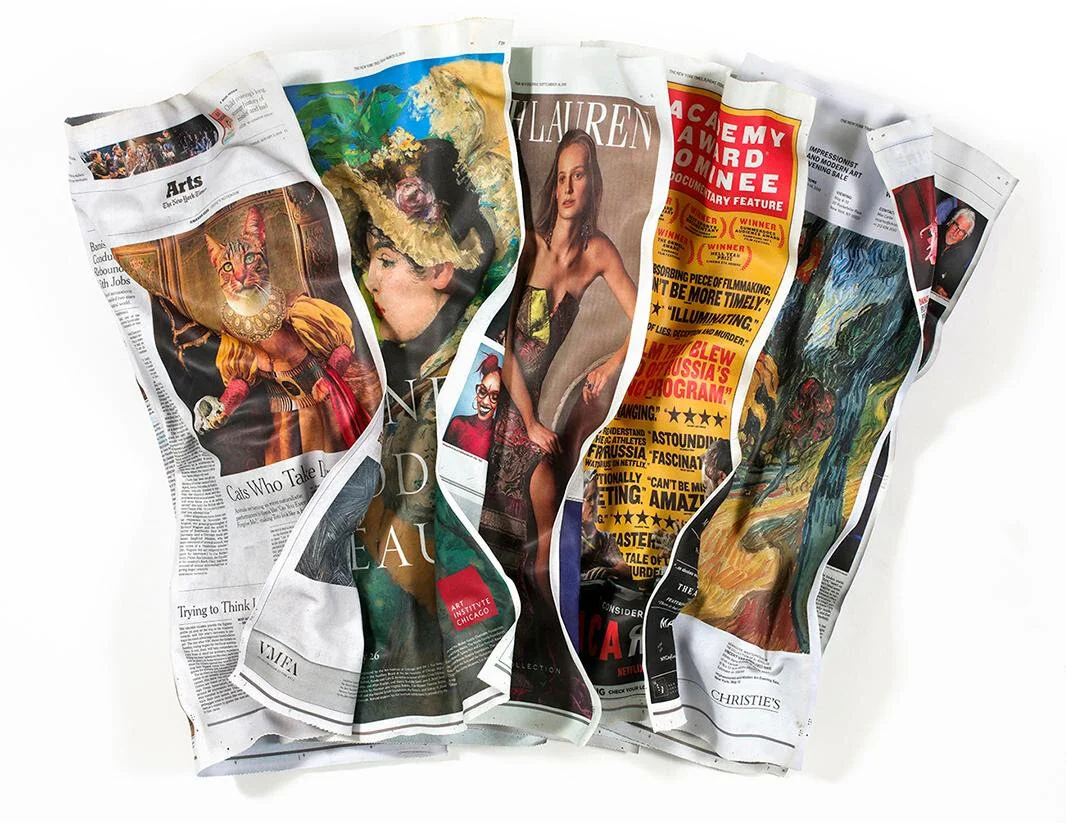
As paper goes away....
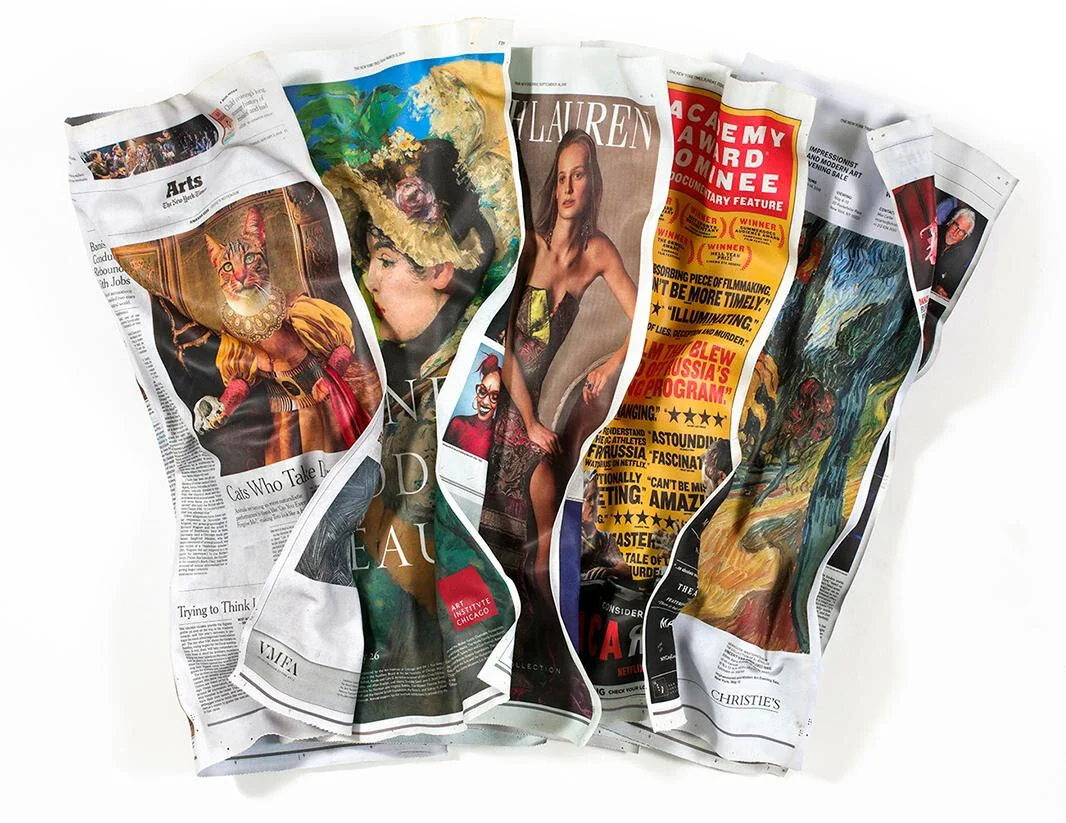
“NY Times Arts with Cat” (mixed media wall sculpture), in Paul Rousso’s show through June 27 at Lanoue Gallery, Boston.
The gallery reports:
“The ink and paper era is drawing to a close. ‘All this stuff,’ as artist Paul Rousso puts it, ‘is going away.’ That ‘stuff’ is no less than the paper-based underpinnings of modern civilization. Texts, images, sheet music, currency – the paper document is being displaced by its transformation into so many bits of binary code, digitized for the screen and everyplace at once. Yet paper documents are themselves an expression of something else entirely. An artist sketches a two dimensional impression of a flower; a novelist commits an imagined conversation to paper – meaning is imbued within a separate medium, altered yet understood.’’
“From his ‘painting with paper’ collages to his latest creations of wildly outsized and convoluted sculptures of money, candy wrappers, and newspapers, Paul Rousso has sought to flatten the dimensional and elevate the flattened: ‘There are many shades from one end of the spectrum to the other, but everything has an opposite. My work is about finding what comes next.’' For Rousso, a good deal of what’s next involves a process of crumpling, folding, tearing, gluing, and re-composing – turning the printed pages of a single Vogue magazine into a sculpted wall hanging, for example, or transforming every printed note of every Beatles’ song into a massive jumble of texture on canvas.’’
Beach bathos
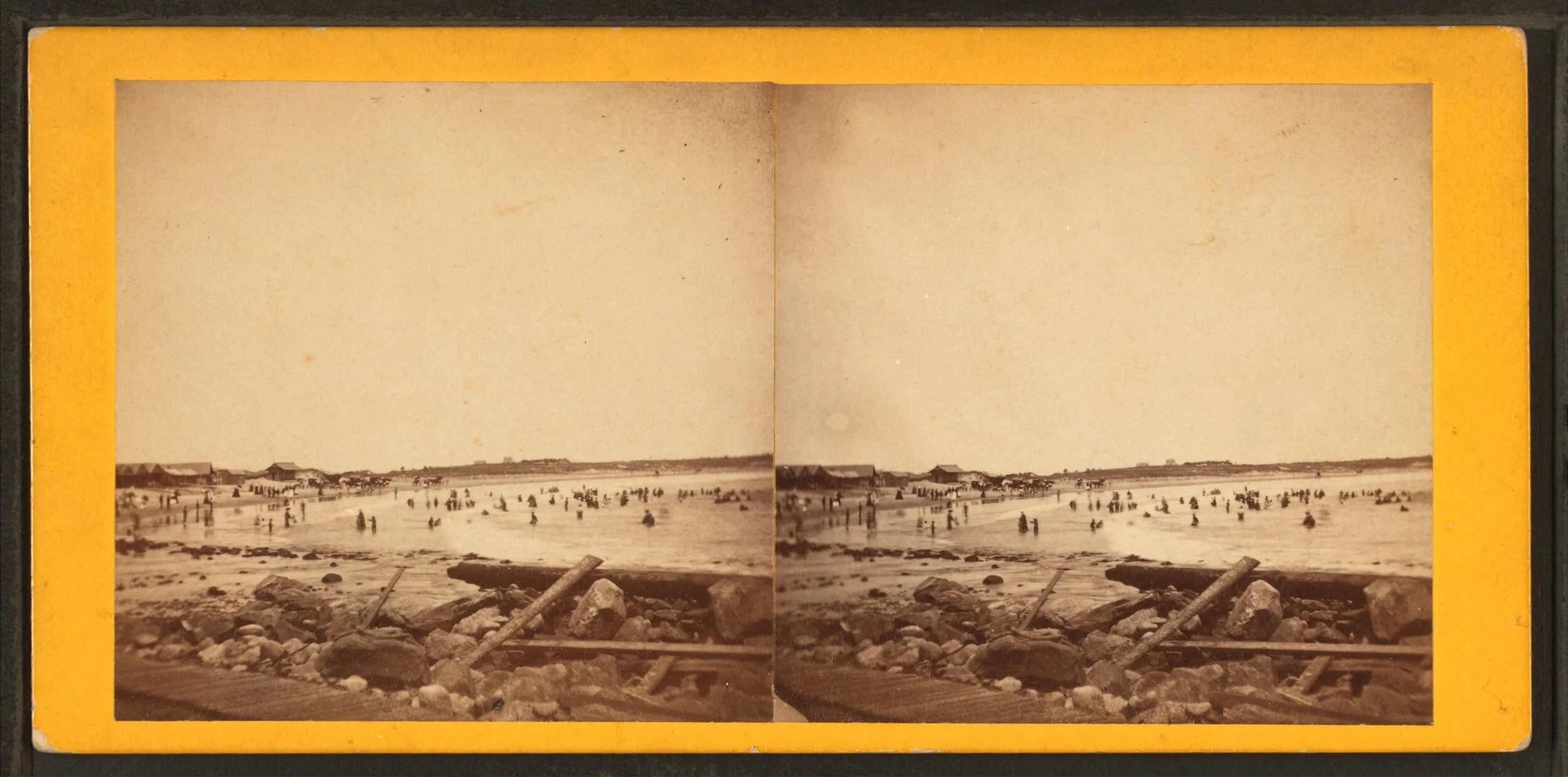
Narragansett Town Beach in more sedate times
From Robert Whitcomb’s “Digital Diary,’’ in GoLocal24.com
Regarding the May 22 brawl at Narragansett Town Beach: I wonder if the Rhode Island State Police and municipal cops have enough officers to oversee the beaches in this summer of pent-up demand. This is not only a matter of public safety; it’s also an economic issue. Rhode Island’s beaches draw many visitors, and their money, from out of state. For the state’s beaches to develop a reputation for rowdiness, or worse, will scare many away.
I’ve always been surprised by the number of people who want to be at a beach with hundreds or thousands of other people, cheek by jowl, with at least a few stoned, drunk or both.
It seemed particularly strange that so many people showed up last weekend with the water still quite frigid. Then there’s the glare of the sun, that vaguely itchy feeling of salt on your face, sand in and on everything….
I don’t get the allure but I do hope that beach lovers will bring their wallets from out of state to the Ocean State’s many lovely beaches, nearby restaurants and places to stay. When they leave after Labor Day, I’ll walk on the beach.
Good enough for us

Forest Lodge, former home of Louise Dickinson Rich in Upton, Maine. It consists of seven buildings, four of which are residential. The complex was owned and occupied by the family on a year-round basis between 1933 and 1944, and as Rich's summer residence until 1955. The property, as well as the surrounding country and its small number of year-round residents and seasonal visitors, were recurring themes in her writing. The property was listed on the National Register of Historic Places in 2008.
“We don't have plays and music and contact with sophisticated minds, and a round of social engagements. All we have are sun and wind and rain, and space in which to move and breathe. All we have are the forests, and the calm expanses of the lakes, and time to call our own. All we have are the hunting and fishing and the swimming, and each other.”
—Louise Dickinson Rich (1903-1991), in We Took to the Woods (1942) and many other books, mostly about Maine. We Took to the Woods (1942) is set in the Rangeley Lake area of northwest Maine. It has elements of Thoreau. She played down the darker stuff.

In Rangeley Lake State Park
Mapping emotions

“Map of Mumbling Red,” (mixed media), by Jeesoo Lee, in her show “Pung-Gyeong Moving Scenery,’’ at Kingston Gallery, Boston, through June.
The galley says:
‘‘In the process of layering, cutting, and reattaching materials, Jeesoo Lee combines passing moments in time and the physical spaces in which they have occurred…She captures the fleetingness of memory. Lee weaves poignant recollections such as ‘the sound of a young son’s laughter when he opens his eyes in the morning’ or ‘the anguish of a friend who has unexpectedly lost a loved one’. The work portrays these moments, both the intense and the mundane, to combine and form ever-evolving landscapes. Her work is based on psychological states of being which are then redefined through the physicality of her material. This deconstruction/construction of her imagery investigates the search for meaning and understanding. The result is intricate collage-like fabric pieces that ‘live and breath.’’’

Chris Powell: Is infamous hedge fund Alden saving or killing newspapers?
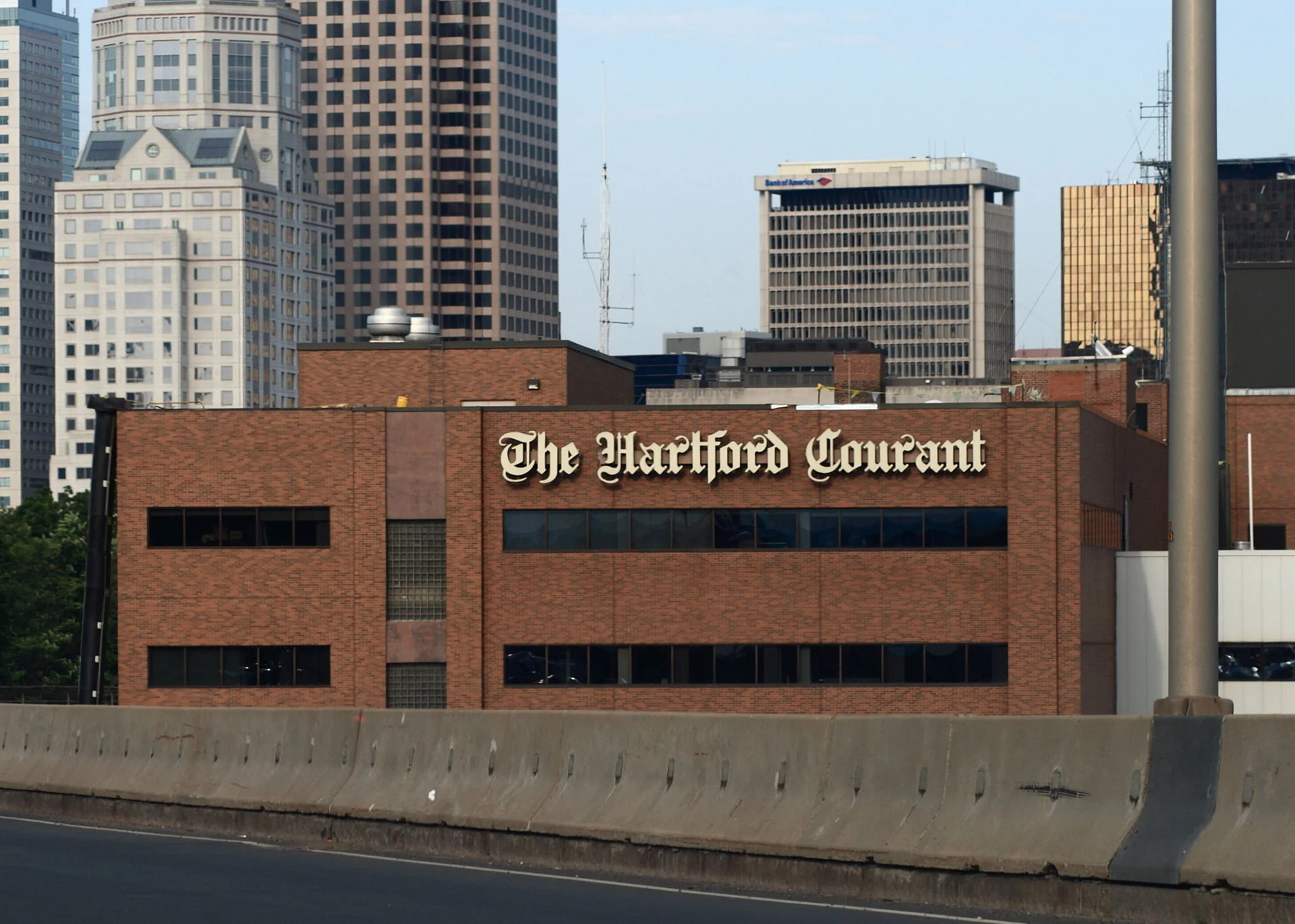
The now closed Hartford Courant headquarters building
MANCHESTER, Conn.
Nearly everyone wanted Tribune Publishing Co. to be purchased by someone other than Alden Global Capital, since the hedge fund is seen as an "asset stripper." Indeed, months before acquiring the shares of Tribune it didn't already own, Alden had managed the neat trick of stripping the Hartford Courant of its own building, leaving Connecticut's largest newspaper homeless.
But while nearly infinite money lately has been floating around the country and zillionaires abound, nobody offered more than the $633 million Alden offered to take Tribune private. Despite the decline in the newspaper industry, Tribune is said to remain profitable and to have millions in the bank, and the eight newspapers it owns apart from The Courant include some storied names: the Chicago Tribune, the New York Daily News, and the Baltimore Sun.
So the lack of other bidders suggests wide scorn for the industry's future.
That's why bemoaning Alden is so hypocritical, as it was the other day when Connecticut U.S. Sen. Richard Blumenthal joined Courant journalists at a protest rally. "Get a better buyer," Blumenthal implored, even as his own family easily could have afforded becoming a major partner in a rival bid -- but didn't.
But rich people indifferent to the public interest in sustaining newspapers are not the main culprits of the industry's decline.
Troubled as they are, newspapers remain the country's primary source for serious news, news beyond idle distraction and titillation -- news about government, community, business and life in general. Television and radio steal from newspapers shamelessly. Some state and local Internet news sites do great service but their "business model" is only charity and thus not so reliable.
The biggest problems for newspapers are the public's diminishing interest in serious news and the country's worsening demographics. Literacy and civic engagement long have been declining while poverty and violence have been increasing, especially in such cities as Chicago, Baltimore and Hartford. It takes courage enough to invest in the newspaper business generally, and heroism to invest in newspapers in disintegrating cities.
Even in Connecticut it is a matter of general indifference that half the state's high school graduates never master high school English and math and so enter adulthood unprepared to be citizens, much less newspaper readers -- or readers at all.
So horrible as it may seem, for the moment there may be nothing to do but to root for Alden, especially since before acquiring Tribune it already had acquired a hundred papers across the country and was the country's second largest newspaper chain. Alden President Heath Freeman says the company's goal is "getting publications to a place where they can operate sustainably over the long term."
Of course, to "operate sustainably" may require weakening Alden's papers more. But then the content of nearly all newspapers long has been weakening along with their circulation. For in the end the investment newspapers rely on most is not that of their owners but their subscribers, and nobody needs a newspaper just to keep up with the Kardashians.
xxx
\If the United States is ever attacked again, nobody should seek advice from Connecticut U.S. Sen. Chris Murphy.
“Israel," Murphy said the other day, "has the right to defend itself from Hamas's rocket attacks, in a manner proportionate with the threat its citizens are facing.”
But no country wins a war with a "proportionate" response to attacks. Wars are won with enough force to defeat the enemy and eliminate its war-making capacity. Japan started its war with the United States by sinking a few ships at Pearl Harbor, but the United States won the war by sinking nearly all Japanese ships and leveling the whole country, concluding with the atomic bombings of Hiroshima and Nagasaki.
In a recent newspaper essay Murphy also wrote that schools need fewer police officers and less student discipline and more counselors and social workers. But disruptions by students in school are helping to drive the exodus from the cities. Murphy misses that problem and the underlying one, since he fails to ask:
Where are all the messed-up kids coming from?
Chris Powell is a columnist for the Journal Inquirer, in Manchester.
Remembering the Grand Army of the Republic
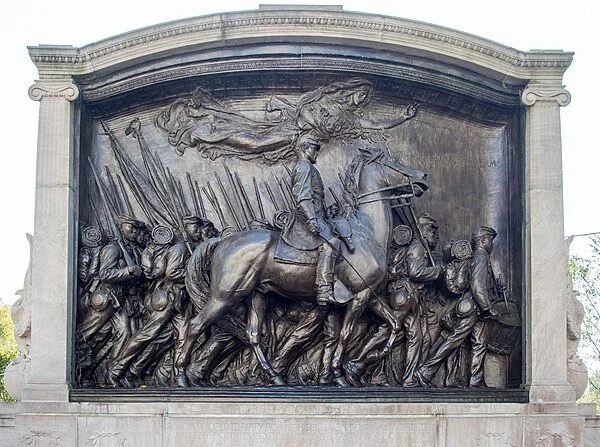
The Memorial to Robert Gould Shaw and the Massachusetts Fifty-Fourth Regiment, a bronze relief sculpture by Augustus Saint-Gaudens (1948-1907) opposite 24 Beacon St., Boston. It depicts Col. Robert Gould Shaw leading members of the 54th Regiment Massachusetts Volunteer Infantry as it marched down Beacon Street on May 28, 1863 to depart the city to fight in the South. The sculpture was unveiled on May 31, 1897 and was the first civic monument to honor the heroism of African-American soldiers.
“On a thousand small town New England greens,
the old white churches hold their air
of sparse, sincere rebellion; frayed flags
quilt the graveyards of the Grand Army of the Republic.
The stone statues of the abstract Union Soldier
grow slimmer and younger each year—
wasp-waisted, they doze over muskets
and muse through their sideburns . . ..’’
— From Robert Lowell’s (1917-1977) “For the Union Dead’’
Construction site

“hannah well met” (bronze and stone), by Jerold Ehrlich, in the Providence Art Club’s “Open-Air Sculpture Exhibition 2021’’ through Aug. 31
On view in the club's courtyard, this annual exhibition features seven sculptures selected by juror Gage Prentiss. Sculptors Jerold Ehrlich, Alice Benvie Gebhart, Walter Horak, Madeleine Lord, Ed McAloon, Gage Prentiss and Mark Wholey are all New England area artists, each presenting a work of art with a unique narrative and perspective. Jerold Ehrlich is a Narragansett, R.I.-based artist who previously worked in construction, leading to him use materials from construction sites in his work.