
Vox clamantis in deserto






Fear and wonder at the Fuller
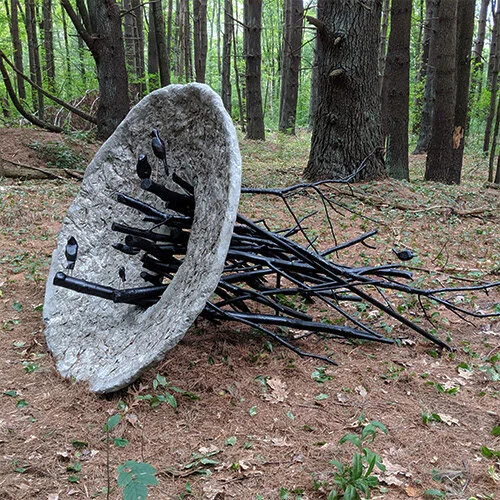
“Nesting’’ (concrete, wood, bronze, steel and ashes), by Elizabeth Helfer, in the group show “Beyond the Walls: Sculptures from the New England Sculptors Association,’’ at the Fuller Craft Museum, Brockton, Mass., through Sept. 12.
This exhibit uses the museum's 22-acre outdoor space, with sculptures throughout the property.
The museum says:
"Nesting’’ uses “a muted color palette and a combination of natural and manmade materials to convey an admiration for nature that is equal parts fear and wonder.
Don Pesci: Of husbandry, debt, 'investing' and politics
VERNON, Conn.
Neither a borrower nor a lender be,
For loan oft loses both itself and friend,
And borrowing dulls the edge of husbandry”
– Shakespeare, in Hamlet
Most people in the United States – indeed, in the world – are either 1) buyers or 2) sellers, or 3) people who facilitate buying and selling.
Politicians consider themselves service providers. Their opening, invariably, is “We’re here to help.” As a general rule, politicians collect money from some people, launder it through bewildering, little understood administrative ganglions, and give it to those who, they determine, need help. A sizable chunk of the gift is devoted to the labor costs of the administrative apparatus, and other parts are parceled out to grease the political machine.
Politicians call this “investing.” They imagine that they are doing what millionaires do effectively in what is still laughingly called, here in the un-United States, a “free market.” A free market may be defined correctly as an unregulated selling floor, where people who want goods and services are free to purchase them from sellers without undue interference from third parties not directly involved in buying and selling.
In our Coronavirus cancel-everything era, we have seen autocratic governors swollen with plenary powers shut down the whole economy -- schools, restaurants, businesses, even the legislative and judicial branches of government.
The political universe, in which politicians invest additionally in their own continuance in office, is not at all like a public marketplace where goods and services are freely exchanged. In fact, in many ways, the political trade is just the opposite of a free market. It is where regulations are made that encumber the free flow of goods and services, sometimes in the interests of the general public.
The Shakespearian line quoted above is spoken by Polonius, who is giving fatherly advice to his son Laertes before his trip to Paris. Do not borrow or lend, the father advises, “for loan oft loses both itself and friend.”
Modern banking has solved the problem of lost friendship owing to imprudent borrowing because, as we all know, bankers are not friends. One who refuses to pay a loan from a bank quickly loses his credit, but never a true friend.
We know, either from bitter experience or hearsay, the dangers of imprudent getting and spending – assuming we are not profligate spenders like the majority of politicians in the so called “land of steady habits.” It is the special mission of progressives to unsteady habits. Here in Connecticut, governmental debt is $67 billion as of September 2020. Nationally, the debt is much larger, about $26.70 trillion as of August 2020, but one cannot expect a small state to keep up with so large a spendthrift neighbor.
Polonius tells his son that imprudent borrowing “dulls the edge of husbandry.”
Whatever can Shakespeare mean by that? What was husbandry in the Elizabethan era, and how is the sharp edge of it dulled by borrowing and imprudent spending?
When Banquo says in Macbeth, “There’s husbandry in heaven; Their candles are all out,” he means that the angels are illuminating fewer stars in order to economize.
It turns out that Shakespeare was a notorious borrower of the literary labor of others and, at some point, Thomas Tusser's Five Hundred Points of Good Husbandry may have fallen under his eyes. The book was very popular in its day.
“Husbandry,” we learn from Tusser and others, was a term that had developed from the word “husband.” It was used to refer to the ordering and management of the household. The term, used more broadly, applied as well to animal and agrarian management. The farmer who excelled at husbandry was, in a word, thrifty, which was why women in Shakespeare’s day were attracted to good husbands. Nowadays, a different alchemy, occasionally involving cosmetics and minor surgery, is used by non-farm women to catch wanted “partners”, not necessarily husbands, in their subtle nets. A good Hollywood husband, a gym rat and buff as a new penny, is one who leaves you in material comfort after the divorce.
Divorce and household management aside, the question of good husbandry –thriftiness and economizing -- is conspicuously absent in both Tinseltown and politics, because husbandry in the Shakespearian sense and marriage in the post-modern period are both regarded as steps backwards and a lamentable indication that one has failed to “move forward,” whatever horrors the future may hold for us, some of which may be glimpsed in urban fatherless families and politicians who little care what sprouts from their spendthrift progressive soil.
Don Pesci is a Vernon-based columnist.

The math of Vermont
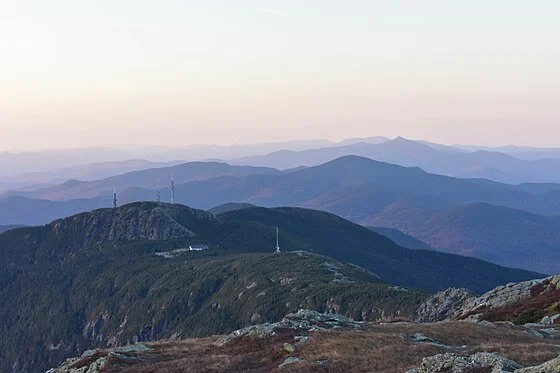
Looking south from the summit of Mt. Mansfield, at 4,396 feet the highest point in the Green Mountain State
“It takes trigonometry, solid geography, and calculus to get at Vermont.’’
— Charles Edward Crane (1884-1960) in Let Me Show You Vermont
Art on the Greenway

“Summer Still Life with Lobsters and Fern,’’ by Daniel Gordon, in the Rose Fitzgerald Kennedy Greenway, Boston
The Greenway, in downtown Boston, has several art installations along its walking path. The newest is “Daniel Gordon on The Greenway,’’ which marks the first time in the park's history that a single artist is featured in various works along The Greenway. These include a mural, tapestries, large-scale sculpture and many photographic still-lifes.
Llewellyn King: Welcome to summer -- the American season
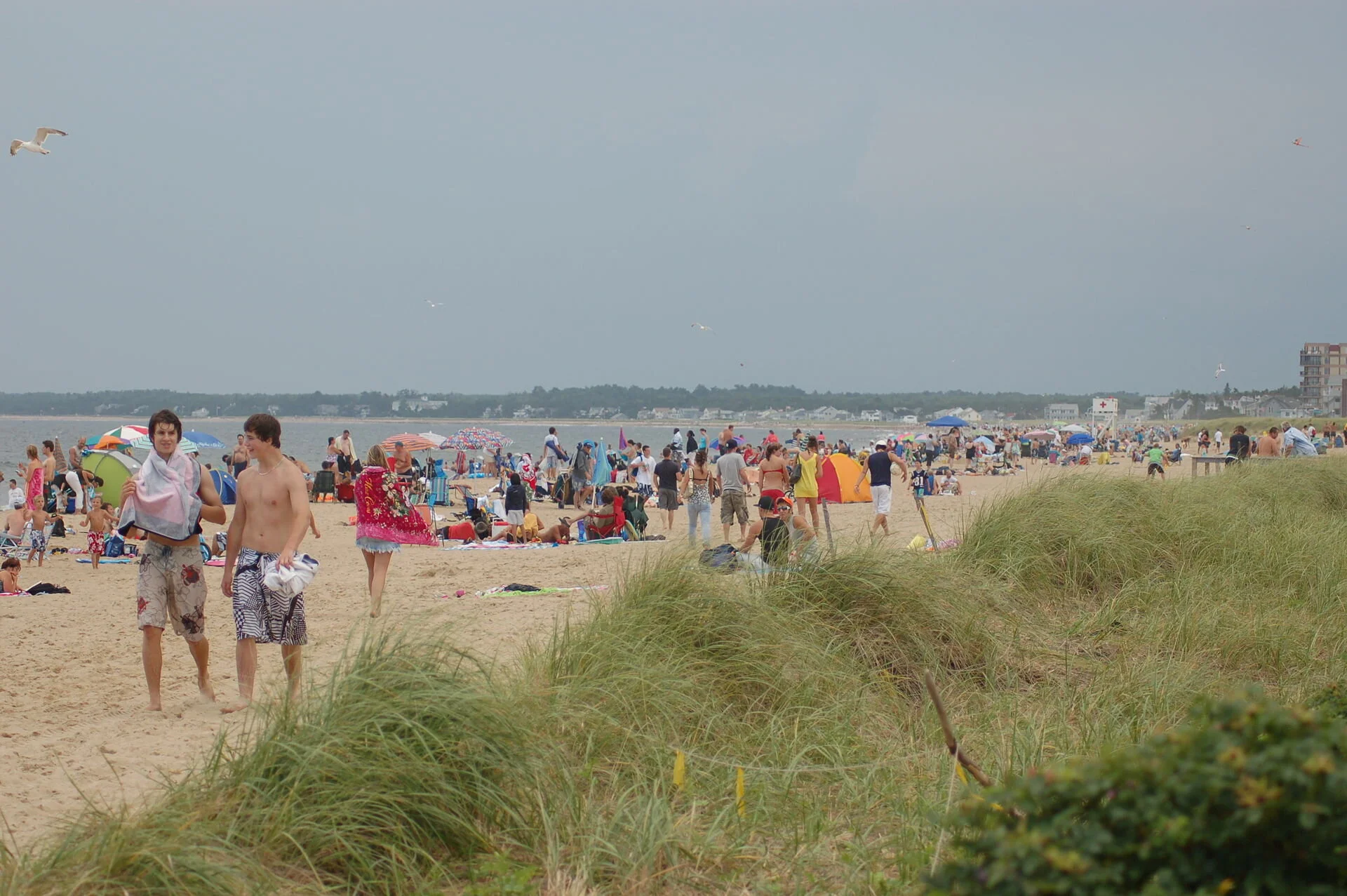
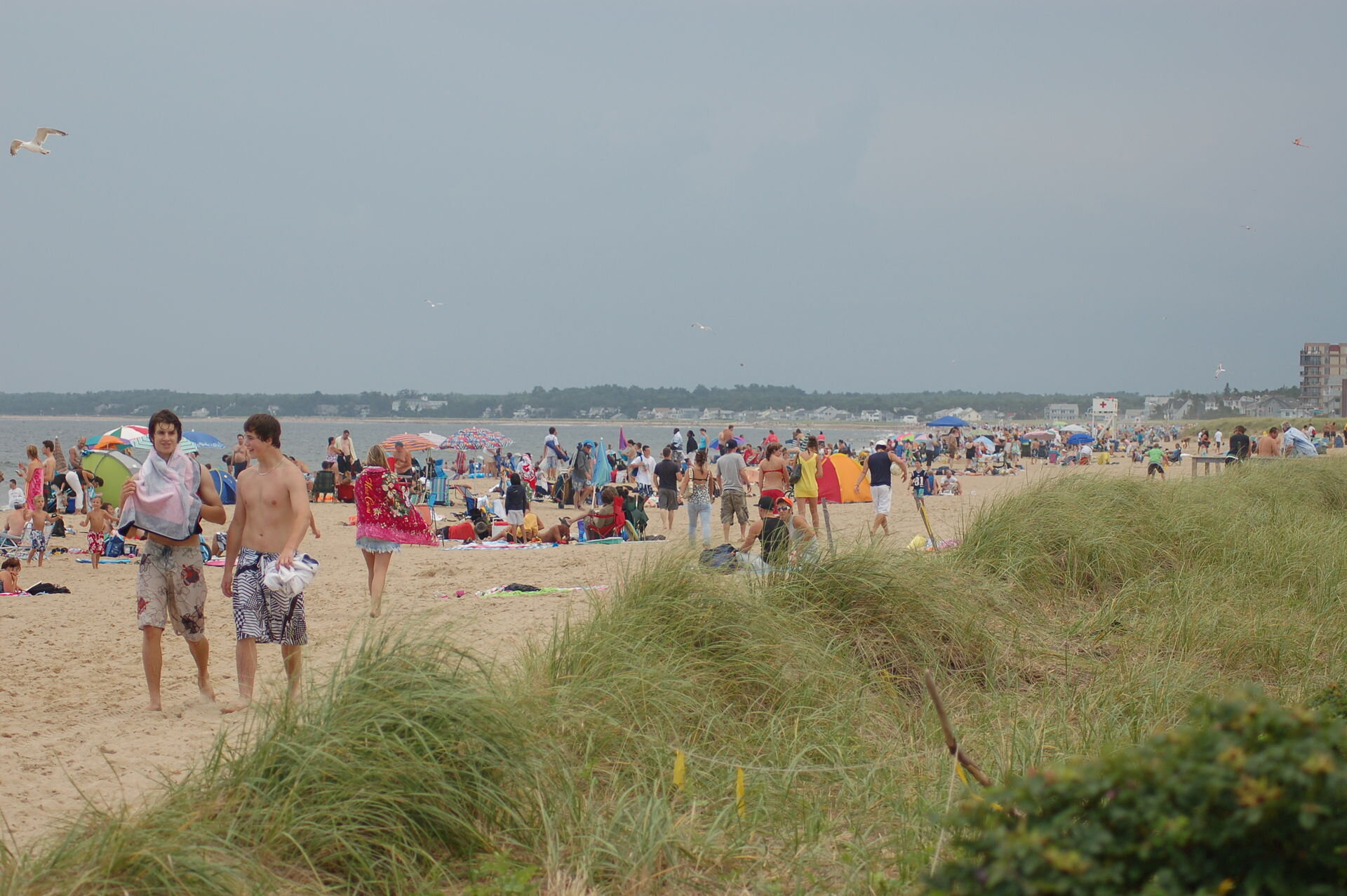
Old Orchard Beach, in Maine
WEST WARWICK, R.I.
The calendar opines that summer starts on June 20, but we know better. Metaphorically, it starts on Memorial Day, when we give thanks to those we honor, those who gave their lives for their country. Then it is, “Beach, ahoy!”
Memorial Day weekend signals the beginning of summer as if a flaming taper were applied to black powder and a cannon fired, joyously marking the sun’s reascendance to its throne.
Summer is important everywhere: to the British who try to catch a few elusive rays under their perfidious sun; to the French who shut their country down in August, and claim their spots on the crowded Mediterranean and Atlantic beaches; or to the Germans who take the summer break as a time to earn bragging rights on how far away and in which unlikely places they took their generous six weeks of vacation.
It isn’t that we Americans don’t travel. But it is here, at home, that we worship summer with the adulation of the sun. It is here we celebrate warmth, sand, water and barbecues. It is here that summer is most adored, most longed for, and most remembered for everything from young love to wraparound family togetherness.
All the world celebrates summer, but Americans exalt in it; treasure it as no others around the world.
Summer is woven into our culture, from those beach movies of the 1950s to its endless evocation in popular songs.
Growing up in Africa, I was bemused and confused by all of this summer worship coming out of the radio. We took summer for granted. It incorporated our rainy season and was a little less lovely than winter -- when the weather was so fair that the radio station (there was but one, and no television station ) didn’t announce the weather for six months. How many ways can a weather forecaster, even the most creative, say “perfect”?
Yes, on the Zimbabwe plateau (highveld), close to the equator, the weather is perfect and, if I might say so, perfectly boring.
No, give me the change of season. Let me join other Americans in celebrating the euphoria that breaks out every June when we say goodbye to dull care and embrace the bounty of summer, of cookouts and hikes, of shorts and tank tops and of going sockless.
From the beaches to the lakes, summer draws us to the water; some just want to bake their winter-ravaged bodies in the hot sand, others want to take to the water in or on everything from canoes to paddle boards, and from dinghies to great schooners.
The call of the water is loud in summer for many Americans but so, too, is the call of the mountains, and the glory of the National Parks beckons with a seductive finger.
The American summer is inextricably tied up with coming of age, of first love – indeed, the first of many first things. But it also enchants the oldsters. It is the time for family integration, when grandchildren and even great-grandchildren can be indulged from Portland, Maine, to Myrtle Beach, South Carolina, and from the Upper Michigan Peninsula to San Diego.
Summer thrills, stocks the memory bank, as even Alaska turns from the epitome of winter to a lush and tempting land where the outdoors offer a cornucopia of joys.
I have been lucky enough to spend summers around the world, so I can report that nowhere is summer embraced with such near-religious fervor as it is here in the United States; nowhere is the sun’s return to full raiment of majesty so celebrated and adored.
Remember this Memorial Day those who fell so that we might be free to fire up the grill and soak up the sun. It shines so lovingly on America.
Llewellyn King is executive producer and host of White House Chronicle, on PBS. His email is llewellynking1@gmail.com and he’s based in Rhode Island and Washington, D.C.
Linda Gasparello
Co-host and Producer
"White House Chronicle" on PBS
Mobile: (202) 441-2703
Website: whchronicle.com
How about a weather museum with water view?
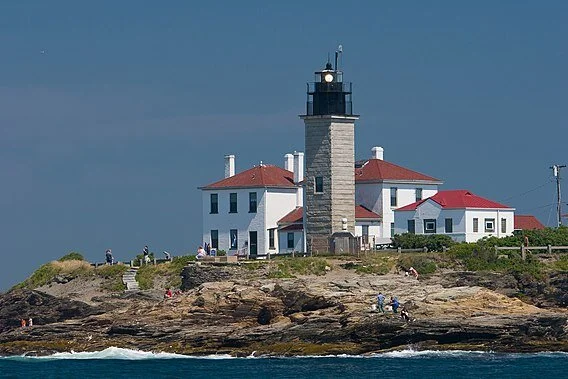
Beavertail Lighthouse
From Robert Whitcomb’s “Digital Diary,’’ at GoLocal24.com
The Coast Guard has decided that it no longer needs famous Beavertail Lighthouse, on a dramatic headland in Jamestown. So the government is offering the site for free to other federal, state and local government agencies and to nonprofit agencies.
How about turning it into a museum of coastal weather and ecology with lots of scientific and historical information, especially what can be illustrated? One thinks of hurricanes and other big storms and of the animals that frequent the New England coast as well as plants, such as kelp forests. Perhaps the University of Rhode Island’s famed Graduate School of Oceanography could be brought into the project.
But dignified

“Nonetheless II” (oil on canvas), by Youngsheen A. Jhe, in her show “Nonetheless.’’ at Galatea Fine Art.
The South Korea-born, Boston-based artist says:
"What kind of world do we live in? As the COVID-19 pandemic pushes us to a disconnected life, every one of us are seemingly stuck in our own world, although humans are social animals. We are forced to walk this path alone and with our masks covering our faces. An invisible glass film (and sometimes visible) blocks us from another. Solitude and loneliness were forced upon our lives and all we can do is to walk this lonely road without a companion.
“My starting desire was to depict the reality of the human beings through the inanimate mannequins, helplessly stuck in their own solitary world.
“From this series, I started to describe living fashion models instead of mannequins. They walk away from other models with expressionless and inanimate faces, but nonetheless their steps are always confident and they walk on a bright path full of light, not bleak hopelessness. It seems to be the image of us living in a pandemic. We have to walk with social distancing, but there is always a bright light for us."
Always looking for work

Newly plowed field in Bethel. Vt., in the spring
“Hard work was not only necessary, but it was also noble; and to avoid it would lead to disgrace, dishonor, and probably, eventually, to Hell itself. If a true Yankee ran out of work, he was expected to look for more.’’
Lewis Hill, in Fetched-Up Yankee: A New England Boyhood Remembered, a memoir of the author’s growing up on a Vermont farm in the 1930s

Tim Faulkner: Offshore wind and energy justice
![Global cumulative offshore wind-power capacity in megawatts Sources: GWEC (2011–2020)[9][10][11][12][13][14] and EWEA (1998–2010)](https://images.squarespace-cdn.com/content/v1/561446cce4b094b629347f8d/1621954289021-8M16XNJJJ9688ERQOKVS/power.png)
From ecoRI News (ecori.org)
The recent announcement by Ørsted and Eversource to invest $24 million in an assembly facility at the Port of Providence is a shot in the arm for local jobs and sign of the financial tidal wave flowing into the offshore wind industry.
The infrastructure pledge is part of $40 million the energy companies plan to spend on ProvPort and the Quonset Business Park in North Kingstown, R.I. The facilities will create at least 40 jobs and support construction for the Revolution Wind and South Fork Wind offshore facilities. Quonset, with a federally funded pier expansion, will host a boat building company with plans to make two crew-transport vessels, and serve as the transmission cable landing for at least two offshore wind projects.
A third facility, at the State Pier in New London, Conn., will receive an additional $77.5 million from Ørsted and Eversource to build a deep-water cargo port. The pier project creates 460 construction jobs and offers faster access to the Revolution and South Fork wind facilities and a third Ørsted/Eversource project, Sunrise Wind.
Lured by generous subsidies and billions from power-purchase contracts, international utilities and even major fossil-fuel extractors are surging into the region to embrace the advancing renewable-energy boom. The United States currently has more than 29,000 megawatts of offshore wind procurement targets.
In the next five years alone, offshore wind developers plan to bring online 9,100 megawatts from 13 offshore wind projects.
A pro-wind administration and new federal incentives are stoking the growth. The December 2020 federal stimulus package included a new 30 percent tax credit for offshore wind projects. In March, the Biden administration sweetened investments for offshore wind development by opening a new lease area off New York and New Jersey. There’s $3 billion for new loans, and funds for more port construction, and research and development.
Developers such as Ørsted and Vineyard Wind aren’t spending for free. Fueled by long-term contacts and sales of renewable-energy credits, both paid by ratepayers, developers and financial institutions like JPMorgan Chase and Goldman Sachs stand to make many times what is being spent on port development and infrastructure investments.
Ørsted, the world’s largest offshore wind developer, is looking at an estimated $3.2 billion in revenue from the power-purchase agreement for Revolution Wind alone.
While they fight for the right to continue to belch out greenhouse-gas emissions, fossil-fuel behemoths are also becoming interested in renewable energy. Big banks are financing projects on both sides. (istock)
Fossil-fuel fingerprints on renewables
Drawn by lucrative fixed-pricing contracts that guarantee a revenue stream, oil and gas developers and bankers are profiting from the response to a problem they had a hand in creating. Fossil-fuel giants such as Chevron and Royal Dutch Shell are embracing offshore wind as new players in the growing sector.
“Every barrel of oil and every watt of electricity that the women and men of the U.S. offshore sector produce is energy that our nation does [not] have to import from state-backed producers in pollution havens such as Russia or China,” according to Erik Milito, president of the lobbying firm National Ocean Industries Association, whose members in the convoluted energy sector include ExxonMobil, Halliburton, ocean rare earth mineral miners, and Ørsted.
Many of the big banks financing these projects, such as JPMorgan Chase, Citi, and Bank of America, are still funding fossil-fuel development. Chase, the top lender, has financed $317 billion for fossil-fuel ventures since the Paris Agreement was signed in 2016. Some like ExxonMobil and Shell are facing legal battles for climate denial and for failing to protect their behemoth waterfront oil and gas terminals from the climate crisis.
But Ørsted, previously named Danish Oil and Natural Gas, was a full-fledged fossil-fuel extraction and distribution company that owned oil, gas, and coal power plants. In 2009, the company publicly pledged to transition to offshore wind and is now leading the offshore “green revolution.”
Although Copenhagen was the site of the United Nations’ climate conference that year, public pressure had little to do with the multinational’s transition to renewable energy. According to the online magazine Corporate Knights, Ørsted’s shift to wind was mostly made in reaction to declining revenue, as fossil-fuel profits dropped and the costs to build renewables declined. Ørsted’s stock price and growing earnings reflect the fiscal gains of that decision, serving as a nautical map to offshore wind for other utilities to follow.
While 90 percent of public testimony delivered in Massachusetts legislative committees on energy and climate change favor climate and renewable-energy bills, special interests push back hard. (Climate Social Science Network)
Financial gains flow away
Like most privately owned U.S. utilities, National Grid and Eversource are keeping stakes in fossil fuels. The companies still own natural-gas infrastructure and distribution networks. Eversource, however, appears to be following in Ørsted’s footsteps by branching out into offshore wind generation.
In 2019, the Hartford-based utility bought a 50 percent stake in Revolution Wind and South Fork Wind, plus joint ownership of a lease of a 300-square-mile ocean wind area.
National Grid isn’t staying on the renewable-energy sideline. The United Kingdom-based utility is building and profiting from undersea transmission cables for the Revolution Wind project. The utility is writing the request for proposal (RFP) for another 600 megawatts of offshore wind power for Rhode Island, a project the utility stands to profit from.
Meanwhile, at statehouses across the country, private utilities lobby against environmental legislation, especially solar bills that benefit decentralized ownership.
According to a recent report by the Brown University-based Climate Social Science Network, the two primary utilities in Massachusetts, National Grid and Eversource, often sided with real-estate and fossil-fuel organizations by opposing legislation that addresses the climate crisis, while supporting bills that promote imported, large-scale hydropower and local offshore wind energy.
“These projects would result in substantial contracts for the state’s largest utilities,” according to the 36-page report. “Conversely, solar electricity is often decentralized on residential and commercial rooftops and therefore ‘behind the meter,’ meaning it cuts into electric utilities’ revenues.”
In recent years, National Grid has resisted moratoriums on natural-gas connections and locked out union workers over contract disputes.
In a new scandal, Rhode Island’s main gas and electric utility is being accused of reaping millions from an excessive surcharge related to its undersea cable for the Block Island Wind Farm. The discovery prompted Rhode Island Public Utilities Commission (PUC) chairman Ronald Gerwatowski, during a recent PUC meeting, to declare, “they’re making so much money on this that it’s ridiculous. … The company should be ashamed of itself.” (His comments start at about the 1:54 mark.)
While benefits like port development, fisheries research, and engineering and construction jobs are significant to Rhode Island and the region, they pale compared to the billions heading to investors.
The revenue streams are complicated, but a major slice of the financial gains are flowing out of state to foreign-owned banks and energy institutions such as National Grid, Ørsted, and their shareholders. Vineyard Wind is co-owned by a Danish investment firm and Iberdrola, a Spanish multinational utility that also owns coal power plants.
The 804-megawatt Mayflower Wind offshore project slated for be built south of Martha’s Vineyard is owned by Shell and EDP Renewables, a subsidiary of Lisbon-based Energias de Portugal.
Energy democracy is a political, economic, social, and cultural concept that merges energy transition with democracy and public participation.
Push for energy democracy
The hypocrisy, conflicts of interest, profiteering, and equity concerns have prompted a simmering debate about the role of energy in society. Questions are being raised about how electricity is produced and delivered, owned, and funded.
Some see access to renewable, affordable energy as a right and are pushing for decentralizing and socializing the system to advance environmental-justice issues and create a low-carbon transition that is influenced by energy democracy or energy justice rather than shareholder earnings.
Since ratepayers and taxpayers are funding the transition to offshore wind, why can’t those profits and decisions about what they fund stay local?
Christian Roselund, a Providence-based energy writer and activist, sees the winter power outage in Texas as another example of the flaws of a deregulated system that treats electricity as a commodity and fails to act in the interest of ratepayers.
“We’ve created a monster here,” Roselund said of private utilities. “We’ve given them all this power, and when we realize it needs to be tweaked they stop that from happening because it’s a good deal for their shareholders. The utility and the shareholders don’t want this to change, and we’ve failed as a society to address that.”
Roselund, who is a member of the Providence DSA (Democratic Socialists of America) National Grid working group, and other progressive thinkers are making the case for a different model — one that approaches electricity as a human right and offers access while keeping a stable supply. Proponents of such a system suggest the revenue be redirected from out-of-state investors and multinational corporations to local organizations by using publicly owned power authorities and financial institutions.
The concept isn’t new. Public utilities created though the Rural Electrification Administration in the 1930s were used to bring power to areas deemed unprofitable by private power companies.
Government-owned utilities such as the Tennessee Valley Authority (TVA) became potent tools for energy democracy by offering affordable electricity to poverty-stricken rural regions.
This model is being revisited as a federal, regional, or state entity with resources to expand development into large-scale renewable projects and usher in the electrification of the transportation and heating sectors. A Green TVA concept operates as a federally owned corporation or group of organizations that prioritize equity while having the fiscal backing to raise substantial sums of money to finance large energy projects such as offshore wind facilities.
The TVA is currently restricted to Tennessee and parts of six neighboring states. But one proposal suggests allowing TVA to expand its reach and install solar, wind, hydro, and even nuclear generators across the country. Power could then be sold wholesale to local power companies outside of the TVA’s jurisdiction.
As public utilities, ratepayers own the projects and as shareholders they benefit from the savings and influence policymaking. Public utilities are far from perfect and are often criticized for failing to acknowledge public demands.
Roselund said there needs to be structural changes so that public utilities are truly responsive to the public and committed to transparent democracy.
But the vision of large, centralized public utilities producing and distributing low-carbon power is gaining support for matching the scale needed to develop offshore wind.
“Because it is a federally owned corporation, it can be used directly by the government to achieve energy transition goals,” according to the People’s Policy Project. “This differs from other approaches that rely upon subsidies and mandates to indirectly modify private sector behavior.”
While some municipal and state utilities have mixed results, other models are being proposed. Maine, for instance, is considering starting a nonprofit, consumer-owned utility.
Federal utilities have also been operating for decades in Germany and Denmark. In fact, the Danish government is Ørsted’s majority owner.
Cooperatives, community choice aggregation, and shared distributed generation are flourishing in states that allow them, especially for solar electricity. (istock)
Cooperative models embraced
While the United States and England have shifted to the private-ownership model, public and cooperative entities are being embraced in some regions to democratize renewable energy, especially for land-based projects such as solar.
Cooperatives, community choice aggregation (CCA), and shared distributed generation are flourishing in states that allow them, especially for solar projects. These projects include a consumer-owned power co-ops in New York City, Massachusetts, and Vermont. The Cape Light Compact on Cape Cod is a joint power collective that aggregates municipal electricity purchases for 21 municipalities. It offers discounted rates, consumer protections, and aid for low-income residents.
Public banks, such as the state-owned Bank of North Dakota, are popular institutions. The much-maligned and misrepresented Green New Deal promotes the creation of public banks, because these member-focused institutions could be asked to finance all or portions of large renewable-energy projects while offering other benefits to taxpayers. As consumer-owned entities, they can direct the social benefits to frontline communities, unlike private companies that must balance equity initiatives with maintaining profits.
Former Rhode Island secretary of state Matt Brown offered a pubic energy plan with a focus on a public bank during his 2018 campaign for governor.
The current offshore wind model, he said, follows the same system of financing that requires residents to spend some $3.6 billion, or about $3,400 per person, to buy imported fossil fuels each year.
“We have to make sure all of the profits for this new energy don’t go to hedge funds and big banks and Wall Street investors,” Brown said. “It ought to be shared by the public. The sun and the water and the wind shouldn’t be owned by any corporations. The people should benefit from the use of these resources.”
He proposed that Rhode Island run its own energy system that meets state energy needs by 2035. As a state energy system, each resident would have a say in decision-making and receive an annual rebate check, much like the Alaska Permanent Fund Corporation, which shares royalties from fossil-fuel extraction with residents.
“My plan gives the state and all Rhode Islanders an actual financial stake in this new energy system,“ Brown said.
As a public bank, public utility, or cooperative, Brown noted that the entity would offer greater transparency, accountability, and participation in decisions about energy use and equity.
John Farrell, director of the Energy Democracy Initiative, has also suggested expanding a publicly owned bank or utility to participate in the ownership of a project.
“The license of fossil-fuel companies and utilities to pollute without consequences caused the climate threat,” he said.
The solution, he said, is to reduce the power of monopoly corporations. In the energy sector, that means prioritizing distributed power.
Multiple cooperatives or even a number of publicly owned utilities could combine their financial clout to buy into offshore wind, perhaps through ownership of turbines or joining into power-purchase agreements. Financial risk can be reduced through federal backing.
Farrell suggested that a group of 20 or so cooperatively owned or publicly owned utilities could band together to take ownership and invest in an offshore wind facility.
The federal government could also build offshore wind facilities, much as they did with large dams between the 1930s and ’60s through the Western Area Power Administration, a federal entity that operates hydroelectric dams and delivers electricity to more then 40 million customers. A power administrator like this could sell energy to utilities with a preference given to municipal and energy cooperatives.
Farrell said these projects would help the United States catch up with Europe’s more developed offshore industry by growing an offshore wind workforce and building local expertise. He also noted that a public system could set standards for hiring U.S. firms and set procurement rules for hiring women and minorities to ensure equitable access to the workforce.
“In some ways it would make a lot of sense because the technology and the know-how are out there internationally,” Farrell said. “But we need to build up our domestic capabilities, especially in terms of construction experience. The federal government could also drive a lot of useful domestic economic agenda with that by saying we’re going to hire American firms to do the work, we’re going to hire American workers and make sure there is equitable access to the workforce.
“I think that’s an intriguing approach in terms of the offshore wind resources given that we have so much of it that’s untapped at this point.”
Community choice gathers momentum
Germany has had success with its procurement compensation rules that encourage the development of community ownership and cooperatives. As a result, nearly half of 70 gigawatts of solar development are owned by solar cooperatives.
Legal structures and tax incentives would need to be changed to encourage the expansion of cooperatives in the United States.
Farrell advocates for CCAs, which allow cities and towns to buy power on behalf of their residents, businesses, and municipal customers from an alternative supplier. Rhode Island and Massachusetts are two of nine states that allow community choice aggregation.
The CCA concept could be expand to allow offshore wind developers to sell a portion of a facility to a cooperative or a collective of CCAs. Or much like the auto bailout in 2008, the government could take an equity stake in an offshore wind project and have an increased say in the procurement. Or a federal entity could use its purchasing power to buy offshore wind power at a price premium and direct revenue to address issues of public interest.
Farrell supports a plan that democratizes the energy system by bringing solar to 30 million households. Such a program would create millions of jobs, reduce energy bills, grow wealth, and lessen reliance on monopolistic utilities for essential electricity services.
The goal of such a proposal, he said, is to “shrink the economic and political power of investor-owned utility companies, so that people and the planet come before shareholder returns.”
There isn’t much appetite for public ownership among state energy officials.
The Rhode Island Office of Energy Resources (OER) balked at engaging the notion of public energy ownership. The agency is reluctant to discuss social-justice strategy and quickly slams the door when it comes to tilting the model toward citizen ownership.
“We have no further comment at this time,” OER spokesperson Robert Beadle said when asked about the concepts of keeping revenue and decision-making local through public ownership of offshore wind.
In a subsequent email, Beadle noted that project financing is a critical component of advancing a proposed renewable-energy project, particularly those at scale. He said current practices leave equity decisions to the developer.
“We note that the broader issue you raise is indeed a very important one,” Beadle wrote. “Through the EC4 [Executive Climate Change Coordinating Council], OER and other state agencies are working to advance a coordinated climate justice approach to our shared work, emphasizing equity and access for all Rhode Islanders.”
The Massachusetts Clean Energy Center (MassCEC), a quasi-public economic development agency focused on renewable energy, shunned repeated requests for comment on energy democracy.
In an Earth Day opinion piece, MassCEC CEO Stephen Pike praised the Mayflower Wind and Vineyard Wind projects for funding job-training programs and called for greater direct spending for environmental-justice communities. But there is no mention of making the existing energy structure, and offshore wind, more democratic.
Corporate-funded advocacy groups such as Boston-based Ceres call for modest changes to the existing structures, such as asking established financial firms to disclose climate-impact risks, broaden racial discussions, and “strengthen financial regulator coordination globally.”
Offshore wind expert Willett Kempton, a professor at the University of Delaware, has said local banks aren’t equipped to manage the kind of sophisticated financial instruments used to fund billion-dollar energy projects. These mechanisms regularly include structured financing bond deals that are unlike traditional lending.
Kempton has suggested that social issues such as equity and environmental justice be addressed by states through RFPs for offshore wind power-purchase contracts.
Other energy experts note this concept in a recent RFP in Massachusetts that requires bidders to address hiring and training minority groups, women, veterans, LGBT, and persons with disabilities. The RFP says projects must create a supply chain that gives preference to underserved communities. Developers also are mandated to track the environmental and socioeconomic impacts on environmental-justice communities.
Local opportunities are here
Michael Goodman, professor of public policy and acting provost at the University of Massachusetts at Dartmouth, said southeastern New England should position itself as a hub for operation and maintenance that serves as a center in the global supply chain for offshore wind.
Danish developers and the offshore extraction industry already have the financial partners and experience to build large energy projects, while states and utilities are lining up to buy the power.
“So I think the real way to democratize the impacts of this industry is to do what we need to do to attract as much of that supply chain investment and business location as we can,” Goodman said. “That will allow us to have an inside track on what’s expected to be a very significant and new industry in the United States.”
He noted that the region is market-ready for the wind industry, and Massachusetts and Rhode Island are “well positioned to capture their disproportionate fair share of those benefits if we play our cards right.”
Playing the right cards includes building a trained workforce and offering incentives for developers to partner with local businesses. Goodman said there’s also an opportunity for cross-boarder collaboration between states in New England.
“I think there is much more bang for the public buck focusing on capturing the benefits of the emergence of the industry than there is trying to develop alternative sources of financing,” Goodman said.
But there may be some middle ground.
Brown said energy transition is not an all-or-none, public-private paradigm.
“There can be private investment,” Brown said. “All I’m saying is the public should get something, not nothing.”
“There’s an opportunity here,” Roselund said. “We’re going to have this energy transition once. It’s a more-just political economy of energy where people benefit not just big corporations.”
Creating a new utility, power cooperatives, and/or banking entity will require legislation and plenty of political will and public support.
“We just don’t have that culture of many of these European nations but we have a lot to learn from them,” Roselund said. “I think there is more interest in doing this, and it’s just a matter of taking the next step.”
Both sides of the public-private divide say now is the time to act.
“This is the moment,” Brown said. “Will people get some of it, or will corporations and hedge funds and banks get all of it? It’s the least we can do, we just need different politicians.”
Jobs and economic and environmental benefits seem assured, and overtures to environmental-justice communities are underway. But with a major energy transformation in motion and vast public resource at stake, the concept of energy justice appears to be an afterthought.
“Government should find a way so that the public finds a stake in the renewable-energy economy,” Brown said. “It’s absolutely possible. It’s just a question of political will and standing up to corporate power and corporate money.”
Visual hors d'oeuvres
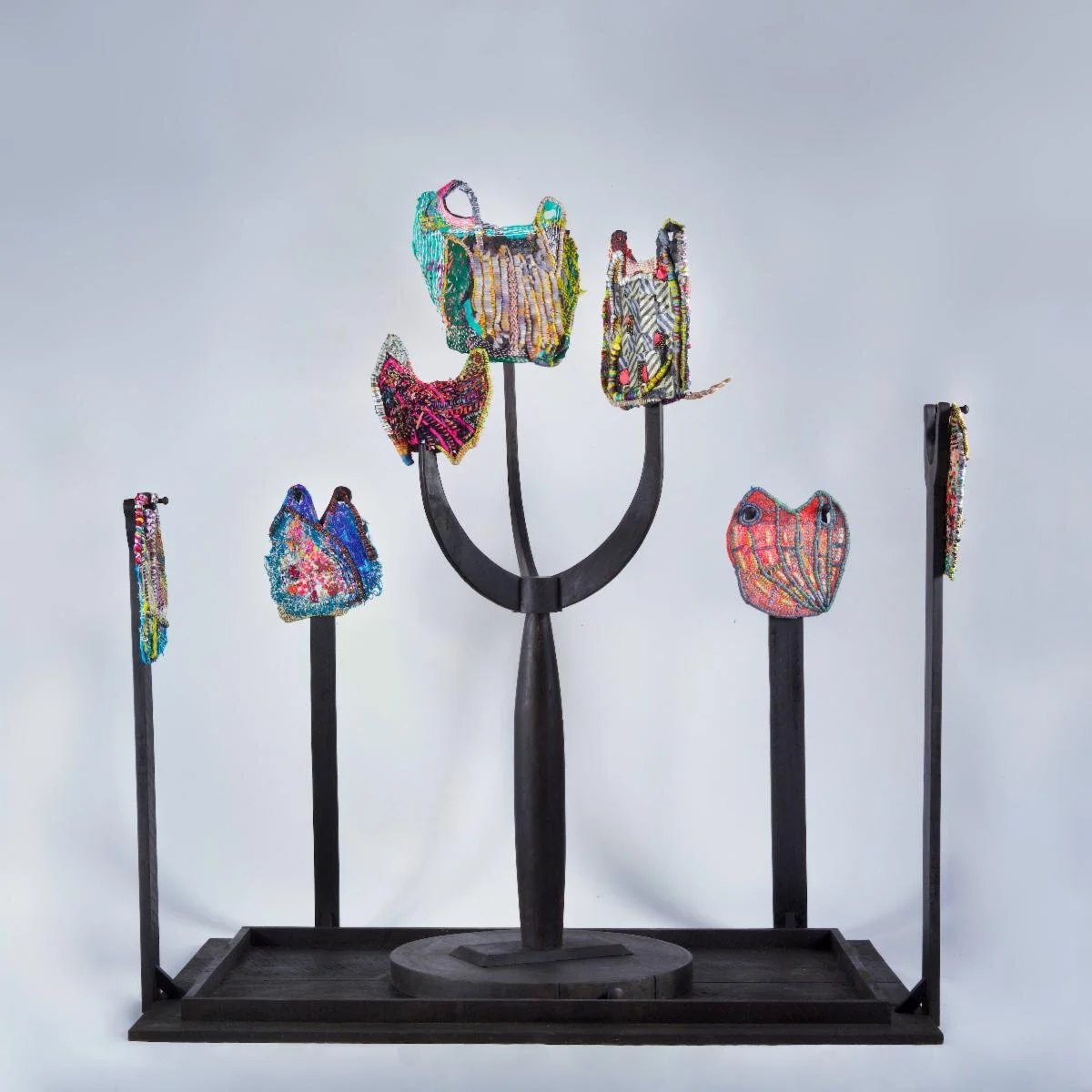
“Neveruses à Table,” by J. (aka Josh) Stoner Blackwell, at the Bennington (Vt.) Museum. Neveruses are hybrid painting-objects composed of recovered plastic bags and colored fibers, such as wool yarn, silk thread, and patterned cloth. Mr. Blackwell is an artist originally from Louisiana who now lives and works in Vermont.

Chris Powell: Public unions subvert government; the faces of socialism -- good and bad
MANCHESTER, Conn.
What is the public interest in unionizing government employees as they now are unionized in Connecticut?
The public interest in allowing private-sector workers to unionize is obvious. Without organized labor's countervailing force, big private business interests can gain control over communities, states and sometimes the whole country.
But the government is not a private interest. It represents everybody, so organizing against it -- rather than organizing against a particular administration -- is against the public interest.
Liberals used to agree. Even during the Great Depression, President Franklin D. Roosevelt opposed government employee unionism. So did New York Mayor Fiorello LaGuardia. They understood that coercion of the government by its own employees would subvert democracy itself.
But now liberals make common cause with government employee unions against the government. Even as Connecticut Democrats keep carping about the January "insurrection" in Washington by the crowd summoned by President Trump to protest the election results, Democratic state legislators are advancing a bill in the General Assembly to subvert state and municipal government. Their legislation would compel government agencies to stop being merely neutral about employee unionization and instead to coerce employees to join.
The legislation would direct state and municipal government agencies to sic unions on their new hires, notifying the unions of new hires, giving the unions the home contact information of new hires, inviting union representatives to orientation meetings, and providing work time for unions to propagandize new hires. All this would undermine a new employee's loyalty to his employer from the start.
There is no public interest in this. There is only a political interest -- the interest of Connecticut's Democratic Party in mobilizing government workers in support of the party's candidates.
There is already little management in government in Connecticut. Performance standards are low and the little discipline that is imposed is often weakened or nullified by the state Board of Mediation and Arbitration. This is not government of, by, and for the people, but government of, by, and for the unions -- and unlike the insurrection in Washington, this one, infinitely more subversive, is likely to be enacted while hardly being noticed.
xxx
Complaints of socialism are being hurled at the Biden administration by Republicans who think the label itself is enough, just as Republicans did back in the 1930s, '40s, and early '50s. But the label is not enough, and President Harry Truman, a Democrat, answered the Republicans well in October 1952 not long before he left office.
"'Socialism,'" Truman said, "is a scare word they have hurled at every advance the people have made in the last 20 years. Socialism is what they called public power. Socialism is what they called Social Security.
"Socialism is what they called farm price supports. Socialism is what they called bank deposit insurance. Socialism is what they called the growth of free and independent labor organizations.
“Socialism is their name for almost anything that helps all the people.”
But socialism isn't always progress, for Truman's list was incomplete.
Socialism is also perpetual stupid imperial wars. Socialism is government bailouts for crooked investment banks. Socialism is excessive salaries and unaccountability for government employees. Socialism is government's award of privilege to racial and ethnic groups.
Socialism is government's pretense that men can be women and its requiring women's sports to admit men. Socialism is the government's paying people not to grow crops and now even paying them not to work.
That is, socialism is anything the government does in the name of progress, and since some of it is good and some isn't, the word is meaningless as an epithet.
The serious issue here is something else. According to the U.S. Commerce Department's Bureau of Economic Analysis, government now is the direct source of more than a third of the country's personal income.
So does the country still want a free-market economy with a dominant private sector, or does it want government to control more than it already does?
Chris Powell is a columnist for the Journal Inquirer, in Manchester.
David Warsh: Economic complexity and price revolutions

— Graphic by Hiroki Sayama
SOMERVILLE, Mass.
I listened idly as two old friends hashed over the argument between Larry Summers and Biden administration officials about the inflationary potential of continuing low interest rates. This, I thought, was where I had come in. My mind drifted back to the book I published in 1984, The Idea of Economic Complexity.
Its premise was what I took to be the similarity between the “price revolution” of the 16th Century and that of the 20th. In the century and a half between 1500 and 1650, everyday prices across Europe had risen roughly six-fold, before settling on a new plateau. Theory usually ascribed these otherwise baffling developments to the importation of New World treasure and improvement in mining techniques: too much money chasing too few goods.
In the fifty years after World War II, costs of living grew as much as five- or ten-fold, depending on how which costs were measured, before leveling off again. This time opinions were divided. “Keynesians” emphasized political pressures, “cost-push” factors in some instances, “demand-pull” episodes in others. “Monetarists” insisted central bankers’ increases in the quantity of money were to blame.
In The Idea of Economic Complexity, I suggested picking up the other end of the stick. Perhaps changes in the world economy had been at the heart of both price explosions: the settlement of the New World, the development of the slave trade, and the rise of the middle class in the 16th and 17th centuries; democratization, urbanization, globalization and the growth of government in the 20th.
The book convinced few. I gradually became interested in what economists seem to understand pretty well already: prices and quantities, trade policy, economic history, social welfare. In all the years since, I have made only one advance in speaking more clearly about what might be meant by “economic complexity.” Economic complexity is surely complexity of the division of labor.
At some point the acuity of Adam Smith’s dictum that the division of labor is limited by the extent of the market was borne in on me. There are other ways of maintaining the division of labor, chiefly taxes. Even in wartime, though, taxes, too, depend on the extent of the market.
How might the division of labor be described? One promising beginning employs network theory. An alternative, suggested by Eric Beinhocker, in The Origin of Wealth: The Radical Remaking of Economics and What It Means to Business and Society (2007) sought to apply the mechanisms of biological evolution. In that case, cladistics and other systems of phylogenetic nomenclature are worth exploring. For managers of a monetary system to efficiently control a global division of labor of evolving complexity, they must know something about complexity itself.
Economics has made great strides borrowing analytic techniques from pneumatics and celestial mechanics. There is probably something to be learned from evolutionary biology as well. It was here, and to Peter Blume’s painting. “The Parade,’’ on the jacket of The Idea of Economic Complexity, that my mind wandered while my friends debated fiscal pressures.
Economic journalism has plenty of first-rate reporters at work in financial capitals around the world, but the Covid pandemic has been as hard on those of us who interested in taking stock of longer trends. Get ready for a spate of books – some of them probably quite good – about the significance of digital and crypto-currencies for money. Complexity was a young man’s book. The next book here – the last – will be different altogether.
David Warsh, a veteran columnist and an economic historian, is proprietor of Somerville-based economicprincipals.com, where this columnist originated.
When summer was long

One of the “Dune Shacks’’ of Peaked Hill Bars Historic District in Provincetown and Truro, on outer Cape Cod. The shacks include those that have been home to American painters and writers from the 1920s to the present day.
“Bring back the long summer after fourth grade
with stinging-cold waves the crashed on the Cape,
the tall, white dunes we scrambled across….’’
— From “Album,’’ by Gardner McFall (born 1952), an American poet

'Have we lived'?

One of the Marquand family house in Newburyport
“Sometimes here on Pequod Island and back again on Beacon Street {in Boston} I have the most curious delusion that our world may be a little narrow. I cannot avoid the impression that something has gone out of it (what, I do not know), and that our little world moves in an orbit of its own, a gain one of those confounded circles, or possibly an ellipse. Do you suppose that it moves without any relation to anything else? That it is broken off from some greater planet like the moon? We talk of life, we talk of art, but do we actually know anything about either? Have any of us really lived? Sometimes I am not entirely sure; sometimes I am afraid that we are all amazing people, placed in an ancestral mould. There is no spring, there is no force. Of course you know better than this, you who plunge every day in the operating room of the Massachusetts General, into life itself. Come up here and tell me I am wrong.”
—From The Late George Apley (1937) a satirical novel by John P. Marquand (1893-1960). Pequod Island is based on Marquand’s family base in Newburyport, Mass. Marquand’s immediate (old Yankee) family had been very prosperous but had fallen on hard times. Marquand’s novels dealt sympathetically with the anxieties and confusions around class.
N.E. energy execs want reliability above all

Oil burner for heating a house
New England energy executives at a recent New England Council meeting emphasize reliability over renewables, especially after the recent Colonial Pipeline, Texas grid collapse and other disasters.
As Michael Graham writes in NH Journal:
“Panelists agreed ending the region’s reliance on fossil fuels is essential for reducing carbon emissions and combatting climate change, but that it’s not as easy as just shutting off gas valves and switching on wind turbines. More than 40 percent of the electricity generated in New England comes from natural gas, for example, and more than 40 percent of homes still use oil or propane for heat.’’

Arthur Allen: Theory that COVID-19 leaked from Wuhan lab picks up more backers

“Would we throw out the red carpet, ‘Come on over to Fort Detrick and the Rocky Mountain Lab?’ We’d have done exactly what the Chinese did, which is say, ‘Screw you!’”
— Dr. Gerald Keusch, associate director of the National Emerging Infectious Diseases Laboratory Institute at Boston University
Once dismissed as a conspiracy theory, the idea that the COVID-19 virus escaped from a Chinese lab is gaining high-profile attention. As it does, reputations of renowned scientists are at risk — and so is their personal safety.
At the center of the storm is Peter Daszak, whose EcoHealth Alliance has worked directly with Chinese coronavirus scientists for years. The scientist has been pilloried by Republicans and lost National Institutes of Health funding for his work. He gets floods of threats, including hate mail with suspicious powders. In a rare interview, he conceded that he can’t disprove that the deadly COVID-19 virus resulted from a lab leak at the Wuhan Institute of Virology — though he doesn’t believe it.
“It’s a good conspiracy theory,” Daszak told KHN. “Foreigners designing a virus in a mysterious lab, a nefarious activity, and then the cloak of secrecy around China.”
But to attack scientists “is not only shooting the messenger,” he said. “It’s shooting the people with the conduit to where the next pandemic could happen.”
Yet what if the messengers were not only bearing bad news but also accidentally unleashed a virus that went on to kill more than 3 million people?
The generally accepted scientific hypothesis holds that the COVID virus arose through natural mutations as it spread from bats to humans, possibly at one of China’s numerous “wet markets,” where caged animals are sold and slaughtered. An alternative explanation is that the virus somehow leaked from the Wuhan Institute, one of Daszak’s scientific partners, possibly by way of an infected lab worker.
The lab-leak hypothesis has picked up more adherents as time passes and scientists fail to detect a bat or other animal infected with a virus that has COVID’s signature genetics. By contrast, within a few months of the start of the 2003 SARS pandemic, scientists found the culprit coronavirus in animals sold in Chinese markets. But samples from 80,000 animals to date have failed to turn up a virus pointing to the origins of SARS-CoV-2 — the virus that causes COVID. The virus’s ancestors originated in bats in southern China, 600 miles from Wuhan. But COVID contains unusual mutations or sequences that made it ideal for infecting people, an issue explored in depth by journalist Nicholas Wade.
Scientists from the Wuhan Institute have collected thousands of coronavirus specimens from bats and registered them in databases closed to inspection. Could one of those viruses have escaped, perhaps after a “gain of function” experiment that rendered it more dangerous?
Daszak, who finds such theories specious, was the only American on a 10-member team that the World Health Organization sent to China this winter to investigate the origins of the virus. The group concluded its work without gaining access to databases at the Wuhan Institute, but dismissed the lab leak hypothesis as unlikely. WHO Director-General Tedros Adhanom Ghebreyesus, however, said the hypothesis “requires further investigation.”
On Friday, 18 virus and immunology experts published a letter in the journal Science demanding a deeper dive. “Theories of accidental release from a lab and zoonotic spillover both remain viable,” they said, adding that the Wuhan Institute should open its records. One of the signatories was a North Carolina virologist who has worked directly with the Wuhan Institute’s top scientists.
That demand is “definitely not acceptable,” responded Shi Zhengli, who directs the Center for Emerging Infectious Diseases at the Wuhan Institute. “Who can provide evidence that does not exist?” she told MIT Technology Review. Shi has said that thousands of attempts to hack its computer systems forced the institute to close its database.
Many leading virologists continue to believe that “zoonotic transmission” — from a bat or some other animal to a human — remains the most likely origin story. Yet the lack of evidence for that is troubling, 17 months after the emergence of COVID said Stanley Perlman, a University of Iowa virologist who was not among the Science letter signatories.
The fact that no bat or other animal has been found infected with anything resembling the COVID virus, which suddenly swept through Wuhan at the end of 2019, “has put the lab leak hypothesis back on the table,” although there is no evidence supporting that theory either, he said.
Alina Chan, a Broad Institute (based in Cambridge, Mass.) postdoctoral researcher who signed the Science letter, agrees that there is no “dispositive” evidence either way for COVID’s emergence. But a network of amateur sleuths have put together evidence, she said, that the Wuhan Institute has COVID-like viruses in its collection that it has not deposited in global databases, as would be customary during a global pandemic. Chan and others are particularly curious about a bunch of SARS-like viruses that the institute collected from a cave in Yunnan province where guano miners suffered a deadly outbreak of respiratory disease in 2012.
“We don’t have access to that data,” Chan said. She and other scientists wonder why the COVID virus was so ideally suited to human-to-human transmission from the onset without signs of an intermediate host or circulation in the human population before the Wuhan outbreak.
In a paper posted to a virology forum last week, Robert Garry, of Tulane University, who doubts the lab-leak hypothesis, brought forth a new fragment of “spillover” evidence: The WHO report shows that some of the first 168 cases of COVID were linked to two or more animal markets in Wuhan, he said, with strains from different markets showing slight differences in their genetic sequence. “Maybe one animal was in a truck with a bunch of cages and then it spread it to another species and that’s where the shift took place,” Garry said.
Garry and other international scientists have worked with Shi and her lab for years. The evidence for Garry’s supposition isn’t airtight, he admitted, but it’s more convincing than “contriving something where some of the world’s leading virologists are covering up at the behest of the Chinese Communist Party,” he said.
Shi has no greater defender in the United States than Daszak, whose EcoHealth Alliance was a wildlife- protection organization when he joined it two decades ago. The group has since expanded its goals from protecting endangered animals to protecting humans endangered by the pathogens trafficked with those animals. The more than $50 million EcoHealth Alliance had received in U.S. funding since 2007 includes contracts and grants from two NIH institutes, the National Science Foundation and the U.S. Agency for International Development, as well as Pentagon funds to look for organisms that could be fashioned into bioterror weapons.
Daszak has co-authored at least 21 research papers on bat coronaviruses since 2005, finding hundreds of viruses capable of infecting people. He estimated that about 1 million people a year are infected with bat viruses — a number that’s grown as humans encroach on bat habitats.
He recalled a 2019 visit to a cave filled with millions of bats. “Tourists were going in there in shorts, and we were in there in full PPE. They asked us, ‘What are you doing?’ and we told them, ‘We’re looking for viruses like SARS.’’’
In April 2020, citing what he said was evidence of the virus’s link to the Wuhan lab, former President Trump ordered the NIH to cancel a five-year, $3.7 million grant for EcoHealth Alliance’s bat-virus research. But about 70 percent of the group’s annual $12 million budget continues to come from the U.S. government, Daszak said.
When the NIH grant was frozen, Daszak called the lab leak hypothesis “pure baloney,” saying he was confident his Chinese scientific partners were not hiding anything. But he admits it is impossible to disprove.
“There are plenty of reasons to question China’s openness and transparency on a whole range of issues including early reporting of the pandemic,” he told KHN. “You can never definitively say that what China is telling us is correct.”
Daszak said he thinks it more likely that China is covering up the role of the country’s wildlife markets in COVID’s origin. Farming of these animals employs 14 million people, and the government has closed and reopened the markets since SARS. Following the COVID outbreak, the Chinese authorities’ investigation of Wuhan’s animal markets, where the virus could have mutated after passage through different species, was incomplete, Daszak said.
“People don’t realize how sensitive China is about this,” he said. “It’s plausible that they recognized there were cases coming out of a market and they shut it down.”
A Controversy With Roots
The scientific conflict over the lab hypothesis is partly rooted in a debate over “gain-of-function’’ experiments, work that in theory could lead to the creation and release of more infectious or deadly organisms. In such experiments, scientists in a lab can, for example, test a virus’s ability to mutate by exposing it to different cell types or to mice genetically engineered with human immune system traits.
At least six of the 18 signatories of the Science letter are part of the Cambridge Working Group, whose members worry about the release of pathogens from the growing number of virus labs around the world.
In 2012, Dr. Anthony Fauci, who leads NIH’s National Institute of Allergy and Infectious Diseases, came out in support of a moratorium on such research, posing a hypothetical scenario involving a poorly trained scientist in a poorly regulated lab: “In an unlikely but conceivable turn of events, what if that scientist becomes infected with the virus, which leads to an outbreak and ultimately triggers a pandemic?” Fauci wrote.
In 2017, the federal government lifted its pause on such experiments but has since required some be approved by a federal board.
In his questioning of Fauci in the Senate last week, Sen. Rand Paul (R.-Ky.) cited a 2015 paper written by Shi, Ralph Baric, of the University of North Carolina, and others in which they fused a SARS-like virus with a novel bat-virus spike protein and found that it sickened research mice. The experiment provided evidence of the perils that lurked in Chinese bat caves, but the authors also raised the question of whether such studies were “too risky to pursue.”
Critics have jumped on this paper as evidence that Shi was conducting “gain of function” experiments that could have created a superbug, but Shi denies it. The research cited in the paper was conducted in North Carolina.
Using a similar technique, in 2017, Baric’s lab showed that remdesivir — currently the only licensed drug for treating COVID — could be useful in fighting coronavirus infections. Baric also helped test the Moderna covid vaccine and a leading new drug candidate against covid.
Research into COVID-like viruses is vital, Baric said. “A terrible truth,” he said, “is that millions of coronaviruses exist in animal reservoirs, like bats, and unfortunately many appear poised for rapid transmission between species.”
Baric told KHN he does not believe that COVID resulted from gain-of-function research. But he signed the Science letter calling for a more thorough investigation of his Chinese colleagues’ laboratory, he said in an email, because while he “personally believe[s] in the natural origin hypothesis,” WHO should arrange for a rigorous, open investigation. It should review the biosafety level under which bat coronavirus research was conducted at the Wuhan Institute, obtaining detailed information on the training and safety procedures and efforts to monitor possible infections among lab personnel.
Fauci also told KHN, in an email, that “we at the NIH are very much in favor of a thorough investigation as to the origins of SARS-CoV-2.”
Scaling the Wall of Secrecy
U.S.-China tensions will make it very difficult to conclude any such study, scientists on both sides of the issue suggest. With their anti-China rhetoric, Trump and his aides “could not have made it more difficult to get cooperation,” said Dr. Gerald Keusch, associate director of the National Emerging Infectious Diseases Laboratory Institute at Boston University. If a disease had emerged from the U.S. and the Chinese blamed the Pentagon and demanded access to the data, “what would we say?” Keusch asked. “Would we throw out the red carpet, ‘Come on over to Fort Detrick and the Rocky Mountain Lab?’ We’d have done exactly what the Chinese did, which is say, ‘Screw you!’”
Still, while China has shut off its laboratories to outside inquiry, that doesn’t mean all investigative avenues are closed, Chan said. Many Chinese scientists were in contact with colleagues and journals outside the country as the pandemic emerged. Those communications may contain clues, Chan said, and someone should methodically interview the contacted individuals.
It’s worth recalling that the only U.S. bioterror attack so far in the 21st Century consisted of a U.S. bioterrorism researcher mailing anthrax spores to politicians and journalists. Hundreds of millions of dollars go into researching organisms around the world and there are risks of leaks, accidental or intentional, no matter how sophisticated the lab, Chan said.
But it would be unwise to limit support for global virus research, said Jonna Mazet, a University of California-Davis professor who led a USAID-funded program that trained scientists around the world to collect and research animal viruses. For her pains, she has received death threats and hacking attacks on her computers and home alarm system.
“If we don’t do the work,” she said, “we’re just sitting ducks for the next one.”
Arthur Allen is a Kaiser Health News journalist.
KHN correspondent Rachana Pradhan contributed to this report.
A day on the water

“Bait, Rope and Knife (The Duck Boat),’’ by Stella Ebner, at Cade Tompkins Projects, Providence
Recycling old buildings
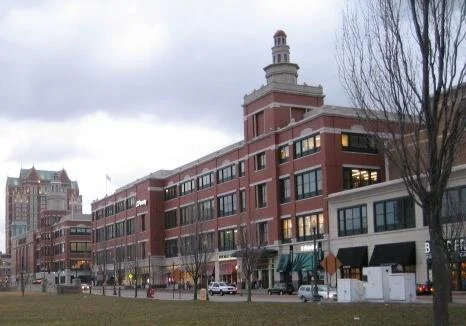
Providence Place — future site of Commerce College?
From Robert Whitcomb’s “Digital Diary,’’ in GoLocal24.com
Excel Academy, a new charter school in Providence, will be housed in part of the former St. Joseph’s Hospital. (Reminder: Charter schools are a kind of public school.) Meanwhile, the city’s School Department plans to renovate other parts of the old hospital for a separate K-8 public school.
Many big stores are closing, and hospitals are shrinking as more and more care, including surgery, is performed on an outpatient basis. Thus more and more space will be available for reuse to address growing or brand-new needs
I’ve sometimes thought that the Providence Place mall would be a nice, completely all-weather college campus.