
Joggling the mind

Daguerreotype taken at what became Mount Holyoke College in December 1846 or early 1847; the only authenticated portrait of Dickinson after childhood
“I have a brother and sister — my mother does not care for thought — and a father, too busy with his beliefs to notice what we do. He buys me many books, but begs me not to read them, because he fears they joggle the mind.”
— Poet Emily Dickinson (1830-1886) in an April 15, 1862 letter to Thomas Wentworth Dickinson
Jim Hightower: Tyson Foods bets on bad taste
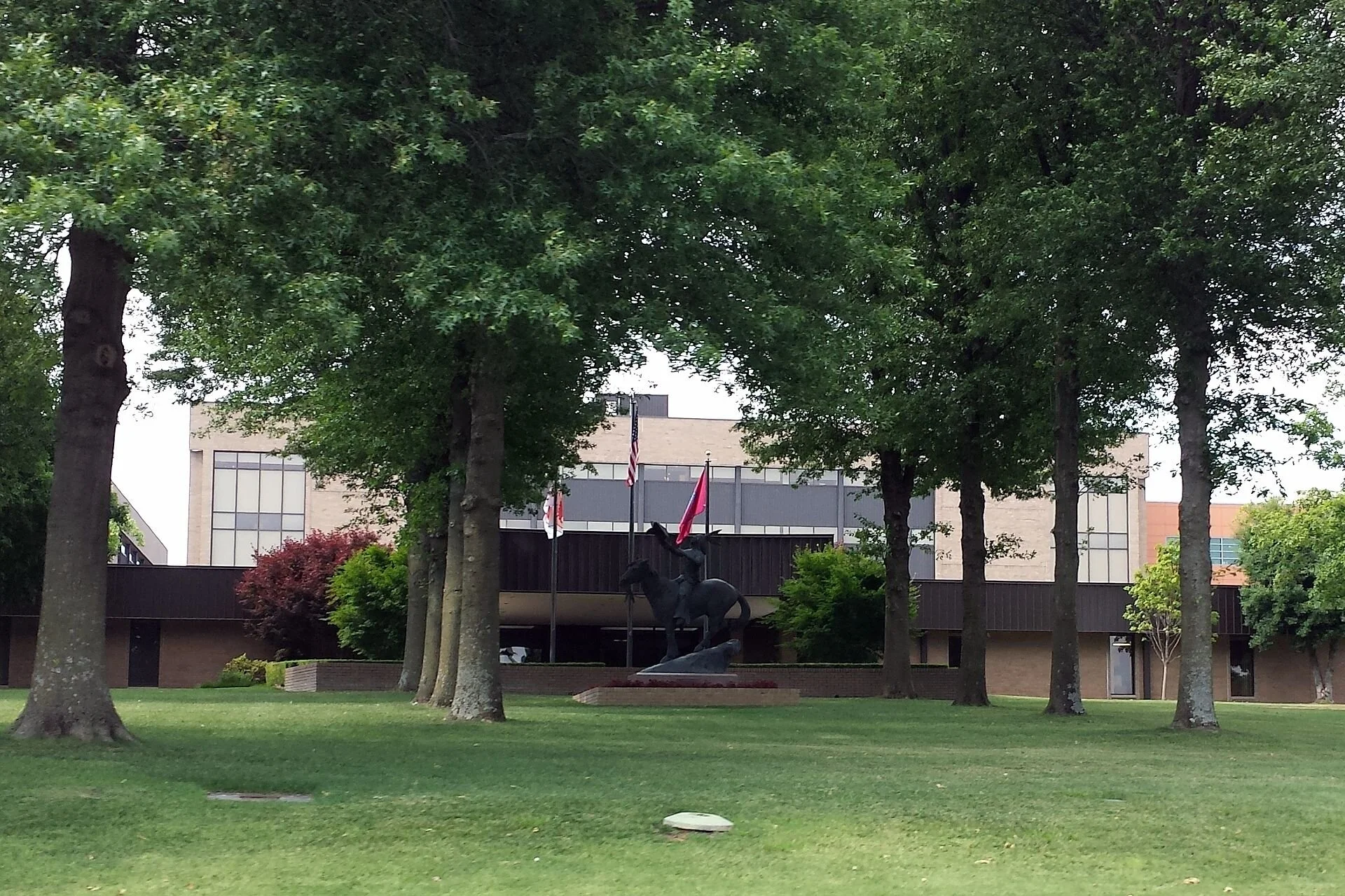
World headquarters of Tyson Foods, in Springdale, Ark.
— Photo by Brandonrush
Via OtherWords.org
We’ve got the Academy Awards, the Emmys and Grammys. But what should we call the award for the most extraordinary performance by a corporate profiteer?
How about the “Sleazy,” with winners getting a solid gold sculpture of a middle finger?
There were so many worthy contenders, but one corporation exhibited uncommon callousness, so the 2021 Sleazy goes to… Tyson Foods!
The meatpacking giant has regularly run roughshod over workers, farmers, communities, and the environment — not to mention the millions of animals it fattens and slaughters. But the coronavirus really pulled out the worst in Tyson’s corporate ethic.
Last April, its billionaire chair, John Tyson, ranted that health officials who were closing down several of his slaughterhouses that had become hotbeds of contagion were creating another crisis: a national meat shortage!
Responding instantly, our corporate-compassionate, burger-gobbling former president decreed that meatpacking plants were crucial to America’s national security and must be kept open at all cost. Trump’s edict required workers to return to their jobs or be fired.
Only there was no meat shortage.
Not only did Americans have an excess of cheeseburgers, pork chops, and chicken nuggets, but Tyson and other giants actually increased their meat exports to China last year. Meanwhile, COVID-19 rampaged through Tyson’s factories.
In its Waterloo, Iowa, facility alone, a third of the processing workers — mostly low-wage people of color — were infected. At least eight died.
Which brings us to the corporate play that cinched this year’s Sleazy for Tyson.
Waterloo slaughterhouse supervisors actually knew that the back-to-work order would sicken hundreds, but not exactly how many. So, managers organized a winner-take-all betting pool on the percentage of employees who would test positive. “It was simply something fun,” said one — “kind of a morale boost.”
The virus infected more than a third of 2,800 workers in the plant. Some fun, huh?
OtherWords columnist Jim Hightower is a radio commentator, writer and public speaker. Distributed by OtherWords.org.
Don Pesci: Progressives sticking it to the towns

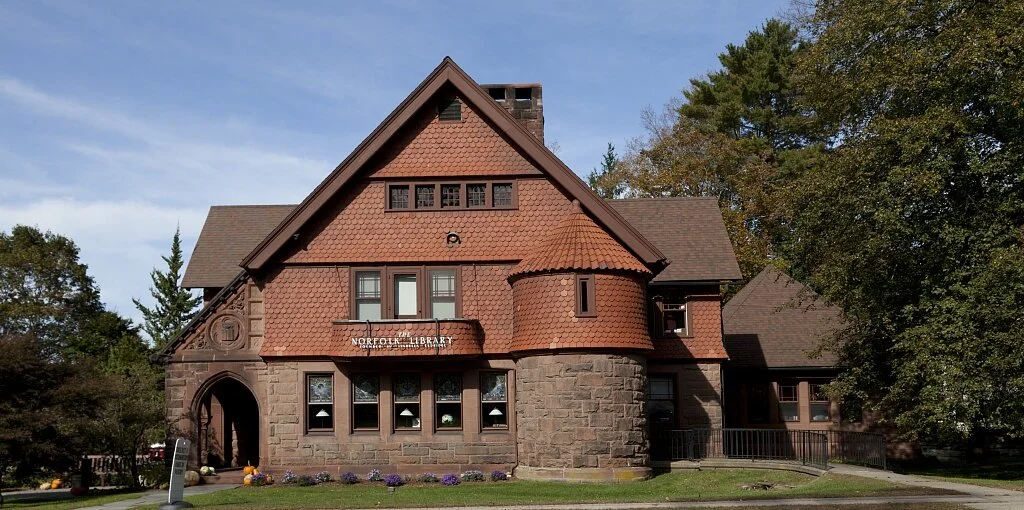
The Norfolk (Conn.) Public Library (1888-89), George Keller, architect. Norfolk is a wealthy town, with many weekend and vacation houses, in the southern Berkshires.
VERNON, Conn.
News is what people don't want you to print. Everything thing else is ads.
—Press Mogul William Randolph Hearst (1863-1951), press mogul and poliitician
Does the following headline from Hearst media ring a bell? – “Controversial housing reform stumbles but Democrats vow to revive it.” Here is the story’s lede graph: “A controversial bill that would make it easier to file lawsuits against towns if they didn’t support new affordable housing has quietly died amid a Republican threat to filibuster the issue in a crucial legislative committee.”
Progressives are more than eager to sow the desert with legal corpses, later to be disposed of by iron-jawed jackals – provided the corpse is, relatively speaking, an independent municipality or a police organization. A recent bill in Connecticut’s progressive General Assembly, spearheaded by state Sen. Gary Winfield, that withdraws legal immunity from police departments has resulted in an exodus of police from the state’s larger, high-crime impact cities to less chancy suburbs. But not to worry, progressives will still provide legal sanctuary and immunity for aggressive, progressive attorneys general and tax hungry legislators.
The quarrel between cities and towns is an old – very old – story. Since Roman times, urban centers and what we in the United States call municipalities or towns have been in a constant struggle for supremacy. The needs of cities and those of suburban municipalities are necessarily different. In Connecticut, suburban governance has been largely successful, urban governance, to put it kindly, less so.
There are three, not two, forms of government in the United States: federal, state, and municipal or county government. The Connecticut General Assembly abolished all county governments on Oct. 1, 1960.
Of the three forms of government, municipal or town governments in Connecticut are by far the older. Hartford, Connecticut’s capital city, for instance, was practicing self-governance – see Thomas Hooker’s Fundamental Orders, adopted by the Connecticut Colony council on Jan. 14, 1639 -- long before there was a state of Connecticut. Before there was a State of Connecticut, there was a colonial “Constitution State.”
The state of Connecticut, one among fifty in the union, was a chartered government long before colonists, shaking off a distant rule in Britain, gathered together in 1776 in Philadelphia to sign the Declaration of Independence. Later, in 1787, a Constitution was devised and signed “to form a more perfect union.” There are many indications here in Connecticut that municipalities still prize their independence, a qualified sovereignty, from both state and federal governance.
This independence has always been precarious. Schools, for example, have traditionally been governed by the state’s municipalities. Through regulations, an over-reliance on teacher certification, and its power of the purse, the state has for decades been encroaching on the educational independence of its towns. The stil- prized autonomy of towns recently has come under sustained attack by progressives in Connecticut. Flexing their political muscle after the 2018 and 2020 elections, the post-modern progressive contingent in the General Assembly is now showing their biceps to the state’s general public.
Sara Bronin, wife of Hartford Mayor Luke Bronin, assisted by Yale Law School eggheads, provided a few years ago a rough-hewn intellectual foundation for the progressive attack launched against municipal governments by often indigent Connecticut cities – Hartford, Bridgeport and New Haven – urban political strongholds directed for nearly a half century by Democratic Party-dominated, media-supported, rusting Tammany Hall-like urban political organizations.
Connecticut Commentary two months ago touched upon Sara Bronin’s faltering attempts to turn Connecticut suburbs into a progressive urbanized wonderland.
Her efforts bore political fruit following the 2016-2018 elections, during which Connecticut’s moderate Republican political structure suffered a complete collapse. What was once called “the vital center” in Connecticut’s political history, a political space shared by both traditional Democrats and Republican decision makers, has been thrown on the ash heap of history by progressives, now in the ascendancy.
Facing a close of session deadline and a promise that minority Republicans would filibuster the bill, progressive Democrat state Rep. Steve Stafstrom, of Bridgeport, co-chairman of the legislative Judiciary Committee, withdrew the bill, patterned after a New Jersey law.
According to the Hearst report, the bill would have state government estimate “how much affordable housing is needed, and it would then be allocated by region. Towns with higher per-capita median incomes and grand lists, but lower percentages of multi-family housing and lower poverty rates, would be asked to build more units of affordable housing…. Municipalities with poverty rates of 20 percent or greater [larger cities such as Stafstrom’s Bridgeport] would be excluded from the requirements.”
Exempting large cities from a statewide bill affecting most municipalities would fail to satisfy what has been labeled by many social justice warriors “equity,” the latest post-Marxian totem among progressives whose real ambition is to perfect and implement the demand most eloquently stated by Karl Marx and Joseph Engels in their “Critique of the Gotha Program”: “… from each according to his means, to each according to his need.”
Don Pesci is a Vernon-based columnist.
Tiny farming

From Robert Whitcomb’s “Digital Diary,’’ in GoLocal24.com
Every year at this time we wrestle with the momentous question of which vegetables to buy and plant. There are so many hybrids and so many claims of their glories that it’s very confusing. We’ve experimented over the years; some choices have turned out to be aesthetic and culinary duds, some very tasty surprises. Those “heirloom” plants!
Anyway, the surest and easiest bet has been cherry tomatoes, which are terrific snacks.
Then there’s the great gamble of how early to plant. Those sneaky May frosts can wreak havoc, though, as the climate has warmed, we seem be to getting fewer of them. (And stuff grows later into the fall.)
Planting is fun, weeding and watering less so, but wise or at least lucky choices and fine weather can let harvesting meet the standard of pleasure you pine for in February, when the seed catalogs arrive. And the sense of self-sufficiency, however bogus, from growing a tiny bit of your own food is a bonus, and something to show off to dinner guests.
Arab abstractions

“To Monet, Giverny” 1983, (oil on canvas), by Abdallah Benanteur in the show “Taking Shape: Abstractions from the Arab World, 1950s-1980,’’ at Boston College’s McMullen Museum of Art, in Boston, through June 6. The show explores abstract art from North Africa, West Asia and the Arab diaspora, an area encompassing a huge variety of cultures, ethnicities, languages and more.
Factory as cuteness preventive
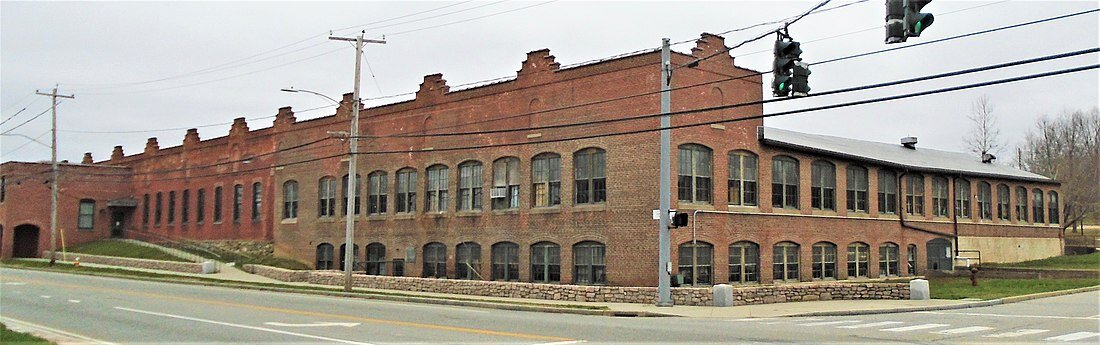
The old Rossie Velvet Mill in Stonington, Conn.
“The factory is a good prevention against quaintness; it removes from the village a possibly ‘cute’ edge.’’
— Anthony Bailey (1933-2020), in his book In the Village, based on the Englishman and New Yorker writer’s 10 years of living in Stonington, Conn., a generally pretty coastal town.
'Self-blessing'

“The bud
stands for all things,
even for those things that don’t flower,
for everything flowers, from within, of self-blessing….’’
— From St. Francis and the Sow,’’ by Galway Kinnell (1927-2014), Pulitzer-Prize-winning Vermont poet
Where we’re going

Work of Marcella Green in her show “Points of Impermanence,’’ through June 20 at Periphery Space @ Paper Nautilus, Providence
The gallery writes:
“In this thought-provoking show, Marcella Green uses photographs and text to produce a visual narrative that explores her thoughts about death. The work is contemplative, melancholy and transformative. The result of Green’s meditations is usually in the form of a book or zine, and she has produced several books as artworks; Before Waking and As of Late Marcella Green (published by Oranbeg Press, 2018) are the most recent indexes. For this show, she will use the wall as if it were pages to display text and photographs and, in doing so, tell a story about the power of creativity and a life revealed through photographs as artifacts.
Hit the road with this book
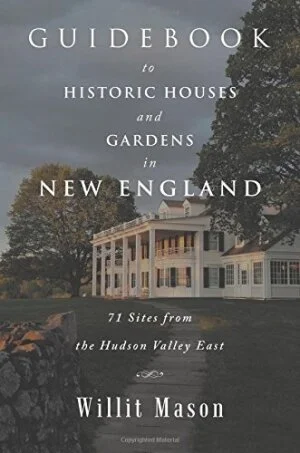
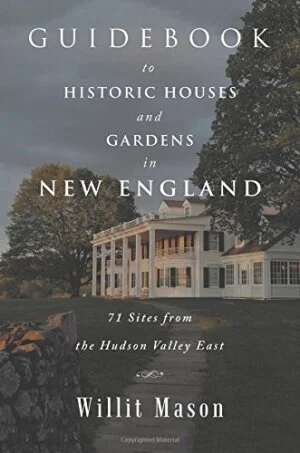
William (“Willit’’ ) Mason, M.D., has written has a delightful – and very handy -- book rich with photos and colorful anecdotes, called Guidebook to Historic Houses and Gardens in New England: 71 Sites from the Hudson Valley East (iUniverse, 240 pages. Paperback. $22.95). Oddly, given the cultural and historical richness of New England and the Hudson Valley, no one else has done a book quite like this before.
Now that our world is reopening, get a copy of the book and hit the road.
The blurb on the back of the book neatly summarizes his story.
“When Willit Mason retired in the summer of 2015, he and his wife decided to celebrate with a grand tour of the Berkshires and the Hudson Valley of New York.
“While they intended to enjoy the area’s natural beauty, they also wanted to visit the numerous historic estates and gardens that lie along the Hudson River and the hills of the Berkshires.
“But Mason could not find a guidebook highlighting the region’s houses and gardens, including their geographic context, strengths, and weaknesses. He had no way of knowing if one location offered a terrific horticultural experience with less historical value or vice versa.
“Mason wrote this comprehensive guide of 71 historic New England houses and gardens to provide an overview of each site. Organized by region, it makes it easy to see as many historic houses and gardens in a limited time.
“Filled with family histories, information on the architectural development of properties and overviews of gardens and their surroundings, this is a must-have guide for any New England traveler.’’
Dr. Mason noted of his tours: “Each visit has captured me in different ways, whether it be the scenic views, architecture of the houses, gardens and landscape architecture or collections of art. As we have learned from Downton Abbey, every house has its own personal story. And most of the original owners of the houses I visited in preparing the book have made significant contributions to American history.’’
To order a book, please go to www.willitmason.com
Save me from Boston
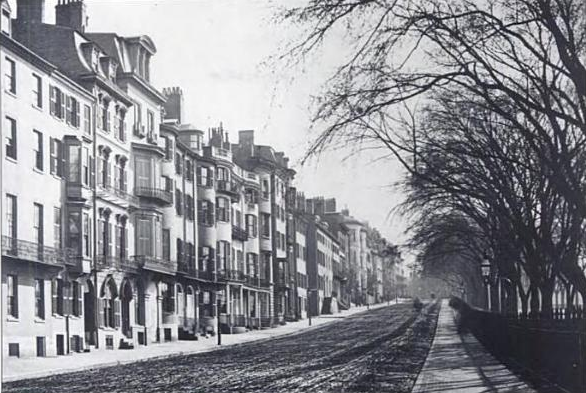
“I care a great deal to prevent myself from becoming what of all things I despise, a Boston prig…Anything which takes a man morally out of Beacon Street, Nahant and Beverly Farms, Harvard College and the Boston press, must be in itself a good.’’
— Henry Adams (1838-1918), American historian and biographer and member of the famous Adams family of Massachusetts. His autobiography, The Education of Henry Adams, is considered a classic of American literature.
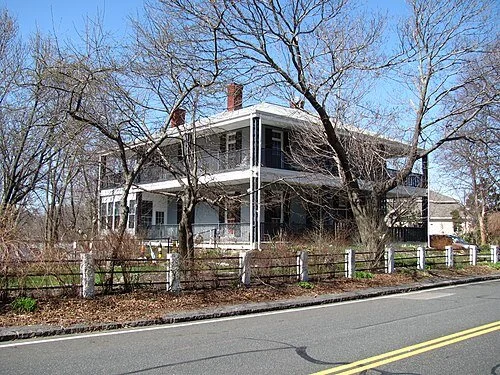
The Henry Cabot Lodge House in Nahant, which for many years was a summer colony for Boston Brahmins.
His 'beloved Maine'
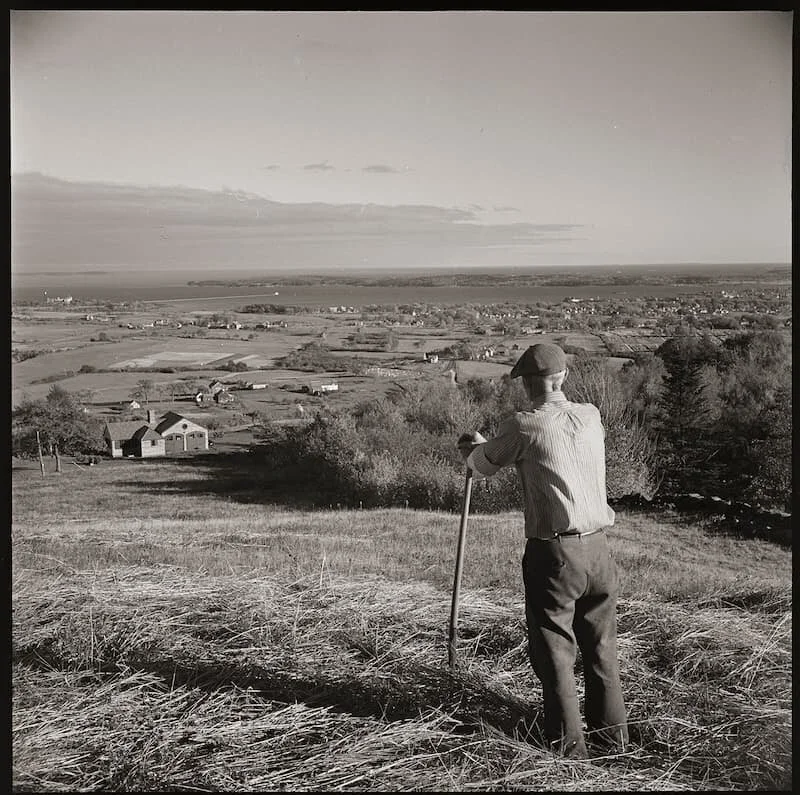
Photo by Kosti Ruohomaa, view from Ruohomaa’s Farm on Dodge Mountain, Rockland, Maine.
This from the Penobscot Marine Museum, in Searsport, Maine:
On Thursday, May 20, at 6 p.m., the Penobscot Marine Museum will be hosting “Kosti Ruohomaa’s Beloved Maine’’ on Zoom, in partnership with the University of Maine at Augusta. This lecture and slideshow is led by Deanna Bonner-Ganter and discusses the work of Rockland photographer Kosti Ruohomaa. Bonner-Ganter is a retired curator who spent over 30 years researching Ruohomaa's life and work, publishing a biography of the photographer — titled Kosti Ruohomaa Photographer Poet — in 2016.
Ruohomaa (1914-1961) was a prolific and well-known photographer, whose photos were featured in Life Magazine, Look, National Geographic, Ladies Home Journal and Down East, among other publications. But his published work only encompasses 10 percent of his photographs, the rest of which remained unseen by the general public until Ruohomaa’s agency gifted a large collection of his work to Penobscot Marine Museum, in 2018.
Ruohomaa's photos capture the spirit of Maine, depicting the state's rugged landscape and hardworking people, finding the poetry in both. “Kosti Ruohomaa’s Beloved Maine’’ offers both a look at Ruohomaa's lesser-known work and a glimpse into the culture and beauty of Maine. For more information and to register, visit penobscotmarinemuseum.org/event/kosti-ruohomaa.
Llewellyn King: Where have all the restaurant workers gone?
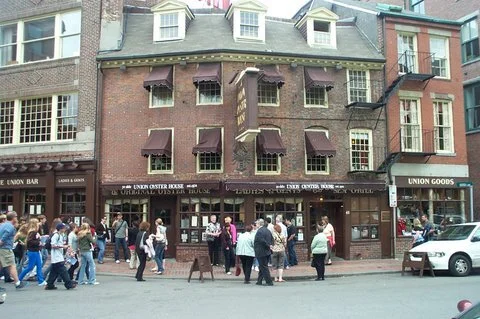
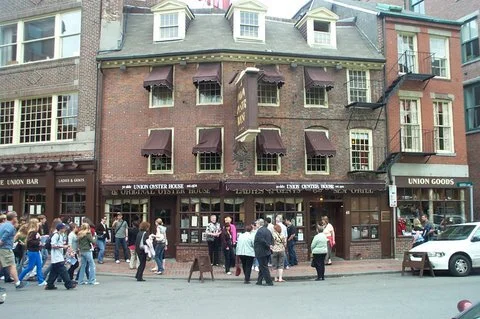
The Union Oyster House in Boston, open to diners since 1826, is amongst the oldest operating restaurants in the United States of America, and the oldest that has been continuously operating (except for several months in 2020) since being opened.
WEST WARWICK, R.I.
The restaurants are back. Bravo! Across America, the restaurants are open or beginning to open. Cheers!
But there is something amiss. Something unexpected and as-yet-unexplained is going on: There is a national shortage of restaurant workers.
During the lockdown, I was among many who lamented the fate of those who prepped, cooked, served and cleaned up, enduring bad hours, difficult conditions and uncertain earnings.
However, there have always been those who want to work in restaurants. For some, such as college students, it is a way of earning on the journey to somewhere else. For others, and there are many, it is because they love the ethos of restaurant life: its people-intensity, and its real-time energy and urgency.
And for those who link ambition with acumen, restaurant work has always fostered the possibility of, as I have heard waiters say, “a place of my own.” Chez Moi beckons to those who would sell foie gras, as well as those who would sell hot dogs.
For unabashed entrepreneurs, it is probably impossible to beat restaurateurs. The chance of self-employment, to my mind, is the great motivation of the free-spirited. A food truck is a start and maybe enough.
We knew the pandemic would change things. But to change employment in the restaurant industry, even a reduced one? That isn’t only a puzzle, but also a hint of how the pandemic has altered things.
There are those in Congress and the state houses who hold that restaurant workers are lolling at home because they would rather collect unemployment benefits. But I doubt that there are hundreds of thousands of Americans who are so lazy, so work-averse that they would rather stay home -- after more than a year of staying home -- than returning to their restaurant jobs.
Something else is happening.
Horizons have changed, new jobs have been found, and the grueling but satisfying work of restaurants has given over to something else. After the plague, a new dawn.
The country is resetting, and lives are being reset, too. A waitress I know of in Florida found work in a print shop. She prefers the regular pay there to the uncertain income from waitressing. That is a reset in her life.
As we go forward, as the pandemic is less dominant in our lives, we are going to experience changes -- some anticipated, some surprising like the restaurant labor shortage.
We don’t know whether the full complement of workers will go back to their offices; we don’t know how schools will deal with the lost year; and we don’t know whether the mini migration from town to country that has been a feature of the last year is a trend to stay or a product of panic.
What we do know and rejoice in is that we can go back to being restaurant patrons. In brief travels around New England, Washington, D.C. , and Ft. Lauderdale, Fla., I found that people are eating out with joy.
Restaurants are milestones of life. It is in them we celebrate birthdays and anniversaries, advance romance, or simply eat something that we wouldn’t get at home.
But that isn’t all. Restaurants, however modest, are destinations. During this long pandemic, we have missed having a destination.
Restaurants in all societies are part of the fabric of how we live. Eating out is woven into our lives, whether it is a humble hamburger or a great ethnic food feast. The first step in the American Dream for many immigrant families is to start a restaurant, to employ the social capital that they brought with them: their cuisine.
Bon appétit! We need restaurants because, in their great variety, they add spice to our lives, especially after the long lockdown.
Llewellyn King is executive producer and host of White House Chronicle, on PBS. His email is llewellynking1@gmail.com and he’s based in Rhode Island and Rhode Island.
Web site: whchronicle.com
Fun in Fitchburg when we need it

“Untitled (Balloons) Coney Island, Brooklyn, NYC” (Kodak Endura metallic print), by Ruben Natal-San Miguel, in the show “The BIG Picture: Giant Photographs and Powerful Portfolios,’’ at the Fitchburg (Mass.) Art Museum, through June 6.
The museum says: “Discover exciting recent acquisitions to the Fitchburg Art Museum’s growing collection of photography: from huge digital color prints to portfolios of related works by innovative contemporary artists.’’
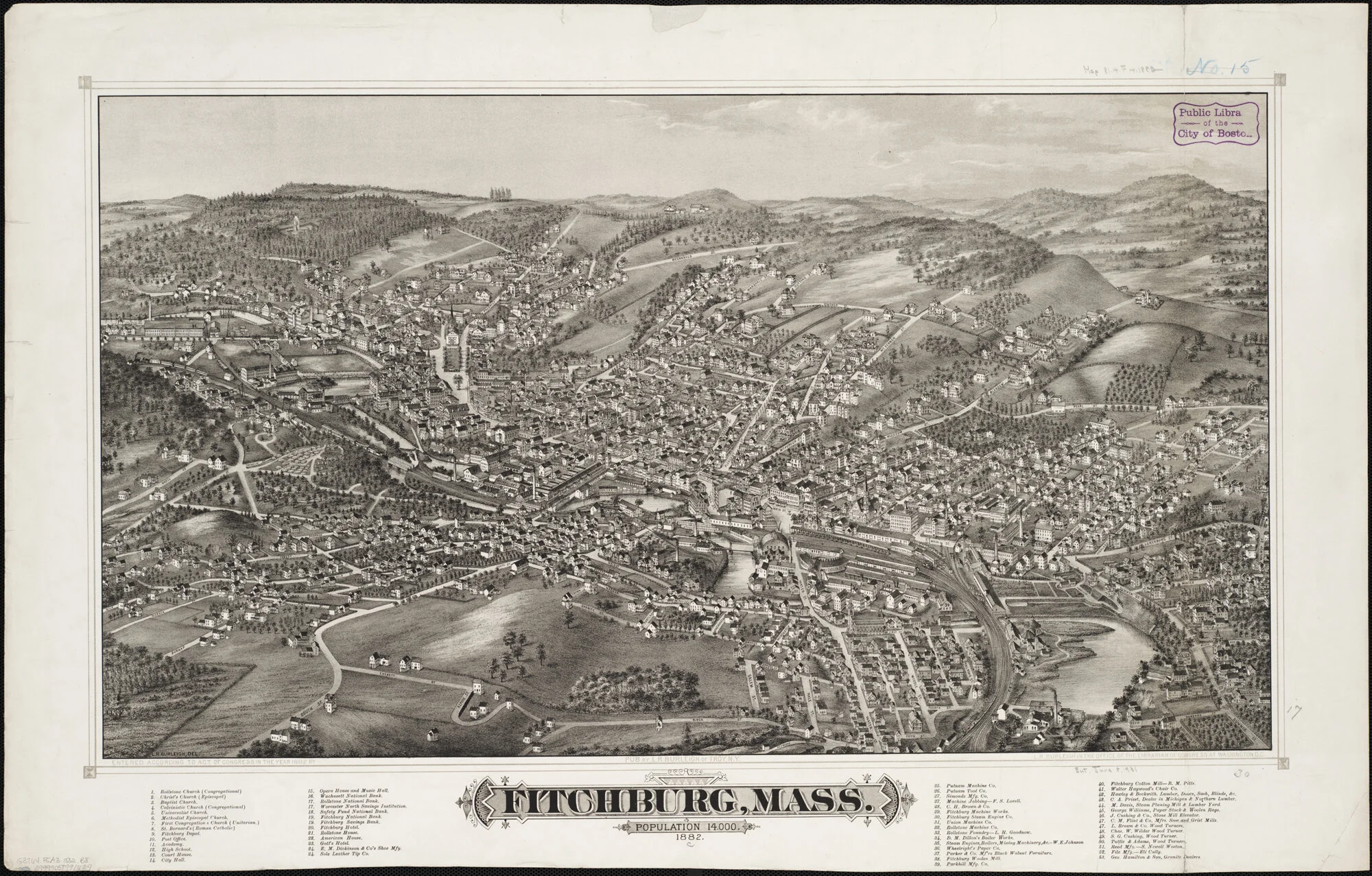
Fitchburg, in north-central Massachusetts, in its industrial heyday. Originally powered by water power from the Nashua River, large factories produced machines, tools, clothing, paper and guns. The city is noted for its architecture, particularly in the Victorian style, built at the height of its mill town prosperity. A few examples: the Fay Club, the old North Worcester County Courthouse and the Bullock House.
For a small city, the Fitchburg Art Museum has a remarkably rich collection and many exciting events.

Chris Powell: To change city's image its reality must be changed

Spiffy Blue Black Square in West Hartford
MANCHESTER, Conn.
Amid dissension and turnover at Hartford's Wadsworth Atheneum, an art museum of international standing, Hartford Business Journal editor Greg Bordonaro wrote the other day that the city has an "image problem," especially when compared to West Hartford, about which The New York Times recently published a report lauding, among other things, the suburb's great restaurants. (The Times seldom cares much about anything in Connecticut unless it's edible.)
But while The Times was merely patronizing, Bordonaro was profoundly mistaken. For the dissension at the art museum has no bearing on Hartford's image, and the city doesn't have an image problem but a reality problem.
Dissension at the art museum is nothing compared to the other recent widely publicized troubles of the city.
For starters, Hartford has a "shot spotter" system that is often in the news as it monitors all the gunplay in the city. While it is a small city, Hartford has murders every month, some especially depraved, like April's murders of 3- and 17-year-old boys.
Even so, Hartford also has a cadre of political activists who want to "defund the police" and who last summer bullied Mayor Luke Bronin into cutting the police budget just before a spate of murders caused him to ask Gov. Ned Lamont to send in state troopers.
Some elected officials in West Hartford embody political correctness, but at least the town has a respectable school system, which Hartford doesn't. Even as the city's schools kept deteriorating a few years ago, Hartford put itself on the verge of bankruptcy by contracting to build a minor-league baseball stadium it couldn't afford, leading to a bailout by state government, the assumption of more than $500 million of the city's long-term debt.
Downtown West Hartford long ago superseded downtown Hartford as the hub of central Connecticut not because of the lovely restaurants lauded by The Times but because the suburb still has large middle and upper classes residing near its downtown, while misguided urban renewal in the 1960s turned downtown Hartford into an office district without a neighborhood.
Most of all West Hartford is desirable residentially because many of its children have two parents at home, while most children in Hartford are lucky if they have even one parent around and so tend to live in financial, educational, and emotional poverty.
Art museums are nice but with or without them middle-class places can take care of themselves. Impoverished places can't.
Now Hartford city government is considering paying a special stipend to single mothers in the hope that it will help them climb toward self-sufficiency. Such projects in other cities have not produced impressive results even as they risk inducing more women to adopt the single-parent lifestyle when they can't even support themselves.
But Hartford can't be blamed too much, for the city's poverty is largely the consequence of state government policy -- the failure of state welfare and education policy. Hartford and Connecticut's other cities are what happens when welfare policy makes fathers seem unnecessary, relieves them of responsibility for their children, and aborts family formation, and when social promotion in school tells students that they needn't learn.
Of course ,social promotion is also policy in West Hartford and suburbs throughout the state, but those towns have parents who compel their kids to take education more seriously.
To achieve racial and economic class integration and to reduce housing prices generally, Connecticut urgently needs to build much more inexpensive housing in the suburbs and should outlaw the worst of their exclusive zoning. But the state has an even more urgent need to stop manufacturing the poverty that has been dragging the cities down for decades.
When the cities themselves are less poor, when more of their children have fathers at home and come to school ready to learn, when their home and school environments motivate rather than demoralize them, more people will want to live in Hartford just as people now want to live in West Hartford -- and the management of the art museum won't mean any more than it means now.
To change Hartford's image -- and Bridgeport's and New Haven's -- state government has to change their reality.
Chris Powell is a columnist for the Journal Inquirer, in Manchester.
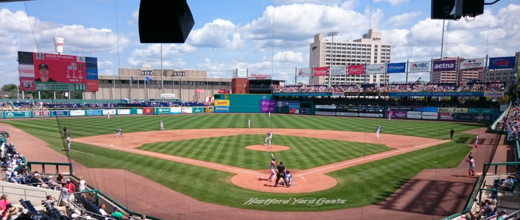
Dunkin' Donuts Park, in Hartford. It is the home of the Minor League team the Hartford Yard Goats. It’s been a financial disaster for the city so far.
'Blurred thumbprint'

“In a parking lot in Boston,
a flock of birds passed over me,
blurred thumbprint on the massing clouds.
The hair on the back of my neck
moved with wind….’’
— From Vermont poet Jennifer Bates’s “Storm, after ‘Approaching Storm: Beach Near Newport,’” by Martin Johnson Heade (1819-1904)(above)
David Warsh: The tradeoffs of financial-market stability and widening inequality
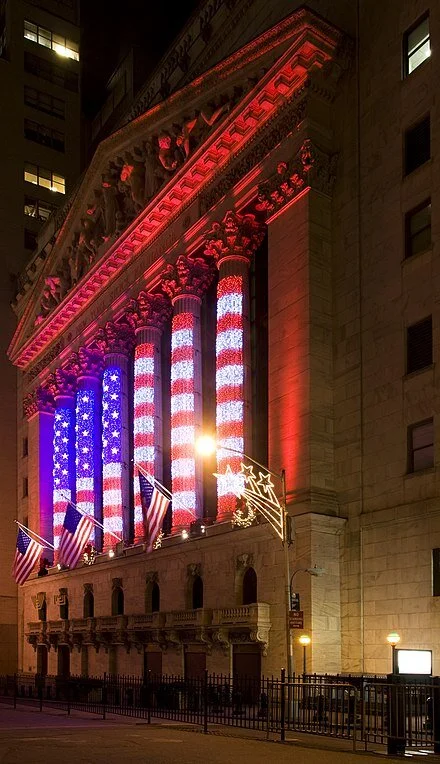
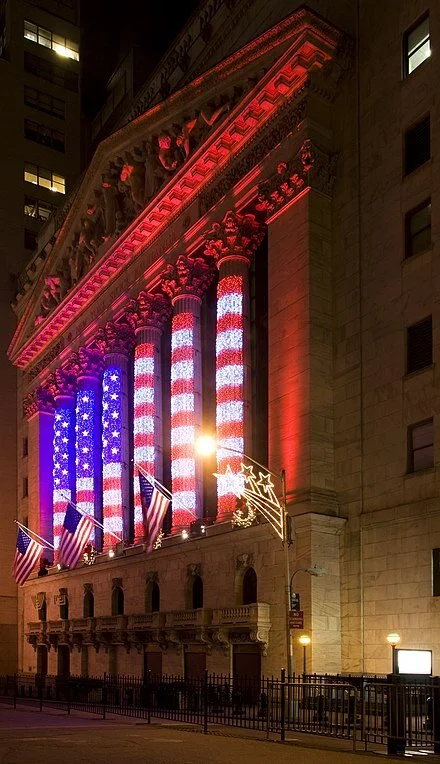
The New York Stock Exchange feeling patriotic
SOMERVILLE, Mass.
It was a powerful column, appearing last month in The Washington Post and ProPublica, an online news site that had participated in its preparation, and it wanted a rejoinder. Allan Sloan is the dean of American financial columnists and Cezary Podkul, a former investigative reporter for The Wall Street Journal is now working on special projects of his own.
The Federal Reserve Board’s “quantitative-easing” policies since 2009 have helped stabilize the economy, promote employment, keep home prices rising, and support the stock market, wrote the pair. But the Fed’s bond-buying spree otherwise had done little to better the lives of those who possessed only income rather that wealth.
Moreover, because no matter how rich you are, you can only spend so much on housing, share prices since 2009 have steadily grown faster than had home equity – the value of all homes less their debt. A total market index, the Wilshire 5000, gained $22.4 trillion in value since the Fed’s most recent intervention, in response to the outbreak of the COVID-19 pandemic. In contrast, the nation’s total home equity rose only $1.3 trillion in the same period.
Since 89 percent of all stocks and mutual funds are owned by the top 10 percent of the wealth distribution, and 53 percent by the top 1 percent, the well-to-do and rich have done much better than everyone else, thanks to Fed policies. In contrast, for those nearing retirement in the bottom half of the nation’s income distribution, Social Security benefits represent something like 60 percent of net worth.
Spokespersons at the Fed, the Treasury Department or the White House declined to discuss with the authors their conclusions about the impact of soaring stock prices on inequality. So they looked for discussion by policy makers involved – Fed chair Jerome Powell, former chairs Janet Yellen, Ben Bernanke – and didn’t find much. Bernanke had argued that whatever effects that monetary policy had on inequality probably would be small compared to the ongoing effects of technology and globalization; Yellen defended low interest rates. Older savers were suffering, she acknowledged, but they had children and grandchildren.
As it happens, Agustín Carstens, general manager of the Bank for International Settlements, last week tackled the problem head-on. He spoke at Markus Academy, an online symposium open to all comers, organized by Princeton University economist Markus Brunnermeier.
If the Federal Reserve System is hard to understand, the BIS, based in Basel, Switzerland, is even harder to explain. A lending conduit for central banks around the world, the BIS was established, in 1930, by the League of Nations, to coordinate reparations payments mandated in the aftermath of World War I. It proved valuable enough as a light-touch coordinator of the global banking system to have been reinforced after 1945, despite having been pressed into service by the Nazis during the Second World War.
In a speech, Carstens laid out the logic of quantitative easing in the language of central banking. These days its task was generally considered to be two-fold: limiting business-cycle fluctuations and delivering low and stable inflation. It was widely recognized that recessions and high inflation damaged the interests of the poor and middle classes more than those of the well-to-do and the rich.
But a little-noted part of central bankers’ mission had evolved historically, he noted: managing financial stability, and restoring it when lost. Lost it had been, at least for a time, in the Great Financial Crisis of 2008. Central banks have done all they could since to restore it, he said.
Two factors in the present day especially complicate the task: Inflation has been low, and less responsive to policy than in the past, and financial factors more volatile than before.
Technical change, institutional evolution and globalization have been the primary forces driving the inequality that has been surging for decades. There was little that monetary policy could do to put on the brakes. That was a job for public policy, for fiscal policy in particular. “Monetary policy can do a lot to stabilize the economy, but it cannot do it alone.”
[G]overnment intervention to help repair balance sheets is critical to resolve the crisis and set the basis for a healthy recovery. However, in the process, central banks may be criticized for supporting Wall Street at the expense of Main Street. But this is a false dichotomy, as central banks target broader financial conditions as a channel to limit the impact of the crisis for the benefit of the entire economy.
Or, as Jason Furman put it, in plain language, more simply than Carstens, “I don’t want to have a lower stock market and higher unemployment.” The former chair of President Obama’s Council of Economic Advisers, now a Harvard professor, was the one authority willing to discuss trade-offs of the present situation with Sloan and Podkul.
To their credit, they gave Furman the last word.
David Warsh, a veteran columnist and an economic historian, is proprietor of Somerville-based economicprincipals.com, where this essay first appeared.
Beating the heat, if it ever comes

“The Swimmer” (oil on panel), by Lee Roscoe, at the Cahoon Museum of American Art, Cotuit, Mass. The painter is based on Cape Cod. When you think of swimming on Cape Cod, you think of beaches but there are many fine fresh-water kettle ponds to swim in on the peninsula, and the water is a lot warmer than the ocean and bay water.
The elements of Maine

View of the Damariscotta River, in Maine. The river, which is mostly an estuary, is the heartland of the state’s growing oyster-aquaculture industry.
“There are a few essential elements you find in the spirit of a Mainer: a humble appreciation of well-crafted things, wit dry enough you may not know when the joke ends and when it begins and most importantly, a love for the land and the sea.’’
— Anthony Bourdain (1956-2018) was an American chef, author, journalist and international travel documentarian
'An Inward Sea'

From Jennifer Wen Ma’s show “An Inward Sea,’’ at The New Britain (Conn.) Museum of American Art, through Oct. 24.
The museum says:
“In recent years, Ma (born 1973 in Beijing) has explored themes of utopia, dystopia, and the human condition in immersive and participatory installations. ‘An Inward Sea’ continues this exploration, while reflecting deeply on the events of the last year--including the COVID-19 pandemic, extensive shut downs, and subsequent racial justice uprising in the U.S. --and how they have impacted the lives of residents of New Britain and beyond.”
Robert Whitcomb: Beacon Hill — 19th Century theme park

Houses on Louisburg Square, the most exclusive part of Beacon Hill
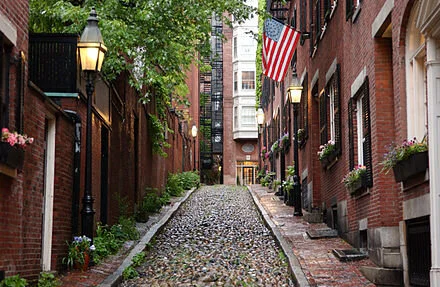
Cobblestoned Acorn Street
Via The Boston Guardian
Now that the weather is mild, pick up a copy of Anthony M. Sammarco’s latest richly illustrated history book, Beacon Hill Through Time. The 96-page work, on high-quality paper, is available from Arcadia Publishing at a list price of $23.99.
The book, with a mix of Peter B. Kingman’s expertly composed photos and a multitude of archival pictures, may surprise a lot of people.
Consider, for instance, how relatively late much of Beacon Hill was developed, considering that Boston was founded in 1630. The hill’s South Slope didn’t become the famously upscale residential area that people think of now until well after 1800, as the new wealth from the China Trade and other shipping, followed by fortunes made in manufacturing and finance, paid for grand mansions, brick and stone row houses and private clubs and other institutions.
There were some teardowns on the South Slope of a few older houses, most notably John Hancock’s mansion, built in the 1730’s and destroyed in 1863 to make way for an addition to the glorious Charles Bullfinch-designed Massachusetts State House (completed in 1798) at the top of the hill. Bullfinch, as architect and developer, is the father of Beacon Hill.
It’s basically a creation of the 19th Century, when the American public began to associate the hill (and then also the Back Bay) with the mercantile aristocracy to be called the “Boston Brahmins’’.
I was surprised to learn that many buildings I had thought were built in the late 18th or early 19th Century are actually decades newer. Architects have heavily used Colonial Revival and Federalist and 18th and 19th Century London residential styles right up to the present to maintain Beacon Hill’s antique appearance. Consider West Hill Place, where, Mr. Sammarco notes: “The design of these houses – with their high-style neoclassical details…made it seem as if London had been transplanted in Boston.’’
Then, as Mr. Sammarco explains, there were the waves of ethnic groups moving on and off the hill, along with various religious, political and other movements. For example, an African-American community developed early on the hill’s North Slope that created their own religious and other institutions, as did various Eastern European and other immigrants who followed. These flows led to such changes as, for example, a Black Baptist church being transformed into synagogue. Meanwhile, shops changed with neighborhood demographics as well as with the evolution of the broader consumer society.
You’ll see in the book how big, high-rise business buildings replaced lovely residential sections – sad but reflecting Boston’s wealth-creating capacity. Consider the elegant Pemberton Square before commerce took it over, late in the 19th Century.
Many direct most of their attention to the sights on the hill itself – e.g., Louisburg Square – rather than to the “Flat of the Hill’’ down by the Charles River and created by using fill from chopping off the tops of Beacon, Mt. Vernon and Pemberton hills (the “Tremonts’’). There are some gorgeous areas there, too, such as Charles River Square.
So you’ll probably want to plan several explorations with Mr. Sammarco’s book in hand. is
Robert Whitcomb is New England Diary’s editor and president of The Boston Guardian, where this piece first appeared.
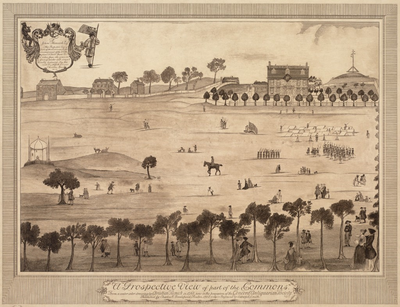
View of John Hancock's house on Beacon Hill west of the summit from across the Common, 1768