
Vox clamantis in deserto


David Warsh: Economic complexity and price revolutions

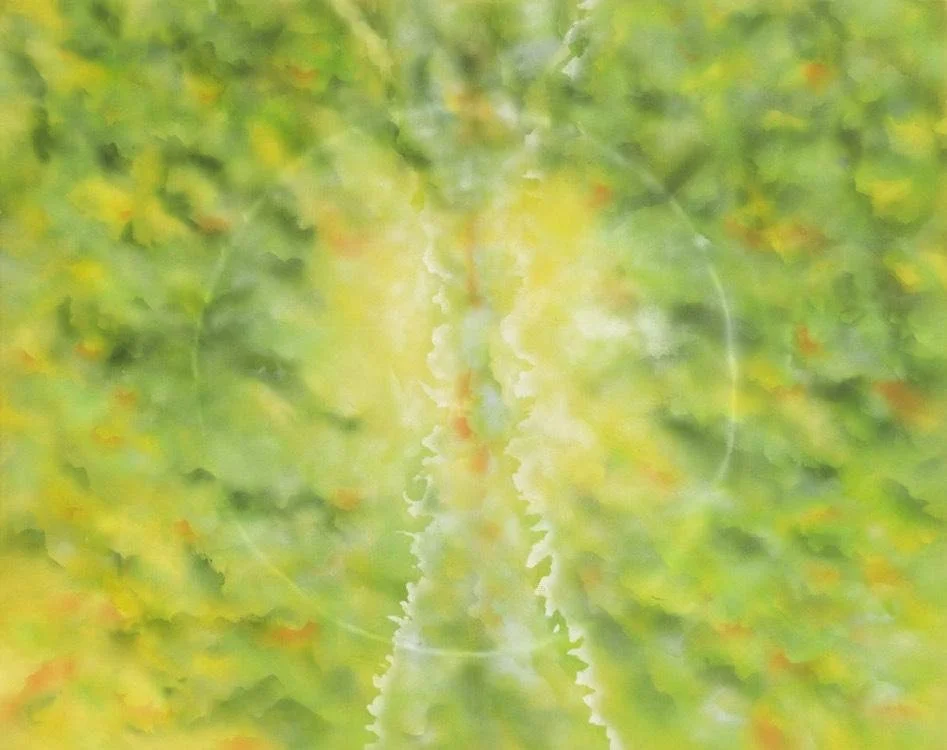
— Graphic by Hiroki Sayama
SOMERVILLE, Mass.
I listened idly as two old friends hashed over the argument between Larry Summers and Biden administration officials about the inflationary potential of continuing low interest rates. This, I thought, was where I had come in. My mind drifted back to the book I published in 1984, The Idea of Economic Complexity.
Its premise was what I took to be the similarity between the “price revolution” of the 16th Century and that of the 20th. In the century and a half between 1500 and 1650, everyday prices across Europe had risen roughly six-fold, before settling on a new plateau. Theory usually ascribed these otherwise baffling developments to the importation of New World treasure and improvement in mining techniques: too much money chasing too few goods.
In the fifty years after World War II, costs of living grew as much as five- or ten-fold, depending on how which costs were measured, before leveling off again. This time opinions were divided. “Keynesians” emphasized political pressures, “cost-push” factors in some instances, “demand-pull” episodes in others. “Monetarists” insisted central bankers’ increases in the quantity of money were to blame.
In The Idea of Economic Complexity, I suggested picking up the other end of the stick. Perhaps changes in the world economy had been at the heart of both price explosions: the settlement of the New World, the development of the slave trade, and the rise of the middle class in the 16th and 17th centuries; democratization, urbanization, globalization and the growth of government in the 20th.
The book convinced few. I gradually became interested in what economists seem to understand pretty well already: prices and quantities, trade policy, economic history, social welfare. In all the years since, I have made only one advance in speaking more clearly about what might be meant by “economic complexity.” Economic complexity is surely complexity of the division of labor.
At some point the acuity of Adam Smith’s dictum that the division of labor is limited by the extent of the market was borne in on me. There are other ways of maintaining the division of labor, chiefly taxes. Even in wartime, though, taxes, too, depend on the extent of the market.
How might the division of labor be described? One promising beginning employs network theory. An alternative, suggested by Eric Beinhocker, in The Origin of Wealth: The Radical Remaking of Economics and What It Means to Business and Society (2007) sought to apply the mechanisms of biological evolution. In that case, cladistics and other systems of phylogenetic nomenclature are worth exploring. For managers of a monetary system to efficiently control a global division of labor of evolving complexity, they must know something about complexity itself.
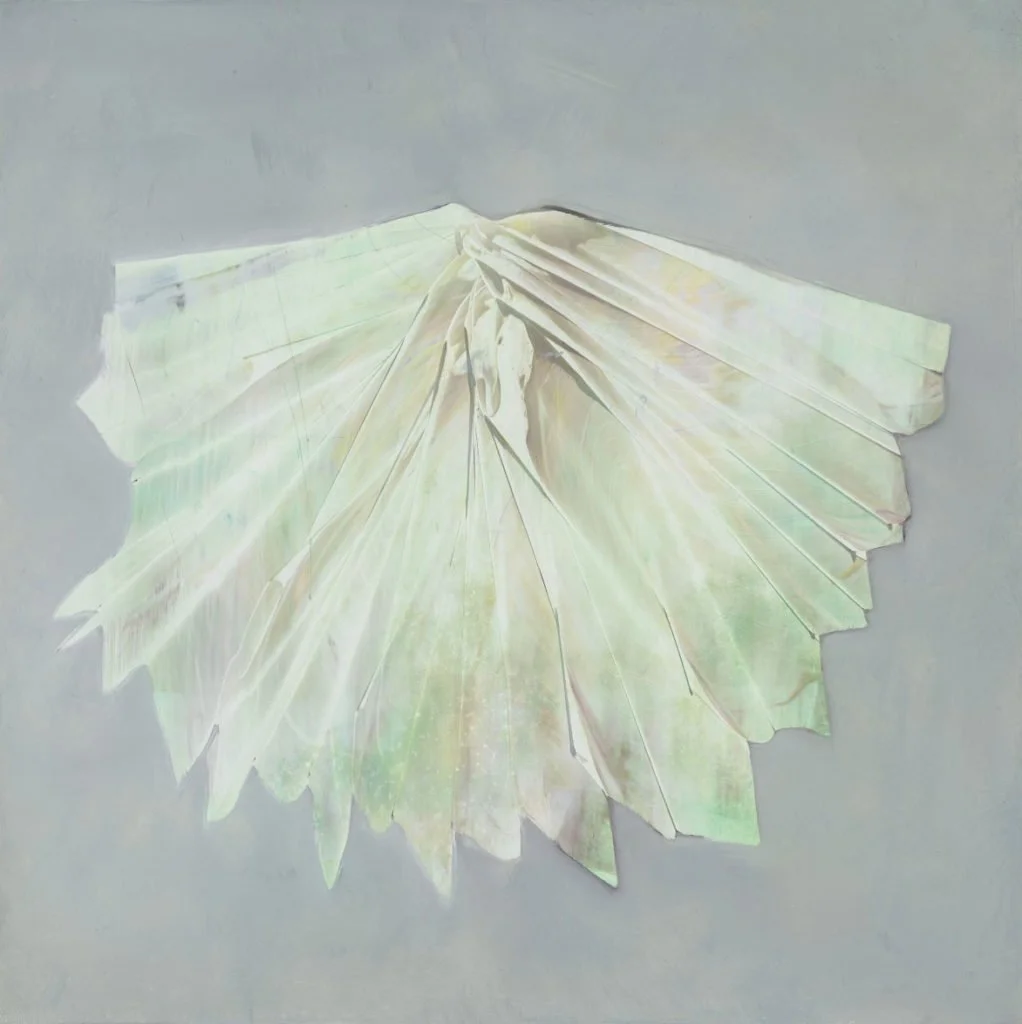
Economics has made great strides borrowing analytic techniques from pneumatics and celestial mechanics. There is probably something to be learned from evolutionary biology as well. It was here, and to Peter Blume’s painting. “The Parade,’’ on the jacket of The Idea of Economic Complexity, that my mind wandered while my friends debated fiscal pressures.
Economic journalism has plenty of first-rate reporters at work in financial capitals around the world, but the Covid pandemic has been as hard on those of us who interested in taking stock of longer trends. Get ready for a spate of books – some of them probably quite good – about the significance of digital and crypto-currencies for money. Complexity was a young man’s book. The next book here – the last – will be different altogether.
David Warsh, a veteran columnist and an economic historian, is proprietor of Somerville-based economicprincipals.com, where this columnist originated.
When summer was long
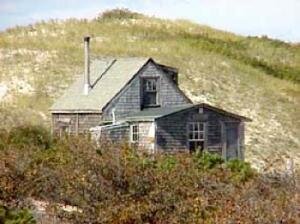
One of the “Dune Shacks’’ of Peaked Hill Bars Historic District in Provincetown and Truro, on outer Cape Cod. The shacks include those that have been home to American painters and writers from the 1920s to the present day.
“Bring back the long summer after fourth grade
with stinging-cold waves the crashed on the Cape,
the tall, white dunes we scrambled across….’’
— From “Album,’’ by Gardner McFall (born 1952), an American poet

'Have we lived'?

One of the Marquand family house in Newburyport
“Sometimes here on Pequod Island and back again on Beacon Street {in Boston} I have the most curious delusion that our world may be a little narrow. I cannot avoid the impression that something has gone out of it (what, I do not know), and that our little world moves in an orbit of its own, a gain one of those confounded circles, or possibly an ellipse. Do you suppose that it moves without any relation to anything else? That it is broken off from some greater planet like the moon? We talk of life, we talk of art, but do we actually know anything about either? Have any of us really lived? Sometimes I am not entirely sure; sometimes I am afraid that we are all amazing people, placed in an ancestral mould. There is no spring, there is no force. Of course you know better than this, you who plunge every day in the operating room of the Massachusetts General, into life itself. Come up here and tell me I am wrong.”
—From The Late George Apley (1937) a satirical novel by John P. Marquand (1893-1960). Pequod Island is based on Marquand’s family base in Newburyport, Mass. Marquand’s immediate (old Yankee) family had been very prosperous but had fallen on hard times. Marquand’s novels dealt sympathetically with the anxieties and confusions around class.
N.E. energy execs want reliability above all

Oil burner for heating a house
New England energy executives at a recent New England Council meeting emphasize reliability over renewables, especially after the recent Colonial Pipeline, Texas grid collapse and other disasters.
As Michael Graham writes in NH Journal:
“Panelists agreed ending the region’s reliance on fossil fuels is essential for reducing carbon emissions and combatting climate change, but that it’s not as easy as just shutting off gas valves and switching on wind turbines. More than 40 percent of the electricity generated in New England comes from natural gas, for example, and more than 40 percent of homes still use oil or propane for heat.’’

Arthur Allen: Theory that COVID-19 leaked from Wuhan lab picks up more backers

“Would we throw out the red carpet, ‘Come on over to Fort Detrick and the Rocky Mountain Lab?’ We’d have done exactly what the Chinese did, which is say, ‘Screw you!’”
— Dr. Gerald Keusch, associate director of the National Emerging Infectious Diseases Laboratory Institute at Boston University
Once dismissed as a conspiracy theory, the idea that the COVID-19 virus escaped from a Chinese lab is gaining high-profile attention. As it does, reputations of renowned scientists are at risk — and so is their personal safety.
At the center of the storm is Peter Daszak, whose EcoHealth Alliance has worked directly with Chinese coronavirus scientists for years. The scientist has been pilloried by Republicans and lost National Institutes of Health funding for his work. He gets floods of threats, including hate mail with suspicious powders. In a rare interview, he conceded that he can’t disprove that the deadly COVID-19 virus resulted from a lab leak at the Wuhan Institute of Virology — though he doesn’t believe it.
“It’s a good conspiracy theory,” Daszak told KHN. “Foreigners designing a virus in a mysterious lab, a nefarious activity, and then the cloak of secrecy around China.”
But to attack scientists “is not only shooting the messenger,” he said. “It’s shooting the people with the conduit to where the next pandemic could happen.”
Yet what if the messengers were not only bearing bad news but also accidentally unleashed a virus that went on to kill more than 3 million people?
The generally accepted scientific hypothesis holds that the COVID virus arose through natural mutations as it spread from bats to humans, possibly at one of China’s numerous “wet markets,” where caged animals are sold and slaughtered. An alternative explanation is that the virus somehow leaked from the Wuhan Institute, one of Daszak’s scientific partners, possibly by way of an infected lab worker.
The lab-leak hypothesis has picked up more adherents as time passes and scientists fail to detect a bat or other animal infected with a virus that has COVID’s signature genetics. By contrast, within a few months of the start of the 2003 SARS pandemic, scientists found the culprit coronavirus in animals sold in Chinese markets. But samples from 80,000 animals to date have failed to turn up a virus pointing to the origins of SARS-CoV-2 — the virus that causes COVID. The virus’s ancestors originated in bats in southern China, 600 miles from Wuhan. But COVID contains unusual mutations or sequences that made it ideal for infecting people, an issue explored in depth by journalist Nicholas Wade.
Scientists from the Wuhan Institute have collected thousands of coronavirus specimens from bats and registered them in databases closed to inspection. Could one of those viruses have escaped, perhaps after a “gain of function” experiment that rendered it more dangerous?
Daszak, who finds such theories specious, was the only American on a 10-member team that the World Health Organization sent to China this winter to investigate the origins of the virus. The group concluded its work without gaining access to databases at the Wuhan Institute, but dismissed the lab leak hypothesis as unlikely. WHO Director-General Tedros Adhanom Ghebreyesus, however, said the hypothesis “requires further investigation.”
On Friday, 18 virus and immunology experts published a letter in the journal Science demanding a deeper dive. “Theories of accidental release from a lab and zoonotic spillover both remain viable,” they said, adding that the Wuhan Institute should open its records. One of the signatories was a North Carolina virologist who has worked directly with the Wuhan Institute’s top scientists.
That demand is “definitely not acceptable,” responded Shi Zhengli, who directs the Center for Emerging Infectious Diseases at the Wuhan Institute. “Who can provide evidence that does not exist?” she told MIT Technology Review. Shi has said that thousands of attempts to hack its computer systems forced the institute to close its database.
Many leading virologists continue to believe that “zoonotic transmission” — from a bat or some other animal to a human — remains the most likely origin story. Yet the lack of evidence for that is troubling, 17 months after the emergence of COVID said Stanley Perlman, a University of Iowa virologist who was not among the Science letter signatories.
The fact that no bat or other animal has been found infected with anything resembling the COVID virus, which suddenly swept through Wuhan at the end of 2019, “has put the lab leak hypothesis back on the table,” although there is no evidence supporting that theory either, he said.
Alina Chan, a Broad Institute (based in Cambridge, Mass.) postdoctoral researcher who signed the Science letter, agrees that there is no “dispositive” evidence either way for COVID’s emergence. But a network of amateur sleuths have put together evidence, she said, that the Wuhan Institute has COVID-like viruses in its collection that it has not deposited in global databases, as would be customary during a global pandemic. Chan and others are particularly curious about a bunch of SARS-like viruses that the institute collected from a cave in Yunnan province where guano miners suffered a deadly outbreak of respiratory disease in 2012.
“We don’t have access to that data,” Chan said. She and other scientists wonder why the COVID virus was so ideally suited to human-to-human transmission from the onset without signs of an intermediate host or circulation in the human population before the Wuhan outbreak.
In a paper posted to a virology forum last week, Robert Garry, of Tulane University, who doubts the lab-leak hypothesis, brought forth a new fragment of “spillover” evidence: The WHO report shows that some of the first 168 cases of COVID were linked to two or more animal markets in Wuhan, he said, with strains from different markets showing slight differences in their genetic sequence. “Maybe one animal was in a truck with a bunch of cages and then it spread it to another species and that’s where the shift took place,” Garry said.
Garry and other international scientists have worked with Shi and her lab for years. The evidence for Garry’s supposition isn’t airtight, he admitted, but it’s more convincing than “contriving something where some of the world’s leading virologists are covering up at the behest of the Chinese Communist Party,” he said.
Shi has no greater defender in the United States than Daszak, whose EcoHealth Alliance was a wildlife- protection organization when he joined it two decades ago. The group has since expanded its goals from protecting endangered animals to protecting humans endangered by the pathogens trafficked with those animals. The more than $50 million EcoHealth Alliance had received in U.S. funding since 2007 includes contracts and grants from two NIH institutes, the National Science Foundation and the U.S. Agency for International Development, as well as Pentagon funds to look for organisms that could be fashioned into bioterror weapons.
Daszak has co-authored at least 21 research papers on bat coronaviruses since 2005, finding hundreds of viruses capable of infecting people. He estimated that about 1 million people a year are infected with bat viruses — a number that’s grown as humans encroach on bat habitats.
He recalled a 2019 visit to a cave filled with millions of bats. “Tourists were going in there in shorts, and we were in there in full PPE. They asked us, ‘What are you doing?’ and we told them, ‘We’re looking for viruses like SARS.’’’
In April 2020, citing what he said was evidence of the virus’s link to the Wuhan lab, former President Trump ordered the NIH to cancel a five-year, $3.7 million grant for EcoHealth Alliance’s bat-virus research. But about 70 percent of the group’s annual $12 million budget continues to come from the U.S. government, Daszak said.
When the NIH grant was frozen, Daszak called the lab leak hypothesis “pure baloney,” saying he was confident his Chinese scientific partners were not hiding anything. But he admits it is impossible to disprove.
“There are plenty of reasons to question China’s openness and transparency on a whole range of issues including early reporting of the pandemic,” he told KHN. “You can never definitively say that what China is telling us is correct.”
Daszak said he thinks it more likely that China is covering up the role of the country’s wildlife markets in COVID’s origin. Farming of these animals employs 14 million people, and the government has closed and reopened the markets since SARS. Following the COVID outbreak, the Chinese authorities’ investigation of Wuhan’s animal markets, where the virus could have mutated after passage through different species, was incomplete, Daszak said.
“People don’t realize how sensitive China is about this,” he said. “It’s plausible that they recognized there were cases coming out of a market and they shut it down.”
A Controversy With Roots
The scientific conflict over the lab hypothesis is partly rooted in a debate over “gain-of-function’’ experiments, work that in theory could lead to the creation and release of more infectious or deadly organisms. In such experiments, scientists in a lab can, for example, test a virus’s ability to mutate by exposing it to different cell types or to mice genetically engineered with human immune system traits.
At least six of the 18 signatories of the Science letter are part of the Cambridge Working Group, whose members worry about the release of pathogens from the growing number of virus labs around the world.
In 2012, Dr. Anthony Fauci, who leads NIH’s National Institute of Allergy and Infectious Diseases, came out in support of a moratorium on such research, posing a hypothetical scenario involving a poorly trained scientist in a poorly regulated lab: “In an unlikely but conceivable turn of events, what if that scientist becomes infected with the virus, which leads to an outbreak and ultimately triggers a pandemic?” Fauci wrote.
In 2017, the federal government lifted its pause on such experiments but has since required some be approved by a federal board.
In his questioning of Fauci in the Senate last week, Sen. Rand Paul (R.-Ky.) cited a 2015 paper written by Shi, Ralph Baric, of the University of North Carolina, and others in which they fused a SARS-like virus with a novel bat-virus spike protein and found that it sickened research mice. The experiment provided evidence of the perils that lurked in Chinese bat caves, but the authors also raised the question of whether such studies were “too risky to pursue.”
Critics have jumped on this paper as evidence that Shi was conducting “gain of function” experiments that could have created a superbug, but Shi denies it. The research cited in the paper was conducted in North Carolina.
Using a similar technique, in 2017, Baric’s lab showed that remdesivir — currently the only licensed drug for treating COVID — could be useful in fighting coronavirus infections. Baric also helped test the Moderna covid vaccine and a leading new drug candidate against covid.
Research into COVID-like viruses is vital, Baric said. “A terrible truth,” he said, “is that millions of coronaviruses exist in animal reservoirs, like bats, and unfortunately many appear poised for rapid transmission between species.”
Baric told KHN he does not believe that COVID resulted from gain-of-function research. But he signed the Science letter calling for a more thorough investigation of his Chinese colleagues’ laboratory, he said in an email, because while he “personally believe[s] in the natural origin hypothesis,” WHO should arrange for a rigorous, open investigation. It should review the biosafety level under which bat coronavirus research was conducted at the Wuhan Institute, obtaining detailed information on the training and safety procedures and efforts to monitor possible infections among lab personnel.
Fauci also told KHN, in an email, that “we at the NIH are very much in favor of a thorough investigation as to the origins of SARS-CoV-2.”
Scaling the Wall of Secrecy
U.S.-China tensions will make it very difficult to conclude any such study, scientists on both sides of the issue suggest. With their anti-China rhetoric, Trump and his aides “could not have made it more difficult to get cooperation,” said Dr. Gerald Keusch, associate director of the National Emerging Infectious Diseases Laboratory Institute at Boston University. If a disease had emerged from the U.S. and the Chinese blamed the Pentagon and demanded access to the data, “what would we say?” Keusch asked. “Would we throw out the red carpet, ‘Come on over to Fort Detrick and the Rocky Mountain Lab?’ We’d have done exactly what the Chinese did, which is say, ‘Screw you!’”
Still, while China has shut off its laboratories to outside inquiry, that doesn’t mean all investigative avenues are closed, Chan said. Many Chinese scientists were in contact with colleagues and journals outside the country as the pandemic emerged. Those communications may contain clues, Chan said, and someone should methodically interview the contacted individuals.
It’s worth recalling that the only U.S. bioterror attack so far in the 21st Century consisted of a U.S. bioterrorism researcher mailing anthrax spores to politicians and journalists. Hundreds of millions of dollars go into researching organisms around the world and there are risks of leaks, accidental or intentional, no matter how sophisticated the lab, Chan said.
But it would be unwise to limit support for global virus research, said Jonna Mazet, a University of California-Davis professor who led a USAID-funded program that trained scientists around the world to collect and research animal viruses. For her pains, she has received death threats and hacking attacks on her computers and home alarm system.
“If we don’t do the work,” she said, “we’re just sitting ducks for the next one.”
Arthur Allen is a Kaiser Health News journalist.
KHN correspondent Rachana Pradhan contributed to this report.
A day on the water

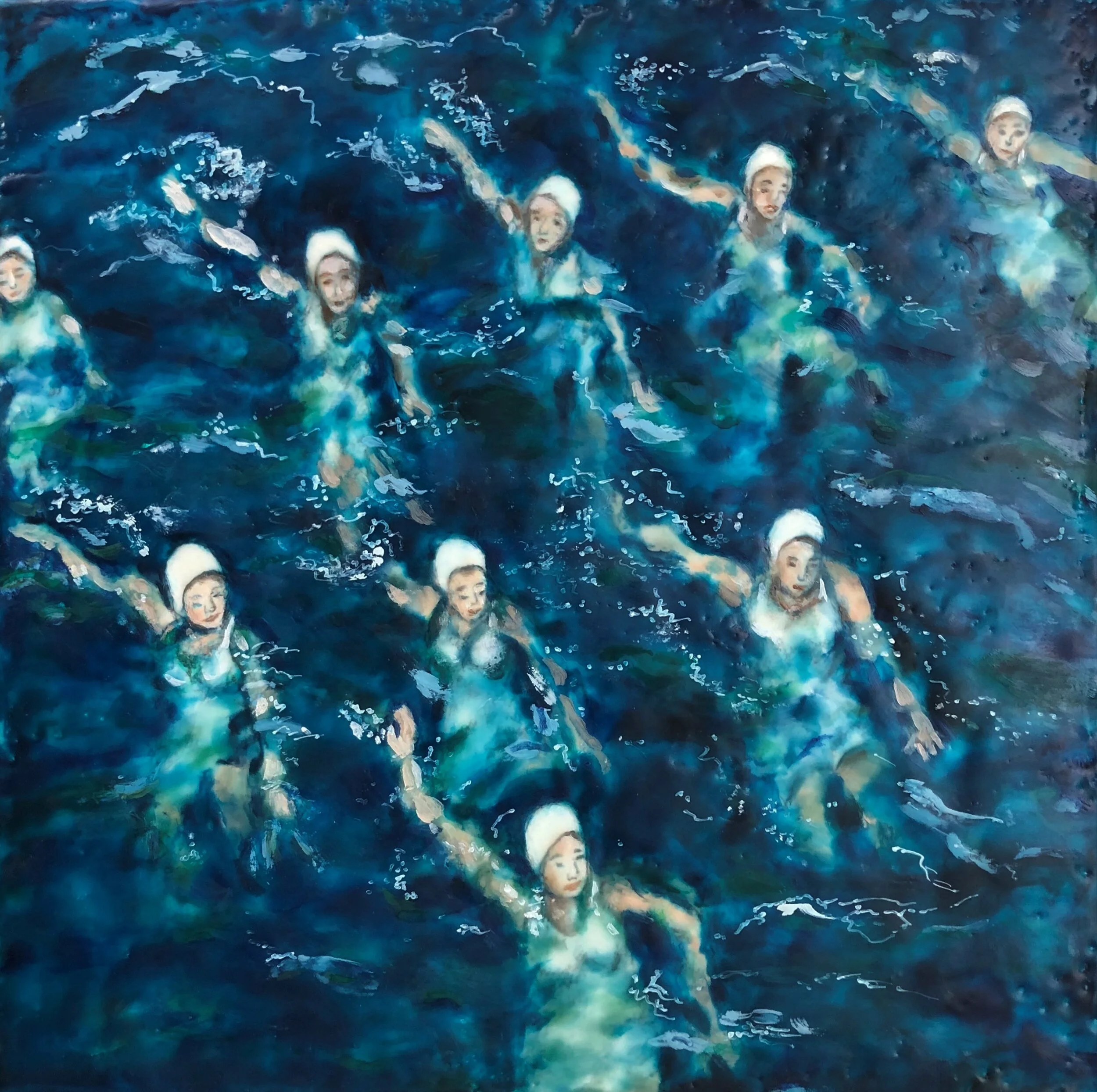
“Bait, Rope and Knife (The Duck Boat),’’ by Stella Ebner, at Cade Tompkins Projects, Providence
Recycling old buildings
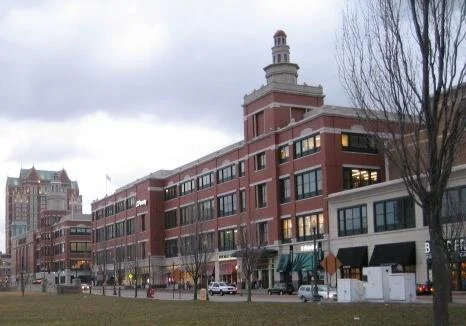
Providence Place — future site of Commerce College?
From Robert Whitcomb’s “Digital Diary,’’ in GoLocal24.com
Excel Academy, a new charter school in Providence, will be housed in part of the former St. Joseph’s Hospital. (Reminder: Charter schools are a kind of public school.) Meanwhile, the city’s School Department plans to renovate other parts of the old hospital for a separate K-8 public school.
Many big stores are closing, and hospitals are shrinking as more and more care, including surgery, is performed on an outpatient basis. Thus more and more space will be available for reuse to address growing or brand-new needs
I’ve sometimes thought that the Providence Place mall would be a nice, completely all-weather college campus.
Joggling the mind

Daguerreotype taken at what became Mount Holyoke College in December 1846 or early 1847; the only authenticated portrait of Dickinson after childhood
“I have a brother and sister — my mother does not care for thought — and a father, too busy with his beliefs to notice what we do. He buys me many books, but begs me not to read them, because he fears they joggle the mind.”
— Poet Emily Dickinson (1830-1886) in an April 15, 1862 letter to Thomas Wentworth Dickinson
Jim Hightower: Tyson Foods bets on bad taste
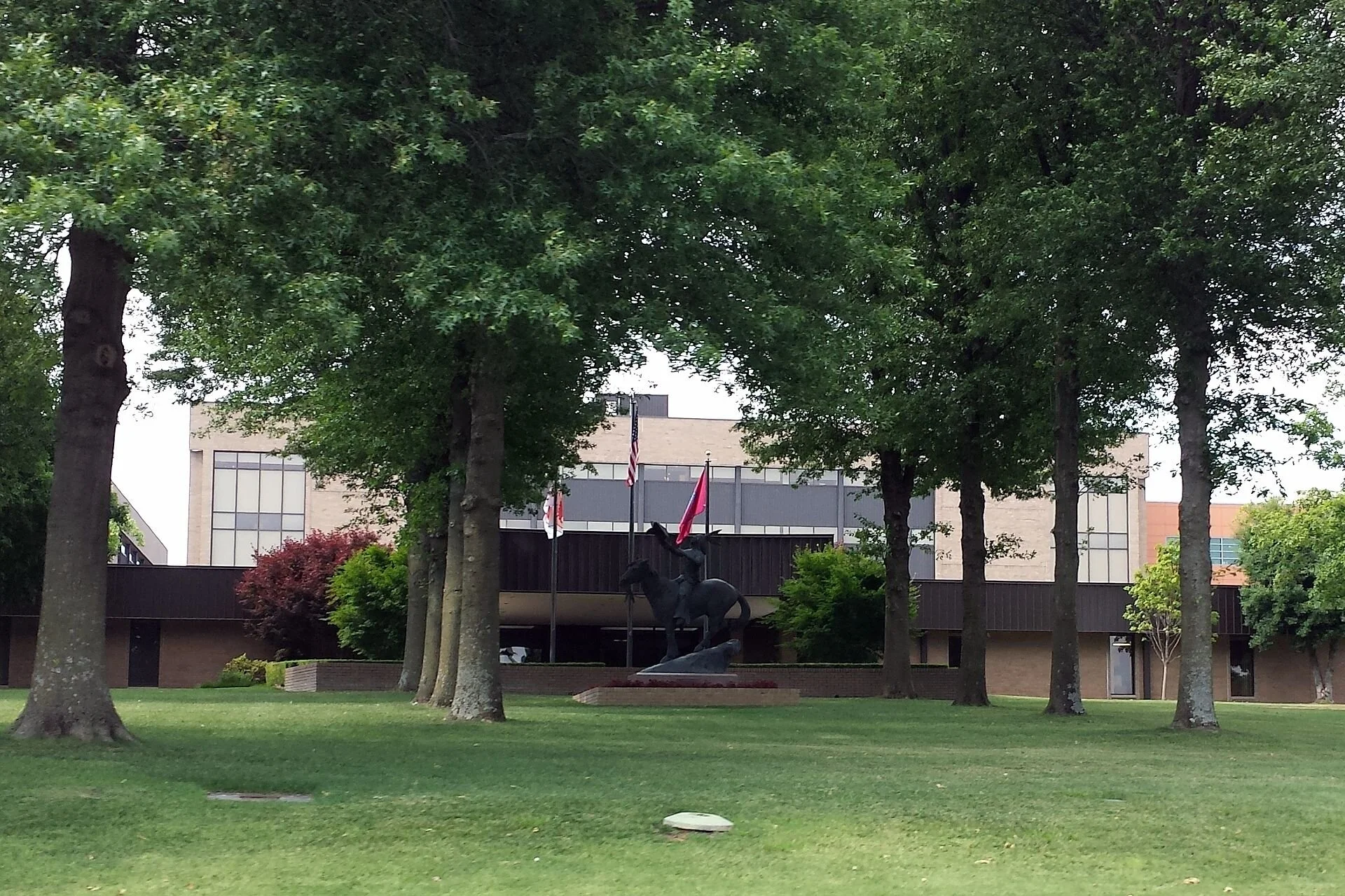
World headquarters of Tyson Foods, in Springdale, Ark.
— Photo by Brandonrush
Via OtherWords.org
We’ve got the Academy Awards, the Emmys and Grammys. But what should we call the award for the most extraordinary performance by a corporate profiteer?
How about the “Sleazy,” with winners getting a solid gold sculpture of a middle finger?
There were so many worthy contenders, but one corporation exhibited uncommon callousness, so the 2021 Sleazy goes to… Tyson Foods!
The meatpacking giant has regularly run roughshod over workers, farmers, communities, and the environment — not to mention the millions of animals it fattens and slaughters. But the coronavirus really pulled out the worst in Tyson’s corporate ethic.
Last April, its billionaire chair, John Tyson, ranted that health officials who were closing down several of his slaughterhouses that had become hotbeds of contagion were creating another crisis: a national meat shortage!
Responding instantly, our corporate-compassionate, burger-gobbling former president decreed that meatpacking plants were crucial to America’s national security and must be kept open at all cost. Trump’s edict required workers to return to their jobs or be fired.
Only there was no meat shortage.
Not only did Americans have an excess of cheeseburgers, pork chops, and chicken nuggets, but Tyson and other giants actually increased their meat exports to China last year. Meanwhile, COVID-19 rampaged through Tyson’s factories.
In its Waterloo, Iowa, facility alone, a third of the processing workers — mostly low-wage people of color — were infected. At least eight died.
Which brings us to the corporate play that cinched this year’s Sleazy for Tyson.
Waterloo slaughterhouse supervisors actually knew that the back-to-work order would sicken hundreds, but not exactly how many. So, managers organized a winner-take-all betting pool on the percentage of employees who would test positive. “It was simply something fun,” said one — “kind of a morale boost.”
The virus infected more than a third of 2,800 workers in the plant. Some fun, huh?
OtherWords columnist Jim Hightower is a radio commentator, writer and public speaker. Distributed by OtherWords.org.
Don Pesci: Progressives sticking it to the towns

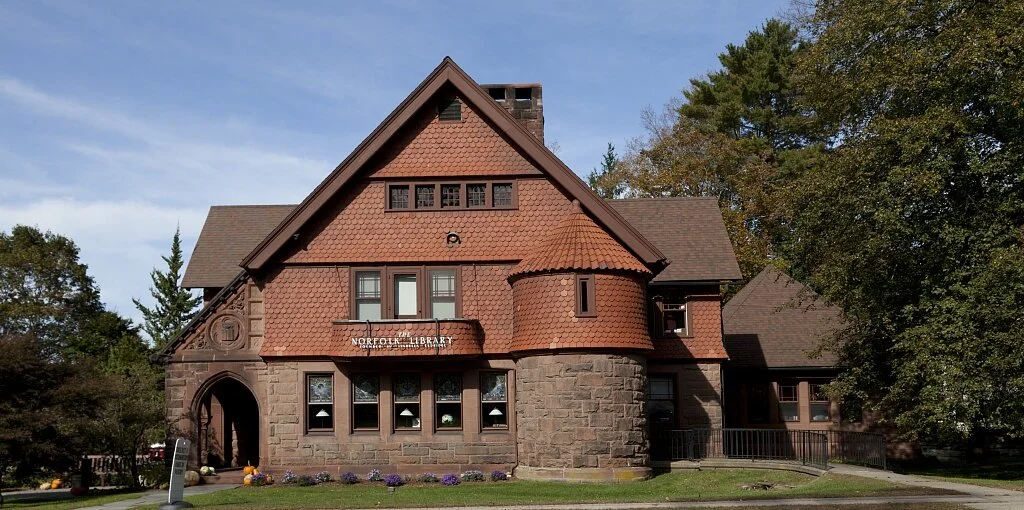
The Norfolk (Conn.) Public Library (1888-89), George Keller, architect. Norfolk is a wealthy town, with many weekend and vacation houses, in the southern Berkshires.
VERNON, Conn.
News is what people don't want you to print. Everything thing else is ads.
—Press Mogul William Randolph Hearst (1863-1951), press mogul and poliitician
Does the following headline from Hearst media ring a bell? – “Controversial housing reform stumbles but Democrats vow to revive it.” Here is the story’s lede graph: “A controversial bill that would make it easier to file lawsuits against towns if they didn’t support new affordable housing has quietly died amid a Republican threat to filibuster the issue in a crucial legislative committee.”
Progressives are more than eager to sow the desert with legal corpses, later to be disposed of by iron-jawed jackals – provided the corpse is, relatively speaking, an independent municipality or a police organization. A recent bill in Connecticut’s progressive General Assembly, spearheaded by state Sen. Gary Winfield, that withdraws legal immunity from police departments has resulted in an exodus of police from the state’s larger, high-crime impact cities to less chancy suburbs. But not to worry, progressives will still provide legal sanctuary and immunity for aggressive, progressive attorneys general and tax hungry legislators.
The quarrel between cities and towns is an old – very old – story. Since Roman times, urban centers and what we in the United States call municipalities or towns have been in a constant struggle for supremacy. The needs of cities and those of suburban municipalities are necessarily different. In Connecticut, suburban governance has been largely successful, urban governance, to put it kindly, less so.
There are three, not two, forms of government in the United States: federal, state, and municipal or county government. The Connecticut General Assembly abolished all county governments on Oct. 1, 1960.
Of the three forms of government, municipal or town governments in Connecticut are by far the older. Hartford, Connecticut’s capital city, for instance, was practicing self-governance – see Thomas Hooker’s Fundamental Orders, adopted by the Connecticut Colony council on Jan. 14, 1639 -- long before there was a state of Connecticut. Before there was a State of Connecticut, there was a colonial “Constitution State.”
The state of Connecticut, one among fifty in the union, was a chartered government long before colonists, shaking off a distant rule in Britain, gathered together in 1776 in Philadelphia to sign the Declaration of Independence. Later, in 1787, a Constitution was devised and signed “to form a more perfect union.” There are many indications here in Connecticut that municipalities still prize their independence, a qualified sovereignty, from both state and federal governance.
This independence has always been precarious. Schools, for example, have traditionally been governed by the state’s municipalities. Through regulations, an over-reliance on teacher certification, and its power of the purse, the state has for decades been encroaching on the educational independence of its towns. The stil- prized autonomy of towns recently has come under sustained attack by progressives in Connecticut. Flexing their political muscle after the 2018 and 2020 elections, the post-modern progressive contingent in the General Assembly is now showing their biceps to the state’s general public.
Sara Bronin, wife of Hartford Mayor Luke Bronin, assisted by Yale Law School eggheads, provided a few years ago a rough-hewn intellectual foundation for the progressive attack launched against municipal governments by often indigent Connecticut cities – Hartford, Bridgeport and New Haven – urban political strongholds directed for nearly a half century by Democratic Party-dominated, media-supported, rusting Tammany Hall-like urban political organizations.
Connecticut Commentary two months ago touched upon Sara Bronin’s faltering attempts to turn Connecticut suburbs into a progressive urbanized wonderland.
Her efforts bore political fruit following the 2016-2018 elections, during which Connecticut’s moderate Republican political structure suffered a complete collapse. What was once called “the vital center” in Connecticut’s political history, a political space shared by both traditional Democrats and Republican decision makers, has been thrown on the ash heap of history by progressives, now in the ascendancy.
Facing a close of session deadline and a promise that minority Republicans would filibuster the bill, progressive Democrat state Rep. Steve Stafstrom, of Bridgeport, co-chairman of the legislative Judiciary Committee, withdrew the bill, patterned after a New Jersey law.
According to the Hearst report, the bill would have state government estimate “how much affordable housing is needed, and it would then be allocated by region. Towns with higher per-capita median incomes and grand lists, but lower percentages of multi-family housing and lower poverty rates, would be asked to build more units of affordable housing…. Municipalities with poverty rates of 20 percent or greater [larger cities such as Stafstrom’s Bridgeport] would be excluded from the requirements.”
Exempting large cities from a statewide bill affecting most municipalities would fail to satisfy what has been labeled by many social justice warriors “equity,” the latest post-Marxian totem among progressives whose real ambition is to perfect and implement the demand most eloquently stated by Karl Marx and Joseph Engels in their “Critique of the Gotha Program”: “… from each according to his means, to each according to his need.”
Don Pesci is a Vernon-based columnist.
Tiny farming
From Robert Whitcomb’s “Digital Diary,’’ in GoLocal24.com
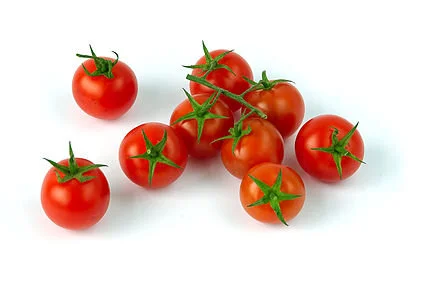
Every year at this time we wrestle with the momentous question of which vegetables to buy and plant. There are so many hybrids and so many claims of their glories that it’s very confusing. We’ve experimented over the years; some choices have turned out to be aesthetic and culinary duds, some very tasty surprises. Those “heirloom” plants!
Anyway, the surest and easiest bet has been cherry tomatoes, which are terrific snacks.
Then there’s the great gamble of how early to plant. Those sneaky May frosts can wreak havoc, though, as the climate has warmed, we seem be to getting fewer of them. (And stuff grows later into the fall.)
Planting is fun, weeding and watering less so, but wise or at least lucky choices and fine weather can let harvesting meet the standard of pleasure you pine for in February, when the seed catalogs arrive. And the sense of self-sufficiency, however bogus, from growing a tiny bit of your own food is a bonus, and something to show off to dinner guests.
Arab abstractions

“To Monet, Giverny” 1983, (oil on canvas), by Abdallah Benanteur in the show “Taking Shape: Abstractions from the Arab World, 1950s-1980,’’ at Boston College’s McMullen Museum of Art, in Boston, through June 6. The show explores abstract art from North Africa, West Asia and the Arab diaspora, an area encompassing a huge variety of cultures, ethnicities, languages and more.
Factory as cuteness preventive
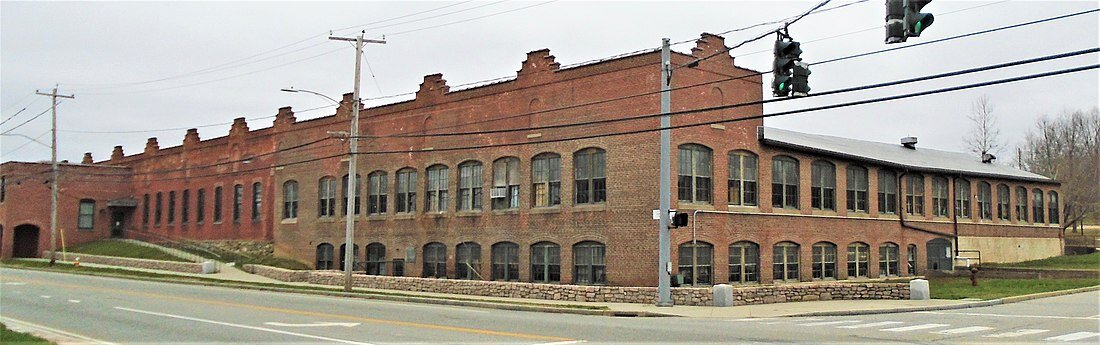
The old Rossie Velvet Mill in Stonington, Conn.
“The factory is a good prevention against quaintness; it removes from the village a possibly ‘cute’ edge.’’
— Anthony Bailey (1933-2020), in his book In the Village, based on the Englishman and New Yorker writer’s 10 years of living in Stonington, Conn., a generally pretty coastal town.
'Self-blessing'
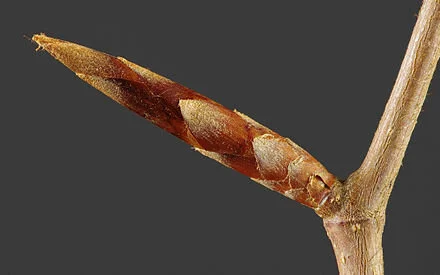
“The bud
stands for all things,
even for those things that don’t flower,
for everything flowers, from within, of self-blessing….’’
— From St. Francis and the Sow,’’ by Galway Kinnell (1927-2014), Pulitzer-Prize-winning Vermont poet
Where we’re going
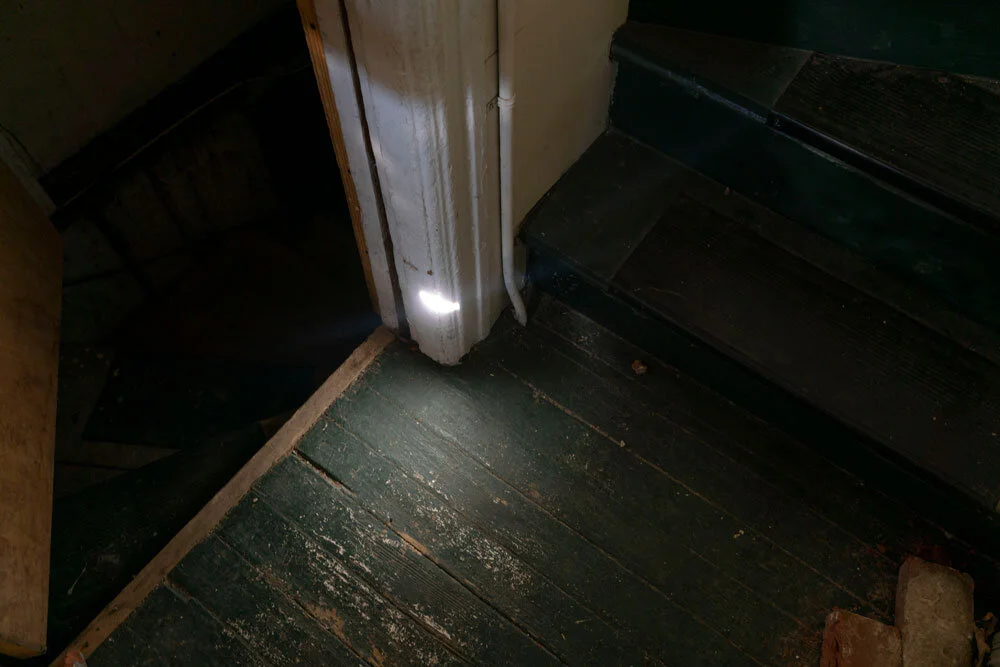
Work of Marcella Green in her show “Points of Impermanence,’’ through June 20 at Periphery Space @ Paper Nautilus, Providence
The gallery writes:
“In this thought-provoking show, Marcella Green uses photographs and text to produce a visual narrative that explores her thoughts about death. The work is contemplative, melancholy and transformative. The result of Green’s meditations is usually in the form of a book or zine, and she has produced several books as artworks; Before Waking and As of Late Marcella Green (published by Oranbeg Press, 2018) are the most recent indexes. For this show, she will use the wall as if it were pages to display text and photographs and, in doing so, tell a story about the power of creativity and a life revealed through photographs as artifacts.
Hit the road with this book
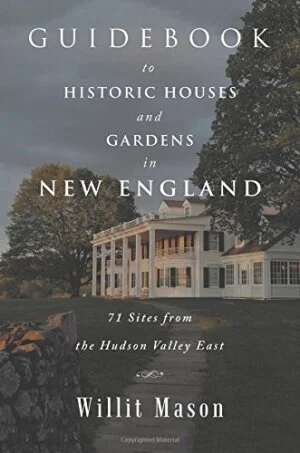
William (“Willit’’ ) Mason, M.D., has written has a delightful – and very handy -- book rich with photos and colorful anecdotes, called Guidebook to Historic Houses and Gardens in New England: 71 Sites from the Hudson Valley East (iUniverse, 240 pages. Paperback. $22.95). Oddly, given the cultural and historical richness of New England and the Hudson Valley, no one else has done a book quite like this before.
Now that our world is reopening, get a copy of the book and hit the road.
The blurb on the back of the book neatly summarizes his story.
“When Willit Mason retired in the summer of 2015, he and his wife decided to celebrate with a grand tour of the Berkshires and the Hudson Valley of New York.
“While they intended to enjoy the area’s natural beauty, they also wanted to visit the numerous historic estates and gardens that lie along the Hudson River and the hills of the Berkshires.
“But Mason could not find a guidebook highlighting the region’s houses and gardens, including their geographic context, strengths, and weaknesses. He had no way of knowing if one location offered a terrific horticultural experience with less historical value or vice versa.
“Mason wrote this comprehensive guide of 71 historic New England houses and gardens to provide an overview of each site. Organized by region, it makes it easy to see as many historic houses and gardens in a limited time.
“Filled with family histories, information on the architectural development of properties and overviews of gardens and their surroundings, this is a must-have guide for any New England traveler.’’
Dr. Mason noted of his tours: “Each visit has captured me in different ways, whether it be the scenic views, architecture of the houses, gardens and landscape architecture or collections of art. As we have learned from Downton Abbey, every house has its own personal story. And most of the original owners of the houses I visited in preparing the book have made significant contributions to American history.’’
To order a book, please go to www.willitmason.com
Save me from Boston
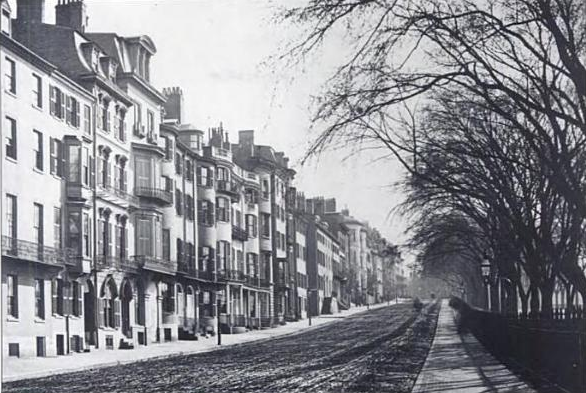
“I care a great deal to prevent myself from becoming what of all things I despise, a Boston prig…Anything which takes a man morally out of Beacon Street, Nahant and Beverly Farms, Harvard College and the Boston press, must be in itself a good.’’
— Henry Adams (1838-1918), American historian and biographer and member of the famous Adams family of Massachusetts. His autobiography, The Education of Henry Adams, is considered a classic of American literature.
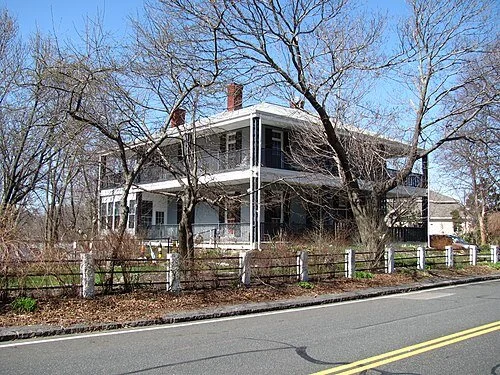
The Henry Cabot Lodge House in Nahant, which for many years was a summer colony for Boston Brahmins.
His 'beloved Maine'
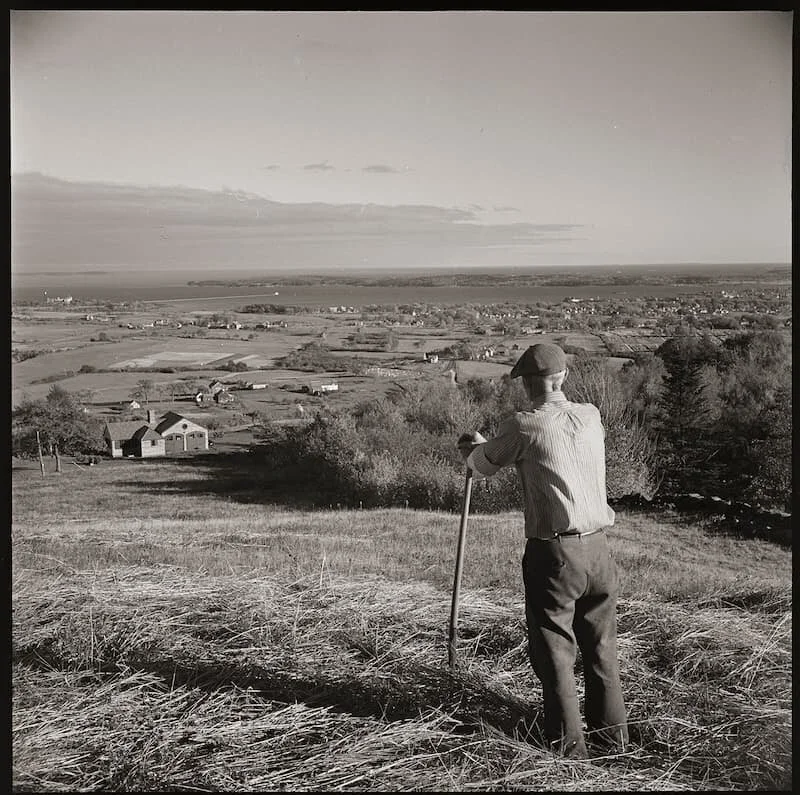
Photo by Kosti Ruohomaa, view from Ruohomaa’s Farm on Dodge Mountain, Rockland, Maine.
This from the Penobscot Marine Museum, in Searsport, Maine:
On Thursday, May 20, at 6 p.m., the Penobscot Marine Museum will be hosting “Kosti Ruohomaa’s Beloved Maine’’ on Zoom, in partnership with the University of Maine at Augusta. This lecture and slideshow is led by Deanna Bonner-Ganter and discusses the work of Rockland photographer Kosti Ruohomaa. Bonner-Ganter is a retired curator who spent over 30 years researching Ruohomaa's life and work, publishing a biography of the photographer — titled Kosti Ruohomaa Photographer Poet — in 2016.
Ruohomaa (1914-1961) was a prolific and well-known photographer, whose photos were featured in Life Magazine, Look, National Geographic, Ladies Home Journal and Down East, among other publications. But his published work only encompasses 10 percent of his photographs, the rest of which remained unseen by the general public until Ruohomaa’s agency gifted a large collection of his work to Penobscot Marine Museum, in 2018.
Ruohomaa's photos capture the spirit of Maine, depicting the state's rugged landscape and hardworking people, finding the poetry in both. “Kosti Ruohomaa’s Beloved Maine’’ offers both a look at Ruohomaa's lesser-known work and a glimpse into the culture and beauty of Maine. For more information and to register, visit penobscotmarinemuseum.org/event/kosti-ruohomaa.
Llewellyn King: Where have all the restaurant workers gone?
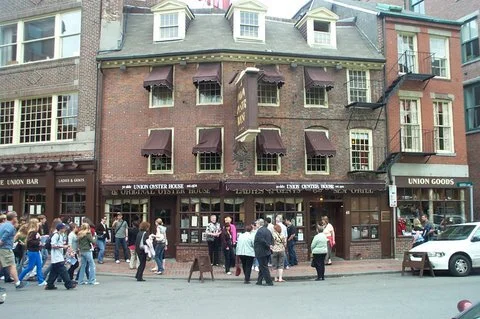
The Union Oyster House in Boston, open to diners since 1826, is amongst the oldest operating restaurants in the United States of America, and the oldest that has been continuously operating (except for several months in 2020) since being opened.
WEST WARWICK, R.I.
The restaurants are back. Bravo! Across America, the restaurants are open or beginning to open. Cheers!
But there is something amiss. Something unexpected and as-yet-unexplained is going on: There is a national shortage of restaurant workers.
During the lockdown, I was among many who lamented the fate of those who prepped, cooked, served and cleaned up, enduring bad hours, difficult conditions and uncertain earnings.
However, there have always been those who want to work in restaurants. For some, such as college students, it is a way of earning on the journey to somewhere else. For others, and there are many, it is because they love the ethos of restaurant life: its people-intensity, and its real-time energy and urgency.
And for those who link ambition with acumen, restaurant work has always fostered the possibility of, as I have heard waiters say, “a place of my own.” Chez Moi beckons to those who would sell foie gras, as well as those who would sell hot dogs.
For unabashed entrepreneurs, it is probably impossible to beat restaurateurs. The chance of self-employment, to my mind, is the great motivation of the free-spirited. A food truck is a start and maybe enough.
We knew the pandemic would change things. But to change employment in the restaurant industry, even a reduced one? That isn’t only a puzzle, but also a hint of how the pandemic has altered things.
There are those in Congress and the state houses who hold that restaurant workers are lolling at home because they would rather collect unemployment benefits. But I doubt that there are hundreds of thousands of Americans who are so lazy, so work-averse that they would rather stay home -- after more than a year of staying home -- than returning to their restaurant jobs.
Something else is happening.
Horizons have changed, new jobs have been found, and the grueling but satisfying work of restaurants has given over to something else. After the plague, a new dawn.
The country is resetting, and lives are being reset, too. A waitress I know of in Florida found work in a print shop. She prefers the regular pay there to the uncertain income from waitressing. That is a reset in her life.
As we go forward, as the pandemic is less dominant in our lives, we are going to experience changes -- some anticipated, some surprising like the restaurant labor shortage.
We don’t know whether the full complement of workers will go back to their offices; we don’t know how schools will deal with the lost year; and we don’t know whether the mini migration from town to country that has been a feature of the last year is a trend to stay or a product of panic.
What we do know and rejoice in is that we can go back to being restaurant patrons. In brief travels around New England, Washington, D.C. , and Ft. Lauderdale, Fla., I found that people are eating out with joy.
Restaurants are milestones of life. It is in them we celebrate birthdays and anniversaries, advance romance, or simply eat something that we wouldn’t get at home.
But that isn’t all. Restaurants, however modest, are destinations. During this long pandemic, we have missed having a destination.
Restaurants in all societies are part of the fabric of how we live. Eating out is woven into our lives, whether it is a humble hamburger or a great ethnic food feast. The first step in the American Dream for many immigrant families is to start a restaurant, to employ the social capital that they brought with them: their cuisine.
Bon appétit! We need restaurants because, in their great variety, they add spice to our lives, especially after the long lockdown.
Llewellyn King is executive producer and host of White House Chronicle, on PBS. His email is llewellynking1@gmail.com and he’s based in Rhode Island and Rhode Island.
Web site: whchronicle.com