
May be washable if not edible

“Fiberglass sphere” (sculpture), by Brunswick, Maine-based William Zingaro, at the Corey Daniels Gallery, Wells, Maine.
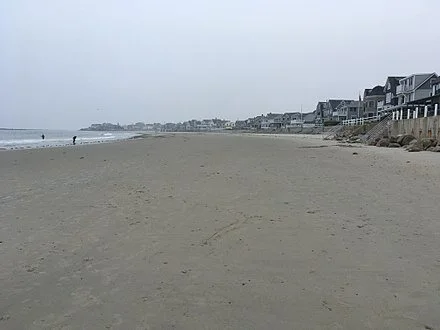
The south end of Wells Beach. How long will those houses last?

One of Wells’s one-room schoolhouses, built in the 19th Century.
— Photo by BMRR
May Worcester's big baseball gamble pay off


Rendition of Polar Park
From Robert Whitcomb’s “Digital Diary,’’ in GoLocal24.com
The new, $159.5 million Polar Park project, in Worcester, looks lovely, as well it should at that price. Worcester, through borrowing, is paying $88.2 million, the Worcester Red Sox $60.6 million and the state and Feds $10.7 million, at least according to a Feb. 4 Worcester Business Journal report.
Will Polar Park pay for itself in bigger local business revenues and payrolls and such related public benefits as more municipal-property-tax revenue? Generally, publicly financed sports stadiums don’t pay for themselves, at least in measurable monetary benefits for the taxpayers, though of course they can be very lucrative for the team owners. And there can be psychic benefits for some locals from the pride in having a (hopefully) successful team to rally around and an often jolly place to gather.
In the case of Worcester, I have some doubts on whether, after a year or two of people drawn by curiosity to the new ballpark, the WooSox can lure the number of long-term gamegoers they hope for.
While Worcester was very narrowly the second-largest city in New England in the 2010 Census, with 181,045 people, compared to Providence’s 178,042, its metro area had only 923,672 people, compared to Greater Providence’s 1.6 million. Providence proper’s area is only 20.58 square miles, compared with Worcester’ 38.41.
Those numbers seemingly would have made it much more sensical to keep the Pawtucket Red Sox going, even with less than the substantial taxpayer help that the organization had been offered in the Ocean State. Further, Providence/Pawtucket is on the main street of the East Coast and Worcester is more off to the side.
Well, que sera, sera. Now that Polar Park is up, I wish the WooSox all the best and plan a trip there soon to check it out. While I have little interest in such things as baseball statistics (real baseball fans are obsessed with such data) and don’t much follow the ups-and-downs of current stars, I do love the setting, sights and sounds of baseball: The slope of the stands; the smell of very green grass and of hot dogs and beer; the cheers (and boos); the crack of the ball against the bat; the tacky organ music; the alternations of relative immobility and explosive activity; the manic announcers, and the seventh inning stretch.
As for folks living in and around Worcester, perhaps it will become one of those “third places,’’ such as restaurants, coffee shops, gyms and even some bookstores, where locals go to hang out with their neighbors on a regular basis. We may know within a couple of years. Maybe it will become as beloved a local institution (for many) as Clark University, the College of the Holy Cross, Worcester Polytechnic Institute and the Worcester Museum of Art, and as the PawSox were for so many years in Greater Providence. Maybe.
More rail connections, please
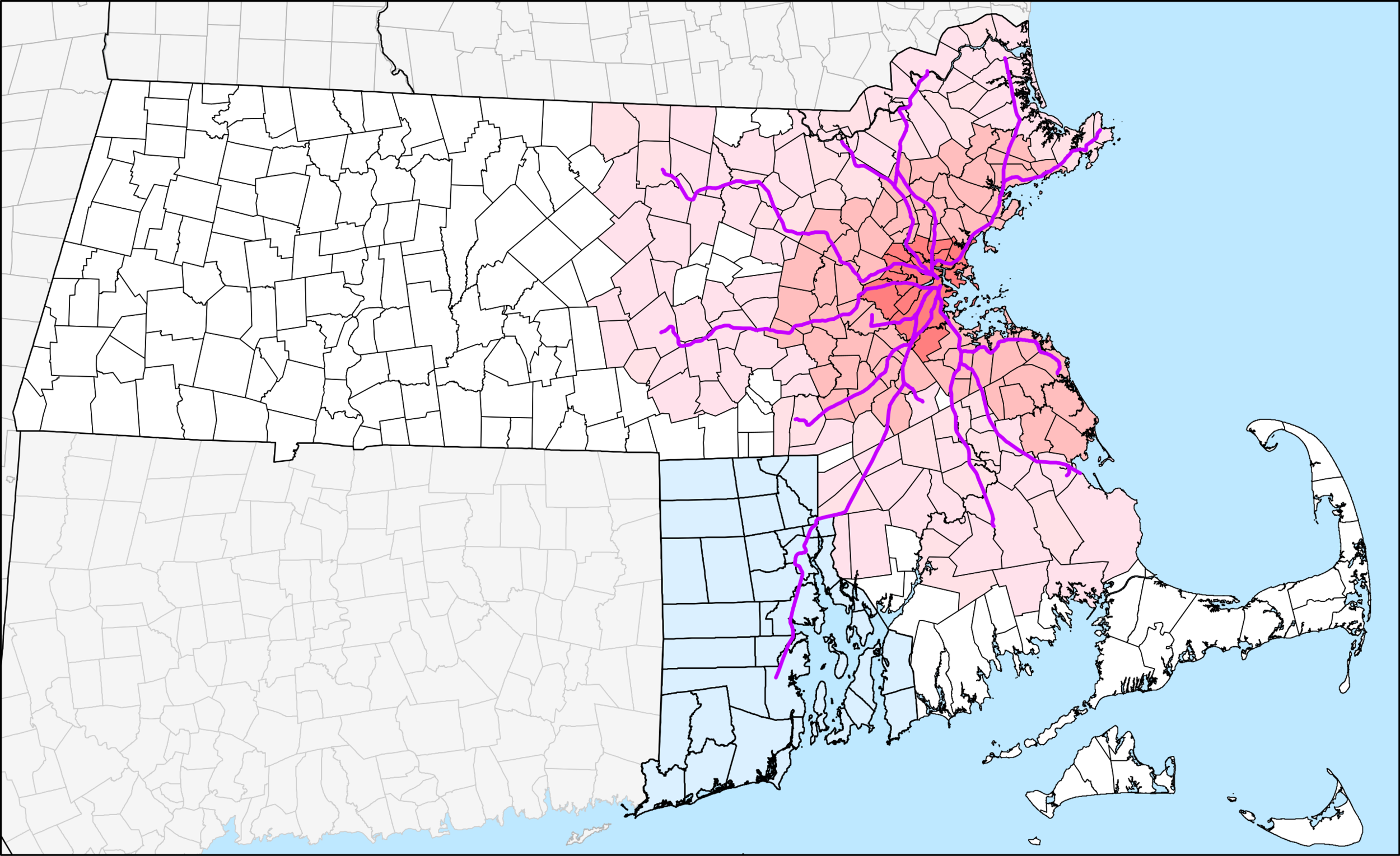
Current MBTA commuter rail map
—By Das48
U.S. Rep. Stephen Lynch, of South Boston, to the State House News Service on what might be built if President Biden’s infrastructure bill is enacted.
“What I’m hoping is that with East-West Rail we might be able to make those western suburbs and outlying suburbs around Greater Boston more attractive places to live so people can get in and out of the city, and continue to work there and have a vibrant, vibrant community extending up into southern New Hampshire and down into Rhode Island and Connecticut. “We lose a lot of talent in Boston and New England because of housing prices. So if we can use that rail project to make the connection between workers that need more affordable housing and those nearby suburbs, I think that’s a great blueprint for the future.”
Brent McCall: Fraudulent staffing in prisons
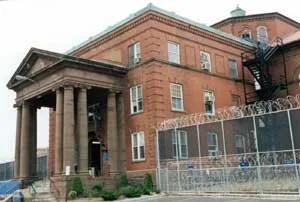
At the Cheshire Correctional Institution, in Cheshire, Conn.
The following two letters were written by Brent McCall, co-author along with Michael Liebowitz of Down the Rabbit Hole: How the Culture of Corrections Encourages Crime. Both concern what prisoners in New York call “clocksuckers,” prison employees who engage in stretching their paychecks at the expense of taxpayers.
— Don Pesci, Vernon, Conn.-based columnist
Editor’s note: Both McCall and Liebowitz were convicted of violent crimes.
CHESHIRE, Conn.
You’ve probably heard that Connecticut’s prison population is the lowest it has been in 30 years. Much less touted by the powers that be is that staffing levels within the Department of Corrections (DOC) remain at record highs. There are currently somewhere in the neighborhood of 6,000 corrections employees guarding fewer than 9,000 prisoners, And at a costyt of more than half as billion dollars a year to run the state’s prison system, it’s hard to imagine how such staffing levels may be justified. Even when they cannot be justified, DOC employees readily conspire to make it look like they can.
This occurred recently in the carpentry class at Cheshire Correctional Institution when, for reasons not entirely clear to me, Mr. Toth, the carpentry teacher who used to work at York Correctional Institution, was transferred here. The story Mr. Toth tells is that the DOC defunded the carpentry program he taught at York. The thing is, however, it has not funded a program for him here at Cheshire.
Since Cheshire Correctional Institution already has a carpentry teacher, Mr. Toth, for the first several months he was here, would just come into work and hang out in an empty room all day with nothing to do. Recently, however, there have been efforts by several staff members here to make it look like Mr. Toth’s services continue to be needed.
For example, On Feb. 4 the inmates of the existing carpentry class, myself included, were told that the class roster would be split in two in order to provide “justification,” their word, not mine, for Mr. Toth being here. We were also told at the time that although Mr. Toth could answer student questions, he would be unable to run a class on his own because he would not have access to the tool crib. And it didn’t take long for his so called “students” to learn what that meant.
On March 6, the original carpentry teacher was absent from his work. Despite this, Mr. Toth came into the housing unit to collect “his students.” Before leaving the unit, he got six of us together and told us that we would be going out to the shop, but that he wouldn’t be able to actually do anything because he didn’t have the keys to the crib or the office.
He further stated that he was only “going through the motions” because he had to “justify” his being here. And, sure enough, he wasn’t even able to provide as much as a single pencil for the six of us to share. Our sole purpose in being there was to help him bilk the taxpayers of Connecticut out of another day’s pay and benefits, something he had been doing, with the apparent blessing of his superiors, for more than six months.
Not only does this scheme violate at least a dozen departmental directives, it also violates the law, because documents were fabricated in order to create the illusion that Mr. Toth actually has students and therefore duties to perform. The split roster may be the tip of a larger iceberg, and while I’ll spare you the legalese, this type of document fabrication is clearly identified as second-degree forgery by Connecticut General Statutes (#53a-139); and, of course, to the extent that employees of the DOC had agreed to create this illusion, conspiracy as well (#53a-48). According to the General Statutes, second-degree forgery and conspiracy to commit forgery are both class D felonies, each punishable by up to five years in prison. Also, prisoners are conscripted into an unwitting co-conspiracy.
This brings us back to my original question: When does government mismanagement become a crime?
There are undoubtedly a number of ways this could be answered. But surely I have presented one of them here; which is to say, when state employees conspire to create “official” documents in an effort to protect a co-worker’s employment. That, I am afraid, is fraud. And if we allow the employees of any state agency to do such things with impunity, there really is no limit to the financial abuses they can perpetuate.
What Can Be Done With The ‘Clocksuckers’?
Abusers of the Department of Corrections overtime policy in New York State are known throughout the prison population as “clocksuckers.”
Indeed, abuse of overtime within the Connecticut Department of Corrections (CDOC) has been glaringly widespread for years. Year in and year out, the CDOC consistently has the highest overtime expenditures of any state agency.
In the two years prior to the Coronavirus pandemic, for instance, the CDOC spent nearly $80 million on overtime, with 2019’s expenditures exceeding 2018’s by several million; this during a period of time when the overall workforce increased while the prisoner population actually decreased.
The simple fact is Connecticut’s taxpayers spend tens of millions annually funding overtime for prison guards who have no legitimate reason to be working overtime. And the thing is – everyone in the department, from the commissioner on down, knows it.
The scheme works like this: The contract that the state has with the Corrections unit dictates that prison guards be paid time and a half after working eight hours – rather than forty hours. This has led to a culture of corruption wherein officers routinely trade shifts with one another in a way that allows each of them to work as many doubles as they like. Rather than earning straight pay for their scheduled hours, prison guards are able to pad their paychecks – by as much as 50 percent or more – merely by taking advantage of the department’s over-generous overtime policy. And since CDOC retirement benefits are tied directly to an employee’s highest earning years, the graft continues to pay dividends long after one’s employment with the department has ended.
It’s clear this practice violates the law, even if authorities refuse to recognize it as such. After all, we are ultimately talking about individuals committing fraud for financial gain.
The fact that the union contract permits time and a half after eight hours in no way excuses or justifies the abusive practices in which so many CDOC employees engage. But even if an argument could be made that prison officials shouldn’t report the overtime abusers to law enforcement for arrest and prosecution, it’s hard to understand why they refuse to enforce the department’s own policies regarding the issue.
Although the CDOC Administrative Directives do not expressly prohibit abuse of overtime, there are several directives that implicitly prohibit the practice. For example, the CDOC’s Code of Employee conduct prohibits personnel from “Engaging in unprofessional or illegal behavior… that could reflect negatively on the Department…” (A.D. 2l.17~ (5)(b)12). Clearly, staff manipulating overtime policy to the detriment of taxpayers reflects negatively on the department. I know it does this with the inmate population. And I imagine it would with the public too, if the public wasn’t kept in the dark about it.
The CDOC Code of Ethics prohibits staff from engaging in “Any financial interest… which ‘substantially conflicts’ with… the public interest (A.D. 1.13 ~ (4)(B)(1).”
If prison guards fleecing the taxpayers of Connecticut out of millions of dollars a year through what amounts to nothing less than a contractual sleight of hand doesn’t “substantially conflict” with the public interest, then I don’t know what would.
The directive which mandates that employees “Promptly report any corrupt, illegal, unauthorized, or unethical behavior (A.D. 1.13~(4)(A)(7)” has proven entirely ineffective at putting a stop to overtime abuses. But I suppose that’s not all that surprising: co-conspirators rarely roll over on each other without a credible threat of punishment.
If you ask me, the solution to the widespread abuse of overtime by CDOC personnel is pretty simple. Even if prison officials refuse to report the culprits to law enforcement, they should at least move to fire the clocksuckers.
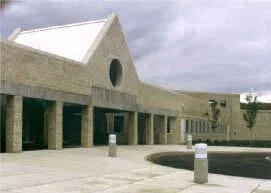
At the York Correctional Institution, in Niantic, Conn.
Use what you can
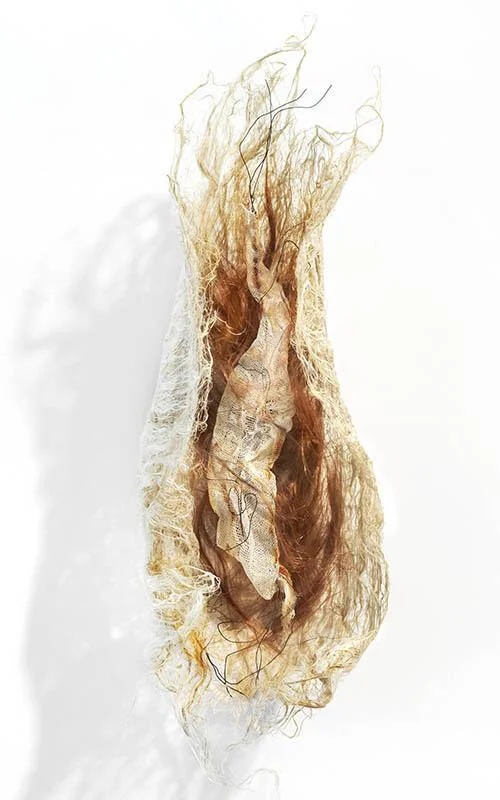
“Untitled 2101” (kozo, flax, tarleton, wire), by Vivian Pratt, in her show “Transforming Fibers,’’ at Bromfield Gallery, Boston, through May 2.

David Warsh: Spence Weart sums up the global-warming crisis that's upon us

Average surface air temperatures from 2011 to 2020 compared to a baseline average from 1951 to 1980 (Source: NASA)
SOMERVILLE, Mass.
Every April since I first read it, in 2004, I take down and re-read some portions of my copy of The Discovery of Global Warming (Harvard), by Spence Weart. (The author revised and expanded his book in 2008.) I never fail to be moved by the details of the story: not so much his identification of various major players among the scientists – Arrhenius, Milankovitch, Keeling, Bryson, Bolin – but by the account of the countless ways in which the hypothesis that greenhouse-gas emissions might lead to climate change was broached, investigated, turned back on itself (more than once), debated and, eventually, confirmed.
In the Sixties, Weart trained as an astrophysicist. After teaching for three years at Caltech, he re-tooled as a historian of science at the University of California at Berkeley. Retired since 2009, he was for 35 years director of the Center for the History of Physics of the American Institute of Physics, in College Park, Md.
This year, too, I looked at the hypertext site with which Weart supports his much shorter book, updating it annually in February, incorporating all matter of new material. It includes recent scientific findings, policy developments, material from other histories that are beginning to appear. The enormous amount of material is daunting. Several dozen new references were added this year, ranging from 1956 to 2021, bringing the total to more than 3,000 references in all. Then again, all that is also reassuring, exemplifying in one place the warp and woof of discussion taking pace among scientists, of all sorts, that produces the current consensus on all manner of questions, whatever it happens to be. Check out the essay on rapid climate change, for example.
Mainly I was struck by the entirely rewritten Conclusions-Personal Note, reflecting what he describes as “the widely shared understanding that we have reached the crisis years.”
Global warming is upon us. It is too late to avoid damage — the annual cost is already many billions of dollars and countless human lives, with worse to come. It is not too late to avoid catastrophe. But we have delayed so long that it will take a great effort, comparable to the effort of fighting a world war— only without the cost in lives and treasure. On the contrary, reducing greenhouse gas pollution will bring gains in prosperity and health. At present the world actually subsidizes fossil fuel and other emissions, costing taxpayers some half a trillion dollars a year in direct payments and perhaps five trillion in indirect expenses. Ending these payments would more than cover the cost of protecting our civilization.
Plenty else is going on in climate policy. President Biden is hosting a virtual Leaders Summit on Climate on Thursday, April 22 (Earth Day) and Friday, April 23. Nobel laureate William Nordhaus pushes next month The Spirit of Green: The Economics of Collisions and Contagions in a Crowded World (Princeton), reinforcing Weart’s conviction that it actually costs GDP not to impose a carbon tax on polluters. Public Broadcasting will roll out later this month a three-part series in which the BBC follows around climate activist Greta Thunberg in A Year to Change the World. And Stewart Brand, who in 1967 published the first Whole Earth Catalog, with its cover photo of Earth seen from space, is the subject of a new documentary, We Are as Gods, about to enter distribution. There is other turmoil as well. But if you are looking for a way to observe Earth Day, reading Spencer Weart’s summing-up is an economical solution.
David Warsh, an economic historian and a veteran columnist, is proprietor of Somerville-based economicprincipals.com, where this column first appeared.
© 2021 DAVID WARSH, PROPRIETOR

—Graphic by Adam Peterson
Before sliding down the razor blade
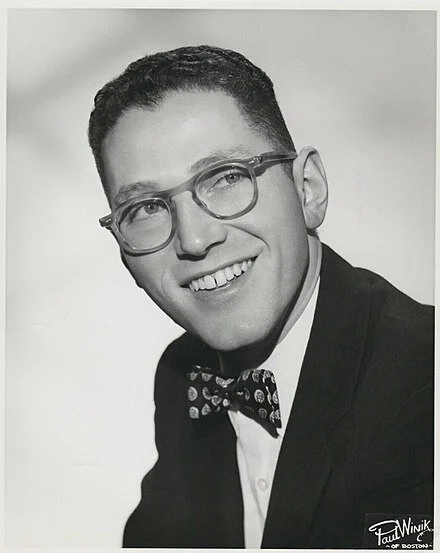
Tom Lehrer in 1957, as he was becoming famous.
Bright college days, oh, carefree days that fly
To thee we sing with our glasses raised on high.
Let's drink a toast as each of us recalls
Ivy-covered professors in ivy-covered halls.
Turn on the spigot
Pour the beer and swig it
And gaudeamus igitur
Here's to parties we tossed
To the games that we lost
We shall claim that we won them some day.
To the girls young and sweet
To the spacious back seat
Of our roommate's beat up Chevrolet.
To the beer and benzedrine
To the way that the dean
Tried so hard to be pals with us all.
To excuses we fibbed
To the papers we cribbed
From the genius who lived down the hall.
To the tables down at Mory's
Wherever that may be
Let us drink a toast to all we love the best.
We will sleep through all the lectures
And the cheat on the exams
And we'll pass, and be forgotten with the rest.
Oh, soon we'll be out amid the cold world's strife.
Soon we'll be sliding down the razor blade of life
O-oh!
But as we go our sordid separate ways
We shall ne'er forget thee, thou golden college days.
Hearts full of youth.
Hearts full of truth.
Six parts gin to one part vermouth.
“Bright College Days,’’ by Tom Lehrer (born 1928), a now retired American musician, singer-songwriter, satirist, mathematician and professor (in which position he taught mathematics and the history of musical theater, among other topics). He’s best known for the often hilarious and sometimes biting songs that he recorded in the 1950s and 1960s, though he had written some of the songs as early as the late ‘40s. A Harvard graduate, he taught there as well as at MIT, Wellesley College and the University of California at Santa Cruz. In his heyday, he starred in numerous concerts, singing his songs as he played them on a piano.

Mory’s, founded in 1849, is a private club/restaurant/watering hole in New Haven whose membership is confined to those with Yale connections. It is virtually on the Yale campus.
'The Painted State'

“September Barrens,’’ by New Castle, N.H.-based Grant Drumheller, in the show “Maine: The Painted State: 2021,’’ at Greenhut Galleries, Portland, through May 29. (One thinks of Maine’s famous blueberry barrens here.)
This biennial exhibit celebrates Maine's place in American art history, and how this tradition carries on into the present day, with reinvention on the way. In this 44th year of the exhibit, 45 contemporary Maine artists depict places very important to them, from lush forests to rocky coastlines. But then, Maine's inspiring landscape that has made drawn great artists throughout history.
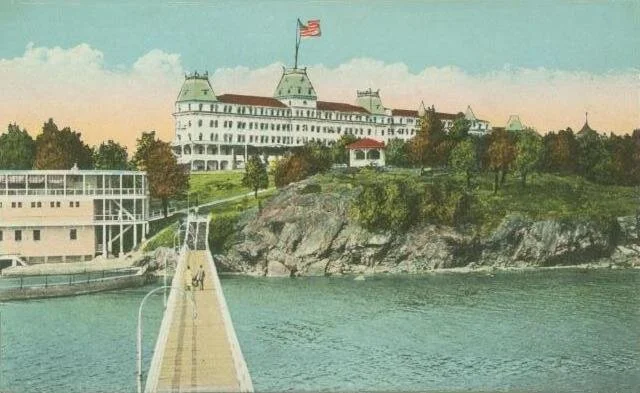
The famous Wentworth-by-the-Sea resort hotel, in New Castle, N.H., in 1920. The Wentworth is still there, in much modernized fashion.

Todd McLeish: Invasive water plants imperil ponds

In less than seven years this Sacred Lotus patch has taken over nearly two acres of 12-acre Meshanticut Pond, in Cranston, R.I.
— R.I. Department of Environmental Management photo
From ecoRI News (ecori.0rg)
When a Cranston, R.I., resident planted a Sacred Lotus in the pond at Meshanticut State Park in memory of a family member in 2014, she didn’t realize that the plant was an aggressive invasive species. The lotus, which features enormous floating leaves that shade out native plants, quickly took over a large area of the Rhode Island pond.
Five years later, 75 volunteers spent 12 hours cutting it back, but they eradicated just 10 percent of the ever-expanding plant, which today covers 1.83 acres of the 12-acre pond.
It’s one of many examples of the challenges the state faces in trying to control and eliminate aquatic invasive species. More than 100 lakes and 27 river segments in Rhode Island are plagued with at least one species of invasive plant, according to the Rhode Island Department of Environmental Management (DEM). These plants pose threats to healthy ecosystems, reduce recreational opportunities, and negatively impact the economy.
“Aquatic invasives are definitely a problem for water quality, but there aren’t a lot of resources dedicated to mapping them and trying to contain them,” said Kate McPherson, riverKeeper for Save The Bay. “The problem is they can show up in really pristine areas of the state for a variety of reasons, and a lot of the plants only need a couple of cells or a leaf to reproduce. They don’t need seeds. So unless you’re really diligent about scrubbing down your boat and other equipment after each use, it’s really hard to prevent their spread.”
In its 2020 fishing regulations, DEM prohibited the transport of invasive plants on any type of boat, motor, trailer, or fishing gear as a strategy to prevent the inadvertent movement of aquatic invasive species from one waterbody to another.
“It’s essentially an incentive for boaters or anglers to clean off their gear to make sure they don’t move any plants unintentionally,” said Katie DeGoosh of DEM’s Office of Water Resources. “It’s part of a national campaign known as Clean Drain Dry to remind anyone recreating on water how they should decontaminate their gear to avoid spreading invasives.”
DEM’s latest effort to combat aquatic invasive species is proposed regulations to ban their sale, purchase, importation, and distribution in the state. Rhode Island is the only state in the Northeast that has yet to regulate the sale of these plants.
The proposed regulations have the support of Save The Bay, the Rhode Island Natural History Survey, and the Rhode Island Wild Plant Society.
Those with aquatic plants in backyard water gardens aren’t the focus of the regulations because those residents aren’t selling the plants, DeGoosh said.
A mat of Water Chestnuts in Olney Pond at Lincoln Woods State Park limits the amount of light available to other aquatic plants, allowing it to quickly displace native species and decrease biodiversity. (DEM)
The proposed regulations list 48 species of aquatic invasive species whose sale would be prohibited. All but one — Sacred Lotus — are included on the Federal Noxious Weed List, are banned by other states in the region, were nominated by the Rhode Island Invasive Species Council or are included in the Rhode Island Aquatic Invasive Species Management Plan.
Among them are Carolina Fanwort, a problem species in numerous locations, such as Stump Pond in Smithfield; American Lotus, which covers 18 acres of Chapman Pond in Westerly; Brazilian Waterweed, which has invaded Hundred Acre Pond in South Kingstown; and common Water Hyacinth, an Amazonian species now found in the Pawcatuck River in Westerly.
Perhaps the worst of them is Variable Milfoil, which has been recorded in 69 lakes and ponds and 19 river segments in Rhode Island.
“Milfoil means a million tiny leaves,” said McPherson, who monitors local rivers for invasive species. “It looks like a submerged raccoon tail, and if you’ve been paddling in any pond in Rhode Island, you’ve probably seen it. A tiny little fragment can spread it.”
In many waterbodies, especially in urban communities, multiple species of aquatic invasives have colonized.
“They’re a problem because they can choke out native species and they may not be as good a food source for animals that eat aquatic plants,” McPherson said. “They’re also indicative of a water-quality problem. We’re seeing them more commonly in areas with too much phosphorous or nitrogen in the water. Areas with pollutants encourage these plants to grow.”
David Gregg, executive director of the Rhode Island Natural History Survey, also noted the impact of pollution in helping aquatic invasives take hold.
“People really care about their lakes, but most lakes in Rhode Island are man-made, shallow, and polluted by surrounding development — lawns, septics, road runoff — and so they grow invasive plants like nobody's business,” he said.
Like at Meshanticut Pond, once the plants become established in a waterbody, they are difficult to eradicate.
“It’s a cyclical problem,” McPherson said. “It’s super satisfying to go as a volunteer to rip it out, and super discouraging to go back a year later and find that it’s still there. If you don’t get all of the root system, it grows back.”
Natural History Survey staff documented the first occurrence of invasive water chestnut in the state in 2007 at Belleville Pond in North Kingstown. They led numerous volunteer efforts to manually remove it every year for a decade, and yet the plant remains. A similar endeavor to battle water chestnut at Chapman Pond in Westerly barely made a dent in the abundance of the plant.
“It’s a big problem,” McPherson said. “We need to get folks to think about how their activities can spread the plants and get them to think about aquatic invasives as a kind of contaminant.”
The proposed regulations, if approved, would be enforced via business inspections by DEM staff. Violators could be fined up to $500 per violation.
Rhode Island resident and author Todd McLeish runs a wildlife blog.

Jim Hightower: The scam of 'trickle-down economics'

Via OtherWords.org
The past year proves that a lot of conventional economic wisdom is neither true nor wise. For example:
1) “We don’t have the money.”
The power elites tell us it would be nice to do the big-ticket reforms America needs, but the money just isn’t there. Then a pandemic slammed into America, and suddenly trillions of dollars gushed out of Washington for everything from subsidizing meatpackers to developing vaccines, revealing that the money is there.
2) “We can’t increase the federal debt!”
Yet Trump and the Republican Congress didn’t hesitate to shove the national debt through the roof in 2017 to let a few corporations and billionaires pocket a $2 trillion-dollar tax giveaway. If those drunken spenders can use federal borrowing to make the likes of Amazon and Mark Zuckerberg richer, we can borrow funds for such productive national needs as infrastructure investment and quality education for all.
3) “The rich are the ‘makers’ who contribute the most to society.”
This silly myth quickly melted right in front of us as soon as the coronavirus arrived, making plain that the most valuable people are nurses, grocery clerks, teachers, postal employees, and millions of other mostly low-wage people. So let’s capitalize on the moment to demand policies that reward these grassroots makers instead of Wall Street’s billionaire takers.
4) “Tax cuts drive economic growth for all.”
They always claim that freeing corporations from the “burden” of taxes will encourage CEOs to invest in worker productivity and — voila — wages will miraculously rise. This scam has never worked for anyone but the scammers, and it’s now obvious to the great majority of workers that the best way to increase wages… is to increase wages!
Enact a $15 minimum wage and restore collective bargaining. Workers will pocket more and spend more, and the economy will rise.
Percolate-up economics works. Trickle-down does not.
OtherWords columnist Jim Hightower is a radio commentator, writer, and public speaker. Distributed by OtherWords.org.
Pushy spectators

“It said that the spectators at Boston will not let you drop out, they just push you back on the course.’’
— John Priester, after the 2002 Boston Marathon
The 125th Boston Marathon will be held on Monday, Oct. 11, assuming that road races are allowed as part of the Massachusetts reopening plan. In pre-COVID-19 times the marathon happened in April and presumably will again.
Nature and abstraction
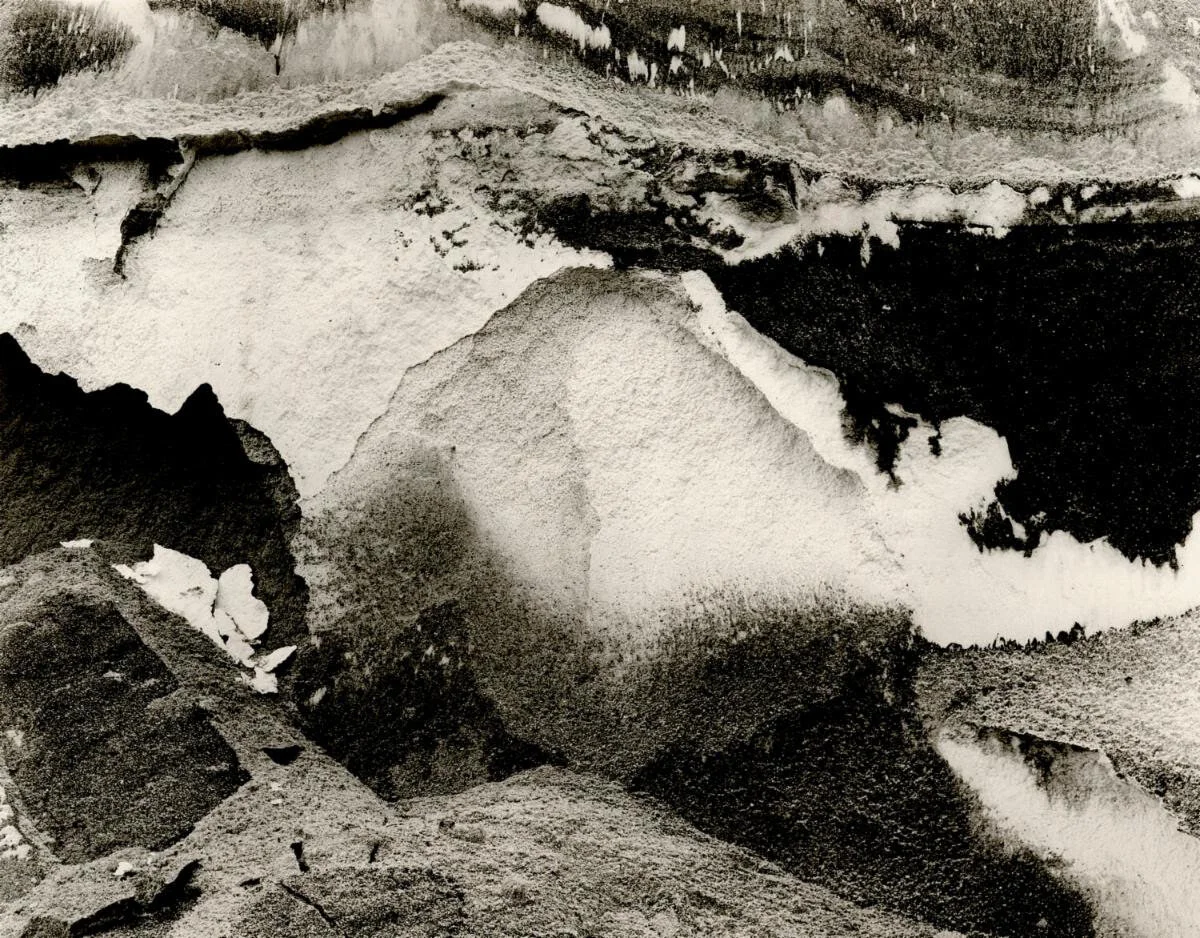
“Portsmouth (N.H.) Harbor Salt Pile’’ (archival silver gelatin print), by Carl Hyatt, a Portsmouth-based photographer, in the group show “Abstract Nature,’’ through April 24 at Cove Street Arts, Portland, Maine
The gallery explains that the show explores “the abstraction of nature through archival and digital prints. The exhibit title seems like a contradiction on the surface: abstraction is a manmade concept, thus nature on its own can't be abstract. However, abstraction as an art form elevates the essence of its subject by manipulating or removing parts of it.’’

Portsmouth Harbor, New Hampshire by William James Glackens (1909)
Make space


“Asleep on the dunes.
The moon came up so large I rolled aside.’’
— From “The Ocean, Naming it,’’ by Peter Sacks (born 1950), poet and professor at Harvard

Llewellyn King: America’s rare-earth vulnerability

Refined rare-earth oxides are heavy gritty powders usually brown or black, but can be lighter colors as shown here
WEST WARWICK, R.I.
A world commodities rebalancing is underway, and China is in a position of dominance. Take lithium, where China is a major processor and battery manufacturer; cobalt, where China has dominated the supply chains; and rare earths, where China has an almost total monopoly. Taken together, these three commodities are key to the future of alternative energy, electric vehicles, mobile phones, and even headphones.
Having stated that he was “fervently Sinophile,” British Prime Minister Boris Johnson in the House of Commons recently called lithium deposits in England’s rugged southwestern county of Cornwall “the Klondike” of lithium. Johnson is known for his grandiloquence, but he knows about the importance of lithium in the age of the lithium-ion battery, and a big lithium mine will open in Cornwall in 2026.
This kind of economic activity points to the re-evaluation and rebalancing of the world’s vital, non-agricultural commodities, reflecting the need for new raw materials for national survival as the demands of technology have changed.
The rare earth elements — there are 17 of them but only four are in demand — are the great multipliers of the modern electronic age. I have seen how this works with the equivalent of a refrigerator magnet. A traditional magnet has a slight pull toward the metal surface. Try it with a magnet that has been enhanced with one of the rare earths, neodymium, and you will find the attraction to the metal of the refrigerator so strong that the magnet will fly out of your hand — and it will take a muscular tug to remove it.
Enhanced magnetism is what makes wind turbines economically feasible. Wind turbines wouldn’t produce enough electricity to make them economical without that multiplier.
The problem is that 95 percent of the rare earths now mined and processed come from China.
This gives the Chinese the ability to choke off the West’s economies while the struggle to produce the vital elements elsewhere (and they are well distributed throughout the Earth’s crust) is mounted.
David Zaikin, a Ukrainian-born Canadian citizen working in London, knows as much about the world resource line-up and China’s influence as anyone. He is the CEO of Key Elements Group, and an alumnus and founder of the Mining Club at the London Business School.
“China is out there and is trying to win every race globally. The West must do everything it can to subvert its efforts and find alternative nations to work with,” Zaikin says.
“The good news is that there are friendly nations like Canada, Australia, and India that are naturally very rich in rare earths. They are well-positioned to bridge the gap in potential rare earths shortages, or in the event those are weaponized by the PRC,” he says, “The bad news is that it takes a long time to begin commercial production, and the right time to start was yesterday.”
The Mountain Pass mine, in the Mojave Desert in California, is in production after a hiatus. But that doesn’t mean much in terms of our Chinese dependence. The production from California is shipped to China for processing and then shipped back to the United States. The mine has also been financed by the Chinese.
The inhibition to mining for rare earths, as John Kutsch, executive director of the Thorium Energy Alliance, explains, is thorium, which isn’t a rare earth element, but which is found in conjunction with rare earths, especially in the United States.
Thorium is a fertile nuclear material and is classified as such by the Nuclear Regulatory Commission and the International Atomic Energy Agency, so miners have to account for it, and it has to be stored and disposed of as nuclear waste.
Until a national thorium bank is established, as supported by Kutsch and his group, we will be looking elsewhere.
Zaikin says, “As the West pursues green policies and becomes more independent of imported oil, it will reduce the influence that the GCC [Gulf Cooperation Council] and other oil-producing nations have on domestic and international policies.”
He adds, “However, by moving from oil into renewable energy, the West increasingly finds itself at the mercy of China. This is why it is crucial that the West includes nuclear power in its green vision of the future, in order to avoid the weaponization of energy by hostile powers.”
On Twitter: @llewellynking2
Llewellyn King is executive producer and host of White House Chronicle, on PBS. He’s based in Rhode Island and Washington, D.C.
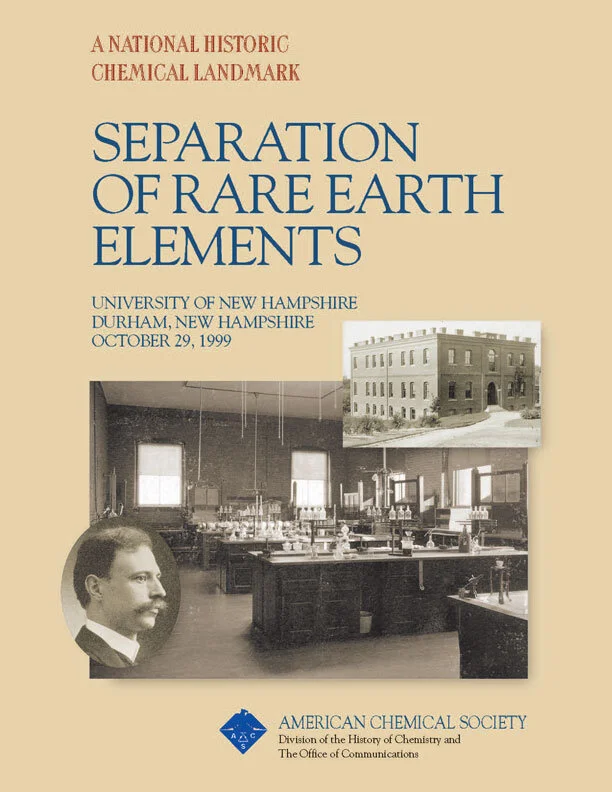
Editor’s note: The technique used to purify rare-earth minerals was developed at the beginning of the 20th Century by chemist Charles James (above) at the University of New Hampshire.
New England, especially New Hampshire, has rocks with rare earth elements
'O tempora o mores!'
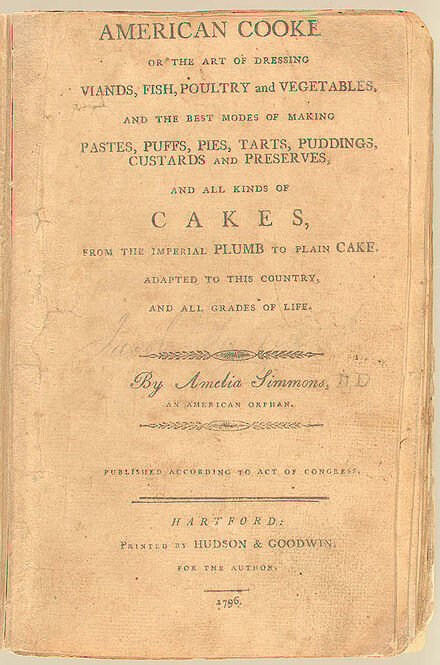
“The world, and the fashion thereof, is so variable, that old people cannot accommodate themselves to the various changes and fashions which daily occur; they will adhere to the fashion of their day, and will not surrender their attachments to the good old way – while the young and gay, bend and conform readily to the tastes of their times, and fancy of the hour.’’
— Amelia Simmons, in American Cookery (1796), which may be considered the first American cookbook. Little is know about Simmons beyond that she lived in Connecticut.

Looking at science and personal story

“War in Heaven” (oil and ink on wood panel), by Boston-based artist Steve Sangapore, in his joint show “Phantasm’’ with Ponnapa Prakkamakul, at Fountain Street Gallery, Boston, through May 2
Mr. Sangapore tells the gallery:
“The superposition oil and ink painting series explores the implications of this idea by splitting the canvas into two halves. On one side of the panel there is the world as we perceive it, which is rendered using oil paint. The delivery is familiar, defined and full of color and emotion. On the other, I employ spontaneous line work in black and white, illustrating the unintuitive, non-locality of the quantum world.
”My aim was to have two visually contrasting approaches for how each of the painting halves were represented. The physical execution of representing a single subject using both abstract line-work and objective realism creates a strong dichotomy for the series. The contrast of the two approaches invites the viewer into a conversation between the two vastly different ideas of how nature works and is experienced.
“The particular subjects chosen for this split-panel execution add an additional dimension to the work. Each piece depicts significant people, places and events in my life. From the Belgian landscape to narratives about loss, each installment to the series is a marriage of my interest in science with personal story and narrative.’’
New MBTA commuter-rail schedule in effect

From The New England Council (newenglandcouncil.com)
“Keolis Commuter Services, which operates the MBTA’s commuter rail service, recently announced a new Spring 2021 schedule and improved services in efforts to better meet passenger needs. Some of the plan’s priorities include enhancing train frequency and interval predictability, allowing for greater consistency in train arrivals and departures, and providing extended service hours. In addition, the new changes seek to improve accessibility for essential and transit-critical workers, as well as less frequent riders.
“A collaborative effort between the MBTA and Keolis Commuter Services, the schedule took effect on April 5. It increases service significantly compared to the winter schedule, which had been in place since December 2020. Sanitation and social distancing will continue to be implemented in accordance with COVID-19 guidelines.
“The new Spring 2021 schedule provides options that our passengers have requested and can assist in a strong and equitable economic recovery with regular service across all lines and more consistent service to many gateway cities,” said Keolis Commuter Services CEO and General Manager David Scorey..
“The New England Council applauds Keolis Commuter Services’ commitment to passenger service and equity across all Boston transit lines. Read more from the Keolis Commuter Service press release.’’
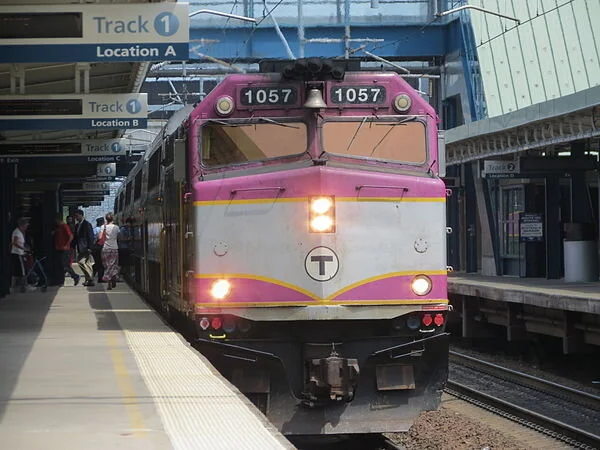
MBTA commuter train serving the Providence/Stoughton Line at the Route 128 station
Save us from leaf-blower misery

From Robert Whitcomb’s “Digital Diary,’’ in GoLocal24.com
Spring and fall are of course the prime seasons for leaf blowers in New England. The gasoline-fueled blowers are monsters, creating explosions of sound and copious pollution and dust. They make life miserable for humans and other animals for blocks around, often for hours at a time, creating dead zones. Some homeowners wield them but those “landscaping’’ firms staffed by our friends from South of the Border, many of them not wearing ear and face protection from the shrieking noise and toxic fumes, are responsible for the lion’s share of the devastation. And some of the leaves end up in the street or in someone else’s property.
Time to ban gasoline-powered leaf blowers; electric ones are much quieter. Then there’s that handy tool called the rake. More reasons to reduce the size of lawns and replace them with much more ecologically friendly ground cover.

Christina Cliff: Teaching in the active shooter era

From The New England Journal of Higher Education, a service of The New England Journal of Higher Education (nebhe.org)
I’ve been teaching political science for about a decade now. I teach students about the international system, the functioning of government, foreign policy, national security. My teaching is based on my 12 years of higher education and shaped by my life experiences.
I’m a Cold War kid. In grade school and junior-high classrooms, we had “duck and cover” drills for what to do in the case of a Soviet attack. I grew up in a place considered a strategic attack target, so we likely did these drills more than the average American school kids. I still remember crouching under my desk, staring at the fossilized gum on the underside, waiting for the teacher to tell us the drill was over so we could go out to recess.
Even as a child I knew that we weren’t really likely to be bombed. There had never been a missile attack on the U.S. I believed in my own safety because the threat that I was told was a possibility was never a reality.
This is not to say the experience didn’t affect me. Being a Cold War kid in the U.S. meant that you knew the Soviets—and maybe China—were the enemy. Cold War kids knew that protecting us from those enemies was the primary focus of our government. We knew this because they told us. We mostly believed the politicians, because we stayed safe from the threats they told us they would combat.
When the Cold War kids grew up, some of them became educators. What we were taught, what we learned, was affected by our experiences. And when the Cold War kids grew up, some became politicians. Those childhood memories and experiences informed the way they governed. They believed that the enemies of our childhood were the enemies of our future. This belief shaped our policies, sometimes to our detriment.
We weren’t prepared for 9/11 in large part because our leaders were shaped by their experiences that said that if we would be attacked, it would be by a country. We believed, because of what we thought the Cold War had shown us, that we could deter an attack by using our threat of force or our economic influence. We did not comprehend, even though the Cold War should have taught us this as well, that you can’t deter an ideology, and that our might does not ensure our safety or victory.
A Cold War kid teaching the post-9/11 generation
I now teach classes on political violence, terrorism, international relations, and on global security and diplomacy. I’m a Cold War kid, but my students have a very different frame of reference. My students are now the post-9/11 generation—often too young to remember the actual event, though old enough to enlist in the ongoing wars that were a response to that attack. They don’t really understand why the politicians are so concerned about North Korea.
Today’s college students didn’t have my childhood, so they don’t understand the fear of a nuclear threat. What my students know, unlike the Cold War generation, is that might does not guarantee victory—and that war is endless.
What my students know, what they do remember, and what shapes their perspective, are hate crimes, terrorist attacks and mass shootings. My students know about El Paso, Dayton, Sandy Hook, Virginia Tech, Parkland, Pulse Nightclub, Thousand Oaks, Las Vegas, Tree of Life Synagogue, the Boston Marathon bombing, the Emanuel AME Church, among so many others.
My students didn’t just duck and cover under their K-12 school desks. They learned to tie tourniquets, and have been taught how to block doors, how to stay silent in a coat closet. My students look for all of the exits at a public event, they are cautious at stores and movie theaters. They carry their phones at all times, not because they are checking their social media, but because they want to be able to reach their parents at any moment.
While they do not remember the 9/11 attacks, today’s college students do remember others. Unlike the Cold War generation, they have learned that might does not guarantee safety.
They have now also experienced more than a year of the effects of a global pandemic, which included school shutdowns, virtual learning and catastrophic death tolls. My students have seen Asian people being targeted for hate. During the pandemic, my students watched a Black man die with an officer kneeling on his neck, protests and riots erupt over police brutality. My students saw a violent insurrection storm the U.S. Capitol and kill a police officer in an effort and stop a presidential election.
Thoughts and prayers
With each shooting, with each attack, with each eruption of violence, new debates about gun control, mental illness, hate and terrorism erupt. Sometimes, our representatives enact legislation, but more often they do not. We offer prayers, we offer thoughts. But we do very little.
My students are America’s mass-shooting generation. They have learned that the potential threats may be in their hometown. They do drills in school because the threat has become reality. They didn’t wait for the recess bell to end the drill; they waited to see if it was only a drill. They didn’t stare at fossilized gum—they waited for a shadow to cross in front of the classroom closet they were hiding in.
In many ways, being a Cold War kid defined how I viewed the world and our place in it. During my childhood, the biggest threat was nuclear war that would destroy the planet. But it never happened, and I believed that our government could keep us safe. I think, I had it easier than my students do.
Many of today’s college students are growing up believing that thoughts and prayers are insincere and something that takes the place of action. They don’t believe the politicians, because the politicians haven’t kept them safe. Their generation has become used to the idea that the enemy could be anyone, that they could be anywhere, and could strike at any time.
My students are members of the active-shooter generation, and that means that I have to be prepared to address topics that they have personal experience with as they may arise in the curriculum. I have students who were at the Boston Marathon bombing, and I have students who had family and friends who survived Sandy Hook. In the classroom, I have to understand trauma in order to educate in a way that respects and acknowledges those experiences, an approach that most Cold War kids would have never expected from their teachers.
Someday, my students will be the leaders of the world. I can teach them, but their experiences will shape everything. And I have to ask, after watching the successes and failures of the Cold War kids, what will these future leaders’ policies will look like? What did the Cold War generation leave for our children?
Christina Cliff is an assistant professor of political science and security studies at Franklin Pierce University, in Rindge, N.H.

Franklin Pierce’s Mountain View apartments, with Mt. Monadnock looming in the background
— Photo by Fsguitarist
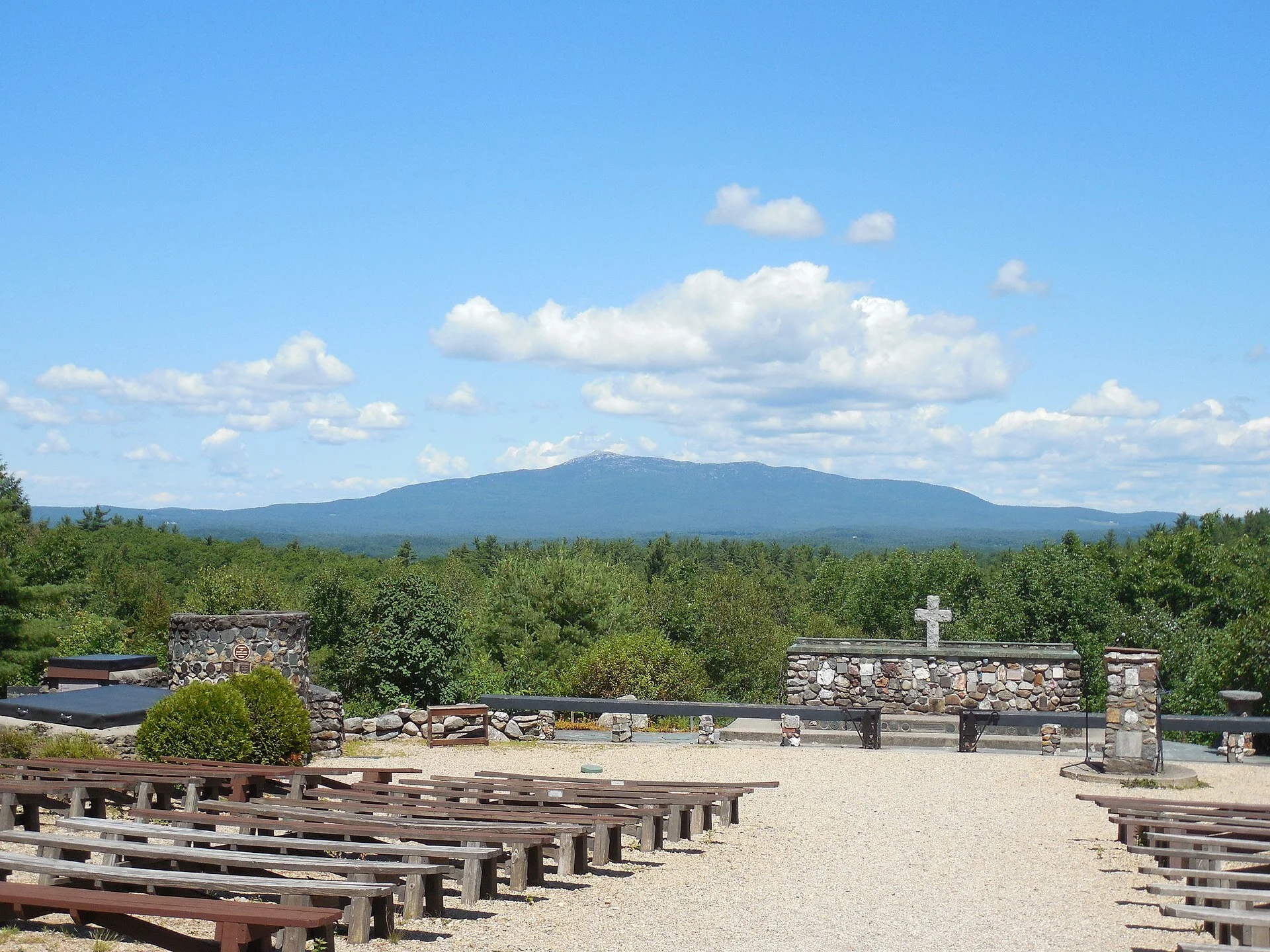
View of Mt. Monadnock from the famous Cathedral of the Pines, in Rindge
— Photo by John Phelan -
Underground interactions

Michele Johnsen, “Wise Woman II” (acrylic on canvas) by Michele Johnsen, in her show “Otherword,’’ at Nightshade Contemporary, in Littleton, N.H., through May 2
The acrylic paintings of Michele Johnsen, a New Hampshire native, are inspired by landscape. She’s particularly interested in the underground interaction among the roots of trees, fungi and other living things in the Granite State’s s forests. The seemingly unnatural colors she uses give her work a fantatical quality that evokes the magic and mystery inherent in this underground communication.
She lives in Colebrook, N.H.
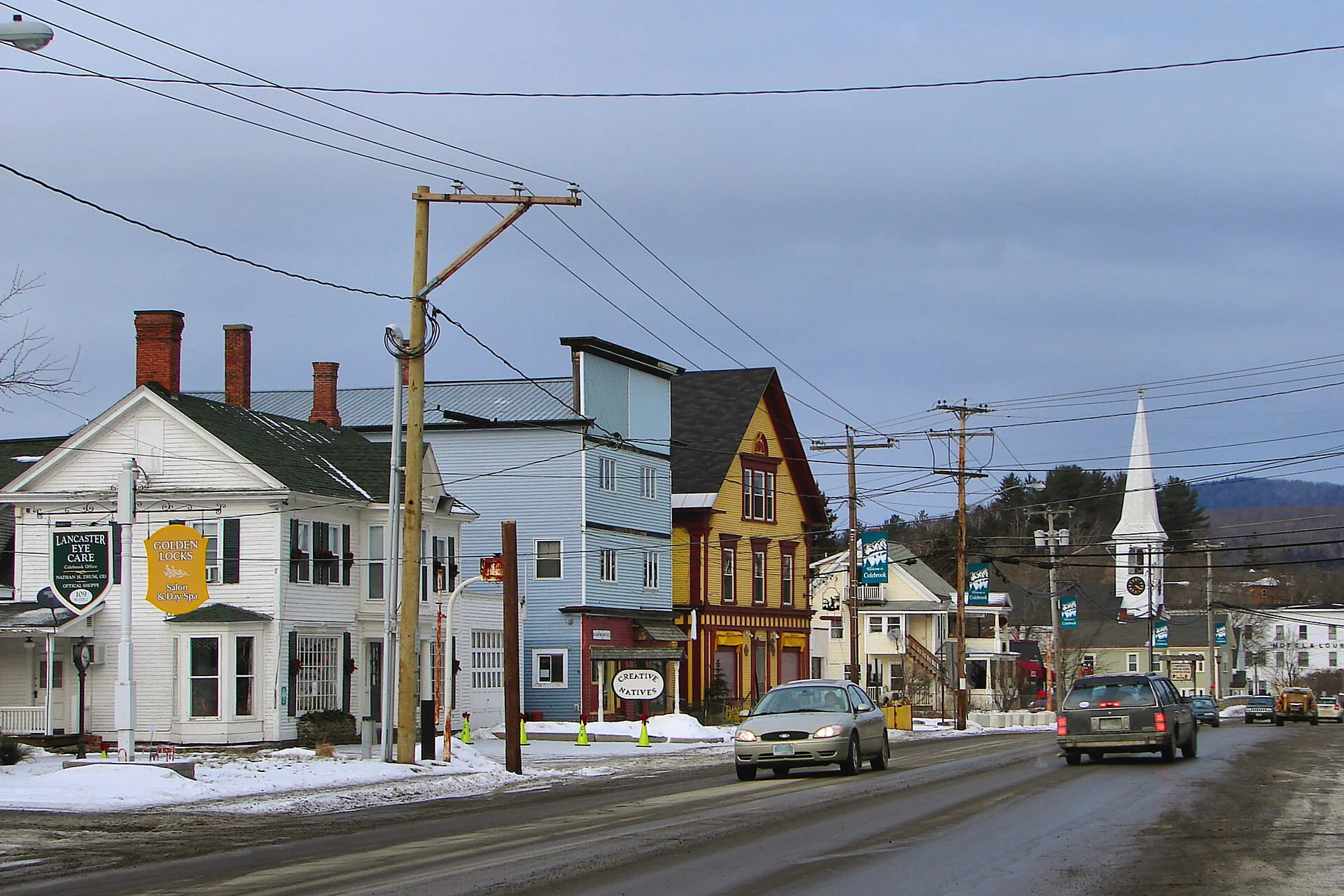
Downtown Colebrook, N.H.
— Photo by P199

The long-gone Monadnock House hotel in Colebrook. The town, on the edge of the White Mountains, started to attract summer visitors seeking relief from the heat and pollution of Northeast cities in the late 19th Century.