
Vox clamantis in deserto






Peddle faster

“Resistance” (encaustic on panel), by Hélène Farrar, of Manchester, Maine, from her “What We Carry’’ series. Her work will be shown in New England Wax’s (newenglandwax.com) show “Layering: The Art and Experience of Hot Wax,’’ at the Cotuit (Mass.) Center for the Arts June 26-Aug. 7.
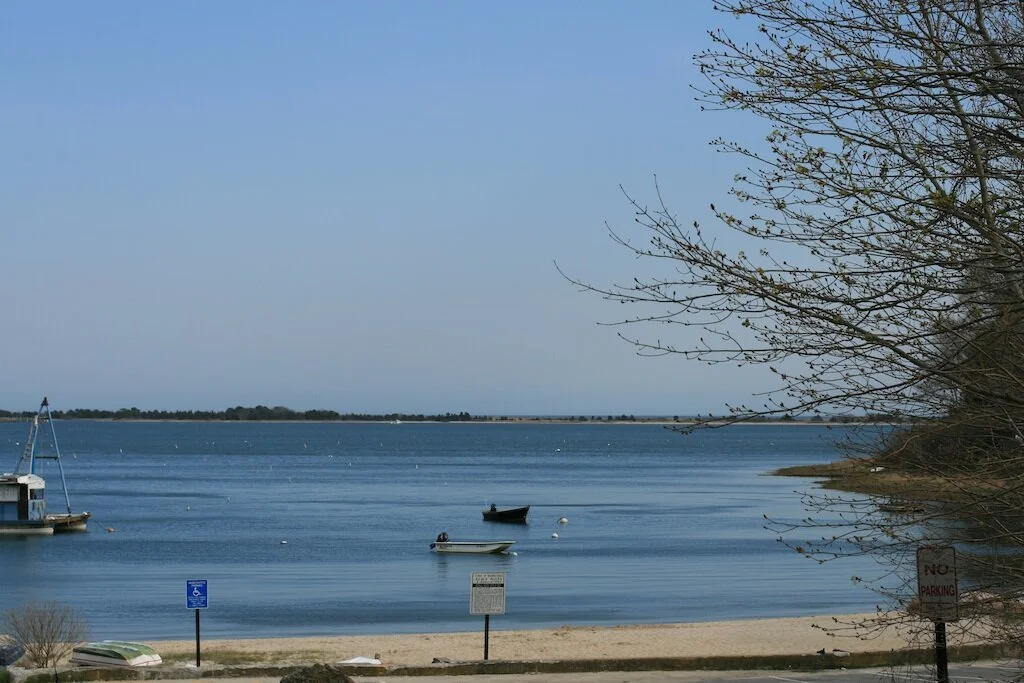
Rope's Beach, in Cotuit, looking onto Cotuit Bay. Cotuit has drawn many artists to work and show there , mostly in the summer, since the late 19th Century.

Part of this long popular summer-cottage lake is in Manchester, where Ms. Farrer lives and works.

Llewellyn King: Chesterton on a donkey's divine assignment

Caricature of G.K. Chesterton, by Max Beerbohm
WEST WARWICK, R.I
Who, in God’s name, praises the donkey? The answer is G.K Chesterton, the English writer (1874-1936). Chesterton, a convert from Anglicism to Catholicism and a force in literary life in London, wrote a little masterpiece for Palm Sunday, which Christians celebrate today.
He also wrote much else, including a celebrated essay defending orthodoxy, and the “Father Brown” detective stories, the television version of which can be seen on PBS.
Like Chesterton, I celebrate the donkey on Palm Sunday. The lot of the donkey hasn’t been a happy one. It has been man’s worst-treated servant, having been forced into labor over thousands of years.
Donkeys are probably among the most abused animals on Earth. Anyone who has visited poor, agrarian countries, whether in Africa, Asia or Latin America, has almost certainly seen donkeys carry loads too heavy for them, sacks of grain, lumber or people — cruel burdens for the little animal.
In this service, donkeys die young at between 12 and 15 years old. If kept decently and as pets they live 30 to 50 years, rivaling horses, which, more prized, have had a somewhat easier time down through the millennia.
There are an estimated 40 million donkeys in the world, including about 5 million feral ones in Australia which, like the rabbits, are considered pests.
Chesterton was as prolific, as he was enormous, weighing maybe 300 pounds and standing over 6 feet. He wrote 80 books, hundreds of poems and short stories, and over 4,000 newspaper columns and essays. He was notorious for his untidy dress, being compared to an unmade bed by a friend, missing trains and not knowing where he had gotten off.
In the years immediately before his death, in 1936, he became a huge BBC Radio personality because of his ability to ad lib during broadcasts of essays, giving these a human, unrehearsed quality. He was also a wit and was friendly with the wits of his time, including Oscar Wilde and Bernard Shaw. He said to the physically trim Shaw once that he looked as though the country was suffering from famine and to which Shaw replied, “You look as though you caused it.”
The Gospels have it that Jesus rode into Jerusalem the Sunday before Easter on an ass and throngs of the faithful laid down palm branches in their path.
Courtesy of the Poetry Foundation, here is Chesterton’s poem, first published in 1927, to the beast of burden, and its divine assignment:
“The Donkey’’
When fishes flew and forests walked
And figs grew upon thorn,
Some moment when the moon was blood
Then surely I was born.
With monstrous head and sickening cry
And ears like errant wings,
The devil’s walking parody
On all four-footed things.
The tattered outlaw of the earth,
Of ancient crooked will;
Starve, scourge, deride me: I am dumb,
I keep my secret still.
Fools! For I also had my hour;
One far fierce hour and sweet:
There was a shout about my ears,
And palms before my feet.

Donkeys as beasts of burden in Colombia
Llewellyn King is executive producer and host of White House Chronicle, on PBS. His email is llewellynking1@gmail.com, and he’s based in Rhode Island and Washington, D.C.
Web site: whchronicle.com

Eastern Orthodox fresco in Nativity of the Theotokos Church, Bitola, Republic of North Macedonia
— Photo of fresco by Petar Milošević
The ultimate backstop

Conan O’Brien in 2019
“When all else fails, there’s always delusion.’’
— Conan O’Brien (born 1963) TV host, comedian and writer. He was born and raised in Brookline, Mass.
Look homeward

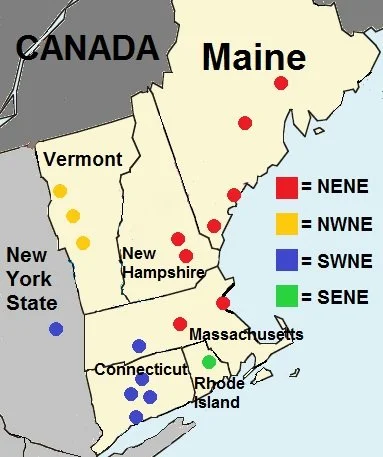
The Sarah Orne Jewett House, in South Berwick, Maine, shortly after her death
“What has made this nation great? Not its heroes but its households.’’
— Sarah Orne Jewett (1849-1909), an American novelist, short-story writer and poet, best known for her works set along or near the Maine C. She’s considered an important practitioner of American literary regionalism. Her most famous book, The Country of the Pointed Firs, seems to be based on summer stays on the St. George Peninsula, where she got to know a lot of the locals. See red map below.

'Evening in Sugar Orchard'

A ‘‘sugar house,’’ where the sap from sugar maples is boiled down to make syrup. The season is now ending in northern New England.
From where I lingered in a lull in March
outside the sugar-house one night for choice,
I called the fireman with a careful voice
And bade him leave the pan and stoke the arch:
‘O fireman, give the fire another stoke,
And send more sparks up chimney with the smoke.’
I thought a few might tangle, as they did,
Among bare maple boughs, and in the rare
Hill atmosphere not cease to glow,
And so be added to the moon up there.
The moon, though slight, was moon enough to show
On every tree a bucket with a lid,
And on black ground a bear-skin rug of snow.
The sparks made no attempt to be the moon.
They were content to figure in the trees
As Leo, Orion, and the Pleiades.
And that was what the boughs were full of soon.
— Robert Frost (1874-1963)

Don Pesci: Critical Race Theory is intellectual tripe

The Indian Harbor Yacht Club in rich Greenwich, Conn., a town where admission is all about money, not race.
VERNON, Conn.
Mike Winkler, a progressive – very progressive -- Connecticut state representative from Vernon, tumbled into a postmodern mare’s nest when he attempted, poorly, to discriminate between different kinds of discrimination.
During a public hearing on bills before the state General Assembly Planning and Development Committee, Winkler said that Greenwich Housing Authority member Sam Romeo had counted Asian-Americans among minorities suffering from invidious discrimination. Winkler had just suggested that Greenwich officials had deployed zoning regulations to deny access to African-Americans, and here was a Housing Authority member claiming that 37 percent of the population of Greenwich were members of minority groups.
Well, yes, Winkler grudgingly conceded. However, “You count Asians and other minorities that have never been discriminated against,” Winkler said during the hearing, at which point the frigid waters of Critical Race Theory closed over Winkler’s head. Critical Race Theory holds that the law and legal institutions are inherently racist, and that race itself, instead of being biologically grounded, is a social construct used by white people to advance their own political and economic interests at the expense of people of color.
As a matter of history and common sense, one must admit that Winkler may have had a point: There are different kinds and degrees of discrimination. But, flourishing the wrong end of the point, he ended up stabbing himself.
Surely all participants in the conference shown on YouTube would agree there are differences in degrees and kinds of discrimination. The discrimination that Martin Luther King Jr. bravely faced during three protest marches from Selma, Ala., to the state capital of Montgomery surely was different in kind and ferocity than that faced by some black and white Americans attempting to move into Greenwich. In the matter of discrimination, things have improved remarkably since dogs were set on Selma protestors in 1965.
If Greenwich had ever relied on redlining to maintain what Critical Race Theorists may regard as the purity of the towns’ racial stock, those provisions have long since been swept from zoning regulations throughout all of Connecticut’s municipalities. Times change, sometimes for the better.
No, no, nearly everyone from butcher to baker to candlestick maker cried, more or less in unison. The price of admission to Greenwich is dollar-related. Not everyone can afford to live in Greenwich. If state Senate President Martin Looney has his way, soon progressive Democrats may impose a tax on Connecticut’s “Gold Coast” mansions, which would have the unfortunate effect of making access to wealthy towns throughout the state even less attractive to people of color who might be able to afford the price of the mansions. Zoning provisions in Greenwich do not exclude potential admission to the town for reasons of race, religion or color -- provided that the potential applicants have sufficient greenbacks in their bank accounts.
Howitzers were fired at Winkler from every direction. Republican state Sen. Tony Hwang, an Asian-American, stepped forward to turn against Winkler a point often advanced by Critical Race Theory-soddened Democrats. According to an account in a Hartford paper, “Winkler, a white man, simply cannot grasp the pervasiveness of Asian-American bias, ‘‘ Hwang said. ‘You believe they have been discriminated less. You have never been in their shoes.''' Democratic Atty. Gen. William Tong, the state’s highest-ranking Asian-American elected official, joined in. Tong “recalled being asked during a debate in the House whether Asian- Americans count as people of color. ‘Let me assure you that Asian-Americans count and the hate and discrimination against us is real,’ Tong said Tuesday.’’
The public scourging followed its usual course, and the sinner eventually showed repentance, apologizing for his ill-considered statement. “My comments are inexcusable, especially with the recent rise in violence against Asian-Americans,” Winkler said, according to a piece in CTMirror. “There is a long, painful history of Asian-Americans experiencing racism in this country, and I sincerely regret that I ignored that history and those experiences in my comments.”
No one knows at this point whether Winkler will receive an absolution from the new priests of Critical Race Theory. And no Republican office holder has yet emerged to claim that Republicans generally were not willing to surrender to Democrats pride of place in the matter of resisting aggressions against blacks. In past times, the Democrat Party had supported slavery, Jim Crow, the Klu Klux Klan, and the loosing of dogs on courageous protesters such as Martin Luther King Jr. who fought for freedom.
So it goes. No one seems willing to close on the chief point – that, while traces of both racism and discrimination may still exist somewhere in America’s dark cultural backwaters, the beast has largely been caged. Times really have changed. King actually won his battle for freedom, one of the reasons the nation celebrates Martin Luther King Day.
If we are determined to proceed along lines indicated by Critical Race Theory, Democrats, historically associated with the raw racism of the post-Civil War period – Woodrow Wilson, an early progressive, approvingly showed in the White House in 1915 the film Birth of a Nation, a celebration of KluKluxery – should change the name of their party, so warmly have Democrats in the past embraced racism and discrimination. This is worse than nonsense. It is reckless and silly nonsense.
The view that the sins of the father should fall like an executioner’s axe on the necks of their distant grandsons and granddaughters is, combined with cancel culture, a petard that may be used to destroy the foundational principles that King referred to in his “I have a dream Speech.”
Zoning regulations in Greenwich are not “inherently racist” because they are not racist at all. The Greenwich zoning board is not motivated by racism. And Critical Race Theory is intellectual tripe. You cannot denounce a racist past by bleaching it out of history books, and racial McCarthyism -- according to which any member of a presentday political party is deemed racist because the political party with which they associate had in the past promoted racism – is every bit as destructive as political McCarthyism, when the imputations are wrong and unjust.
It’s long past time for everyone to grow up.
Don Pesci is a Vernon-based columnist.

Jill Richardson: Racism against Asian-Americans is pervasive

The gate at the entrance to Boston’s Chinatown

Stop AAPI Hate is a nonprofit social organization that runs the Stop AAPI Hate Reporting Center, which tracks incidents of discrimination, hate and xenophobia against Asian Americans and Pacific Islanders (AAPI) in the United States. It was formed in 2020 in response to increased racially motivated violence against Asian people as a result of the COVID-19 pandemic.
From OtherWords.org
As our nation grapples with its legacy of anti-Asian racism, it’s important to consider the subtler forms of racism, too. Racism occurs on a spectrum, from social degradation all the way to — as we saw recently in Atlanta — mass murder.
I cannot speak for Asians, nor do I wish to. But as a white woman who majored in East Asian studies and learned Chinese in college two decades ago, I learned a lot about biases others may not see.
It started with my parents. My mom loves “culture” and “languages” — but it turned out that her affection didn’t extend to Chinese. “I’m sorry,” she would say to me on the phone. “I just don’t find China interesting.”
What an odd thing to say.
My parents could appreciate that my language skills would be an advantage in my job, but the all-consuming love I had for learning about China? That was weird. By “culture,” my mom meant European culture.
My non-Chinese peers, meanwhile, treated Chinese as if it were incomprehensibly foreign, like it could be understood by nobody.
Once, after college, I went to a Chinese restaurant with co-workers. The server’s English was shaky, but I could communicate with him easily in Chinese. I watched a co-worker act as if the waiter was not capable of communication at all, which was rude and dehumanizing.
At school, peers would say things to me like “Ping ping ting ting — hey what does that mean in Chinese?” I hope I replied, “You just said ‘I’m an idiot,’” but I think usually I was too stunned to respond.
Other times, when people heard I studied Chinese, they would try to relate by saying things like “Oh, my aunt’s been to Japan.” They are actually different countries. Imagine saying “You’re studying French? My aunt’s been to Germany.”
The comment I heard the most was “Did you know they eat dogs in China?” Imagine if a routine response to telling someone you’re American is, “Don’t they eat testicles in the U.S.?” (Google “Rocky Mountain oysters” if you aren’t familiar.) It’s the same.
If I was able to learn this much about anti-Asian bias just by telling people I’d studied Chinese, imagine what Asians and Asian Americans experience.
My experience differs from those of Asians and Asian Americans because the micro-aggressions I encountered were about a passion of mine, but not about my identity, culture, or family. I can opt out of dealing with these micro-aggressions at will because I’m white.
Unlike me, Asian-Americans are still treated like perpetual foreigners, even though some of their families got here decades before mine did. My family emigrated to this country about a century ago — after the passage of the 1882 Chinese Exclusion Act barred Chinese people from coming here but before the KKK-supported 1924 immigration act that would have kept my Eastern European ancestors out.
I’m just another white woman. Nobody calls me “exotic” or sexually fetishizes me for my race. Historically, racism has been carried out in the name of protecting people like me from non-white others, not in the name of protecting others from me.
These less violent forms of anti-Asian racism still contribute to a pattern of dehumanization that can lead to the kind of racist, sexist violence we saw in Atlanta. We as a nation condemn anti-Asian racism in all its forms.
OtherWords columnist Jill Richardson is pursuing a Ph.D in sociology at the University of Wisconsin-Madison.
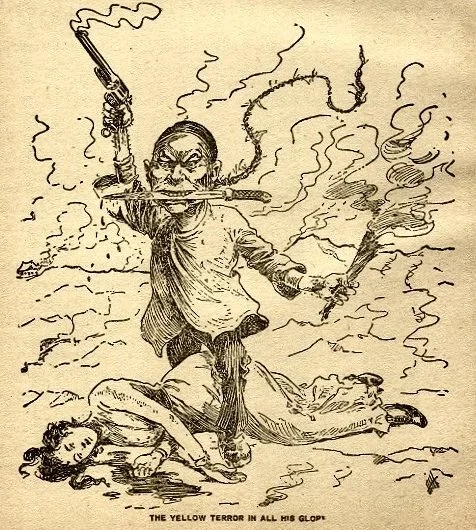
A caricature of a Chinese worker wearing a queue in an 1899 editorial cartoon
Lightning rods, earthquakes and Divine Providence

“When Benjamin Franklin invented the lightning-rod, the clergy, both in England and America, with the enthusiastic support of George III, condemned it as an impious attempt to defeat the will of God. For, as all right-thinking people were aware, lightning is sent by God to punish impiety or some other grave sin—the virtuous are never struck by lightning. Therefore if God wants to strike any one, Benjamin Franklin [and his lightning-rod] ought not to defeat His design; indeed, to do so is helping criminals to escape. But God was equal to the occasion, if we are to believe the eminent Dr. Price, one of the leading divines of Boston. Lightning having been rendered ineffectual by the 'iron points invented by the sagacious Dr. Franklin,' Massachusetts was shaken by earthquakes, which Dr. Price perceived to be due to God's wrath at the 'iron points.' In a sermon on the subject he said, 'In Boston are more erected than elsewhere in New England, and Boston seems to be more dreadfully shaken. Oh! there is no getting out of the mighty hand of God.' Apparently, however, Providence gave up all hope of curing Boston of its wickedness, for, though lightning-rods became more and more common, earthquakes in Massachusetts have remained rare.”
― Bertrand Russell (1872-1970), British philosopher and mathematician, in “An Outline of Intellectual Rubbish: A Hilarious Catalogue of Organized and Individual Stupidity’’

A religious tract’s take on Boston being shaken by the Cape Ann earthquake of 1755.
Danse macabre

“Untitled” (paint on canvas), by Carolyn Mae Lassiter, in her show “A Journey Through My Heart and Mind,’’ at the Augusta Savage Gallery at the University of Massachusetts at Amherst, through April 20.
The gallery says that these “vibrant and uniquely executed paintings and drawings are inspired by dreams, spirituality, life in the country, family and animals.’’
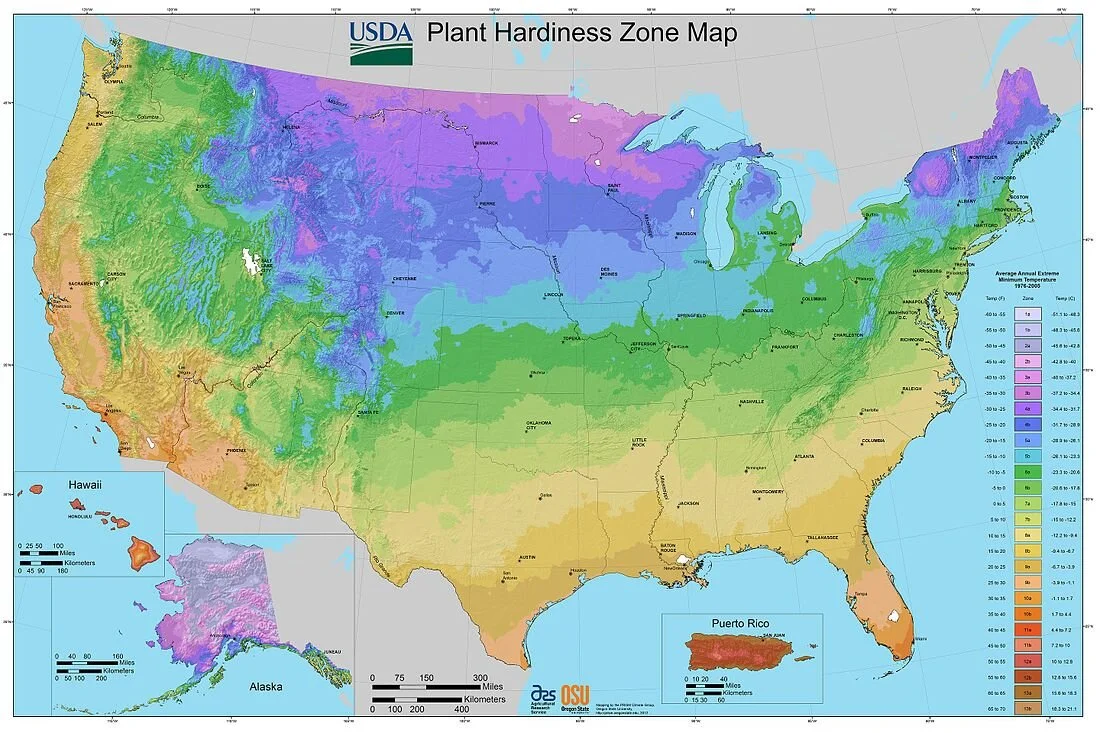
The invasion

Edwin Way Teale’s writing cabin on his farm in Hampton, Conn.
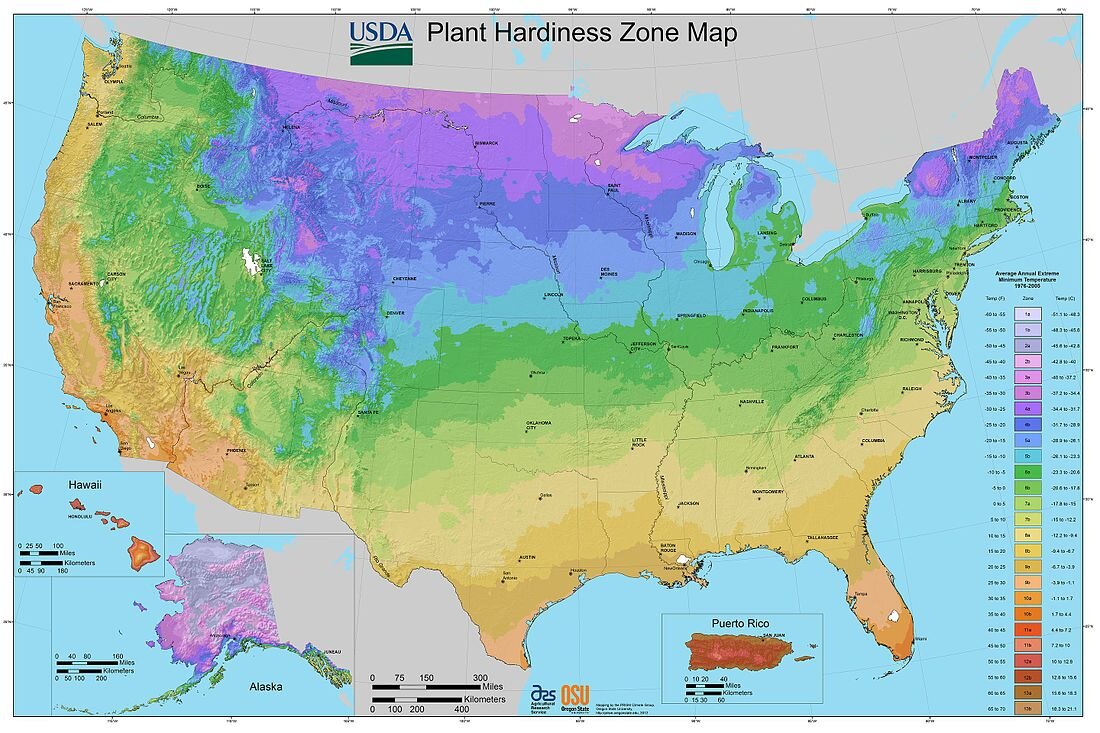
"The seasons, like greater tides, ebb and flow across the continents. Spring advances up the United States at the average rate of about fifteen miles a day. It ascends mountainsides at the rate of about a hundred feet a day. It sweeps ahead like a flood of water, racing down the long valleys, creeping up hillsides in a rising tide. Most of us, like the man who lives on the bank of a river and watches the stream flow by, see only one phase of the movement of spring. Each year the season advances toward us out of the south, sweeps around us, goes flooding away to the north."
— Edwin Way Teale (1899-1976), American writer, natuuralist and photographer, in North With the Spring

Chris Powell: 'Bring out your dead'? Nullification hypocrisy

Secobarbital is one of the most commonly prescribed drugs for physician-assisted suicide in the United States.
MANCHESTER, Conn.
What should the legislation now making another appearance in the Connecticut General Assembly be called: "aid in dying" or "assisted suicide"? It depends which side you're on.
"Aid in dying" makes it sound a lot nicer, just as "pro-choice" has become the euphemism for "pro-abortion" or, more fairly, "pro-abortion rights." Meanwhile there is no getting around it: "Suicide" signifies desperation and despair.
The bill would authorize doctors to prescribe fatal doses of medicine to terminally ill people who want to end their lives. They might have various motives -- chronic pain, invalidism, reluctance to become a burden on their families, or severe depression.
The bill's opponents contend that pain almost always can be controlled medically now and that there would be great risk of hustling the afflicted into dying for the convenience of others. The bill's advocates say it contains regulations against that.
This trust in regulations may be a bit naive since government can't always be around when it is needed. Who can forget the "bring out your dead" scene in the movie Monty Python and the Holy Grail? That's where the wheelbarrow master collecting corpses amid a plague declines to accept a frail old man who is being carried out by a young relative while still alive. The wheelbarrow master says, "I can't take him like that. It's against regulations." But a little cajoling by the young relative produces the "aid in dying" necessary to get the old man loaded aboard -- a quick and surreptitious clubbing to the head.
On the other hand, can government be trusted to tell people what they can do with their own lives? Who else's business is it really? How is the "war on drugs" working out?
In his play Julius Caesar Shakespeare inclines to the libertarian side of the issue as the conspirators discuss the risk of failure of their plot to assassinate the emperor and restore the Roman republic.
CASSIUS: I know where I will wear this dagger then;
Cassius from bondage will deliver Cassius.
Therein, you gods, you make the weak most strong.
Therein, you gods, you tyrants do defeat.
Nor stony tower, nor walls of beaten brass,
Nor airless dungeon, nor strong links of iron
Can be retentive to the strength of spirit.
But life, being weary of these worldly bars,
Never lacks power to dismiss itself.
If I know this, know all the world besides,
That part of tyranny that I do bear
I can shake off at pleasure.
CASCA: So can I.
So every bondman in his own hand bears
The power to cancel his captivity.
Good for the Catholic Church in Connecticut for citing the sanctity of life in opposing "aid in dying." But far more lives -- mostly young ones -- are lost or jeopardized every day because of practices and policies that neither the government nor the church bothers to get upset about or even examine.
After all, in the long run we're all terminally ill even as the short run is often one blind spot after another.
xxx

NULLIFICATION CATCHES ON: Republican-leaning states that support an expansive view of Second Amendment rights are considering legislation to nullify federal gun laws, especially now that background-check legislation has a good chance of passing Congress. But somehow this nullification movement seems to have escaped the denunciation it deserves from Connecticut's congressional delegation, all of whose members support stronger federal gun controls.
Could such denunciation be lacking because no one in authority in government in Connecticut has any business criticizing nullification elsewhere? For Democratic-leaning Connecticut long has been engaging in more nullification than any state since the civil rights era of the 1950s and '60s. Connecticut's nullification is aimed against federal immigration law, as the state obstructs federal immigration agents from doing their jobs and issues driver's licenses and other forms of identification to immigration lawbreakers.
The Republican-leaning states are only contemplating nullification. In Connecticut it is aggressive policy.
Chris Powell is a columnist for the Journal Inquirer, in Manchester.
Second-hand savagery

“Bird Skin” (wall-mounted discarded clothing and upholstery fabric), by Tamara Kostianovsky, in her show “Savage Legacy,’’ at the Fuller Craft Museum, Brockton, Mass., through Aug. 22
The gallery says: “The exhibition includes Kostianovsky’s signature textile ‘meat’ sculptures made with the artist’s own clothing, sculptures of birds composed of discarded upholstery fabrics, and recent forms that reference tree stumps and severed tree limbs.’’
Can't you do better?

— Photo by Maurice van Bruggen
“What are you saying? That you want
eternal life? Are your thoughts really
as compelling as all that?…”
— From “Field of Flowers,’’ by Louise Gluck (born 1943). The winner of the Nobel Prize for Literature for her poems, she lives in Cambridge, Mass., and is writer in residence at Yale.

In Garden in the Woods, a 45-acre woodland botanical garden, at 180 Hemenway Rd., Framingham, Mass. It is the headquarters of The Native Plant Trust, and is open to visitors between April 14 and Oct. 15.
'The land is the culture'

Falls Mountain gorge, on the Housatonic River, site of a 17th-Century Paugussett fishing village.
“Ours is a land culture. In fact, the land is the culture.’’
— Aurelius Piper (Big Eagle) (1916-2008), chief (1959-2008) of the Golden Hill Paugussett Nation, centered in Trumbull, Conn.

Grace Kelly: Difficult tradeoffs between woodland preservation and solar-energy developers
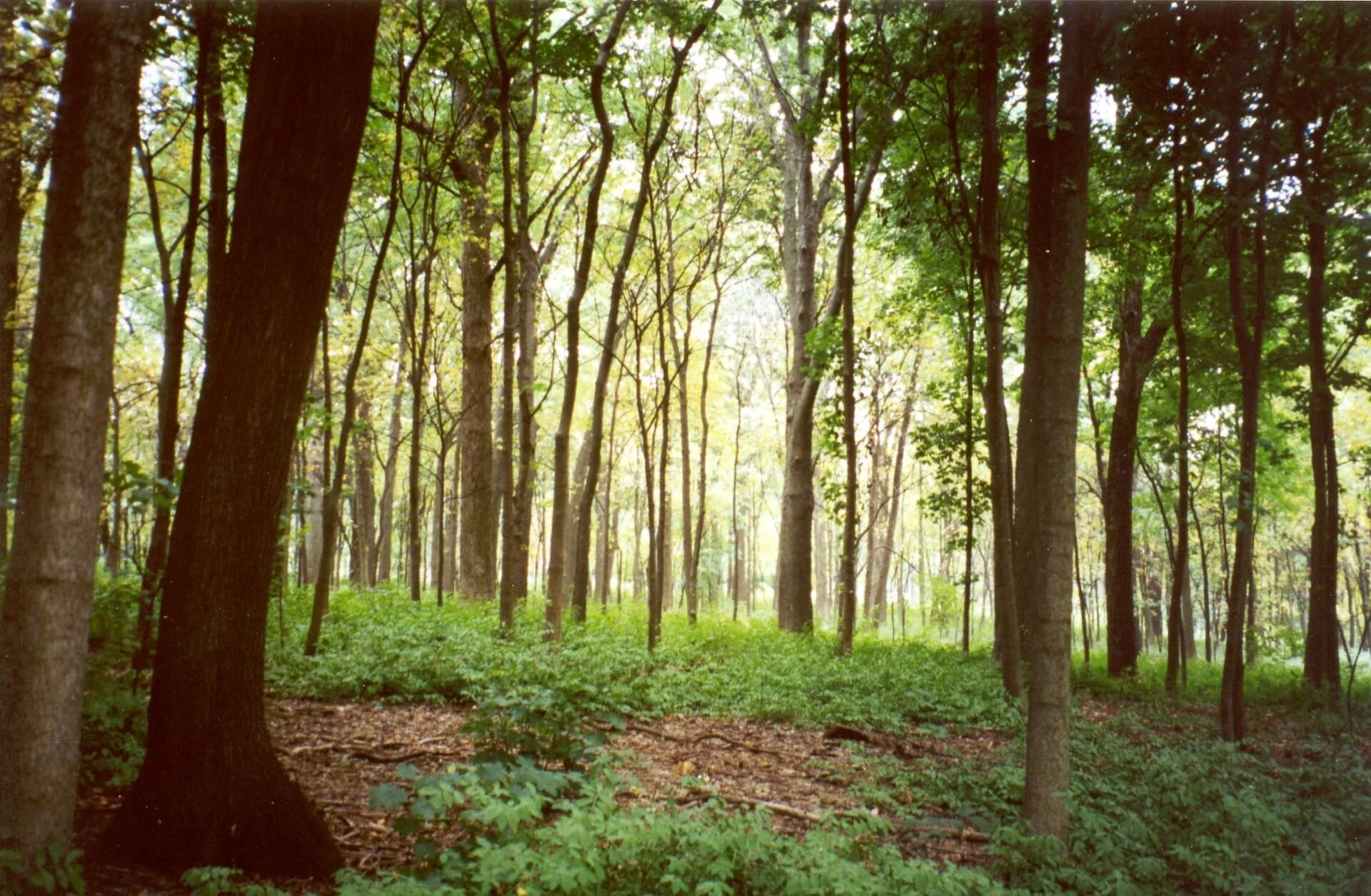
Woodland ecosystem
— Photo by Dustin M. Ramsey

Solar array in the woods of Canterbury, N.H.
From ecoRI News (ecori.org)
The siting of renewable energy is a complex issue that dances around property rights, tax revenues, the carrying capacity of energy infrastructure, smart grids, energy storage and environmental protections.
Rhode Island began grappling with the siting of utility-scale renewable energy, most notably ground-mounted solar arrays, about five years ago, when developers started to take advantage of the state’s inability to direct such projects to already developed areas. Instead, they bought or leased less-expensive rural open space upon which to erect renewable-energy systems.
The state's green-space energy rush began in earnest in March 2017, when then-Gov. Gina Raimondo signed an unenforceable executive order that encouraged the state to attain 1,000 megawatts of renewable energy by 2020.
The governor’s order, which gave little thought or guidance to where solar installations should be sited, increased the number of renewable-energy applications being filed in cities and towns that hadn’t yet adopted regulations that adequately addressed the impacts of this fast-growing industry.
The solar energy rush overwhelmed municipal officials and volunteer board members — many of whom don’t have the expertise and/or lack a statewide perspective regarding this issue — were caught flat-footed when confronted with an abundance of utility-scale energy development.
While the past five years have given Rhode Island more megawatts of cleaner energy, the acres of installed ground-mounted solar have further fragmented and stressed Rhode Island’s forests.
The covering of open space with solar panels comes with a cost, even it reduces dependence on fossil fuels and generates tax revenue.
“It’s essential that we safeguard and enhance the capacity of forest natural lands to absorb and store carbon,” Scott Millar, senior policy analyst for Providence-based Grow Smart Rhode Island, said during a recent presentation on forest conservation and solar reform.
He noted that both Rhode Island and Massachusetts have the opportunity to become national leaders in balancing two of “our best weapons in the fight against climate change: forests and renewable energy.”
The former Rhode Island Department of Environmental Management staffer moderated a March 17 discussion featuring various experts in the forest conservation and solar realm in New England, each bringing their own perspective and data on how forest conservation and solar could work together.
Part of this relationship, they said, centers around the idea that promoting solar shouldn’t mean clear-cutting valuable forestland. In fact, it can be easily argued that it’s detrimental to the very principals that have spurred on solar use: reducing carbon emissions.
“We need to conserve forests and natural areas to absorb and store carbon,” Millar said. “It has been well documented that forests and natural areas are the most practical and cost-effective tool. The crucial next step is to reform our renewable-energy programs to provide incentives to accelerate solar in developed and disturbed locations, such as rooftops, landfills, brownfields, and parking lots, and stop any incentives that are encouraging the clearing of forests and natural areas to make way for solar development.”
He said the fight against the changing climate is like a three-legged stool, where all the legs are needed: cut greenhouse-gas emissions as quickly as possible; conserve energy and use it efficiently to reduce demand; and conserve forests to absorb and store carbon.
Frank Lowenstein, chief operating officer at the New England Forestry Foundation (NEFF), sees a future where forests are given value both as beautiful natural places and as natural carbon sequesters. He also sees this as indispensable to reducing carbon emissions.
“We need to get down to about half of our current emissions over the next ten years,” he said. “That’s a very big challenge. You need to get rid of 187 gigatons of expected emissions over the course of 10 years.”
To promote healthy forests and therefore help reduce human-generated carbon emissions, Lowenstein promoted the idea of creating incentives for forest landowners to practice what NEFF calls “exemplary forestry.”
The NEFF Web site defines exemplary forestry as “a forest management approach … that prioritizes forests’ long-term health and outlines the highest standards of sustainability currently available to the region’s forest owners.”
In addition to protecting forests and their ecosystem services, NEFF noted that exemplary forestry is designed to accomplish three goals: enhance the role forests can play in mitigating climate change; improve wildlife habitat; and grow more and better-quality wood.”
The third goal — grow more and better-quality wood as a building product — is an interesting part of this complex equation. This goal dovetails with the idea that NEFF promotes of using naturally carbon sequestering materials, e.g. timber, to build carbon-storing structures and limit the use of emissions-heavy steel and concrete.
“It’s one way to increase the productivity of the forest, the actual amount of carbon dioxide removed from the atmosphere per acre per year,” Lowenstein said. “We can basically double the average productivity per acre per year of New England forests. That lets you do two things: it lets you store more carbon in living forest … and it also lets you continue to harvest wood to create wood products and long-lived wood products like wood flooring, wood paneling, tables, and wood buildings that all keep carbon dioxide locked out of the atmosphere.”
A local example of this wood-centric construction is the Rhode Island School of Design’s recently completed North Hall, a steel-frame and cross-laminated timber (CLT) hybrid.
CLT is also known as mass timber and is created by gluing milled planks together and layering them to create a sturdy building material.
While the use of CLT is more popular in Europe and gaining some traction at more sustainably minded entities in the United States, tied up in this idea of using carbon-storing wood — and better preserving forests in general — is one word: incentive. And this incentive to preserve forests and use wood to build is linked to solar development.
David Milner, CEO and founder of Warren-based NuGen Capital, discussed how solar developers are often incentivized to clear-cut forests for solar installation because of the difficulty and high costs of siting solar on developed areas and disturbed locations.
Last year his company started construction of a 6.76-megawatt rooftop solar system on a 560,000-square-foot warehouse in East Greenwich. The project is comprised of more than 16,000 solar panels.
“I believe that everyone actually does care where solar is sited,” Milner said. “They just have a different opinion on where those trade-offs should be. I wanted to bring you into some of the fundamental economic reality that comes with rooftops and landfills and solar projects. The reality is rooftops, landfills are much riskier and more expensive than an open field or forestland. So that’s where people want to go.”
He went on to explain how some investors and banks won’t fund projects unless they are directly on the ground, because of inherent risks with elevated solar installations.
“Let’s take roofs for example,” Milner said. “When roofs leak, it’s a serious problem, not so much for the ground. Roofs have to be replaced. So, everybody, by and large, for large-scale solar wants to go to the ground. It’s also really hard to coordinate with the towns. Just last week I was reading about a western Massachusetts solar project that’s enormous, that’s going to clear forest, and the town can get 450 thousand dollars in tax revenue by allowing it to occur. That’s pretty tempting for some rural towns.”
Milner suggested that the only way to really promote sustainable solar siting is through incentives.
“We really do, I think, need to incentivize what we want to see,” he said. “We need to change the market dynamics and I think that’s coming.”
On the other side of incentives for preserving forests is the landowners who often sell or lease their property to solar developers since they see little money in the timber industry.
“This is particularly focused in the industrial forestlands of northern New England that are owned by individuals and companies largely for the financial benefits,” Lowenstein said. “They’re in it as a business proposition and right now they’re not getting paid for carbon in a simple enough way and a high enough value way.”
Lowenstein called for a few solutions that take incentive away from clear-cutting and put them into the sustainably sourced timber industry.
“First of all, no net loss of forest — part of that needs to be stopping incentivizing forest clearing — and increase incentives for solar in developed areas,” he said. “We also need more funding and support for forest conservation and improved management … we need to recognize that … just stopping harvest or reducing harvest, that may not do very much at all in part because wood, as I said earlier, substitutes for more carbon intensive materials like steel and concrete.”
This vision, if aligned with the needs of solar developers in making developed and disturbed locations more financially approachable and profitable, could lead to a symbiotic relationship that could change the world for the better, according to Lowenstein.
Grace Kelly is an ecoRI News reporter. EcoRI News editor Frank Carini contributed to this article.

Sperm whales learned to avoid human killers through social communication
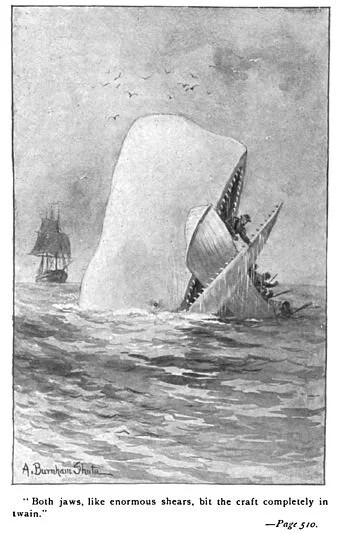
Picture in early edition of Herman Melville’s Moby Dick

Mother and baby sperm whales off Mauritius in the Indian Ocean
— Photo by Gabriel Barathieu
From Robert Whitcomb’s “Digital Diary,’’ in GoLocal24.com
Scientists have determined that sperm whales (think Moby Dick), under relentless attack by whalers, many from New England, in the 19th Century communicated with each other on ways to escape their killers. Whales are highly intelligent and have very well organized social cultures. We humans too often forget that we’re far from the only intelligent creatures on Earth. Indeed, we’re often not very intelligent at all
Consider this from a Royal Society report:
“Analysis of data from digitized logbooks of American whalers in the North Pacific found that the rate at which whalers succeeded in harpooning (‘striking’) sighted whales fell by about 58% over the first few years of exploitation in a region. … The initial killing of particularly vulnerable individuals would not have produced the observed rapid decline in strike rate. It appears that whales swiftly learned effective defensive behaviour. Sperm whales live in kin-based social units. Our models, show … that learned defensive measures from grouped social units with experience could lead to the documented rapid decline in strike rate. This rapid, large-scale adoption of new behaviour enlarges our concept of the spatio-temporal dynamics of non-human culture.’’
How much have the whales learned from their groups on how to avoid collisions with ships and fishing-line entanglements, or how to find new sources of food as mankind changes the ocean environment
To read more, please hit this link.

Map showing the distribution of sightings of sperm whales. Sperm whales can be found in virtually any part of the ocean not covered by ice, but are most often spotted in certain "grounds" where they like to feed or breed.
— Kurzon

In the Bourne Building of the New Bedford Whaling Museum
'Materializing the medium's memory'

Image from ‘‘LUCID,’’ artist Exeter, N.H.-based Shaina Gates’s show from April 15 to May 15 at Gallery 263, Cambridge
The gallery says:
“This exhibition reflects the artist’s interest in the transfer and translation of images across surfaces, systematized processes, and theories related to dimensionality and the organization of space. In ‘LUCID,’’ a body of lumen prints on both paper and film are on view. The works in ‘LUCID’, which conjure a joy similar to what one may experience when looking through a kaleidoscope, map the physical experience of how the prints were systematically folded by the artist, materializing the medium’s memory as a visible record. In this way, the material becomes lucid.’’

Downtown Exeter, N.H.
'Grotesque' courses

Water hazard, sand trap and dense vegetation on the 13th hole at Ridgefield (Conn.) Golf Course
— Photo by Don Williams
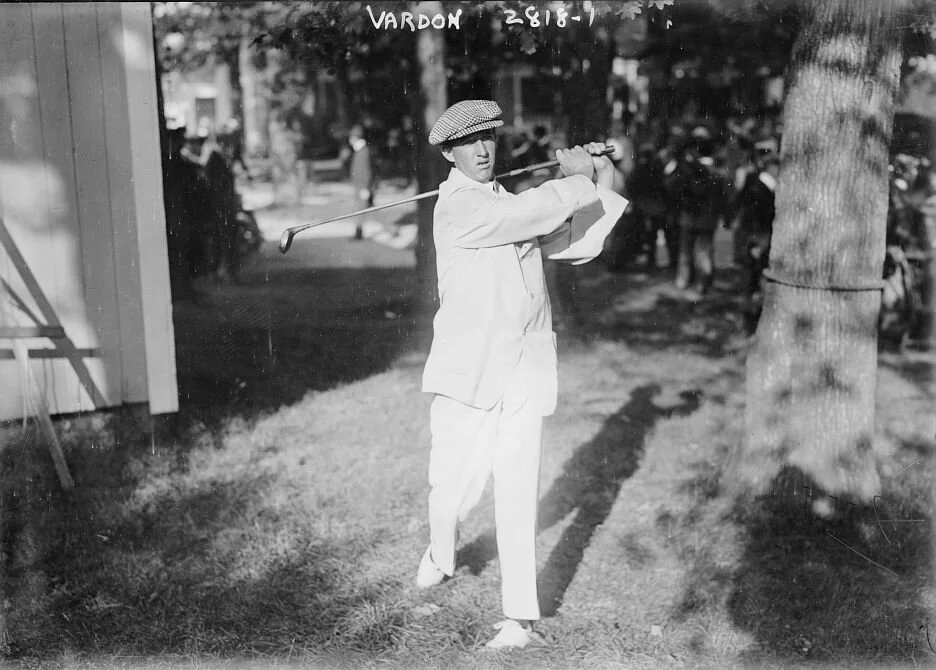
British golfer Harry Vardon at the 1913 U.S. Open, at The Country Club, in Brookline, Mass. The club had one of America’s earlier courses, and it remains one of the country’s most famous.
“You claim New England’s a pretty place? Think again. Oh, it’s fine for hiking or camping; it’s got all those swell bubbling brooks; it’s peaceful and clean and colorful. But, look, when it comes to something truly important, like the game of golf, these northeastern states can be downright grotesque.’’
Tim O’Brien, in “The Beholder’s Eye,’’ in New England: The Four Seasons (1980, edited and with photos by Arthur Griffin
Looming islands
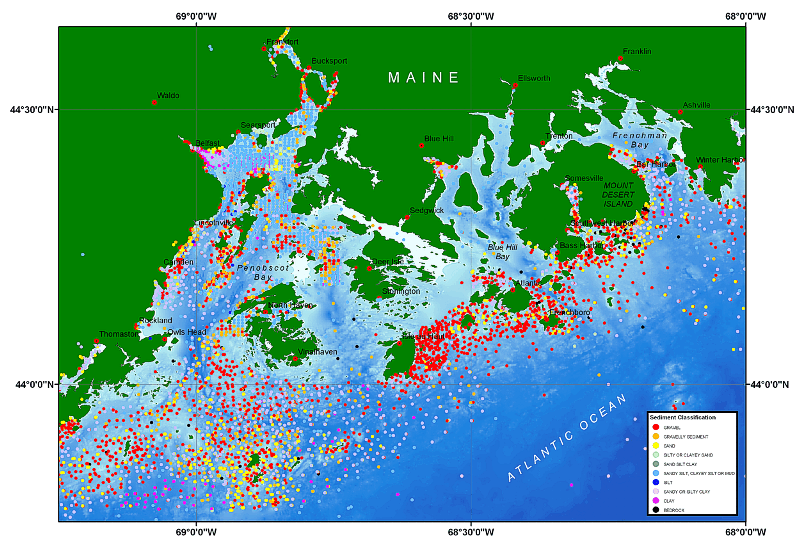
“….Across old tides, Deer Isle and
Little Deer loom tall as
spruce, dark as deer….’’
— From “Beyond Equinox,’’ by Philip Booth (1925-2007), a long-time resident of Castine, Maine, on Penobscot Bay.
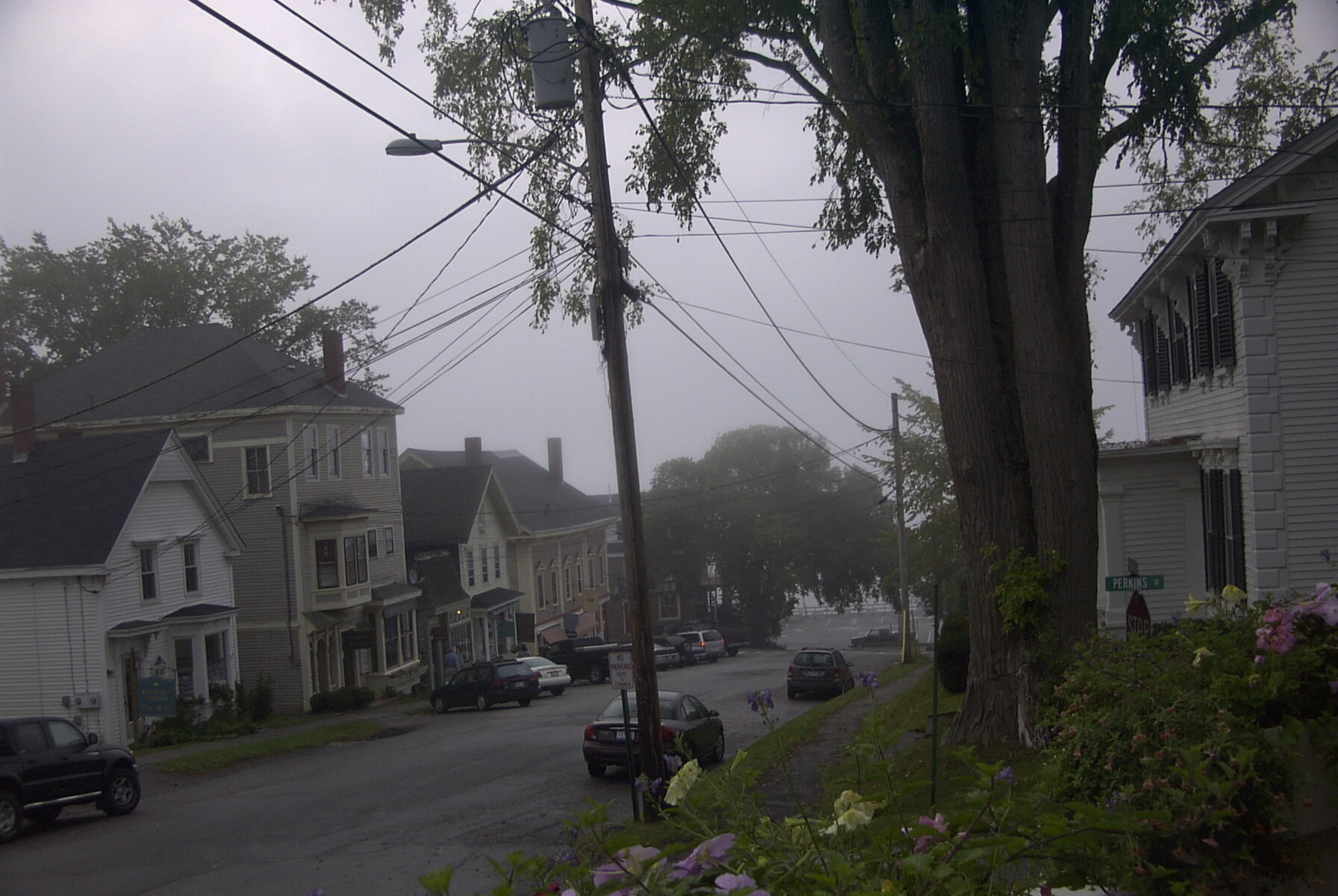
Main Street in Castine
Paranoia-promoting plants

Detail from “Hothouse Bouquet with Spider” (acrylic on panel ), by Nicole Duennebier, in her show “Flora Hex,’’ at 13FOREST Gallery, in Arlington, Mass., through April 16.
The gallery says: “Her compositions bring to mind the old masters, Dutch still-lifes and Rococo landscapes in their attention to detail. But these paintings aren't idly pretty artworks, as Duennebier prefers to inject an element of the grotesque into her work, making her pieces simultaneously compelling and challenging. Some paintings feature floral wreaths and memorials depicted in lonely caves and desolate woods, conveying a sense of melodrama and isolation. Others contain carelessly squashed blossoms and fluttering insects marring the beauty of a bouquet. Perhaps most striking are the paintings in which flowers surround dead fish or slimy, unidentifiable meat. Each artwork has something unsettling about it, whether obvious or subtle, that adds a layer of emotional depth. Duennebier's work in ‘Floral Hex’ is complex, both beautiful and uncanny, offering an duality that both repulses and entrances the viewer.’’
She lives and works in Malden, Mass., an inner suburb of Boston.

Fellsmere Park, in Malden
—Photo by pilgrimsong