
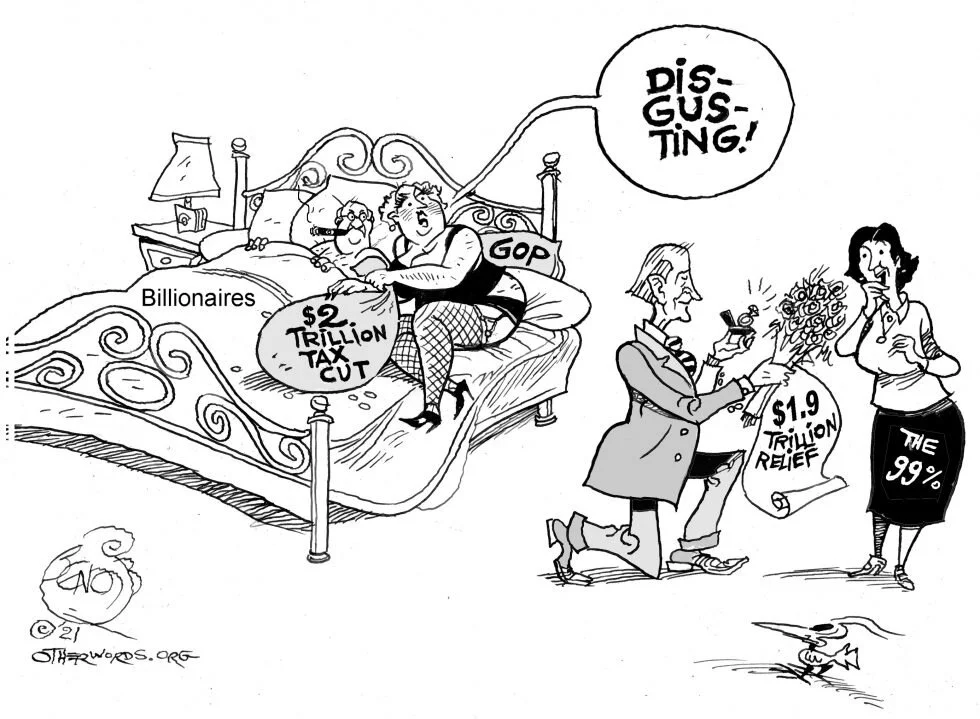
Don Pesci: And now Conn. considers a wealth-repelling 'mansion tax'
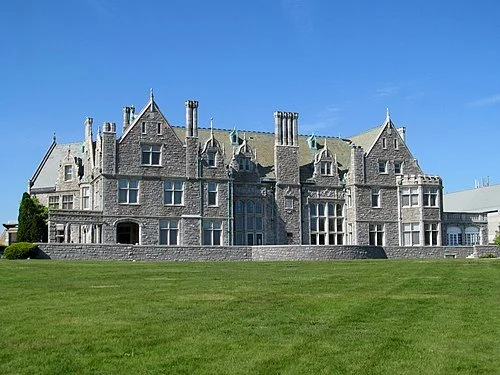
The Branford House, in Groton, Conn., on the Avery Point campus of the University of Connecticut, which rents it out for events. Branford House was built in 1902 for Morton Freeman Plant, a local financier and philanthropist, as his summer home; he named it after his hometown of Branford, Conn. The house is on the National Register of Historic Places.
VERNON, Conn.
”There will be time, there will be time
To prepare a face to meet the faces that you meet.’’
– T.S. Eliot
Connecticut is running out of time to prepare a face to meet the faces it will meet. “The whole world is watching,’’ as kids in the Sixties used to say when, caught in the grip of an unwanted war, TV cameras showed them sticking flowers in the barrels of National Guard rifles warding them off .
Clever politicians may hide behind their own designer masks, but the face that Connecticut presents to the world and other states cannot be hidden. The question that politicians in Connecticut should be asking, and acting upon, is this one: What is the face that Connecticut has been presenting during the last few decades to revenue producers? Is it attracting or repelling the entrepreneurial capital that the state desperately needs to finance both its operations and its best prompting from the angels of its better nature?
Consider a recent story in a Hartford paper titled “Lamont tells Connecticut businesses he opposed ‘mansion tax.’” The mansion tax is the latest sunburst from Martin Looney, the most progressive president pro tem of the state Senate in Connecticut history.
The Looney state property tax would be levied on the assets of millionaires in Connecticut. The mansion tax, we are told in the story, will “funnel more money to municipal governments.… It will raise $73 million a year as part of a package to provide property-tax relief for cash-strapped communities like his hometown of New Haven.-
The quickest and most efficient way of shuttling money from state coffers to municipalities is to reduce any tax and allow people in municipalities to retain their own assets. Doing so would avoid the trip that a dollar makes from the municipality to the state and back again – minus administrative costs – to the municipality. But this method would short circuit the progressive afflatus and considerably reduce the political influence of progressive redistributors. One imagines Looney gagging on such a solution as being too simple, workable and efficient.
The new mansion tax drew an immediate response from millionaire Gov. Ned Lamont: “I don’t support it. I don’t think it’s going anywhere, and I don’t think we need it,” Lamont told “Chris DiPentima, president of the Connecticut Business & Industry Association” on a webcast conference call.
Lamont, we are told, issued his comment “a day after a public hearing among state legislators who called for a separate 5 percent surtax on capital gains, dividends and taxable interest.” In addition, the progressive legislators want to increase the personal-income-tax rate for earners making more than $500,000 a year and couples earning more than $1 million annually.
In addition, progressive lawmakers – nearly half the Democrat caucus in the General Assembly are progressives – “support reducing the Connecticut estate tax exemption of $2 million and [eliminating] the current cap on payments that would yield higher” revenue payments from millionaires in the state who foolishly decide to remain on the spot, there to be cudgeled and deprived of their assets by tax greedy progressives.
This concerted attack on wealth accumulation in Connecticut is designed, consciously or not, to drive creative revenue production out of the state the way St. Patrick once drove serpents out of Ireland and, in the long run, the effort will succeed. Millionaire snakes will slither out of Connecticut on their way to enrich competing states.
Seen from outside the state, what does the face of Connecticut look like?
Well, it is among the highest taxed states in the nation; business flight is rampant; out-of-state companies have gobbled up Connecticut home-grown companies, such as, United Technologies, now merged with Raytheon Technologies, based in Waltham, Mass.; Sikorsky, now owned by Lockheed Martin, headquartered in Bethesda, Md.; Aetna Insurance Company, now a subsidiary of CVS Health, which is based in Woonsocket, R.I.; Colt firearms, bought by the Ceska Zbrojovka Group, a Czech company; and it seems likely that The Hartford, a company that once insured Abe Lincoln’s home in Illinois, will in the near future be bought by Chubb, incorporated in Zürich, Switzerland. This is not a fetching portrait of Connecticut's face, but it is an accurate one.
This is not a fetching portrait of Connecticut's face, but it is an accurate one.
When the Coronavirus high tide recedes, very quickly now, it will leave on the shore the wreckage of Connecticut’s economy that had been apparent to everyone before the Wuhan, China, virus arrived in our state. Connecticut, if it is to remain competitive with other states, must address a legion of problems that cannot be settled by politicians more interested in saving their seats than their state. The state’s spending spree, unchecked since 1991, must be addressed. Taxes are too high, and politicians much too clever and committed, body and soul, to unchecked spending, neither of which advances the public good.
Don Pesci is a Vernon-based columnist.
Myth about Nature
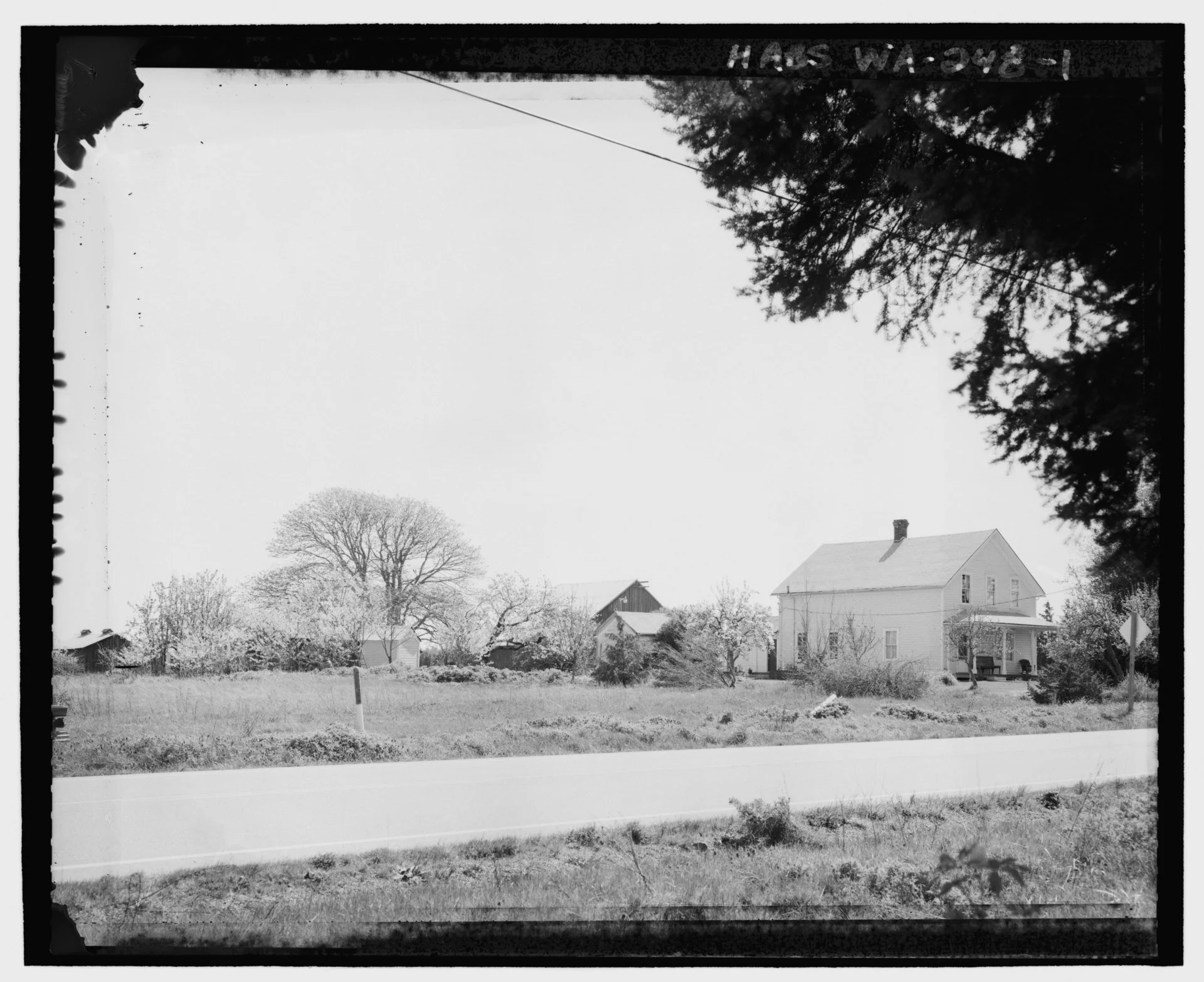
“We came like others to a country of farmers –
Puritans, Catholics, Scotch Irish, Quebecois:
bought a failed Yankee’s empty house and barn
from a prospering Yankee,
Jews following Yankee footprints,
prey to many myths but most of all
that Nature makes us free….”
From “Living Memory’’ by Adrienne Rich (1929-2012). She lived for time in the smalll western Massachusetts town of Montague.
Boston springs happily encourage forgetfulness

Along Boston’s Esplanade, on the Charles River, on a spring day
The spring in Boston is like being in love: bad days slip in among the good ones, and the whole world is at a standstill, then the sun shines, the tears dry up, and we forget that yesterday was stormy.”
– Louise Closser Hale (1872 -1933), an American actress, playwright, and novelist. She attended the Boston School of Oratory.
'Wetness and solidity'

“Sun with Rain” (oil on linen), by Boston-based painter Bryan McFarlane, in his show “Caught in Colorful Rain,’’ at Gallery NAGA, Boston, through March 27
The gallery says these paintings were created from memories of Mr. Farlane’s Jamaican childhood, and especially memories of the weather. His paintings include bands of paint dripping down the canvas, resembling raindrops falling. Some of his works portray such bodies as waterfalls or rivers, in which he uses thicker bands of paint and deeper, darker colors to suggest the churning depths. So his paintings are a study in opposing forces — “dark and light, warmth and coolness, wetness and solidity, all come together in the paintings just as they do in the rain that falls or the ocean waves that crash. Alongside this duality is the hope that humanity will be able to live in balance with these natural forces and continue to enjoy the rain.’’

Llewellyn King: ‘Long COVID’s’ baffling sister
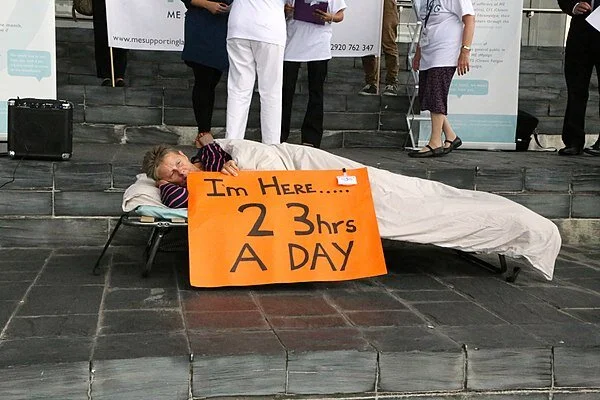
CFS vitim demonstrates for more research
WEST WARWICK, R.I.
“Long COVID’’ is the condition wherein people continue to experience symptoms for longer than usual after initially contracting COVID-19. Those symptoms are similar to the ones of another long-haul disease, Myalgic Encephalomyelitis, often called Chronic Fatigue Syndrome.
For a decade, in broadcasts and newspaper columns, I have been detailing the agony of those who suffer from ME/CFS. My word hopper isn’t filled with enough words to describe the abiding awfulness of this disease.
There are many sufferers, but how ME/CFS is contracted isn’t well understood. Over the years, research has been patchy. However, investigation at the National Institutes of Health has picked up and the disease now has measurable funding -- and it is taken seriously in a way it never was earlier. In fact, it has been identified since 1955, when the Royal Free Hospital, in London, had a major outbreak. The disease had certainly been around much longer.
In the mid-1980’s, there were two big cluster outbreaks in the United States -- one at Incline Village, on Lake Tahoe in Nevada, and the other in Lyndonville in northern New York. These led the Centers for Disease Control to name the disease “Chronic Fatigue Syndrome.”
The difficulty with ME/CFS is there are no biological markers. You can’t pop round to your local doctor and leave some blood and urine and, bingo! Bodily fluids yield no clues. That is why Harvard Medical School researcher Michael VanElzakker says the answer must lie in tissue.
ME/CFS patients suffer from exercise, noise and light intolerance, unrefreshing sleep, aching joints, brain fog and a variety of other awful symptoms. Many are bedridden for days, weeks, months and years.
In California, I visited a young man who had to leave college and was bedridden at his parents’ home. He couldn’t bear to be touched and communicated through sensors attached to his fingers.
In Maryland, I visited a teenage girl at her parents’ home. She had to wear sunglasses indoors and had to be propped up in a wheelchair during the brief time she could get out of bed each day.
In Rhode Island, I visited a young woman, who had a thriving career and social life in Texas, but now keeps company with her dogs at her parents’ home because she isn’t well enough to go out.
A friend in New York City weighs whether to go out to dinner (pre-pandemic) knowing that the exertion may cost her two days in bed.
I know a young man in Atlanta who can work, but he must take a cocktail of 20 pills to deal with his day.
Some ME/CFS sufferers get somewhat better. The instances of cure are few; of suicide, many.
Onset is often after exercise, and the first indications can be flu-like. Gradually, the horror of permanent, painful, lonely separation from the rest of the world dawns. Those without money or family support are in the most perilous condition.
Private groups -- among them the Open Medicine Foundation, the Solve ME/CFS Initiative, and ME Action -- have worked tirelessly to raise money and stimulate research. The debt owned them for their caring is immense. This has allowed dedicated researchers from Boston to Miami and from Los Angeles to Ontario to stay on the job when the government has been missing. Compared to other diseases, research on ME/CFS has been hugely underfunded.
Oved Amitay, chief executive officer of the Solve ME/CFS Initiative, says Long COVID gives researchers an opportunity to track the condition from onset and, importantly, to study its impact on the immune system – known to be compromised in ME/CFS. He is excited.
In December, Congress provided $1.5 billion in funding over four years for the NIH to support research into Long COVID. The ME/CFS research community is glad and somewhat anxious. I’m glad that there will be more money for research, which will spill into ME/CFS, and worried that years of endeavor, hard lessons learned and slow but hopeful progress will be washed away in a political roadshow full of flash.
Ever since I began following ME/CFS, people have stressed to me that more money is essential. But so are talented individuals and ideas.
Long COVID needs carefully thought-out proposals. If it is, in fact, a form of ME/CFS, it is a long sentence for innocent victims. I have received many emails from ME/CFS patients who pray nightly not to wake up in the morning. The disease is that awful.
Llewellyn King is executive producer and host of White House Chronicle, on PBS. His email is llewellynking1@gmail.com. He’s based in Rhode Island and Washington, D.C.
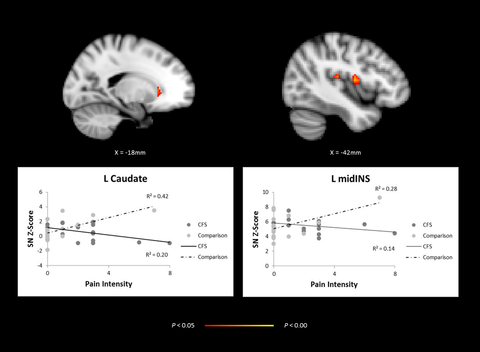
Brain imagining, comparing adolescents with CFS and healthy controls showing abnormal network activity in regions of the brain
Ah, March!
“March brings many things, but not hurricanes. But yesterday it brought a storm and a temperature drop, a farewell gesture from winter. The pipes froze again in the back part of the house. And as I viewed the solidly frozen bath mat in my shower, I felt I could do without any record-breaking statistics.’’
— Gladys Taber (1899-1980), in The Stillmeadow Road (1959). A prolific writer, she lived for 20 years in a 1690 farmhouse in Southbury, Conn., whence she wrote her “Stillmeadow series’’ about New England country living. Southbury now is more exurbia than country.

Southbury town seal
Dana Farber and MIT joining in new cancer initiative

Part of the Dana-Farber Cancer Institute
From The New England Council (newenglandcouncil.com)
“Dana-Farber Cancer Institute, in Boston, and Massachusetts Institute of Technology (MIT), in Cambridge, have partnered along with three other organizations — Johns Hopkins University, in Baltimore, Memorial Sloan Kettering, in New York City, and MD Anderson, in Houston — in a pledge to treat the most challenging forms of cancer. Break Through Cancer, a new foundation backed by a $250 million donation from Mr. and Mrs. William H. Goodwin Jr. and the estate of the late William Hunter Goodwin III, who passed away in 2020 from cancer, will fund and support collaboration among the nation’s top cancer institutions.
“President Biden has expressed his support for the foundation, stating, ‘I’m delighted to see five of the nation’s leading cancer centers are joining forces today to build on the work of the Cancer Moonshot I was able to do during the Obama-Biden administration to help break through silos and barriers in cancer research.’ Break Through Cancer also focuses heavily on particularly challenging cancers, including pancreatic cancer, ovarian cancer, acute myelogenous leukemia (AML) and glioblastoma. Cancer experts and teams will receive substantial funding to develop innovative treatments, clinical trials, and cures.
“‘We realize there are no guarantees, yet we believe this effort to fight cancer, particularly with collaborative research, has a realistic probability of success,’ said Bill Goodwin. ‘We want to help people have better lives. And we sincerely hope that by being public with our support, we will inspire others to support this incredible effort.”’
Philip K. Howard: Reboot America to reempower citizens
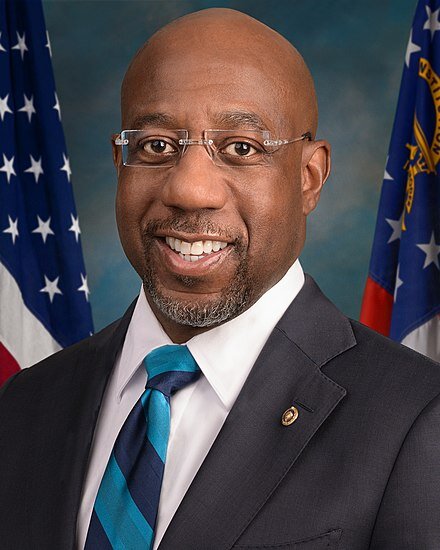
Georgia Sen. Raphael Warnock
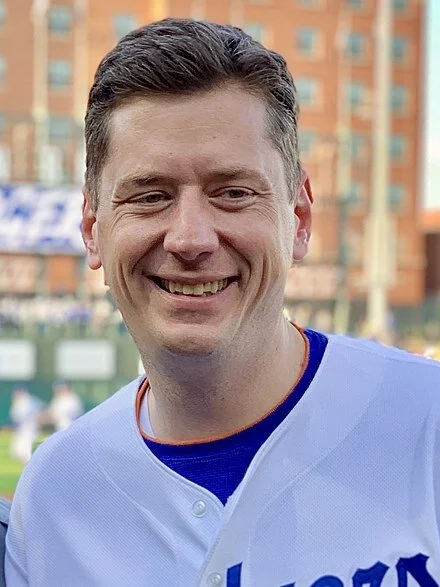
Oklahoma City Mayor David Holt
The most compelling political statements today are those that focus on mutual respect and factual truth — such as this statement by Republican Mayor David Holt of Oklahoma City, just two days before the mob attacked the Capitol on Jan. 6, or the victory statement by Georgia Democrat Raphael Warnock after he won a U.S. Senate seat
But why does such a large group of Americans feel so alienated that they abandon basic civilized values? One of the main reasons, I think, is a sense of powerlessness. They're stretched thin, due to economic forces beyond their control. They don't think their views matter, or that they can make a difference in, say, their schools or communities. They can't even be themselves. Spontaneity, which philosopher Hannah Arendt considered "the most elementary manifestation of human freedom," is fraught with legal peril: "Can I prove what I'm about to say or do is legally correct?"
The cure requires reviving human responsibility at all levels of authority. People need to feel free to roll up their sleeves and get things done. They need to feel free to be themselves in daily interactions, accountable for their overall character and competence. A functioning democracy requires officials to take responsibility for results, not mindless compliance. In an essay published in January by the Yale Law Journal, "From Progressivism to Paralysis’’, I describe how good government slowly evolved into a framework that disempowers everyone, even the President, from acting sensibly.
Problems with the rollout of COVID-19 vaccines is only the latest manifestation of a micro-management governing philosophy that suffocates leadership as well as disempowering citizens.
It's time to reboot the system, not to deregulate but re-regulate in a way that revives the American can-do spirit at all levels of society. This requires a new movement. If you agree, please contact phoward@commongood.org.
Philip K. Howard is chairman of Common Good (commongood.org), the legal- and regulatory-reform organization. He’s based in New York and is a lawyer, civic and cultural leader, photographer and author. His books include The Death of Common Sense, Try Common Sense , The Rule of Nobody and Life Without Lawyers.
Keep your virus off our island!

On Matinicus, 20 miles off Maine’s mainland
From Robert Whitcomb’s “Digital Diary,’’ in GoLocal24.com
The reaction of residents of islands off the New England coast, from big ones, such as Nantucket, to tiny Matinicus, off Maine, to the pandemic has, in a way, been paradoxical. These folks (more than a few of whom tend to be recluses) sometimes feel safer because they are separated by water from the worst COVID case densities, on the mainland, while fearful that a few cases will make their way onto their islands and explode.
There have been some ugly scenes, such as locals stretching chains across driveways of summer people “From Away’’ trying to shelter in place from COVID there and nasty notes.
xxx
Of course, New England’s islands are a big lure in the summer. I wonder how the vaccination surge will affect how many tourists and vacation-home residents visit them this summer as they play travel catch-up.

But still sort of alive

“Six Feet Under” (archival inkjet print), by Douglas Breault ,in his show “Sleepwalking’’ at the Rochester (N.H.) Museum of Art through April 2.
The gallery says the New Bedford-based artist’s still-life photographs “represent memories of his late father through objects he used to own, but also by utilizing elements like camera obscura projections, printed archival images and shadows to reflect the passage of time. He also incorporates images taken from the Internet, further building each piece's connection with narrative and memory. Mr. Breault's process results in artworks that drip with materiality and exude an undeniable physical presence.‘‘

The Cocheco River flows through central Rochester. The river once provided power for mills.
— Photo by AlexiusHoratius
Country and city

Postcard circa 1905
“I have lived more than half my life in the Connecticut countryside, all the time expecting to get some play or book finished so I can spend more time in the city, where everything is happening.’’
Arthur Miller, playwright (1915-2005), playwright, including Death of a Salesman, All My Sons and The Crucible. He was a longtime resident of Roxbury, Conn. The town has attracted a number of famous people as residents, including actors Dustin Hoffman and Richard Widmark, novelist William Styron and artist Alexander Calder. Roxbury is no longer in the country, but rather part of Greater New York City exurbia.
Roxbury, in the southern Litchfield Hills, in a modest way used to be a mining town. A silver mine was opened here and was later found to contain spathic iron, very useful in steel making, and a small smelting furnace was built. The granite found in many of Roxbury’s Mine Hill quarries provided building material for such world wonders as the Brooklyn Bridge and Grand Central Terminal, in New York City.
Chris Powell: Another golden age coming for 'earmarks'

Huey P. Long (1893-1935), Louisiana governor and U.S. senator and famed demagogue. He died in an assassination. He would have liked “earmarks”.
MANCHESTER, Conn.
Congratulations to one of Connecticut's forever members of Congress, U.S. Rep. Rosa DeLauro, Democrat of New Haven, for teaching the country a wonderful political-science lesson.
Having ascended to the chairmanship of the House Appropriations Committee, DeLauro has just revived the infamous practice of putting "earmarks" in the federal budget -- requirements that funds that ordinarily would be appropriated for general purposes be reserved for patronage projects desired by congressmen. Now DeLauro is forwarding her chief of staff, Leticia Mederos, to a national law and government relations firm, Clark Hill, whose office on Pennsylvania Avenue is within walking distance of the Capitol and the White House. Mederos will become a lobbyist, and her close connection to the House appropriations chairwoman will be a swell advantage to her clients.
This stuff is sometimes euphemized as public service. Where candor is permitted, it is called influence- peddling or even plunder.
The political-science lesson taught here by DeLauro and her outgoing chief of staff is like the one taught by Huey Long when he was governor of Louisiana in the 1930s. Gathering his closest supporters just after his election, Long is said to have told them:
“You guys who supported me before the primary will get commissionerships. You guys who supported me after the primary and before the election will get no-show jobs. You guys who donated at least $10,000 to my campaign will get road contracts. Everybody else will get goood gummint.”
Thanks to DeLauro and the rest of the new Democratic administration in Washington, $1.9 trillion in “goood gummint ‘‘ is on its way to the country in the name of virus epidemic relief.
DeLauro estimates that more than $4 billion of that money will be given to state and municipal government in Connecticut for purposes leaving wide discretion in its allocation. That $4 billion is equivalent to almost 20 percent of state government's annual spending and is $2 billion more than what state government estimates it has spent responding to the epidemic. That extra $2 billion will be a grand slush fund.
Gov. Ned Lamont and the General Assembly will decide just where to spend the money, and spending it carefully will be a huge challenge that is not likely to be met well.
Of course, much of the federal largesse will be spent in the name of education, but how exactly, and more importantly, why? After all, Connecticut has been increasing education spending for more than 40 years without improving student performance, just school-staff compensation. Even now half the state's high school graduates never master high school math or English and many take remedial high-school courses in public "colleges."
So the most promising educational use of the federal money might be to finance remedial summer school for Connecticut's many under-performing students over the next several years, since so many have missed most of their schooling during the last 12 months and were already far behind in education when the epidemic began. Using the education money for remedial summer school would minimize the problem school administrators fear. That is, if the emergency federal money is incorporated in recurring school operations, it will leave a disruptive gap when it runs out in a year or two.
xxx
As "earmarks" return to Congress, Connecticut's bonanza from Washington is sure to induce more earmark fever at the state Capitol, where it long has infected bonding legislation. Already Hartford Mayor Luke Bronin imagines spending billions for high-speed railroad service from the city to New York and Boston and development of the city's riverfront, as if the lack of those things is Hartford's big problem. At least the mayor is no longer boasting about defunding the city's police. In the 48-hour period that included his "State of the City" address this week, six people were shot in separate incidents in the city, one fatally. Maybe Hartford's most pressing need is for more police officers.
But if the governor can persuade the Democratic majority in the General Assembly not to spend the federal money too fast, enough will remain in the slush fund to get them past the 2022 state election without raising taxes, if also without making state government any more efficient and effective.
Chris Powell is a columnist for the Journal Inquirer, in Manchester.
Big new industry
From Robert Whitcomb’s “Digital Diary,’’ in GoLocal24.com
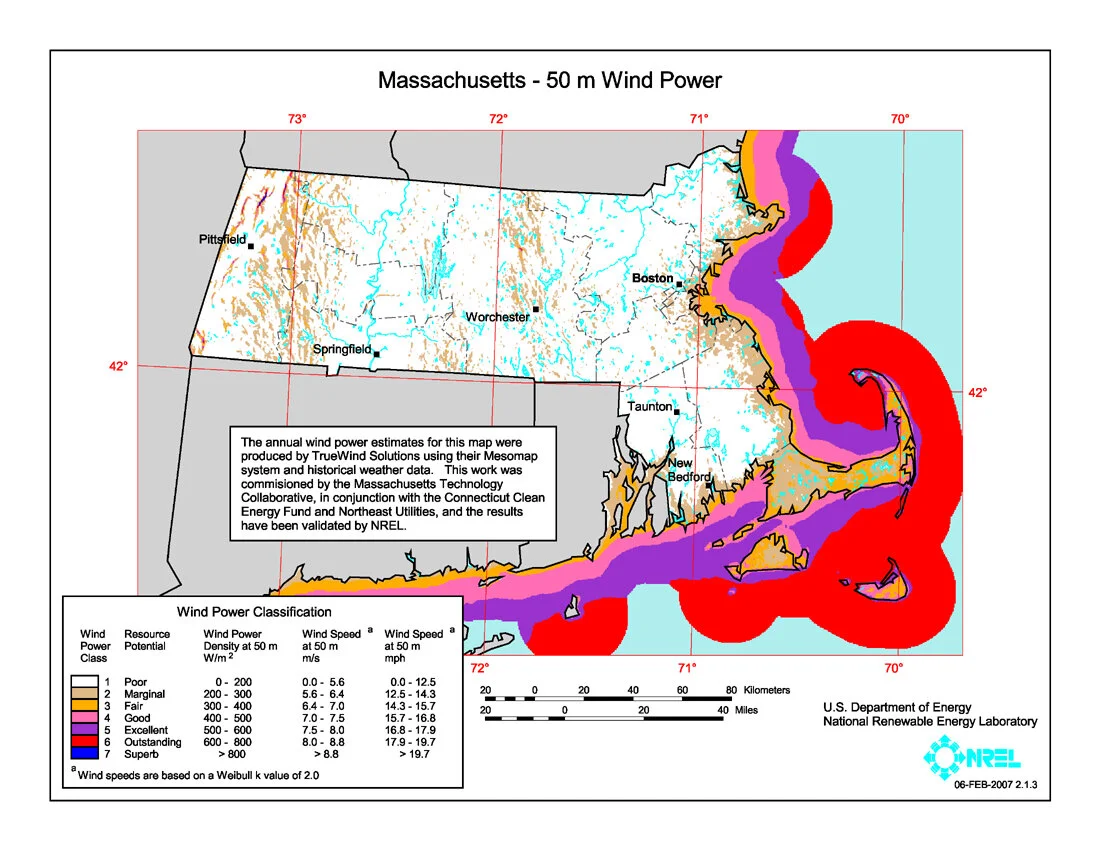
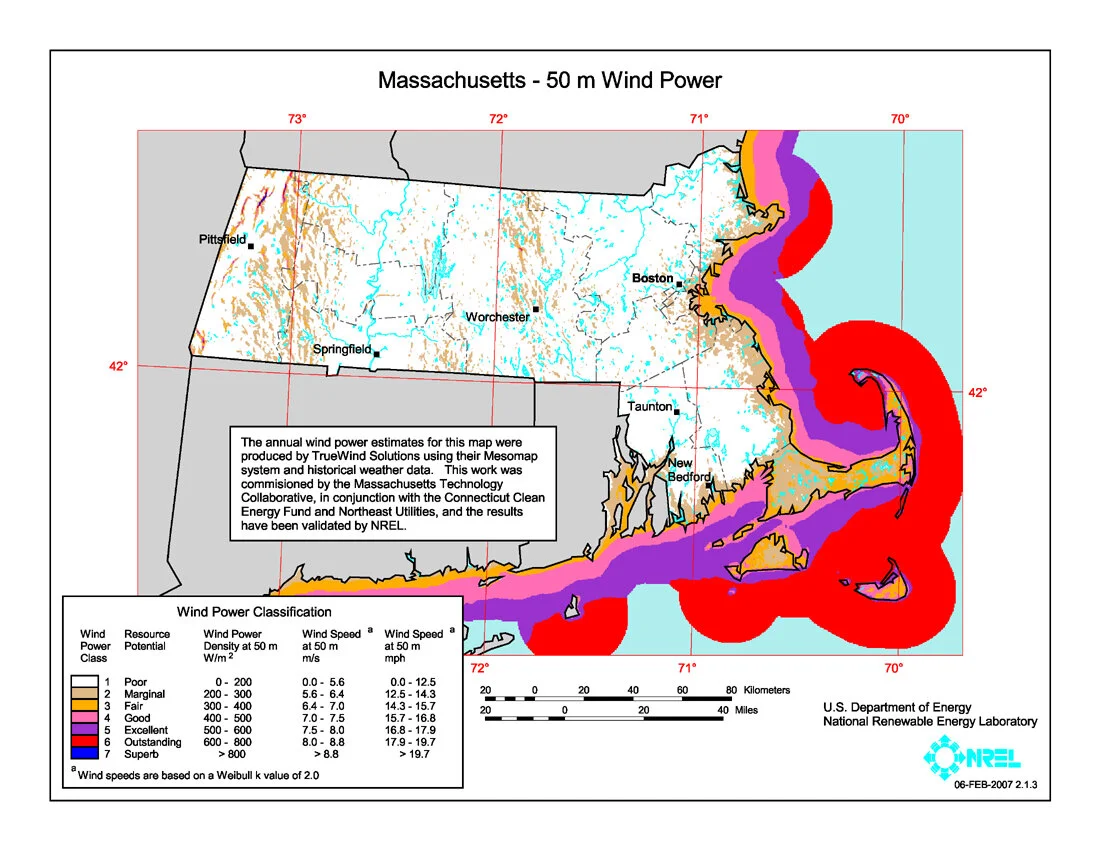
It looks as if the huge Vineyard Wind project will start operating about 15 miles south of Martha’s Vineyard by late 2023, now that the Biden administration is close to giving it the final thumbs up, though there still could be last-minute hitches. (The Trump regime much preferred power plants powered by fossil fuel and seemed to oppose the project.) All such big projects swim in politically tinged controversies and tangles of interest groups.
The wind farm would include 62 giant Boston-based General Electric turbines in the project’s first, 400-megawatt phase. The full project, at 800 megawatts, would be enough to provide the electricity for a total of 400,000 residential and business customers in Massachusetts. The turbines would be spaced more than a mile apart.
This project would mean much more local, and thus more secure, clean energy for New England, boosting its economy and health indices. There would be considerable economic development associated with building and maintaining this $2.8 billion project with, of course, southeastern New England reaping a lot of those benefits. Several thousand well-paying jobs, of varying periods, would be created.
Some have called offshore New England “the Saudi Arabia of wind.’’
Vineyard Wind has tried to address the issues raised by fishermen by putting more distance between the turbines than earlier proposed and deciding to use the GE turbines instead of the originally planned Vestas ones. The more powerful GE turbines mean that fewer would be needed to meet generation goals.
Fishing and big offshore wind farms seem to co-exist well in Europe, though there are bound to be disruptions, especially during construction. Vineyard Wind will attract fish once that’s over: The below-water parts of turbine towers act, as do reefs and shipwrecks, as habitats for the creatures.
Then there’s the bird issue. Some birds crash into turbine blades, as they do into buildings, cars, power-line towers and so forth. (Ban skyscrapers?) But the newer, bigger turbines, such as GE’s, are more widely spaced and spin more slowly than earlier ones, making them less perilous to birds and bats. And it seems that such measures as painting one of a turbine’s blades black help steer birds away, as does broadcasting certain sounds and using certain lights. The industry is still learning how to minimize impacts on wildlife.
Of course, burning fossil fuels pose far wider risks to birds and other wildlife via global warming, ocean acidification, pollution, oil spills, etc., than do wind turbines.
Problems will arise but, all in all, Vineyard Wind and other such projects would be a boon for our region.
Are we ready for such a major new local industry? Vineyard Wind would be the first such big wind farm off southern New England. But others will probably follow. Officials of another mega-project, Mayflower Wind, for example, for south of Martha’s Vineyard and Nantucket, hope to start generating electricity in 2025. (The up-and-running Block Island Wind Farm is tiny, with only five turbines, producing a total of 30 megawatts.)
For the foreseeable future, wind and solar power will remain the major non-fossil-fuel energy sources. But hydrogen in fuel cells could become a big deal, too. Meanwhile, of course, we’ll still have to depend on fossil fuels for much of our energy for the next couple of decades.
A bit of an irony: New Bedford would play a major role in the construction and maintenance of Vineyard Wind and other offshore wind projects. For decades in the 19th Century, the city was also an energy center, as the biggest port for bringing in whale oil, which was used for lighting. Getting it caused horrific losses of these marine mammals.
Some people would hate the look of these big wind farms; others would see them as (eerily?) beautiful. In any case, we’ll get used to them.
Barely surviving the MIT miasma

Harvard Square offices of "Dewey, Cheetham and Howe", headquarters of Car Talk
— Photo by Patricia Drury
“Boy, I hated MIT. I worked my butt off for four long years. The only thing that saved my sanity was the 5:15 Club, named, I guess, for the guys who didn’t live on campus and took the 5:15 train back home. Yeah, right, 5:15, my tush! I never got home before midnight!
— Tom Magliozzi (1937-2014), co-host, with his brother and fellow mechanic Ray (born 1949), of the long-running (1987-2012) NPR series Car Talk. Some NPR stations continue to broadcast reruns of some episodes. The brothers grew up in East Cambridge, very close to MIT, from which they both graduated.

Tom Magliozzi
The glamour of gray
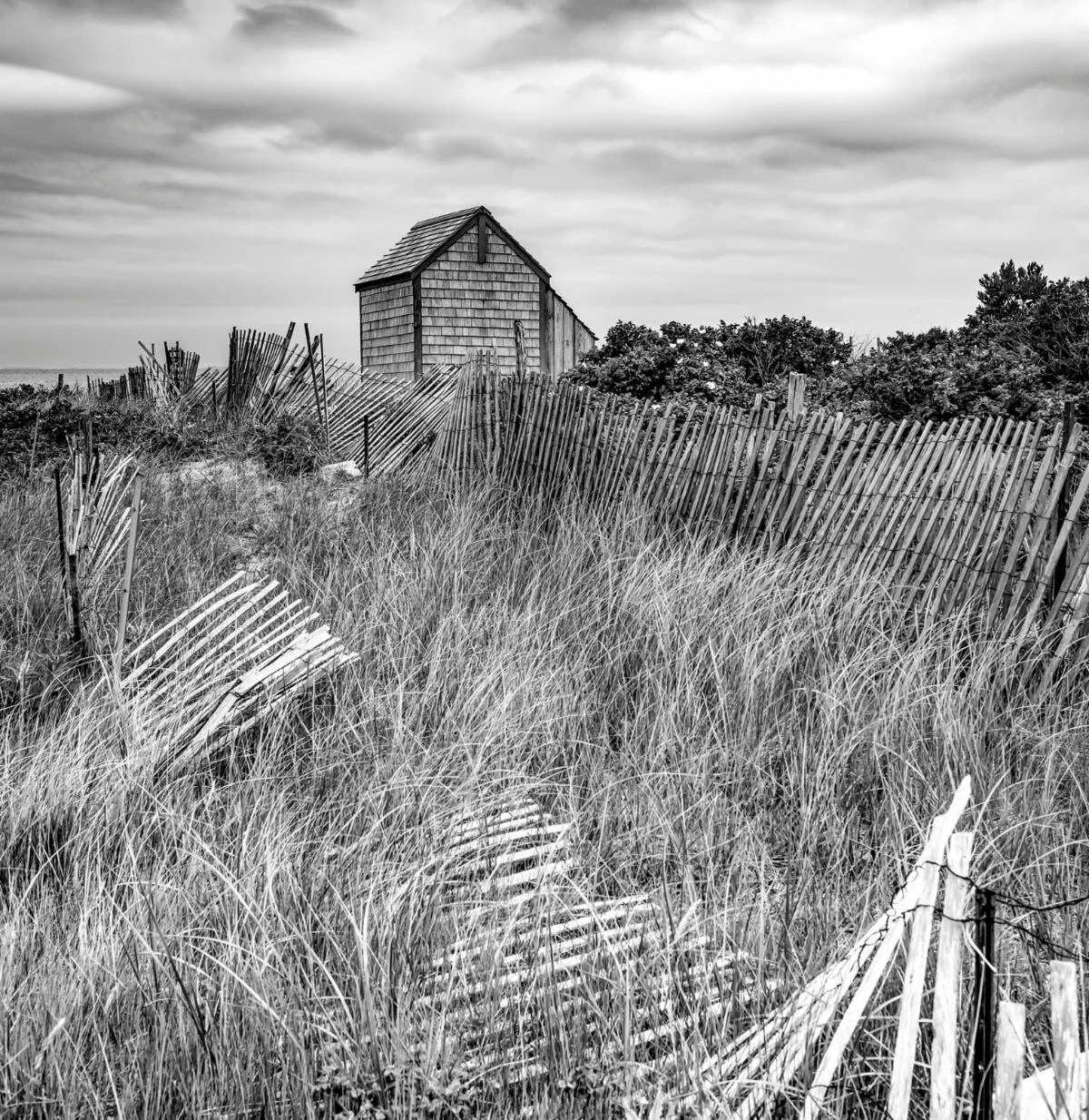
Chatham {Mass.} Mood (archival pigment print, by Bobby Baker.
© Bobby Baker Fine Art
She's on the grid
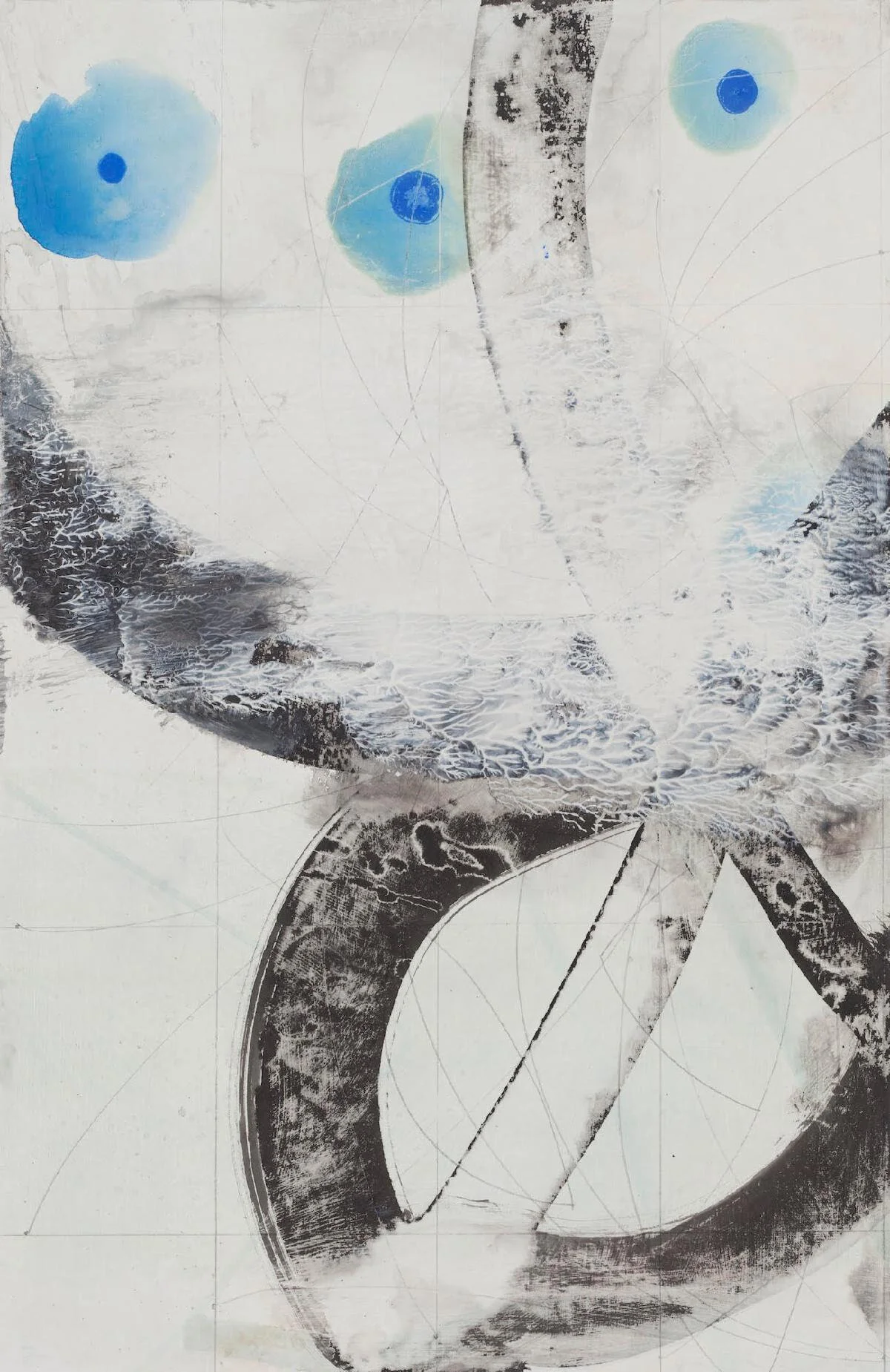
”Fulfilled” (mixed media), by Shelley Loheed, in her show “Getting Answers:
/order_behind,’’ at Galatea Fine Art, Boston, April 20-May 2.
The Massachusetts artist says:
"The painting and drawing in this series investigate geometric designs derived from traditional patterns. Grids are the substructure of geometric art.
“I have been working with these patterns for some time. Narrowing my focus in this body of work to just the underlying grid.
“The grid becomes the center from which the image emerges out of creating the drawing's subtle underpinning, which gets revealed and obscured by fluid gestural improvisations. The series combines two modes of working. The grid's underlying order and the spontaneous layers of washes, splashes, and strong brushwork allow for the chance interplay of wet media and drawing.
“The subgrids are rarely shown in traditional art. They are considered part of the underlying structure of reality, the substrate of the cosmos. The paintings and drawings capture an image of a fraction of a second caught in an imaginary universe."
MassMutual seeks to boost economy in poorer parts of state

The MassMutual Tower in Springfield
From The New England Council (newenglandcouncil.com)
“Massachusetts Mutual Life Insurance Co. (MassMutual) (founded in 1851) recently launched the MM Catalyst Fund to invest $50 million in local businesses, targeting economic growth in underdeveloped areas of Massachusetts.
“The fund will be distributed evenly between two categories of capital: one half in community growth (“MMCF Growth”) through equity and debt investments in Black-owned businesses, and the other half in technology (“MMCF Tech”) through equity investments in technology companies based outside of Boston.
‘Rilwan Meeran, Impact Investment Portfolio Manager who oversees the MMCF commented, “Impact investing at MassMutual seeks to create a positive social and environmental impact that is measurable while also making market rate financial returns. Philanthropy alone cannot solve our society’s problems; institutional capital investment should also play a role.”
By the pre-Storrow Drive sepia stream

On the Boston side of the Charles River, in 1915, pre-Storrow Drive. Storrow Drive was built in 1950-1951. The parkway is named for James J. Storrow (1864-1926), an investment banker who led a campaign to create the Charles River Basin and preserve and improve the riverbanks as public parks. He had never advocated a parkway beside the river, and his widow strenuously opposed it
'Grave green dust'

“For two weeks or more the trees hesitated;
the little leaves waited,
carefully indicating their characteristics.
Finally a grave green dust
settled over your big and aimless hills.’’
— From “A Cold Spring,’’ by Elizabeth Bishop (1911-1979), off and on a New Englander