
Vox clamantis in deserto







‘Small-creature’s temperature’
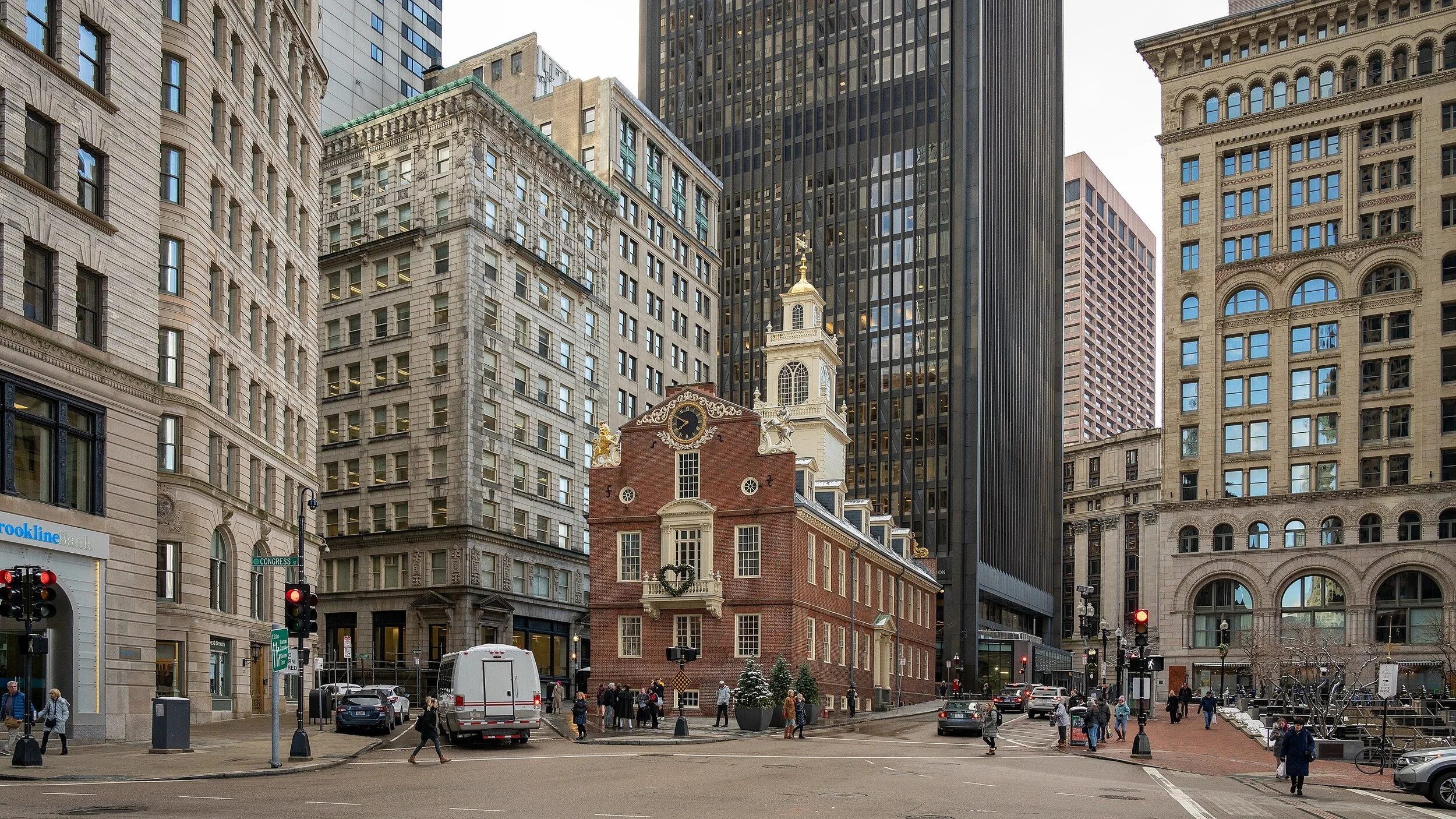
The Old State House, a museum on the Freedom Trail near the site of the Boston Massacre
— Photo by Mobilus In Mobili
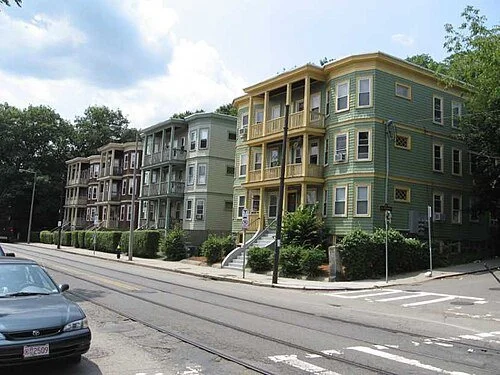
"Boston is not a small New York, as they say a child is not a small adult but is, rather, a specially organized small creature with its small-creature's temperature, balance, and distribution of fat. In Boston there is an utter absence of that wild electric beauty of New York, of the marvelous, excited rush of people in taxicabs at twilight, of the great Avenues and Streets, the restaurants, theatres, bars, hotels, delicatessens, shops. In Boston the night comes down with an incredibly heavy, small-town finality. The cows come home; the chickens go to roost; the meadow is dark. Nearly every Bostonian is in his house or in someone else's house, dining at the home board, enjoying domestic and social privacy.''
— Elizabeth Hardwick, in the December 1959 Harper’s Magazine.
Actually, in the two decades before COVID-19 struck, Boston became a lot more like New York. But the pandemic has made it more like Hardwick’s description.
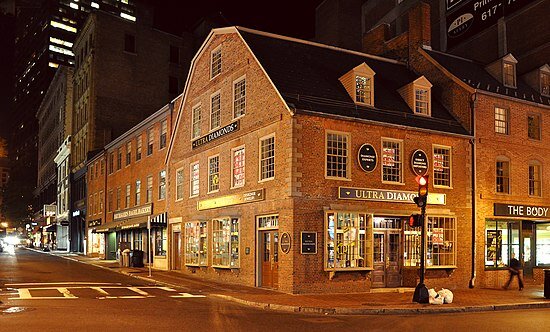
The Old Corner Bookstore building in downtown Boston, built in 1718 as a residence and apothecary shop. It first became a bookstore in 1828.
In Vermont, artists responding to COVID-19
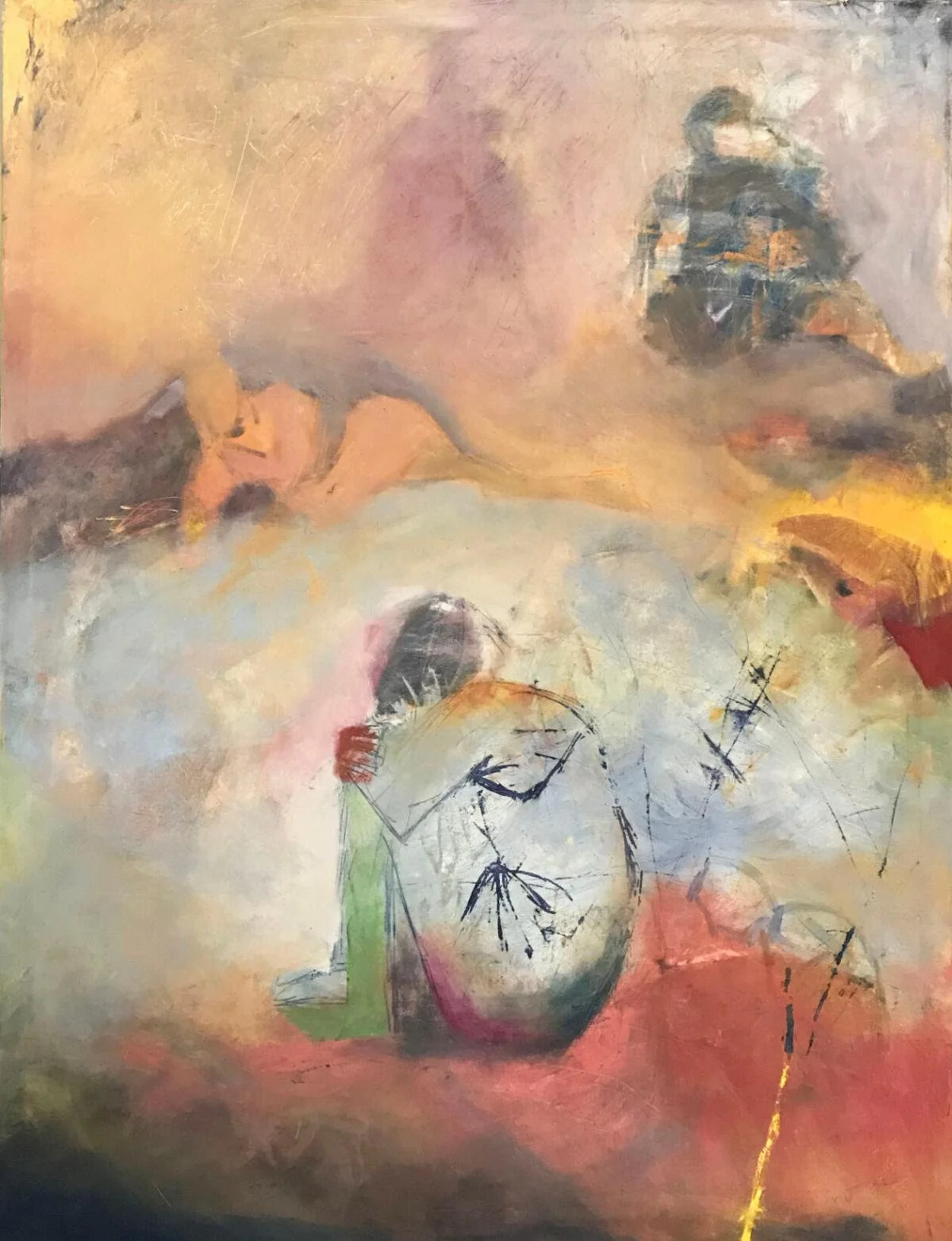
“Journey” (oil), by Irene Cole in the group show “Unmasked: Artful Responses to the Pandemic’,’ at Southern Vermont Arts Center, Manchester, Vt., through March 28. The show features the work of dozens of artists showing the struggles, breakthroughs and perspectives of the artists throughout the COVID-19 pandemic

“View of Manchester, Vermont,’’ by DeWitt Clinton Boutelle (1870). For many years, Manchester has been an affluent vacation and weekend spot, and with many fancy outlet and other shops.
Sign up now for last weeks of winter light

“Song of Winter Pool’’ (oil on linen) by Rory Jackson in his Edgewater Gallery show “Blanket of Stillness: Winter in the Mad River Gallery’’ at the Pitcher Inn, Warren, Vt., through March 22. Edgewater (based in Middlebury, Vt.) says Mr. Jackson “captures the unique beauty of the low winter light on the open fields, slopes, forests and mountains of (Vermont’s) Mad River Valley.’’

Lincoln Peak, West View (oil on linen)
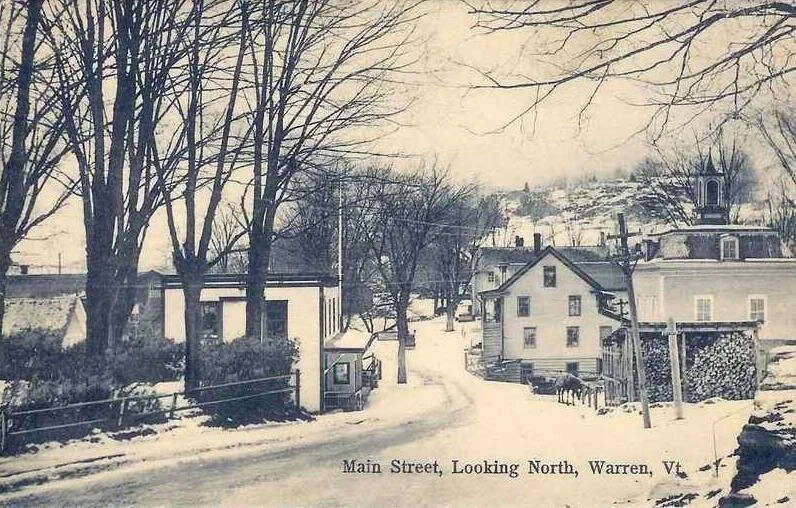
In 1910

Old kitchen aroma

“The aroma {in the Maine farm kitchen} was a combination of wood smoke and hot iron, lingering cookery, drying mittens and socks, warming boots, barn clothes, wintering geraniums on the window sills, and the relaxed effluence of a lazy beagle roasting under the stove.’’
—John Gould (1908-2003), in Next Time Around: Some Things Pleasantly Remembered (1983), about the author’s life in Maine

Not for liquids

“Containment Vessel,’’ by Stacey Piwinski, in the group show “The Chemistry of FiberLab: An Exploration of Fiber Arts,’’ at the Lexington (Mass.) Arts & Crafts Society, March 14-April 4.

The Buckman Tavern (built in 1709-1710 and now a museum), where Minutemen assembled before the Battles of Lexington and Concord, which took place on April 19, 1775. The battles marked the start of the American Revolutionary War.

The Minuteman statue in Lexington

Bob Lord: The era of trust fund trillionaires approaches as fortunes are shielded from gift and estate taxes

Estate in Los Angeles
From OtherWords.org
History doesn’t repeat itself, but sometimes, as the old Mark Twain line goes, it rhymes.
Take this year’s Forbes 400. If you listen close enough, you can hear echoes of the first Forbes list back in 1982 — you just have to turn it up about 100 notches.
Back in 1982, with Reaganomics in its infancy, the first Forbes list of America’s ultra-wealthy had just 13 billionaires on top. The two richest of these billionaires, Daniel Ludwig and Gordon Getty, held personal fortunes estimated in the $2 billion range. The other 11 billionaires on that first annual Forbes list clustered together at the $1 billion level.
Multiply that 1982 billionaire breakdown by 100 and you’d have something awfully close to the present list.
The nine current wealthiest Americans today — all white men — each hold a net worth above or rapidly approaching the $100 billion mark. Two of these “hectobillionaires,” Jeff Bezos and Elon Musk, hold around $200 billion.
To what do we owe this awesome increase in billionaire fortune?
The substantial increase in America’s national wealth since 1982 partially explains it. But our nation’s total combined wealth has only jumped about ten-fold since 1982, from under $10 trillion then to a little over $100 trillion today. That increase pales in comparison to the 100-fold increase in the wealth of those at America’s economic summit.
This giant leap at our economic summit should worry us, especially once we start contemplating how a future verse of the Forbes list might sound.
A generation from now, if current rates of wealth concentration continue, we may have to turn the volume up a thousand times over 1982 levels to hear the Forbes list rhyme. The 1982 $1 billion standard will have become $1 trillion.
That future would rhyme with 1982 on another more insidious level as well. Back in 1982, almost all the grand fortunes on the initial Forbes list came largely as inherited hand-me-downs. Only two billionaires on the 1982 list, Daniel Ludwig and David Packard, could claim anything resembling “self-made” status.
But over recent decades, Republicans have hollowed out our estate- and gift-tax laws. Their legislating has allowed tax-avoidance planners to effortlessly pass billions from one generation to the next — and often to the next generation after that — without incurring tax liabilities.
One former Donald Trump economic adviser, Gary Cohn, infamously noted that “only morons pay estate tax.” We can condemn Cohn’s disparagement of wealthy Americans who choose not to engage in tax avoidance, but we can’t challenge his basic point: In the United States today, the estate tax has become essentially a voluntary levy.
Shady operators like the late Jeffrey Epstein got rich themselves, The New York Times has detailed, by exploiting trusts to shelter billions in their clients’ wealth from estate and gift taxes.
In 2013, the Washington Post reports, the now deceased Sheldon Adelson used similar maneuvers to avoid gift taxes on his transfer of $7.9 billion in trust to his children.
And the Forbes listing of the Mars family’s wealth, the Institute for Policy Studies has noted, indicates that two generations of Mars family grandees have now successfully done an end run around the federal estate tax.
With fortunes well into the billions passing virtually tax-free from one generation to the next, the era of trillionaire trust fund babies is fast approaching. Our leaders could prevent that era. All they need would be the courage to reform our broken estate- and gift-tax system.
Bob Lord is a Phoenix-based tax lawyer and an associate fellow at the Institute for Policy Studies.

Great Salt Pond battle goes on
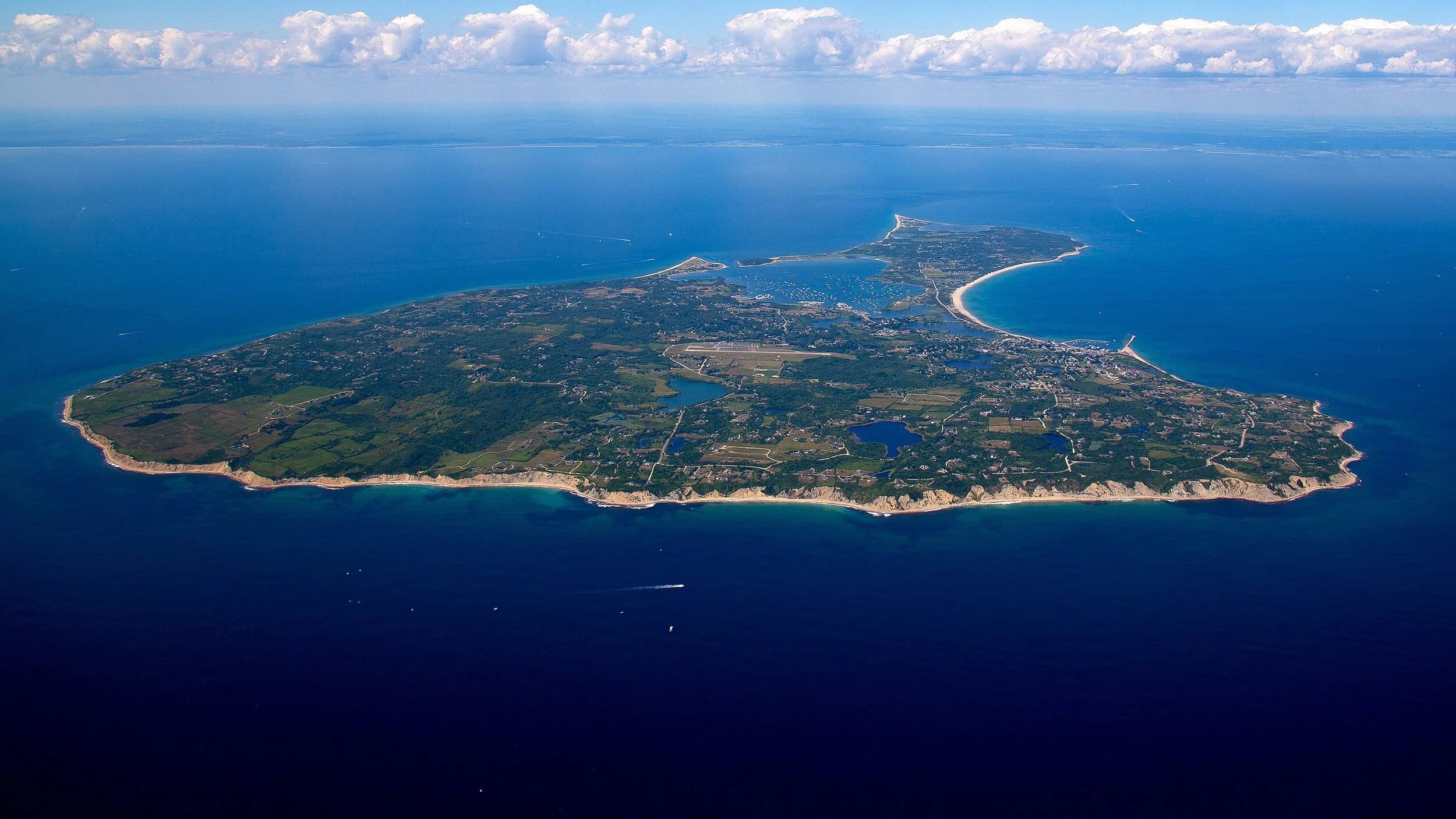
Block Island, with the Great Salt Pond the body of water with many boats in the top middle.
— Photo by Timothy J. Quill
From Robert Whitcomb’s “Digital Diary,’’ in GoLocal24.com
One look at an aerial photo of Block Island’s Champlin’s Marina, on ecologically fragile Great Salt Pond, shows that it’s already too big. And now, through a highly dubious mediated settlement that’s an (illegal?) end run around an earlier denial of the project, the business could build 170 feet further into the pond (which serves as a harbor). Champlin’s campaign to take over more of the Great Salt Pond sometimes seems to have gone on for centuries but it’s only been since 2003!
While affluent folks from the region might love having more places to tie up on the island, adding more boats would inevitably increase pollution in the Great Salt Pond.
Retired Rhode Island Supreme Court Chief Justice FrankWilliams brokered this deal in secret negotiations involving the state Coastal Resources Management Council and Champlin’s. State Atty. Gen. Peter Neronha is rightly looking into this suspicious agreement.
Ancient artifacts on Cape Porpoise; link to video here

Arrowhead at the Brick Store Museum, in Kennebunk, Maine, in the show “Cape Porpoise: Archaeology in the Archipelago,’’ through April. This exhibit shows the collection of artifacts recently unearthed in Maine’s Cape Porpoise Archipelago. The artifacts were found on expeditions conducted by the Cape Porpoise Archaeological Alliance (CPAA). as part of a project to find and preserve ancient artifacts against the destructive coastline flooding caused by climate change. The CPAA has uncovered a wide variety of artifacts, showcasing 8,000 years of southern Maine's history, especially Indigenous objects such as stone tools. The highlight of the exhibit, however, is a dugout canoe found in 2018 and carefully excavated in 2019. According to carbon dating, this canoe was made between 1280—1380 C.E., making it the oldest dugout canoe ever found on Wabanaki lands.
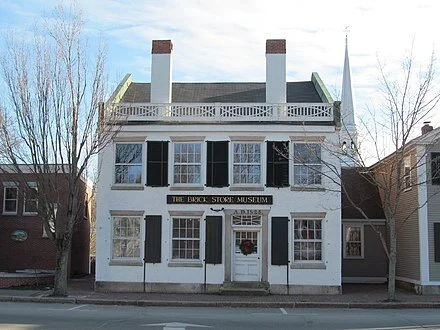
The Brick Store Museum, in Kennebunk. The structure was built in 1825. Hit this link to take you to museum. Video on the show included!
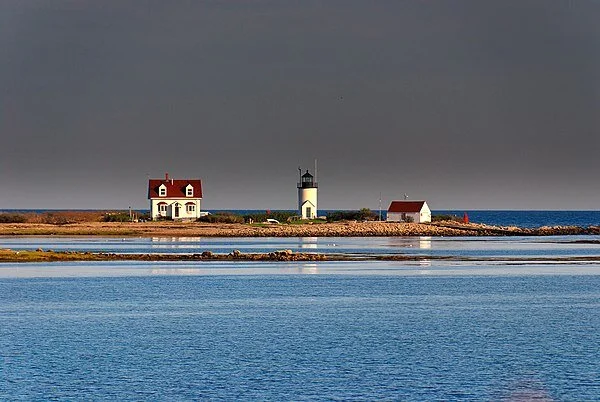
Goat Island Light on Cape Porpoise
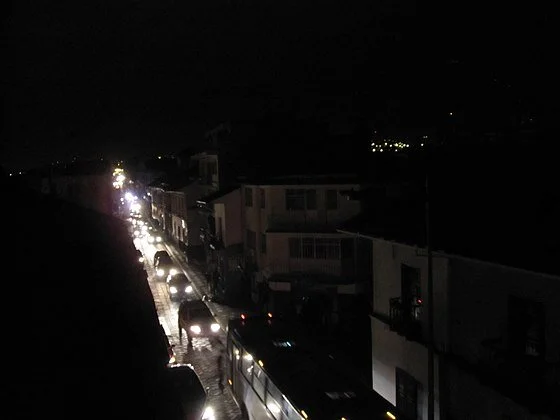
Llewellyn King: Biden should name panel to seek the lessons of the lethal Texas power failures
WEST WARWICK, R.I.
The horror of the Texas electricity catastrophe should chill the whole country. Nothing strikes at the survivability of a modern society more than the failure of its power supply, maybe nothing at all.
When the power supply fails, the failure of human life is not far behind. Yet, at a time when we should expect a united front to help Texas and other affected Southern states, petty and unbecoming point-scoring is in full swing.
The power-supply collapse in Texas was caused by extreme and aberrant cold weather, freezing the electric generators. The system wasn’t designed to withstand what occurred — and what may occur elsewhere in a time of new and terrifying instability in the world’s weather systems.
Coal plants froze, gas lines froze, a nuclear plant froze, solar panels froze, wind turbines froze, and Texans faced their greatest crisis in generations: terrible cold without heat and without water in some locations.
Lives were lost from freezing to death and from carbon monoxide poisoning as people struggled to create warmth by running cars, charcoal grills, and backup generators in confined spaces, and from the inability, with ice-packed roads, to get to hospitals or even to a warming center.
Others will die because they crowded together for warmth and inadvertently spread or got the COVID-19 virus.
The situation for livestock is one of suffering and death. Horses, pigs, cattle, and chickens aren’t getting fed or watered. Death abounds as farmers despair.
The sad response to tragedy has been to blame. Blame the wind turbines, blame the individual power companies, blame the Electric Reliability Council of Texas (ERCOT) which manages the Texas grid, and blame the Texas grid itself.
Texas prides itself on having a self-contained grid with little major interconnection to the national grid. This is political. Texas didn’t want to be subject to the Federal Power Commission and its successor agency the Federal Energy Regulatory Commission (FERC). It opted to be independent; it kept its electricity out of interstate commerce.
What that has meant in this crisis is that there is no way for other states to ship power to Texas, even if there is power to spare.
Now that the terrible price of electric failure is painted in awful detail before the nation, the Biden administration should act quickly to find out what has happened and to what extent the rest of the nation is vulnerable.
Vulnerable not only to weather that has gone wild, but also to other dangers to the grid, like the ever-present cybersecurity threat. And vulnerable to the related but separate threat to operating systems from spyware buried in Chinese bulk power systems, which make up most of the big grid installations, like transformers and turbines. Ignored voices have been sounding this alarm. They need to be heard.
The Texas crisis unfolded at a time when the U.S. electric industry has been under strain as it seeks to decarbonize and to accommodate more wind and solar energy, and as it searches for technologies to store electricity, like batteries with long drawdown times and hydrogen made when there is surplus supply.
The utilities are also being digitized, data-driven in every way, from sensors that tell second by second the condition of generating units, like an individual wind turbine, to a sophisticated use of private wireless broadband networks which can report within two seconds a line failure and de-energize it, to early warning of incipient failures in the system. Microgrids, which tie together alternative energy sources in mini-networks, also need to be data-managed as the wind changes and the sun moves.
The people of Texas and elsewhere in the South have been forced to shelter like animals without warmth, food, and water, in abject, life-threatening misery. That is a future to be avoided for other parts of the nation.
Texans deserve more than a brainless blame game.
The Biden administration should establish a nonpolitical commission to tell us what went wrong and to make sure we are secure in our electric supply.
If it were ever doubted, life without electricity for a few weeks would mean the end of life for all but survivalists here and there.
Hold the blame, get the facts, take the action.
On Twitter: @llewellynking2
Llewellyn King is executive producer and host of White House Chronicle, on PBS. He’s based in Rhode Island and Washington, D.C. He is a long-time expert in electricity issues.
White House Chronicle

Don Pesci: The Cuomo catastrophe

A field hospital begins operations in the Javits Center, in Manhattan, on March 30, 2020. That venue would have been a much safer place to send Coronavirus-infected patients than nursing homes.
VERNON, Conn.
The end of life, we know, is very much like its beginning. In the end, all of us rely, as did Blanche DuBois in the Tennessee Williams’s play A Streetcar Named Desire on “the kindness of strangers.”
Nothing is stranger than the kindness of politicians, many of whom affect kindness while the television cameras are running, when they know that kindness can advance their political objectives.
Such is New York Gov. Andrew Cuomo. At the height of the Coronavirus plague, Cuomo shipped hundreds of Coronavirus-infected hospital patients to New York nursing homes, even though other venues were available: a hospital ship sent to New York by then President Trump, a large space in the Jacob Javits Convention Center, and a little used 68-bed tent field hospital set up by Samaritan's Purse in Central Park, all venues packed with kind medical attendants waiting to care for stricken elderly patients.
The strangers in all three venues waited in vain to dispense their services to fatally infected Coronavirus patients. Instead of using the unsung heroes of the Coronavirus pandemic, Cuomo shipped the stricken elderly into what may properly be described as death chambers. Upwards of 60 percent of Coronavirus-related deaths in New York, it had been reported, occurred in nursing homes. Figures in Connecticut were similar. Cuomo only recently was lauded for his communication prowess, and he has been haloed with plaudits by both The New York Times and the Associated Press.
We learn from New York Post reports, some of which had once been blocked then reinstated by censors such as Twitter and Facebook, that the actual numbers of Coronavirus deaths reported by the Cuomo administration to the relevant federal agency had been previously underreported. New York’s Department of Health undercounted by as much as 50 percent Coronavirus deaths in nursing homes. The precise number of nursing-home patients that ended up in coffins because of Cuomo’s dictums is now being clarified, following the departure from the White House of Trump, who sent the little-used hospital ship to Cuomo.
An accompanying cover-up and media manipulation by the Cuomo administration, underreported by some news outlets in states contiguous to New York, may well cost Cuomo his political future. Even now, grief- stricken relatives of dead nursing-home patients in New York are wondering when impeachment-prone Democrats, such as redoubtable Sen. Chuck Schumer, will begin agitating for the impeachment of Cuomo.
A censure of Trump, rather than impeachment, would have been more politically useful, because, some scholars argue, the only punishment constitutionally assigned for impeachment is removal from office, and Trump had left office a month before the Senate voted on the House indictment. Republicans doubtless would have been much more receptive to censure than impeachment. Given the equal distribution in the Senate of Democrats and Republicans, a possible unconstitutional vote to convict on doubtful House indictments was both impossible and redundant. Then too, any precedent that would in the future allow impeachment for private citizens who have left office would be unnecessarily divisive and redundant.
Under such a precedent, even former President Obama might be impeached long after he left office for having deceived Congress by sending planeloads of cash to Iran, an officially designated terrorist state that in all likelihood used congressionally approved sequestered funds to pay its proxy terrorists in the Middle East to push Israel, the only democracy in the area, into the sea.
The beef on Cuomo, following Post reports and a politically devastating brief by New York Atty. Gen. Leticia James, no friend of Trump, is now broiling on left of center spits such as CNN, no friend of Trump. The New York Times, for years in a seemingly endless anti-Trump fume, and the Associated Press -- perhaps distracted by their fulsome coverage of the most recent (failed) attempt by partisan Democrats in the U.S. Senate to impeach Trump — are considerably behind the times.
The Cuomo cover-up was outed by happenstance. Cuomo’s secretary, Melissa DeRosa, disclosed to Democrats in a virtual meeting that New York officials were concerned with a Department of Justice preliminary inquiry into Coronavirus deaths in state nursing homes; then too, Trump, still president, was tweeting about the death toll. DeRosa’s “apology” to her Democrat cohorts followed a report, according to CNN, “in late January from Attorney General James, noting the New York State Department of Health (NYSDOH) undercounted Covid-19 deaths among residents of nursing homes by approximately 50%.” After all this, the Cuomo media bubble burst.
Warm on Cuomo and no friend to Trump, CNN reported on the cover-up this way: “But on the private call DeRosa said the administration essentially ‘froze’ because it wasn't sure what information it was going to turn over to the DOJ, and didn't want whatever was told the lawmakers in response to the state joint committee hearing inquiries to be used against it in any way.”
The stink of mass deaths in New York nursing homes now hangs over Cuomo’s head, where once a media halo glittered. Governor-in-waiting Alexandria Ocasio-Cortez has yet to call for Cuomo’s resignation, and the Democrat impeachment crowd is biting its collective tongues. Here in Connecticut, Friends of Cuomo such as Gov. Ned Lamont and members of the state’s all-Democratic congressional delegation need not worry they will be pestered by media hounds on the hunt for political blood, and relatives of Cuomo’s nursing home victims will be swallowing their grief in silence.
Don Pesci is a Vernon-based columnist.
Hitching a ride
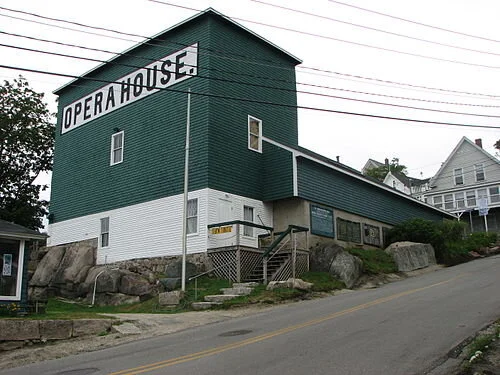
Built in 1912, the Stonington Opera House, on Deer Isle, is one of the few early 20th-century performance halls in Maine. It is the current home of Opera House Arts (OHA), a non-profit organization dedicated to restoring and preserving the historic building to its original purpose as a central community institution. The building was listed on the National Register of Historic Places in 1991. Deer Isle used to be famous for its granite quarries. Now it’s best known as a summer vacation place.
“At the edge of the forest the thistles
were attaching themselves to the fur of animals.
What serendipity to hitch a ride to your future’’
From “How to Start Over,’’ by Stuart Kestenbaum, a Deer Isle, Maine-based poet and cultural leader.

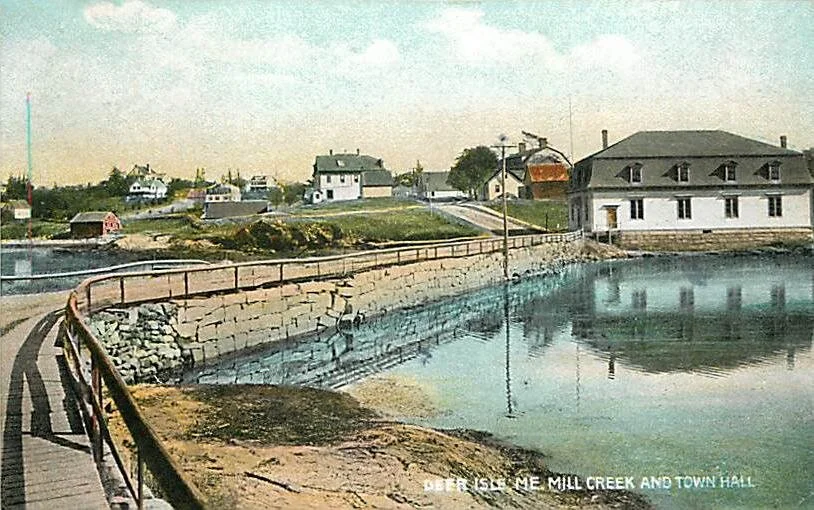
Deer Isle in 1907. It’s more wooded now.
Fans and the media corrupt sport

Bode Miller in the giant slalom at the 2006 Winter Olympics in Italy.
“Sport is born clean and it would stay that way if it was the athletes who ran it for the pleasure of taking part, but then the fans and the media intervene and finish up by corrupting it with the pressure that they exercise.’’
— Bode Miller (born 1977), American Olympic and World Championship Gold Medalist and the most successful male U.S. alpine ski racer so far.
He was born in Easton, N.H. (population: 254) and grew up in Franconia, N.H., site of the famous old ski area at Cannon Mountain and what had been The Old Man of the Mountain and a home of Robert Frost.
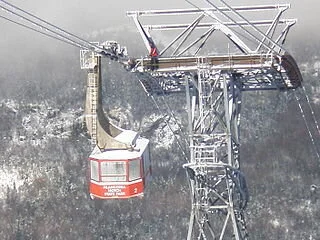
The current Cannon Mountain Aerial Tramway (completed in 1980), which rises to the 4,100-foot summit of Cannon Mountain. The first version (below) built in 1938, was the first passenger aerial tramway in North America.

Weaving togetherness

“Quite Frankly’’ (weaving with paper), by Dawn Mallozzi, in the group show “Weaving Together,’’ at the Jamestown Arts Center, through March 13.
The show displays the work of artists with disabilities, bringing together four organizations dedicated to supporting disabled artists: Artists' Exchange, Flying Shuttles, Looking Upwards and Outsider Collective. The artists created works of fabric, yarn, paper, branches and more to express creativity and togetherness. There are also outdoor installations, including looms and murals of yarn and twine — to encourage visitors to create artwork as a group.
"We hope that the various pieces woven together bring warmth to all during this dark time" it says on the Jamestown Arts Center’s exhibition page.
Jamestown, an island in Narragansett Bay, is both an affluent summer resort (with many summer people from Philadelphia and New York) and a mostly bucolic suburb/exurb of Providence.

The Jamestown windmill, built in 1787

The Jamestown-Verrazano Bridge, constructed in 1992, connects Jamestown with mainland Rhode Island.
Good citizens must protest

Fascist allies Benito Mussolini and Adolf Hitler
“The voice of protest, of warning, of appeal is never more needed than when the clamor of fife and drum, echoed by the press and too often by the pulpit, is bidding all men fall in and keep step and obey in silence the tyrannous word of command. Then, more than ever, it is the duty of the good citizen not to be silent.”
— Charles Eliot Norton (1827-1908), author, Harvard art historian and social critic
Rudyard Kipling described him:
“We visited at Boston [my father's] old friend, Charles Eliot Norton of Harvard, whose daughters I had known… in my boyhood and since. They were Brahmins of the Boston Brahmins, living delightfully, but Norton himself, full of forebodings as to the future of his land’s soul, felt the established earth sliding under him, as horses feel coming earth-tremors. ... Norton spoke of Emerson and Wendell Holmes and Longfellow and the Alcotts and other influences of the past as we returned to his library, and he browsed aloud among his books; for he was a scholar among scholars.’’

Sarah Anderson: Expose those who financed their Fuhrer's Capitol rioters

Trump rioters just before breaking into the Capitol to try to keep their Fuhrer in power
— Photo byTapTheForwardAssist
Via OtherWords.org
Former president Donald Trump narrowly avoided conviction on his second impeachment trial. After delaying the vote till he was out of office, most Republican senators simply said that they couldn’t impeach a “private citizen” — even if he was guilty.
Still, the trial was revealing. And the hunt for the wealthy financiers of the Jan. 6 coup attempt continues.
Throughout his scorching indictment of Trump, lead House impeachment manager Jamie Raskin (D.-Md.) wove in quotes from eminent historic minds, including this one from his late father, Institute for Policy Studies Co-founder Marcus Raskin: “Democracy needs a ground to stand on, and that ground is the truth.”
Raskin’s trial team exposed a great deal of truth as they made the case that Trump was “singularly responsible” for inciting the riot at the Capitol. Raskin pointed out that Trump had “road tested” his tactics for inflaming mobs at his campaign rallies and through Twitter. Social media traffic leading up to January 6 also made clear that dangerous extremist groups were planning a violent attack in the nation’s capital.
And in her widely viewed Instagram video, Rep. Alexandria Ocasio Cortez (D.-N.Y.) recounted that the threat of violence seemed to be widely known, as she started receiving warnings from other members of Congress, including Republicans, a week before the attack.
If plans for the insurrection were no great secret, then the wealthy enablers who financed the “Stop the Steal” convergence should also bear some responsibility. But identifying them is difficult.
“Thanks to a lattice of financial secrecy vehicles,” journalist Casey Michel explained for NBCNews.com, “we may never have a complete financial picture of those who provided the money to organize a rally that descended into chaos and that shook the underpinnings of American democracy.”
We do know, thanks to OpenSecrets, that the Trump 2020 campaign and its joint fundraising committees made more than $3.5 million in direct payments to people and firms involved in the demonstration.
But as the transparency group pointed out, “the campaign used an opaque payment scheme that concealed details of hundreds of millions of dollars in spending by routing payments through shell companies where the ultimate payee is hidden.”
In December 2020, Congress passed a landmark bipartisan bill, the Corporate Transparency Act, which will take a meaningful step toward eliminating such anonymous shell corporations. But it won’t take effect for another two years.
So Rep. Carolyn Maloney (D.-N.Y.) has introduced the Insurrection Financing Transparency Act, which would give U.S. authorities immediate access to the identities of those who financed the Capitol assault.
Another proposed bill, the For the People Act, would also curb dangerous financial secrecy by requiring super PACs and other “dark money” political campaign organizations to disclose their donors.
The events of Jan. 6 have also prompted pro-democracy advocates to step up their demands on corporations to end their political spending.
More than 50 organizations, investment firms, and religious organizations called on large U.S. corporations to take a number of steps to signal their support for democracy. These included ending all super PAC and dark money contributions and pledging to never again provide financial backing for the 147 members of Congress who refused to certify the presidential election.
The groups pointed out that these members have received more than $170 million from corporate and trade group PACs and nearly $2 million from Big Tech companies. In the wake of the insurrection, a number of corporate PACs pulled back their corporate donations to these officials.
The full impact of the Jan. 6 insurrection and the impeachment trial on our democracy will not be known for many years, if not centuries. We can only hope that this national trauma will lead to greater accountability for future political leaders — and their wealthy financial enablers.
Sarah Anderson directs the Global Economy Project at the Institute for Policy Studies.
Beer and Motown


The Hitsville U.S.A. Motown building, at 2648 West Grand Boulevard in Detroit, Motown's headquarters from 1959 to 1968, which became the Motown Historical Museum in 1985.
From Robert Whitcomb’s “Digital Diary,’’ in GoLocal24.com
The death of The Supremes’ Mary Wilson brought back ‘60s memories of the smoky basement of my Dartmouth College (in Hanover, N.H.) fraternity house, where I cemented many friendships, some of which are now being revived via the ambiguous charms of Zoom.
But rather than details of our conversations in that bar- (half keg on Wednesday nights and full keg on Saturday nights)-and-ping-pong-table- equipped cave, the sounds I most remember are those of Motown on our juke box. This was the favored music of the fraternity’s leadership. I had heard little Motown before arriving; the Beatles, the Rolling Stones and the Mamas & the Papas were the leaders in my Connecticut high school.
Maybe that so many of my fraternity brothers came from big cities (as opposed to the suburbanites that dominated my high school) explains the love of this “Black music”. I got a bit tired of it over three years, but it sure got into my bones and to hear it takes me back to relatively happy days (for me) more than half a century ago.
'The burning of decay'

— Photo by MPF

Out walking in the frozen swamp one gray day,
I paused and said, 'I will turn back from here.
No, I will go on farther—and we shall see.'
The hard snow held me, save where now and then
One foot went through. The view was all in lines
Straight up and down of tall slim trees
Too much alike to mark or name a place by
So as to say for certain I was here
Or somewhere else: I was just far from home.
A small bird flew before me. He was careful
To put a tree between us when he lighted,
And say no word to tell me who he was
Who was so foolish as to think what he thought.
He thought that I was after him for a feather—
The white one in his tail; like one who takes
Everything said as personal to himself.
One flight out sideways would have undeceived him.
And then there was a pile of wood for which
I forgot him and let his little fear
Carry him off the way I might have gone,
Without so much as wishing him good-night.
He went behind it to make his last stand.
It was a cord of maple, cut and split
And piled—and measured, four by four by eight.
And not another like it could I see.
No runner tracks in this year's snow looped near it.
And it was older sure than this year's cutting,
Or even last year's or the year's before.
The wood was gray and the bark warping off it
And the pile somewhat sunken. Clematis
Had wound strings round and round it like a bundle.
What held it though on one side was a tree
Still growing, and on one a stake and prop,
These latter about to fall. I thought that only
Someone who lived in turning to fresh tasks
Could so forget his handiwork on which
He spent himself, the labor of his ax,
And leave it there far from a useful fireplace
To warm the frozen swamp as best it could
With the slow smokeless burning of decay.
— “The Wood-Pile,’’ by Robert Frost (1874-1963)

Chris Powell: Teachers of your memories, and today’s

The Wylie School, in Voluntown, Conn. Built in 1856, this public “one-room” school house was used by the town until 1939. It is now used as a meeting space and museum by the local historical society. The building is listed on the National Register of Historic Places.
MANCHESTER, Conn.
Nearly everyone will forever remember some admired or even beloved teachers whose insights, enthusiasm and caring pointed students in the right direction. Of course, there were and are some mediocre, incompetent and even malicious teachers too, but they are easily forgotten.
So even as society becomes more fractious and angry, there is still a cult of respect around the teaching profession.
But that cult may not last much longer as teacher unions, most notoriously in big cities like New York, Chicago and Los Angeles, but also in most states, including Connecticut, obstruct normal school operations amid the virus epidemic. The unions insist on perfect protection against the virus when there is no perfect protection, though risk of transmission is far lower in school than in other places that continue to operate normally.
Of course, the damage to schoolchildren from the loss of in-person schooling has been catastrophic -- not just in education but also in their mental and physical health. Recovery will take years.
The teachers unions long have proclaimed the importance of education and the dedication of their members to students, so now maybe the country will see how empty this prattle has been. In effect, the unions now are proclaiming that education and children don't matter that much at all.
In pursuit of the greater good during the epidemic, risks are being borne by hospital and nursing-home employees, emergency personnel, postal and delivery workers and supermarket clerks and cashiers. But according to the teachers unions, their members cannot bear any risk. No -- if even one student or school employee contracts the virus, even without showing symptoms, the whole school must be closed for a week or two and everyone in it must be quarantined, though children are the least susceptible to the virus and fatalities from exposure in school are rare.
The "remote" learning offered as an alternative to regular schooling is a joke, since as many as half the students don't show up and many of those who do show up are impossibly distracted. But while education is destroyed, everyone employed in its name remains on the payroll anyway, compensated many times better than the supermarket clerks and cashiers without whom no one would be fed.
Connecticut Gov. Ned Lamont and state Education Commissioner Miguel Cardona, President Biden's nominee for U.S. education secretary, are part of this pretense. The governor and the commissioner have been hailed for favoring normal operation of schools, but most of Connecticut's schools have not been operating normally.
Though he has ruled by decree under his emergency powers since last March, the governor has failed to order schools to do anything in particular. Local school boards are free to be intimidated by the teacher unions, as they usually are intimidated along with state legislators and as the governor himself seems to be, since keeping government employee union members happy long has been the primary objective of government in Connecticut.
Some people say that teachers are not pleased with the intransigence of their unions amid the destruction of education. But if teachers are displeased with their unions and are ready to take the same risks as supermarket clerks and cashiers, they have yet to show it. Teachers union leaders may know better than anyone else what is required for election to their offices -- better even than people with happy memories of beloved teachers from many years ago. After all, back then Connecticut's public schools were public -- that is, administered by elected officials. Today, not so much, as even most school administrators are unionized in a conspiracy against the public. School management is not really management.
There’s no harm in cherishing memories of old school days. But they should not blind anyone to the huge change in public education since then, a change that invites the sort of reflection with which the journalist William L. Shirer prefaced one of his books about modern European history. Shirer quoted the great German writer, scientist and statesman Johann Wolfgang von Goethe (1749-1832):
“I have often felt a bitter sorrow at the thought of the German people, which is so estimable in the individual and so wretched in the generality.”
Chris Powell is a columnist for the Journal Inquirer, in Manchester, Conn.

Reflecting in the dark

“The Fox Hunt” (1893) (oil on canvas), by Winslow Homer (1836-1910), a mostly New England painter.
“In the dark, cold solitude of winter months ….I thank the Lord for this opportunity for reflection.’’
— Winslow Homer (1836-1910), painter