
Vox clamantis in deserto





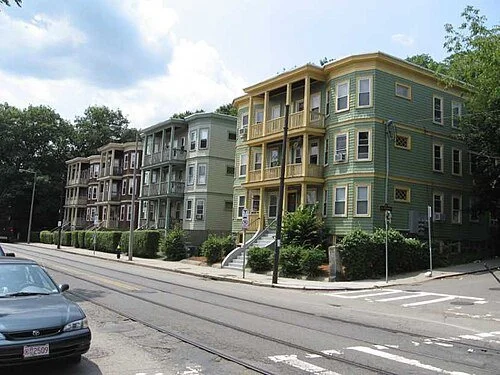

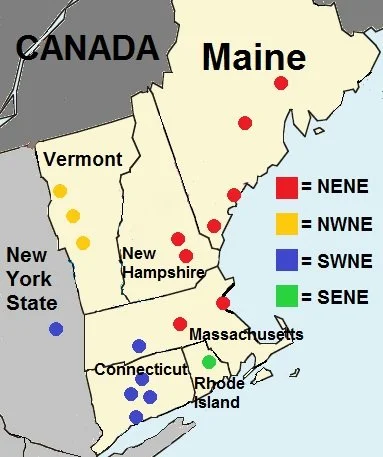


Avoid Mass. motorists

Boston traffic crawls over a closed Ted Williams Tunnel entrance in Boston during rush hour on July 11, 2006, the day after a tunnel collapse killed a passenger in a car.
— Geraldine Brooks (born 1955), Australian-American novelist and journalist. Despite her complaints about Bay State drivers, she lives in the state, albeit in bucolic West Tisbury, on Martha’s Vineyard.
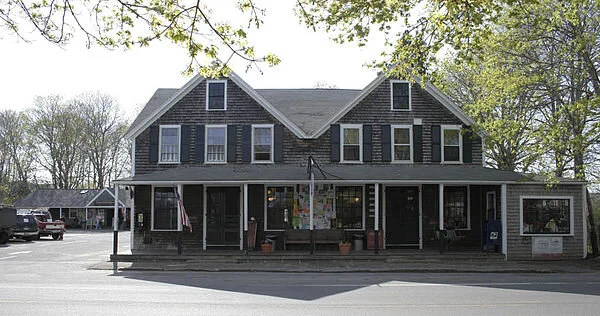
Alley’s General Store, in West Tisbury
Words in the visual experience

“Make (In)Visible” (mixed media), by Boston area artist Cynthia Maurice, in her show “Cynthia Maurice: New Drawings and Prints,’’ at Galatea Fine Art, Boston, March 5-28.
She writes:
“Recently I came across an essay about a technique called ‘Cento’, used in the 1600’s. It refers to a method of clipping words to create poems. It struck me as what I was dreaming of doing. But I hesitated.
"For me, inserting words profoundly altars the quality of visual experience that I wish to honor. It was adding sound to the visual which I regard with reverence as an essentially a silent medium, much needed in these times of chronic noise. Tread lightly."
"Printmaking invites experimenting with techniques like collage and layering.
Recently I came across an essay about a technique called “Cento, used in the 1600’s. Simply translated from Latin as "patchwork garment. It refers to a method of clipping words to create poems. It struck me as what I was dreaming of doing. But I hesitated.
For me, inserting words profoundly altars the quality of visual experience that I wish to honor. It was adding sound to the visual which I regard with reverence as an essentially a silent medium, much needed in these times of chronic noise. Tread lightly." - Cynthia Maurice

David Warsh: New journal seeks to foment new approach to economic history

First edition of Karl Marx’s Capital: A Critique of Political Economy (1867)
SOMERVILLE, Mass.
What have been the dominating economic events of the first 20 years of the 21st Century? The financial crisis of 2008 was surely one. The advance of global warming is another. With the rise of China, India and Brazil, the configuration of great powers has become uncertain, and with it the future of international trade.
The appearance of an important book may also qualify for inclusion on such a list. I am thinking of Capital in the Twenty-First Century, by Thomas Piketty, which seeks to return to economics a preoccupation with distribution and equality. If it belongs, so probably does a second book of history, by Nobel laureate Angus Deaton. The Great Escape: Health, Wealth, and the Origins of Inequality, received less attention than did Piketty’s tome, but Deaton’s account of economic growth as a source of well-being represents the other side of the argument about distribution.
A new journal, Capitalism: A Journal of History and Economics, has appeared to examine these issues, and others, in a consistently new light. On its appearance hangs a story.
“It is a journal born out of scholarly disagreement,” wrote editor Marc Flandreau in the first issue, “and, as a result, it is a journal whose primary mission is to keep disagreement alive.” The publication aims to foment a new approach to economic history, Flandreau says, “engaged across borders, unruly and free.”
The first issue appeared a year ago. The second issue arrived last autumn. The third issue went into the mail last week. Its contents will remain free online here for another week. Articles by up and-comers are interspersed with pronouncements by well-established authorities: Barry Eichengreen, Gary Gorton, Harold James, Emma Rothschild, François Velde. A previously unpublished review by the late Charles P. Kindleberger is slated for a future issue.
Co-editors in an “editorial collective” are Julia Ott, of The New School, Francesca Trivelatto, of the Institute for Advanced Study, in Princeton, and Carolyn Biltoft, of the Graduate Institute for International and Development Studies, in Geneva. An advisory board lends prestige. Editor Flandreau is the chair of economic history in the history department of the University of Pennsylvania. He is editor of an interesting collection, Money Doctors: The Experience of International Financial Advising 1850-2000 (2004); and author of two books: The Glitter of Gold: France, Bimetallism, and the Emergence of the International Gold Standard 1848-1873 and Anthropologists in the Stock Exchange: A Financial History of Victorian Science (2016).
I might not have brought up Capitalism: A Journal of History and Economics if I weren’t reading a biography, Eric Hobsbawm: A Life in History, by Richard J. Evans. As Evans writes, Hobsbawm was, at the time of his death, in 2012, the best-known and most widely read historian in the world. A life-long Marxist, he was author of a spell-binding trilogy on the dual revolutions, political and industrial, that helped make the 19th Century: The Age of Revolution: 1789-1848; The Age of Capital: 1848-1875; The Age of Empire: 1875-1914.
An equally strong claim was Hobsbawm’s leading role in founding, in 1952, Past and Present, an English journal, itself inspire by the French journal Annales, founded in 1929 by Marc Bloch and Lucien Febvre, and intended, as Hobsbawm later wrote, “for the new, post-war generation of historians for whom, Marxist or not, economic and social dimensions of history were more important than before….” All members of the editorial board read all submissions to the journal, to work out differences between Marxist and non-Marxist historians; gradually divergences diminished. Social history blossomed in its pages,
A great deal has changed in the last quarter-century. Where there is action going forward, I expect Capitalism: A Journal of History and Economics will find it. Evidence of its perspicacity will emerge over time.
David Warsh, an economic historian and a veteran columnist, is proprietor of Somerville-based economicprincipals.com.
© 2021 DAVID WARSH, PROPRIETOR
'Implied movement'

“Pacific” (steel pipe and high-performance car paint), by John Clement, in his joint show with Robert Sagerman, “Sagerman and Clement: High-Performance Color,’’ at Heather Gaudio Fine Art, New Canaan, Conn., March 13-May 1.
Mr. Clement’s site explains that his work “juxtaposes a variety of playing steel coils and arcs that, layered on top of one another, take on a life of their own. While today Clement focuses primarily on large-scale outdoor work …. his smaller works are, on their own volition, about to swivel about on their bases and spin about in space. Clement’s dynamic and dramatic union of form, line and negative space emphasizes the impression of implied movement.’’

“The Glass House,’’ in New Canaan (built in 1948-1949), designed by Modernist architect Philip Johnson (1906-2005) as his own residence. It’s now a National Historic Site.
Those boots are history

“Vern has gone up to the attic to hunt for a fish pole and I trailed along after him. The attic was just like that of any other North Country farmhouse – cobwebby corn, and old clothes; corners piled full of haircloth trunks, boxes, and dead furniture. I saw a homemade cradle, an ancient spinning wheel, a flax-carder, piles of books and magazines and then, suspended from a nail, two pairs of rivermen’s boots….Vern took them in one huge hand and held them almost tenderly. ‘These boots, young feller,’ he said to me, ‘may be said to mark the passing of an era.’’’
From Spiked Boots: From New England’s North Country, True Stories of Yesteryear, When Men Were Rugged and Rivers Wild, by Robert Pike (1905-1997), a scholar and writer who grew up in Waterford, Vt., on the Connecticut River.
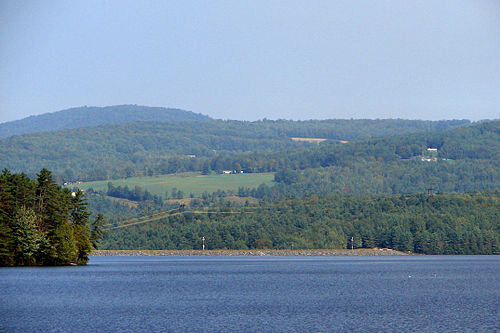
Looking across the Moore Reservoir at Waterford, Vt.

Todd J. Leach: Colleges must figure out how to survive after the pandemic

At the Keene (N.H.)State College campus, left to right: President's House, Morrison Hall, Parker Hall
From The New England Journal of Higher Education, a service of The New England Board of Higher Education (nebhe.org)
Colleges and universities were hit hard by the COVID-19 crisis. The American Council on Education (ACE) estimated a total impact of $120 billion in a recent letter to legislators. That number reflects both direct expenses and lost revenues. It is easy to identify the direct expenses associated with testing, cleaning, PPE, remote learning technology and improved ventilation systems. But the lost revenues, while harder to measure, were just as impactful.
The National Student Clearinghouse Research Center reports a 22% drop in students going directly from high school to college. With an estimated 30 million people out of work, part-time enrollments and lower-priced community colleges were affected sharply. Four-year institutions may have experienced smaller overall enrollment drops than the community colleges, but the combination of fewer students in residence halls and significantly higher costs associated with those students who did choose to live on campus, had a dramatic negative impact on auxiliary revenues.
Given the gloomy financial realities of both 2019 and 2020 it may be somewhat surprising how few colleges permanently closed their doors as a result. It might be tempting to believe the worst of the financial woes for higher education will soon be over once the vaccine brings an end to the pandemic, but that sigh of relief would be premature.
The federal relief provided to higher education was ultimately less than a third of what the ACE was requesting. Many states augmented that aid further with state-allocated CARES funding, but there remains a financial gap that institutions have to address in other ways. Many of the approaches used to cover that gap will have lasting impact and make the future for many colleges more challenging than it already was.
Tapping into reserves or endowments, furloughs and layoffs, increases in deferred maintenance, salary cuts and freezes, and other short-term fixes may have helped institutions manage through the crisis but they will have to be made up for at some point. It may turn out that COVID has a delayed impact on the survivability of many institutions that relied on these short-term measures as opposed to addressing more substantially those structural costs that better support long-term sustainability in the face of continuing demographic declines and intensifying competition.
Already squeezed
Higher education was already in the midst of challenging times and COVID’s biggest impact may be how it accelerates the need for structural change and the rethinking of the student experience. The long-term demographic picture, as forecast by Nathan Grawe among others, shows many years of declining enrollments ahead, capped off at the end of the 2020s by, what Grawe himself described in a January 2018 interview with Inside Higher Ed, as a “free fall.” For those of us in the Northeast, the predicted loss in four-year college going students is about 4,000 per year for the next decade.
Institutions that thought they could weather the predicted 1% to 2% annual demographic decline as they incrementally rethought and restructured over the course of several years may no longer have the luxury of time. In fact, those institutions that solely focused on the short-term challenge of COVID may have weakened their ability to respond to the long-term threats. The loss (or disenfranchising) of key talent, the spending of strategic reserves, and the increased backlog of deferred maintenance will all make it much more challenging to make the bold strategic changes and investments it will take to compete in a post-COVID environment.
It may be many years before families fully recover economically, and it is highly likely that states will have fewer funds available for higher education going forward, at least without federal level support. These financial constraints will make it highly unlikely that institutions will be able to make up for the COVID impacts by raising tuition or advocating for higher levels of state support. In fact, the discounting wars can be expected to accelerate, rather than cease, as institutions compete more heavily over a smaller pool students simultaneously facing deeper financial challenges.
Some leaders may find comfort in the fact that many of their peer institutions will be in the same situation and that some shakeout may help address the supply side of the equation, but that is not likely to provide any immediate post-COVID relief. It might also be tempting to believe that the massive migration to remote learning that was necessitated by the pandemic has now jumpstarted a new revenue stream that will carry institutions into the future. The reality is that very few institutions that served a residential population with remote technology have attracted a truly online audience, and they are not likely to, without substantial investment in marketing, extended-hour support services and instructional design. The “Field of Dreams” approach no longer works in a saturated online market and it will take more than streaming lectures or putting classes on the latest LMS to be competitive in online markets.
While higher education may be facing precarious times, the value and need for it has never been greater, and surely, there will be institutions that thrive post-COVID. According to Grawe’s demographic analysis, we can expect highly selective institutions to continue to attract students, and even experience higher demand. I don’t believe the COVID crisis has any particular impact on this prediction. For small and regional institutions, however, I believe the COVID crisis has brought an imminent shakeout closer to the forefront for all the reasons identified above. Nonetheless, post-COVID will also be a period of opportunity for those institutions that have either incorporated long-term plans into their COVID decisions or are prepared to move beyond incremental change and move rapidly towards a rethink of both costs and the student experience.
Short-term cutting vs long-term investment
In an ideal situation, institutions would have already begun planning for long-term cost restructuring prior to the pandemic and, therefore, have simply accelerated those plans, rather than needing to take short-term cost-cutting measures that hinder long-term investment and success. However, for those institutions that had not begun addressing their cost structures, the urgency to do so should be strategic and immediate. Not all the competitors that emerge from the pandemic are going to be in the same place, and those that address their actual cost structure will have the ability to further lower price or, just as importantly, redirect dollars to initiatives that will have an impact on retention and enrollment.
Cost restructuring is only one part of the equation: Rethinking the student experience should also be a post-pandemic priority. Based on a variety of surveys, it seems clear that residential students may not have been entirely happy with their remote experiences. But might they still value the flexibility of one or two online classes that free up an early morning or a Friday? Can we better leverage physical classroom time if that classroom time can be augmented with more remote content? Will students who have become accustomed to remote advising and telehealth want to return to lines, or running across campus for a 15-minute appointment? Colleges that are planning to return to where they left off will miss the opportunity to become more “student-centered.” They will also be in danger of disenfranchising their students, not to mention faculty and staff who have also become accustomed to doing more remotely.
There are other ways to leverage the process and technology enhancements that were made to cope with COVID to also improve the student experience going forward, and ultimately provide some competitive advantage. These may include expanding student options through cross-institution collaborations and course sharing. While some institutions will not be prepared to survive post-COVID, for others, this is going to be a period of change and improvement. The difference will come down to the ability and willingness to go beyond incremental, not only in terms of cost reductions but also in terms of advancing the student experience and addressing changes in the market, all while remaining true to the core ethos of the institution. Simply renegotiating a few vendor contracts or migrating an additional program or two to online will not be enough to compete in a post-COVID era for most institutions.
Todd J. Leach is chancellor emeritus of the University System of New Hampshire and former chairman of The New England Board of Higher Education.

Llewellyn King: Utilities are becoming innovation hubs as they move away from fossil fuel

Wind farm in Mars Hill, Maine

Solar-energy array in Exeter, N.H.
WEST WARWICK, R.I.
The electric utility industry looks a bit like a man on a ladder with one foot seeking the rung below, unsure of where it is. But find it he must.
The industry is beset with technological change as well as social and political pressures. It isn’t in crisis, but it is in dramatic transition.
It has one overriding driver: the need first to reduce, then to eliminate carbon emissions.
The utilities have been heroic in turning to wind and solar – which have also turned out to be economically advantageous. However, those efforts are challenged by the need to store electricity produced when these “alternatives” aren’t available.
General Motors is switching to making only electric vehicles after 2035. It can stop and retool. Utilities can never stop pumping out electrons; they must retool on the go.
Most of us only realize the hidden fragility of the system when storms are forecast, and the local utility tells us to buy batteries.
Feb. 11 was the 174th anniversary of Thomas Edison’s birth. No one has affected the way we live as completely as Edison, neither king, conqueror, philosopher, revolutionary, nor any other inventor.
New fuels produce new ancillary needs. Every new introduction in electricity requires the supporting technologies to change — sometimes new technologies must be invented for the supporting role.
The big pressures on the utilities are to get off fossil fuels and to increase the resilience of the system, including resilience against weather and cyberattack.
These pressures spawn other pressures, particularly how to store alternative electricity, which is made when the sun is shining and the wind is blowing, often not when consumption is high.
Storage is a hot area in electric innovation. Batteries, which are front-and-center in storage, must get much better, so they can have longer drawdown times. Arshad Mansoor, president of the Electric Power Research Institute, says batteries will get much better, but not enough to take up the slack for days of bad weather. He was speaking at the virtual winter meeting of the National Association of Regulatory Utility Commissioners.
Hydrogen is a favorite to deal with days of rain, as happens in Florida and elsewhere, and wind droughts that can last more than a week in Texas, a big wind-generating center.
But hydrogen isn’t a one-for-one replacement of natural gas, the current workhorse of generating fuels. On paper, hydrogen has every virtue. In reality, it has challenges of its own: It has less than half the energy of natural gas; it is harder to handle, can explode, and can produce nitrogen oxide; and turbines have to be modified to burn it.
Even so, a plethora of utilities, including Sempra, Arizona Public Service, and NextEra Energy, are experimenting with it. The Los Angeles Department of Water and Power is converting a coal plant in Utah to run completely on green hydrogen (that is hydrogen derived from the electrolysis of water not from natural gas).
San Antonio’s municipally owned energy utility, CPS Energy, buys a lot of wind power and is planning to install 900 megawatts of solar power on top of 4oo MW already deployed. That means storage is critical, and the utility has launched an ambitious global search for new-and-improved technologies. This has generated 300 responses worldwide. These, according to COO Cris Eugster, include hydrogen and batteries, but also far-out ideas like compressed air, flywheels, mineshafts for pumped storage, and liquefied air.
All of this restructuring, moving from big central plants to diverse generating and complex substitutions, requires recognition that data is now central in utilities — and data has to move instantly.
Morgan O’Brien, who co-founded the game-changing cellphone company, Nextel, and is now executive chairman of Anterix, a private broadband- network provider, says, “The intermittent nature of renewable sources imposes particular requirements on grid management for speed and accuracy. Luckily, the global wireless technology, LTE, which powers our smartphones is perfectly adapted to this communications challenge.”
The speed of transition is accelerating. The electric utilities, often thought of as staid, are going to be anything but going forward: They are becoming innovation hubs.
Edison’s birthday marks a busy time for his follow-on inventors.
On Twitter: @llewellynking2
Llewellyn King is executive producer and host of White House Chronicle, on PBS. He’s based in Rhode Island and Washington. D.C.
Summer must be earned

In South Royalton, Vt.
— Photo by Nathan Siemers
“She came from people who thought they were too good to run from the cold, too hearty, too real. Fern allowed herself only short dreams of summer, properly earned summer, after winter and after spring.”
― From Sons and Daughters of Ease and Plenty, by Ramona Ausubel, a novel about a wealthy New England family in the 1960s and ‘70s that suddenly loses its fortune.
Mystery wall

“I see a rock wall in the woods,
I wonder where it goes…
To some forgotten forest glade
that only whitetails know?’’
— From “Rock Wall in the Woods,’’ by David Welch
Harris Meyer: Leaders of some New England and other states look to curb prescription-drug-price increases

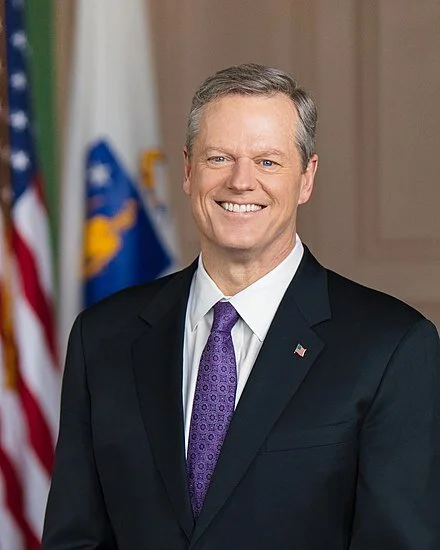
Massachusetts Gov. Charlie Baker is looking for support from state legislators for his plan to penalize price hikes for a broader range of drugs as part of his new budget proposal.
Fed up with a lack of federal action to lower prescription drug costs, state legislators around the country are pushing bills to penalize drugmakers for unjustified price hikes and to cap payment at much-lower Canadian levels.
These bills, sponsored by both Republicans and Democrats in a half-dozen states, are a response to consumers’ intensified demand for action on drug prices as prospects for solutions from Congress remain highly uncertain.
Eighty-seven percent of Americans favor federal action to lower drug prices, making it the public’s second-highest policy priority, according to a survey released by Politico and Harvard University last month. That concern is propelled by the toll of out-of-pocket costs on Medicare beneficiaries, many of whom pay thousands of dollars a year. Studies show many patients don’t take needed drugs because of the cost.
“States will keep a careful eye on Congress, but they can’t wait,” said Trish Riley, executive director of the National Academy for State Health Policy (NASHP), which has drafted two model bills on curbing prices that some state lawmakers are using.
Several reports released last month heightened the pressure for action. The Rand Corp. said average list prices in the U.S. for prescription drugs in 2018 were 2.56 times higher than the prices in 32 other developed countries, while brand-name drug prices averaged 3.44 times higher.
The Institute for Clinical and Economic Review found that drugmakers raised the list prices for seven widely used, expensive drugs in 2019 despite the lack of evidence of substantial clinical improvements. ICER, an independent drug research group, estimated that just those price increases cost U.S. consumers $1.2 billion a year more.
Democratic legislators in Hawaii, Maine and Washington recently introduced bills, based on one of NASHP’s models, that would impose an 80% tax on the drug price increases that ICER determines in its annual report are not supported by evidence of improved clinical value.
Under this model, after getting the list of drugs from ICER, states would require the manufacturers of those medicines to report total in-state sales of their drugs and the price difference since the previous year. Then the state would assess the tax on the manufacturer. The revenue generated by the tax would be used to fund programs that help consumers afford their medications.
“I’m not looking to gather more tax dollars,” said Democratic Sen. Ned Claxton, the sponsor of the bill in Maine and a retired family physician. “The best outcome would be to have drug companies just sell at a lower price.”
Similarly, Massachusetts Gov. Charlie Baker, a Republican, proposed a penalty on price hikes for a broader range of drugs as part of his new budget proposal, projecting it would haul in $70 million in its first year.
Meanwhile, Republican and Democratic lawmakers in Hawaii, Maine, North Dakota, Oklahoma and Rhode Island have filed bills that would set the rates paid by state-run and commercial health plans — excluding Medicaid — for up to 250 of the costliest drugs to rates paid by the four most populous Canadian provinces. That could reduce prices by an average of 75%, according to NASHP.
Legislators in other states plan to file similar bills, Riley said.
Drugmakers, which have formidable lobbying power in Washington, D.C., and the states, fiercely oppose these efforts. “The outcomes of these policies would only make it harder for people to get the medicines they need and would threaten the crucial innovation necessary to get us out of a global pandemic,” the Pharmaceutical Research and Manufacturers of America, the industry’s trade group, said in a written statement.
Colorado, Florida and several New England states previously passed laws allowing importation of cheaper drugs from Canada, an effort strongly promoted by former President Donald Trump. But those programs are still being developed and each would need a federal green light.
Bipartisan bills in Congress that would have penalized drugmakers for raising prices above inflation rates and capped out-of-pocket drug costs for enrollees in Medicare Part D drug plans died last year.
“If we waited for Congress, we’d have moss on our backs,” said Washington state Sen. Karen Keiser, a Democrat who sponsored the state’s bill to tax drug price hikes.
Based on ICER data, two of the drugs that could be targeted for tax penalties under the legislation are Enbrel and Humira — blockbuster products used to treat rheumatoid arthritis and other autoimmune conditions.
Since acquiring Enbrel in 2002, Amgen has raised the price 457% to $72,240 for a year’s treatment, according to a report last fall from the House Committee on Oversight and Reform.
In a written statement, Amgen denied that Enbrel’s list price increase is unsupported by clinical evidence and said the company ensures that every patient who needs its medicines has “meaningful access” to them.
The price for Humira, the world’s best-selling drug, with $20 billion in global sales in 2019, has gone up 470% since it was introduced to the market in 2003, according to AnalySource, a drug price database.
In contrast, AbbVie slashed Humira’s price in Europe by 80% in 2018 to match the price of biosimilar products available there. AbbVie patents block those biosimilar drugs in the U.S.
AbbVie did not respond to requests for comment for this article.
Manufacturers say the list price of a drug is irrelevant because insurers and patients pay a significantly lower net price, after getting rebates and other discounts.
But many people, especially those who are uninsured, are on Medicare or have high-deductible plans, pay some or all the cost based on the list price.
Katherine Pepper of Bellingham, Wash., has felt the bite of Humira’s list price. Several years ago, she retired from her job as a management analyst to go on Social Security disability and Medicare because of her psoriatic arthritis, diabetes and gastrointestinal issues.
When she enrolled in a Medicare Part D drug plan, she was shocked by her share of the cost. Since Pepper pays 5% of the Humira list price after reaching Medicare’s catastrophic cost threshold, she spent roughly $15,000 for the drug last year.
Medicare doesn’t allow drugmakers to cover beneficiaries’ copay costs because of concerns that it could prompt more beneficiaries and their doctors to choose high-cost drugs and increase federal spending.
Many patients with rheumatoid and other forms of arthritis are forced to switch from Enbrel or Humira, which they can inject at home themselves, to different drugs that are infused in a doctor’s office when they go on Medicare. Infusion drugs are covered almost entirely by the Medicare Part B program for outpatient care. But switching can complicate a patient’s care.
“Very few Part D patients can afford the [injectable drugs] because the copay can be so steep,” said Dr. Marcus Snow, an Omaha, Nebraska, rheumatologist and spokesperson for the American College of Rheumatology. “The math gets very ugly very quickly.”
To continue taking Humira, Pepper racked up large credit card bills, burning through most of her savings. In 2019, she and her husband, who’s retired and on Medicare, sold their house and moved into a rental apartment. She skimps on her diabetes medications to save money, which has taken a toll on her health, causing skin and vision problems, she said.
She’s also cut back on food spending, with her and her husband often eating only one meal a day.
“I’m now in a situation where I have to do Russian roulette, spin the wheel and figure out what I can do without this month,” said Pepper.
Harris Meyer is a Kaiser Health News reporter.
This article is part of a series on the impact of high prescription drug costs on consumers made possible through the 2020 West Health and Families USA Media Fellowship.
Harris Meyer: @Meyer_HM
Lawrence moves out of its funk
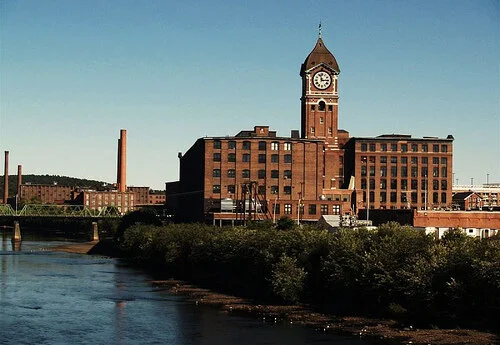
The old Ayer Mill building on the Merrimack River in Lawrence
From Robert Whitcomb’s “Digital Diary,’’ in GoLocal24.com
Old cities can be brought back, if not to their boom times, at least to more stability and even a modicum of prosperity. An example to watch is Lawrence, Mass., an old mill town on the Merrimack River. Even with the effects of the pandemic, the city is much better off than it was a decade ago, when Boston Magazine called it “City of the Damned” – a center of rising crime and poverty. (I spent some time there back in the fall of 1968, when I was teaching high school next door, in North Andover, Mass. It was a downer then but it still had a fair number of mills operating and was far from the disaster it became by 1990.)
A group called the Lawrence Partnership has been a key to the city’s economic and social revival. This includes a bunch of business and other community leaders formed in 2014 to “stimulate economic development and improve the quality of life” in Lawrence. This group has helped strengthen the city’s finances, cut crime, improve education and lure new business. COVID has made things more difficult, of course, but the city’s leaders are pressing on.
Lessons for cities in southeastern New England? Hit this link to learn more.

In the 1912 Lawrence textile strike, Massachusetts National Guardsmen with fixed bayonets surround a parade of strikers.

In Lawrence, the bizarre High Service Water Tower (1895), also called Tower Hill Water Tower, named an American Water Landmark in 1979 by the American Water Works Association
Love at the Cape Ann Museum

Above, Valentine shadow boxes from the archives of the Cape Ann Art Museum, Gloucester, Mass. Below, also at the museum, Sailors' Valentine, 1800-1840 (shell and glass on wood)

Subsidize your strengths

From Robert Whitcomb’s “Digital Diary,’’ in GoLocal24.com
With all the government goodies used to lure big companies, it’s refreshing to see a little state government help for small local companies that have a comparative advantage. That advantage can stem from their location, in Rhode Island’s case being on the ocean.
I write here of two companies.
One is Quonset-based American Mussel Harvesters, an aquaculture company that raises mussels, oysters and clams in the Ocean State. Shellfish aquaculture has been hard hit by the pandemic because the products have been primarily sold to restaurants. But the Rhode Island Commerce Corporation decided on Jan. 29 to give the company a $50,000 grant to help design a new bagging system for two-pound bags to sell to individual customers. Restaurants have generally been buying 10-pound bags. Much of the restaurant sector will come back, albeit in different forms, when COVID fades, but certainly shellfish farmers need to diversify their customer base a lot.
Meanwhile, the Commerce Corporation is making a $49,972 grant also appropriate to the Ocean State: Helping Flux Marine, of East Greenwich, in a project to make electric outboard motors. There’s the green-energy aspect, of course, but there’s also that there wouldn’t be gasoline spills from these outboards.
Beats putting money into the local casino business, including its support system (e.g., IGT, the gambling-tech giant and partners with its pending 20-year, no-bid Rhode Island state contract). Casinos prey on lower-income people and send much of their money out of the region.
All well compared to what?

“The Cabin’’ (animation still) in Nat Martin’s show “All Is Well,’’ at Kingston Gallery, Boston, March 31-May 2
The gallery says:
The name of the show “comes from one of his journal entries: ‘3:30 am, and all is well.’ …Fueled by anxious thoughts and strange dreams, the works are realized as journal-like moments with an aura of nostalgic eeriness. Old National Geographic magazine imagery and small sculptures confound the viewer’s sense of scale. Evocative processes - instant-prints through a Daylab printer and Copy system - combine with contemporary technology like gifs to create an odd time-warping that further captures the unshakable feeling of unease.’’
Mr. Martin lives in the Boston area.
'Shines through'

— Photo by Medeis
The holly bush, a sober lump of green,
Shines through the leafless shrubs all brown and grey,
And smiles at winter be it eer so keen
With all the leafy luxury of May.
And O it is delicious, when the day
In winter's loaded garment keenly blows
And turns her back on sudden falling snows,
To go where gravel pathways creep between
Arches of evergreen that scarce let through
A single feather of the driving storm;
And in the bitterest day that ever blew
The walk will find some places still and warm
Where dead leaves rustle sweet and give alarm
To little birds that flirt and start away.
— “Winter Walk,’’ by John Clare (1793-1864), English poet

Eating tranquilizers from childhood

New England (i.e., real) clam chowder
“You can’t escape the taste of the food you had as a child. In times of stress, what do you dream about? Your mother’s clam chowder. It’s security, comfort. It brings you home.
— Jacques Pepin, French-born celebrity chef and TV host. He lives in the charming town of Madison, Conn., on Long Island Sound.

Sunset at a beach in Madison
— Photo by Mike12345678901
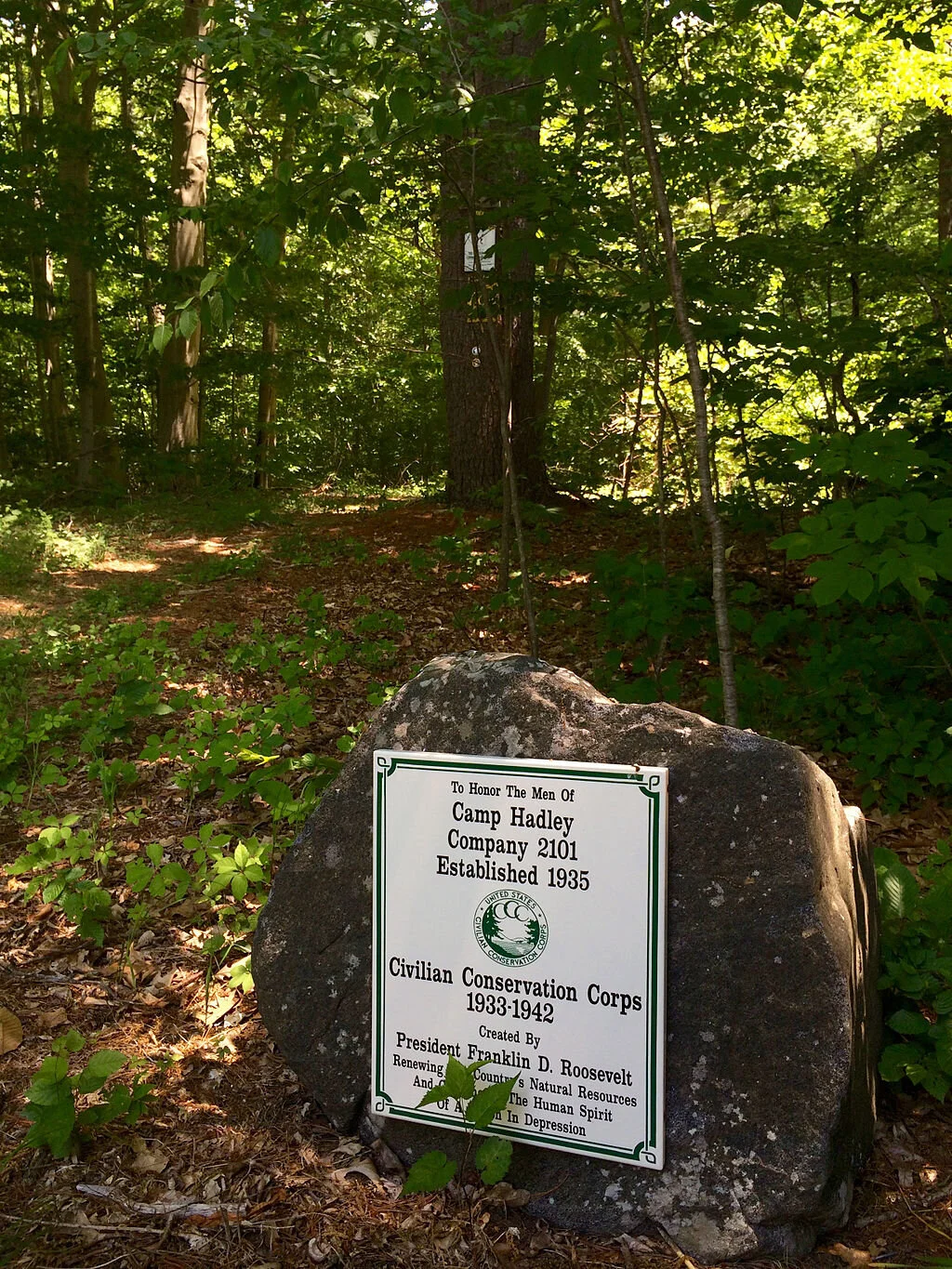
In Madison: CCC Memorial plaque for Camp Hadley ruins, at entrance off Copse and Warpas Roads. The CCC created many parks and did much reforestation during the New Deal.
—Photo by Morrowlong
Thomas C. Jorling: How to use the highway system, new building codes to address climate change
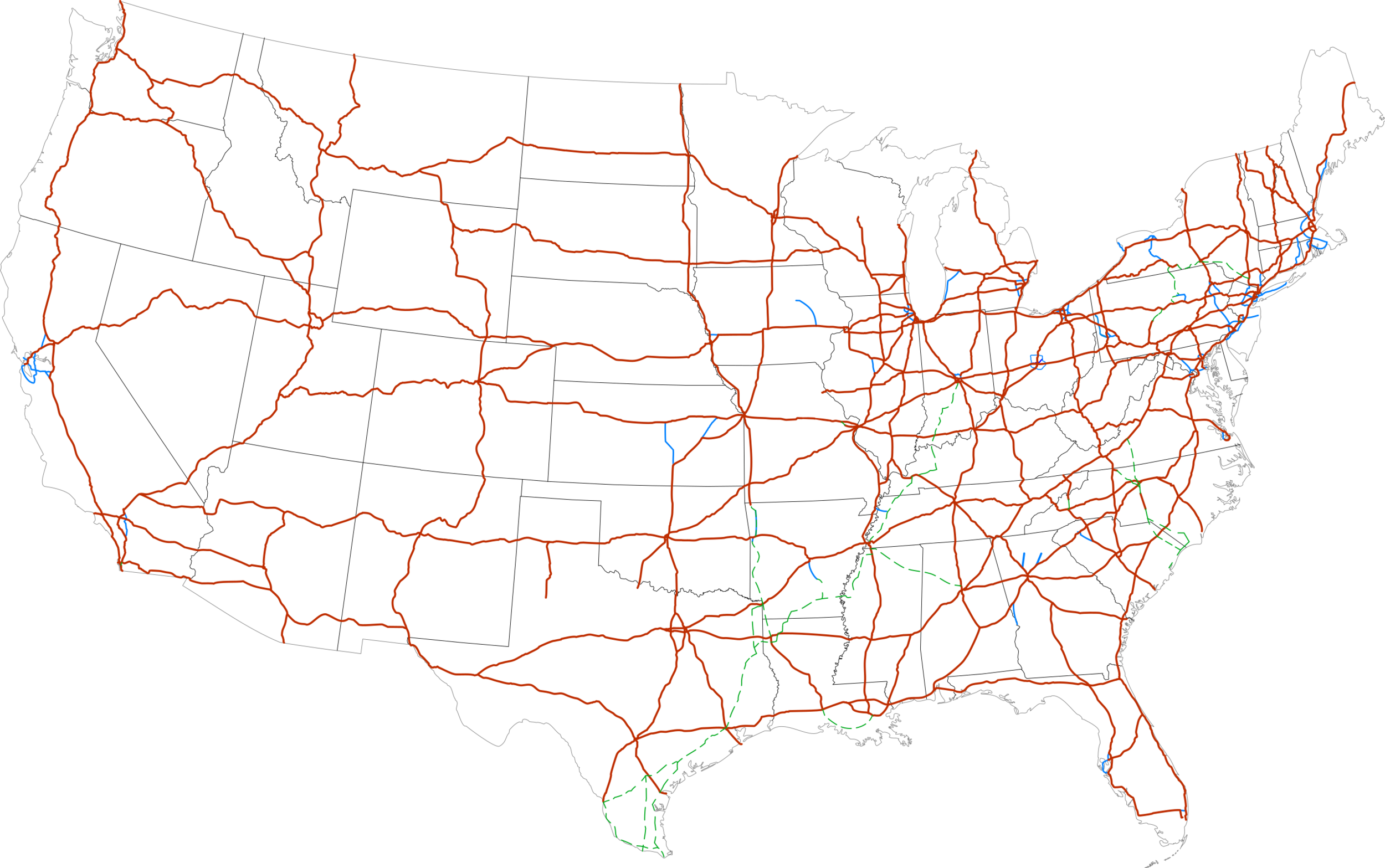
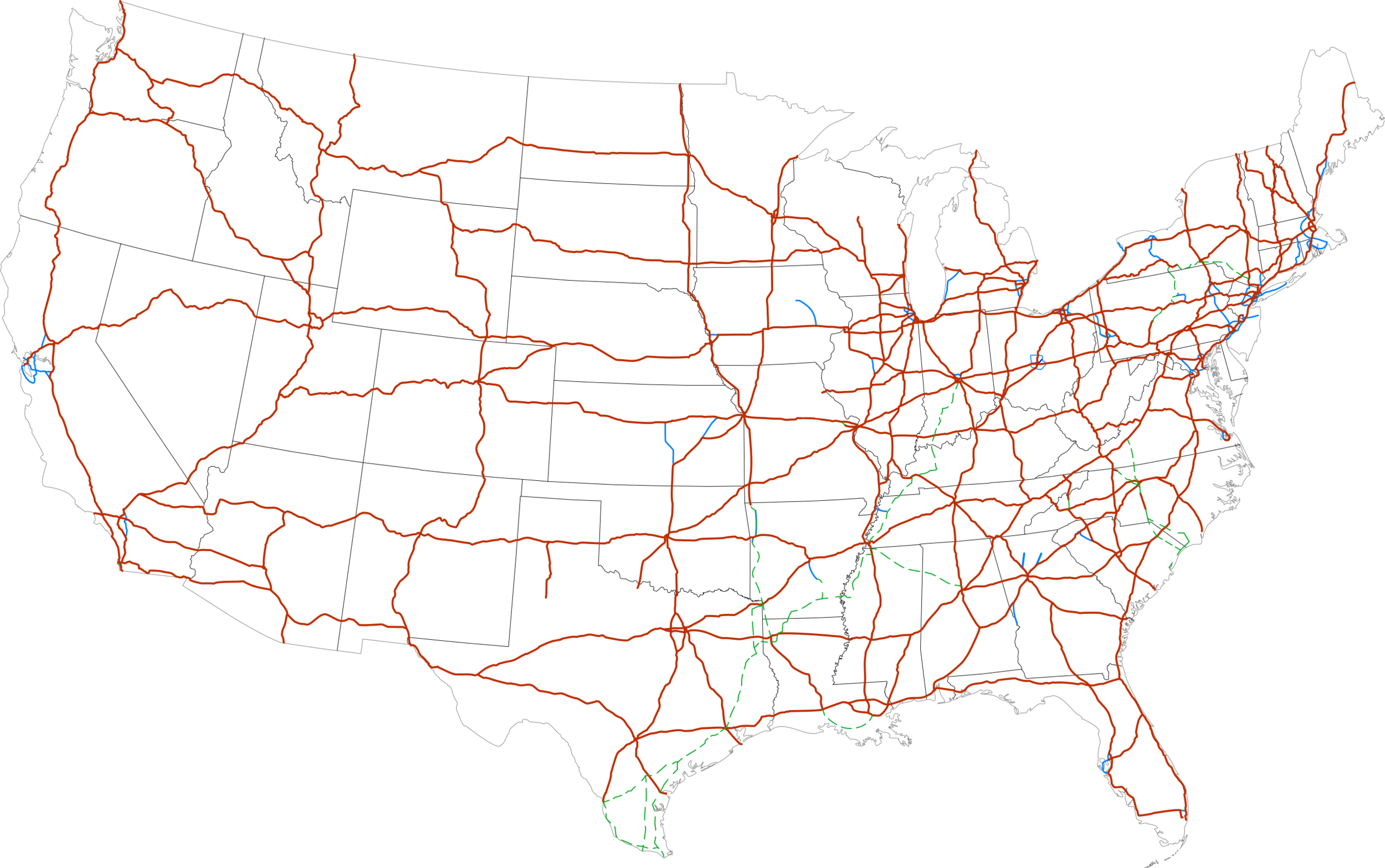
Map of the current Interstate Highway System in the 48 contiguous states
From The New England Journal of Higher Education, a service of The New England Board of Higher Education (nebhe.org)
Climate change is real and accelerating. It requires an urgent response that focuses all the strategies and tactics necessary to stabilize the Earth’s temperature regime.
The objective to guide research, development and implementation is straightforward: Achieve an all-electric economy. Simply put, all sectors of energy use—agriculture, transportation, industrial, residential, business, etc.—must transition to electricity. Where liquid fuels are necessary, such as aviation, they must be produced from biological processes.
This objective, however, can be satisfied only by transforming electricity generation to alternative—non-combustion—sources that convert into electricity the energy from the inexhaustible clean supply provided by the sun and ecosystem, primarily wind and solar.
As the transition occurs, existing fossil-fuel energy will be replaced and future growth will be accommodated. It is a transition that has historical examples and precedents: wood to coal, oil and gas; horses to automobiles; hard lines to cell phones, among many other examples of progress. Dislocations associated with these transitions have occurred, but they were quickly overcome by innovation and adaption. This has been the story of human progress.
While some elements of the transition require intervention at the national level such as the Clean Air Act addressing health-damaging air pollution, the need now is for federal and state legislation and policy to discipline and make fair the transition from coal, oil and gas.
Needed: A smart grid
There is no question the nation needs a “smart grid” to facilitate the delivery of alternatively generated electricity across geography and time zones. This raises the question: Can such a grid be created without defiling the countryside and disrupting ecosystems? The answer is yes.
A significant portion of the cost of the Interstate Highway System was incurred securing rights-of-way. As a transportation system, it has been highly successful. One consequence, which is greatly unappreciated, is that these rights-of-way represent a tremendously valuable federal and state asset that shouldn’t be limited to concrete and asphalt.
Even a quick look at a national map of the Interstate Highway System reveals a network connecting rural America and urban America. The highway network can also be a connection between and among the same areas for electricity generation, management and distribution. Buried, reinforced conduit along the rights-of-way of the system can connect—and make smart—the grid, enabling electricity to be moved and delivered efficiently and effectively. This will allow electricity, from generation to user, to be managed back and forth across the country as needed in response to changing seasons, weather and time of day.
More than transportation
We need to change these rights-of-way from single-use to multiple-use. This network, already invested in by the public, can accommodate not only an electric grid, but also pipelines and even elevated high-speed rail. Letting the asset represented by this extensive right-of-way network be underutilized is a travesty. It can and should be used for multiple national needs. All of which can help address climate change.
The development of a multiuse right-of-way based on the Interstate Highway System to accommodate a smart electrical grid, expansion of broadband and other networks presents opportunities and challenges for higher education. Among opportunities, use of the highway network can enable rapid expansion and availability of broadband, not just to institutions but to communities all across the country. This would enable all citizens, families and communities to benefit from full access to the internet and overcome the disparities of access to make higher education more available to everyone. Among challenges, using the Interstate Highway System as a multiuse asset will require the innovation of higher-education institutions (HEIs). Ways to stimulate that innovation could include, for instance, a competition among HEIs, especially those with technically oriented capability, to design easily and rapidly installed, low-cost conduit structures on or in the ground for the electric grid on the interstate highway network. HEIs should become centers of innovation and excitement for the societal transformations that are going to occur as the U.S., indeed the world, addresses the challenges of climate change and the sustainability of communities and infrastructure in the quest for a better future.
We do not need to establish new rights of way across the American landscape taking any more forest or agricultural land that plays so important a role in capturing and storing carbon in wood, fiber and soil.
Another grossly underutilized resource is the extensive areas of roofs on structures, especially flat-roofed structures and the parking areas adjacent to the structures, that now cover extensive areas of our landscape. Before human settlement and the expansion of built-up land, these areas captured the energy of the sun in what ecologists call primary productivity: that is, plant photosynthesis converting sunlight into biomass in complex ecosystems. These areas can once again be used to capture the sun’s energy and convert it to electricity.
To this end, the country needs to adopt national building codes to require:
New building structures to be physically oriented and designed, to the extent possible, for maximum use of sunlight, both passive and through photovoltaic systems.
Every flat-roofed structure newly constructed that has a surface area greater than half an acre should be required to install rooftop solar photovoltaic panels.
All current flat-roofed structures greater than an acre should be required to retrofit the roof with solar panels within five years. Creative partnerships between owners, utilities and solar investors and installers could flourish in this effort.
All parking lots greater than an acre should be required to install elevated solar panels. This can be done by the parking lot owner or leased for a nominal or no charge to a solar panel installer.
All forms of federal assistance (such as loans, guarantees, grants or tax benefits) for housing and economic development, should be conditioned on financially support measures to achieve energy efficiency and install solar electric-generation opportunities.
These achievable, cost-effective steps can result in the production of large amounts of electricity and contribute significantly to achieving an economy without fossil fuels. These widely distributed systems, connected through a smart grid, in protected conduits (rather than vulnerable suspended wire systems), could assist in making our economy sustainable and the people supported by resilient and reliable electric power.
Thomas C. Jorling is the former commissioner of the New York State Department of Environmental Conservation and former director of the Center for Environmental Studies at Williams College among other key posts.

The average insolation in Massachusetts is about 4 sun hours per day, and ranges from less than 2 in the winter to over 5 in the summer.
Get it over with

Rocky Marciano (second from left) with Boston Mayor John F. Collins (center-right) and comedian and singer Jimmy Durante (right and famous for his impressive nose), circa 1968. The man at left is unidentified.
“Why waltz with a guy for 10 rounds if you can knock him out in one?’’
— Rocky Marciano (birth name) (1923-1969), an American professional boxer who competed from 1947 to 1955, and held the world heavyweight title from 1952 to 1956. He is the only heavyweight champion to have finished his career undefeated. He was born and brought up in the shoe-making city of Brockton, Mass. Her died in a plane crash in 1969.
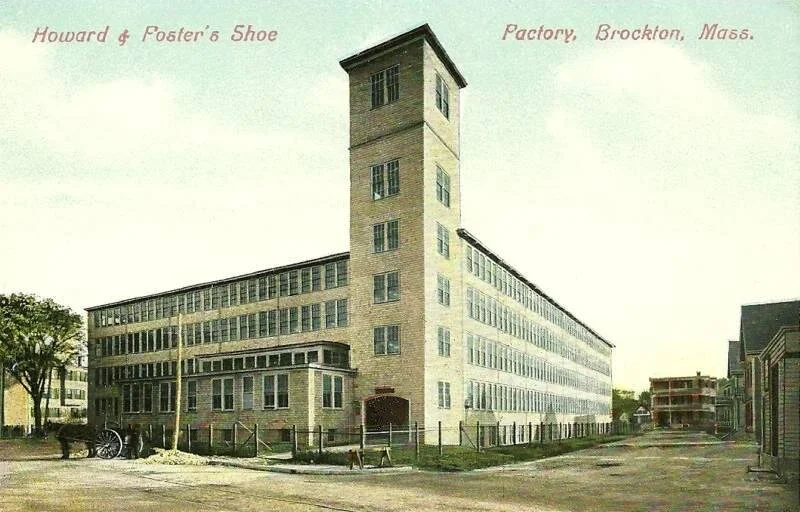
A shoe factory back when Brockton called itself “The Shoe Capital of the World.’’ My paternal grandfather was a manager in the George E. Keith Co., which made Walk Over shoes, which were considered high end. Brockton went into steep decline with the departure of most of New England’s shoe industry for the South and abroad. But the city has enjoyed a bit of a revival in recent years, as some entrepreneurial energy from very rich Greater Boston has spilled into the old mill town.
— Robert Whitcomb
‘The dark eye of oblivion’

“I never take them out. I know them too well.
It’s dark in the drawer and common and hidden.
Photos tell you that people can smile at
The dark eye of oblivion. Albums and walls are
Too insistent. What’s part of every fumbling
Morning is closer to the fleeting mark.’’
— From “My Wife Asks Me Why I Keep Photographs in a Drawer,’’ by Baron Wormser (born 1948), a former Maine poet laureate.