
Vox clamantis in deserto





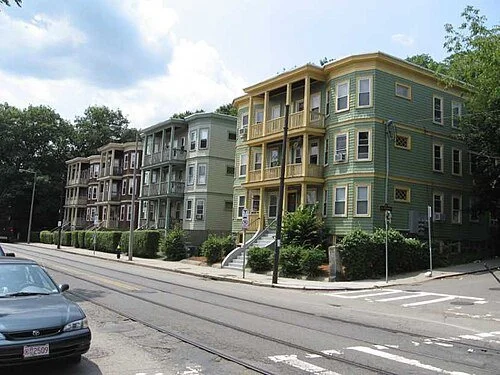

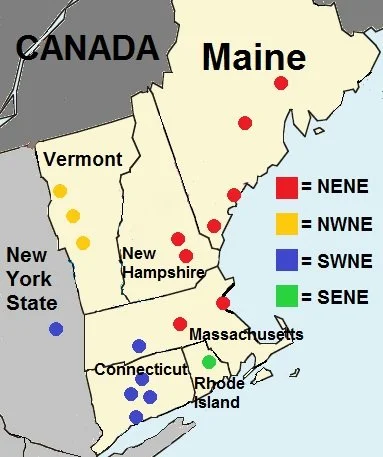


Everybody?
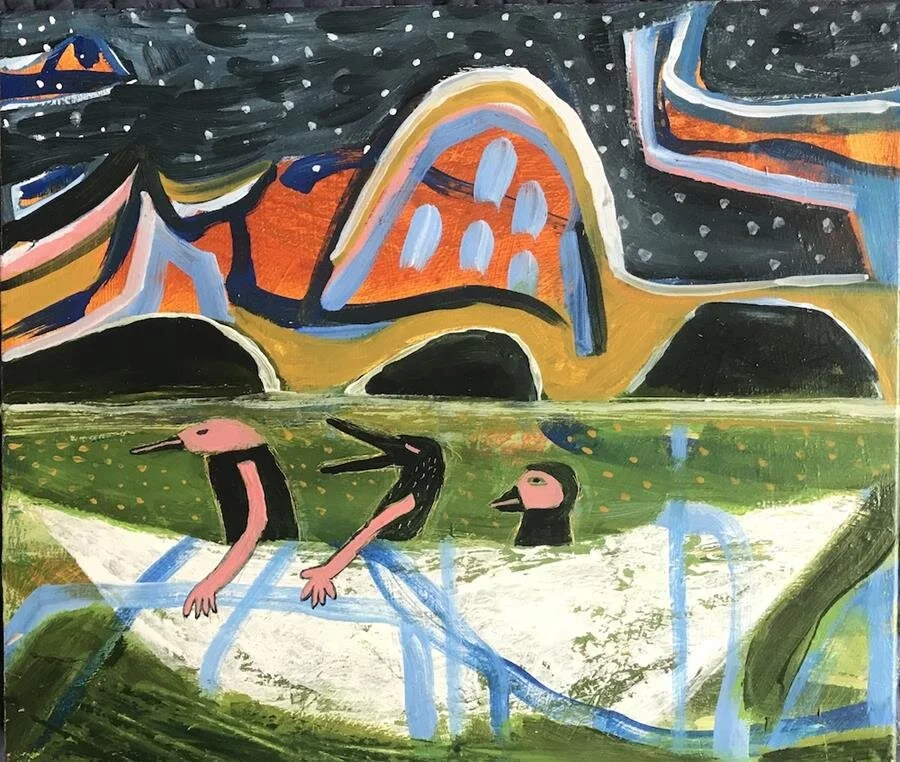
“All in this Together” (acrylic on panel), by Portland-based Anna Dibble, at the Portland Museum of Art, in its current show “Untitled, 2020, Art from Maine in a _______ Time’’ to open online on Feb. 12. Hit this link.
The museum says:
“The events of 2020 profoundly impacted artists in different ways. From personal hardships due to the COVID-19 pandemic, concerns around the election and political instability, and solidarity with a coalescing movement against systemic racism, {the show} records how artists working in Maine were coping with, and responding to, this pivotal moment in history.
There was gold in that....

Adapted from Robert Whitcomb’s “Digital Diary,’’ in GoLocal24.com
My favorite dead New England business is the Pacific Guano Company., which had a big factory (exactly where you now get the ferries to Martha’s Vineyard and Nantucket) in the Woods Hole section of Falmouth. There it processed bird, er, waste from Pacific islands into high-grade fertilizer by mixing it with menhaden and other fish. It stank, but made some local fortunes in its 1859-1889 life. (Some of my ancestors, descendants of Cape Cod Quakers, were investors.)
A shortage of guano and the arrival of new, man-made chemical fertilizers ended the company’s short life and the Yankee owners moved on to other trades, such as building big summer places for the new rich from Boston.
New Englanders have usually known when to move on from aging industries, such as textiles and shoes, to advancing ones, such as electronics, computer software, pharmaceuticals, investment firms (e.g., Fidelity) and even oyster aquaculture.
And what a year!

“Thinking One Year Back” (detail). by Alexandra Rozenman in her joint show, “Unfolding Roads,’’ with Nora Valdez, at Fountain Street Fine Art, Boston, through Feb. 28.
The gallery says:
“This exhibit features the paintings and collages of Rozenman, as well as the sculptures and drawings of Valdez. Both artists are immigrants, from the former Soviet Union and Argentina, respectively, and this part of their identities is reflected in their artwork. Rozenman's pieces are large and expansive, depicting a vast world of images, symbols, history and famous artworks. Her early life in Russia influences her approach to beauty and wonder to this day, and her search for belonging forms the core of her art.’’
The glory of the grinder
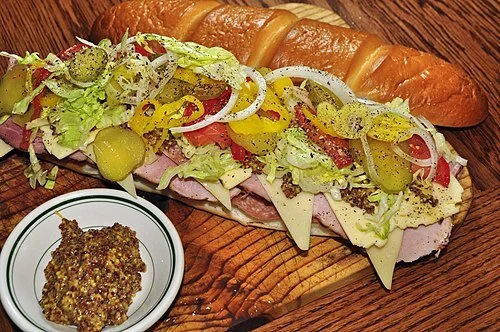
“I ate a grinder – elsewhere {meaning outside New England} called a hero, hoagie, poorboy, submarine, sub, torpedo, Italian – and drank a chocolate frappe {another New England term} -- elsewhere called a milkshake or malted. Although the true milkshake doesn’t exist east of the Appalachians, the grinder was the best thing to happen to me in a day: thinly sliced beef and ham, slivered tomatoes, chopped lettuce, and minced hot peppers, all dressed down with vinegar and oil. I went back to the window to order another.’’
-- William Least Moon, in Blue Highways (1982)
The origin of the word “grinder has several possibilities. One theory is that it came from Italian-American slang for dock workers, of whom there were many in southern New England, and among whom the sandwich was popular. Others say that it was called a grinder because the bread's hard crust required much chewing.

A ‘“frappe,’’ a term mostly confined to New England, is a milkshake with ice cream deposited in it.

Of Harvard, Summers, Russia and the future

The Kremlin
— Photo by A.Savin
SOMERVILLE, Mass.
Some years ago, I set out to write a little book about Harvard University’s USAID project to teach market manners to Boris Yeltsin’s Russian government in the 1990s. The project collapsed after leaders of the Harvard mission were caught seeking to line their own pockets by gaining control of an American firm they had brought in to advise the Russians. Project director Andrei Shleifer was a Harvard professor. His best friend, Lawrence Summers, was U.S. assistant Treasury secretary at the time.
There was justice to be served. The USAID officer who blew the whistle, Janet Ballantyne, was a Foreign Service hero. The victim of the squeeze, John Keffer, of Portland, Maine, was an exemplary American businessman, high-minded and resourceful.
But I had something besides history in mind. By adding a chapter to David McClintick’s classic story of the scandal, “How Harvard Lost Russia,’’ in Institutional Investor magazine in 2006), I aimed to make it more complicated for former Treasury Secretary Summers, of Harvard University, to return to a policy job in a Hillary Rodham Clinton administration.
It turned out there was no third Clinton administration. My account, “Because They Could, ‘‘ appeared in 2018. So I was gratified last August when, with the presidential election underway, Summers told an interviewer at the Aspen Security Forum that “My time in government is behind me and my time as a free speaker is ahead of me.” Plenty of progressive Democrats had objected to Summers as well.
Writing about Russia in the1990s meant delving deeper into the history of U.S.-Russia relations than I had before. I developed the conviction that, during the quarter century after the end of the Cold War, U.S. policy toward Russia had been imperious and cavalier.
By 1999, Yeltsin was already deeply upset by NATO expansion. The man he chose to succeed him was Vladimir Putin. It wasn’t difficult to follow the story Through Putin’s eyes. He was realistic to begin with, and, after 9/11, hopeful (Putin was the among the first foreign leaders to offer assistance to President George W. Bush).
But NATO’s 2002 invitation to the Baltic states — Lithuania, Latvia and Estonia — all former Soviet Republics, the U.S .invasion of Iraq, the Bush administration’s supposed failure to share intelligence about the siege of a school in Beslan, Russia, led to Putin’s 2007 Munich speech, in which he complained of America’s “almost uncontained hyper use of force in international relations.”
Then came the Arab Spring. NATO’s intervention in Libya, ending in the death of Muammar Gaddafi in 2011, was followed by Putin’s decision to reassume the Russian presidency, displacing his hand-picked, Dimitri Medvedev, in 2012. Putin blamed Hillary Clinton for disparaging his campaign.
And in March 2014, Putin’s plans to further a Eurasian Union via closer economic ties with Ukraine having fallen through, Ukrainian President Viktor Yanukovych fled to Moscow in the face of massive of pro-European Union demonstrations in Kyiv’s Maidan Square. Russia seized and annexed Ukraine’s Crimean Peninsula soon after that.
The Trump administration brought a Charlie Chaplin interlude to Russian-American relations. Putin saw no problem: He offered to begin negotiating an anti-hacking treaty right away. Neither did Trump: Remember Russian Foreign Minister Sergey Lavrov’s Oval Office drop-by, the day after the president fired FBI Director James Comey?
Only the editorial board of The Wall Street Journal, among the writers I read, seemed to think there was nothing to worry about in Trump’s ties to Russia. Meanwhile, Putin rewrote the Russian Constitution once again, giving himself the opportunity to serve until 2036, when he will be 84.
But Russia’s internal history has taken a darker turn with the return of Alexander Navalny to Moscow. The Kremlin critic maintains that Putin sought his murder in August, using a Soviet-era chemical nerve-agent. Navalny survived, and spent five months under medical care in Germany before returning.
Official Russian media describe Navalny as a “blogger,” when he is in fact Russia’s opposition leader. He has been sentenced to at least two-and-a-half years in prison on a flimsy charge, and face other indictments. But his arrest sparked the largest demonstrations across Russia since the final demise of the Soviet Union. More than 10,000 persons have been detained, in a hundred cities across Russia, according to Robyn Dixon, of The Washington Post. Putin’s approval ratings stand at 29 percent
What can President Biden do? Very little. However much Americans may wish that Russian leaders shared their view of human rights, it should be clear by now there is no alternative but to deplore, to recognize Russian sovereignty, to encourage its legitimate business interests, discourage its trickery, and otherwise hope for the best. There are plenty of problems to work on at home.
David Warsh, an economic historian and veteran columnist, is proprietor of economicprincipals.com, where this columnist first appeared.

Mitchell Zimmerman: Democrats would be stupid to try ‘to work with’ an increasingly depraved GOP

A QAnon emblem (upper left) is raised during the 2021 storming of the United States Capitol by Trump cultists. The extreme-right, bogus-conspiracy-based QAnon group has become a particularly violence-prone part of the Republican Party.
— Photo by Elvert Barnes

Trump supporters/cultists at the “Unite the Right’’ rally in Charlottesville, Va., on Aug. 12, 2017
Via OtherWords.org
Unity and bipartisanship sound wonderful. But can anyone explain how “building bridges” to today’s GOP will get anything done?
Republicans now demand “unity” even as many embrace the big lie that President Biden stole the election from Trump — and even after some cheered on the attack on the U.S. Capitol that killed five.
But the bigger difficulty is that there can be no reasonable compromise between those determined to confront the crises America faces and those who deny that the problems exist — and have indeed aggravated them.
Consider the key challenges: climate change, racial injustice and the coronavirus pandemic.
Climate change is upon us: violent superstorms, rising seas, flooding, wildfires, new diseases. But the differences between Democrats and Republicans are not about the best ways to reckon with climate change. They’re about whether climate change is real at all.
President Trump, with support from the rest of the Republican Party, called climate change a “hoax,” actively promoted fossil fuels, and reversed every step taken to stave off climate disaster. There is no “working with” the party that is working directly to worsen the problem.
Likewise for racial bias in American life. This past year massive, multiracial protests against racist police violence and impunity swept the nation, and much of white America finally accepted that racism and white supremacy are ugly realities.
But not the GOP. The Trump-led party cozied up to the “very fine people” who unleashed racist violence in Charlottesville and to the racist street gangs Trump urged to “stand by” until he could fire them at the Capitol.
Promoting white racial resentment has been key to the Republican playbook for decades. So don’t ask the fox to work with the farmer to keep the chicken coop safe.
Finally, should Democrats look for middle ground with Republicans in responding to the pandemic?
Donald Trump made the lethal, worldwide contagion a partisan issue when he claimed it was another hoax and instructed his faithful to fight mask-wearing and social distancing. He developed a movement dedicated to sabotaging the COVID-19 response, threatening public health officials, and demanding businesses reopen whatever the human cost.
Even as Republicans promoted the “liberty” of Trump’s followers to infect others with COVID-19, they opposed strong action to help those tens of millions of Americans facing lost jobs, foreclosure, eviction, and hunger.
Why are Republicans so set against our government protecting us from the consequences of the coronavirus? It’s not really about deficits, which they happily exploded with tax cuts for the rich and bloated Pentagon budgets.
Their real fear is that President Biden’s big response might actually work. They’re counting on Americans continuing to suffer, which may bolster Republicans in the next elections.
So forget about working “with” Republican political leaders.
“Unity” to solve our key problems isn’t possible. Nor is it necessary. Instead, the Democrats should exercise their power without begging for support from Republicans.
Voters gave Democrats the power to put their program into effect. They should seize the opportunity to move boldly, with or without the losers. The voters will get to see how that works out and decide in the next election whether they like what they got. That’s how democracy works.
America desperately needs effective government. If it is “partisanship” for the Democratic Party to provide that without the pretend cooperation of Republicans, let’s have more partisanship.
Mitchell Zimmerman is an attorney, longtime social activist, and author of the anti-racism thriller Mississippi Reckoning.
Chris Powell: Conn. schools fail with the basics but add sex

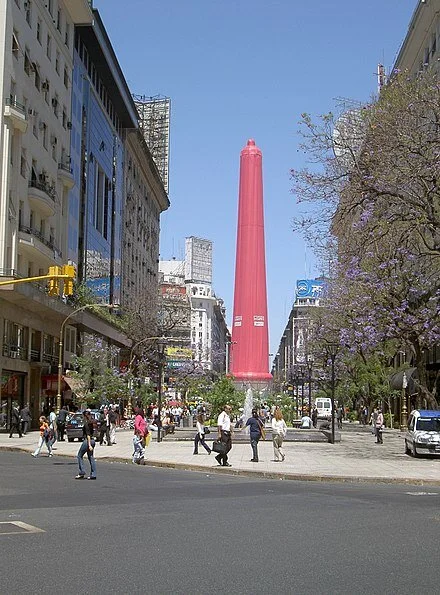
A 220-foot- long "condom" on the Obelisk of Buenos Aires, part of an awareness campaign for the 2005 World AIDS Day
MANCHESTER, Conn.
From the legislation they have placed before the Connecticut General Assembly's Education Committee, you might think that state Reps. Jeffrey A. Currey, D-East Hartford, Jillian Gilchrest, D-West Hartford, and Nicole Klarides-Ditria, R-Seymour, just awoke from long comas.
Their bill would require schools to teach about "lesbian, gay, bisexual, transgender, queer, and other sexual orientations and gender identities." Currey, Gilchrest and Klarides-Ditria seem not to have noticed that for many years now most Connecticut high school students never master high school English and math, nor that school attendance in Connecticut has been erratic for 10 months because of the virus epidemic and that tens of thousands of students, especially those from the poorest households, have largely disappeared from school even as they already were years behind when they arrived in kindergarten.
As a practical matter, there is little education now and even if the epidemic ended tomorrow schools would need two years to catch up on what students have missed. So do these legislators really need to get their political correctness tickets punched with their posturing obliviousness?
xxx
In the name of protecting the health of young people, many Democratic state legislators are proposing to outlaw flavored tobacco and flavorings for electronic cigarettes. Meanwhile, these legislators also are maneuvering to legalize marijuana and internet gambling, which may mess up not only children but their parents as well.
Of course the difference is that there's little tax revenue to be lost by outlawing flavored tobacco and e-cigarette flavorings and much tax revenue to be gained by legalizing marijuana and Internet gambling. So proposing to outlaw flavored tobacco and e-cigarette flavorings is another empty pose.
Advocates of the legislation don't seem to have noticed that alcoholic beverages recently have added flavorings likely to appeal especially to underage drinkers. Connecticut's roadsides are now littered with "nip" bottles of such flavored liquor, thrown out of car windows during joyrides by juveniles who can't bring home regular bottles of the stuff. Alcohol is just as dangerous to juveniles as tobacco and e-cigarettes, more so when juveniles are driving around and drinking, but nobody is proposing to outlaw flavored liquor. Apparently that also would risk too much tax revenue.
The movement to legalize marijuana, now close to irresistible, signifies recognition that contraband laws don't work and that people can protect themselves against victimless crime. Meanwhile tobacco smoking is in a long decline because of the public health publicity campaign against it, and tobacco smokers are using e-cigarettes to kick the more dangerous tobacco habit.
Connecticut already prohibits sale of tobacco and electronic cigarettes to people under 21. Adults are trusted to decide for themselves about those and other risky products. Besides, a legislature that was really concerned about the health of children would be insisting on the resumption of in-person schooling before worrying about tobacco and e-cigarettes. But Connecticut's teacher unions are far more fearsome than its liquor and tobacco merchants.
xxx
Even so, Connecticut's liquor retailers are fearsome enough, numbering about 1,300 and distributed in every legislator's district. They long have defeated attempts to repeal the state's liquor price-support system, which imposes just about the highest alcoholic-beverage prices in the country. Now the liquor stores are mobilizing against legislation to let Connecticut-made wines be sold in supermarkets.
There is no good reason to forbid supermarkets from selling wine and liquor along with the beer they already sell. For convenience to shoppers, other states allow supermarkets to sell all three alcoholic products. Liquor stores could be allowed to sell groceries too, and indeed Connecticut lately has let them sell some non-beverage items.
The only restriction needed here is to keep alcohol out of the hands of minors, and supermarkets can do that. They already "card" even the oldest folks buying beer.
The liquor store lobby perceives the request of the wineries as the camel's nose under the tent of the whole corrupt liquor retailing system. People who don't own liquor stores may cheer for the camel.
Chris Powell is a columnist for the Journal Inquirer, in Manchester.
Green energy here and there

From Robert Whitcomb’s “Digital Diary,’’ in GoLocal24.com
I think that much of the future of alternative green energy will be in small-scale, “distributive energy” projects, such as the small wind turbines that the Bank of America wants to put up at 3400 Pawtucket Ave., in East Providence. As these proliferate, electricity-generation by big regulated utilities will become less important.
We’ll get increasingly used to seeing solar-energy arrays and small wind turbines in parking lots and on roofs of office buildings, factories and apartment buildings all over the place.

Suntactics dual axis solar trackers are useful for small businesses.
— Photo by Adsala
'Unpredictable, happy accidents'


Photos by Dennis Stein at Fountain Street Fine Art, Boston. He tells the gallery:
“I have always been drawn to mundane and ordinary subjects, and attempt to give them visual strength. I walk around with a camera or two, and just photograph whatever catches my interest. I then sort through what I have and see what threads there are that run through them. Cameras are fun to use, especially older ones. I recently bought a 1936 Zeiss Ikon Ikoflex TLR for $ 60. It works great. Each film camera, each lens, each kind of film has their own personality, in a sense. So when I combine this camera with this lens and this film, I get a result that is different from another combination, which could be subtle or quite different. I have a few Holga toy cameras, one of which has a funky shutter. A Russian 35mm camera doesn’t always wind to the next frame properly, so I get overlapping negatives. I hand-hold a pinhole camera and make an exposure as I am walking. The resulting images can be totally unpredictable, happy accidents.’’
Mr. Stein is based in the Boston suburb of Medfield. Hit this link for his site.
(Pictures below are not by him.)

One of many abandoned buildings on the eerie grounds of the former Medfield State Hospital, an institution for the mentally ill that opened in 1896 and closed in 2003.
Although the buildings are not open to the public (they have been boarded up), the grounds may be visited during daylight hours. It’s a good place to shoot a horror movie.

Pre-suburb: “The Pool, Medfield,” 1889, by Dennis Miller Bunker. Museum of Fine Arts, Boston.
Movies pick up on it

“I don’t think violence on film breeds violence in life. Violence in life breeds violence in films.’’
— Robert Burgess Aldrich (1918-1983), scion of a very rich and powerful Rhode Island WASP family, he was a film director, writer and producer.
His movies include
Vera Cruz (1954), Kiss Me Deadly (1955), The Big Knife (1955), Autumn Leaves (1956), Attack (1956), What Ever Happened to Baby Jane? (1962), Hush...Hush, Sweet Charlotte (1964), The Flight of the Phoenix (1965), The Dirty Dozen (1967) and The Longest Yard (1974).
Zoom talk on the long history of fake news

Reporters with various forms of "fake news" from an 1894 illustration by Frederick Burr Opper
THE CENTER FOR THE STUDY OF INTERNATIONAL COMMUNICATIONS
at the American University of Paris
invite you to a Zoom talk by
Lee W. Huebner
Who will speak about his new book
The Fake News Panic of a Century Ago: The Discovery of Propaganda and the Coercion of Consent
Jim Bittermann of CNN Paris will moderate the conversation
Friday, February 12 , 2021 at 7 pm/19h CET-Paris (1 pm EST-NY time)
His new book explores some of the history of fake news, propaganda and the fear of the mob in the US. He is the former publisher and CEO of the International Herald Tribune newspaper and former special assistant to the President of the United States during the Nixon administration, Lee W. Huebner earned his Ph.D. and M.A. in history from Harvard University. He is the Airlie Professor of Media and Public Affairs at George Washington University. He was also the President of the American University of Paris.
RSVP to bernahuebner@gmail.com
(You will receive a Zoom link upon RSVP)
A donation of $25 is suggested.
All proceeds will go to our scholarship fund and the continuing our support of deserving students.
Click here on Link to contribute.
Exposing young people of high potential but limited financial resources to the global media scene is at the center of the Center’s mission. Our scholarship students come from developing world countries and most return to leadership roles in places where the media face speech challenges and opportunities. Support for such students is an important investment in our global future.
Learn more about CECI, our students, and our work in this brochure

The roots of "fake news" from UNESCO's World Trends Report

Famished fishing


“Well I’m on the Downeaster ‘Alexa’
And I’m cruising through Block Island Sound,
I have chartered a course to the Vineyard
But tonight I am Nantucket bound.’’
Billy Joel, songwriter and singer, in “The Downeaster Alexa’’
The persona is an impoverished fisherman off southern New England who, like many of his fellow fishermen, finds it increasingly hard to make ends meet and keep ownership of his boat, a type known as a downeaster.
‘The cross I wear’
In the long, sleepless watches of the night,
A gentle face — the face of one long dead —
Looks at me from the wall, where round its head
The night-lamp casts a halo of pale light.
Here in this room she died; and soul more white
Never through martyrdom of fire was led
To its repose; nor can in books be read
The legend of a life more benedight.
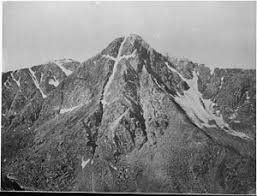
There is a mountain in the distant West
That, sun-defying, in its deep ravines
Displays a cross of snow upon its side.
Such is the cross I wear upon my breast
These eighteen years, through all the changing scenes
And seasons, changeless since the day she died.
“The Cross of Snow,’’ by Henry Wadsworth Longfellow (1807-1882), a New Englander who for many years was America’s most-famous poet.
Grace Kelly: North Atlantic Rail's vast initiative for our region
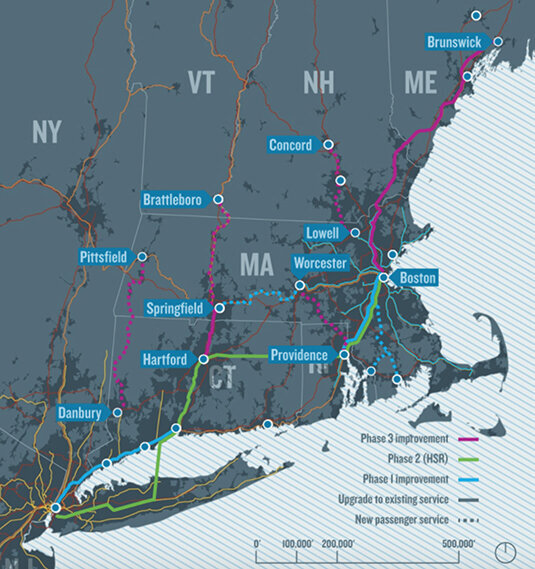
The seven-state initiative, with the six New England states and downstate New York, would be built in three phases.
— From North Atlantic Rail
From ecoRI News (ecori.org)
A group of transit professionals, activists, elected officials and organizations want the North Atlantic region to ride the rails into the future.
The North Atlantic Rail (NAR) initiative proposes connecting small and mid-sized urban centers throughout New England with a high-speed trunk line. It also calls for bolstering and connecting regional rail networks, paving the way for a cleaner, more equitable regional transportation system. The trunk line would operate at 200 mph, and regional and branch lines between 80 and 120.
The NAR initiative also includes building a 16-mile rail tunnel under Long Island Sound, connecting New York City to Boston, with stops in Connecticut and Providence, in a 100-minute ride. In Rhode Island, components include frequent high-speed rails from Kingston, T.F. Green International Airport and Providence to Boston.
The idea for a North Atlantic Rail network was born in 2004 as part of a University of Pennsylvania studio project headed by Robert Yaro, a planner and former president of the New York City-based Regional Plan Association.
“We looked at growth trends in the country and identified the emergence of what we call mega regions,” Yaro said. “And these places are all 300 to 600 miles across, so they’re too big to be easily traversed by automobile and too small to be easily, efficiently traversed by the airplane.”
Six years later, in 2010, another studio project was hosted after Amtrak came out with a proposal for a $50 billion project to reduce travel times between New York and Washington, D.C., by 15 minutes.
“We said, ‘That sounds like a lot of money for not a lot of benefit,’” Yaro recalled. “So we convened another studio … with some very talented professional engineering advisors … and we came up with a high-speed, world-class rail proposal for the Northeast.”
One person who attended the presentation was Joe Biden.
“Ten minutes into the presentation and Biden says ‘Goddamnit, I've been waiting for this for 30 years. Let's do it,’” Yaro said.
And now that Biden is president and pushing a $2 trillion sustainable infrastructure and clean energy plan, NAR is putting the pedal to the metal.
“We see this as a kind of once-in-a-lifetime opportunity to get this thing done,” Yaro said. “The key to making ticket prices affordable is to have the federal government cover the capital cost. Until the Georgia Senate races were decided, everybody just kind of rolled their eyes when we said that, but now it's something that’s a very serious likelihood. It’s more than a possibility; it’s gonna happen.”
NAR steering committee members have estimated that the project would cost a total of $105 billion to design and build the top priority projects and trunk line.
The benefits of a high-speed rail go beyond interconnectedness, and NAR proponents believe that it would also stimulate the economy by creating jobs, result in the creation of more affordable housing, and promote environmentally friendlier transportation through electric trains.
According to the International Energy Agency (IEA), rail travel has a “much lower carbon intensity” compared to other modes of transportation, such as air and car. IEA also notes that if intensive, aggressive rail transportation was implemented globally, carbon dioxide emissions could peak by the late 2030s.
“The next economy that wants to emerge by disrupting the carbon economy is a green economy,” said Christopher “Kip” Bergstrom, a project manager at the Connecticut Office of Policy and Management and member of the NAR steering committee. “Anything that carbonized is just a dead man walking.”
The NAR also promotes the idea that high-speed rail will create a more equitable society by allowing people to easily commute to work and by creating job opportunities and wealth redistribution within urban areas.
“The opportunity to reduce our carbon footprint, while simultaneously reducing income inequality, lies in re-localizing and shortening the chains of supply and distribution; and in building local wealth and redistributing it in a circular rather than extractive business model,” wrote Bergstrom in a white paper titled North Atlantic Rail: Building a Just and Green Economy.
The coronavirus pandemic has underscored a lot of these societal problems, making pushing this effort forward all the more urgent.
“I think it’s important to underscore, why now?” said John Flaherty, deputy director of Grow Smart Rhode Island, one of the NAR’s associated organizations. “This is about much more than improved mobility. It’s about an economic recovery, it’s about climate. In the Northeast 40 percent of the emissions are from the transportation sector … so unless we do something that’s bold and transformational, we’re never going to get our arms around that.”
Grace Kelly is an ecoRI News reporter.
'To rescue it from the future'
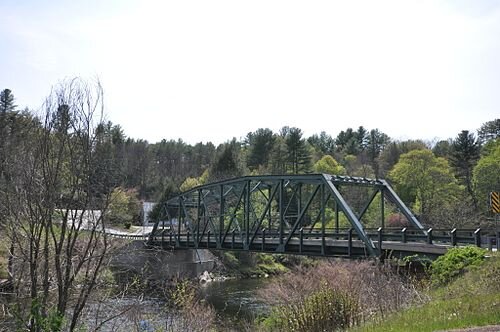
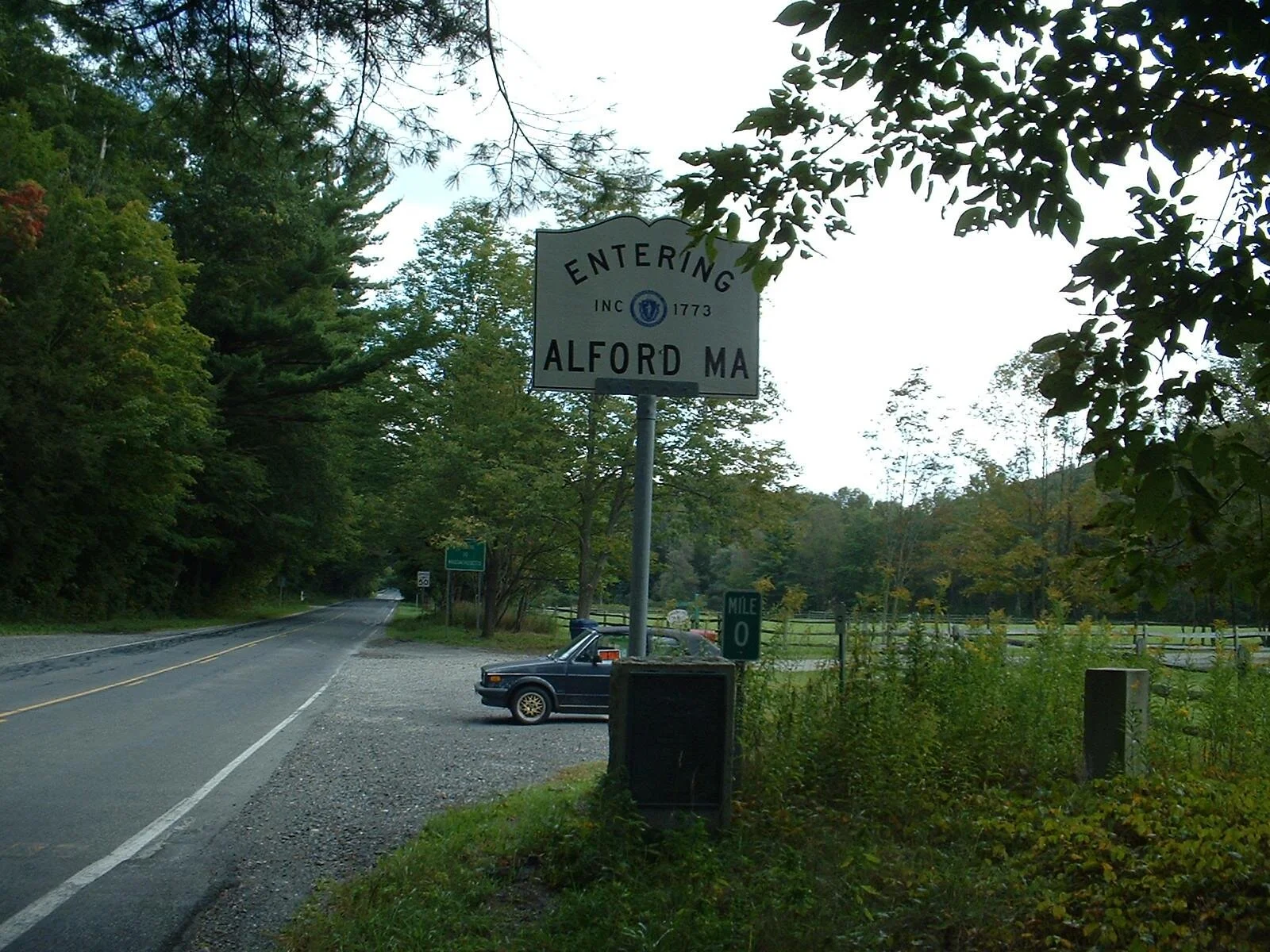
“Alford, Massachusetts: Mandy stood there with her old Nikon film camera, snapping photo after photo of the rural landscape. It was difficult to describe the wonderful feeling of there not being a single cell phone in sight; the only modern technology around was the faint blue glow of a cathode ray tube television in the window of a nearby house, and a few cars and trucks parked in crumbling gravel driveways. She was allowed to see this place, one that would likely be ruined by the 21st century as time went on… places like these were extremely hard to find these days. A world of wood-burning cookstoves and the waxy smell of Paraffin, laundry hung out to dry, rusty steel bridges over streams that reflected the bright blue skies, apple pies left out on windowsills… a world of hard work with very little to show for it aside from the sunlight beaming down on a proud community. And Mandy wanted to trap it all in her Kodak film rolls and rescue it from the future.”
― Rebecca McNutt in her novel Smog City. Alford is in the Taconic Range, which are lumped with the Berkshires (Hill or Mountains.
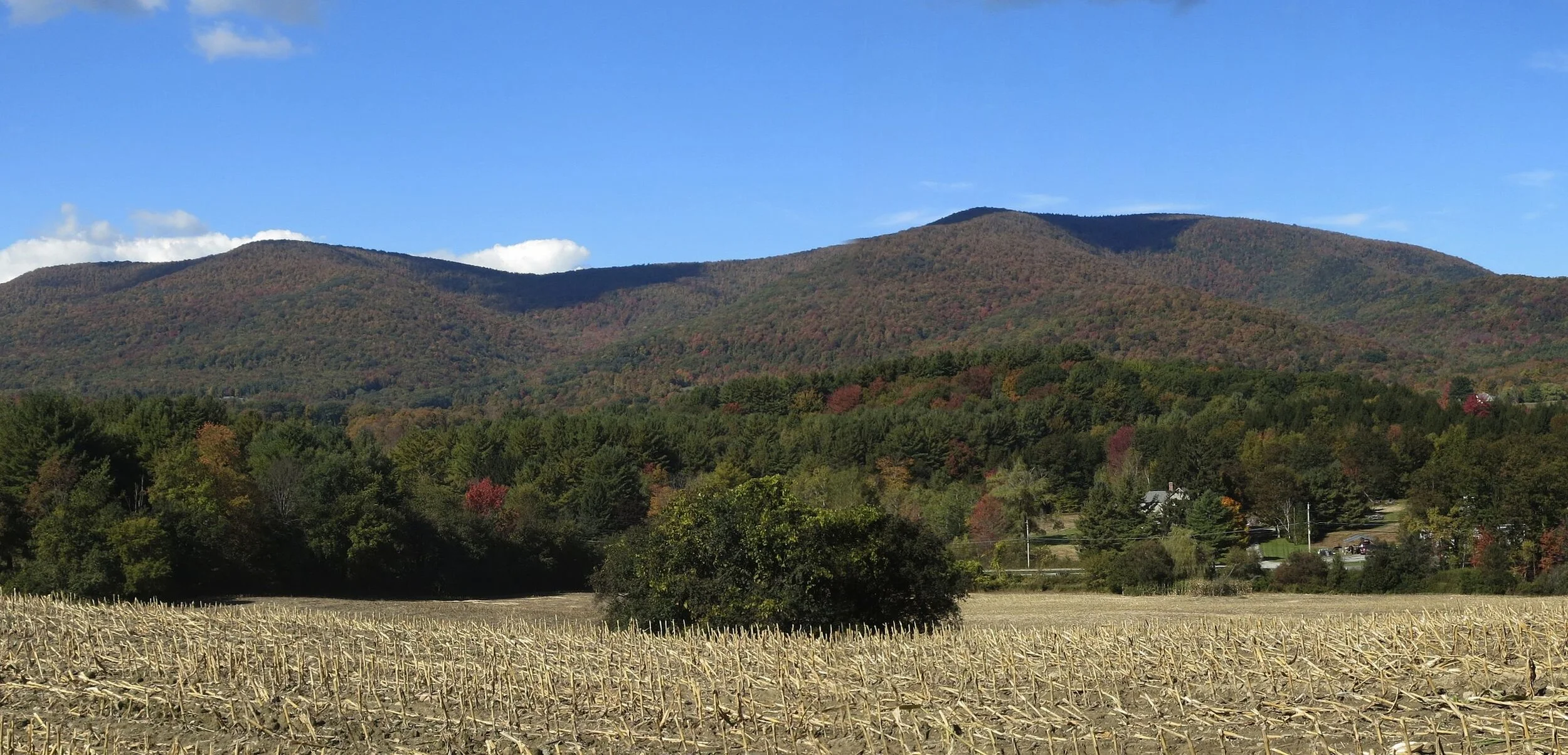
In the Taconic Range of far western Massachusetts
— Photo by Ericshawwhite
Don Pesci: Can Lamont govern after COVID-19?

Ned Lamont
VERNON, Conn.
“But I have promises to keep’’ – Robert Frost, in “Stopping by Woods on a Snowy Evening’’
In a recent CTMirror story, “In third year, still an uncertain relationship for Lamont and legislators”, reporter Mark Pazniokas harvests the following quote from Connecticut Gov. Ned Lamont:
“Gov. Ned Lamont has had two very different years in office. During the first, he had to contend with the Connecticut General Assembly, but not COVID-19. During the second, he faced COVID, but not lawmakers.
“Any guess which he found easier?
“’Obviously, this last year has been very different. I mean, the legislature went home. That was amazing. We got a lot done,’ Lamont said recently. Then laughing, he added, ‘You know, I kind of liked it.’
“A joke, perhaps.”
The joke, perhaps, may have been intended to raise a chuckle among Connecticut’s legacy media but, if the present Coronavirus trajectory holds true, Lamont will soon find that he must negotiate with a reinvigorated General Assembly, a body controlled by progressives on the hunt for new taxes. That the General Assembly is controlled by progressives is, some commentators in the state are beginning to relize, no joke.
The state legislature, we all know, has not assembled for about a year, and recently the General Assembly, one of the oldest political bodies in the nation, has voted, virtually of course, to extend Lamont’s ill defined “emergency powers” another three or four months. The Democratic- dominated General Assembly voted, in other words, to continue to make itself irrelevant for a few additional months. The open-ended extension benefits two political bodies – the state’s Democratic governor and the long recessed Democratic-dominated General Assembly that has easily escaped voter accountability for the last year.
The autocratic powers currently wielded by Lamont simply dispense with what we here in the “Constitution State” used to call representative democracy. Lamont has for more than a year been given the opportunity to play Caesar with Connecticut’s budget and its once free economic marketplace. Even Caesar, Rome’s first important imperator, left Rome’s burgeoning marketplace relatively free of autocratic control.
Caesarism has always been a less troublesome mode of governing for chief executives than constitutional republicanism, which tends to be rather raucous, transparent and messy, involving as it does the consent of the governed by means of proportional representation. But even during the Rome of Julius Caesar, republicanism was always churning under the surface, and it’s doubtful that the republican afflatus, operative in Connecticut ever since revolutionary republicans of 1776 threw off the British monarchy, has been effectively extinguished during the plague year.
As herd-immunity increases and Coronavirus disappears, republican government in all its pristine glory once again looms like a giant over the horizon. There are some political leaders in Connecticut, as well as some thoughtless and timid members of Connecticut’s legacy media, captives of incumbency, who suspect that Lamont will not be up to the job of negotiating successfully with a legislature dominated by progressives, whose chief ambition just now is to increase state revenue, again, by dunning millionaires, instituting new road based taxes and extending, once again, the borders of state spending. The more they get, the more they want. The more they want, the better they feel. So, eat millionaires at every meal.
Historically, most progressive taxes – the federal income tax began as a 1 percent tax on wealth accumulation to pay off Civil War debt – trickle down to the broad middle class. A quick glance at pay stubs will convince even accomplished masters of progressive propaganda that a progressive tax, once levied, becomes less progressive as it descends more broadly to the middle class, thus temporarily satiating the ravenous appetite of special interests dear to progressives and relieving legislators facing mounting debts of the necessity to cut spending.
As the Coronavirus plague recedes at some point in the near future, everyone in the state who regards face masks, however useful, as a sign of subordination to an unrepresentative and overreaching chief executive and a useless legislature may be inspired to create on the state Capitol lawn an auto-de-fé in which their masks may be publicly burned – oh happy day! -- much in the way bras were burned in the 1960s by feminists liberating themselves from oppressive social norms.
None of us in The Constitution State should emerge from Hell with empty hands. Constitutions are the indispensable foundations of republican, representative government. And the further unmoored politicians become from their foundations, the more piratical they will be.
In this the winter of our discontent…
The woods are lovely, dark and deep,
But I have promises to keep,
And miles to go before I sleep,
And miles to go before I sleep.
Frost’s promises that must be kept, he makes clear in other of his poems, are the hitching posts of the American Republic.
Don Pesci is a Vernon-based columnist.
SHARE
Photos of 'gifts'

Han Feng, “The Gift No. 15,” by Hang Feng, in her show “The Gift’’ through March 13 at the Robert Klein Gallery, Boston
The gallery says:
“‘The Gift ‘ features the recent work of Chinese designer and photographer Feng, who picked up photography a few years ago under the encouragement of friends and colleagues. …She's spent the last year in her New York City studio, creating still-life photographs and waiting out the pandemic. This is the first exhibition of Feng's fine art photographs, consisting of 20 photographs of still-lifes depicting the artist's fruits, vegetables and ceramics. …The fruits and vegetables came from local specialty and farmers markets in New York City, and the ceramic items are gifts from other artists and pieces from Feng's private collection. ‘The earth gives us these beautiful, even ordinary things,’ she says, ‘I love to share them with friends, I really feel like they are a gift.’’’
Well-ventilated enough?

“Windswept,’’ by Cheshire, Conn.-based painter June Webster, in the New England Watercolor Society’s annual member show, at the Guild of Boston Artists, through Feb 28.

Left to right: Cheshire Town Hall, Congregational Church, Cheshire Historical Society and Civil War memorial

Roaring Brook Falls, in Cheshire
William Morgan: Book looks at metaphor, imitation, craft and continuity in architecture
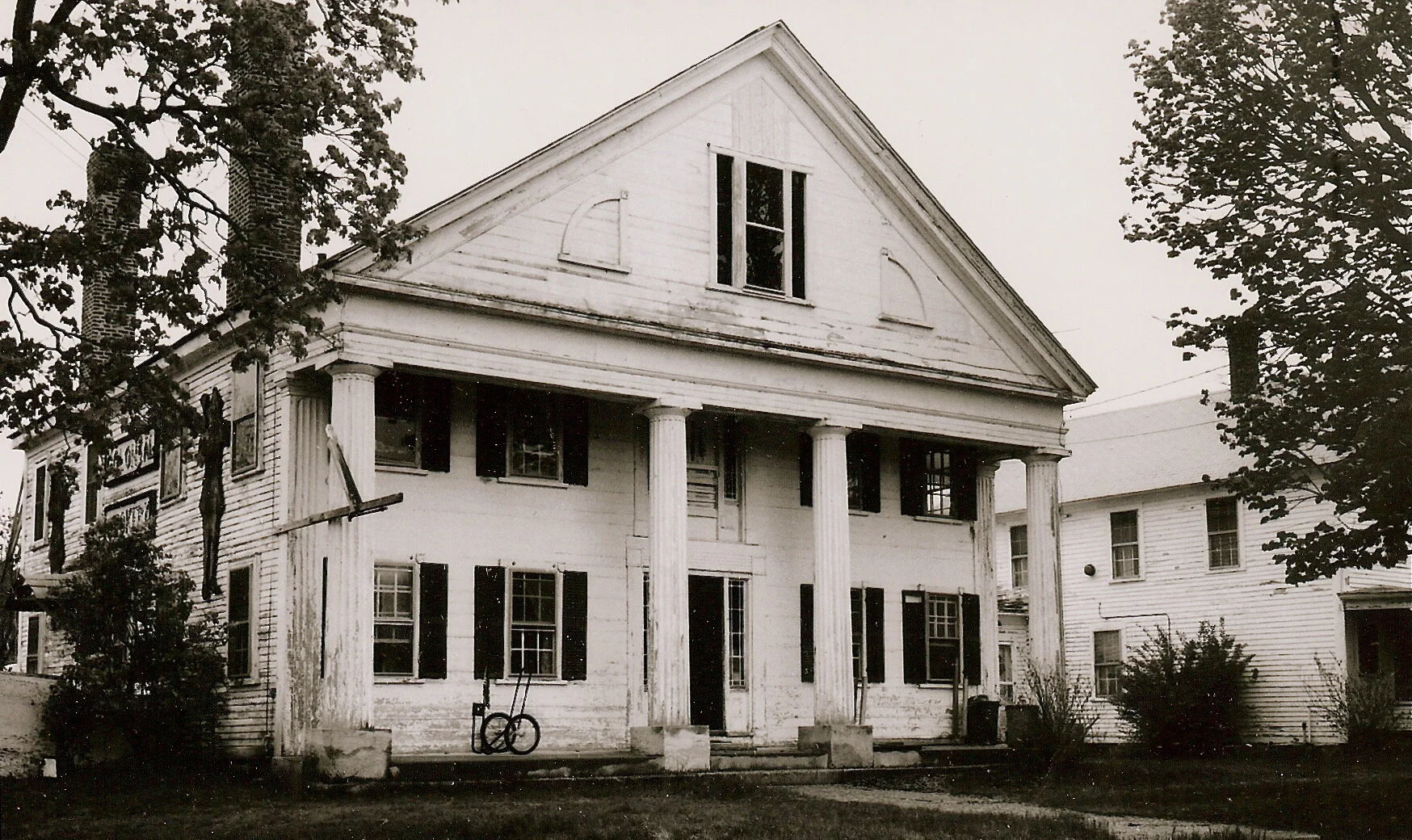
One of the New England's most picturesque assets is the Greek Revival house, a sometimes brick but usually wooden structure with some classical details or perhaps even a portico, lining Main Streets and dotting the countryside. Aside from some legends about empathetic associations with Greece's war of independence, the application of a Doric column or the heavy lintel over the doorway was less politics than embellishment. Americans simply liked the style.

Temple form Greek Revival house in Winchendon, Mass., 1845.
— Photo by William Morgan
It is rather for architects and historians, such as Columbia University's Françoise Astorg Bollack, to parse the genealogy and meaning behind these temples of democracy. In her latest book, Material Transfers, Professor Bollack reminds us how the marble temples of ancient Greece were recreations of earlier wooden structures. While Americans built plenty of neoclassical civic structures, it was in the domestic realm that the wooden temple flourished.
The same kind of torturous evolution with multiple iconographic transferences can be seen in other styles, such as the Gothic Revival. A style that paid homage to the masonry forms of the pointed arch and the ribbed vault got translated into Carpenter's Gothic churches or cottages. Bollack also mentions cast iron, a revolutionary material that was molded with Renaissance details and often painted to look like stone.
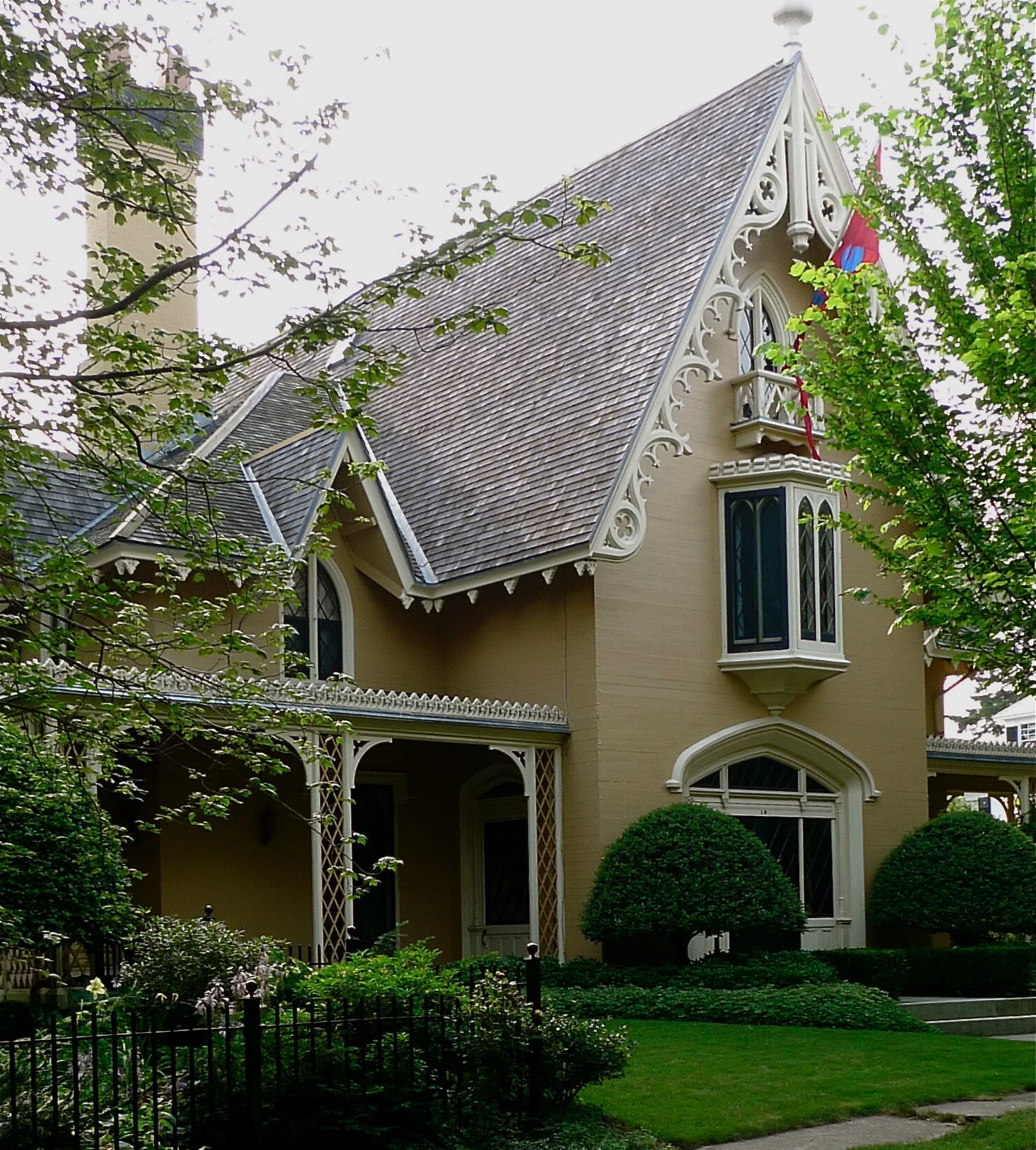
Rotch House, A.J. Davis architect, New Bedford, Mass., 1845.
— Photo by William Morgan
The French-trained Bollack has done considerable restoration work, but Material Transfers: Metaphor, Craft, and Place in Contemporary is an attempt to redefine the meaning of contextual design. Rather than engaging in a century-old battle between modern and traditional – the angst of replica versus invention, Bollack suggests we discard an "outdated moral opprobrium." She presents us with at 22 projects characterized by "an unorthodox coupling and combination of forms."
Throughout, Bollack addresses such issues as metaphor, imitation, craft, and continuity ("Where are we to find a fresh place for 'the new' within the constraints of longed-for continuity"). The role of historic form in contemporary architecture, and how to respect the "continued validity of the traditional," are significant issues. But beyond the architectural theory, there is much delight to be found in the photographs of the "rich stew of hands-on trial-and-error research, collaboration between architects, manufacturers, and craftspeople."
Material Transfers is replete with serendipity, ingenuity, and the stretching of material limits. In Dairy House in England, glass lies between the horizontal wooden siding. An office block in downtown Copenhagen for a manufacturer of gold beads has a curtain facade of perforated copper that shimmers and changes color by night. A 14-story building in New York City looks just like its neighbors, except that it is made of pressed and carved glass.

The Dairy House, Somerset, England, Skene Catling de la Peña architect, 2007.
Such successful brainteasers include an abstract modern design for winery in Napa Valley, constructed of gabion (loose rubble constrained by wire fencing). A Paris town house is covered with a pixilated photograph of the building next door in a wood resin of the type used for road signs. Rammed concrete is the material of choice for a guest house added to a 1740 German vineyard.
Familiar forms inform many of these examples, but they are often realized in materials that seem wildly unfamiliar. Modernism's chief tenet of originality is stood on its head here, although many of the solutions respect tradition. This book's projects "begin to open the door to shift the discourse's center of gravity towards a more inclusive view of what 'making' is all about."
That said, anyone who is interested in contemporary architecture and how it can be integrated into historical settings, and invigorated with new, mostly non-polemical ideas will reap many visual rewards from this book.
One of my favorites from Material Transfers is the diagrammatical construction in welded galvanized wire mesh of an 1177 Italian basilica that was destroyed by an earthquake in 1233.
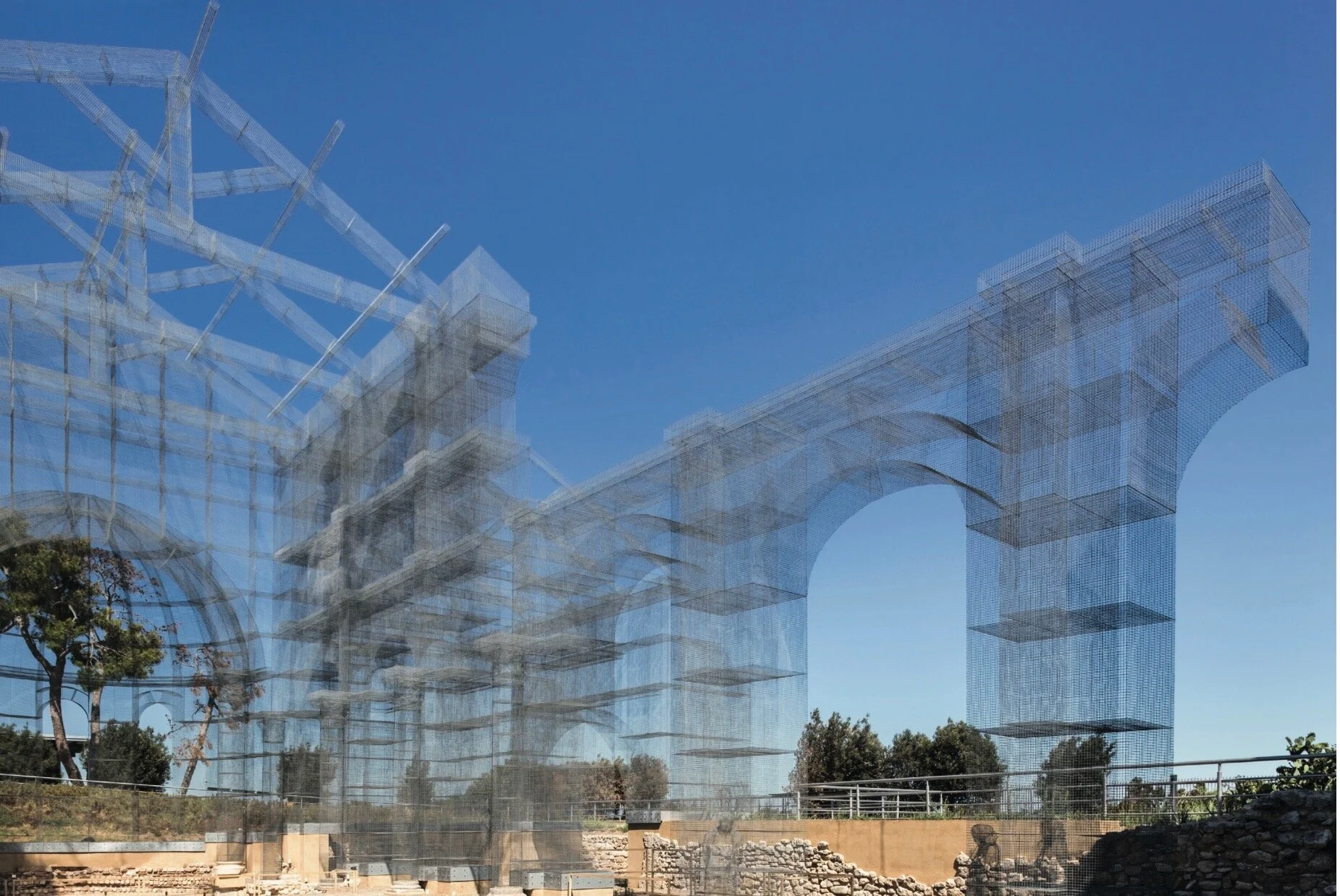
Basilica di Rete Metallicca di Siponto, Puglia, Italy, Edoardo Tresoldi architect, 2016.
But the project that really moves me is the Wadden See Center on the west coast of Denmark (the marshland is a UNESCO World Heritage Site) by the ever restrained and environmentally aware Danish designer, Dorte Mandrup. What at first appears to be a bold, modern statement is also a tribute to the local agricultural vernacular, and its roof and walls are surprisingly made of thatch.
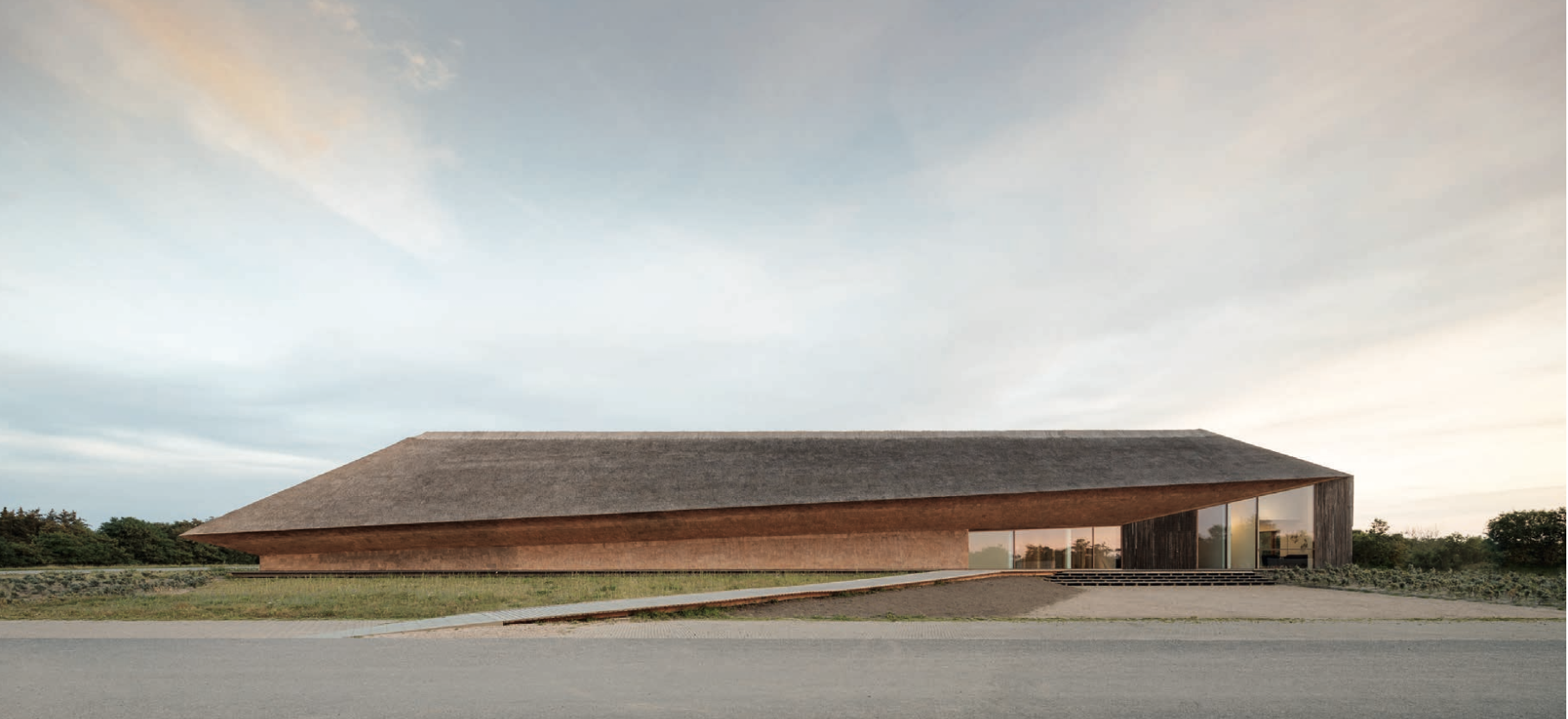
Wadden See Center, Ribe, Denmark, Dorte Mandrup architect, 2017.
Françoise Astorg Bollack, Material Transfer: Metaphor, Craft, and Place in Contemporary Architecture, Monacelli Press, New York, 2020, $50.
Providence-based writer William Morgan has a degree in restoration and preservation of historic architecture from Columbia University. His latest book is Snowbound: Dwelling in Winter.