
Green energy here and there

From Robert Whitcomb’s “Digital Diary,’’ in GoLocal24.com
I think that much of the future of alternative green energy will be in small-scale, “distributive energy” projects, such as the small wind turbines that the Bank of America wants to put up at 3400 Pawtucket Ave., in East Providence. As these proliferate, electricity-generation by big regulated utilities will become less important.
We’ll get increasingly used to seeing solar-energy arrays and small wind turbines in parking lots and on roofs of office buildings, factories and apartment buildings all over the place.

Suntactics dual axis solar trackers are useful for small businesses.
— Photo by Adsala
'Unpredictable, happy accidents'


Photos by Dennis Stein at Fountain Street Fine Art, Boston. He tells the gallery:
“I have always been drawn to mundane and ordinary subjects, and attempt to give them visual strength. I walk around with a camera or two, and just photograph whatever catches my interest. I then sort through what I have and see what threads there are that run through them. Cameras are fun to use, especially older ones. I recently bought a 1936 Zeiss Ikon Ikoflex TLR for $ 60. It works great. Each film camera, each lens, each kind of film has their own personality, in a sense. So when I combine this camera with this lens and this film, I get a result that is different from another combination, which could be subtle or quite different. I have a few Holga toy cameras, one of which has a funky shutter. A Russian 35mm camera doesn’t always wind to the next frame properly, so I get overlapping negatives. I hand-hold a pinhole camera and make an exposure as I am walking. The resulting images can be totally unpredictable, happy accidents.’’
Mr. Stein is based in the Boston suburb of Medfield. Hit this link for his site.
(Pictures below are not by him.)

One of many abandoned buildings on the eerie grounds of the former Medfield State Hospital, an institution for the mentally ill that opened in 1896 and closed in 2003.
Although the buildings are not open to the public (they have been boarded up), the grounds may be visited during daylight hours. It’s a good place to shoot a horror movie.

Pre-suburb: “The Pool, Medfield,” 1889, by Dennis Miller Bunker. Museum of Fine Arts, Boston.
Movies pick up on it

“I don’t think violence on film breeds violence in life. Violence in life breeds violence in films.’’
— Robert Burgess Aldrich (1918-1983), scion of a very rich and powerful Rhode Island WASP family, he was a film director, writer and producer.
His movies include
Vera Cruz (1954), Kiss Me Deadly (1955), The Big Knife (1955), Autumn Leaves (1956), Attack (1956), What Ever Happened to Baby Jane? (1962), Hush...Hush, Sweet Charlotte (1964), The Flight of the Phoenix (1965), The Dirty Dozen (1967) and The Longest Yard (1974).
Zoom talk on the long history of fake news

Reporters with various forms of "fake news" from an 1894 illustration by Frederick Burr Opper
THE CENTER FOR THE STUDY OF INTERNATIONAL COMMUNICATIONS
at the American University of Paris
invite you to a Zoom talk by
Lee W. Huebner
Who will speak about his new book
The Fake News Panic of a Century Ago: The Discovery of Propaganda and the Coercion of Consent
Jim Bittermann of CNN Paris will moderate the conversation
Friday, February 12 , 2021 at 7 pm/19h CET-Paris (1 pm EST-NY time)
His new book explores some of the history of fake news, propaganda and the fear of the mob in the US. He is the former publisher and CEO of the International Herald Tribune newspaper and former special assistant to the President of the United States during the Nixon administration, Lee W. Huebner earned his Ph.D. and M.A. in history from Harvard University. He is the Airlie Professor of Media and Public Affairs at George Washington University. He was also the President of the American University of Paris.
RSVP to bernahuebner@gmail.com
(You will receive a Zoom link upon RSVP)
A donation of $25 is suggested.
All proceeds will go to our scholarship fund and the continuing our support of deserving students.
Click here on Link to contribute.
Exposing young people of high potential but limited financial resources to the global media scene is at the center of the Center’s mission. Our scholarship students come from developing world countries and most return to leadership roles in places where the media face speech challenges and opportunities. Support for such students is an important investment in our global future.
Learn more about CECI, our students, and our work in this brochure

The roots of "fake news" from UNESCO's World Trends Report

Famished fishing


“Well I’m on the Downeaster ‘Alexa’
And I’m cruising through Block Island Sound,
I have chartered a course to the Vineyard
But tonight I am Nantucket bound.’’
Billy Joel, songwriter and singer, in “The Downeaster Alexa’’
The persona is an impoverished fisherman off southern New England who, like many of his fellow fishermen, finds it increasingly hard to make ends meet and keep ownership of his boat, a type known as a downeaster.
‘The cross I wear’
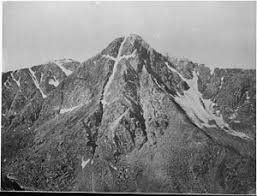
In the long, sleepless watches of the night,
A gentle face — the face of one long dead —
Looks at me from the wall, where round its head
The night-lamp casts a halo of pale light.
Here in this room she died; and soul more white
Never through martyrdom of fire was led
To its repose; nor can in books be read
The legend of a life more benedight.
There is a mountain in the distant West
That, sun-defying, in its deep ravines
Displays a cross of snow upon its side.
Such is the cross I wear upon my breast
These eighteen years, through all the changing scenes
And seasons, changeless since the day she died.
“The Cross of Snow,’’ by Henry Wadsworth Longfellow (1807-1882), a New Englander who for many years was America’s most-famous poet.
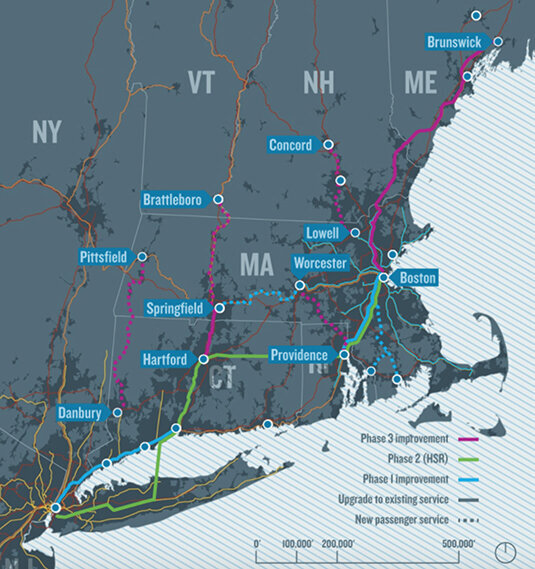
Grace Kelly: North Atlantic Rail's vast initiative for our region
The seven-state initiative, with the six New England states and downstate New York, would be built in three phases.
— From North Atlantic Rail
From ecoRI News (ecori.org)
A group of transit professionals, activists, elected officials and organizations want the North Atlantic region to ride the rails into the future.
The North Atlantic Rail (NAR) initiative proposes connecting small and mid-sized urban centers throughout New England with a high-speed trunk line. It also calls for bolstering and connecting regional rail networks, paving the way for a cleaner, more equitable regional transportation system. The trunk line would operate at 200 mph, and regional and branch lines between 80 and 120.
The NAR initiative also includes building a 16-mile rail tunnel under Long Island Sound, connecting New York City to Boston, with stops in Connecticut and Providence, in a 100-minute ride. In Rhode Island, components include frequent high-speed rails from Kingston, T.F. Green International Airport and Providence to Boston.
The idea for a North Atlantic Rail network was born in 2004 as part of a University of Pennsylvania studio project headed by Robert Yaro, a planner and former president of the New York City-based Regional Plan Association.
“We looked at growth trends in the country and identified the emergence of what we call mega regions,” Yaro said. “And these places are all 300 to 600 miles across, so they’re too big to be easily traversed by automobile and too small to be easily, efficiently traversed by the airplane.”
Six years later, in 2010, another studio project was hosted after Amtrak came out with a proposal for a $50 billion project to reduce travel times between New York and Washington, D.C., by 15 minutes.
“We said, ‘That sounds like a lot of money for not a lot of benefit,’” Yaro recalled. “So we convened another studio … with some very talented professional engineering advisors … and we came up with a high-speed, world-class rail proposal for the Northeast.”
One person who attended the presentation was Joe Biden.
“Ten minutes into the presentation and Biden says ‘Goddamnit, I've been waiting for this for 30 years. Let's do it,’” Yaro said.
And now that Biden is president and pushing a $2 trillion sustainable infrastructure and clean energy plan, NAR is putting the pedal to the metal.
“We see this as a kind of once-in-a-lifetime opportunity to get this thing done,” Yaro said. “The key to making ticket prices affordable is to have the federal government cover the capital cost. Until the Georgia Senate races were decided, everybody just kind of rolled their eyes when we said that, but now it's something that’s a very serious likelihood. It’s more than a possibility; it’s gonna happen.”
NAR steering committee members have estimated that the project would cost a total of $105 billion to design and build the top priority projects and trunk line.
The benefits of a high-speed rail go beyond interconnectedness, and NAR proponents believe that it would also stimulate the economy by creating jobs, result in the creation of more affordable housing, and promote environmentally friendlier transportation through electric trains.
According to the International Energy Agency (IEA), rail travel has a “much lower carbon intensity” compared to other modes of transportation, such as air and car. IEA also notes that if intensive, aggressive rail transportation was implemented globally, carbon dioxide emissions could peak by the late 2030s.
“The next economy that wants to emerge by disrupting the carbon economy is a green economy,” said Christopher “Kip” Bergstrom, a project manager at the Connecticut Office of Policy and Management and member of the NAR steering committee. “Anything that carbonized is just a dead man walking.”
The NAR also promotes the idea that high-speed rail will create a more equitable society by allowing people to easily commute to work and by creating job opportunities and wealth redistribution within urban areas.
“The opportunity to reduce our carbon footprint, while simultaneously reducing income inequality, lies in re-localizing and shortening the chains of supply and distribution; and in building local wealth and redistributing it in a circular rather than extractive business model,” wrote Bergstrom in a white paper titled North Atlantic Rail: Building a Just and Green Economy.
The coronavirus pandemic has underscored a lot of these societal problems, making pushing this effort forward all the more urgent.
“I think it’s important to underscore, why now?” said John Flaherty, deputy director of Grow Smart Rhode Island, one of the NAR’s associated organizations. “This is about much more than improved mobility. It’s about an economic recovery, it’s about climate. In the Northeast 40 percent of the emissions are from the transportation sector … so unless we do something that’s bold and transformational, we’re never going to get our arms around that.”
Grace Kelly is an ecoRI News reporter.
'To rescue it from the future'
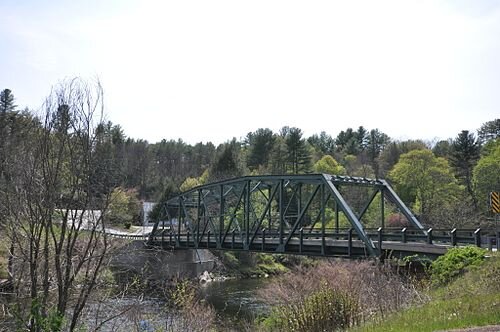
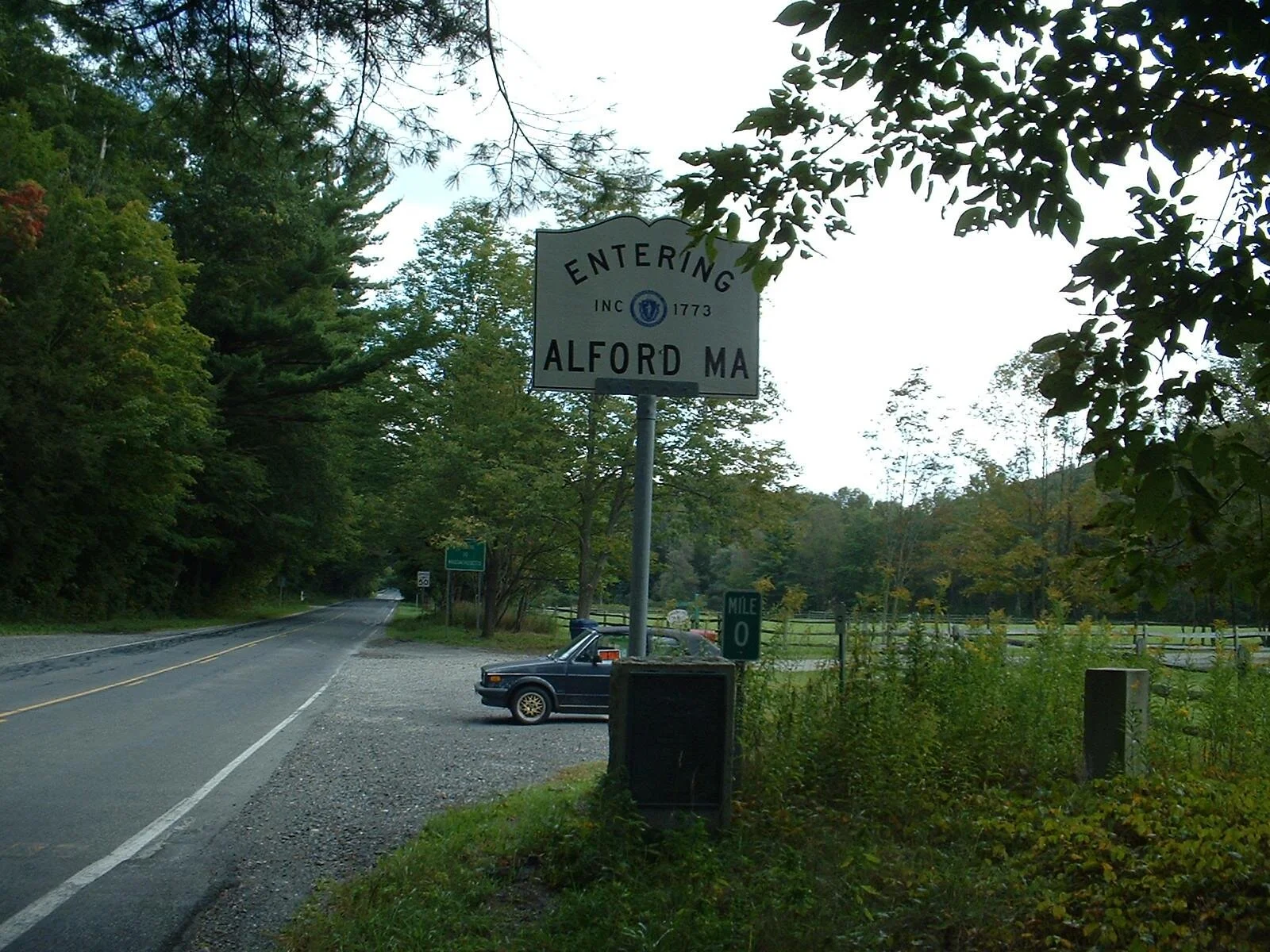
“Alford, Massachusetts: Mandy stood there with her old Nikon film camera, snapping photo after photo of the rural landscape. It was difficult to describe the wonderful feeling of there not being a single cell phone in sight; the only modern technology around was the faint blue glow of a cathode ray tube television in the window of a nearby house, and a few cars and trucks parked in crumbling gravel driveways. She was allowed to see this place, one that would likely be ruined by the 21st century as time went on… places like these were extremely hard to find these days. A world of wood-burning cookstoves and the waxy smell of Paraffin, laundry hung out to dry, rusty steel bridges over streams that reflected the bright blue skies, apple pies left out on windowsills… a world of hard work with very little to show for it aside from the sunlight beaming down on a proud community. And Mandy wanted to trap it all in her Kodak film rolls and rescue it from the future.”
― Rebecca McNutt in her novel Smog City. Alford is in the Taconic Range, which are lumped with the Berkshires (Hill or Mountains.
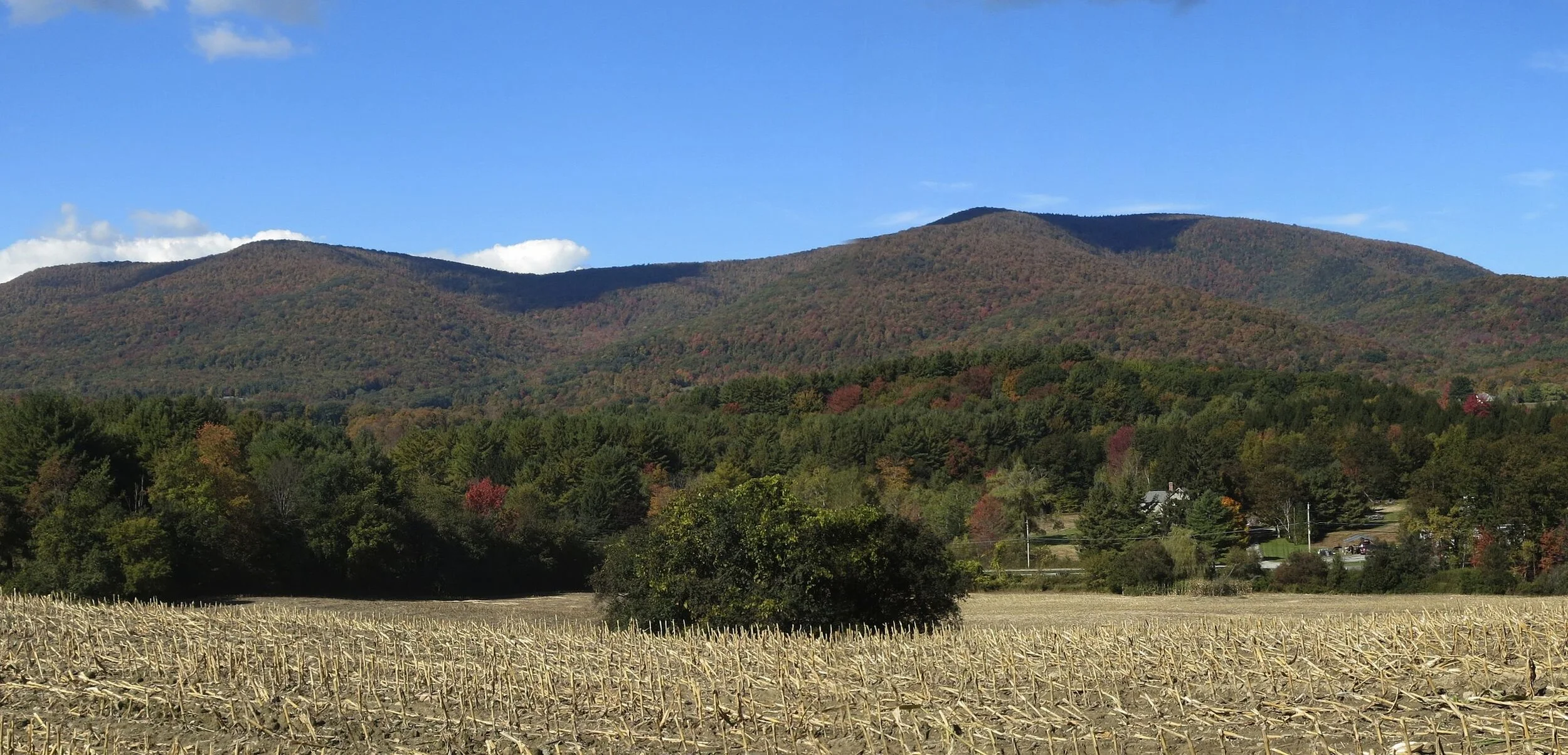
In the Taconic Range of far western Massachusetts
— Photo by Ericshawwhite
Don Pesci: Can Lamont govern after COVID-19?
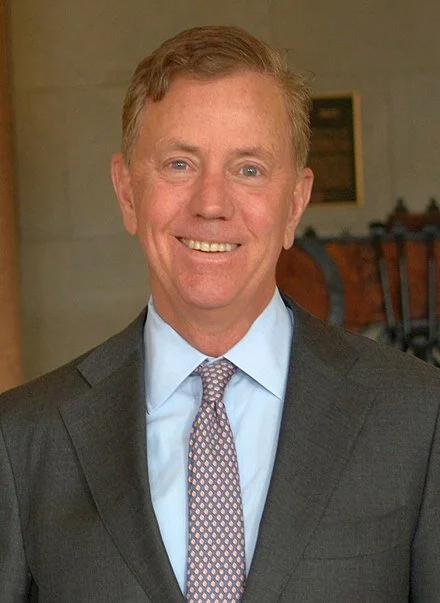
Ned Lamont
VERNON, Conn.
“But I have promises to keep’’ – Robert Frost, in “Stopping by Woods on a Snowy Evening’’
In a recent CTMirror story, “In third year, still an uncertain relationship for Lamont and legislators”, reporter Mark Pazniokas harvests the following quote from Connecticut Gov. Ned Lamont:
“Gov. Ned Lamont has had two very different years in office. During the first, he had to contend with the Connecticut General Assembly, but not COVID-19. During the second, he faced COVID, but not lawmakers.
“Any guess which he found easier?
“’Obviously, this last year has been very different. I mean, the legislature went home. That was amazing. We got a lot done,’ Lamont said recently. Then laughing, he added, ‘You know, I kind of liked it.’
“A joke, perhaps.”
The joke, perhaps, may have been intended to raise a chuckle among Connecticut’s legacy media but, if the present Coronavirus trajectory holds true, Lamont will soon find that he must negotiate with a reinvigorated General Assembly, a body controlled by progressives on the hunt for new taxes. That the General Assembly is controlled by progressives is, some commentators in the state are beginning to relize, no joke.
The state legislature, we all know, has not assembled for about a year, and recently the General Assembly, one of the oldest political bodies in the nation, has voted, virtually of course, to extend Lamont’s ill defined “emergency powers” another three or four months. The Democratic- dominated General Assembly voted, in other words, to continue to make itself irrelevant for a few additional months. The open-ended extension benefits two political bodies – the state’s Democratic governor and the long recessed Democratic-dominated General Assembly that has easily escaped voter accountability for the last year.
The autocratic powers currently wielded by Lamont simply dispense with what we here in the “Constitution State” used to call representative democracy. Lamont has for more than a year been given the opportunity to play Caesar with Connecticut’s budget and its once free economic marketplace. Even Caesar, Rome’s first important imperator, left Rome’s burgeoning marketplace relatively free of autocratic control.
Caesarism has always been a less troublesome mode of governing for chief executives than constitutional republicanism, which tends to be rather raucous, transparent and messy, involving as it does the consent of the governed by means of proportional representation. But even during the Rome of Julius Caesar, republicanism was always churning under the surface, and it’s doubtful that the republican afflatus, operative in Connecticut ever since revolutionary republicans of 1776 threw off the British monarchy, has been effectively extinguished during the plague year.
As herd-immunity increases and Coronavirus disappears, republican government in all its pristine glory once again looms like a giant over the horizon. There are some political leaders in Connecticut, as well as some thoughtless and timid members of Connecticut’s legacy media, captives of incumbency, who suspect that Lamont will not be up to the job of negotiating successfully with a legislature dominated by progressives, whose chief ambition just now is to increase state revenue, again, by dunning millionaires, instituting new road based taxes and extending, once again, the borders of state spending. The more they get, the more they want. The more they want, the better they feel. So, eat millionaires at every meal.
Historically, most progressive taxes – the federal income tax began as a 1 percent tax on wealth accumulation to pay off Civil War debt – trickle down to the broad middle class. A quick glance at pay stubs will convince even accomplished masters of progressive propaganda that a progressive tax, once levied, becomes less progressive as it descends more broadly to the middle class, thus temporarily satiating the ravenous appetite of special interests dear to progressives and relieving legislators facing mounting debts of the necessity to cut spending.
As the Coronavirus plague recedes at some point in the near future, everyone in the state who regards face masks, however useful, as a sign of subordination to an unrepresentative and overreaching chief executive and a useless legislature may be inspired to create on the state Capitol lawn an auto-de-fé in which their masks may be publicly burned – oh happy day! -- much in the way bras were burned in the 1960s by feminists liberating themselves from oppressive social norms.
None of us in The Constitution State should emerge from Hell with empty hands. Constitutions are the indispensable foundations of republican, representative government. And the further unmoored politicians become from their foundations, the more piratical they will be.
In this the winter of our discontent…
The woods are lovely, dark and deep,
But I have promises to keep,
And miles to go before I sleep,
And miles to go before I sleep.
Frost’s promises that must be kept, he makes clear in other of his poems, are the hitching posts of the American Republic.
Don Pesci is a Vernon-based columnist.
SHARE
Photos of 'gifts'

Han Feng, “The Gift No. 15,” by Hang Feng, in her show “The Gift’’ through March 13 at the Robert Klein Gallery, Boston
The gallery says:
“‘The Gift ‘ features the recent work of Chinese designer and photographer Feng, who picked up photography a few years ago under the encouragement of friends and colleagues. …She's spent the last year in her New York City studio, creating still-life photographs and waiting out the pandemic. This is the first exhibition of Feng's fine art photographs, consisting of 20 photographs of still-lifes depicting the artist's fruits, vegetables and ceramics. …The fruits and vegetables came from local specialty and farmers markets in New York City, and the ceramic items are gifts from other artists and pieces from Feng's private collection. ‘The earth gives us these beautiful, even ordinary things,’ she says, ‘I love to share them with friends, I really feel like they are a gift.’’’
Well-ventilated enough?

“Windswept,’’ by Cheshire, Conn.-based painter June Webster, in the New England Watercolor Society’s annual member show, at the Guild of Boston Artists, through Feb 28.

Left to right: Cheshire Town Hall, Congregational Church, Cheshire Historical Society and Civil War memorial

Roaring Brook Falls, in Cheshire
William Morgan: Book looks at metaphor, imitation, craft and continuity in architecture
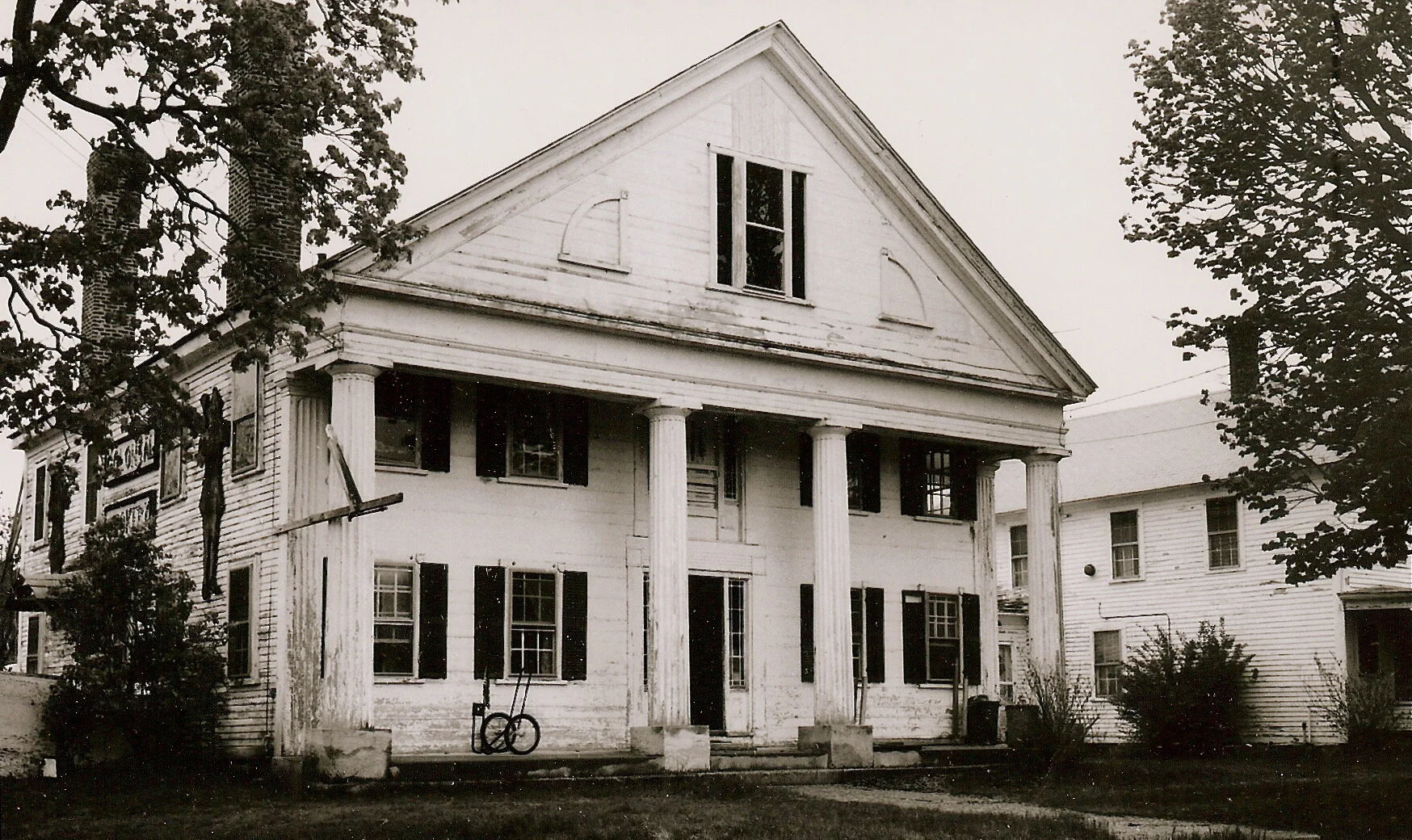
One of the New England's most picturesque assets is the Greek Revival house, a sometimes brick but usually wooden structure with some classical details or perhaps even a portico, lining Main Streets and dotting the countryside. Aside from some legends about empathetic associations with Greece's war of independence, the application of a Doric column or the heavy lintel over the doorway was less politics than embellishment. Americans simply liked the style.

Temple form Greek Revival house in Winchendon, Mass., 1845.
— Photo by William Morgan
It is rather for architects and historians, such as Columbia University's Françoise Astorg Bollack, to parse the genealogy and meaning behind these temples of democracy. In her latest book, Material Transfers, Professor Bollack reminds us how the marble temples of ancient Greece were recreations of earlier wooden structures. While Americans built plenty of neoclassical civic structures, it was in the domestic realm that the wooden temple flourished.
The same kind of torturous evolution with multiple iconographic transferences can be seen in other styles, such as the Gothic Revival. A style that paid homage to the masonry forms of the pointed arch and the ribbed vault got translated into Carpenter's Gothic churches or cottages. Bollack also mentions cast iron, a revolutionary material that was molded with Renaissance details and often painted to look like stone.
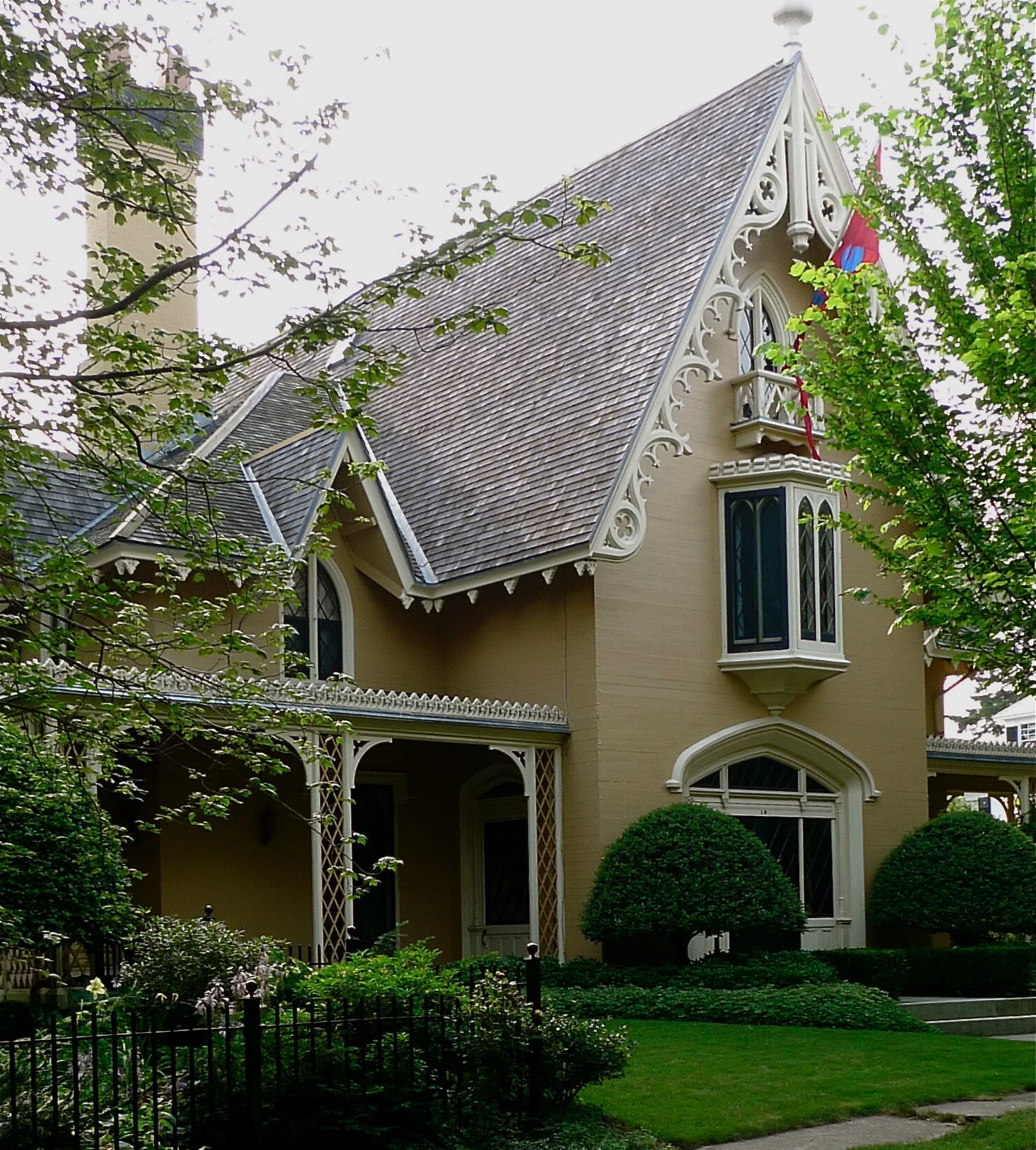
Rotch House, A.J. Davis architect, New Bedford, Mass., 1845.
— Photo by William Morgan
The French-trained Bollack has done considerable restoration work, but Material Transfers: Metaphor, Craft, and Place in Contemporary is an attempt to redefine the meaning of contextual design. Rather than engaging in a century-old battle between modern and traditional – the angst of replica versus invention, Bollack suggests we discard an "outdated moral opprobrium." She presents us with at 22 projects characterized by "an unorthodox coupling and combination of forms."
Throughout, Bollack addresses such issues as metaphor, imitation, craft, and continuity ("Where are we to find a fresh place for 'the new' within the constraints of longed-for continuity"). The role of historic form in contemporary architecture, and how to respect the "continued validity of the traditional," are significant issues. But beyond the architectural theory, there is much delight to be found in the photographs of the "rich stew of hands-on trial-and-error research, collaboration between architects, manufacturers, and craftspeople."
Material Transfers is replete with serendipity, ingenuity, and the stretching of material limits. In Dairy House in England, glass lies between the horizontal wooden siding. An office block in downtown Copenhagen for a manufacturer of gold beads has a curtain facade of perforated copper that shimmers and changes color by night. A 14-story building in New York City looks just like its neighbors, except that it is made of pressed and carved glass.
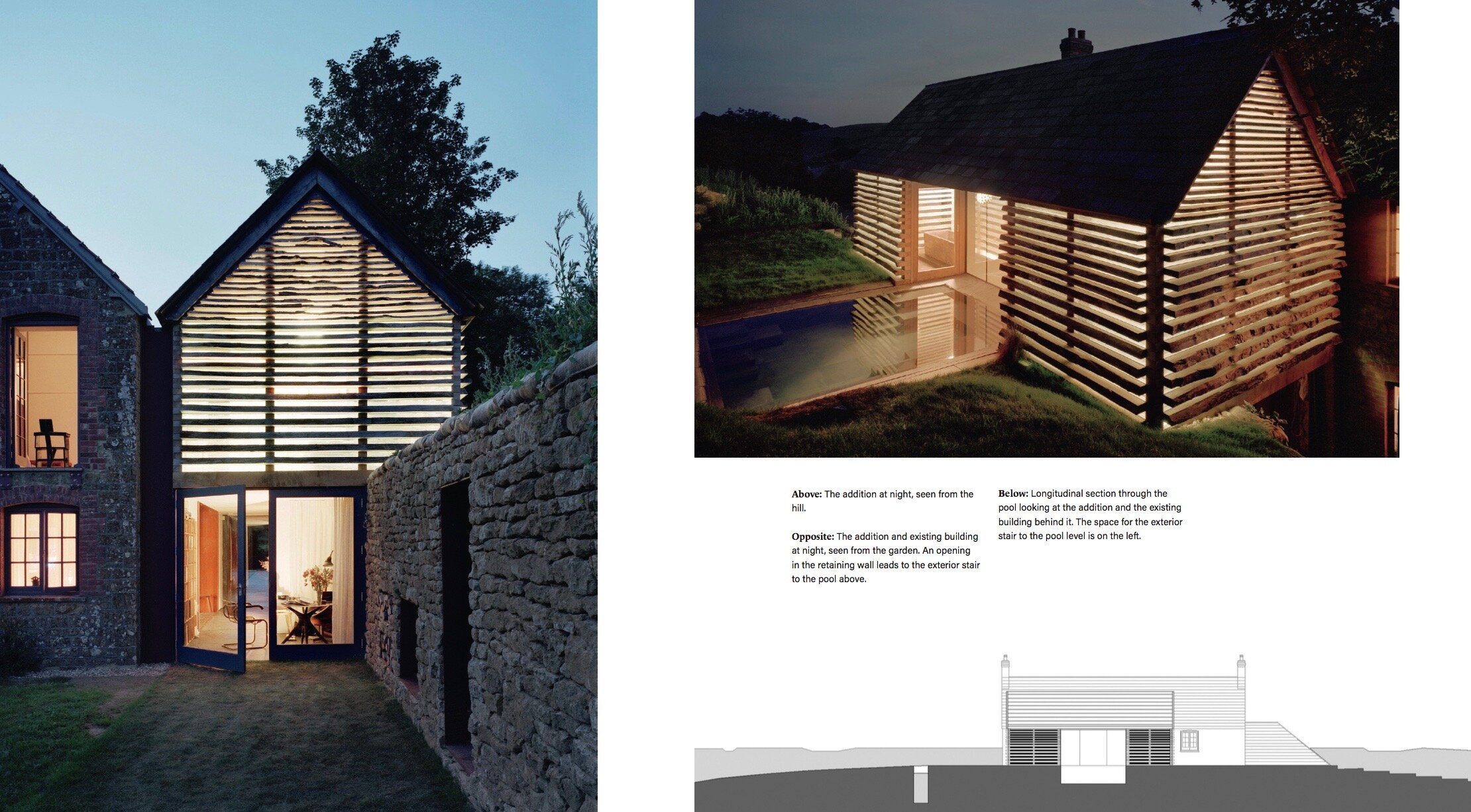
The Dairy House, Somerset, England, Skene Catling de la Peña architect, 2007.
Such successful brainteasers include an abstract modern design for winery in Napa Valley, constructed of gabion (loose rubble constrained by wire fencing). A Paris town house is covered with a pixilated photograph of the building next door in a wood resin of the type used for road signs. Rammed concrete is the material of choice for a guest house added to a 1740 German vineyard.
Familiar forms inform many of these examples, but they are often realized in materials that seem wildly unfamiliar. Modernism's chief tenet of originality is stood on its head here, although many of the solutions respect tradition. This book's projects "begin to open the door to shift the discourse's center of gravity towards a more inclusive view of what 'making' is all about."
That said, anyone who is interested in contemporary architecture and how it can be integrated into historical settings, and invigorated with new, mostly non-polemical ideas will reap many visual rewards from this book.
One of my favorites from Material Transfers is the diagrammatical construction in welded galvanized wire mesh of an 1177 Italian basilica that was destroyed by an earthquake in 1233.
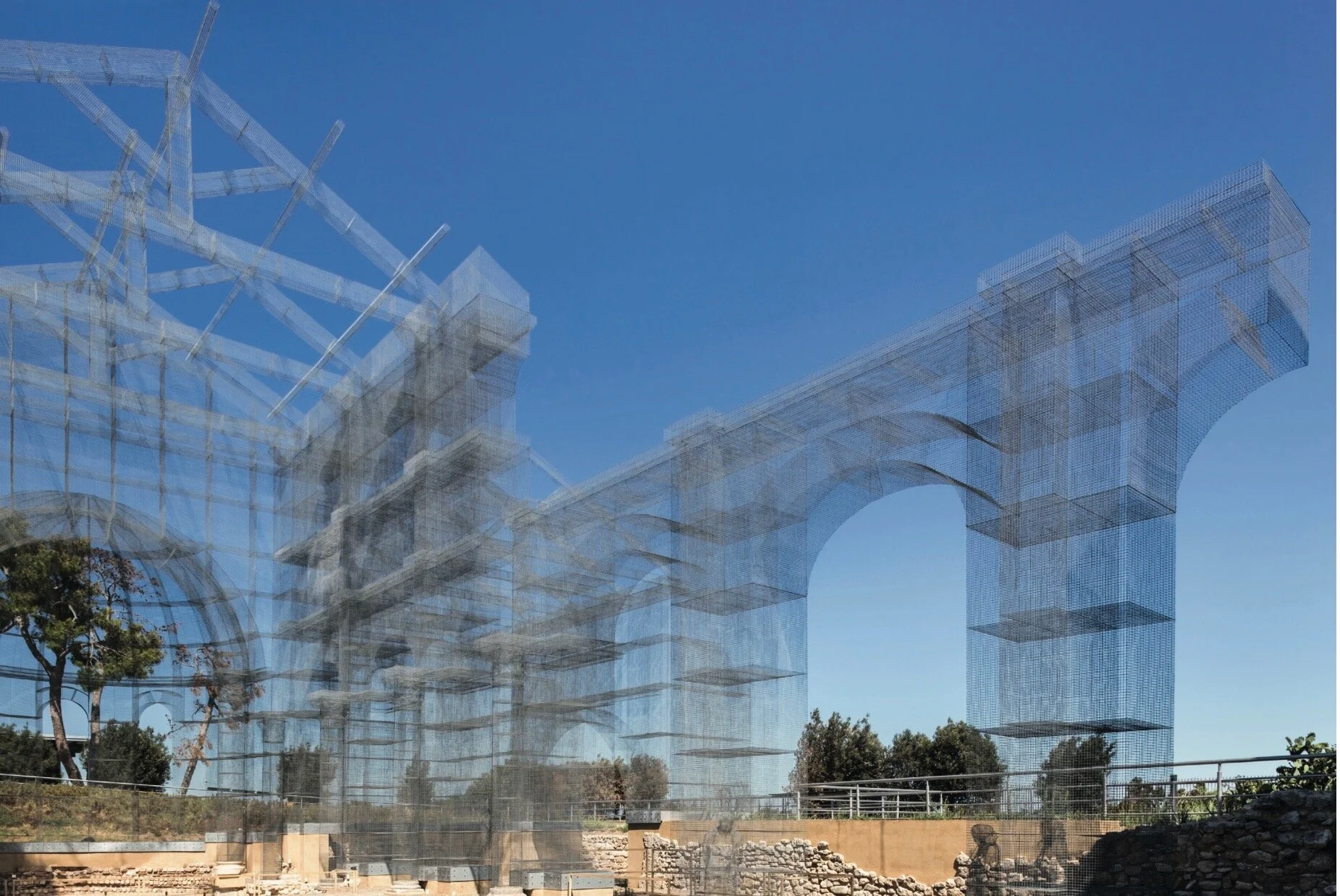
Basilica di Rete Metallicca di Siponto, Puglia, Italy, Edoardo Tresoldi architect, 2016.
But the project that really moves me is the Wadden See Center on the west coast of Denmark (the marshland is a UNESCO World Heritage Site) by the ever restrained and environmentally aware Danish designer, Dorte Mandrup. What at first appears to be a bold, modern statement is also a tribute to the local agricultural vernacular, and its roof and walls are surprisingly made of thatch.
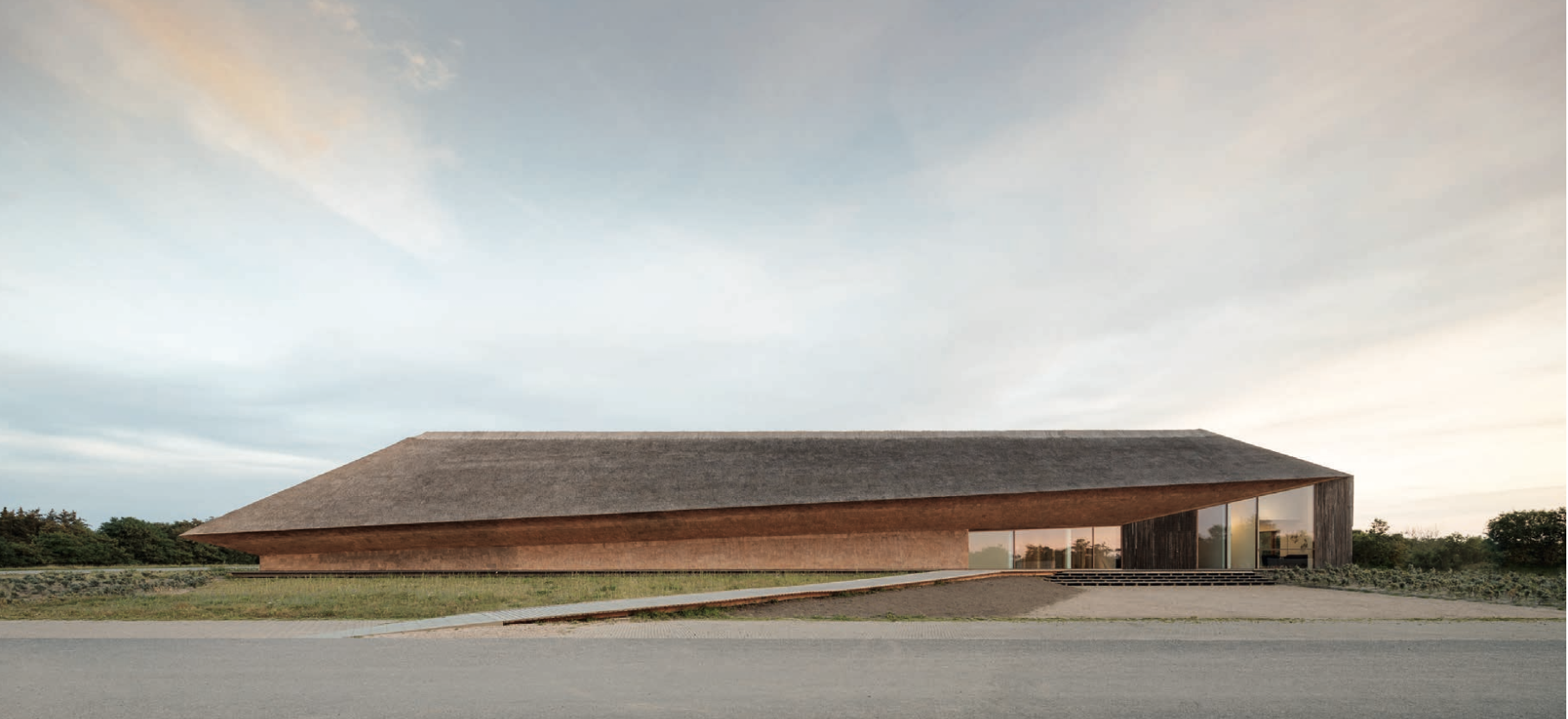
Wadden See Center, Ribe, Denmark, Dorte Mandrup architect, 2017.
Françoise Astorg Bollack, Material Transfer: Metaphor, Craft, and Place in Contemporary Architecture, Monacelli Press, New York, 2020, $50.
Providence-based writer William Morgan has a degree in restoration and preservation of historic architecture from Columbia University. His latest book is Snowbound: Dwelling in Winter.
Then and now: View over the Charles River

View of Boston from Cambridge. Top, in the early ‘50’s; bottom, last year
Who’s paying that ‘think tank’?
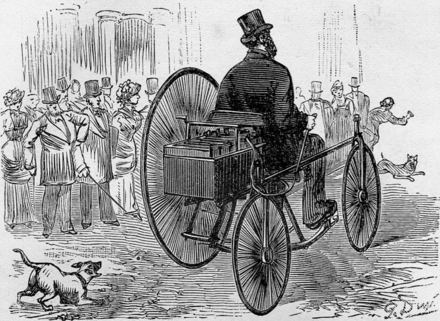
Gustave Trouvé's personal electric vehicle (1881), world's first full-scale electric car to be publicly presented

Charging a BMW electric car
Inevitably the Rhode Island Center for Freedom and Prosperity seems to oppose any effort to cut back on fossil-fuel use around here, be it the new regional agreement to cut transportation emissions or anything else. But then this outfit is part of a far-right network of “think tanks’’. They are connected to such operations as Koch Industries, which, among other things, is a major fossil-fuel company, and far-right individuals, many, like the Koch crowd, in bed with the fossil-fuel sector. That sector has long been the beneficiary of massive federal corporate welfare. (There’s far more socialism for the rich and capitalism for the poor than most Americans realize.)
The Rhode Island outfit is a devoted promoter of heightened “freedom and prosperity” for billionaires, but not necessarily for the general public. Check out, among other sites, sourcewatch.org, guidestar.org and donorsearch.net for funding information.
As we follow the assertions and “research” of so-called think tanks and other advocacy groups, left, right or in the middle, we should always find out which special-interest groups are financing them. Often they do everything they can to hide their funders. You won’t get straight answers from the “think tank’’ beneficiaries. You have to dig. Lots of “dark money’’ out there.
Scientific realities are forcing the world to move at an accelerated rate away from oil, coal and gas in order to slow global warming, and thus the green-energy sector will be where most of the new energy-sector jobs will be created in the next decade. And the costs of generating and using green energy are falling at a faster and faster clip.
Elon Musk knows what he’s doing with his electric cars.
And note this from the Jan. 28 New York Tim
“General Motors said Thursday that it would phase out petroleum-powered cars and trucks and sell only vehicles that have zero tailpipe emissions by 2035, a seismic shift by one of the world’s largest automakers that makes billions of dollars today from gas-guzzling pickup trucks and sport utility vehicles.”
Hit this link to read the story.
New England, with its famed technology sector and green-energy potential (especially offshore wind power), should be one of the nation’s biggest beneficiaries of the move away from carbon-based energy.
Meanwhile, don’t reject nuclear energy, which is clean except for the politically fraught matter of where to put the spent fuel. It must continue to play an important role in electricity generation, and if the waste issue can be appropriately answered, perhaps a growing one.
Llewellyn King: Social media, GameStop and the mob

WEST WARWICK, R.I.
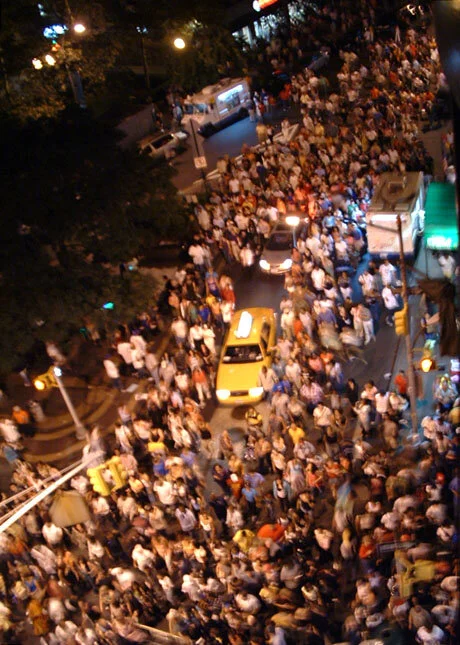
Social media has an unimagined, unequaled, uncontrollable and unpredictable ability to mobilize groups of people for antisocial action to take a sliver of society and turn it into a mob.
Last month this new force in society was on display, from mobilizing anti-vaxxers in Los Angeles to the U.S. Capitol riot, resulting in five deaths, to the run-up of a weak stock, GameStop, by 1,800 percent.
These events, coupled with some strains of political thought being restricted on Facebook and Twitter, along with the outright banning of tweets from Donald Trump when he was still in office, have some in Congress convinced something should be done -- often the precursor to ill-conceived legislation.
Conservatives want the protections granted by Section 230 of the Communications Decency Act, which provides Google, Facebook and others a liability shield from third-party content posted on their platform, to be reformed. They believe that they are disadvantaged by the networks.
The hot issue of the moment in Congress is the price run-up of GameStop and other companies’ stocks. The primary platform most fingered so far is Reddit, but the active enabler was the app Robinhood, which allows individuals (mostly day traders) to trade stock without commissions and in small amounts.
This Robinhood isn’t to be confused with the English folk hero, who stole from the rich to give to the poor, even though that is the intent of those who named the app. In reality, it is part of the Wall Street system, and makes its money selling all those little trades to market-making firms. Its purpose is to make money not to bring social justice to small traders.
I interviewed Sinan Aral, who studies social media at the MIT Sloan School of Management and is the author of The Hype Machine: How Social Media Disrupts Our Elections, Our Economy and Our Health -- and How We Must Adapt, for White House Chronicle, the PBS television show that I host. He said of GameStop that it is imperative to find out what really happened. For example: When was the GameStop stock run-up taken over by big funds which stood to make huge profits, and some of which did?
Rep. Maxine Waters (D.-Calif.), who chairs the House Financial Services Committee, has scheduled hearings. That is a beginning, but it certainly won’t be definitive. Congressional hearings seldom are.
Jarrod Hazelton, a University of Chicago-trained economist who once worked for a Connecticut hedge fund, concurred. It looks like GameStop was “the perfect storm,” he said, also on White House Chronicle.
Hazelton told me that this never was a sudden viral event: The groundwork for the Reddit-fueled frenzy over GameStop was laid by professionals nearly a year ago.
It was social media that drove the madness, even though it was the big financial houses, like BlackRock (which reportedly made $3 billion on GameStop stock) that were the big winners. Speculation in the stock was already underway when trades took off, enabled and fed by Reddit posts and other social media shouting in essence “free lunch here.”
MIT’s Aral takes issue with the idea that crowds have a kind of folk wisdom. That idea was endorsed in a 2004 book, The Wisdom of Crowds, by James Surowiecki. But Aral points out that was the same year that Facebook was founded. In other words, a social media crowd isn’t the same as a fairground crowd trying to guess the weight of an ox, an example in Surowiecki’s book.
Crowds, it turns out, are wise if they are polled as individuals, but once they get on social media and have subscribed to a toxic idea, they aren’t wise. They are a single-minded mob, whether opposing vaccinations, trashing the great symbol of democracy or running up a stock.
What is to be done about social media? Probably nothing. It is here like gun ownership or pornography. This one, too, we will have to suck up and live with.
With time we may get inured to social media and get better at discounting a lot of its disingenuous outpourings. But, from time to time, it will be harnessed for evil. Crowds are healthy, mobs not so.
Llewellyn King is executive producer and host of White House Chronicle, on PBS. His email is llewellynking1@gmail.com and he’s based in Rhode Island and Washington, D.C
Old Man Winter's plot

— Photo by Raitisfreimanis
“Father Time rusts, usurped.
Clockwork mustache crusted with frost
By Old Man Winter’s avengement plot.
Pitch pines draped and scrub oaks well dusted….’’i
— From “Hush,’’ by Linda Ohlson Graham, a poet who lives in Provincetown, on outer Cape Cod, where pitch pines and scrub oaks are among the most common trees because of the sandy soil.

Pitch pine cone and needles
— Photo by Crusier
The space and time she needs
“I’m spoiled by the lack of traffic, the beauty all around me, the night sky, the wildlife, and having more space and time to think and be creative.’’
—Julia Moir Messervy, Bellows Falls, Vt.-based landscape architect, in Vermont Life.

The old factory town of Bellows Falls, part of the town of Rockingham, as seen in the early spring from Fall Mountain. Connecticut River is on the right.
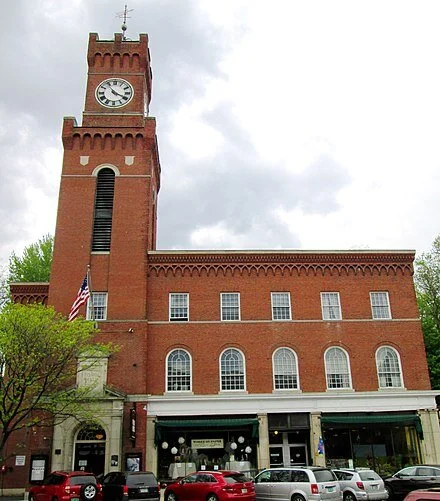
Rockingham Town Hall, which holds the Opera House, was built in 1926 on The Square, and is part of the Bellows Falls Downtown Historic District.
Do not use for navigation

“Lighthouse Series V” (acrylic on paper), by Helen Frankenthaler (1928-2011), in the show “Helen Frankenthaler Late Works,’’ at the New Britain (Conn.) Museum of American Art, Feb. 11-May 23.
It’s the first museum presentation dedicated to the exploration of works from Helen Frankenthaler’s late life, and features 22 works on paper from 1990-2003.

New Britain’s flag. Note the bees, meant to refer to the work ethic of the former major factory town’s residents.
Chris Powell: Democrats might make sure GOP survives; revolving door keeps spinning for Conn. politicians
MANCHESTER, Conn.
As he skipped the inauguration of his successor and shuffled off to his resort in Florida, has Donald Trump destroyed the Republican Party? Some political observers think so and of course Democrats hope so.
Trump's petulant and even seditious exit from office did him no credit. But then he did not do so badly in the popular vote and the Electoral College, and even landslide defeats in presidential elections seldom knock a major party down for long.
Herbert Hoover led the Republicans to a landslide victory in 1928 over Democrat Al Smith but himself was ousted in a landslide by Franklin D. Roosevelt and the Democrats in 1932.
Barry Goldwater, the Republican presidential nominee in 1964, was derided as far too conservative and was clobbered by Lyndon B. Johnson and the Democrats in 1964, but the Republicans still won the next presidential election, with Richard Nixon.
George McGovern, the Democratic presidential nominee in 1972, was derided as too liberal and lost big to Nixon and the Republicans in 1972, but the Democrats still won four years later with Jimmy Carter.
The reversal of party fortunes in these cases was largely a matter of self-destruction. Hoover turned a stock market crash into the Great Depression. Johnson escalated and failed to win a stupid imperial war. Nixon and his vice president, Spiro Agnew, got caught in criminality. (Even so, Nixon's appointed vice president, Gerald Ford, nearly won the 1976 presidential election for the Republicans anyway.)
Both major parties have influential elements that many voters find objectionable if not repulsive and yet gain big roles when their party is in power. So it is not hard to imagine such elements bringing trouble to Joe Biden's new Democratic national administration even as the Republicans at last may be relieved of the daily embarrassments of Trump's demeanor, especially since, out of office, much civil and even criminal litigation may keep him busy. Additionally, Republicans in Washington may rediscover that being in the minority makes taking potshots easy, far easier than governing.
Will the Biden administration self-destruct with corruption, incompetence, failure, or politically correct nonsense? Maybe not, but with the Democratic margins in Congress being so thin, the new administration may have to be unusually successful to avoid losing control of both houses in the elections two years hence, since mid-term elections usually go against the president's party.
In any case, while good government is good politics, good government seldom lasts long, so defeated parties tend to revive faster than expected.
xxx
Having just left the speakership of Connecticut's House of Representatives, former state Rep. Joe Aresimowicz, D.-Berlin, has quickly moved into a position with Gaffney Bennett and Associates, which calls itself Connecticut's leading government relations firm. Connecticut's “revolving door” law prohibits Aresimowicz from lobbying legislators and government agencies for a year, but obviously the firm believes that he can bring in a lot of good business anyway.
Aresimowicz's transformation may dishearten advocates of the public interest but it's not unusual. The Connecticut Mirror notes that three former House speakers are already lobbying or working for firms that do government relations. The Mirror might have added that a former state Senate leader heads Connecticut's biggest teacher union.
As a legislator Aresimowicz himself was employed by a government employee union. While this presented more than the typical potential conflict of interest most legislators face, it was perfectly legal, since the legislature is nominally part-time work, most legislators must hold other jobs, and Aresimowicz's constituents knew who he was when they elected him.
Former state legislators aren't the only ones drawn to government employment in Connecticut. Many journalists have left news organizations for public-relations positions with government agencies or businesses. Indeed, there now may be more former journalists in government P.R. in Connecticut than there are news reporters.
Government is just where the money is these days. Former legislative leaders don't go to work for the Red Cross, Salvation Army, or Audubon Society, nor do former journalists. There always has been and always will be more money in subverting or deflecting the public interest than in pursuing it.
Chris Powell is a columnist for the Journal Inquirer, in Manchester.
The sounds and smells of his New England
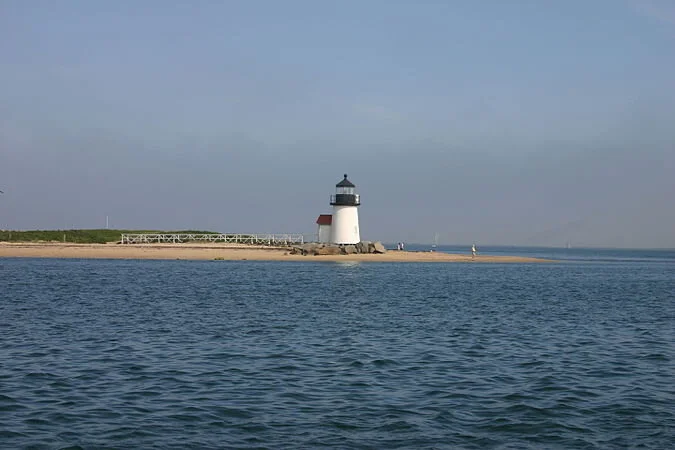
Brant Point Lighthouse, on Nantucket Harbor
“Say the words ‘New England,’ and one person will think of a white church spire and a village green; another will see a covered bridge or the Vermont hills in the autumn; and still another will conjure up a farm along the Connecticut River. For me, the words evoke the sounds and smells of the sea, and the storms and the fogs that make life along the New England seacoast a good deal like living on an actual ship, subject to the whims of the weather.’’
— Nathaniel Benchley (1915-1981), in “The Sea,’’ in the book New England: The Four Seasons (1980). A writer himself, he was the son of the celebrated humorist and the father of Jaws author Peter Benchley. He spent his later years living on Nantucket. In his humorous novel The Off-Islanders, he wrote:
''The islands that lie to the south of Cape Cod are low and sandy, and the moors and dunes and bogs blend together in a rolling landscape that repeats itself in island after island. At one time, they were all part of the Cape: they now form a ragged chain behind the shifting sandbars that curve farther to the south. From the air, they all look very much alike. Through a periscope, they are indistinguishable.''
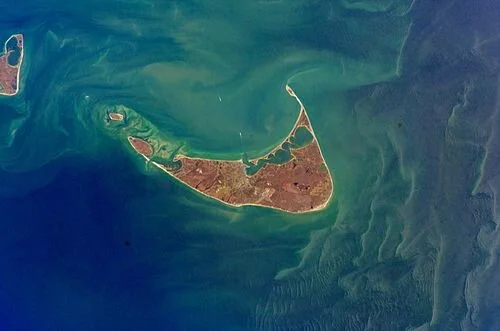
Nantucket from space. Chappaquiddick Island is at the left.