
How Biden’s COVID relief and stimulus program could most boost New England’s recovery
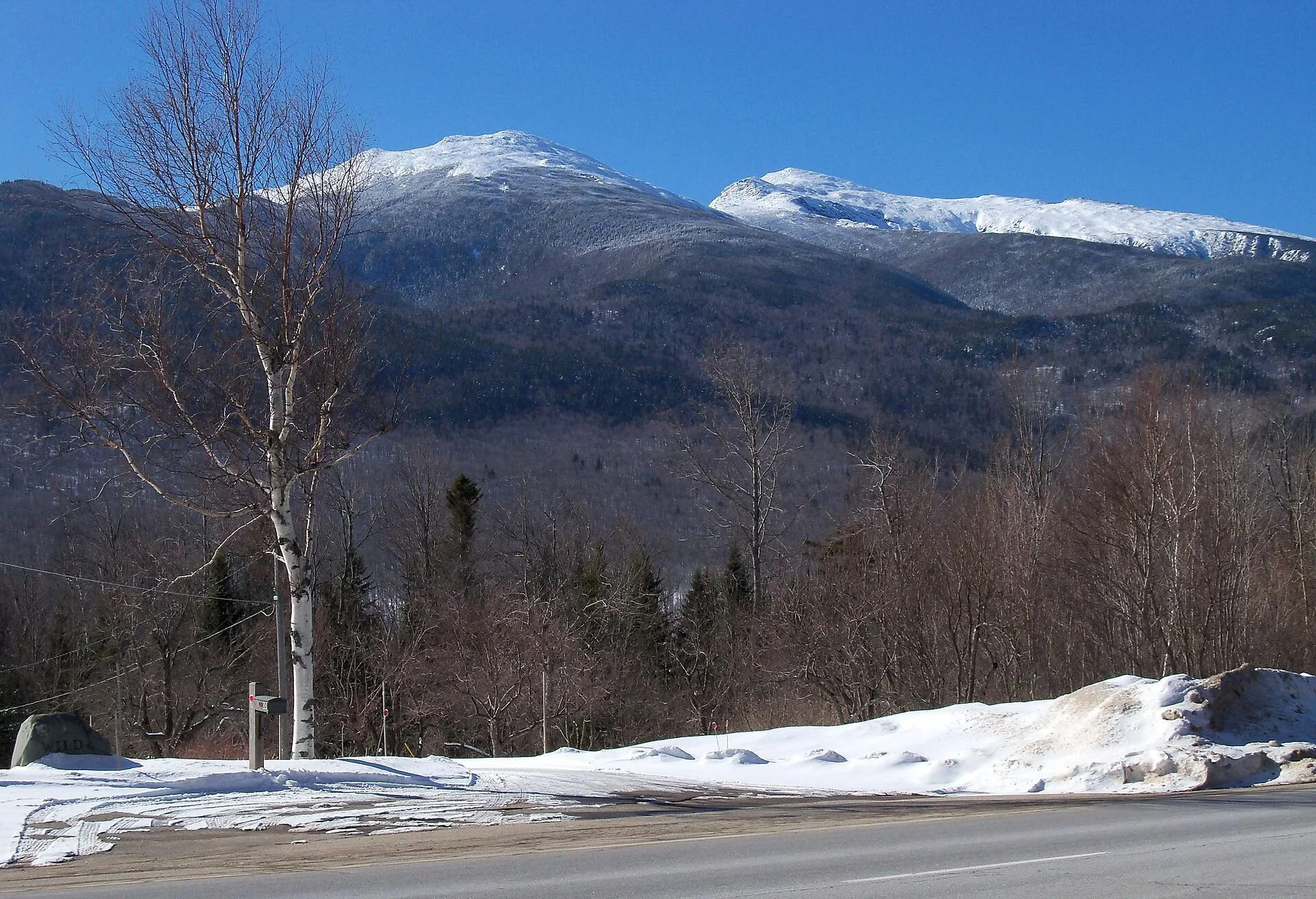
Presidential Range of the White Mountains, taken a few miles west of Gorham, N.H.
— Photo by AlexiusHoratius
BOSTON
“On Feb. 1, The New England Council (newenglandcouncil.com) sent a letter to each member of the New England congressional delegation regarding the urgent need for additional federal COVID relief and economic-stimulus legislation. In the letter, the council highlighted specific provisions of President Biden’s proposed American Rescue Plan that we believe would be particularly beneficial for our region’s continued recovery. The letter also outlines recommendations for additional relief measures based upon some of the feedback we have received from members over the past several weeks since the President’s plan was released.
We are grateful to the many council members who provided feedback on the American rescue plan through our policy committees, as well as those who offered other recommendations. We expect that there will be additional opportunities to weigh in on further relief and economic stimulus proposals in the weeks and months to come. We encourage you to communicate any suggestions or priorities that you’d like to see included in any future advocacy efforts to the council’s policy staff.’’
Walk in the snow in the middle of the street

February, from the Très riches heures du Duc de Berry (circa 1415)
From Robert Whitcomb’s “Digital Diary,’’ in GoLocal24.com
February landscapes look more like drawings than paintings.
I’ve noticed in the past few days far more Christmas wreaths still hanging on front doors than last year at this time, and holiday lights are lingering later, too. A way to ward off evil spirits or at least viruses?
xxx
Joseph Wood Krutch (1893-1970), the nature essayist, famously wrote that “the most serious charge which can be brought against New England is not Puritanism but February’’, that paradoxically short but seemingly long month. And yet, its sun is warmer than January’s, its days are noticeably longer and you get from time to time a cold but dry and windless day that can be exhilarating – a perfect day for the season. And in some years, you see snow drops and other early flowers popping out along the strips of road with a southern exposure and smell warming earth.
A couple of nice things about snowstorms, for all their inconveniences: the muffling of harsh sounds and that you can walk in the middle of the street.
Work site

By Alex Alderete, instructor of “Creating Fantastical Creatures,” at the New Art Center, Newton, Mass.
It’s productive to be hated
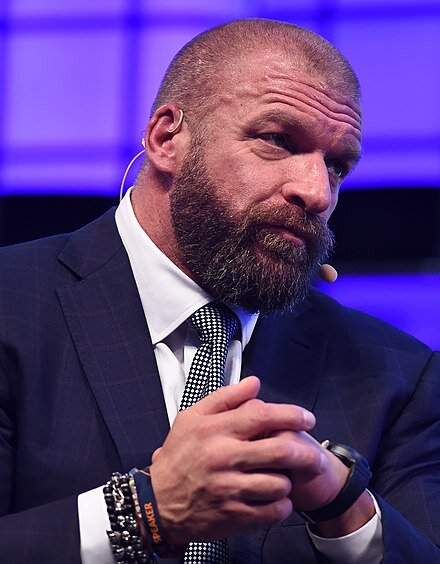
Triple H

Main Street in downtown Nashua
“If you go through life and no one hates you, that means you’re not good at anything.’’
Paul Michael Levesque (born — in 1969 — and raised in Nashua, N.H.), he’s better known by the wrestling ring name Triple H. He’s an American business executive, retired professional wrestler and actor. One of most famous professional wrestlers of all time, he is also the executive vice president of Global Talent Strategy & Development for World Wrestling Entertainment. He is also the founder and executive producer of NXT. He lives in Greenwich, Conn., among other places.
After a nuclear explosion

“Moonlight Scene” (oil on board), by Allan Freelon (1895-1960), at the Cape Ann Museum, Gloucester, Mass.
'Loss cancels profit'

Winthrop Shore Drive, in Winthrop Mass.
“…The cries of scavenging gulls sound thin
In the traffic of planes
From Logan Airport opposite.
Gulls circle gray under shadow of a steelier flight.
Loss cancels profit.’’
— From “Green Rock, Winthrop {Mass.} Bay, ‘‘ by Sylvia Plath (1932-1963), American poet, novelist and short-story writer. She grew up in the Boston area.
URI student to seek 3 semi-aquatic animal species in Rhode Island

Muskrat
From ecoRI News (ecori.org)
A University of Rhode Island graduate student will be scouring lakes, ponds and wetlands throughout Rhode Island over the next three years to search for signs of three semi-aquatic mammals.
Traveling via kayak, John Crockett will search for evidence of muskrats, beavers and river otters to document their distribution throughout the state.
“The main goal of the study is to get a good sense of the distribution of each species across the state,” said Crockett, a native of Fort Collins, Colo., who is collaborating on the study with URI assistant professor Brian Gerber. “To do that, we’re conducting an occupancy analysis, which means we’re going out looking for signs of tracks, scat, chewed sticks, lodges, and sightings of the animals.”
All three species have been the target of trappers in Rhode Island for many years — though the General Assembly banned the trapping of river otters in the 1970s — and most of what state wildlife officials know about the animals is derived from trapping data. But since trapping has been decreasing in popularity in recent years, less and less data about the animals are being collected.
Crockett will spend much of the next three years looking for signs of muskrats, beavers, and river otters Rhode Island.
“We want to make sure we have a good assessment of where these mammals are found,” Gerber said. “It’s been 10 or 15 years since anyone has spent much time looking for them, and we want to see if we find any changes in their distribution since those earlier surveys.”
Muskrats are in decline across much of their U.S. range, according to Crockett, and now they are difficult to find. He said the decrease in trapping activity has made it difficult to tell whether the animals are in decline in Rhode Island or if the lack of trapping just makes it appear to be so.
Since river otters haven’t been trapped for about 50 years, little is known about their distribution and population in the state.

River otters
Beavers are believed to have recovered well after being extirpated from the area because of unregulated trapping and forest clearing in the 1800s.
“Now they are creating conflicts with their dams causing flooding in some places,” Gerber said. “We’d like to be able to identify the habitat features where beavers are doing well and those areas where they are likely to cause conflict. To do that, we need distribution data.”

Beaver
Crockett expects to conduct his surveys from December through March for the next three years, as well as periodic summer surveys. He eventually hopes to be able to estimate the probability that any of the three species will be found in a given habitat. He started the project in December 2020.
“Part of what we’re doing is trying to relate their distribution to changes in land use,” he said. “We have pretty good data on how these wetlands have shifted over time, so hopefully we can find some hint of an answer about why these animals’ populations are changing.”
The URI scientists are working closely on the project with wildlife biologists at the Rhode Island Department of Environmental Management so the data can be used to help prioritize habitat for protection and inform management decisions on trapping limits.

Fisher
This is one of two research projects that Gerber is leading that focus on learning more about Rhode Island’s mid-sized predators (river otters are predators). The other is investigating the distribution and movement patterns of fishers in the state.
Video of author’s talk on a new JFK biography
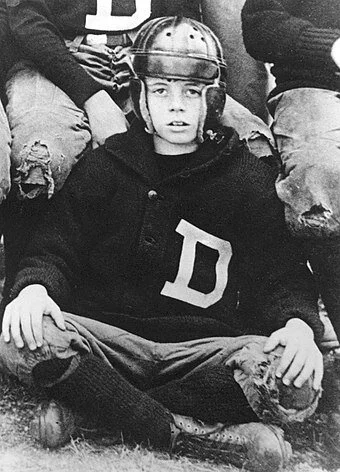
John F. Kennedy (1917-1963) in a football uniform at Dexter School, in Brookline, Mass., in 1926
From The New England Council (newenglandcouncil.com):
“John Hancock Life Insurance Co., based in Boston, recently hosted a virtual discussion with Harvard professor and author Fred Logevall, who discussed his new book JFK: Coming of Age in the American Century, 1917-1956. Logevall is the Laurence D. Belfer Professor of International Affairs at the Harvard Kennedy School, and a professor of history in the Faculty of Arts & Sciences at Harvard University. He is a specialist on U.S. foreign-relations history and 20th Century international history, and the author or editor of 10 books.

David Warsh: Mitch Daniels's dire fiscal fears -- and his hypocrisy

‘Anxiety,’’ 1894, by Edvard Munch
SOMERVILLE, Mass.
The Republican Party is in disarray. Its House minority leader, California Rep. Kevin McCarthy, last week allied himself with disgraced former President Trump. Sen. Rob Portman (R.-Ohio), 65, director of the U.S. Office of Management and Budget (OMB) in 2006-2007, under President George W. Bush, announced that he would retire in 2022, after two terms. By current GOP standards, he’s considered a moderate.
But it was another G.W. Bush administration budget director who caught my eye, with an op-ed in The Washington Post last week. Mitch Daniels, who served George W. Bush as OMB director in 2001-2003, declared lost the battle to preserve the integrity of the welfare state that America fashioned in the 20th Century. That struck me as genuinely alarming.
In 2012, Daniels was a presidential hopeful, much in the mold of Mitt Romney, John McCain, George W. Bush, Bob Dole and George H.W. Bush. After leaving Washington, he had served two terms as governor of Indiana, in 2005-2013, where he was succeeded by Mike Pence. After deciding not to run, Daniels elected to become president of Purdue University, in West Lafayette, Ind.
“It’s no longer possible to say that, by starting now, we can avert massive, and massively unfair, changes in the promises we have made, or that current beneficiaries have nothing to worry about,” Daniels wrote. “That line was crossed even before the emergency budget blowout of 2020 added trillions to the debt tab we will dump on younger generations….
“No computer models are needed to see that there is zero chance of delivering on the promises already in place, let alone the fresh, astonishing proposals in Washington to make these commitments even larger,” he continued. The promises he has in mind are the Social Security System and Medicare, “so-called entitlement programs.”
Daniels is at least half right: There will be changes in promises that have been made, and they will be unfair. But the battle to preserve their outlines is still not fully joined. The preservation of the United States’ unwritten fiscal constitution is the single greatest crisis facing America in the 40 years ahead.
Worried about climate change? Deep forces are at work around the world, technological and political, which should gradually reduce carbon emissions to less dangerous levels. (That doesn’t mean we should stop pressing the matter.) General Motors’ announced intention to phase out gasoline- and diesel-powered vehicles by 2035 is one scrap of evidence. Exxon Mobil’s plan to reshape its beleaguered board in response to shareholder pressure is another.
Inclusion? President Biden’s plan to put some 1.3 million so-called Dreamers on a fast track to citizenship will be the first test of the strength of support for his ideas. The measure will face resistance in Congress. Gallup polls consistently show more that 75 percent of Americans favor immigration, as long as it is orderly. Return to the closed-border policies espoused by Trump seems highly unlikely.
Foreign relations? China and Russia have demonstrated that autocratic rule has its advantages, but aspirations to democracy have ways of making themselves known. War among global super powers seems even less likely than in the past. The U.S. has a proven role – as an exemplar of democracy, if it can keep it. The fear that a Trump-like demagogue could again be elected in America will, unfortunately, persist for decades,
Civil war? Unlikely, despite the crazies in Arizona, Texas, California, Oregon and Washington. But the possibility cannot be discounted altogether if the United States is unable to resolve its fiscal problems. A reminder of the difficulty of the problem was the breathtaking manner in which Daniels in his op-ed piece excused his one-time boss, George W. Bush, from a share of blame for the developing crisis.
“From very different directions, either of the past two presidents could have led the nation to a safer place, but neither had any interest in doing so,” he wrote. “Instead, both perpetuated the ‘noble lies – ‘You’re just getting your own money back,’ ‘We owe it to ourselves,’ etc. – by which the public has been misled through the years.”
What about ‘tax cuts that pay for themselves?’ Remember President 4-Percent-Growth, who successfully lobbied Congress to cut taxes even as he invaded Iraq? Remember Treasury Secretary Paul O’Neill who was fired by his boss for objecting?
Bush regained political sobriety in his second term, after trying and failing to privatize Social Security, when he appointed Ben Bernanke chairman of the Federal Reserve Board and, in 2008, backed him to the hilt in the financial crisis. Still: that a man so insulated from politics as the president of a major university should gloss effortlessly over the failings of the administration he served while decrying the failings of its successors indicates the magnitude of the problem.
I don’t think that any further evidence is necessary for today to say that macroeconomic arguments are likely to be the most important stories of the next forty years in America. But then I would think that. I am an economics journalist.
xxx
A group of 10 Republican senators has asked President Biden to work with them on a bipartisan coronavirus-relief effort , as Democrats prepared to move forward on without GOP support, Kristina Peterson reported Sunday in The Wall Street Journal.
In a letter, the Republican senators asked to meet with Mr. Biden to present details of their proposal, whose overall cost they didn’t state, and said they were coming forward in response to his appeal for bipartisanship.
A journey of a thousand miles begins, or fails to begin, with a single step.
David Warsh, a veteran columnist and an economic historian, is proprietor of Somerville-based conomicprincipals.com, where this column first appeared.
Spring IS coming

“Efflorescence” (oil on canvas), by Stacey Cushner, in her current show of the same name at Kingston Gallery, Boston
The gallery says: The work “was created as a means to provide daily certainty amidst global suffering. Turning to an almost scientific process to glazing with oil paint, Cushner used the pandemic lockdown to learn glazing techniques and keenly observe the natural world. Her study of plant life drew out the fundamental aspect of being wholly present at the moment, a realization found only once the pandemic changed everything. Using flowers, particularly tulips, to symbolize love and rebirth, Cushner seeks to remind viewers of spring’s endless possibilities.’’
He studio is in Boston’s South End. See: https://www.staceycushner.com/about

Aerial view of the South End
— Photo by Richard Schneider

South End street scene

Llewellyn King: Far too early to starve the fossil-fuel sector

The Mystic Generating Station, in Everett, Mass,. can burn both natural gas and petroleum, but mostly burns natural gas.
WEST WARWICK, R.I.
In politics, any idea can be pressed into service if it fits a purpose. The one I have in mind has been snatched from its Republican originators and is now at work on the left wing of the Democratic Party.
The idea is “starve the beast.” It came from one of President Ronald Reagan’s staffers and was used to curb federal spending.
It was a central idea in the Republican Party through the Reagan years and was taken up with vigor by tax-cutting zealots. It was on the lips of those who thought the way to small government was through tax cuts, i.e., financial starvation.
Now “starve the beast’ is back in a new guise: a way to cut dependence on oil and natural gas.
This is the thought behind President Biden’s decision to revoke the permit for the Keystone XL pipeline, bringing oil to the United States from Canada, even after the expenditure of billions of dollars and an infinity of studies.
It is the idea behind banning fracking and restricting leases on federal lands. Some Democrats and environmental activists believe that this blunt instrument will do the job.
But blunt instruments are unsuited to fine work.
It also is counterproductive to set out to force that which is happening in an orderly way. The Biden administration shows signs of wanting to do this, unnecessarily.
Lumping coal, oil and gas as the same thing under the title “fossil fuel” is the first error. In descending order, coal is the most important source of pollution, and its use is falling fast. Oil continues to be the primary transportation fuel for the world. World oil production and use hovers around 100 million barrels a day — and that has been fairly steady in recent years.
In the United States, the switch to electric vehicles is well underway and in, say, 20 years, they will be dominant. Likewise, in Europe, Japan, and China. That train has left the station and is picking up steam.
Government action, like building charging stations, won’t speed it up but rather will slow it down. The market is working. Willing buyers and sellers are on hand.
Every electric vehicle is a reduction in oil demand. But the world is still a huge market for petroleum and will be for a long time. What sense is there in hobbling U.S. oil exports? There are suppliers from Saudi Arabia to Nigeria keen to take up any slack.
Natural gas is different. It is a superior fuel in that it has about half the pollutants of coal and fewer than oil. It is great for heating homes, cooking, making fertilizers and other petrochemicals. Starving the production just increases the cost to consumers.
The real target is, of course, electric utilities. They rushed to gas to get off coal. It was cheaper, cleaner and more manageable. Also, gas could be burned in turbines that are easily installed and repaired. Boilers not needed; no steam required.
But there are greenhouse gases emitted and, worse, methane leaks at fracking sites and from faulty pipelines throughout the system. These represent a grave problem. Here the government can move in with tighter regulation. If it is fixable, fix it. But methane leaks are no reason to cripple domestic production.
The question for the beast-starvers comes from Clinton Vince, who chairs the U.S. energy practice and co-chairs the global energy practice of Dentons, the world’s largest law firm. He asks, “Is it better to sell natural gas to India and China or to let them build more coal-fired plants? Particularly if carbon-capture and sequestration technology can be improved.”
If we are to continue to reduce carbon emissions in the United States, we need to take a holistic view of energy production and consumption. Does it make sense to allow carbon-free nuclear plants to go out of service because of how we value electricity in the short term? A market adjustment, well within government purview, could save a lot of air pollution immediately.
The hydrocarbon beast doesn’t need to be starved, but a diet might be a good idea.
On Twitter: @llewellynking2
Llewellyn King is executive producer and host of White House Chronicle, on PBS. He’s based in Rhode Island and Washington, D.C.
New Hampshire's 'pinched little joykillers'

The New Hampshire quarter, minted in 2000. But the Old Man of the Mountain (which brooded over Franconia Notch) fell apart on May 3, 2003.
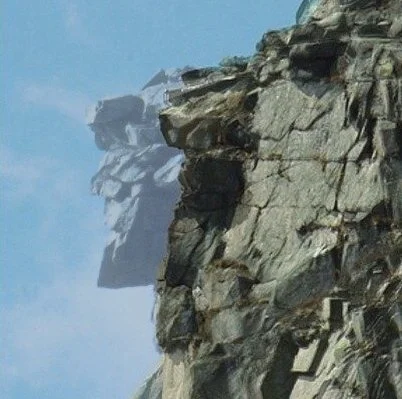
A composite image of the Old Man of the Mountain created from images taken before and after the collapse.
— Alexander Theroux (born in 1939 in Medford, Mass.), American poet and novelist. He’s a brother of the better known travel writer and novelist Paul Theroux.
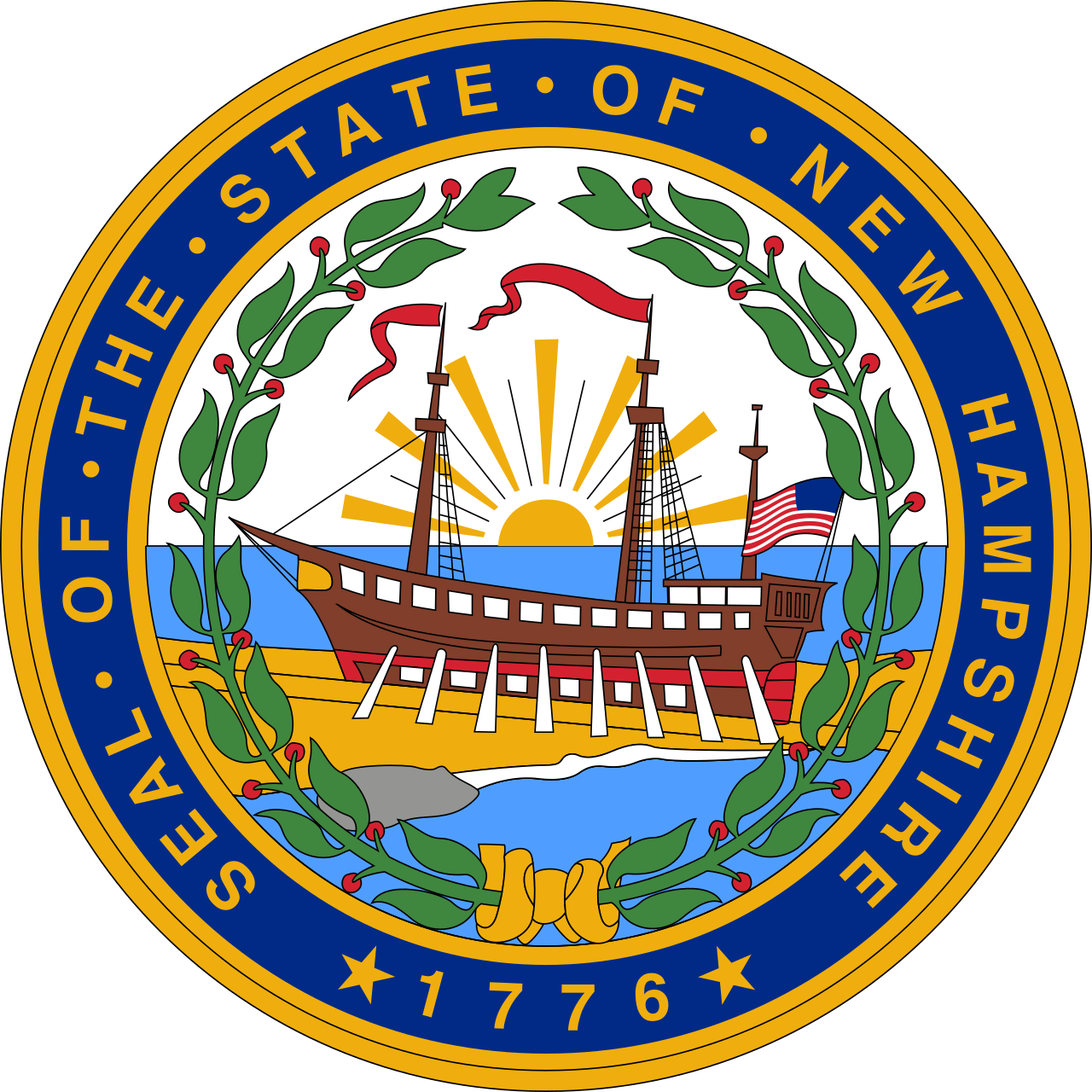
The state seal. The ship is a reference to the state’s Port of Portsmouth, which long played a key role in the state’s economy.
But no check cashing

Note the 1967 prices at the late lamented Hilltop Steak House in Saugus, Mass.
Phil Galewitz: Vt., N.H. and Maine are pushing to import Canadian drugs

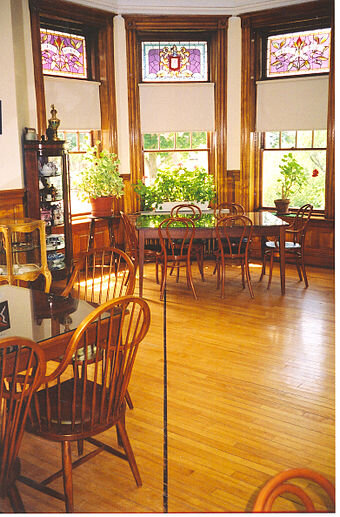
The Haskell Free Library and Opera House straddles the border in Derby Line, Vt., and Stanstead, Quebec. The dark line shows the exact border.
Vermont, New Hampshire and Maine, all bordering on Canada, as well as Florida and Colorado, are moving ahead with efforts to import prescription drugs from Canada, a politically popular strategy greenlighted last year by then-President Trump.
But it’s unclear whether the Biden administration will proceed with Trump’s plan for states and the federal government to help Americans obtain lower-priced medications from Canada.
During the presidential campaign, Joe Biden expressed support for the concept, strongly opposed by the American pharmaceutical industry. Drugmakers argue it would undercut efforts to keep their medicines safe.
The Pharmaceutical Research and Manufacturers of America, an industry trade group, filed suit in federal court in Washington, D.C., to stop the drug-purchasing initiatives in November. That followed the Trump administration’s final rule, issued in September, that cleared the way for states to seek federal approval for their importation programs.
Friday was the deadline for the government to respond to the suit, which could give the Biden administration a first opportunity to show where it stands on the issue. But the administration could also seek an extension from the court.
Meanwhile, Florida and Colorado are moving to outsource their drug importation plans to private companies.
Florida hired LifeScience Logistics, which stores prescription drugs in warehouses in Maryland, Texas and Indiana. The state is paying the Dallas company as much as $39 million over 2½ years, according to the contract. That does not include the price of the drugs Florida is buying.
LifeScience officials declined to comment.
Florida’s agreement with LifeScience came last fall, just weeks after the state received no bids on a $30 million contract for the job.
Florida’s importation plan calls initially for the purchase of drugs for state agencies, including the Medicaid program and the corrections and health departments. Officials say the plan could save the state in its first year between $80 million and $150 million. Florida’s Medicaid budget exceeds $28 billion, with the federal government picking up about 62% of the cost.
On Monday, the Colorado Department of Health Care Policy and Financing issued a request for companies to bid on its plan to import drugs from Canada. Unlike Florida’s plan, Colorado’s would help individuals buy the medicines at their local pharmacy. Colorado also would give health insurance plans the option to include imported drugs in their benefit designs.
Kim Bimestefer, executive director of Colorado’s Health Care Policy and Financing agency, said she is hopeful the Biden administration will allow importation plans to proceed. “We are optimistic,” she said.
Her agency’s analysis shows Colorado consumers can save an average of 61% off the price of many medications imported from Canada, she added.
Prices are cheaper north of the border because Canada limits how much drugmakers can charge for medicines. The United States lets the free market determine drug prices.
The Canadian government has said it would not allow the exportation of prescription drugs that would create or exacerbate a drug shortage. Bimestefer said that her agency has spoken to officials at the Canadian consulate in Denver and that officials there are mainly concerned about shortages of generic drugs rather than brand-name drugs, which is what her state is most interested in importing since they are among the most costly medicines in the U.S.
Colorado plans to choose a private company in Canada to export medications as well as a U.S. importer. It hopes to have a program in operation by mid-2022.
But skeptics say getting the programs off the ground is a long shot. They note that Congress in 2003 passed a law to allow certain drugs to be imported from Canada — but only if the secretary of the Department of Health and Human Services agreed it could be done safely. HHS secretaries under Presidents George W. Bush and Barack Obama refused to do that. But HHS Secretary Alex Azar gave the approval in September.
Biden’s HHS nominee, Xavier Becerra, voted for the 2003 Canadian drug-importation law when he was a member of Congress.
HHS referred questions on the issue to the White House, which did not return calls for comment.
Trish Riley, executive director of the National Academy for State Health Policy, said that states have worked hard to set up procedures to ensure drugs coming from Canada are as safe as those typically sold at local pharmacies. She noted that many drugs sold in the United States are already made overseas.
She said the Biden administration could choose not to defend the importation rule in the PhRMA court case or ask for an extension to reply to the lawsuit. “Right now, it’s murky,” she said of figuring out what the Biden team will do.
Ian Spatz, a senior adviser with consulting firm Manatt Health, questions how significant the savings could be under the plan, largely because of the hefty cost of setting up a program and running it over the objections of the pharmaceutical industry.
Another obstacle is that some of the highest-priced drugs, such as insulin and other injectables, are excluded from drug importation. Spatz also doubts whether ongoing safety issues can be resolved to satisfy the new administration.
“The Trump administration plan was merely to consider applications from states and that it was open for business,” he said. “Whether [HHS] will approve any applications in the current environment is highly uncertain.”
Phil Galewitz is a Kaiser Health News journalist.
Phil Galewitz: pgalewitz@kff.org, @philgalewitz

Coolidge's 'law of service'

Coolidge’s home in Northampton, Mass., from 1906-1930
Calvin Coolidge (1972-1933; president 1923-1929) states his philosophy;
‘T]here is a standard of righteousness that might does not make right, that the end does not justify the means, and that expediency as a working principle is bound to fail. The only hope of perfecting human relationships is in accordance with the law of service under which men are not so solicitous about what they shall get as they are about what they shall give. Yet people are entitled to the rewards of their industry. What they earn is theirs, no matter how small or how great. But the possession of property carries the obligation to use it in a larger service.…’’
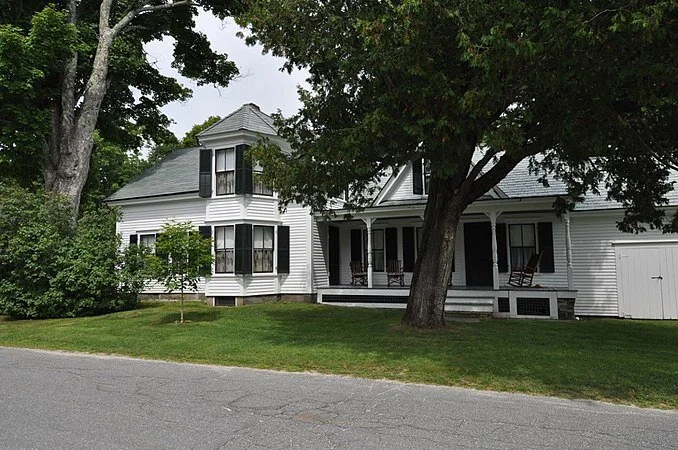
The Coolidge family homestead, in Plymouth Notch, Vt.
'Body and self'

“Animeyed: Flamingo” (archival pigment print on Hahnemühle pap), one of the works of Flora Borsi at Lanoue Gallery, Boston.
The gallery says she ‘uses masterful photo manipulation to create surreal images that are thematically focused on identity, relationships, dreams, and universal emotions ranging from lust and desire to despair and loss.’’
“In her ongoing self-portrait series, Borsi often features the female body playing with hiding and revealing the eyes or face to leave only the feminine form, exploring questions of female representation and the relationship between body and self.’’
The Cape: Still beauty amongst the McMansions

Sesuit Creek, in East Dennis
From Robert Whitcomb’s “Digital Diary,’’ in GoLocal24.com
David Gessner’s 1997 book, A Wild, Rank Place, is a series of essays about, among other things, how Cape Cod has become exurbanized, such as with grotesque show-off McMansions replacing the low-to-ground, modest gray-shingled houses so identified with the Cape. And yet he can still savor its remaining windy and haunting beauty. It’s a subject that particularly appealed to me because part of my family were/are old Cape Codders; I’ve seen even more change than he has.
Mr. Gessner (born in 1961) lived off and on for years in a family summer house in East Dennis (sold a few years ago). It was the heart of his family.
The title is a phrase by Henry David Thoreau based on several trips he took to the Cape in the early 1850s that resulted in the book of essays called Cape Cod. But as Mr. Gessner’s book notes, Thoreau’s deforested Cape looked a lot different than it did in the 1600s, when the English arrived, and of course much different than the current version, where woods have grown back even as the number of houses and convenience stores explodes and car traffic worsens virtually every year.=
There is vivid and idiosyncratic nature and environmental writing here, mixed with an intense family memoir whose heart is Mr. Gessner’s effort to come to terms with the transitory nature of life, and especially mortality, and entropy, with his father’s fatal illness at the center of all that. There are also some charming pen-and-ink drawings by Mr. Gessner, who is a cancer survivor.
'Blowing in the same bare place'

One must have a mind of winter
To regard the frost and the boughs
Of the pine-trees crusted with snow;
And have been cold a long time
To behold the junipers shagged with ice,
The spruces rough in the distant glitter
Of the January sun; and not to think
Of any misery in the sound of the wind,
In the sound of a few leaves,
Which is the sound of the land
Full of the same wind
That is blowing in the same bare place
For the listener, who listens in the snow,
And, nothing himself, beholds
Nothing that is not there and the nothing that is.
— “The Snow Man,’’ by Wallace Stevens (1879-1955), Hartford-based lawyer, insurance executive and famed poet
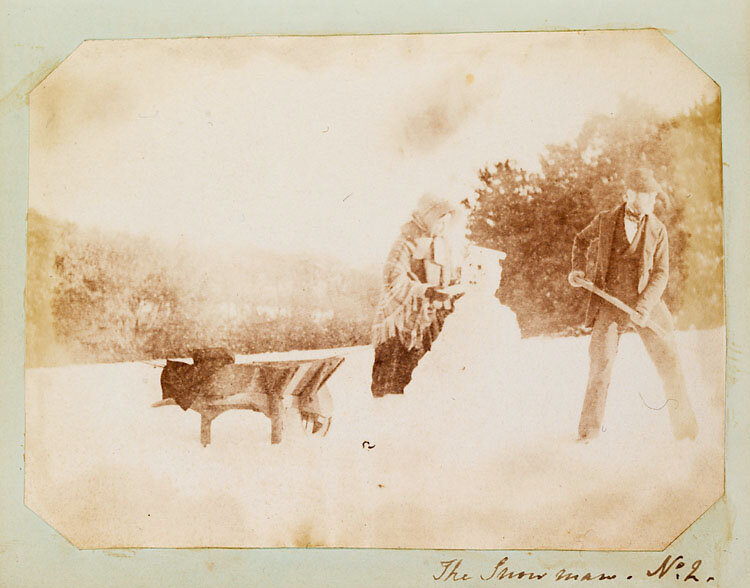
Earliest known photo of a snowman, taken in Wales in 1853
On the other hand, Boston…
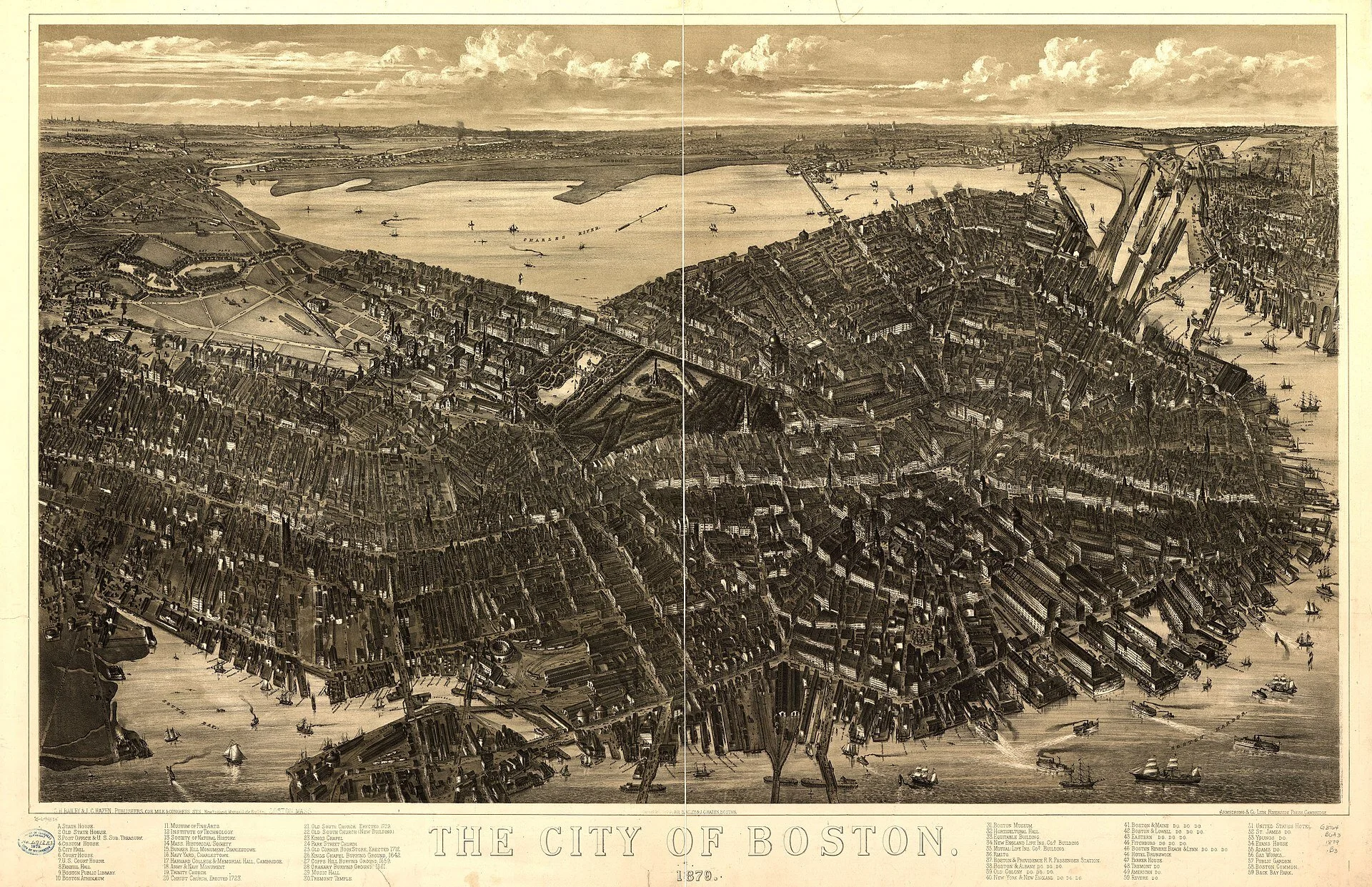
“There is no section in America half so good to live in as splendid old New England — and there is no city on this continent so lovely and loveable as Boston.’’
— Mark Twain, in 1871.

Boston Terrier
“This can be a cold place, Boston, and the weather is the least of it. We’re often unwelcoming to outsiders. We have a maddening habit of sniping at insiders. We have equal parts determination and aloofness proudly bred into our native bones like the hunting instincts in a championship dog.’’
— Brian McGrory, in the March 15, 2002 Boston Globe (of which he’s now the editor)
Don Pesci: Business and taxes in Conn.
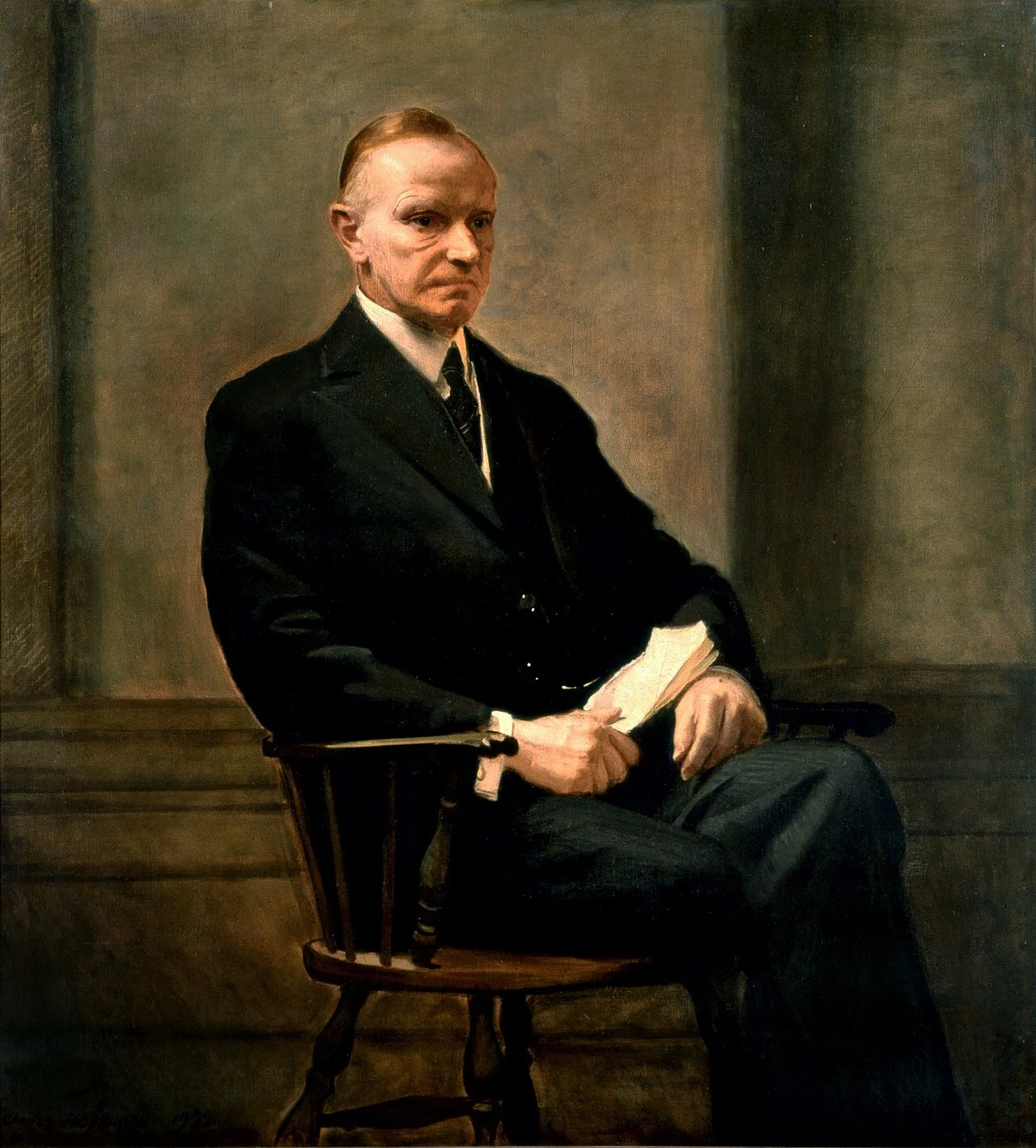
Official portrait of Calvin Coolidge in the White House, by Charles Sydney Hopkinson
"The business of America is business."
-- Calvin Coolidge, president from 1923-1929
Connecticut Gov. Ned Lamont likes to talk shop with business people. A Hartford Courant story, “Gov. Ned Lamont tells Connecticut businesses he’s ruling out ‘broad-based’ tax increases,” will not please Democrat progressives in Connecticut who seem fully prepared to eat businessmen and businesswomen for lunch. The large and overbearing contingent of progressives in the state's Democratic Party caucus cannot be satisfied with sentiments such as this: “I’ve been pretty clear. I have no interest in broad-based tax increases,” Lamont told president of the Connecticut Business and Industry Association (CBIA) Chris DiPentima. And, he hastened to add, “Every governor, Republican or Democrat since, or including, Lowell Weicker, has done that and it did not solve the problem.”
The problem is, of course, lavish, continuing, long-term spending -- and consequent increases in taxes. Taxes in Connecticut have been permanent, while cost-cutting measures have been temporary; this is because the force driving spending is more powerful than the force that would, were it applied, reduce long-term costs permanently. If one discharges deficits by reducing such costs, tax increases would be unnecessary. And the prospect of unnecessary tax increases would reduce the influence of – just to pick one snout at the public trough – Connecticut’s imperious public employee unions. But reducing the influence of the state’s public employee unions would deprive Democrats of funds and worker bees they rely upon to win elections.
Lamont was not prepared to tell DiPentima that, during the rest of his first term as governor, he would deploy his considerable resources to remove SEBAC, a union political organization and lobbying group that some have characterized as Connecticut’s fourth branch of government, from collective bargaining with the state on salary and pension contracts. Some have argued that such contracts give union leaders a Keystone pipeline to the wallets of Connecticut taxpayers, in the process shifting from the General Assembly to Connecticut courts control over a taxing authority that belongs constitutionally to the legislative branch of government. Why aren’t state employee salary and benefit packages set unilaterally by the General Assembly, which alone is constitutionally authorized to take in and disperse tax money? (SEBAC, by the way, stands for State Employees Bargaining Agent Coalition.)
One may be certain that this is not a discussion Lamont will be having anytime soon with President Pro Tem of the Senate Martin Looney or Speaker of the House Matt Ritter, neither of whom are disposed to cut off their union related campaign funds to satisfy their less binding constitutional responsibilities.
Over a long period of time in Connecticut, dating possibly from the unlamented Lowell Weicker administration, Machiavellians within the Democratic Party have discovered that it does not matter a whit whether they employ a Big Stick on the backs of business men and women or whether such contributors are induced to open their pockets to Democrats through special preferments; both methods may be deployed at the same time without diminishing campaign contributions from Connecticut’s larger businesses. The Big Stick lashes are generally offset by Big Business preferments – tax carve-outs, low- or no-interest loans, taxpayer money bribes to induce large companies to remain with their necks on the tax butcher-block in Connecticut, an offer they can’t refuse that is usually overridden by some other low-tax, business hungry state.
Former Gov. Dan Malloy’s Office of Policy Management director, Ben Barnes, once asked by a courageous reporter why he wanted to raise taxes on hospitals, replied in the accents of infamous bank robber Willie Sutton when asked why he robbed banks, “Because that's where the money is.”
The state's revenue stream has been swollen by Connecticut-based financial firms, but these firms have wings on their heels and may move, at the drop of a tax hatchet, to other less predatory states. Lamont may have discovered this disposition on the part of financial firms during an occasion pillow conversation with his wife Annie, who is a successful venture capitalist and the moneymaker in the family.
For these reasons, Lamont may be genuinely indisposed to kill the goose laying Connecticut’s golden tax eggs. On the other hand, union leaders, who have twice refused attempted Lamont cutbacks in their court supported salary and benefits contracts, are barking for MORE spending, as always, and the Democrat-dominated General Assembly is barking for MORE taxes, as always.
For now, Lamont has drawn a red line on “broad-based tax increases.” Lamont has a veto power he has not yet promised to deploy on behalf of a beleaguered CBIA or businesses destroyed through governmental edicts. Democrat leaders in the House and Senate know they have majorities nearly large enough to overcome vetoes.
“The game,” as Sherlock Holmes might say, “is afoot.” Pity there is no Coolidge on Connecticut’s political horizon.
Don Pesci is a Vernon-based columnist.