
Vox clamantis in deserto




While awaiting the seed catalogs

“Garden Tulips Northumberland Strait” (archival pigment print), by Cambridge-based Vaughn Sills, in her show “Inside Outside,’’ at the Kingston Gallery, Boston, through Feb. 28
The gallery says the show “is a series of evocative still lifes of flowers juxtaposed with land and seascapes, meditations on grieving and loss. Sills’s studio process includes pairing a chosen set of flowers with one of her landscape prints from another ongoing series about grieving for her mother. ‘Inside Outside’ considers the highly cultivated world of flowers in contrast with the natural, untamed world surrounding us. Domesticity is represented by the garden-grown flowers in vases, alluding to women’s creative work, while the natural world is represented by images of the sea and land, often shown with a foreboding sky. Thus, the work refers to the ephemeral nature of life; cut flowers are short-lived, and their beauty reminds us of life precariously balanced on the verge of death. Sadness, love, memory and grief for Sills’s mother are given form in images of the sea and misty fields, amplified now in combination with the flowers.
Don’t laugh at Rhode Island

Exchange Place, ca. 1890. City Hall at center; to its right is the First Union Station, where Burnside park currently exists. The area is now called Kennedy Plaza.
“I know not whether anyone, even in New York, is so hardy as to laugh at Rhode Island, where the spirit of Roger Williams still abides in the very dogs….The small commonwealth, with its stronger and fuller flow of life, is more native, more typical, and therefore richer in real instructions, than the large state can ever be.’’
—E.A. Freeman, in Some Impressions of the United States (1883)

Mitten mania
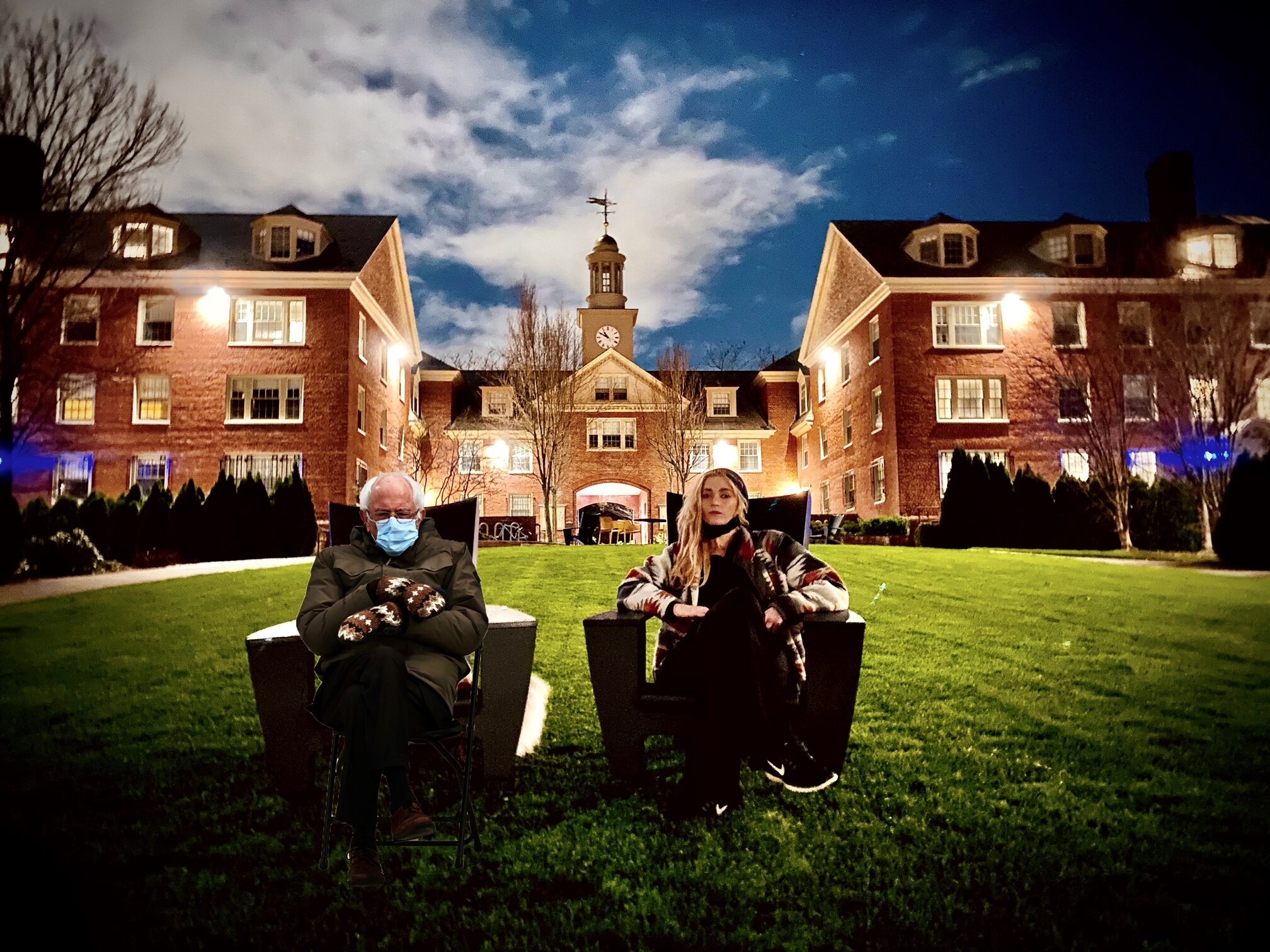
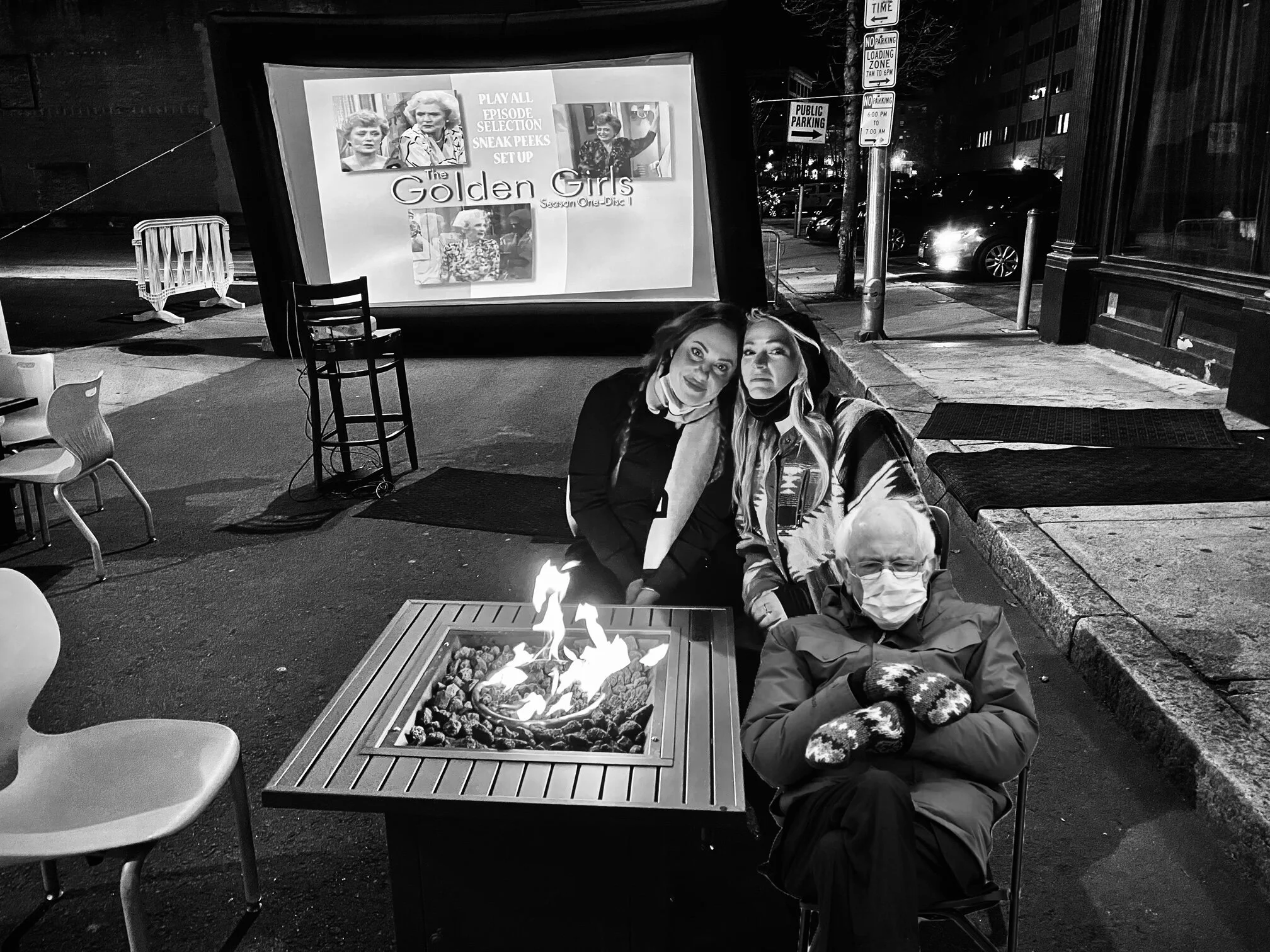
The Bernie mitten meme craze will not last much longer but savor its varieties while you can.
— (Manipulated) photos by Fiona Gerety

Absence makes the heart grow fonder

The downtown of Bath, on the Maine Coast and home of the big Bath Irons Works shipyard.
“All I know is that history repeats itself and people are going to want to experience the world. But I know then they are going to have a better appreciation for what is here in Maine.’’
— John Baldacci (born 1955), governor of the Pine Tree State in 2003-2011
Richard Pattenaude: How colleges can make the most of COVID-19 relief

From The New England Journal of Higher Education, a service of The New England Board of Higher Education (nebhe.org)
BOSTON
In the final days of 2020, Congress gave the country a long-overdue Christmas present with the passage of a new COVID-19 relief bill. Known as the Coronavirus Response and Relief Supplemental Appropriations Act (CRRSAA), the bill is a whopping 5,500 pages long. But for higher education institutions, the real action starts on Page 1872 with the Higher Education Emergency Relief Fund (known as HEERF II).
How should institutions use this funding? Providing immediate financial support to students is critical, of course—but so is strengthening the institution they attend. Beyond simply replacing lost tuition or room and board funds, some institutions are exploring creative ways to use the funds in ways that increase the effectiveness of their online programs—and provide better support for students in the process.
Included in the CRRSAA is $82 billion for schools, just over one-quarter of which ($22.7 billion) is earmarked for higher education through HEERF II. That represents a 50 percent increase over the amount allocated to higher ed by the original CARES Act last spring. As with the last relief bill, the vast majority of this money ($20.2 billion) will be distributed directly to public and nonprofit institutions, using a complex formula that takes into account factors like student headcount, full-time enrollment and Pell eligibility. In this new bill, institutions will actually be receiving more money than they did in the first stimulus—but they are required to spend the same amount of money on student aid as they spent last time. That translates to a far greater percentage of funds available for other institutional priorities.
With that in mind, once institutions have received their latest relief, what can they do with it? Here’s a rundown of the actual requirements of the bill, as well as some perhaps surprising examples of how institutions have put their relief funding to effective use.
This time around, it appears that there’s more flexibility in the way that institutions can spend these dollars. Specifically, the bill states that institutions may use the funds to:
1) defray expenses associated with coronavirus (including lost revenue, reimbursement for expenses already incurred, technology costs associated with a transition to distance education, faculty and staff trainings, and payroll);
2) carry out student support activities authorized by the HEA that address needs related to coronavirus (for example, institutions have used these funds to purchase laptops for low-income students, provide hot spot or internet service funds, cover costs for computer set up and reimburse PPE expenditures for nursing students); or
3) provide financial-aid grants to students (including students exclusively enrolled in distance education), which may be used for any component of the student’s cost of attendance or for emergency costs that arise due to coronavirus, such as tuition, food, housing, healthcare (including mental-health care) or child care. In making financial aid grants to students, an institution of higher education shall prioritize grants to students with exceptional need, such as students who receive Pell Grants.
In the wake of the bill’s passage, the U.S. Education Department has also released initial guidance outlining how to apply for the funds and how they can be used. In short, this round of financial support provides even more flexibility than the CARES Act did—allowing for not only costs related to the delivery of instruction, but also defraying expenses associated with coronavirus, carrying out student support activities, and making additional financial aid grants to students. What can institutions’ experience with the CARES Act teach us about how best to use these new funds?
Some uses of stimulus funding are, of course, intuitive: providing the immediate support that students, faculty and staff need to keep the lights on and keep learning going. But now with more flexibility, it’s critical for institutions to think creatively and consider how their stimulus dollars can support new approaches to teaching and learning—many of which may last even after COVID-19 someday subsides. In HEERF II as in the previous round of funding, the Education Department allows spending on a broad range of technology tools, stipulating that institutions could “purchase equipment or software, pay for online licensing fees, or pay for internet service to enable students to transition to distance learning.”
Among examples of how institutions put that into practice … When the pandemic forced its library to quarantine textbooks for three days before lending them back out, Santa Fe Community College, in New Mexico, tapped a digital content provider, BibliU, to help expand access to course materials.
Grossmont College, a community college in California, partnered with the video platform GoReact to ensure that their students are still able to demonstrate their skills in a remote setting.
Michigan State University tapped CARES Act funding to partner with Packback, bringing inquiry-based discussion to more classes, even in the age of remote learning.
Institutions that explore these more creative uses of stimulus funding have seen powerful results—not just providing the emergency relief students need, but also building the architecture to ensure a more effective remote learning experience. And with the timeline still uncertain for a return to normalcy, that approach will help colleges and universities set themselves up for success in a tumultuous and ever-changing time for higher education.
What does your institution need to build a more resilient infrastructure for online learning, and how can this new funding help?
Richard Pattenaude is chancellor emeritus at the University of Maine System. Packback is a NEBHE sponsor.
Is Watch Hill in Rhode Island?

Watch Hill Harbor
A colleague in a business ZOOM meeting I was in last Friday suggested that Rhode Island Gov. and former venture capitalist Gina Raimondo will not return to Rhode Island after she serves as Joe Biden’s commerce secretary. — that she’ll join the swells and move to some fancy out-of-state place.
No, I suggested, only half-jokingly, she’ll move to hyper-rich Watch Hill. Then another colleague quipped: “Is that in Rhode Island?” I had had a sleepless night and so too quickly and stupidly answered what everyone in the meeting well knew: “Watch Hill is in Rhode Island; it’s part of Westerly.’’
But in a psycho-sociological way, it’s not in Rhode Island. Like some other fancy places in New England — say Nantucket, Mass., and Northeast Harbor, Maine, it transcends its state; above all, it’s part of the Federated Principalities of the Plutocracy.
— Robert Whitcomb
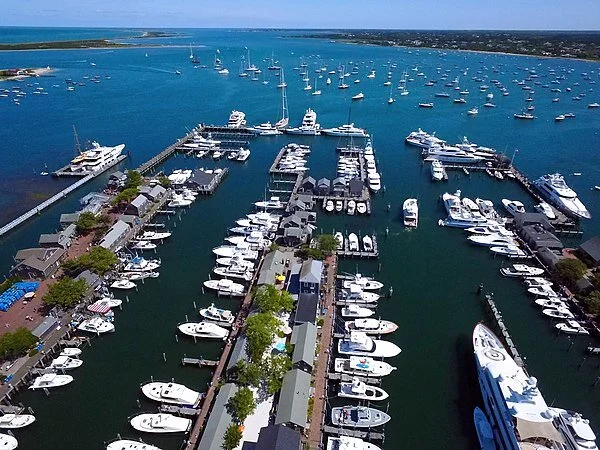
Yachts in Nantucket
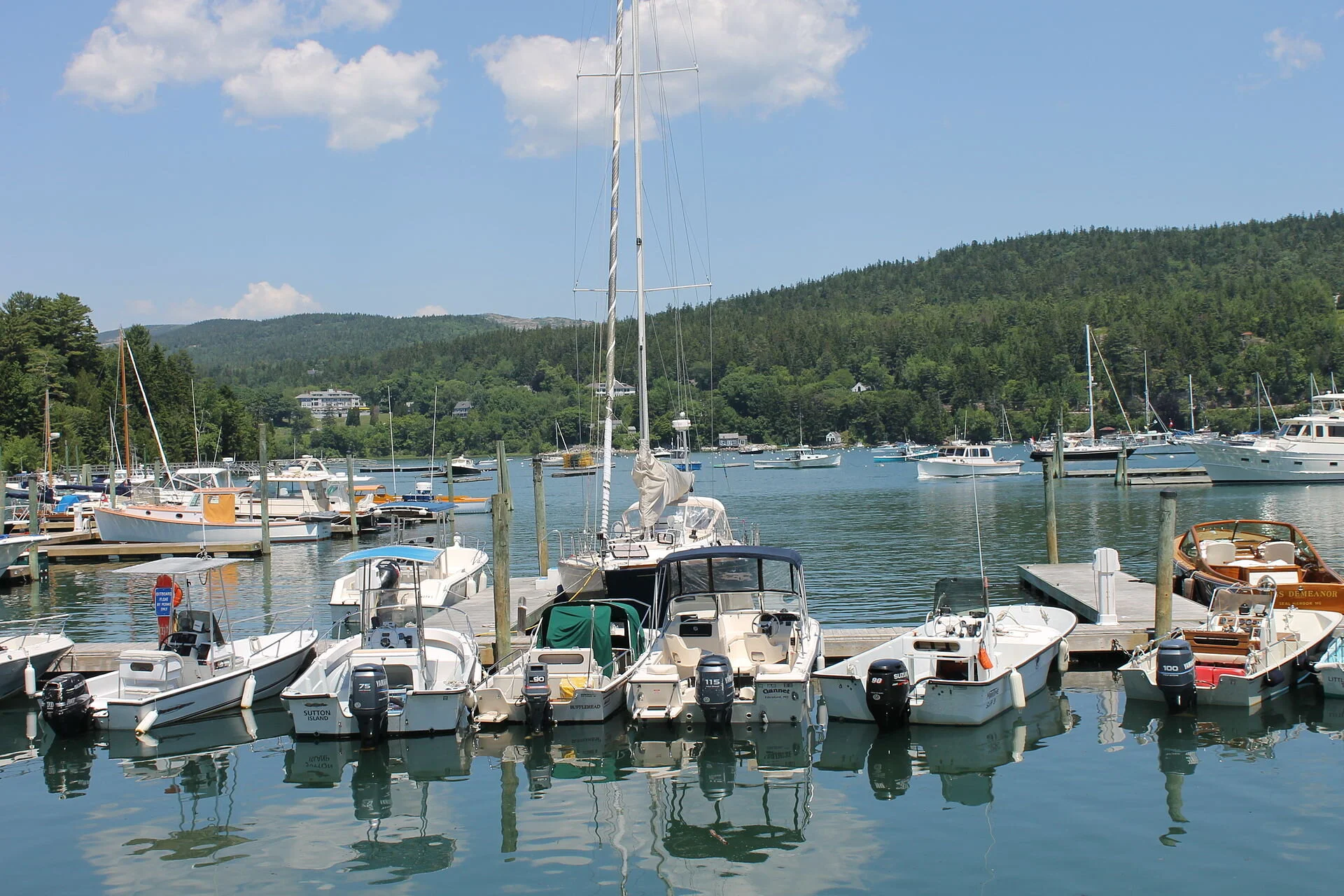
In Northeast Harbor. See mansions on the hillside.
— Photo by Billy Hathorn

‘Upon a winter’s morn’

Packed in my mind lie all the clothes
Which outward nature wears,
And in its fashion's hourly change
It all things else repairs.
In vain I look for change abroad,
And can no difference find,
Till some new ray of peace uncalled
Illumes my inmost mind.
What is it gilds the trees and clouds,
And paints the heavens so gay,
But yonder fast-abiding light
With its unchanging ray?
Lo, when the sun streams through the wood,
Upon a winter's morn,
Where'er his silent beams intrude
The murky night is gone.
How could the patient pine have known
The morning breeze would come,
Or humble flowers anticipate
The insect's noonday hum,—
Till the new light with morning cheer
From far streamed through the aisles,
And nimbly told the forest trees
For many stretching miles?
I've heard within my inmost soul
Such cheerful morning news,
In the horizon of my mind
Have seen such orient hues,
As in the twilight of the dawn,
When the first birds awake,
Are heard within some silent wood,
Where they the small twigs break,
Or in the eastern skies are seen,
Before the sun appears,
The harbingers of summer heats
Which from afar he bears.
“The Inward Morning,’’ by Henry David Thoreau (1817-1862), of Concord, Mass.

Replica of Thoreau’s cabin at Walden Pond, with statue of the writer

Memories in watercolors

Detail from “Vida Vieja” (watercolor), in her show until Feb. 7 at the Hess Gallery of Pine Manor College, in Chestnut Hill, Mass.
This multimedia exhibit displays the artist's watercolor paintings in a video slideshow along with a voice-over from Correá. “Vida Vieja” is Spanish for "old life.’’ So her paintings depict her childhood in Colombia. Each painting is associated with a memory, which she discusses in her video slideshow. She describes going to church, grinding corn, playing outside and other nostalgic experiences. She admits, however, that her memory isn't perfect, represented by the use of watercolor. She explains, "Memory is not 100 percent accurate; with watercolor, I can portray my memories in an abstracted reality."
Our wondrously wasteful American health-care ‘system’
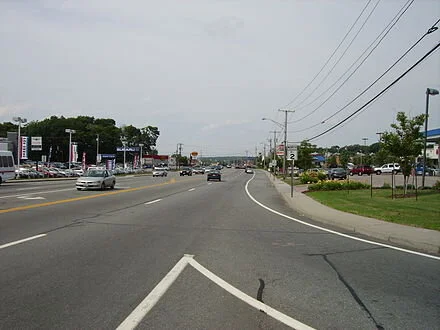
On the bathetic Bald Hill Road in Warwick, R.I.
From Robert Whitcomb’s “Digital Diary,’’ in GoLocal24.com
A medical appointment forced me to drive to the hideous Bald Hill Road in Warwick the other day. I try to avoid large parts of Warwick because its sprawl reminds me of Los Angeles or Route 1 in New Jersey. That, in turn, reminds me of former Public’s Radio and Providence Journal journalist Scott MacKay’s quip that “Florida is Bald Hill Road with palmettos.’’
I’ve had a lot of medical appointments lately (sorry, FB Trumpsters at the bottom of this column, nothing lethal yet) and noticed yet again the extreme inefficiencies in American health care. For example, one has to fill out form after form after form asking the identical information that was asked before by the same organization. The information integration and record keeping are abysmal. This, of course, raises the cost and crashes the efficiency.
The American health-care system is by far the costliest and least efficient in the Developed World. You’d think that the land that brought the world hyper-computerization could do better!

America tied up with red tape
— Photo by Jarek Tuszyński
In the shadow of....
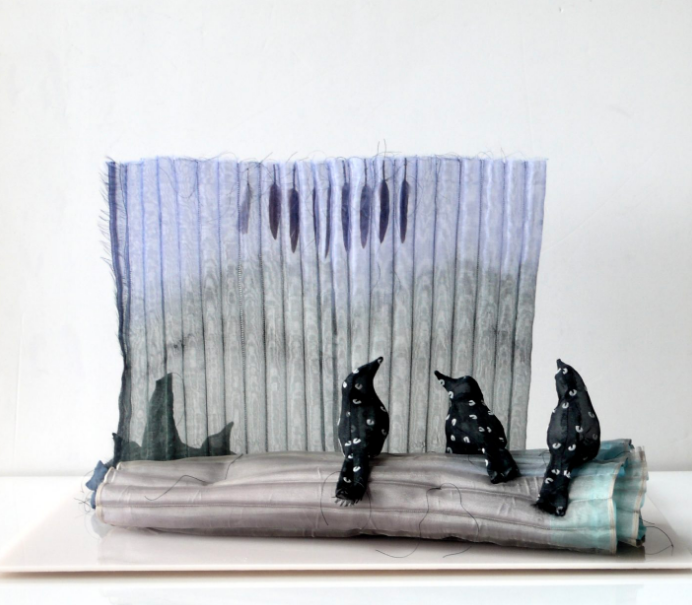
“No Bed of Feathers” (polyester fabrics and feathers), by Warwick,R.I.-based Saberah Malik, in the group show “Lights in the Tunnel: Creating Art in the Shadow of COVID-19,’’ at the Newport Art Museum through Feb. 7.
Senior curator Francine Weiss says. "In the era of COVID-19, we can’t predict—or see—the proverbial 'light at the end of the tunnel,' but we do have glimmers of light inside it. ‘‘

Llewellyn King: It was a nice inauguration but is Biden wading in too far, too fast?


At the American College of the Building Arts, in Charleston, S.C. It would be good if President Biden addresses income inequality by touting the benefits of education in the trades as opposed to, say, getting degrees in sociology. The trades offer more secure and higher-paying jobs than do the liberal arts.
The college's model is unique in the United States, with its focus on total integration of a liberal arts and science education and the traditional building arts skills. Students choose from among six craft specializations: timber framing, architectural carpentry, plaster, classical architecture, blacksmithing and stone carving.
ACBA's mission is to educate and train artisans in the traditional building arts to foster high craftsmanship and encourage the preservation, enrichment and understanding of the world's architectural heritage through a liberal arts and science education.
WEST WARWICK, R.I.
It was a good day. Warm in its content. Soft in its delivery. Kindly in its message. Generous in its intentions. Healing in its purpose.
Trying to implement the soaring hopes of President Joe Biden’s inauguration began immediately. Maybe too immediately, too fast, and with actions that were too sweeping. Biden signed 17 executive orders that suggested an underlying philosophy of “bring it on.”
Biden doesn’t need to open hostilities on all possible fronts at once. He needs to pick his wars and shun some battles. I have a feeling that 17 battles are too many to initiate simultaneously and, possibly, some are going to be lost at a cost.
In his inaugural address, Biden did well in laying out six theaters where his administration will prosecute its wars. But some of those wars will go on for decades – maybe forever.
Big ships take a long time to turn around no matter how many tugboats are engaged. Actions have consequences and so do intentions.
The Biden wars:
The pandemic: This is the war that Biden must win. It is the one into which he needs to pour all his efforts, his own time and talent, and to focus the national mind.
Americans are dying at a horrendous pace. He has promised 100 million vaccine doses in the first 100 days. If that effort falters, for whatever reason, it will stain the Biden presidency. It is job one and transcends everything else.
The environment: It will remain a work in progress. Rejoining the Paris Agreement on Climate Change is a diplomatic and political move, not an environmental one. It will help with the Biden goal of better international standing. It will make many in the environmental movement feel better, but it won’t pull carbon out of the air.
There have been dramatic reductions in the amount of carbon the United States puts into the air since 2005. Biden is in danger of picking up too much of the environmentalists’ old narrative.
The environmental movement can get it very wrong and maybe has again in pushing the world too fast toward wind and solar. These aren’t perfect solutions.
The amount of carbon put into the air by electric generation in the United States is partly due to the hostility toward new dams and particularly toward nuclear power. These were features of the environmental narrative in the 1970s and 1980s.
Simple solutions seldom resolve complex problems. I have a feeling that we are going breakneck with solar and wind; making windmills and solar panels is environmentally challenging, as will be disposing of them after their useful life is over.
Canceling the Keystone XL Pipeline -- after nearly two decades of litigation, diplomatic and environmental review in Canada and the United States -- would seem to be a concession to a constituency rather than sound policy with virtuous effect.
Biden has identified three other theaters where he plans to wage war: growing income inequality, racism, and the attack on truth and democracy.
Income inequality is escalating because new technologies are concentrating wealth, workers have lost their union voice, and our broken schools are turning out broken people, who will start at the bottom and stay there. Racial inequality ditto. Many inner-city schools are that in name more than function.
If there was one big omission from Biden’s agenda of things he is prepared to go to war for, it was education. Most of the social inequalities he listed have an educational aspect. Primary and secondary schools are not turning out students ready for the world of work. Too many universities are social-promoting students who should have been held back in high school.
More are going to college when they should get a practical education in a marketable skill. People with such skills as carpentry, stone cutting, plastering, electrical and iron work are more likely to start their own businesses than those with, say, journalism or sociology degrees.
Biden’s continuing challenge is going to be how to handle the left wing of his party, stirred up by the followers of Vermont Sen. Bernie Sanders and New York Rep. Alexandria Ocasio-Cortez. They haven’t gone away and are expecting their spoils from the election.
The president’s battle for truth is going to be how we accommodate the new carrier technologies of social media with the need for veracity; how to identify lies without giving into universal censorship. That battle can’t be won until the new dynamics of a technological society are understood.
Go slow and carry a big purpose.
Llewellyn King is executive producer and host of White House Chronicle, on PBS. His email is llewellynking1@gmail.com and he’s based in Rhode Island and Washington, D.C.
How January is a winner

“Later on the way to the town where
We worked while the heater
Wheezed fitfully and the windshield
Showed indifference to the defroster
He'd turn to me and say that
The two best things in this world
Were hot coffee and winter sunrises.’’
— From “January,’’ by Baron Wormser (born 1948), a former poet laureate of Maine

Unfair advantage
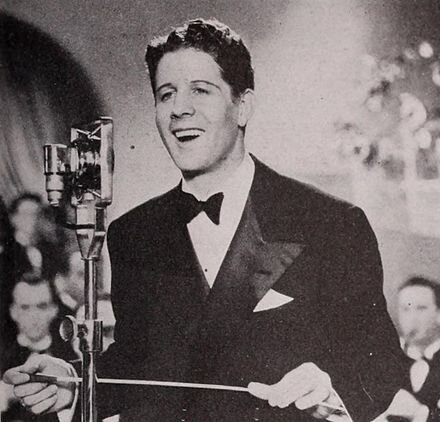
Vallée as bandleader Skip Houston the movie Sweet Music
“That’s one of the tragedies of this life — that the men who are most in need of a beating up are always enormous.’’
— Hubert Prior Vallée (July 28, 1901 – July 3, 1986), known professionally as Rudy Vallée, was an American singer, musician, movie actor and radio host. He was one of the first modern pop stars of the teen idol type, but was known to be in private a nasty, egomaniacal man, with a violent temper.
He was born in Island Pond, Vt., near the Canadian border, the son of Catherine Lynch and Charles Alphonse Vallée. His maternal grandparents were Irish, while his paternal grandparents were French-Canadians from Quebec. He grew up in Westbrook, Maine.
After graduating from Yale, he formed Rudy Vallée and the Connecticut Yankees, having partly named himself after saxophonist Rudy Wiedoeft.
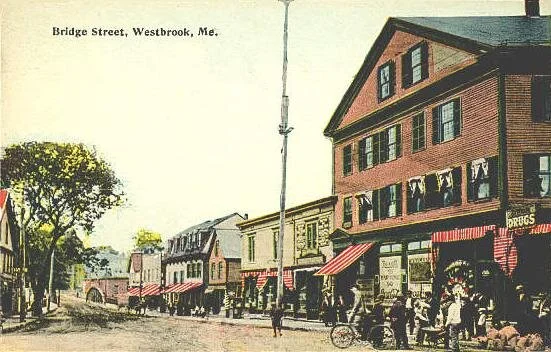
Bridge Street in downtown Westbrook, Maine, in 1912, when Vallee was living in the town as a boy.

Island Pond, Maine, where Vallee was born. (The) Island (in the) Pond from which the village takes its name
Marsh magic

“Behind Little Pamet (Truro)” (Outer Cape Cod), (oil on panel), by Cammie Watson, at Alpers Fine Art, Andover, Mass. The Little Pamet River is a 1.5-mile-long stream that river arises in wetlands, flows west for about a mile, and drains into Cape Cod Bay. The nearby Pamet River lies a few miles to the south. It’s named for a Native American tribe.
Basav Sen: Fossil-fueled fascism

Via OtherWords.org
The year 2020 will be remembered in history for a deadly pandemic and a deep economic crisis that touched almost every country. . Hopes for a brighter 2021 were one of the few things most people could agree on.
But just six days into the new year, these hopes were rudely shattered by images of far-right white supremacists, incited by an aspiring autocrat refusing to admit his electoral defeat, storming the Capitol in an attempt to overthrow the election.
This fascist putsch was implicitly supported by some elected leaders, including GOP members of Congress who continued to promote the thoroughly debunked falsehood that the 2020 elections were “stolen.” Worse still, there are early indications that some elected officials may have aided the violent mob more directly as well.
But this attempted coup wouldn’t have progressed to this point without large amounts of funding, too. And playing a disproportionately large role among business backers of fascism are fossil fuel companies and their owners and top executives.
My Institute for Policy Studies colleagues Chuck Collins and Omar Ocampo recently documented the top billionaire donors to the Trump campaign. In first place is Kelcy Warren, co-founder and board chair (and until last October, CEO) of Energy Transfer — the company behind the controversial Dakota Access Pipeline.
Trump’s wealthy backers over the years have also included the notorious (and now deceased) coal billionaire Robert Murray, who effectively bribed Trump and his former Energy Secretary Rick Perry to implement a policy agenda that would benefit Murray.
This isn’t a case of a few isolated billionaires backing one extremist politician. It’s a case of an entire industry filling the campaign coffers of politicians who’ve waged war on our democracy. In the 2020 election cycle alone, the oil and gas industries gave some $9.3 million to lawmakers who refused to certify the 2020 election results.
The fourth largest Political Action Committee (PAC) making campaign donations to these coup-supporting politicians is the Koch Industries PAC.
Koch Industries is widely known as a major right-wing political donor. It’s also a vast conglomerate that’s deeply intertwined with fossil fuels, with interests in refineries, equipment, engineering, and construction services for petrochemical facilities, gas transportation and storage, and more.
The industry has also funded far-right hate groups directly.
DonorsTrust, a donor-advised fund that allows wealthy people to make anonymous contributions, has made large donations to multiple hate groups, totaling $5 million in 2019. The Koch Charitable Foundation is a contributor to DonorsTrust and has other organizational ties with them as well.
Unsurprisingly, Donors Trust also donated $5 million in 2019 to climate denial and misinformation groups, such as the Heartland Institute and the Competitive Enterprise Institute. Climate denial and far-right extremism are two heads of the same monster.
The Koch network, American Petroleum Institute, Chevron, and other fossil fuel organizations all made public statements condemning the violence at the Capitol and supporting certification of the 2020 elections. These were fine as far as they went, but they sound rather like Dr. Frankenstein condemning the monster of his own creation.
Slaying this monster once and for all has to start with ending the culture of legalized bribery and corruption, in which wealthy individuals and corporations can fund far-right extremism inside and outside government, often anonymously.
And just to make sure the monster doesn’t rise again, we need to break the political clout of the fossil fuel industry once and for all.
Basav Sen directs the Climate Policy Program at the Institute for Policy Studies.
Thomas G. Mortenson: How to address America's crisis in higher education
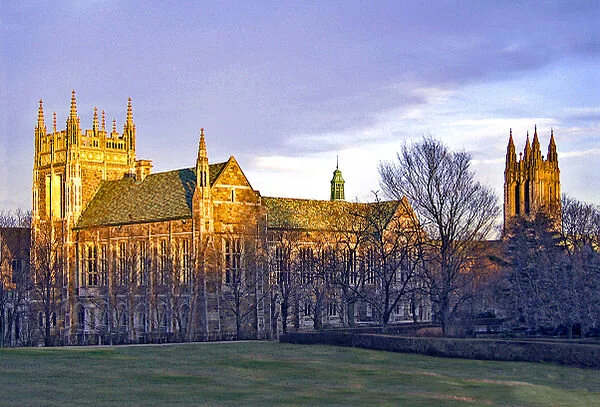
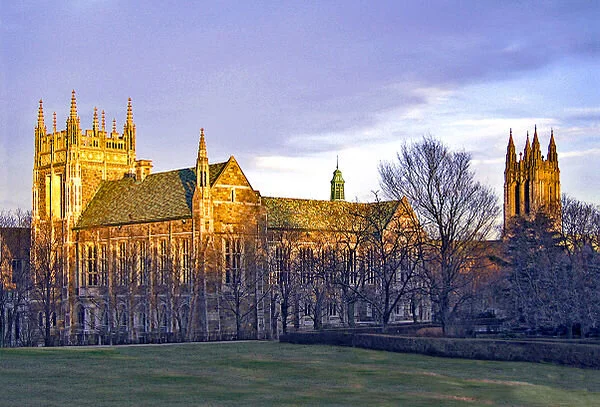
Boston College, which is not in Boston but in Chestnut Hill, Mass., and is, like Dartmouth College, a university
From The New England Journal of Higher Education, a service of The New England Board of Higher Education (nebhe.org)
Something inside me keeps saying: I told you something like this would happen. After 50 years studying opportunity for higher education, I am somewhat comfortable (and very uncomfortable too) saying the issues I have sought to address and warned about underlie the current political chaos. Our failures to address them (and I include higher education centrally in “our”) have boiled over:
1) Income inequality has been surging unchecked for decades. Among the 36 countries that are members of Organization of Economic Cooperation, the U.S. ranks third highest in income inequality. Income is being increasingly concentrated, which means that a growing share of the nation’s prosperity is being concentrated in a shrinking share of the population. With a growing share of the population left out, they have turned to Mr. Trump who had promised to turn the clock back and make America great again. Whatever you and I may think of him, we should remember that 74 million angry people voted for him in the last election.
2) Men’s lives have been falling apart for many decades. We celebrate the success of women and ignore the plight of men. Men have been disengaging from the labor force, from family life, from civic engagement. Our incarceration rates are the highest in the world. And suicide rates among younger males have been exploding. The central problem for men is the shift in employment from goods production to service provision. Men dominated goods production, and women have taken advantage of the growth in service provision employment, particularly through higher education. For every 100 women who earn a bachelor’s degree, 74 men do.
3) Higher education is the engine of division, enriching the rich and leaving everyone else out. From my most recent update, about 13% of children born into the bottom quartile of family income will complete a bachelor’s degree by age 24. About 62% of children born into the top quartile will complete a bachelor’s degree by the same age. This gap has grown substantially since 1970 when I started this data analysis. The bachelor’s degree has become the dividing line between people who are moving forward and people who are moving backward in the economy.
4) As a matter of public policy, I believe that selective college admissions should be replaced with a random draw lottery for admissions. The whole selective college admissions system is outright class warfare. Colleges should remain free to practice selective admissions—but at the price of losing eligibility for Title IV program participation and eligibility for tax-exempt status. These institutions should be treated as the greedy for-profit businesses that they are.
5) Education used to be thought of as an investment in the future. A generation of adults would tax themselves to provide free education for the next generation. The education-loan business reverses this view–let financially needy young people borrow from their own future incomes to be higher educated today. I hate education loans! My proposal to eliminate them would be to increase the Pell Grant maximum award to cost-of-attendance, and then expect states to match the federal effort to fund them. This Pell max should be set to some good quality higher education level, perhaps around $40,000. Colleges that had a higher cost of attendance (COA) would have to fund that from their own resources. My goal is to eliminate the damn loans for higher education, and fully meet demonstrated financial need for students from the bottom half of the family income distribution that are so poorly funded today. Also, I want to force states back into their historic roles funding higher education.
After a half century studying higher-education opportunity, my patience with the current dysfunctional and destructive system was exhausted long ago. Frankly, I am ashamed of the mess my generation has left for the next generation to live with. Again, I say I feel comfortable saying I told you this would happen, but it certainly did not have to happen if we had addressed the issues I tried to raise during my 50 year career.
Thomas G. Mortenson is a higher-education policy analyst, now living in Florida and Minnesota.
Have a seat, or maybe not

“Comfort Taken,’’ by Leslie Lyman, at Boston Sculptors Gallery, Jan. 27-Feb. 21. This was installed in the White-Ellery House, built 1710, in Gloucester
“Comfort Taken’’ presents the chair as a symbol of home and family—imperfect, used, repaired, held together with effort, work and continued perseverance.

White-Ellery House. It’s so old that its design looks late medieval English.
Diner breakfast, then ski
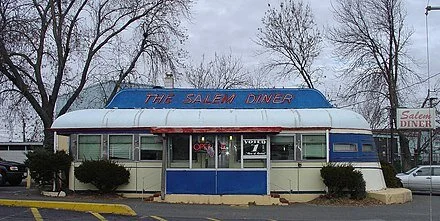
“When I go skiing in New England, I usually wake up early and drive up to Vermont, New Hampshire, or Maine to make it in time for chairlift opening. That means leaving early and getting breakfast at one of the little quaint diners up in the mountains.’’
Sunita Williams (born 1965), American astronaut and U.S. Navy officer who grew up in the Boston area.
She graduated from Needham High School, in Needham, Mass.

On the Upper Wildcat Trail, at the Wildcat Mountain Ski Area, in New Hampshire. The Presidential Range of the White Mountains looms to the west.