
Vox clamantis in deserto




Tim Faulkner: What next for Transportation Climate Initiative?

From ecoRI News (ecori.org)
The regional collaboration known as the Transportation & Climate Initiative (TCI) will be operating, at least initially, with a smaller cast than expected.
Governors from Rhode Island, Massachusetts and Connecticut, as well the District of Columbia’s mayor, signed an agreement Dec. 21 to launch an effort to address the climate crisis. This cap-and-invest system is designed to reduce climate emissions by raising money from the wholesale distribution of gasoline and diesel fuel and investing the proceeds in electric-vehicle infrastructure and other initiatives that make up the so-called “green transportation economy.”
TCI is composed of 13 East Coast states and the District of Columbia, but only the three states and the nation’s capital signed the recent memorandum of understanding to establish the revenue-generating system. Most other TCI member states had previously signed a separate letter expressing support for the program. Maine and New Hampshire didn’t sign on to that earlier letter. All TCI members can adopt the cap-and-invest program at any time.
During an online press call, no explanation was offered as to why the other states aren’t joining the pact. Representatives from the three states and the District of Columbia instead described how the anticipated reduction in climate emissions, along with the economic growth they expect, will entice states to eventually participate.
“This is a strong group moving forward in a committed way,” said Kathleen Theoharides, secretary of the Massachusetts Executive Office of Energy and Environmental Affairs. “And we believe the future is bright and that if you build it they will come.”
Katie Scharf Dykes, commissioner of the Connecticut Department of Energy & Environmental Protection, predicted that TCI will increase state participation, as did another cap-and-invest program that generates revenue from power-plant emissions, the Regional Greenhouse Gas Initiative.
“I’m confident that we will see more jurisdictions joining us,” Scharf Dykes said.
If local approvals are met, TCI is scheduled to launch in 2022 with a one-year trial reporting period that will track emissions for each state and the District of Columbia. Fossil-fuel distributors won’t have to buy the pollution allowances until 2023, when they are required for exceeding a monthly emission limit, or cap. The limit is reduced each year until 2032, when it will be 30 percent lower than the initial cap.
During the recent press call, representatives from the three states and District of Columbia touted the benefits of investing some $3.2 billion over nine years in electric buses, electric-vehicle charging infrastructure, and new bicycle lanes, walking trails, and sidewalks.
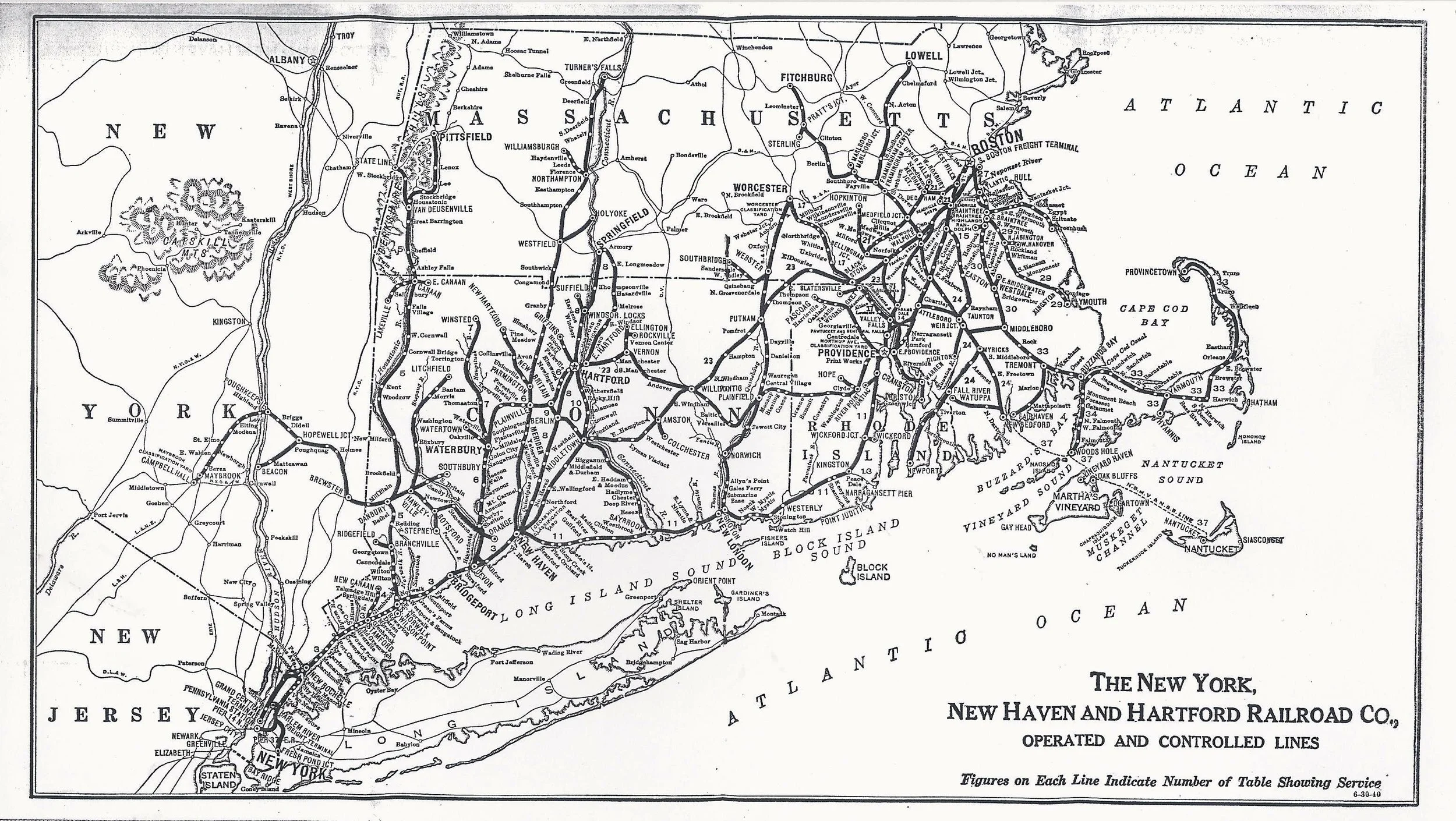
Some $3.2 billion will be invested in low-carbon transit projects in four regions over nine years. (TCI)
“Massachusetts, Connecticut, Rhode Island and D.C. are committing to bold action to achieve our ambitious emission-reduction targets while positioning the jurisdictions and the region to grow our clean transportation economy,” Theoharides said.
The auction of the allowances is expected to raise about $300 million annually. Rhode Island anticipates receiving about $20 million a year. As part of the program, at least 35 percent of the proceeds must be invested in environmental-justice communities. Spending in these frontline communities is expected to create jobs, reduce air pollution, and improve public health.
If fuel distributors pass the cost on to consumers, the expense is expected to add between 5 and 9 cents to a gallon of fuel.
The program’s requirement for equity investment is intended to address the regressive nature of the higher fuel costs by investing in communities suffering from excessive air pollution. Statewide equity advisory boards comprised mostly of members from these communities will recommend where and how the TCI funding is spent.
“Most importantly, (TCI) will provide much-needed relief for the urban communities who suffer lifelong health problems as a result of dirty air,” Rhode Island Gov. Gina Raimondo wrote in a prepared statement.
The program is expected to reduce greenhouse-gas emissions from the transportation sector by some 26 percent over nine years. Transportation accounts for 42 percent of all emissions among the signors, the largest source of emissions in those areas.
The announcement comes a year after TCI was expected to launch. TCI representatives blamed the delay on the heath crisis and an unfriendly White House administration. Public perception was also a likely cause for delay. Opposition to TCI from conservative news outlets and radio talk-show hosts has persisted.
Rhode Island acknowledged at a meeting in 2019 that TCI will take more than a government directive to succeed.
“If we’re going to win hearts and minds, it’s not just people at the Statehouse,” said Carol Grant, then director of the Rhode Island Office of Energy Resources. “We have to kind of win people over generally to the importance of this.”
Back then, environmental groups criticized TCI for not advancing stronger reductions in emissions. Reaction to the recent announcement from the same environmental community has been positive. Support for the TCI program has been expressed by Save The Bay, Acadia Center, and the Northeast Clean Energy Council.
A new president committed to taking on climate change improved the prospects for enacting the TCI program, according to coalition members.
“With a change in administration, policies are going to be a lot more stable,” said Terrence Gray, deputy director for environmental protection at the Rhode Island Department of Environmental Management (DEM).
Janet Coit, DEM’s executive director and the state’s representative during the online announcement, noted that states with Republican and Democratic governors are TCI members.
“After so much divisiveness, it’s really great to see bipartisan regional effort leading on climate change,” Coit said.
The public response to the program will likely determine the willingness of other states to join. A recent poll conducted by Yale University and George Mason University among voters in TCI states and the District of Columbia found that 41 percent said they strongly support participation in the initiative. Another 31 percent said they would somewhat support participation. Rhode Island had the highest support at 61 percent. Maine was the lowest at 56 percent. Politically, 84 percent of Democrats favored joining TCI, while 49 percent of Republican favored joining the initiative.
Public perception starts with messaging. The revenue mechanism is often referred to by opponents as a “gas tax” or fee paid by consumers. But it has several distinctions, according to the renewable-energy advocacy group Acadia Center.
First, some fuel-distribution companies may choose to internalize part or all of the allowance costs to gain a competitive advantage rather than pass it on to gas-station customers. And since TCI is based on the carbon content of a fuel, suppliers will be able to sell fuels with lower carbon contents and pay less in carbon pollution fees, according to Acadia Center.
“This program is about delivering benefits to consumers with a transition in fuels and mobility options over time,” said Hank Webster, staff attorney and Rhode Island director for Acadia Center.
TCI will have a minimal impact, if any, on fuel prices, Webster said, because the program is designed to keep that impact at or below 5 cents if regional fuel suppliers choose to pass the costs on to their customers.
“To put that in context, you can save 5 cents per gallon at some stations by using their frequent customer program, or 10 cents per gallon by setting up a direct debit from your checking account,” he said.
Rhode Island and Connecticut require legislative approval to launch the TCI program. Massachusetts can advance the program through its executive office.
Raimondo is expected to launch the legislative process this spring, with public input beginning in January.
Tim Faulkner is a journalist with ecoRI News.

— Photo by Felix Kramer
Patricians vs. plebians
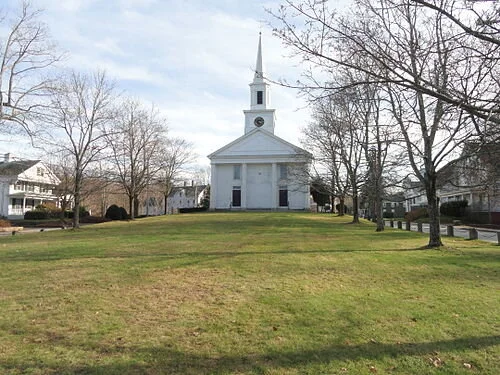
The town green in Douglas, Mass. Town greens (or “commons”) are town-owned land in New England.
“There arose … in every New England village community the same strife between old resident and newcomers as that between the patricians and plebians of ancient Rome; the old settlers claimed a monopoly of the public land and the newcomers demanded a share.
— Herbert Baxter Adams (1850-1901), historian and educator, in The Germanic Origins of New England Towns
--
When God made Boston
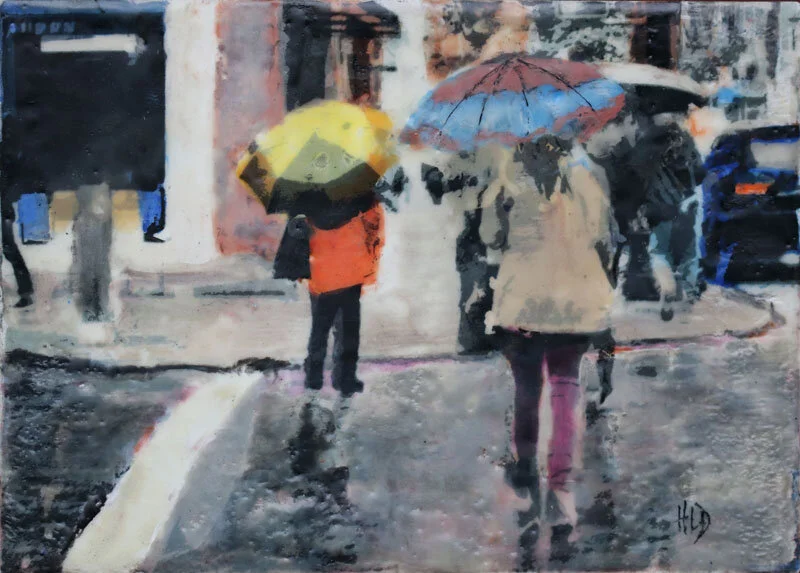
“City Rain” (encaustic, toner transfer on panel), by Heather Douglas, who lives in Rockland County, N.Y., and Vermont. She says:
“I see my work in part as documentary and in part as experimental. Many of my pieces are distillations from photographs I’ve taken of people on city streets. As times change, people and environments change. I aim to capture that landscape.
“In contrast my abstract pieces have no predetermined outcome but emerge from experimentation, influence from nature, and a place from within.’’
See:
http://www.heatherdouglas.com/index.html
and:
newenglandwax.com
“I guess God made Boston on a wet Sunday.’’
— Raymond Chandler (1888-1959), Anglo-American detective novelist and screenwriter
Hear/read an hour of Trump's brazen, sociopathic corruption
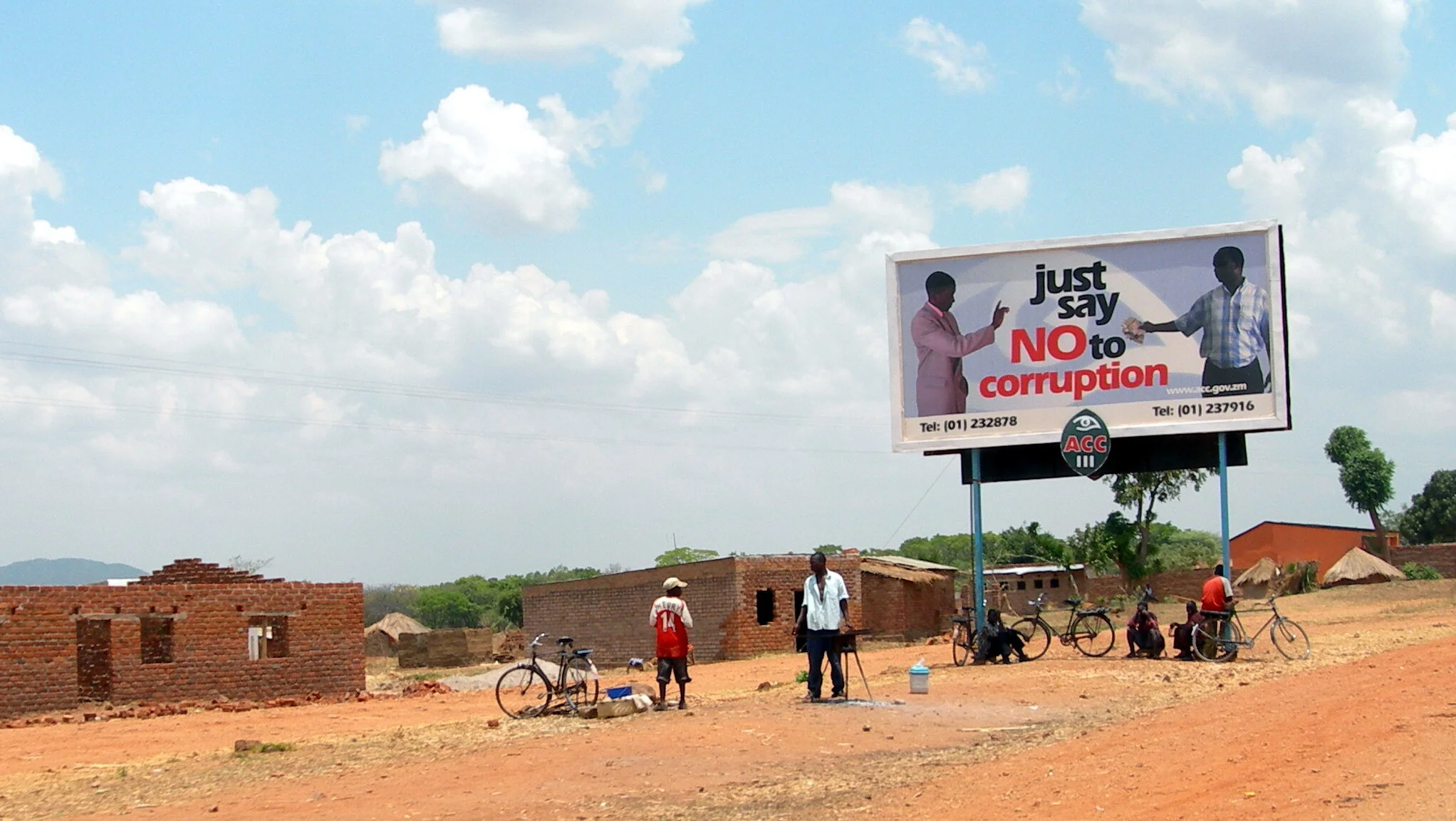
Our desperate caudillo at work: Hit this link.


Jill Richardson: It’s past time to toss Trump’s huge lies about immigrants

Preparing for an immigrant-naturalization ceremony in Salem, Mass.
Via OtherWords.org
As Donald Trump leaves office, it’s worth remembering how he first launched his campaign: by calling immigrants “murderers” and “rapists.”
This was outrageous then. And there’s more evidence now that it was, of course, false.
A new study finds that “undocumented immigrants have considerably lower crime rates than native-born citizens and legal immigrants across a range of criminal offenses, including violent, property, drug, and traffic crimes.”
The study concludes that there’s “no evidence that undocumented criminality has become more prevalent in recent years across any crime category.” Previous studies found no evidence to support Trump’s claim, but now we have better data than ever before.
Put another way, Trump was telling a dangerous lie.
Sociologists Michael Light, Jingying He and Jason Robey used crime and immigration data from Texas from 2012 to 2018 to find that “relative to undocumented immigrants, U.S.-born citizens are over 2 times more likely to be arrested for violent crimes, 2.5 times more likely to be arrested for drug crimes, and over 4 times more likely to be arrested for property crimes.”
Unfounded accusations of criminality are a longstanding tool of racism and other forms of bigotry across a range of social categories.
When anti-LGBTQ activist Anita Bryant wanted to discriminate against gays and lesbians in the 1970s, she claimed they molested children. More recently, when transphobic people wanted to ban trans women from women’s bathrooms, they falsely claimed that trans women would rape cisgender women in bathrooms.
Consider how much anti-Black racists justified their actions in the name of “protecting white women” from Black men. In 1955, a white woman, Carolyn Bryant Donham, wrongly claimed that a 14-year-old Black boy, Emmett Till, grabbed her and threatened her. White men lynched Till in retaliation. More than half a century later, Donham revealed that her accusations were false.
In 1989, the Central Park Five — five Black and Latino boys between the ages of 14 and 16 — were wrongly convicted and imprisoned for raping a white woman. They didn’t do it. In 2002, someone else confessed and DNA evidence confirmed it. (Trump, who took out full-page ads calling for their execution then, never apologized.)
Racism and bigotry are about power and status. Yet instead of openly admitting that some groups simply want power over others, most bigots find reasons that sound plausible to the uninformed — even if the reasons are completely untrue. Bigotry is much easier to market if it can masquerade as fighting crime.
It wasn’t just Trump himself. During the Trump administration, officials like the U.S. solicitor general argued before the Supreme Court that undocumented immigrants are disproportionately likely to commit crime. Data: None. Claims: False.
As the late New York U.S. Sen Daniel Patrick Moynihan famously said, “You are entitled to your opinion. But you are not entitled to your own facts.”
So when you hear a claim that a particular group of marginalized people are criminals, question it. What is the evidence for the claim? What is the evidence against the claim? Why is the person making the claim, and how will they benefit if people believe them?
If someone cites research, who performed the research, and who funded it? Do the funders have a financial stake in the research findings? Was it published in a peer-reviewed journal? Is the data publicly available for others to replicate the findings?
In this case, the research debunking this racist lie was government-funded, peer-reviewed in a major journal, and the data is available to the public.
Hearing that particular group of people poses a threat to your safety can be frightening. But because such claims have been used throughout history to spread bigotry against marginalized groups, they should always be fact-checked.
In this case, the evidence is clear. Trump stoked anti-immigrant sentiment in the name of fighting crime, and his claims were baseless and false. The lie should end with his presidency.
Jill Richardson is a sociologist.
It has worked
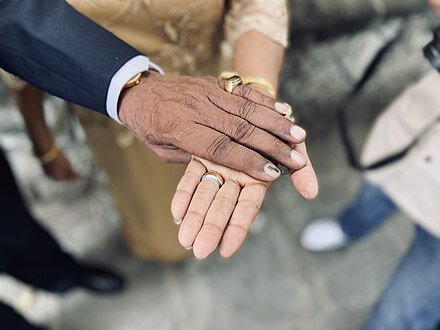
“It looks like we will always be together
And every day I realize anew
We never really had a thing in common
Except we were the best that we could do.’’
— From “The Best That We Can Do,’’ by Geoffrey Blanchette, in The Poets of New England
Heroic trees

“Willow Heights Trail #2’’’ (gouache on panel), by Vicki Kocher Paret, at Galatea Fine Art, Boston, Jan 8-31
The Cambridge-based painter says:
"My hero: nature, trees, pretty much the natural world. It has the power to support and heal the environment, and provide peace and spiritual healing with its endless diversity and beauty. It inspires and I strive to capture these powers in my paintings."
Keeps them humble
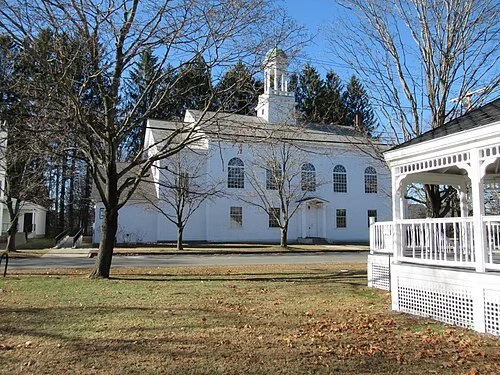
Walpole, N.H., Town Hall
“Walpole, New Hampshire, is small enough for us to keep that mom-and-pop feeling. The town reminds us every day of the power of history. And it’s important to stay in a place where whatever notoriety you get, plus fifty cents, will buy you a cup of coffee.
— Ken Burns, history documentary show impresario on PBS, in Yankee magazine July/August 2002 on being based in Walpole.
Change your life in 2021
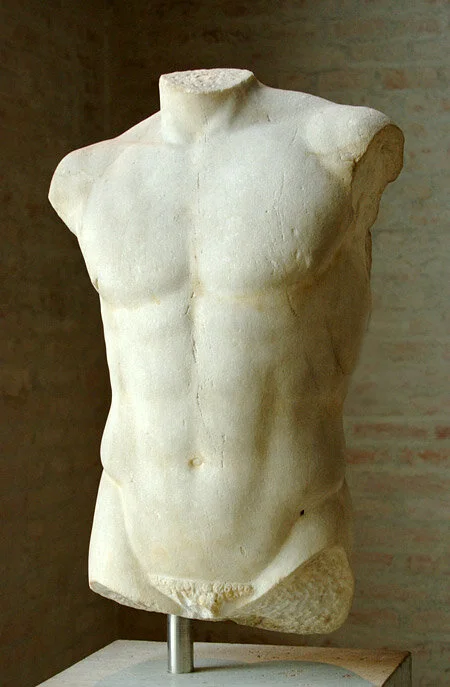
We cannot know his legendary head
with eyes like ripening fruit. And yet his torso
is still suffused with brilliance from inside,
like a lamp, in which his gaze, now turned to low,
gleams in all its power. Otherwise
the curved breast could not dazzle you so, nor could
a smile run through the placid hips and thighs
to that dark center where procreation flared.
Otherwise this stone would seem defaced
beneath the translucent cascade of the shoulders
and would not glisten like a wild beast's fur:
would not, from all the borders of itself,
burst like a star: for here there is no place
that does not see you. You must change your life.
“Archaic Torso 0f Apollo,’’ by Rainer Maria Rilke (1875-1926), Bohemian-Austrian poet. This was translated by Stephen Mitchell. The last sentence is famous.
Past time to go big

Block Island Wind Farm

Old Higgins Farm Windmill, in Brewster, Mass., on Cape Cod. It was built in 1795 to grind grain. Many New England towns had windmills.
“By partnering with our neighbor states with which we share tightly connected economies and transportation systems, we can make a more significant impact on climate change while creating jobs and growing the economy as a result.’’
-- Massachusetts Gov. Charlie Baker
Massachusetts, Connecticut and Rhode Island and the District of Columbia have signed a pact to tax the carbon in vehicle fuels sold within their borders and use the revenues from the higher gasoline prices to cut transportation carbon-dioxide emissions 26 percent by 2032. Gasoline taxes would rise perhaps 5 to 9 cents in the first year of the program -- 2022.
Of course, this move, whose most important leader right now is Massachusetts’s estimable Republican governor, Charlie Baker, can only be a start, oasbut as the signs of global warming multiply, other East Coast states are expected to soon join what’s called the Transportation Climate Initiative.
The three states account for 73 percent of total emissions in New England, 76 percent of vehicles, and 70 to 80 percent of the region’s gross domestic product.
The money would go into such things as expanding and otherwise improving mass transit (which especially helps poorer people), increasing the number of charging stations for electric vehicles, consumer rebates for electric and low-emission vehicles and making transportation infrastructure more resilient against the effects of global warming, especially, I suppose, along the sea and rivers, where storms would do the most damage.]
Of course, some people will complain, especially those driving SUVs, but big weather disasters will tend to dilute the complaints over time. Getting off fossil fuels will make New England more prosperous and healthier over the next decade. For that matter, I predict that most U.S. vehicles will be electric by 2030.
Eventually, reactionary politics will have to be overcome and the entire nation adopt something like the Transportation Climate Initiative.
‘Wide-eyed in fear’
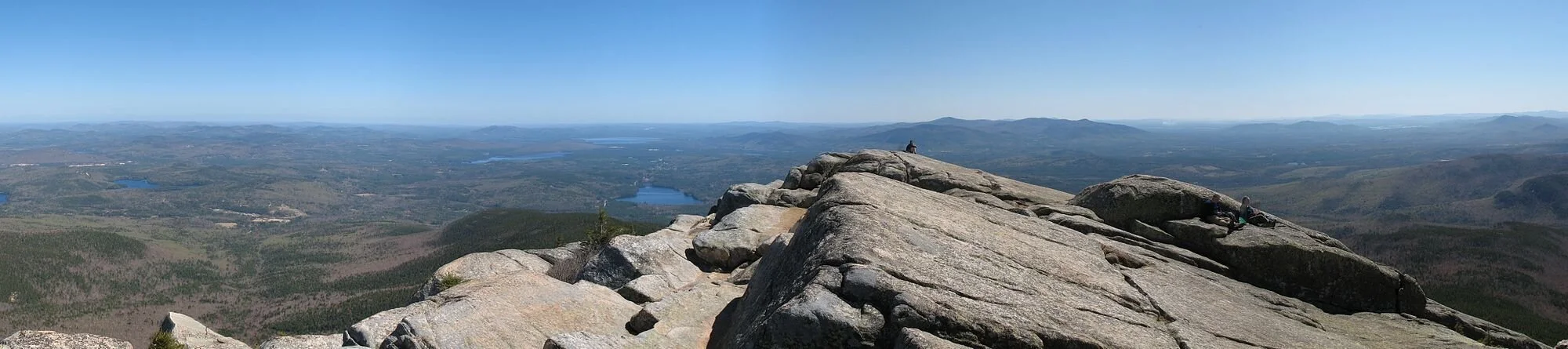
Looking south from the top of Mt. Chocorua, in New Hampshire
‘‘….Windswept bare granite-domed rock peak:
my son, as if seated, struggling, inches himself across
the stone, wide-eyed in fear….’’
— From “One Who Climbs Mountains,’’ by Tom Driscoll
The lights in the woods

“Maine Winter” (encaustic and oil), by Camille Davidson, a painter who lives on a lakeside cabin in Maine. She operates a gallery in Readfield, Maine. Hit this link.
She says in newenglandwax.com that she is “inspired by the shifting lights that occur in the woods and the seasons that change around me.’’

A nation of 'gullible dolts'
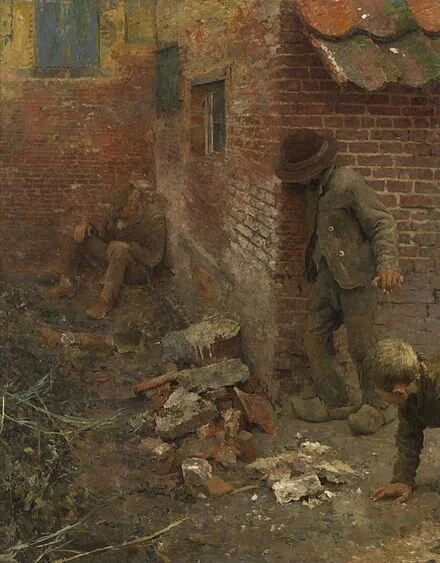
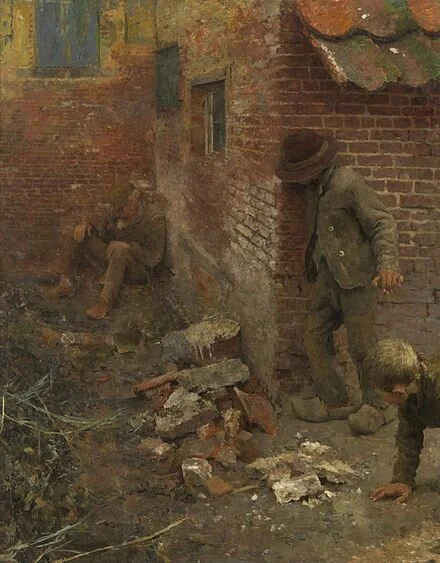
“The Idiot ,’’ by Evert Larock (1892)
“Widespread ignorance bordering on idiocy is our new national goal….The ideal citizen of a politically corrupt state, such as the one we now have, is a gullible dolt unable to tell truth from bullshit. An educated, well-informed population, the kind that a functioning democracy requires, would be difficult to lie to, and could not be led by the nose by the various vested interests running amok in this country.’’
— Charles Simic (born 1938), Serbian-American essayist and Pulitzer Prize-winning poet as well as a professor emeritus of literature and creative writing at the University of New Hampshire. He lives in Strafford, N.H.
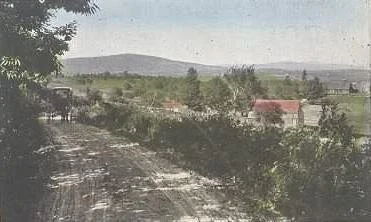
In Strafford circa 1910: The Blue Hills and the Job Hills from Northwood Road
Shrimp and few people

Maine shrimp, above and below
“As far as I’m concerned, there are exactly two great things about living on the Maine Coast in January: 1) empty 2) shrimp.
Leslie Land, in “Everybody Loves Maine Shrimp,’’ in the January 1995 issue of Yankee magazine
Sadly, harvesting Maine shrimp is now banned to try to conserve what’s left of the long-depleted stocks of the tasty creatures in the Gulf of Maine.

Chris Powell: Close down the ‘doctor’ racket; when beggars die
MANCHESTER, Conn.
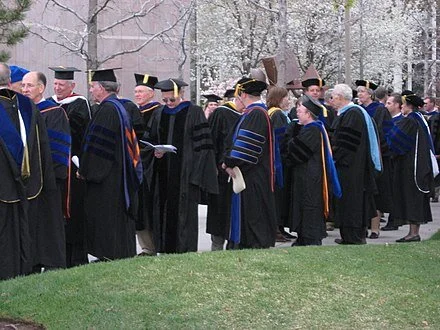
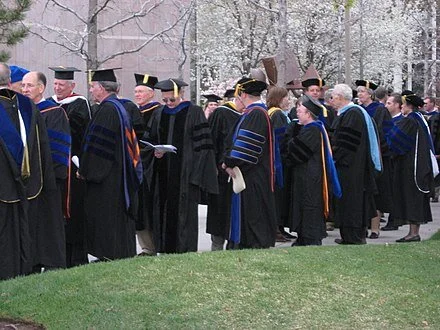
Legions of the politically correct are insisting that President-elect Joe Biden's wife, Jill, be given the honorific title "Doctor" because she holds a doctoral degree in education, which she received largely on the basis of a mediocre term paper. Objections to her honorific are being denounced as sexist and anti-intellectual, an insult to all women with doctoral degrees, as if men haven't gotten such degrees and claimed the title too, and as if all doctorates signify learning and service commanding special respect.
But journalistic style long has been to confer "doctor" only on those holding degrees in medicine and dentistry, and the reason for this was hilariously demonstrated last March, when television show hostess Whoopi Goldberg remarked on The View that she hoped that if Joe Biden were elected president he would appoint his wife surgeon general.
“She's a hell of a doctor," Goldberg said. "She's an amazing doctor.”
Of course, Mrs. Biden has no more qualifications to practice medicine than Goldberg has to pontificate on TV while advertising her ignorance.
The problem is that people generally associate "doctor" with medical authority, so conferring the title on those with other degrees causes misunderstanding.
But with the explosion of what likes to call itself higher education there are now millions of people around the world with non-medical doctorates who like to style themselves "Doctor" to pose or intimidate, though their usefulness may be less than that of elevator operators and lamplighters.
The higher-education industry long has thrived on this pretension, though elements of the working class quickly caught on to it, as was indicated by an episode of the Dobie Gillis television show in the early 1960s.
Having advanced from high school to junior college, Dobie tells his skeptical father, a grocer, why a certain professor is so great: because he has a doctorate, a Ph.D.
Dobie's father asks: "What kind of doctor is that?"
Dobie explains: "You know, Dad -- a doctor of philosophy."
Dobie's father knowingly replies: "Oh, yeah -- the kind that don't do nobody no good."
Back in the days of Dobie Gillis a Connecticut educator of working-class origin, an Army veteran of combat in World War II who never would have gotten to college without the GI Bill, became a Ph.D himself and sought to democratize higher education for the working class. He had seen the "doctor" racket up close and he was not too pompous to acknowledge it. He said that the title was most useful for getting restaurant reservations. He was my father, Theodore Powell.
(Editor’s note: Here’s Theodore Powell’s obit.)
xxx
When beggars die there are no comets seen.
The heavens themselves blaze forth the death of princes.
As it was in Julius Caesar's time and Shakespeare's, it remains today in Connecticut.
Last week Devon Dalio -- eldest son of Connecticut's richest resident, investment-fund manager, Ray Dalio -- was killed in a car crash in Greenwich and it became international news. Gov. Ned Lamont issued a statement mourning the loss, since Ray Dalio and his wife, Barbara, are prominent philanthropists and his neighbors in Greenwich.
Three days later the Connecticut Post reported that four young men had been shot at a bar in Bridgeport, two of them fatally. In Waterbury the Republican-American reported that shootings in that city have more than tripled this year and people in some neighborhoods are afraid to go outside. And The Hartford Courant and (Manchester) Journal Inquirer examined the great increase in drug-overdose deaths in the state this year.
Neither the governor nor anyone else in authority issued any special lament for these losses. After all, such stuff is all normal now. Its casualties are nobodies, practically beggars, not princes.
Of course, some of this social disintegration can be attributed to the virus epidemic and the closing orders that disproportionately impoverish the working class, people less able to work from home. But this disintegration was under way in Connecticut long before the epidemic and state government has undertaken no inquiry into its causes -- and isn't likely to do so as long as the people who suffer most from it keep providing the huge pluralities that sustain the power of the oblivious, indifferent, ineffectual and self-serving.
Chris Powell is a columnist for the Journal Inquirer, in Manchester, Conn.
Regional one-liners
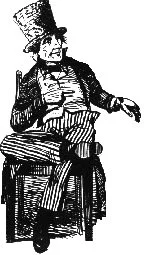
Brother Jonathan, a 19th Century personification of a New England Yankee, as drawn by Thomas Nast.
“New England humor more or less starts … with the lost tourist or city person asking directions of some grizzled old Maine or Vermont country native and and receiving in return a devastating one-liner.’’
Judson D. Hale Sr. in Inside New England (1982)
We have faith in you
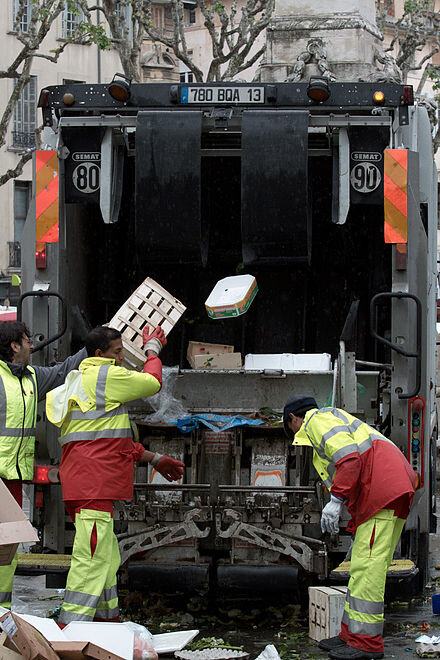
“O garbage men,
the New Year greets you like the Old;
after this first run you too may rest
in beds like great warm aproned laps
and know that people everywhere have faith:
putting from them all things of this world,
they confidently bide your second coming.’’
From Philip Appleman’s “To the Garbage Collectors in Bloomington, Indiana, the First Pickup of the New Year’’

An earlier pandemic New Year's

“New Year’s Baby 1919 (Dove Released from Cage)’’ (oil on canvas) by J. C. Leyendecker (1874-1951), for the Dec. 28, 1918 cover of The Saturday Evening Post. The picture ran only a few weeks after the end of World War I and during the horrific flu epidemic of that time.
(c) 2020 Image courtesy of the National Museum of American Illustration, Newport, RI, and the American Illustrators Gallery, New York, NY.
Podcasts: Tough and innovative oyster farmers are adapting to the challenges of Maine’s fast-changing and storied coast

The links here will take you to podcasts about the fast-changing face of the dramatic coast of Maine and the tough and ingenious oyster farmers who are part of the change.