
Vox clamantis in deserto

Need small houses, too; address sense-of-place deficits
Adapted from Robert Whitcomb’s “Digital Diary,’’ in GoLocal24.com
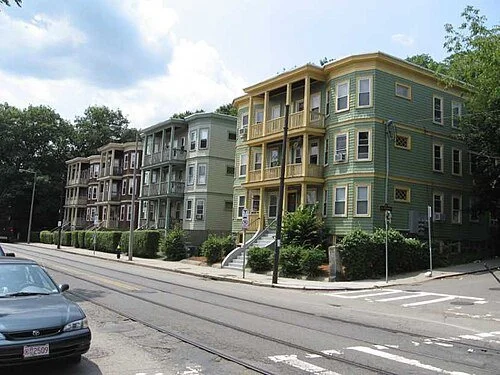
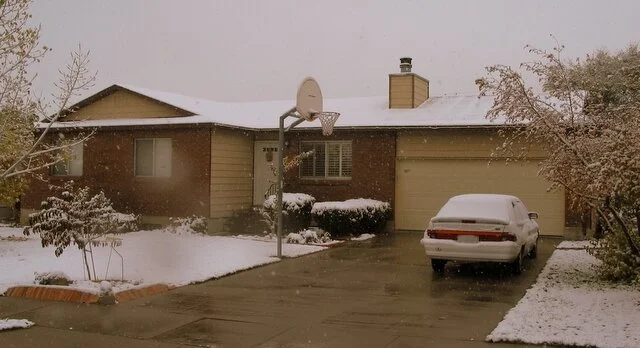
Housing in America, especially in and around the richest cities, such as Boston, has become too expensive for many workers, which can make it difficult for some employers to get the employees they need. In Massachusetts this led to launching the new Starter Home Zoning District, in 2016. The idea was to encourage suburbs to loosen restrictive development rules to encourage the building of the sort of small, affordable and close-together houses on small lots that went up like mushrooms in the ‘50s and ‘60s.
But four years later, reports Commonwealth Magazine, not one house has been built in the program.
It seems that a killer is that the law requires that any new starter home be close to a train station and/or other amenities. The admirable idea is to encourage walkability and discourage sprawl and its environmental damage. But the laws in Massachusetts and some other states have advocated the construction of condos and apartments near train and other transportation hubs to encourage the sort of anti-sprawl density you don’t get with single-family houses; there’s little room for single-family houses in or near many of these hubs. And at the same time, “snob zoning” in many communities has set big space minimums for land for houses away from these hubs. This has encouraged the construction of many McMansions on parcels of at least an acre, keeping out the peasantry.
To read the Commonwealth piece, please hit this link.
In practical terms, all this means that there’s not much space available for the old American dream of a house affordable for people of modest means.
Obviously, a lot of people would prefer to live in a detached house, however small, than in an apartment they rent or own. Healthy communities and regional economies need a mix. Owning and living in a house gives a certain kind of resident a strong sense of place, with the local civic-mindedness and stability that goes with it, that they don’t feel in a condo or apartment.
Dispersed and often solitary Americans, who live so much of their lives online and many of whom don’t even shop together in person anymore, as Amazon, etc., continue to ravage in-person retailing, makes it all the more important that as many people as possible feel anchored to a physical place and so feel some commitment to participating in the community there.
Civic disengagement and social disintegration (starting at the family level) continue to undermine America. Fixing some of our housing problems would help mitigate this.
Perhaps the sort of places where small houses could be built without hurting the environment would include on the land at the ever-growing number of closed malls, with their vast parking lots.
Increasingly, America has become what Gertrude Stein complained about Oakland, Calif.: “There’s no there, there.’’ This leads to a sense of loss and to anomie, that, among other things, leads to the success of demagogues. The pandemic has only increased Americans’ growing solitariness.

For sale
Chris Powell, the excellent columnist for the Journal Inquirer, in Manchester, Conn., noted that The Hartford Courant, for many decades the nearest thing that the Nutmeg State had to a state paper, is selling its big headquarters in downtown Hartford. Its few remaining journalists will work from home, and its printing is already done in Springfield, Mass. Can they really call it The Hartford Courant anymore? It’s another example of how we’re losing the sense of place provided by institutions. Local newspapers, with their big downtown offices, used to be an important part of the public square, along with local government, schools, locally based stores, churches, etc.
Maybe a Connecticut sugar daddy, perhaps a hedge funder from the Fairfield County Gold Coast, will come along to save The Courant, now owned by Tribune Publishing, which is apparently about to try to sell it.
To read the Powell column, please hit this link.
A beautiful book to tour with during next summer
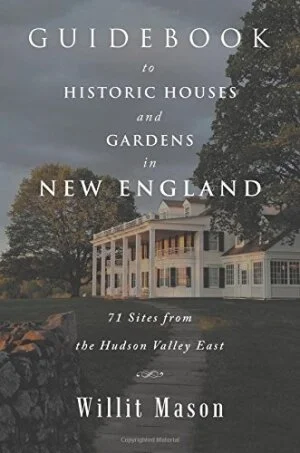
William (“Willit’’ ) Mason, M.D., has written has a delightful – and very handy -- book rich with photos and colorful anecdotes, called Guidebook to Historic Houses and Gardens in New England: 71 Sites from the Hudson Valley East (iUniverse, 240 pages. Paperback. $22.95). Oddly, given the cultural and historical richness of New England and the Hudson Valley, no one else has done a book quite like this before.
The blurb on the back of the book neatly summarizes his story.
“When Willit Mason retired in the summer of 2015, he and his wife decided to celebrate with a grand tour of the Berkshires and the Hudson Valley of New York.
While they intended to enjoy the area’s natural beauty, they also wanted to visit the numerous historic estates and gardens that lie along the Hudson River and the hills of the Berkshires.
But Mason could not find a guidebook highlighting the region’s houses and gardens, including their geographic context, strengths, and weaknesses. He had no way of knowing if one location offered a terrific horticultural experience with less historical value or vice versa.
Mason wrote this comprehensive guide of 71 historic New England houses and gardens to provide an overview of each site. Organized by region, it makes it easy to see as many historic houses and gardens in a limited time.
Filled with family histories, information on the architectural development of properties and overviews of gardens and their surroundings, this is a must-have guide for any New England traveler.’’
Dr. Mason noted of his tours: “Each visit has captured me in different ways, whether it be the scenic views, architecture of the houses, gardens and landscape architecture or collections of art. As we have learned from Downton Abbey, every house has its own personal story. And most of the original owners of the houses I visited in preparing the book have made significant contributions to American history.’’
To order a book, please go to www.willitmason.com
What science can't handle
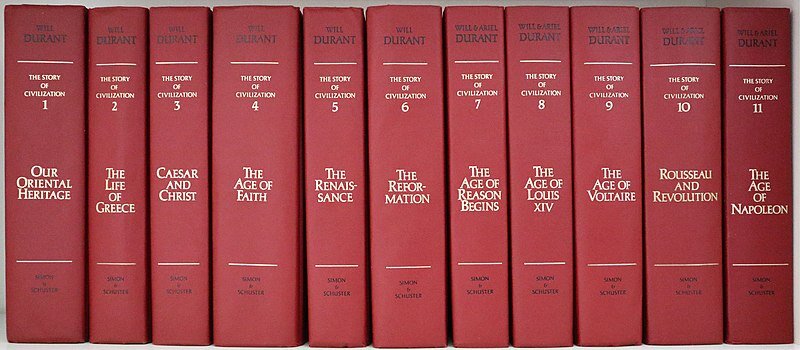
The 11 volumes of The Durants’ Story of Civilization
“Philosophy accepts the hard and hazardous task of dealing with problems not yet open to the methods of science — problems like good and evil, beauty and ugliness, order and freedom, life and death.’’
— Will Durant (1885-1981), historian, in The Story of Philosophy. Born in North Adams, Mass., of French-Canadian parents, the once-famous Durant was best known for the work The Story of Civilization, 11 volumes written in collaboration with his wife, Ariel Durant, and published between 1935 and 1975.
So don't stand underneath when I angrily fly over

“Everybody's Talking At Me’’ (oil on copper), by Brookline-based Nora Charney Rosenbaum, at Galatea Fine Art, Boston, Jan. 8-31.

Official seal of Brookline. The Muddy River is a series of brooks and ponds that runs through sections of Boston's Emerald Necklace, including along the southern boundary of Brookline, a town that went by the name of Muddy River Hamlet before it was incorporated, in 1705.
David Warsh: Eating Instagram; McKinsey and OxyContin scandal
SOMERVILLE, Mass.
I was as surprised as anyone when a panel of prominent judges earlier this month chose No Filter: The Inside Story of Instagram, by Sara Frier, of Bloomberg News, as the Financial Times and McKinsey Business Book of the Year, so I ordered it. The publisher, Simon & Shuster, was surprised, too: the book has not yet arrived. So I re-read FT staffer Hannah Murphy’s review from last April.
The book sounds absorbing enough: how Instagram co-founder Kevin Systrom agreed to sell his start-up for $1 billion over a backyard barbecue at Mark Zuckerberg’s house and then watched in distress as Facebook bent the inventive photography app to purposes of its own. He finally walked away from the company he started, an enterprise that Frier called “a modern cultural phenomenon in an age of perpetual self-broadcasting” brought low by Facebook’s quest for global domination.
FT editor Roula Khalaf praised the book for tackling “two vital issues of our age: how Big Tech treats smaller rivals and how social-media companies are shaping the lives of a new generation.” In a beguiling online profile last summer, Frier explained how “everything changed” for technology reporters covering social media after the 2016 presidential election. Remembering the embrace-extend-extinguish tactics pioneered by Microsoft, antitrust authorities will also want to take a look.
There is, however, a larger issue about the contest itself. Given the temper of the times, I had thought either Deaths of Despair and the Future of Capitalism, by Anne Case and Angus Deaton, both of Princeton University, or Reimagining Capitalism in a World on Fire, by Rebecca Henderson, of the Harvard Business School, powerful books of unusual gravity, might capture the blue ribbon. Both specifically criticize a major McKinsey client, Purdue Pharma, and both vigorously reject the market fundamentalism that often has been imputed to the values of the secretive firm in recent decades – “shareholder value” as the only legitimate compass of corporate conduct and all that.
Granted, the prize is said by its sponsors to reward “the most compelling and enjoyable insight into modern business issues” of a given year. Previous panels have interpreted their instructions in a wide variety of ways. A McKinsey executive last year joined the judging panel. I wondered if the other members, none of them strangers to McKinsey’s lofty circles, had successfully argued to include the two critical books on the short list, before selecting a title more narrowly about “modern business issues” to avoid embarrassment to the sponsor. The awarding of literary prizes as it actually works on the inside is sometimes said to be very different from how it may look from the outside.

An OxyContin pill
Whatever the case, the judges could not have known about the news that broke the day before their decision was announced. The New York Times reported that documents released in a federal bankruptcy court had revealed that McKinsey & Co. was the previously unidentified-management consulting firm that has played a key role in driving sales of Purdue’s OxyContin “even as public outrage grew over widespread overdoses” that had already killed hundreds of thousands of Americans.
In 2017, McKinsey partners proposed several options to “turbocharge” sales of Purdue’s addictive painkiller. One was to give distributors rebates of $14,810 for every OxyContin overdose attributed to pills they had sold. Purdue executives embraced the plan, though some expresses reservations. (Read The New York Times story: the McKinsey team’s conduct was abhorrent.) Spokesmen for CVS and Anthem, themselves two of McKinsey’s biggest clients, have denied receiving overdose rebates from Purdue, according to reporters Walt Bogdanich and Michael Forsythe.
Moreover, after Massachusetts’s attorney general sued Purdue, Martin Elling, a senior partner in McKinsey’s North American pharmaceutical practice, wrote to another senior partner, “It probably makes sense to have a quick conversation with the risk committee to see if we should be doing anything” other than “eliminating all our documents and emails. Suspect not but as things get tougher there someone might turn to us.” Came the reply: “Thanks for the heads-up. Will do.” Elling has apparently relocated his practice from New Jersey to McKinsey’s Bangkok office, The Times’s reporters write.
Last week The Times reported that McKinsey & Co. issued an unusual apology for its role in OxyContin sales and vowed a full internal review. Sen. Josh Hawley (R.- Mo.) wrote the firm asking if documents had been destroyed. “You should not expect this to be the last time McKinsey’s work is referenced,” the firm wrote in an internal memo to employees. “While we can’t change the past we can learn from it.”
Another rethink is for the FT. The newspaper started its award in 2005, with Goldman Sachs as its co-sponsor. Tarnished by the 2008 financial crisis and the aftermath, the financial-services giant bowed out after 2013 and McKinsey took over. The enormous consulting firm is famous mainly for the anonymity on which it insists, but the Purdue Pharma scandal isn’t the first time that McKinsey has been in the news recently, especially for its engagements abroad, in Puerto Rico and Saudi Arabia. A thorough audit of its practices, reinforced by outside institutions, is overdue. In an age of mixed economies and transparency, McKinsey’s business model of mutually-contracted secrecy between the firm and the client seems outdated
Why the need for sponsorship? It would seem to be mainly a form of cooperative advertising. The cash awards to authors are lavish: £30,000 to the winner, £10,000 to each of five finalists, undisclosed sums to the judges, publicists and for advertising. That makes McKinsey’s investment a spectacular bargain, but it is something of a poisoned chalice for the FT.
The prize’s reputation as recognizing entertaining writing about important business topics is well established. Why not dispense with the money and influence? Who knows what McKinsey does and for whom? Isn’t trustworthy filtering of information the very essence of the newspaper’s business?
David Warsh, an economic historian and a veteran columnist, is proprietor of Somerville-based economicprincipals.com, where this piece first ran.
Home for good
— Photos by Lydia Whitcomb
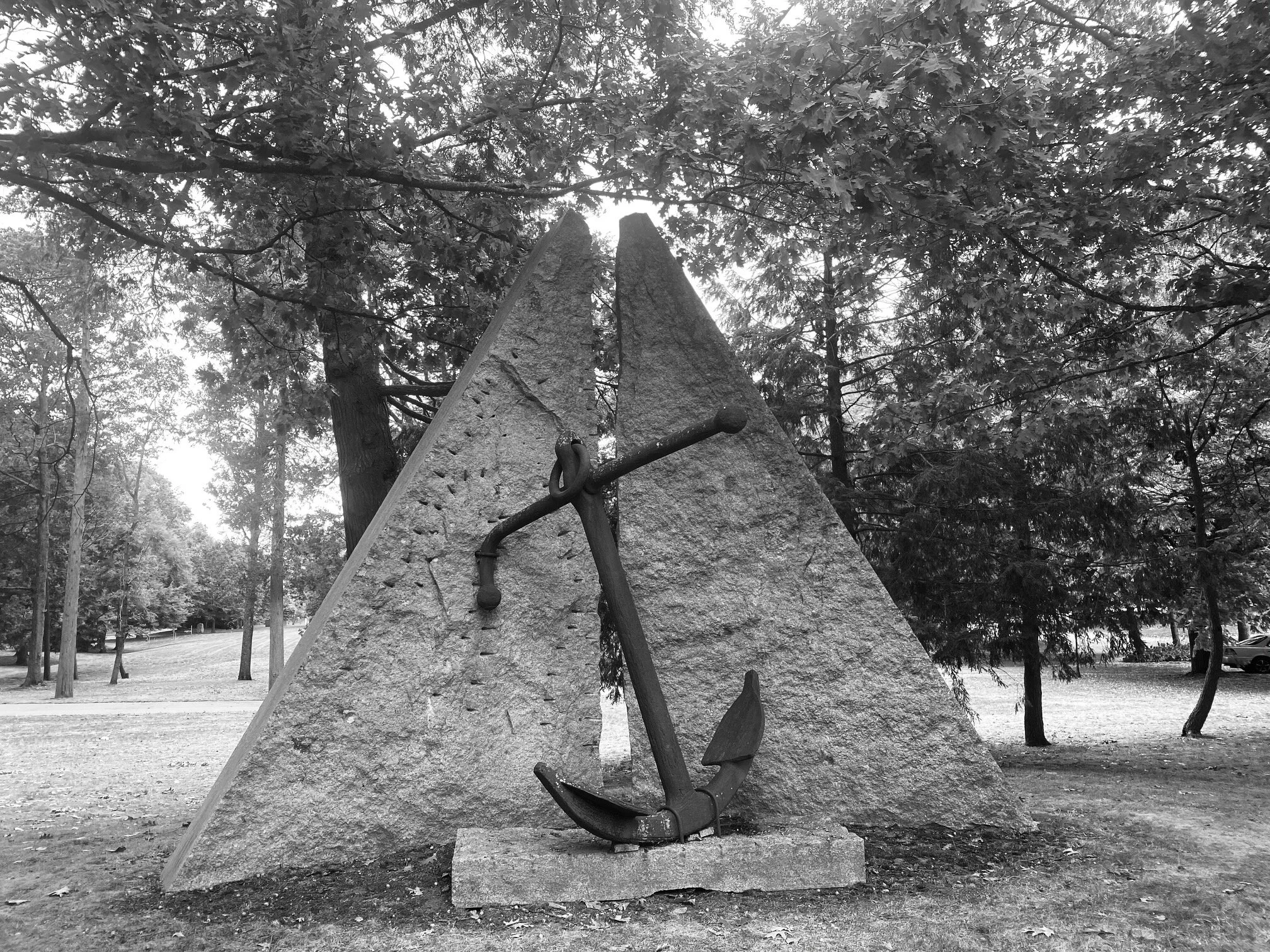
In the Hope Memorial Garden, in Swan Point Cemetery, Providence. The focal point of the garden is this sculpture of granite monoliths as a backdrop for an 18th Century anchor recovered from Narragansett Bay. It was designed by Brown University art professor Richard Fishman.
The 18th and early 19th centuries were the heyday of Rhode Island’s maritime trade.
The sculpture was originally installed at an outdoor chapel on Providence’s Killingly Street in 1972 and was moved to Swan Point in 1976.
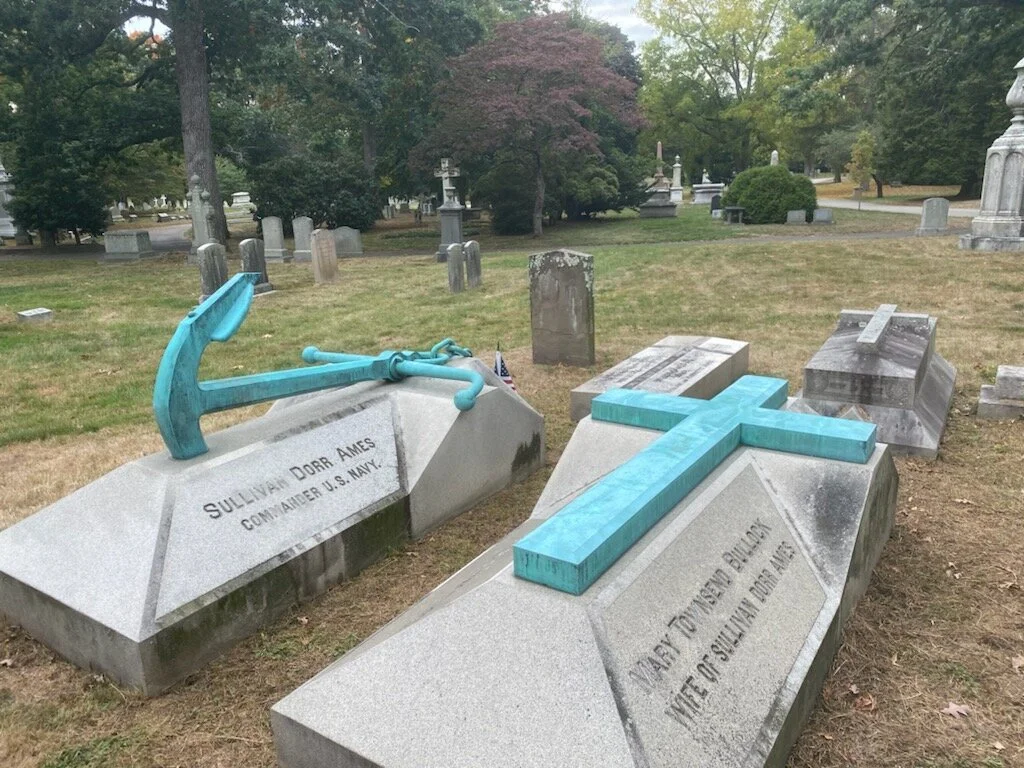
The anchor is a symbol of homecoming in many places and especially in coastal New England, with its historic connections to the sea. The anchor is a symbol of hope and of Rhode Island, whose flag and seal it graces. But you see a lot of anchors in many New England cemeteries, some positioned in rather strange ways, as below, also at Swan Point.
New study says mask-wearing most important factor in cutting chance of getting COVID-19 during air travel

A Delta Airlines plane being disinfected between flights
From The New England Council (newenglandcouncil.com)
BOSTON
“Researchers at the Harvard T.H. Chan School of Public Health have completed a comprehensive, gate-to-gate study on how to greatly reduce the chances of COVID-19 transmission during air travel.
“The study concludes that universal mask-wearing, rigorous cleaning protocols and high-end air filtration systems lower the risk of COVID-19 transmission to minimal levels. The study found that mask-wearing among passengers and crew is the most important factor in reducing risk during air travel. The researchers also found that the use of high-efficiency particulate air (HEPA) filters is extremely effective in removing harmful airborne particles. Ultimately, diligently engaging in this multi-layered approach results in a substantially lowered risk of COVID-19 transmission during air travel in comparison to other activities.
“‘The risk of COVID-19 transmission onboard aircraft [is] below that of other routine activities during the pandemic, such as grocery shopping or eating out,’ the Harvard researchers concluded. 'Implementing these layered risk mitigation strategies…requires passenger and airline compliance [but] will help to ensure that air travel is as safe or substantially safer than the routine activities people undertake during these times.’
“Read more from the National Preparedness Initiative report.’’
'Regain a shelter'
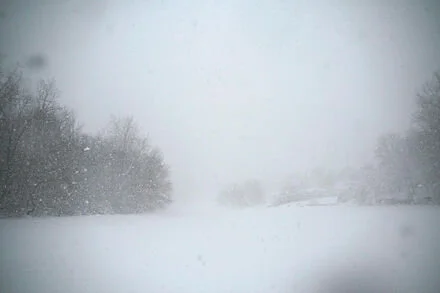
When feeble suns scarce light the wintry sky,
And clouds are drifting in the doubtful air,
The pensive man, with expectation high,
Forth to the window moves his easy chair.
Observant there, in pleased security,
Regaling, as he may, both eye and ear,
He marks the frozen brook, the withered tree,
And loves, at frequent intervals, to hear
The howling of the blast, that winds its summons drear.
II.
The pensive man, to thought and feeling prone,
Inclined to sadness, but averse from sorrow,
In silence sits, and loves to be alone,
And joy from inward contemplations borrow.
Thus let me muse, nor do thou deem it strange,
That it is given the sense of joy to find
From varying thoughts that unrestricted range,
Light and unfixed, as is the stayless wind,
Pleased with the present scene, and to the future blind.
III.
'Tis Winter, in its wild and angry mood!
And as I look, behold, the clamorous crows,
Scared by the uproar vast, in yonder wood,
Regain a shelter from the blast and snows,
Where pines and firs their thick protection yield.
There nestle they retired, nor heed the cry
From muffled owl, in hollow trunk concealed.
Hid in the twisted roots, with fearful eye,
The wary fox beholds the tempest hurrying by.
IV.
Forth from the wood the wood-cutter comes back;
Upon his frosty beard the snow stands thick;
He looks with peering eye to find the track,
Then struggles on with panting breath and quick,
Seeking his home. Anon, a traveler's sleigh
Goes swift, with bells, that chime their stifled din.
But he, who rides on such a stormy day,
With aid of whip and voice, shall scarcely win,
Seen dimly in the drifts, the distant village Inn.
V.
A refuge seeking from the surly winter,
The red-breast comes, unto the window flying;
Well pleased, I haste to let the stranger enter,
And strive to keep the little thing from dying.
See, how he hops abroad and picks the bread,
The hospitable hand of childhood brings;
Then pausing, as in thought, erects his head,
And glances quick, and trims his little wings,
And with a sudden voice breaks gladly forth and sings.
VI.
Unmindful of the storm, the noisy cur
Shakes his well powdered sides, and barks, and now,
A sharer in the elemental stir,
With plunging head into the drift doth plough,
And upward throws around the 'feathery snow.'
But Dobbin! such an hour's no sport for him.
With ruminating head, depending low,
And half-shut eye, with gathered snow-flakes dim,
Close to the sheltering barn, he draws his quivering limb.
VII.
The weary thresher lays aside his flail,
And shuts, like one amazed, his granary door;
Nor else can do: the winds his heaps assail,
And wheat and chaff fly wildly round the floor.
The shades still darker wrap the rolling cloud,
And hurtling snows come rushing still more fast;
Low to the earth the groaning trees are bowed,
From rock and hill in headlong ruin cast.
The village steeple waves and trembles in the blast.
VIII.
At such an hour let none adventurous roam.
Dear to the heart, at such a time as this,
Is the security and peace of home,
The blazing hearth and the domestic bliss.
See, how the traveler scarce resists the storm!
Mark, how he strives along with fainting feet!
And doomed, without the friendly welcome warm,
To perish in its freezing winding-sheet!
Then heap the favoring blaze, his weary steps to greet!
IX.
Yes, turn and rest thee, tir'd and suffering one!
Haste, at the blazing hearth-stone take thy stand!
Fear not, that any here thy woes will shun,
And hold from sorrow's aid the helping hand.
It is for this the stormy tempests blow,
To show how small the boasted strength of man,
And when a suffering brother comes in woe,
That 'tis a part of heaven's benignant plan,
To ope the friendly door, and help him as we can.
X.
The sun sets now; and yet no sun doth rest
Upon the mount its golden orb of light.
Dark clouds usurp his place; and shades unblest
And moaning sounds the startled air affright.
In yon lone cot the mother trims the blaze
That through the window sends its nightly beam.
Unmoved by fears, that older hearts amaze,
Though fierce the snows invade each gaping seam,
The children, gathering round, enclose its cheerful gleam.
XI.
The winds are rude, but they regard it not,
And laugh, as they were wont, and prattle loud;
Prone on the floor, unconscious he of aught,
The shaggy dog with closing eye is bowed.
The cat doth in its corner sit demure;
And as the crackling fire lights up the room,
The housewife spreads the table of the poor,
Or plies with careful hand the busy broom,
Or doth her task once more, her wonted wheel resume.
XII.
Snug in the corner doth her good man sit,
Nor ever from his lazy settle moves;
The howling blast frights not his quiet wit,
But stormy sounds and piping winds he loves.
He, philosophic, chides at needless sorrow,
Nor will he add to real, fancied ills.
But looks in storms to-day for calms to-morrow.
Thus fearful thoughts and low complaints he stills,
And ever and anon, his patient pipe he fills.
XIII.
Happy the man, in winter's stormy hour,
When woods and plains with angry snows are strown,
Who is not doomed to feel their hostile power,
But hath a shelter he can call his own,
The cheerful hearth, the amicable chair.
He, with his gossip neighbors side by side,
Spreads cheerfully the peasant's homely fare.
They deal the mutual jest. Then venturing wide,
With patriot zeal elate, the nation's fate decide.
XIV.
How keen the glances of their generous strife!
Emphatic on the table strikes the hand!
Each holding firm, as if 'twere death or life,
The favorite text, that sinks or saves the land;--
Lesson sublime for patriotic ear.
Old Rover, stretched at ease upon the floor,
Erects his shaggy head the din to hear;--
Unusual now, though often heard before;
Meanwhile the outward storm still thunders at the door.
XV.
Ah me! On such a fearful time as this,
While we around the peaceful hearth are safe,
And in the warmth and glow of social bliss,
Forget the winds against the house that chafe,
And at the door and windows threat in vain,
The seamen on the overwhelming deep,
The tenants of the loud and doubtful main,
Can scarce their stations on the vessel keep;
See, how they mount on high, then plunging down they sweep.
XVI.
Anon, a wave, impatient of delay,
Bears suddenly some sailor from the deck.
Poor man! In the illimitable way,
That foaming spreads around, he seems a speck.
Now sunk, now seen, now borne on high, now low,
He smites the wave, like one that strikes for life;
But all in vain; far downward doth he go;
And as he yields at length the fearful strife,
He dying thinks once more of children, home, and wife.
“The Snow Storm,’’ by Thomas Cogswell Upham (1799-1872). Born in Deerfield, N.H., he became a major American philosopher, psychologist, poet and teacher. For many years, he was a professor of philosophy at Bowdoin College, in Brunswick, Maine.
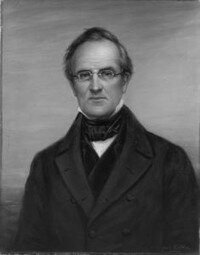
Thomas Cogswell Upham
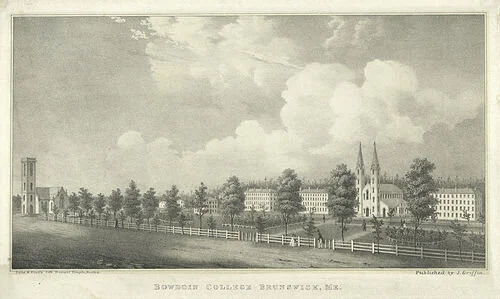
Bowdoin College, circa 1845. Upham taught there in 1825-1868.
— Lithograph by Fitz Hugh Lane
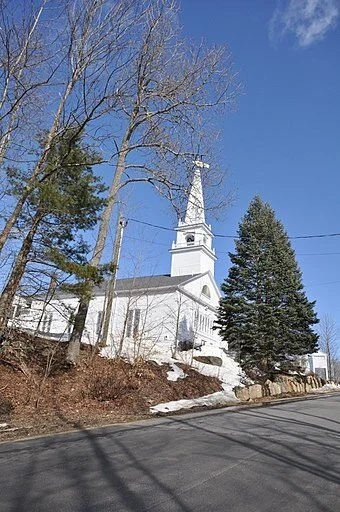
Deerfield, N.H., Congregational Church
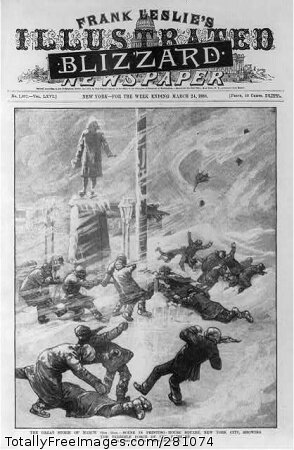
Illustration of the Great Blizzard of 1888
Make it a regular, and hold the disinfectant
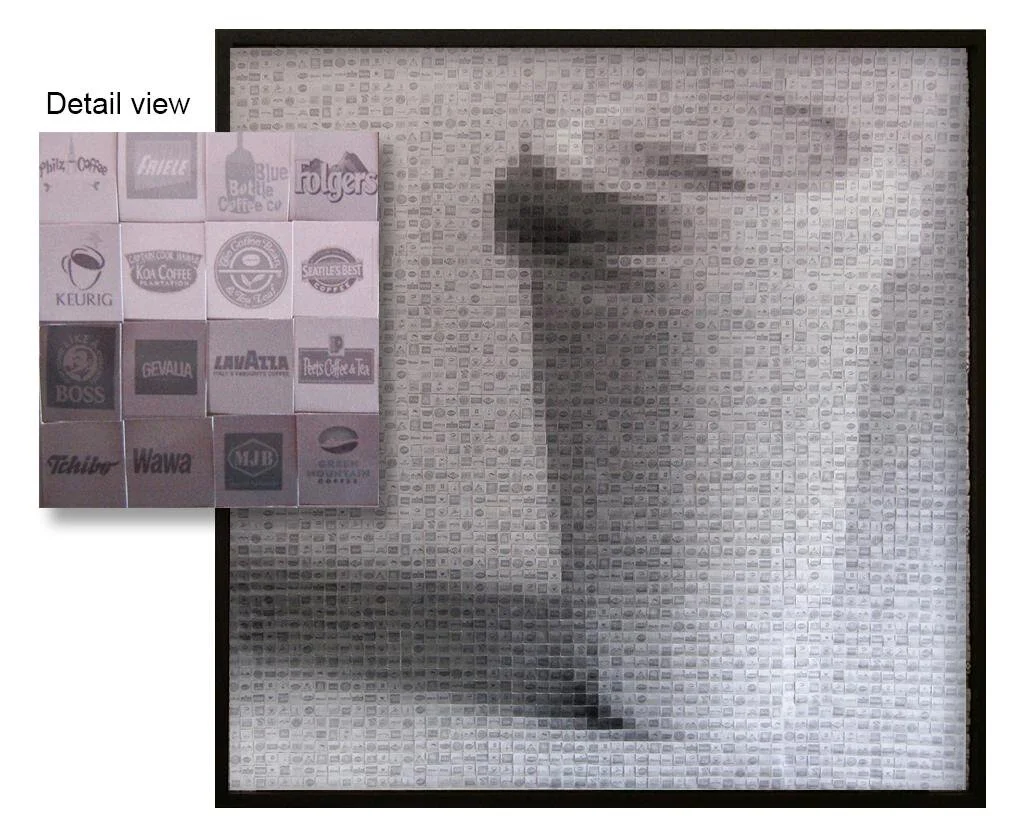
“Flat White” (digital inkjet fragments and foam on board), by Pamela Stretton, in her show this month at Lanoue Gallery, Boston.

Linda Gasparello: What’s good for us can be very bad for wildlife

Remains of an albatross killed by ingesting plastic pollution.
WEST WARWICK, R.I.
When I lived in Manhattan, I pursued an unusual pastime. I started it to avoid eye contact with Unification Church members who peddled flowers and their faith on many street corners in the 1970s. If a Moonie (as a church member was derisively known) were to approach me, I’d cast my eyes down to the sidewalk, where I’d see things that would set my mind wandering.
In the winter, I’d see lone gloves and mittens. On the curb in front of La Cote Basque on East 55th Street, the luxe French restaurant where Truman Capote dined with the doyennes of New York’s social scene, before dishing on them in his unfinished novel, Answered Prayers, I saw a black leather glove with a gold metal “F” sewn on the cuff. I coveted such a Fendi pair, eyeing them at the glove counter at Bergdorf Goodman, but not buying them – they cost about a third of my Greenwich Village studio apartment’s monthly rent in the late 1970s. On the sidewalk on Fifth Avenue, in front of an FAO Schwartz window, I saw a child’s mitten, expertly knit in a red-and-white Norwegian pattern that I never had the patience to follow. I wondered whether the child dropped the mitten after removing it to point excitedly to a toy in the window.
In the summer, I’d see pairs of sunglasses and single sneakers on the sidewalks, things that had fallen out of weekenders’ pockets and bags. It wasn’t unusual for me to see pantyhose. Working women in Manhattan, in my time there, could wear a short-sleeved wrap dress – the one designed by Diane von Furstenberg was the working woman’s boilersuit -- in the summer, but they’d better have put on pantyhose, or packed a pair in their pocketbooks or tote bags. The pantyhose would fall out of them and roll like tumbleweed along the avenues.
One summer morning on Perry Street, near where I lived, I saw a long, black zipper. It looked like a black snake had slithered out of a drain grate on the street and was warming itself on the asphalt, its white belly gleaming in the sun.
Now when I walk on a city sidewalk, I still look down, not to pursue my pastime but to preserve myself from tripping and falling on stuff. I sometimes see interesting litter, but mostly I see single-use and reusable face masks.
This fall, as I walked on the waterfront promenade along Rondout Creek in Kingston, N.Y., I saw a single-use mask swirling in the wind with the fallen leaves. I grabbed the mask and deposited it in a trash can, worried that it would fall into the creek, ensnarling the waterfowl and the fish.
In the COVID-19 crisis, masks have been lifesavers. But masks, especially single-use, polypropylene surgical masks, have been killing marine wildlife and devastating ecosystems.

Billions of masks have been entering our oceans and washing onto our beaches when they are tossed aside, where waste-management systems are inadequate or nonexistent, or when these systems become overwhelmed because of increased volumes of waste.
A new report from OceansAsia, a Hong Kong-based marine conservation organization, estimates that 1.56 billion masks will have entered the oceans in 2020. This will result in an additional 4,680 to 6,240 metric tons of marine plastic pollution, says the report, entitled “Masks on the Beach: The impact of COVID-19 on Marine Plastic Pollution.”
Single-use masks are made from a variety of meltdown plastics and are difficult to recycle, due to both composition and risk of contamination and infection, the report points out. These masks will take as long as 450 years to break down, slowly turning into microplastics ingested by wildlife.
“Marine plastic pollution is devastating our oceans. Plastic pollution kills an estimated 100,000 marine mammals and turtles, over a million seabirds, and even greater numbers of fish, invertebrates and other animals each year. It also negatively impacts fisheries and the tourism industry and costs the global economy an estimated $13 billion per year,” according to Gary Stokes, operations director of OceansAsia.
The report recommends that people wear reusable masks, and to dispose of all masks properly.
I hope that everyone will wear them for the sake of their own and others’ health, and that I won’t see them lying on sidewalks on my strolls, or on beaches, where they are a sorry sight.
Linda Gasparello is co-host and producer of White House Chronicle, on PBS. Her email is whchronicle@gmail.com and she’s based in Rhode Island and Washington, D.C.
Victoria Knight: Those tough COVID Christmas travel decisions

Our Lady of the Airways Chapel .at Logan International Airport, in Boston. You’d think that it would get crowded these days, given the new risks of travel. The chapel is the oldest airport chapel in the United States, opening originally in 1951 in another part of the airport.
Vivek Kaliraman, who lives in Los Angeles, has celebrated every Christmas since 2002 with his best friend, who lives in Houston. But, this year, instead of boarding an airplane, which felt too risky during the COVID pandemic, he took a car and plans to stay with his friend for several weeks.
The trip — a 24-hour drive — was too much for one day, though, so Kaliraman called seven hotels in Las Cruces, N.M. — which is about halfway — to ask how many rooms they were filling and what their cleaning and food-delivery protocols were.
“I would call at nighttime and talk to one front desk person and then call again at daytime,” said Kaliraman, 51, a digital health entrepreneur. “I would make sure the two different front desk people I talked to gave the same answer.”
Once he arrived at the hotel he’d chosen, he asked for a room that had been unoccupied the night before. And even though it got cold that night, he left the window open.
Scary Statistics Trigger Strict Precautions
Many Americans, like Kaliraman, who did ultimately make it to Houston, are still planning to travel for the December holidays, despite the nation’s worsening coronavirus numbers.
Last week, the Centers for Disease Control and Prevention reported that the weekly COVID hospitalization rate was at its highest point since the beginning of the pandemic. More than 283,000 Americans have died of COVID-19. Public health officials are bracing for an additional surge in cases resulting from the millions who, despite CDC advice, traveled home for Thanksgiving, including the 9 million who passed through airports Nov. 20-29. Hospital wards are quickly reaching capacity. In light of all this, health experts are again urging Americans to stay home for the holidays.
For many, though, travel comes down to a risk-benefit analysis.
According to David Ropeik, author of the book How Risky Is It, Really? and an expert in risk perception psychology, it’s important to remember that what’s at stake in this type of situation cannot be exactly quantified.
Our brains perceive risk by looking at the facts of the threat — in this case, contracting or transmitting COVID-19 — and then at the context of our own lives, which often involves emotions, he said. If you personally know someone who died of COVID-19, that’s an added emotional context. If you want to attend a wedding of loved family members, that’s another kind of context.
“Think about it like a seesaw. On one side are all the facts about COVID-19, like the number of deaths,” said Ropeik. “And then on the other side are all the emotional factors. Holidays are a huge weight on the emotional side of that seesaw.”
The people we interviewed for this story said they understand the risk involved. And their reasons for going home differed. Kaliraman likened his journey to see his friend as an important ritual — he hasn’t missed this visit in 19 years.
What’s clear is that many aren’t making the decision to travel lightly.
For Annette Olson, 56, the risk of flying from Washington, D.C., to Tyler, Texas, felt worth it because she needed to help take care of her elderly parents over the holidays.
“In my calculations, I would be less of a risk to them than for them to get a rotating nurse that comes to the house, who has probably worked somewhere else as well and is repeatedly coming and going,” said Olson. “Once I’m here, I’m quarantined.”
Now that she’s with her parents, she’s wearing a mask in common areas of the house until she gets her COVID test results back.
Others plan on quarantining for several weeks before seeing family members — even if, as in Chelsea Toledo’s situation, the family she hopes to see is only an hour’s drive away.
Toledo, 35, lives in Clarkston, Ga., and works from home. She pulled her 6-year-old daughter out of her in-person learning program after Thanksgiving, in hopes of seeing her mom and stepdad over Christmas. They plan to quarantine for several weeks and get groceries delivered so they won’t be exposed to others before the trip. But whether Toledo goes through with it is still up in the air, and may change based on COVID case rates in their area.
“We’re taking things week by week, or really day by day,” said Toledo. “There is not a plan to see my mom; there is a hope to see my mom.”
And for young adults without families of their own, seeing parents at the holidays feels like a needed mood booster after a difficult year. Rebecca, a 27-year-old who lives in Washington, D.C., drove up with a roommate to New York City to see her parents and grandfather for Hanukkah. (Rebecca asked KHN not to publish her last name because she feared that publicity could negatively affect her job, which is in public health.)
“I’m doing fine, but I think having something to look forward to is really useful. I didn’t want to cancel my trip completely,” said Rebecca. “I’m the only child and grandchild who doesn’t have children. I can control my actions and exposures more than anyone else can.”
She and her two roommates quarantined for two weeks before the drive and also got tested for COVID-19 twice during that time. Now that Rebecca is in New York, she’s also quarantining alone for 10 days and getting tested again before she sees her family.
“I think, based on what I’ve done, it does feel safe,” said Rebecca. “I know the safest thing to do is not to see them, so I do feel a little bit nervous about that.”
But the best-laid plan can still go awry. Tests can return false-negative results and relatives may overlook possible exposure or not buy into the seriousness of the situation. To better understand the potential consequences of the risk you’re taking, Ropeik advises coming up with “personal, visceral” thoughts of the worst thing that could happen.
“Envision Grandma getting sick and dying” or “Grandma in bed and in the hospital and not being able to visit her,” said Ropeik. That will balance the positive emotional pull of the holidays and help you to make a more grounded decision.
Harm Reduction?
All of those interviewed for this story acknowledged that many of the precautions they’re taking are possible only because they enjoy certain privileges, including the ability to work from home, isolate or get groceries delivered — options that may not be available to many, including essential workers and those with low incomes.
Still, Americans are bound to travel over the December holidays. And much like teaching safe-sex practices in schools rather than an abstinence-only approach, it’s important to give out risk mitigation strategies so that “if you’re going to do it, you think about how to do it safely,” said Dr. Iahn Gonsenhauser, chief quality and patient safety officer at the Ohio State University Wexner Medical Center.
First, Gonsenhauser advises that you look at the COVID case numbers in your area, consider whether you are traveling from a higher-risk community to a lower-risk community, and talk to family members about the risks. Also, check whether the state you’re traveling to has quarantine or testing requirements you need to adhere to when you arrive.
Also, make sure you quarantine before your trip — recommendations range from seven to 14 days.
Another thing to remember, Gonsenhauser said, is that a negative COVID test before traveling is not a free pass, and it works only if done in combination with the quarantine period.
Consider your mode of transportation as well — driving is safer than flying.
Finally, once you’ve arrived at your destination, prepare for what might be the most difficult part: to continue physical distancing, wearing masks and washing your hands. “It’s easy to let our guard down during the holidays, but you need to stay vigilant,” said Gonsenhauser.
Victoria Knight is a Kaiser Health News reporter
vknight@kff.org, @victoriaregisk
Golden age of car culture

1940 Pontiac Torpedo Special Series 25 “woodie.’’ Woodies were very popular in New England, where they were often called “beach wagons.’’
From Robert Whitcomb’s “Digital Diary,’’ in GoLocal24.com
I’ve been binge-reading (but will soon stop, getting to overdose levels) novels and short stories by John O’Hara (1905-1970), that hard-nosed chronicler of American society, from the 1930s to the ‘60s. Few people have written about U.S. social mores and the roles of class and money as well as O’Hara. And few have written such superb dialogue. (He also wrote accurately, but too much, about sex.) O’Hara can be addictive. But then in my case that’s partly because I’m old enough to remember some of the historical context in which he wrote.
Here I tell of O’Hara’s wonderful description of America’s car culture. He describes the various species of cars, some very exotic and most now long extinct, and their relationship with their owners, like a zoologist. Those grandiose Pierce-Arrows and Duesenbergs! Consider that O’Hara’s most famous -- and first – novel, Appointment in Samarra (1934) is about the downfall of a car dealer in the fictional town of Gibbsville, Pa.
That reminds me of how much more obsessed we seemed by cars in the ‘50s and ‘60s than now.
In our family the arrival of a new vehicle was a big event, with, it seemed, often more emphasis on how it looked than on how well it drove or how sturdy it was. Color was very important.
We had DeSotos, a Pontiac station wagon, a Jeep, several Chevy Impala convertibles (which my mother tended to wreck after some drinks), wooden-paneled “Beach Wagons” (aka “Woodies”) and a Rambler (bad move), among others. The most memorable was the three-wheeled (two on front, one in back) Messerschmitt (made by the German airplane company). My father mostly used it to drive to the train station, but a few horrifying times he drove it into Boston.
Ah, the new-car smell, soon to be overtaken by the acrid scent of our parents’ cigarettes.
Cars are much better now – much safer, much more fuel-efficient -- and clean electric cars may be dominant within the next five to 10 years. But there’s much less excitement when new cars are introduced than 60 years ago, and you’re less likely to read new fiction in which cars play the major roles they had in short stories, novels and movies of decades ago. The vertical front-grill disaster of the Ford Edsel (1958-1960) was a big story. The romance has faded.
(Tires – radials -- are sure a lot better now. Fifty years ago it seemed we’d have to change flat tires several times a year if we drove a lot, which we did most years.
The car culture was something of a national unifier as the terrible roads of the early 20th Century were improved, and then came the Interstate Highway System, starting in the late ‘50s.
Consider all those “road books’’ – e.g., Jack Kerouac’s On the Road and even Vladimir Nabokov’s Lolita – spawned by America’s golden auto era. Americans are less mobile now, but a latter-day road book called The National Road: Dispatches From a Changing America, by Tom Zoellner, has just come out. I’ll read it.
Scratch here

In a house under the stars
are you happy where you are
multi-tasking, double checking,
corresponding, genuflecting?
Wouldn’t you rather be
thinking of nothing, but of us
arching up your back to me
responding softly to my touch?
If you agree come to me
navigate by those stars
unplug, sign off, disengage -
please be carful in the car.
I’ll be here in a perfect mood
open, willing, hungry, waiting,
discard your things til not a stitch
then indicate where you itch.
— “Enough With Working Remotely,’’ by William T. Hall, a Rhode Island-Florida-Michigan-based painter, illustrator and writer
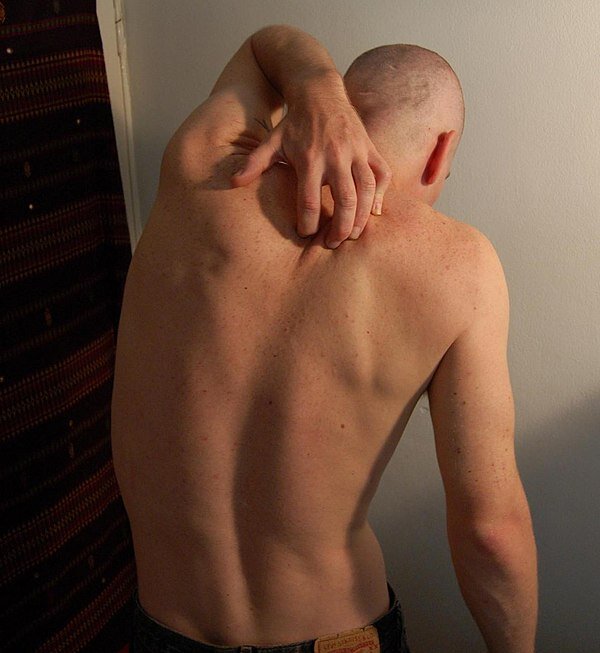
Writing on the trail
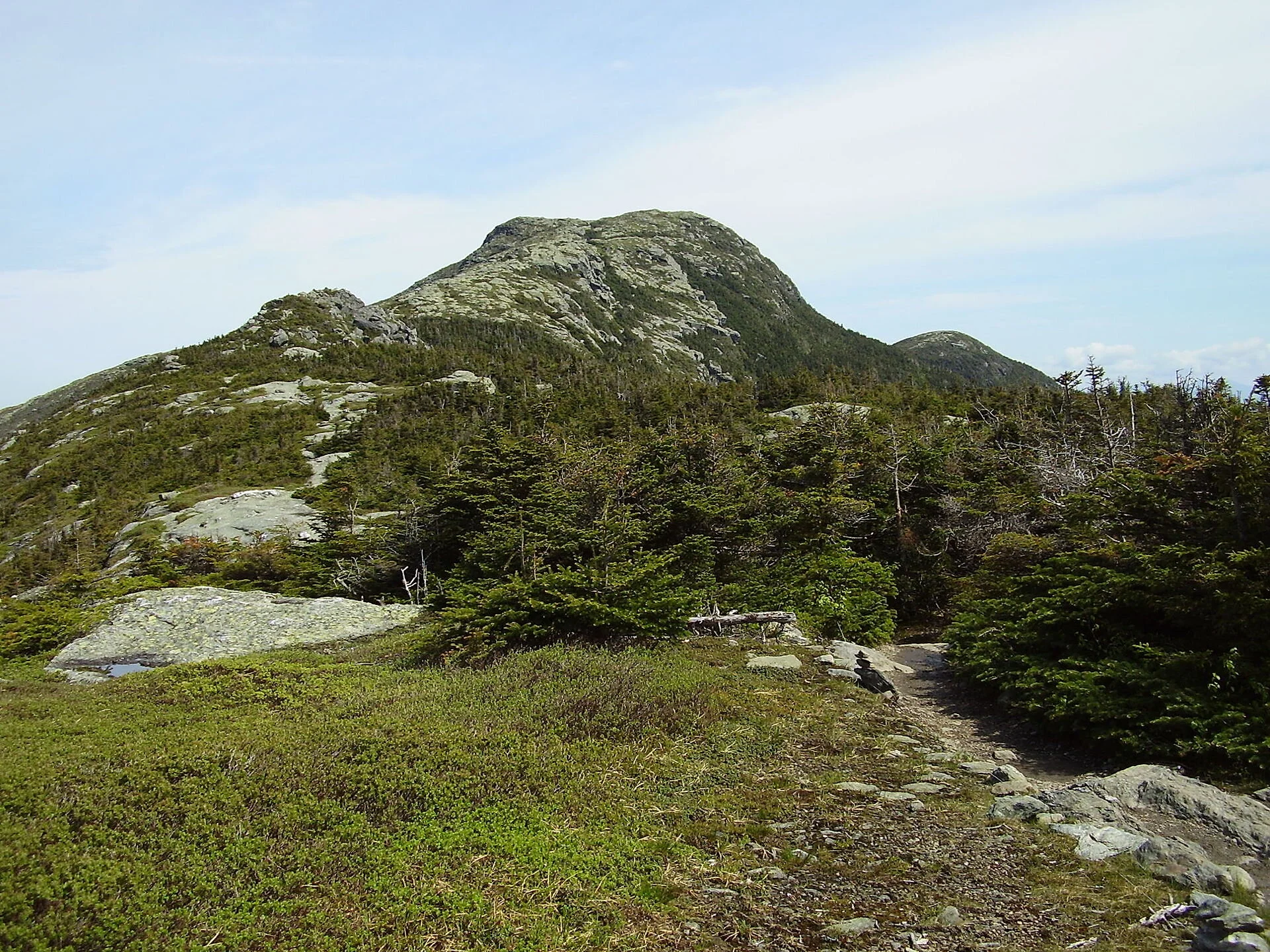
View of Mt. Mansfield on Vermont’s Long Trail
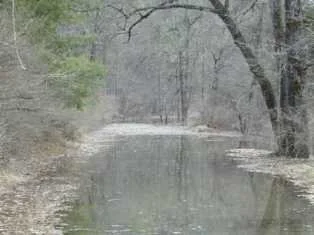
The Ompompanoosuc River, a tributary of the Connecticut River. Its headwaters are in Vershire, on the eastern side of the Green Mountains.
“In high school, I went to a place called the Mountain School. It's on a farm in {Vershire} Vermont, and I read Emerson and Thoreau and ran around the woods. Now I go hiking with a bunch of my comedy buddies. We talk about our emotions. I also do a lot of writing on hikes, just to get the blood flowing and the ideas moving.’’
Nick Kroll (born 1978), American actor, comedian, writer, and producer.
Vershire was named "Ely" in 1880, after the Ely Mining Company, which mined copper. This changed in 1883, after 200 miners struck and seized the mine, leading the National Guard to be called out to suppress the miners. You don’t think of New England having such mines, but there were a bunch of them in northern New England, in the 19th Century.

Plarn creatures on the bikeway

“Tardigrade,” by Michelle Lougee, in the exhibition “Persistence: A Community Response to Pervasive Plastic,’’ at the Minuteman Bikeway in Arlington, Mass., through next Oct. 31.
The exhibition is the culmination of Arts Arlington's first Artist-in-Residence Project, led by fiber artist and sculptor Lougee, who worked with Arlington Public Art Curator Cecily Miller and hundreds of craft people to create 37 sculptures.
Despite their amusing appearance, the exhibition’s very serious goal is to raise awareness about how single-use plastics hurt the environment and human health. The sculptures are made from plarn — a yarn made from plastic bags — and look like organisms found in water.
Artscope reports that Lougee began using plastic bags in her art about a decade ago to bring attention to the damage that plastic is causing the ocean’s eco-systems. For more information, visit artsarlington.org/programs/pathways-art-on-the-minuteman-bikeway/persistence.
'Special plans in heaven'
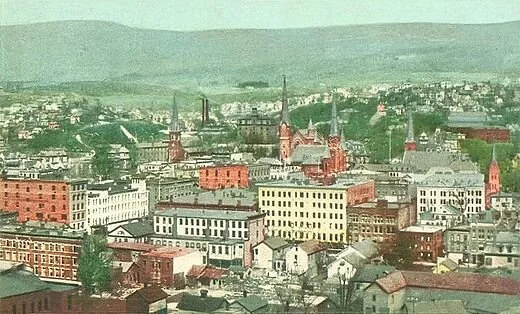
View of North Adams in 2005
“My death was arranged by special plans in Heaven
And only occasioned comment by ten persons in Adams, Massachusetts.
The best thing ever said about me
Was that I was deft at specifying trump.’’
— From “A New England Bachelor,”’ by Richard Eberhart (1904-2005), a Maine- and New Hampshire-based Pulitzer Prize-winning poet.
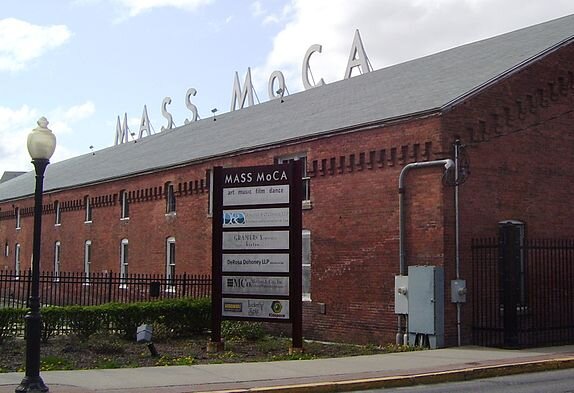
In North Adams, the Massachusetts Museum of Contemporary Art (MASS MoCA), formerly the Arnold Print Works and a facility of Sprague Electronics
'An ironic pessimism'

Willem Lange
“What New England is, is a state of mind, a place where dry humor and perpetual disappointment blend to produce an ironic pessimism that folks from away find most perplexing.’’
— Willem Lange (1935-2018), New Hampshire- and Vermont-based book author, newspaper columnist (“A Yankee Notebook”), outdoorsman and northern New England NPR host. He lived in East Montpelier, Vt., from 2007 to his death. Hit this link for his pre-death Web site.
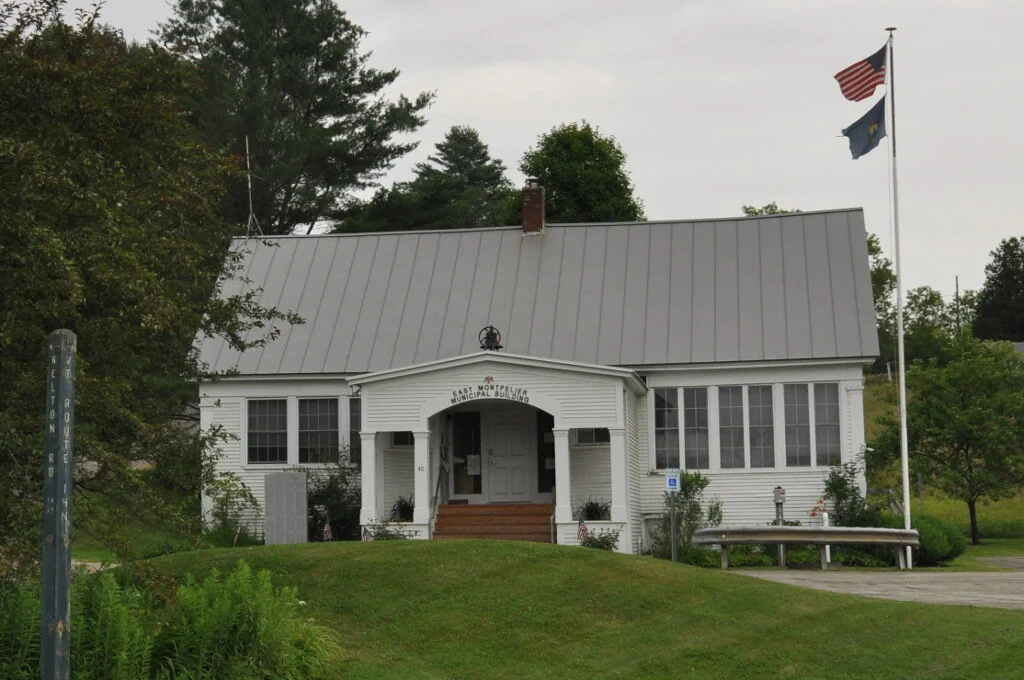
— Photo by Magicpiano
Good news for GE and New England

Adapted from Robert Whitcomb’s “Digital Diary,’’ in GoLocal24.com
Here’s another example of how offshore wind power can be an economic boon for New England:
Vineyard Wind LLC has picked Boston-based General Electric to provide the turbines for its project south of Martha’s Vineyard – in what will be the first large-scale offshore wind farm in the United States. European nations are far ahead of us!
The wind-farm developer, a joint venture owned by Avangrid and Copenhagen Infrastructure Partners, had originally planned to put up turbines made by the Danish-Japanese venture MHI Vestas (soon to be entirely Danish).
But permitting delays led Vineyard Wind to change the wind farm’s layout and equipment. So there will be 62 GE turbines instead of the 84 planned with MHI Vestas. But those General Electric turbines are the world’s most powerful. It’s nice to think that a Massachusetts company will provide this gear for this massive New England project.
And the news may suggest a brighter future for GE, which has faced hard times the past few years.
Hint this link for more information.
Seeking balance in the natural world
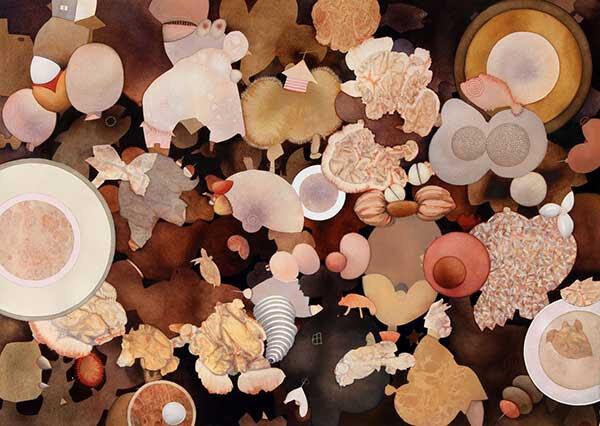
“All In Together III” (watercolor and mixed media on paper), by Thompson, Conn.-based artist Susan Swinand in her show “Nature Imagined,’’ at the Worcester Art Museum through Feb. 7
The museum says: “Swinand has a fondness for the natural world and a desire to find the balance between opposing natural forces. ‘Nature Imagined ‘ explores her creative process, which involves letting her materials take on their own form and tapping into her subconscious to make meaning.’’
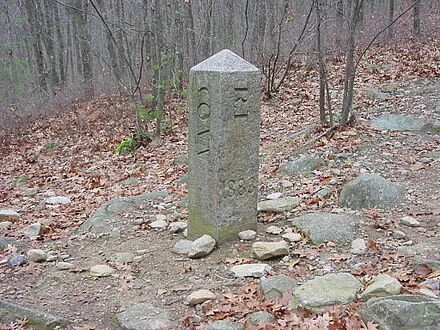
Thompson, in Connecticut’s “Forgotten Corner,’’ is remarkably rural. This marker in the woods shows where Connecticut, Massachusetts and Rhode Island meet.
.
Don Pesci: Looking out for their patrons' health and safety

— Photo by I, Ruhrfisch
VERNON, Conn.
In my mellowing age, I have become a creature of habits, some warring with others.
For the past few years I have taken breakfast on Mondays at one of three diners in East Hartford, West Hartford and Vernon, Conn., all of which are in compliance with Gov. Ned Lamont's possibly unconstitutional directives.
This morning, I found the waitress glowing as usual.
Waitress: (As if greeting a cousin she hasn’t seen in months) “How are you?’’
This was said in such an upbeat tone and with such a broad smile and show of pearly teeth, that I understood her to be genuinely glad to see me and turned the question back on her.
Me: “I’m good (a forgivable white lie; it is difficult to sustain a conversation for more than five seconds with a morning grouch) But not as good as you.’’
Waitress: (Doubt shading her smile) “Well, we are all worried.’’
She pointed to a newspaper I had begun to mark up with notes. Ominous headline: “Thousands more deaths predicted; Gov. Lamont: Still no plans to impose more restrictions,” featuring a picture of Coronavirus- masked Gov. Ned Lamont who, according to the story, was dubious about inflicting more crippling regulations on our battered state, restaurants in particular. Was Lamont prepared to follow in the footsteps of New York Gov. Andrew Cuomo, who has indicated that he would shut down indoor dining if testing rates did not improve? Not yet, Lamont somewhat reassuringly said.
Me: “Yes, I know. When New York sneezes, Connecticut catches a cold. Lamont regularly has followed in the footsteps of his fishing buddy Cuomo.’’
Waitress: “That’s the worry around here. It’s on, it’s off, it’s up, it’s down. We can’t plan our schedules. We can’t plan our lives, and we don’t want this place to close.’’
Me: “I wonder how many separate decisions you and others associated with the diner make each day.’’
Waitress: (hesitating to venture an answer) “I would guess -- hundreds.’’
Me: “What do you say, are those decisions better made by you and others who work here, or by this guy?’’
I pointed to the picture of Lamont, now being pressed by local “scientists,” experts in academia, newspaper commentators, and other pestiferous busybodies, to shut down restaurants once again before the arrival of what I sardonically call “the Trump vaccine.”
Waitress: “Well, would you rather I take your order and serve you directly, or would you rather be served remotely by him?’’
Me: “You, definitely!’’
The waitress doubted that remote, virtual empathy could be more powerful than direct empathy. The diner’s staff, she pointed out, was perhaps more concerned with the health and safety of its clients than the governor, because all who worked at the diner depended upon repeat business and, if you kill a patron, he or she would not return.
Lamont is so flighty, I told her, that it would take days before the food was put before me. And my order was certain to be reviewed countless times before it was fulfilled by members of Lamont’s usual political troupe, such as his communications director, who, I pointed out to the waitress, had been tested positive for Coronavirus.
This produced a glowing smile.
But that is the problem, isn’t it? When we make a decision concerning who decides an issue, we have decided that someone else shall direct what should be done.
Competence here is decisive. Decisions are only as good as the data upon which they are based, and decisions made remotely by those incompetent to make them always point the way to disaster. The number of Coronavirus-related deaths in nursing homes in Connecticut and New York – more than 60 percent of pandemic deaths in both states – is a measure of the deadly incompetence of both governors, though one would never guess as much, given the praise showered upon Lamont and Cuomo by their state’s media.
On Nov. 20, an international academy announced, “Governor Andrew M. Cuomo of New York will receive this year’s International Emmy® Founders Award, in recognition of his leadership during the Covid-19 pandemic and his masterful use of television to inform and calm people around the world.”
Better a good breakfast than a misappropriated Emmy. The breakfast was done to perfection, the service cheerful and satisfying, and the diner is still open for business – for now. But my waitress fear that it may not be long before Lamont catches his second wind and is nominated for an Emmy award as well.
Don Pesci is a Vernon-based columnist.