
Make it a regular, and hold the disinfectant
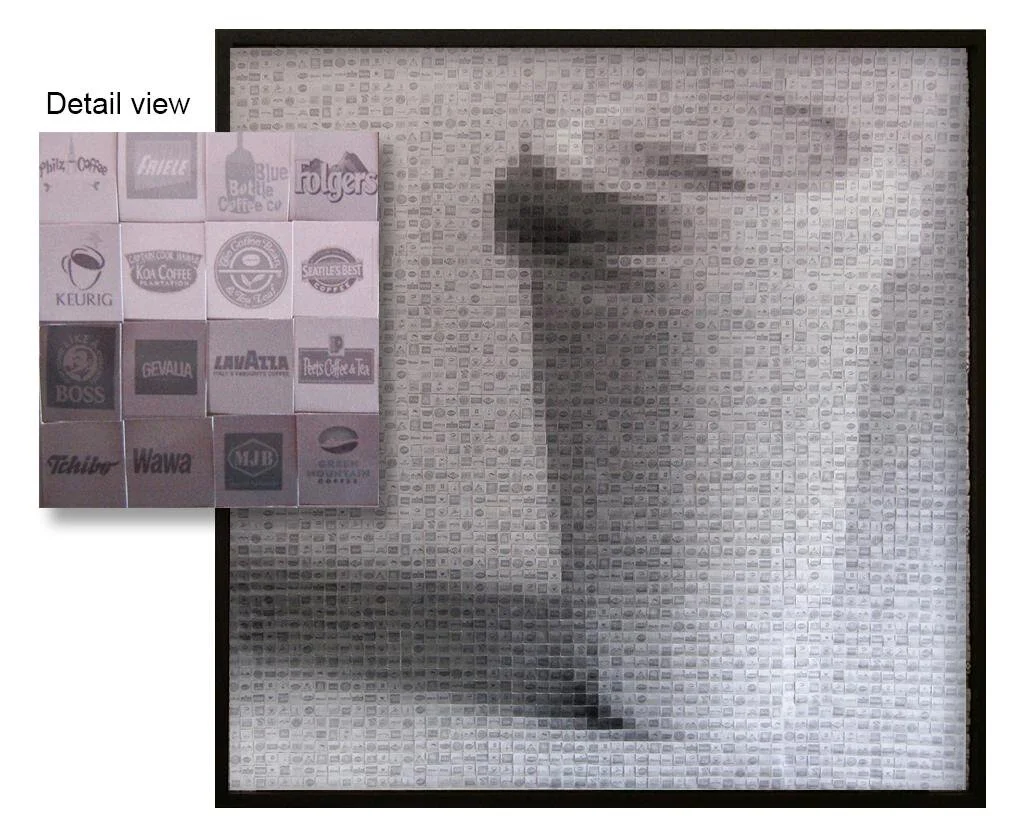
“Flat White” (digital inkjet fragments and foam on board), by Pamela Stretton, in her show this month at Lanoue Gallery, Boston.

Linda Gasparello: What’s good for us can be very bad for wildlife

Remains of an albatross killed by ingesting plastic pollution.
WEST WARWICK, R.I.
When I lived in Manhattan, I pursued an unusual pastime. I started it to avoid eye contact with Unification Church members who peddled flowers and their faith on many street corners in the 1970s. If a Moonie (as a church member was derisively known) were to approach me, I’d cast my eyes down to the sidewalk, where I’d see things that would set my mind wandering.
In the winter, I’d see lone gloves and mittens. On the curb in front of La Cote Basque on East 55th Street, the luxe French restaurant where Truman Capote dined with the doyennes of New York’s social scene, before dishing on them in his unfinished novel, Answered Prayers, I saw a black leather glove with a gold metal “F” sewn on the cuff. I coveted such a Fendi pair, eyeing them at the glove counter at Bergdorf Goodman, but not buying them – they cost about a third of my Greenwich Village studio apartment’s monthly rent in the late 1970s. On the sidewalk on Fifth Avenue, in front of an FAO Schwartz window, I saw a child’s mitten, expertly knit in a red-and-white Norwegian pattern that I never had the patience to follow. I wondered whether the child dropped the mitten after removing it to point excitedly to a toy in the window.
In the summer, I’d see pairs of sunglasses and single sneakers on the sidewalks, things that had fallen out of weekenders’ pockets and bags. It wasn’t unusual for me to see pantyhose. Working women in Manhattan, in my time there, could wear a short-sleeved wrap dress – the one designed by Diane von Furstenberg was the working woman’s boilersuit -- in the summer, but they’d better have put on pantyhose, or packed a pair in their pocketbooks or tote bags. The pantyhose would fall out of them and roll like tumbleweed along the avenues.
One summer morning on Perry Street, near where I lived, I saw a long, black zipper. It looked like a black snake had slithered out of a drain grate on the street and was warming itself on the asphalt, its white belly gleaming in the sun.
Now when I walk on a city sidewalk, I still look down, not to pursue my pastime but to preserve myself from tripping and falling on stuff. I sometimes see interesting litter, but mostly I see single-use and reusable face masks.
This fall, as I walked on the waterfront promenade along Rondout Creek in Kingston, N.Y., I saw a single-use mask swirling in the wind with the fallen leaves. I grabbed the mask and deposited it in a trash can, worried that it would fall into the creek, ensnarling the waterfowl and the fish.
In the COVID-19 crisis, masks have been lifesavers. But masks, especially single-use, polypropylene surgical masks, have been killing marine wildlife and devastating ecosystems.

Billions of masks have been entering our oceans and washing onto our beaches when they are tossed aside, where waste-management systems are inadequate or nonexistent, or when these systems become overwhelmed because of increased volumes of waste.
A new report from OceansAsia, a Hong Kong-based marine conservation organization, estimates that 1.56 billion masks will have entered the oceans in 2020. This will result in an additional 4,680 to 6,240 metric tons of marine plastic pollution, says the report, entitled “Masks on the Beach: The impact of COVID-19 on Marine Plastic Pollution.”
Single-use masks are made from a variety of meltdown plastics and are difficult to recycle, due to both composition and risk of contamination and infection, the report points out. These masks will take as long as 450 years to break down, slowly turning into microplastics ingested by wildlife.
“Marine plastic pollution is devastating our oceans. Plastic pollution kills an estimated 100,000 marine mammals and turtles, over a million seabirds, and even greater numbers of fish, invertebrates and other animals each year. It also negatively impacts fisheries and the tourism industry and costs the global economy an estimated $13 billion per year,” according to Gary Stokes, operations director of OceansAsia.
The report recommends that people wear reusable masks, and to dispose of all masks properly.
I hope that everyone will wear them for the sake of their own and others’ health, and that I won’t see them lying on sidewalks on my strolls, or on beaches, where they are a sorry sight.
Linda Gasparello is co-host and producer of White House Chronicle, on PBS. Her email is whchronicle@gmail.com and she’s based in Rhode Island and Washington, D.C.
Victoria Knight: Those tough COVID Christmas travel decisions

Our Lady of the Airways Chapel .at Logan International Airport, in Boston. You’d think that it would get crowded these days, given the new risks of travel. The chapel is the oldest airport chapel in the United States, opening originally in 1951 in another part of the airport.
Vivek Kaliraman, who lives in Los Angeles, has celebrated every Christmas since 2002 with his best friend, who lives in Houston. But, this year, instead of boarding an airplane, which felt too risky during the COVID pandemic, he took a car and plans to stay with his friend for several weeks.
The trip — a 24-hour drive — was too much for one day, though, so Kaliraman called seven hotels in Las Cruces, N.M. — which is about halfway — to ask how many rooms they were filling and what their cleaning and food-delivery protocols were.
“I would call at nighttime and talk to one front desk person and then call again at daytime,” said Kaliraman, 51, a digital health entrepreneur. “I would make sure the two different front desk people I talked to gave the same answer.”
Once he arrived at the hotel he’d chosen, he asked for a room that had been unoccupied the night before. And even though it got cold that night, he left the window open.
Scary Statistics Trigger Strict Precautions
Many Americans, like Kaliraman, who did ultimately make it to Houston, are still planning to travel for the December holidays, despite the nation’s worsening coronavirus numbers.
Last week, the Centers for Disease Control and Prevention reported that the weekly COVID hospitalization rate was at its highest point since the beginning of the pandemic. More than 283,000 Americans have died of COVID-19. Public health officials are bracing for an additional surge in cases resulting from the millions who, despite CDC advice, traveled home for Thanksgiving, including the 9 million who passed through airports Nov. 20-29. Hospital wards are quickly reaching capacity. In light of all this, health experts are again urging Americans to stay home for the holidays.
For many, though, travel comes down to a risk-benefit analysis.
According to David Ropeik, author of the book How Risky Is It, Really? and an expert in risk perception psychology, it’s important to remember that what’s at stake in this type of situation cannot be exactly quantified.
Our brains perceive risk by looking at the facts of the threat — in this case, contracting or transmitting COVID-19 — and then at the context of our own lives, which often involves emotions, he said. If you personally know someone who died of COVID-19, that’s an added emotional context. If you want to attend a wedding of loved family members, that’s another kind of context.
“Think about it like a seesaw. On one side are all the facts about COVID-19, like the number of deaths,” said Ropeik. “And then on the other side are all the emotional factors. Holidays are a huge weight on the emotional side of that seesaw.”
The people we interviewed for this story said they understand the risk involved. And their reasons for going home differed. Kaliraman likened his journey to see his friend as an important ritual — he hasn’t missed this visit in 19 years.
What’s clear is that many aren’t making the decision to travel lightly.
For Annette Olson, 56, the risk of flying from Washington, D.C., to Tyler, Texas, felt worth it because she needed to help take care of her elderly parents over the holidays.
“In my calculations, I would be less of a risk to them than for them to get a rotating nurse that comes to the house, who has probably worked somewhere else as well and is repeatedly coming and going,” said Olson. “Once I’m here, I’m quarantined.”
Now that she’s with her parents, she’s wearing a mask in common areas of the house until she gets her COVID test results back.
Others plan on quarantining for several weeks before seeing family members — even if, as in Chelsea Toledo’s situation, the family she hopes to see is only an hour’s drive away.
Toledo, 35, lives in Clarkston, Ga., and works from home. She pulled her 6-year-old daughter out of her in-person learning program after Thanksgiving, in hopes of seeing her mom and stepdad over Christmas. They plan to quarantine for several weeks and get groceries delivered so they won’t be exposed to others before the trip. But whether Toledo goes through with it is still up in the air, and may change based on COVID case rates in their area.
“We’re taking things week by week, or really day by day,” said Toledo. “There is not a plan to see my mom; there is a hope to see my mom.”
And for young adults without families of their own, seeing parents at the holidays feels like a needed mood booster after a difficult year. Rebecca, a 27-year-old who lives in Washington, D.C., drove up with a roommate to New York City to see her parents and grandfather for Hanukkah. (Rebecca asked KHN not to publish her last name because she feared that publicity could negatively affect her job, which is in public health.)
“I’m doing fine, but I think having something to look forward to is really useful. I didn’t want to cancel my trip completely,” said Rebecca. “I’m the only child and grandchild who doesn’t have children. I can control my actions and exposures more than anyone else can.”
She and her two roommates quarantined for two weeks before the drive and also got tested for COVID-19 twice during that time. Now that Rebecca is in New York, she’s also quarantining alone for 10 days and getting tested again before she sees her family.
“I think, based on what I’ve done, it does feel safe,” said Rebecca. “I know the safest thing to do is not to see them, so I do feel a little bit nervous about that.”
But the best-laid plan can still go awry. Tests can return false-negative results and relatives may overlook possible exposure or not buy into the seriousness of the situation. To better understand the potential consequences of the risk you’re taking, Ropeik advises coming up with “personal, visceral” thoughts of the worst thing that could happen.
“Envision Grandma getting sick and dying” or “Grandma in bed and in the hospital and not being able to visit her,” said Ropeik. That will balance the positive emotional pull of the holidays and help you to make a more grounded decision.
Harm Reduction?
All of those interviewed for this story acknowledged that many of the precautions they’re taking are possible only because they enjoy certain privileges, including the ability to work from home, isolate or get groceries delivered — options that may not be available to many, including essential workers and those with low incomes.
Still, Americans are bound to travel over the December holidays. And much like teaching safe-sex practices in schools rather than an abstinence-only approach, it’s important to give out risk mitigation strategies so that “if you’re going to do it, you think about how to do it safely,” said Dr. Iahn Gonsenhauser, chief quality and patient safety officer at the Ohio State University Wexner Medical Center.
First, Gonsenhauser advises that you look at the COVID case numbers in your area, consider whether you are traveling from a higher-risk community to a lower-risk community, and talk to family members about the risks. Also, check whether the state you’re traveling to has quarantine or testing requirements you need to adhere to when you arrive.
Also, make sure you quarantine before your trip — recommendations range from seven to 14 days.
Another thing to remember, Gonsenhauser said, is that a negative COVID test before traveling is not a free pass, and it works only if done in combination with the quarantine period.
Consider your mode of transportation as well — driving is safer than flying.
Finally, once you’ve arrived at your destination, prepare for what might be the most difficult part: to continue physical distancing, wearing masks and washing your hands. “It’s easy to let our guard down during the holidays, but you need to stay vigilant,” said Gonsenhauser.
Victoria Knight is a Kaiser Health News reporter
vknight@kff.org, @victoriaregisk
Golden age of car culture

1940 Pontiac Torpedo Special Series 25 “woodie.’’ Woodies were very popular in New England, where they were often called “beach wagons.’’
From Robert Whitcomb’s “Digital Diary,’’ in GoLocal24.com
I’ve been binge-reading (but will soon stop, getting to overdose levels) novels and short stories by John O’Hara (1905-1970), that hard-nosed chronicler of American society, from the 1930s to the ‘60s. Few people have written about U.S. social mores and the roles of class and money as well as O’Hara. And few have written such superb dialogue. (He also wrote accurately, but too much, about sex.) O’Hara can be addictive. But then in my case that’s partly because I’m old enough to remember some of the historical context in which he wrote.
Here I tell of O’Hara’s wonderful description of America’s car culture. He describes the various species of cars, some very exotic and most now long extinct, and their relationship with their owners, like a zoologist. Those grandiose Pierce-Arrows and Duesenbergs! Consider that O’Hara’s most famous -- and first – novel, Appointment in Samarra (1934) is about the downfall of a car dealer in the fictional town of Gibbsville, Pa.
That reminds me of how much more obsessed we seemed by cars in the ‘50s and ‘60s than now.
In our family the arrival of a new vehicle was a big event, with, it seemed, often more emphasis on how it looked than on how well it drove or how sturdy it was. Color was very important.
We had DeSotos, a Pontiac station wagon, a Jeep, several Chevy Impala convertibles (which my mother tended to wreck after some drinks), wooden-paneled “Beach Wagons” (aka “Woodies”) and a Rambler (bad move), among others. The most memorable was the three-wheeled (two on front, one in back) Messerschmitt (made by the German airplane company). My father mostly used it to drive to the train station, but a few horrifying times he drove it into Boston.
Ah, the new-car smell, soon to be overtaken by the acrid scent of our parents’ cigarettes.
Cars are much better now – much safer, much more fuel-efficient -- and clean electric cars may be dominant within the next five to 10 years. But there’s much less excitement when new cars are introduced than 60 years ago, and you’re less likely to read new fiction in which cars play the major roles they had in short stories, novels and movies of decades ago. The vertical front-grill disaster of the Ford Edsel (1958-1960) was a big story. The romance has faded.
(Tires – radials -- are sure a lot better now. Fifty years ago it seemed we’d have to change flat tires several times a year if we drove a lot, which we did most years.
The car culture was something of a national unifier as the terrible roads of the early 20th Century were improved, and then came the Interstate Highway System, starting in the late ‘50s.
Consider all those “road books’’ – e.g., Jack Kerouac’s On the Road and even Vladimir Nabokov’s Lolita – spawned by America’s golden auto era. Americans are less mobile now, but a latter-day road book called The National Road: Dispatches From a Changing America, by Tom Zoellner, has just come out. I’ll read it.
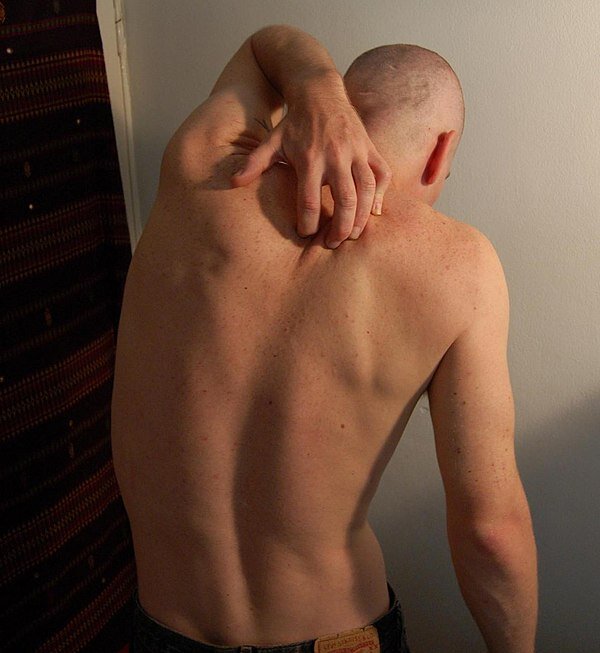
Scratch here

In a house under the stars
are you happy where you are
multi-tasking, double checking,
corresponding, genuflecting?
Wouldn’t you rather be
thinking of nothing, but of us
arching up your back to me
responding softly to my touch?
If you agree come to me
navigate by those stars
unplug, sign off, disengage -
please be carful in the car.
I’ll be here in a perfect mood
open, willing, hungry, waiting,
discard your things til not a stitch
then indicate where you itch.
— “Enough With Working Remotely,’’ by William T. Hall, a Rhode Island-Florida-Michigan-based painter, illustrator and writer
Writing on the trail
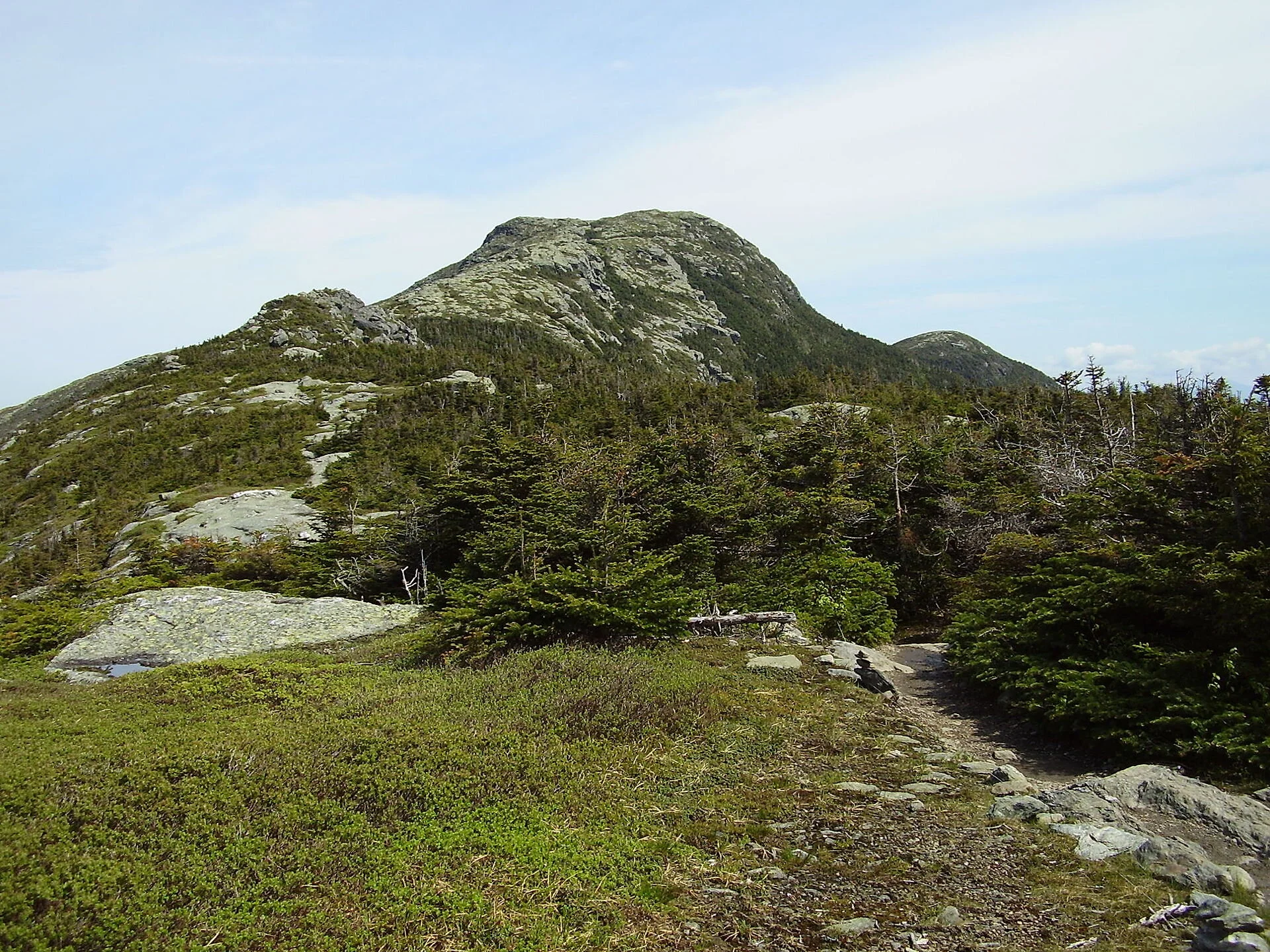
View of Mt. Mansfield on Vermont’s Long Trail
The Ompompanoosuc River, a tributary of the Connecticut River. Its headwaters are in Vershire, on the eastern side of the Green Mountains.
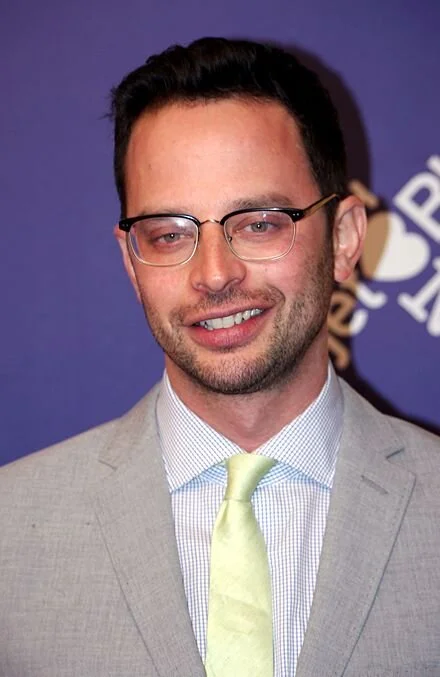
“In high school, I went to a place called the Mountain School. It's on a farm in {Vershire} Vermont, and I read Emerson and Thoreau and ran around the woods. Now I go hiking with a bunch of my comedy buddies. We talk about our emotions. I also do a lot of writing on hikes, just to get the blood flowing and the ideas moving.’’
Nick Kroll (born 1978), American actor, comedian, writer, and producer.
Vershire was named "Ely" in 1880, after the Ely Mining Company, which mined copper. This changed in 1883, after 200 miners struck and seized the mine, leading the National Guard to be called out to suppress the miners. You don’t think of New England having such mines, but there were a bunch of them in northern New England, in the 19th Century.

Plarn creatures on the bikeway

“Tardigrade,” by Michelle Lougee, in the exhibition “Persistence: A Community Response to Pervasive Plastic,’’ at the Minuteman Bikeway in Arlington, Mass., through next Oct. 31.
The exhibition is the culmination of Arts Arlington's first Artist-in-Residence Project, led by fiber artist and sculptor Lougee, who worked with Arlington Public Art Curator Cecily Miller and hundreds of craft people to create 37 sculptures.
Despite their amusing appearance, the exhibition’s very serious goal is to raise awareness about how single-use plastics hurt the environment and human health. The sculptures are made from plarn — a yarn made from plastic bags — and look like organisms found in water.
Artscope reports that Lougee began using plastic bags in her art about a decade ago to bring attention to the damage that plastic is causing the ocean’s eco-systems. For more information, visit artsarlington.org/programs/pathways-art-on-the-minuteman-bikeway/persistence.
'Special plans in heaven'
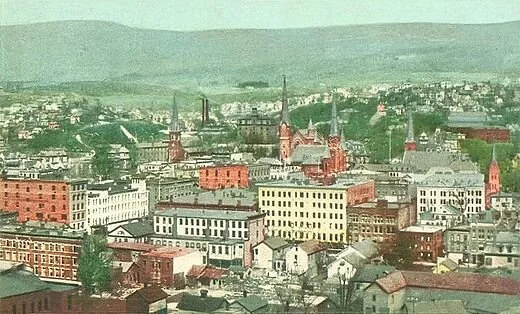
View of North Adams in 2005
“My death was arranged by special plans in Heaven
And only occasioned comment by ten persons in Adams, Massachusetts.
The best thing ever said about me
Was that I was deft at specifying trump.’’
— From “A New England Bachelor,”’ by Richard Eberhart (1904-2005), a Maine- and New Hampshire-based Pulitzer Prize-winning poet.
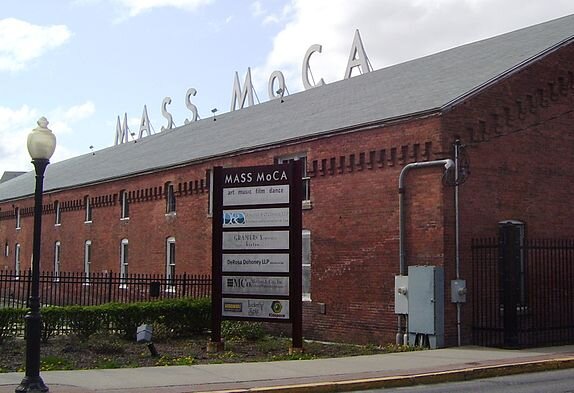
In North Adams, the Massachusetts Museum of Contemporary Art (MASS MoCA), formerly the Arnold Print Works and a facility of Sprague Electronics
'An ironic pessimism'
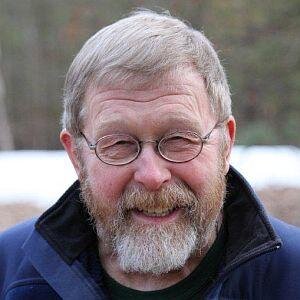
Willem Lange
“What New England is, is a state of mind, a place where dry humor and perpetual disappointment blend to produce an ironic pessimism that folks from away find most perplexing.’’
— Willem Lange (1935-2018), New Hampshire- and Vermont-based book author, newspaper columnist (“A Yankee Notebook”), outdoorsman and northern New England NPR host. He lived in East Montpelier, Vt., from 2007 to his death. Hit this link for his pre-death Web site.
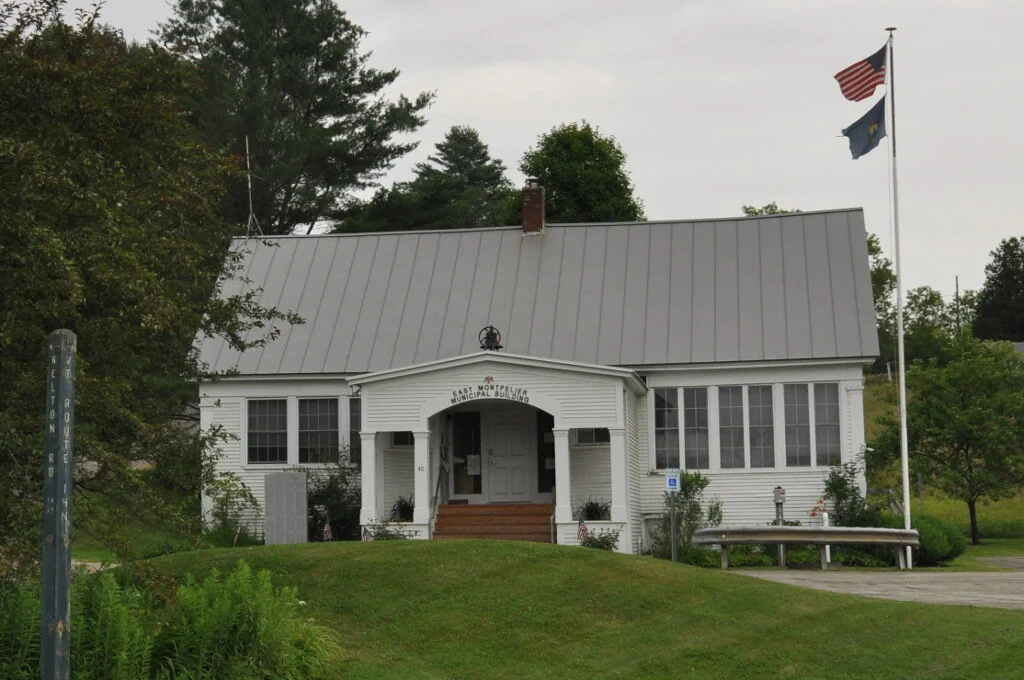
— Photo by Magicpiano
Good news for GE and New England

Adapted from Robert Whitcomb’s “Digital Diary,’’ in GoLocal24.com
Here’s another example of how offshore wind power can be an economic boon for New England:
Vineyard Wind LLC has picked Boston-based General Electric to provide the turbines for its project south of Martha’s Vineyard – in what will be the first large-scale offshore wind farm in the United States. European nations are far ahead of us!
The wind-farm developer, a joint venture owned by Avangrid and Copenhagen Infrastructure Partners, had originally planned to put up turbines made by the Danish-Japanese venture MHI Vestas (soon to be entirely Danish).
But permitting delays led Vineyard Wind to change the wind farm’s layout and equipment. So there will be 62 GE turbines instead of the 84 planned with MHI Vestas. But those General Electric turbines are the world’s most powerful. It’s nice to think that a Massachusetts company will provide this gear for this massive New England project.
And the news may suggest a brighter future for GE, which has faced hard times the past few years.
Hint this link for more information.
Seeking balance in the natural world
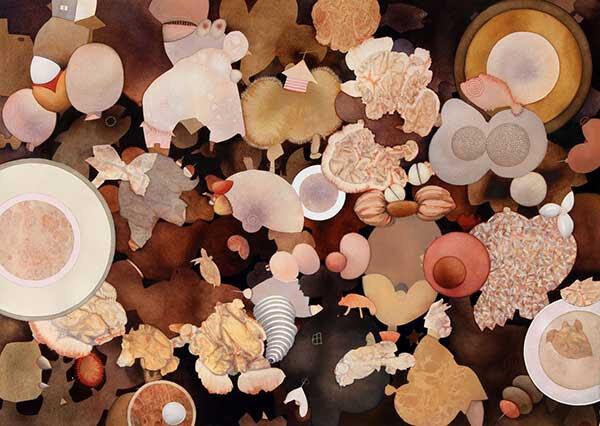
“All In Together III” (watercolor and mixed media on paper), by Thompson, Conn.-based artist Susan Swinand in her show “Nature Imagined,’’ at the Worcester Art Museum through Feb. 7
The museum says: “Swinand has a fondness for the natural world and a desire to find the balance between opposing natural forces. ‘Nature Imagined ‘ explores her creative process, which involves letting her materials take on their own form and tapping into her subconscious to make meaning.’’
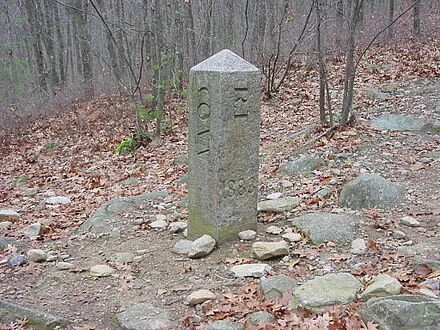
Thompson, in Connecticut’s “Forgotten Corner,’’ is remarkably rural. This marker in the woods shows where Connecticut, Massachusetts and Rhode Island meet.
.
Don Pesci: Looking out for their patrons' health and safety

— Photo by I, Ruhrfisch
VERNON, Conn.
In my mellowing age, I have become a creature of habits, some warring with others.
For the past few years I have taken breakfast on Mondays at one of three diners in East Hartford, West Hartford and Vernon, Conn., all of which are in compliance with Gov. Ned Lamont's possibly unconstitutional directives.
This morning, I found the waitress glowing as usual.
Waitress: (As if greeting a cousin she hasn’t seen in months) “How are you?’’
This was said in such an upbeat tone and with such a broad smile and show of pearly teeth, that I understood her to be genuinely glad to see me and turned the question back on her.
Me: “I’m good (a forgivable white lie; it is difficult to sustain a conversation for more than five seconds with a morning grouch) But not as good as you.’’
Waitress: (Doubt shading her smile) “Well, we are all worried.’’
She pointed to a newspaper I had begun to mark up with notes. Ominous headline: “Thousands more deaths predicted; Gov. Lamont: Still no plans to impose more restrictions,” featuring a picture of Coronavirus- masked Gov. Ned Lamont who, according to the story, was dubious about inflicting more crippling regulations on our battered state, restaurants in particular. Was Lamont prepared to follow in the footsteps of New York Gov. Andrew Cuomo, who has indicated that he would shut down indoor dining if testing rates did not improve? Not yet, Lamont somewhat reassuringly said.
Me: “Yes, I know. When New York sneezes, Connecticut catches a cold. Lamont regularly has followed in the footsteps of his fishing buddy Cuomo.’’
Waitress: “That’s the worry around here. It’s on, it’s off, it’s up, it’s down. We can’t plan our schedules. We can’t plan our lives, and we don’t want this place to close.’’
Me: “I wonder how many separate decisions you and others associated with the diner make each day.’’
Waitress: (hesitating to venture an answer) “I would guess -- hundreds.’’
Me: “What do you say, are those decisions better made by you and others who work here, or by this guy?’’
I pointed to the picture of Lamont, now being pressed by local “scientists,” experts in academia, newspaper commentators, and other pestiferous busybodies, to shut down restaurants once again before the arrival of what I sardonically call “the Trump vaccine.”
Waitress: “Well, would you rather I take your order and serve you directly, or would you rather be served remotely by him?’’
Me: “You, definitely!’’
The waitress doubted that remote, virtual empathy could be more powerful than direct empathy. The diner’s staff, she pointed out, was perhaps more concerned with the health and safety of its clients than the governor, because all who worked at the diner depended upon repeat business and, if you kill a patron, he or she would not return.
Lamont is so flighty, I told her, that it would take days before the food was put before me. And my order was certain to be reviewed countless times before it was fulfilled by members of Lamont’s usual political troupe, such as his communications director, who, I pointed out to the waitress, had been tested positive for Coronavirus.
This produced a glowing smile.
But that is the problem, isn’t it? When we make a decision concerning who decides an issue, we have decided that someone else shall direct what should be done.
Competence here is decisive. Decisions are only as good as the data upon which they are based, and decisions made remotely by those incompetent to make them always point the way to disaster. The number of Coronavirus-related deaths in nursing homes in Connecticut and New York – more than 60 percent of pandemic deaths in both states – is a measure of the deadly incompetence of both governors, though one would never guess as much, given the praise showered upon Lamont and Cuomo by their state’s media.
On Nov. 20, an international academy announced, “Governor Andrew M. Cuomo of New York will receive this year’s International Emmy® Founders Award, in recognition of his leadership during the Covid-19 pandemic and his masterful use of television to inform and calm people around the world.”
Better a good breakfast than a misappropriated Emmy. The breakfast was done to perfection, the service cheerful and satisfying, and the diner is still open for business – for now. But my waitress fear that it may not be long before Lamont catches his second wind and is nominated for an Emmy award as well.
Don Pesci is a Vernon-based columnist.

Llewellyn King: The traitorous tribe that kills fellow Americans

President Trump touring a Honeywell mask factory (!) in May 2020. As at many other crowded events he has attended during the pandemic, Trump and his entourage, (fearful of his rebuke) refused to wear masks at this highly publicized visit.
WEST WARWICK, R.I.
When a nation goes to war its first step to survival is to protect the homeland against invasion. Every citizen is co-opted: It is their national duty.
We are on a war footing against COVID-19. It has invaded our homeland, and it is slaughtering us. Nearly 300,000 are dead and the vast hospital network in the United States is overwhelmed.
A dark cloud passes before our sun. Christmas promises more sorrow as we wait for reinforcements -- in this case, the vaccine -- to arrive.
The first line of defense against this common enemy, this indiscriminate killer, is a simple piece of layered cloth or paper held over the nose and mouth by cloth or elastic strings. It is a face mask, the simplest of defensive weapons.
But there is in the United States a tribe that has lost its head, reminiscent of Nicholas Monserrat’s great novel of 1956, The Tribe That Lost Its head. (See an old cover below.)
There are among us those who won’t defend their homeland, won’t wear masks, and accompany that treason by propagating a theory that to wear a mask is to grant a malign government total authority over the individual, and to bring about totalitarianism; or that to wear a mask is to cede manhood or endanger our way of life.
Worse, there are those who believe that it is a political statement of solidarity with the outgoing administration, with the embattled president, and the raucous nationalism that is the core of his appeal.
Some won’t wear masks out of youthful chutzpah, believing this is a disease of the old and that the young and the healthy are immune. This is a fiction they have been fed by those who should know better and most likely do know better, most of whom reside under Republican roofs, presided over by that Niagara Falls of disinformation, President Trump.
While the nation is taking fatal casualties which it doesn’t need to take, while first responders and medical personal are thrown again and again into the breach, exhausted and scared, the Trump Republicans can’t bring themselves to join the battle.
While the signs of war — a war with a terrible count in deaths -- rages on, congressional Republicans are foraging for scandals like pigs after truffles. Most of them still won’t condemn Trump for his super-spreader activities, like his rallies, parties and reckless behavior in public, which signal masks aren’t needed.
The trouble is that leaders of this headless tribe, this unacceptable face of what was the Grand Old Party, are so cowed that they won’t check the president.
The Republican Party used to be made up of muscular individuals, lawmakers who took their mandate seriously, not today’s pusillanimous followers. Incredibly, most Republican members of Congress can’t bring themselves to admit that Joe Biden won the election and will be the next president. Had there been “massive voter fraud” this wouldn’t be so. The courts would have spoken other than as they have.
All of this has played into the anti-mask movement and its lethal consequences. The virus doesn’t ask party affiliation: It is an equal-opportunity slayer.
Then there is Trump’s great enabler in the Senate, Majority Leader Mitch McConnell.
Even as millions of Americans don’t know where the next meal will come from this Christmas besides a food bank, and rent and utility bills are unpaid, McConnell, and McConnell alone, will decide who gets relief, who gets the shaft for Christmas. He can just refuse to bring a bill to the floor and end it right there. His personal concerns are paramount, not those of the other members of Congress.
Not only does McConnell not wish to understand the gravity of the situation in the country, but he also seems to relish his ability to exacerbate it, to turn his job into a Lego game for his own amusement.
This will be a bleak Christmas lit by the hope that the vaccine will deliver us from despair and bottomless hurt.
But for the vaccine to vanquish the virus, we must get our shots. If the same idiocy that shuns masks prevails, the war won’t fully be won for years when it could be ended next year.
The sight of victory is the best Christmas present, and it is possible next year if we close ranks. Those who will bear the guilt are known. They are in Washington now.
Llewellyn King is executive producer and host of White House Chronicle, on PBS. His email is llewellynking1@gmail.com and he’s based in Rhode Island and Washington, D.C.
Web Site: whchronicle.com

‘Fear advances’
“What most we fear advances on
Tiptoe, breath aromatic. It smiles.
Its true name is what we never know.’’
— From “Sky,’’ by Robert Penn Warren (1905-1989), poet, novelist and critic. A Kentucky native, he lived in Fairfield, Conn., and Stratton, Vt., in his later years.
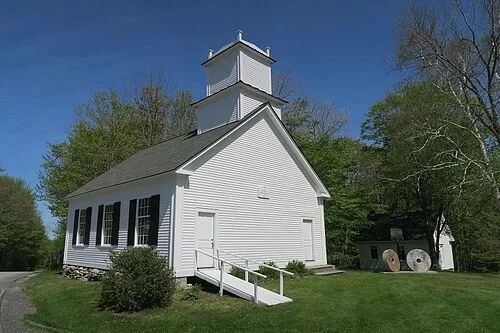
Stratton, Vt., meetinghouse
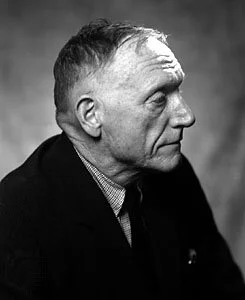
Robert Penn Warren in 1968
'Don't be perfectionist'

“Composition for ‘Jazz,’ “ (1915), by Albert Gleizes, at the Solomon R. Guggenheim Museum, New York
“Jazz Stands for freedom. It’s supposed to be the voice of freedom: Get out there and improvise, and take chances, and don’t be perfectionist —leave that to the classical musicians.’’
— Dave Brubeck (1920-2012), jazz composer. He and his wife moved to a bucolic part of widely bucolic Wilton, Conn. in 1961, and that remained his home until his death.
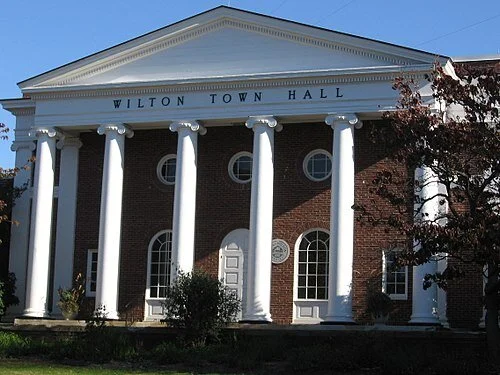
Wilton is an affluent residential community with lots of open land, historic architecture, such as the Round House, and colonial homes. Many residents commute to Stamford, New York City or other places in Greater New York.
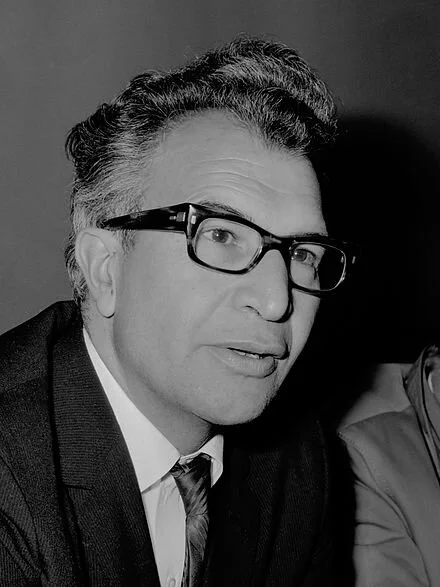
Dave Brubeck in 1964


John O. Harney: Update on college news in New England

At Wheaton College, which has done very well in facing COVID-19. Left to right: Emerson Hall, Larcom Hall, Park Hall, Mary Lyon Hall, Knapton Hall and Cole Chapel.
BOSTON
From The New England Journal of Higher Education, a service of The New England Board of Higher Education (nebhe.org)
Faculty diversity. In the early 1990s, NEBHE, the Southern Regional Education Board (SREB) and the Western Interstate Commission for Higher Education (WICHE) collaborated to develop the first Compact for Faculty Diversity. Formally launched in 1994, with support from the Ford Foundation and Pew Charitable Trust, the compact focused on five key strategies: motivating states and universities to increase financial support for minorities in doctoral programs; increasing institutional support packages to include multiyear fellowships, along with research and teaching assistantships to promote integration into academic departments and doctoral completion; incentivizing academic departments to create supportive environments for minority students through mentorship; sponsoring an annual institute to build support networks and promote teaching ability; and building collaborations for student recruitment to graduate study. With reduced foundation support, collaboration among the three participating regional education compacts declined, but some core compact activities continued through SREB.
Now, NEBHE and its sister regional compacts are launching a collaborative, nine-month planning process to reinvigorate and expand a national Compact for Faculty Diversity. Under the proposed new compact, NEBHE, the Midwestern Higher Education Compact (MHEC), SREB and WICHE would collaborate to invest in the achievement of diversity, equity and inclusion in faculty and staff at postsecondary institutions in all 50 states. Ansley Abraham, the founding director of the SREB State Doctoral Scholars Program at the SREB, has been instrumental in the design and execution of that initiative. He recently published this short piece in Inside Higher Ed.
Fighting COVID. As the head of the Centers for Disease Control and Prevention (CDC) warned of the roughest winter in U.S. public-health history, Wheaton College has stood out. Our Wheaton, in Norton, Mass. (not to be confused with the Wheaton College in Illinois) developed a plan based on science that has kept positive cases low on campus and allowed in-person classes during the fall semester. Wheaton was able to limit the college’s overall fall semester case count to 23 (a .06 positivity rate among 35,000 tests) due to strong protocols, rigorous testing through the Cambridge, Mass.-based Broad Institute and a shared commitment from the community, especially students. In early November, as cases were spiking across the U.S., the private liberal arts college had its own spike of 13 positive cases in one day. But thanks to immediate contact tracing in partnership with the Massachusetts Community Tracing Collaborative, only one positive case resulted after that day, notes President Dennis Hanno. Part of Wheaton’s success owes to its twice-a-week testing throughout the semester. The college also credits its work with the for-profit In-House Physicians to complement internal staff in managing on-campus testing and quarantine/isolation housing.
New England in D.C. The COVID-19 crisis should make national health positions crucial. Earlier this week, President-elect Joe Biden tapped Dr. Rochelle Walensky, an infectious disease physician at Medical School and Massachusetts General Hospital, to lead the CDC and Dr. Vivek Murthy, who attended Harvard and Yale and did his residency at Brigham and Women’s Hospital, to be surgeon general. They’ll work with Dr. Anthony Fauci, the chief medical advisor and College of the Holy Cross graduate who has served six presidents.
Last month, as Biden’s transition team began drawing on the nation’s colleges and universities to prepare to take the reins of government, we flashed back to a 2009 NEJHE piece when Barack Obama was stocking his first administration. “As they form their White House brain trusts, new presidents tend to mine two places for talent: their home states and New England—especially New England’s universities, and especially Harvard,” we noted at the time. Most recently, two New England Congresswomen have scored big promotions on Capitol Hill. Rosa DeLauro (D.-Conn.) became Appropriations chair and Katherine Clark (D.-Mass.) was elected assistant speaker of the House. Richard Neal (D.-Mass.) was already chairman of the powerful House Ways and Means Committee.
Indebted. U.S. Sen. Elizabeth Warren (D.-Mass.), long a champion of canceling student debt, called on Biden to take executive action to cancel student loan debt. “All on his own, President-elect Biden will have the ability to administratively cancel billions of dollars in student loan debt using the authority that Congress has already given to the secretary of education,” she told a Senate Banking Committee hearing. “This is the single most effective economic stimulus that is available through executive action.” About 43 million Americans have a combined total of $1.5 trillion in federal student loan debt. Such debt has been shown to discourage big purchases, growth of new businesses and rates of home ownership among other life milestones. Warren has outlined a plan in which Biden can cancel up to $50,000 in federal student loan debt for borrowers.
Jobless recovery? Everyone knew the public health crisis would be accompanied by an economic crisis. This week, Moody’s Investors Service projected that the 2021 outlook for the U.S. higher-education sector remains negative, as the coronavirus pandemic continues to threaten enrollment and revenue streams. The sector’s operating revenue will decline by 5 percent to 10 percent over the next year, Moody’s projected. The pace of economic recovery remains uncertain, and some universities have issued or refinanced debt to bolster liquidity. (As this biting piece notes, “Just as decreased state funding has caused students to go into debt to cover tuition and fees, universities have taken on debt to keep their doors open.”)
The name of the game for many higher education institutions (HEIs) is coronavirus relief money from the federal government. NEBHE has written letters to Congress calling for increased relief based on the many New England students and families struggling with reduced incomes or job loss and the costs associated with resuming classes that were significantly higher than anticipated. These costs have been growing based on regular virus testing, contact tracing, health monitoring, quarantining, building reconfigurations, expanded health services, intensified cleaning and the ongoing transition to virtual learning. Citing data from the National Student Clearinghouse, NEBHE estimated that New England’s institutions in all sectors lost tuition and fee revenue of $413 million. And that’s counting only revenue from tuition and fees. Most institutions also face additional budget shortfalls due to lost auxiliary revenues (namely, from room and board) and the high costs of compliance with new health regulations and the administration of COVID-19 tests to students, faculty and staff. (When the relief money is spent and by whom is important too. Tom Brady’s sports performance company snagged a Paycheck Protection Program loan of $960,855 in April.) Anna Brown, an economist at Emsi, told our friends at the Boston Business Journal that higher-ed staffers working in dorms, maintenance roles, housing and food services have been hit hard, and faculty will not be far behind
Admissions blast from the past. I’ve overheard too many conversations lately with reference to “testing” and wondered if the subject was COVID testing or interminable academic exams. Given admissions tests being de-emphasized by colleges, we were reminded me of a 10-year-old piece by Tufts University officials on how novel admissions questions would move applicants to flaunt their creativity. The authors told of how “Admissions officers use Kaleidoscope, as well as the other traditional elements of the application, to rate each applicant on one or more of four scales: wise thinking, analytical thinking, practical thinking and creative thinking.” Could be their moment?
Anti-wokism. The U.S. Department of Education held “What is to be Done? Confronting a Culture of Censorship on Campus” on Dec. 8 (presumably not deliberately on the anniversary of John Lennon’s assassination). The hook was to unveil the department’s “Free Speech Hotline” to take complaints of campus violations. The event organizers contended that “Due to strong demand, the event capacity has been increased!” The department’s Assistant Secretary for Postsecondary Education Robert King began noting that we’ll hear from “victims of cancel culture’s pernicious compact” where generally “administrators cave to the mob and punish the culprit.” He noted, “Coming just behind this are Communist-style re-education camps” and assured the audience that the department has launched several investigations into these kinds of offenses like those that land awkwardly in my inbox from Campus Reform. Universities are no place for “wokism,” one speaker warned, adding that calls for diversity and tolerance actually aim to squelch unpopular opinions.
Welcome dreamers. Last week, a federal judge ordered the Trump administration to restore the Deferred Action for Childhood Arrivals (DACA) program to how it was before the administration announced plans to end it in September 2017. DACA provides protection against deportation and work authorization to certain undocumented immigrants who were brought to the U.S. as children. DACA participants include many current and former college students. NEBHE issued a statement in support of DACA in September 2017 and has advocated for the initiative’s support.
John O. Harney is executive editor of The New England Journal of Higher Education.
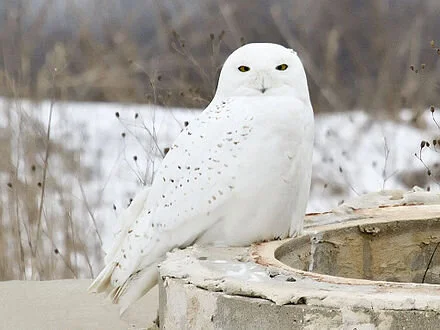
Snowy Owls need a lot of space
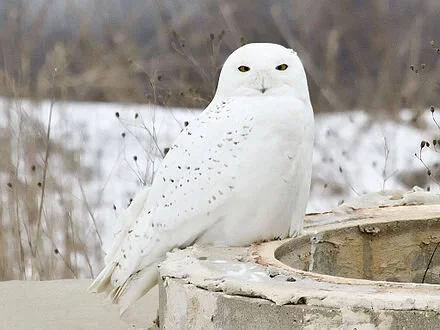
A male Snowy Owl
From ecoRI News
A few Snowy Owls are typically spotted in Rhode Island each year, and over the past few weeks a couple of these majestic birds have been sighted, according to the Audubon Society of Rhode Island.
As nature enthusiasts flock to the shore in hopes of glimpsing these birds, Audubon experts worry about the stress these owls are facing, caused by their long journey, shortage of food, and human interference.
Chilly temperatures and fewer food sources mean that winter months can be challenging for all birds. They need to be constantly refueling with high-protein energy sources to maintain their body temperature. Birds also can easily become stressed by people getting too close. Energy used to escape from perceived danger is energy that can’t be used to find food sources and shelter. All birds, including Snowy Owls, can face serious health consequences from nature enthusiasts trying to get too close or take the perfect photograph.
Over the past several months, rare bird species have been sighted in Rhode Island, including a common cuckoo in Johnston. The Audubon Society, while understanding the enthusiasm that these rare sightings bring, noted that trampled habitat and trespassers on private farmland was a result.
Audubon urges all birders and nature enthusiasts to be respectful of private property and the natural habitat that sustains birds and wildlife, including sections of wildlife refuges that may be closed to the public for critical conservation purposes.
Many wonder why Snowy Owls travel south to begin with, and why their numbers are higher in certain years.
“It's all about food,” said Lauren Parmelee, an expert birder and the Audubon Society of Rhode Island’s senior director of education. “Snowy Owl numbers are closely connected to the populations of rodents in the Arctic region called lemmings. In years when there are plenty of lemmings, these owls lay more eggs and successfully raise a larger number young to adulthood. But when winter comes to the tundra, competition for food increases dramatically and many of the younger birds disperse beyond the boundaries of their arctic habitat.”
These hungry birds will then travel a great distance looking for food and will appear on the beaches and rocky shorelines in Rhode Island and other coastal states.
Audubon urges visitors to follow these guidelines for viewing Snowy Owls and other birds this winter:
Don’t try to creep close. Be content to view at a distance. Give Snowy Owls a space of 200-300 feet or more. This isn’t a bird you should be sneaking up on with your camera phone. Use binoculars and spotting scopes if you have them.
Try to stay as a group if there is more than one observer. Never encircle birds or owls. All viewers should stay on one side of the bird.
Snowy Owls are powerful hunters and very capable of capturing prey, so please don’t try to feed them.
Don’t observe these owls for an overly long period of time. Your presence causes stress.
Spread the word about respectful birding etiquette and keeping a safe distance. You can help to ensure that local birds survive the winter and that snowy owls have a better chance of making it home to the Arctic in the spring.
Snowy Owls are protected by the Migratory Bird Treaty Act of 1918.
Download Boston Guardian’s new app
Download The Boston Guardian’s app on your iPhone, tablet and computer by going to the Apple store. The Guardian is chock full of news and feature stories, and photos, about life in New England’s capital, especially the Back Bay, the Fenway-Kenmore Square area, Beacon Hill and the business/commercial downtown. The Guardian is Boston’s largest circulation weekly newspaper.

What did this year mean?

“We Who Believe in Freedom” (study acrylic on birch panel), by LMNOPI (yes — that’s her name), in the Bennington (Vt.) Museum’s show through Dec. 28 entitled “Vermont Utopias: Imagining the Future .’’ The show is part of “2020 Vision: Reflecting on a World-Changing Year,’’ a statewide initiative by the Vermont Curators Group that aims to explore how 2020 has changed the world.
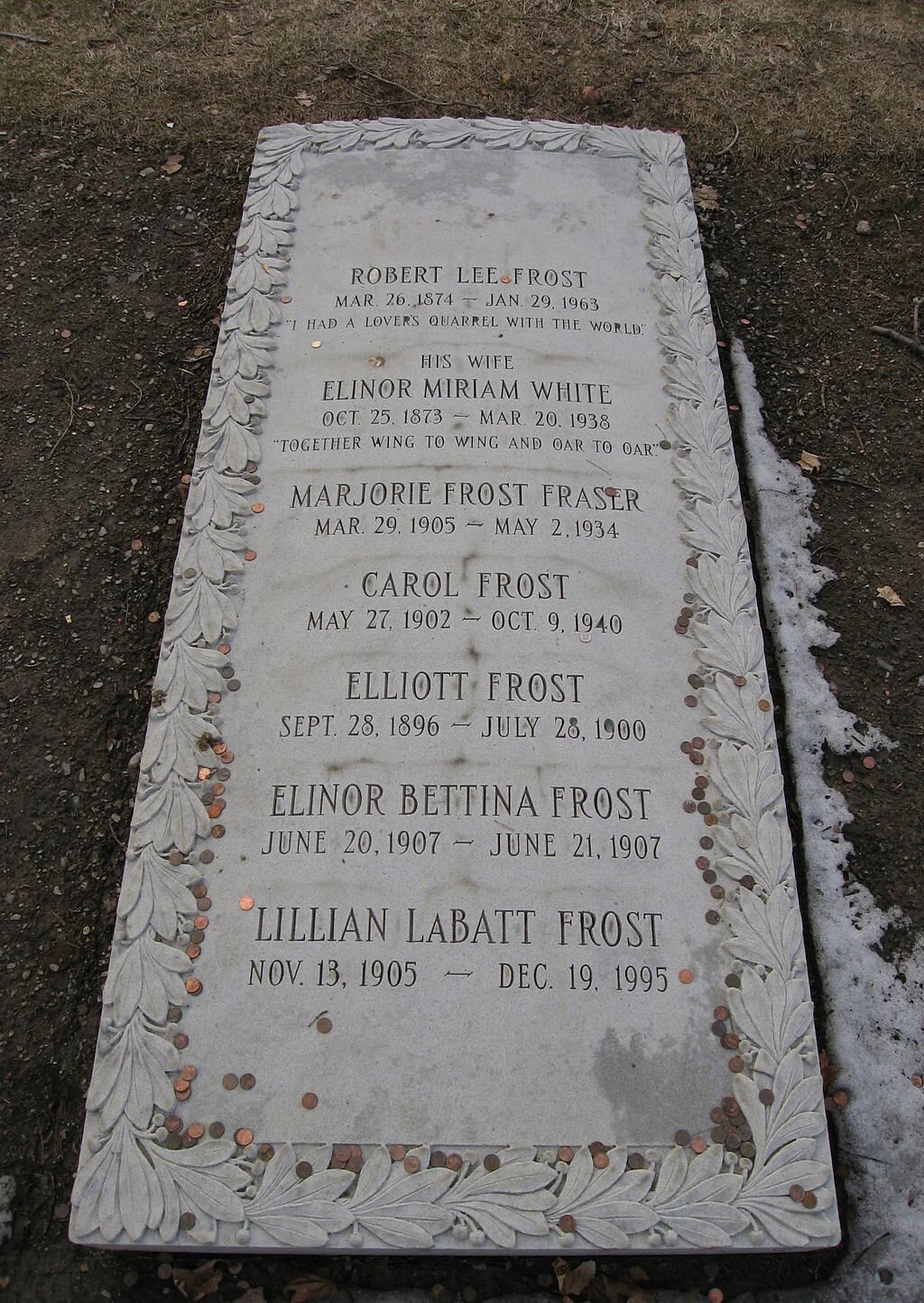
Robert Frost’s grave in Bennington