
Vox clamantis in deserto





Socially distanced sculpture

“Big C” (aluminum bar 0.5" x 2", Ultrex fibers (polythylene), by Robert Osborne, in the “11th Annual Flying Horse Outdoor Sculpture Exhibit: Art at a (Social Distance)”, at the Pingree School, South Hamilton, Mass, through Nov. 29.
This exhibit takes place across the school’s 100-acre campus every fall, and this year is no exception, despite COVID-19. The 50 sculptures in the show are spread throughout the campus at least 10 feet apart from one another to ensure visitor safety.

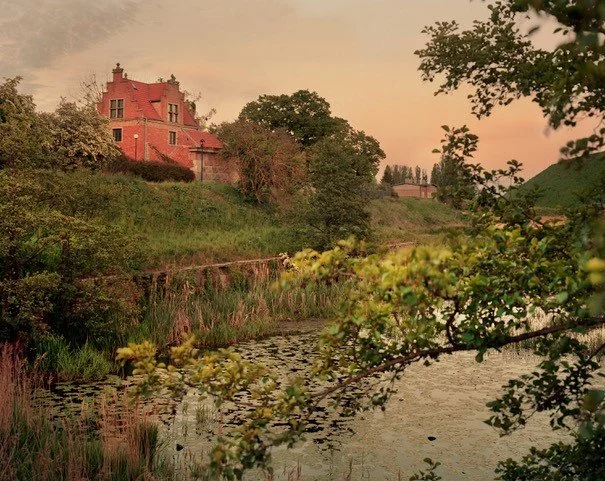
The Pingree School, in South Hamilton, Mass., on the North Shore of Greater Boston. In 1961, the private co-ed high school was founded by Sumner Pingree and his wife, Mary Pingree, in this mansion on the estate where they had raised their three sons. A lot of their money came from agricultural and other investments in Cuba. But the Cuban government seized their land holdings after Fidel Castro’s Communists took over.
Roger Warburton: Ocean damage increases in CO2 buildup as climate warms
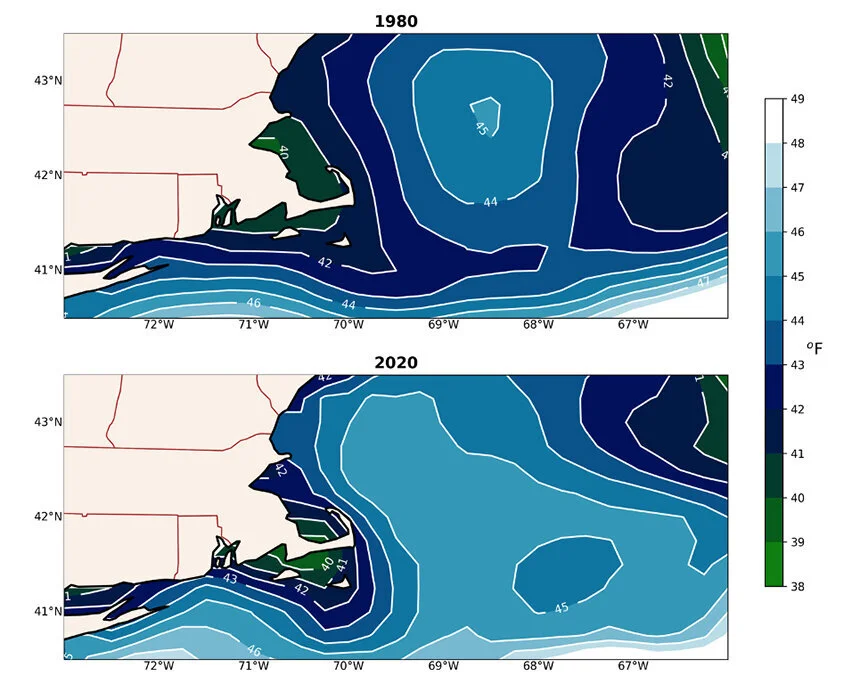
January sea surface temperatures off southern New England have risen significantly since 1980.
— Roger Warburton/ecoRI News
From ecoRI News (ecori.org)
Living in Rhode Island, we are aware how the ocean rules our weather. What is less well known is that climate change is fundamentally altering the waters off our coast.
The image above shows how the January temperature of the ocean off New England has changed since 1980. For example, vast areas of dark blue — representing temperatures around 41-43 degrees Fahrenheit — have shrunk and are now a lighter blue, representing temperatures around 43-45 degrees.
The effects of a temperature rise in the ocean are significantly different from a temperature rise over land. We experience this difference when we walk across a sandy beach on a hot day. Exposed to the same sunlight, the sand burns our feet while the ocean warms gradually to the perfect temperature for a summer swim.
Rhode Island’s climate is moderated because the ocean takes longer than the land to heat up over the summer and longer to cool down during the fall.
The global impact of this effect is shown in the image below, which shows that, over recent decades, the continents have warmed much more rapidly than the oceans. The Earth’s land areas were 1.4 degrees Celsius (2.5 degrees Fahrenheit) warmer than the 20th-Century average, while the oceans were 0.8 degrees Celsius (1.4 degrees Fahrenheit) warmer.
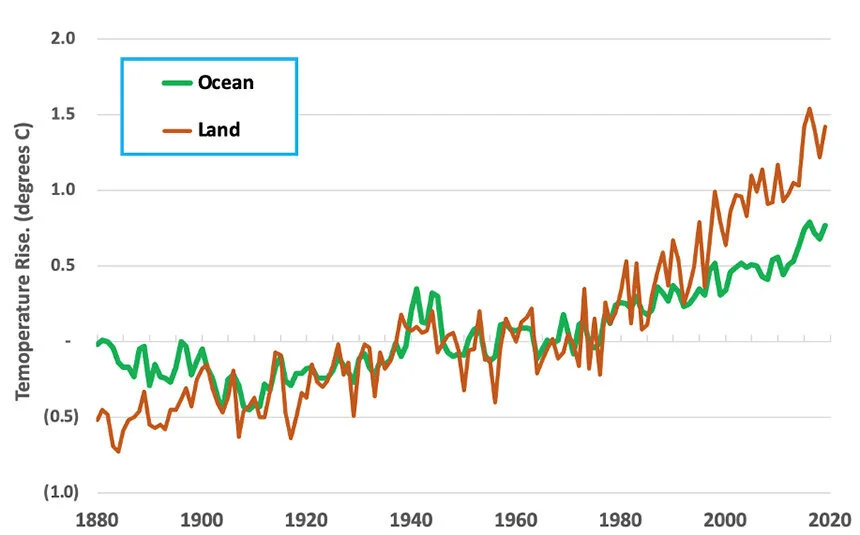
Since 1880, the Earth’s land temperature has risen faster than the ocean temperature. “
— Roger Warburton/ecoRI News
Unfortunately, the ocean’s smaller temperature rise isn’t good news, because the oceans can store more than four times as much heat as the land.
Even though ocean temperatures have risen less than the land’s, it’s becoming clear that the impacts of climate change depend on a complex interaction between dry land and the warming ocean.
Ships and buoys have been recording sea surface temperatures for more than a century. International cooperation and sharing of data between nations has created a global database of sea surface temperatures going back to the middle of the 19th century.
In addition, modern satellites remotely measure many ocean characteristics over the entire extent of the Earth’s oceans. The data are now so accurate that it’s possible to detect the small temperature rise from ships’ propellers as they traverse the oceans.
The warming of both the land and the oceans is caused by rising levels of atmospheric carbon dioxide. When CO2 dissolves in the ocean, it forms carbonic acid, which in turn, breaks into hydrogen and bicarbonate ions. Clams, mussels, crabs, corals and other sea life rely on those carbonate ions to grow their shells.
In 2015, Mark Gibson, deputy chief of marine fisheries at the Rhode Island Department of Environmental Management, noted that ocean acidification is a “significant threat” to local fisheries.
In fact, a study published in 2015 found that the Ocean State’s shellfish populations are among the most vulnerable in the United States to the impacts of acidification.
In polar regions such as Alaska, the ocean water is relatively cold and can take up more CO2 than warmer tropical waters. As a result, polar waters are generally acidifying faster than those in other latitudes.
The water in warmer regions can’t hold as much CO2 and are releasing it into the atmosphere. Therefore, the acidification from carbon dioxide is damaging the oceans in both polar and equatorial regions.
Warming oceans are also changing the winds that whip up the ocean, resulting in upwells from deep waters that are nutrient-rich but also more acidic.
Normally, this infusion of nutrient-rich, cool, and acidic waters into the upper layers is beneficial to coastal ecosystems. But in regions with acidifying waters, the infusion of cooler deep waters amplifies the existing acidification.
In the tropics, rising temperatures are slowing down winds and reducing the exchange of carbon between deep waters and surface waters. As a result, tropical waters are becoming increasingly stratified and more saturated with carbon dioxide. Lower layers then have less oxygen, a process known as deoxygenation.
Warming ocean temperatures have also caused a rapid increase of toxic algal blooms. Toxic algae produce domoic acid, a dangerous neurotoxin, that builds up in the bodies of shellfish and poses a risk to human health.
In coastal areas, such as Rhode Island, temperature changes can favor one organism over another, causing populations of one species of bacteria, algae, or fish to thrive and others to decline.
The sum of all these impacts is damaging to the Rhode Island economy. The state’s shellfish populations are already among the most vulnerable in the United States to the impacts of a warmer ocean.
Roger Warburton, Ph.D., is an ecoRI News contributor and a Newport resident. He can be reached at rdh.warburton@gmail.com.
Figure 1 was generated using data from the Copernicus Climate Change and Atmosphere Monitoring Services (2020). The ERA5 dataset is produced by the European Space Agency SST Climate Change Initiative based on global daily sea surface temperature data from the Group for High Resolution Sea Surface Temperature and made available by the Copernicus Climate Data Store.
Figure 2 was generated using data from NOAA’s National Centers for Environmental information, Climate at a Glance: Global Time Series.
A loving meal
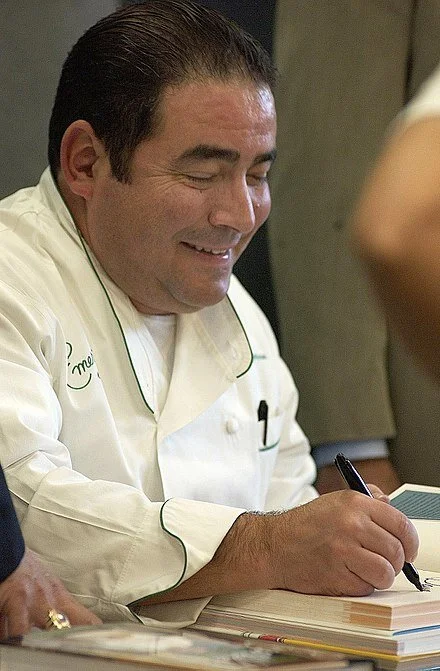
Emeril Lagasse
“Anything made with love, bam! It’s a beautiful meal.’’
—Emeril Lagasse (born 1959), internationally known chef, TV host and restaurant entrepreneur. Born and raised in Fall River, his first big job was as executive chef of Dunfey’s Hyannis (Mass.) Resort, on Cape Cod.

David Warsh: Digital regulation is coming, sooner or later

Visualization of Internet routing paths.
—Graphic by The Opte Project
SOMERVILLE, Mass.
There are two ways of thinking about political prospects for the years ahead. One is to dwell on the relatively narrow margins of the recent presidential election – 80 million vs. 74 million votes cast, 306-232 in the Electoral College – and fear gridlock. The other is to look at America’s history of dealing with its problems and expect a series of further adjustments to be made, patterned on what’s been done before.
Take the problem of industrial concentration.
The government’s last big antitrust action came at the very dawn of the digital age: an unlawful monopolization charge under the Sherman Antitrust Act in the aftermath of the browser wars for having “smothered” a rival start-up, Netscape. The government won the case; and federal Judge Thomas Penfield Jackson ordered that Microsoft be split in two, one company selling operating systems, the other applications. The D.C. Court of Appeals overturned Jackson’s rulings and accused him of unethical conduct. The George W. Bush administration’s Justice Department announced that it would no longer seek to break up the company.
What has changed since then? Plenty. The shares of five large companies – Apple, Google, Microsoft, Facebook and Amazon make up nearly a quarter of the S&P 500 index, as EconoFact noted last week, in the course of surveying the legal landscape. The Justice Department and 11 states have sued Google, charging the company with abuse of its power.
The belief is growing that, whatever the conveniences of the Internet giants, there’s something about the structure of digital markets that means that they cannot be expected to self-correct. The most thoughtful proposal for government intervention I’ve seen is one prepared for a Report on Digital Platforms, commissioned by the Stigler Center for the Study of the Economy and the State at the University of Chicago’s Graduate School of Business.
There’s justice in this, it should be said. George Stigler was a pillar of the third Chicago School (1945–2014), a Nobel laureate, known for his decades-long rear-guard action against 20th Century ideas about market power. “It is virtually impossible to eliminate competition in economic life,” he wrote in his autobiography. Stigler died in 1991, the same year that the Internet was commercialized.
Fiona Scott Morton, of Yale University, chaired the study’s antitrust subcommittee. She served as Deputy Assistant Secretary for Economics in the Antitrust Division of the Justice Department in the Obama Administration.
At a conference in Chicago last year, Scott Morton presented the subcommittee’s 90-page findings in short, to-the-point remarks. Digital markets are quite different from most goods markets, she said. They are two-sided markets, serving at least two distinct user groups (readers or listeners and advertisers, for example), providing network effects to each. Economies of scale, of scope, and increasing returns to the possession of user data mean that such markets often “tip” at a certain point. The less successful drop out or are acquired and the winner takes all. Competition thus is often only for the market, not in it, Scott Morton said.
Three panelists discussed the report. Activist Matt Stoller, proprietor of the antitrust Web site Big, described a “world on fire,” and complained the recommendations lacked urgency. Ariel Eztrachi, of Oxford University, a member of the subcommittee, agreed. “No action is no longer an option. If we play for too long, we might find ourselves in a very different reality.” But Randal Picker, of the University of Chicago Law School, offered a jolt of the old-time religion.
When I took price theory from Gary Becker many years ago, Gary made clear that I needed to know two things to do economics. People optimize subject to constraints, and markets clear. That was all I really needed to know, and if I confronted a problem and thought I needed something more than that, I probably wasn’t thinking hard enough.
The subcommittee proposed two policy measures. A specialist competition court should be established to hear all private and public antitrust cases. That would allow judges to develop expertise in an area in which both behavioral and organizational economics have changed a great deal in the last 30 years.
A regulatory agency, a digital authority, should be created as well. Antitrust works well when agencies are quick to act and courts enforce the law well, said Scott Morton. “But even in the best world that’s not a complete solution. You need a partner to create a competitive environment.”
New technologies have traditionally brought into existence new regulatory agencies to help structure the new markets they created. The Interstate Commerce Commission was established to deal with the railroads (and later trucking). The Federal Communications Commission followed the radio industry into existence, and later came to oversee all kinds of communication. The Securities and Exchange Commission arrived not long after chicanery in the 1920s marred the beginnings of the democratization of finance.
Why not, then, enact a Digital Competition Commission, to provide a foil to the still-robust Sherman Antitrust Act? A new era of trust-busting may be in the offing. Digital regulation is coming, sooner or later, the subcommittee was saying. Why not start now?
David Warsh, an economic historian and a veteran columnist, is proprietor of Somerville-based economicprincipals.com, where this column first appeared.
An all-accepting friend

—Photo by Lisa Sympson
A fluffy fellow in my lap
Continually purrs --
You may have heard him -- did you not
His purring joyful is --
He cares not if I'm rich or poor --
Or if I'm fat or slim --
Or if I’m tidy or unkempt --
Why can’t you be like him?
— Felicia Nimue Ackerman
This poem first appeared in The Emily Dickinson International Society Bulletin and is reprinted with permission.

“The Cat's Lunch ‘‘ (oil on canvas), by Marguerite Gérard (19th Century)
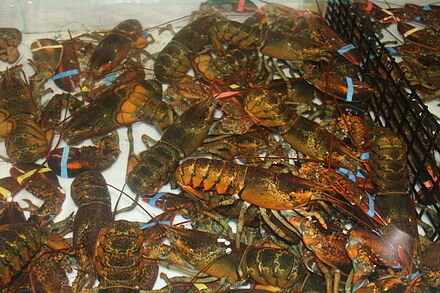
Ah, that skin-soothing lobster ‘blood’
From The New England Council (newenglandcouncil.com)
“Two graduates of the University of Maine (UMaine) have developed a skin cream derived from lobster hemolymph, which functions within the lobster similarly to blood. The product can sooth such ailments as psoriasis and eczema.
“The product is the latest addition to items that can be traced back to efforts by the University of Maine (UMaine) to find commercial applications for byproducts of the commercial lobster industry. UMaine has worked for years to find additional uses for shells and other byproducts. Marin Skincare was founded by CEO Patrick Breeding and co-founder Amber Boutiette, who learned about the potential for lobster by-products while earning their master’s degrees at UMaine.
“Breeding and Boutiette are currently working with Luke’s Lobster in Saco, Maine, to collect hemolymph. The product has been available to consumers for over a month.
“The New England Council applauds UMaine for providing an innovative course of study encourage such scientific discoveries. Read more from the Bangor Daily News.’’
Jim Hightower: Turkey and Thanksgiving confusions
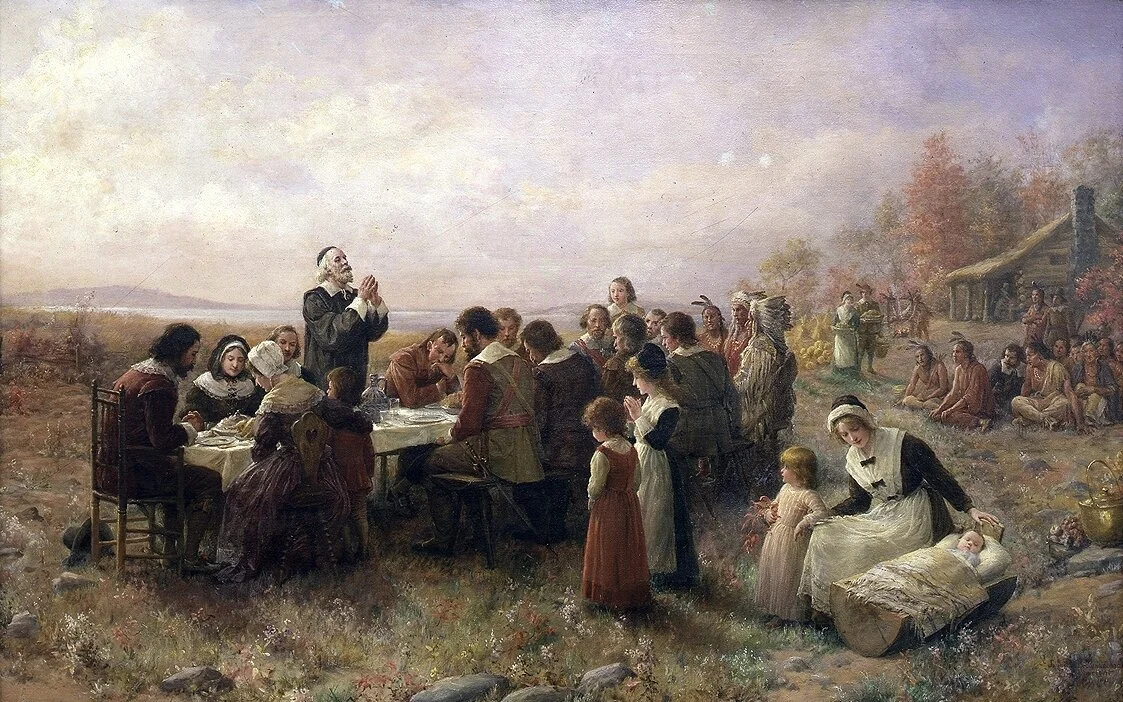
“The First Thanksgiving at Plymouth “ (1914), by Jennie Augusta Brownscombe, at the Pilgrim Hall Museum, Plymouth, Mass. If they ate turkeys, they would have been members of the Eastern Wild Turkey subspecies seen below.

Via OtherWords.org
Let’s talk about turkey!
No, not the Butterball now pouting in the Oval Office. I’m talking about the real thing — the big bird, 46 million of which Americans will devour on Thanksgiving.
It was the Aztecs who first domesticated the gallopavo, but leave it to the Spanish conquistadores to “foul-up” the bird’s origins.
The Spanish declared the turkey to be related to the peacock — wrong! They also thought that the peacock originated in Turkey – wrong again! And they thought that Turkey was in Africa. You can see the Spanish colonists were pretty confused.
Actually, the origin of Thanksgiving itself is similarly confused.
The popular assumption is that it was first celebrated by the Mayflower immigrants and the Wampanoag natives at Plymouth in what is now called Massachusetts, 1621. They feasted on venison, neyhom (Wampanoag for gobblers), eels, mussels, corn and beer.
But wait, say Virginians, the first precursor to our annual November food-a-palooza was not in Massachusetts — the Thanksgiving feast originated down in Jamestown colony, back in 1608.
Whoa, there, hold your horses, pilgrims. Folks in El Paso, Texas, say that it all began way out there in 1598, when Spanish settlers sat down with people of the Piro and Manso tribes, gave thanks, then feasted on roasted duck, geese and fish.
“Ha!” says a Florida group, asserting the very, very first Thanksgiving happened in 1565, when the Spanish settlers of St. Augustine and friends from the Timucuan tribe chowed down on cocido — a stew of salt pork, garbanzo beans, and garlic — washing it all down with red wine.
Wherever it began, and whatever the purists claim is “official,” Thanksgiving today is as multicultural as America. So let’s enjoy — even if we’re in smaller groups or observing virtually this year.
Kick back, give thanks we’re in a country with such ethnic richness, and dive into your turkey rellenos, moo-shu turkey, turkey falafel, barbecued turkey.
Jim Hightower is a columnist and public speaker.
Kindly light

“Eastern Point Light, 1940s’’ (watercolor on paper), by Alfred Levitt (1894-2000) at the Cape Ann Museum, Gloucester, Mass.

Fresnel Lens for lighthouses originally designed by Augustine Jean Fresnel and displayed at the Cape Ann Museum.

Don Pesci: Biden and the pride of post-modern cultural Roman Catholics

VERNON, Conn.
Presumptive President-elect Joe Biden has let it be known throughout his half-century-long political career that he is a Kennedy Roman Catholic; in some quarters, Kennedy Catholicism is called cultural Catholicism.
Biden helpfully explained cultural Catholicism to Jack Jenkins, a reporter for Religion News Service (RNS). Hit this link to read it.
In it, Mr. Jenkins writes that “Joe Biden….was shaped by a very American Catholic faith: The way he manages his allegiance to Catholicism gives a glimpse of how Biden will govern as he takes hold of an office he has sought since 1988.’’
The piece lifts several quotes from Biden’s book Promises to Keep: On Life in Politics.
“I’m as much a cultural Catholic as I am a theological Catholic,” Biden wrote. “My idea of self, of family, of community, of the wider world comes straight from my religion. It’s not so much the Bible, the beatitudes, the Ten Commandments, the sacraments, or the prayers I learned. It’s the culture.”
Jenkins offers the following gloss: Cultural Catholicism is “a form of faith that experts," many of them cultural Catholics, "describe as profoundly Catholic in ways that resonate with millions of American believers: It offers solace in moments of anxiety or grief, can be rocked by long periods of spiritual wrestling and is more likely to be influenced by the quiet counsel of women in habits or one’s own conscience than the edicts of men in miters.”
One of the “men in miters” is, of course, the Pope.
John F. Kennedy, a Catholic running for president at a time when anti-Catholicism was still very much a force to be reckoned with – historian Arthur Schlesinger Jr., Kennedy’s chief biographer, characterized anti-Catholicism as the oldest prejudice in the United States – easily disposed of the notion that he would be the Pope’s cat’s-paw.
A month after Kennedy had met with a group of Protestant pastors, he traveled to Houston and there delivered a speech to a second group of pastors in which he said, “I believe in an America that is officially neither Catholic, Protestant nor Jewish; where no public official either requests or accepts instructions on public policy from the Pope.”
That distinction pretty much doused irrational fears that Kennedy as president would simply be an agent of the Vatican.
Since Kennedy’s day, many Catholics have served their country in various positions with distinction and fidelity both to their church and to the Constitution that they promised on oath to uphold. Catholicism, even the Catholicism of Popes, is not incompatible with patriotism.
Biden, Jenkins makes clear, likes the “culture” of Catholics, nuns and rosary beads, which he carries with him in his pocket. Cultural Catholicism, we are given to understand, is balanced in his thought processes with the theology of his church. The difficulty here is that there are among us cultural Catholics in open warfare against Catholic theology as explicated by the historic Roman Catholic Church, the Popes down through the ages, and leading Catholic clerics.
“Biden’s personal connection to the faith,” Jenkins notes, “remains a highly visible part of his political persona. He carries Rosary beads at all times, fingering it during moments of anxiety or crisis. When facing brain surgery after his short-lived presidential campaign in 1988, he reportedly asked his doctors if he could keep the beads under his pillow. Earlier this year, rival Pete Buttigieg noticed Biden holding Rosary beads backstage before a primary debate.”
Hilaire Belloc – author of the Road to Rome, a close friend of G.K. Chesterton and an unapologetic Catholic – also carried Rosary beads with him. One day, while campaigning for a seat in the British House of Commons, , he was accosted by a lady who shouted out to him from the crowd surrounding his campaign stump that he was a “papist.”
Belloc drew his Rosary beads from his pocket and said to the lady, “Madam, do you see these beads. I pray on them every night before I go to sleep, and every morning when I awake. And, if that offends you, madam, I pray God he will spare me the ignominy of representing you in Parliament.”
Unlike Biden, Belloc's rosary was more than a totem for him; it was the copula that linked him, both theologically and culturally, to the Catholic Church, ancient and modern, rolling through the years from Peter, the Rock against which the gates of Hell shall not prevail, to the sometimes twisted post-paganism of the post-modern 21st Century..
Kennedy’s sword of sundering has two cutting edges. The post-modern cultural Catholic suffers from inordinate pride; he really does think himself not only politically superior to popes, doubtful, but also superior to his church in matters of theology, faith and morals.
Don Pesci is a Vernon-based columnist.
In Vermont, fighting the virus and killing the game dinner

From Robert Whitcomb’s “Digital Diary’’ in GoLocal24.com
Vermont, under the firm leadership of old-fashioned moderate (and anti-Trump) Republican Gov. Phil Scott, has been a leader in controlling COVID-19 through tight travel/quarantine rules, adherence to face-mask rules and, probably most important, the Green Mountain State’s traditionally strong, unselfish civic sensibility. Now, as the virus explodes around America, it faces new challenges. States can’t post the National Guard at all roads leading into their states to check for possibly infected travelers from high-risk places! But I’m pretty sure that Vermont will face its COVID challenges decisively and effectively.
xxx
Of course, some would say that the fact that Vermont is a largely rural state makes it easier to control the spread of COVID-19. But look at how terrible the rural Red States, such as in the Great Plains, are doing with it! And consider that Vermont is in the Northeast, the nation’s most densely populated region.

A kitchen interior with a maid and a lady preparing game, c. 1600.
\
I try to avoid eating animals, especially my fellow mammals, but I’ll miss (well, in a way) the annual game dinner at the Congregational church in Bradford, Vt., which has been cancelled, perhaps permanently, after 64 years. I had attended, off and on, with a bunch of friends since 1989. I went after friends’ annual relentless urgings that I join them.
The proximate cause of the cancellation, of course, was the pandemic. Couldn’t have all those folks sitting shoulder to shoulder at those long, communal tables. But before COVID, the church had had increasing difficulty in getting people to work at the event, the church’s biggest annual fundraiser.
Another little piece of Americana goes down.

In Bradford, once a thriving small manufacturing town, originally because of water power: Woods Library and Hotel Low, c. 1915 postcard view.
Parks as places for ‘relief from ordinary cares’

Walnut Hill Park is a large public park west of the downtown of the old manufacturing city of New Britain, Conn. Developed beginning in the 1860s, it is an early work of Frederick Law Olmsted, with winding lanes, a band shell and the city's monument to its World War I soldiers.
“It is a scientific fact that the occasional contemplation of natural scenes of an impressive character, particularly if this contemplation occurs in connection with relief from ordinary cares, change of air and change of habits, is favorable to the health and vigor of men and especially to the health and vigor of their intellect beyond any other conditions which can be offered them, that it not only gives pleasure for the time being but increases the subsequent capacity for happiness and the means of securing happiness.”
— Frederick Law Olmsted (1822-1903), the father of American landscape architecture and most famous as the designer of New York’s Central Park. He was born in Hartford and died in Belmont, Mass.

In the “Emerald Necklace’’ parkland of Boston and Brookline, designed by Olmsted and established starting in 1878.

“Frederick Law Olmsted” (oil), by John Singer Sargent, 1895, at the Biltmore Estate, Asheville, N.C.
Llewellyn King: Rigidity can be deadly to wonderful innovation

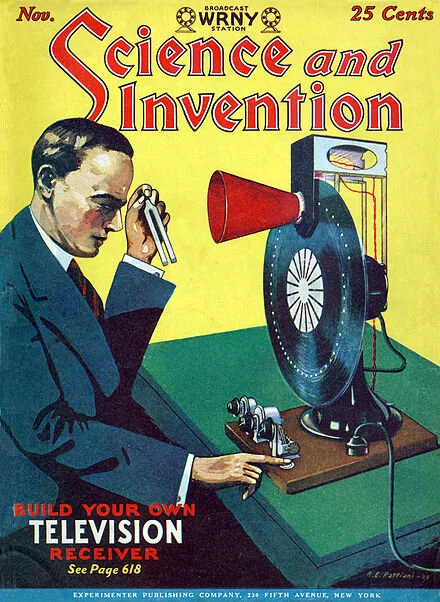
Magazine cover in 1928, when radio was becoming very big but inventors were already thinking ahout television.
WEST WARWICK, R.I.
Simple advice to innovators and policymakers: Don’t worry about collateral needs or they will distort your good growth and policy efforts.
If we look back, the development of the automobile had collateral effects beyond the ability of the auto pioneers to conceive. Yet there were those who would have restricted automobile development because they worried about the collateral effects, including that there wouldn’t be enough gasoline, oil would run out, cars were dangerous and fueling stations would explode.
The lesson wasn’t that those were minor concerns, but that they were giant and reasonable concerns that didn’t take into account that there would be as much creativity in solving those problems as there was in creating the primary product in the first place.
If the Wright brothers had worried about how we would keep aircraft from colliding with each other, well, we would have more trains and passenger ships.
The message is that innovation begets innovation. Invent one thing and then invest in something else to support it.
Yet there are reactionary forces at work in the creative arena all the time.
To continue with the automobile example, there are naysayers to the electric car everywhere. Sometimes they are driven by economics, but often they are just worried about great change. I can hardly pass a day without reading alarmist pieces about the disposal of batteries, a possible shortage of lithium from friendly suppliers, or that there won’t be enough charging points.
To all that, I say piffle.
History tells us that these seeming problems will be solved by the same inventiveness that has brought us to this time, when we are seeing a switch from the internal combustion engine -- faithful servant though it has been -- to electricity.
The danger is rigidity.
Rigidity is the seldom-diagnosed inhibitor of good science, good engineering and good policy. Rigidity in policy, or even just in belief, restricts and distorts.
A rigid belief is that nuclear waste is a huge problem. I would submit that it is less of a problem than many other wastes we are leaving to future generations. Rigid concerns and rigidly wrong radiation standards led the electric utilities to turn to coal, and now to wind and solar to move away from coal and its successor, natural gas.
Medicine is beset by rigidities and it always has been, from excessive use of bleeding therapy to surgeons who believed it was ungentlemanly to wash their hands. Those who suffer from less common diseases -- Myalgic Encephalomyelitis, also known as Chronic Fatigue Syndrome, is one -- are hurt by medical profession rigidities. The doctors try to fit disease into what they know and treat patients with known but inappropriate therapies.
Even such great innovators as Henry Ford weren’t without their crippling rigidities. Henry Ford was opposed to 6-cylinder engines and wanted all cars to be black.
Political rigidities are perhaps the most pernicious. I would suggest that the fear of the bogeyman of socialism has prevented America from developing a sensible health-care system — one that is less expensive and has better results. It doesn’t have to be modeled on Britain’s National Health Service, but it could borrow from Germany or The Netherlands, where the health system is universal but provided by private insurance. Ditch the rigidity and start fixing the patient -- in this case, the whole system.
Our educational system is plagued with rigidities. At the lower end, the public schools, children aren’t getting the basics they need to function in our society. At the high end, the universities, there is a new kind of aristocracy where the favored faculty are coddled, shielded and underproductive, while the cost for students is prohibitive.
Our most productive, most gifted graduates are compelled to align their careers with jobs that will pay enough to free them from the debt burden we start them in life with. This might cause a bright student to go into computer science when he or she longed to study astronomy, certainly a less well-paid future.
Rigidities kept women from seeking new roles and responsibilities, and from seeking their own personal and professional identities rather than have them defined by the outside, male-dominated society. Homemaking, yes; corporate management, no.
Rigid doctrine is always at work and is an unseen impediment to future innovation in science, social structure and, above all, in politics Watch for it.
Llewellyn King is executive producer and host of White House Chronicle, on PBS. His email is llewellynking1@gmail.com and he’s based in Rhode Island and Washington, D.C.
Web site: whchronicle.com
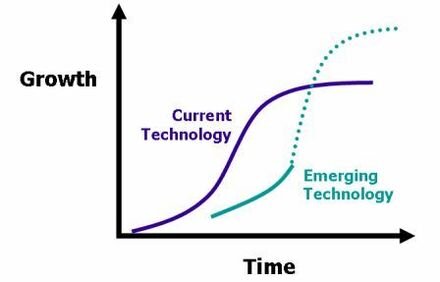
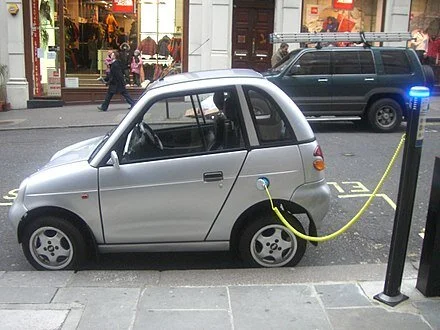
There’s long been pushback against the world-changing innovation of electric cars.
‘Find a route’

“Dust to Dust” (alcohol Inks and Ink on Yupo) by James C. Varnum, in his show “Worlds Apart,’’ at at Galatea Fine Art, Boston, in December.
He writes:
"Come explore ‘Worlds Apart,’’ where there are relationships and connections among and within the paintings. Explore the terrain created by the textures and mark making. The lines on the painted work emphasize a topography that I’ve imposed. These patterns, symbols and maps will be discovered as you embark on a journey into the paintings. Stay awhile. Travel around. Flow through. Find a route that takes you where you want to go."
See:
galateafineart.com
Mr. Varnum grew up in southern New Hampshire and his gallery is in Arlington, Mass.
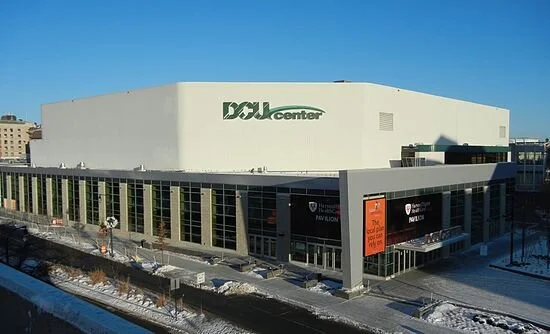
UMass Memorial plans Worcester field hospital for COVID-19 patients
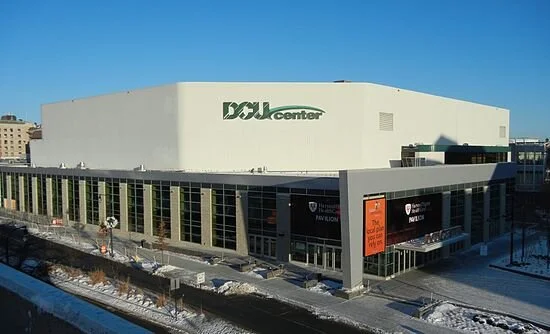
The DCU Center (originally Centrum) is an indoor arena and convention center complex in downtown Worcester.
Here’s The New England Council’s (newenglandcouncil.com) latest roundup of COVID-19 news in our region:
* ‘‘UMass Memorial Health Care has laid plans for a field hospital in the DCU Center in Worcester. (DCU stands for Digital Federal Credit Union.) The field hospital was decommissioned last spring; however, UMass Memorial has since been preparing to open the site once again in anticipation of another surge in COVID-19 related hospitalizations. Read more here.’’
* ‘‘ Mass General Brigham and Beth Israel Lahey Health are reporting that their hospitals are better prepared for a second COVID-19 wave. Hospital officials are in communication to balance COVID-19 patients across multiple sites in the Greater Boston area if the need arises. Read more here. ‘‘
* ”The American Hospital Association has produced a podcast providing useful information on patient wellness, preventing chronic diseases, and prioritizing quality and patient safety during the COVID-19 pandemic. Read more here. ‘‘
* ’’ (Boston-based) Harbor Health Services has partnered with instaED Paramedics to provide elders who participate in their Elder Service Plan (ESP) with at-home urgent care. The program will allow participants to receive treatments normally provided in the emergency room while safe at home. Read more here.’’
NED chats weekly on WADK's 'Talk of the Town'

On most Thursdays at 9:30 a.m., Robert Whitcomb from New England Diary and GoLocal24.com will chat with Bruce Newbury on Mr. Newbury’s Talk of the Town show on WADK-A.M. (Newport).
Listen to it via broadcast or wadk.com

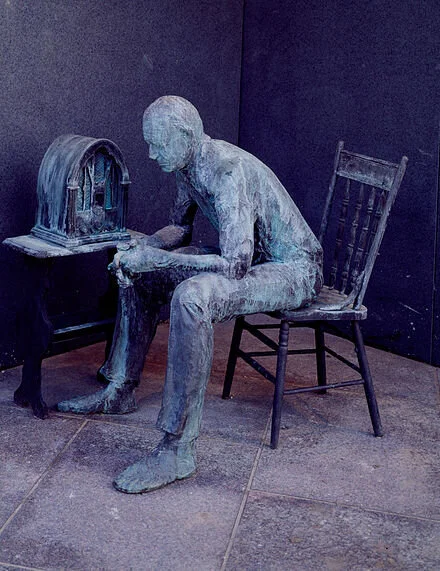
“The Fireside Chat,’’ bronze sculpture by George Segal in Room Two of the Franklin Delano Roosevelt Memorial, Washington, D.C.. FDR ‘s fireside chats via radio were very popular among millions of Americans.

Glorious radio from 1941.
Growing up 'underexposed'

“My parents were both from Vermont, very old-fashioned New England. We heated our house with wood my father chopped. My mom grew all of our food. We were very underexposed to everything.’’
— Geena Davis (born 1956), actress. Though her parents were native Vermonters, Ms. Davis grew up in Wareham, Mass., at the northern end of Buzzards Bay. So she may be exaggerating a tad.
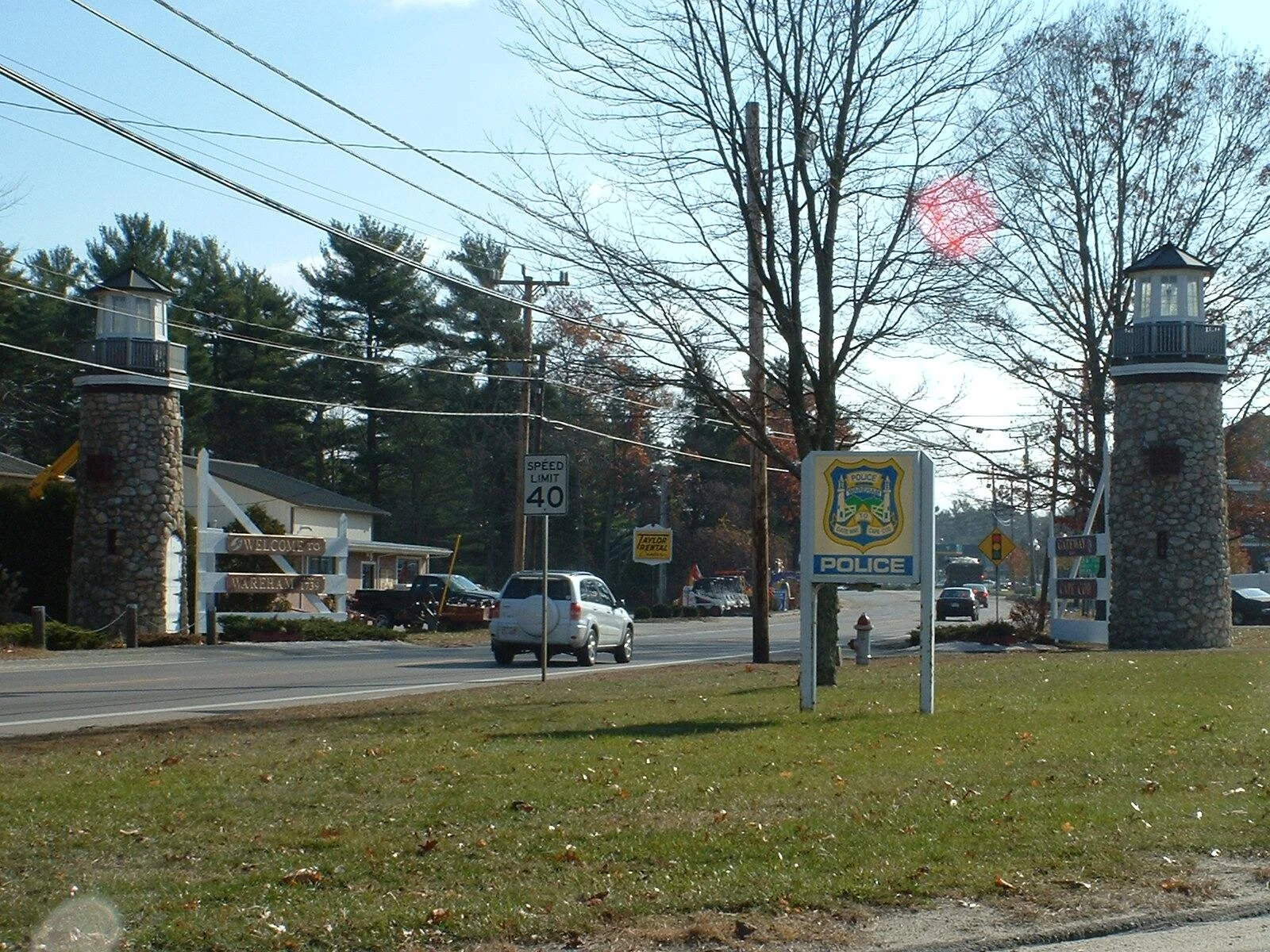
Entering Wareham, Mass., “The Gateway to Cape Cod.’’
The tie-loving ghost
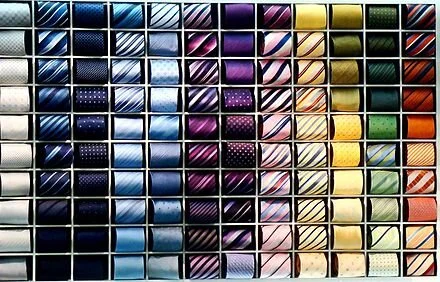
“Last night my color-blind chain-smoking father
who has been dead for fourteen years
stepped up out of a basement tie shop
downtown and did not recognize me.’’
— From “My Father’s Neckties,’’ by Maxine Kumin (1925-2014), a U.S. poet laureate and Pulitzer Prize-winner and a Warner, N.H., horse farmer.
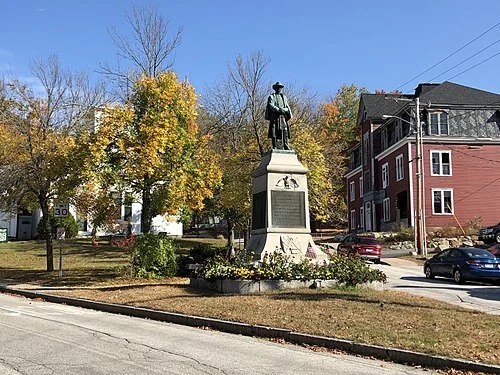
Statue of New Hampshire Gov. Walter Harriman in Ms. Kumin’s town of Warner, N.H.
The lure of the local
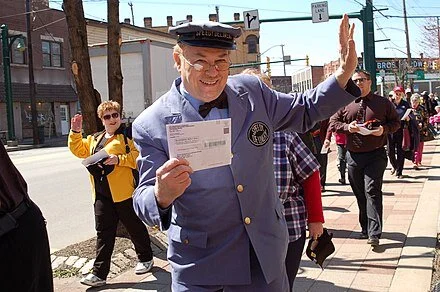
Mr. McFeely ("Speedy Delivery"), in Mister Rogers' Neighborhood, leads a group to the post office to hand deliver their completed 2010 Census forms during the "Count Me In In 2010 Rally" in Homestead, Penn.
From Robert Whitcomb’s “Digital Diary,’’ in GoLocal24.com
Then there are other local glimmers of light. An example: In the past couple of weeks, some of our neighbors in Providence organized outdoor parties to honor a couple of friendly (including to dogs) and very reliable mailmen in our neighborhood who recently retired. It was a joy to see such benign civic activities bringing people together.
But events like this are less likely today in our dispersed, suburban/exurban society, in which interactions are increasingly on screens. We make fewer opportunities to do things together in person.
Consider that we don’t shop together as much. I thought of this the other week as I strolled around the little downtown of the town where I spent much of my boyhood. Back then, everyone went to the village’s locally owned grocery store (accurately called “Central Market” and smelling of ground coffee) and the town’s only drugstore, also locally owned. You’d bump into friends and neighbors there. Indeed, you’d make friends there.
Both have long since closed, succeeded by chain drugstores and chain supermarkets dispersed around the area. While many villagers a half century ago would walk to the downtown almost daily to shop, now pretty much everyone drives to wind-swept store parking lots.
I wonder if, when the COVID-19 crisis fades, whether pent-up demand for real, in-person interactions might help revive small downtowns. And after all, malls and big-box stores at the periphery of the old downtowns had been closing at a good clip before the virus in the Amazon avalanche.
'Help the universe be cool'
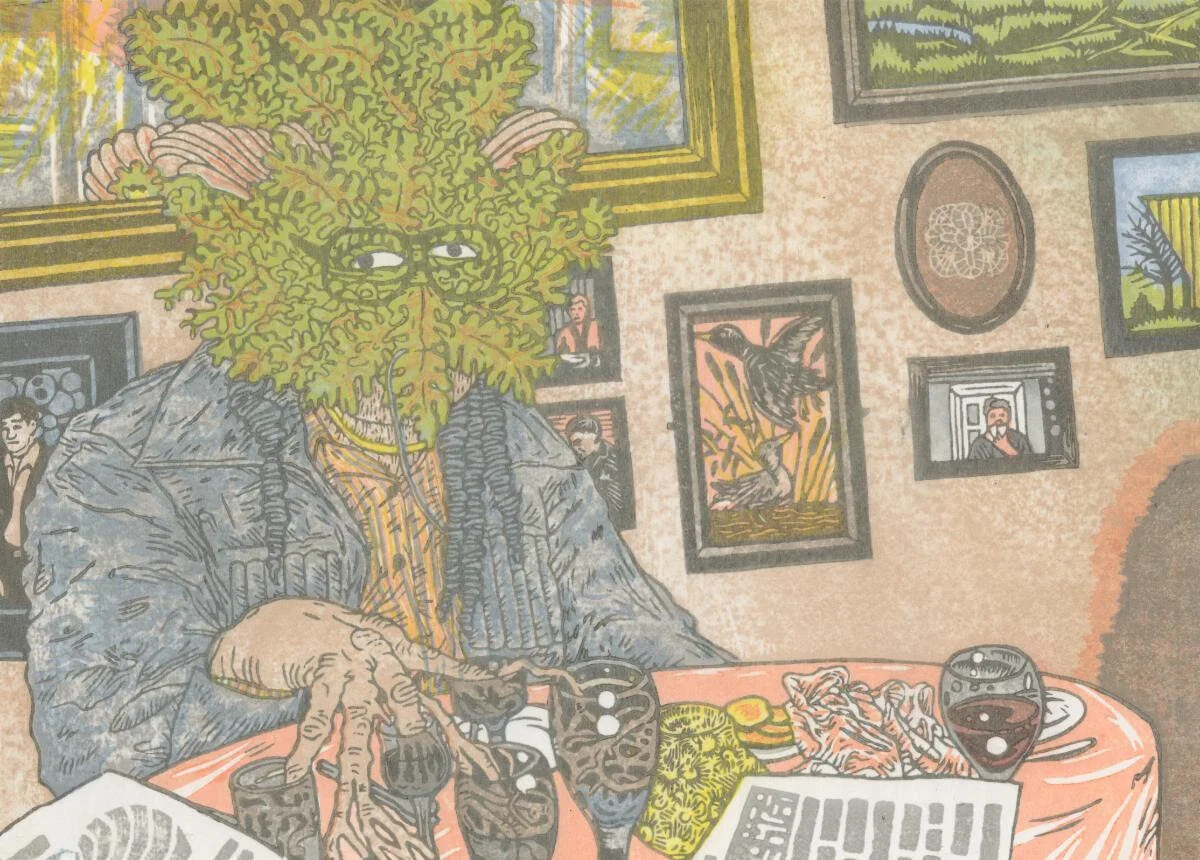
“Garden of Love’’ (woodblock print), by Patrick Casey, in his show at Galatea Fine Art, Boston, Dec. 4-Jan. 3.
He tells the gallery:
"Speculative narratives in woodcut explore who we are in the age of the Internet and imagine what we may become as the dawn of the post-human era approaches. I am interested in the surge of relationships with technology and the recession of face-to-face interaction. Like our changing notions of intimacy, privacy, and friendship, our ideas of identity, sentience, death and life may become irresolute due to advances in computation technology. Essential is a willing suspension of disbelief combined with the freedom to speculate and invent, as well as a desire to help the universe be cool."
See:
galateafineart.com

Gilda A. Barabino: Higher education must do more 'to bend the arc' by increasing diversity
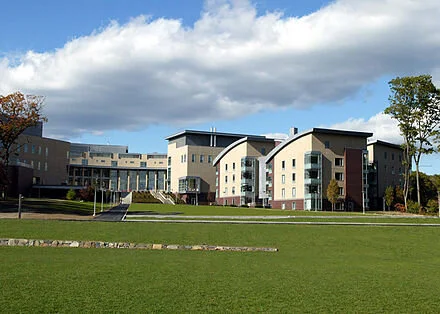
A view of Olin College of Engineering, in Needham, Mass. The dormitories are to the right; “The Oval ‘‘is straight ahead. Olin, whose president is the author of the essay below, is a very unusual undergraduate-only engineering school. Though it’s new — it was founded in 1997 — it’s already prestigious and has developed partnerships with such noted nearby institutions as Babson College, Wellesley College and Brandeis University.
From The New England Journal of Higher Education, a service of The New England Board of Higher Education (nebhe.org)
America is undergoing a reckoning as the suffering and setbacks caused by years of systemic racism is coming into full view. This heightened awareness around racism, sparked by death and injustice, must result in the development of real pathways to eliminate systemic racism, or it will be a lost opportunity for our generation to do our part in—to paraphrase Dr. Martin Luther King Jr.—bending the long “arc of the moral universe’’ toward justice. Higher education, like all other institutions in our society, must do its share of bending the arc.
My academic path, and that of other Black people and people of color, is riddled with instances of both egregious and subtle forms of racism. When this happens to Black people in our academies, it threatens the well being of all of us by limiting access to the creation of knowledge and innovation that flourishes when a diversity of minds is present. Drawing from my own experience as a scientist, professor and administrator, I believe there are a number of ways in which colleges and universities can advance and improve the lives of all our students—and especially students of color.
First, we must do more to increase diversity in our student body. This not only creates more opportunity for our students from underrepresented communities, but also increases the variation of perspective and lived experience that we know produces a richer learning and social experience for all students. We can achieve this by stepping up our recruiting efforts that target high schools serving Black, Latinx and Native American populations. To further support building diversity, we can look at new approaches to sustaining our financial aid practices in light of the economic pressures of the pandemic, restructuring current programs to yield more aid and pushing our alumni and corporate partners to increase scholarship and grant opportunities. Supporting organizations like the National Action Council for Minorities in Engineering, for example, broadens opportunities.
Creative and strategic team-building is another way to ensure success and positive experiences among our diverse students. At Olin College of Engineering, where I am president, part of how we transformed engineering instruction was by developing student-centered programs that rely on teams working on projects. While these teams are created to be self-sufficient in sharing and experiencing learning, our instructors intervene to ensure that inherent biases do not unknowingly arise in things like the assigning of tasks or how information is shared with professors.
As we work on the diversity in our student population, it is equally important that we make every effort to increase diversity in our faculty and staff as well. Black faculty account for a mere 6 percent of all full-time faculty in the academy. I know from personal experience that no matter how excellent a department’s faculty and support staff may be, it is hard for students of color to imagine a future in which they can succeed without the distinct modeling and mentorship made possible from professors and counselors who look like them and who have had many of the same life experiences. (As a new faculty member at Northeastern University in 1989, lacking mentors and role models of my own, but recognizing their importance, I served as a role model and mentor in the NEBHE Role Model Network for Underrepresented Students and as a consultant to NEBHE’s equity and diversity programs.)
One of our most important roles in the education and lives of our students is preparing them for, and connecting them to, the world at large and their path to success. Very often, students of color do not have the connections that lead to opportunities like internships and summer jobs in their field of interest. We can build bridges to successful careers by ensuring that our career centers are operating at the highest level possible and are able to establish connections with companies that are eager to help diverse students.
This process can be helped by making every effort to connect diverse students with the career center and promoting its value to them. As colleges and universities operating in New England, we are fortunate to be in a vibrant regional economy made up of established companies, innovative startups and leading health-care and research institutions. By developing stronger partnerships between our schools, regional businesses (many of which provide internships and other work opportunities) and the business community leadership, we can leverage these connections into career-focused opportunities on behalf of all of our students, which would be especially helpful in creating life-changing opportunities for our diverse students.
Even though higher-education institutions are facing significant operational and financial challenges created by the COVID-19 pandemic, we nonetheless must take action today to ensure that we are moving beyond words and demonstrations and taking real action to ensure that equity, diversity and opportunity exists and benefits young people of color—not only within our quads, residence halls and classrooms—but in the larger world as well.
Gilda A. Barabino is president of Olin College of Engineering and professor of biomedical and chemical engineering there.