
The lure of the local
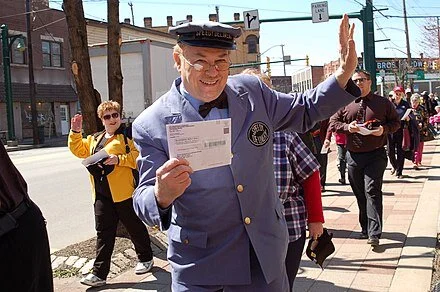
Mr. McFeely ("Speedy Delivery"), in Mister Rogers' Neighborhood, leads a group to the post office to hand deliver their completed 2010 Census forms during the "Count Me In In 2010 Rally" in Homestead, Penn.
From Robert Whitcomb’s “Digital Diary,’’ in GoLocal24.com
Then there are other local glimmers of light. An example: In the past couple of weeks, some of our neighbors in Providence organized outdoor parties to honor a couple of friendly (including to dogs) and very reliable mailmen in our neighborhood who recently retired. It was a joy to see such benign civic activities bringing people together.
But events like this are less likely today in our dispersed, suburban/exurban society, in which interactions are increasingly on screens. We make fewer opportunities to do things together in person.
Consider that we don’t shop together as much. I thought of this the other week as I strolled around the little downtown of the town where I spent much of my boyhood. Back then, everyone went to the village’s locally owned grocery store (accurately called “Central Market” and smelling of ground coffee) and the town’s only drugstore, also locally owned. You’d bump into friends and neighbors there. Indeed, you’d make friends there.
Both have long since closed, succeeded by chain drugstores and chain supermarkets dispersed around the area. While many villagers a half century ago would walk to the downtown almost daily to shop, now pretty much everyone drives to wind-swept store parking lots.
I wonder if, when the COVID-19 crisis fades, whether pent-up demand for real, in-person interactions might help revive small downtowns. And after all, malls and big-box stores at the periphery of the old downtowns had been closing at a good clip before the virus in the Amazon avalanche.
'Help the universe be cool'
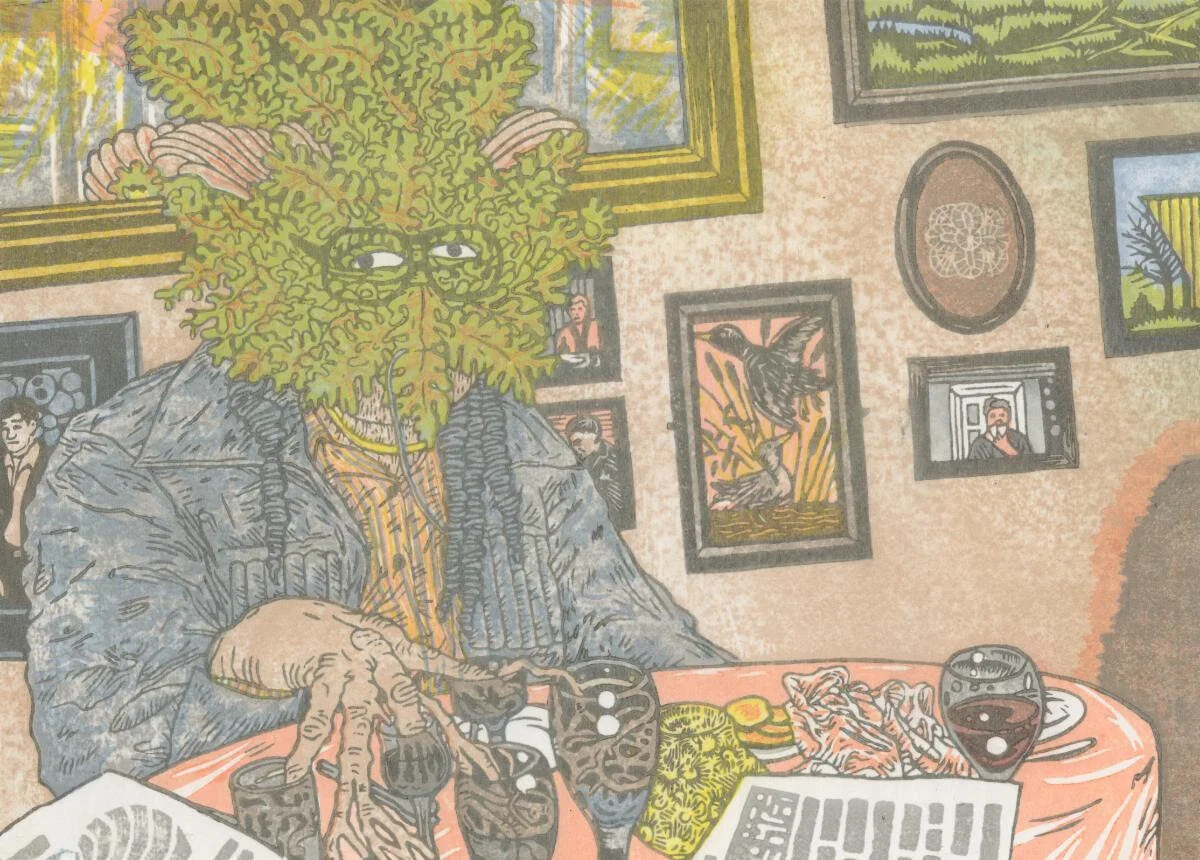
“Garden of Love’’ (woodblock print), by Patrick Casey, in his show at Galatea Fine Art, Boston, Dec. 4-Jan. 3.
He tells the gallery:
"Speculative narratives in woodcut explore who we are in the age of the Internet and imagine what we may become as the dawn of the post-human era approaches. I am interested in the surge of relationships with technology and the recession of face-to-face interaction. Like our changing notions of intimacy, privacy, and friendship, our ideas of identity, sentience, death and life may become irresolute due to advances in computation technology. Essential is a willing suspension of disbelief combined with the freedom to speculate and invent, as well as a desire to help the universe be cool."
See:
galateafineart.com

Gilda A. Barabino: Higher education must do more 'to bend the arc' by increasing diversity
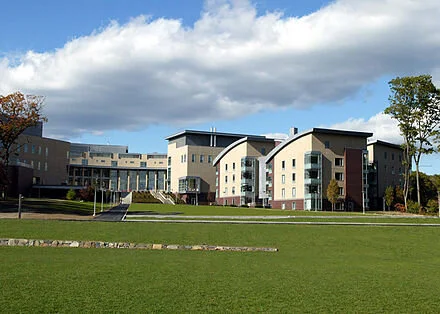
A view of Olin College of Engineering, in Needham, Mass. The dormitories are to the right; “The Oval ‘‘is straight ahead. Olin, whose president is the author of the essay below, is a very unusual undergraduate-only engineering school. Though it’s new — it was founded in 1997 — it’s already prestigious and has developed partnerships with such noted nearby institutions as Babson College, Wellesley College and Brandeis University.
From The New England Journal of Higher Education, a service of The New England Board of Higher Education (nebhe.org)
America is undergoing a reckoning as the suffering and setbacks caused by years of systemic racism is coming into full view. This heightened awareness around racism, sparked by death and injustice, must result in the development of real pathways to eliminate systemic racism, or it will be a lost opportunity for our generation to do our part in—to paraphrase Dr. Martin Luther King Jr.—bending the long “arc of the moral universe’’ toward justice. Higher education, like all other institutions in our society, must do its share of bending the arc.
My academic path, and that of other Black people and people of color, is riddled with instances of both egregious and subtle forms of racism. When this happens to Black people in our academies, it threatens the well being of all of us by limiting access to the creation of knowledge and innovation that flourishes when a diversity of minds is present. Drawing from my own experience as a scientist, professor and administrator, I believe there are a number of ways in which colleges and universities can advance and improve the lives of all our students—and especially students of color.
First, we must do more to increase diversity in our student body. This not only creates more opportunity for our students from underrepresented communities, but also increases the variation of perspective and lived experience that we know produces a richer learning and social experience for all students. We can achieve this by stepping up our recruiting efforts that target high schools serving Black, Latinx and Native American populations. To further support building diversity, we can look at new approaches to sustaining our financial aid practices in light of the economic pressures of the pandemic, restructuring current programs to yield more aid and pushing our alumni and corporate partners to increase scholarship and grant opportunities. Supporting organizations like the National Action Council for Minorities in Engineering, for example, broadens opportunities.
Creative and strategic team-building is another way to ensure success and positive experiences among our diverse students. At Olin College of Engineering, where I am president, part of how we transformed engineering instruction was by developing student-centered programs that rely on teams working on projects. While these teams are created to be self-sufficient in sharing and experiencing learning, our instructors intervene to ensure that inherent biases do not unknowingly arise in things like the assigning of tasks or how information is shared with professors.
As we work on the diversity in our student population, it is equally important that we make every effort to increase diversity in our faculty and staff as well. Black faculty account for a mere 6 percent of all full-time faculty in the academy. I know from personal experience that no matter how excellent a department’s faculty and support staff may be, it is hard for students of color to imagine a future in which they can succeed without the distinct modeling and mentorship made possible from professors and counselors who look like them and who have had many of the same life experiences. (As a new faculty member at Northeastern University in 1989, lacking mentors and role models of my own, but recognizing their importance, I served as a role model and mentor in the NEBHE Role Model Network for Underrepresented Students and as a consultant to NEBHE’s equity and diversity programs.)
One of our most important roles in the education and lives of our students is preparing them for, and connecting them to, the world at large and their path to success. Very often, students of color do not have the connections that lead to opportunities like internships and summer jobs in their field of interest. We can build bridges to successful careers by ensuring that our career centers are operating at the highest level possible and are able to establish connections with companies that are eager to help diverse students.
This process can be helped by making every effort to connect diverse students with the career center and promoting its value to them. As colleges and universities operating in New England, we are fortunate to be in a vibrant regional economy made up of established companies, innovative startups and leading health-care and research institutions. By developing stronger partnerships between our schools, regional businesses (many of which provide internships and other work opportunities) and the business community leadership, we can leverage these connections into career-focused opportunities on behalf of all of our students, which would be especially helpful in creating life-changing opportunities for our diverse students.
Even though higher-education institutions are facing significant operational and financial challenges created by the COVID-19 pandemic, we nonetheless must take action today to ensure that we are moving beyond words and demonstrations and taking real action to ensure that equity, diversity and opportunity exists and benefits young people of color—not only within our quads, residence halls and classrooms—but in the larger world as well.
Gilda A. Barabino is president of Olin College of Engineering and professor of biomedical and chemical engineering there.

Paul Armentano: Across America, marijuana was a big winner on Election Day

From OtherWords.org
On many issues, our country is deeply divided. But when it comes to loosening the longstanding prohibition on cannabis, most Americans agree.
On Election Day, voters in states across the country approved a series of ballot proposals legalizing the use and distribution of marijuana for either medical or adult-use purposes.
Their voices were unmistakable and emphatic. Majorities of Americans decided in favor of every marijuana-related proposition placed before them — a clean sweep — and they did so by record margins.
Voters approved the legalization of medical cannabis in two states, Mississippi and South Dakota.
In Mississippi, voters chose between two dueling initiatives. Ultimately, they favored a measure placed on the ballot by patient advocates and rejected a more restrictive alternative measure placed on the ballot by state lawmakers. In one of many lopsided results on Election Day, 74 percent of voters chose the more liberal of the two measures.
Voters legalized the possession of marijuana by adults in Arizona, Montana, New Jersey and South Dakota.
The measures in Arizona, Montana, and South Dakota each permit adults to possess and cultivate marijuana for personal use and establish a regulated retail market.
In New Jersey, voters decided on a public ballot question. That means that Garden State lawmakers must now amend state law to comport it with the voters’ decision.
Voters’ actions on Election Day were an unequivocal rebuke to the longstanding policy of federal marijuana prohibition. They are an indication that marijuana legalization is far from a fringe issue, but one that is now embraced by mainstream America.
In New Jersey, 67 percent of voters chose legalization. In Arizona, legalization passed by a 20 percent margin, just four years after voters had rejected a similar ballot question. Fifty-seven percent of Montanans backed legalization, as did 54 percent of South Dakotans.
Voters did so despite opposition from many of their public officials. Republican South Dakota Gov. Kristi Noem appeared in television ads opposing both state initiative measures. Montana U.S. Atty. Kurt Alme issued a white paper opining that legalization would have “serious ramifications” for “public safety and health.”
These attacks, however, failed to gain traction.
As in 2016, when voters in deep red states like Arkansas and North Dakota joined voters in deep blue states like California and Massachusetts to reform their cannabis laws, these 2020 results once again affirm that marijuana legalization is a uniquely popular issue with voters of all political persuasions.
Indeed, majorities of Democrats, independents, and Republicans consistently endorse legalization in national polls.
The results also continue a multi-decade long trend of marijuana legalization advocates achieving success at the ballot box. Since 1996, voters have decided affirmatively on 35 separate ballot measures legalizing cannabis (22 legalizing medical marijuana and 13 legalizing adult use).
Despite this public consensus, elected officials have far too often remained unresponsive to the legalization issue. This dereliction of representation has forced advocacy groups to directly place marijuana-related ballot questions before the voters.
The success of these initiatives proves definitively that marijuana legalization is not exclusively a blue state issue, but an issue that is supported by a majority of all Americans — regardless of party politics. Once these latest laws are implemented, one out of every three Americans will reside in a jurisdiction where the use of marijuana by adults is legal under state law.
For over two decades, the public has spoken loudly and clearly. They favor ending the failed policy of marijuana prohibition and replacing it with a policy of legalization, regulation, taxation, and public education.
Elected officials — at both the state and federal level — ought to be listening. Perhaps even more importantly, they ought to be acting.
Paul Armentano is the deputy director of the National Organization for the Reform of Marijuana Laws (NORML) and the Science Faculty Chair at Oaksterdam University, in Oakland, Calif.
Could fish have built it?
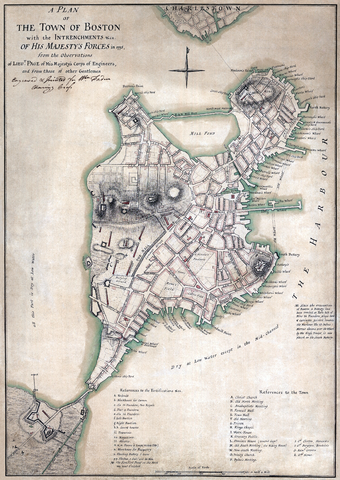
Map of Boston in 1775, when the city was almost an island.
“This is a city that has been created by man, by humans. When the English got here, most of it was underwater…Boston’s a city that people have built… and I find it exciting to see that continuing to happen.’’
— Frederick P. SalvuccI (born 1940) (civil engineer, former Massachusetts transportation director and a prime mover in the “Big Dig’’ project and MBTA expansion.
The shadow knows

— Photo by Etan J. Tal
“A wind passed over my mind,
insidious and cold.
It is a thought, I thought,
but it was only its shadow.’’
— From “The Image-Maker,’’ by Stanley Kunitz (1905-2006), a native of Worcester who served as U.S. poet laureate, he divided much of his time between New York City and Provincetown.

David Warsh: In the press, a dose of vicarious shock
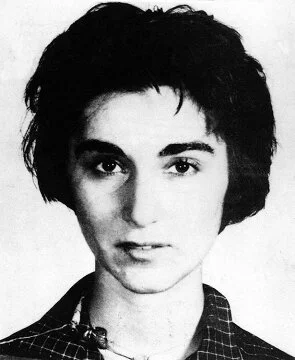
“Kitty” Genovese
SOMERVILLE, Mass.
It was a famous story from The New York Times in 1964.
37 Who Saw Murder Didn’t Call the Police; Apathy at Stabbing of Queens Woman Shocks Inspector
by Martin Gansberg
For more than half an hour 38 respectable, law‐abiding citizens in Queens watched a killer stalk and stab a woman in three separate attacks in Kew Gardens.
Twice the sound of their voices and the sudden glow of their bedroom lights interrupted him and frightened him off. Each time he returned, sought her out and stabbed her again. Not one person telephoned the police during the assault; one witness called after the woman was dead.
That was two weeks ago today. But Assistant Chief Inspector Frederick M. Lussen, in charge of the borough’s detectives and a veteran of 25 years of homicide investigations, is still shocked.
He can give a matter‐of‐fact recitation of many murders. But the Kew Gardens slaying baffles him — not because it is a murder, but because the “good people” failed to call the police.
The story of the killing of Catherine (“Kitty”) Genovese was widely read at the time and admired for decades. It made the reputation of A. M. Rosenthal, the metropolitan editor who caused it to be written and who argued its way onto the front page. Rosenthal’s own gloss on the story, “Thirty-Eight Witnesses,’’ was published within months. He rose rapidly at The Times, to be executive editor in 1977-1987, and for a dozen years after that, a columnist.
It turns out there was a backstory, too. In his book, Rosenthal disclosed how he himself had got the story, from Michael J. Murphy, theNew York City police commissioner, over lunch at Emil’s Restaurant and Bar on Park Row, near City Hall.
“Brother,” the commissioner said, “that Queens story is one for the books.”
Thirty-eight people, the commissioner said, had watched a woman being killed in the “Queens story,” and not one of them had called the police to save her life.
“Thirty-eight?” I asked.
And he said, “Yes, 38. I’ve been in this business a long time, but this beats everything.”
I experienced then that most familiar of newspapermen’s reaction — vicarious shock. This is a kind of professional detachment that is the essence of the trade — the realization that what you are seeing or hearing will startle a reader.
Some readers, including a television police reporter, Danny Meehan, doubted details of the story as soon as it appeared. Over the years various embellishments, inconsistencies, and inaccuracies came to light. In 2004 The Times took account of them. They did not change the essential fact at the heart of the story — a woman had been murdered in the middle of the night in a populous neighborhood, steps from her door. When her killer, Winston Moseley, died in prison, at 82, Robert McFadden summed up in a Times obituary:
The article grossly exaggerated the number of witnesses and what they had perceived. None saw the attack in its entirety. Only a few had glimpsed parts of it, or recognized the cries for help. Many thought they had heard lovers or drunks quarreling. There were two attacks, not three. And afterward, two people did call the police. A 70-year-old woman ventured out and cradled the dying victim in her arms until they arrived. Ms. Genovese died on the way to a hospital.
I thought of the Genovese story because something of the sort happened in my neighborhood earlier this month — but in reverse. On Election Day, a 40-year-old woman was hit and killed in a crosswalk midday by a pickup truck.
Leah Zallman, 40, the mother of two young sons, was on her way home after voting at lunch time. She was the director of research at the Institute for Community Health, a primary-care physician at the East Cambridge Care Center, and an assistant professor of medicine at the Harvard Medical School
Talk about local apathy, at least in the public realm! Television stations reported the accident the day it happened. After that the news was only slowly shared, without details, first by the public school’s parent association, then on community Google groups. The city took a week to acknowledge on its Web site that it had happened. It was 10 days before The Boston Globe took account of it, and then only with a touching remembrance by a columnist free of any details of the accident itself, not even those that had been posted by the city:
An initial investigation suggests that the operator of the vehicle, an employee of the City of Somerville who was on duty at the time but operating their personal vehicle, had been attempting to take a left turn onto Kidder Avenue from College Avenue. They remained on the scene following the crash. Pending the results of an investigation [by the Middlesex District Attorney’s Office and Somerville Police], the employee has been placed on paid administrative leave…. No charges have been filed at this time.
We’ll learn more eventually from the Middlesex County investigation, including the identity of the driver, reported to be a Somerville building inspector, and the circumstances of his day. I wish that there were some local hero, a Rosenthal type, who could document how Zallman’s death could remain on the down-low for more than a week. (City councilors argued the details of the accident with the mayor and his Mobility Department behind the scenes.) Last year, when two women were hit after dark in a crosswalk, one of them killed, by a hit-and run driver less than mile away, it was big news. This time there were no flowers at the site, no other reminder of what happened at the busy crossing, no public outcry, no political outrage, only a lingering sense of shock.
It’s a commonplace that the invention of online search advertising has brought most metropolitan newspapers to their knees. In October the once-mighty Boston Globe reported print circulation of 84,000 daily and 123,000 Sunday, down from 530,000 and 810,000 respectively 20 years ago. The national papers have managed to hold their own so far. That small cities like Somerville, those of 100,000 people or so, haven’t found a way to rejuvenate the provision of local news bodes ill for their public life. With local journalism withering on the vine, we don’t have publicity, hence public outrage, over a traffic death that shouldn’t have happened. We don’t have accountability, either, sufficient to deter careless driving. Pickup trucks, in particular, often seem to confer a dangerous sense of privilege upon their drivers.
To be clear, I don’t think that what Abe Rosenthal did in 1964 was wrong, or wicked, in any sense, though in retrospect its self-aggrandizing subtext is hard to miss. Call it inflated-for-the-good-of-us-all journalism, the presentation of facts spiced with a special sauce of indignation for the purpose of making a point.
The Times had reported Genovese’s murder as an unvarnished matter of fact, when it occurred, in a short item buried deep inside the paper a couple of weeks before. To return to the story with additional facts — police commanders’ indignation – was in line with the performance of the newspaper’s duty to offer occasional moral instruction along with the news. But the embellishment went too far, and tarnished The Times’s most valuable asset, readers’ trust.
Newspapers have traditionally tried to rile up readers in a good cause in the three centuries they have been democracies’ dominant form of public communication. For a wry and affectionate look behind the scenes of inflated-for-the-good-of-us-all journalism at The Times in executive editor Rosenthal’s heyday, find a used copy of I Shouldn’t Be Telling You This, by Mary Breasted. Or rent a copy of Ron Howard’s brilliant 1994 film The Paper.
It seems the case that The Times has practiced more indignation-fueled news recently than usual – its 1619 Project, for example, provoked columnist Bret Stephens’s stinging dissent. The roots are the same as those Rosenthal identified in 1964: the experience of shock in the face of the facts. Rosenthal’s proud claim as editor was that “he kept the paper straight.” Think that is easy in times like these? Occasional large helpings of indignation are better than no news at all.
David Warsh, a veteran columnist and an economic historian, is proprietor of Somerville-based economicprincipals.com, where this essay first ran.
Foie gras on the left

"Our First Harvest in Paris" by Somerville, Mass.-based Alexandra Rozenman, at Fountain Street Fine Art, Boston, through Nov. 30.
Stronger than erosion

Long Wharf, in Boston, in the 19th century.
“Wharves with their warehouses sagging
On wooden slats, windows steamed up
And beaded with rain – it’s wonder
Weather doesn’t wash them away….’’
---From “Here,’’ by Betsy Sholl (born 1945(), a former poet laureate of Maine, where she lives in Portland
Make 'em smile!
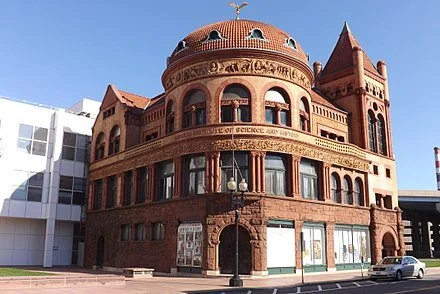
The Barnum Museum, in Bridgeport, which has loads of stuff about the impresario’s career and about Bridgeport.
“The noblest art is that of making others happy.’’
— P.T. Barnum (1810-1891), the entertainment mogul best known as the creator of the the modern American circus, in Struggles and Triumphs. A native of Bethel, Conn., he is most associated with Bridgeport, the once world-famous industrial powerhouse that was his base of operations and where he served as mayor in 1975-1876.
The phrase "There's a sucker born every minute" is a phrase closely associated with Mr. Barnum but there’s no evidence he actually said it.
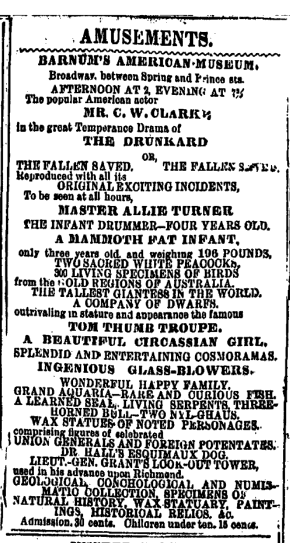
1866 newspaper advertisement for Barnum's American Museum, on Ann Street in Manhattan.
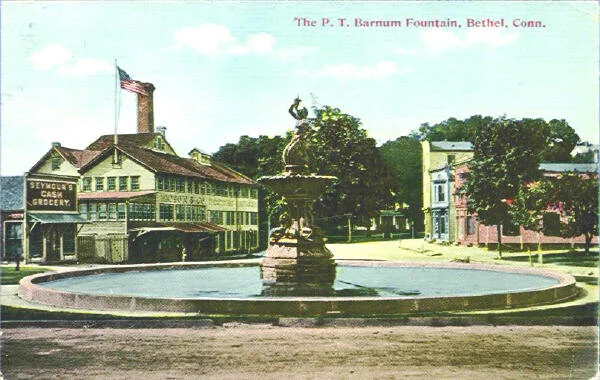
Downtown Bethel in 1914.
Celebrating Snow Farm

“Raku Vessel, ‘‘ by Bob Green in the show ,“Makers and Mentors: The Art and Life of Snow Farm—The New England Craft School,” opening Nov. 28, at the Fuller Craft Museum, in Brockton, Mass., celebrates how contemporary craft has been affected by Snow Farm, the famed 50-acre craft school in the western Massachusetts town of Williamsburg, which used to be a minor factory town.
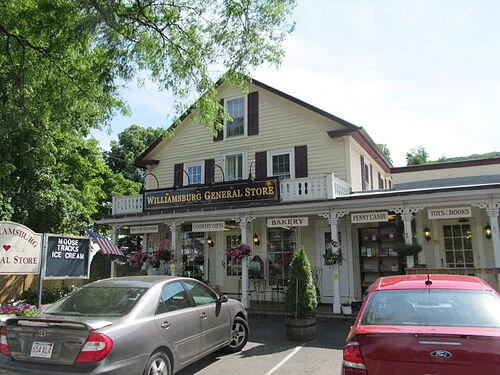
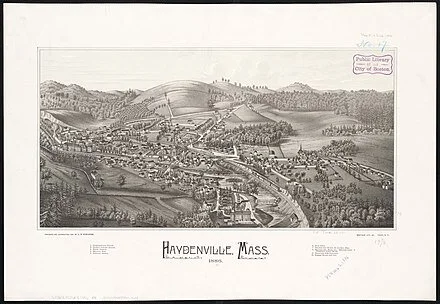
1886 print of the Haydenville section of Williamsburg by L.R Burleigh with listing of landmarks depicted.
The biggest event in Williamsburg’s history — this from Wikipedia:
“On the morning of May 16, 1874, a flood along Williamsburg's Mill River claimed 139 lives and left nearly 800 victims homeless throughout Hampshire County. The deluge occurred when the Williamsburg Reservoir Dam unexpectedly burst, sending a twenty-foot wall of water surging into the valley below. Every town and village along the river's normally placid flow was soon devastated by the great rush of water. Much of the flood's force was abated in Northampton, at the Mill River's confluence with the Connecticut River. Located over twelve miles from the breached dam in Williamsburg, Northampton was the last town to experience the flood's fury, with four additional victims swept away.’’

Chris Powell: Too much voting by mail risks the integrity of elections

A vote-by-mail ballot is put into an election drop box.
MANCHESTER, Conn.
After warning that the U.S. Postal Service might sabotage the vast increase in voting by mail in the Nov. 3 election, leading Democrats in Connecticut are renewing their calls for allowing everyone to vote by mail just for personal convenience, without having to claim illness, infirmity, travel or religious reasons. A state constitutional amendment would be required for the change.
Connecticut Secretary of the State Denise Merrill says that mass voting by mail {encouraged by the COVID-19 pandemic} worked well in Connecticut and should be made permanent. U.S. Senators Richard Blumenthal and Chris Murphy agree.
Maybe mass voting by mail worked well enough in Connecticut for an election in which no major races were close, but there were many mistakes in preparing the extra absentee ballots. While these mistakes were corrected in time, the more handling of ballots -- the more intermediaries between voters and the casting of their votes -- the more mistakes there will be.
The more opportunity for fraud, too. There is a reason that elections long have been based on the personal appearance of voters at the polls -- election integrity. Identities are easily confirmed, ballots never leave the polling place, and the whole process is transparent.
Not so with voting by mail. As seen in states whose presidential tallies are painfully close, mailed ballots raise issues of timeliness. They require much more work to tabulate. Delaying tabulation, they raise suspicion of tampering and indeed invite tampering and forgery when it is seen how many more votes might change the outcome.
President Trump offered no evidence when he went on national television two days after the election to accuse the tabulation in Pennsylvania and Georgia of fraud and thereby impugn the whole election. But forgery with late votes does happen. This was notoriously the mechanism by which Lyndon B. Johnson won the Democratic nomination for U.S. senator from Texas in 1948, giving him a path to the presidency.
And while Trump offered no evidence of election fraud, across America there were many complaints about what were at least anomalies in vote counting. Some were innocent and quickly corrected. Most have not yet been investigated and so cannot be judged at a distance, but all serious complaints should and likely will be investigated in the usual procedures.
The closer the contest, the more incentive for fraud, and it would be miraculous if there was no fraud anywhere in this election. An election in which margins of victory are comfortable to overwhelming, as they were in Connecticut, and where no one bothers to look for fraud does not vindicate massive voting by mail.
Indeed, election fraud gets easier in heavily populated jurisdictions dominated by one political party, where fraud is harder to detect. Connecticut has several cities that sometimes can't report their votes within 24 hours and that often have suffered political corruption. They always report huge Democratic pluralities.
The virus epidemic may have been good enough reason for the expansion of mail voting this year, but quite apart from election integrity, there remains a strong case for in-person voting: the demonstration of civic duty and community. The phrase "mail it in" long has conveyed indifference to an obligation, even as voting is cause to celebrate and give thanks for democracy and all those who make it work.
xxx
MORE ON BIG MONEY: Elaboration is needed about Connecticut Democratic U.S. Rep. Rosa DeLauro's denunciation of big money in politics the other day, after she had to wage her first vigorous campaign in 30 years against a self-funding Republican multimillionaire.
While she resented her opponent's big money, DeLauro isn't bothered by the tens of millions of dollars donated to the campaign of her party's presidential candidate, Joe Biden, by Wall Street interests, which usually favor the Republican candidate but didn't this year. Nor does DeLauro resent the $100 million spent in support of Biden in Florida, Ohio and Texas by billionaire Michael Bloomberg.
Sometimes an oppressive establishment can be effectively challenged only with the help of rich angels, as when the eccentric philanthropist Stewart R. Mott financed Eugene McCarthy's insurgent anti-war presidential campaign in 1968.
DeLauro may not grasp these ironies because, after 30 years in Congress, she is part of the establishment now.
Chris Powell is a columnist for the Journal Inquirer, in Manchester, Conn.
Grace Kelly: Getting more Black and Brown kids out into nature
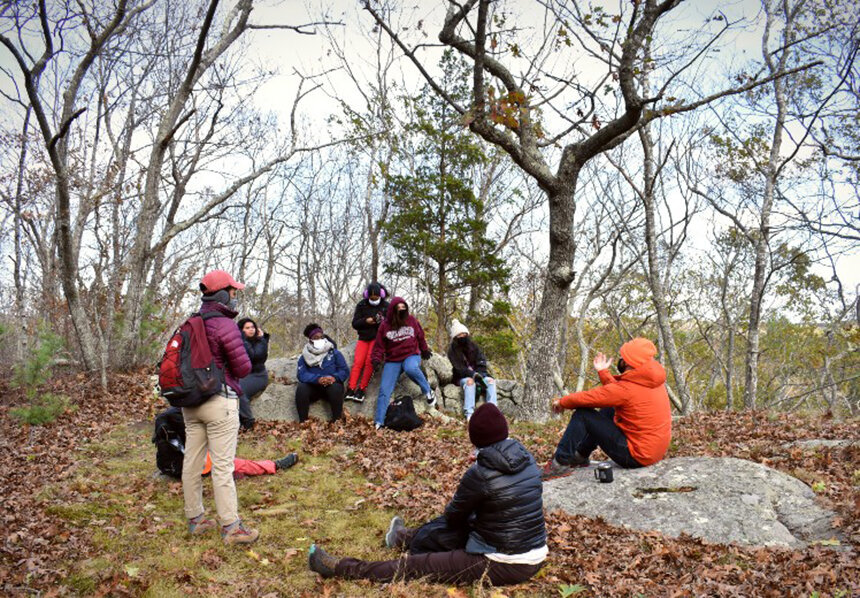
A meeting in the woods of Exeter, R.I., of students in the Movement Education Outdoors program.
— Photo by Grace Kelly for ecoRI News
EXETER, R.I.
A group of five 10th-graders tromp through a wooded path at the Canonicus Camp & Conference Center on Exeter Road. They talk about school, the platform Doc Martens they would love to have, and how New York Congresswoman Alexandria Ocasio-Cortez is great but also, it’s probably better not to idolize politicians. {Canonicus was a 17th Century Narragansett Indian chief.}
Their guide on this excursion is Joann “Jo” Ayuso, founder of Movement Education Outdoors (MEO), an organization with a mission to provide outdoor experiences for community-based organizations serving Black, Indigenous, People of Color (BIPOC) youth. She shows them nature.
“The outdoors is sacred, and yes, this land,” she said, and spreads her arms around her, gesturing at the grass and trees, “has a history of colonization, but I want us to feel welcome here. I want to invite you to make your own memories today, to decolonize this space. I introduce you to these spaces so you can own them and feel connected to the land.”
According to the National Health Foundation, while people of color make up nearly 40 percent of the population, 70 percent of the people who visit national forests, parks, and wildlife refuges are White. A mere 7 percent of national park visitors are Black.
There are many factors at play when it comes to communities of color not having the same opportunities to experience the outdoors. Ayuso said:
“I think it’s very important for people to know, that, for example, when your mom is a single parent, working three jobs, doesn’t have a car, how is she going to have time to take her kids hiking? And, unfortunately, bus lines don’t take you to any of the green space Rhode Island has to offer.”
There’s also the fact that outdoor gear is expensive, with basic equipment such as lightweight coats, hiking boots, and backpacks costing a premium.
“Equipment is always a barrier for young, low-income and urban youth,” Ayuso said. “Even having the proper layering for hiking in the fall or winter, that’s expensive.”
By starting MEO in 2018, Ayuso hopes to change this paradigm.
Ayuso’s journey from being born into poverty to being an outdoor educator for BIPOC youth started in the forests of the southern wild.
“One of my very first experiences with the outdoors was in the military,” she said. Ayuso entered the military after graduating from Joseph P. Keefe Technical High School, in Framingham, Mass., prompted in part by her brother who had also joined, and by the desire to work her way up in the world. While military service didn’t prove to be her dream, it was how she discovered her love of nature.
“One of the things I loved about the military was being outdoors, just hiking, having my rucksack on and just hiking for hours,” said Ayuso, who served in the Army in 1989-1996. “To this day, I can still remember smelling the eucalyptus trees in the South, and also smelling the pine trees when we would do our training early in the morning. It was just something that really helped me pass time, and that was one of the most memorable times of me experiencing the outdoors.”
Ayuso would come back to that moment years later, and it would be part of a series of experiences that would inspire her to create an organization to bring Black and Brown youth into nature.
In the years that filled her life between the military and MEO, Ayuso built a personal-training business in Wellesley, Mass., and left it, started a new life in Providence, learned she loved working with young people, began practicing mindfulness, and discovered her ancestral roots in Puerto Rico and West Africa.
But it was when she was hit by a car two years ago outside her Providence home and spent six months healing that she started to unravel what she wanted to do with her life.
“I had six weeks of recovery, and in those six weeks I was like, ‘I’ve gotta do something different,’” said the 48-year-old. “My partner and I just got to talking about what is it that you want to do for the rest of your life? What is it that you think you will enjoy?”
Her partner asked her to reflect on the past 15 years and think about the things she really loved.
“And I thought, ‘Damn, I really loved that time in the military when I was hiking. That was awesome.’ I felt like that was healing, that kept my mind kind of straight,” Ayuso recalled. “So my hiking experience in the military, the mindfulness training that I’ve had in the last 20 years, the Native and Black history I learned for myself, and seeing the environmental justice and climate change on Black and Brown bodies, that became the four pillars of Movement Education Outdoors.”
MEO partners with local schools such as Nowell Leadership Academy, in Providence, and such nonprofits as Riverzedge Arts, in Woonsocket, to bring underserved youth into the outdoors and to help them reflect on who they are and where they come from.
And on this chilly fall day in Exeter, the students are loving it.
As they walk through the forest of pine, oak and maple, they notice the acorns on the ground, the oak apple wasp galls tucked between fallen leaves, and learn about how beavers change the landscape to suit their needs.
They pause for a guided meditation at a bridge overlooking a pond and breathe in the cold air, watching as their breath billows around them when they exhale. They continue through the woods and stop at a rock wall to discuss the farming history of this land.
“So when the glaciers melted, they left lots of rocks here,” said a MEO intern. “And the colonizers used them to make rocks walls.”
Ayuso noted that these rock walls delineated farming property, and that between 1636 and 1750, South County farmers turned from enslaving Indigenous people to enslaving thousands of Blacks from Africa to make their farms into plantations comparable to those in the South.
The group continues onward and upward, heading to a steep incline and making their way to an overlook known as “The Pinnacle.”
The students pause at a large boulder, resting weary Converse-clad feet and shooting the breeze. Ayuso then asks them what made them want to be outside, how they came to be here. One said:
“I was a city person, but when I went on my first camping experience, it opened my eyes. I was so against it at first, but when I go on these trips, I’m so happy.”
Another student reminisced about her first time camping and how waking up outside was so special.
“The last time we went camping, my friend and I woke up at 5 a.m., and waking up to the morning dew, the smell of morning dew … it was so nice,” she said.
“It’s a break from the city, life with social media, everything feeling so controlled … when you’re outdoors, you’re on your own,” another student added.
Ayuso smiled as the group continued their discussion about life, nature, and what the future holds.
“Ya’ll are gonna make me cry,” Ayuso said, laughing. “You’re making me feel all the feels. I’m blessed to be here, to be able to do this.”
Grace Kelly is a journalist for ecoRI News.
Liz Szabo: Some COVID-19 patients hit by friendly fire
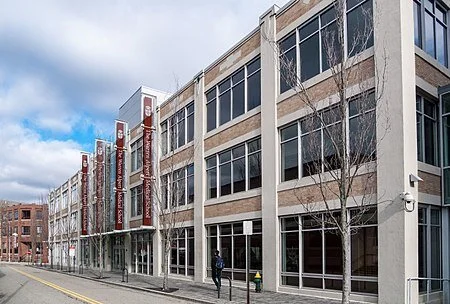
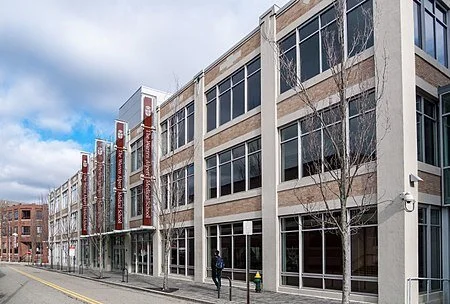
The Warren Alpert Medical School at Brown University, in Providence’s old “Jewelry District.’’ Most people still just call it the Brown Medical School.
Dr. Megan Ranney, of Brown University, has learned a lot about COVID-19 since she began treating patients with the disease in the emergency department in February.
But there’s one question that she still can’t answer: What makes some patients so much sicker than others?
Advancing age and underlying medical problems explain only part of the phenomenon, said Ranney, who has seen patients of similar age, background and health status follow wildly different trajectories.
“Why does one 40-year-old get really sick and another one not even need to be admitted?” asked Ranney, an associate professor of emergency medicine at Brown.
In some cases, provocative new research shows, some people — men in particular — succumb because their immune systems are hit by friendly fire. Researchers hope the finding will help them develop targeted therapies for these patients.
In an international study in Science, 10 percent of nearly 1,000 COVID patients who developed life-threatening pneumonia had antibodies that disable key immune system proteins called interferons. These antibodies — known as autoantibodies because they attack the body itself — were not found at all in 663 people with mild or asymptomatic COVID infections. Only four of 1,227 healthy individuals had the autoantibodies. The study, published on Oct. 23, was led by the COVID Human Genetic Effort, which includes 200 research centers in 40 countries.
“This is one of the most important things we’ve learned about the immune system since the start of the pandemic,” said Dr. Eric Topol, executive vice president for research at Scripps Research, in San Diego, who was not involved in the new study. “This is a breakthrough finding.”
In a second Science study by the same team, authors found that an additional 3.5 percent of critically ill patients had mutations in genes that control the interferons involved in fighting viruses. Given that the body has 500 to 600 of these genes, it’s possible researchers will find more mutations, said Qian Zhang, lead author of the second study.
Interferons serve as the body’s first line of defense against infection, sounding the alarm and activating an army of virus-fighting genes, said virologist Angela Rasmussen, an associate research scientist at the Center of Infection and Immunity at Columbia University’s Mailman School of Public Health.
“Interferons are like a fire alarm and a sprinkler system all in one,” said Rasmussen, who wasn’t involved in the new studies.
Lab studies show interferons are suppressed in some people with COVID-19, perhaps by the virus itself.
Interferons are particularly important for protecting the body against new viruses, such as the coronavirus, which the body has never encountered, said Zhang, a researcher at Rockefeller University’s St. Giles Laboratory of Human Genetics of Infectious Diseases.
When infected with the novel coronavirus, “your body should have alarms ringing everywhere,” said Zhang. “If you don’t get the alarm out, you could have viruses everywhere in large numbers.”
Significantly, patients didn’t make autoantibodies in response to the virus. Instead, they appeared to have had them before the pandemic even began, said Paul Bastard, the antibody study’s lead author, also a researcher at Rockefeller University.
For reasons that researchers don’t understand, the autoantibodies never caused a problem until patients were infected with COVID-19, Bastard said. Somehow, the novel coronavirus, or the immune response it triggered, appears to have set them in motion.
“Before COVID, their condition was silent,” Bastard said. “Most of them hadn’t gotten sick before.”
Bastard said he now wonders whether autoantibodies against interferon also increase the risk from other viruses, such as influenza. Among patients in his study, “some of them had gotten flu in the past, and we’re looking to see if the autoantibodies could have had an effect on flu.”
Scientists have long known that viruses and the immune system compete in a sort of arms race, with viruses evolving ways to evade the immune system and even suppress its response, said Sabra Klein, a professor of molecular microbiology and immunology at the Johns Hopkins Bloomberg School of Public Health.
Antibodies are usually the heroes of the immune system, defending the body against viruses and other threats. But sometimes, in a phenomenon known as autoimmune disease, the immune system appears confused and creates autoantibodies. This occurs in diseases such as rheumatoid arthritis, when antibodies attack the joints, and Type 1 diabetes, in which the immune system attacks insulin-producing cells in the pancreas.
Although doctors don’t know the exact causes of autoimmune disease, they’ve observed that the conditions often occur after a viral infection. Autoimmune diseases are more common as people age.
In yet another unexpected finding, 94 percent of patients in the study with these autoantibodies were men. About 12.5 percent of men with life-threatening COVID pneumonia had autoantibodies against interferon, compared with 2.6 percent of women.
That was unexpected, given that autoimmune disease is far more common in women, Klein said.
“I’ve been studying sex differences in viral infections for 22 years, and I don’t think anybody who studies autoantibodies thought this would be a risk factor for COVID-19,” Klein said.
The study might help explain why men are more likely than women to become critically ill with COVID-19 and die, Klein said.
“You see significantly more men dying in their 30s, not just in their 80s,” she said.
Akiko Iwasaki, a professor of immunobiology at the Yale School of Medicine, noted that several genes involved in the immune system’s response to viruses are on the X chromosome.
Women have two copies of this chromosome — along with two copies of each gene. That gives women a backup in case one copy of a gene becomes defective, Iwasaki said.
Men, however, have only one copy of the X chromosome. So if there is a defect or harmful gene on the X chromosome, they have no other copy of that gene to correct the problem, Iwasaki said.
Bastard noted that one woman in the study who developed autoantibodies has a rare genetic condition in which she has only one X chromosome.
Scientists have struggled to explain why men have a higher risk of hospitalization and death from COVID-19. When the disease first appeared in China, experts speculated that men suffered more from the virus because they are much more likely to smoke than Chinese women.
Researchers quickly noticed that men in Spain were also more likely to die of COVID-19, however, even though men and women there smoke at about the same rate, Klein said.
Experts have hypothesized that men might be put at higher risk by being less likely to wear masks in public than women and more likely to delay seeking medical care, Klein said.
But behavioral differences between men and women provide only part of the answer. Scientists say it’s possible that the hormone estrogen may somehow protect women, while testosterone may put men at greater risk. Interestingly, recent studies have found that obesity poses a much greater risk to men with COVID-19 than to women, Klein said.
Yet women have their own form of suffering from COVID-19.
Studies show women are four times more likely to experience long-term COVID symptoms, lasting weeks or months, including fatigue, weakness and a kind of mental confusion known as “brain fog,” Klein noted.
As women, “maybe we survive it and are less likely to die, but then we have all these long-term complications,” she said.
After reading the studies, Klein said, she would like to learn whether patients who become severely ill from other viruses, such as influenza, also harbor genes or antibodies that disable interferon.
“There’s no evidence for this in flu,” Klein said. “But we haven’t looked. Through COVID-19, we may have uncovered a very novel mechanism of disease, which we could find is present in a number of diseases.”
To be sure, scientists say that the new study solves only part of the mystery of why patient outcomes can vary so greatly.
Researchers say it’s possible that some patients are protected by past exposure to other coronaviruses. Patients who get very sick also may have inhaled higher doses of the virus, such as from repeated exposure to infected co-workers.
Although doctors have looked for links between disease outcomes and blood type, studies have produced conflicting results.
Screening patients for autoantibodies against interferons could help predict which patients are more likely to become very sick, said Bastard, who is also affiliated with the Necker Hospital for Sick Children, in Paris. Testing takes about two days. Hospitals in Paris can now screen patients on request from a doctor, he said.
Although only 10 percent of patients with life-threatening COVID-19 have autoantibodies, “I think we should give the test to everyone who is admitted,” Bastard said. Otherwise, “we wouldn’t know who is at risk for a severe form of the disease.”
Bastard said he hopes his findings will lead to new therapies that save lives. He notes that the body manufactures many types of interferons. Giving these patients a different type of interferon — one not disabled by their genes or autoantibodies — might help them fight off the virus.
In fact, a pilot study of 98 patients published Thursday in the Lancet Respiratory Medicine journal found benefits from an inhaled form of interferon. In the industry-funded British study, hospitalized COVID patients randomly assigned to receive interferon beta-1a were more than twice as likely as others to recover enough to resume their regular activities.
Researchers need to confirm these findings in a much larger study, said Dr. Nathan Peiffer-Smadja, a researcher at Imperial College London who was not involved in the study but wrote an accompanying editorial. Future studies should test patients’ blood for genetic mutations and autoantibodies against interferon, to see if they respond differently than others.
Peiffer-Smadja notes that inhaled interferon may work better than an injected form of the drug because it’s delivered directly to the lungs. While injected versions of interferon have been used for years to treat other diseases, the inhaled version is still experimental and not commercially available.
And doctors should be cautious about interferon for now, because a study led by the World Health Organization found no benefit to an injected form of the drug in COVID patients, Peiffer-Smadja said. In fact, there was a trend toward higher mortality rates in patients given interferon, although this finding could have been due to chance. Giving interferon later in the course of disease could encourage a destructive immune overreaction called a cytokine storm, in which the immune system does more damage than the virus.
Around the world, scientists have launched more than 100 clinical trials of interferons, according to clinicaltrials.gov, a database of research studies from the National Institutes of Health.
Until larger studies are completed, doctors say, Bastard’s findings are unlikely to change how they treat COVID-19.
Dr. Lewis Kaplan, president of the Society of Critical Care Medicine, said he treats patients according to their symptoms, not their risk factors.
“If you are a little sick, you get treated with a little bit of care,” Kaplan said. “You are really sick, you get a lot of care. But if a COVID patient comes in with hypertension, diabetes and obesity, we don’t say, ‘They have risk factors. Let’s put them in the ICU.’’
Liz Szabo is a reporter for Kaiser Health News
Liz Szabo: lszabo@kff.org, @LizSzabo
That's entertainment

“Lead Singer’’ (painting, cropped), by Bill Evaul, in his show “Song and Dance: Expressions from Life,’’ at the Cape Cod Museum of Art, Dennis, through Nov. 30.
The museum says that his show highlights his paintings, prints and drawings from across 40 years of Mr. Evaul's prolific artistic career, in which he has often sketched from life, “drawing inspiration from the performance of musicians and dancers”.
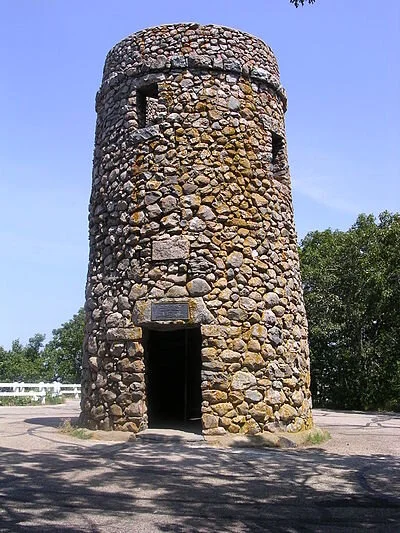
Scargo Tower, in Dennis, sits atop Scargo Hill, one of the tallest (160 feet) and best-known hills on Cape Cod. There have been three Scargo towers on this spot. The first was built in 1874 by the Tobey family, whose roots in the area go back to the 17th Century. A gale destroyed that wooden structure in 1876. Fire destroyed the second tower, known as "Tobey Tower" and also made of wood, in 1900. The present tower was wisely built of cobblestone in 1901 as a memorial to the Tobey family.
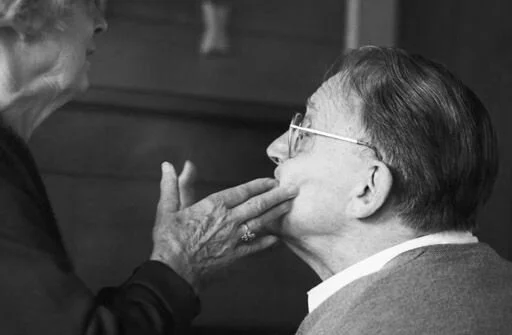
Laugh from the past
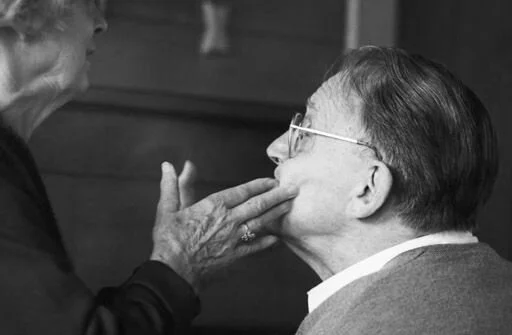
”They have only to look at each other to laugh —
no one knows why, not even they:
something back in the lives they've lived ….’’
— From “The Old Gray Couple,’’ by Archibald MacLeish (1892-1982), poet, playwright, political speechwriter, lawyer and diplomat. He spent much of his life at the old farm he and his wife bought in Conway, Mass., in 1929. Conway is one of western Massachusetts’s “Hill Towns.’’
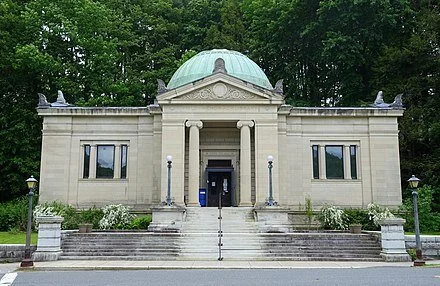
The Field Memorial Library in Conway. Mr. MacLeish was a big supporter of this institution, which is pretty impressive for a town of fewer than 1,900 residents.
'The notion of romance'
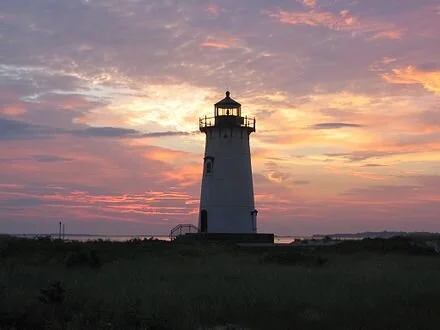
Edgartown Harbor Light.
“Perhaps nowhere else is the notion of romance more firmly embedded than at the Edgartown Light.’’
— Julia Wells, in “History of Vineyard Lighthouses,’’ in the April 7, 2001 Vineyard Gazette.
xxx
The first lighthouse at this site, built in 1828, was a two-story wooden structure that also served as the keeper's house. It was replaced by the current cast-iron tower in 1939. Originally on an artificial island about a quarter mile from shore, the lighthouse is now surrounded by a beach formed formed by sand accumulating around the stone causeway connecting it to the Vineyard mainland.
Edgartown is a rich summer resort town.

Don Pesci: Puritan stink bomb explodes in the Northeast

Harry Clarke’s 1919 illustration for "The Masque of the Red Death"
VERNON, Conn.
Secularists have already stripped Christmas of Christ. Now come the politicians, pleading Coronavirus, to strip the seasons of relatives. Scrooge made the celebration of Christmas difficult but not impossible. The Coronavirus governors have raised his bid to destroy joy. And the governors of New York, New Jersey and Connecticut are leading the pack.
It is not enough that enlightened, “science-based” politics has driven our relations out of state, many of them in pursuit of fleeing businesses. The Coronavirus Governor of Connecticut, Ned Lamont, now threatens to prevent their return during Thanksgiving and Christmas. Travel itself has been interdicted at the borders, and those entering Connecticut from foreign parts – Massachusetts has recently been put on the interdiction list –- are beginning to feel what wretches feel.
It is less of a chore in Connecticut to bust the Mexican border and settle in one of our state’s sanctuary cities than it is for a gas-guzzling citizen of the “Land of Steady Habits” to escape the state’s onerous gasoline taxes by sneaking across Connecticut’s border to buy gas that is not taxed twice, once at the port and once at the pump. Bradley International Airport, voted one of the best airports in the country, is beginning to look like a wasteland. Here is Ned throwing ashes in The Hartford Courant on the joy of Thanksgiving and Christmas:
“….Lamont said he’s concerned college students returning home for the holiday might bring COVID-19 with them.
“’I am really worried about thousands of kids coming back from universities all over the country, places like Wisconsin and Nevada and Utah, where they have a 30 percent infection rate,’ Lamont said in Bridgeport.
“The governor said he’d work with governors in other states on ‘really strict guidance,’ perhaps asking students to quarantine for two weeks before returning to Connecticut, then get tested for COVID-19 when they arrive.
“Lamont said the Department of Public Health would soon issue guidelines for returning students.
“’I don’t want people just getting on that plane, going home, potentially putting their family at risk and their friends at risk,’ Lamont said.”
Really, with a daddy and mommy like Lamont, who needs daddies and mommies?
Thanksgiving, now that we are all toxic, will be less thankful. Halloween has flitted by like a ghost; no children were on the streets; the candy dishes are still full. All Saints Day was muted, church attendance having been clipped by Lamont’s emergency orders.
Facing a tsunami of atheist-tinged secularism G. K. Chesterton once wrote, “The act of defending any of the cardinal virtues has today all the exhilaration of a vice.” On this score, not much has changed over the centuries.
The four cardinal virtues listed by Aristotle are prudence, justice, temperance and fortitude, all of them sadly missing in our politics, which gives us more than enough reason to fortify ourselves with them. A prudent, just and temperate policy on Coronavirus would allow and even facilitate the joys of Christmas, Thanksgiving and All Saints Day,
Long since secularized and bastardized as Halloween.
Columbus Day has passed without further Columbus statues having been beheaded by modern vandals, for which, exercising our First Amendment rights – but not in churches – we may thank God. Restaurants, those lucky few that have not yet gone out of business, are less than half full because they are only three quarters open on orders of the governor in preparation for a second wave Coronavirus panic. Tomorrow, on a gubernatorial whim, the restaurants may be shuttered once again. The arts in Connecticut, all of them, are only virtually alive. Our cities are ghost towns. And though legislators, sequestered far from the state Capitol, have plenty of time on hand, not one of them appears to have had time to read Edgar Allen Poe’s 1842 short story “The Masque of the Red Death’’. In it, precautions are taken by Lord Prospero to keep at bay the Red Death ravaging the countryside outside the walls of his castle: “With such precautions,” Poe writes, “the courtiers might bid defiance to contagion.”
Ha!!!
A Puritan stink bomb has exploded here in the Northeast and left behind the wreckage of joy. Handshakes are out; hugs are out; kisses are fatal; even our daring president-elect, Joe Biden, has lately refrained from smelling women’s hair and pawing uncomfortable strange children. The Puritan Calvinists of pre-Revolutionary Boston must be clapping in their graves, applauding because John and Cotton Mather would rather sink into Hell than dance in their graves or celebrate a Bob Cratchit Christmas.
Don Pesci a Vernon-based columnist.
Mitchell Zimmerman: Republicans are traitors to democracy

From OtherWords.org
Donald Trump’s refusal to accept the judgment of the American people might just seem like denial. But in denying the legitimacy of more than 78 million votes against him as of Friday, Trump and leading Republican politicians are implementing a design more sinister than poor sportsmanship.
Trump and his party have declared war on the fundamental principle of American constitutional democracy: When incumbent lose an election, they leave office. A peaceful transfer of power follows.
Republicans know full well that Biden won. Republican as well as Democratic election officials from across the country confirm there’s no evidence of voter fraud. The election was not stolen.
Nonetheless, Trump and Republican politicians are scheming to persuade tens of millions of Republican faithful that our elections cannot be relied on and that Joe Biden is an illegitimate president.
In doing so, they are undermining the bedrock of American democracy: trust in peaceful elections in a constitutional order. And they demonstrate their animosity to electoral democracy itself.
Trump himself made his views all too clear before the election, when he repeatedly refused to agree he would accept it if he lost. His excuse was that mail-in votes were going to perpetrate a massive fraud. Consistent with that fabrication, he now asserts he won the election.
Voting by mail is allowed under the law of every state in the union, and citizens have voted that way for decades without fraud or other issues. In all their lawsuits, Republicans have presented zero evidence of even remotely significant fraud.
Trump’s insidious rhetoric on the election won’t stop Biden from taking office, but it’s not harmless. For if the election was “stolen,” the hate groups Trump asked to “stand by” could well take it as a signal to move against the new government and its supporters.
Of course, this is not the first time Trump and the GOP have disputed the legitimacy of a Democratic president. When Barack Obama became the first Black president, Trump built his political career trumpeting baseless claims that Obama was born abroad and wasn’t a U.S. citizen.
And it’s not the first time they’ve fomented violence either.
During the 2016 campaign, Trump routinely encouraged violence against peaceful protestors at his rallies.
This summer he defended a supporter who shot and killed two anti-racist protestors in Kenosha, Wisconsin. And he lauded the “passionate” nature of two young men who, citing Trump’s policies, beat a 58-year-old Mexican American man with a metal pole.
Trump retweeted a video in which a supporter says, “The only good Democrat is a dead Democrat.” And when a caravan of Trump supporters, some armed, menaced a Biden bus in Texas, reportedly trying to drive it off the road, Trump expressed his delight.
American democracy is a flawed instrument. Still, imperfect as it is, it’s worth saving — and the majority voted to save it from Trump’s creeping authoritarianism. But the danger is not over, because the party that lost has turned to challenging the foundation of our constitutional democracy.
What could more openly display contempt for democracy than crowds of Trump loyalists, echoing the demand of the great man himself, chanting “stop counting votes!”
Our election has been decided — by the lawful civic engagement of over 150 million Americans, peacefully casting ballots, nearly all of them already counted. A clear, plain majority gave their votes to Joe Biden.
Donald Trump and those who promote his lies and his refusal to yield to the voters are traitors to our Constitution.:
Mitchell Zimmerman is a lawyer, longtime social activist, and author of the thriller Mississippi Reckoning.
Our Gilded Age's 'haves' and 'have nots'

‘‘Grey Workers’,’ from “New Gilded Age: A Theatrical Installation,’’ by B. Lynch, through Feb. 5, in the Iris and B. Gerald Cantor Art Gallery of the College of the Holy Ghost, Worcester.
The gallery explains:
“The fictional world of the ‘Reds’ and the ‘Greys,’ as imagined and constructed by Boston-based artist B. Lynch, is where a cast of characters play out their roles on life's stage as the ‘haves’ and ‘have-nots. ‘New Gilded Age ‘ is an immersive installation including puppets, sets, props, paintings, prints and videos scripted, shot and scored by Lynch. Visit the dedicated exhibition website at newgildedage.holycross.edu’.’