Where to live

“Let us live in the land of the whispering trees,
Alder and aspen and poplar and birch,
Singing our prayers in a pale, sea-green breeze,
With star-flower rosaries and moss banks for church.’’
-- From “For C.W.B., by Elizabeth Bishop (1911-1979). The celebrated poet was born in Worcester and often summered in North Haven, Maine, after she became famous.

Elizabeth Bishop’s summer house, on the island of North Haven, Maine. This Wikipedia entry is a pretty good description of North Haven:
”In the 1880s, the island was discovered by ‘rusticators,’ seasonal residents first from Boston, then followed a decade or two later by others from New York and Philadelphia. North Haven is best known today for its sizable summer colony of prominent Northeasterners, particularly Boston Brahmins, drawn to the island for over a century to savor its simple way of life. Among the more notable summer residents was the impressionist painter Frank Weston Benson, who rented the Wooster Farm as a summer home and painted several notable canvases set on the island.’’
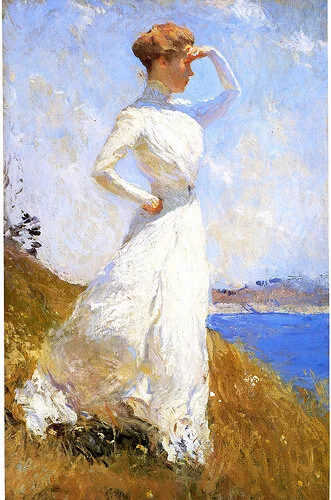
"Summer" (1909), by Frank Weston Benson
The virtue to be free
“The time is not at hand when we shall see whether America has virtue enough to be free or not.’’
— Josiah Bartlett (1729-1795), fourth governor of New Hampshire as well as , among other things, a physician. He was delegate to the Continental Congress for New Hampshire.
xxx
A monarchy is a merchantman which sails well, but will sometimes strike on a rock, and go to the bottom; a republic is a raft which will never sink, but your feet are always in the water.’’
— Fisher Ames (1758-1808), Massachusetts congressman (1789-1797) and a Federalist leader
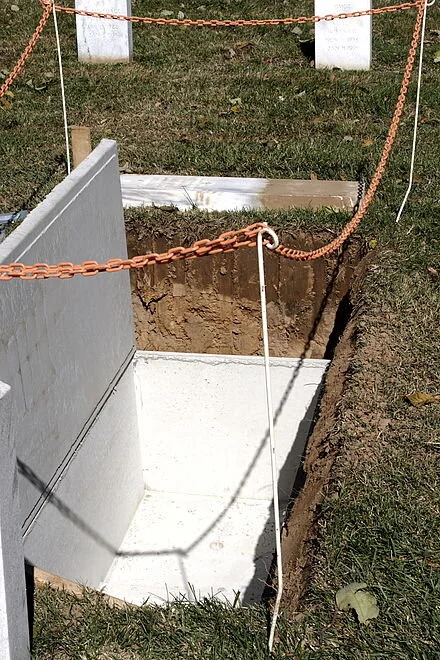
Julie Appleby/Victoria Knight: COVID death counts spawn conspiracy theories
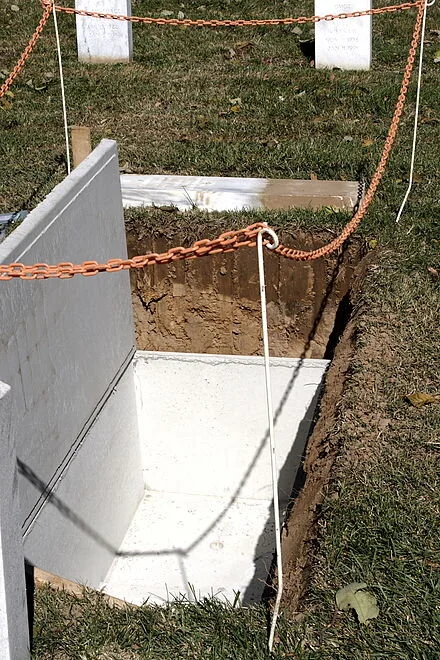
In the waning days of the campaign, PresidentTrump complained repeatedly about how the United States tracks the number of people who have died from COVID-19, claiming, “This country and its reporting systems are just not doing it right.”
He went on to blame those reporting systems for inflating the number of deaths, pointing a finger at medical professionals, who he said benefit financially.
All that feeds into the swirling political doubts that surround the pandemic, and raises questions about how deaths are reported and tallied.
We asked experts to explain how it’s done and to discuss whether the current figure — an estimated 231,000 deaths since the pandemic began — is in the ballpark.
Dismissing Conspiracy Theories, Profit Motives
Trump’s recent assertions have fueled conspiracy theories on Facebook and elsewhere that doctors and hospitals are fudging numbers to get paid more. They’ve also triggered anger from the medical community.
“The suggestion that doctors — in the midst of a public health crisis — are overcounting COVID-19 patients or lying to line their pockets is a malicious, outrageous, and completely misguided charge,” Dr. Susan R. Bailey, American Medical Association president, said in a press release.
Hospitals are paid for COVID treatment the same as for any other care, though generally, the more serious the problem, the more hospitals are paid. So, treating a ventilator patient — with COVID-19 or any other illness — would mean higher payment to a hospital than treating one who didn’t require a ventilator, reflecting the extra cost.
There is one financial difference. Medicare, the government health program for the elderly and disabled, pays 20% on top of its ordinary reimbursement for COVID patients — a result of the CARES Act, the federal stimulus bill that passed in the spring.
That additional payment applies only to Medicare patients.
Experts say there is simply no evidence that physicians or hospitals are labeling patients as having COVID-19 simply to collect that additional payment. Rick Pollack, president and CEO of the American Hospital Association, wrote an opinion piece in September addressing what he called the “myths” surrounding the add-on payments. While many hospitals are struggling financially, he wrote, they are not inflating the number of cases — and there are serious disincentives to do so.
“The COVID-19 code for Medicare claims is reserved for confirmed cases,” he wrote, and using it inappropriately can result in criminal penalties or a hospital being kicked out of the Medicare program.
Public health officials and others also pushed back.
Said Jeff Engel, senior adviser for COVID-19 at the Council of State and Territorial Epidemiologists: “Public health is charged with the duty to collect accurate, timely and complete data. We’re not incentivized to overcount or undercount for any political or funding reason.”
And what about medical examiners? Are they part of a concerted effort to overcount deaths to reap financial rewards?
“Medical examiners and coroners in the U.S. are not organized enough to have a conspiracy. There are 2,300 jurisdictions,” said Dr. Sally Aiken, president of the National Association of Medical Examiners. “That’s not happening.”
Still, there’s an ongoing debate about which mortalities should be considered COVID deaths.
Behind the Numbers
The Centers for Disease Control and Prevention, as well as nongovernmental organizations like the COVID Tracking Project and Johns Hopkins University, compile daily data on COVID deaths. Their statistics rely on state-generated data, which begins at the local level.
States have leeway to decide how to gather and report data. Many rely on death certificates, which list the cause of death, along with contributing factors. They are considered very accurate but can take one to two weeks to be finalized because of the processes involved in filling them out, reviewing and filing them. These reports generally lag behind testing and hospitalization data.
The other way deaths get reported is through what’s known as the case classification method, which reports deaths of people with previously identified cases of COVID, whether listed as confirmed or probable. Confirmed COVID deaths are affirmed by a positive test result. Probable COVID deaths are classified by using medical record evidence, suspected exposure or serology tests for COVID antibodies. The case classification method is faster than using death certificates and makes the data available in a more real-time fashion. Epidemiologists say this information can be helpful in gaining an understanding in the midst of an outbreak of how many people are dying and where.
Some experts point out that, while both methods have their virtues, each shows a different mortality count at a different time, so the best practice is to gather both sets of information.
The federal government, though, has offered conflicting guidance. The National Center for Health Statistics, an arm of the CDC, recommends primarily using death certificate data to count COVID deaths. But in April, the CDC asked jurisdictions to start tracking mortality based on probable and confirmed case classifications. Most states now gather data only one of the two ways, though a couple use both.
This patchwork approach does lead to conflicting data on total deaths.
Why Is the Count So Hard?
For the most part, public health researchers and medical examiners agree that COVID deaths are likely being undercounted.
“It’s very hard in a situation moving as rapidly as this one, and at such a large scale, to be able to count accurately,” said Sabrina McCormick, an associate professor in environmental and occupational health at George Washington University.
For one thing, the processes for certifying deaths vary widely, as does who fills out the death certificates. While physicians certify most death certificates, coroners, medical examiners and other local law enforcement officials can also do so.
Aiken, the medical examiner of Spokane County, Washington, said any time someone in her area dies at home and may have had COVID symptoms, the deceased person will automatically be tested for the disease.
But that doesn’t happen everywhere, she added, which means some who die at home could be omitted from the count.
It’s also unknown how accurate post-mortem COVID testing is, because there haven’t yet been any research studies on the practice — which could lead to missed cases.
Another wrinkle: Doctors in hospitals might not always be trained in the best practices for filling out death certificates, Aiken said.
“These folks are dealing with ERs and ICUs that are crowded. Death certificates are not their priority,” she said.
Emergency room doctors acknowledged the challenges, noting they don’t always have the resources that coroners and medical examiners do to perform autopsies.
“Much of the time, we don’t have an answer as to the final reason that a person died, so we are often stuck with the old cardiopulmonary arrest, which coroners and certifiers hate,” said Dr. Ryan Stanton, a Lexington, Kentucky, ER doctor and board member of the American College of Emergency Physicians.
That gets to how complex it is to determine what, exactly, caused a death — and what some say is a confusion between who died “with” COVID-19 (but may have had other underlying conditions that caused their death) and who died directly “of” COVID-19.
John Fudenberg, the former coroner for Clark County, Nevada, which surrounds Las Vegas, said including some of those who died with COVID-19 could result in an overcount.
“As a general rule, if someone dies with COVID, it’s going to be on the death certificate, but it doesn’t mean they died from COVID,” said Fudenberg, now executive director of the International Association of Coroners and Medical Examiners. For example, “if somebody has end-stage pancreatic cancer and COVID, did they die with COVID or from COVID?”
That question has proven controversial, and Trump has claimed that counting those who died “with COVID” has led to an inflation of the numbers. But most public health experts agree that if COVID-19 caused someone to die earlier than they normally would have, then it certainly contributed to their death. Additionally, those who certify death certificates say they list only contributing factors that are certain.
“Doctors don’t put things on death certificates that have nothing to do with the death,” said Dr. Amesh Adalja, senior scholar at the Johns Hopkins Center for Health Security.
COVID-19 can directly lead to death in someone with cancer or heart problems, even if those conditions were also serious or even expected to be fatal, he said.
And the claim that some states are counting people who die in car accidents, but also test positive for COVID-19, as COVID deaths is just plain unfounded, experts said.
“I can’t imagine a scenario where a medical examiner would test someone for COVID who died in a motor vehicle accident or a homicide,” said Engel, at the epidemiologists council. “I think that’s been greatly exaggerated on the internet.”
Excess Deaths
An additional approach to determining the pandemic’s scope has emerged, and many experts increasingly point to this measure as a useful indicator.
It relies on a concept known as “excess deaths,” which involves comparing the total number of deaths from all causes in a given period with the same period in previous years.
A CDC study estimated that almost 300,000 more people died in the U.S. this year from late January through Oct. 3 than in previous years. Some of those excess deaths were no doubt COVID cases, while others may have been people who avoided medical care because of the pandemic and then died from another cause.
These excess deaths are “the best evidence” that undercounting is ongoing, said Dr. Jeremy Faust, an ER doctor at Brigham and Women’s Hospital in Boston. “The timing of the excess deaths exactly parallels the COVID deaths, so when COVID deaths spike, all causes of deaths spike. They are hugging each other like parallel train tracks on a graph.”
Faust believes the majority of the excess deaths should be attributed in some way to COVID-19.
Even so, it’s unclear if we’ll ever get an accurate count.
Aiken said it is possible but could take years. “I think eventually, when this is said and done, we’ll have a pretty good count,” she said.
McCormick, of George Washington University, isn’t as sure, mostly because the number has become a flashpoint.
“It will always be a controversy, especially because it’s going to be so politically charged,” she said. “I don’t think we’ll come to a final number.”
Victoria Knight and Julie Appleby are Kaiser Health News reporters.
Victoria Knight: vknight@kff.org, @victoriaregisk
Julie Appleby: jappleby@kff.org, @Julie_Appleby
Cute, but is it warm?

From Salley Mavor’s show “Bedtime Stitches’’ (embroidery relief) at the Cahoon Museum of American Art., in Cotuit, Mass., on Cape Cod, through Dec. 22. The museum says that this is “a debut of the artist's original artwork for My Bed: Enchanting Ways to Fall Asleep around the World, her children's book about the different ways kids around the world go to bed every night. The book, and her art, highlight and celebrate cultural differences and the universal themes of sleep and safety. ‘‘

The very low-key Cahoon Museum
‘Fit our vision to the dark’
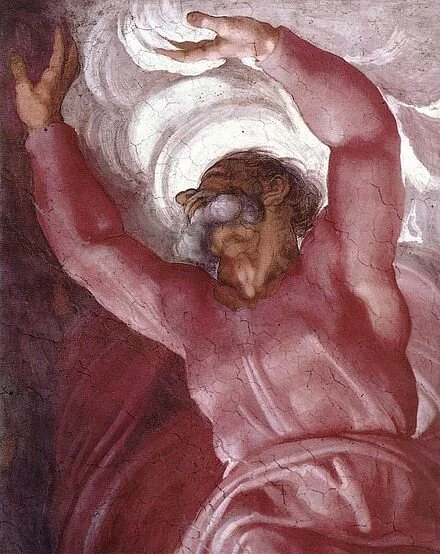
Separation of light and darkness on the first day of creation, from the Sistine Chapel ceiling by Michelangelo
We grow accustomed to the Dark —
When light is put away —
As when the Neighbor holds the Lamp
To witness her Goodbye —
A Moment — We uncertain step
For newness of the night —
Then — fit our Vision to the Dark —
And meet the Road — erect —
And so of larger — Darknesses —
Those Evenings of the Brain —
When not a Moon disclose a sign —
Or Star — come out — within —
The Bravest — grope a little —
And sometimes hit a Tree
Directly in the Forehead —
But as they learn to see —
Either the Darkness alters —
Or something in the sight
Adjusts itself to Midnight —
And Life steps almost straight.
—Emily Dickinson (1830-1886), a lifelong resident of Northampton, Mass.
Rural independence

Mist upstream of the Bissell Bridge, over the Connecticut River between Windsor and South Windsor, Conn.
“Inhabitants of this {Connecticut River} valley ... are so remote from a market as to be perfectly free from that sense of inferiority customarily felt by the body of people who live in the neighborhood of large cities. Hence a superior spirit of personal independence is generated and cherished.’’
— Timothy Dwight (1752-1817), in Travels in New England and New York. Born in Northampton, Mass., he was president of Yale in 1795-1817 as well as a noted author and theologian.

View of the Connecticut River’s Oxbow, in Northampton, Mass., by Thomas Cole (1836)
David Warsh: How some rebellious FBI agents pushed Comey into tipping 2016 election to Trump
SOMERVILLE, Mass.
Donald J Trump is unlikely to win a second term. It may seem beside the point to dwell on the circumstances in which he was elected in the first place. It isn’t. Understanding the events of the last days of the 2016 campaign is essential to understanding some of the difficulties that lie ahead.
To be clear, two quite different controversies have been unfolding over the last four years. Both involve the FBI. One concerns the investigation of connections among Trump, his businesses; his campaign and Russia’s leader, Vladimir Putin, Paul Manafort, the Steele dossier, Russian hackers, WikiLeaks, shadowy Russians promising dirt, the Foreign Intelligence Surveillance Act court, future short-lived National Security Adviser Lt. Gen. Michael Flynn, Trump attorney Michael Cohen, and all that.
The other revolves around accusations of political partisanship, one way or another, within the FBI: Director James Comey, Deputy Director Andrew McCabe, agent Peter Strzok, FBI attorney Lisa Page, Attorney General Loretta Lynch, Justice Department Inspector General Michael Horowitz, former U.S. Attorney and New York Mayor Rudy Giuliani, and so on. The two stories overlap occasionally, but not much.
When it comes to the second, more important story, the place to start is October Surprise: How the FBI Tried to Save Itself and Crashed an Election (Public Affairs, 2020), by Devlin Barrett, of The Washington Post.
As a reporter for The Wall Street Journal, Barrett wrote four crucial stories in ten days on the eve of the election. One of them has been at the center of the battles surrounding the FBI ever since. Now, after nearly four years as reporter for the WPost, Barrett has written a book that makes intelligible the whole tangled affair. October Surprise is an important book.
Barrett’s first article, headlined “Clinton Ally Aided Campaign of FBI Official’s Wife,” appeared 10 days before the election. It disclosed that Deputy Director McCabe’s wife, Dr. Jill McCabe, a 2015 candidate for Virginia Senate, had received $467,500 from Virginia Gov. Terry McAuliffe’s political action committee. (She was defeated.) McAuliffe was a long-time ally of the Clintons and, until he was elected governor, in November 2013, a Clinton Foundation board member. Barrett noted that McAuliffe had been under investigation by the FBI’s Washington field office in a probe of $120,000 of donations to his campaign by a Chinese businessman with no specified charge.
The second story, “FBI Reviewing Newly Discovered Emails in Clinton Server Probe,” described the letter that FBI Director James Comey had sent that day to Congress. He was reopening the investigation of Hillary Clinton’s email he had unilaterally closed three months before, because of the discovery of a laptop computer. Byron Tau had the first byline; Barrett apparently contributed essential background on the “dysfunctional relationship between Justice Department and the FBI.”
Barrett’s third story, “FBI in Internal Feud over Hillary Clinton Probe” appeared eight days before the election. It revealed the existence of a previously undisclosed FBI investigation of the Clinton Foundation. The probe had begun a year before; by early 2016 four field offices – Little Rock, Los Angeles, New York and Washington were investigating charges that financial crimes or influence peddling had occurred at the charity. Some agents had grown frustrated, believing that FBI leadership balked at the probe, perhaps ordered by Obama administration Justice Department officials to close it down.
In fact, Deputy Director McCabe had turned aside Justice Department inquiries in August 2016, Barrett reported, “according to people familiar with the conversation.” At one point, McCabe had challenged a supervisor, “Are you telling me that I need to shut down a properly predicated investigation?” After a pause, the official replied, “No, of course not,” according to Barrett’s unidentified source. The investigation continued, though in a low key way, in the months before the election.
Barrett’s fourth story, “Secret Recordings Fueled FBI Feud in Clinton Probe,” confirmed details of stories that had appeared the day before and added some of his own. The Clinton Foundation investigation had been predicated on, among another things, a book, Clinton Cash, written by a former George W. Bush speechwriter, Peter Schweizer, and bankrolled by Steve Bannon, a couple of years before he became Trump’s campaign manager. A secret recording of a source boasting of deals allegedly done by the Clintons was another element, according to Barrett.
All that in the two weeks before the election.
It was Comey’s decision to reopen the email investigation that dominated the news, but Barrett’s second and third stories had disclosed the existence of a much more complicated battle within the FBI. The significance of the laptop emails themselves quickly evanesced, but the anger about Clinton’s private server was renewed. It seems likely that the reopened investigation, not Russian tampering, provided the push that put Trump over the top.
The Clinton Foundation investigation has flitted in and out of the public eye ever since, most recently as the basis for Trump’s increasingly urgent exhortations to Attorney General Barr to indict one or both Clintons for felony influence-peddling. John Huber, the U.S. Attorney in Utah, tasked by former Attorney General Jeff Sessions to review the Clinton investigation, has been reported to have found nothing worth pursuing, and forwarded his report to Barr. The matter is now in the hands of FBI Director Christopher Wray, former Connecticut US Attorney John Durham and Barr. Barr’s decision is expected not long after the election.
. xxx
Every complicated story requires a timeline. Barrett took this truth to heart and built the timeline into the narrative. His book is divided into three parts. The first involves stage-setting and background. The middle part starts with Comey’s unilateral decision on July 5 to make public his recommendation that no charges be filed against Clinton for her email practices. It ends with the November election. It takes up 60 percent of the book’s 324 pages; the chapters are dated (including named days of the week) and sequential. The third part relates what happened over the next four years. Barrett has an advantage in the telling, especially myriad details established by the Justice Department Inspector General’s review, including the real-time intimate commentary on matters via the work-phone texts of agent Strzok and FBI lawyer Page. The result verges on point-of-view ubiquity. You know, or like to think you know, what nearly everybody is thinking.
Thus Barrett begins his account with the 2012 drone-missile strike against suspected terrorists meeting in a tent in the wilds if Waziristan, a mountainous region of Pakistan, a few details of which were incorporated in emails that eventually wind up on Hillary Clinton’s private server. In a few pages Barrett follows the path of their discovery to an FBI manager’s determination, in July 2015, to pursue a criminal investigation instead of a more easily finessed “spillage review.”
There follows a chapter on Comey, another on McCabe, the man he chose as his deputy, and a third on Loretta Lynch, whom Comey had known and liked since both were young assistant US attorneys in Brooklyn in the 1990s. In 2016, as Attorney General, she was Comey’s boss. A fourth chapter is devoted to Lynch’s decision to meet with former President Bill Clinton, whom she knew to be under FBI investigation, when, in their respective planes, both were delayed by a storm in Phoenix, Arizona. These are commodious chapters and allow Barrett to equip the reader with all sorts of relevant knowledge: the divisions arising from the rapid expansion of the FBI’s responsibilities after 9/11 to include counter-terrorism duties as well as traditional law enforcement work; the effect on Comey of his brief sabbatical from government work as chief of security at Bridgewater Associates, a successful hedge fund; and a description of changing attitudes about race and gender at the Justice Department.
The middle part, the timeline, proceeds at a breakneck-pace, one astonishing development after another, on the Clinton and Trump campaign trails (30,000 emails said to be non-job-related had been deleted from the Clinton server; “Russia, if you’re listening…,” said Trump), down to those final four weeks, week-by-week, finally day-by-day, beginning on September 27. That was the day on which FBI agent John Robertson, a specialist in child abuse, assigned to search Anthony Wiener’s laptop computer in New York (one of Wiener’s texting partners was 15 years old), discovered a trove of 141,000 previously unexamined Clinton emails that had been forwarded to her friend and close State Department associate Huma Abedin, Wiener’s wife. Robertson forwarded the news to Washington the next day, where the discovery was shared among thirty senior managers in a conference call. (This is the point at which begin the portions of the manuscript published by The Washington Post, starting on page one, last month.)
There follow three weeks in which nothing was done to search the emails. So much else was going on – a tug-of-war over the Steele dossier, the first Wikileaks of the Democratic National Committee emails. It turns out that inattention to the laptop was the result of a stand-off. New York agents wanted a warrant. McCabe, though he consulted Strzok, didn’t seek one; nor did he tell his boss, who had been at a hearing on Capitol Hill on the day the discovery was announced, being grilled by Republican members of the Freedom Caucus. By Wednesday Oct. 19, Robertson was getting nervous. He consulted FBI lawyers, who warned him that if he leaked news of the laptop, he could go to prison. He composed a memorandum to himself.
On Monday, Oct. 24, the first of Barrett’s bombshell stories, appeared, “Clinton Ally Aided Campaign of FBI Official’s Wife.” At this point Barrett’s play-by-play of six chapter, 62 pages, becomes too intricate to describe – and too absorbing to put down. On Tuesday, Nov. 8, the election was held. Trump won, by the narrowest of margins. The rest is the third part of Barrett’s book.
The last section of October Surprise describes the fallout from those few weeks. The very day Comey was fired, May 9, 2017, McCabe told bureau internal investigators that he had “no idea” where the leak in Barrett’s third story came from. Confirming that the Clinton Foundation was under investigation was a serious breach of the rules. It turned out he had himself authorized two of his aides to travel to Manhattan to make the disclosures in person to Barrett. McCabe was fired, and subsequently nearly indicted for lying under oath. Robert Mueller began his investigation. The extra-marital affair between Strzok and Page was discovered, their emails belittling Trump widely read. They were humiliated and reassigned. In his final chapter, Barrett comes down hardest on Comey as a well-meaning moralist, who without intending to, opened Pandora’s box. “Whoever wins the 2020 election, the once-sacrosanct ten-year term of FBI directors may be cut short again,” Barrett concludes.
. xxx
Quite aside from the light it casts on the election, October Surprise must be one of the best books ever written on the practice of newspaper journalism. Certainly I’ve never read a better one: only The Making of the President (1960), by Theodore White, and All the President’s Men (1974), by Carl Bernstein and Bob Woodward, compare. Its virtue, however, obscures a weakness. Barrett’s book is a strictly internal history. From whom does the FBI seek to “save itself,” as the subtitle asks? From itself; from departures from its own ideals of Fidelity, Bravery, Integrity; from blemishes to the reputation it had largely regained in the years since Watergate.
Surely it is equally true that the bureau’s top managers were trying to insulate both the agency and its Justice Department overseers from outsiders seeking to persuade its agents to act for illegitimate political purposes. These outsiders don’t appear in Barrett’s account. There is no Freedom Caucus of scapegoating Congressional Republicans, no Fox News, no Bannon, no Breitbart, and no Wall Street Journal editorial page. The story of criminalizing political behavior reaches back to special prosecutor Kenneth Starr, the Whitewater Investigation, and the “Contra-gate” scandal of the Reagan years.
Thus in some ways the most interesting figure in Barrett’s book appears only once, at the very beginning. He is Mike Steinbach, assistant director for the FBI’s Counter-Terrorism Division. It was he who made the decision to investigate certain disclosures of classified matters on Clinton’s email server as a possible criminal matter, rather than a much less serious “spillage case.” He then circulated news of what he had done in a memo to his colleagues. What was he thinking? It is pointless to ask. The FBI has 34,000 employees. You can’t call those among them who disapprove of Hillary Clinton “mutineers.” It is an organization that has to be led.
But the take-away lesson of Barrett’s book is that a spreading campaign among a relative handful of rebellious FBI agents stampeded the director into a disclosure that tipped the election to Donald Trump. That is a considerable blot on the Bureau’s escutcheon to live down. And after the inauguration? That is part of the story, too. As noted in Lawfare, Inspector General Horowitz’s report including this exchange of texts between two agents on Nov. 9, 2016, both of them working on campaign issues:
Handling Agent: “Trump!”
Co-Case Handling Agent: “Hahaha. Shit just got real.”
Handling Agent: “Yes it did.”
Co-Case Handling Agent: “I saw a lot of scared MFers on…[my way to work] this morning. Start looking for new jobs fellas. Haha.”
Handling Agent: “LOL”
A persuasive external account of the factors leading to Comey’s fateful decision will be many years in coming. The author must aspire to the same high standards as Barrett’s internal account. In the meantime, get ready for Attorney General’s Barr’s decision with respect to the Clinton Foundation investigation, and to President Trump’s reaction to it. If Biden is elected, no Cabinet appointment that he makes will be more important than Attorney General. Follow the story in The Washington Post.id
David Warsh, an economic historian and veteran columnist, is proprietor of Somerville-based economicprincipals.com, where this first appeared.

How fares 'Open Education' in Rhode Island?

— Photo by Johannes Jansson
From The New England Journal of Higher Education (NEJHE), a service of The New England Board of Higher Education (nebhe.org)
In the following Q&A, Fellow for Open Education Lindsey Gumb takes the pulse of Open Education in Rhode Island with two key leaders in the field: Dragan Gill, who is a Rhode Island College reference librarian and co-chair of the Rhode Island Open Textbook Initiative, and Daniela Fairchild, who is director of the Rhode Island Office of Innovation.
In September 2016, Rhode Island Gov. Gina Raimondo announced her Open Textbook Initiative, challenging the state’s postsecondary institutions to save Rhode Island students $5 million over five years in textbook costs using “open” textbooks instead of expensive, commercial textbooks. The Rhode Island Office of Innovation (InnovateRI) has helped lead the initiative through its partnership with the Adams Library at Rhode Island College (RIC) and steering committee that includes a librarian from each of the state’s postsecondary institutions. Now a little over four years into the initiative we ask Dragan Gill and Daniela Fairchild to share their thoughts on the status of the challenge, lessons learned and their hopes for the future use of open educational resources (OER) in Rhode Island.
Gumb: Interestingly, Rhode Island’s Open Textbook Initiative isn’t mandated by any specific legislation. In what ways has this made the challenge easier … or more difficult?
Gill: Without legislation, we have been able to develop individualized methods of reaching a shared goal within the scope of the governor’s challenge. Each institution has been able to find a meaningful way to incorporate open textbooks and OER in their curricula, while developing strategies that fit within the scope of the institution’s mission and goals, resources and support they have for this work. On the other hand, having funding tied to well-crafted legislation would better support the staffing, professional development and faculty time needed to further the initiative. Having had time to understand the needs of Rhode Island institutions and to review legislation from other states, I believe we now could work with the governor to draft legislation that supports and guides OER efforts in a pragmatic way for our state.
Fairchild: Legislation can be a blessing and a curse. While it adds gravity and force to an initiative, it also can lead to prescription and a compliance-focus. Sometimes, those doing the work end up spending more time preparing for the next mandated legislative report and less time thinking strategically and creatively about the best way to solve for the need or problem identified through legislation. As one of my policy-wonk colleagues once said, legislation is a sledgehammer. There are times when that is necessary; there are times when one would be better served by a scalpel. For this initiative specifically, not having associated legislation has allowed for campus-specific efforts and has allowed a true fostering of a “coalition of the willing.” It has let us experiment and think creatively for each institution’s context. That said, it has meant that the work has truly stayed a coalition of the willing—those who have understood the need have continued to engage. Those who might need a sledgehammer-like prod have not. To Dragan’s point above, now that we are four years into the work, and have a more intricate understanding of the needed guidance, resources and supports for our collective institutions—as well as a sense of lofty, yet realistic goals—it might be time to revisit the conversation.
Gumb: This challenge tracks student savings data from using open textbooks in place of commercial textbooks, but we know that OER does so much more than save students money. How is the Rhode Island Open Textbook Initiative Steering Committee addressing these other areas like equity and pedagogy?
Gill: Unfortunately, we aren’t doing as much as we’d like. Because the challenge was issued as part of the governor’s broader educational attainment goals, equity has been a key component of outreach, but we haven’t found a way to measure this across the state yet. On my campus, Rhode Island College, I have been working on collecting faculty OER and open textbook adoption data in our student information system for several reasons, including better analyzing the impact OER and open textbooks are having on student retention and completion. We are also currently working on creating a way to collect qualitative data about OER-enabled pedagogy practices across the state. We want this data collection to be both easy for faculty to use, but also provide meaningful information for the steering committee. We also want to showcase it. Lastly, this will provide a more complete picture of faculty engagement with openly licensed materials than our data collection thus far, which, focusing on adoption, hasn’t included more creative work or pedagogical practices.
Fairchild: We’ve seen this manifest in different ways at different institutions. Some of our steering committee members, knowing that textbook cost doesn’t resonate with their faculty as loudly as other rationale for open, have focused their “why” communication around open pedagogy, equity and even academic freedom. And, while Dragan is right that there is more to do on this front—and that data tracking around these pieces becomes a bit trickier—what we have seen is the Open Textbook Initiative serve as a launchpad for steering committee members to have those conversations. “Everyone! Listen up! The state has this challenge to save students money. Now that I have your attention, let me show you all the other reasons why open matters—and all the ways open can complement and support your own academic and pedagogical goals.”
Gumb: What has been the Steering Committee’s biggest challenge to date, and how are you working through it?
Gill: As a committee of librarians, we all have to balance our work on the initiative with the responsibilities we were hired for. To respect that this is different for each library, we have set very few hard deadlines and work with each campus to create their own goals towards supporting Open Education for the semester. But to leverage the strengths of the group, we use retreats to foster collaboration among committee members working on similar tasks or with members who have had successes in a problem area for others. Additionally, we have had some turnover in committee membership, which has brought in fresh ideas, but has made sustaining work and processes harder. In addition to having a call or meeting with each new member, we share outreach and training materials in a collection for all committee members to adapt and use.
Fairchild: I agree with Dragan … the natural cadence of steering committee turnover and the lack of dedicated time to support the work has been challenging, but we’ve been working through these things. And continuing to think through ways we can automate processes so they can endure even through steering-committee-member shifts. Longevity and sustainability are relevant issues too. Across campuses, we have leveraged the challenge to elevate open textbooks, but also open more broadly—and we’ve seen a lot of interest and excitement from faculty who are “early adopters” of open textbooks. As we continue, we will need to start connecting to the “early adopter” and “late adopter” faculty; this will require different communications tactics and different supports. We have begun this strategizing through the twice-annual steering committee retreats. And we plan to use the culmination of our current challenge phase to launch phase 2 and reinvigorate that engagement.
Gumb: Public and private institutions often embrace OER in different ways. How has your Steering Committee, which is composed of both, navigated these differences together?
Gill: By focusing on the value of open education, we are able to build our individual efforts based on a shared core understanding. For some campuses, equity and access are more important; for others, there’s more room to discuss creative pedagogy. But ultimately, all of us are working toward offering the best education to our students and, by working with a range of campus partners, we’re able to address both visions at each institution. One thing I’ve found interesting is how the conversation on each campus shifts. When the challenge began, equity and access resonated on my campus. But in sustaining our work, we’ve added exploring OER-enabled pedagogy. Conversely, I know my colleagues at Roger Williams University began their work heavily focused on faculty creation of OER, but in response to results from a student survey have been including more information about the impact of textbook costs on their students in their outreach efforts.
Unfortunately, there have also been inequities. Rhode Island’s Office of Postsecondary Council has funded the state’s three public institutions’ membership in the Open Education Network (OEN), an active community of higher education leaders who work together to build sustainable open education programs. But as the governing body for the public institutions, it cannot do the same for our private partners. Two private institutions have also advocated for funding and joined the OEN, but if we were to start over, having the funding for each institution to join the OEN or SPARC (the Scholarly Publishing and Academic Resources Coalition) would be high in my priorities.
Gumb: What makes you most proud when you look back on the past four years of this challenge?
Gill: In addition to being on track to meet our goal, I am most proud of our ability to quickly find and work with partners. National organizations like OEN, SPARC and Student PIRGs have all been collaborators since the start, but locally, we have also worked with: the Governor’s Commission on Disabilities for a training session and guidance on accessibility; Providence Public Library’s Tableau User Group, through the Data for Good Initiative, to visualize our data; the Rhode Island Teaching and Learning Consortium (RITL) to share our work and see how they can better help engage faculty; and the Office of Library and Information Services to co-sponsor a two-day “Copyright Bootcamp” for the steering committee and librarians across the state. In return, we provided an overview of OER and Open Access for public libraries through OLIS’s professional development workshop series, provided the first large dataset to the Tableau User Group, opened the Copyright Bootcamp to all librarians in the state, and with the background knowledge to do so, are advocates for more accessible teaching and learning materials on our campuses. This showcases the best of librarianship’s ability to bring experts and networks together to benefit all.
Fairchild: Hear, Hear! Now, my much more bureaucratic answer. I’m proud of co-creating something that has legs. In government (as with all systems and large institutions), change is hard. Status quo processes (whether explicit or not) are difficult to change. Initiatives launched by one administration are rarely kept alive through subsequent administrations—either because they are overtly reversed, or because they just fade after losing their executive branch champion. The Open Textbook Initiative has been messy and imperfect, but it has diffuse champions, including those who officially represent our work through the steering committee most notably, but also the faculty our committee members have worked with and the many partners. I think a lot about how to ensure the “stickiness” of innovation in public systems. And I am proud of how so many partners and people have come together to give this work one of the best shots at organic stickiness that I’ve seen.
Gumb: What’s one piece of advice you’d like to share with legislators in the Northeast who might be considering issuing an open textbook challenge such as Rhode Island’s?
Gill: Plan ahead! Scan each institution for existing campus leaders and develop your steering committee or leadership before you announce the challenge. Define your goals and what measures you’ll use to assess progress before you start, but leave room for new ideas.
Fairchild: Just one? If you will permit me, here are three (they are short!) 1) Allow for creativity: Don’t regulate or regiment Open work so much that it stifles new thinking or doesn’t allow for those who you have tasked with the work to actually do the work—especially as the landscape and knowledge base around this is continuously maturing; 2) Foster collaboration: This shouldn’t just be a public institution thing, or something run through one school (even your flagship!), so be mindful of how you’re writing legislation to allow all institutions to see themselves as productive partners and supporters of your goals; 3) You don’t need money, necessarily (we did this without very much at all), but consider how and when targeted, smart investment can help. Dragan mentioned consortia memberships above: Those carry a small-dollar price tag and go a long way with securing buy-in at the outset (it shows that you are investing in the people who are going to make this happen for you) and that you care about the sustainability of this work. We additionally supported faculty with micro-grants to review and adopt open textbooks—which was important at the outset to show that leadership cared about this, but also is important later in any challenge for incentivizing the early or late adopters.
Bound for the next show

“Talismans for Travelers II ‘‘ (installation) at Boston Sculptors Gallery, by Andrea Thompson, Nov. 4- Dec. 6.
The gallery says:
“‘The Travelers’ are a group of four elongated boat forms suspended overhead. The irregular, semi-transparent forms resemble a castaway’s improvised construction, as well as organic forms such as seedpods or cocoons. Ranging from four to twelve feet in length, each is unique, yet they form a family that is clearly traveling together, bound for some unseen destination.’’
See:
https://www.bostonsculptors.com/
Reconciling with New England

The Fairbanks Athenaeum, in St. Johnsbury, Vt., the center of culture for the Green Mountain State’s “Northeast Kingdom.’’
“New England haunted the minds of Americans, who tried to read its riddle, as if for their soul’s good they must know what it meant….For it meant much to Americans that this old region should fare well, as their palladium of truth, justice, freedom and learning. They could not rest until they were reconciled to it, and until it was reconciled to them.’’
Van Wyck Brooks, in New England Indian Summer (1940)

— Photo by Doug Kerr on what appears to be an Indian Summer day, which in New England is usually taken to mean mild and calm (or perhaps with a soft southwest wind) days after the first freeze.

Pandemic news — flu kits for elderly, mask study, sleep tips

World War II poster issued by the U.S. government
BOSTON
From The New England Council (newenglandcouncil.com)
Here is the council’s Oct. 28 roundup:
“United Health Group Ships Flu Kits to Medicare Recipients – UnitedHealth Group is sending medical care packages including Tamiflu and COVID-19 tests to patients considered the most at-risk for the virus. The kits will also include a digital thermometer and instructions for self-administering the COVID-19 test. Read more here.
“Harvard Medical School Releases Mask Study – Researchers at Harvard Medical School have found additional evidence of the benefits of mask wearing. The researchers found that universal masking in the Massachusetts health-care system led to a flattening, and then decreasing number of cases, even with cases rising in the surrounding population. Read more here.
“Massachusetts General Unveils Tips for Better Sleep During COVID-19 – Massachusetts General Hospital has released a number of recommendations for better sleep during the COVID-19 pandemic. Citing increased levels of stress and anxiety, Massachusetts General compiled simple recommendations for people to keep well-rested. Read more here.
“Catholic Medical Center Adds Second Automated Disinfection Robot – Catholic Medical Center has recently acquired a new Tru-Da device, which will help protect patients from hospital-acquired infections during the COVID-19 pandemic. The robot uses UVC light to modify the DNA and RNA of infectious cells, effectively sterilizing hospital rooms. Read more here.
“BIDMC Finds New Ways to Anticipate the Effects of COVID-19 – Researchers at Beth Israel Deaconess Medical Center have proposed the adoption of complexity science – a field concerned with understanding dynamic, unpredictable systems, such as the human brain, economies or climates – to predict and inform pandemic responses. Read more here.’’
When you could get in cheap


Atlantic cod
— Photo by Hans-Petter Fjeld
“By 1937, every British trawler had a wireless, electricity, and an echometer - the forerunner of sonar. If getting into fishing had required the kind of capital in past centuries that it cost in the twentieth century, cod would never have built a nation of middle-class, self-made entrepreneurs in New England.”
― From Mark Kurlansky’s Cod: A Biography of the Fish that Changed the World
Flying fabric
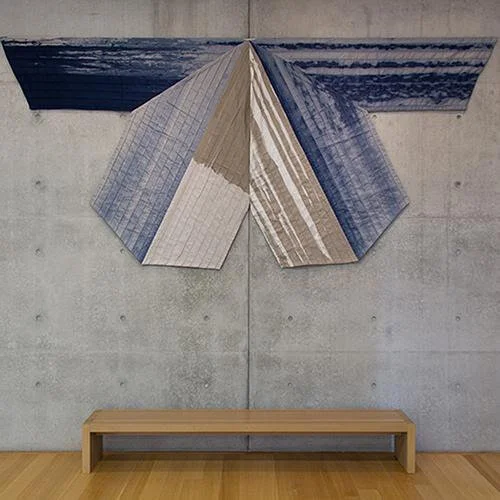
“Valparaiso Green Cloak for Three’’ (stitched fabric), by Pia Camil, in her show “Velo Revelo,’’ at the Clark Art Institute, Williamstown, Mass., through Jan. 3. The show has two sculptures that use fabric, that, according to museum, recall “Mexican craft and modernist American paintings. Her works evoke themes of public and private space, indigenous craft, gender and identity.’’
Don Pesci: Driving police away from where they are most needed
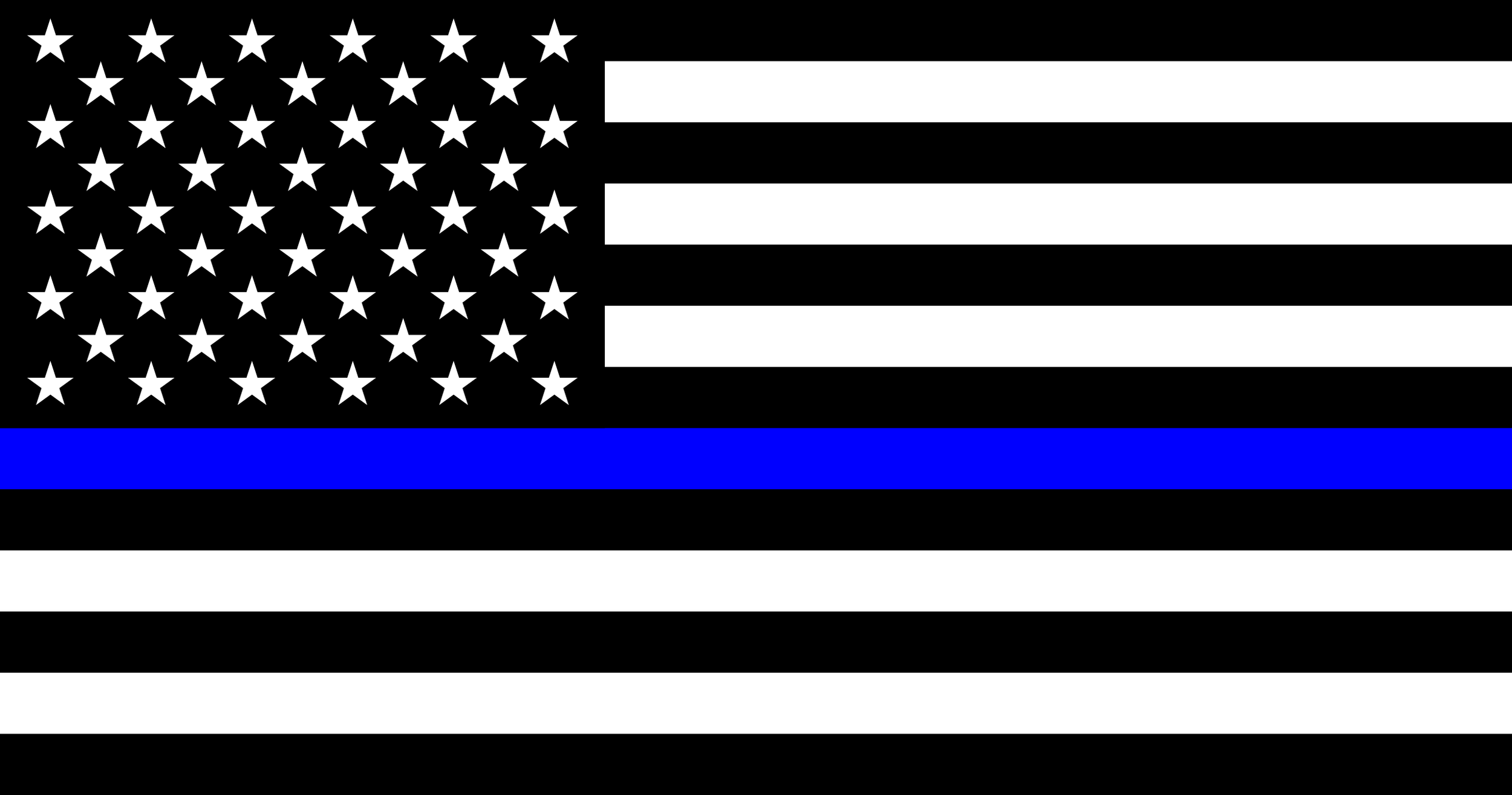
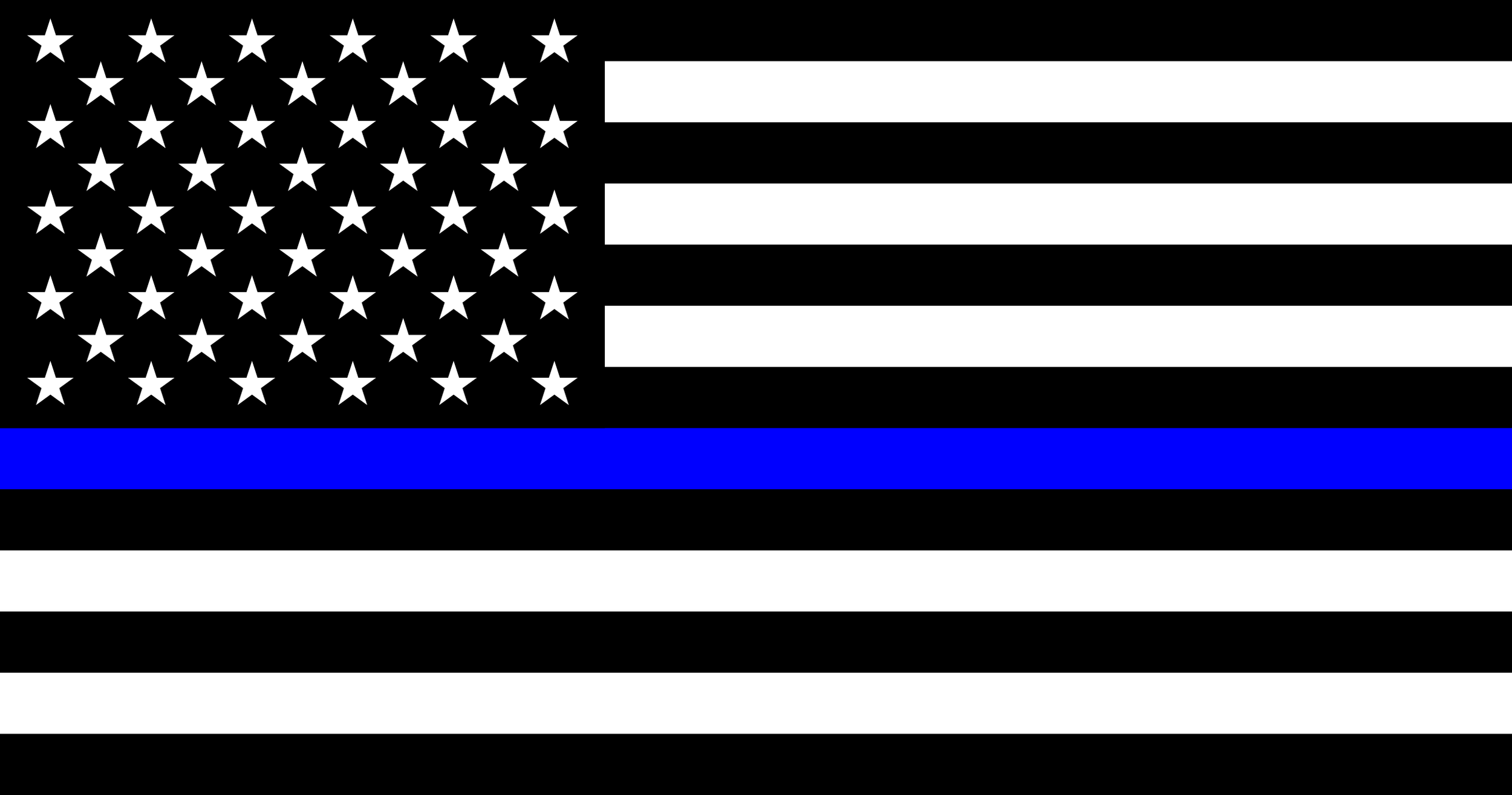
The "thin blue line" refers to the concept of the police as the line that keeps society from descending into violent chaos. The "blue" in "thin blue line" refers to the blue color of the uniforms of many police departments.
Police officers of all kinds, both old-hands and newly minted officers, are leaving Hartford, according to a piece in The Hartford Courant.
No surprise there. The job, as everyone knows, is fraught with danger. Police are not accountants or legislators tucked away in a malfunctioning Connecticut Coronavirus General Assembly; still less are they social workers. The pay and benefits are okay in the cities but better in suburbs. And a new “Sweeping Reform Bill” -- inspired, we are told, by police assaults on George Floyd and Breonna Taylor -- has driven multiple wedges between police across the state and their employers, Democrats and Republicans and, eventually, the urban population that police are sworn to protect.
The new bill is the brain child of State Senator Gary Winfield, who is Black.
The reader will note the capitalization of “Black.” The new Associated Press reporting guide requires every mention of “Black” in news reports to be capitalized, even though the word designates a color rather than a race. White is also a color, though the AP reporting guide does not suggest the capitalization of the word, possibly because the capitalization of “white” might be regarded by some as a gruesome exercise in white privilege.
This grammatical irritation may be adduced by some as a strong indicator that systemic racism in the United States is ebbing, though Winfield’s bill, suggests that little progress has been made since 1619, the year, The New York Times tells us, that marks the true beginning of the founding of the United States – the American Revolution against British overlords, the Continental Congress, U.S. Constitution and the Bill of Rights be dammed.
As a side note, it should be mentioned that the 1619 founding of the United States, during which the first slaves were shipped to the New World, occurred 117 years after what some consider an unfortunate sea journey by Christopher Columbus from Spain to San Salvador, in the Bahamas -- literal translation, “Holy Savior”. Columbus was a Christian, as were many of the Connecticut politicians who winked at the beheading of his statue in Waterbury by Brandon Ambrose, 22, of Port Chester, N.Y.
The Winfield Bill creates a state independent Office of the Inspector General that will be charged with investigating all uses of deadly force by police and all instances of death in police custody; it permits a state's police accreditation body to revoke law-enforcement officers’ credentials if they have been found to have used excessive force; it bans neck restraints, or "chokeholds," unless a law-enforcement officer "reasonably believes" such a hold to be necessary to defend from "the use or imminent use of deadly physical force"; it eliminates “qualified immunity” for police; and it subjects all police officers in the state to civil suits, leaving police officers the option of claiming immunity only if they "had an objectively good faith belief” that their conduct did not violate the law. The law opens a wide door of police prosecution on many counts.
The Winfield bill was politically divisive, Democrats voting for it, Republicans against it. All the Democrat legislators who voted in favor of the bill, many of them lawyers, understood at the time they voted that exposure to civil suits, well founded or not, is a very expensive proposition, and that suits served on urban police working in Connecticut’s large cities were much more likely than similar suits in more toney towns such as West Hartford and Greenwich, both of which have been trending Democrat for some time.
The city to town migration of police officers in Connecticut was predictable the moment the bill had been passed in Connecticut’s General Assembly -- even before the Winfield bill had been affirmed on a partisan vote last July.
Good news is a tortoise, bad news is a hare, and it did not take long for the bad news to reach the ears of Connecticut law-enforcement officials and city police officers. Police unions across the state are now endorsing Republicans.
At the polls, where matters really matter to politicians, the Winfield bill and its inevitable consequences – reduced police recruitment in urban areas, where a strong police force is a necessity, a greater opportunity for socially disruptive elements to ply their various trades uninterrupted by fully manned police forces, clogged court systems and, ironically, an increase in racial disparity, among many other unintended consequences – may not affect the current elections in Connecticut. But some social bombs have long fuses.
“As a police officer the last thing you ever want is to be hated,” commented Hartford police union President Anthony Rinaldi. “It kills your drive, your love for wanting to give back and help your communities. It causes officers to feel rejected and not wanted.” The drive gone, it will not be restored by the usual palliatives: increased pay and benefits for shattered urban police departments. You can only kill a police department once; after that comes the deluge.
Don Pesci is a columnist based in Vernon, Conn.
Regionalize COVID borders
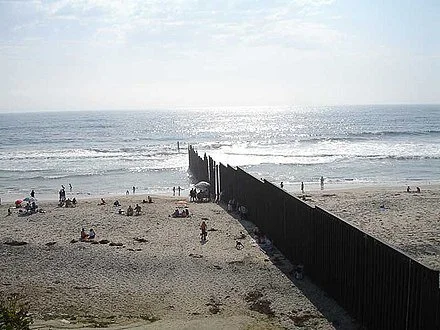
From Robert Whitcomb’s “Digital Diary,’’ in GoLocal24.com
Massachusetts and Rhode Island should follow New York State’s example on the movement of people from neighboring states as the COVID-19 pandemic rages on. Gov. Andrew Cuomo has decided not to add Connecticut, New Jersey and Pennsylvania to states from which travelers must quarantine for 14 days or show proof that they’ve tested negative within the previous 72 hours. That decision comes even as COVID cases continue to spike in the three states.
The Empire State declared that because of the interconnectedness of the Greater New York City region, a quarantine on those states “is not practically viable.”
“There is no practical way to quarantine New York from Pennsylvania, New Jersey and Connecticut,” Governor Cuomo said. “There are just too many interchanges, interconnections, and people who live in one place and work in the other. It would have a disastrous effect on the economy, and remember while we’re fighting this public health pandemic we’re also fighting to open up the economy.”
(It’s good to read that Connecticut is opening up things with Rhode Island and Massachusetts.)
Well, Rhode Island and Massachusetts are also tightly connected, especially the northern Ocean State, which to some degree is part of Greater Boston. Recently, Massachusetts imposed quarantine and testing rules on Rhode Islanders, but COVID cases are climbing in both states. And enforcing quarantine and testing rules on people going back and forth between the two states is virtually impossible.
Quarantine and testing rules between the two states need to be removed to boost their economies even while the public should continue to be ordered to wear face masks and practice social distancing in indoor places and confined outdoor spaces. People who refuse to comply should be kicked out of stores, restaurants, offices, etc. and off public transit.
Jolly pandemic camping tent?

“The Force of Friendship ‘‘ (watercolor on paper), by Marcie Jan Bronstein, in her show “Being There,’’ at the University of Maine’s Zillman Art Museum, in Bangor.
The museum says that Ms. Bronstein uses :a wide variety of marks in her works, from shapes reminiscent of architecture to webs, stretched ovals and pill-like capsules. These varied forms, combined with the blooms of watercolor, make artworks begging for interpretation and ripe for reflection.’’

Statue of the mythical Paul Bunyan in Bangor, where the lumber industry was economic king for many years, starting in the 19th Century but no more. Since Bangor lies on the Penobscot River, logs from Maine’s immense North Woods could be floated downstream to the city and processed at its water-powered sawmills, and then shipped to the Atlantic Ocean, 30 miles farther downstream, and from there to any port in the world. Many of the lumber barons’ elaborate Greek Revival and Victorian mansions suggest the wealth made in this business.
Bauhaus meets New England

The house in the affluent Boston suburb of Lincoln designed by famed German-American Modernist architect Walter Gropius (1883-1969). He and his family lived there from 1938, after fleeing Nazi Germany. He taught in the Harvard School of Design.
The house was influential in bringing Bauhaus-inspired designs to the U.S. but Mr. Gropius dIsliked the term “International Modernism” that was applied to the house:. "I made it a point to absorb into my own conception those features of the New England architectural tradition that I found still alive and adequate."
He wrote in April 1919, in “The Bauhaus Proclamation”:
“Together let us desire, conceive, and create the new structure of the future, which will embrace architecture and sculpture and painting in one unity and which will one day rise toward heaven from the hands of a million workers like the crystal symbol of a new faith.’’
Llewellyn King: The huge unanswered questions of the presidential campaign
WEST WARWICK, R.I.
Can’t Anybody Here Play This Game? was the title of a 1963 book by Jimmy Breslin about the disastrous first year of the New York Mets, an expansion team. It’s attributed to the team’s manager Casey Stengel.
As I’ve watched this picaresque presidential election year unfold, I’ve had the same thought.
The game is governance; the campaign, the run-up. And nobody seems to know how to play this game. The questions that should’ve been raised and answered were neither raised nor answered.
Some unheard and unanswered questions:
· How will you rebuild our stature abroad, restore America to global leadership and moral authority?
· What will you do if the pandemic hangs on for years? How will you place the millions whose jobs were lost through the pandemic in work?
· How will you fix our ailing school system with its disastrous weaknesses exposed by Covid-19?
· The health-care system is stretched to breaking under the pandemic with or without Obamacare. What is your plan?
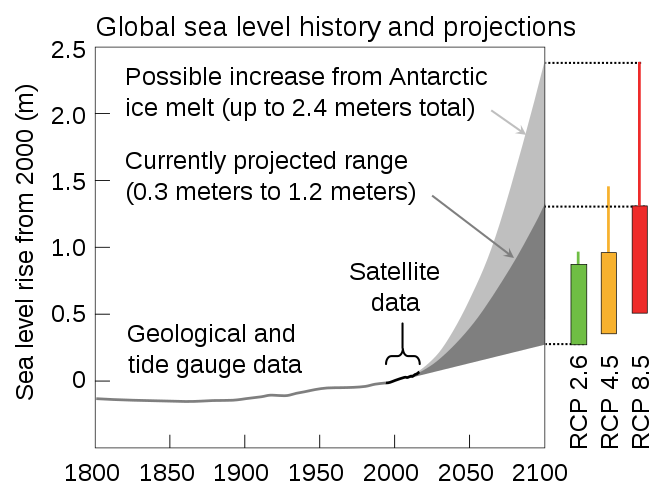
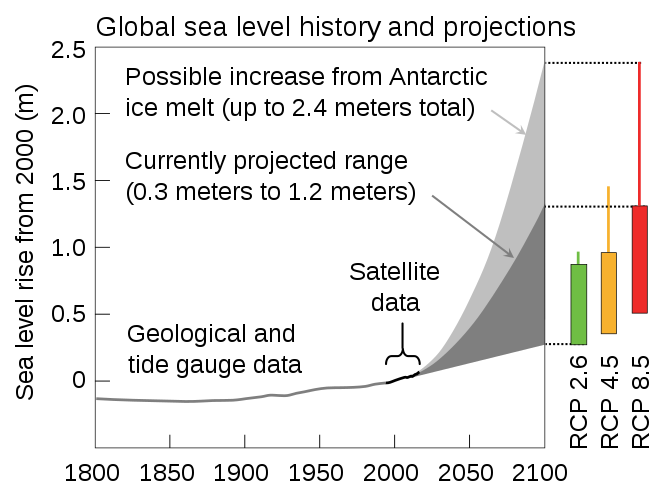
· If the climate change-induced sea level rise accelerates, how will you deal with cities that appear in danger, including New York, Boston, New Orleans, and San Francisco?
· One of the rationales for the U.S.-Mexico border wall was to reduce the influx of drugs. Now, with the advent of drones, we may have a new drug-smuggling crisis. What is your plan to combat it?
· States depend on gasoline and cigarette taxes, but electric vehicles are pushing out gasoline taxes and cigarette smoking is in steep decline. How do you see these tax streams being replaced?
· What will you do if China invades Taiwan?
· What will you do if China bars U.S. shipping from traversing the South China Sea?
· The population of Africa is set to double every quarter century. Already there is vert high unemployment, what should the United States do to help?
· Jobs are being eaten up by AI and other technologies. While those enthralled with these job-subtracting technologies point to the history of the Industrial Revolution, this may be different. What should be done?
Just think of anything to do with the future and a gusher of questions erupts, but no answers have been heard, or few at best.
President Trump, it seems, will offer us more government as demolition derby, but wilder than in the first four years. We’ve gotten a shower of hopes, fanciful and improbable. When it comes to the overhanging crisis of today, the pandemic, he is like King Canute commanding the waves to retreat.
From his opponent, former Vice President Joe Biden, we are to get what? Decency, character? Like all candidates, he’s told us he’ll fix everything. But how remains obscured from us, and quite possibly from himself.
On the evening of April 7, 1775, Samuel Johnson, the sage and lexicographer, told us that patriotism was the last refuge of the scoundrel. That is a truth that Trump -- who probably doesn’t know who Johnson was -- has exploited as his own. He would undo the things we should be proud of in the world, like human rights, and get away with it because he wraps himself in the flag like Linus in his blanket.
Those who’ll vote for Biden will vote for a man who is old in years and old in ideas. If he wins, his supporters can trade fear for apprehension.
As we face the most momentous challenges the world has ever borne -- international upheaval, a lingering pandemic and climate change – we’ve gone through a presidential campaign where the issues were shelved for repetitive nothingness. We haven’t been lifted by high rhetoric nor inspired by blinding vision.
The global upheaval triggered by disease, nation realignment and technology will have to await the judgment of those who whisper into the ears of presidents, when they, the candidates, have none, as now.
Llewellyn King is executive producer and host of White House Chronicle, on PBS. His email is llewellynking1@gmail.com and he’s based in Rhode Island and Washington, D.C.
Web site: whchronicle.com