

Jim Hightower: Pandemic has been a bonanza for the rich

Via OtherWords.org
Let’s say you’re a millionaire. That’s a lot of money, right? Now let’s say you’re a billionaire. That’s a lot more money! But how much more?
Think of all those dollars as seconds on a clock. A million seconds would total 11 days – but a billion seconds equals nearly 32 years.
Rich is nice, but billionaire-rich is over the moon — and the wealth of billionaires is now zooming out of this world.
There are only 2,200 billionaires in the whole world, but the wealth stashed away by these elites hit a new record this summer, averaging more than $4 billion each. They’ve even pocketed an extra half-billion bucks on average in the midst of the COVID-19 economic crash.
Bear in mind that these fortunate few did nothing to earn this haul. They didn’t work harder, didn’t get one-digit smarter, didn’t create some new breakthrough product to benefit humankind. They could just crank back in their gold-plated La-Z-Boys and let their money make money for them.
Then there are multimillionaire corporate chieftains who are cashing in on their own failure.
Having closed stores throughout America, fired thousands of workers, stiffed suppliers and creditors, taken bailout money from taxpayers, and even led their corporations into bankruptcy, the CEOs of such collapsing giants as Hertz, JCPenney, and Toys “R” Us have grabbed millions of dollars in — believe it or not — bonus payments!
The typical employee at JCPenney for example, is held to part-time work, making under $12,000 a year. Thousands of them are now losing even that miserly income as the once-mighty retailer is shutting 154 stores. Yet, the CEO was paid a $4.5 million cash bonus before the company filed for bankruptcy this year.
And still, the corporate establishment wonders why the people consider them heartless and greedy.
OtherWords columnist Jim Hightower is a radio commentator, writer and public speaker.
Stop these mobile mobs

— Photo by J.T. Thorne
From Robert Whitcomb’s “Digital Diary,’’ in GoLocal24.com
It’s a big challenge, but Providence and the Rhode Island State Police need to do a better job monitoring the sort of flood of riders of ATV’s, mopeds, motorcycles and dirt bikes (sounds like a Trump rally) that assaulted parts of Providence last Sunday, ruining the day for thousands of residents. The police need to have a better idea of when and where these people, many from outside the city, are grouping before they can sweep through Providence’s streets, with many participants dangerously ignoring traffic laws. Roadblocks and the credible threat of mass arrests are needed to stop therm.
Trying to control these invasions, of course, poses dangers in themselves, as
witness a very troubling crash involving a police car and a young man riding in this mob last Sunday, who, as I write this, was in a coma. But it’s far more dangerous to let these riders disrupt the city than to let them roam at will in their packs. They need to be made very afraid of law enforcement. Unfortunately Providence Mayor Jorge Elorza is seen as weak, which encourages their dangerous activities. Engendering a little fear of the mayor would be a good preventive.
These mobs don’t belong in cities.
Getting at the sense of doom

“Gates of Hell’’ ( mixed media diptych), by James C. Varnum, of Newton, Mass., in the show “Subtle Recognition: Mirrors of Contemplation,’’ at Galatea Fine Art, Boston, though Oct. 31.
He tells the gallery:
“These two paintings represent my feelings toward the outside world during the pandemic. While Parallel was completed earlier, it reflects the duality of opinions about the severity of COVID 19 and attitudes toward public health and community. ‘Gates of Hell ‘was completed in March. It is bleak and expresses my sense of doom felt during some periods this spring. I experimented with materials, tools and palette to keep some sanity."
See:
galateafineart.com
'O ye who lead, Take heed!'

“An Ode in Time of Hesitation,’’ by William Vaughn Moody (1869-1910)
“After seeing at Boston the statue of Robert Gould Shaw, killed while storming Fort Wagner, July 18, 1863, at the head of the first enlisted Negro regiment, the Fifty-fourth Massachusetts.’’
I
Before the solemn bronze Saint Gaudens made
To thrill the heedless passer's heart with awe,
And set here in the city's talk and trade
To the good memory of Robert Shaw,
This bright March morn I stand,
And hear the distant spring come up the land;
Knowing that what I hear is not unheard
Of this boy soldier and his negro band,
For all their gaze is fixed so stern ahead,
For all the fatal rhythm of their tread.
The land they died to save from death and shame
Trembles and waits, hearing the spring's great name,
And by her pangs these resolute ghosts are stirred.
II
Through street and mall the tides of people go
Heedless; the trees upon the Common show
No hint of green; but to my listening heart
The still earth doth impart
Assurance of her jubilant emprise,
And it is clear to my long-searching eyes
That love at last has might upon the skies.
The ice is runneled on the little pond;
A telltale patter drips from off the trees;
The air is touched with southland spiceries,
As if but yesterday it tossed the frond
Of pendant mosses where the live-oaks grow
Beyond Virginia and the Carolines,
Or had its will among the fruits and vines
Of aromatic isles asleep beyond
Florida and the Gulf of Mexico.
III
Soon shall the Cape Ann children shout in glee,
Spying the arbutus, spring's dear recluse;
Hill lads at dawn shall hearken the wild goose
Go honking northward over Tennessee;
West from Oswego to Sault Sainte-Marie,
And on to where the Pictured Rocks are hung,
And yonder where, gigantic, wilful, young,
Chicago sitteth at the northwest gates,
With restless violent hands and casual tongue
Moulding her mighty fates,
The Lakes shall robe them in ethereal sheen;
And like a larger sea, the vital green
Of springing wheat shall vastly be outflung
Over Dakota and the prairie states.
By desert people immemorial
On Arizonan mesas shall be done
Dim rites unto the thunder and the sun;
Nor shall the primal gods lack sacrifice
More splendid, when the white Sierras call
Unto the Rockies straightway to arise
And dance before the unveiled ark of the year,
Sounding their windy cedars as for shawms,
Unrolling rivers clear
For flutter of broad phylacteries;
While Shasta signals to Alaskan seas
That watch old sluggish glaciers downward creep
To fling their icebergs thundering from the steep,
And Mariposa through the purple calms
Gazes at far Hawaii crowned with palms
Where East and West are met, --
A rich seal on the ocean's bosom set
To say that East and West are twain,
With different loss and gain:
The Lord hath sundered them; let them be sundered yet.
IV
Alas! what sounds are these that come
Sullenly over the Pacific seas, --
Sounds of ignoble battle, striking dumb
The season's half-awakened ecstasies?
Must I be humble, then,
Now when my heart hath need of pride?
Wild love falls on me from these sculptured men;
By loving much the land for which they died
I would be justified.
My spirit was away on pinions wide
To soothe in praise of her its passionate mood
And ease it of its ache of gratitude.
Too sorely heavy is the debt they lay
On me and the companions of my day.
I would remember now
My country's goodliness, make sweet her name.
Alas! what shade art thou
Of sorrow or of blame
Liftest the lyric leafage from her brow,
And pointest a slow finger at her shame?
V
Lies! lies! It cannot be! The wars we wage
Are noble, and our battles still are won
By justice for us, ere we lift the gage.
We have not sold our loftiest heritage.
The proud republic hath not stooped to cheat
And scramble in the market-place of war;
Her forehead weareth yet its solemn star.
Here is her witness: this, her perfect son,
This delicate and proud New England soul
Who leads despisèd men, with just-unshackled feet,
Up the large ways where death and glory meet,
To show all peoples that our shame is done,
That once more we are clean and spirit-whole.
VI
Crouched in the sea fog on the moaning sand
All night he lay, speaking some simple word
From hour to hour to the slow minds that heard,
Holding each poor life gently in his hand
And breathing on the base rejected clay
Till each dark face shone mystical and grand
Against the breaking day;
And lo, the shard the potter cast away
Was grown a fiery chalice crystal-fine
Fulfilled of the divine
Great wine of battle wrath by God's ring-finger stirred.
Then upward, where the shadowy bastion loomed
Huge on the mountain in the wet sea light,
Whence now, and now, infernal flowerage bloomed,
Bloomed, burst, and scattered down its deadly seed, --
They swept, and died like freemen on the height,
Like freemen, and like men of noble breed;
And when the battle fell away at night
By hasty and contemptuous hands were thrust
Obscurely in a common grave with him
The fair-haired keeper of their love and trust.
Now limb doth mingle with dissolvèd limb
In nature's busy old democracy
To flush the mountain laurel when she blows
Sweet by the southern sea,
And heart with crumbled heart climbs in the rose: --
The untaught hearts with the high heart that knew
This mountain fortress for no earthly hold
Of temporal quarrel, but the bastion old
Of spiritual wrong,
Built by an unjust nation sheer and strong,
Expugnable but by a nation's rue
And bowing down before that equal shrine
By all men held divine,
Whereof his band and he were the most holy sign.
VII
O bitter, bitter shade!
Wilt thou not put the scorn
And instant tragic question from thine eye?
Do thy dark brows yet crave
That swift and angry stave --
Unmeet for this desirous morn --
That I have striven, striven to evade?
Gazing on him, must I not deem they err
Whose careless lips in street and shop aver
As common tidings, deeds to make his cheek
Flush from the bronze, and his dead throat to speak?
Surely some elder singer would arise,
Whose harp hath leave to threaten and to mourn
Above this people when they go astray.
Is Whitman, the strong spirit, overworn?
Has Whittier put his yearning wrath away?
I will not and I dare not yet believe!
Though furtively the sunlight seems to grieve,
And the spring-laden breeze
Out of the gladdening west is sinister
With sounds of nameless battle overseas;
Though when we turn and question in suspense
If these things be indeed after these ways,
And what things are to follow after these,
Our fluent men of place and consequence
Fumble and fill their mouths with hollow phrase,
Or for the end-all of deep arguments
Intone their dull commercial liturgies --
I dare not yet believe! My ears are shut!
I will not hear the thin satiric praise
And muffled laughter of our enemies,
Bidding us never sheathe our valiant sword
Till we have changed our birthright for a gourd
Of wild pulse stolen from a barbarian's hut;
Showing how wise it is to cast away
The symbols of our spiritual sway,
That so our hands with better ease
May wield the driver's whip and grasp the jailer's keys.
VIII
Was it for this our fathers kept the law?
This crown shall crown their struggle and their ruth?
Are we the eagle nation Milton saw
Mewing its mighty youth,
Soon to possess the mountain winds of truth,
And be a swift familiar of the sun
Where aye before God's face his trumpets run?
Or have we but the talons and the maw,
And for the abject likeness of our heart
Shall some less lordly bird be set apart? --
Some gross-billed wader where the swamps are fat?
Some gorger in the sun? Some prowler with the bat?
IX
Ah no!
We have not fallen so.
We are our fathers' sons: let those who lead us know!
'T was only yesterday sick Cuba's cry
Came up the tropic wind, "Now help us, for we die!"
Then Alabama heard,
And rising, pale, to Maine and Idaho
Shouted a burning word.
Proud state with proud impassioned state conferred,
And at the lifting of a hand sprang forth,
East, west, and south, and north,
Beautiful armies. Oh, by the sweet blood and young
Shed on the awful hill slope at San Juan,
By the unforgotten names of eager boys
Who might have tasted girls' love and been stung
With the old mystic joys
And starry griefs, now the spring nights come on,
But that the heart of youth is generous, --
We charge you, ye who lead us,
Breathe on their chivalry no hint of stain!
Turn not their new-world victories to gain!
One least leaf plucked for chaffer from the bays
Of their dear praise,
One jot of their pure conquest put to hire,
The implacable republic will require;
With clamor, in the glare and gaze of noon,
Or subtly, coming as a thief at night,
But surely, very surely, slow or soon
That insult deep we deeply will requite.
Tempt not our weakness, our cupidity!
For save we let the island men go free,
Those baffled and dislaureled ghosts
Will curse us from the lamentable coasts
Where walk the frustrate dead.
The cup of trembling shall be drainèd quite,
Eaten the sour bread of astonishment,
With ashes of the hearth shall be made white
Our hair, and wailing shall be in the tent;
Then on your guiltier head
Shall our intolerable self-disdain
Wreak suddenly its anger and its pain;
For manifest in that disastrous light
We shall discern the right
And do it, tardily. -- O ye who lead,
Take heed!
Blindness we may forgive, but baseness we will smite.
Eating fall fruit on way home

From Robert Whitcomb’s “Digital Diary,’’ in GoLocal24.com
When I was a kid and sometimes walked home from school instead of taking the slow bus ride in my small Massachusetts town, I’d often take a short cut through the woods.
At this time of the year most of the leaves had fallen; only the oaks had held onto many of their boringly brown leaves. So there was plenty of light as I walked between the bayberry and other shrubs. Deep in the woods you could find crabapples, smaller than the ones in orchards, which contrary to myth, you could eat. There were also some edible wild grapes left, amidst the enveloping breezy barrenness
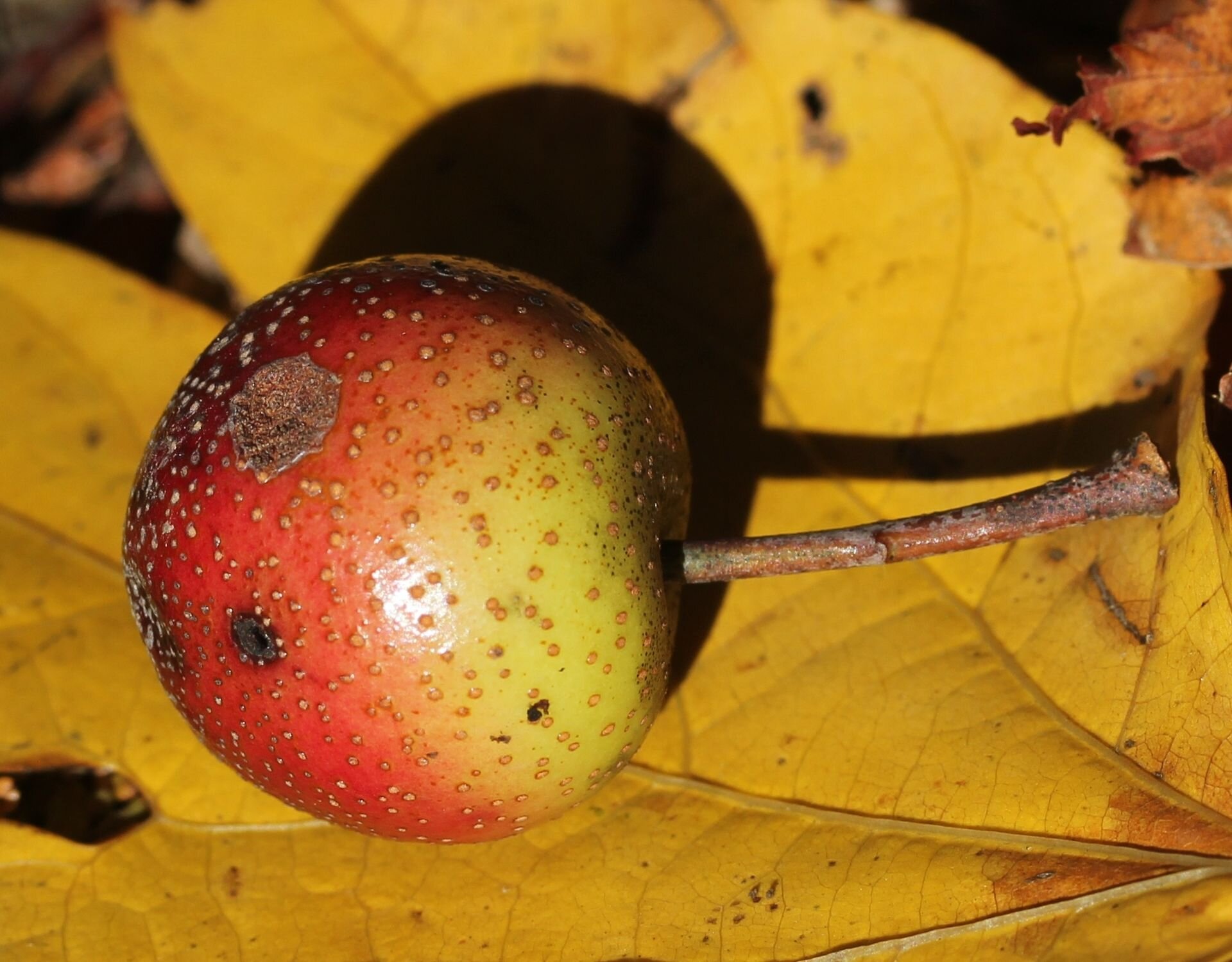
A crabapple in the fall
— Photo by Alpsdake

Think small as an antidote

“21 Misc. Blocks and Printings,’’ by Mark Luiggi, in the “all small’’ show at Brickbottom Artists Association, Somerville, Mass., Oct. 29-Nov. 22
The gallery explains:
“The challenges of 2020—the pandemic; the divisiveness of politics and the election; the outrage over racial injustice; the apocalyptic fires and storms that are undeniable signs of climate change—are complicated and overwhelming. Indeed, everything in this world today seems to be enormous, and getting bigger all the time. The Brickbottom Gallery would like to propose the opposite as a kind of antidote. Bigger is not necessarily better! This BAA Members' Exhibition features artwork that is small, in scale, size or content.”
See:
https://brickbottom.org/
‘The boozing, the anger’

"It’s {the Boston area} just a really interesting place to grow up. The sports teams, the colleges, the racial tension, the state workers, the boozing, the anger. All of that stuff. I don’t think I ever appreciated the amount of maniacs that live in Massachusetts until I left. When I lived here, I took it for granted that everyone was kind of funny and a bit of a character."
— Bill Burr (born 1968 in the Boston suburb of Canton, Mass.), standup comedian and actor
The name "Canton" comes from the erroneous early belief that Canton, China, was on the complete opposite side of the earth (antipodal). New England merchants in the 18th and 19th centuries had many lucrative commercial links with the Chinese port city of Canton (now called Guangzhou). Canton, Mass. was originally part of Stoughton.
Part of Great Blue Hill is in Canton, whose summit, at 635 feet, is the highest point in Greater Boston and Norfolk County and also the highest within 10 miles of the Atlantic coast south of central Maine.
Chris Powell: Landslides can bring out the worst in pols; casino fallacy
MANCHESTER, Conn.
Should every Republican on the party's ticket with President Trump this year be defeated if he won't denounce or at least criticize the president for his demeanor, policies, or both?
That's the suggestion of New London Day columnist David Collins, who complained the other day that he could not find one Republican candidate in eastern Connecticut willing to discuss the president. Noting the president's unpopularity in the state, Collins wrote: "Surely I can't be the only one who wouldn't consider voting for anyone who won't even comment about the head of their party and his agenda for the country."
Of course, Collins isn't the only one who feels as he does, but there are a few problems with his position.
First is that turnabout is fair play, and Collins lately has expressed outrage about Gov. Ned Lamont's disregard for the New London area. Since the governor is a Democrat, won't re-electing Democrats to the General Assembly vindicate the governor's disregard? Will electing Republican legislators produce any better results for the area? Republicans don't seem to have given much reason to think so.
The second problem, a bigger one, is the difficulty of punishing Trump's ticket mates for his offenses without also punishing the whole state. Yes, in general Republican state legislators are uninspired and timid, not much interested in gaining a majority, mainly content with escaping responsibility for governing, but at least they are much less enthusiastic tools of the government-employee unions and welfare class than Democratic legislators are.
So what is one to do if he detests Trump but also would prefer not to pay more in state taxes for Democratic policies and patronage that only impoverish the state? What if someone wants to avoid not just highway tolls but more raises and pension benefits for government employees while the private sector is crashing? Someone who feels that way and sets out to punish all Republicans for complicity with Trump ends up punishing himself as well.
The third problem is that political landslides such as Collins seems to be advocating can bring out the worst in elected officials, making them arrogant, corrupt, and stupid, as Connecticut might have learned after electing John G. Rowland to a third term as governor in 2002.
President Lyndon B. Johnson's big win at the top of the Democratic ticket in 1964 unleashed his escalation of the Vietnam War. But by 1967 even as the war was plainly a futile enterprise incompetently pursued, few Democratic officials dared to say a word against the president, just as few Republican officials dare to say a word against Trump today. Only when public opinion, without any help from most Democratic leaders, turned against Johnson in 1968 did the president withdraw from re-election -- and only after a Republican, Richard Nixon, was elected president did most Democratic leaders decide that the war was a disaster.
Similarly, Nixon's landslide re-election in 1972 only deepened his administration's criminal corruption. In less than two years both he and his vice president, Spiro Agnew, were exposed and compelled to resign.
Connecticut already suffers inefficiency and corruption in state government because of the state's lack of political competition. Shrinking the Republican minority in the General Assembly to spite the party for Trump won't provide any incentive for state government to improve. It will just give the majority party more license.
xxx
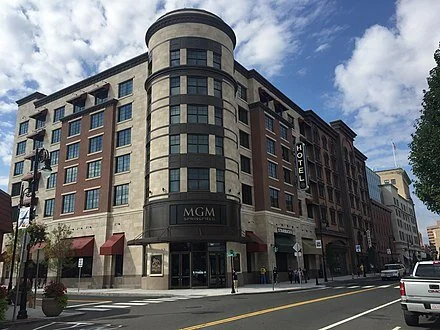
The MGM Springfield casino and hotel complex. Casinos redistribute money from the many to the rich few.
CASINO FALLACY: MGM's casino in Springfield is thumping its chest about all the jobs and tax revenue it has brought to western Massachusettts. But the jobs and revenue are not what was projected, and such claims are inherently misleading anyway.
For casinos produce nothing of value. People who spend their money at casinos no longer spend it on amusement somewhere else. Casinos merely redistribute money from the many -- the public, disproportionately the poor -- to the few, the casino operators, disproportionately the rich, and to the government. That is, casinos are mechanisms of regressive taxation.
A casino adds economically to an area only insofar as it attracts people from elsewhere, and so the only claim genuinely in favor of the Springfield casino is that it may have kept many Massachusetts gamblers spending their money at home instead of at the casinos in southeastern Connecticut.
Chris Powell is a columnist for the Journal Inquirer, in Manchester.
COVID-19 wrapup

From The New England Council’s (newenglandcouncil.com) latest wrap up of COVID-19 news:
“Eli Lilly Find Drug to Improve Clinical Outcomes – Eli Lilly and Company has found that baricitinib, used alongside remdesivir, reduces recovery time and improves clinical outcomes for patients infected with COVID-19 more so than patients treated only with remdesivir. Eli Lilly originally developed baricitinib – marketed at Olumiant – as a treatment for rheumatoid arthritis, but has been studying the drug as a COVID-19 treatment as part of a trial sponsored by the National Institute of Allery and Infectious Diseaseas (NIAID). The most signifiant impact was observed in patients placed on supplemental oxygen. Read more here.
“Harvard Street Neighborhood Health Center Utilizes Mobile COVID-19 Testing Unit – Early in the pandemic, Harvard Street Neighborhood Health Center launched a mobile COVID-19 testing unit, which has since tested thousands of patients at Dudley Square, Prince Grand Hall Lodge, Children’s Services of Roxbury and other locations. Read more here.
“Blue Cross Blue Shield of Massachusetts Grants Additional $400,00 to COVID-19 Fund – Blue Cross Blue Shield has donated $400,000 to go towards supporting communities of color most affected by the pandemic, as well as Massachusetts regional funds community health centers, nonprofits, and teacher organizations. Read more here.’’

Largest self-reported ancestry groups in New England. Americans of Irish descent form a plurality in most of Massachusetts, while Americans of English descent form a plurality in much of central Vermont and New Hampshire as well as nearly all of Maine.
Glitter in the gutter
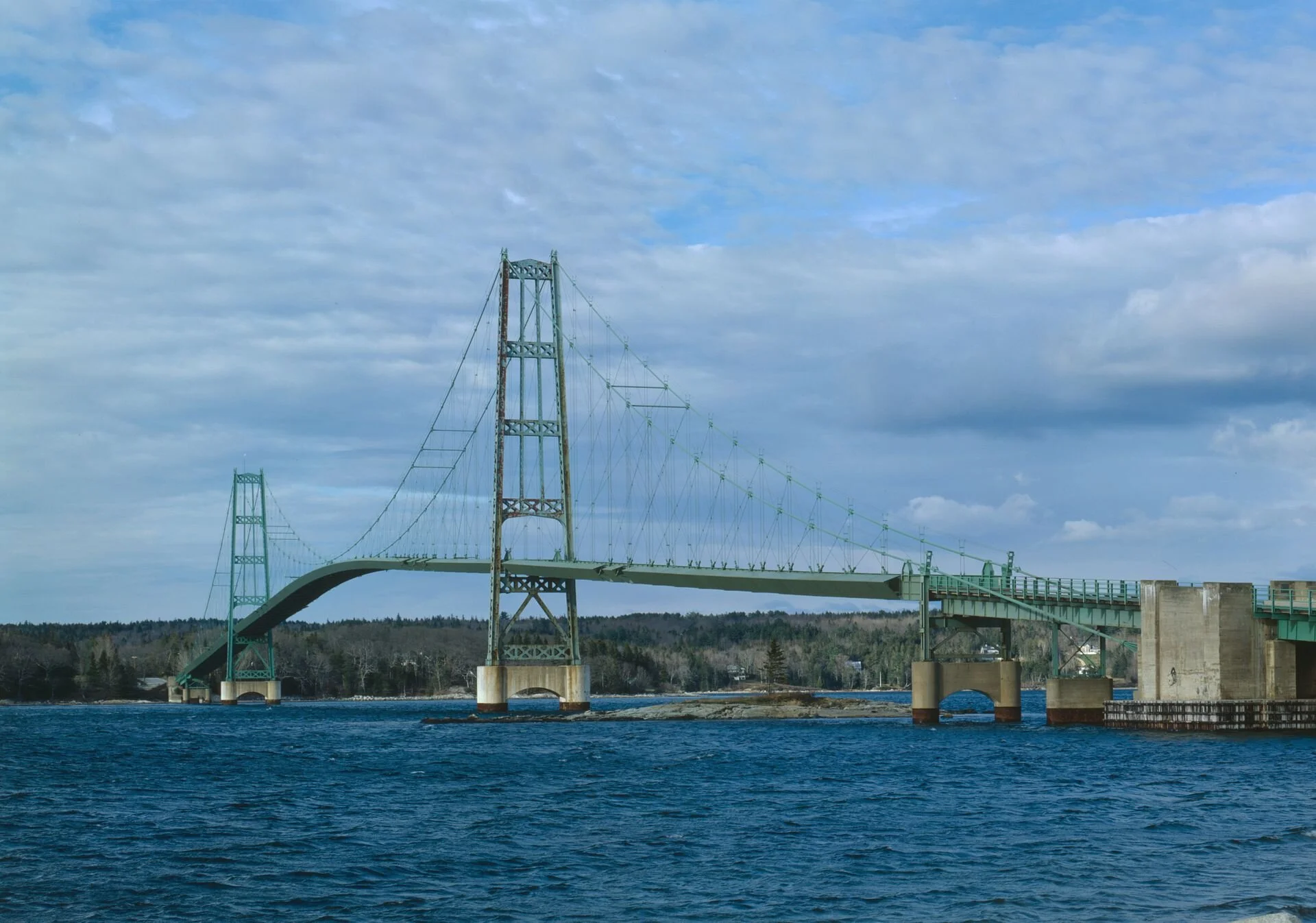
Deer Isle’s rather unsettlngly vibrating bridge
“Gather up whatever is
glittering in the gutter,
whatever has tumbled
in the waves or fallen our of the sky….’’
— From “Holding the Light,’’ by Stuart Kestenbaum, Maine’s poet laureate
A ceramicist, as well as poet, he was the director of the Haystack Mountain School of Crafts, in Deer Isle, Maine, for 27 years.
‘Willingness to be reformed’
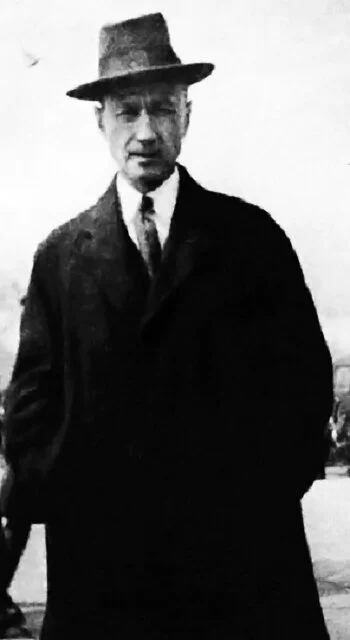
The skeptical Charles Ives
“It is the courage of believing in freedom, per se, rather than of trying to force everyone to see that you believe in it – the courage of the willingness to be reformed, rather than of reforming – the courage teaching that sacrifice is bravery and force, fear – the courage of righteous indignation, of stammering eloquence, of spiritual insight, a courage contracting or unfolding a philosophy as it grows—a courage that would make the impossible possible.’’
-- Charles Ives (1874-1954), in Essays Before a Sonata. This Danbury, Conn., native composed many avant-garde musical works and was an insurance executive and brilliant essayist. He is considered one of the greatest American composers. During his career as an insurance executive and actuary, Ives devised creative ways to structure life-insurance packages for people of means, which laid the foundation of the modern practice of estate planning.
Not wearing masks, not crowds, is the big peril
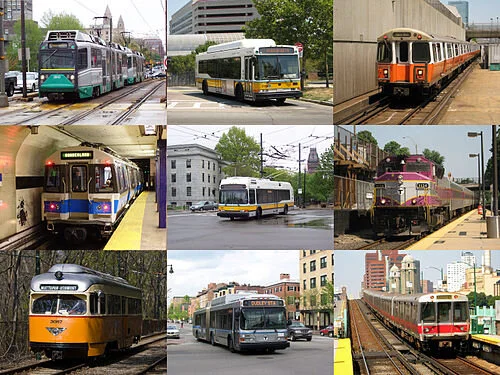
From Robert Whitcomb’s “Digital Diary,’’ in GoLocal24.com
Studies of some transit systems suggest that they’re not dangerous unless people don’t wear masks against COVID-19. Very crowded subway systems in Asia and Europe, where people are bumping up against each other, have not seeded pandemic outbreaks, because unlike in crazy Trumpian America, just about everyone wears a mask. Social distancing per se is overrated, as is that theatrical spraying with disinfectant.
Unfortunately, there’s no nationwide mask mandate for U.S. public transit, unlike in many other countries. It’s been politicized here, mostly because Trump supporters state their affiliation by refusing to wear masks, thus jeopardizing everyone else’s health.
Meanwhile, some states may have to declare harsh new lockdowns because of COVID seeding going on in bars, restaurants, colleges and public events.
The MBTA, by the way, is quite safe. Yes, I’ve used it recently to do business in Boston. It’s safer than driving into that city! But given how few people are using it, and the fact that conductors now sometimes don’t collect fares, the agency’s finances are in dire straits.
Tough like the Blue Jay
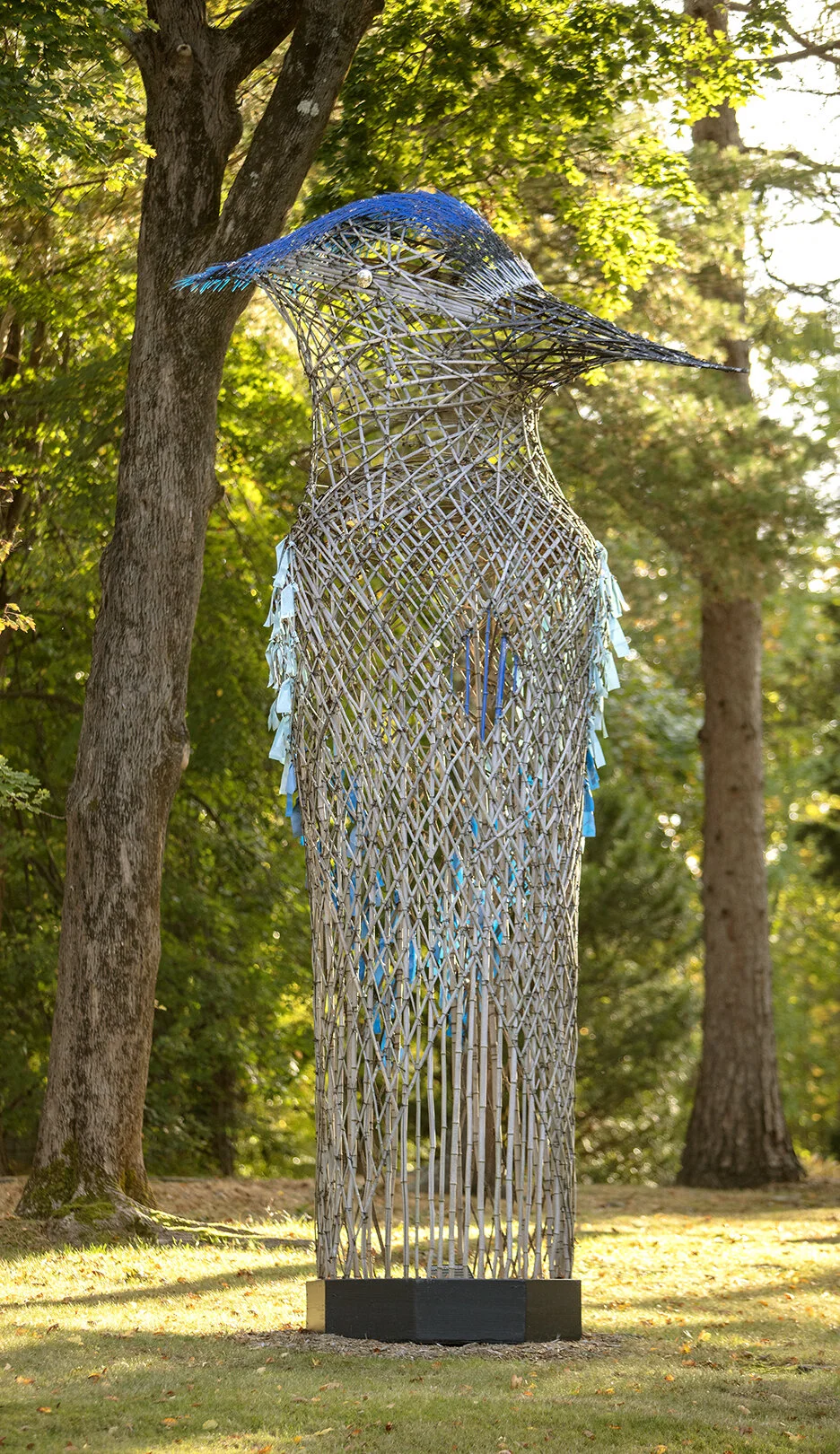
From the Art Complex Museum, in Duxbury, Mass.:
“In 2019, on the grounds of The Art Complex Museum, Donna Dodson and Andy Moerlein installed ‘Seeking Higher Ground.’ This is the second outdoor sculpture that the museum has been lucky to display. According to folklore, the Blue Jay is symbolic of clarity of thought and taking action. ‘Seeking Higher Ground’ is a clarion call to heed the warning signs of climate change. It reflects a hope that humans can unite to affect those changes needed to adapt and survive - like the Blue Jay.’’
“To see more of their work and to watch a short video they have created please
Don Pesci: My Journal of the plague year, continued
Thank God for such friends.
October 25, 2020
VERNON, Conn.
Life goes on. {My wife} Andree’s brother Ernie died in Florida. Titan, Andree’s guide dog for the last dozen years, died as well. And my cousin, the city mouse, writes to tell me: “There are two kinds of cynics among us, Republican cynics and Democrat cynics. The Democrats are better able than Republicans to dress their cynicism in gorgeous, empathetic cloth. They are here, they want us to know, to help with the problems they have caused. It all reminds me of a quip by Karl Kraus on psychoanalysts – they are the disease they purport to cure”
In an earlier letter, he wrote, “Whatever the problem is, you may be sure that a political solution to it can only make matters worse.”
And he wonders why cultural antibodies in the United States have not yet produced an Aristophanes or a Lucian, author of the biting satirical play The Sale of Philosophers. Instead we are confronted daily with unintentionally comic politicians. And our too, too serious politics has murdered comedy. Lincoln could never have survived this poisonous sobriety.
Fall has arrived. Brown leaves are scattered across the property. I’m waiting for the wind to do the work of raking. The wood pile and the furniture out front and down by the lake, now sprinkled with a bib of leaves, have been covered with tarpaulins. We are waiting on winter. Certain as the arrival of dawn and midnight, it will come and cover all in a blanket of purist white silence.
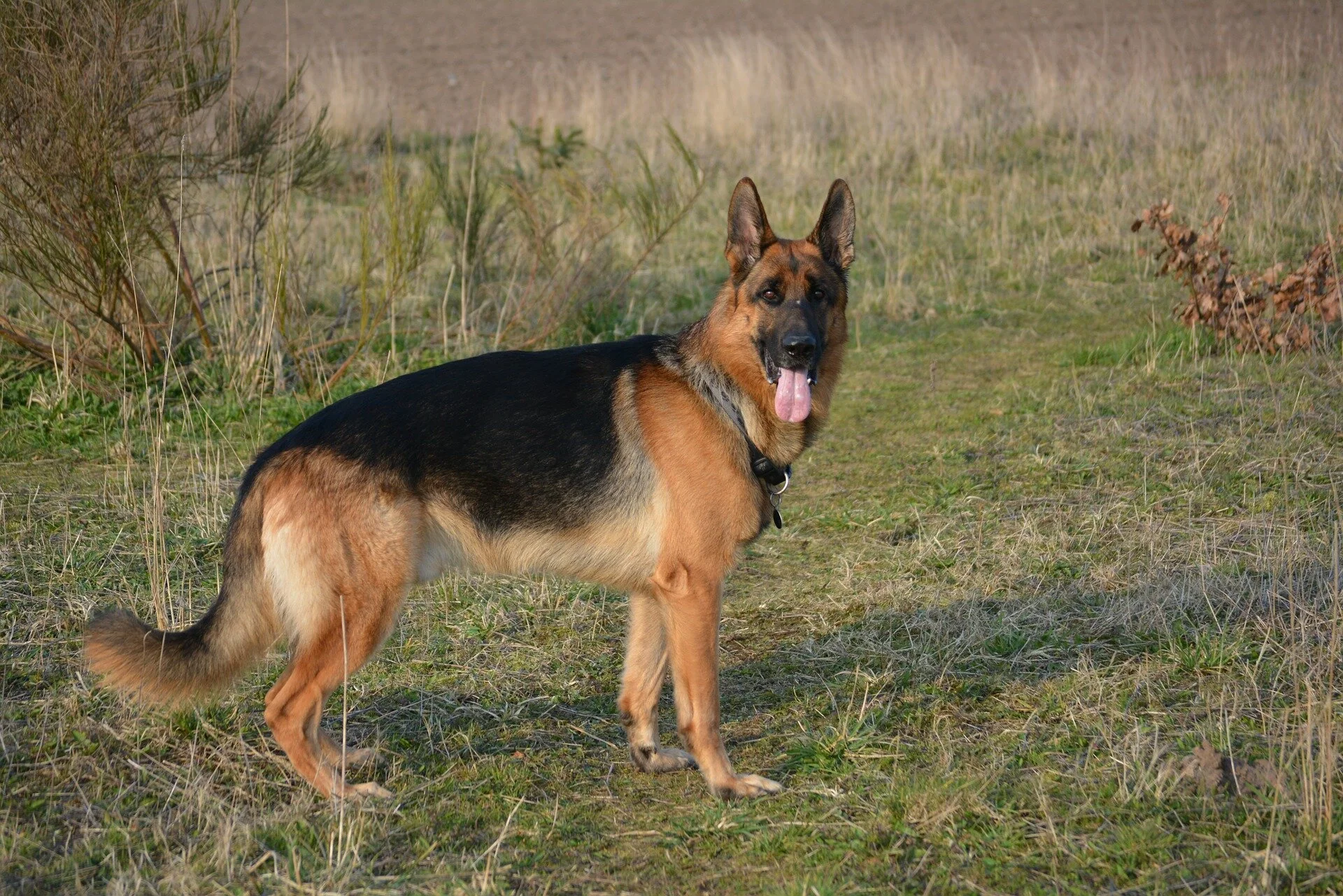
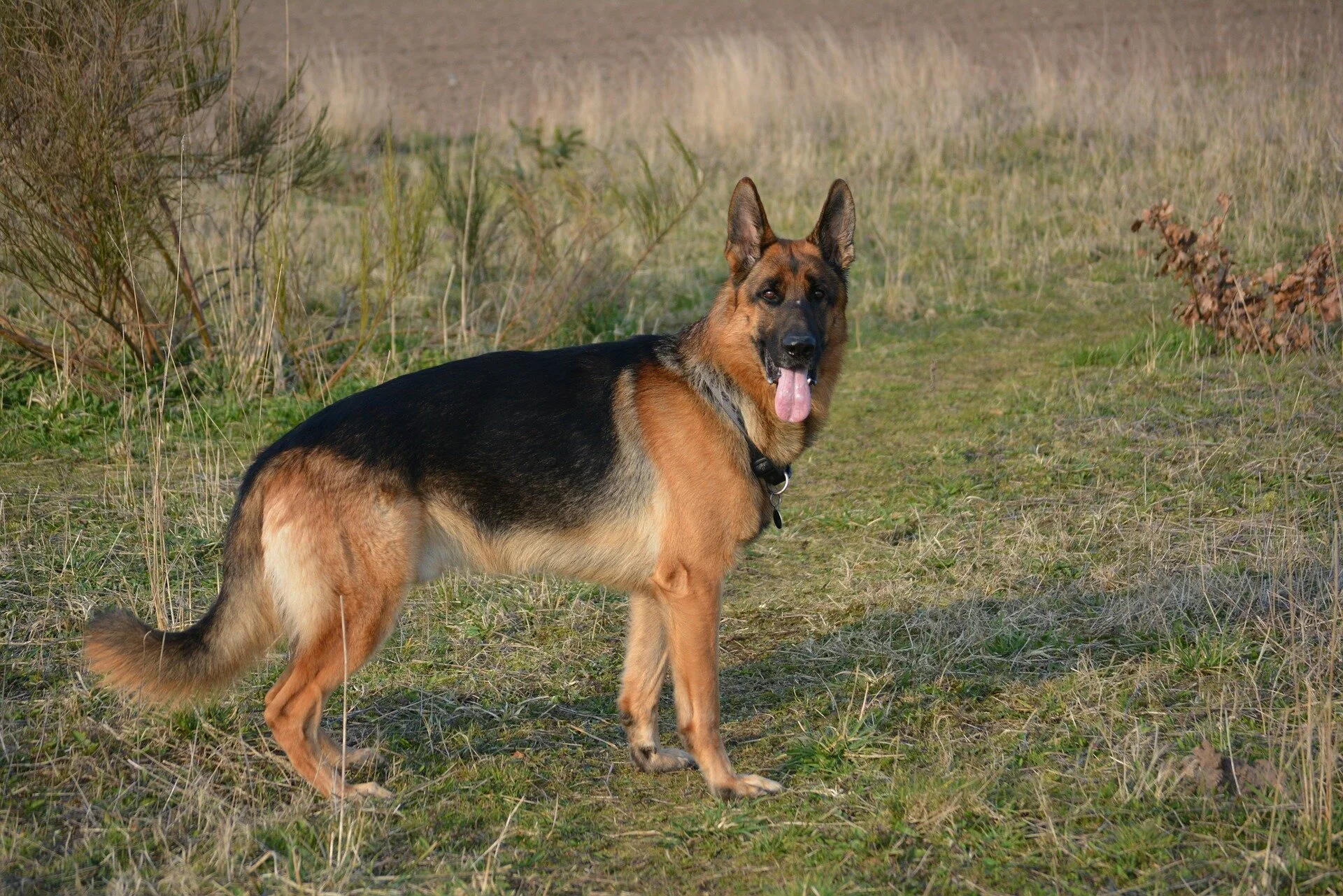
Andree is having some difficulty in attaching the new dog’s name, Dublin, to her commands, and the commands too have changed. Thank God and Fidelco for Dublin, a sleek and attentive, male German Shepard with large eyes and silver-tipped fur. Andree mentions to the many strangers who pause to comment on the dog, “He is the only Irish German Shepard in Connecticut.”
Every so often, Titan’s name is mentioned. This is usual; in our naming and our prayers, we cling to a safe and bountiful remembered past. I have had two dreams in which my father was a presence. This is very unusual for me. One does not dream of the center joist of a house. It is simply there in one’s life, preventing the whirlwind from carrying away all treasures; for that is what a home is – a bank of treasures much more reliable than bank notes.
The pandemic, the city mouse tells me, is useful primarily as a political hobgoblin to frighten people into an attitude of compliance and submission, not to say that it is not a serious threat.
He certainly has his finger on something there.
Did I watch the last presidential debate, he asks?
God no!
To the country mouse,
Well then, you missed a gaudy show, a significant part of it – Hunter Biden’s delinquencies, and his father’s memory lapses -- unreported by Connecticut’s left of center media. Trump was his usual solipsistic best. Biden looked as if he had been biting bullets for weeks while hunkering down in his bunker. The less one sees of Biden, the more popular he becomes. His is the first “front-porch-campaign” the nation has seen since the McKinley’s 1896 campaign and the advent of 24/7 news.
The opposite is true, of course, with {Connecticut} Governor Ned Lamont. As befits an autocrat, he is seen everywhere, rearranging the constellations in the sky, crowing up the sun, destroying yet another business, citing for the hundredth time the death toll in Connecticut, 60 to 70 percent of which is attributable to bad political decisions made by the autocratic governor.
There will come a time when even the most insensate retailer of fact in Connecticut realizes that Coronavirus is not responsible for a single business closure in the state – all of which have been shuttered by politicians, not a virus – and that our economic malady is every bit as serious AND DEADLY as Coronavirus.
But not yet. Perhaps after the November elections have been concluded to the satisfaction of the state’s dominant left of center party, the truth may once again resurfaced and break the hard-shelled exterior of campaign propaganda.
My city cousin certainly is right there. Coronavirus is a viral infection, not a politician, and viruses, unlike governors out rigged with plenary powers, are powerless to close by gubernatorial edict a school or a nail salon.
A Hartford Courant front page, above the fold, headline screams, “Just how bad could the latest spike get?”
About a week and a half before Election Day, Lamont, it would appear, has hoisted himself on his own petard. Connecticut’s Coronavirus numbers, though still far below spring numbers, are rising steadily. Connecticut is now “on the pathway to being bad.”
“I am concerned,” Lamont said. “I take nothing for granted.”
Sure, sure, but when will be pull the lockdown trigger?
“We need to slow the resurgence right away,” a Courant editorial barks this Sunday. Clamp down on the number of people allowed at indoor gatherings; stop playing softball with coaches and sport parent; order all schools to revert to hybrid learning models, and stop saying the surge was “expected.”
Find a hole, jump into it, pull the hole in over your head. Don’t worry about Connecticut’s economy. The state is in arrears in payments to its public employees by about $68 billion; we are among the highest taxed, most progressive states in the nation; businesses have fled the state for greener pastures elsewhere; clamorous state employee unions are still petted by the progressive politicians they help to re-elect; and the only sunbeam shining through the darkness is that the real-estate sector is flourishing, because whipped millionaire New Yorkers are fleeing that state and settling in Connecticut’s Gold Coast, abandoned by companies such as GE and Raytheon Technologies, formerly United Technologies.
Lucian, where are you?
... to be continued
Don Pesci is a columnist based in Vernon.
Words, words!
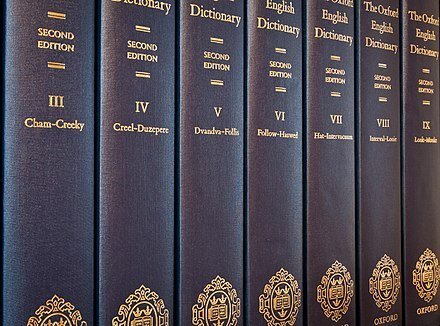
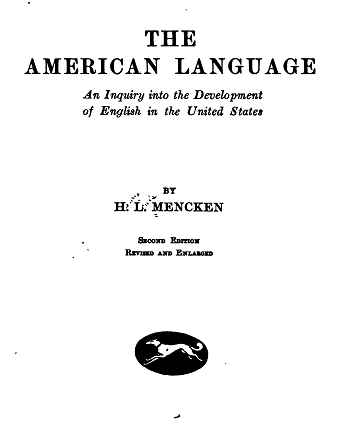
“Never better, mad as a hatter,
right as rain, might and main,
hanky panky, hot toddy,
hoity-toity, cold shoulder,
bowled over, rolling in clover….’’
— From “Sweater Weather: A Love Song to Language,’’ by Sharon Bryant (born 1943), a New England-based poet who teaches creative writing at Lesley University, in Cambridge, Mass.
‘On behalf of all humanity’
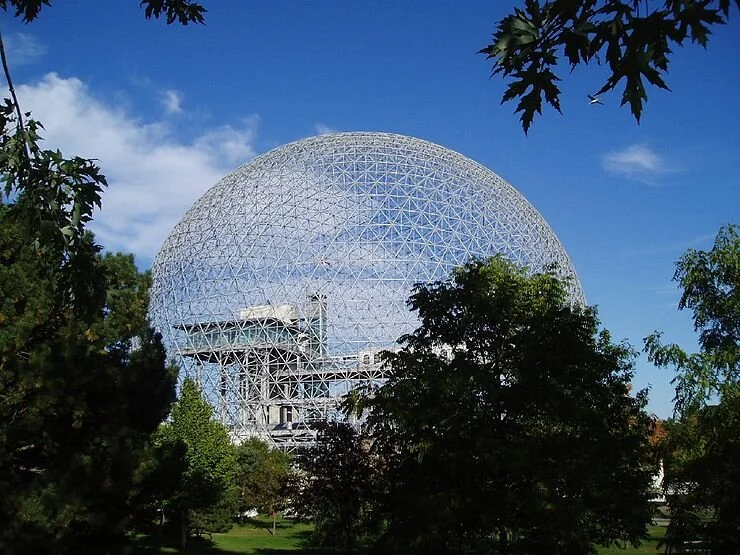
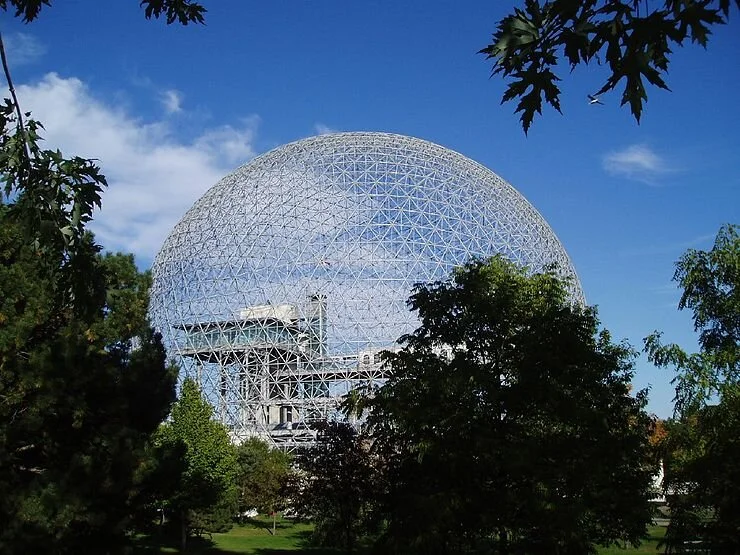
The Montreal Biosphère, formerly the American Pavilion of Expo 67, a geodesic dome designed by Buckminster Fuller, on Île Sainte-Hélène, Montreal.
“Dare to be naive.’’
— Richard Buckminster Fuller (1895-1983), inventor of , most famously, the geodesic dome and the Dymaxion car, futurist and theorist, in Moral of the Work
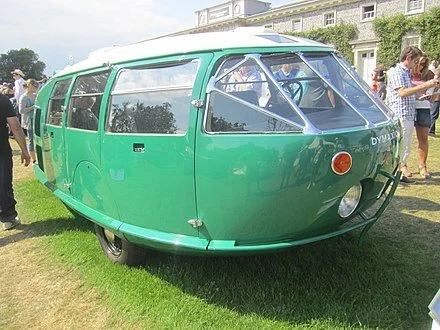
A 1933 Dymaxion prototype
He was born of an old Massachusetts family and was the grand-nephew of Margaret Fuller, an American journalist, critic and women's rights advocate associated with the American transcendentalist movement, which was based in the Boston area. He was mostly known by his middle name, Buckminster, an ancestral family name. But many called him “Bucky.’’
He wrote in the year of his death:
“I am now close to 88 and I am confident that the only thing important about me is that I am an average healthy human. I am also a living case history of a thoroughly documented, half-century, search-and-research project designed to discover what, if anything, an unknown, moneyless individual, with a dependent wife and newborn child, might be able to do effectively on behalf of all humanity that could not be accomplished by great nations, great religions or private enterprise, no matter how rich or powerfully armed.
xxx
Margaret Fuller, for her part, once wrote in her diary: “Genius will live and thrive without training, but it does not the less reward the watering pot and the pruning knife.’’
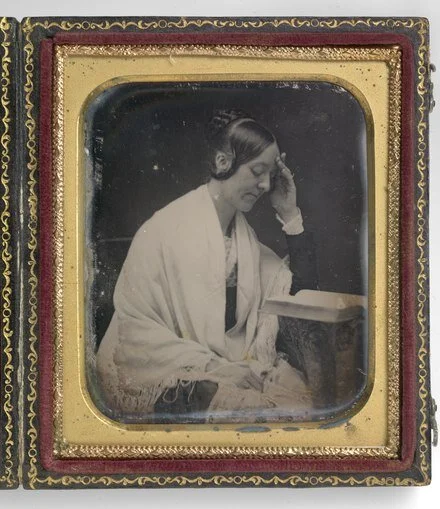
The only known daguerreotype of Margaret Fuller (by John Plumbe, 1846)
Glory 'contained'
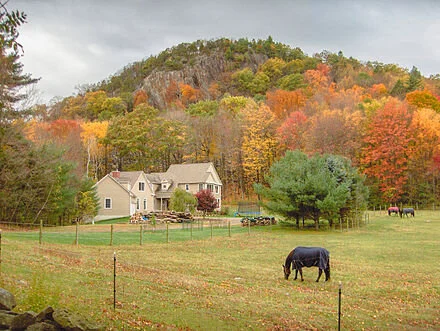
October scene in Granby, Conn.
“It was a radiant October day. Connecticut suggested an outrageous show-off, the low hills overflowing with autumnal brilliance, eruptions of golden leaves, friezes of crimson, the pines maintaining their sober greenness amid the blaze like sentinels.
“All this last glory of the growing season was nevertheless contained, neat, firmly — for centuries now — under control: this was New England.’’
From the novel A Stolen Past (1985), by John Knowles (1926-2001)
Joshua Cho: Even in Pennsylvania, opposing fracking isn't 'political suicide'
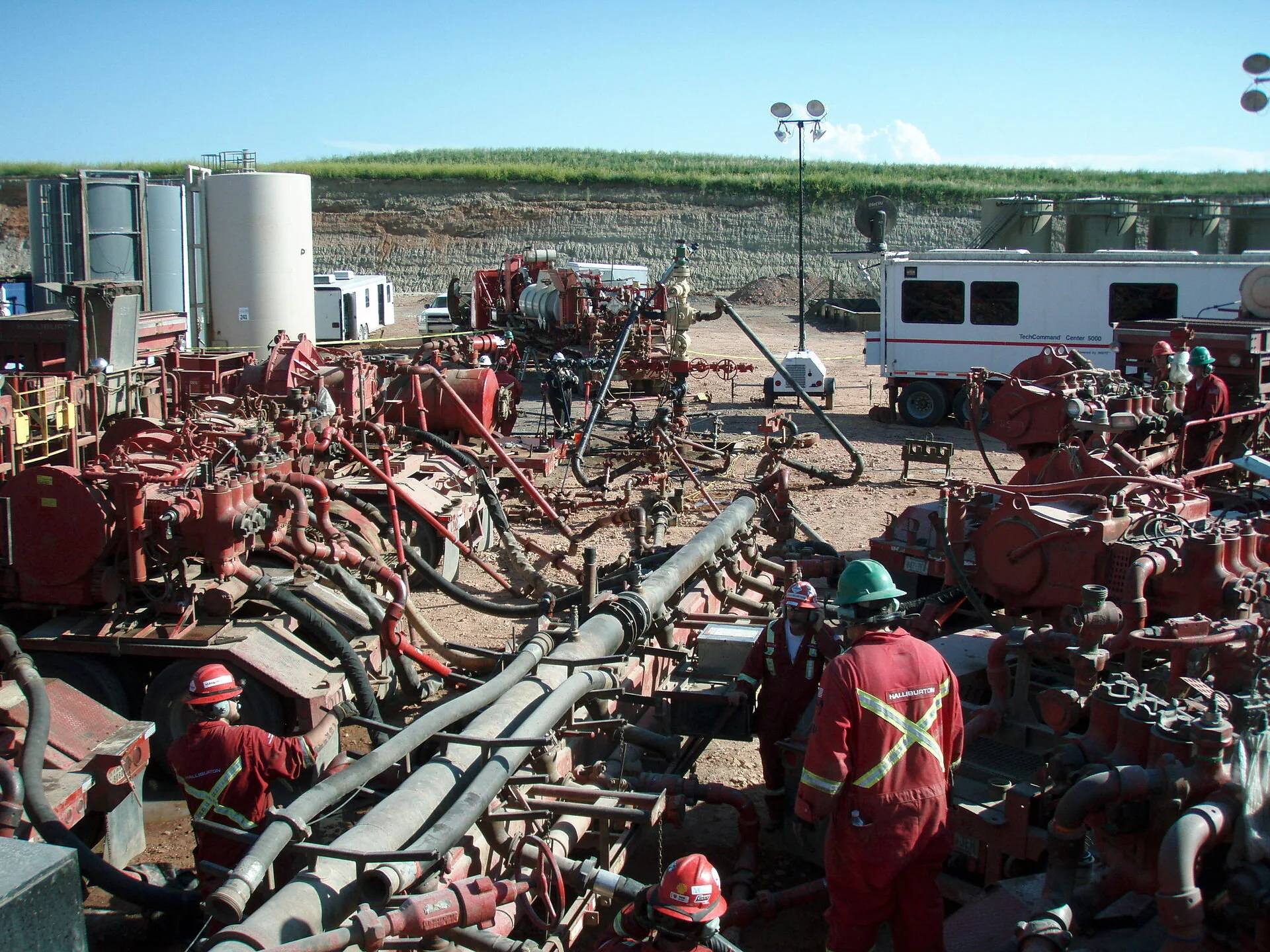
Fracking in progress
Via OtherWords.org
In this year’s vice presidential debate, Sen. Kamala Harris reiterated Democratic nominee Joe Biden’s rejection of a fracking ban, despite her earlier call for one when she was a presidential candidate.
“I will repeat, and the American people know, that Joe Biden will not ban fracking. That is a fact,” Harris said.
Whenever there are discussions about banning fracking, media coverage seems to prioritize potential “risks” to Democrats’ electoral prospects, or potential economic downturns. Unfortunately, a lot of this coverage is quite sloppy.
For instance, The New York Times quoted absurd claims that a fracking ban would mean “hundreds of thousands” of Pennsylvanians would be “unemployed overnight.” In reality, about 26,000 people work in all of Pennsylvania’s oil and gas sector.
Still, The Times suggested that any presidential candidate who supports a national fracking ban would risk losing Pennsylvania, calling the issue “a political bet.” A fracking ban “could jeopardize any presidential candidate’s chances of winning this most critical of battleground states — and thus the presidency itself,” the paper wrote.
NPR likewise made dubious pronouncements on the opinions of swing-state voters the focal point of the story, reporting that “aggressive” climate action “could push moderate voters in key swing states to reelect President Trump,” and even cited — without rebuttal — a claim from the U.S. Chamber of Commerce that a fracking ban would eliminate 17 percent of all U.S. jobs.
Soon after the debate, Quartz explained that Biden and Harris don’t support a fracking ban because it “tempts political suicide in swing states like Pennsylvania and Ohio where fossil fuels still rule.” And the Los Angeles Times described Biden’s opposition to a fracking ban as a “nuanced position.”
There are two big problems with these arguments.
First, as journalist David Sirota pointed out, “the idea that a fracking ban is political poison in Pennsylvania” simply “isn’t substantiated by empirical data.”
A January poll of Pennsylvania voters found that more registered voters support a fracking ban (48 percent) than oppose it (39 percent). A later CBS/YouGov poll in August found 52 percent of Pennsylvania voters supporting a fracking ban. These numbers hardly suggest “political suicide.”
Second, there’s simple climate science.
In 2018, the U.N. announced that carbon pollution needs to be cut by 45 percent by 2030 to prevent irreversible planetary devastation.
Unfortunately, fracking releases large amounts of methane into the atmosphere, which can warm the planet 80 times more than the same amount of carbon dioxide over a 20-year period. And recent reporting has suggested that fracking is an even bigger contributor to global warming than previously believed.
At the debate, Harris emphasized that Biden “believes” in science.
She claimed he “understands that the West Coast of our country is burning” and “sees what is happening on the Gulf states, which are being battered by storms,” and that he has “seen and talked with the farmers in Iowa, whose entire crops have been destroyed because of floods.”
But on this issue, the science clearly points in one direction: away from fracking.
Finally, banning fracking doesn’t need to mean eliminating jobs. Environmental and labor activists, economists, and scientists have for years discussed the need for a full employment program based on green jobs to serve as a just transition for workers. Green industries could employ many, many more workers than fossil fuels.
There is no reason for a fracking ban to be “political suicide” — except, maybe, for the fossil fuel industry.
Joshua Cho (@JoshC0301) is a writer based in Virginia. This op-ed was adapted from a longer piece at FAIR.org and distributed by OtherWords.org.
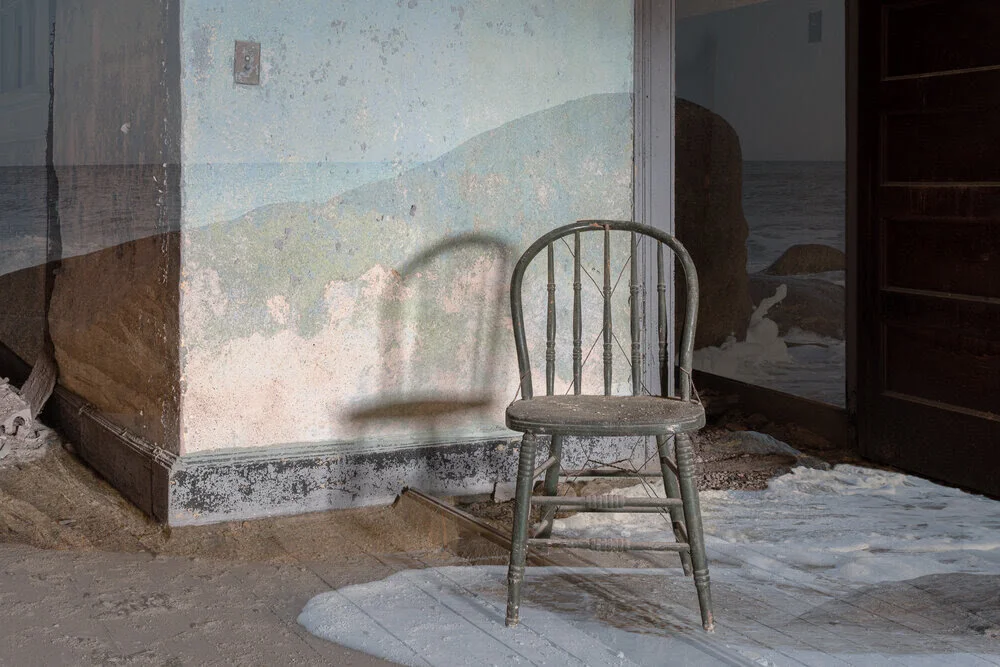
Metaphors for climate change
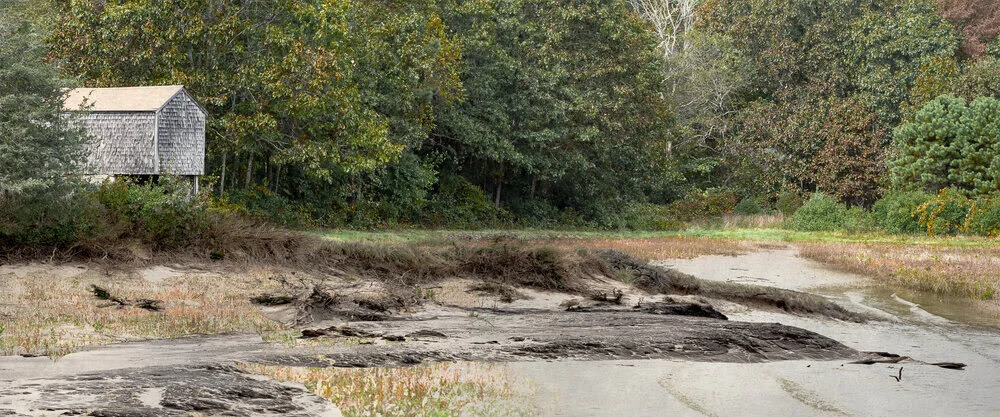
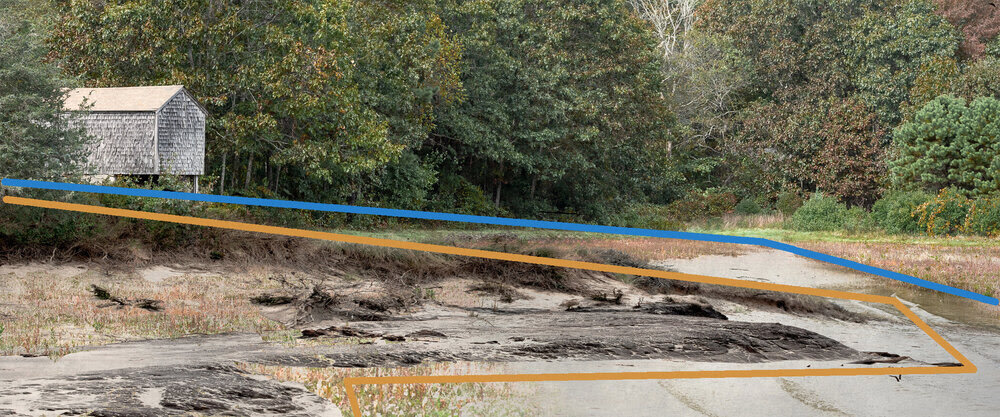
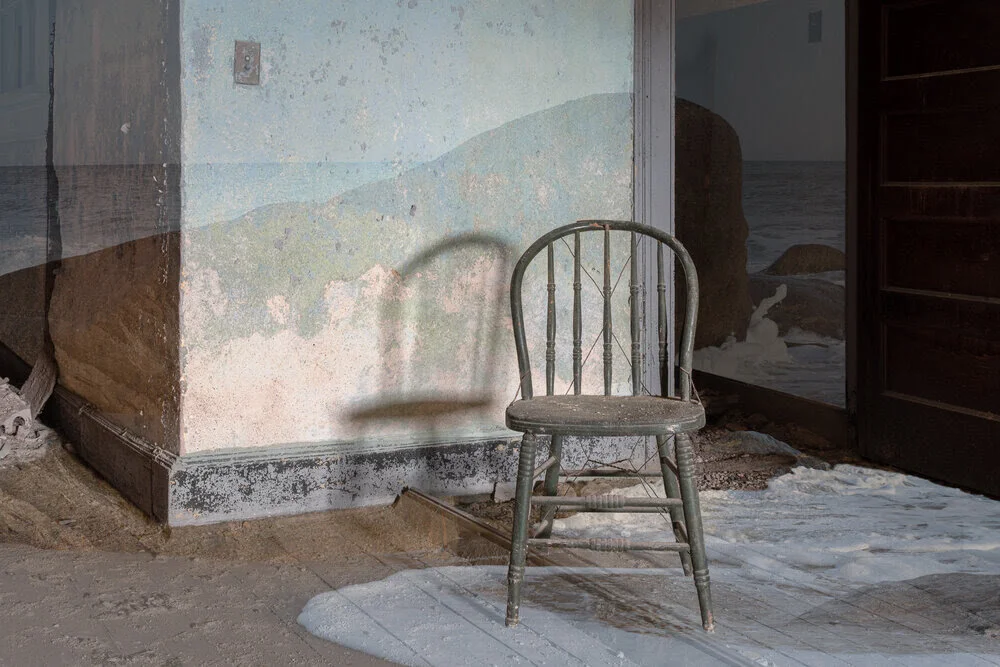
See Vicki McKenna’s show “Geology and the Physical World,’’ at Fountain Street Fine Art, Boston. Sadly, the show closes Oct. 25.
She says:
“Trained as a geologist, I see rocks as telling a story if you know how to interpret them. Photographs also require interpretation for they are the ingredients of a story rather than the story itself. The viewer assembles them into a narrative that is personally important.
“My works are photo illustrations that combine multiple photographs and are intended to collapse present and future into one image. All my previous work has been straight photography. I’ve captured an image in the camera, edited, and printed it. My use, here, of editing software to create a composite image is a departure that seemed justified by the challenge of incorporating the element of time into the final image.
“I was motivated by considering the effects of rising sea level. Each image is a montage of two or more photographs. I have merged one photograph representing the current environment with other photographs representing a possible future. The composite image isn’t meant to be a scientific thesis, but a metaphor for a possible result of climate change. In some images it is easy to identify the elements of the individual photographs. In others, the blending of photographs creates an image that almost seems realistic. The ambiguities of scale and detail in the montage are intended to create a sense of discontinuity or unease.’’
See:
https://www.fsfaboston.com/growingagallery/2020/10/23/geology-and-the-physical-world-vicki-mckenna?mc_cid=37b6bc98f3&mc_eid=296ccbd81d
New Bedford, Mass.

Llewellyn King: Can NYC recover its swagger after COVID-19?

In the energy of midtown Manhattan
NEW YORK
Alistair Cooke, the great British journalist who wrote his weekly “Letter from America” – a paean to the United States -- for 58 years, reserved some of his most lavish praise for Manhattan. When Nikita Khrushchev, the Soviet leader, visited America and wanted to see Disney World, Cooke told him he’d never see anything as extraordinary as the Manhattan skyline.
I was reminded of this long-ago admonishment recently, when I had the opportunity to see Manhattan from the water, cruising around the island on a friend’s yacht, looking at that skyline, those fingers of buildings, thrusting toward heaven in a forest of architectural and engineering creativity that has no equal on earth. Dubai may aspire but it doesn’t compete.
Manhattan is awe on steroids.

I’ve savored and, at times, detested it for decades. I suffered its awfulness at the bottom when many newspapers closed and I, an immigrant with no resources, found work as a busboy at the Horn & Hardart on 42nd Street – one of the food-service automats which were once a feature of New York City. They were where the hapless could sit unbothered for long hours without buying anything beyond coffee; where they could stay warm and sheltered in the winter.
I’ve also savored Manhattan in good times, staying at the Carlyle Hotel, one of the best hotels in the world, up there with the Ritz in Paris and Brown’s in London.
It was said when I lived there in the 1960s, that New York was a city for the extraordinarily rich and the extremely poor. I found work in Washington and stayed south; New York became a place to visit.
If it was a hard place to be poor in 1965, the extremes of poverty and wealth only increased with time.
More great buildings, enabled by engineering that allowed them to be planted in smaller plots of land, sprouted in Manhattan. Spindle apartment buildings and sprawling waterfront office developments were built with money that flowed in from hedge funds, tech companies, Russian oligarchs, Chinese billionaires, and Middle Eastern oil-garchs.
On Sept. 11, 2001, the Big Apple felt its vulnerability to a hostile, premeditated attack. Now it is facing its greatest crisis, one that will wound it mortally if not fatally: COVID-19.
New York City has an uncertain future. People are moving out, selling their expensive co-ops at a loss, and buying in less-crowded places on Long Island, in the Hudson Valley, Connecticut, and even farther afield.
As I looked in wonder at the city of striving people, epitomized by its buildings that themselves seem to strive to go ever higher, I wondered whether New York is over, destined to a slow death; its apartments in the clouds likely to be abandoned, and its trove of office space to sit empty as a new generation grows into the idea that working from home — home far away — is the norm, the new way to think about work.
The New York Times has looked at the problem and its writers can’t, it seems, bring themselves to answer the question: Is it over?
The city’s impending tragedy will be played out in other cities, but it is in New York that it will be most visible, most painful; the dream most shattered.
Sure, you might say, it was built on greed and now it must pay the price. But it was also built on much else: immigration, diversity, financial acumen, theater, fine art, sweat and toil -- and that most human of emotions: aspiration.
I hope that the new normal will allow cities to recover and New York to swagger forward as it has in the past: difficult to live in and difficult to live without. It’s a miracle of a city, a big shiny apple.
Llewellyn King is executive producer and host of White House Chronicle, on PBS. His email is llewellynking1@gmail.com. and he’s based in Rhode Island and Washington, D.C.
Website: whchronicle.com

In Korea Town, one of New York’s many ethnic neighborhoods