
Vox clamantis in deserto






'More than the fruit'

“Eat it; and you will taste more than the fruit:
The blossom, too,
The sun, the air, the darkness at the root,
The rain, the dew….’’
—From “The Crossed Apple,’’ by Louise Bogan (1897-1970). She was a native of Livermore Falls, Maine, where her father was a mill worker. She served as U.S. poet laureate.
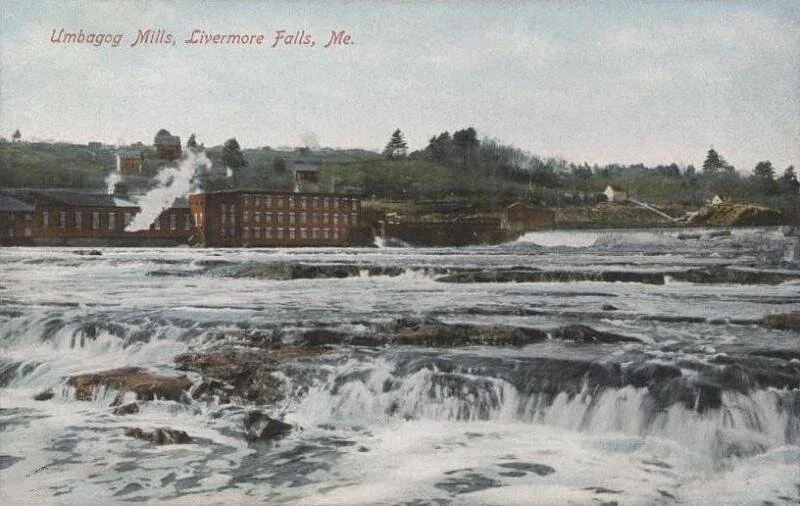
1909 postcard
'Journey through creation'

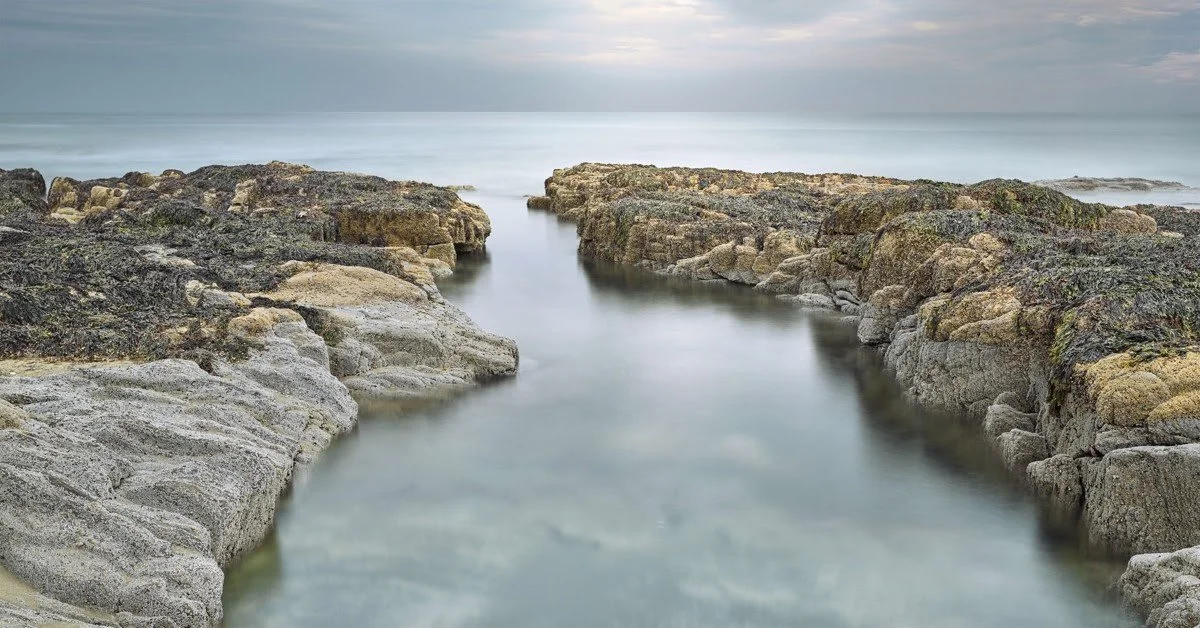
“Fossil 283, 2015” (archival pigment print),. by Boston-based Katherine Gulla, in her show “Passage,’’ at the Danforth Art Museum, at Framingham (Mass.) State University, through Feb. 28
Katherine Gulla's show is about her three series “Path,’’ “Falling’’ and “Fossil.’’ The museum says that these series represent, respectably, “the process, trials and remains of the artist's journey through creation. Her work is subtle and meditative, quietly reflecting nature's response to climate change and using it to bring forth feelings of absence and loss.’’
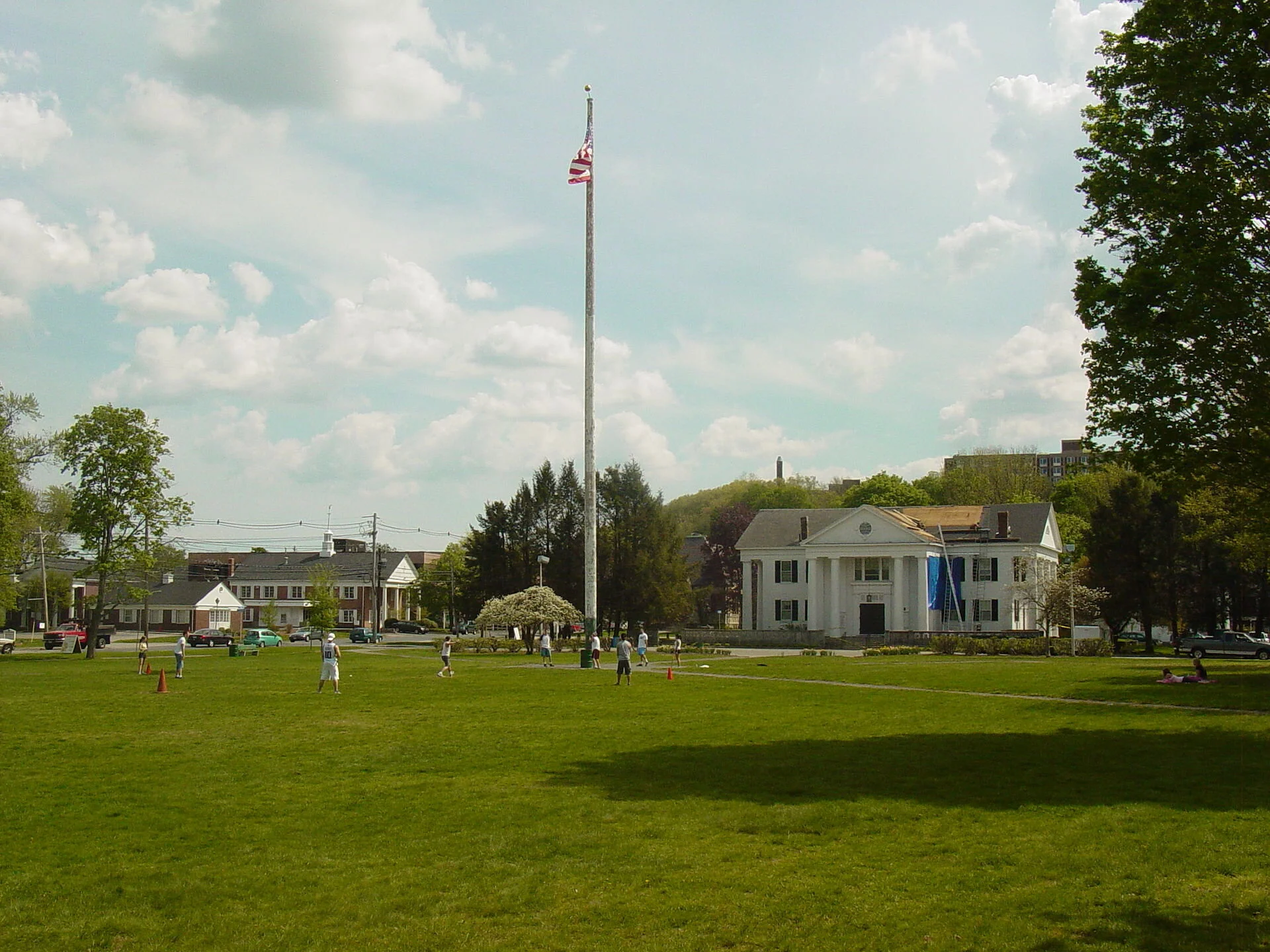
The Common in Framingham Center
Chris Powell: Conn. can do without higher education for a while; more Bridgeport bathos

Main quad at the University of Connecticut’s flagship campus, in Storrs
— Photo by Daderot
MANCHESTER, Conn
First the University of Connecticut asked state government for an emergency appropriation of more than $100 million. Now the state colleges and universities system, which operates the regional universities and community colleges, is asking for an emergency appropriation of $69 million. UConn's deficit arises largely from mismanagement of its Health Center. The regional universities and community colleges suffer most from falling enrollment.
Ordinarily institutions losing so much money would do more than wring their hands and seek bailouts. They would cut expenses, and since most higher education expenses are personnel, they would cut there. But since state government has been under Democratic administration for 10 years and state government employee union members constitute the party's army, their contract forbids layoffs and reductions in compensation.
So while the universities and colleges can turn off their electricity, heat, and internet service, they can't economize in the most practical and effective way. Even if they closed entirely they still would have to keep paying everyone, at least until the current contract expires.
So what is to be done about higher education's insolvency?
Legislators seem to have nothing to say about it, and they hardly meet anymore even though they still seek re-election next month. Gov. Ned Lamont has yet to offer any ideas, and he may be finding little glory in ruling by decree, since his work increasingly is just a matter of calculating deficits and seeking more federal bailouts. With the state's economy having shrunk by almost a third this year amid the virus epidemic, tax increases can't be seriously talked about until after the election, and even then it will be crazy talk. But the state employee union contract demonstrates Connecticut's infinite capacity for insanity in government.
Actually, while it wouldn't save on payroll right away, closing higher education indefinitely might be best.
For only a fraction of higher education produces any practical value to the state's economy, and while the rest of it theoretically can give students greater understanding and appreciation of life, it is deteriorating.
Most students admitted to the regional universities and community colleges already require remedial high school courses, having been advanced not by learning but mere social promotion. UConn has escaped the remediation scandal but still is being swamped by the political correctness sweeping higher education nationally.
There is less education, more indoctrination and political posturing, and more complaining about "systemic" racism to keep everyone in line with the indoctrination even as no one ever identifies the supposed racists or racist policies. Despite the prattle for "diversity" there is little political diversity among the faculty. People of all ancestries are welcome as long as they think the same. The idea of inviting a non-left-wing speaker sets off alarms.
The problem with education in Connecticut is not higher education but lower education, since most high school graduates fail to master basic high school work. This is worst in the cities. This is always presented as a money problem but decades of spending increases haven't changed anything, since it's a parenting problem.
Until higher education can find a purpose higher than subsidizing educators, Connecticut could do without it.
xxx
FOREVER CROOKED: Add the new corruption in Bridgeport to the long list of disturbing issues being ignored at the state Capitol. Last week the city's former police chief -- a close friend of Mayor Joe Ganim, Armando Perez -- joined former city personnel director David Dunn in pleading guilty to federal charges of rigging the chief's testing and hiring procedure.
The mayor already has served a long prison sentence for the corruption he committed during his first administration, and everyone understood that he wanted Perez to be chief during his second administration. So it is hard to imagine that the test rigging happened without the mayor's approval. But the state's political leaders, Democratic and Republican alike, have nothing to say about the matter.
After all, it's just Bridgeport. It's the state's largest city, but also its poorest, so who cares?
Ganim's spokeswoman says the guilty pleas "help bring closure to this matter." Closure on corruption in Bridgeport? That will be the day.
Chris Powell is a columnist for the Journal Inquirer, in Manchester.

Daniel Hunter: Things to do to thwart a Trump coup

Via OtherWords.org
Our president has openly said he might not respect the outcome of our election. Is it a sign of things to come, or just tough talk? Either way, it’s good to plan ahead.
I’m part of an effort called Choose Democracy, which is preparing people to stop a coup attempt — or prevent one altogether. These guidelines are drawn from the many countries that have experienced a coup since World War II.
*Don’t expect results on election night.
Many mail-in ballots may not be counted until days or weeks after Election Day.
Wayward state officials may try to exclude these ballots. We may even see governors or state legislatures try to send different results to the Electoral College than their voters chose.
As election results start coming in, the message needs to come through loud and clear: Count all the votes and honor the result.
*Call it a coup.
One reason to use the language of a coup is that people know it’s wrong.
We know it’s a coup if the government stops counting votes, declares a winner who didn’t get the most votes, or allows someone to stay in power who didn’t win the election. These are sensible red lines that people can grasp right away.
*Know that coups have been stopped by regular folks.
Most coup attempts have failed — especially when there is an active citizenry. The moments after a coup are moments for heroism amongst the general population. It’s how we make democracy real.
*Be ready to act quickly — and not alone.
People who stop coups rarely get a warning that one is coming. This time, we do. To start preparing, talk to at least five people who would go into the streets with you. Get yourself ready to act.
*Focus on widely shared democratic values.
Don’t just go out with a list of grievances against a vilified leader. Instead, exalt our widely shared core democratic values. This invites people who wouldn’t normally join movement causes into the process.
*Persuade people not to just go along.
In all the research on preventing coups, there’s one common theme: People stop doing what the coup plotters tell them to do. They refuse orders, go on strike, and close airports and shops until the coup ends.
*Commit to nonviolence.
The uncertain center has to be convinced that “we” represent stability and “the coup plotters” represent hostility to the democratic norms of elections and voting.
It’s a contest of who can be the most legitimate. Historically, whichever side resorts to violence the most tends to lose.
*Yes, a coup can happen in the United States.
Unfortunately, it can happen here. In 1898 in Wilmington, North Carolina, white racists organized a violent coup against newly elected Black officials, with white squads killing 30 to 300 people.
*Center in calm, not fear.
Fearful people are less likely to make good decisions. Breathe deeply. Play out scenarios, but don’t become captured by them. We’re doing this to prepare, just in case.
*Prepare to deter a coup before the election.
Get people into the mindset of taking action so they don’t freeze. Sign and circulate a pledge saying “If it comes to this bad thing, then I’ll act.” Here’s ours:
We will vote.
We will refuse to accept election results until all the votes are counted.
We will nonviolently take to the streets if a coup is attempted.
If we need to, we will shut down this country to protect the integrity of the democratic process.
You can sign the pledge at ChooseDemocracy.us. These public commitments ahead of time increase the political cost of attempting a coup — because the best way to stop a coup is to deter it.
Daniel Hunter is a trainer and organizer with Training for Change. .

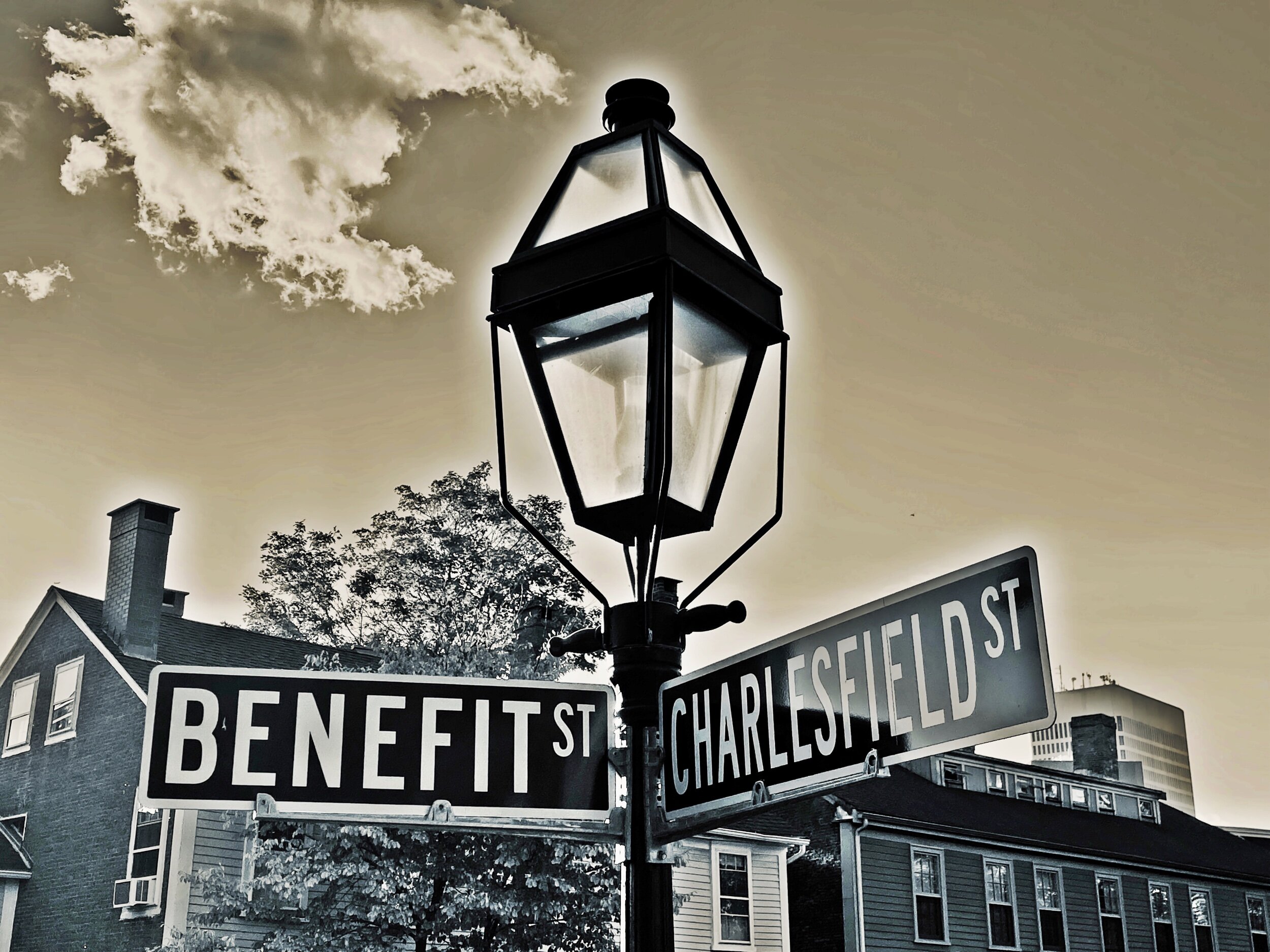
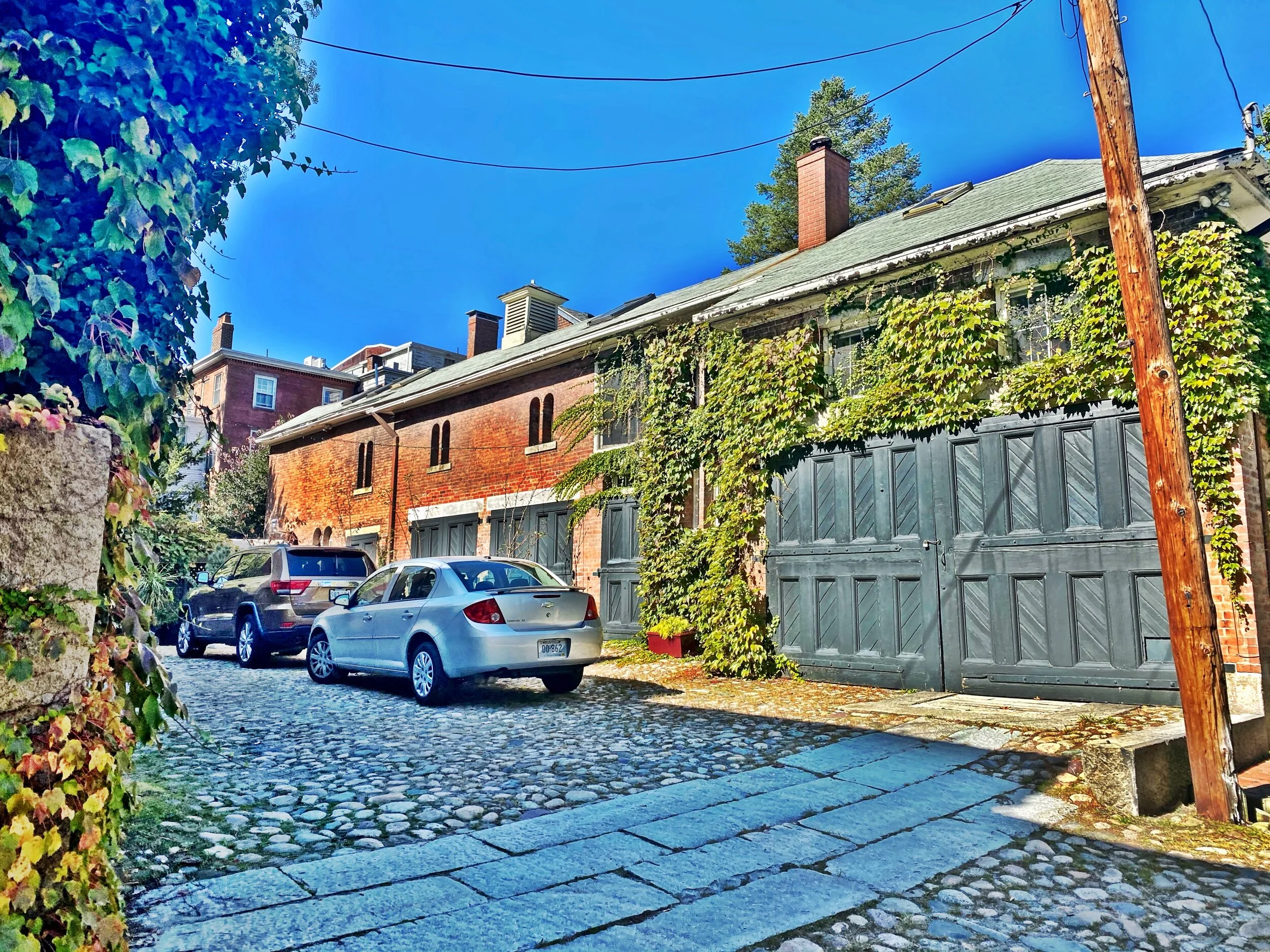
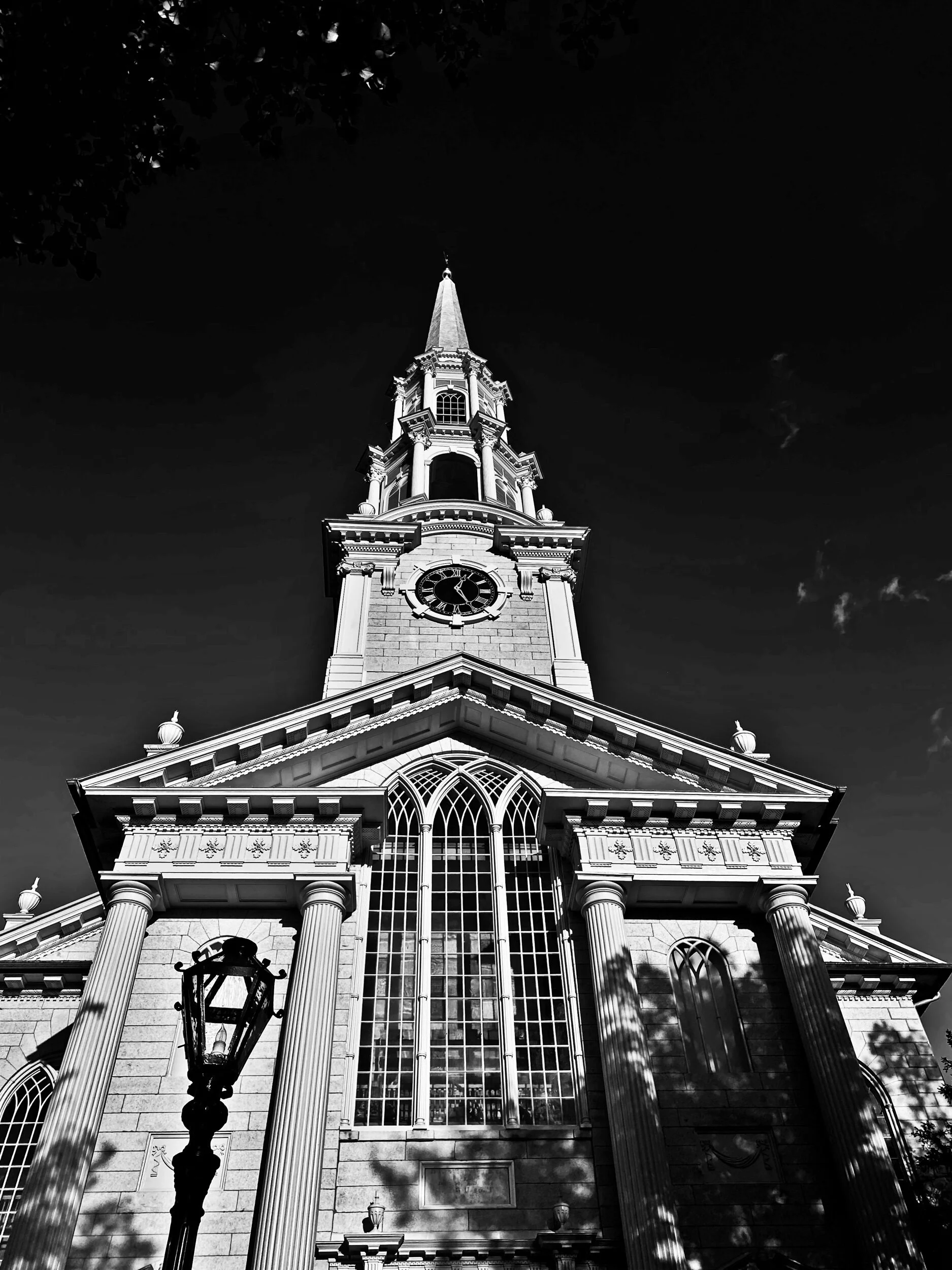
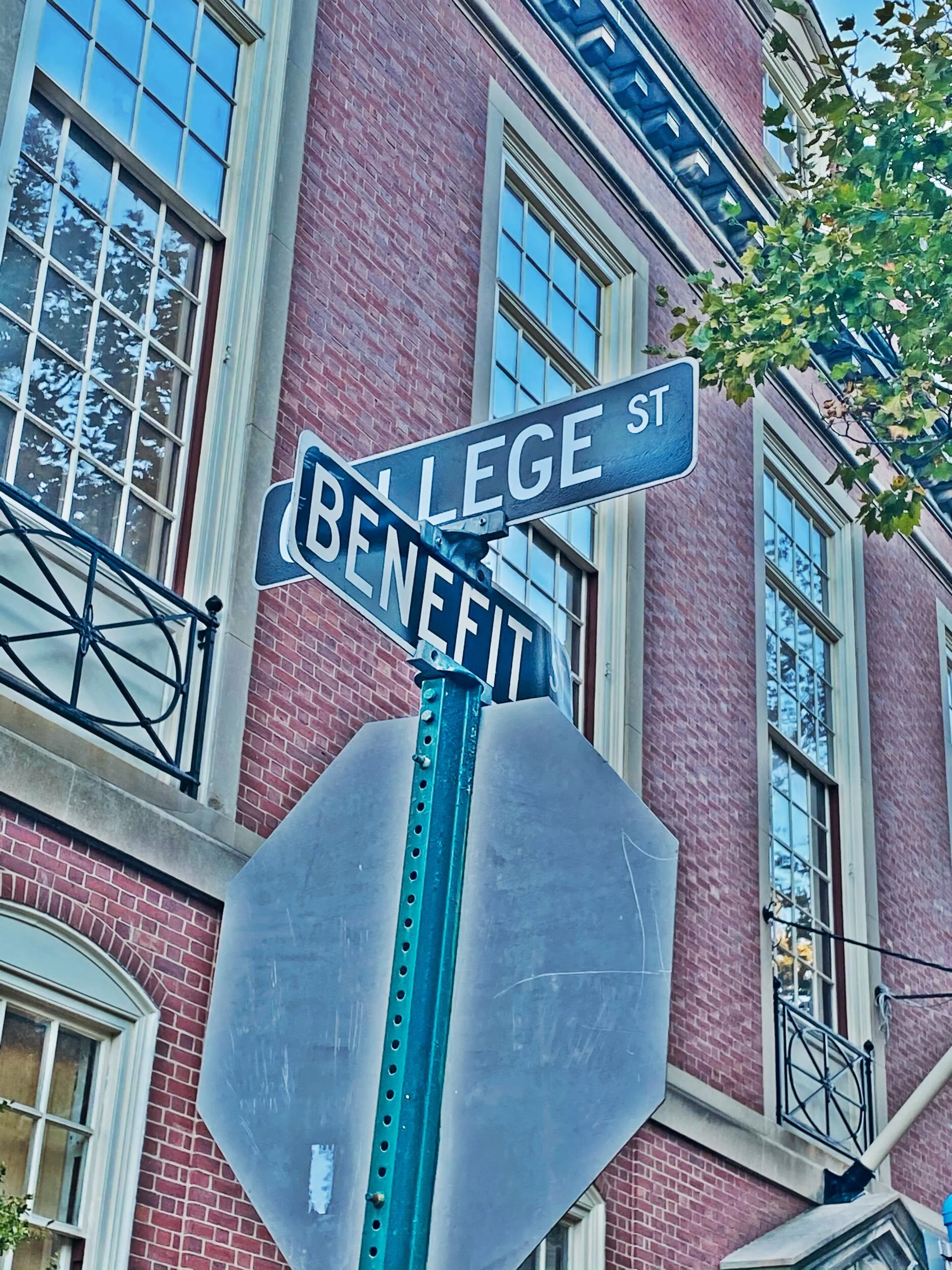
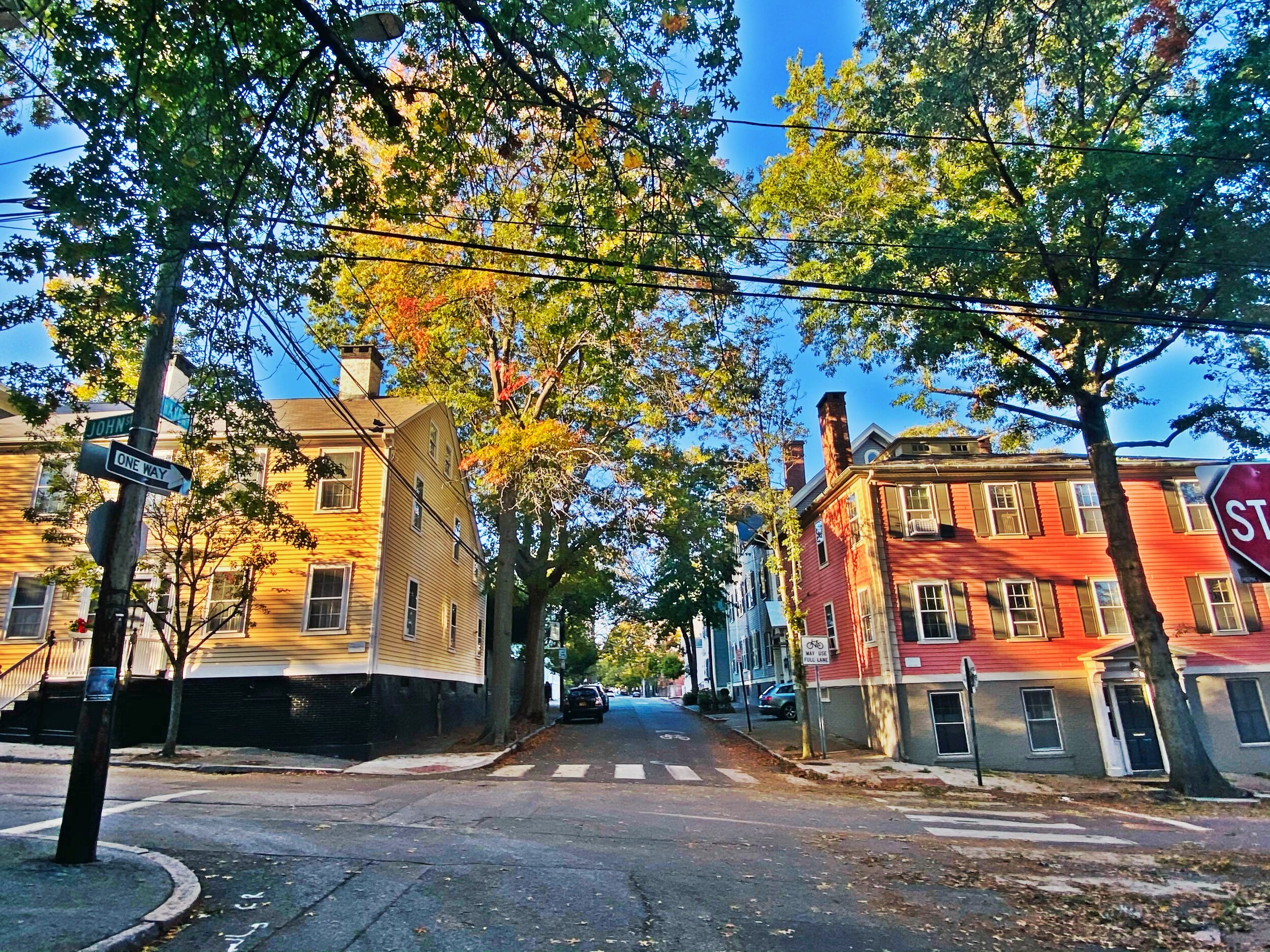
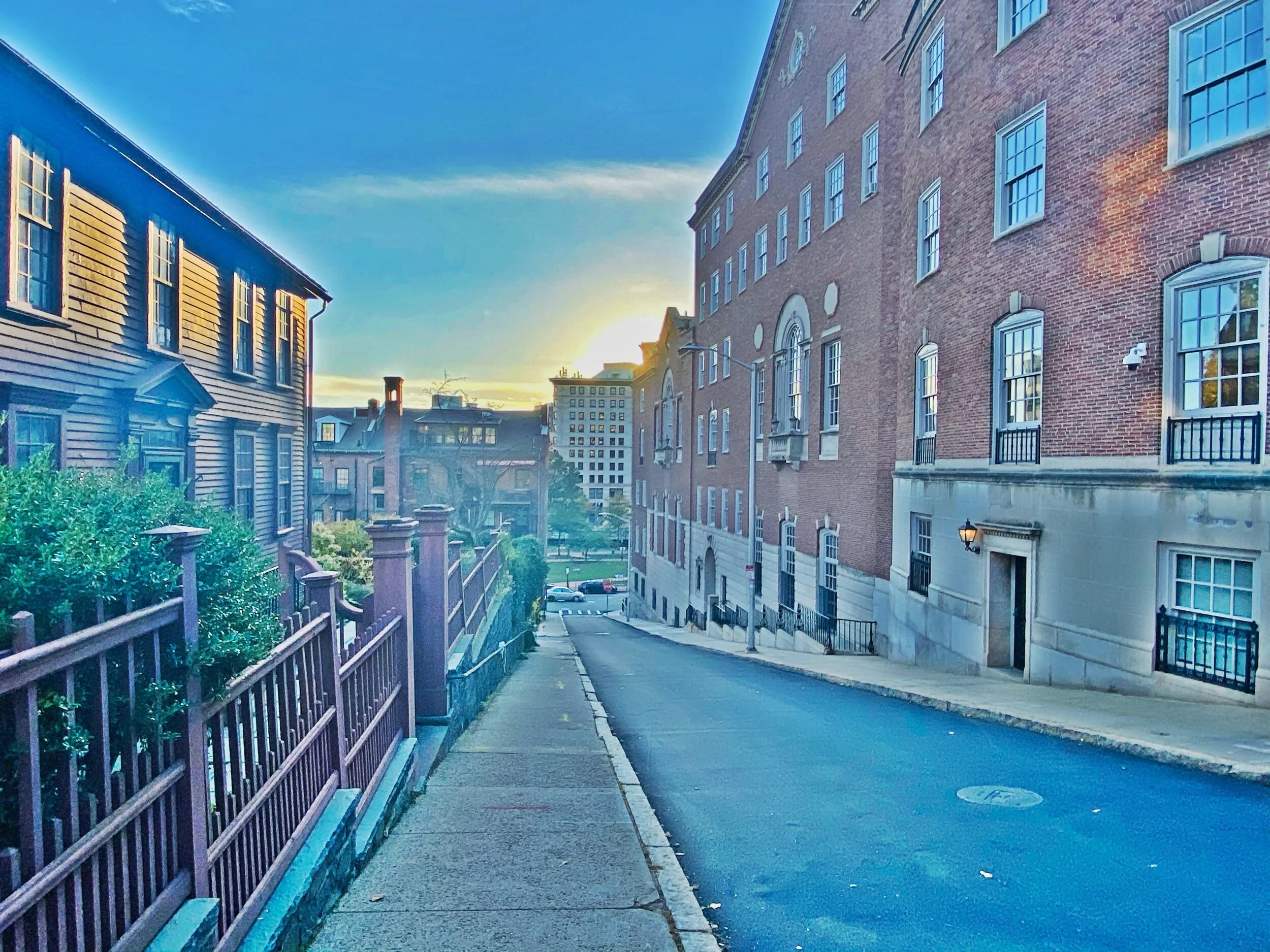
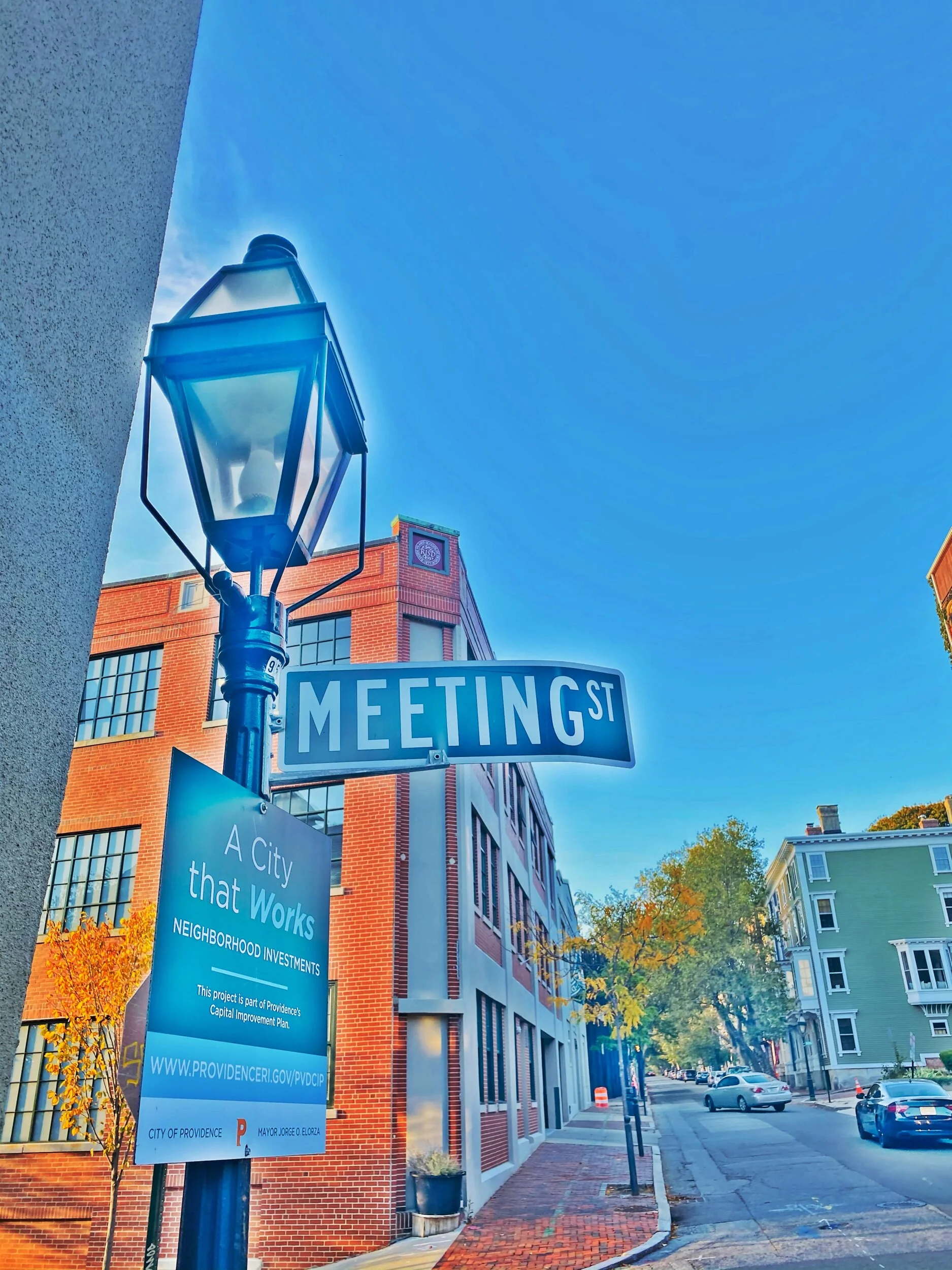
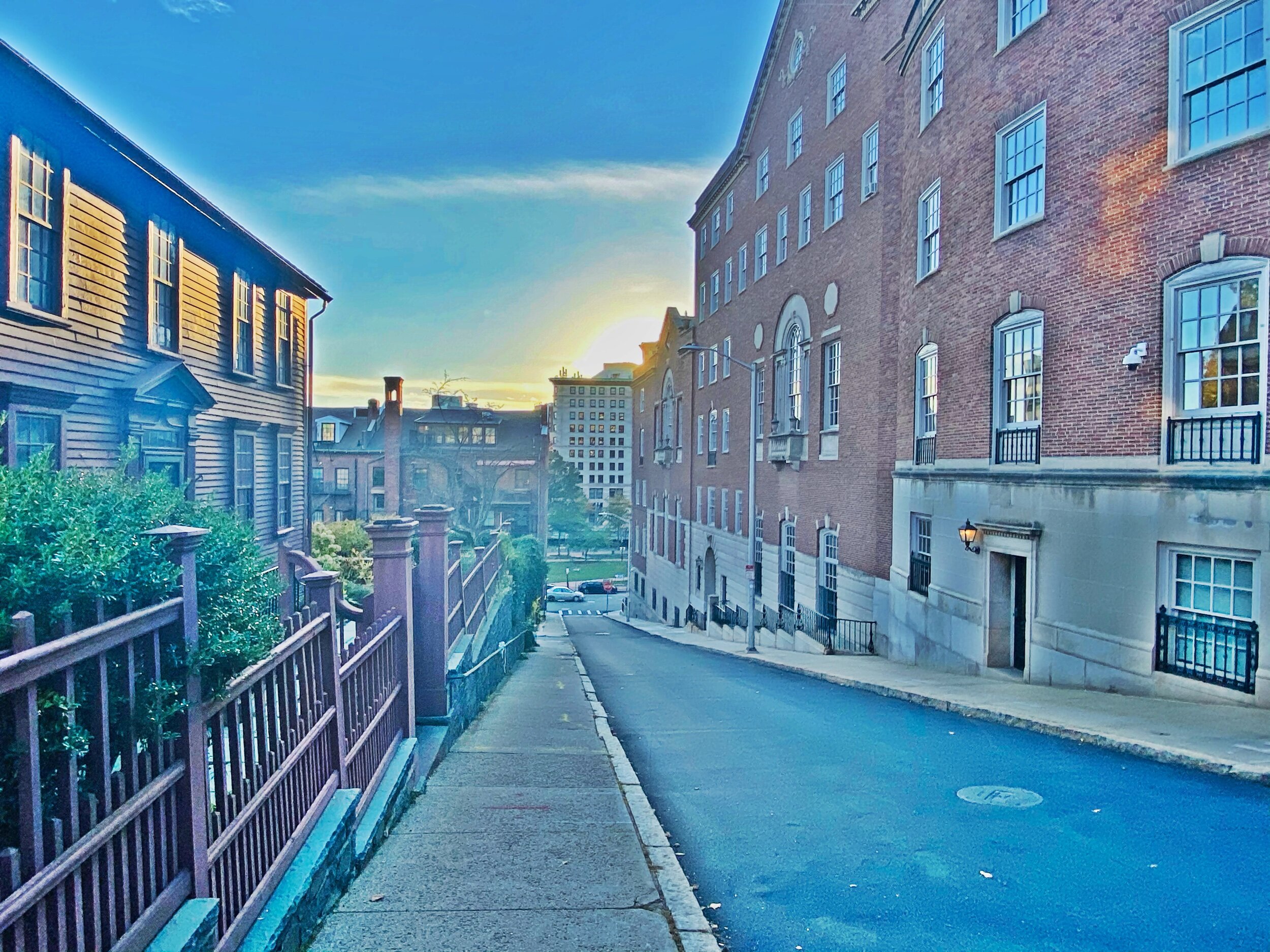
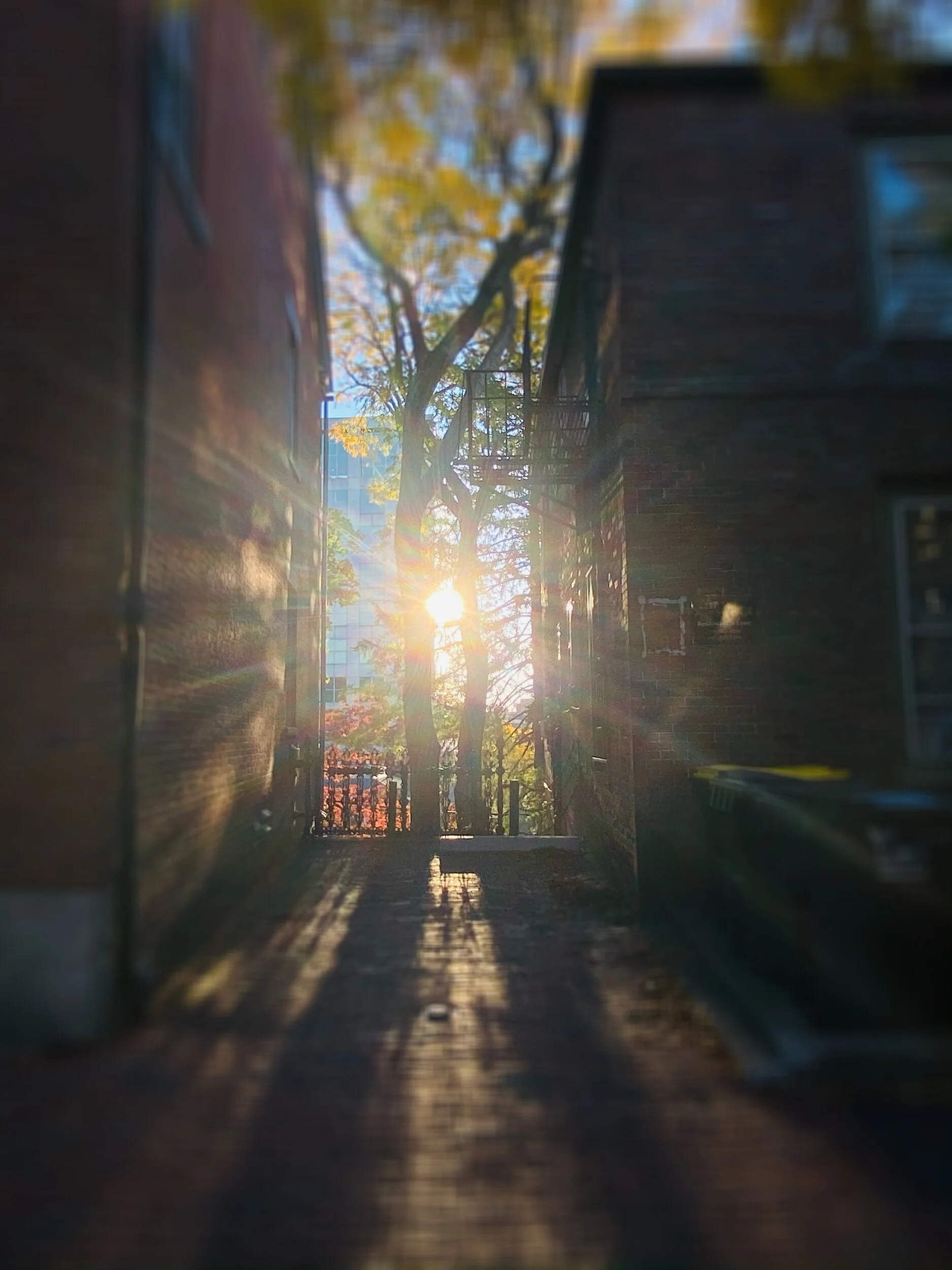
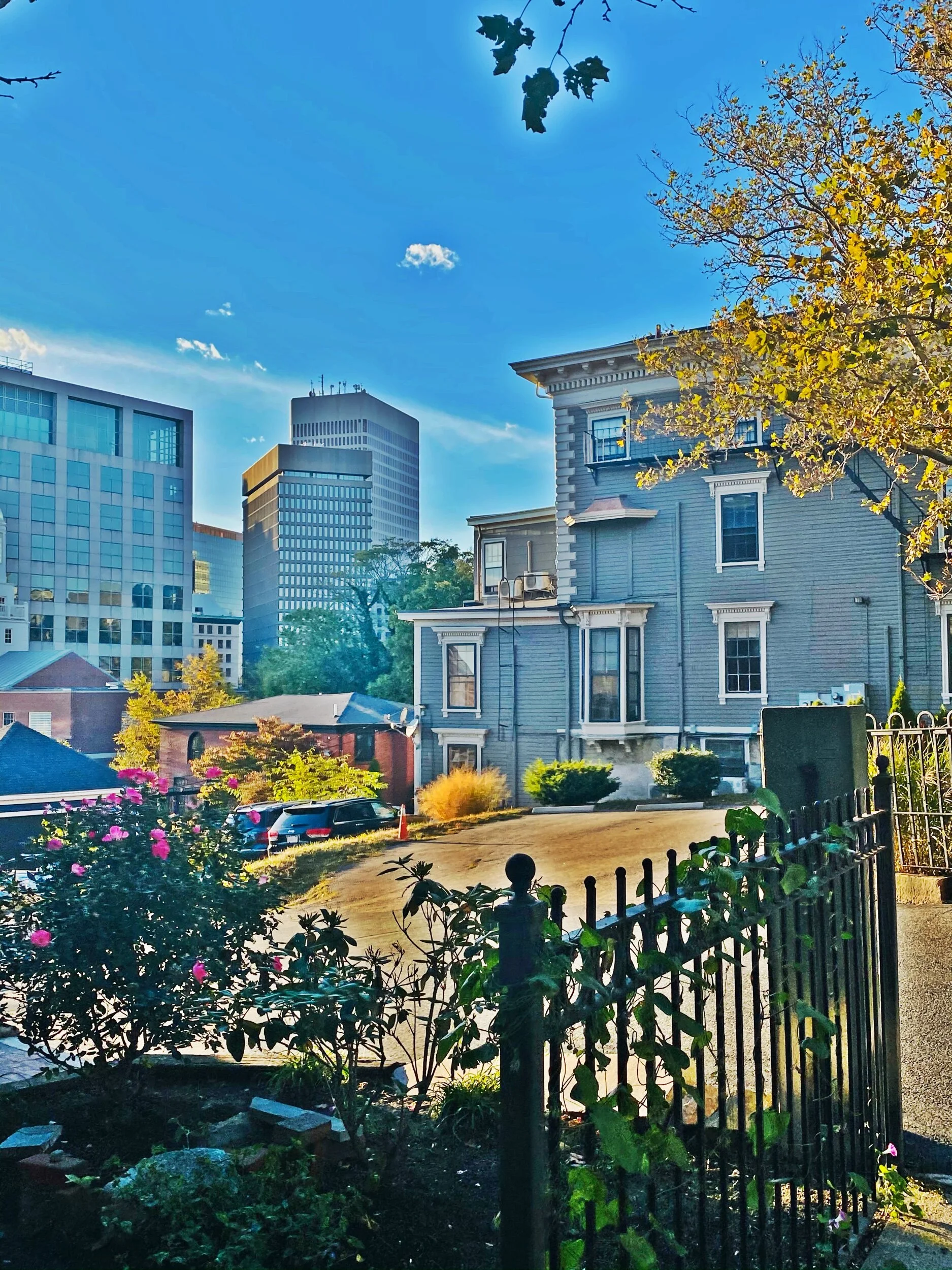
Providence’s College Hill on a beautiful fall day
Results of a stroll by New England Diary on Oct. 14
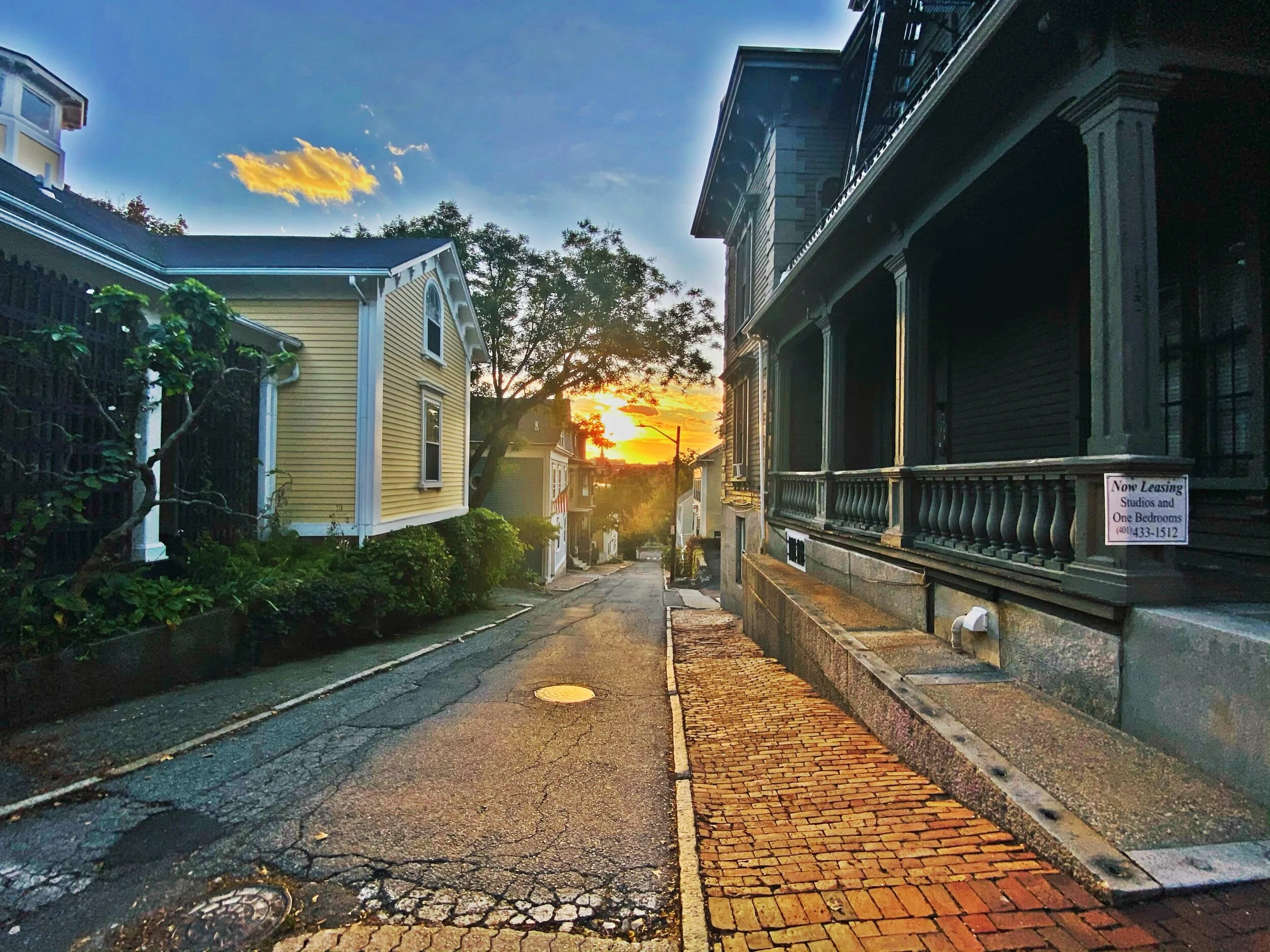
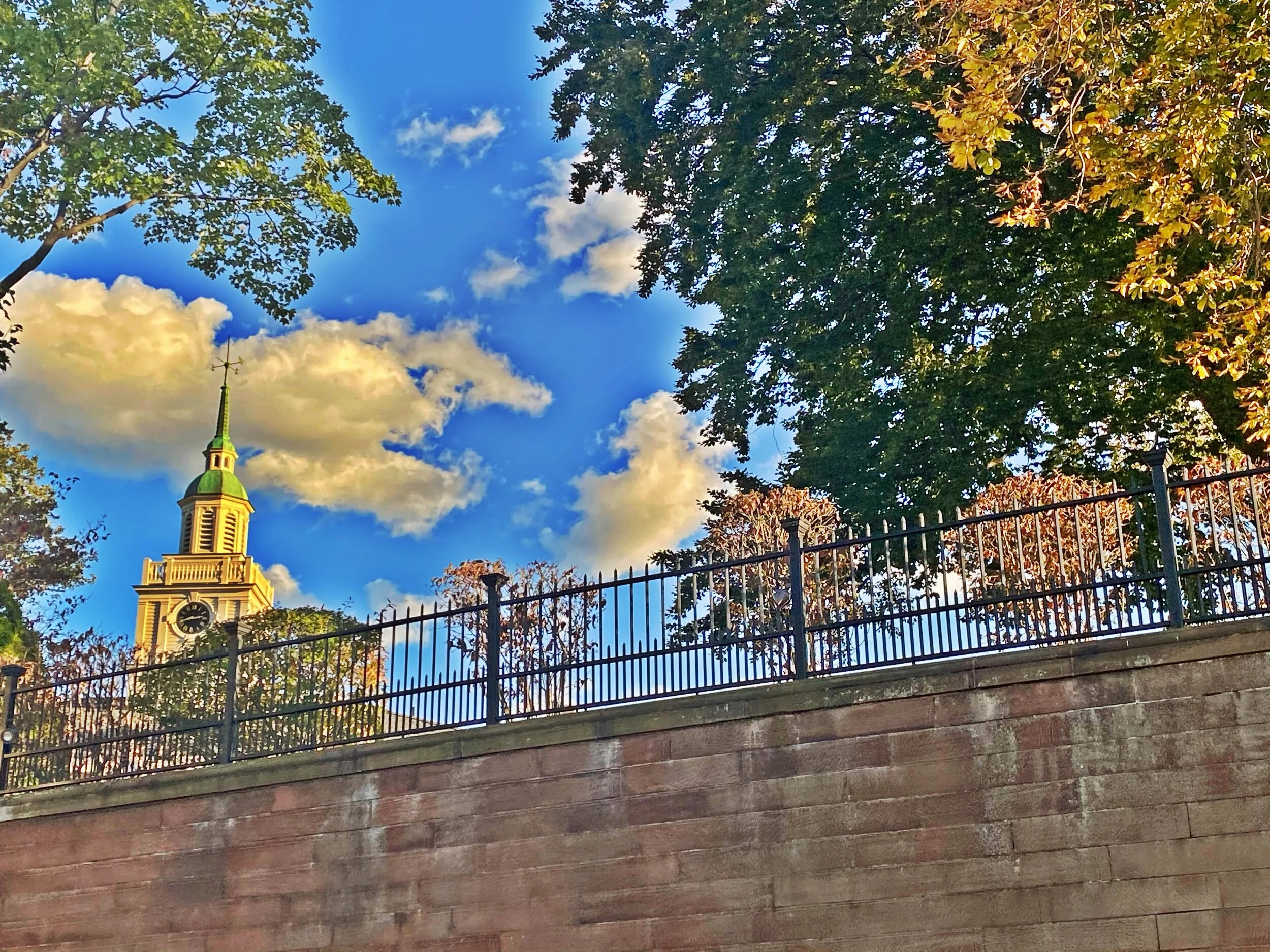
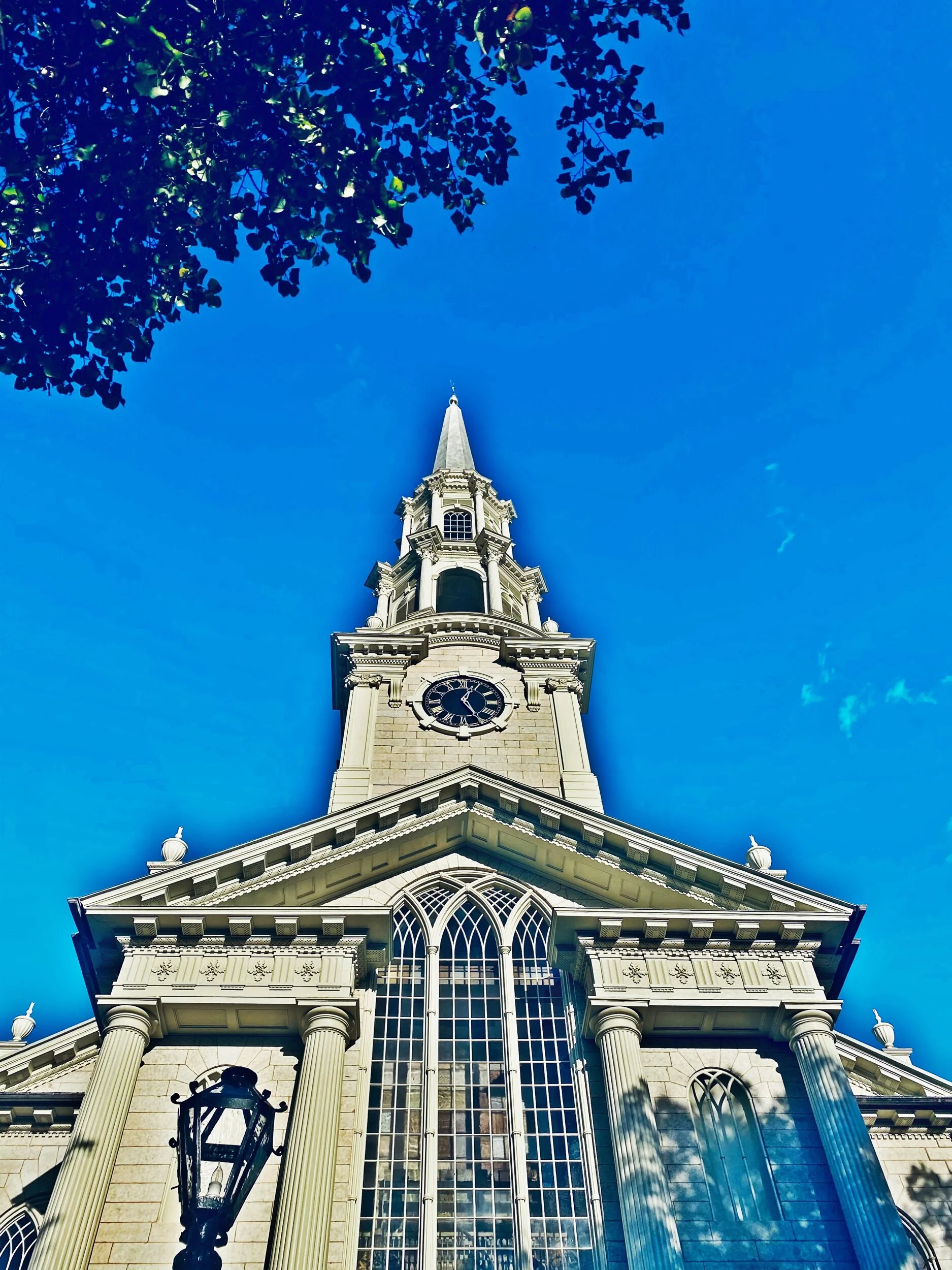
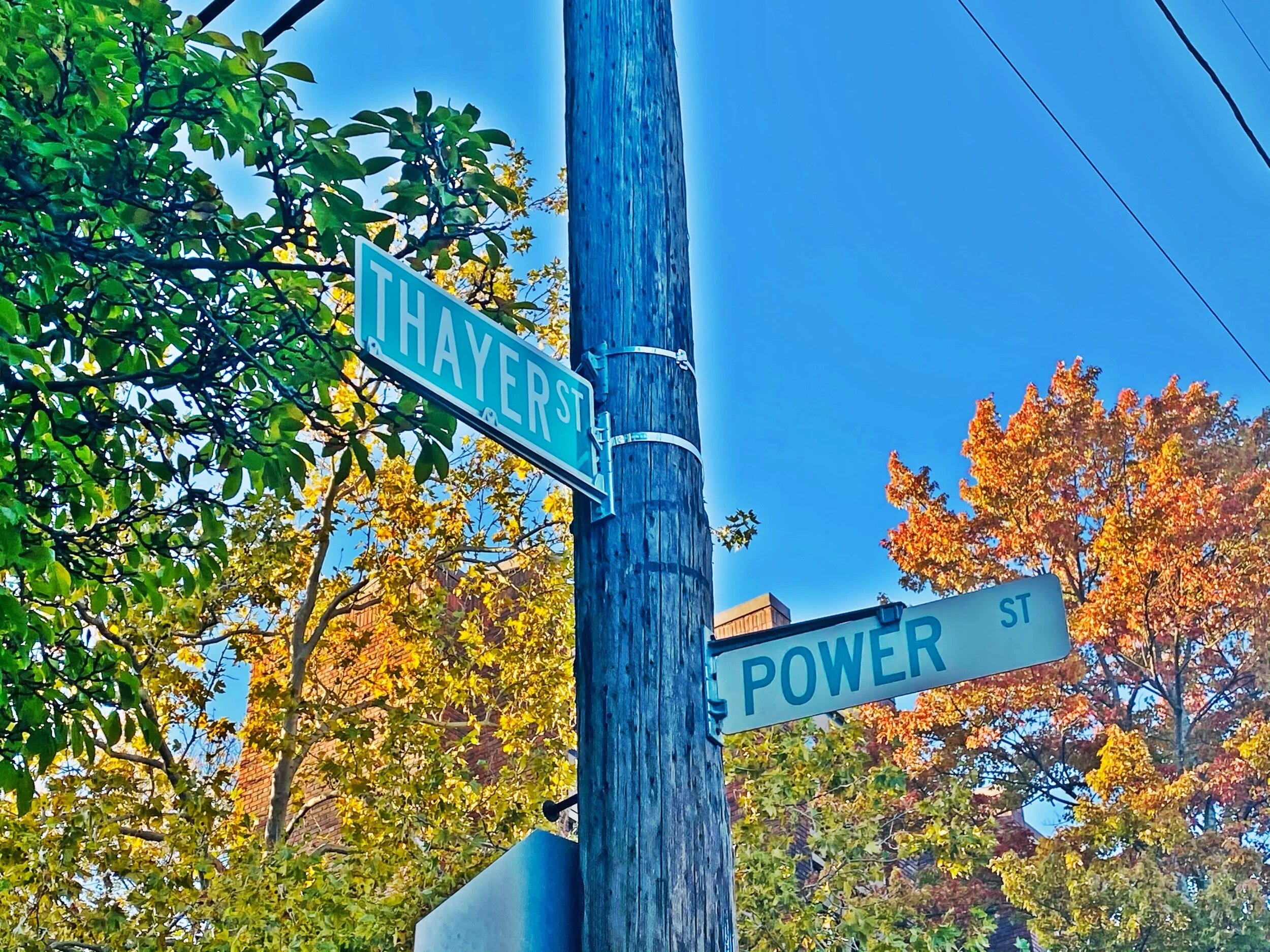
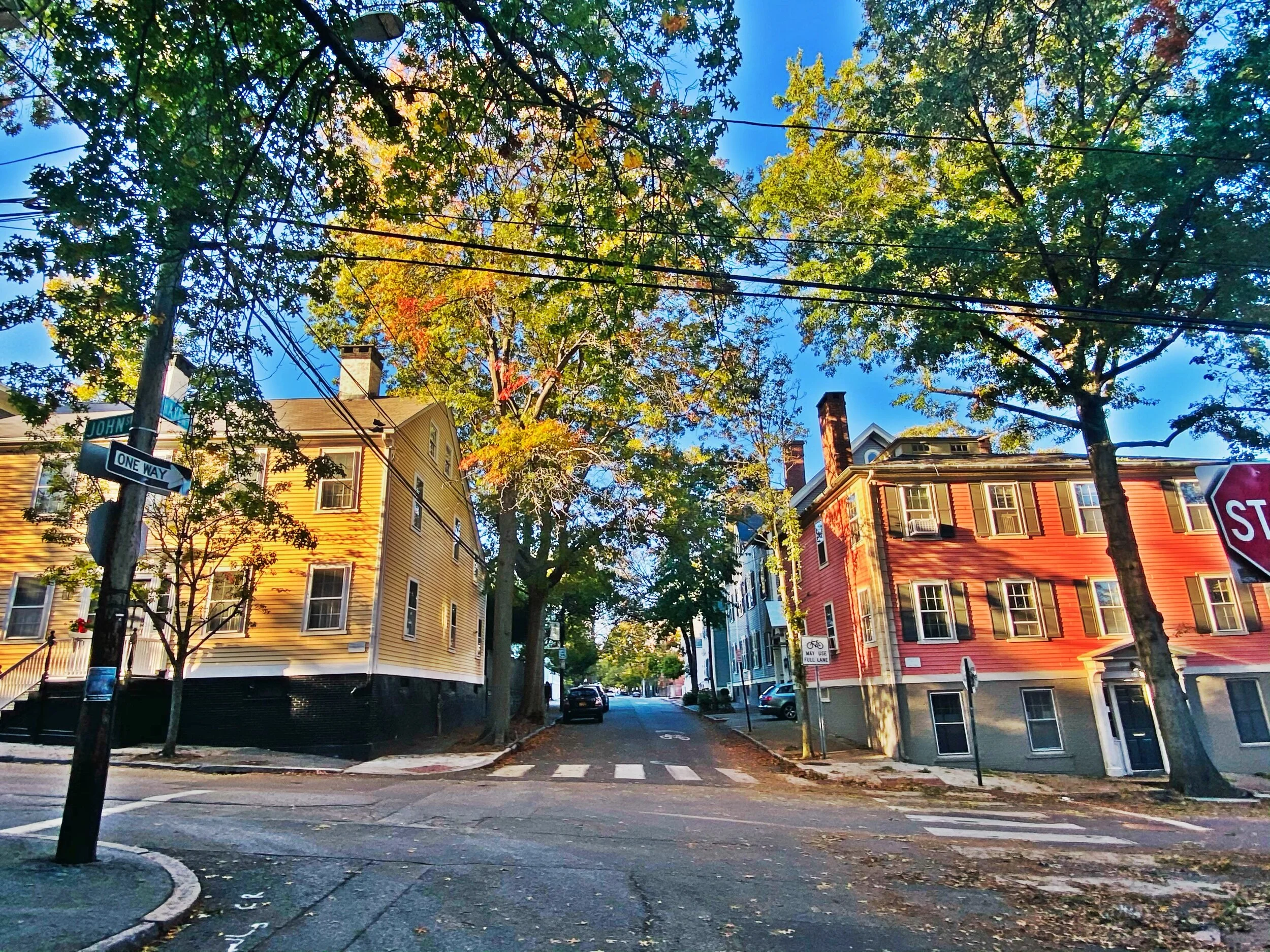
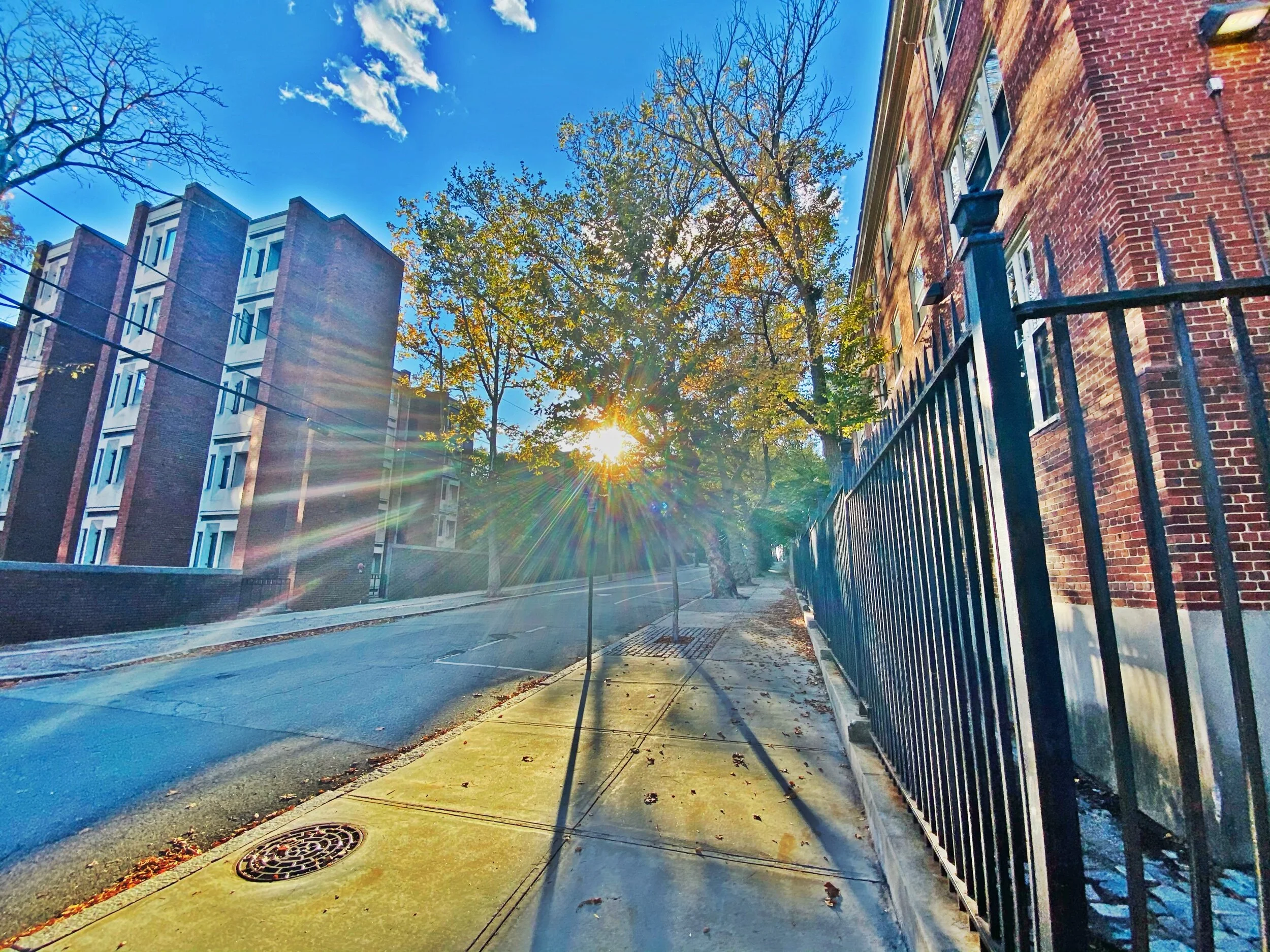
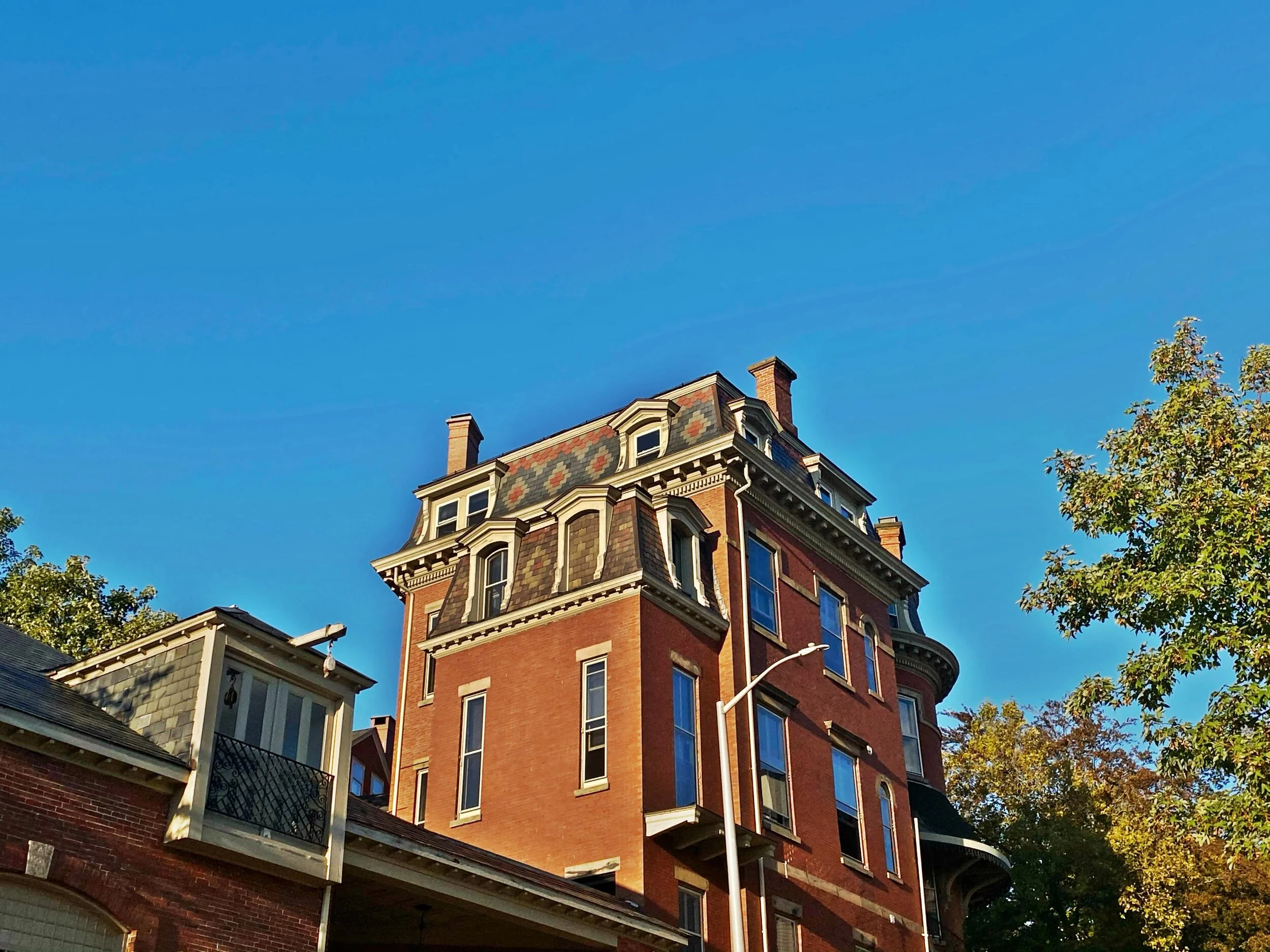
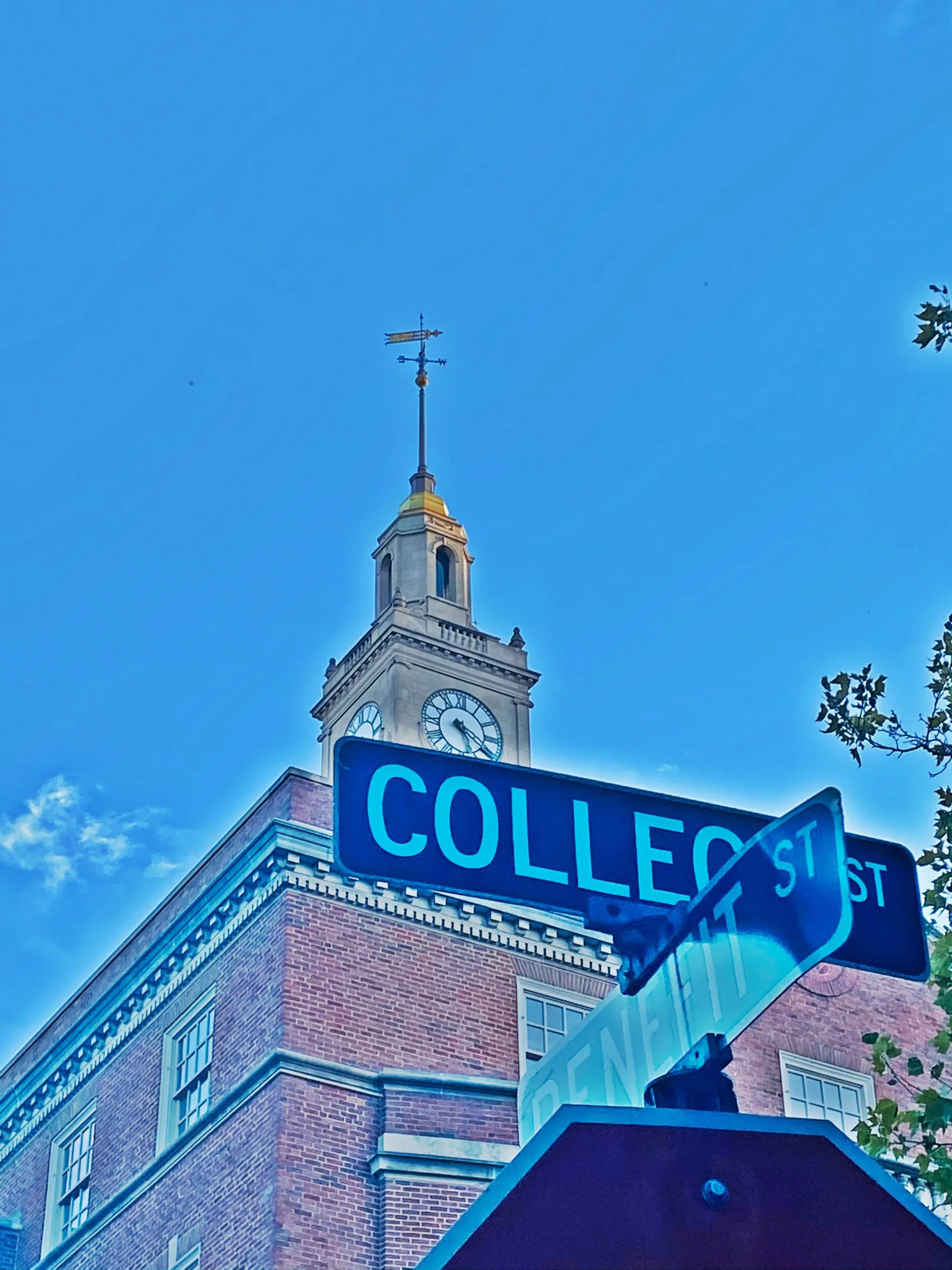
But creamed codfish?!
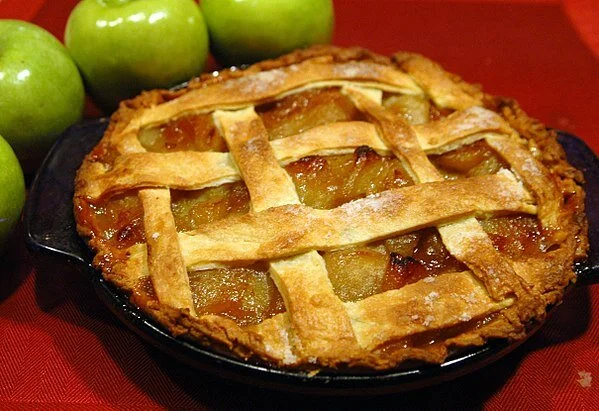
“When I was young in Vermont, there was a fine-looking man who lived across the street from us. His wife told us that in his whole life he had never missed having a piece of pie for breakfast each morning. We looked upon this fortunate creature with an awe that was not unmixed with envy, for the fine old New England breakfast had disappeared already from our table. Oatmeal, ham, creamed codfish, cornbread….yes, pie….’’
— From Favorite New England Recipes (1972), by Sara B.B. Stamm
And all’s right with the world

On Penobscot Bay
“Nautilus Island’s hermit
heiress still lives through winter in her Spartan cottage;
her sheep still graze above the sea.
Her son’s a bishop. Her farmer
is first selectman in our village,
she’s in her dotage.’’
— From “Skunk Hour,’’ by Robert Lowell (1917-1977). Nautilus Island, part of Brooksville, Maine, is a private estate in Penobscot Sound.
Seeking calm in the north

Mount Washington Hotel, with the eponymous mountain looming to the east
— Photo by rickpilot_2000
From Robert Whitcomb’s “Digital Diary” in GoLocal24.com
I had a few things to do in the White Mountains recently, most importantly, just trying to get away from life in megalopolis.
I wasn’t alone. On my way back to Rhode Island, on Saturday, Oct. 3, I saw vast herds of cars with out-of-state plates, especially Massachusetts ones, heading north. I suppose that many, perhaps most, of the travelers wanted to see this year’s fall foliage. But a simple desire to just get out of town in these COVID-claustrophobic times seems to have dramatically increased their numbers over previous years. It was bumper-to-bumper north-bound traffic on long stretches of Route 93 in the Granite State.
On the mountainous Kancamagus Highway, which connects the towns of Lincoln and Conway, there were long lines of parked cars near the scenic overlooks, though the weather was showery and drought had dimmed the foliage.
My main destination up there was the Appalachian Mountain Club’s lodge in Pinkham Notch, where I have happily stayed many times over the decades. (My most memorable time was as a reporter for the old Boston Herald Traveler in the winter of 1971, when I had to hang around there for several days to cover the drama of a couple of inexperienced climbers (allegedly stoned) lost high up on Mt. Washington in a storm; they were eventually rescued.)
On this visit, I ran into several examples of how COVID-19 has, well, made things less fun.
Some of the most pleasant parts of the complex – library, living room, etc. – are off-limits now. There were virtually no places in which to socialize, unless you stayed in the affinity group you arrived in and so were permitted to eat together. Singles were ordered to sit by themselves, preferably all alone at a long table, or at the end of one. And I missed the cheery Canadians, traditionally big patrons of the place and fun to eat and maybe practice some French with. The pandemic has cut us off from our northern (and better run than the U.S.) neighbor as it has from most other countries.
The most depressing thing, to me, came when a staffer announced the post-prandial entertainment – a film and/or slides (I’m not sure which) about Denali (aka Mt. McKinley) and Mt. Washington. Everyone who wanted to attend had to sign a waiver liberating the club from responsibility in the case of COVID infection. I demurred, not out of fear but out of sadness at the situation and went back to read some short stories by the masterful John O’Hara in my room, which had four bunks but just me.
Another anti-COVID move reminded me of TB asylums before the discovery of antibiotics: The windows in the halls were left wide open, presumably to dilute viruses. So the halls at night were in the 40s or upper 30s. The bunkrooms and individual bedrooms were, however, blessedly heated.
Most of the young staff were pleasant enough though a few were grouchy, probably because of stress. In any event, these are not the best times to go to such places. Wait until a vaccine, and hope the anti-vaxxers don’t ruin everything.
xxx
But I didn’t give up. Seeking another place devoted to “getting away from it all,’’ I drove around to the western side of the Presidential Range to check out the Mount Washington Hotel, in Bretton Woods. This astonishing resort, opened in 1902, in an era of grand mountain and seashore hotels, has always especially catered to the rich, though I saw plenty of people of more modest means there, too.
Its capacious verandas, palace-like halls, lounges, restaurants, bars and views of Mt. Washington, to the east, not to mention golf courses, swimming pools and other sybaritic allures, might make you want to be rich enough to live there – modestly, no more than a three-bedroom suite.
I bought a plastic-wrapped sandwich and a cup of coffee in one of the hotel’s sundries shops and took them out to consume on a veranda, with nap-inducing chairs, that looks toward Mt. Washington, whose upper reaches were obscured by clouds. Still, the view of the back of the vast Spanish Renaissance Revival establishment was a fine show in itself.
No wonder guests and staff seemed a lot cheerier than the folks at the Appalachian Mountain Club, with its spartan ways and situated in a deep, dark valley. Just the fact that there are plenty of places where you can sit on the verandas without wearing a mask raises spirits at the hotel. Or maybe you’re supposed to wear a mask out there but I saw plenty of unmolested people who weren’t.
The hotel guests were less well dressed than you might have expected in such a fancy place. It’s a blue-jeaned world. A hundred years ago you would have seen plenty of men in tails and dinner jackets.
Many, many famous people -- politicians, movie stars, etc., etc. -- have stayed at the hotel over the years. But historically the most important were those who participated in the Bretton Woods Conference, in July 1944, in which representatives of 44 allied nations met at the hotel to lay the foundation for restructuring and overseeing key parts of the world’s financial and monetary systems. The plan was to avoid the mistakes of the Versailles Conference, in 1919, which ended World War I, and the huge monetary and fiscal policy fiascos that followed, which helped cause and worsen the Great Depression, which in turn played a part in causing World War II.
The 1944 meeting created, most famously, the International Monetary Fund and the World Bank, helping to set in motion the longest period of growing prosperity in world history.
Sadly, the current regime in Washington has done its best to undermine the Bretton Woods institutions, opting instead for an intense nationalist/protectionist approach.
I peeked into the “Gold Room,” where the final documents were signed in 1944 on a beautiful round table.
There were lots of New York plates in the parking lots.
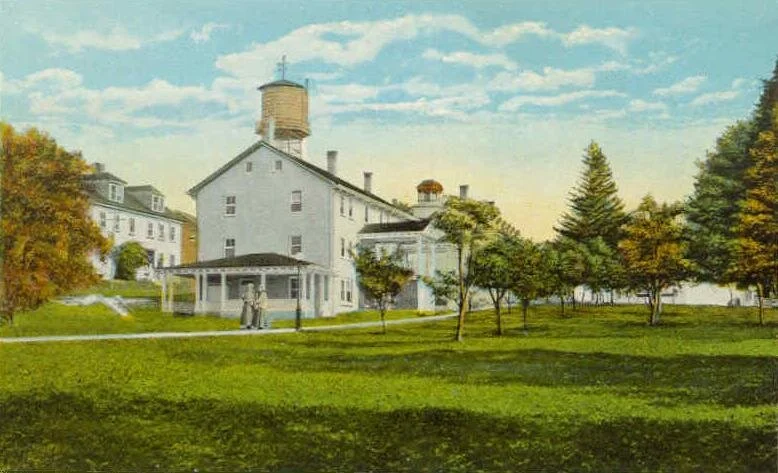
Canterbury Shaker Village in about 1920
Heading south, I dropped by another escape place: the Canterbury (N.H.) Shaker Village, a kind of Brigadoon. It was established, in 1792, by the Shakers, a Protestant sect whose members have waited and waited for the Second Coming of Christ, as a religious, residential and occupational refuge. Its 32 buildings, set in a bucolic landscape, evoke the Shakers’ mix of faith, hard work, humility, practicality and craftsmanship.
The Shakers have pretty much died out. One big reason: They practice celibacy – not a good business model for growth! In any case, there are things to admire in their communal living as well as in their care of the natural environment, their lovely architecture and furniture and even some surprising technological innovations, in machinery, etc. They could be remarkably forward-looking.
Visiting the Shaker Village is soothing. Take a guided tour, or stroll around by yourself, checking out such attractions as “The Bee House,’’ “The Syrup Shop’’ and “The Ministry Privy.’’ (Okay, I’m focusing on the stranger buildings.) You’ll feel better.
Comfort in isolation

From the show of oil paintings on panels by Donna Calleja called “Close to Home, ‘‘ at the Room 83 Spring gallery, in Watertown, Mass., through Oct. 31.
She told the gallery:
‘‘Most of the paintings in ‘Close to Home’ were created in 2020 in a small workspace in my home. The act of painting each afternoon provided me with comfort during this difficult time of isolation... . My goal is to interpret the beauty I see in the small details of everyday objects and I hope to provide my viewers with a sense of calm and quiet reflection.’’
The gallery said: “Her compressed arrangements of domestic objects expertly balance color, shadow, light and composition in this series of small luminous still lifes.’’

Heating-oil industry seeks to end reliance on — oil!

— Graphic by Centre Tank Services Ltd
From The New England Council (newenglandcouncil.com)
BOSTON
“The National Energy & Fuels Institute (NEFI) has announced a plan to eliminate fossil-fuel energy reliance in the heating-oil industry by 2050. The pledge is intended to reduce emissions and ultimately turn heating oil into renewable fuel.
“The announcement follows a pledge made last year by over 300 oil industry professionals. The roadmap to eliminating fossil fuels from heating-oil production focuses on using an increasing amount of biofuels in heating oil fuels, including a 15 percent reduction in fossil fuels by 2023.
“‘Last year, industry leaders announced a goal that many thought unachievable,’ said NEFI President & CEO Sean Cota. ‘Today, we are excited to announce that not only is our goal achievable, but it is also well within reach. Renewable liquid heating fuel can reduce fossil-energy use and carbon emissions faster and more cost-effectively than electric heat pumps or natural gas.”’
“The New England Council commends NEFI for its commitment to eliminating the use of fossil fuels. Read more from the NEFI press release.’’
Praise for New England from John C. Calhoun

John C. Calhoun
“What people can excel our Northern and New England brethren in skill, invention, activity, perseverance and enterprise?’’
— John C. Calhoun (1792-1850). The South Carolinian served as vice president, secretary of state, secretary of war, congressman and senator. He was a brilliant, vociferous and poisonous defender of slavery and “states’ rights’’.
It surprises some that he attended Yale, where he graduated as valedictorian, and studied law at America’s first independent law school, Tapping Reeve Law School, in Litchfield, Conn., now a rich weekend place for New Yorkers.
One of Yale’s “colleges’’ (dorms) had been named Calhoun College but in 2017 was renamed in honor of Grace Murray Hopper, a pioneering computer scientist who also served as a Navy rear admiral.
Yale President Peter Salovey said then:
“The decision to change a college’s name is not one we take lightly, but John C. Calhoun’s legacy as a white supremacist and a national leader who passionately promoted slavery as a ‘positive good’ fundamentally conflicts with Yale’s mission and values.’’
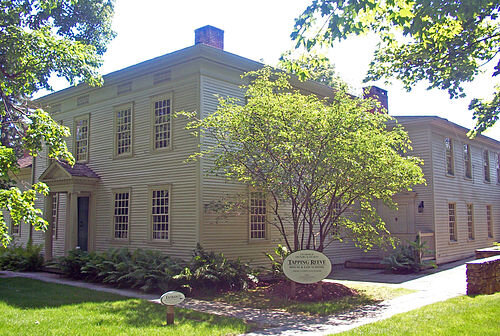
The site of the former Tapping Reeve Law School (1784-1833), in Litchfield, Conn.
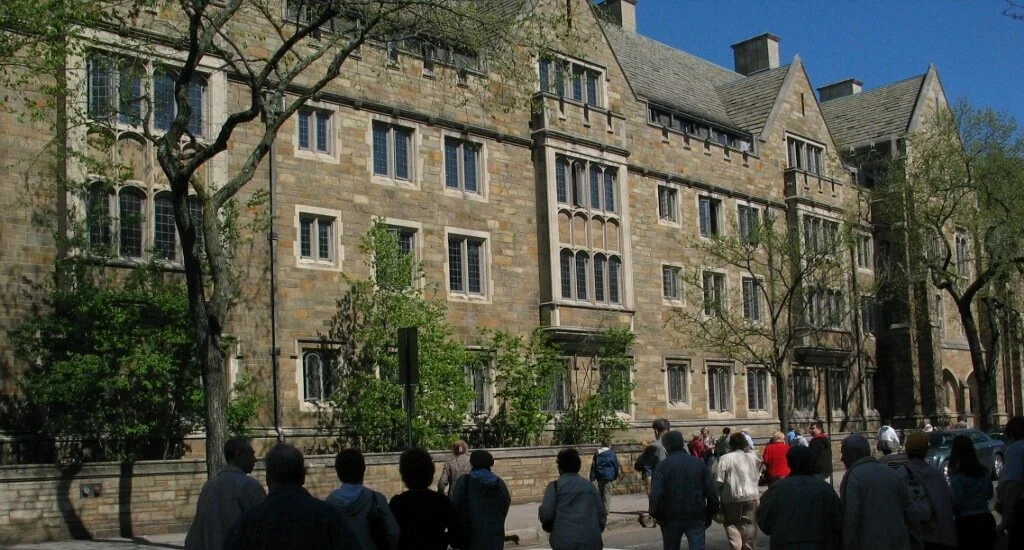
Hopper, formerly Calhoun, College (dorm) at Yale
Todd McLeish: More sites found with threatened turtles

A Diamondback Terrapin
From ecoRI News (ecori.org)
A pilot project using volunteers to scout for new populations of Rhode Island’s rarest turtle, the Diamondback Terrapin, turned up 15 new sites where the turtles have been confirmed. But despite the new populations, the biologist who led the project said the state’s terrapins are no less threatened than they were before the new populations were discovered.
Diamondback Terrapins are the only turtle in the region that live in salt marshes and brackish waters.
Herpetologist Scott Buchanan, a wildlife biologist at the Rhode Island Department of Environmental Management, said that before 1990, when a population of these turtles was discovered in Barrington, “no one had seen a terrapin in Rhode Island in many years.” Additional populations were discovered elsewhere in the state in the past decade, and when Buchanan was hired in 2018 and began asking around, he heard a number of unconfirmed reports of the turtles being observed elsewhere in Rhode Island.
“That led me to think that they’re probably more widespread in the state than the narrative would lead us to believe,” he said.
So he examined maps to identify “reasonable places” where he could send volunteers on a regular basis to see if they could spot the terrapins.
Four volunteers each visited two to four sites twice a week from late May through mid-July, and an additional volunteer surveyed a dozen sites. During each visit they scanned the water with binoculars for three 5-minute periods and counted any turtle heads they observed.
The discovery of 15 new sites was a revelation to Buchanan.
“What it means is that they are much more widespread than we had thought,” he said. “It’s encouraging from a conservation standpoint, but at many of these sites, we have little or no information about how many turtles may be there, whether they are successfully breeding, or whether they are established populations. We don’t want to be overconfident or get too comfortable with the fact that there are multiple sites containing the species.”
Most of the newly discovered terrapin sites are in coves along mid and upper Narragansett Bay. They’re still mostly absent from the lower bay, according to Buchanan.
“What we’re seeing now is probably a shadow of their former distribution and abundance,” he said. “They’re out there, that’s excellent, but we know there’s lots of places they don’t occur. All the evidence suggests that they’re still absent from many places where they were historically present. And the types of abundances that we’re documenting are probably far less than historic abundances.”
Buchanan speculated that the newly discovered populations in the upper bay may be the result of dispersal from the Barrington population, which has grown to number in the hundreds because of extensive conservation efforts.
Despite the success of the survey project, Buchanan is still concerned for the state’s Diamondback Terrapins. Most terrapin eggs are consumed by what he calls “human-subsidized predators,” including coyotes, raccoons, skunks and dogs. Terrapins are also at risk of being illegally collected for the pet trade, which is why he prefers not to reveal the location of the newly discovered sites. They also face drowning in crab traps, injury from being struck by boats, and automobile strikes as females cross roads on their way to their nesting territories.
“The big threat, though, is sea-level rise and salt marsh decline,” he said. “They’re an obligate salt marsh species; if sea level rises and marshes disappear, they don’t have a chance. That’s something I’m especially worried about over the next 10, 20, 30 years along the Rhode Island coast. Salt marshes are critical as a source of food and a place where they overwinter and take shelter, especially the juveniles and hatchlings.
“This new information we have is very encouraging, but it doesn’t mean we should let our guard down. They’re still a species that warrants conservation, even without sea-level rise. We must remain vigilant.”
Having identified the location of additional terrapin populations, Buchanan hopes to prioritize those sites for future conservation efforts, modeled after the successful nest-protection and monitoring efforts in Barrington.
“Knowing where they are, there are lots of small steps you can do to improve their conservation,” he said. “Things like small-scale habitat management, create barriers to keep them off busy roads, public outreach to ensure boaters use caution, adapt local pot fishery management.”
The success of the pilot project to identify new Diamondback Terrapin populations has inspired Buchanan to double or triple the effort next summer at numerous additional locations. He also hopes to continue the project for many years to eventually be able to identify population trends at each site. He will be seeking additional volunteers this spring to survey coastal sites around the state in June and July. Those interested in volunteering should contact Buchanan at scott.buchanan@dem.ri.gov.
Rhode Island resident and author Todd McLeish runs a wildlife blog.

David Warsh: Biden should fill a couple of Cabinet posts with centrist Republicans

Secretary of State Mitt Romney?
SOMERVILLE, Mass.
If, as seems likely, President Trump is on the verge of defeat in his bid for re-election, an epic battle between Republicans is in the offing. Joe Biden should put his thumb on its scale from the start. May he recall Winston Churchill’s maxims – “in war, resolution; in defeat, defiance; in victory, magnanimity; in peace, goodwill – and prepare to offer important Cabinet positions to one or two senior centrist figures in the GOP.
Utah Sen. Mitt Romney, who was the Republican presidential candidate in 2012, would make an excellent secretary of state. So would former Utah Gov. Jon Huntsman, another 2012 GOP hopeful. Two-term Ohio Gov. John Kasich, who came closer than any but Ted Cruz to defeating Trump for his party’s nomination in 2016, could restore low-key competence to the embattled Department of Health and Human Services.
Are these unreasonable suggestions? I don’t think so. Certainly Biden understands the logic very well. In an outdoor speech last week near the Gettysburg memorial park, he asserted the nation was once again “in dark times” – in the grips “not of just ferocious division, but of widespread death, structural inequity, and fear of the future.”
Instead of treating each other’s party as the opposition, we treat them as the enemy. This must end. We need to revive the spirit of bipartisanship in this country, a spirit of being able to work with one another.
Biden added that when he said such things in the past, he was accused of being naive. “Maybe that’s the way things used to work, Joe, but they can’t work that way anymore,” he said he was told. Not only can work that way, he replied, he said, but they must, if the damage is to be repaired.
Romney’s nomination to head the State Department would be all but impossible to oppose. Foreign policy is traditionally conducted in a bipartisan manner, after all. Romney indicated his willingness to serve in the post when he submitted to a humiliating interview with President Trump not long after the 2016 election. The former governor of Massachusetts has since been elected to the Senate. Perhaps he would prefer to keep that post. In that case, Huntsman deserves a look, having served as ambassador to both China (2009-2011) and Russia (2017-2019).
Kasich is a less obvious choice, but after nine terms in the U.S. House, he served two successful terms as governor of Ohio, mastering its budget and engineering a statewide Medicare expansion that saved many lives during the opioid epidemic. He endorsed Biden’s candidacy in a speech to the Democratic National Convention.
(As recently as the Obama administration, it was common practice to have someone from the other party in the Cabinet: Ray Lahood as transportation secretary in its first term, and Chuck Hagel as secretary of defense in the second. Obama also asked Robert Gates stay on for two years at the Pentagon.)
Political parties are large and complicated organizations. Pundits have been regularly pronouncing the death of the Republican Party for four years now. I think that is wrong. For the moment, Americans are feeling their way, divided between the party of innovation (the Democrats), and the party of conservatism (probably the Republicans).
Gradually an acceptable program of innovation will emerge and settle into its tracks. What lies ahead for Republicans now are battles among those who seek election appealing to the Trump base, and a pool of still little-known politicians and staffers who believe that the party’s future belongs to leadership committed to preserving what the nation already has achieved: a cheerful, tolerant, and resourceful civil society. A deep reservoir of talent is available at the Lincoln Project ready to resume construction. See this lengthy story on The New Yorker Web site for details.
Then there are the progressives, the Democratic faction in whose dreams can be glimpsed the future of their party. But politics takes time as well as passion. In their fury over the Trump years, progressives are calling for a Carthaginian peace. Biden should offer Republicans a Marshall Plan, meaning help restoring a once- strong organization back in working order. Meanwhile, let the de-Trumpification of the GOP begin.
xxx
The 2020 Nobel Prize in chemistry to Jennifer Doudna and Emmanuelle Charpentier recognizes not one but two historic landmarks, the first for science, the second for gender equality. Development of “genetic scissors,” the mechanism known as CRISPR, is widely understood to be the most important advance in biological science since 1962, when the prize recognizing the discovery of the helical structure of the DNA molecule was awarded.
And it was in the years since then that women have made strides toward parity with male colleagues at nearly every level of the new science and attendant biotechnology, including, now, the world-historical highest. No one who sits in on biotech meetings (or even regularly walks across town in certain districts of Cambridge, San Francisco, or Palo Alto) can fail to notice that the professional class now includes many women as well as men.
As befits an epic achievement, the Doudna/Charpentier story merits a very good book, and then a film. (After her biopic portrayal of two-time laureate Marie Curie, it seems a given that Rosamund Pike will play Doudna.) Laureate James Watson’s The Double Helix: A Personal Account of the Discovery of the Structure of DNA has been a classic since it appeared in 1968. Walter Isaacson, biographer of Benjamin Franklin, Albert Einstein, Steve Jobs, and Leonardo Da Vinci, last week registered first dibs on the CRISPR story with an op-ed in The New York Times.
Eric Lander, president of the Broad Institute of MIT and Harvard University, whose scientists. and others in a Harvard lab, were rivals to Doudna and Carpentier in the chase to nail down the details of the scissors (and gain its patent rights) raised hackles in January 2018, when, in The Heroes of CRISPR, an article in Cell, he called attention the successes of his local heroes, Feng Zhang and George Church, as an illustration of the intricacy of the web of science. They lost out in the end. But the story of this year’s prize is better for Lander’s controversial article.
David Warsh, a veteran columnist and an economic historian, is proprietor of Somerville-based economicprincipals.com.
Through the gloom came comfort

‘‘Swell” (oil), by Christina Beecher, in the group show “Emerging Out of Isolation {of the pandemic},’’ at Galatea Fine Art, Boston through Oct. 31.
The Massachusetts-based painter told the gallery:
"In Swell, I found a panel with an under-painting of golds that literally had no meaning to me. I had started this work months before. I began to mix, to paint, wipe and repeat, allowing myself to fumble and plow through. With some luck inevitably things begin to happen. Colors start to excite me as the brushstrokes happen almost by themselves. Through the gloom I felt came comfort.
“Yellow and reddish turbulent clouds rise skyward while the swelling sea of bright colors slide across the horizon. This small work is a dichotomy of both brushstrokes and concept, with the swirling movement of the sky and the swirling swells of the ‘sea’’
See:
http://www.christinabeecher.com/
Old and grumpy
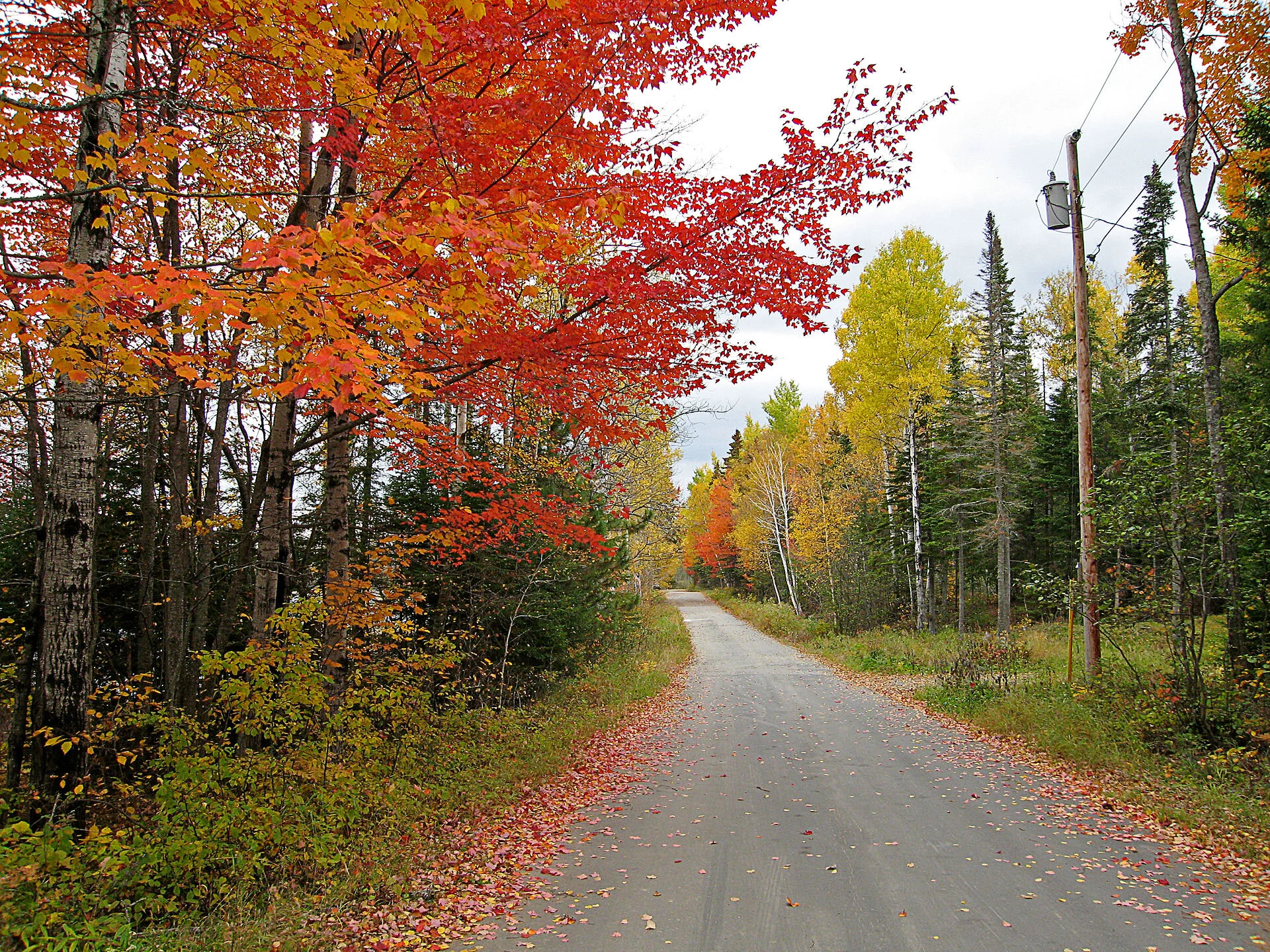
Autumn in Stratton, Maine
“I grew up on a dirt road in Maine, and pretty much everybody on that road was related to me, and they were old. And so grumpy.’’
— Elizabeth Strout (born 1959), Brunswick, Maine -and New York City-based novelist and short-story writer
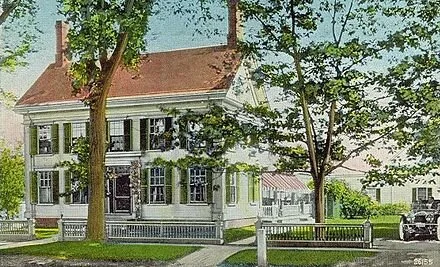
Harriet Beecher Stowe House, in Brunswick, where, in 1850-1852, Stowe wrote Uncle Tom's Cabin
'An inert savior'

— Photo by Dietmar Rabich
“After the leaves have fallen, we return
To a plain sense of things. It is as if
We had come to an end of the imagination,
Inanimate in an inert savior.’’
— From “The Plain Sense of Things,’’ by Hartford-based poet, lawyer and insurance executive Wallace Stevens (1879-1955)
Squirrel crisis in walnut mystery

From Robert Whitcomb’s Digital Diary, in GoLocal24.com
I’ve been amused by a minor controversy about, it is alleged, a population explosion of squirrels in Providence’s gentrifying Fox Point neighborhood. The weird thing is that the busy little rodents are accused of leaving walnut shells all over the place, though there are few walnut trees in our area. Does that really present a serious hardship for residents? There are lots of oak trees, which this year – perhaps because of the drought? – are dropping impressive supplies of acorns.
Locals are arguing about such solutions as poisoning, which I hope is avoided. It would kill other creatures, too, including dogs and cats.
At least they don't have spikes and don't tweet

“Proliferating_3333 ‘‘ (mixed media on wood panel), by Sand T Kalloch, in her show “Proliferating,’’ at Bromfield Gallery, Boston, through Nov. 1. She is a Malaysian-born artist who lives in Malden, Mass. Her show’s mixed-media works explore patterns.
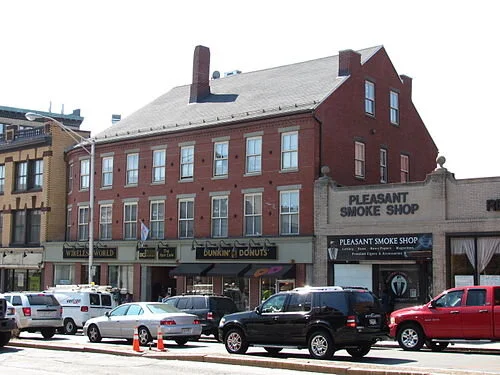
The Waite Brick Block, a historic commercial building at 422-424 Main Street in Malden. Built in 1848, it is the oldest brick building in the city. Note this Greek Revival building’s hip roof, from which three tapered chimneys project. One corner of the building is curved, following the original junction of Main and Pleasant Streets. Granite lintels top the windows, and the cornice has a line of brick dentil work. These are classic characteristics of commercial buildings of the time in New England.
Llewellyn King: Bundle up for a very bleak winter
WEST WARWICK, R.I.
A winter of discontent looms. Unlike in Shakespeare’s Richard III, no one can say it will be made glorious summer by anything now in sight. Instead, it promises a tsunami of misery for many and the ugliest election in U.S. history.
At a time that calls for new energy, new thinking and a recasting of the social contract, two old men -- who more rightly should be eyeing the sunny side of the veranda at their retirement homes -- are in contentious dispute for the presidency.
Whoever wins, President Trump or former Vice President Joe Biden, the winter will be the harshest in memory for many Americans, particularly those on the lower rungs of the economic ladder.
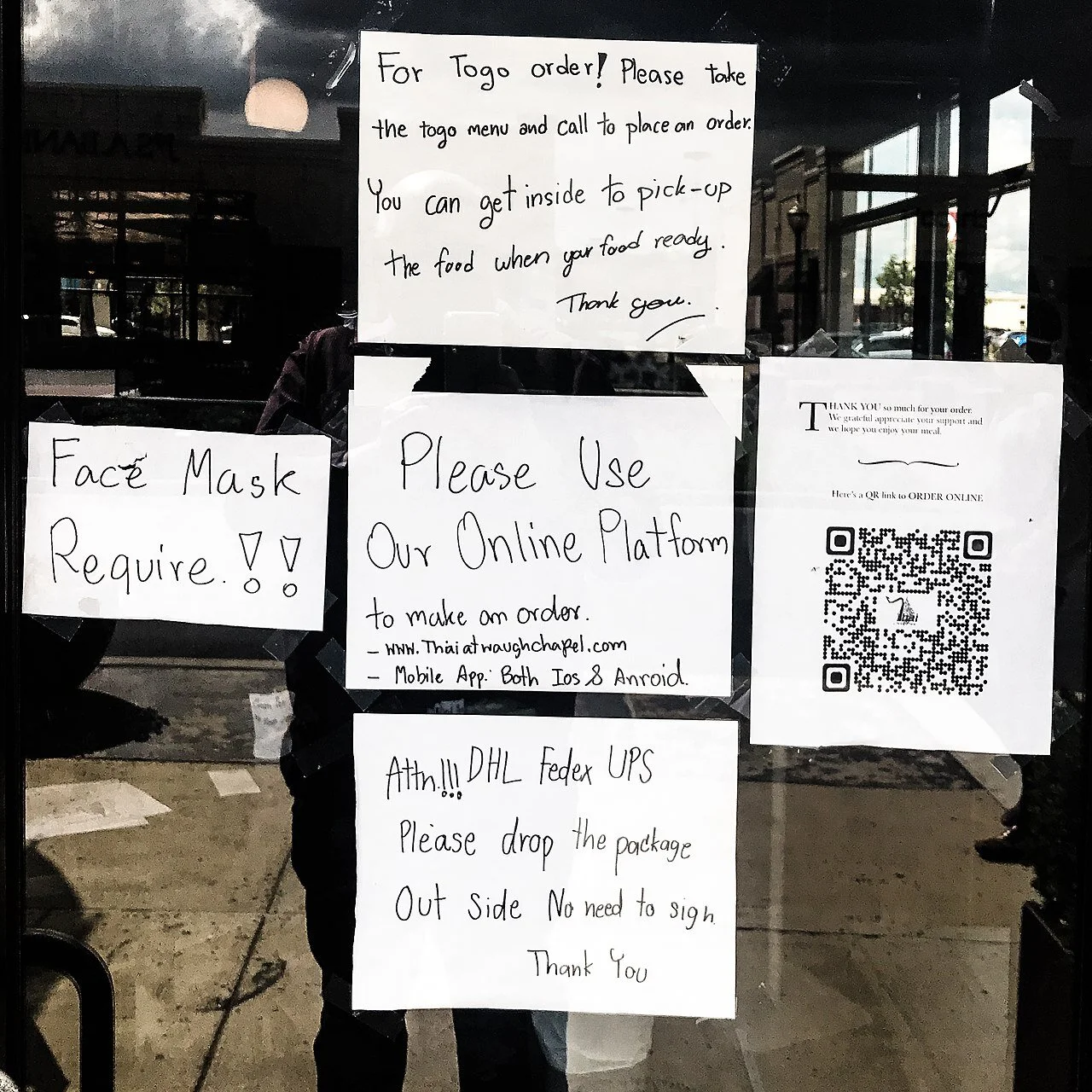
The COVID-19 pandemic has evaporated millions of jobs and the small companies that provided them. Most obvious in this slaughter are the restaurants. Yelp, the restaurant reporting service, estimates that 53 percent of the restaurants now closed will never reopen.
Restaurants are among the most fragile and perishable of small businesses. At the best of times, most inhabit an inhospitable space between the restaurant chains and their landlords.
Restaurants are quick to hire and quick to fire. It is where the unskilled (dishwashing and prep) to the low-skilled (line cooks and front staff) find work most easily.
Restaurants tell the temperature of the economy ahead of the official soundings. When business turns down, they stumble.
They also are places of hope: The chefs and waiters of today are the restaurant entrepreneurs or stage and screen stars of tomorrow. They’ve put untold thousands through college. When restaurants close jobs go, hopes and dreams go, and often the life’s work of the owners go.
The individually owned restaurant epitomizes entrepreneurism, determination, the capitalist spirit, and the joy of self-employment for the owner. All the virtues of small business, routinely drooled over by the politicians, are present even at the humblest greasy spoon. Free enterprise is always on the menu.
And restaurants are part of the fabric of our lives, where we celebrate, occasionally mourn, and frequently refresh.
Much of what is true for restaurants is as true for the whole hospitality industry. Those who do the housekeeping in hotels, the porters and, of course, the restaurant staff are all semi-skilled and in need of work to survive. They are, I submit, not easily re-trained: You don’t go from making beds to computer programming in a short time.
Only Congress can assuage the immediate suffering at the bottom of the employment pyramid. But a new relief package has been tied up in party strife.
Trump said on Oct. 6 that he had withdrawn from negotiations with the Democrats over the package. Now he says he will sign a simplified measure, guaranteeing a payment of $1,200. That came after the stock market -- the only index Trump follows -- faltered.
Dark as things may be for the workers at the bottom, they are bleak for all. Trump won’t say that he’ll accept the results of the election if he doesn’t win. He’s laid the groundwork for this potential coup by criticizing mail-in voting. Without evidence, he’s sought ahead of the election to invalidate mail-in voting and has even trashed the U.S. Postal Service, maybe to facilitate this election subterfuge.
If Biden wins, he may be presented with his greatest crisis before he is sworn in: leading the movement for accepting the vote. He’ll be required to lead the millions who may flood the streets, prompting violence between themselves and Trump hardliners.
Shiver, people, shiver. There is much to fear as winter unfolds even if you have a paycheck.
If Trump loses and accepts the result, there will be the time from certification of the election to Biden’s swearing in when an unfettered Trump can indulge his passion for executive orders, abrogating treaties and sowing wanton havoc.
The only sunshine may come from science in the form of a somewhat effective vaccine for COVID-19. This won’t occasion us to immediately strip our masks, as it will take a year to inoculate the whole population. But its prospect will put warmth into a cold Christmas.
As the nation returns to health, a hard look at the predicament of those at the bottom will be needed -- an amendment to the social contract, if you will. Top of my list: fix health care and repair education.
Llewellyn King is executive producer and host of White House Chronicle, on PBS. His email is llewellynking1@gmail.com and he’s based in Rhode Island and Washington, D.C.
Website: whchronicle.com
Prepare for cheaper cities

In eerily underpopulated downtown Boston on Oct. 8 at about 11 a.m.
There’s hope that downtown Providence, especially its newer office buildings, can grab business refugees from big cities, especially Boston and New York, to help fill some of its COVID-emptied space. The pitch would include, among other things, the area’s shorter commuting times and, of course, the compact city’s walkability and visual charms.
Well, maybe a little. But it will be hard to fight a technology-fueled work-at-home movement that was underway well before COVID-19 arrived and that affects all cities. Yes, having so many employees working from home erodes teamwork, loyalty and esprit de corps. But the savings to employers in office expenses may seem to many enterprises to more than offset those drawbacks.
The savings may soon come to include lower pay (never including senior executives, of course) for many, which employers would justify by pointing to the partial (if workers only come to the office, say, two or three days a week) or full (if they work entirely at home) disappearance of employees’ commuting costs, which for most workers total thousands of dollars a year.
We’ll see. But what does seem clear is that there will be fewer, perhaps far fewer, restaurants and hotels in most city centers in the next few years. Maybe more happily, at the same time rents will tend to fall downtown as more apartments go vacant, drawing in more people of modest means to live there even as suburbia becomes more expensive. And many of the remaining restaurants will be less expensive than before COVID. I hope that this means a revival of the old-fashioned diners. “Breakfast all day!”
