
Vox clamantis in deserto






'Make the day seem less brief'

O hushed October morning mild,
Thy leaves have ripened to the fall;
Tomorrow’s wind, if it be wild,
Should waste them all.
The crows above the forest call;
Tomorrow they may form and go.
O hushed October morning mild,
Begin the hours of this day slow.
Make the day seem to us less brief.
Hearts not averse to being beguiled,
Beguile us in the way you know.
Release one leaf at break of day;
At noon release another leaf;
One from our trees, one far away.
Retard the sun with gentle mist;
Enchant the land with amethyst.
Slow, slow!
For the grapes’ sake, if they were all,
Whose leaves already are burnt with frost,
Whose clustered fruit must else be lost—
For the grapes’ sake along the wall.
— “October,’’ by Robert Frost (1874-1963)
Its attractions were clear

Map of Gloucester Harbor (“le beau port’) drawn as a result of an exploratory voyage along the New England coast led by Samuel de Champlain (ca. 1567-1635). This was originally printed in Paris in 1613. It’s now at the Cape Ann Museum, in Gloucester.
Sheridan Miller: N.E. economic recovery amid COVID-19 uncertainty

BOSTON
From The New England Journal of Higher Education, a service of The New England Board of Higher Education (nebhe.org)
Takeaways from NEBHE’s Legislative Advisory Committee …
The economic fallout of the layoffs and business closures caused by the COVID-19 pandemic has wreaked havoc for many New England workers—especially those who were already facing a structurally vulnerable workforce and employment system before the pandemic. What can state governments do to stimulate job creation and make New England’s economy more resilient in the future?
This was among the questions explored at NEBHE’s virtual Legislative Advisory Committee (LAC) meeting held via Zoom on Sept. 22. LAC members representing all six New England states met with a panel of experts to explore strategies for economic recovery in the region: Osborne Jackson, senior economist at the Federal Reserve Bank of Boston, Livia Lam, director of workforce development at the Center for American Progress, and Garrett Moran, chair of Connecticut Gov. Ned Lamont’s Governor’s Workforce Council. Here are four takeaways from the discussion.
1. Economic recovery will depend on states’ ability to identify and support the region’s most vulnerable workers.
Jackson’s latest research suggests that the overall unemployment rate in New England is expected to grow through the end of 2020 and into the beginning of 2021, albeit more slowly than the overall U.S. rate . The region’s “non-essential” workers who are unable to work from home (like home repair technicians) who represent 36 percent of all U.S. workers, as well as those “essential” workers who have likewise been unable to work from home (home healthcare aids and childcare workers for example), who represent 38 percent of all U.S. workers, have been the most vulnerable to losing their jobs during the health crisis. This group disproportionately comprises marginalized or oppressed populations, with higher rates of termination among women and workers of color. Policymakers and employers must solicit feedback regarding the needs of non-essential employees, and those who are unable to work from home, in order to help mitigate and try to slow the projected rises in unemployment.
2. New England’s most vulnerable employees can be best supported through business-led partnerships that focus on job quality.
A new Center for American Progress framework for protecting employees at high risk of unemployment calls for:
Increasing employer responsibility for training and employment
Rewarding partnerships that have a track record of increasing job quality
Incentivizing the use of data analytics to measure job quality
Rebalancing decision-making between workers, businesses and communities.
Policymakers may consider ways to incentivize measures to help support both employees and employers during these trying times. Connecticut, for instance, has started taking steps to encourage the state’s businesses to better support employees by creating business-led community partnerships. New England states might follow Connecticut’s lead, and help support their current and future employees by providing job training programs for incumbent workers, as well as recruiting new and unemployed members of the community through free education courses or virtual job fairs.
3. Increased state support for the child-care sector will be critical for the future of New England’s economy.
Members of the LAC agreed that a priority for the region as it emerges from the pandemic will be providing affordable, high-quality childcare, delivered by professionals earnings a living wage. Childcare workers are some of the least valued, lowest-paid professionals in New England. However, after preschool and daycare centers were shut down in March due to the pandemic, many parents realized how important early childhood caretakers and teachers are. In addition to the positive long-term impacts that high-quality preschool and childcare have on children’s socio-emotional and cognitive development, these programs provide important benefits to working parents, especially working mothers. To provide more affordable childcare for New Englanders while better compensating the region’s childcare providers, policymakers should consider launching programs that incentivize work-sponsored child care as well as refundable tax credits for preschool centers or for parents and employees to use.
4. Broader recognition of prior learning could help accelerate the region’s economic recovery.
Most jobs that provide financial stability require a credential beyond a high school diploma. Preliminary findings from a survey conducted by NEBHE and Maguire Associates for NEBHE’s All Learning Counts initiative highlights the importance of increasing access to completion of credentials.
In New England, 39 percent of residents have a bachelor’s degree. While that’s generally higher than in other regions, it is still important to increase this number especially as states strive to meet postsecondary attainment goals. It is therefore imperative that New England states recognize all forms of prior learning (such as through work experience or military service) in order for residents to advance professionally, therefore improving the greater economy.
Just as there are equity gaps in employment, there are racial and ethnic gaps in the level of postsecondary attainment in New England. We can increase equity in higher education and work by granting credit to adult learners for their validated life and work experiences. Since the start of the COVID-19 pandemic, New Englanders with a household income of less than $100,000 annually have changed their opinion to reflect the importance of higher education in job success, according to a survey by Maguire Associates and NEBHE. Yet many of the same survey respondents say they can’t afford to further their education without financial assistance. Broader recognition of learning can accelerate the completion of postsecondary credentials and make it more affordable to do so.
With all of this considered, policymakers should ask themselves the following questions in order to best support their constituents:
What barriers exist to developing and implementing recognition of learning (ROL) and credit for prior learning policies in your state?
How can states support institutions in developing low- or no-cost ROL programs?
How can states ensure that ROL is used to bridge equity gaps and help economic recovery?
Sheridan Miller is NEBHE’s state policy engagement coordinator.
Lauren Weber: Of osteopaths and M.D.'s

A physician demonstrates an osteopathic manipulative technique to students at an osteopathic medical school. The University of New England, in Biddeford, Maine, has New England’s only osteopathic medical school.
Dr. Katherine Pannel was initially thrilled to see President Trump’s physician is a doctor of osteopathic medicine. A practicing D.O. herself, she loved seeing another glass ceiling broken for the type of doctor representing 11 percent of practicing physicians in the U.S. and now 1 in 4 medical students in the country.
But then, as Dr. Sean Conley issued public updates on his treatment of Trump’s COVID-19, the questions and the insults about his qualifications rolled in.
“How many times will Trump’s doctor, who is actually not an M.D., have to change his statements?” MSNBC’s Lawrence O’Donnell tweeted.
“It all came falling down when we had people questioning why the president was being seen by someone that wasn’t even a doctor,” Pannel said.
The osteopathic medical field has had high-profile doctors before, good and bad. Dr. Murray Goldstein was the first D.O. to serve as a director of an institute at the National Institutes of Health, and Dr. Ronald R. Blanck was the surgeon general of the U.S. Army. Former Vice President Joe Biden, challenging Trump for the presidency, also sees a doctor who is a D.O. But another now former D.O., Larry Nassar, who was the doctor for USA Gymnastics, was convicted of serial sexual assault.
Still, with this latest example, Dr. Kevin Klauer, CEO of the American Osteopathic Association, said he’s heard from many fellow osteopathic physicians outraged that Conley — and by extension, they, too — are not considered real doctors.
“You may or may not like that physician, but you don’t have the right to completely disqualify an entire profession,” Klauer said.
For years, doctors of osteopathic medicine have been growing in number alongside the better-known doctors of medicine, who are sometimes called allopathic doctors and use the M.D. after their names.
According to the American Osteopathic Association, the number of osteopathic doctors grew 63 percent in the past decade and nearly 300 percent over the past three decades. Still, many Americans don’t know much about osteopathic doctors, if they know the term at all.
“There are probably a lot of people who have D.O.s as their primary [care doctor] and never realized it,” said Brian Castrucci, president and CEO of the de Beaumont Foundation, a philanthropic group focused on community health.
So What Is the Difference?
Both types of physicians can prescribe medicine and treat patients in similar ways.
Although osteopathic doctors take a different licensing exam, the curriculum for their medical training — four years of osteopathic medical school — is converging with M.D. training as holistic and preventive medicine becomes more mainstream. And starting this year, both M.D.s and D.O.s were placed into one accreditation pool to compete for the same residency training slots.
But two major principles guiding osteopathic medical curriculum distinguish it from the more well-known medical school route: the 200-plus hours of training on the musculoskeletal system and the holistic look at medicine as a discipline that serves the mind, body and spirit.
The roots of the profession date to the 19th Century and musculoskeletal manipulation. Pannel was quick to point out the common misconception that their manipulation of the musculoskeletal system makes them chiropractors. It’s much more involved than that, she said. Dr. Ryan Seals, who has a D.O. degree and serves as a senior associate dean at the University of North Texas Health Science Center, in Fort Worth, said that osteopathic physicians have a deeper understanding than allopathic doctors of the range of motion and what a muscle and bone feel like through touch.
That said, many osteopathic doctors don’t use that part of their training at all: A 2003 Ohio study said approximately 75% of them did not or rarely practiced osteopathic manipulative treatments.
The osteopathic focus on preventive medicine also means such physicians were considering a patient’s whole life and how social factors affect health outcomes long before the pandemic began, Klauer said. This may explain why 57 percent of osteopathic doctors pursue primary-care fields, as opposed to nearly a third of those with doctorates of medicine, according to the American Medical Association.
Pannel pointed out that she’s proud that 42 percent of actively practicing osteopathic doctors are women, as opposed to 36 percent of doctors overall. She chose the profession as she felt it better embraced the whole person, and emphasized the importance of care for the underserved, including rural areas. She and her husband, also a doctor of osteopathic medicine, treat rural Mississippi patients in general and child psychiatry.
Given osteopathic doctors’ likelihood of practicing in rural communities and of pursuing careers in primary care, Health Affairs reported in 2017, they are on track to play an increasingly important role in ensuring access to care nationwide, including for the most vulnerable populations.
Stigma Remains
To be sure, even though the physicians end up with similar training and compete for the same residencies, some residency programs have often preferred M.D.s, Seals said.
Traditional medical schools have held more esteem than schools of osteopathic medicine because of their longevity and name recognition. Most D.O. schools have been around for only decades and often are in Midwestern and rural areas.
While admission to the nation’s 37 osteopathic medical schools is competitive amid a surge of applicants, the grade-point average and Medical College Admission Test scores are slightly higher for the 155 U.S. allopathic medical schools: The average MCAT was 506.1 out of 528 for allopathic medical school applicants over a three-year period, compared with 503.8 for osteopathic applicants for 2018.
Seals said prospective medical students ask the most questions about which path is better, worrying they may be at a disadvantage if they choose the D.O. route.
“I’ve never felt that my career has been hindered in any way by the degree,” Seals said, noting that he had the opportunity to attend either type of medical school, and osteopathic medicine aligned better with the philosophy, beliefs and type of doctor he wanted to be.
Many medical doctors came to the defense of Conley and their osteopathic colleagues, including Dr. John Morrison, an M.D. practicing primary care outside of Seattle. He was disturbed by the elitism on display on social media, citing the skills of the many doctors of osteopathic medicine he’d worked with over the years.
“There are plenty of things you can criticize him for, but being a D.O. isn’t one of them,” Morrison said.
Lauren Weber (LaurenW@kff.org, @LaurenWeberHP) is a Kaiser Health New reporter.

Sam Pizzigati: How taxpayers funded 'consulting fees' for Ivanka Trump

A "Lion's Mouth" postbox for anonymous denunciations at the Doge's Palace, in Venice. Translation: "Secret denunciations against anyone who will conceal favors and services or will collude to hide the true revenue from them."
Via OtherWords. org
BOSTON
The warmest and fuzziest phrase in the political folklore of American capitalism? “Family-owned business”!
These few words evoke everything people like and admire about the U.S. economy. The always welcoming luncheonette. The barbershop where you can still get a haircut, with a generous tip, for less than $20. The corner candy store.
But “family-owned businesses” have a dark side, too, as we see all too clearly in the Trump Organization. We now know — thanks to the recent landmark New York Times exposé on Trump’s taxes — far more about this sordid empire than ever before.
Put simply, the report shows how great wealth gives wealthy families the power to get away with greed grabs that would plunge more modest families into the deepest of hot water.
Let’s imagine, for a moment, a family that runs a popular neighborhood pizza parlor. Melting mozzarella clears this family-owned business $100,000 a year. The family owes and pays federal income taxes on all this income.
Now let’s suppose that they had a conniving neighbor who one day suggested that he knew how the family could easily cut its annual tax bill by thousands.
All the family needed to do: hire its teenage daughter as a “consultant” — at $20,000 a year — and then deduct that “consulting fee” as a business expense. That move would sink the family’s taxable income yet keep all its real income in the family.
The ma and pa of this local pizza palace listen to all this, absolutely horrified. Their daughter, they point out, knows nothing about making pizzas. How could she be a consultant? Pretending she was, ma and pa scolded, would be committing tax fraud.
The chastened neighbor slinks away.
Donald Trump goes by a different standard. Between 2010 and 2018, Trump’s hotel projects around the world cleared an income of well over $100 million. On his tax returns, Trump claimed $26 million in “consulting” expenses, about 20 percent of all the income he made on these hotel deals.
Who received all these “consulting” dollars? Trump’s tax returns don’t say. But New York Times reporters found that Ivanka Trump had collected consulting fees for $747,622 — the exact sum her father’s tax return claimed as a consultant-fee tax deduction for hotel projects in Vancouver and Hawaii.
All the $26.2 million in Trump hotel project consulting fees, a CNN analysis points out, may well have gone to Ivanka or her siblings.
More evidence of the Trump consulting hanky-panky: People with direct involvement in the various hotel projects where big bucks went for consulting, The Times notes, “expressed bafflement when asked about consultants on the project.” They told the paper that they never interacted with any consultants.
The New York Times determination: “Trump reduced his taxable income by treating a family member as a consultant and then deducting the fee as a cost of doing business.”
During the 2016 presidential debates, Donald Trump dubbed his aggressive tax-reducing moves as “smart.” Now, veteran tax analysts have a different label: criminal. Daniel Shaviro, a tax law prof at New York University, feels that “several different types of fraud may have been involved here.”
Ivanka Trump, adds former Watergate prosecutor Nick Akerman, had no “legitimate reason” to collect consulting fees for the Trump hotel projects “since she was being paid already as a Trump employee.” Donald and Ivanka Trump, says Akerman, should with “no question” be facing “at least five years in prison for tax evasion.”
Plutocrats don’t play by the same rules as pizza parlors, and that won’t change so long as Donald Trump remains in the White House. But these new revelations may make that a harder sell.
Sam Pizzigati, based in Boston, co-edits Inequality.org for the Institute for Policy Studies. He’s the author of The Case for a Maximum Wage and The Rich Don’t Always Win. This op-ed was adapted from Inequality.org and distributed by OtherWords.org.
Memory of other trees

“Under the Hemlocks in Paper Mask” (photo), by Robin MacDonald-Foley, at Galatea Fine Art, Boston
The gallery says:
“Robin MacDonald-Foley’s self-portrait was staged in her backyard holding her photograph, “Cathedral in the Woods.’’ The paper mask was constructed from a print of her photograph. Being under her hemlocks in the shadows of the day reminded her of this canopy of forest trees on Peddocks Island, in Boston Harbor, which she regards as her cathedral. The fragility, strength, and shelter of her trees became a place of comfort for Robin. She feels it’s as close as she'll get to her favorite national park for the time being.’’
She lives in Stoughton, Mass.
See:
galateafineart.com
and
http://robinjmf.com/

National Parks Service map

Chris Powell: Biggest cost of public-employee unions is loss of democracy

A labor union symbol
MANCHESTER, Conn.
State government-employee union members lately have been complaining that this column picks on them too much.
But the frequent mention of those unions in this space is only proportionate to their huge expense and political influence. Personnel costs are about half the cost of state government when state financial grants to municipalities are counted, since most of those grants pay for municipal government personnel. Municipal government budgets are typically 75 percent personnel costs. Since most state and municipal government expense in Connecticut is personnel, personnel issues can't be written about often enough in pursuit of accountability in government.
Most people who get involved with politics and government do so for selfish reasons. Of course, government employee unions are not unique in this.
But other special interests don't have the influence the state and municipal employee unions have because of their tens of thousands of members.
Every legislative district has at least hundreds of government employee union members, and some have thousands. As is their right, government employees make themselves heard, even as most people don't, and elected officials respond mainly to those they hear from.
Few elected officials articulate and pursue the public interest. Indeed, few can even imagine it, and why should they when the public itself doesn't? As the journalist James Reston wrote, the first rule of politics is the indifference of the majority. So the great majority pays for its political indifference through taxes, inefficient and ineffective government and corruption.
As the public forfeits its influence, special interests take it, and elected officials, too scared to try to mobilize the public interest, become special-interest tools when they seek re-election.
So to criticize the excessive influence of government employee unions is not to criticize them as much as it is to criticize the elected officials who yield to them so easily and sometimes so grotesquely, as state government did a few months ago by going ahead with $350 million in raises to unionized state employees even as private-sector unemployment was rising sharply and the state's economy was crashing.
The government-employee unions will never acknowledge that what they construe as criticism of them is mainly criticism of elected officials. For the unions prefer to pose as the representatives of people oppressed by their employer, the government. The unions don't want to be seen as what they have become in Connecticut, the masters of the government. They even presume to pose as the tribunes of the working class generally, as the president of East Windsor's police union, Sgt. Jeffrey Reimer, did in a letter to the Journal Inquirer the other day.
"It's because of unions that we have an American middle class," Reimer wrote, as if there is no difference between public-sector and private-sector unions -- as if public-sector unions don't score their gains through political influence and exemption from market forces, while private-sector unions are subject to market forces and often face employers that have more political influence than they do.
Reimer even seemed to deny that police departments are military organizations, in which unionization is ordinarily forbidden, even though police are armed, use force in the name of the government, and carry military ranks. Collective bargaining ordinarily is not allowed in the military because it would be self-destructive for agencies established to defend the government to be simultaneously organize against it.
But Reimer inadvertently identified the biggest problem with collective bargaining for government employees. That is, he wrote, a government employee union "levels the playing field."
Exactly. Collective bargaining for government employees brings the whole government and public interest down to equality with a special interest. Having piled binding arbitration of union contracts on top of collective bargaining for state and municipal employees, Connecticut has gone crazy in this respect.
So in the determination of their compensation and working conditions, government employees in Connecticut have power equal to that of the whole public, as represented by elected officials. That's why the financial cost of collective bargaining for government employees in Connecticut is secondary. The biggest cost is the loss of democracy
Chris Powell is a columnist for the Journal Inquirer, in Manchester.
Her heart is in the highlands in a 'quantum world'

“Where My Heart Is’’ (acrylic on panel), by Boston-based Lynda Schlosberg, in her show “Never Forgotten,’’ at Kingston Gallery, Boston, through Nov. 1. The gallery says:
“Lynda Schlosberg began painting the works in ‘Never Forgotten’ after enduring the death of her mother, reuniting with a young love after 40 years, and navigating a once-in-a-century pandemic amid social unrest. This is a highly personal exhibition, directly inspired by the events, places and people in her life. It is also fueled by a desire to synthesize physical and non-physical domains. Her interest has always been in a quantum world where an infinite number of potential realities exists and is in a never-ending process of expression and dissipation. While that focus still exists, the events of this past year have pulled her further down into the physical plane in an attempt to navigate the fragile and vulnerable nature of our most intimate and never-ending connections.’’
See:
https://www.lyndaschlosberg.com/
and:
kingstongallery.com
Bingo near the cliffs

The clay cliffs of Aquinnah and the Gay Head Lighthouse, on the western end of Martha's Vineyard
From Robert Whitcomb’s “Digital Diary,’’ in GoLocal24.com
An article in Commonwealth Magazine argues that the Aquinnah Wampanoag Tribe based in what we used to call Gay Head (actually many people still call it that) will in the fullness of time get a casino – in the form of a high-stakes bingo operation there. (More revenue than from the brightly colored clay ashtrays that the tribe at least used to sell!) Commercial gambling is always a sleazy business but I confess some pleasure at the prospect that such an operation will discomfit the rich and sometimes arrogant summer people “from away” in the area.
This might worsen the already anger-inducing parking problems near the famous cliffs that give Gay Head its name.

Aquinnah Town Hall

Frank Carini: The partial recovery of the Seekonk River
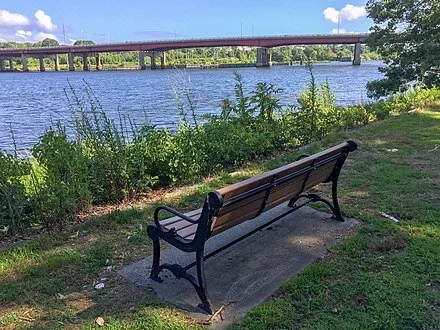
Looking out at the Henderson Bridge over the Seekonk from Providence’s Blackstone Park
From ecoRI News (ecori.org)
When driveways, highways, rooftops, patios and parking lots cover 10 percent of a watershed’s surface, bad things begin to happen. For one, stormwater-runoff pollution and flooding increase.
When impervious surface coverage surpasses 25 percent, water-quality impacts can be so severe that it may not be possible to restore water quality to preexisting conditions.
This where the Seekonk River’s resurgence runs into a proverbial dam. Impervious-surface coverage in the Seekonk River’s watershed is estimated at 56 percent. It’s tough to come back from that amount of development, but the the urban river is working on it, thanks to the efforts of its many friends.
The Seekonk River, from its natural falls at the Slater Mill Dam on Main Street in Pawtucket, R.I., flows about 5 miles south between the cities of Providence and East Providence before emptying into Providence Harbor at India Point. The river is the most northerly point of Narragansett Bay tidewater. It flows into the Providence River, which flows into Narragansett Bay.
While it continues to be a mainstay on the Rhode Island Department of Environmental Management’s list of impaired waters, the Seekonk River is coming back to life.
“I started rowing at the NBC [Narragansett Boat Club] 10 years ago when I realized that I was on the shores really of a 5-mile-long wonderful playground,” Providence resident Timmons Roberts said. “I just think it’s a magical place, and seeing the river come back to life has meant a lot to me.”
The Narragansett Boat Club, which has been situated along the Seekonk River since 1838, recently held an online public discussion about the river’s recovery.
Jamie Reavis, the organization’s volunteer president, noted the efforts that have been made by the Blackstone Parks Conservancy, Fox Point Neighborhood Association, Friends of India Point Park, Institute at Brown for Environment and Society, Providence Stormwater Innovation Center, Save The Bay, and Seekonk Riverbank Revitalization Alliance, among others, to restore the beleaguered river.
“Having rowed on the river for over 30 years now, I can attest to their efforts,” Reavis said. “It was practically a dead river. It almost glowed in the dark back in the day. It is now teaming with life. Earlier this summer, a bald eagle flew less than 10 feet off the stern of my single with a fish in its talons. Watching it fly across the river and up into the trees is a sight I will not soon forget, nor is it one I could have imagined witnessing 30 years ago.”
Decades of pollution had left the Seekonk River a watery wasteland.
In the late 18th and early 19th centuries some of the first textile mills in Rhode Island were built along the Seekonk River. The river, and one of its tributaries, the Blackstone River, powered much of the early Industrial Revolution. Mills that produced jewelry and silverware and processes that included metal smelting and the incineration of effluent and fuel left the Seekonk and Blackstone rivers polluted.
There are no longer heavy metals present in the water column of the Seekonk River, but sediment in the river contains heavy metals, including mercury and lead.
Swimming in the Seekonk River, which doesn’t have any licensed beaches, and eating fish caught in it aren’t recommended because of this toxic legacy and because of the continued, although declining, presence of pathogens, such as fecal coliform and enterococci. The state advises those who recreate on the river to wash after they have been in contact with the water. It also advises people not to ingest the water.
But, as both Roberts and Reavis noted, the Seekonk River is again rich with life and activity. River herring, eels, osprey, cormorants, gulls and the occasional seal and bald eagle can be found in and around the river. The same can be said of kayakers, fishermen, scullers, and birdwatchers.
The river’s ongoing recovery, however, is threatened by rising temperatures, sewage nutrients and runoff from roads, lawns, parking lots, and golf courses in two states that dump gasoline, grease, oil, fertilizer, and pesticides into the long-abused waterway.
The Sept. 30 discussion was led by Sue Kiernan, deputy administrator in the Rhode Island Department of Environmental Management’s Office of Water Resources. She has spent nearly four decades, first with Save The Bay and the past 33 years with DEM, working to protect upper Narragansett Bay.
She spoke about how water quality in upper Narragansett Bay, including the Seekonk River, has improved through efforts both large and small, from the Narragansett Bay Commission’s ongoing combined sewer overflow (CSO) abatement project to wastewater treatment plants reducing the amount of contaminants being dumped into the waters of the upper bay to brownfield remediation projects to the many volunteer efforts, such as the installation of rain gardens and the planting of trees, conducted by the organizations that sponsored her presentation.
She noted that nitrogen loads, primarily from fertilizers spread on lawns and golf courses, that are washed into the river when it rains, lead to hypoxia — low-oxygen conditions — and fish kills. Since 2018, six reported fish kills that combined killed thousands of Atlantic menhaden have been documented by DEM’s Division of Marine Fisheries in the Seekonk River.
Kiernan said excessive nutrients, such as nitrogen, stimulate the growth of algae, which starts a chain of events detrimental to a healthy water body. Algae prevent the penetration of sunlight, so seagrasses and animals dependent upon this vegetation leave the area or die. And as algae decay, it robs the water of oxygen, and fish and shellfish die, replaced by species, often invasive, that tolerate pollution.
While these nutrient-charged events remain a problem, she said, the overall habitat of the Seekonk River is improving. Kiernan noted that in recent years some 20 species of fish, including bluefish, black sea bass, striped bass, scup, and tautog, have been documented in the river.
The Seekonk River is still a stressed system, but Kiernan said the river is seeing a positive trend in its recovery.
“We’re not in a position to suggest that its been fully restored, and honestly I don’t think that we’ll be in a position to do that until we get the CSO abatement program further implemented,” she said. “But I think you can take some satisfaction in knowing that there are days where things look OK out there.”
Frank Carini is editor of ecoRI News.
Hepburn's 'middle road'

Katherine Hepburn in 1941
“I put on pants fifty years ago and declared a sort of middle road.’’
“I have loved and been in love. There’s a big difference.’’
“If you want to sacrifice the admiration of many men for the criticism of one, go ahead and get married.’’
— Katherine Hepburn (1907-2003), movie star, Hartford native and long-time resident of the village of Fenwick, which is part of Old Saybrook, Conn.
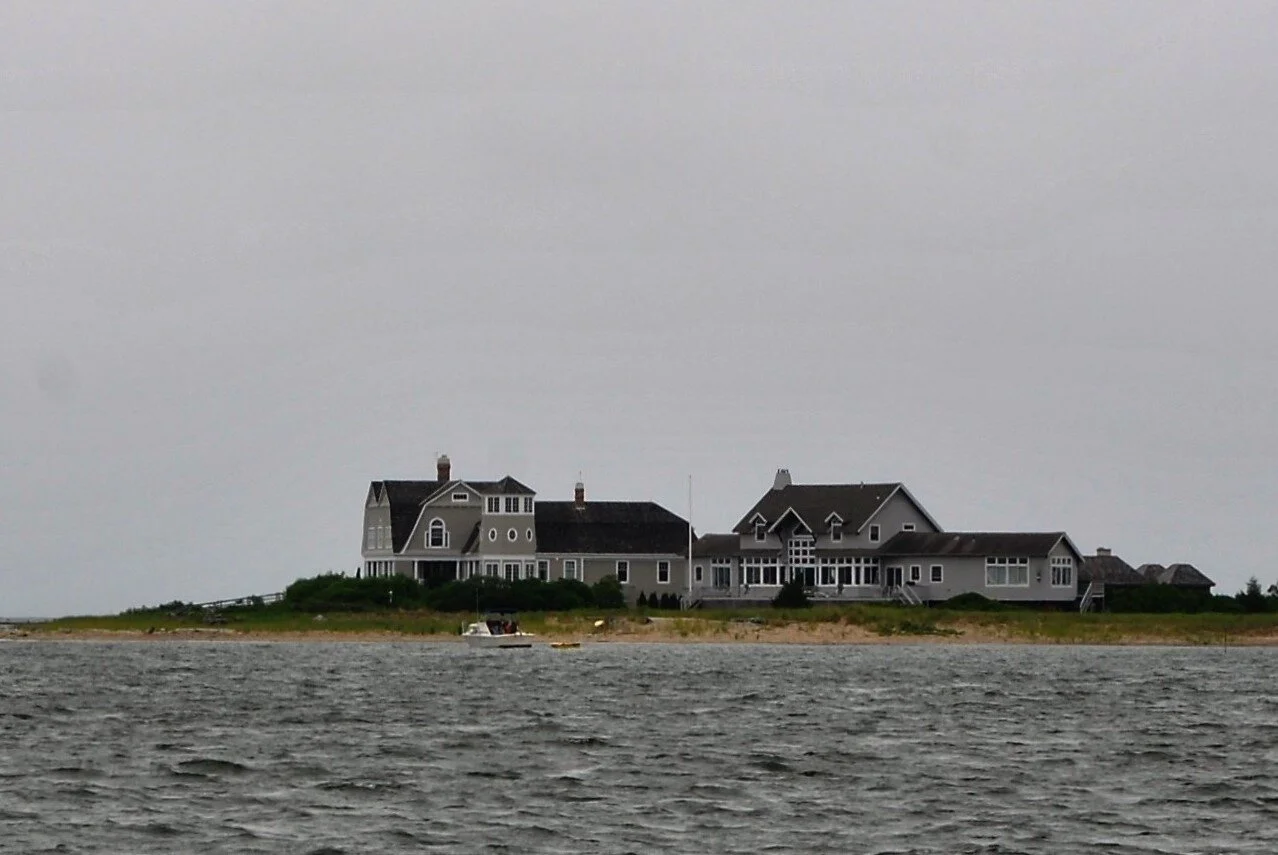
— Photo by elisa.rolle
The former Katherine Hepburn house in Fenwick, best known as a small and very affluent summer colony on Long Island Sound

The Katharine Hepburn Cultural Arts Center in Old Saybrook
Biogen to spend $250 million to get off fossil fuels

— Biogen logo
From The New England Council (newenglandcouncil.com)
“Biogen, the big, Cambridge-based biotech company, has committed $250 million in investment to eliminate fossil fuels from Biogen operations. The initiative also includes collaboration with renowned institutions to improve the health of the world’s most vulnerable populations who are often adversely affected by fossil-fuel emissions.
“Biogen achieved carbon neutrality in 2014, and the new initiative is part of a concerted effort to advance positive environmental change. The company plans to eliminate its use of fossil fuels by 2040 and will continue to invest in initiatives to study the impact of fossil fuels on human health. With this investment, Biogen has become the first Fortune 500 company to commit to eliminating all reliance on fossil fuels by 2040.
“‘Our Healthy Climate, Healthy Lives initiative further builds on Biogen’s long-standing strategy to deal with climate change by addressing the interrelated challenges of climate and health, including in the realm of brain health,’ said Michel Vounatsos, CEO of Biogen. ‘Biogen was the first company in the life sciences industry to become carbon neutral. We believe that it is time to take even greater action by implementing a well-defined program that examines how we live, how we do business and how we consume energy. By doing so, Biogen will play its part to address and impact dramatic health disparities among people around the world, as well as build a stronger, more sustainable future for all.”’
Bring on the snow

Fall, leaves, fall; die, flowers, away;
Lengthen night and shorten day;
Every leaf speaks bliss to me
Fluttering from the autumn tree.
I shall smile when wreaths of snow
Blossom where the rose should grow;
I shall sing when night’s decay
Ushers in a drearier day.
“Fall, Leaves, Fall,’’ by Emily Bronte (1818-1848), best known as the author of Wuthering Heights
Looming fireworks

“Fireworks I and II” (warp rep wall hangings, hand-painted Tencel warp cotton weft), by Cathy English, in the show, through Oct. 10, titled “Visions From The Loom,’’ at Hera Gallery, in Wakefield, R.I.
The show is an exhibition of textile art created by students at The Saunderstown Weaving School, in Saunderstown, R.I.

David Warsh: Adam Smith just made me feel better

Portrait of Adam Smith (1723-1790), economist, philosopher and writer, in the Scottish National Gallery, in Edinburgh
SOMERVILLE, Mass.
I was at a loss to think of what I could possibly add to all the dreadful news this past week.
I always have a few columns in various stages of preparation. None seemed appropriate amid all the disheartening developments. I experienced revulsion one day, schadenfreude the next, genuine pity the day after. In desperation, I tried to make something out of the decision last month by the German parliament to turn the inner border, between the old West Germany and Soviet satellite East Germany, that split the nation for 45 years into a narrow national park for hikers and cyclists – an 870-mile-long green zone. No luck. Then I remembered Our Great Purpose: Adam Smith on Living a Better Life, by Ryan Patrick Hanley, a book I had skimmed in the spring.
Hanley is a professor of political science at Boston College. According to Eric Schliesser, of the University of Amsterdam, he is one of the world’s leading experts on Smith. Our Great Purpose is a 120-page book comprising 27 meditations on short passages from The Theory of Moral Sentiments, the book that Smith published in 1759, 17 years before An Inquiry into the Nature and Causes of the Wealth of Nations appeared. The Wealth of Nations founded the modern science of economics. The second book eclipsed the first.
But The Theory of Moral Sentiments is every bit as interesting as The Wealth of Nations, because the first book is an exploration of human nature viewed through a much wider lens than the “trade, truck, and barter” of the second. Only now is technical economics catching up with it. At 342 pages (in the Oxford edition, from Liberty Fund), it is challenging reading, even though Smith’s prose is still sprightly by 18th Century standards. That’s why Hanley augmented the snippets with his own reflections – plus pointers to the more elaborate passages in TMS. A welcome replacement for The Meditations of Marcus Aurelius, the text on which my generation was brought up.
I zeroed in on XII, the entry on Hatred and Anger. I was curious to know whether the joy we feel at the suffering of those whom we don’t like serves any useful purpose. I suspect that it does, binding like-minded persons together. Smith thought not: “Hatred and anger are the greatest poison to a good mind,” he wrote. Or, as Hanley puts it, “Tranquility is threatened by anger and hatred, but promoted by gratitude and love.”
I skipped ahead to XX, “Choice.” Smith wrote, “To deserve, to acquire, and enjoy the respect and admiration of mankind, are the great objects of ambition and emulation. Two different roads are presented to us, equally leading to the attainments of this so much desired object, the one, by the study of wisdom and the practice of virtue; the other, by the acquisition of wealth and greatness.” Or, as Hanley compresses it, “We need to choose between the road admired by the world and the road less traveled.”
I felt better immediately. Hanley’s little prism made it easier to think about the events of the week. I turned to the keyboard, and, when I was done, I took Our Great Purpose home to put on the nightstand, next to Bad Monkey, by Carl Hiaassen.
David Warsh, a veteran columnist and an economic historian, is proprietor of Somerville-based economicprincipals.com, where this essay first ran.
Jill Richardson: Trump's bogus 'meritocracy'

“The Worship of Mammon;; (1909), by Evelyn De Morgan
Via OtherWords.org
Today I looked at a graph of income inequality over time in America. This was not new information to me, and yet it was still shocking.
From the 1950s until the early 1970s, Americans grew richer together. Some Americans were poor and others were rich, but their incomes, adjusted for inflation, grew at the same pace. Income roughly doubled for all.
Then the lines diverge. The rich got much, much, much richer and the rest of us had more modest gains.
Recently, Trump issued an executive order declaring America a “meritocracy” where hard work and skill are fairly rewarded. If America’s inequality reflects a meritocracy and the wealthy grew richer while everyone else didn’t, is the president calling the majority of the American people stupid and lazy?
I am in my seventh year of a PhD program. Everyone around me is in a difficult position. COVID-19 has hobbled the economy.
The freshmen are missing out on the normal college experience right after they all missed their proms and graduation ceremonies. Some of them are living in quarantined dorms where some students have COVID. I can’t imagine how worried their parents must be. And the upperclassmen will graduate into an economy that set records for the worst unemployment since the Great Depression this year.
Graduate students are struggling to do fieldwork under quarantine. The academic job market is wrecked. Nobody knows what this will mean for our futures. How will I pay my student loan debt? I’ve done my part to get my education, and I am on track to be qualified for a job. But will there be any jobs?
The people around me are lucky. They are at an excellent state university, in training for professional jobs. How much more are others suffering compared to us right now? Many Americans are suffering far worse than missing out on frat parties.
Over 208,000 are now dead from the coronavirus, and millions more are alive but suffering in various ways — mourning lost family members, suffering long term health complications, risking their lives to go to work, or out of work and in need of income.
I think I am saddest for people who lose family members during this time. You need friends and family with you when you grieve, and too many have had to bear that burden alone.
Meanwhile, the person responsible for the safety of our nation, who has mishandled the coronavirus from the start, was living in luxury and sleeping with a porn star while he wasn’t even paying his taxes.
Donating your salary is not that noble when you are gaining much more than that by dodging taxes. Implying that you got where you did through merit when it was cheating — and that the millions of Americans with less wealth than you have less merit — is an insult.
We live in a deeply unequal society, and we are led by someone who benefits from that inequality. No executive order should gaslight us into thinking that’s fair.
Jill Richardson is a sociologist.

Where are you?

Central Philadelphia was laid out by Thomas Holme in 1683 according to this sketch and was the first city to use numbered streets systematically.
From Robert Whitcomb’s “Digital Diary,’’ in GoLocal24.com.
I’ve lived in, let me see, more than 10 places and early on came to appreciate the emotional and other baggage connected with street addresses and how interesting the origin of street names can be.
So Deirdre Mask’s volume The Address Book: What Street Addresses Reveal About Identity, Race, Wealth, and Power caught my eye. There are some little mistakes (such as calling the Massachusetts State House , in Boston, the “Senate House”) because book publishers in general have laid off too many copy editors. But Ms. Mask is very engaging and ingenious as she tours the world, exploring cities’ colorful and sometimes unsettling address histories, including how the Nazis’ eliminated street names with Jewish references. Tokyo’s address system is particularly bizarre.
Her last chapter is titled “Are Street Addresses Doomed’’.
A big takeaway of the book is how much government wants you to have a precise street address so, among other things, it can tax you, arrest you and draft you. Addresses weren’t created so you could find your way.
Quippy and careful
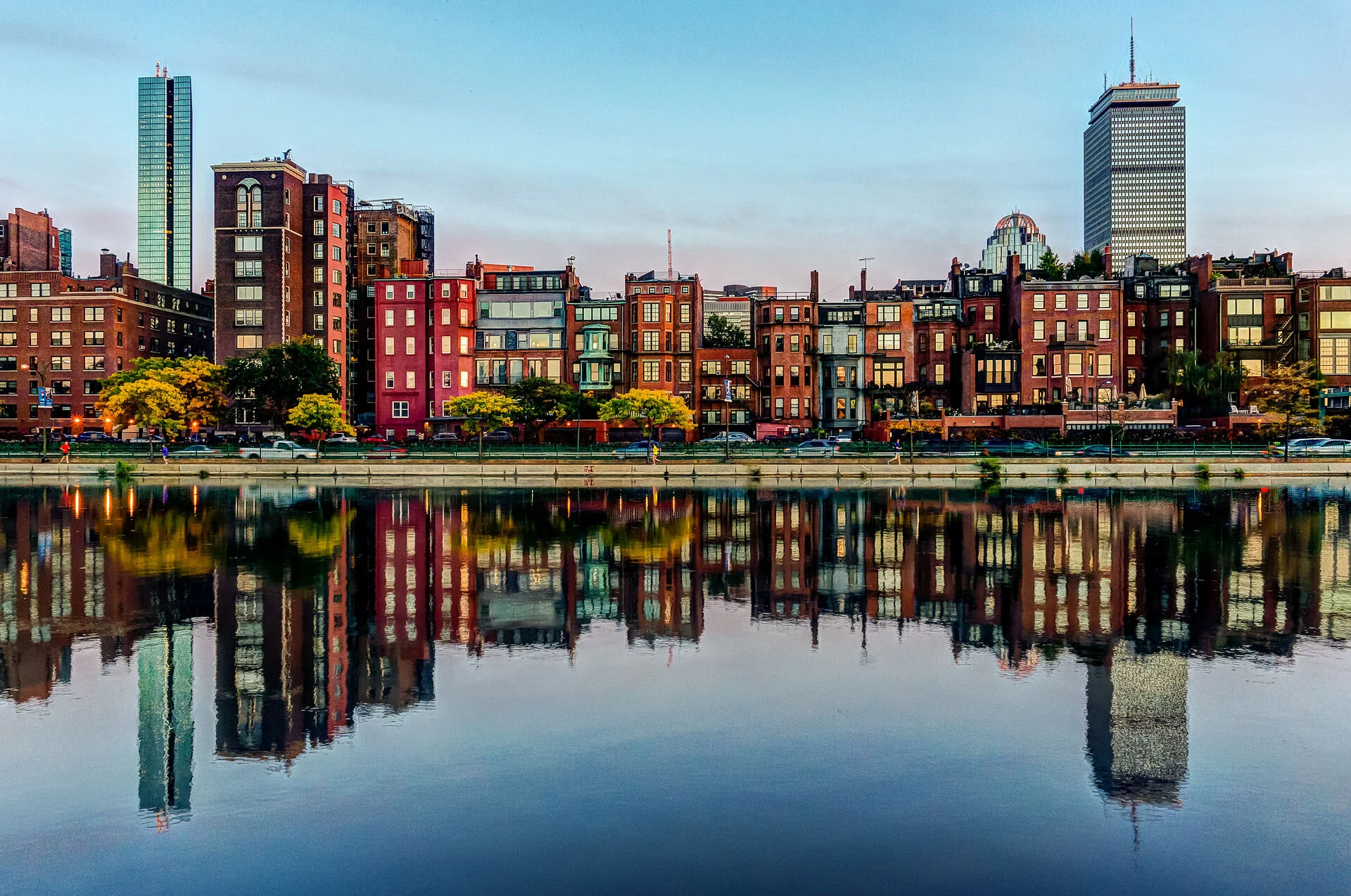
Boston's Back Bay neighborhood reflected in the Charles River
— Photo by Robbie Shade
“Boston is actually the capital of the world. You didn’t know that? We breed smart-ass, quippy, funny people. Not that I’m one of them. I just sorta sneaked in under the radar.’’
—John Krasinski (born in Boston in 1979), actor and filmmaker
xxx
“Proper Bostonians never talk about money. My father told me if I ever talked about money with a woman to take off the last zero.’’
— Cleveland Amory (1917-1998), essayist, historian, TV commentator and animal-rights activist and from a Boston Brahmin family
It's all about pumping up fear

Providence Mayor ‘‘Buddy” Cianci in his City Hall office
From Robert Whitcomb’s “Digital Diary,’’ in GoLocal24.com
The Sept. 22 Boston Globe ran a good interview by Dan McGowan with Jon Shields and Stephanie Muravchik, authors of Trump’s Democrats, which is about how some (many now former?) members of that party became fans of the most corrupt and depraved president in American history, and a traitor to boot. These wishful thinkers ignored Trump’s decades of personal and public depravity and gave him enough Electoral College votes to now threaten what’s left of American democracy. Consider that he’s threatening to try to stay in office even if he loses the election!
The authors talked to people in Johnston, R.I., Ottumwa, Iowa, and Elliott County, Ky.
Central is their admiration for tough guys who will put down the people whom the Trumpians resent, envy and even hate, and in so doing make the Fox-fueled leader’s fans feel stronger. As the authors note, that admiration of what a lot of people would call bullies is one reason for the support in some quarters of the flamboyant and criminal late Providence Mayor Vincent (“Buddy”) Cianci (whom I knew quite well; he could be very entertaining.). No wonder that Trump’s and his minions’ frequent threats to use violence against street protesters and others who oppose The Leader sells well to this crowd, which also tends to love guns, as a security blanket. (Forget the phrase in the Second Amendment about a “well-regulated militia’’.)
The authors say:
“Cianci, Johnstonians, and many working-class communities throughout the United States have been shaped by an ‘honor culture.’ Citizens in this culture prize a social reputation for toughness, which they see as necessary to defend one’s honor and interests. Critics of honor culture … see it as a culture that cultivates bullies.’’
“Like Johnstonians generally, Trump embraces the values of a sick honor culture. His philosophy of leadership is to never show weakness, to never let any slight slide. As Trump once put it: ‘Real power is fear. It’s all about strength. Never show weakness. You’ve always got to be strong. Don’t be bullied. There is no choice.’’’
Whether Trump’s supporters’ “interests,’’ at least their socio-economic ones, are actually defended by a gangster like Trump, without an iota of what most people would define as “honor,’’ is highly debatable.
xxx
Reminder: The most damning information about Trump comes from the people who worked with him.

Llewellyn King: Reality check on Biden’s clean-energy plan

Keep it going: Millstone Nuclear Power Station, in Waterford, Conn.
WEST WARWICK, R.I.
The closest President Trump came to laying a glove on former Vice President Joe Biden in their first debate was on the environment.
Biden’s published clean-energy plan — which is more a gushing hydrant of wishes — is somewhat incoherent, certainly expensive at $2 trillion, and looks counterproductive.
It is built on the left-wing assumption that all commerce, and the electric power industry particularly, is managed by people who would trade away the future for a few pieces of silver; that humanity stops at the corporate door.
This was true once. I’ve been in meetings where circumventing restrictions on coal were discussed and where global warming was regarded as a Communist conspiracy.
But now environmentalism is as active in corporate boardrooms as it is in the inner sanctums of Democratic thinking. Younger workers in corporations and shareholders have been demanding this activity. Biden needs to smell the roses, be less woke more awake.
Particularly disturbing are the list of executive orders Biden says he’ll sign on his first day in office. One would hope after the flood of executive orders signed by Trump, many of them sowing more confusion than direction, that Biden would abide by more acceptable norms of governance. Substantial environmental law needs Congress.
If, as his published policy says, Biden signs these orders on day one of his presidency, on day two the courts will be flooded with lawsuits seeking to uphold the laws already in place, not to have them modified by extra-legal action.
The fact is that business today is not the business of yesterday. It is leading an environmental revolution and is, arguably, in the forefront of a new business dawn. This is especially true in the three places where the difference in greenhouse gas releases count: electricity production, transportation, and manufacturing processes which use a lot of heat.
A wind of change is sweeping through the United States on environmental issues, and it should be allowed to blow free and strong. It is more complete, more encompassing and, in the end, will be more effective than if a possible Biden administration tries to control or direct it.
Consider these indicators of the low-carbon wave that is sweeping across the country:
— Five of the nation’s largest utilities are aiming to be carbon- free by 2050: Southern Company, Xcel Energy, Duke Energy, Dominion Energy, and Public Service Enterprise Group. Others are also on board with the same objective.
— Amazon is buying 100,000 electric delivery vehicles. Uber and others with delivery fleets are doing the same. Companies with large roof areas, like Walmart, are installing solar to become self-generators of clean electricity.
— The oil and gas industry, which has most to lose after the rapidly declining coal industry, is pouring resources into carbon capture, utilization and storage.
— More than 70 of the world’s largest financial institutions — including Bank of America, Citibank, Morgan Stanley, and BlackRock — have banded together to account for the carbon emissions content in their lending and investing. The group is known as the Partnership for Carbon Accounting Financials and is administered by the global consultancy Guidehouse. It is huge in its implication.
— A plethora of electric vehicles is about to hit the market, some from new startup companies, others from famous marques from Europe and Detroit. This bounty’s effect will be that there will be more people, who can’t afford a Tesla, going electric. Commercial charging stations will follow. No need for Biden’s plans to build stations. Government is best kept clear when the market is working.
— New inventions are coming to solar, wind and storage. CPS Energy, the city-owned electric and gas utility serving San Antonio, recently announced it wanted ideas for 500 megawatts of innovative generation and storage and has had over 200 creative suggestions. It also is seeking 900 megawatts of solar from existing technology and 50 megawatts of storage. That is green creativity at work.
What the Biden administration, if it is to be, must do is, as often as not, get out of the way. It should take action where action is clearly needed. Don’t try to speed up a rushing stream with dams.
One such place where it might strike a blow for clean air is to find a mechanism to save the 12 or so operating nuclear-power plants that are to close in the next five years. Their zero-carbon output equals thousands of new windmills.
Their loss will be a carbon-reduction catastrophe. Biden should be told.
On Twitter: @llewellynking2
Llewellyn King is executive producer and host of White House Chronicle, on PBS. He’s based in Rhode Island and Washington, D.C.