
Comfort in isolation

From the show of oil paintings on panels by Donna Calleja called “Close to Home, ‘‘ at the Room 83 Spring gallery, in Watertown, Mass., through Oct. 31.
She told the gallery:
‘‘Most of the paintings in ‘Close to Home’ were created in 2020 in a small workspace in my home. The act of painting each afternoon provided me with comfort during this difficult time of isolation... . My goal is to interpret the beauty I see in the small details of everyday objects and I hope to provide my viewers with a sense of calm and quiet reflection.’’
The gallery said: “Her compressed arrangements of domestic objects expertly balance color, shadow, light and composition in this series of small luminous still lifes.’’

Heating-oil industry seeks to end reliance on — oil!

— Graphic by Centre Tank Services Ltd
From The New England Council (newenglandcouncil.com)
BOSTON
“The National Energy & Fuels Institute (NEFI) has announced a plan to eliminate fossil-fuel energy reliance in the heating-oil industry by 2050. The pledge is intended to reduce emissions and ultimately turn heating oil into renewable fuel.
“The announcement follows a pledge made last year by over 300 oil industry professionals. The roadmap to eliminating fossil fuels from heating-oil production focuses on using an increasing amount of biofuels in heating oil fuels, including a 15 percent reduction in fossil fuels by 2023.
“‘Last year, industry leaders announced a goal that many thought unachievable,’ said NEFI President & CEO Sean Cota. ‘Today, we are excited to announce that not only is our goal achievable, but it is also well within reach. Renewable liquid heating fuel can reduce fossil-energy use and carbon emissions faster and more cost-effectively than electric heat pumps or natural gas.”’
“The New England Council commends NEFI for its commitment to eliminating the use of fossil fuels. Read more from the NEFI press release.’’
Praise for New England from John C. Calhoun

John C. Calhoun
“What people can excel our Northern and New England brethren in skill, invention, activity, perseverance and enterprise?’’
— John C. Calhoun (1792-1850). The South Carolinian served as vice president, secretary of state, secretary of war, congressman and senator. He was a brilliant, vociferous and poisonous defender of slavery and “states’ rights’’.
It surprises some that he attended Yale, where he graduated as valedictorian, and studied law at America’s first independent law school, Tapping Reeve Law School, in Litchfield, Conn., now a rich weekend place for New Yorkers.
One of Yale’s “colleges’’ (dorms) had been named Calhoun College but in 2017 was renamed in honor of Grace Murray Hopper, a pioneering computer scientist who also served as a Navy rear admiral.
Yale President Peter Salovey said then:
“The decision to change a college’s name is not one we take lightly, but John C. Calhoun’s legacy as a white supremacist and a national leader who passionately promoted slavery as a ‘positive good’ fundamentally conflicts with Yale’s mission and values.’’
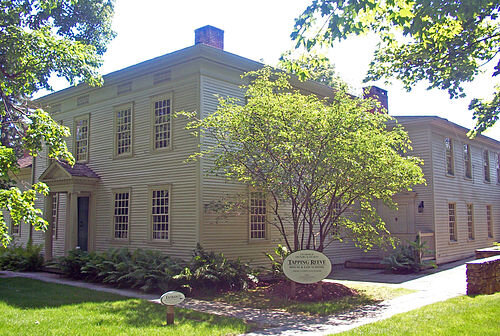
The site of the former Tapping Reeve Law School (1784-1833), in Litchfield, Conn.
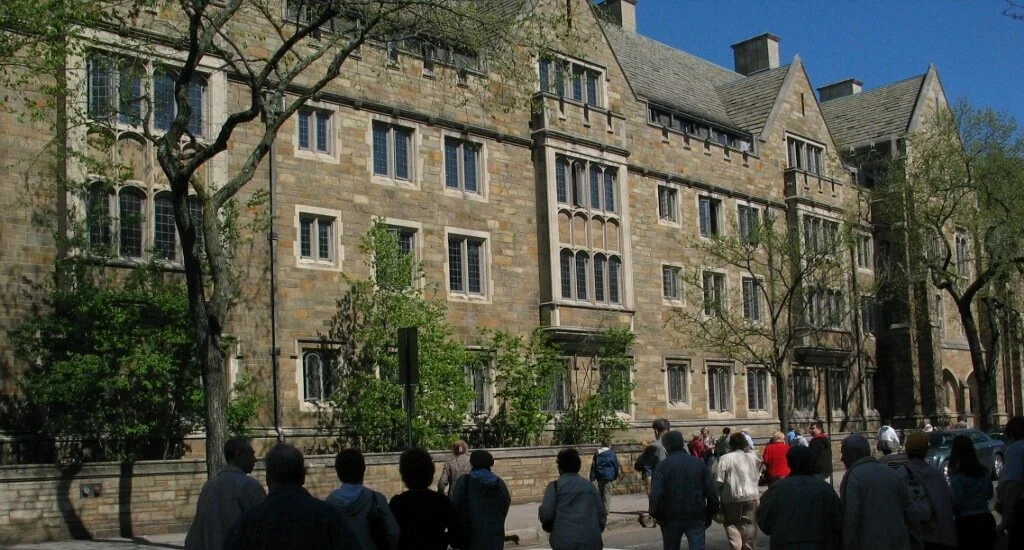
Hopper, formerly Calhoun, College (dorm) at Yale
Todd McLeish: More sites found with threatened turtles

A Diamondback Terrapin
From ecoRI News (ecori.org)
A pilot project using volunteers to scout for new populations of Rhode Island’s rarest turtle, the Diamondback Terrapin, turned up 15 new sites where the turtles have been confirmed. But despite the new populations, the biologist who led the project said the state’s terrapins are no less threatened than they were before the new populations were discovered.
Diamondback Terrapins are the only turtle in the region that live in salt marshes and brackish waters.
Herpetologist Scott Buchanan, a wildlife biologist at the Rhode Island Department of Environmental Management, said that before 1990, when a population of these turtles was discovered in Barrington, “no one had seen a terrapin in Rhode Island in many years.” Additional populations were discovered elsewhere in the state in the past decade, and when Buchanan was hired in 2018 and began asking around, he heard a number of unconfirmed reports of the turtles being observed elsewhere in Rhode Island.
“That led me to think that they’re probably more widespread in the state than the narrative would lead us to believe,” he said.
So he examined maps to identify “reasonable places” where he could send volunteers on a regular basis to see if they could spot the terrapins.
Four volunteers each visited two to four sites twice a week from late May through mid-July, and an additional volunteer surveyed a dozen sites. During each visit they scanned the water with binoculars for three 5-minute periods and counted any turtle heads they observed.
The discovery of 15 new sites was a revelation to Buchanan.
“What it means is that they are much more widespread than we had thought,” he said. “It’s encouraging from a conservation standpoint, but at many of these sites, we have little or no information about how many turtles may be there, whether they are successfully breeding, or whether they are established populations. We don’t want to be overconfident or get too comfortable with the fact that there are multiple sites containing the species.”
Most of the newly discovered terrapin sites are in coves along mid and upper Narragansett Bay. They’re still mostly absent from the lower bay, according to Buchanan.
“What we’re seeing now is probably a shadow of their former distribution and abundance,” he said. “They’re out there, that’s excellent, but we know there’s lots of places they don’t occur. All the evidence suggests that they’re still absent from many places where they were historically present. And the types of abundances that we’re documenting are probably far less than historic abundances.”
Buchanan speculated that the newly discovered populations in the upper bay may be the result of dispersal from the Barrington population, which has grown to number in the hundreds because of extensive conservation efforts.
Despite the success of the survey project, Buchanan is still concerned for the state’s Diamondback Terrapins. Most terrapin eggs are consumed by what he calls “human-subsidized predators,” including coyotes, raccoons, skunks and dogs. Terrapins are also at risk of being illegally collected for the pet trade, which is why he prefers not to reveal the location of the newly discovered sites. They also face drowning in crab traps, injury from being struck by boats, and automobile strikes as females cross roads on their way to their nesting territories.
“The big threat, though, is sea-level rise and salt marsh decline,” he said. “They’re an obligate salt marsh species; if sea level rises and marshes disappear, they don’t have a chance. That’s something I’m especially worried about over the next 10, 20, 30 years along the Rhode Island coast. Salt marshes are critical as a source of food and a place where they overwinter and take shelter, especially the juveniles and hatchlings.
“This new information we have is very encouraging, but it doesn’t mean we should let our guard down. They’re still a species that warrants conservation, even without sea-level rise. We must remain vigilant.”
Having identified the location of additional terrapin populations, Buchanan hopes to prioritize those sites for future conservation efforts, modeled after the successful nest-protection and monitoring efforts in Barrington.
“Knowing where they are, there are lots of small steps you can do to improve their conservation,” he said. “Things like small-scale habitat management, create barriers to keep them off busy roads, public outreach to ensure boaters use caution, adapt local pot fishery management.”
The success of the pilot project to identify new Diamondback Terrapin populations has inspired Buchanan to double or triple the effort next summer at numerous additional locations. He also hopes to continue the project for many years to eventually be able to identify population trends at each site. He will be seeking additional volunteers this spring to survey coastal sites around the state in June and July. Those interested in volunteering should contact Buchanan at scott.buchanan@dem.ri.gov.
Rhode Island resident and author Todd McLeish runs a wildlife blog.

David Warsh: Biden should fill a couple of Cabinet posts with centrist Republicans

Secretary of State Mitt Romney?
SOMERVILLE, Mass.
If, as seems likely, President Trump is on the verge of defeat in his bid for re-election, an epic battle between Republicans is in the offing. Joe Biden should put his thumb on its scale from the start. May he recall Winston Churchill’s maxims – “in war, resolution; in defeat, defiance; in victory, magnanimity; in peace, goodwill – and prepare to offer important Cabinet positions to one or two senior centrist figures in the GOP.
Utah Sen. Mitt Romney, who was the Republican presidential candidate in 2012, would make an excellent secretary of state. So would former Utah Gov. Jon Huntsman, another 2012 GOP hopeful. Two-term Ohio Gov. John Kasich, who came closer than any but Ted Cruz to defeating Trump for his party’s nomination in 2016, could restore low-key competence to the embattled Department of Health and Human Services.
Are these unreasonable suggestions? I don’t think so. Certainly Biden understands the logic very well. In an outdoor speech last week near the Gettysburg memorial park, he asserted the nation was once again “in dark times” – in the grips “not of just ferocious division, but of widespread death, structural inequity, and fear of the future.”
Instead of treating each other’s party as the opposition, we treat them as the enemy. This must end. We need to revive the spirit of bipartisanship in this country, a spirit of being able to work with one another.
Biden added that when he said such things in the past, he was accused of being naive. “Maybe that’s the way things used to work, Joe, but they can’t work that way anymore,” he said he was told. Not only can work that way, he replied, he said, but they must, if the damage is to be repaired.
Romney’s nomination to head the State Department would be all but impossible to oppose. Foreign policy is traditionally conducted in a bipartisan manner, after all. Romney indicated his willingness to serve in the post when he submitted to a humiliating interview with President Trump not long after the 2016 election. The former governor of Massachusetts has since been elected to the Senate. Perhaps he would prefer to keep that post. In that case, Huntsman deserves a look, having served as ambassador to both China (2009-2011) and Russia (2017-2019).
Kasich is a less obvious choice, but after nine terms in the U.S. House, he served two successful terms as governor of Ohio, mastering its budget and engineering a statewide Medicare expansion that saved many lives during the opioid epidemic. He endorsed Biden’s candidacy in a speech to the Democratic National Convention.
(As recently as the Obama administration, it was common practice to have someone from the other party in the Cabinet: Ray Lahood as transportation secretary in its first term, and Chuck Hagel as secretary of defense in the second. Obama also asked Robert Gates stay on for two years at the Pentagon.)
Political parties are large and complicated organizations. Pundits have been regularly pronouncing the death of the Republican Party for four years now. I think that is wrong. For the moment, Americans are feeling their way, divided between the party of innovation (the Democrats), and the party of conservatism (probably the Republicans).
Gradually an acceptable program of innovation will emerge and settle into its tracks. What lies ahead for Republicans now are battles among those who seek election appealing to the Trump base, and a pool of still little-known politicians and staffers who believe that the party’s future belongs to leadership committed to preserving what the nation already has achieved: a cheerful, tolerant, and resourceful civil society. A deep reservoir of talent is available at the Lincoln Project ready to resume construction. See this lengthy story on The New Yorker Web site for details.
Then there are the progressives, the Democratic faction in whose dreams can be glimpsed the future of their party. But politics takes time as well as passion. In their fury over the Trump years, progressives are calling for a Carthaginian peace. Biden should offer Republicans a Marshall Plan, meaning help restoring a once- strong organization back in working order. Meanwhile, let the de-Trumpification of the GOP begin.
xxx
The 2020 Nobel Prize in chemistry to Jennifer Doudna and Emmanuelle Charpentier recognizes not one but two historic landmarks, the first for science, the second for gender equality. Development of “genetic scissors,” the mechanism known as CRISPR, is widely understood to be the most important advance in biological science since 1962, when the prize recognizing the discovery of the helical structure of the DNA molecule was awarded.
And it was in the years since then that women have made strides toward parity with male colleagues at nearly every level of the new science and attendant biotechnology, including, now, the world-historical highest. No one who sits in on biotech meetings (or even regularly walks across town in certain districts of Cambridge, San Francisco, or Palo Alto) can fail to notice that the professional class now includes many women as well as men.
As befits an epic achievement, the Doudna/Charpentier story merits a very good book, and then a film. (After her biopic portrayal of two-time laureate Marie Curie, it seems a given that Rosamund Pike will play Doudna.) Laureate James Watson’s The Double Helix: A Personal Account of the Discovery of the Structure of DNA has been a classic since it appeared in 1968. Walter Isaacson, biographer of Benjamin Franklin, Albert Einstein, Steve Jobs, and Leonardo Da Vinci, last week registered first dibs on the CRISPR story with an op-ed in The New York Times.
Eric Lander, president of the Broad Institute of MIT and Harvard University, whose scientists. and others in a Harvard lab, were rivals to Doudna and Carpentier in the chase to nail down the details of the scissors (and gain its patent rights) raised hackles in January 2018, when, in The Heroes of CRISPR, an article in Cell, he called attention the successes of his local heroes, Feng Zhang and George Church, as an illustration of the intricacy of the web of science. They lost out in the end. But the story of this year’s prize is better for Lander’s controversial article.
David Warsh, a veteran columnist and an economic historian, is proprietor of Somerville-based economicprincipals.com.
Through the gloom came comfort

‘‘Swell” (oil), by Christina Beecher, in the group show “Emerging Out of Isolation {of the pandemic},’’ at Galatea Fine Art, Boston through Oct. 31.
The Massachusetts-based painter told the gallery:
"In Swell, I found a panel with an under-painting of golds that literally had no meaning to me. I had started this work months before. I began to mix, to paint, wipe and repeat, allowing myself to fumble and plow through. With some luck inevitably things begin to happen. Colors start to excite me as the brushstrokes happen almost by themselves. Through the gloom I felt came comfort.
“Yellow and reddish turbulent clouds rise skyward while the swelling sea of bright colors slide across the horizon. This small work is a dichotomy of both brushstrokes and concept, with the swirling movement of the sky and the swirling swells of the ‘sea’’
See:
http://www.christinabeecher.com/
Old and grumpy
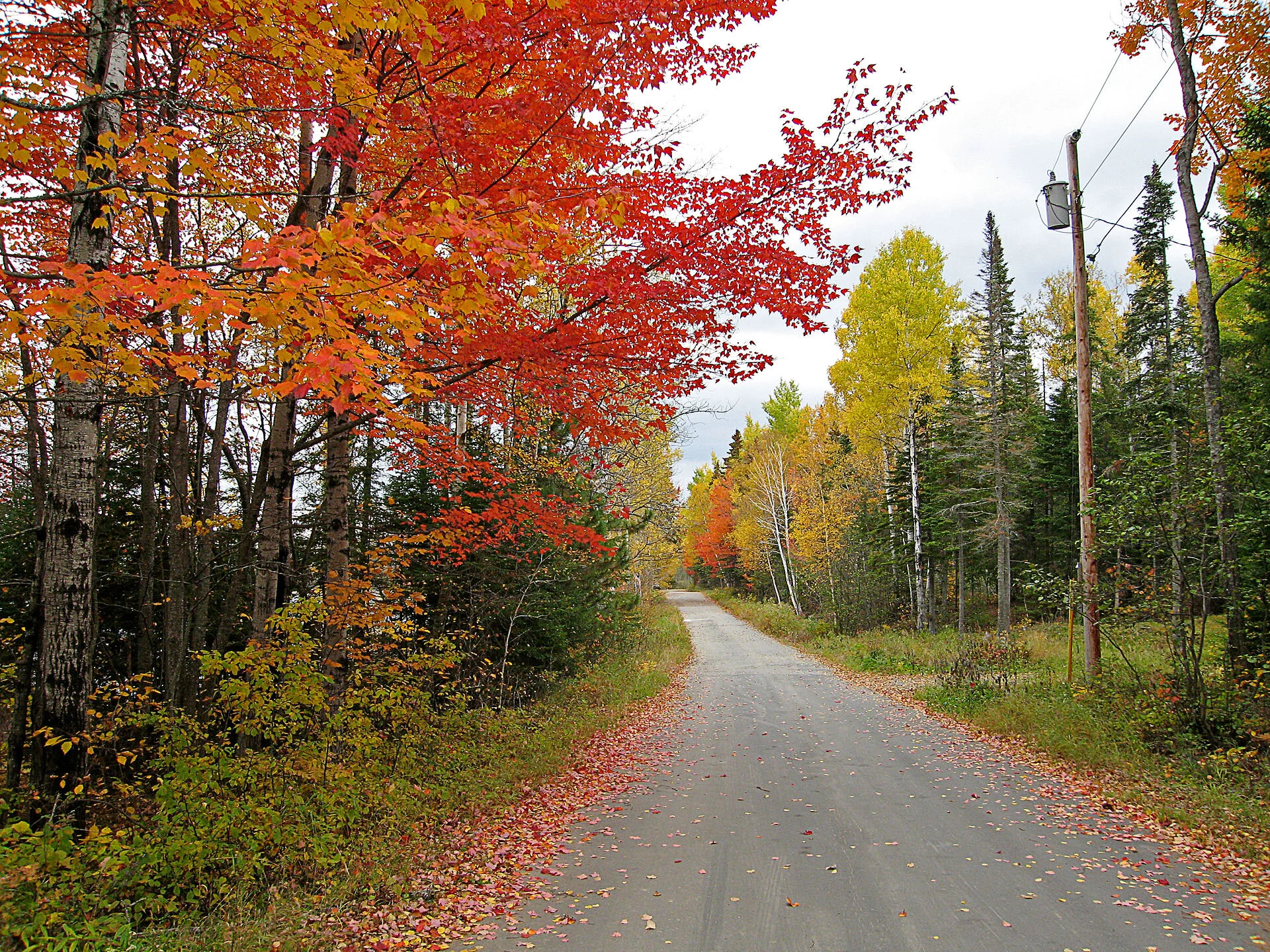
Autumn in Stratton, Maine
“I grew up on a dirt road in Maine, and pretty much everybody on that road was related to me, and they were old. And so grumpy.’’
— Elizabeth Strout (born 1959), Brunswick, Maine -and New York City-based novelist and short-story writer
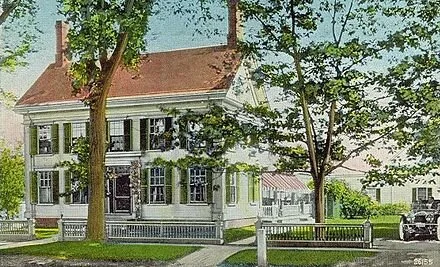
Harriet Beecher Stowe House, in Brunswick, where, in 1850-1852, Stowe wrote Uncle Tom's Cabin
'An inert savior'

— Photo by Dietmar Rabich
“After the leaves have fallen, we return
To a plain sense of things. It is as if
We had come to an end of the imagination,
Inanimate in an inert savior.’’
— From “The Plain Sense of Things,’’ by Hartford-based poet, lawyer and insurance executive Wallace Stevens (1879-1955)
Squirrel crisis in walnut mystery

From Robert Whitcomb’s Digital Diary, in GoLocal24.com
I’ve been amused by a minor controversy about, it is alleged, a population explosion of squirrels in Providence’s gentrifying Fox Point neighborhood. The weird thing is that the busy little rodents are accused of leaving walnut shells all over the place, though there are few walnut trees in our area. Does that really present a serious hardship for residents? There are lots of oak trees, which this year – perhaps because of the drought? – are dropping impressive supplies of acorns.
Locals are arguing about such solutions as poisoning, which I hope is avoided. It would kill other creatures, too, including dogs and cats.
At least they don't have spikes and don't tweet

“Proliferating_3333 ‘‘ (mixed media on wood panel), by Sand T Kalloch, in her show “Proliferating,’’ at Bromfield Gallery, Boston, through Nov. 1. She is a Malaysian-born artist who lives in Malden, Mass. Her show’s mixed-media works explore patterns.
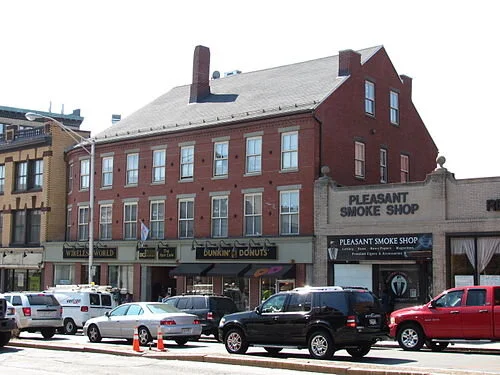
The Waite Brick Block, a historic commercial building at 422-424 Main Street in Malden. Built in 1848, it is the oldest brick building in the city. Note this Greek Revival building’s hip roof, from which three tapered chimneys project. One corner of the building is curved, following the original junction of Main and Pleasant Streets. Granite lintels top the windows, and the cornice has a line of brick dentil work. These are classic characteristics of commercial buildings of the time in New England.
Llewellyn King: Bundle up for a very bleak winter
WEST WARWICK, R.I.
A winter of discontent looms. Unlike in Shakespeare’s Richard III, no one can say it will be made glorious summer by anything now in sight. Instead, it promises a tsunami of misery for many and the ugliest election in U.S. history.
At a time that calls for new energy, new thinking and a recasting of the social contract, two old men -- who more rightly should be eyeing the sunny side of the veranda at their retirement homes -- are in contentious dispute for the presidency.
Whoever wins, President Trump or former Vice President Joe Biden, the winter will be the harshest in memory for many Americans, particularly those on the lower rungs of the economic ladder.
The COVID-19 pandemic has evaporated millions of jobs and the small companies that provided them. Most obvious in this slaughter are the restaurants. Yelp, the restaurant reporting service, estimates that 53 percent of the restaurants now closed will never reopen.
Restaurants are among the most fragile and perishable of small businesses. At the best of times, most inhabit an inhospitable space between the restaurant chains and their landlords.
Restaurants are quick to hire and quick to fire. It is where the unskilled (dishwashing and prep) to the low-skilled (line cooks and front staff) find work most easily.
Restaurants tell the temperature of the economy ahead of the official soundings. When business turns down, they stumble.
They also are places of hope: The chefs and waiters of today are the restaurant entrepreneurs or stage and screen stars of tomorrow. They’ve put untold thousands through college. When restaurants close jobs go, hopes and dreams go, and often the life’s work of the owners go.
The individually owned restaurant epitomizes entrepreneurism, determination, the capitalist spirit, and the joy of self-employment for the owner. All the virtues of small business, routinely drooled over by the politicians, are present even at the humblest greasy spoon. Free enterprise is always on the menu.
And restaurants are part of the fabric of our lives, where we celebrate, occasionally mourn, and frequently refresh.
Much of what is true for restaurants is as true for the whole hospitality industry. Those who do the housekeeping in hotels, the porters and, of course, the restaurant staff are all semi-skilled and in need of work to survive. They are, I submit, not easily re-trained: You don’t go from making beds to computer programming in a short time.
Only Congress can assuage the immediate suffering at the bottom of the employment pyramid. But a new relief package has been tied up in party strife.
Trump said on Oct. 6 that he had withdrawn from negotiations with the Democrats over the package. Now he says he will sign a simplified measure, guaranteeing a payment of $1,200. That came after the stock market -- the only index Trump follows -- faltered.
Dark as things may be for the workers at the bottom, they are bleak for all. Trump won’t say that he’ll accept the results of the election if he doesn’t win. He’s laid the groundwork for this potential coup by criticizing mail-in voting. Without evidence, he’s sought ahead of the election to invalidate mail-in voting and has even trashed the U.S. Postal Service, maybe to facilitate this election subterfuge.
If Biden wins, he may be presented with his greatest crisis before he is sworn in: leading the movement for accepting the vote. He’ll be required to lead the millions who may flood the streets, prompting violence between themselves and Trump hardliners.
Shiver, people, shiver. There is much to fear as winter unfolds even if you have a paycheck.
If Trump loses and accepts the result, there will be the time from certification of the election to Biden’s swearing in when an unfettered Trump can indulge his passion for executive orders, abrogating treaties and sowing wanton havoc.
The only sunshine may come from science in the form of a somewhat effective vaccine for COVID-19. This won’t occasion us to immediately strip our masks, as it will take a year to inoculate the whole population. But its prospect will put warmth into a cold Christmas.
As the nation returns to health, a hard look at the predicament of those at the bottom will be needed -- an amendment to the social contract, if you will. Top of my list: fix health care and repair education.
Llewellyn King is executive producer and host of White House Chronicle, on PBS. His email is llewellynking1@gmail.com and he’s based in Rhode Island and Washington, D.C.
Website: whchronicle.com
Prepare for cheaper cities

In eerily underpopulated downtown Boston on Oct. 8 at about 11 a.m.
There’s hope that downtown Providence, especially its newer office buildings, can grab business refugees from big cities, especially Boston and New York, to help fill some of its COVID-emptied space. The pitch would include, among other things, the area’s shorter commuting times and, of course, the compact city’s walkability and visual charms.
Well, maybe a little. But it will be hard to fight a technology-fueled work-at-home movement that was underway well before COVID-19 arrived and that affects all cities. Yes, having so many employees working from home erodes teamwork, loyalty and esprit de corps. But the savings to employers in office expenses may seem to many enterprises to more than offset those drawbacks.
The savings may soon come to include lower pay (never including senior executives, of course) for many, which employers would justify by pointing to the partial (if workers only come to the office, say, two or three days a week) or full (if they work entirely at home) disappearance of employees’ commuting costs, which for most workers total thousands of dollars a year.
We’ll see. But what does seem clear is that there will be fewer, perhaps far fewer, restaurants and hotels in most city centers in the next few years. Maybe more happily, at the same time rents will tend to fall downtown as more apartments go vacant, drawing in more people of modest means to live there even as suburbia becomes more expensive. And many of the remaining restaurants will be less expensive than before COVID. I hope that this means a revival of the old-fashioned diners. “Breakfast all day!”

'Make the day seem less brief'

O hushed October morning mild,
Thy leaves have ripened to the fall;
Tomorrow’s wind, if it be wild,
Should waste them all.
The crows above the forest call;
Tomorrow they may form and go.
O hushed October morning mild,
Begin the hours of this day slow.
Make the day seem to us less brief.
Hearts not averse to being beguiled,
Beguile us in the way you know.
Release one leaf at break of day;
At noon release another leaf;
One from our trees, one far away.
Retard the sun with gentle mist;
Enchant the land with amethyst.
Slow, slow!
For the grapes’ sake, if they were all,
Whose leaves already are burnt with frost,
Whose clustered fruit must else be lost—
For the grapes’ sake along the wall.
— “October,’’ by Robert Frost (1874-1963)
Its attractions were clear

Map of Gloucester Harbor (“le beau port’) drawn as a result of an exploratory voyage along the New England coast led by Samuel de Champlain (ca. 1567-1635). This was originally printed in Paris in 1613. It’s now at the Cape Ann Museum, in Gloucester.
Sheridan Miller: N.E. economic recovery amid COVID-19 uncertainty

BOSTON
From The New England Journal of Higher Education, a service of The New England Board of Higher Education (nebhe.org)
Takeaways from NEBHE’s Legislative Advisory Committee …
The economic fallout of the layoffs and business closures caused by the COVID-19 pandemic has wreaked havoc for many New England workers—especially those who were already facing a structurally vulnerable workforce and employment system before the pandemic. What can state governments do to stimulate job creation and make New England’s economy more resilient in the future?
This was among the questions explored at NEBHE’s virtual Legislative Advisory Committee (LAC) meeting held via Zoom on Sept. 22. LAC members representing all six New England states met with a panel of experts to explore strategies for economic recovery in the region: Osborne Jackson, senior economist at the Federal Reserve Bank of Boston, Livia Lam, director of workforce development at the Center for American Progress, and Garrett Moran, chair of Connecticut Gov. Ned Lamont’s Governor’s Workforce Council. Here are four takeaways from the discussion.
1. Economic recovery will depend on states’ ability to identify and support the region’s most vulnerable workers.
Jackson’s latest research suggests that the overall unemployment rate in New England is expected to grow through the end of 2020 and into the beginning of 2021, albeit more slowly than the overall U.S. rate . The region’s “non-essential” workers who are unable to work from home (like home repair technicians) who represent 36 percent of all U.S. workers, as well as those “essential” workers who have likewise been unable to work from home (home healthcare aids and childcare workers for example), who represent 38 percent of all U.S. workers, have been the most vulnerable to losing their jobs during the health crisis. This group disproportionately comprises marginalized or oppressed populations, with higher rates of termination among women and workers of color. Policymakers and employers must solicit feedback regarding the needs of non-essential employees, and those who are unable to work from home, in order to help mitigate and try to slow the projected rises in unemployment.
2. New England’s most vulnerable employees can be best supported through business-led partnerships that focus on job quality.
A new Center for American Progress framework for protecting employees at high risk of unemployment calls for:
Increasing employer responsibility for training and employment
Rewarding partnerships that have a track record of increasing job quality
Incentivizing the use of data analytics to measure job quality
Rebalancing decision-making between workers, businesses and communities.
Policymakers may consider ways to incentivize measures to help support both employees and employers during these trying times. Connecticut, for instance, has started taking steps to encourage the state’s businesses to better support employees by creating business-led community partnerships. New England states might follow Connecticut’s lead, and help support their current and future employees by providing job training programs for incumbent workers, as well as recruiting new and unemployed members of the community through free education courses or virtual job fairs.
3. Increased state support for the child-care sector will be critical for the future of New England’s economy.
Members of the LAC agreed that a priority for the region as it emerges from the pandemic will be providing affordable, high-quality childcare, delivered by professionals earnings a living wage. Childcare workers are some of the least valued, lowest-paid professionals in New England. However, after preschool and daycare centers were shut down in March due to the pandemic, many parents realized how important early childhood caretakers and teachers are. In addition to the positive long-term impacts that high-quality preschool and childcare have on children’s socio-emotional and cognitive development, these programs provide important benefits to working parents, especially working mothers. To provide more affordable childcare for New Englanders while better compensating the region’s childcare providers, policymakers should consider launching programs that incentivize work-sponsored child care as well as refundable tax credits for preschool centers or for parents and employees to use.
4. Broader recognition of prior learning could help accelerate the region’s economic recovery.
Most jobs that provide financial stability require a credential beyond a high school diploma. Preliminary findings from a survey conducted by NEBHE and Maguire Associates for NEBHE’s All Learning Counts initiative highlights the importance of increasing access to completion of credentials.
In New England, 39 percent of residents have a bachelor’s degree. While that’s generally higher than in other regions, it is still important to increase this number especially as states strive to meet postsecondary attainment goals. It is therefore imperative that New England states recognize all forms of prior learning (such as through work experience or military service) in order for residents to advance professionally, therefore improving the greater economy.
Just as there are equity gaps in employment, there are racial and ethnic gaps in the level of postsecondary attainment in New England. We can increase equity in higher education and work by granting credit to adult learners for their validated life and work experiences. Since the start of the COVID-19 pandemic, New Englanders with a household income of less than $100,000 annually have changed their opinion to reflect the importance of higher education in job success, according to a survey by Maguire Associates and NEBHE. Yet many of the same survey respondents say they can’t afford to further their education without financial assistance. Broader recognition of learning can accelerate the completion of postsecondary credentials and make it more affordable to do so.
With all of this considered, policymakers should ask themselves the following questions in order to best support their constituents:
What barriers exist to developing and implementing recognition of learning (ROL) and credit for prior learning policies in your state?
How can states support institutions in developing low- or no-cost ROL programs?
How can states ensure that ROL is used to bridge equity gaps and help economic recovery?
Sheridan Miller is NEBHE’s state policy engagement coordinator.
Lauren Weber: Of osteopaths and M.D.'s

A physician demonstrates an osteopathic manipulative technique to students at an osteopathic medical school. The University of New England, in Biddeford, Maine, has New England’s only osteopathic medical school.
Dr. Katherine Pannel was initially thrilled to see President Trump’s physician is a doctor of osteopathic medicine. A practicing D.O. herself, she loved seeing another glass ceiling broken for the type of doctor representing 11 percent of practicing physicians in the U.S. and now 1 in 4 medical students in the country.
But then, as Dr. Sean Conley issued public updates on his treatment of Trump’s COVID-19, the questions and the insults about his qualifications rolled in.
“How many times will Trump’s doctor, who is actually not an M.D., have to change his statements?” MSNBC’s Lawrence O’Donnell tweeted.
“It all came falling down when we had people questioning why the president was being seen by someone that wasn’t even a doctor,” Pannel said.
The osteopathic medical field has had high-profile doctors before, good and bad. Dr. Murray Goldstein was the first D.O. to serve as a director of an institute at the National Institutes of Health, and Dr. Ronald R. Blanck was the surgeon general of the U.S. Army. Former Vice President Joe Biden, challenging Trump for the presidency, also sees a doctor who is a D.O. But another now former D.O., Larry Nassar, who was the doctor for USA Gymnastics, was convicted of serial sexual assault.
Still, with this latest example, Dr. Kevin Klauer, CEO of the American Osteopathic Association, said he’s heard from many fellow osteopathic physicians outraged that Conley — and by extension, they, too — are not considered real doctors.
“You may or may not like that physician, but you don’t have the right to completely disqualify an entire profession,” Klauer said.
For years, doctors of osteopathic medicine have been growing in number alongside the better-known doctors of medicine, who are sometimes called allopathic doctors and use the M.D. after their names.
According to the American Osteopathic Association, the number of osteopathic doctors grew 63 percent in the past decade and nearly 300 percent over the past three decades. Still, many Americans don’t know much about osteopathic doctors, if they know the term at all.
“There are probably a lot of people who have D.O.s as their primary [care doctor] and never realized it,” said Brian Castrucci, president and CEO of the de Beaumont Foundation, a philanthropic group focused on community health.
So What Is the Difference?
Both types of physicians can prescribe medicine and treat patients in similar ways.
Although osteopathic doctors take a different licensing exam, the curriculum for their medical training — four years of osteopathic medical school — is converging with M.D. training as holistic and preventive medicine becomes more mainstream. And starting this year, both M.D.s and D.O.s were placed into one accreditation pool to compete for the same residency training slots.
But two major principles guiding osteopathic medical curriculum distinguish it from the more well-known medical school route: the 200-plus hours of training on the musculoskeletal system and the holistic look at medicine as a discipline that serves the mind, body and spirit.
The roots of the profession date to the 19th Century and musculoskeletal manipulation. Pannel was quick to point out the common misconception that their manipulation of the musculoskeletal system makes them chiropractors. It’s much more involved than that, she said. Dr. Ryan Seals, who has a D.O. degree and serves as a senior associate dean at the University of North Texas Health Science Center, in Fort Worth, said that osteopathic physicians have a deeper understanding than allopathic doctors of the range of motion and what a muscle and bone feel like through touch.
That said, many osteopathic doctors don’t use that part of their training at all: A 2003 Ohio study said approximately 75% of them did not or rarely practiced osteopathic manipulative treatments.
The osteopathic focus on preventive medicine also means such physicians were considering a patient’s whole life and how social factors affect health outcomes long before the pandemic began, Klauer said. This may explain why 57 percent of osteopathic doctors pursue primary-care fields, as opposed to nearly a third of those with doctorates of medicine, according to the American Medical Association.
Pannel pointed out that she’s proud that 42 percent of actively practicing osteopathic doctors are women, as opposed to 36 percent of doctors overall. She chose the profession as she felt it better embraced the whole person, and emphasized the importance of care for the underserved, including rural areas. She and her husband, also a doctor of osteopathic medicine, treat rural Mississippi patients in general and child psychiatry.
Given osteopathic doctors’ likelihood of practicing in rural communities and of pursuing careers in primary care, Health Affairs reported in 2017, they are on track to play an increasingly important role in ensuring access to care nationwide, including for the most vulnerable populations.
Stigma Remains
To be sure, even though the physicians end up with similar training and compete for the same residencies, some residency programs have often preferred M.D.s, Seals said.
Traditional medical schools have held more esteem than schools of osteopathic medicine because of their longevity and name recognition. Most D.O. schools have been around for only decades and often are in Midwestern and rural areas.
While admission to the nation’s 37 osteopathic medical schools is competitive amid a surge of applicants, the grade-point average and Medical College Admission Test scores are slightly higher for the 155 U.S. allopathic medical schools: The average MCAT was 506.1 out of 528 for allopathic medical school applicants over a three-year period, compared with 503.8 for osteopathic applicants for 2018.
Seals said prospective medical students ask the most questions about which path is better, worrying they may be at a disadvantage if they choose the D.O. route.
“I’ve never felt that my career has been hindered in any way by the degree,” Seals said, noting that he had the opportunity to attend either type of medical school, and osteopathic medicine aligned better with the philosophy, beliefs and type of doctor he wanted to be.
Many medical doctors came to the defense of Conley and their osteopathic colleagues, including Dr. John Morrison, an M.D. practicing primary care outside of Seattle. He was disturbed by the elitism on display on social media, citing the skills of the many doctors of osteopathic medicine he’d worked with over the years.
“There are plenty of things you can criticize him for, but being a D.O. isn’t one of them,” Morrison said.
Lauren Weber (LaurenW@kff.org, @LaurenWeberHP) is a Kaiser Health New reporter.

Sam Pizzigati: How taxpayers funded 'consulting fees' for Ivanka Trump

A "Lion's Mouth" postbox for anonymous denunciations at the Doge's Palace, in Venice. Translation: "Secret denunciations against anyone who will conceal favors and services or will collude to hide the true revenue from them."
Via OtherWords. org
BOSTON
The warmest and fuzziest phrase in the political folklore of American capitalism? “Family-owned business”!
These few words evoke everything people like and admire about the U.S. economy. The always welcoming luncheonette. The barbershop where you can still get a haircut, with a generous tip, for less than $20. The corner candy store.
But “family-owned businesses” have a dark side, too, as we see all too clearly in the Trump Organization. We now know — thanks to the recent landmark New York Times exposé on Trump’s taxes — far more about this sordid empire than ever before.
Put simply, the report shows how great wealth gives wealthy families the power to get away with greed grabs that would plunge more modest families into the deepest of hot water.
Let’s imagine, for a moment, a family that runs a popular neighborhood pizza parlor. Melting mozzarella clears this family-owned business $100,000 a year. The family owes and pays federal income taxes on all this income.
Now let’s suppose that they had a conniving neighbor who one day suggested that he knew how the family could easily cut its annual tax bill by thousands.
All the family needed to do: hire its teenage daughter as a “consultant” — at $20,000 a year — and then deduct that “consulting fee” as a business expense. That move would sink the family’s taxable income yet keep all its real income in the family.
The ma and pa of this local pizza palace listen to all this, absolutely horrified. Their daughter, they point out, knows nothing about making pizzas. How could she be a consultant? Pretending she was, ma and pa scolded, would be committing tax fraud.
The chastened neighbor slinks away.
Donald Trump goes by a different standard. Between 2010 and 2018, Trump’s hotel projects around the world cleared an income of well over $100 million. On his tax returns, Trump claimed $26 million in “consulting” expenses, about 20 percent of all the income he made on these hotel deals.
Who received all these “consulting” dollars? Trump’s tax returns don’t say. But New York Times reporters found that Ivanka Trump had collected consulting fees for $747,622 — the exact sum her father’s tax return claimed as a consultant-fee tax deduction for hotel projects in Vancouver and Hawaii.
All the $26.2 million in Trump hotel project consulting fees, a CNN analysis points out, may well have gone to Ivanka or her siblings.
More evidence of the Trump consulting hanky-panky: People with direct involvement in the various hotel projects where big bucks went for consulting, The Times notes, “expressed bafflement when asked about consultants on the project.” They told the paper that they never interacted with any consultants.
The New York Times determination: “Trump reduced his taxable income by treating a family member as a consultant and then deducting the fee as a cost of doing business.”
During the 2016 presidential debates, Donald Trump dubbed his aggressive tax-reducing moves as “smart.” Now, veteran tax analysts have a different label: criminal. Daniel Shaviro, a tax law prof at New York University, feels that “several different types of fraud may have been involved here.”
Ivanka Trump, adds former Watergate prosecutor Nick Akerman, had no “legitimate reason” to collect consulting fees for the Trump hotel projects “since she was being paid already as a Trump employee.” Donald and Ivanka Trump, says Akerman, should with “no question” be facing “at least five years in prison for tax evasion.”
Plutocrats don’t play by the same rules as pizza parlors, and that won’t change so long as Donald Trump remains in the White House. But these new revelations may make that a harder sell.
Sam Pizzigati, based in Boston, co-edits Inequality.org for the Institute for Policy Studies. He’s the author of The Case for a Maximum Wage and The Rich Don’t Always Win. This op-ed was adapted from Inequality.org and distributed by OtherWords.org.
Memory of other trees

“Under the Hemlocks in Paper Mask” (photo), by Robin MacDonald-Foley, at Galatea Fine Art, Boston
The gallery says:
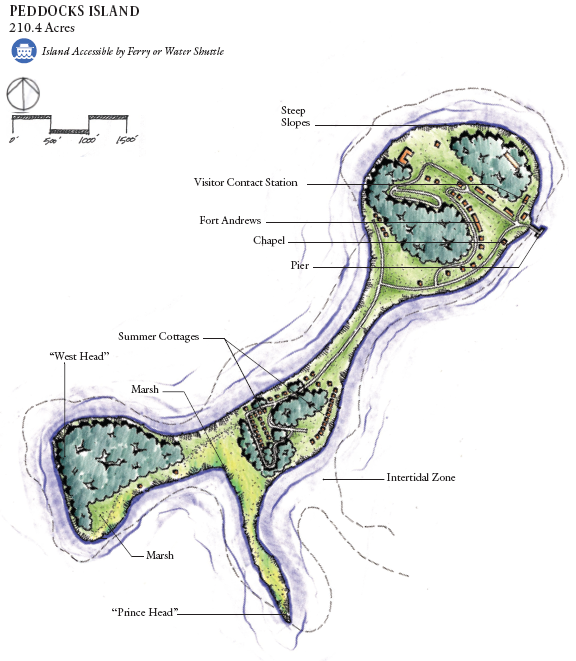
“Robin MacDonald-Foley’s self-portrait was staged in her backyard holding her photograph, “Cathedral in the Woods.’’ The paper mask was constructed from a print of her photograph. Being under her hemlocks in the shadows of the day reminded her of this canopy of forest trees on Peddocks Island, in Boston Harbor, which she regards as her cathedral. The fragility, strength, and shelter of her trees became a place of comfort for Robin. She feels it’s as close as she'll get to her favorite national park for the time being.’’
She lives in Stoughton, Mass.
See:
galateafineart.com
and
http://robinjmf.com/
National Parks Service map

Chris Powell: Biggest cost of public-employee unions is loss of democracy

A labor union symbol
MANCHESTER, Conn.
State government-employee union members lately have been complaining that this column picks on them too much.
But the frequent mention of those unions in this space is only proportionate to their huge expense and political influence. Personnel costs are about half the cost of state government when state financial grants to municipalities are counted, since most of those grants pay for municipal government personnel. Municipal government budgets are typically 75 percent personnel costs. Since most state and municipal government expense in Connecticut is personnel, personnel issues can't be written about often enough in pursuit of accountability in government.
Most people who get involved with politics and government do so for selfish reasons. Of course, government employee unions are not unique in this.
But other special interests don't have the influence the state and municipal employee unions have because of their tens of thousands of members.
Every legislative district has at least hundreds of government employee union members, and some have thousands. As is their right, government employees make themselves heard, even as most people don't, and elected officials respond mainly to those they hear from.
Few elected officials articulate and pursue the public interest. Indeed, few can even imagine it, and why should they when the public itself doesn't? As the journalist James Reston wrote, the first rule of politics is the indifference of the majority. So the great majority pays for its political indifference through taxes, inefficient and ineffective government and corruption.
As the public forfeits its influence, special interests take it, and elected officials, too scared to try to mobilize the public interest, become special-interest tools when they seek re-election.
So to criticize the excessive influence of government employee unions is not to criticize them as much as it is to criticize the elected officials who yield to them so easily and sometimes so grotesquely, as state government did a few months ago by going ahead with $350 million in raises to unionized state employees even as private-sector unemployment was rising sharply and the state's economy was crashing.
The government-employee unions will never acknowledge that what they construe as criticism of them is mainly criticism of elected officials. For the unions prefer to pose as the representatives of people oppressed by their employer, the government. The unions don't want to be seen as what they have become in Connecticut, the masters of the government. They even presume to pose as the tribunes of the working class generally, as the president of East Windsor's police union, Sgt. Jeffrey Reimer, did in a letter to the Journal Inquirer the other day.
"It's because of unions that we have an American middle class," Reimer wrote, as if there is no difference between public-sector and private-sector unions -- as if public-sector unions don't score their gains through political influence and exemption from market forces, while private-sector unions are subject to market forces and often face employers that have more political influence than they do.
Reimer even seemed to deny that police departments are military organizations, in which unionization is ordinarily forbidden, even though police are armed, use force in the name of the government, and carry military ranks. Collective bargaining ordinarily is not allowed in the military because it would be self-destructive for agencies established to defend the government to be simultaneously organize against it.
But Reimer inadvertently identified the biggest problem with collective bargaining for government employees. That is, he wrote, a government employee union "levels the playing field."
Exactly. Collective bargaining for government employees brings the whole government and public interest down to equality with a special interest. Having piled binding arbitration of union contracts on top of collective bargaining for state and municipal employees, Connecticut has gone crazy in this respect.
So in the determination of their compensation and working conditions, government employees in Connecticut have power equal to that of the whole public, as represented by elected officials. That's why the financial cost of collective bargaining for government employees in Connecticut is secondary. The biggest cost is the loss of democracy
Chris Powell is a columnist for the Journal Inquirer, in Manchester.
Her heart is in the highlands in a 'quantum world'

“Where My Heart Is’’ (acrylic on panel), by Boston-based Lynda Schlosberg, in her show “Never Forgotten,’’ at Kingston Gallery, Boston, through Nov. 1. The gallery says:
“Lynda Schlosberg began painting the works in ‘Never Forgotten’ after enduring the death of her mother, reuniting with a young love after 40 years, and navigating a once-in-a-century pandemic amid social unrest. This is a highly personal exhibition, directly inspired by the events, places and people in her life. It is also fueled by a desire to synthesize physical and non-physical domains. Her interest has always been in a quantum world where an infinite number of potential realities exists and is in a never-ending process of expression and dissipation. While that focus still exists, the events of this past year have pulled her further down into the physical plane in an attempt to navigate the fragile and vulnerable nature of our most intimate and never-ending connections.’’
See:
https://www.lyndaschlosberg.com/
and:
kingstongallery.com