
Bingo near the cliffs

The clay cliffs of Aquinnah and the Gay Head Lighthouse, on the western end of Martha's Vineyard
From Robert Whitcomb’s “Digital Diary,’’ in GoLocal24.com
An article in Commonwealth Magazine argues that the Aquinnah Wampanoag Tribe based in what we used to call Gay Head (actually many people still call it that) will in the fullness of time get a casino – in the form of a high-stakes bingo operation there. (More revenue than from the brightly colored clay ashtrays that the tribe at least used to sell!) Commercial gambling is always a sleazy business but I confess some pleasure at the prospect that such an operation will discomfit the rich and sometimes arrogant summer people “from away” in the area.
This might worsen the already anger-inducing parking problems near the famous cliffs that give Gay Head its name.

Aquinnah Town Hall

Frank Carini: The partial recovery of the Seekonk River
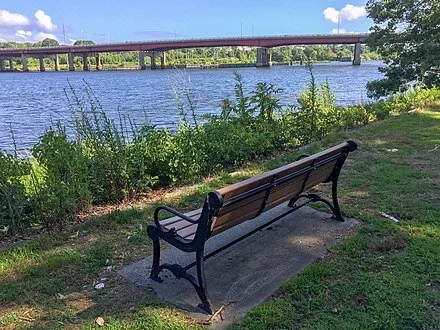
Looking out at the Henderson Bridge over the Seekonk from Providence’s Blackstone Park
From ecoRI News (ecori.org)
When driveways, highways, rooftops, patios and parking lots cover 10 percent of a watershed’s surface, bad things begin to happen. For one, stormwater-runoff pollution and flooding increase.
When impervious surface coverage surpasses 25 percent, water-quality impacts can be so severe that it may not be possible to restore water quality to preexisting conditions.
This where the Seekonk River’s resurgence runs into a proverbial dam. Impervious-surface coverage in the Seekonk River’s watershed is estimated at 56 percent. It’s tough to come back from that amount of development, but the the urban river is working on it, thanks to the efforts of its many friends.
The Seekonk River, from its natural falls at the Slater Mill Dam on Main Street in Pawtucket, R.I., flows about 5 miles south between the cities of Providence and East Providence before emptying into Providence Harbor at India Point. The river is the most northerly point of Narragansett Bay tidewater. It flows into the Providence River, which flows into Narragansett Bay.
While it continues to be a mainstay on the Rhode Island Department of Environmental Management’s list of impaired waters, the Seekonk River is coming back to life.
“I started rowing at the NBC [Narragansett Boat Club] 10 years ago when I realized that I was on the shores really of a 5-mile-long wonderful playground,” Providence resident Timmons Roberts said. “I just think it’s a magical place, and seeing the river come back to life has meant a lot to me.”
The Narragansett Boat Club, which has been situated along the Seekonk River since 1838, recently held an online public discussion about the river’s recovery.
Jamie Reavis, the organization’s volunteer president, noted the efforts that have been made by the Blackstone Parks Conservancy, Fox Point Neighborhood Association, Friends of India Point Park, Institute at Brown for Environment and Society, Providence Stormwater Innovation Center, Save The Bay, and Seekonk Riverbank Revitalization Alliance, among others, to restore the beleaguered river.
“Having rowed on the river for over 30 years now, I can attest to their efforts,” Reavis said. “It was practically a dead river. It almost glowed in the dark back in the day. It is now teaming with life. Earlier this summer, a bald eagle flew less than 10 feet off the stern of my single with a fish in its talons. Watching it fly across the river and up into the trees is a sight I will not soon forget, nor is it one I could have imagined witnessing 30 years ago.”
Decades of pollution had left the Seekonk River a watery wasteland.
In the late 18th and early 19th centuries some of the first textile mills in Rhode Island were built along the Seekonk River. The river, and one of its tributaries, the Blackstone River, powered much of the early Industrial Revolution. Mills that produced jewelry and silverware and processes that included metal smelting and the incineration of effluent and fuel left the Seekonk and Blackstone rivers polluted.
There are no longer heavy metals present in the water column of the Seekonk River, but sediment in the river contains heavy metals, including mercury and lead.
Swimming in the Seekonk River, which doesn’t have any licensed beaches, and eating fish caught in it aren’t recommended because of this toxic legacy and because of the continued, although declining, presence of pathogens, such as fecal coliform and enterococci. The state advises those who recreate on the river to wash after they have been in contact with the water. It also advises people not to ingest the water.
But, as both Roberts and Reavis noted, the Seekonk River is again rich with life and activity. River herring, eels, osprey, cormorants, gulls and the occasional seal and bald eagle can be found in and around the river. The same can be said of kayakers, fishermen, scullers, and birdwatchers.
The river’s ongoing recovery, however, is threatened by rising temperatures, sewage nutrients and runoff from roads, lawns, parking lots, and golf courses in two states that dump gasoline, grease, oil, fertilizer, and pesticides into the long-abused waterway.
The Sept. 30 discussion was led by Sue Kiernan, deputy administrator in the Rhode Island Department of Environmental Management’s Office of Water Resources. She has spent nearly four decades, first with Save The Bay and the past 33 years with DEM, working to protect upper Narragansett Bay.
She spoke about how water quality in upper Narragansett Bay, including the Seekonk River, has improved through efforts both large and small, from the Narragansett Bay Commission’s ongoing combined sewer overflow (CSO) abatement project to wastewater treatment plants reducing the amount of contaminants being dumped into the waters of the upper bay to brownfield remediation projects to the many volunteer efforts, such as the installation of rain gardens and the planting of trees, conducted by the organizations that sponsored her presentation.
She noted that nitrogen loads, primarily from fertilizers spread on lawns and golf courses, that are washed into the river when it rains, lead to hypoxia — low-oxygen conditions — and fish kills. Since 2018, six reported fish kills that combined killed thousands of Atlantic menhaden have been documented by DEM’s Division of Marine Fisheries in the Seekonk River.
Kiernan said excessive nutrients, such as nitrogen, stimulate the growth of algae, which starts a chain of events detrimental to a healthy water body. Algae prevent the penetration of sunlight, so seagrasses and animals dependent upon this vegetation leave the area or die. And as algae decay, it robs the water of oxygen, and fish and shellfish die, replaced by species, often invasive, that tolerate pollution.
While these nutrient-charged events remain a problem, she said, the overall habitat of the Seekonk River is improving. Kiernan noted that in recent years some 20 species of fish, including bluefish, black sea bass, striped bass, scup, and tautog, have been documented in the river.
The Seekonk River is still a stressed system, but Kiernan said the river is seeing a positive trend in its recovery.
“We’re not in a position to suggest that its been fully restored, and honestly I don’t think that we’ll be in a position to do that until we get the CSO abatement program further implemented,” she said. “But I think you can take some satisfaction in knowing that there are days where things look OK out there.”
Frank Carini is editor of ecoRI News.
Hepburn's 'middle road'

Katherine Hepburn in 1941
“I put on pants fifty years ago and declared a sort of middle road.’’
“I have loved and been in love. There’s a big difference.’’
“If you want to sacrifice the admiration of many men for the criticism of one, go ahead and get married.’’
— Katherine Hepburn (1907-2003), movie star, Hartford native and long-time resident of the village of Fenwick, which is part of Old Saybrook, Conn.
— Photo by elisa.rolle
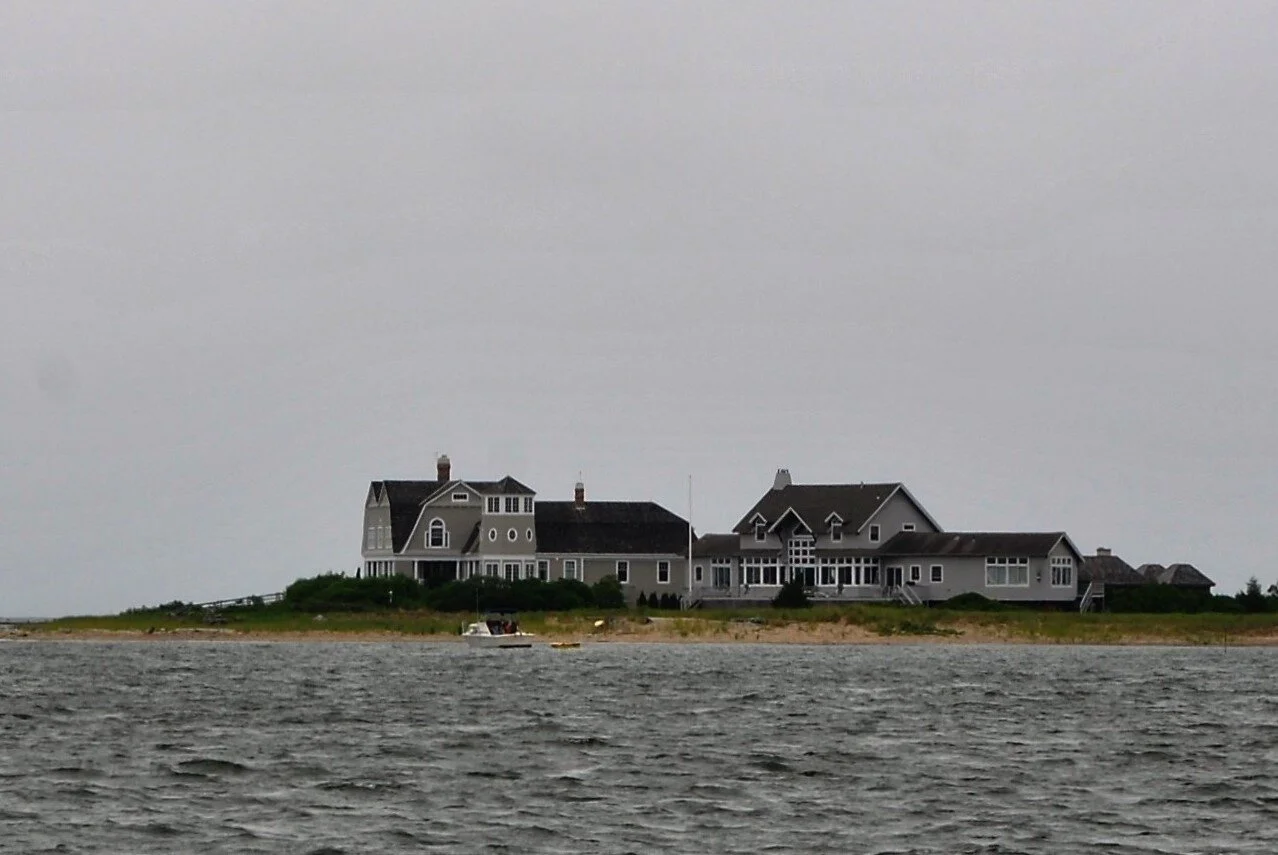
The former Katherine Hepburn house in Fenwick, best known as a small and very affluent summer colony on Long Island Sound

The Katharine Hepburn Cultural Arts Center in Old Saybrook
Biogen to spend $250 million to get off fossil fuels

— Biogen logo
From The New England Council (newenglandcouncil.com)
“Biogen, the big, Cambridge-based biotech company, has committed $250 million in investment to eliminate fossil fuels from Biogen operations. The initiative also includes collaboration with renowned institutions to improve the health of the world’s most vulnerable populations who are often adversely affected by fossil-fuel emissions.
“Biogen achieved carbon neutrality in 2014, and the new initiative is part of a concerted effort to advance positive environmental change. The company plans to eliminate its use of fossil fuels by 2040 and will continue to invest in initiatives to study the impact of fossil fuels on human health. With this investment, Biogen has become the first Fortune 500 company to commit to eliminating all reliance on fossil fuels by 2040.
“‘Our Healthy Climate, Healthy Lives initiative further builds on Biogen’s long-standing strategy to deal with climate change by addressing the interrelated challenges of climate and health, including in the realm of brain health,’ said Michel Vounatsos, CEO of Biogen. ‘Biogen was the first company in the life sciences industry to become carbon neutral. We believe that it is time to take even greater action by implementing a well-defined program that examines how we live, how we do business and how we consume energy. By doing so, Biogen will play its part to address and impact dramatic health disparities among people around the world, as well as build a stronger, more sustainable future for all.”’
Bring on the snow

Fall, leaves, fall; die, flowers, away;
Lengthen night and shorten day;
Every leaf speaks bliss to me
Fluttering from the autumn tree.
I shall smile when wreaths of snow
Blossom where the rose should grow;
I shall sing when night’s decay
Ushers in a drearier day.
“Fall, Leaves, Fall,’’ by Emily Bronte (1818-1848), best known as the author of Wuthering Heights
Looming fireworks

“Fireworks I and II” (warp rep wall hangings, hand-painted Tencel warp cotton weft), by Cathy English, in the show, through Oct. 10, titled “Visions From The Loom,’’ at Hera Gallery, in Wakefield, R.I.
The show is an exhibition of textile art created by students at The Saunderstown Weaving School, in Saunderstown, R.I.

David Warsh: Adam Smith just made me feel better

Portrait of Adam Smith (1723-1790), economist, philosopher and writer, in the Scottish National Gallery, in Edinburgh
SOMERVILLE, Mass.
I was at a loss to think of what I could possibly add to all the dreadful news this past week.
I always have a few columns in various stages of preparation. None seemed appropriate amid all the disheartening developments. I experienced revulsion one day, schadenfreude the next, genuine pity the day after. In desperation, I tried to make something out of the decision last month by the German parliament to turn the inner border, between the old West Germany and Soviet satellite East Germany, that split the nation for 45 years into a narrow national park for hikers and cyclists – an 870-mile-long green zone. No luck. Then I remembered Our Great Purpose: Adam Smith on Living a Better Life, by Ryan Patrick Hanley, a book I had skimmed in the spring.
Hanley is a professor of political science at Boston College. According to Eric Schliesser, of the University of Amsterdam, he is one of the world’s leading experts on Smith. Our Great Purpose is a 120-page book comprising 27 meditations on short passages from The Theory of Moral Sentiments, the book that Smith published in 1759, 17 years before An Inquiry into the Nature and Causes of the Wealth of Nations appeared. The Wealth of Nations founded the modern science of economics. The second book eclipsed the first.
But The Theory of Moral Sentiments is every bit as interesting as The Wealth of Nations, because the first book is an exploration of human nature viewed through a much wider lens than the “trade, truck, and barter” of the second. Only now is technical economics catching up with it. At 342 pages (in the Oxford edition, from Liberty Fund), it is challenging reading, even though Smith’s prose is still sprightly by 18th Century standards. That’s why Hanley augmented the snippets with his own reflections – plus pointers to the more elaborate passages in TMS. A welcome replacement for The Meditations of Marcus Aurelius, the text on which my generation was brought up.
I zeroed in on XII, the entry on Hatred and Anger. I was curious to know whether the joy we feel at the suffering of those whom we don’t like serves any useful purpose. I suspect that it does, binding like-minded persons together. Smith thought not: “Hatred and anger are the greatest poison to a good mind,” he wrote. Or, as Hanley puts it, “Tranquility is threatened by anger and hatred, but promoted by gratitude and love.”
I skipped ahead to XX, “Choice.” Smith wrote, “To deserve, to acquire, and enjoy the respect and admiration of mankind, are the great objects of ambition and emulation. Two different roads are presented to us, equally leading to the attainments of this so much desired object, the one, by the study of wisdom and the practice of virtue; the other, by the acquisition of wealth and greatness.” Or, as Hanley compresses it, “We need to choose between the road admired by the world and the road less traveled.”
I felt better immediately. Hanley’s little prism made it easier to think about the events of the week. I turned to the keyboard, and, when I was done, I took Our Great Purpose home to put on the nightstand, next to Bad Monkey, by Carl Hiaassen.
David Warsh, a veteran columnist and an economic historian, is proprietor of Somerville-based economicprincipals.com, where this essay first ran.
Jill Richardson: Trump's bogus 'meritocracy'

“The Worship of Mammon;; (1909), by Evelyn De Morgan
Via OtherWords.org
Today I looked at a graph of income inequality over time in America. This was not new information to me, and yet it was still shocking.
From the 1950s until the early 1970s, Americans grew richer together. Some Americans were poor and others were rich, but their incomes, adjusted for inflation, grew at the same pace. Income roughly doubled for all.
Then the lines diverge. The rich got much, much, much richer and the rest of us had more modest gains.
Recently, Trump issued an executive order declaring America a “meritocracy” where hard work and skill are fairly rewarded. If America’s inequality reflects a meritocracy and the wealthy grew richer while everyone else didn’t, is the president calling the majority of the American people stupid and lazy?
I am in my seventh year of a PhD program. Everyone around me is in a difficult position. COVID-19 has hobbled the economy.
The freshmen are missing out on the normal college experience right after they all missed their proms and graduation ceremonies. Some of them are living in quarantined dorms where some students have COVID. I can’t imagine how worried their parents must be. And the upperclassmen will graduate into an economy that set records for the worst unemployment since the Great Depression this year.
Graduate students are struggling to do fieldwork under quarantine. The academic job market is wrecked. Nobody knows what this will mean for our futures. How will I pay my student loan debt? I’ve done my part to get my education, and I am on track to be qualified for a job. But will there be any jobs?
The people around me are lucky. They are at an excellent state university, in training for professional jobs. How much more are others suffering compared to us right now? Many Americans are suffering far worse than missing out on frat parties.
Over 208,000 are now dead from the coronavirus, and millions more are alive but suffering in various ways — mourning lost family members, suffering long term health complications, risking their lives to go to work, or out of work and in need of income.
I think I am saddest for people who lose family members during this time. You need friends and family with you when you grieve, and too many have had to bear that burden alone.
Meanwhile, the person responsible for the safety of our nation, who has mishandled the coronavirus from the start, was living in luxury and sleeping with a porn star while he wasn’t even paying his taxes.
Donating your salary is not that noble when you are gaining much more than that by dodging taxes. Implying that you got where you did through merit when it was cheating — and that the millions of Americans with less wealth than you have less merit — is an insult.
We live in a deeply unequal society, and we are led by someone who benefits from that inequality. No executive order should gaslight us into thinking that’s fair.
Jill Richardson is a sociologist.

Where are you?

Central Philadelphia was laid out by Thomas Holme in 1683 according to this sketch and was the first city to use numbered streets systematically.
From Robert Whitcomb’s “Digital Diary,’’ in GoLocal24.com.
I’ve lived in, let me see, more than 10 places and early on came to appreciate the emotional and other baggage connected with street addresses and how interesting the origin of street names can be.
So Deirdre Mask’s volume The Address Book: What Street Addresses Reveal About Identity, Race, Wealth, and Power caught my eye. There are some little mistakes (such as calling the Massachusetts State House , in Boston, the “Senate House”) because book publishers in general have laid off too many copy editors. But Ms. Mask is very engaging and ingenious as she tours the world, exploring cities’ colorful and sometimes unsettling address histories, including how the Nazis’ eliminated street names with Jewish references. Tokyo’s address system is particularly bizarre.
Her last chapter is titled “Are Street Addresses Doomed’’.
A big takeaway of the book is how much government wants you to have a precise street address so, among other things, it can tax you, arrest you and draft you. Addresses weren’t created so you could find your way.
Quippy and careful
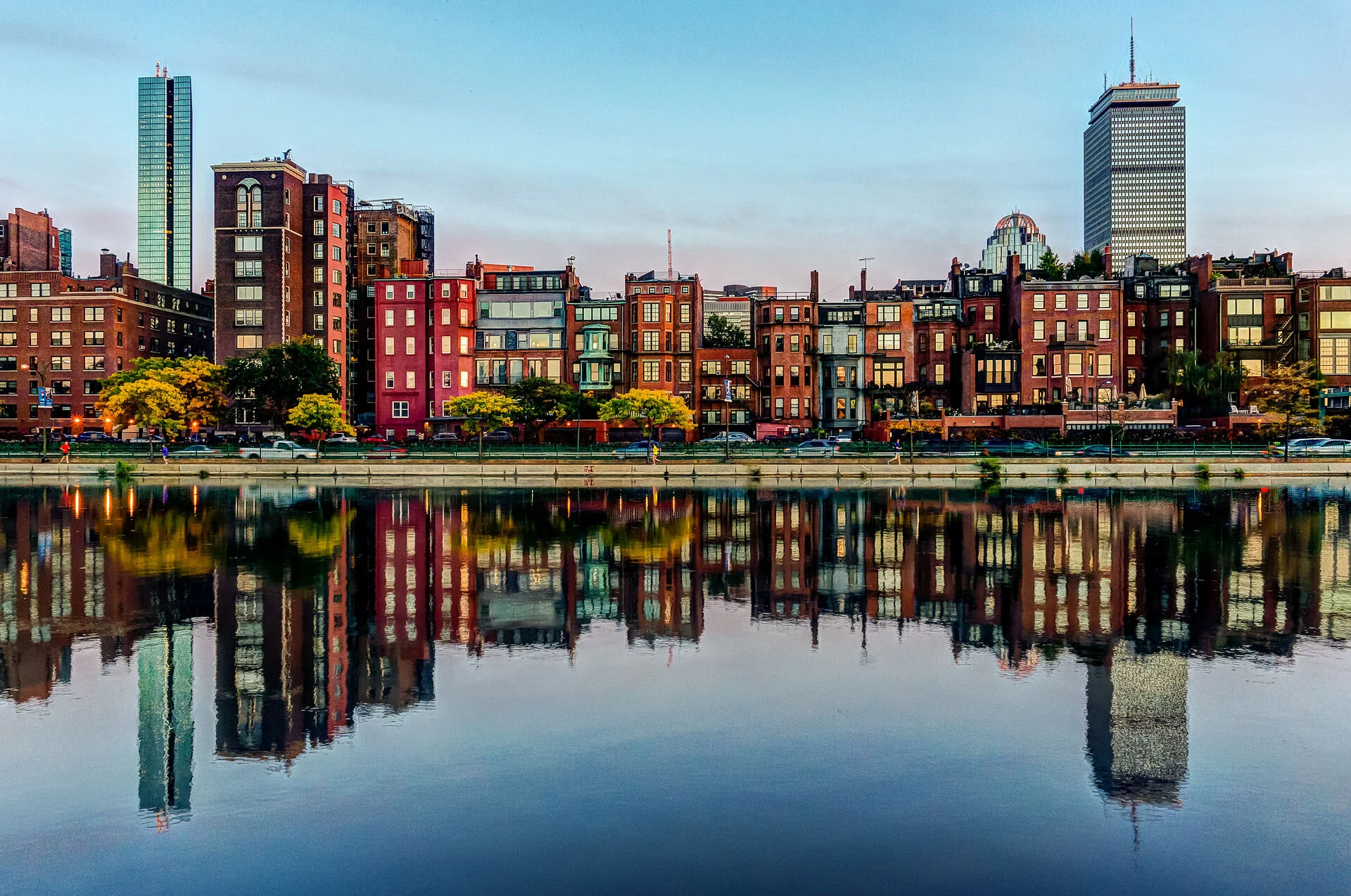
Boston's Back Bay neighborhood reflected in the Charles River
— Photo by Robbie Shade
“Boston is actually the capital of the world. You didn’t know that? We breed smart-ass, quippy, funny people. Not that I’m one of them. I just sorta sneaked in under the radar.’’
—John Krasinski (born in Boston in 1979), actor and filmmaker
xxx
“Proper Bostonians never talk about money. My father told me if I ever talked about money with a woman to take off the last zero.’’
— Cleveland Amory (1917-1998), essayist, historian, TV commentator and animal-rights activist and from a Boston Brahmin family
It's all about pumping up fear

Providence Mayor ‘‘Buddy” Cianci in his City Hall office
From Robert Whitcomb’s “Digital Diary,’’ in GoLocal24.com
The Sept. 22 Boston Globe ran a good interview by Dan McGowan with Jon Shields and Stephanie Muravchik, authors of Trump’s Democrats, which is about how some (many now former?) members of that party became fans of the most corrupt and depraved president in American history, and a traitor to boot. These wishful thinkers ignored Trump’s decades of personal and public depravity and gave him enough Electoral College votes to now threaten what’s left of American democracy. Consider that he’s threatening to try to stay in office even if he loses the election!
The authors talked to people in Johnston, R.I., Ottumwa, Iowa, and Elliott County, Ky.
Central is their admiration for tough guys who will put down the people whom the Trumpians resent, envy and even hate, and in so doing make the Fox-fueled leader’s fans feel stronger. As the authors note, that admiration of what a lot of people would call bullies is one reason for the support in some quarters of the flamboyant and criminal late Providence Mayor Vincent (“Buddy”) Cianci (whom I knew quite well; he could be very entertaining.). No wonder that Trump’s and his minions’ frequent threats to use violence against street protesters and others who oppose The Leader sells well to this crowd, which also tends to love guns, as a security blanket. (Forget the phrase in the Second Amendment about a “well-regulated militia’’.)
The authors say:
“Cianci, Johnstonians, and many working-class communities throughout the United States have been shaped by an ‘honor culture.’ Citizens in this culture prize a social reputation for toughness, which they see as necessary to defend one’s honor and interests. Critics of honor culture … see it as a culture that cultivates bullies.’’
“Like Johnstonians generally, Trump embraces the values of a sick honor culture. His philosophy of leadership is to never show weakness, to never let any slight slide. As Trump once put it: ‘Real power is fear. It’s all about strength. Never show weakness. You’ve always got to be strong. Don’t be bullied. There is no choice.’’’
Whether Trump’s supporters’ “interests,’’ at least their socio-economic ones, are actually defended by a gangster like Trump, without an iota of what most people would define as “honor,’’ is highly debatable.
xxx
Reminder: The most damning information about Trump comes from the people who worked with him.
Llewellyn King: Reality check on Biden’s clean-energy plan
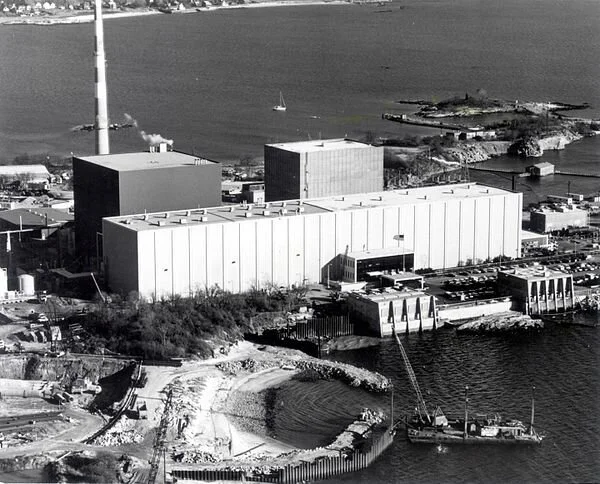
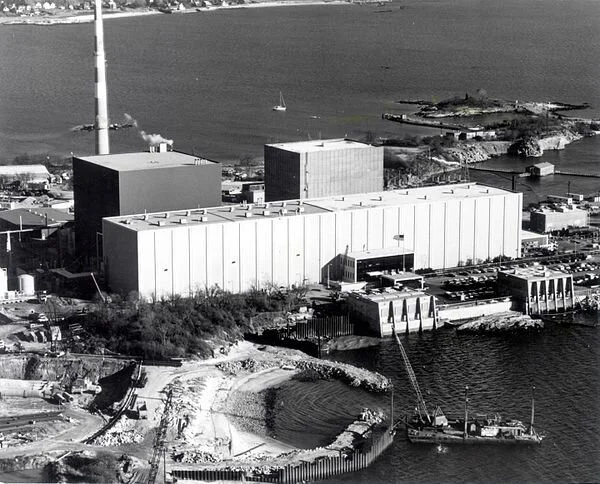
Keep it going: Millstone Nuclear Power Station, in Waterford, Conn.
WEST WARWICK, R.I.
The closest President Trump came to laying a glove on former Vice President Joe Biden in their first debate was on the environment.
Biden’s published clean-energy plan — which is more a gushing hydrant of wishes — is somewhat incoherent, certainly expensive at $2 trillion, and looks counterproductive.
It is built on the left-wing assumption that all commerce, and the electric power industry particularly, is managed by people who would trade away the future for a few pieces of silver; that humanity stops at the corporate door.
This was true once. I’ve been in meetings where circumventing restrictions on coal were discussed and where global warming was regarded as a Communist conspiracy.
But now environmentalism is as active in corporate boardrooms as it is in the inner sanctums of Democratic thinking. Younger workers in corporations and shareholders have been demanding this activity. Biden needs to smell the roses, be less woke more awake.
Particularly disturbing are the list of executive orders Biden says he’ll sign on his first day in office. One would hope after the flood of executive orders signed by Trump, many of them sowing more confusion than direction, that Biden would abide by more acceptable norms of governance. Substantial environmental law needs Congress.
If, as his published policy says, Biden signs these orders on day one of his presidency, on day two the courts will be flooded with lawsuits seeking to uphold the laws already in place, not to have them modified by extra-legal action.
The fact is that business today is not the business of yesterday. It is leading an environmental revolution and is, arguably, in the forefront of a new business dawn. This is especially true in the three places where the difference in greenhouse gas releases count: electricity production, transportation, and manufacturing processes which use a lot of heat.
A wind of change is sweeping through the United States on environmental issues, and it should be allowed to blow free and strong. It is more complete, more encompassing and, in the end, will be more effective than if a possible Biden administration tries to control or direct it.
Consider these indicators of the low-carbon wave that is sweeping across the country:
— Five of the nation’s largest utilities are aiming to be carbon- free by 2050: Southern Company, Xcel Energy, Duke Energy, Dominion Energy, and Public Service Enterprise Group. Others are also on board with the same objective.
— Amazon is buying 100,000 electric delivery vehicles. Uber and others with delivery fleets are doing the same. Companies with large roof areas, like Walmart, are installing solar to become self-generators of clean electricity.
— The oil and gas industry, which has most to lose after the rapidly declining coal industry, is pouring resources into carbon capture, utilization and storage.
— More than 70 of the world’s largest financial institutions — including Bank of America, Citibank, Morgan Stanley, and BlackRock — have banded together to account for the carbon emissions content in their lending and investing. The group is known as the Partnership for Carbon Accounting Financials and is administered by the global consultancy Guidehouse. It is huge in its implication.
— A plethora of electric vehicles is about to hit the market, some from new startup companies, others from famous marques from Europe and Detroit. This bounty’s effect will be that there will be more people, who can’t afford a Tesla, going electric. Commercial charging stations will follow. No need for Biden’s plans to build stations. Government is best kept clear when the market is working.
— New inventions are coming to solar, wind and storage. CPS Energy, the city-owned electric and gas utility serving San Antonio, recently announced it wanted ideas for 500 megawatts of innovative generation and storage and has had over 200 creative suggestions. It also is seeking 900 megawatts of solar from existing technology and 50 megawatts of storage. That is green creativity at work.
What the Biden administration, if it is to be, must do is, as often as not, get out of the way. It should take action where action is clearly needed. Don’t try to speed up a rushing stream with dams.
One such place where it might strike a blow for clean air is to find a mechanism to save the 12 or so operating nuclear-power plants that are to close in the next five years. Their zero-carbon output equals thousands of new windmills.
Their loss will be a carbon-reduction catastrophe. Biden should be told.
On Twitter: @llewellynking2
Llewellyn King is executive producer and host of White House Chronicle, on PBS. He’s based in Rhode Island and Washington, D.C.
And October is apple month

“Still Life with Apples” (oil on canvas) by William Meyerowitz (1896-1981) at the Cape Ann Museum, Gloucester, Mass.
This from the museum:
"Who could know better than the people of Cape Ann how to cook fish?" That's how the 1958 Cape Ann Cook Book begins, and at the Cape Ann Museum, we couldn't agree more. In CAM Connects we take a look at not only the fish that made Gloucester famous, but the food that inspired artists and residents in our area to share their takes! We also tour an early 19th Century kitchen and delve into the history of Victorian trade cards and their relationship to food.’’
Organ under siege

“Fragile” (mixed media relief), by Vivian Pratt, in the group show "Breathe" at Bromfield Gallery, Boston, through Nov. 1. The show explores the many cultural and aesthetic meanings of breath, which, given COVID-19, seems particularly important now.
'Homely as a house'
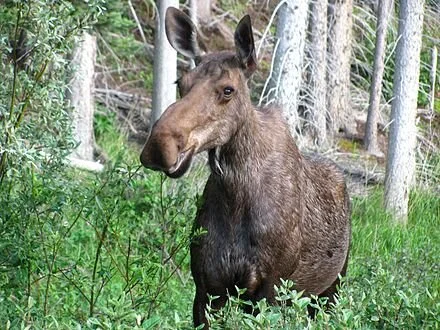
”A moose has come out of
the impenetrable wood
and stands there, looms, rather,
in the middle of the road.
It approaches; it sniffs at
the bus’s hot hood.
Towering, antlerless,
high as a church,
homely as a house
(or, safe as houses).
A man’s voice assures us
Perfectly harmless....”
— From “The Moose,’’ by celebrated poet Elizabeth Bishop (1911-1979), who was born in Worcester and died in Boston
Photo by Beeblebrox
Don Pesci: The coronavirus, King Ned and the Conn. economy

VERNON, Conn.
While Connecticut’s Democratic-dominated General Assembly was napping, Raytheon, formerly United Technologies (UTC), announced it was cutting 15,000 commercial aerospace jobs. The cuts will affect Pratt & Whitney and Collins Aerospace. Raytheon CEO Greg Hayes, who moved UTC’s headquarters to the Boson area following UTC’s merger with Raytheon, figures that it will take at least three years for the air travel business to recover.
According to the report, Raytheon had seen “aircraft and pentagon orders surging” before the move. The company said it had “planned to hire 35,000 workers over five years.” And now? Raytheon’s defense sector, Hayes said, is still strong – owing to Trump military procurements. However, as of Sept. 4, commercial air traffic was down about 45 percent globally. To save costs, airlines are “deferring maintenance,” which hurts Pratt & Whitney, based in East Hartford, Congressman John Larson’s bailiwick.
Two questions present themselves: 1) Are the airline restrictions that Gov. Ned Lamont deployed in Connecticut at least partly responsible for the job losses related to a reduction of airline traffic? And 2) Will politicians such as Larson suffer because of these policies?
The answer to 1) is: A policy that discouraged air travel through the imposition of unusual restrictions – passengers coming from restricted states were required to self-quarantine for 14 days if they had not submitted to a Coronavirus test – certainly does not help. And the answer to 2) is: Nothing short of a nuclear winter in gerrymandered districts such as Larson’s 1st District and Rosa DeLauro’s 3rd District may interrupt their political careers, although this year DeLauro, a fashion maven who has spent nearly 40 years in Congress, has a worthy opponent in Republican Margaret Streicker.
The Lamont directives are not only unusual; they interrupt normal business activity, do not provide uniform continuity of political action, may be unconstitutional, and are whimsical and palliative rather than curative.
The real cure for political action that hurts entrepreneurial activity in Connecticut – how is any restaurant to survive when it is being ordered to reduce its seating by half? – is to put a halter on runaway gubernatorial directives. And this cannot be done in the absence of a General Assembly that has been put in “park” for the last half year. There are some faint indications that, at some point down the road -- possibly after the 2020 elections, during which all the seats in the General Assembly will once again be secure in Democratic hands -- the state may return to some sort of normalcy. The real threat facing Democrats is not that the Coronavirus will mutate into the Red Death, but rather that Democrats, who have refashioned Connecticut into a quasi-socialist wonderland, may lose their majority status in both houses of Connecticut's recumbent General Assembly.
The signs of the times, at least in Connecticut – no longer the pearl in New England’s crown -- suggest a continuation of ruinous business policies. Connecticut’s General Assembly – more properly a fistful of Democratic legislators, a rump legislature – has just extended Lamont’s extraordinary powers by five months. Those powers allow Lamont to open and shut Connecticut’s entrepreneurial valves at will, and businesses, we know, react with horror at uncertainty.
We may well ask for whom is this a problem? Qui bono? Who profits by it -- certainly not representative government? Among Connecticut journalists, only Chris Powell, for many years the managing editor of the Journal Inquirer, in Manchester, seems to be troubled by Connecticut’s highly unorthodox political arrangement. Powell suspects that Democratic-run government, rather than democratic government, is the principal beneficiary of the new, now nearly year-long constitutional re-configuration.
The extension of arbitrary gubernatorial directives allow Democrats to claim hero status at both ends of the politically caused pandemic. Through the imposition of fickle gubernatorial powers, the governor saves us from a fate worse than death; and, by calibrating the business closures, he appears to be saving us from the economic pandemic he and his Democrat do-nothing compatriots in the General Assembly have caused. The German critic Karl Krauss once described Freudian psychology as “the disease it purports to cure.” Similarly, the inscrutable and lawless Lamont business shutdown is the disease he and other heroic Democrat legislators are now purporting to cure – by partly opening the businesses they have closed through dubious constitutional means.
Lamont is not up for re-election in 2020, but all the members of Connecticut’s General Assembly will be on the political chopping block next month.. So Lamont is content to take the political thwacks for the time being; the memories of average Connecticut voters are short-lived, and any autocratic directive issued by Lamont, both in the recent past and for the un-foreseeable future, will not bear the fingerprints of Democrat legislators, many of whom will be left unpunished in the coming elections.
It is doubtful that any directive issued by “King Ned” will benefit anyone but autocratic politicians. All such directives destroy creative solutions by restricting normal business decisions to a governor who cannot be corrected by either the legislative or judicial branches of government. A deliberative legislature may produce far superior solutions than those forcibly imposed by Lamont and his close advisers on the entire state, no corner of which is now represented by members of the General Assembly pretending that they are doing their jobs.
Most recently, the Hartford Symphony has furloughed all of its musicians; restaurants are closing; the workforce at Pratt & Whitney will be reduced; principals and superintendents of public schools lack uniform direction from a government that appears to be operating on the throw of dice; and at some point down the line an exhausted public, frustrated and powerless, will turn against its self-appointed benefactors.
There are two incalculable benefits in hitting bottom: 1) the bottom marks the end of the downward fall, and 2) those who hit bottom know that the way up lies in an opposite direction.
Don Pesci is a Vernon-based columnist.
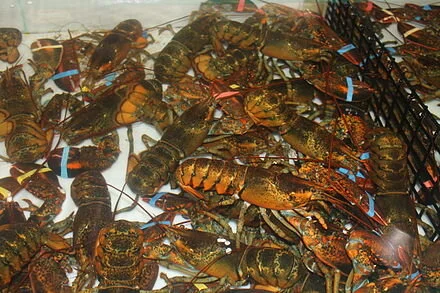
Roger Warburton: What lobsters tell us about climate change
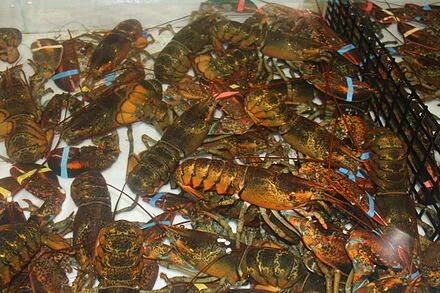
If present trends continue, by the end of the century, the cost of global warming could be as high as $1 billion annually for Providence County, R.I., alone, according to data from a 2017 research paper. That’s about $1,600 per person per year. Every year.
But, before we talk about the future, let’s discuss the economic damage that has already occurred in Rhode Island because of warming temperatures.
Like rich Bostonians, Rhode Island’s lobsters have moved to Maine. In 2018, Maine landed 121 million pounds of lobsters, valued at more than $491 million, and up 11 million pounds from 2017. It wasn’t always so.
Andrew Pershing, an oceanographer with the Gulf of Maine Research Institute, has noted that lobsters have migrated north as climate change warms the ocean. In Rhode Island, for instance, days when the water temperature of Narragansett Bay is 80 degrees or higher are becoming more common. From 1960 to 2015, the bay’s mean surface water temperatures rose by about 3 degrees Fahrenheit, according to research data.
A 2018 research paper Pershing co-authored said ocean temperatures have risen to levels that are favorable for lobsters off northern New England and Canada but inhospitable for them in southern New England. The research found that warming waters, ecosystem changes, and differences in conservation efforts led to the simultaneous collapse of the lobster fishery in southern New England and record-breaking landings in the Gulf of Maine.
He told Science News last year that with rocky bottoms, kelp and other things that lobsters love, climate change has turned the Gulf of Maine into a “paradise for lobsters.”
However, in the formerly strong lobster fishing grounds of Rhode Island, the situation is grim. South of Cape Cod, the lobster catch fell from a peak of about 22 million pounds in 1997 to about 3.3 million pounds in 2013, according to the 2018 paper published in Proceedings of the National Academy of Sciences.
Lobsters provide interesting lessons on the impact of the climate crisis.
A conservation program called V-notching helped protect Maine’s lobster population. “Starting a similar conservation program earlier in southern New England would have helped insulate them from the hot water they’ve experienced over the last couple of decades,” Malin Pinsky, a marine scientist with Rutgers University, told Boston.com two years ago.
Rhode Island’s lack of conservation efforts in the face of the growing climate crisis contributed to the collapse of its lobster fishery. Doing nothing or too little in the face of a changing climate can be economically devastating.
Another existing, and growing, threat to the economic health of Rhode Island comes from Lyme disease, which has increased by more than 300 percent across the Northeast since 2001. A changing climate is a big reason why. There is a growing body of evidence showing that climate change may affect the incidence and prevalence of certain vector-borne diseases such as Lyme disease, malaria, dengue, and West Nile fever, according to a 2018 study.
Chronic Lyme disease is more widespread and more serious than generally realized. There are some 20,000 cases annually in the Northeast and each averages about $4,400 in medical costs. Most Lyme disease patients who are diagnosed and treated early can fully recover. But, an estimated 10 percent to 20 percent suffer from chronically persistent and disabling symptoms. The number of such chronic cases may approach 30,000 to 60,000 annually, according to a 2018 white paper.
As the lobsters and the ticks vividly demonstrate, prevention is cheaper than cure. The longer we wait, the more painful, and expensive, the consequences will be.
The aforementioned 2017 study Estimating Economic Damage from Climate Change in the United States by world-renown economists and climate scientists projects the impact of climate change for every county in the United States. The results for Rhode Island and its neighbors are summarized in the map to the right, which depicts the estimated economic damage, in millions of dollars annually for each county in Rhode Island, Massachusetts, and Connecticut.
The data make clear that the economic damage will not be uniformly distributed. Some counties, such as Providence County, will be hit much harder than others. It also may seem that the southern counties will suffer much less. But that isn’t quite true, as graph below shows. The damage per person per year is projected to be substantial.
The total economic damage to Rhode Island, by 2080, could result in a 2 percent decline in gross domestic product (GDP). To put that in context, during the Great Recession of 2008-2010, there was only one year of GDP decline: minus 2.5 percent in 2009. By 2010, GDP had bounced back to positive growth, at 2.6 percent.
Therefore, the impact of a 2 percent hit to Rhode Island’s GDP from the climate crisis could look like the recession of 2009, only becoming permanent, continuing year after year. Also, it won’t all happen in 2080, the damage will continually get worse.
The economic damage is projected to come from more frequent and intense storms; sea-level rise; increased rainfall resulting in more flooding; higher temperatures, especially in the summer; drought that leads to lower crop yields; increased crime.
In addition, essential infrastructure will be impacted, including water supplies and water treatment facilities. Ecosystems, such as forests, rivers, lakes and wetlands, will also suffer, and that will impact human quality of life.
In the coming two weeks, we will describe how each Rhode Island county faces different levels of the above threats. As a result, each county needs to develop appropriate mitigation strategies.
The damages from the climate crisis will place major strains on public-sector budgets. However, much of the economic damage will be felt by individuals and families through poorer health, rising energy costs, increased health-care premiums, and decreased job security.
As always, prevention is cheaper, and more effective, than cure. Inaction on climate change will be the most expensive policy option.
The lobsters should teach us a valuable lesson: conservation measures based on sound scientific and economic principles could have helped mitigate losses caused by the climate crisis.
Roger Warburton, Ph.D., is a Newport ,R.I., resident. He can be reached at rdh.warburton@gmail.com.
Ready to play offense

“Motherland” (after calendar painting by Jesudoss), (archival inkjet print), by N. Pushpamala, at the Smith College Museum of Art, in Northampton, Mass. It’s in the museum’s centennial exhibit SCMA “Then\Now\Next’’ online.

Chuck Collins: How you pay taxes and they don’t

Via OtherWords.org
BOSTO
My daughter, a librarian in Tucson, paid more taxes in 2017 than Donald Trump. So did my neighbor Rita, a teacher, and her son Tony, who stocks grocery shelves in Leland, Mich.
I also pay more in taxes than the president of the United States. And, probably, so do you.
We now understand why Trump was the first presidential candidate since the 1970s not to divulge his tax returns.
In 2016 and 2017, the billionaire paid just $750 each year in taxes to the U.S. Treasury. In 10 out of 15 years between 2001 and 2017, Trump paid zero taxes.
The average middle class household paid approximately three times as much in federal taxes as Trump did in 2017, an average of $2,200 based on an income of roughly $60,000. Any individual earning over $25,000 most likely paid more than the president.
It’s not that Trump wasn’t paying taxes at all. In 2017, Trump paid $156,824 in taxes in the Philippines and $145,500 in India. He just wasn’t paying them to support veterans, build roads, or protect seniors in this country.
The other secret Trump doesn’t want you to know is that his image as a wealthy successful business mogul is a mirage.
Over the decades, Trump personally lobbied Forbes Magazine to report that he was wealthier than he really is. Two decades of tax returns, however, reveal he is a man in deep financial doo-doo. He may even owe more than he owns.
Trump’s real estate and resort businesses are mostly money losers, contributing to hundreds of millions of tax-deductible business losses each year.
On top of these losses, Trump deducts tens of millions in lavish personal living expenses — such as $70,000 in hair styling, consulting fees to his children, and mansion retreats — to reduce his tax obligations.
Only someone with Trump’s army of tax attorneys and wealth managers could pull off these loopholes. Trump’s assets are spread over 500 different corporate shells, enabling limitless shifting and gaming of income and taxes.
Trump takes advantage of the fact that there are two tax systems in America: one set of rules for the super-rich and another set of rules for everyone else.
Most of us get our incomes from paychecks and government agencies that know exactly how much we are paid and often withhold our taxes before we even see the money.
People with incomes over $2 million and assets over $20 million get most of their income from investments, ownership of assets, and businesses. There are endless games they can play to manipulate their income. And they can afford to hire accountants and tax lawyers to maneuver their taxes downward.
If you lose money, you grow poorer. But when the super-rich create paper losses to offset their taxes, they’re still rich. And like Trump, they aren’t sacrificing anything in terms of their cushy standard of living.
These tax shenanigans are all the more unseemly in the face of a pandemic that’s destroyed the wealth, health, and livelihoods of millions. Tens of millions of families have lost jobs, savings, home equity, and any other economic security they may have had.
They will not be “carrying over” these losses into future years and virtually eliminating their taxes for a decade, as Trump did.
Instead, they’ll pay income taxes on unemployment insurance, stimulus checks, and any paycheck they’ve been able to eke out. There will be no deductions for haircuts or consulting contracts for their children.
Trump’s taxes reveal the real truth. He’s more about the art of the deduction than the art of the deal.
If there’s a silver lining, it’s that Trump’s tax manipulations reveal where the weak spots are in the current system. Congress should restore fairness and integrity to a tax system that has been pillaged by the super-rich.
Chuck Collins directs the Program on Inequality at the Institute for Policy Studies.
Remembering the sweet pollution of yesteryear
From Robert Whitcomb’s “Digital Diary,’’ in GoLocal24.com
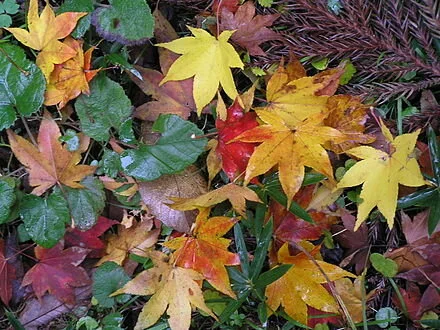
I suppose fewer folks than usual will be driving around New England looking at foliage this fall because of states’ COVID restrictions, which among other things, make it more difficult to get rooms in hotels or inns and and tables in restaurants. Many have closed for good. Too bad, those lurid leaves are our region’s greatest natural show, except for maybe a big bad blizzard or heavy-duty hurricane, and bright foliage can last for several weeks, not a few hours, unlike a big storm.
Oh well, our terrible drought means that the colors won’t be as bright this year anyway….
Northern New England has the greatest foliage festival. I particularly remember from back in the ‘60s, when I lived up there, the spectacular shows on Route 100, which goes up through the middle of Vermont, and the Kancamagus Highway, in the White Mountains.
By the dreaded Election Day, on Nov. 3 this year, leaves will cover the ground, which reminds me of the sweet smoke that used to fill the air from burning the leaves we’d rake into big piles. The yearly smoke produced a feeling of mellowness and nostalgia. Now such outdoor burning is generally banned because of the serious air pollution it causes. (I remember, too, the air pollution from wood stoves during the energy crises of the ‘70s.) Now, too many people, or the people they hire (including very hard-working illegal aliens), use also polluting (emissions and shrieking noise) leaf blowers, not rakes, to collect the leaves. An improvement?
The disappearance of leaf-burning reminds me of the exit of other unhealthy but pleasant activities, such as smoking a cigarette after a meal and one or two cocktails before dinner. These habits tended to shorten lives, and so it’s good they have faded. But I’ve seen no explosion in general happiness as a result.
If you do go leaf-peeping, watch out for slippery fallen leaves if we finally get some rain, as well as rutting deer and moose.