
Vox clamantis in deserto





Phil Galewitz: ACA co-ops soon down to three, including one in Maine

New Mexico Health Connections’ decision to close at year’s end will leave just three of the 23 nonprofit health-insurance co-ops that sprang from the Affordable Care Act.
One co-op serves customers in Maine, another in Wisconsin, and the third operates in Idaho and Montana and will move into Wyoming next year. All made money in 2019 after having survived several rocky years, according to data filed with the National Association of Insurance Commissioners.
They are also all in line to receive tens of millions of dollars from the federal government under an April Supreme Court ruling that said the government inappropriately withheld billions from insurers meant to help cushion losses from 2014 through 2016, the first three years of the ACA marketplaces. While those payments were intended to help any insurers losing money, it was vitally important to the co-ops because they had the least financial backing.
Lauded as a way to boost competition among insurers and hold down prices on the Obamacare exchanges, the co-ops had more than 1 million people enrolled in 26 states at their peak in 2015. Today, they cover about 128,000 people, just 1% of the 11 million Obamacare enrollees who get coverage through the exchanges.
The nonprofit organizations were a last-minute addition to the 2010 health law to satisfy Democratic lawmakers who had failed to secure a public option health plan — one set up and run by the government — on the marketplaces. Congress provided $2 billion in startup loans. But nearly all the co-ops struggled to compete with established carriers, which already had more money and recognized brands.
State insurance officials and health experts are hopeful that the last three co-ops will survive.
“These are the three little miracles,” said Sabrina Corlette, a research professor and co-director of the Center on Health Insurance Reforms at Georgetown University, in Washington, D.C.
Maine Aided in Supreme Court Victory
The Maine co-op, Community Health Options, helped bring competition to the state’s market, which has had trouble at times attracting insurance carriers, said Eric Cioppa, who heads the state’s bureau of insurance.
“The plan has added a level of stability and has been a positive for Maine,” he said.
The co-op has about 28,000 members — down from about 75,000 in 2015 — and is building up its financial reserves, Cioppa said. Community Health Options is one of three insurers in the Obamacare marketplace in Maine, the minimum number experts say is needed to ensure vibrant competition.
Kevin Lewis, CEO of the plan, attributed its survival to several factors, including an initial profit in 2014, the year the ACA marketplaces opened, that put the plan on a secure footing before several years of losses. He also credited bringing most functions of the health plan in-house rather than contracting out, diversifying to sell plans to small and large employers, and securing lower rates from two health systems during a couple of difficult years.
Jay Gould, 60, a member who offers the plan to workers at his small grocery store in Clinton, has been happy with the plan. “They have great customer service, and it’s good to know when I am talking to someone that they are from Maine,” he said.
Central Aroostook Association, a Presque Isle nonprofit that helps children with intellectual disabilities, switched to the co-op last year to save 20% on its health premiums, said administrator Tammi Easler. Having a Maine insurer means any issues can be dealt with quickly, she said. “They are readily available, and I never have to wait on hold for an hour.”
The co-op, which made a $25 million profit each of the past two years, has proposed dropping its average premiums by about 14% in 2021, Lewis said.
Community Health was one of the lead plaintiffs in the case before the Supreme Court and expects to get $59 million in back payments from the settlement.
The federal decision to suspend those so-called risk corridor payments — designed to help health plans recover some of their losses — was one of the factors that caused many of the co-ops to fail, Corlette said. Republican critics of the ACA, however, blame poor management by the plans and lack of oversight by the Obama administration.
Insurers are in talks with the Trump administration about whether the $13 billion due the carriers must be added to their 2020 balance sheet or could be counted toward operations from prior years. This year, insurers are generally banking large profits since many people have delayed non-urgent care because of the COVID-19 pandemic. Since the ACA limits insurers’ profit margins, adding that federal windfall to this year’s ledger might mean many insurers would have to pay out most of the money to their consumers. If the money is applied to earlier years, the insurers could likely keep more of it to add to their reserves.
Too Much Competition in New Mexico
The Supreme Court ruling came too late for New Mexico Health Connections, which lost nearly $60 million from 2015 to 2017. The co-op would have received $43 million in overdue payments, but, in an effort to raise needed cash, it sold that debt to another insurer in 2017 for a much smaller amount.
Marlene Baca, CEO of the co-op, which made a $439,000 profit in 2019, said its goal of bringing competition into the market was achieved, since five other companies will be enrolling customers this fall for 2021. Yet, that competition eventually led to the plan’s decision to end operations, announced last month.
With only 14,000 members, it made no sense to continue operating due to high fixed administrative costs, she said. Her plan was also hurt by the slumping economy this year, which pushed many state residents out of work and made more than 3,000 members eligible for Medicaid, the state-federal health program for the poor.
“We did our very best,” Baca said, noting that her company is closing with enough money to pay its outstanding health claims. Many other co-ops that shuttered were closed out by their states and unable to meet all their debts to health providers, she said.
Montana’s Co-Op Is Expanding
The Mountain Health Co-Op, with about 32,000 members, has just two competitors in its home state of Montana and four in Idaho.
A big factor behind its survival was that the plan received a $15 million loan in 2016 from St. Luke’s Health System, Idaho’s largest hospital provider, said CEO Richard Miltenberger. Although he wasn’t working for the co-op at that time, Miltenberger said, it is his understanding that the hospital wanted to help maintain competition in that marketplace.
The co-op is expecting $57 million from the Supreme Court victory.
“We are in excellent shape,” Miltenberger said. The plan, which paid back the St. Luke’s loan and made a $15 million profit in 2019, added vision benefits this year and is offering a dental exam benefit for next year. It’s also providing most insulin and medications for asthma and chronic obstructive pulmonary disease to members without any copayment to help ensure compliance.
The insurer is moving into Wyoming for 2021, which will end the Blue Cross plan monopoly in that state’s Obamacare marketplace, he said.
Wisconsin’s Mystery Donor
Wisconsin’s Common Ground Healthcare Cooperative was on the verge of ending operations in 2016 when it received a lifesaving $30 million loan, said CEO Cathy Mahaffey. The insurer has refused to identify the benefactor other than to say it was not a person or company doing business with the plan.
In 2018, Common Ground was the only health plan in seven northeastern Wisconsin counties, she said. Today, the co-op has about 54,000 members and faces competition from two to five carriers in the 20 counties where it operates.
Common Ground, which recorded a $73 million profit last year, expects to receive about $95 million from the Supreme Court case victory.
Wisconsin’s decision not to expand Medicaid under the health law has benefited the co-op because people with incomes from 100% to 138% of the federal poverty level ($12,760 to $17,609 for an individual) are ineligible for Medicaid and must stay with marketplace plans for coverage. In states that expanded Medicaid, everyone with incomes under 138% of the poverty level is eligible.
Another factor was its decision in 2016 to eliminate the broad provider network offering and sell a plan offering only a narrow network of doctors and hospitals, allowing it to benefit from lower rates from its providers, according to Mahaffey.
“We are very strong financially,” she said.
Phil Galewitz is a Kaiser Health News reporter.
Don Pesci: Self-interview of a Republican columnist in a deep Blue State
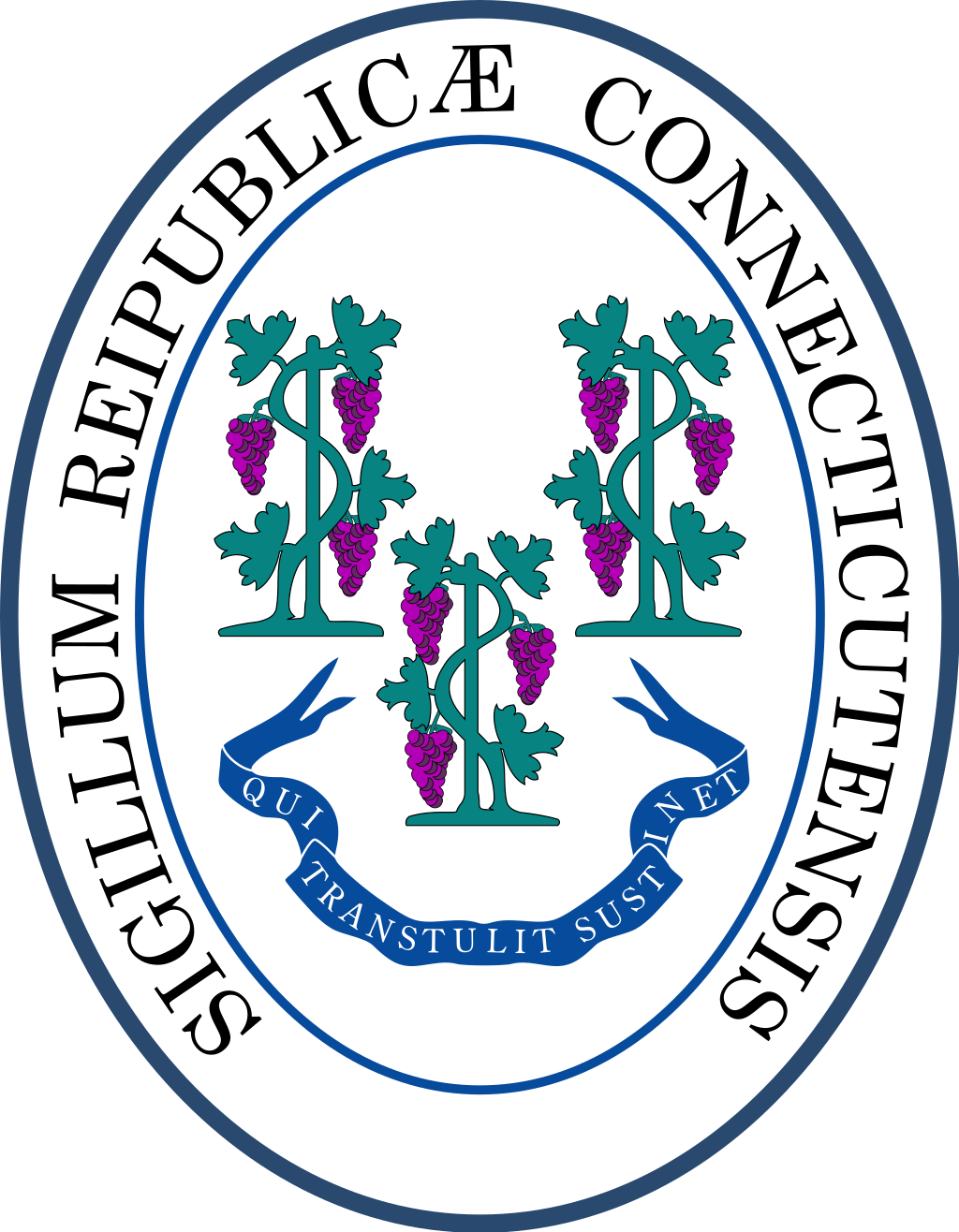
The Connecticut seal. By the way, there are some very good vineyards in what used to be called “The Land {State} of Steady Habits’’.

VERNON, Conn.
Q: Reading over your blog, “Connecticut Commentary: Red Note From A Blue State”, I don’t see many “I’s”.
A: Modesty.
Q: No really, why?
A: Political commentators fall into two categories: those who write about themselves, and those who write about others and ideas. This last group tends to dispense with “I’s”.
Q: Well, we’ll see if we can remedy that lapse here. You have quoted Chris Powell, for many years both the managing editor and the editorial page editor of the Journal Inquirer, in Manchester, Conn. on his motivation. You said to him once – correct me if I’m wrong – that he had been writing opinion pieces longer than you, and you have been working in the commentary vineyard for more than 40 years. You complimented him. His opinion pieces were perceptive, well written and necessary, a tonic for what ails the state, you said. Yet, politicians at the state Capitol who decide Connecticut’s destiny did not appear to be paying much attention. So, you asked, what keeps him going. He flashed a smile and said, “Spite.” Does spite keep you going?
A: I doubt Powell ever bought the notion that political behavior swings on the writings of political commentators. His primary motivation is plain on the face of his opinion pieces, both editorials and op-ed commentary. He wants to set hard truths before the general public, hoping that not every citizen is motivated by spite or enclosed within a Berlin Wall of invincible ignorance. Off camera, so to speak, Powell has a quiet, infectious sense of humor. And a sense of humor is a sense of right proportion. He was joking. It’s possible that joking in the 21st Century will be a capital offense punishable by exile, as were serious crimes against the state in Roman and Greek times. In modern times, burning down buildings, liberating high-toned stores of merchandise, throwing Molotov cocktails at police buildings, are all okay; but we draw the line at making jokes. The Greek tyrant Creon feared Aristophanes as much as an invading army. One day, one of Creon’s factotums met Aristophanes in the street and asked him in a fury, “Don’t you take anything seriously?” Aristophanes answered, “Yes, I take comedy seriously.” Mark Twain also took comedy seriously, and his long suffering wife, Olivia Langdon Clemens, worked tirelessly to protect him from a public whipping. In "The Chronicle of Young Satan, Mysterious Stranger Manuscripts,” Twain has Satan say, “Against the assault of laughter, nothing can stand.”
Q: So, you are not spiteful then?
A: Spite, like humor, is salt, to be used always sparingly. I acknowledge that every sealed closet has some bones concealed in it. I can only say I don’t feel spiteful, though I do think spite can flower into gorgeous commentary. I’m thinking of Alexander Pope’s long poem, “The Dunciad”. We should love lovable things and hate hateful things. The record -- and it’s a long one; “Connecticut Commentary” contains to date about 3,141 separate pieces, nearly all submitted as columns to a host of Connecticut papers – I think will show that I’m interested in the public persona of politicians, the face they present to their constituents. I’m certainly not interested in delving into the private soul of, say, U.S. Sen. Dick Blumenthal, of this state, about whom I’ve written a great deal, much of it unpublished by Connecticut’s print media. It’s best to stay away from amateur psychology. Rummaging in private souls is very much like rummaging in attics – too many spider’s webs, hanks of hair, abandoned diaries, and moldy, old dolls.
Q: I’ve seen the Blumenthal cache. Much of it is well written, certainly publishable. And you’ve said that nearly all of that cache had been sent out to various Connecticut newspapers. Much of it never saw print. Why not?
A: Thanks for your labor of love. It’s a good question. I suppose much of it may have rubbed editorial fur the wrong way. Part of this is business. Smaller newspapers, as you know, have been swallowed up by journalistic leviathans. The larger chains have a stable of dependable writers they may draw from. The whole of New England is a left-of-center political theater and has been for a long while. The General Assembly in the state has been dominated by left-of-center Democrats for a few decades; all the constitutional offices in the state are manned by Democrats; there are no Republicans in the state’s U.S. congressional delegation; virtually all the justices of the state’s Supreme Court have been placed on the bench by highly progressive former Gov. Dannel Malloy. Larger cities in the state – Bridgeport, New Haven and Hartford – have been, some would say, mismanaged by Democrats for about a half century. And it is not news that the media do political business mostly with incumbents. So, while it is not at all excessive hyperbole to say that most of the state’s current difficulties may be laid squarely at the feet of immoderate Democrats, incumbents are, mostly for business reasons, lightly leashed.
Q: Why lightly leashed?
A: You cannot get water from a rock, and you cannot get printable news from non-incumbents. If the political state is largely progressive, the state media will follow suit.
Q: Why “immoderate” Democrats?
A: Because Connecticut Democrats are no longer moderate, no longer centrists, no longer “liberal” in the sense that President John Kennedy or justly celebrated Gov. Ella Grasso were liberal.
Q: You knew Grasso.
A: I did. She, her family and my father and his family, while occupying opposite ends of the political spectrum, were friends all their lives in the social and political petri-dish of Windsor Locks. During those times, friendship transcended politics. And politics itself was well mannered and soft spoken.
Q: Not now.
A: No longer.
Q: What changed?
A: Do you mean nationally or statewide?
Q: Both.
A: Nationally, the Huey-Long-like personality of President Trump has thrown the right-left national polarity into sharp relief, but this polarity preceded Trump by decades. When everyone, including the overarching, permanent political apparatus and a politicized media, has a dog in the fight, a permanent dog fight should surprise no one. Statewide, Connecticut has become, within a very short period of time, perhaps the most left-leaning state in the Northeast. The drift leftward here began long ago. It was “maverick” Republican Lowell Weicker who, first as senator then governor, took the road not taken by pervious governors when he forced through the General Assembly Connecticut’s income tax, a levy that has resulted in improvident spending, outsized budgets, preening politicians and a poorer proletariat.
Q: That was the turning point?
A: It was a crossing of the Rubicon by a small-minded man who had contemplated for years the destruction of his own state Republican Party, which Weicker had betrayed numerous times, that finally gave him the heave-ho. Without turning over the molding psychological dolls in Weicker’s attic, I think it is proper to conclude that the man was motivated principally by unalloyed malice, what aphorist-philosopher Friedrich Nietzsche would have called resentment, an awful curse. “Whoever fights monsters,” Nietzsche warned, “should see to it that in the process he does not become a monster.” I never heard Weicker toss off a laugh line that was not spiked with malice. I’m referring here only to the man’s public persona, you understand. In private, he may have been Henny Youngman, for all I know. In politics, it is the characters who determine the play. And in Connecticut, neatly all the characters who advance the play are progressives motivated chiefly by a rancid lust for power, very Nietzschean. Without will, you cannot secure your ends. But when the will becomes the end, it’s doomsday. Nietzsche never quite worked that into his calculations. But the great tyrants of the 20th century – Hitler, Stalin, Mao – did. Without God, Dostoyevsky said, “anything is possible” – even Weicker, the first of many of Connecticut’s “savior politicians.” The business of these savior politicians is to create the problems from which they pretend to save us.
Q: That seems a bit cynical.
A: Critical and descriptive, not cynical. The real cynics among us are those who believe positive knowledge is impossible. A perverse inability to see what lies right under your nose, George Orwell’s formulation, is the very definition of cynicism.
Q: Can you give us an example.
A: I think it is cynical to pretend not to notice the predictable effects of Gov. Ned Lamont’s shutdown of state businesses. Even a state legislator hiding under his bed, trembling in fear of Coronavirus, cannot fail to have noticed that a prolonged business shutdown would result in a diminution of state revenue; that the fatal failure of state government to provide adequate and targeted resources to nursing homes would result in needless deaths among people exposed to Coronavirus; that tax increases always transfer power and responsibility from citizens to the unelected administrative state, a descriptive rather than a cynical term; that a one-party state necessarily results in political oligarchy, which easily dispenses with representative government; that...
Q: Alright, alright, we don’t have all day here. Without being too cynical – excuse me, too descriptive – how do you see Connecticut’s future unfolding.
A: What was it Yogi Berra said – the future ain’t what it used to be? In a representative republic, we used to rely on the common sense of voters to turn out politicians who pursued public policies inimical to representative government and the public good, one of the reasons Grasso agitated against an income tax. One of Grasso’s biographers is Lt. Gov. Susan Bysiewicz, who argues that Grasso, a great governor, was wrong about the income tax. Well, Grasso was right about the income tax, and she was right for the right reasons. Weicker was right about the income tax when he said, during his gubernatorial campaign that instituting an income tax in the midst of a recession would be like pouring gas on a fire, and he was wrong when, as governor, he poured income tax gas on Connecticut’s recession. The progress from Grasso to Bysiewicz, from Grasso to former Gov. Dannel Malloy and Ned Lamont is a fool’s journey in the wrong direction. The false solutions and the consequent havoc lie right under our noses. And it is long past time for Connecticut’s media to realize that the whole purpose of journalism is to describe accurately, in Orwell’s words, “the thing that lies right under our noses.” So, given our recent past history, our one party state, our wall-eyed media, our seemingly indifferent citizens, our representative-shy, inoperative General Assembly, which has just decided to surrender even more of its constitutional and legislative responsibilities to an incompetent governor, I would say Connecticut’s future looks bleak.
Q: Just one more quibble before we go. You lament the want of common sense among voters. What made common sense a casualty of modern politics?
A: Both common sense and the conscience, an inseparable pair, have been surrounded and taken prisoner by wily politicians and a cowardly media. The founders of the republic feared, almost to a man that common sense – the moral imperative, the ethical genius that lies in all of us – could not survive immoral and ambitious politicians seeking to promote their own rather than the public good. We can only pray to God for the restoration of a moral order. God, Otto von Bismarck once said, favors drunkards, the poor and the United States of America. Pray he was right, because, except on their tongues, politicians in Connecticut, mostly pretending to be progressives, favor none of the above. And, once again, I am being descriptive here, not cynical.
Don Pesci is a columnist based in Vernon, Conn.
SHARE
SHARE
Comments
Popular posts from this blog
Moving on from the Kennedy dynasty
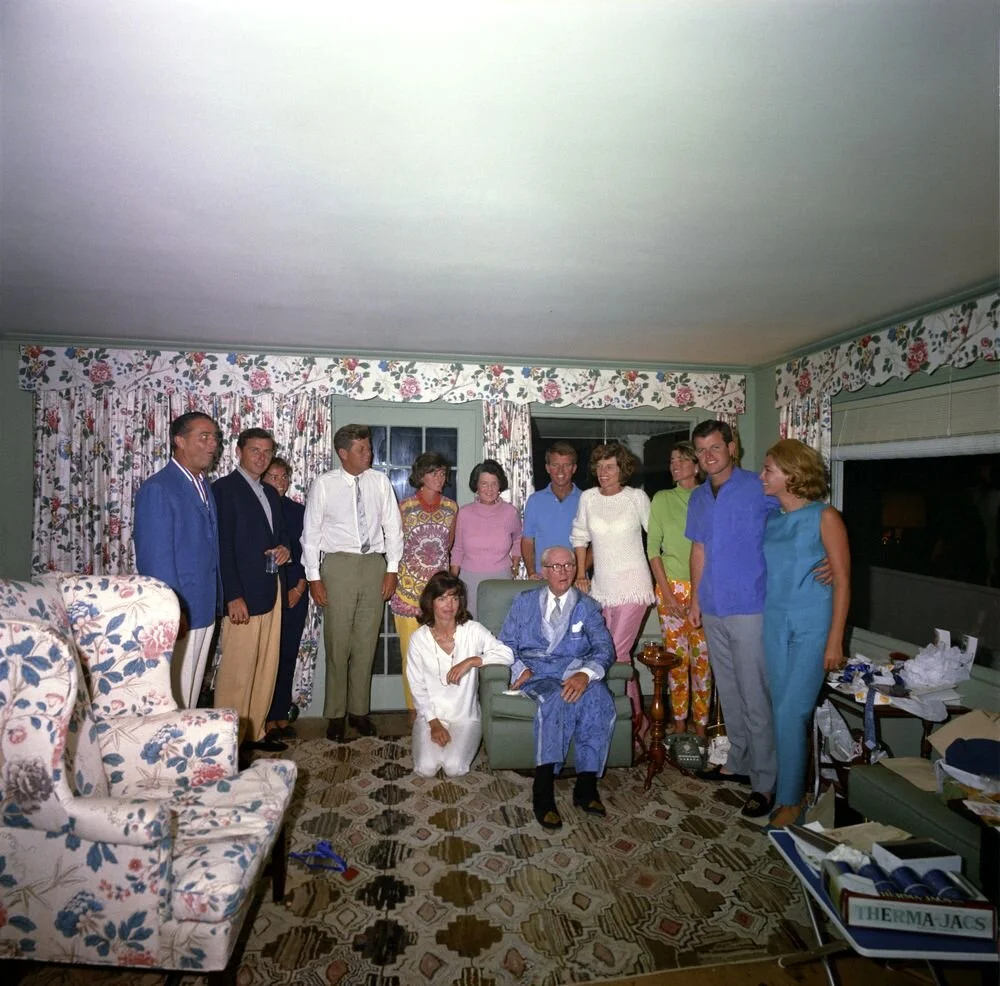
The Kennedy family, in its heyday, in September 1963, at its Hyannis Port, Mass., home base. Of course, John F. Kennedy, in white shirt, was assassinated only a few weeks later, on Nov. 22, 1963.
From Robert Whitcomb’s “Digital Diary,’’ in GoLocal24.com
The defeat of Congressman Joseph Kennedy in his attempt to unseat Sen Edward Markey, another liberal Democrat, has been cited as the end of a long era of Kennedy pre-eminence of Massachusetts. I don’t know about that – a week is an eternity of politics – but it was interesting. Consider that Senator Markey, who is 74 and looks at least that, defeated Mr. Kennedy, who is 39 and looks younger, in no small degree because Mr. Markey ran as the more “progressive’’ candidate and in doing so grabbed a lot of young voters for whom the Kennedy dynasty seems ancient history.
The latter didn’t experience the dynasty’s political heyday -- from the ‘50s until about 2000 – and the family “charisma’’ factor eluded them.
I don’t like political dynasties – they engender cults of personality and can suck the oxygen out of politics. The effort to create a Third World dictatorship kind of dynasty out of the Trump crime family is particularly scary.
Having said that, I’ve found the carrot-topped young Kennedy one of the best politicians to come out of that big gene pool. He’s honest, hard-working, self-disciplined, a stable family man, likeable and not arrogant. He’ll probably run again for high political office and win.
When I was growing up in Massachusetts, my family favored the sort of moderate Republicans now exemplified by the very popular and competent Gov. Charlie Baker – people such as Gov. John Volpe and Sen. Leverett Saltonstall -- and they often saw the Kennedys as ruthless and arrogant. Such Republicans were then common around America. But much of the party has since gone south and west and far right.
Deborah Danger: Estate planning for college students in the pandemic

“Death on the Pale Horse’’ (1865), by Gustave Dore
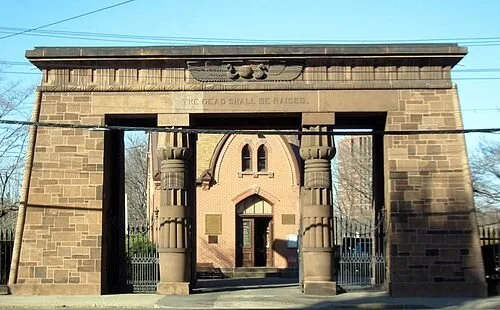
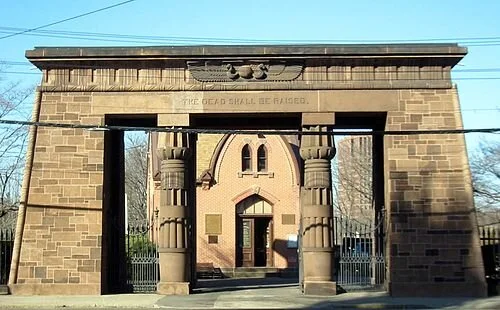
Entrance to the Grove Street Cemetery or Grove Street Burial Ground, in New Haven, Conn. It’s surrounded by the Yale University campus. The cemetery was founded in 1796 as the New Haven Burying Ground and incorporated in October 1797 to replace the crowded burial ground on the New Haven Green. Many notable Yale and New Haven luminaries are buried in the cemetery, including 14 Yale presidents.
From The New England Journal of Higher Education, a service of The New England Board of Higher Education (nebhe.org)
NEWTON, Mass.
Eleanor Roosevelt once said, “If life were predictable it would cease to be life, and be without flavor.”
Her words are excellent guideposts as New England colleges and universities navigate the unknowns of educating students during COVID-19. Despite the precautions that institutions are taking, on-campus teaching and research are not totally risk-free.
Neither, of course, is life itself.
As COVID-19 and the upcoming flu season pose new uncertainties, many faculty and administrators are brushing up against less comfortable topics, including extended illness, incapacity and death.
Over the past few weeks, up to 80 percent of the calls I have fielded were from educators and high school and college students wanting to put together estate plans, or update previous plans, as they return to the classroom. These included a 17-year-old high school student who drafted a plan and then signed it on his 18th birthday and two college freshmen who wanted these documents in place before heading to their new campuses.
My informal survey of potential clients finds that less than half have estate planning documents in place, and many who already have them in place discover that named agents have moved away or died, and previously proclaimed wishes no longer accurately reflect their current wishes. The educators and administrators who are taking action now have been spurred on by new “what if” scenarios (e.g., “If I am put on a ventilator and can’t make my wishes known, who will speak for me?” “If both my partner and I become ill, who will care for the children?”).
Estate plan elements
Estate planning is a way for individuals to ensure that: 1) their values and personal priorities will be known and honored, 2) their wishes for their family will be protected and 3) their assets will be available to provide for loved ones.
These plans include:
A will, which specifies who is to receive prized possessions and other assets when they die … including charities. It is also where they name guardians for their minor children.
A healthcare proxy, which specifies the person who can make healthcare decisions for them when they cannot. This document should be supplemented with a Health Insurance Portability and Accountability Release (HIPAA), so doctors can share their medical information with the proxy.
Revocable living trust … In most states, a will does not authorize the bypass of probate or the immediate distribution of assets upon a person’s death. The addition of a trust, in most cases, enables heirs to quickly receive what has been left to them. Naming trustees of the trust also provides protection against irresponsible spending by heirs, and premature spending by minor children.
A durable power of attorney, which grants a trusted spouse, partner, friend, relative or advisor the power to handle their finances and affairs if they become incapacitated.
Moreover, because of the nature of their work, professors should also think about:
Whether they need a literary executor (to oversee written works).
Ensuring the continuity and value preservation of “side hustles,” such as part-time teaching or tutoring gigs or running a blog or small company.
Ownership of intellectual property, such as patents, websites and creative works.
Getting personal
What about the softer and more human side of this process?
Estate planning is an opportunity to express very personal considerations about measures that should be taken to extend life, such as preferences about the use of ventilators and being artificially fed and hydrated. It’s also a way to direct a “legacy of love” and document who should give away and get possessions that have value and possessions that preserve memories. The clearer individuals are about these things, the easier it will be for their family, community and friends to honor their wishes rather than guess and argue over what they are.
For these reasons, individuals should be thoughtful and thorough, and make sure to work with a trusted advisor who can help them think through decisions about these challenging choices.
Once the conversations have been had, and estate planning documents are signed and notarized, the temptation is to close this chapter, but this is the time to share information with everyone who might require it. If one suddenly contracts a more serious case of COVID-19, it is important that every agent/decision-maker can act quickly and in synch with everyone else.
Individuals should share:
Healthcare proxies: Not only with the designated proxies, but also with each of their caregivers and specialists, their hospital of choice, employers (for Human Resource folders, so colleagues know who to call and which hospitals to request in the event of a sudden illness) and fitness centers (in the event of a heart attack, stroke or injury while working out).
Durable powers of attorney: In addition to the designated “agents,” others who would benefit from this information include banks, insurance providers, financial advisors, CPAs and college/university employers.
Will: At least one trusted person should know where the original will is kept, as this document must be filed with the court upon death (copies will not be considered valid).
Trusts: These instruments will set in motion a chain of other actions that need to be implemented in order for their full benefits to be realized; for example, all assets, including real estate, will need to be retitled in the name of the trustee.
Indeed, this is a good time to centralize all important documents in case of an emergency—from titles and deeds to birth and marriage certificates. For a checklist, click here.
COVID-19 is a wakeup call for all of us that life can instantly change. An estate plan offers a measure of control, enabling one to protect loved ones as they continue their educational work.
Deborah Danger is managing member of DangerLaw, LLC in Newton, Mass., which focuses on estate planning, post death administration, asset protection, family law, small business/entrepreneurship advising and collaborative law.
A green new seal

“Cercle Vert Olympique” ( painted wood, glass, powder pigment, motor), by Manuel Merida, at Heather Gaudio Fine Art, New Canaan, Conn. See: www.heathergaudiofineart.com

The famous Glass House, in New Canaan, designed by Modernist architect Philip Johnson as his residence and built in 1948-49.

Moreno Clock, on Elm Street, near Heather Gaudio, in New Canaan
Jim Hightower: A cult doesn't need a party platform
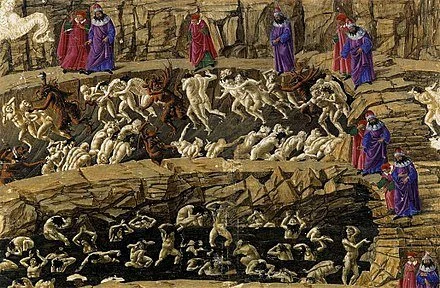
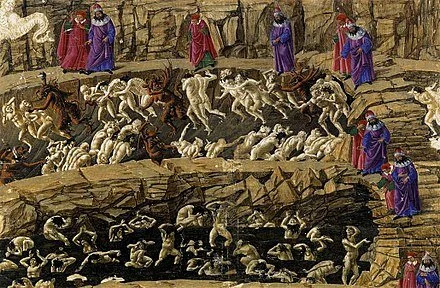
Botticelli illustration for Dante's “Inferno,’’ the first part of Dante’s “Divine Comedy,’’ shows insincere flatterers groveling in excrement in the second pit of the Eighth Circle of Hell.
Via OtherWords.org
With our national election looming, someone should put up “lost dog” signs in every neighborhood saying, “Missing: Republican Party Platform.”
Voters won’t find one though, for this so-called major political party has decided not to produce a specific statement of what it stands for this year, nor will it offer to voters an itemized set of policies its public officials would try to enact if elected.
Indeed, the GOP hierarchy is so disdainful of the electorate that it says the party will not present a platform until 2024 — four years after the election!
They even imposed their policy silence on their own grassroots delegates, decreeing that any attempt by them to adopt new platform proposals at the Republican National Convention would “be ruled out of order.”
Instead of a political party, the GOP of 2020 has become a pathetic puppet show of weakling officials and sycophantic subordinates being jerked around by the maniacal whims of a bloated ego with despotic fantasies. The once respectable Republican National Committee has meekly ceded its authority, duty, respect, and relevance to a single unhinged authoritarian.
In essence, they’re saying that the platform — and the party itself — is one word: Trump.
Whatever poppycock the Glorious Leader utters today, whomever he attacks tomorrow, whichever fantastical conspiracy he embraces next week, the GOP will applaud, bow, and in unison reply “Amen.” Sad.
Republican senators, governors, captains of industry, elders, and others who once had power, prominence, some prestige, and maybe even a little pride now meekly wear Trump’s collar and kowtow to his conceits, leaving an entire party with a sole operating principle: “What he said” — even when they can’t figure out what he’s actually saying, or why, or what it means for the U.S. and its people.
That’s not a party, it’s a national embarrassment.
Jim Hightower is a writer and speaker.
Hancock, Amazon team up on health-measurement device
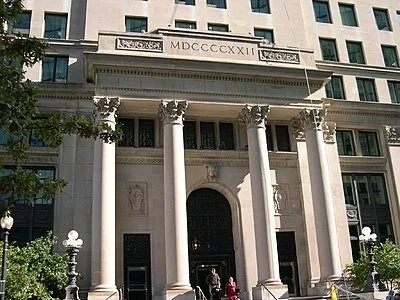
John Hancock Life Insurance Co.’s current headquarters, at 197 Clarendon St., built in 1922, and not to be confused with the glassy office tower at 200 Clarendon St. that’s still called the John Hancock Tower, was completed in 1976 and remains, at 60 stories, the tallest building in Boston.
From The New England Council (newenglandcouncil.com)
Boston-based John Hancock Life Insurance Co. has formed a partnership with Amazon on the tech giant’s recently unveiled Halo band, a wearable device that will track a variety of activities such as exercise and sleeping patterns.
John Hancock life-insurance policyholders will be able to earn rewards and premium discounts based on their use of the new technology. Use of the new technology is intended to help policyholders embrace healthier living habits. The insurer is not new to incorporating technology into its business model, and has existing partnerships with both Apple Inc. and Google parent company Alphabet Inc.
“Integrating Amazon Halo into our life insurance ownership experience will enable us to continue to transform the role our industry plays in our customers’ lives,” said Brooks Tingle, President and CEO of John Hancock Insurance in a press release. “At John Hancock, we believe a life insurance company is in a unique position to help customers live longer, healthier lives, and by integrating Amazon’s new health and wellness technology into our program, we can create a more meaningful, engaging and holistic experience for our customers.”
Read more from the Boston Business Journal.
Don't tell me you didn't see the sign!

“I hadn’t been in Vermont very long, but I’d been there long enough to know what any Vermonter worth his salt would think of {being on his property}. Trespassing on someone’s land was tantamount to breaking into his house.’’
— Donna Tartt (born 1963), novelist, in The Secret History (1992). She studied at Bennington College, in southern Vermont.

A seasonally drunken cow
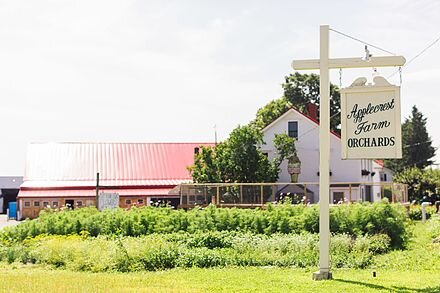
Applecrest Farm Orchards, which started in 1913 and is open year round, is in Hampton Falls, N.H. It is considered the oldest and largest apple orchard in New Hampshire. Indeed, some assert that it’s the oldest continuously operated commercial apple orchard in the United States.

Something inspires the only cow of late
To make no more of a wall than an open gate,
And think no more of wall-builders than fools.
Her face is flecked with pomace and she drools
A cider syrup. Having tasted fruit,
She scorns a pasture withering to the root.
She runs from tree to tree where lie and sweeten
The windfalls spiked with stubble and worm-eaten.
She leaves them bitten when she has to fly.
She bellows on a knoll against the sky.
Her udder shrivels and the milk goes dry.
— “The Cow in Apple Time,’’ by Robert Frost (1878-1963)
A very orderly elegance

“Fifties Fashion for All’’ (encaustic painting with paper dress patterns), by Nancy Whitcomb. Fashion now seems focused on face masks.
The business of fending off controversy

Allie’s in the cool season
From Robert Whitcomb’s “Digital Diary,’’ in GoLocal24.com
Businesses, especially small ones, are usually better off avoiding politics. Allie’s, the well-known North Kingstown, R.I., donut shop, may have learned this in the past few months.
For a long time, it gave discounts to police officers (to be nice and presumably tending to ensure that it got better service if problems arose with nasty patrons, etc.) and military members. But when the Black Lives Matter campaign started to get massive attention with the police killing of George Floyd, the shop rescinded the discounts.
Then came the heavily televised demonstrations (a few of which became riots) in some cities against police violence on Black people that also drew in the vague leftist blob called “Antifa’’ and far-right folks in a few cities. This outraged some Allie’s customers, especially Trump backers, of whom there are plenty in parts of suburban and exurban Rhode Island. And so the shop has decided to hand out free donuts to customers who promised to hand them to police officers.
The shop’s actions show it with a finger in the air, trying to figure out what action will be the most popular or at least the least unpopular. I’m sympathetic! But they’ve now managed to alienate pretty much everyone with their gyrations. Still, the publicity has probably been good for business.
It’s all up to Allie’s, of course, but I think that the shop should treat the police like any other customers. We love them, of course, but officers don’t need the savings; they are well compensated and retire early with big pensions and benefits. They don’t need discounted or free donuts, a delicious food that’s not exactly healthy, especially for people with heart disease, obesity and diabetes – which is much of the population.
Iceland's 'light caresses the landscape'

"Fjord" (triptych), (fiber), by Agusta Agustsson, in her show “Northern Light,’’ at Galatea Fine Art, Boston, Nov. 6-29.
The Melrose, Mass.-based artist says:
“Beyond the Northern Lights the light in my native Iceland is special. Colors are brighter. Even on an overcast day (of which there are many) the light caresses the landscape. The landscape is like nowhere else on earth. Volcanic cliffs march into the sea. Great gouges appear out of nowhere. Glaciers grind the rock beneath their massive weight. Strange shapes hide in the lava fields. Gouts of steam and boiling water spout from fissures in the earth. The land is painfully new.’’

The Gazebo at Ell Pond Park, Melrose
Photo by Elizabeth B. Thomsen
David Warsh: Why Russia invaded our 2016 election, and they're at it again

Vladimir Putin pushing hard to keep Donald Trump in power.
SOMERVILLE, Mass.
The Russian government meddled in the 2016 U.S. presidential election in a variety of ways. Most consequential were the thefts of Democratic National Committee emails and their publication by WikiLeaks. Special Counsel Robert Mueller’s investigation documented the interference. A bipartisan Senate Intelligence Committee report confirmed it. No serious person doubts that the Russian campaign occurred, though few believe it tipped the election. And no serious person, except Wall Street Journal columnist Holman Jenkins, Jr., has attempted to dismiss it as a trivial matter.
“I was not shocked and still am not,” Jenkins wrote last month. “Since Czarist times, the Russian government has played such games, and was hardly going to adopt a self-denying ordinance now that the Internet was making them costless and effortless.”
A more knowledgeable account of the background to the Russian monkey business is to be found in The Back Channel: A Memoir of American Diplomacy and the Case for Its Renewal (Random House, 2019), by William Burns, former ambassador to Russia (2005-08) and deputy secretary of state (2011-14). Burns is currently president of the Carnegie Endowment for International Peace, and not to be confused with Nicholas Burns, a former ambassador to NATO (2001-05) and undersecretary of state for Political Affairs (2005-08), who is today a professor of practice at Harvard University’s Kennedy School of Government.
The formal end of the Cold War was engineered mainly by Secretary of State James Baker, who, in less than a year after the fall of the Berlin Wall, negotiated Germany’s reunification as a member of NATO, in October 1990. He convinced Soviet leaders that they would be safer with Germany inside the alliance than outside of it, free to acquire nuclear weapon. In talks with Foreign Minister Eduard Shevardnadze, Baker promised that NATO would not expand “one inch to the east” of Germany’s borders in the years ahead.
But Baker made the pledge before the breakup of the Soviet Union, in December 1991. Its leaders failed to get it in writing. Bill Clinton won the 1992 election and, at the urging of Poland, Hungary and what was then Czechoslovakia began NATO enlargement soon thereafter. Defense Secretary William Perry and strategist George Kennan warned of a fateful mistake in the offing; the Moscow embassy advised that “hostility to expansion is almost universally felt across the political spectrum.” Clinton waited until Russian President Boris Yeltsin and he had been re-elected, in 1996, then went ahead.
NATO’s intervention against Serbia in Kosovo, in 1999, left an especially bitter taste, with U.S. jets bombing Belgrade and a tense confrontation between Russian and NATO forces on the ground defused at the last moment. Putin was appointed president of Russia in 1999 and elected the next year. George W. Bush was elected in 2000, and, for a little while, the mood was optimistic. After 9/11, Putin’s hopes for a common front against terrorism, with Russian backing of the U.S. in Afghanistan and Washington supporting Moscow’s measures against Chechen rebels, were dashed (William Burns is especially good on why the U.S. declined), and Bush went ahead with plans to admit seven more Eastern European nations to NATO, including Estonia, Latvia and Lithuania, former parts of the USSR. He barely mentions the second wave of expansion, which took place during NATO Ambassador Nicholas Burns’s watch.)
In 2003. Putin sought without success to persuade Bush not to invade Iraq, but it was the U.S. failure to share information about a pending Chechen hostage-taking at a Russia school, according to Burns, that was a turning point in Putin’s view of the possibilities,. The raid ended with 394 deaths and dramatically altered Russia’s internal politics. In a speech in Munich, in 2007, Putin denounced the United States for “having overstepped its national borders in every way.”
In 2008 Putin warned Bush, in no uncertain terms, via Ambassador Burns, against broaching NATO membership for Ukraine. “There could be no doubt that Putin would fight back hard against any steps in the direction of membership” for either Georgia or Ukraine, Burns writes. In August, Russia undertook a walkover war against a secessionist province of Georgia. In the shadow of a growing financial crisis in the West, it was barely noticed. In 2014. U.S,. support for a 2014 Ukraine uprising aimed at joining the European Union instead of a Russian-backed economic alliance proved the breaking point.
Burns sums up his view of the history this way:
The expansion of NATO membership stayed on autopilot as a matter of U.S. policy long after its fundamental assumptions should have been reassessed. Commitments originally meant to reflect interests morphed into interests themselves and the door cracked open to membership for Georgia and Ukraine – the latter a bright red line for any Russian leadership. A Putin regime pumped up by years of high energy prices pushed back hard And even after Putin’s ruthless annexation of Crimea [in 2014] it proved difficult to imagine that he would stretch his score-settling into a systematic assault in the 2016 presidential election.
(I wrote a small book about all this, Because They Could: The Harvard-Russia Scandal (and NATO Expansion) after Twenty-Five Years (KDP, 2017). In The Marshall Plan: Dawn of the Cold War (Simon & Schuster, 2018), Benn Steil explained Russian dismay as arising from history and geography, not ideology.)
Why did Putin authorize the campaign? In Alter Egos: Hillary Clinton, Barack Obama, and the Twilight Struggle over American Power (Random House, 2016), veteran New York Times correspondent Mark Landler documented the animosity between Hillary Clinton and the Russian leader. It grew after, as secretary of state, Clinton engineered NATO’s 2011 intervention in Libya; deepened considerably when Putin accused her of interfering in his 2012 campaign for re-election to a third presidential term; and achieved new heights after demonstrations caused Ukraine’s president, a loyal ally, (and hopeless crook, let it be said) to flee to Moscow. Clinton was running for president by then. Passing out cookies to demonstrators in Kiev’s central square (and phoning instructions to the American embassy) was Clinton’s former spokesperson, Victoria Nuland, by then serving as under secretary of state for European and Eurasian Affairs.
What did Putin expect to happen in the unlikely event that Trump won? Clearly the former KGB officer, who served abroad only in Germany before the Soviet Union came apart, doesn’t understand American society or politics very well. In May 2017 he secretly proposed through embassy channels an elaborate reset of relations, including digital-warfare-limitations talks. John Hudson’s story of the overture didn’t receive the degree of attention and elaboration that it deserved, presumably because Hudson was working for BuzzFeed at the time. Today he covers national security and the State Department for The Washington Post.
Since its annexation of Crimea and subsequent support for low-level war in eastern Ukraine, Russia has seemed to revert to its old ways. An “imitation democracy” at home. Arrest or murder or attempted murder in Russia of Putin’s critics. State-sponsored assassinations of enemies abroad, in London, Berlin, Salisbury, England. Digital meddling in other nations’ affairs wherever it pleases, All of this blandly denied, and punctuated by regular claims of technological breakthroughs: hypersonic torpedoes and the first effective COVID-19 vaccine.
In Russia Without Putin: Money, Power, and the Myths of the New Cold War (Verso, 2018), journalist Tony Wood writes that such an account is unfair, ignoring the ways in which the West’s own actions have shaped Russia’s decisions. After 1991, Wood writes, the Russian elite tended to see the country’s future as lying “either alongside or within” the G-8. Pro-Western sentiment started with Gorbachev and Yeltsin, but continued with Putin and [one-term President Dimitry] Medvedev much longer than is assumed by most Western commentators. Only after Ukraine was it replaced by a more combative approach, a geopolitical watershed.
So what next? President Trump and his defenders at the editorial page of the WSJ have had almost nothing to say about any of this for four years. In Survival, a journal of global politics and strategy, Thomas Graham and Dimitri Trenin last month described a “New Model for U.S.- Russian Relations” that seemed likely to take hold if Joe Biden wins the presidency. Graham is a distinguished fellow at the Council on Foreign Relations; Trenin is director of the Carnegie Moscow Center (I saw their essay only because I continue to follow David Johnson’s indispensable survey of coverage of U.S.-Russia relations Johnson’s Russia List.) They write:
To date, Russian and American experts disturbed by the sorry state of U.S.-Russian relations have sought ways to repair them, embracing old and inadequate models of cooperation or balance. The task, however, is to rethink them. We need to move beyond the current adversarial relationship, which runs too great a risk of accidental collision escalating to nuclear catastrophe, to one that promotes global stability, restrains competition within safe parameters and encourages needed cooperation against transnational threats.
The hard truth is that the aspirations for partnership that the two sides harbored at the end of the Cold War have evaporated irretrievably. The future is going to feature a mixed relationship of competition and cooperation, with the balance heavily tilted towards competition and much of the cooperation aimed at managing it.
The challenge is to prevent the rivalry from devolving into acute confrontation with the associated risk of nuclear cataclysm. In other words, the United States and Russia need to cooperate not to become friends, but to make their competition safer: a compelling and realistic incentive. The methods of managing great-power rivalry in the past 200 years – through balance-of-power mechanisms and, for brief periods, détente – are inadequate for the complexity of today’s world and the reality of substantial asymmetry between the United States and Russia. What might work is what we could call responsible great-power rivalry, grounded in enlightened restraint, leavened with collaboration on a narrow range of issues, and moderated by trilateral and multilateral formats. That is the new model for U.S.-Russian relations.
Meanwhile, in 2020 the Russians are at it again, according to U.S. intelligence officials. State-backed actors are using a variety of measures, including recorded and leaked telephone calls, to denigrate former Vice President Joe Biden and a Washington elite it perceived as anti-Russian. That’s a job for the next secretary of state. Here’s hoping that it will be William Burns.
David Warsh is a veteran columnist and an economic historian. He’s proprietor of Somerville-based economicprincipals.com, where this essay first ran.
Lisa Prevost: European study finds wind turbines don't affect lobster harvest

European lobster
Via Energy News Network ( https://energynews.us/) and ecoRI News (ecori.org)
In New England, offshore wind developers and the fishing industry continue to grapple with questions over potential impacts on the region’s valuable fisheries.
A recent European study not only offers good news on that front, it also provides a template for how the two industries can work together.
Research conducted over a six-year period concluded that the 35 turbines that form the Westermost Rough offshore wind facility, about 5 miles off England’s Holderness coast, have had no discernible impact on the area’s highly productive lobster fishing grounds.
The overall catch rate for fishermen and the economic return from those lobsters remained steady from the study’s start in 2013, before the facility’s construction, to its conclusion last year, according to the lead researcher, Mike Roach, a fishery scientist for the Holderness Fishing Industry Group, which represents commercial fishermen in the port town of Bridlington, England.
“It was quite a boring result,” Roach said. “All my lines are flat.”
Ørsted, the Danish energy giant and developer of the offshore wind facility, contracted with Holderness’s research arm to carry out the study, as the group has its own research vessel. The collaborative approach, Roach said, has made the findings all the more credible to local fishermen, who were initially certain that the energy project would destroy the lobster stocks.
“We did the research the same way a fisherman would fish — the same gear types, same bait, deploying in the same way,” Roach said. “We were basically mirroring the commercial fishing method in the area. And that has allowed the fishermen to relate directly to the fieldwork.”
Hywel Roberts, a senior lead strategic specialist for Ørsted and a liaison with the researchers, called the collaboration “a leap of faith on both sides to join together and agree at the outset to live and die by the results.” He noted that the level of research also went well beyond what was required for government permitting.
Ørsted announced the study’s results last month in a press release, even as Roach is still in the process of getting the research approved for publication in a peer-reviewed journal.
It’s no wonder the European-based wind developer was eager to share the news more widely, as the fishing industry has proven to be a powerful force in slowing the progress of offshore wind development off the Northeast coast, such as the Vineyard Wind 1 project.
Last year, the Bureau of Ocean Energy Management announced it was pausing the approval process for Vineyard Wind 1, a joint venture between Copenhagen Infrastructure Partners and Avangrid, to be constructed off Martha’s Vineyard. The agency said it wanted to devote more study to the cumulative environmental effects of the many offshore wind projects lining up for approval.
In June, the agency issued a supplemental environmental impact statement that concluded that the cumulative impacts on fisheries could potentially be “major,” depending on various factors. The federal agency is considering requiring transit lanes between turbines to better accommodate fishing trawlers, a design change Vineyard Wind argues is unnecessary and could threaten the project’s viability.
The developer has proposed separating each turbine by a nautical mile. The transit lanes would require additional spacing.
A final report is expected in December.
The outcome of the Holderness study has “very important” implications for wind projects all over, Roberts said.
“The lobster fishery there is one of the most productive in Europe, and we were tasked with building a wind farm right in the middle of it,” Roberts said. “If it can work in this location, we think it can work in most places around the world.”
Ørsted even brought Roach and one of the Holderness fishermen to Massachusetts last year to spread the word to worried lobstermen about the minimal impact of Westermost Rough.
Roach said he’d like to think his findings “eased some concerns” in New England. However, he said he disagrees with Ørsted that the outcome in the North Sea is applicable to other areas of the world, where habitats and the ecology of the species could be very different.
“There are lessons to be learned and guided by, but I can’t say it’s directly transferable,” he said.
Lisa Prevost is a journalist with Energy News Network, an Institute of Nonprofit News (INN) member that has a content-sharing agreement with ecoRI News.
'Our world may be a little narrow'
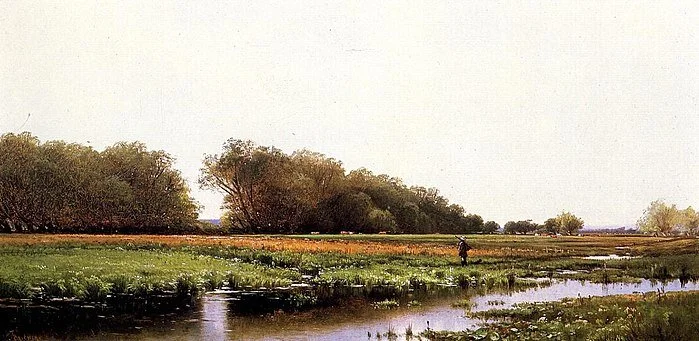
“Hunter in the Meadows of Old Newburyport, Massachusetts, c. 1873, by Alfred Thompson Bricher. Cattle have been turned into the marsh for pasture, a practice still allowed on some marsh farms of the area.
“The mood is on me to-night only becuase I have listened to several hours of intelligent conversation and I am not a very brilliant person. Sometimes here on Pequod Island and back again on Beacon Street, I have the most curious delusion that our world may be a little narrow. I cannot avoid the impression that something has gone out of it (what, I do not know), and that our little world moves in an orbit of its own, a gain one of those confounded circles, or possibly an ellipse. Do you suppose that it moves without any relation to anything else? That it is broken off from some greater planet like the moon? We talk of life, we talk of art, but do we actually know anything about either? Have any of us really lived? ‘‘
― John P. Marquand (1893-1960), in The Late George Apley (1937), a partly satiric novel about Boston Brahmins. Pequod Island is partly based on a country place in Marquand’s family in Newburyport, on the Merrimack River.
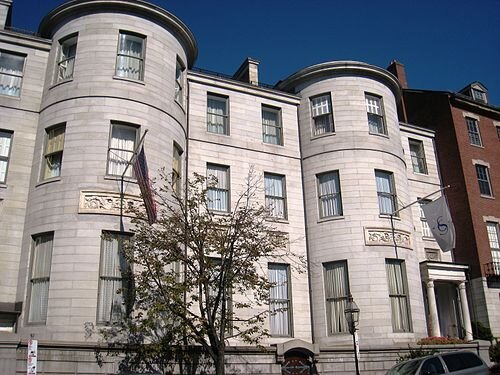
The Somerset Club, a center of old Boston Brahmin society, 42–43 Beacon Street, Boston

William Morgan: When so many deaths were early
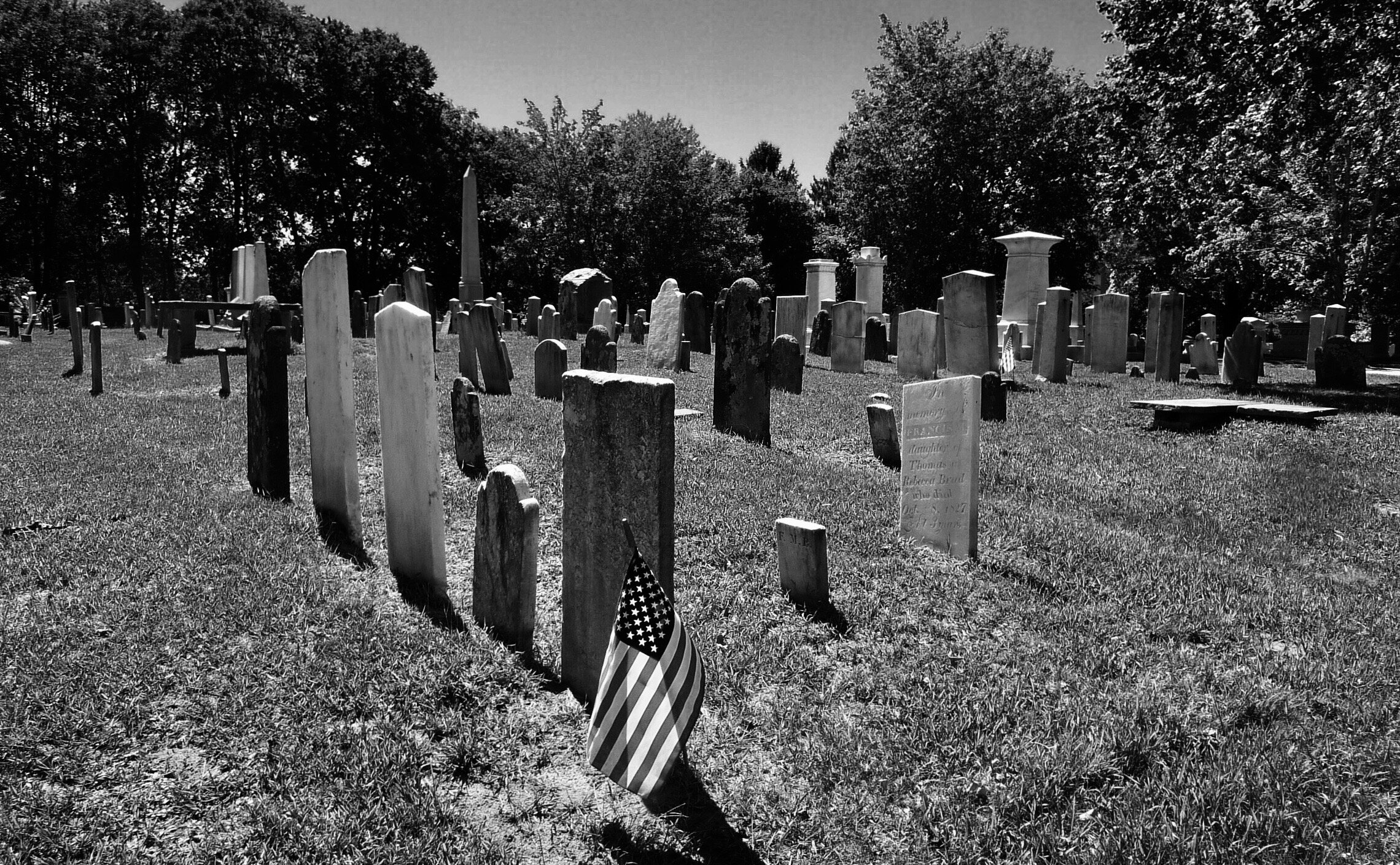
The Stonington Cemetery, in Stonington, Conn. The first burial in it was in 1754, with the interment of Thomas Cheseborough.
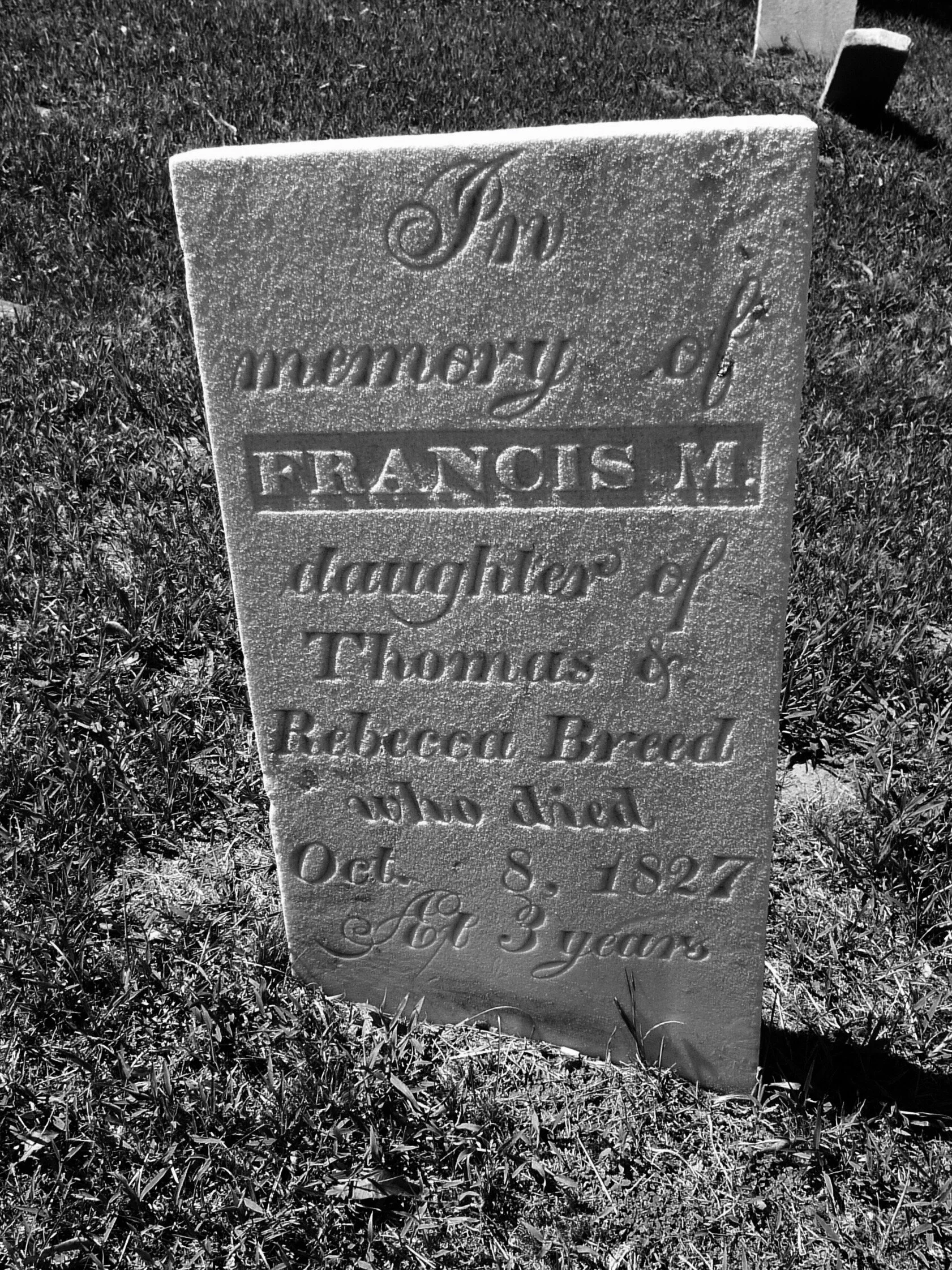
Francis Breed was three when she died, in 1827. The stone carver had a penmanship flourish.
Stand in any old New England cemetery and you’re surrounded by premature death. Living along New England's rocky shores in the 18th and 19th centuries meant a constant range of childhood diseases, some spread in pandemics, such as measles, diphtheria and smallpox, if mother and infant survived childbirth, and the other maladies and dangers that often made life brutal and short.
Within a radius of a dozen feet in this handsome necropolis just north of Stonington Borough, there are several reminders of loss in a pre-vaccine world.
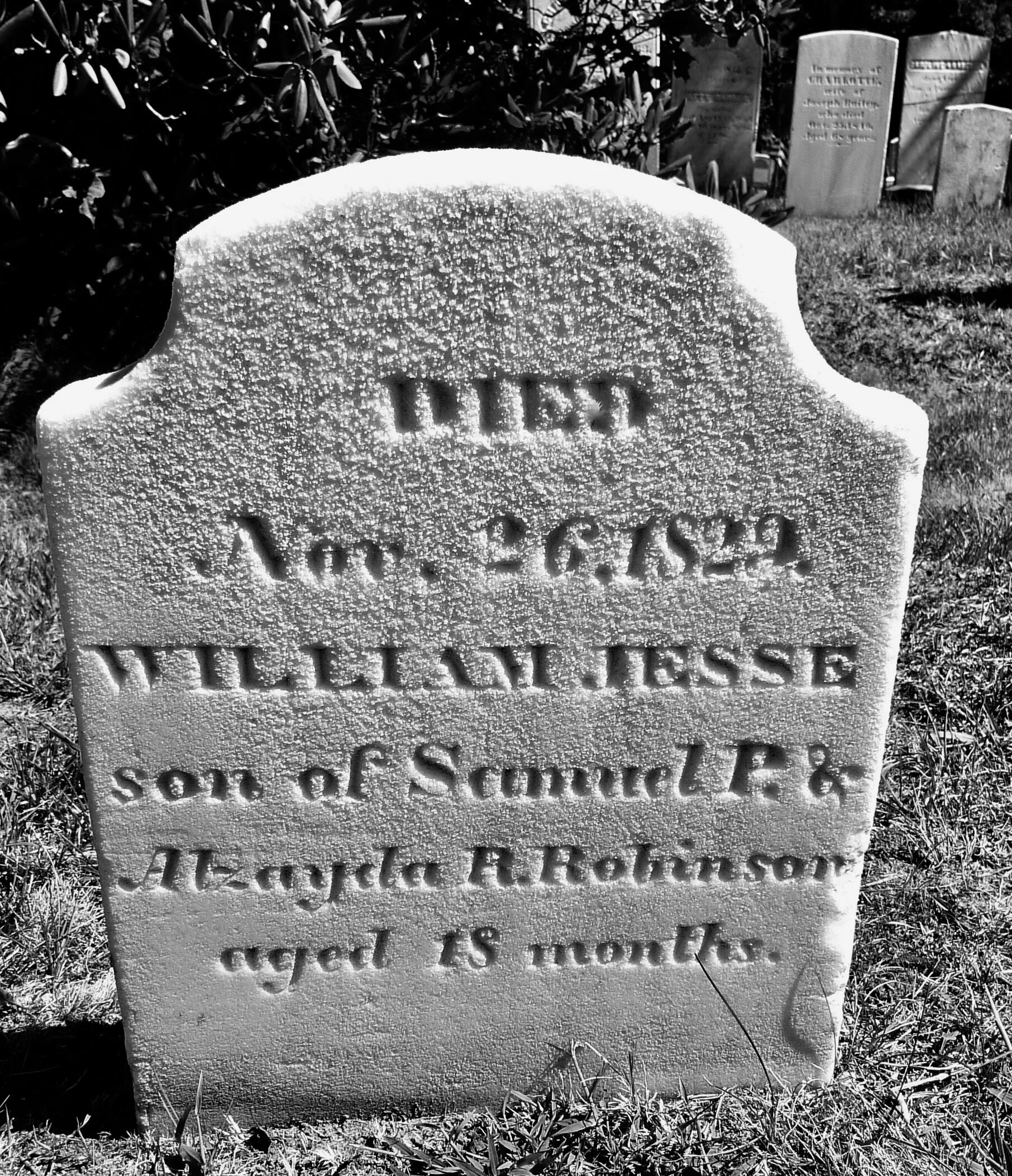
Samuel and Alzayda Robinson's son William left this life at 18 months, but with no fancy inscription, just simply: “DIED’’.
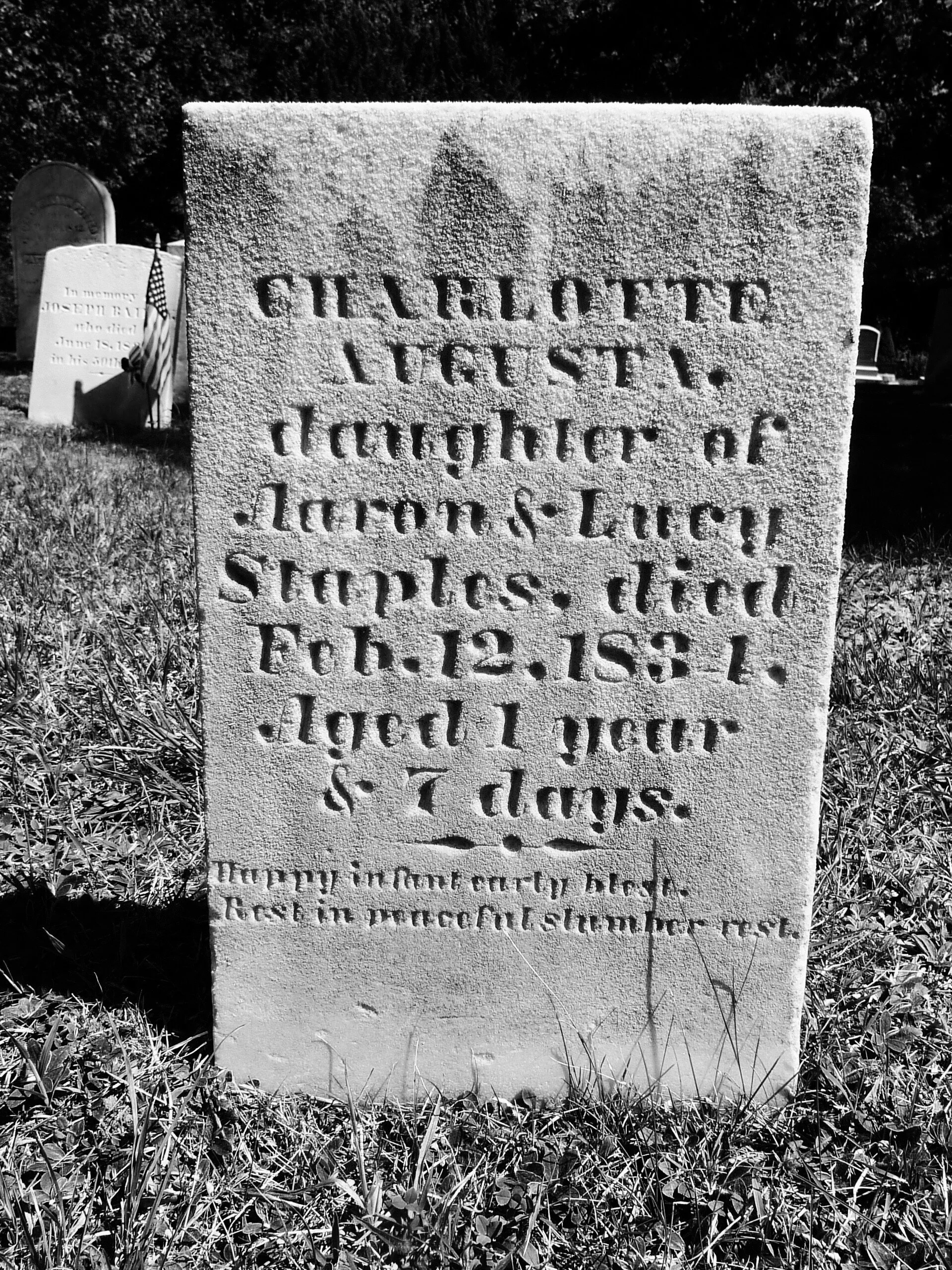
Charlotte Augusta Staples, aged one year and seven days, had the same carver as William Robinson nearby, but here with this inscription:
“Happy infant early blest/
Rest in peaceful slumber rest’’
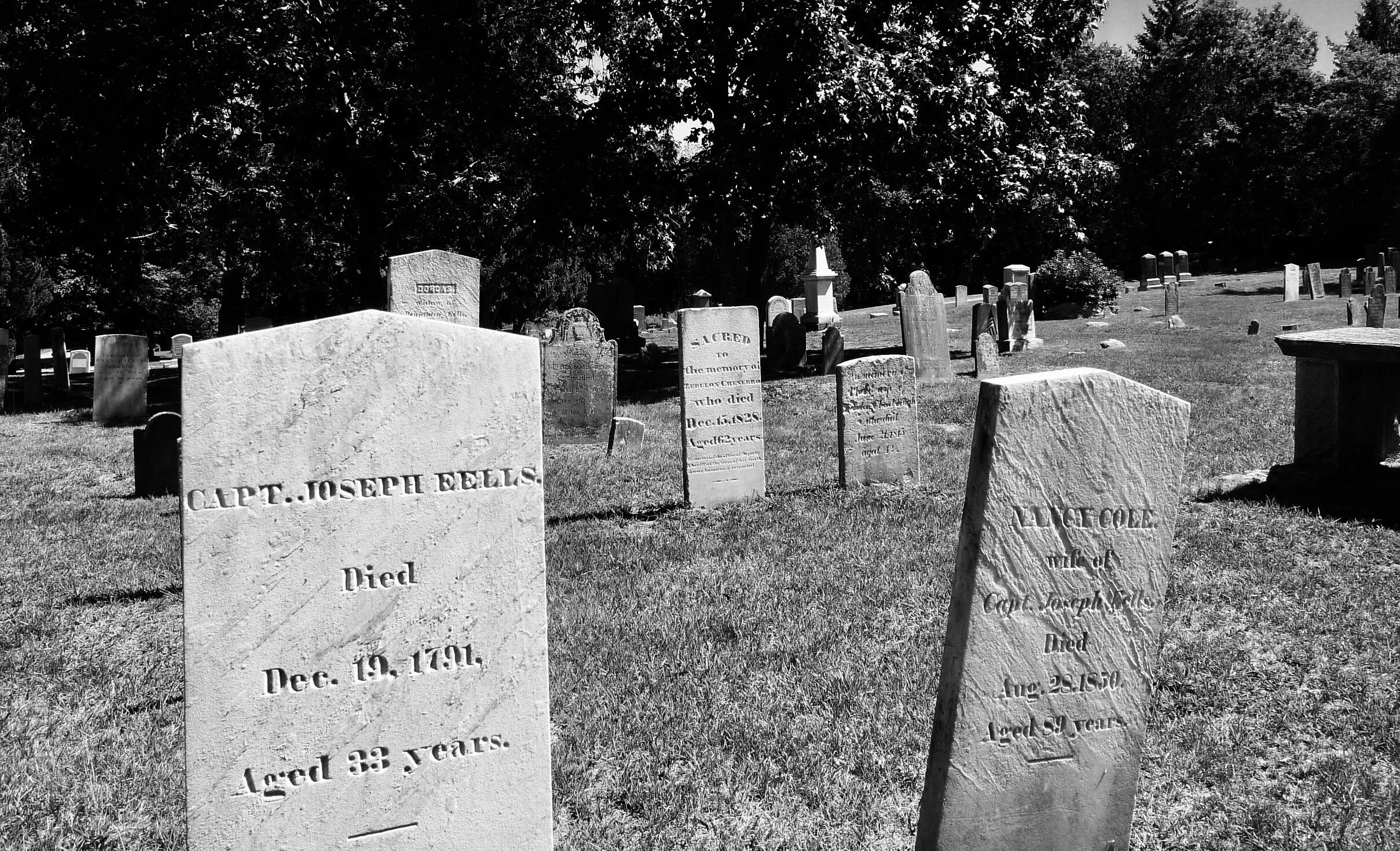
Captain Joseph Eells, born in 1768, got a 19th-Century stone. Perhaps Eells was lost at sea.
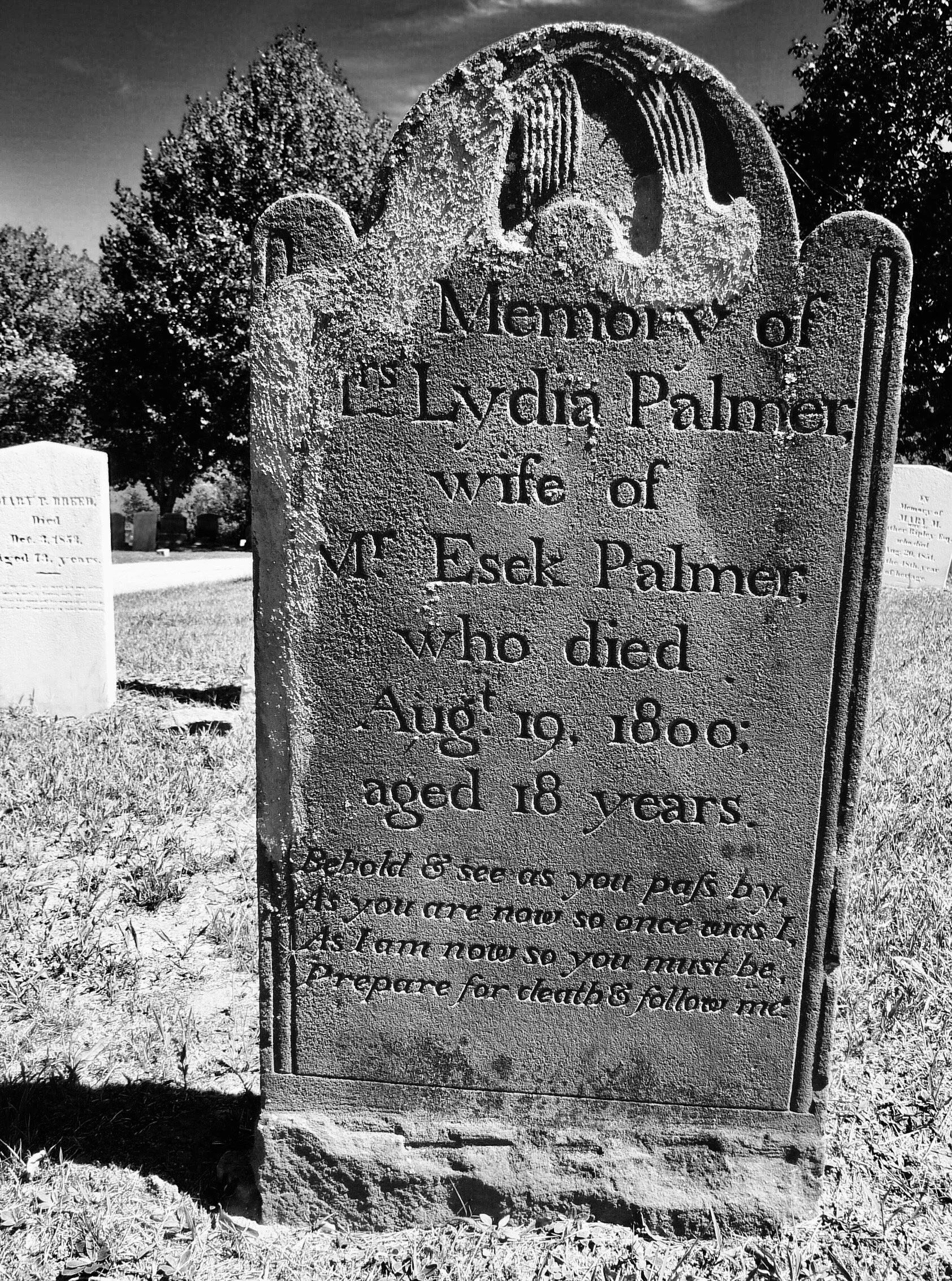
Saddest of all, Lydia Palmer was a young wife when she she died (giving birth?) at only 18. Her weeping willow, carved in porous sandstone, is eroding. The inscription here reads:
“Behold & see as you pass by,
As you are now so once was I,
As I am now so you must be,
Prepare for death & follow me.’’
William Morgan is a Providence-based architectural historian and essayist. His latest book, Snowbound: Dwelling in Winter, will be published next month.
City planning

“space created by things” (gouache on paper), by Jessica Poser, in her show “Available Distances,’’ at Bromfield Gallery, Boston for September. The gallery describes the show as “interactions with paint and paper, near and far, the living and the dead.’’
See:
bromfieldgallery.com
Chris Powell: Phony outrage against utilities; legislators: do some work

A Connecticut law requires Eversource to buy electricity from the Millstone nuclear-power plant, above, on the site of an old quarry in Waterford, on Long Island Sound, to keep the facility going.
MANCHESTER, Conn.
Last week's hearings of the Connecticut Public Utilities Regulatory Authority and the General Assembly gave many elected officials their chance to denounce the state’s two major electric companies, Eversource Energy and United Illuminating, over rising electric bills and the long and widespread outages caused by Tropical Storm Isaias.
But the hearings didn't vindicate the piling on done by the politicians.
For it turned out that power had been restored well within the time requirements already set by the utility authority. Additionally, news reports tended to support Eversource's contention that most of the recent increase in electric bills has resulted, first, from greatly increased customer use of electricity as people stay home because of the virus epidemic and run much more air-conditioning during hot weather, and, second, from the state law that recently took effect requiring Eversource to buy power from the Millstone nuclear plant, in Waterford, to keep the plant going.
In effect that law hid another tax in electricity bills, and as usual and as anticipated, the people, uninformed, blamed the electric company instead of their state legislators and the governor.
On top of that, the Connecticut Mirror's Mark Pazniokas reported that only 34 percent of charges on Eversource electric bills is attributable to the utility itself. The remaining two-thirds of charges come from the cost of electricity, which Eversource does not produce but buys from generators chosen by its customers; from state and federal government assessments on electricity transmission; and from state government-required subsidies for renewable energy, energy-efficiency programs and the poor.
Eversource representatives at the hearings had the political sense to take their beating calmly and not challenge elected officials over their responsibility for the high cost of electricity in the state. Of course the elected officials did not volunteer to accept their responsibility. They just wanted to strike indignant poses for the television cameras.
But at least Sen. Matt Lesser, D-Middletown, urged the utility authority to declare "force majeure" and nullify Eversource's power-purchase arrangement with Millstone, in effect canceling the new law.
Given the disproportion in responsibility here -- two-thirds for government and non-utility electricity costs and only one third for the utility stuck with collecting the money for others -- the electricity issue may fade quickly since the elected officials have already achieved so much television time for chest thumping.
xxx
END RULE BY DECREE: With the six-month term of his emergency powers to govern by decree expiring on Sept. 9, Gov. Ned Lamont is likely to ask the leaders of the General Assembly to extend them for another few months. While the virus epidemic has sharply subsided in Connecticut, recent flare-ups like the ones in Danbury and at the Storrs campus of the University of Connecticut could lead to a second wave, especially since many people have begun partying as if there is no longer any risk.
But the governor and legislative leaders should let the emergency powers lapse. The epidemic never was severe enough to justify suspending democratic government, and now that the epidemic has largely lifted, it is time for the General Assembly to get back to work, which it abandoned in cowardly panic in March midway through its regular session.
Legislators are far too content to leave potentially controversial policy decisions to the governor as their campaigns for re-election begin. Though the governor has ruled benignly, these decisions have been made without ordinary public discussion and without putting legislators on the record. Important issues having nothing to do with the epidemic have been neglected entirely. Even if legislators face up to their responsibility for Connecticut's high electricity costs, which is unlikely, another few months of gubernatorial rule will delay action until next year.
Ordinary legislative operations can resume safely with mask wearing and Internet proceedings. After all, isn't it ridiculous to classify supermarket employees, trash collectors and mail carriers as essential workers but not the people chosen to make the laws and evaluate government operations? Their salaries are not large but legislators should start earning them again.
Chris Powell is a columnist for the Journal Inquirer, in Manchester.
'Depth seizes everything'

Stereoscopic image of visitors to Mount Monadnock in the 19th Century
“It is New Hampshire out here,
It is nearly the dawn.
The song of the whippoorwill stops
And the dimension of depth seizes everything.’’
From “Flower Herding on Mount Monadnock,’’ by Galway Kinnell (1927-2014). He spent his later years in Vermont.

Mr. Kinnell reading a poem at the Grindstone Cafe, in Lyndonville, Vt., on March 16, 2013.

A male Eastern Whippoorwill