
From philately paradise

By Tom Monahan, Providence-area-based artist and former advertising agency creative director
'Millions of dark, sooty bricks'
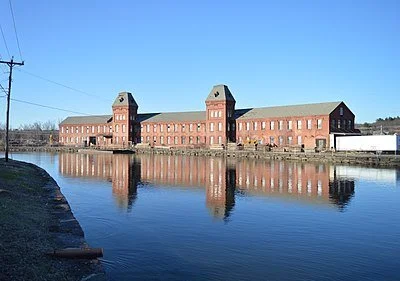
The Albion Paper Mill, designed by internationally renowned mill architect David H. Tower, c. 1869, an example of Second Empire industrial architecture in Holyoke.

High Street in downtown Holyoke, circa 1920
“Holyoke {Mass.} is pure New England mill town….First there is the {Connecticut} river, wide and full of rapids, swinging around a curve, and then the city itself, climbing the hills on the far bank. Holyoke is vast, dense, and somber….Smokestacks and church spires reach into the sky. There are bricks, millions and millions of dark, sooty bricks, and a wealth of detail: granite windowsills, brass weathervanes, copper-sheathed cupolas, bell towers, ornamental ironwork, heavy wooden doors, cobblestone alleys, stone steps worn smooth by millworkers’ feet.’’
— Ben Bachman in Upstream: A Voyage on the Connecticut River (1985)
Put that in your mind's eye
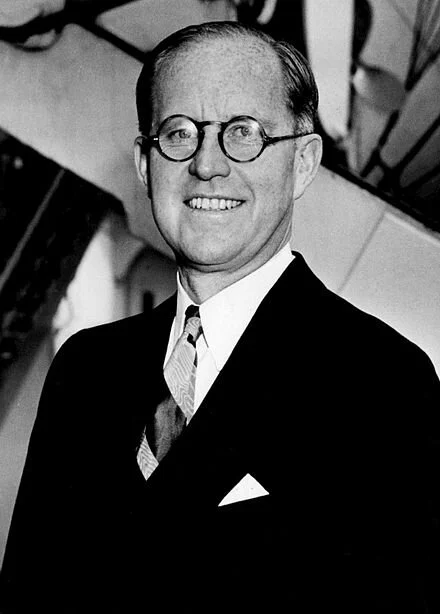
Joseph P. Kennedy as U.S. ambassador to Britain (March 8, 1938-Oct. 22, 1940), in which post he distinguished himself as a defeatist about Britain’s ability to hold off Nazi Germany.
“Whenever you’re sitting across from some important person, always picture him sitting there in a suit of long underwear. That’s the way I always operated in business.’’
— Joseph P. Kennedy Sr. (1888-1969), of Massachusetts. He was a businessman, investor and Democratic political figure known for his high-profile positions in the U.S. government during Franklin D. Roosevelt’s presidency, for the political and other achievements and tragedies of his children and for his ruthlessness.
Crashing with color

“Ambush, Tang Tabu’’ (acrylic on canvas), by Lexington, Mass.-based, in the show “SIZZLE!’’, through Aug. 30 at Bromfield Gallery, Boston.
See:
https://www.bromfieldgallery.com/
and:
https://amanthatsaros.com/
David Warsh: Of Postal Service and Social Security reform
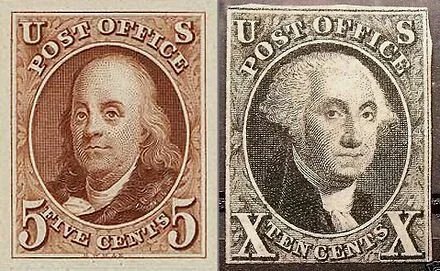
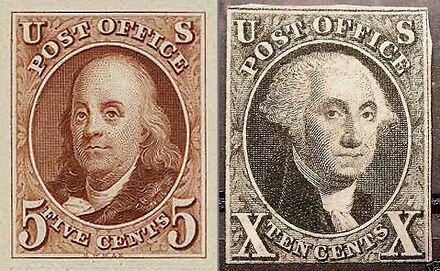
The first U.S. postal stamps, which were issued in 1847
The first stamp issues were authorized by an act of Congress and approved on March 3, 1847. The earliest known use of the Franklin 5¢ (left) is July 7, 1847, while the earliest known use of the Washington 10¢ (right) is July 2, 1847. These issues were declared invalid for postage on July 1, 1851.
SOMERVILLE, Mass.
When the 117th Congress convenes in January, its first order of business just might be to quietly undertake to fix the nation’s system of voting by reforming the U.S. Postal Service.
Critics routinely blame the USPS for losing money. “It’s a Blockbuster service in a Netflix world,” asserted a Wall Street Journal editorial writer the other day. What the editorialist failed to understand is that the USPS is isn’t a business, it is a civic institution.
The Postal Service is older than the Navy, the Marines or the Declaration of Independence, as historian Joseph Adelman has pointed out. Its creation, along with a system of post roads, was practically the first thing that the Second Continental Congress took up, after the Revolutionary War began at Lexington and Concord, in 1775.
They did it for a reason, Adelman writes in Revolutionary Networks: The Business and Politics of Printing the News 1763-1789 (Johns Hopkins, 2019). Efficient and impartial communication of printed matter was essential to keep 13 diverse and far-flung colonies in touch with current news and opinion. The first Post Office Act, in 1792, set off steady expansion of the newspaper industry, and for the next two centuries printed matter accompanied first-class mail at bargain rates to every corner of the country.
True, a great deal has happened in the last 50 years. Print newspapers seem to be on the ropes in a digital age. The rapid distribution of e-commerce merchandise has been largely taken over by United Parcel Service, Federal Express and, recently, Amazon. USPS has found a secure place among these newcomers in the package-delivery business thanks to peak-load pricing.
But now the COVID-19 pandemic has demonstrated that, thanks to voting by mail, old-fashioned first-class mail is a service that the U.S. cannot do without. Thus putting the USPS on a long-term sustainable basis is a first-order problem of democracy.
How might it be done? The election is fast approaching. The composition of Congress won’t be completely clear for some time after that. But a look back at the little-remembered last time the sinews of American democracy were seriously threatened, in 1983, might be instructive. Still Artful Work: The Continuing Politics of Social Security Reform (McGraw Hill, 1994) provides some clues as to how such compromises are achieved.
Towards the beginning, Paul Light, now a political scientist at New York University, who followed the negotiations as a young Congressional Fellow, provided a capsule glimpse of the feel-your-way by which such things happen.
Reagan proposal to solve the Social Security crisis through deep budget cuts in May 1981
Passage of a scarcely noticed bill in December 1981 that would trigger a Social Security emergency in mid-1983
An attempt to tackle Social Security through the budget in April 1982
A break for the midterm congressional elections
The birth and death of the National Commission on Social Security Reform in 1982
The rise of a secret negotiating “gang” as a shield for talks between Reagan and [House Speaker Tip] O’Neill in January 1983
Navigation of the Social Security agreement through the interest-group-infested waters on Capitol Hill in March 1983
The final House-Senate conference just before the Easter recess in 1983
Congressman Barber Conable (R.-N.Y.) was an architect of the ultimate deal. He told Light that the final compromise “was not a work of art, but it was artful work,” providing the title for the book. The analogy is not precise: Postal Service customers are not involved financially the same way as are Social Security recipients. But both selves are involved emotionally, and both vote. Meanwhile, that earlier reform is itself none-too-gradually running out of time. Soon another Social Security fix will be required.
Here’s to the opportunities that lie ahead!
David Warsh, a veteran columnist and an economic historian, is proprietor of Somerville-based economicprincipals.com, where this column first ran.
© 2020 DAVID WARSH

Llewellyn King: More allies than you'd think in decarbonization fight

WEST WARWICK, R.I.
The Democrats, supporting in whole or in part the goals of the Green New Deal, have, one suspects, a vision of themselves facing off against an implacable opposition of energy companies and financiers committed to business as usual.
The fact is, if the Democrats win the White House in November, they may find the enemy isn’t fighting. Indeed, they may find energy producers — both oil and natural gas — and the electric utilities are no longer opponents but devout, if questioning, allies in the struggle for carbon neutrality.
And Wall Street, often identified as the evil force behind the polluters, is striving to be green, and to assess and direct the effect of their lending with a view to reducing carbon emissions and remediating them.
A remarkable organization, the Partnership for Carbon Accounting Financials (PCAF), has enlisted top global banks and lenders in the decarbonation of the future. In the United States its partners include Amalgamated Bank, Bank of America, Citigroup, BlackRock and Morgan Stanley.
A slew of banks spread across Western Europe has joined PCAF, including Britain’s NatWest and Denmark’s Danske Bank. Its first task will be to develop organization-wide standards and methodology to assess the carbon impact of their lending.
Oil and gas entrepreneurs and electric utilities have long been entwined with their bankers. They need each other. It takes a lot of capital to explore for and exploit oil and gas deposits, and the electric utilities have traditionally been the most capital-intensive American industry.
So complete has been the relationship between banking and energy that American Electric Power, once the nation’s biggest electric power company, had its headquarters on Wall Street for decades before moving it to Columbus, Ohio, where its customer base is.
The Edison Electric Institute, now a fixture among the power players in Washington, was based in New York City when I began writing about the utility industry in 1970. Likewise, the Atomic Industrial Forum, a forerunner of the Nuclear Energy Institute, moved to the Washington, D.C., area.
When the price of oil went down suddenly in the 1980s, a bunch of Southwest banks failed. The banking-energy linkage is absolute and at heart unshakable. And it can be dynamic and progressive.
PCAF is the singular and extraordinary creation of Guidehouse, a globe-spanning environmental consulting firm. It began modestly in The Netherlands — one of the most eco-friendly countries in the world — in 2015 and spread to banks across Europe. But its big expansion came in the last two years with the addition of the big American financial institutions and NatWest.
It won’t just be large energy investments that will be subject to scrutiny and assessment by PCAF members. “It will extend all the way down to mortgages,” Jan-Willem Bode, a Guidehouse partner based in London, told me in a guest appearance on White House Chronicle, the weekly news and public affairs program on PBS.
Bode said the banks want to harmonize how they measure their carbon impact and work toward investments in everything from alternative energy projects, like wind farms, to solar homes that reduce the carbon load.
Bode insisted that the commitment of the partners is real. They want a decarbonized future and will favor investments that bring that about.
Of course, there will be critics aplenty. They’ll bandy about the pejorative “greenwashing” and will suggest that the companies that financed carbon production in the past are still at it.
I think they haven’t got the message: America will be greened a lot faster when big money says “green.”
Take what Citigroup CEO Michael Corbat said: “If there’s one lesson to be learned from the COVID-19 pandemic, it is that economic and physical health and resilience, our environment and our social stability are inextricably linked.”
The greenback is getting greener.
On Twitter: @llewellynking2
Llewellyn King is executive producer and host of White House Chronicle, on PBS. He’s based in Rhode Island and Washington, D.C.
'Drip drip the trees'

My books I'd fain cast off, I cannot read,
'Twixt every page my thoughts go stray at large
Down in the meadow, where is richer feed,
And will not mind to hit their proper targe.
Plutarch was good, and so was Homer too,
Our Shakespeare's life were rich to live again,
What Plutarch read, that was not good nor true,
Nor Shakespeare's books, unless his books were men.
Here while I lie beneath this walnut bough,
What care I for the Greeks or for Troy town,
If juster battles are enacted now
Between the ants upon this hummock's crown?
Bid Homer wait till I the issue learn,
If red or black the gods will favor most,
Or yonder Ajax will the phalanx turn,
Struggling to heave some rock against the host.
Tell Shakespeare to attend some leisure hour,
For now I've business with this drop of dew,
And see you not, the clouds prepare a shower--
I'll meet him shortly when the sky is blue.
This bed of herd's grass and wild oats was spread
Last year with nicer skill than monarchs use.
A clover tuft is pillow for my head,
And violets quite overtop my shoes.
And now the cordial clouds have shut all in,
And gently swells the wind to say all's well;
The scattered drops are falling fast and thin,
Some in the pool, some in the flower-bell.
I am well drenched upon my bed of oats;
But see that globe come rolling down its stem,
Now like a lonely planet there it floats,
And now it sinks into my garment's hem.
Drip drip the trees for all the country round,
And richness rare distills from every bough;
The wind alone it is makes every sound,
Shaking down crystals on the leaves below.
For shame the sun will never show himself,
Who could not with his beams e'er melt me so;
My dripping locks--they would become an elf,
Who in a beaded coat does gayly go.
— “Summer Rain’’, by Henry David Thoreau (1817-62)
Mature Massachusetts

“Truth and Wisdom Assist History in Writing, by Jacob de Wit, 1754
“Massachusetts is the first place in America to reach full adulthood. The of America is still in adolescence.’’
— Uwe Reinhardt (1937-2017), Princeton economics professor and health-reform expert
When this meant romance
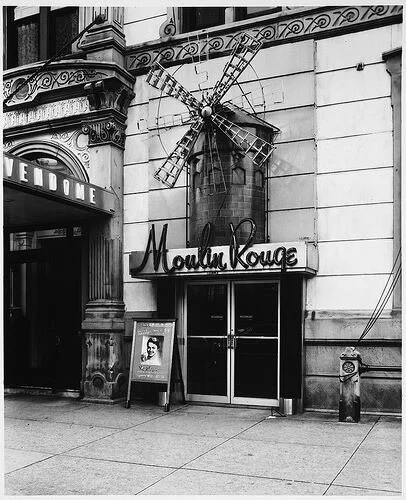
A locally famous nightspot at Boston’s old Hotel Vendome, built in 1872. A 1972 fire there in which nine firefighters died ended the building’s time as a hotel. It was a converted to condos and offices.
Don Pesci: The old, tired and reclusive Joe Biden
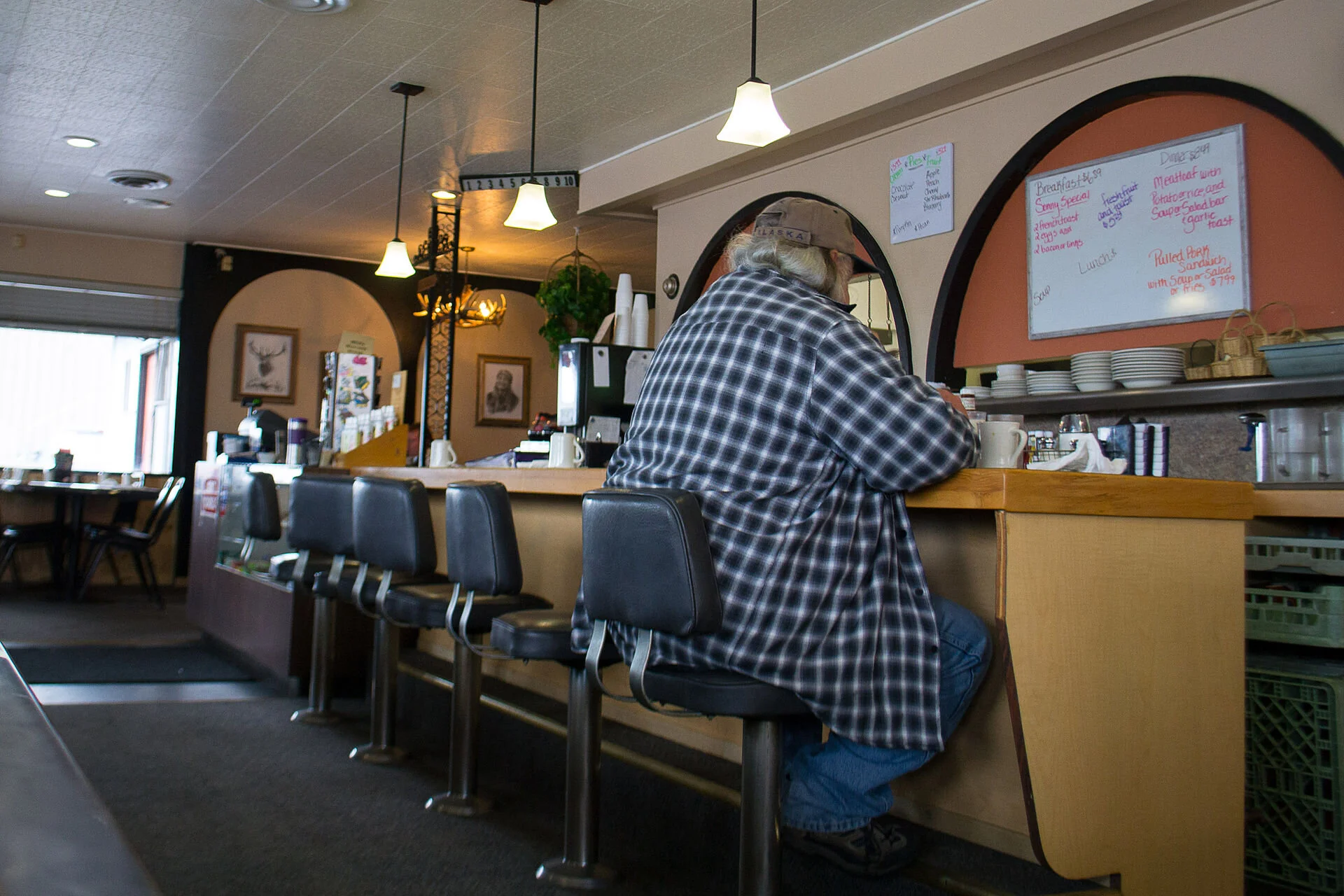
Waiting to talk politics
— Photo by Visitor7
“If ever a time should come, when vain and aspiring men shall possess the highest seats in Government, our country will stand in need of its experienced patriots to prevent its ruin”
— Samuel Adams (1722-1803), Massachusetts politician and a U.S. Founding Father
VERNON, Conn.
I’m sitting in the Midnight Café, only half full on orders of Connecticut Gov. Ned Lamont, having breakfast. The place names and personal names throughout have been changed to protect innocent non-politicians. The usual waitress, Sami, of indeterminate age, sporting her usual braided ponytail, greets me, a steady customer, and the order is quickly put on the table.
The next few booths are filled with electricians brought into the state by Eversource to reconnected houses and businesses with mostly repaired power lines. They are, many of them, on their way back to their home states after a grueling stretch in Connecticut dealing with the damage wrought by Tropical Storm Isaias.
Sami calls out to them, “Have a safe trip back, guys,” and they wave beefy forearms in her direction.
“Sami, look at this picture, and tell me what you think.”
The photo, top of the fold, front page, shows Sen. Kamala Harris, whom former Vice President Joe Biden has picked as his vice-presidential candidate, standing at a podium holding forth, while Biden, stone-faced, is seated in a chair that looks alarmingly like a kiddy highchair, legs wide open, his arms tightly clutching his stomach, his face masked in pretended interest.
Sami quickly assesses the photo and, never shy of sharing her opinion, smiles wickedly.
“Wonder if he had to use a stool to mount that chair?”
“Yeah, you noticed. If he were lying on the floor, he’d be in a fetal position.”
“Right. He’s hugging his tummy tightly.”
“Harris looks presidential though, doesn’t she?’’
“Very. I’m not sure that will help whatshisname,” (Same animated smile.)
It’s one of those pictures that are worth a thousand words.
The skinny on Biden, even among some Democrats, is that he has become a recluse, and not owing to Coronavirus. His early implication that he would choose as his vice president a Black woman had limited his range, but many Democrats feel that Harris might make a tolerable president when Biden, if elected, declines to run for a second term. Biden has not been able or inclined to answer successfully barely concealed imputations that he has become an in-the-closet presidential campaigner because he fears a public, mano a mano confrontation with President Trump.
It is thought by some that Biden's possible future foreign policy with respect to an aggressive and muscular China already has been compromised by Hunter Biden, his grasping son, who had been employed and monetarily rewarded by China because his daddy was Joe Biden, the Democrat’s Great White Hope in the November 2020 elections. And there is a suspicion that Biden has problems unspooling simple English sentences, that he will not be able to carry his weight in office, that he really has forgotten more than he knows, and on and on and on. Biden is 77 years old. His best days, many agreed, lie behind him.
The skinny on Trump is that he has been fatally damaged by repeated failed attempts to remove him from office, and a painfully protracted, failed attempt, lasting as long as his presidency, to find him guilty of collusion with Russian President Vladimir Putin. Some suppose that Trump will be easy campaign prey for a weakened Democrat presidential contender and his more vigorous, Black, female running mate candidate.
Under the hammer-blows of a Democrat opposition unalterably opposed to a Trump second term, it has been supposed that Connecticut Republicans, as happened in 2018, will tremulously withdraw in horror from a toxic president, thereby giving weight to Democratic assertions that even a damaged Biden-Harris administration would be preferable to four more years of an Trump regime.
In both law and politics, silence signifies assent; therefore, silence by Connecticut Republicans on two matters of importance to them – the re-election of a Republican president and the recapture of the U.S. House, as well as a stony silence on what is broadly called progressive social issues – can only be interpreted by state groups traditionally allied against Republicans as a permission to continue unimpeded many progressive programs that conservatives, libertarians, most Republicans and many unaffiliated voters consider repugnant and dangerous to the social fabric of the Republic.
In the new age now upon us, the center has not held, and The Second Coming, born in a dry desert, is slowly slouching toward Bethlehem. The media is now capitalizing “Black” in its reportage, as if “Black” were a race; it’s a color. “White” is also a color, not a race. Distinctions are not made between tolerable and even necessary mottos such as “Black Lives Matter” and political organizations and operations. George Orwell might well sweep all the rotgut Newsspeak away, but there are no Orwells among us.
And we have assented to the anarchic rule of windy and rootless politicians, never mindful of Ben Franklin’s answer when he was asked by a woman on the street, once the Continental Congress had finished its business, “Sir, what have you given us?”
“A republic, madam – IF YOU CAN KEEP IT.”
Don Pesci is a Vernon-based columnist.

Looking tired? Joe Biden in Henderson, Nev., last February
—Photo by Gage Skidmore

Marcelo Suarez-Orozco: My plan for UMass Boston

The UMass Boston campus, dramatically situated on Boston Harbor.
— Photo by bostonphotosphere
From The New England Journal of Higher Education, a service of The New England Board of Higher Education (nebhe.org)
BOSTON
Becoming chancellor of the University of Massachusetts at Boston is a humbling experience and a great responsibility for me—it is indeed the opportunity of a lifetime. As a kid who emigrated from Argentina to the U.S. to escape political unrest at age 17, with just a few dollars in my pocket, I was one of millions of Americans by-choice arriving over the years, searching for a better life. Settling in California, I was incredibly fortunate to be able to access the public higher-education system.
My life journey embodies America’s great public university system and its transformative power.
As a young immigrant I worked my way up from the very bottom, doing all kinds of jobs—painting apartments, cleaning offices and pumping gas while taking night classes to learn English in our local high school. I am a product of former University of California President Clark Kerr’s great Master Plan for Higher Education. I started my studies in the California Community College System, transferring to the University of California at Berkeley, where I received a bachelor’s degree in psychology and master’s and doctoral degrees in anthropology. That extraordinary public education was the foundation for my scholarly career at universities around the world, including tenure at Harvard, a University Professorship at New York University and, eventually, as the inaugural Wasserman Dean of the Graduate School of Education and Information Studies at the University of California at Los Angeles.
My experience distills the power of education as a public good, essential for all human beings to flourish and for the formation of engaged and independent citizens capable of self-governance and giving back. Education must also prepare our workforce to thrive in the labor market of the 21st Century. At its best, education nourishes the brain, heart and hand, helping to create a dignified and purposeful life. In my case, these were not simply worthy abstract principles. For me, education was a transformational life force. The brilliant scholars at Berkeley who became my mentors (early on I learned how to avoid the tormentors in the faculty!) taught me how to write for a scholarly audience (often inviting me to publish with them), hands-on scaffolded my teaching as I started work as a teaching assistant, and above all, they taught me how to think in the tradition of the great social science disciplines.
But the system that provided opportunity to me and millions of others faces grave threats—from a ravaging pandemic, particularly devastating to communities of color, to unchecked climate change extracting untold suffering in the world’s poorest regions, to the structural racialization of inequality and the intergenerational persistence of anti-blackness, to xenophobia and exclusionary anti-immigrant policies. We must harness the power of higher education to address the growing inequities in our world. These forces work to undermine the principles and practice of democracy in the U.S. and around the world.
In my view, public higher education is the indispensable tool for disrupting and overcoming the malaise of growing inequality, an ominous threat to the practice of democratic citizenship. These times call for an education to nurture what is true (logic), that which is good (justice/ethics), and that which is beautiful (aesthetics). Creating a more inclusive, just and sustainable world is education’s urgent challenge.
As the head of an institution dedicated to upward mobility—where a majority of students are people of color, where many are the first in their family to attend college, where the number of Pell-eligible students is among the highest anywhere in New England—I have a special responsibility to create the conditions, on and off campus, under which our students can flourish.
Indeed, all of us must extend ourselves to nurture a greater ethic of care and solidarity, an ethic of preference to the least empowered among us, an ethic of dignity and human rights, and an ethic of engagement and service to others. In practice, I endeavor to embody these principles in quotidian practice. Mind what I do, not just what I say. What I learned from Pierre Bourdieu, who was teaching at Berkeley in my graduate student days, is that the habitus comes to define us—how successful we are and how others come to view us: the competencies, sensibilities, skills and dispositions that guide the ethos and eidos in our comportment.
Excellence, equity, diversity and relevance are the four cardinal points to navigate today’s rough waters and unprecedented undertow. To that end, I have established and endowed the George Floyd Honorary Scholarship Fund at UMass Boston to provide financial support to our talented students who otherwise may find it difficult or impossible to pay for a college education. My wife, Carola, and I have seeded this with funds in the amount of $50,000. I am happy to report the fund has already exceeded $100,000 in commitments from generous and visionary members and supporters of the UMass Boston family.
UMass Boston’s students of color—like their peers across the nation—face economic and social barriers to their education exacerbated by COVID-19’s malignancy, placing too many of our students at an educational disadvantage. I firmly believe that equitable access to quality education is a foundational step we must take to see systemic racism dismantled in our country.
This fund is also an investment in future leaders who will fight for social, political and economic justice, drawing from their lived experience as I did, and using the tools forged by the invigorating ideas and experiences shared by students of every age and background in our classrooms.
In addition, as one of my first acts, I intend to appoint a faculty member as special adviser to the chancellor for Black life at UMass Boston. This person will advise me on matters of importance to our Black faculty, students and staff. The adviser will work with me and my leadership team as we commit to create new structures and to develop new codified and customary practices purposefully designed to put our university at the forefront of excellence, engagement and relevance on racial justice, equity, diversity and inclusion.
As scholars in education dedicated to the practice of democratic citizenship and committed to social justice, we must reflect on our privileges and act in all that we do against the systemic racism that impacts our community and the children and families and communities who we serve.
Marcelo Suárez-Orozco became the ninth chancellor of UMass Boston on Aug. 1, 2020.
His research focuses on cultural psychology and psychological anthropology, with an emphasis on education, globalization and migration.
Hurricane warning

“Hurricane 2, Sudan’’ (oil on shaped canvas), by Barry Mason, in his show “We Hold These Truths,’’ at Atelier Newport through Sept. 11.
He says that this painting “deals with a multitude of issues. Various symbols like the bluish circles with the yellow golden rings cry out the ‘hurricanes’ which are symbolic of the challenges, pain and suffering that people all over the world deal with from time to time. The bright spots of yellow throughout the painting echo the ‘sunshine’ (joy) that most may have in their everyday lives while some wait for it to come after the storm.’’
See:
https://www.ateliernewport.com/
Well-lubricated politics

From Robert Whitcomb’s “Digital Diary,’’ in GoLocal24.com
I hardly drink these days (bad for you!) but summer brings back memories of summer drinking. Cold beer on the beach, the bitter taste of gin and tonics on a porch, as the sound of old songs comes through the rustling oak trees from a well-liquored dance on the harbor. And I remember the happily sweaty drinkers on the rooftop bar of The Washingtonian Hotel in the District of Columbia back in the ‘70s and ’80s. There, in a far-less stressed and divisive time, U.S. senators and representatives of both parties, Cabinet officers, journalists and others happily drank, mingled and joked in sweat-soaked shirts. No wonder it was easier then to get legislation enacted.
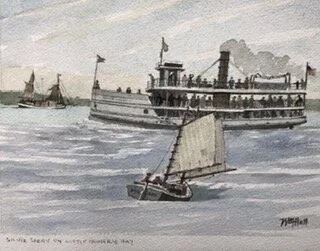
Hard-working ferries, especially in summer

The Island Belle ferry at Old Harbor, Block Island, around 1900. Watercolor by William Hall.
Note from Mr. Hall:
I am an artist and part-time Rhode Islander who spends much of each summer in Harbor Springs, Mich., on Little Traverse Bay. This was a busy logging area in the mid 1800’s to 1935 and has also been for many years a summer place, especially for affluent people from the Midwest.
There were a total of about a dozen ferries, mostly from 58 to 96 feet long, linking several Lake Michigan communities between Petoskey and Harbor Springs between 1875 and 1930. These were steam-powered and ran a vigorous schedule, stopping every 15 minutes at docks. See one of those ferries below, and information about a Harbor Springs show of my ferry watercolors by hitting this link.
Block Island (where some of my family lived), Martha’s Vineyard and Nantucket also owe much of their development, and today’s daily bread, to such glorious little workhorses. I have painted many pictures of boats on the southern New England coast over the years. It’s fun to create images of vessels on fresh water, too.
For original art, prints, posters, drawings, information and stories, visit williamtalmadgehall.com.

Martha Bebinger: Mass. COVID-19 contact tracers might offer milk or help with rent

BOSTON
It’s a familiar moment. The kids want their cereal and the coffee’s brewing, but you’re out of milk. No problem, you think — the corner store is just a couple of minutes away. But if you have COVID-19 or have been exposed to the coronavirus, you’re supposed to stay put.
Even that quick errand could make you the reason someone else gets infected. But making the choice to keep others safe can be hard to do without support.
For many — single parents or low-wage workers, for instance — staying in isolation is difficult as they struggle with how to feed the kids or pay the rent. Recognizing this problem, Massachusetts includes a specific role in its COVID-19 contact-tracing program that’s not common everywhere: a care resource coordinator.
Luisa Schaeffer spends her days coordinating resources for a densely packed, largely immigrant community in Brockton, Mass.
On her first call of the day recently, a woman was poised at her apartment door, debating whether to take that quick walk to get groceries. The woman had COVID-19. Schaeffer’s job is to help clients make the best choice for the public — sometimes, the help she offers is as basic, and important, as the delivery of a jug of milk.
“That’s my priority. I have to put milk in her refrigerator immediately,” Schaeffer said.
“Most of the time it’s the simple things, the simple things can spread the virus.”
The woman who needed milk was one of eight cases referred to Schaeffer through the state government’s Community Tracing Collaborative. Contact tracers make daily calls to people in isolation because they’ve tested positive or those in quarantine because they’ve been exposed to the coronavirus and must wait 14 days to see if they develop an infection. The collaborative estimates that between 10% and 15% of cases request assistance. Those requests are referred to Schaeffer and other care resource coordinators.
“So many people are on this razor-thin edge, and it’s often a single diagnosis like COVID that can tip them over,” said John Welch, director of operations and partnerships for Partners in Health’s Massachusetts Coronavirus Response, which manages the state’s contact-tracing program.
He said a role such as resource coordinator becomes essential in getting people back to “a sense of health, a sense of wellness, a sense of security.”
With milk on its way, Schaeffer dialed a woman who needed to find a primary-care doctor, make an appointment and apply for Medicaid. That call was in Spanish.
With her third client, Schaeffer switched to her native language, Cape Verdean Creole. The man on the other end of the line and his mother had both been sick and out of work. He applied for food stamps and was denied. Schaeffer texted the regional head of a state office that manages that program. A few minutes later, the director texted back that he was on the case.
Schaeffer, who has deep roots in the community, is on temporary loan to the state’s contact-tracing collaborative and will later return to her job, helping patients understand and follow their prescribed treatments at the Brockton Neighborhood Health Center.
The collaborative said most client requests are for food, medicine, masks and cleaning supplies. COVID-19 patients who are out of work for weeks or who don’t have salaried jobs may need help applying for unemployment or help with rental assistance — available to qualified Massachusetts residents.
Care-resource coordinators even connect people with legal support when they need it. An older woman employed in the laundry room at a nursing home was told she wouldn’t be paid while out sick. Schaeffer got in touch with the Community Tracing Collaborative’s attorney, who reminded the company that paid sick leave is required of most employers during the pandemic.
“So, now, everything’s in place. She started getting paid,” Schaeffer said.
There are glitches as the care-resource coordinators try to support people isolating at home. Some workers who are undocumented return to work because they fear losing their jobs. When the local food bank runs out, Schaeffer has had to scramble to find a local grocer to help. The free canned goods or vegetables can be like foreign cuisine for Schaeffer’s clients, some of whom are from Cape Verde and Peru. In those cases, she can reach out to a nutritionist and set up a cooking lesson via conference call.
“I love the three-way calls,” she said, beaming.
Schaeffer and other care resource coordinators have responded to more than 10,500 requests for help so far through Massachusetts’s contact-tracing program. Demand is likely greater in cities such as Brockton, with higher infection rates than most of the state and a 28.7 percent lower median household income.
Massachusetts has carved out care-resource coordination as a separate job in this project. But the role is not new. Local health departments routinely include what might be called support or wrap-around services when tracing contacts. With cases of tuberculosis, for example, a public-health worker might make sure patients have a doctor, get to frequent appointments and have their medications.
“You can’t have one without the other,” said Sigalle Reiss, president of the Massachusetts Health Officers Association.
Partners in Health’s Welch, who is advising other states on contact tracing, said the importance of having someone assist with food and rent while residents isolate isn’t getting enough attention.
“I don’t see that as a universal approach with other contact-tracing programs across the U.S.,” he said.
Some contact-tracing programs that schools, employers or states have erected during the pandemic cover only the basics.
“They’re focused on: Get your positive case, find the contacts, read the script, period, the end,” said Adriane Casalotti, chief of government and public affairs at the National Association of City and County Health Officials. “And that’s really not how people’s lives work.”
Casalotti acknowledged that the support role — and services for people isolating or in quarantine — adds to the cost of contact tracing. She urges more federal funding to help with this expense as well as a federal extension of the paid sick time requirement, and more money for food banks so that people exposed to the coronavirus can make sure they don’t give it to anyone else.
“Individuals’ lives can be messy and complicated, so helping them to be able to drop everything and keep us all safe — we can help them through the challenges they might have,” Casalotti said.
This story is part of a partnership that include WBUR, NPR and Kaiser Health News.
Martha Bebinger, WBUR: marthab@wbur.org, @mbebinger
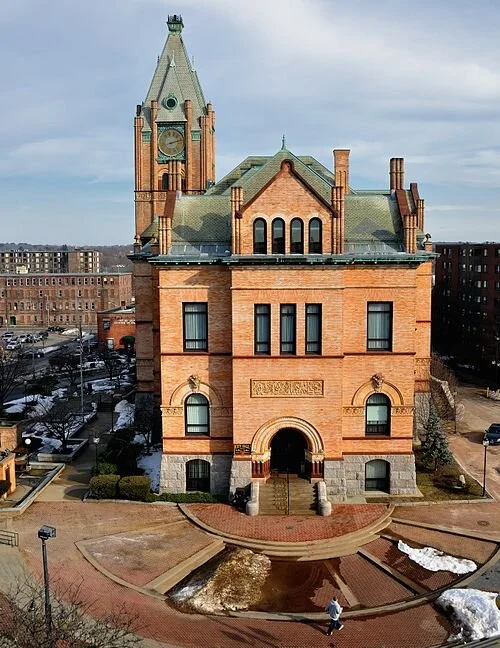
Brockton City Hall, built in 1892, back in the era when the city called itself “The Shoemaking Capital of the World.’’
'All environment'

Umbagog Lake on the Maine-New Hampshire border. It’s considered one of New England’s cleanest lakes.
“I am a big lover of the environment. I actually come from Maine, which is pretty much all environment.’’
— Noah Gray-Cabey (born 1995), prodigy actor and pianist, who grew up in Newry (pop. in 2010 of 329), near the White Mountains in western Maine.
He was admitted to Harvard at 15, but took a “gap year’’ to spend with his family in the Pine Tree State.
He told DownEast magazine:
“You couldn’t pick a better place to grow up. We had a couple of dirt bikes, and we could take those things up through the logging roads for, like, ever. It’s such an amazing, untouched part of the country.”
He prefers the lakes of interior Maine to the its famous seacoast and cites the pleasure he took in fishing on Umbagog Lake with his grandfather, a game warden.
He told the magazine: “I mean, if you talk to fancy people, they’ll go on about the coast. But I’m like, you guys don’t know what you’re missing — inland Maine is the best! Although, sure, the mosquitoes and blackflies will make you want to shoot yourself eventually.”
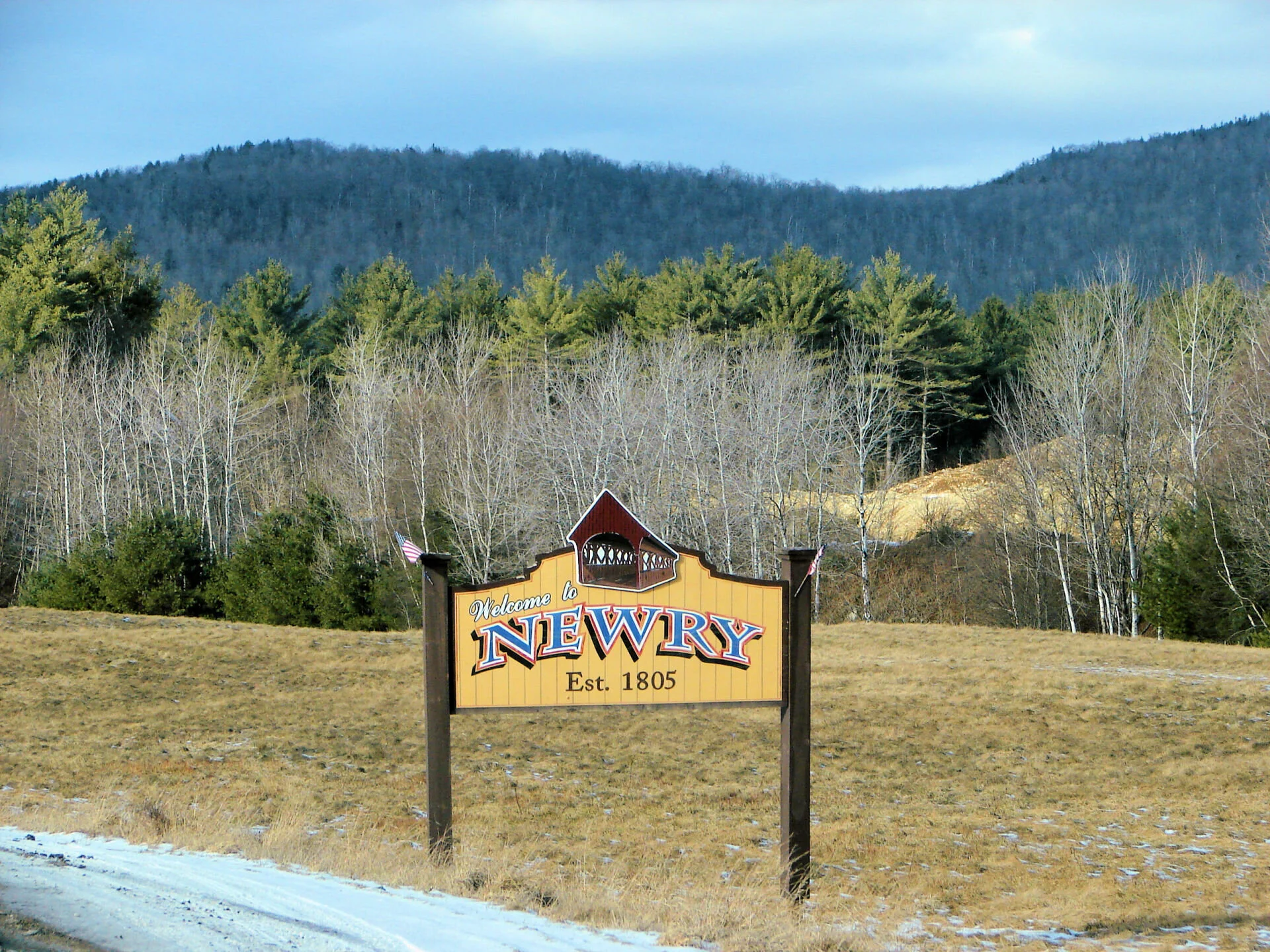
— Photo by p199
Mass. Blue Cross premium refunds because of COVID-19

From The New England Council (newenglandcouncil.com)
“Blue Cross Blue Shield of Massachusetts recently announced that it will issue over $100 million in premium refunds as a result of lower than-expected health-care costs during the pandemic. The refunds are in addition to the $116 million the insurer has invested in support for members, customers, clinical partners, and communities over the course of the pandemic, bringing Blue Cross Blue Shields’ total financial contributions to COVID-19 relief to over $217 million. Read more here.

Susan K. Williams Smith: Trump doesn't want 'law and order'

Federal agents in Portland, Ore., during recent demonstrations there
Via OtherWords.org
Federal troops may be standing down in Portland, Ore., for now. But Donald Trump has also dispatched federal agents to Cleveland, Milwaukee, Detroit, Chicago, Kansas City, Mo., and Albuquerque, N.M.
Trump claimed that his orders are intended to “restore law and order.” But this isn’t about restoring peace to our communities.
For generations, Black families, communities, and businesses have been terrorized by violent police officers and white vigilantes without consequence. Trump’s call for “law and order” is a political dog whistle to enable and excuse this systemic abuse.
Trump doesn’t want law or order. He’s calling for federal agents to sow chaos and disorder to intimidate our communities by any means necessary.
The militarized agents that Trump deployed in Portland, where protests against police brutality have endured for two straight months, were clearly meant to achieve just that. Those heavily armed, body armored, and camouflaged troops patrolled the city in unmarked cars, launched dangerous munitions at unarmed protesters, and detained many others.
Trump has meanwhile claimed that Democratic lawmakers and activists are engaging in an “anti-cop crusade” to abolish all police departments.
In reality, most of these campaigns are simply calling to remove some money from police budgets and put it toward underfunded schools and community support services long denied to Black and brown communities — like job training, mental health care, and low-income housing.
Centuries of discrimination, oppression, and violence against Black people have caused too many of us to live in poverty. And for too long, corrupt, violent, and racist police officers have capitalized on minor crimes of poverty to harass, arrest, and kill us.
George Floyd allegedly used counterfeit money. Eric Garner sold loose cigarettes. Alton Sterling sold DVDs out of a gas station. Police officers targeted these men and killed them for these minor offenses.
And now that people around America are standing up against police violence and racial injustice, Trump is trying to stifle our power to serve his political ends.
We must reject Trump’s concept of “law and order” and reimagine public safety by investing in our well-being instead of hefty police budgets. What could it mean for all people to have equal protection under the law and the resources to support healthy, thriving communities?
We can start by restoring law and order in our police departments themselves.
We would all benefit from strict standards on the use of force, and from police officers who value protecting our communities over violence and access to power. We would all benefit from robust police training in conflict management and de-escalation, and from community oversight mechanisms ensuring that police officers are held accountable for wrongdoing.
The national reckoning on racial injustice and police violence is long overdue. Black people in this country have been in crisis since we were first brought here as slaves in the 1600s. We don’t need militarized police departments, ready to shoot us at the slightest change of the wind. We need to be treated as human beings, with dignity and respect.
We need police to stop targeting, arresting, and killing us for minor offenses like selling cigarettes or driving with a broken taillight or bad muffler. We need to know that our bodies are not seen as simply fodder for the prison industrial complex.
Trump’s notion of “law and order” is detrimental and divisive for all of us. Let’s create a new version of law and order defined by public safety, accountability, and thriving communities.
The Rev. Dr. Susan K. Williams Smith is an ordained minister and director of Crazy Faith Ministries, in Columbus, Ohio. She serves on People For the American Way Foundation’s African American Ministers In Action.
Dress rehearsal for big one
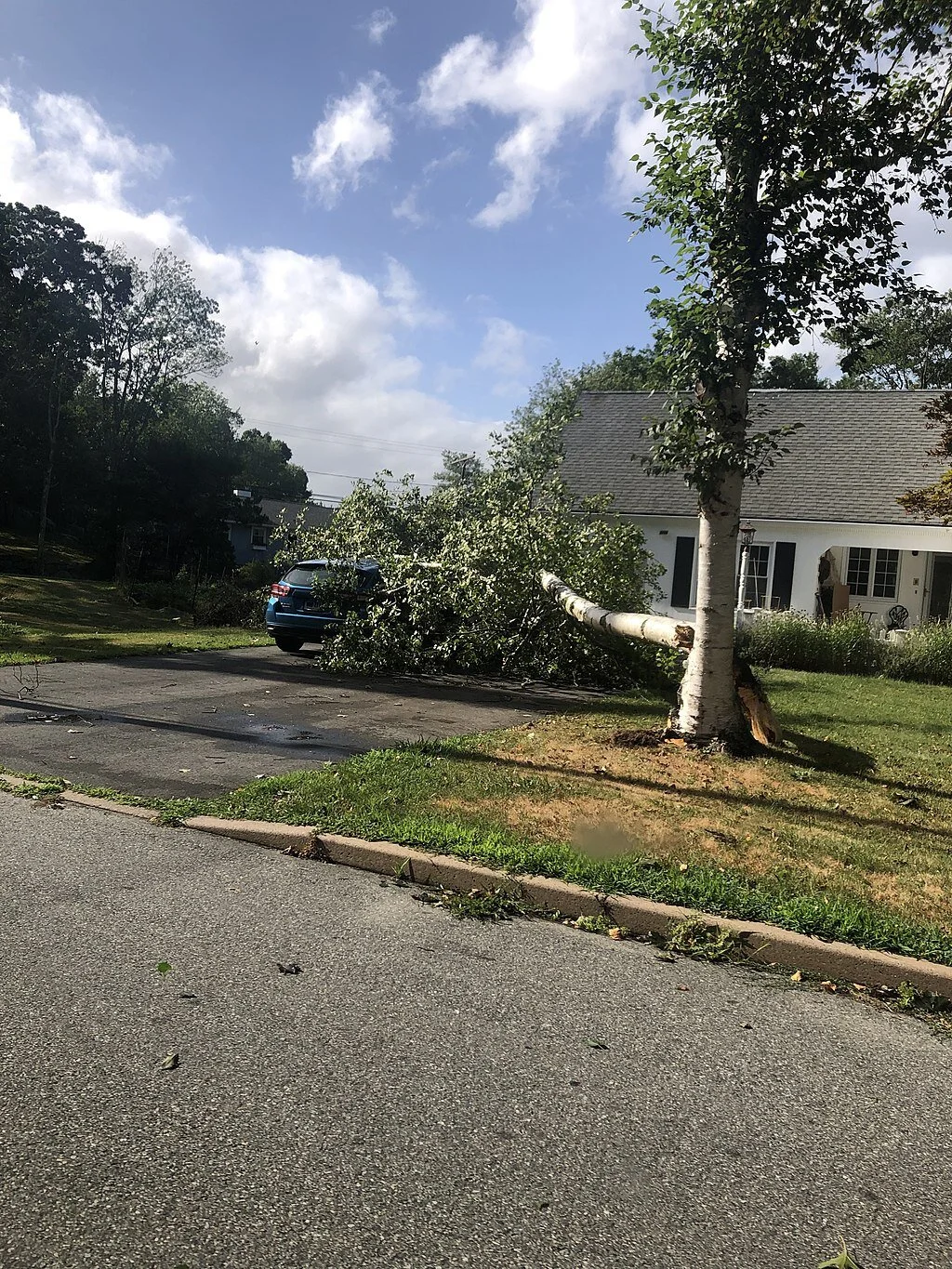
Tree and car whomped by Isaias in Waterford, Conn.
From Robert Whitcomb’s “Digital Diary,’’ in GoLocal24.com
After that surprisingly lively outer band of Tropical Storm Isaias’s rain and wind swept through Rhode Island last Tuesday, I went for a walk when it was still breezy. It was exhilarating. The storm had cleaned out the oppressive air and the world seemed briefly fresh and new again. People I passed on the street seemed in good spirits.
But the very brief event also warned of how much damage a full hurricane could do in our densely treed region. If 60-mile-an-hour gusts could take down so many branches and even some trees last Tuesday imagine what 100-mile-an-hour winds could do to our electricity system, roofs and cars parked under trees. (A tree crushed a car up the street from us Tuesday.) Actually, I don’t have to imagine much, having strong memories of what Hurricane Bob did just east of Providence in ’91, not to mention such earlier hurricanes as Donna, in ’60, and, as a little kid, Carol in ’54.=
Perhaps National Grid has learned a few new lessons from Isaias in getting ready for a real storm and its aftermath. Especially with sea-surface temperatures so high just south of New England acting as fuel if a hurricane heads this way, that tempest may come sooner rather than later. Stock up on Sterno!
xxx
‘New Englanders tend to be a bit wary, and so they don’t particularly exert themselves to meet new neighbors. Indeed, you might never meet people who have lived across the street from you for years. But I’ve noticed, on our block anyway, newcomers and long-established neighbors chatting away – about six feet apart -- much more these days as folks stroll to relieve claustrophobia and get mild exercise. Paradoxically, COVID-19 may be making neighbors friendlier.
“Funny how we’re all talking to each other now,’’ one lady down the street told me as I was walking our dog.