Vox clamantis in deserto


A healthy pain
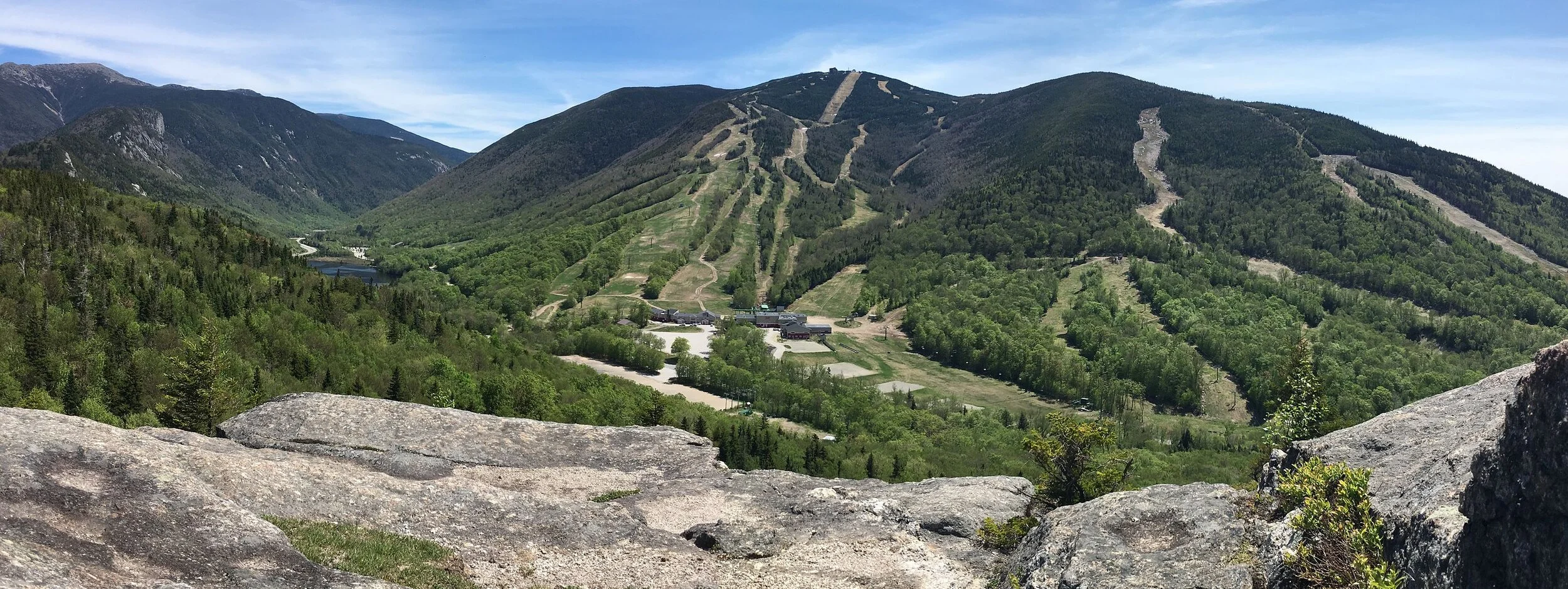
Cannon Mountain ski area, in New Hampshire
—Photo by Fredlyfish4
“My thighs don't hurt, no, it's all in my calves,
different muscles from a normal trail hike,
I've drank too much water, but I make it,
cooler air of altitude braces me,
green New England rolls out before my eyes…’’
From “Hiking Up a Ski Trail in Summer,’’ by David Welch
Faith vs. intellect

Exeter’s Squamscott Falls in 1907
“Never confuse faith, or belief — of any kind — with something even remotely intellectual.’’
From A Prayer for Owen Meany, a novel by John Irving about two boys growing up in the fictional small New Hampshire town of Gravesend in the 1950s and ‘60s. The town is based on Exeter, N.H., where Mr. Irving grew up. He now lives mostly in Canada but has a home in Vermont, too.

David Warsh: What went wrong in Epidemiologists’ War
SOMERVILLE, Mass.
It is clear now that United States has let the coronavirus get away to a far greater extent than any other industrial democracy. There are many different stories about what other countries did right. What did the U.S. do wrong?
When the worst of it is finally over, it will be worth looking into the simplest technology of all, the wearing of masks.
What might have been different if, from the very beginning, public health officials had emphasized physical distancing rather than social distancing, and, especially, the wearing of masks indoors, everywhere and always?
Even today, remarkably little research is done into where and how transmission of the COVID-19 virus actually occurs – at least to judge from newspaper reports. Typical was a lengthy and thorough account last week by David Leonhardt, of The New York Times, and several other staffers.
Acknowledging that previous success at containing viruses has led to a measure of overconfidence that a serious global pandemic was unlikely, Leonhardt supposed that an initial surge may have been unavoidable. What came next he divided into four kinds of failures: travel policies that fell short; a “double testing failure”; a “double mask failure”; and, of course, a failure of leadership.
The American test, developed by the Centers for Disease Control and Prevention, which worked by amplifying the virus’s genetic material, required more than a month longer to be declared effective, compared to a less elaborate version developed in Germany. The U.S. test was relatively expensive, and often slow to process. The virus spread faster than tests were available to screen for it.
As for masks, Leonhardt reported, experts couldn’t agree on their merits for the first few months of the pandemic. Manufactured masks were said to be scarce in March and April. Their benefits were said to be modest.
From the outset it was understood that most transmission depended on talking, coughing, sneezing, singing, and cheering. Evidence gradually accumulated that the virus could be transmitted by droplets that hung in the air in closed spaces – in restaurants, and bars, for example, on cruise ships, or in raucous crowds. By May, it became more common for official to urge the wearing of masks.
But Leonhardt cited no evidence of the rate at which outdoor transmission occurred among pedestrians, runners or participants in non-contact sports. Nor did he take account of wide disparities of distance across America among people in cities, suburbs, and country towns. In many areas, most people used common sense, which turned out to be pretty much the same as medical advice.
Instead of becoming ubiquitous indoors and out, as in Asia, or matters of fashion, as in Europe, Leonhardt wrote, masks in the United States became political symbols, “another partisan divide in a highly polarized country,” unwittingly exhibiting the divide himself.
Whether things would have turned out differently had face-coverings been confidently mandated everywhere indoors from the very beginning, and recommended wherever where crowds were unavoidable, is a matter for further research and debate. Not much is known yet about the efficacy of various forms of “lock-down” – office buildings, public-transit, schools, college dormitories.
This much, however, is already clear: very little effort has been spent on discovering what was genuinely dangerous and what was not; still less on communicating to citizens what has been learned. Epidemiologists live to forecast. Economists conduct experiments. Expect the “light touch” policies of the Swedish government to attract increasing attention.
About the failure of leadership in the U.S., Leonhardt is unremitting: in no other high-income country have messages from political leaders been “so mixed and confusing.” Decisive leadership from the White House might have made a decisive difference, but the day after the first American case was diagnosed, President Trump told reporters, “We have it under control.” Since then consensus has only grown more elusive, at least until recently.
Word War I was sometimes called the Chemists’ War, because of the industrially manufactured poison gas employed by both sides, The German General Staff looked after their war production. World War II was the Physicists’ War,” thanks to the advent of radar and, in the end, the atomic bomb. It was equally said to be the Economists’ War, chiefly because of the contribution of the newly developed U.S. National Income and Product Accounts to war materiel planning.
The Covid-19 pandemic has been the Epidemiologists’ War. Next time look for economists to make more of a contribution. And hope for a more prescient and decisive president.
. xxx
The New York Times reported last week it had added 669,000 net new digital subscriptions in the second quarter, bringing total print and digital subscriptions to 6.5 million. Advertising revenues declined 44 percent. Earnings were $23.7 million, or 14 cents a share, down 6 percent from $25.2 million, or 15 cents a share, a year earlier.The news made the pending departure of chief executive Mark Thompson, 63, still more perplexing.
“We’ve proven that it’s possible to create a virtuous circle in which wholehearted investment in high-quality journalism drives deep audience engagement, which in turn drives revenue growth and further investment capacity,” Thompson said. His deputy, Meredith Kopit Levien, 49, will succeed him on Sept. 8, the company announced last month. Kopit Levien told analysts last week that the company believed the overall market for possible subscribers globally was “as large as 100 million.”
David Warsh, a veteran columnist and an economic historian, is proprietor of Somerville-based economicprincipals.com, where this essay first appeared.
Just one face
When all the world is young, lad,
And all the trees are green ;
And every goose a swan, lad,
And every lass a queen ;
Then hey for boot and horse, lad,
And round the world away ;
Young blood must have its course, lad,
And every dog his day.
When all the world is old, lad,
And all the trees are brown ;
And all the sport is stale, lad,
And all the wheels run down ;
Creep home, and take your place there,
The spent and maimed among :
God grant you find one face there,
You loved when all was young.
— “Young and Old,’’ by Charles Kingsley (1819-75)
Ambiguities of a mega-ailment
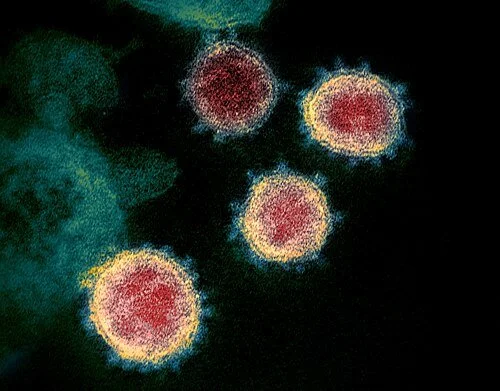
From Robert Whitcomb’s “Digital Diary,’’ in GoLocal24.com
The big – and controversy-rich -- pandemic issue now seems to be how much to reopen the public schools in a few weeks. But there can be no simple answer, especially because the disease data change daily. How to reopen – all in-person or all-remote or a hybrid -- should depend mostly on each district’s COVID-19 positivity rate and on how state policies are crafted, which can vary widely depending on demographic and political factors. And since in America local property taxes pay for much of schools’ budgets, the ability to open in various ways will also depend on local districts’ taxing and funding capacity as they try to make the expensive interior-design and other adjustments needed for reasonable safety.
I think that there’s been too much fear that schools would be giant COVID spreaders. Might schools, at least well-run ones, be safer places for the students and those they might infect than home, where the kids could mingle with their friends and others much of the day without the mask-wearing and social-distancing supervision of teachers and other school staff? And why aren’t teachers considered “essential workers”? In any event, teachers should be among those who get regular COVID-19 testing.
As I’ve said perhaps too many times, trying to teach all classes this fall entirely on computer screens would be an intellectual, socio-economic and psychological disaster and might even jeopardize physical health more than in-person teaching, at least in some districts. Such classes cannot compare in quality with in-person learning in comprehension and retention, and some families don’t have the computers, reliable Internet connections, tech know-how or other resources to get what full benefits can be had from remote learning. Many kids have already fallen way behind in their learning since the schools were closed in March and superseded by screens, and parents’ attempts to home school, as COVID-19 spread rapidly. A lot of students have lost precious learning time, particularly those from underprivileged backgrounds.
And let’s face it: Schools also function as day-care institutions, which lets parents go to work to support their families without undue worry. And for families where parents can mostly or entirely work at home, having their children there all the time can make it very difficult to do their jobs. It packs a lot of stress.
Most parents cannot afford to send their kids to private schools, with their usually smaller classes, or hire private tutors and engage in other end runs around the public schools. Some politicians and others will use the pandemic crisis to try to further undermine public schools in favor of private ones that cater to affluent people by means of vouchers, etc. I hope there’s pushback.
Please read this editorial from The New England Journal of Medicine on why fully reopening schools in a few weeks should be a national priority:
xxx
Organizations have made a big show of “deep cleaning” surfaces to, it is hoped, kill the virus. But in fact surfaces are a minuscule threat, and much of the time and money being spent on dramatic “deep cleaning’’ would be better spent on making sure that everyone wears a mask (always have extras available to hand out), closely monitoring social distancing and adjusting, or replacing, ventilation systems so they don’t recirculate the virus through the air. The disease is overwhelmingly airborne.
But wait! Perhaps “demons” are causing COVID-19. Please hit this link.
Hello, World!
Landscape in art
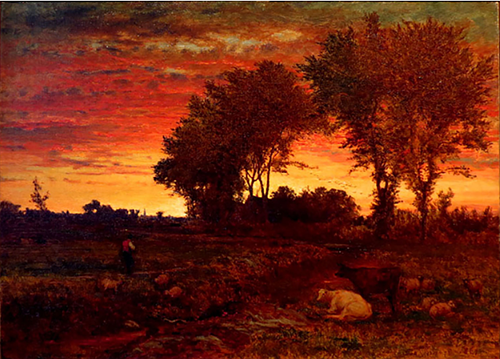
“Sunset/Change (Autumn Section)’’ (1861, oil on canvas), by George Inness, in the show “Complex Terrrain(s),’’ at the Newport Art Museum, through Sept. 27.
The show examines landscape in art and how the genre has evolved over the years.
WHOI gets grant to study ocean's microbial food web
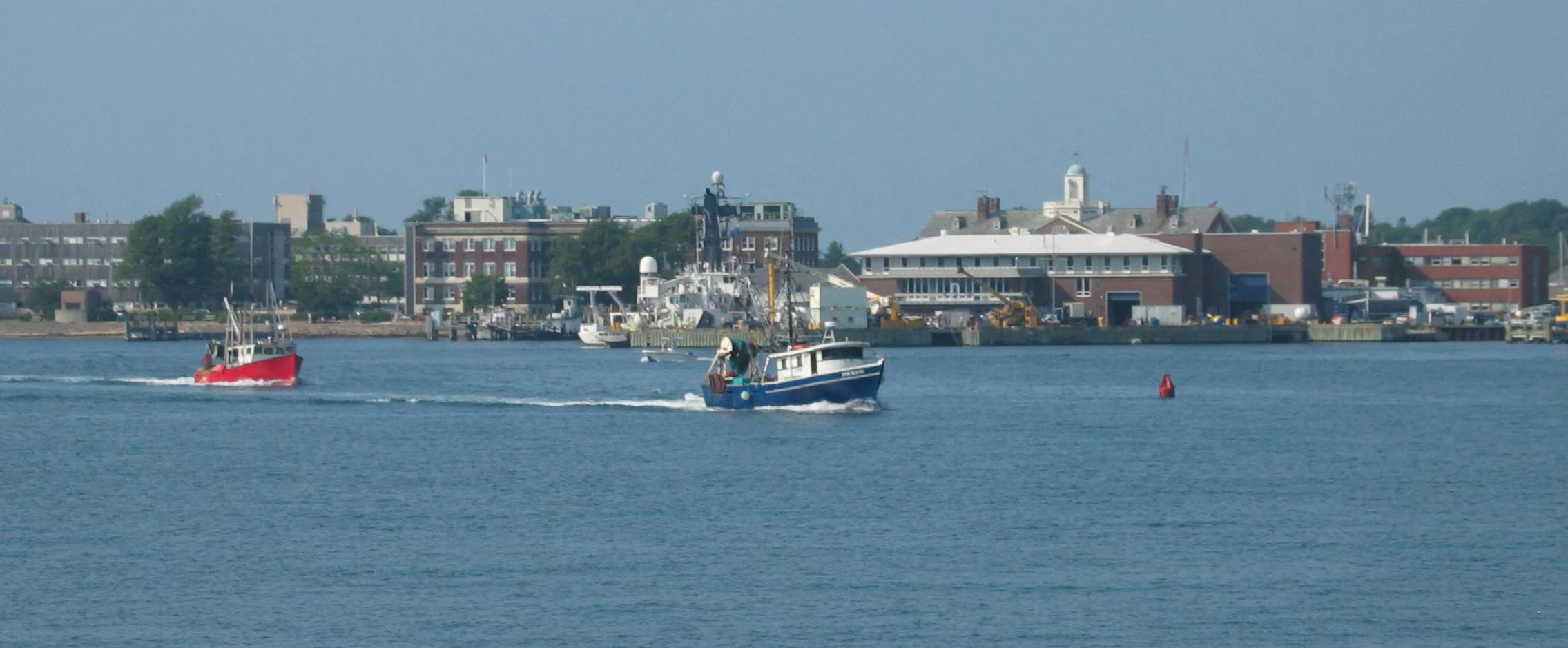
View of Woods Hole Oceanographic Institution and Marine Biological Laboratory buildings in the Woods Hole village of Falmouth, on Cape Cod
From The New England Council (newenglandcouncil.com)
Researchers at the Woods Hole Oceanographic Institute (WHOI) recently received funding to study vital processes that help maintain the health of the ocean and the planet. Scientists Dan Repeta and Benjamin Van Mooy received two grants totaling $2.7 million from the Simons Foundation.
Repeta’s research will focus on phosphorus, iron and nitrogen, the nutrients that fuel microbial cycles in the ocean. Van Mooy’s research will focus on understanding the carbon and energy flow through the microbial food web. Both projects will use samples and data collected from Station ALOHA, a six-mile circle north of Hawaii, an important hub for oceanographic study. The Simons Foundation funding will also support further research into the mesopelagic zone, which plays a major role in sequestering the oceans carbon.
“We are grateful for the generous support of the Simons Foundation for basic research that is the fundamental underpinning of our knowledge of the ocean,’’ said Richard Murray, WHOI deputy director and vice president for Research. “Understanding elemental ocean processes is the equivalent of understanding the human body’s basic workings. Without this information, we cannot understand, or protect, our ocean’s and planet’s health.”
The New England Council commends the WHOI for its advances in the world of oceanographic studies and congratulates Dan Repeta and Benjamin Van Mooy on this award. Read more at News from WHOI.
Philip K. Howard: America needs a social contract to address COVID-19
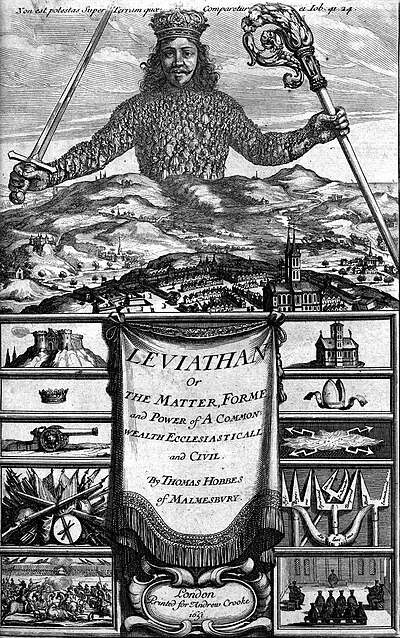
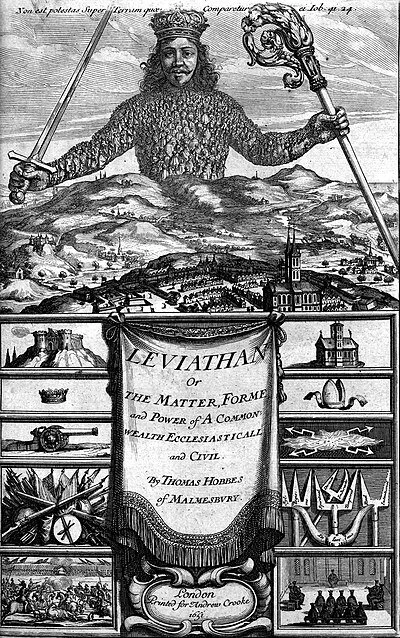
The original cover of Thomas Hobbes's work Leviathan (1651), in which he discusses the concept of the social contract theory
America can’t stay closed indefinitely. But reopening America’s shops, schools and other public places is fraught with uncertainties and risks. In some jobs and settings the precautions may not be possible.
These risks and social controls conflict sharply with an American legal system that is built upon principles of uniform treatment, avoidance of risk, privacy, and, especially, free choice. Who makes these decisions? Is anyone liable when, inevitably, some people get infected?
Reopening society requires a new pandemic social contract, with new benefits and liability framework. Instead of avoiding risk, the guiding principle, as in wartime, should be to confront the risks of this common enemy and not to surrender our vibrant society in the vane hope that the virus will go away
Many institutions, retail establishments and employers will be reluctant to reopen because of fear of legal exposure. For some, the contingent liability risk may tip the balance against reopening. While it is impossible to know for certain where someone contracted the virus, it is quite easy to identify “hot spots” such as bars or meat-packing plants. Whether those businesses should reopen, and with what precautions, are decisions to be made by government, not by individual plaintiffs or their lawyers.
Trust in the new rules is essential for Americans to brave the risks and to adhere to the guidelines. A new pandemic social contract is needed that reassures Americans that they will not be left to fend for themselves if they get sick. Because the overhang of potential risk to individuals and liability to employers could significantly impact the national economy, this new social contract should be made as matter of federal law.
The best model for a reliable pandemic social contract is the workers’ compensation system, a no-fault program in which injured workers relinquish any right to sue in exchange for the employer’s agreement to fund health-care costs and wages. Because COVID-19 does not originate in unsafe workplace conditions, however, the new program should be funded predominantly by the federal government.
The new pandemic social contract could look like this:
America’s health-care patchwork is not well-suited to a pandemic. To avoid the inequities and inefficiencies of reimbursing health-care providers through thousands of different plans, the federal government should pay providers directly for all COVID treatments. The complexities of Medicare and Medicaid enrollment make them unsuitable as a conduit. A separate branch of theCenters for Medicare and Medicaid Services could be established to fund and audit COVID health-care costs, based on one guiding mandate.
Going forward, the federal government should fund COVID treatments.
Going back to work involves risks for each worker. Some will decide that it’s not worth the risk of exposure, and try to find jobs that allow them to work remotely. That will their choice. But Americans who choose to return to work should not bear the economic costs when they get ill.
Infected Americans with few symptoms should also be encouraged to quarantine so that they don’t infect co-workers. Sick employees should receive salaries as provided in state workers’ compensation schemes, except that, because the disease was not a workplace accident, the federal government should fund the vast majority of this, perhaps 90 percent. Leaving the employers with a small portion of the exposure will provide incentives to maintain safe workplace protocols, and also to oversee the validity of claims.
As part of the pandemic social contract, Congress should preempt liability except for cases of intentional misconduct—such as flouting safety guidelines. No one in America created COVID-19, and no one should be liable unless they deliberately misbehave.
Clarity in these lawsuit limitations is vital to give employers confidence that if they do not act irresponsibly, they will not be liable. No matter what the standard of liability, however, lawyers can be expected to push the envelope.
Intentional misconduct requires hard proof, but setting soft standards such as “gross negligence,” as some have proposed, can be easily circumvented by legal rhetoric. Perfect adherence to protocols is also unrealistic; sometimes the tables will end up 5 ½ feet apart instead of 6 feet. To reliably apply the liability limitations, Congress should create a special pandemic court to handle all pandemic injury claims, along the lines of the special vaccine court it created when concerns about liability basically shut down vaccine production.
Just as the federal government organizes and funds national defense, so too should it organize a comprehensive social contract for pandemics. Americans need a simple, fair framework they can rely upon to give them the confidence to go back to work
Philip K. Howard is a New York-based lawyer, author and chairman of the nonpartisan legal- and government-reform organization Common Good (and an old friend of the editor of New England Diary, Robert Whitcomb). He’s founder of the Campaign for Common Good. This essay first ran in The Hill.
Things that evoke COVID themes at Fuller Craft Museum
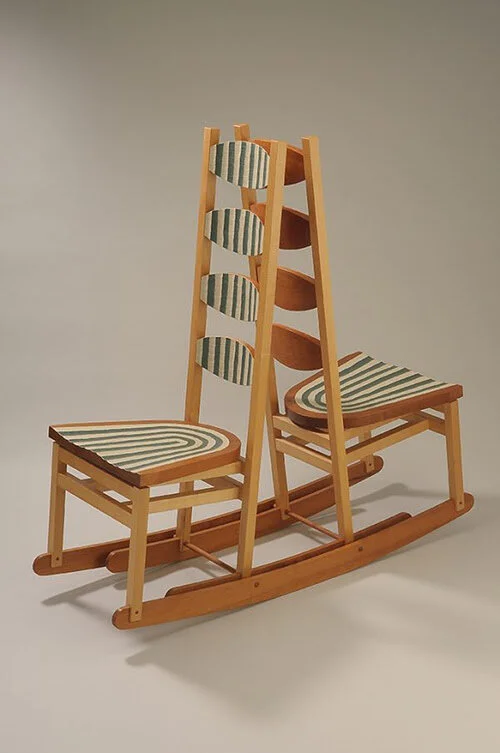
“Double Rocker, Back to Back” (cherry, maple and milk paint), by Tom Loeser, in the Fuller Craft Museum’s (Brockton, Mass.) group show “Shelter, Place, Social, Distance: Contemporary Dialogues From the Permanent Collection’’ through Nov. 22.
With the COVID-19 pandemic, the museum has pulled from its permanent collection items that speak to themes of home, community, isolation and other ideas /topics that the current crisis evokes.
Chris Powell: Kids learned better before Internet and education decline reflects family decline

No screen in sight
Congratulations to Connecticut billionaires Ray and Barbara Dalio for discovering at last a way to try to improve the education of poor children in the state without destroying its freedom-of-information law.
Their previous idea was for state government to create a commission of Dalio and government representatives to distribute $100 million from the Dalios and $100 million from the state while exempting the commission from the usual rules for accountability. No good explanation for that exemption was provided, so the purpose seemed to be to help both sides maneuver the money for patronage.
Fortunately the commission imploded in incompetence as it moved to fire its executive director in secret just weeks after hiring her. This embarrassment, piled on top of the unaccountability, caused the Dalios to withdraw petulantly, blaming the enterprise's incompetence on those who resented the Dalios' buying their way above the law.
But last week the Dalios and the Connecticut Conference of Municipalities announced that they will work together to provide laptop computers and internet access to the state's neediest students. Since government money won't be involved, the accountability law won't apply directly, though it will apply to municipal governments that work with the new consortium to determine who gets what.
Of course such ordinary philanthropy would have been possible in the first place without any exemption from the accountability law. Though no state appropriation appears necessary for the new plan, any appropriation will be subject to the law this time.
How much money the Dalios are prepared to give away in the new undertaking isn't determined yet. Unlike their first attempt, there won't be state matching funds. But state government was insolvent when the first undertaking was announced and now, because of the virus epidemic, its finances are even more precarious and Connecticut has needs far greater than internet connectivity.
Besides, while the Internet provides access to nearly all knowledge, it also provides access to infinite amusement, distraction and misinformation. Further, does anyone really think that the failure of poor kids in school is caused by a lack of Internet access and computers?
How did students manage to learn before those inventions, and, indeed, judging from test scores, to learn better than they do now? Who can guarantee that poor kids given laptops and Internet access at home will use them to study rather than just socialize, play games, and watch movies and cartoons?
Free laptops and Internet access may help those who are already inspired or compelled to learn, but performance in school is mainly a matter of parenting, and most poor kids are fatherless and, if their mother works, not much supervised and mentored at home by anybody. Many kids today can't even get fed at home, which is why schools now provide not only free lunches but also breakfasts and dinners, even throughout summer vacation.
Of course there are exceptions. Some kids get inspired despite all hardships. But for many kids their most important mentors are teachers, not parents, another urgent reason to get schools operating normally again. Connections between teachers and students are so much harder to build through "distance learning," which, however bravely attempted, failed this year precisely because too many parents, especially poor ones, failed to make their kids participate.
The decline of education is the decline of the family. Welfare policy may solve that problem someday but mere technology won't, at least not until somebody invents robots that make good parents.
Chris Powell is a columnist for the Journal Inquirer, in Manchester, Conn.
Don't go out there

Horizon #34, (C-print mounted to dibond), by Jonathan Smith, at Lanoue Gallery, Boston. The gallery says:
“Smith's work consists of large scale, highly nuanced, color photographs of the stark natural beauty and inherent impermanence of landscapes.’’
Dining in the field
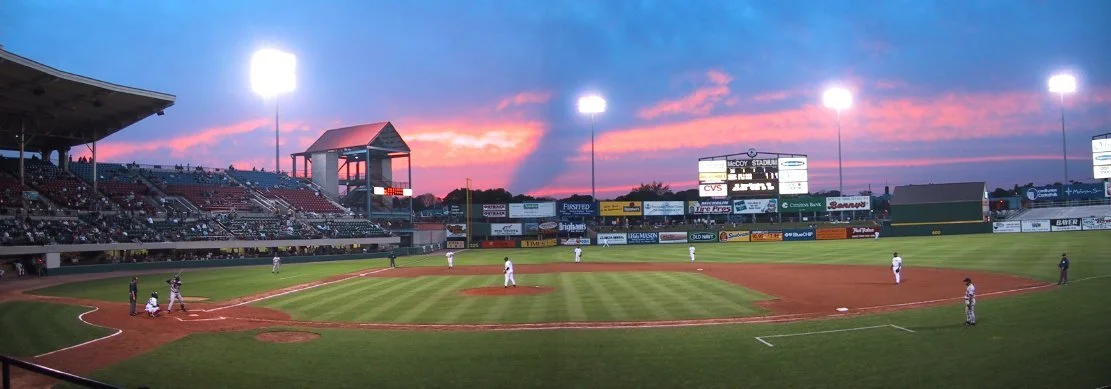
McCoy Stadium when they still played baseball there
— Photo by Meegs
From Robert Whitcomb’s “Digital Diary,’’ in GoLocal24.com
On July 24, a bunch of us celebrated a friend’s birthday with dinner at a table in the middle of the field at McCoy Stadium, home of the Pawtucket Red Sox, which of course is decamping for Worcester. The stands have been eerily empty in this COVID-closed season but there were lots of widely separated but fully occupied tables at what has been turned into a very nice reservation-only, open-air restaurant this crazy summer. Luscious lobster- salad sandwiches, by the way. And the birthday girl was honored on the giant screen. I’ve been to McCoy many times but was again surprised by how big it seems for a Minor League team.
It had been a hot day, but a nice breeze over the grass kept us comfortable and then we enjoyed a gorgeous sunset. For some reason, McCoy has superb sunsets.
I felt a pang knowing that professional baseball will probably never again be played at McCoy, which more likely than not will be torn down. We always found a PawSox home game a very nice outing for out-of-towners; foreigners seemed to especially enjoy it.
I’m getting a tour soon of the “WooSox” site, where the Polar Park stadium (named after the Worcester-based seltzer company), is going up; I’ll report back. Will pandemic problems prevent it from opening on schedule next spring?
Maybe some day professional baseball will return to Rhode Island; it certainly has the population density and location to be attractive for a sports team. (I have always thought that the most interesting and dramatic place for a Rhode Island baseball stadium would have been on Bold Point, in East Providence.)
The biggest question may be: How popular will baseball be in coming years compared to other sports? Is it too late to turn McCoy into a soccer stadium?
xxx
The death on July 29 of Lou Schwechheimer from COVID-19 has saddened many people. Lou was the longtime vice president and general manager of the PawSox during the club’s heyday under the ownership of the late Ben Mondor. Lou, working with Mr. Mondor and Mike Tamburro, then the club’s president and now vice chairman, turned the organization into one of the most successful teams in Minor League Baseball.
I encountered Lou many times, and his presence was a tonic. He seemed to have endless supplies of energy, enthusiasm, ingenuity and good humor. He had a memorable capacity for making and keeping friends and boosting the community that the PawSox entertained for so many years.
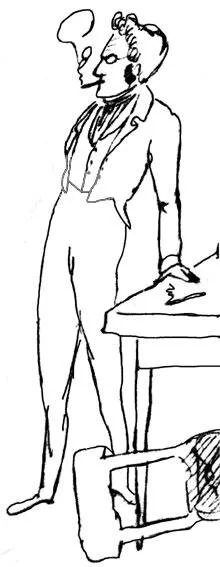
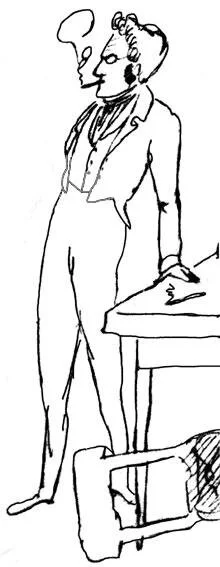
Llewellyn King: America’s hyper-individualism is killing it
WEST WARWICK, R.I.
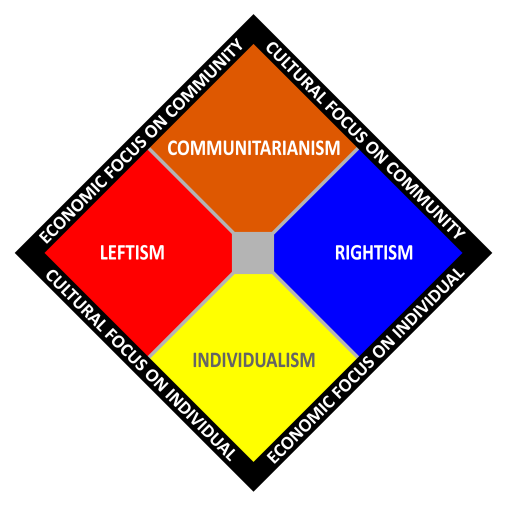
To compound the COVID-19 crisis, we have a cultural crisis. It is a crisis of our individualism.
That cultural element, precious and special, of the individual against adversity, the individual against authority, the individual against any limits imposed on free action, is at odds with the need to behave. Worse, our individualistic trait has been politicized, dragged to the right.
This aspect of American exceptionalism is now killing us, on a per-capita basis, faster than people in any other country. We are in a health crisis that demands collective action from people who revere individual freedom over the dictates of the many, as expressed by the government.
Simply, we must wear masks and stay away from groups. It works; it is onerous but not intolerable.
There is a hope, almost a belief, afoot that by the end of the year there will be a vaccine, and that the existence of a vaccine will itself signal an end to the crisis.
A reality check: No proven vaccine yet exists. Although all the experts I’ve contacted believe one will work and several might.
Another reality check: It may take up to five years to vaccinate enough people to make America safe. My informal survey of doctors finds they expect one-third of us will be keen to be vaccinated, one-third will hold back to see how it goes, and one third may resist vaccination because they’re either opposed in principle or consider it to be a government intrusion on their liberty.
If their expectation holds true, COVID-19 is going to be with us for years.
No doubt there are better therapies in the pipeline to deal with COVID-19 once the patient has reached the hospital. But that won’t affect the rate of infection. The assault on our way of life and the economy will continue; the price our children are paying now will escalate.
If you’re pinning your hopes on a vaccine, several may come along at the same time and jostle for market share. That happened with poliomyelitis: Three vaccines were available, but one failed because of alleged poor quality control in manufacture. If there is a scramble among vaccines, look out for financial muscle, politics, and nationalism to join the fray. None of these will be helpful.
So far, there has been a catastrophic failure of leadership at the White House and in many statehouses. “Say it isn’t so” is not a policy. That is what President Trump and Republican governors Ron DeSantis, of Florida, and Brian Kemp, of Georgia, have, in essence, said, resulting in climbing infections and deaths.
Americans sacrificed on a politicized cultural altar.
We know what to do: A hard lockdown for a couple of weeks would stop the virus in its tracks. It worked in New York.
We are in a war without leadership. We have governors forced to act as guerrilla chiefs rather than generals of a national army under unified leadership with common purpose.
Right now, we should hear from the political leadership about what they plan to do to slow the spread of COVID-19 and how, when this is over, they plan to rebuild: What will they do to help the 20 million to 30 million people in hospitality and retail whose jobs have gone, evaporated?
Refusing to wear a mask may have deep cultural significance for some, particularly in the West, but for all of us, restaurants are part of the fabric of our living. For most us, the happiest moments of lives have been in a restaurant, celebrating things that are precious milestones in life, such as birthdays, engagements and anniversaries.
We can’t give one cultural totem precedence over another.
More than half the nation’s restaurants may never reopen -- employing 10 percent of the nation’s workforce and accounting for 4 percent of GDP -- and the biggest helping hand to them would be to throw the Defense Production Act at manufacturing millions of indoor air scrubbers. It would increase livability for all, ending our isolation from each other.
Wash your hands, America. Don’t wring them. We can beat the virus when we fight on the same side with science and respect the commonweal.
Llewellyn King is executive producer and host of White House Chronicle, on PBS. His e-mail is llewellynking1@gmail.com and he’s based in Rhode Island and Washington, D.C.
Website: whchronicle.com
Character and civilization
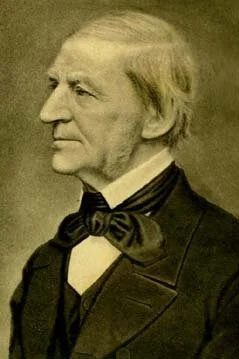
Ralph Waldo Emerson (1803-1882), famed essayist and a personification of the New England character
“New England likes to think it has a civilization based on character. The South likes to think it has a character based on civilization. A big difference.”
— Henry Allen, in “The Character of Summer,’’ in the July 14, 1991 Washington Post
Maine event

Bad Little Falls on the Machias River in Machias
“As if the banks were lined by spiders
tossing long, shimmering filaments
the river crawls along like prey.”
….Some have caught a fish. Four crescent tails
are nailed to my woodshed door.
For summers to come
they will draw the iridescent flies.’’
— From “Bluefish run, Machias, Maine,’’ by Paul Nelson
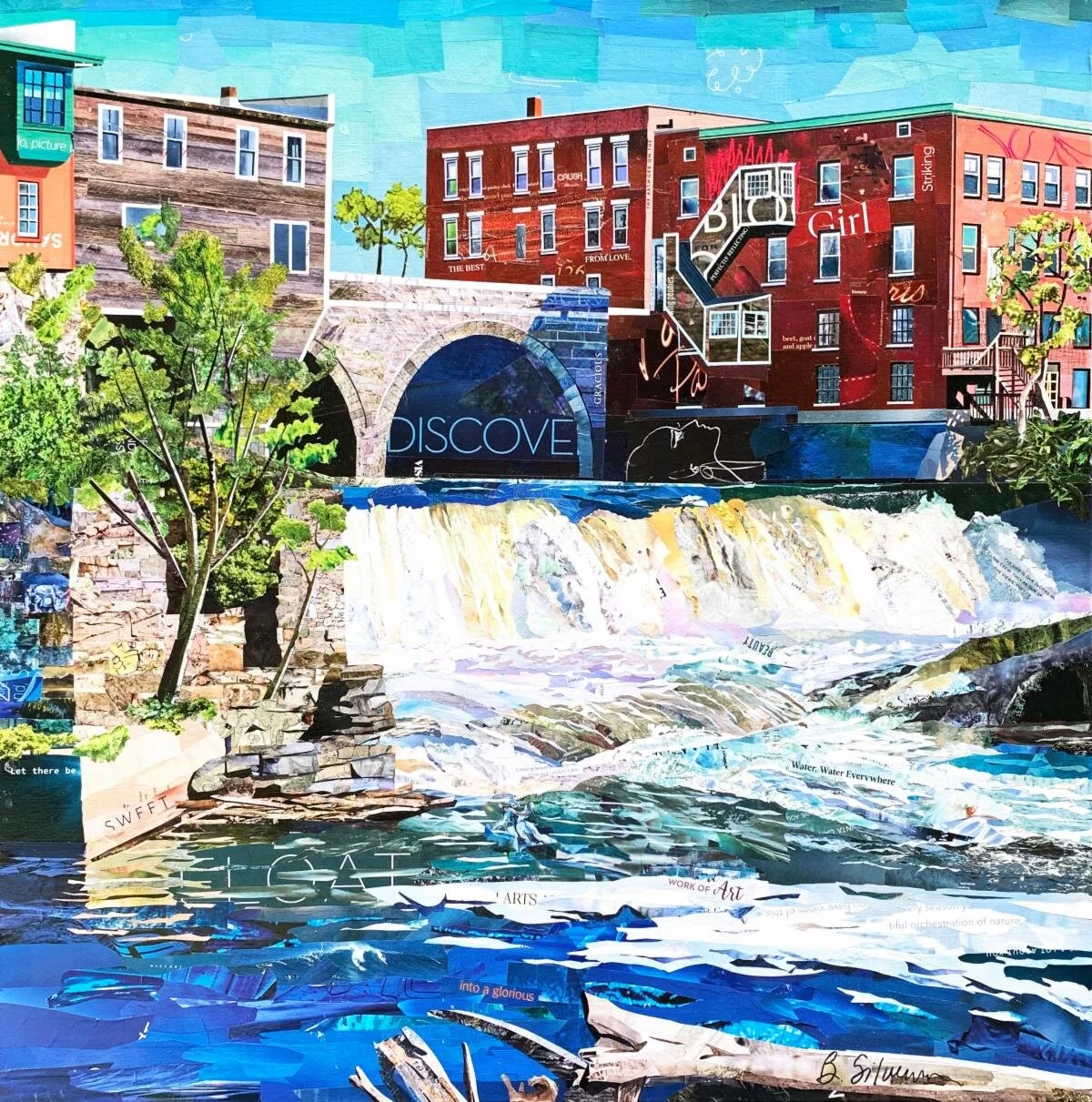
'Fragmented realism'
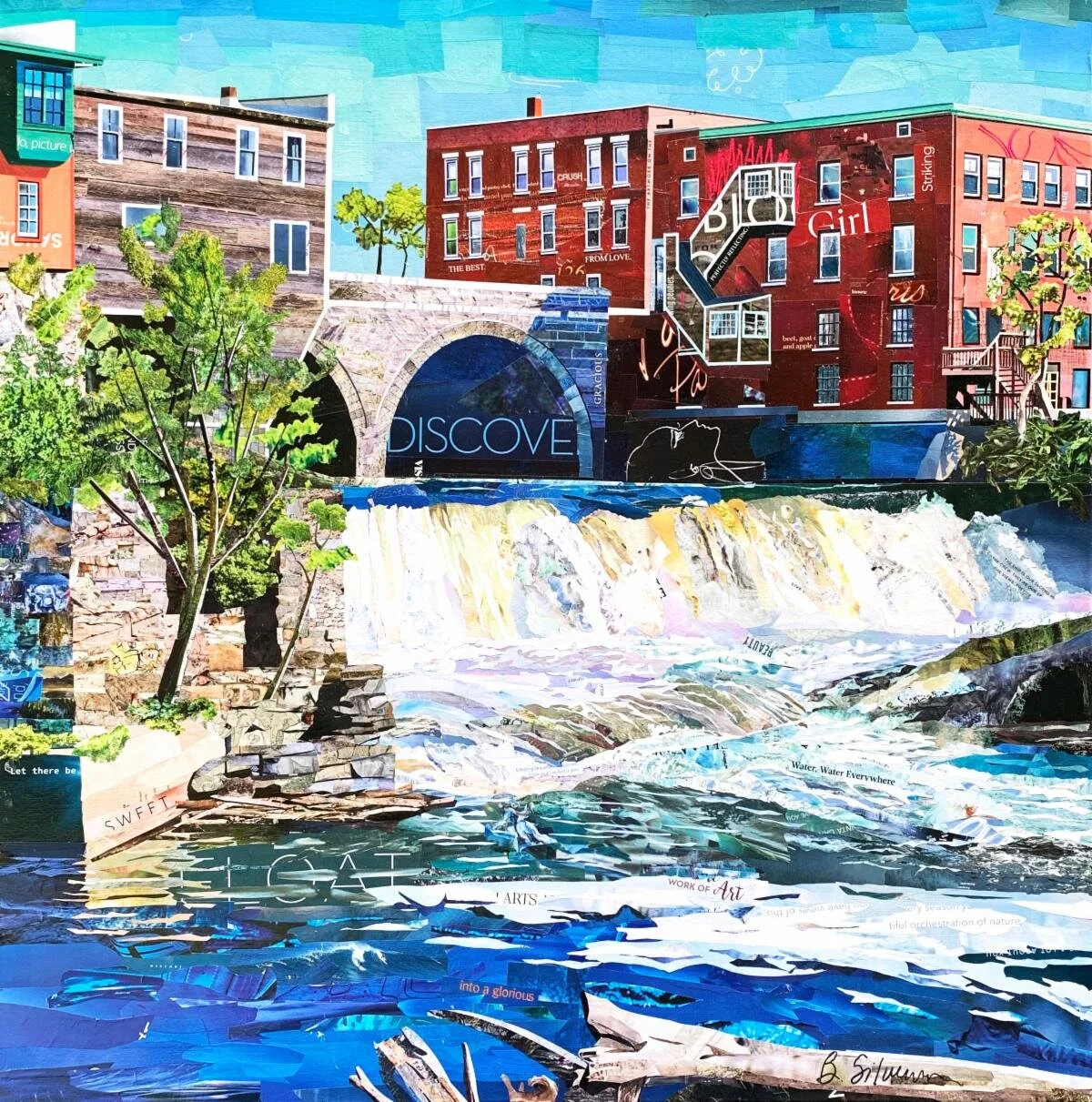
Collage made entirely of paper cut from recycled magazines, by Betsy Silverman, in her show “Cut It Out,’’ at Edgewater Gallery at Middlebury Falls, Middlebury, Vt. The Boston-based artist calls her work “fragmented realism,’’ depicting classic New England scenes in a new way.
See:
http://www.betsysilverman.com/
and:
https://edgewatergallery.co/
Rude, or just direct?
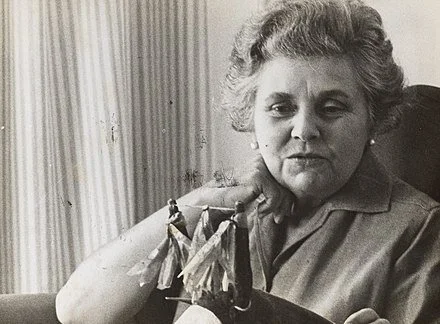
Elizabeth Bishop in 1964
“I think almost the last straw here though is the hairdresser, a nice big hearty Maine girl who asks me questions I don’t even know the answers to. She told me: 1, that my hair ‘don’t feel like hair at all.’ 2, I was turning gray practically ‘under her eyes.’ And when I’d said yes, I was an orphan, she said ‘Kind of awful, ain’t it, ploughing through life alone.’ So now I can’t walk downstairs in the morning or upstairs at night without feeling like I’m ploughing. There’s no place like New England.”
— Elizabeth Bishop (1911-1979, famed poet), in Words in Air: The Complete Correspondence Between Elizabeth Bishop and Robert Lowell (another famed poet)
Elizabeth Bishop
Can ruin your beach day
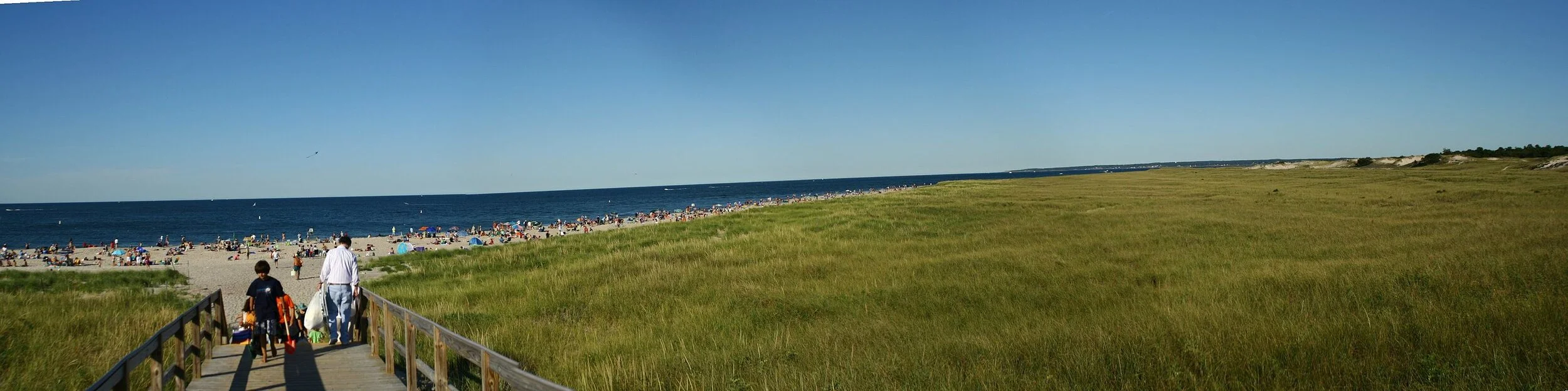
Heading for a picnic at Crane Beach, in Ipswich, Mass.
Photo by Thomas Steiner
“When faced with anything I loathe and fear
I try to grit my teeth and persevere,
But there’s one gritty thing I just can’t stand —
A sandwich that is halfway full of sand.’’
— From “Words Within Words,’’ by Richard Wilbur (1921-2017), New England-based poet
Subtropics move into New England

A Crepe myrtle. They’re moving into southern New England.

Japanese knotweed
From Robert Whitcomb’s “Digital Diary,’’ in GoLocal24.com
Because of Nantucket’s relative proximity to the Gulf Stream, people used to joke that you’d soon be able to grow palmettos there. Well, that might happen in the next couple of decades as man-made global warming accelerates.
I thought of that while reading an article in the July 27 New York Times entitled “Imagine Central Park as a Rainforest,’’ which described the proliferation of plants moving from the south into New York City, which, like Providence, the National Climate Assessment now places in the “humid subtropical zone,’’ a shift from its previous placement in the “humid continental zone.’’ The growing conditions are now similar to those in Maryland.
Such trees as crepe myrtles and magnolias have become common in New York City and southern New England, as are such invasive and warmth-loving plants as Japanese knotweed. I’ve noticed a host of new weeds cropping up in our little yard the past few years. Plants, including flowering trees, are blooming earlier and lawns tend to stay greener later in the fall. Unfortunately with the southern plants come southern insect pests that we must learn how to suppress without poisoning a lot of “good’’ plants and animals in the process. (By the way, I have found that cleaning vinegar (6 percent acidity) is a safe herbicide. Or you could stick with Roundup and give yourself cancer.)
None of this is to say that the “polar vortex’’ won’t briefly but memorably slam us in the winter from time to time, so it’s a little early to think we can put out palms year round. But the direction is clear.
So southern New England gardeners will have an increasingly exotic time of it.
Hit this link for The Times’s story.