Leonard Yui: Pointers on setting up fresh air classrooms
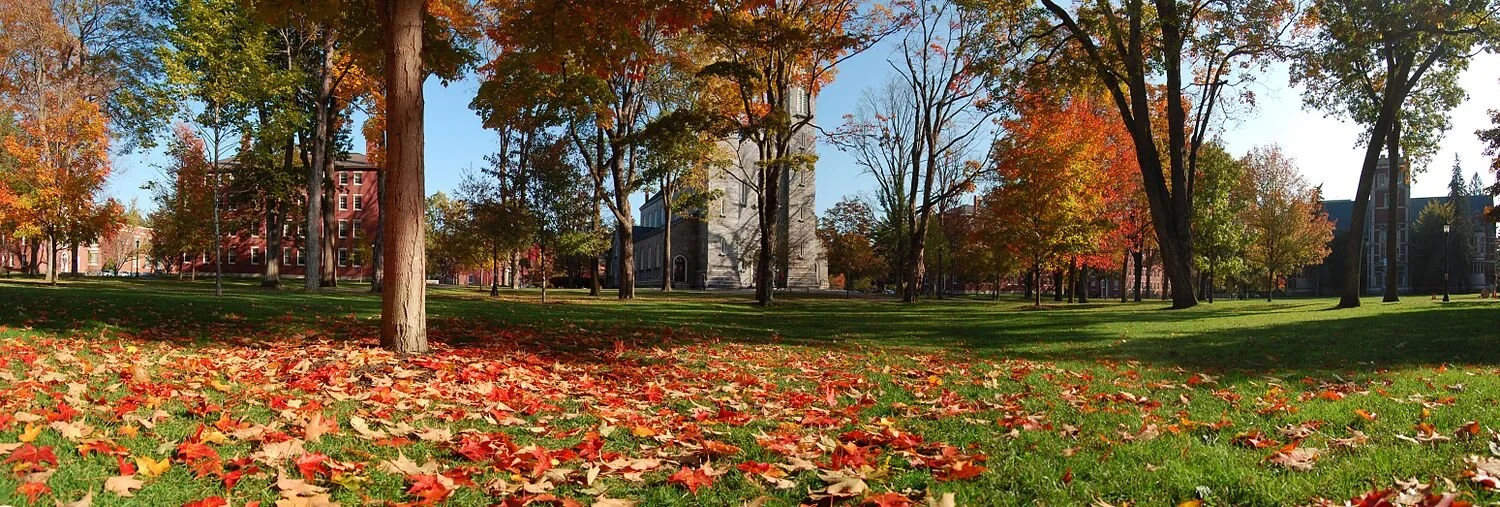
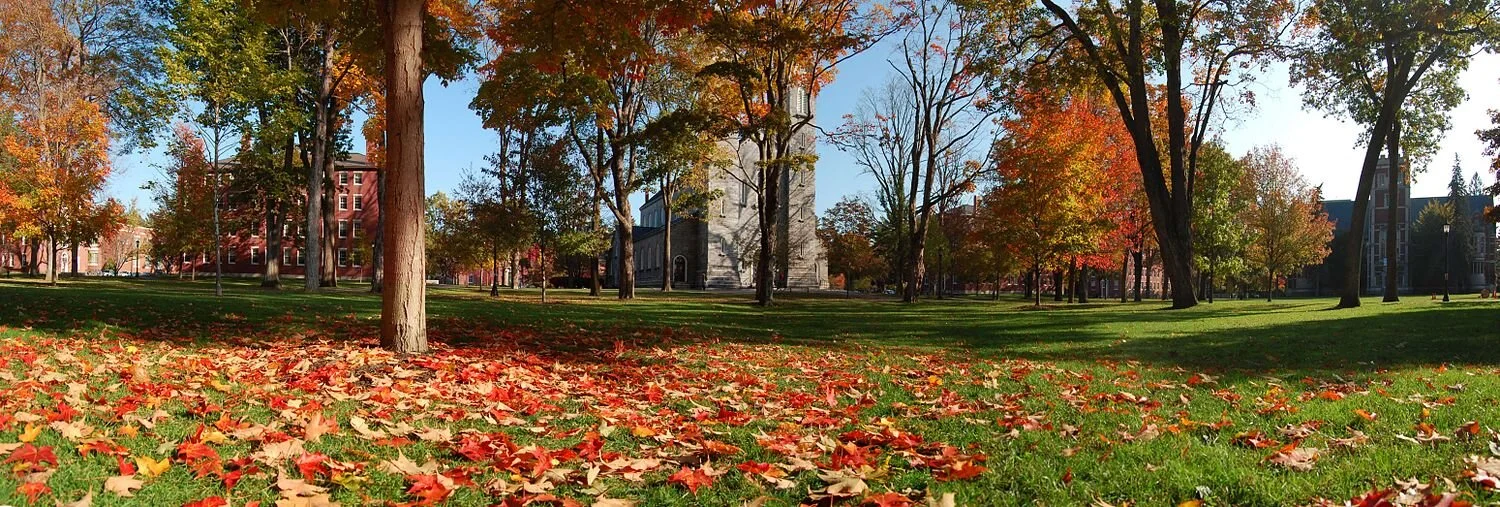
The main quad of Bowdoin College, in Brunswick, Maine
From The New England Journal of Higher Education, a service of The New England Board of Higher Education (nebhe.org)
The early science is showing that outdoor spaces are safer than indoor spaces for COVID-19. One research study from Japan found that COVID-19 transmission was 18.7 times greater indoors than outdoors. Another article from China found that, of 7,300 active COVID-19 cases, just one was connected to outdoor transmission.
Indoor spaces were never designed for social distancing and many are now depending on aging climate- controlling systems for viral filtration. These limitations are now muddied by politics, finance, marketing and logistics, raising the urgency to consider safer options.
Outdoor classrooms, too, have limitations compared to their indoor counterparts. What do we do about the sun, cold, heat, rain, etc., especially in New England? And where do we place the projectors, desks, seats, etc.?
It seems unthinkable to allow students and teachers to be exposed to the elements, but in 1907, Providence did just that by experimenting with the first “fresh-air” schools in the U.S. to combat the tuberculosis epidemic. Pioneered by two women doctors, the idea was to open an entire classroom wall to the frigid New England winters and bundle the students up with sleeping bag-like sacks with heated stones. It was so successful at reducing the health risks that it triggered a movement across the nation that lasted for nearly 50 years. Many advocates today, backed by recent science, are trying to bring these methods back.
The “fresh-air” classroom movement gives us a model for opening school while managing the elements with such devices as tents, umbrellas, heaters, jackets and so on. What may be lost by focusing overly on environmental and spatial adjustments is how pedagogy also can change landscapes. The proposed six-foot plots are more than just a measure of distance between two people, but a reflection of a complex non-classroom world wrestling with issues of health, race, wealth and climate inequities. The move outdoors is also a metaphor for adapting our beings to wild variables of society and to engage, first, those social and ecological issues that are near—that directly touch us.
Outdoor spaces can be mocked up like traditional classrooms, but they can offer more because of the COVID-19 restrictions. Safer outdoor places permit more opportunity for student interactions, larger spaces allow for groups to form personalized patterns, and the natural elements provides a dynamic background for interaction. Digital assets could supplement these offerings by having students pre-download slide presentations and use their phones as mini-projectors. By extending wifi signals, students could use Zoom as a video/audio connection, and digital tablets could serve as whiteboards.
On a more imaginative path, the lack of walls, roofs and boundaries mean the class is not confined to a location or simple desk patterns. The field of environmental education recommends using outdoor experiences as part of developing broad individual awareness of “how people and societies relate to each other and to natural systems.” A philosopher-colleague reminded me that the Ancient Greeks preferred talking and sharing their thoughts while going on long walks. Using the “Socratic method” with a walk-and-talk method might encourage students to make links between course topics and physical locations that have specific meaning for them. In the business world, professionals often do key “business” transactions in transitionary (between meetings) or relational (like dining) interactions.
None of this is a substitute for the traditional indoor classroom, but the current circumstances beckon more creative negotiation among places of safety, convenience and learning. Simply going outdoors is one step, but another more enticing and sustainable direction is to reshape the celebration of pastoral landscapes to places that connect us more deeply to the outside world, both figuratively and literally. These changes can be small, sporadic and scattered around many places, but in aggregate, and over time, they should make a valuable impact to safety and culture and promote a more animated learning place.
Leonard Yui is an associate professor of architecture at Roger Williams University, in Bristol, R.I.
Hit this link to see Professor Yui’s plan.
Another Mainiacal gift
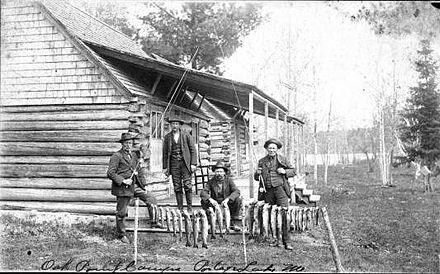
Successful fisherman at Oak Point Camps, Portage Lake, Maine, around the turn of the 20th Century
“A Maine fishing camp! The state that’s given American culture the lumberman, the lobsterman, the Maine Guide, has also given this: the camp in the woods where the trout bite even faster than the black flies, the salmon leap into your canoe of their own volition, the griddle cakes come stuffed with blueberries, the loon calls at night, the moose bellows, and you sleep soundly under thick wool blankets even in July.’’
-- W.D. Wetherell, in One River More
David Warsh: The past and future of U.S. multiculturalism
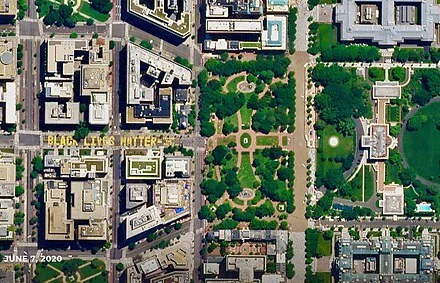
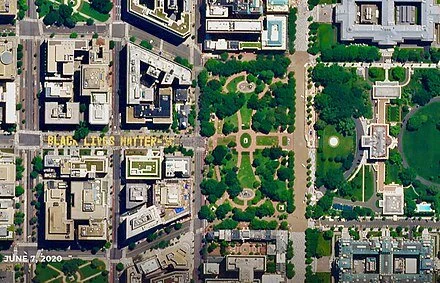
Satellite view of Black Lives Matter Plaza in Washington, D.C.
SOMERVILLE, Mass.,
A syllogism printed on a series of placards that I pass every day on my way to work says this: “If you believe that all lives matter, you are right/ all lives should matter/ but all lives can’t matter/ until Black lives matter/ to everyone.” I’ve wondered since I saw it first, what can be said about how Black lives changed in the half-century between the assassination of Dr. Martin Luther King Jr., in 1968, and the murder of George Floyd, in 2020?
I wanted a survey. I’ve read several good books about those years, including Fault Lines: A History of the United States since 1974 (Norton, 2019), by Kevin Kruse and Julian Zelizer; and Age of Fracture (Harvard Belknap, 2011) by Daniel T. Rodgers. I tried to make a survey that might satisfy a Sunday reader, using Rodgers. I ran out of steam below as I reached the so-called “War on Drugs” and the incarceration mania that accompanied it, lacking a source on the subject as dependable as is Deaths of Despair and the Future of Capitalism, by Anne Case and Angus Deaton, on the opioid epidemic that followed.
All American lives change periodically, in Rodgers’s view, and then change again, in accordance with deep social currents of intellectual life. The self-reliant individual celebrated in one century is seen in the next to be forged by social pressures – caste, class, race, “the system.” Ages change every two or three generations, usually in opposition to the age that went before.
The years after the Great Depression and World War II witnessed one of these periodic shifts, Rodgers says. “Conceptions of human nature that in the post-World War II era had been thick with context, social circumstance, intuitions and history gave way to conceptions of human nature that stressed choice, agency, performance, and desire…. Notions of structure and power thinned out… The last quarter of the [20th] century was an era of disaggregation, a great age of fracture.”
It was not that people ceased banding together in time. “In an age of Oprah, MTV and charismatic religious preaching, the agencies of socialization were different from before. What changed across a multitude of fronts were the ideas and metaphors capable of holding in focus the aggregate aspects of human life as opposed to its smaller, fluid, individual ones.” Theaters of daily life that Rodgers examined include industrial organization, gender politics, rival conceptions of power and community, the role of history, and, of course, race.
In racial politics, Rodgers’s sense of fracture began with the retreat from busing schoolchildren from one school district to another as a means of addressing age-old patterns of residential segregation. Private “academies” blossomed, especially in the South. Government housing projects such as the Pruitt-Igoe development, in St. Louis, and Chicago’s Robert Taylor Homes were demolished. The Community Redevelopment Act of 1977 privileged ownership over rental housing.
African-American leaders sought “parity” under the 1965 Voting Rights Act. Massive voter-registration drives produced the first Black mayors in Detroit, Chicago, Atlanta, Philadelphia, New York, New Orleans and Birmingham, Ala. Universities established African-American Studies programs. There was a new Black presence in public life: authors Toni Morrison, Alice Walker, Maya Angelou; television series Sanford and Son, All in the Family, The Cosby Show and, especially, Alex Haley’s mini-series Roots. Eventually, Hollywood filmmakers Spike Lee and Jordan Peele became major figures.
With the late ’70s and ’80s, the pace of change accelerated – the “color-blind” inversion followed, and the first challenges to affirmative action. Awareness grew of the increasing heterogeneity of America’s racial composition: Hispanic-Americans, Asian-Americans, Pacific-Americans. And all the while, the periodic riots after beatings or killings or the acquittal of those who committed them. “In a liberation that was also the age’s deficit, a certain loss of memory has occurred,” wrote Rodgers – in 2011.
I return to Age of Fracture regularly because Rodgers’s acuity accords so well with the various notions of political cycles in American history that have been around practically since the nation’s history began – stories of involvements shifting between public purpose and private interests, centralization and pluralism, each phase growing out of the contradictions of the one before, producing a zig-zag pattern.
So what might we hope for the next 50 years? We’ve done pretty well to this point. I can’t think of a better answer than “More of the same.” Multiculturalism, including the legacy of slavery, poses no challenge that Americans cannot surmount.
. xxx
For a 40-minute tour of another rights revolution of the 20th Century, watch Journey across a Century of Women, Claudia Goldin’s Feldstein Lecture, delivered last week to the all-virtual Summer Institute of the National Bureau of Economic Research.
Goldin, of Harvard University, is finishing a book on the subject, which will receive much attention when it appears. If you are at all curious about the strains imposed on working women by the COVID-19 pandemic, watch her lecture now.
. xxx
Emmanuel Fahri, 41, of Harvard University, died last week, apparently by his own hand. It was the fourth such death of a prominent economist in a year, following those of Martin Weitzman, also of Harvard; Alan Krueger, of Princeton University; and William Sandholm, of the University of Wisconsin at Madison.
David Warsh, an economic historian and a veteran columnist, is proprietor of Somerville-based economicprincipals.com, where this essay first appeared.
Jill Richardson: Trump’s quasi-dictatorship is ill-suited to a pandemic
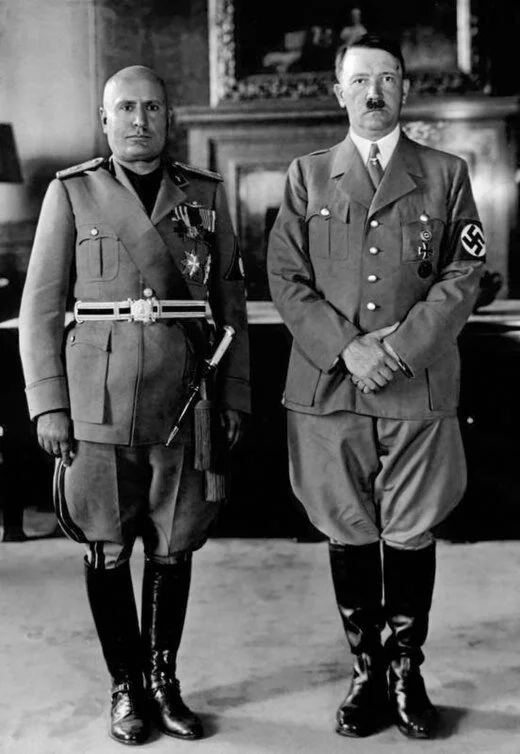
Strong leaders!
From OtherWords.org
The Trump administration is apparently undertaking its latest effort to make 2020 more of a Kafkaesque nightmare than it already is. Yes, we’ve got murder hornets and a swarm of flying ants that can be seen from space over in Ireland, but maybe the scariest plague of the year is the president.
Since the start of the pandemic, Trump’s only concern has been his poll numbers. He wants to go back to the reality we left behind in 2019: an open economy and no mass casualties from a novel virus.
We can’t do that, so he’s done his best to pretend: downplaying the pandemic, falsely claiming that his administration has it under control, urging a quick economic reopening, and inaccurately claiming the economy is strong anyway.
When he can’t pretend everything is fine, he blames the Chinese. But China is not responsible for Trump’s botched response to the pandemic.
Now the Trump administration is actively interfering with the pandemic response.
Hospitals have been instructed to send COVID data to a central database in Washington, bypassing the Centers for Disease Control (CDC). The information will no longer be accessible to the public, raising concern that the data is being hidden for political reasons and the lack of transparency will make it easier for the administration to mislead the public.
The administration is also blocking CDC director Dr. Robert Redfield from testifying before Congress about the safety of reopening schools. They are attempting to block GOP senators from allocating billions of dollars to the CDC, Pentagon, and State Department for pandemic response. And the administration even opposes sending billions to states for testing and contact tracing.
Trump’s message to states has largely been “you’re on your own,” declining a national leadership role and placing responsibility for handling the pandemic on the states. He’s also suggested that governors should “treat him well” to receive federal aid, using the pandemic as a bargaining chip to silence dissent from governors who disagree with him.
Earlier in the pandemic, when personal protective equipment (PPE) supplies were limited, the federal government was even seizing PPE shipments.
In normal times, I would say the president should not be abdicating his leadership responsibility on the pandemic response. Under this president, I think we’re all better off if he and his political appointees interfere as little as possible and let more capable people do their jobs.
Despite his recent conversion to mask wearing, Trump’s authoritarianism is ill-suited to a pandemic. You cannot lower mortality rates by claiming the pandemic is under control and trying to force schools and businesses to reopen, regardless of the risk to workers. You can’t prevent the economy from tanking by insisting that it’s fine.
Trump’s top concern appears to be his own approval ratings, not our national welfare. He seems to believe his denial will be enough to save the economy — a plan that will fail and cause further mass casualties along the way.
The administration has created a terrible situation. All of our choices between our health and our economy are tough, and no choices will fully protect us. More than 145,000 people have died, and our economy is a mess.
We need to govern with facts instead of fantasy. If Trump can’t handle the job, he should get out of the way.
Jill Richardson is a sociologist.
Still thirsting

“The grass resolves to grow again,
receiving the rain to that end,
but my disordered soul thirsts
after something it cannot name.’’
— From “August Rain, after Haying,’’ by Jane Kenyon (1947-1995), a poet who lived with her husband, Donald Hall (1928-2018), also a poet, in very rural Wilmot, N.H.
Rationing words
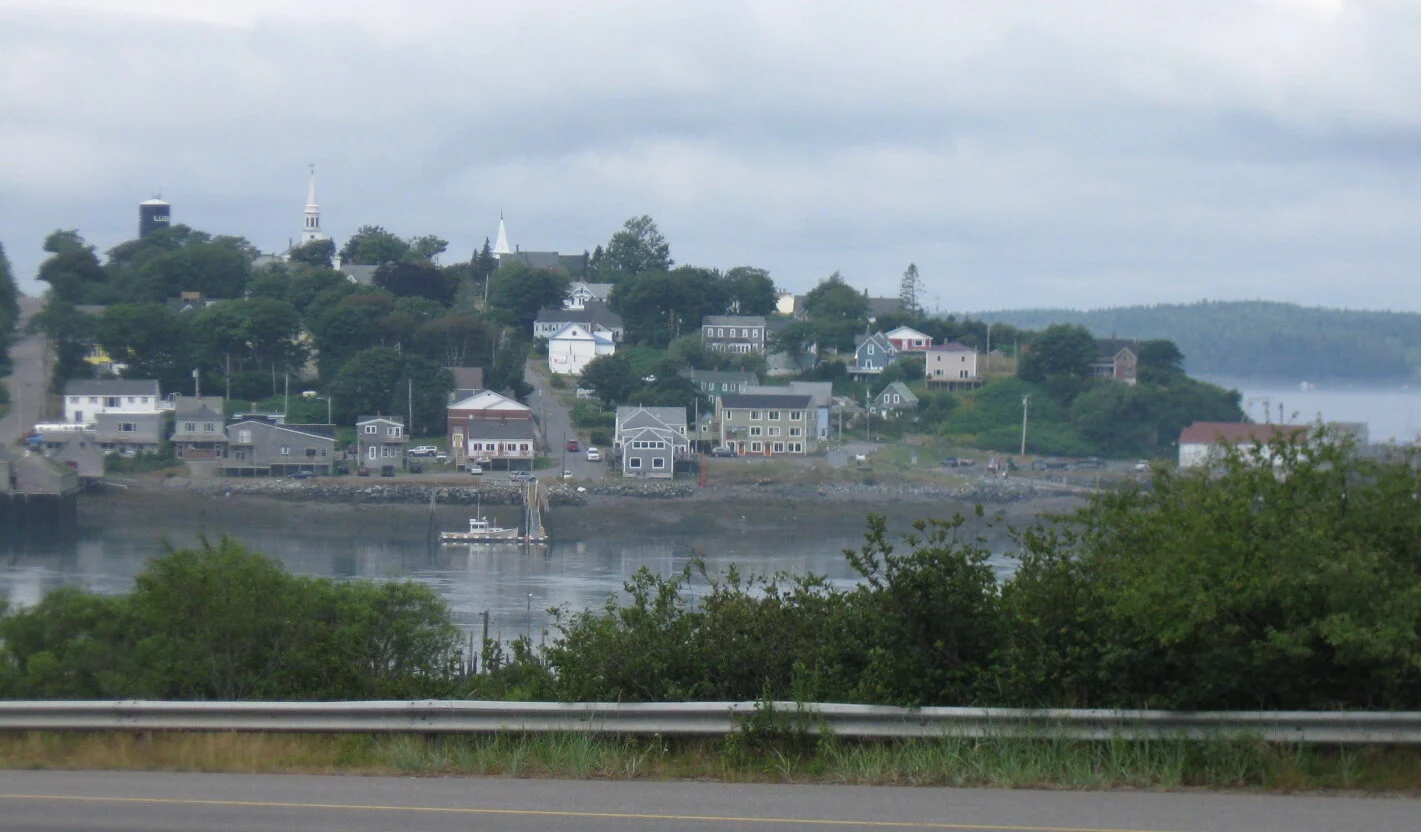
Lubec, at the eastern end of Maine
— Photo by Ken Gallager
“The Maine Yankee is not nearly as taciturn as a stranger might at first consider him, but it is a rule that words are not to be wasted.’’
— From WPA Maine: A Guide “Down East’’ (1937
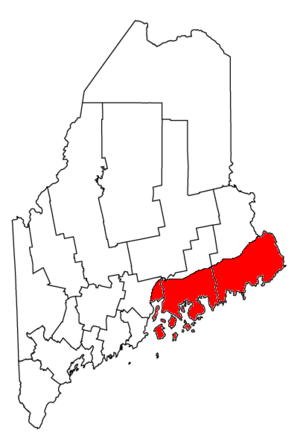
Downeast Maine is in red.
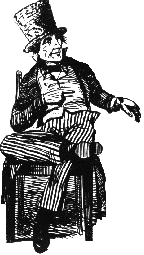
Brother Jonathan, an old historical national personification of New England
It means what you say it means

“Mobius’’ (painted black cherry), by Jeremy Holmes, at Lanoue Gallery, Boston
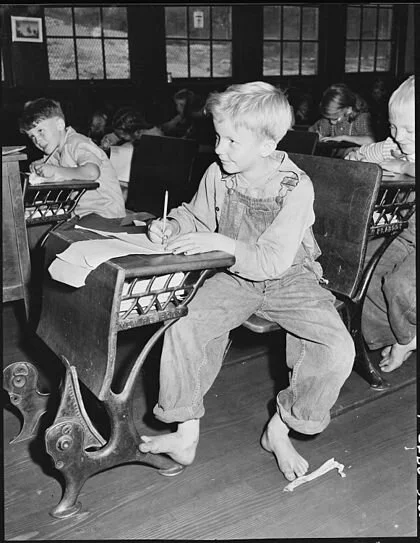
Chris Powell: Perfect safety is impossible! Reopen schools
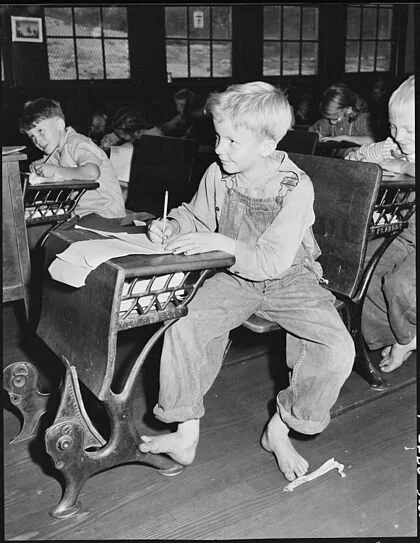
Hard as he tries, Connecticut Gov. Lamont can't guarantee safety to anyone as he undertakes to get the state operating normally again with the virus epidemic diminishing. Largely because of the governor's use of emergency powers, Connecticut is doing far better than other states, but some people are still scared -- and some seem to see financial advantage in staying scared.
So the governor's plan for reopening schools with conscientious precautions is meeting much resistance from the Connecticut Education Association -- the big teacher union -- as well as U.S. Rep. Jahana Hayes, D-5th District, a former national teacher of the year and teacher union member. While young people are far less susceptible to the virus than others and most medical experts endorse resuming school, the teachers want a guarantee of perfect safety before going back to work.
The governor can't provide such a guarantee because there isn't any, and if teachers require one, they should stay home -- under their beds even, forever even.
Connecticut's teachers are well paid, enjoy summers off and great job security, and lately have been working much less if at all while still getting paid as usual, even though "distance learning" has been a flop. So their insistence on a guarantee of safety before returning to work is beyond arrogant while, quite without guarantees, supermarket employees work every day to keep them fed, postal workers work every day to keep them supplied, and police officers work every day to guard them against predators, whose numbers are growing as society steadily disintegrates.
If education is as crucial as the teacher unions maintain when they demand raises, it's just as crucial when children have lost a semester and many parents have incurred big daycare costs. So the CEA should stop distributing those lawn signs congratulating its members as if they are hospital workers fighting the virus and instead urge teachers to do something worth congratulation.
KEEP COPS IN SCHOOLS: Accompanying the clamor to "defund the police" or at least order them to stop enforcing laws the underclass doesn't want to obey is clamor to eliminate what are euphemistically called "school resource officers," These police were placed in schools so someone besides a burly gym teacher could respond quickly to violence and other disruption by students, since, short of murder, disrupters no longer can be expelled from school. Instead, as a matter of what is imagined to be "social justice," disrupters must be allowed to impair everybody else's education.
Has perfect safety somehow been restored to schools by the Black Lives Matter movement and the vandalism of statues of Columbus and other historical figures? Of course not. This clamor against "school resource officers" is just another manifestation of hatred for police -- and, more than that, hatred for any rules of order, which now are presumed to be racist or otherwise oppressive, especially as government officials lose the self-respect necessary to defend order.
As Connecticut should know bitterly, schools are soft targets, threatened not only by their own incorrigible students but also murderous crazies, so having a cop on hand is some protection against external dangers too.
While the state is recovering well from the epidemic, its residents seem to be becoming crazier, apparently from the epidemic's constraints on life. Shootings now are more frequent, even in suburbs, and they're not being committed by the police, though only misconduct by police seems to be of interest to anyone in authority.
Chris Powell is a columnist for the Journal Inquirer, in Manchester, Conn.
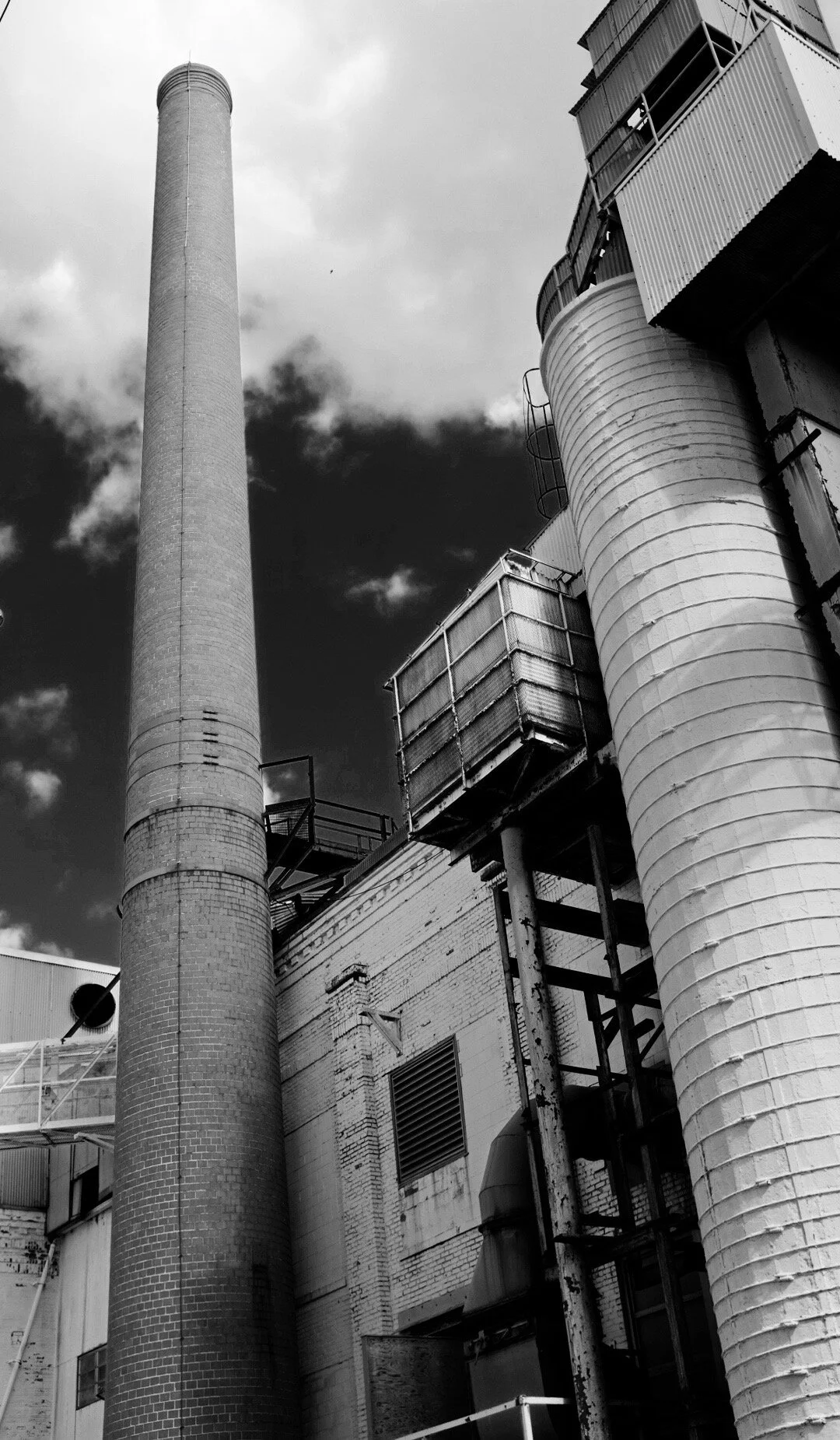
William Morgan: Some big proposals for tiny Central Falls
There seem to be four facts about Rhode Island's smallest city that most people know: smallness, density, ethnic mix, and that Viola Davis grew up here.
With 20,000 people squeezed into 1.29 square miles – seven times larger than Vatican City and almost as big as the principality of Monaco – Central Falls is one of the densest municipalities in the country.
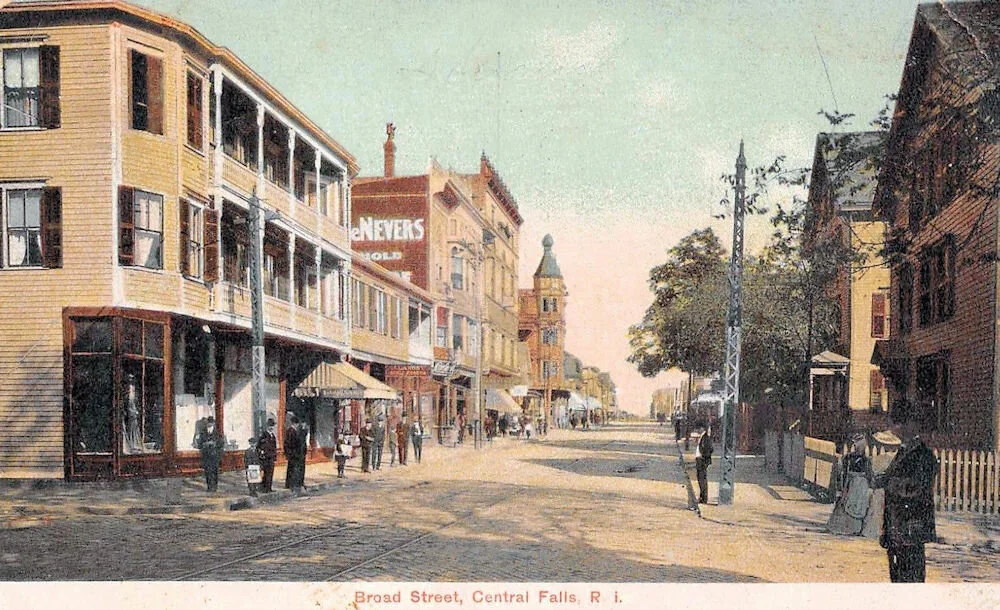
Broad Street, Central Falls, 1908.
Central Falls is also one of the most diverse communities anywhere, which is saying a lot for Rhode Island. The Irish came to build the Providence and Worcester Railroad in the mid 19th Century, while Rhode Island's first Francophone church (1875) speaks of the influx of French-Canadians who came to work in the mills. And now the almost-half Latinx population comes from every Spanish-speaking country in the hemisphere.
The Coptic pope may make Cranston his first American stop, and the president of Colombia came to Central Falls on his last visit to the United States. On Roosevelt Boulevard, there is a Salvadoran restaurant next to a Polish club.
As for the first Black actress to win an Academy Award, a Tony and an Emmy, Viola Davis was twice named to Time Magazine's 100 most influential people in the world. But as she told Harper's Bazaar after she got her Oscar, she had a childhood of "abject poverty, living in condemned, rat-infested apartments."
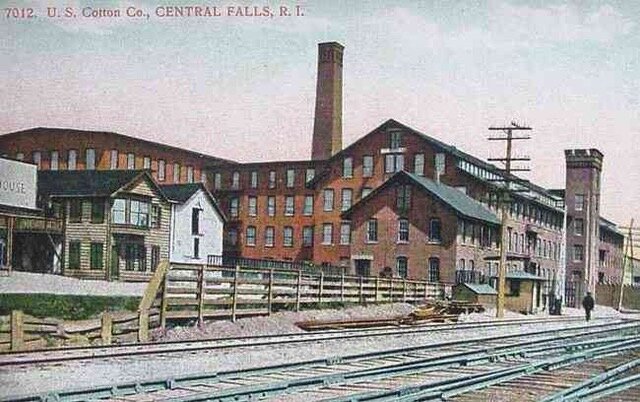
U.S. Cotton Company (also called United States Flax Company), 1863 ff. This was the first factory to be oriented to the railroad instead of the Blackstone River, which first powered the area’s mills.
Central Falls, now a down-at-the heels place, was once an industrial powerhouse, but its cocaine habit gave it the nickname Sparkle City in the 1980s. It simply never recovered from the collapse of the Rhode Island textile industry, in the 1920s. Central Falls's motto, “A City with a Bright Future,’’ seems painfully ironic.
Clearly, a struggling Central Falls, not too long out of receivership, is not East Greenwich, Barrington or Providence's East Side. Yet it deserves better than a reputation of corruption and hopelessness.
Central Falls has a long history. In 1676, during King Philip's War, Narragansett sachem Canonchet massacred a group of Plymouth Colony soldiers there. But mostly it is known as a classic New England mill town along the swift-moving Blackstone River; eight factories were making cloth and thread there by 1825, joining an earlier chocolate factory, laying the foundation for many decades of boom.
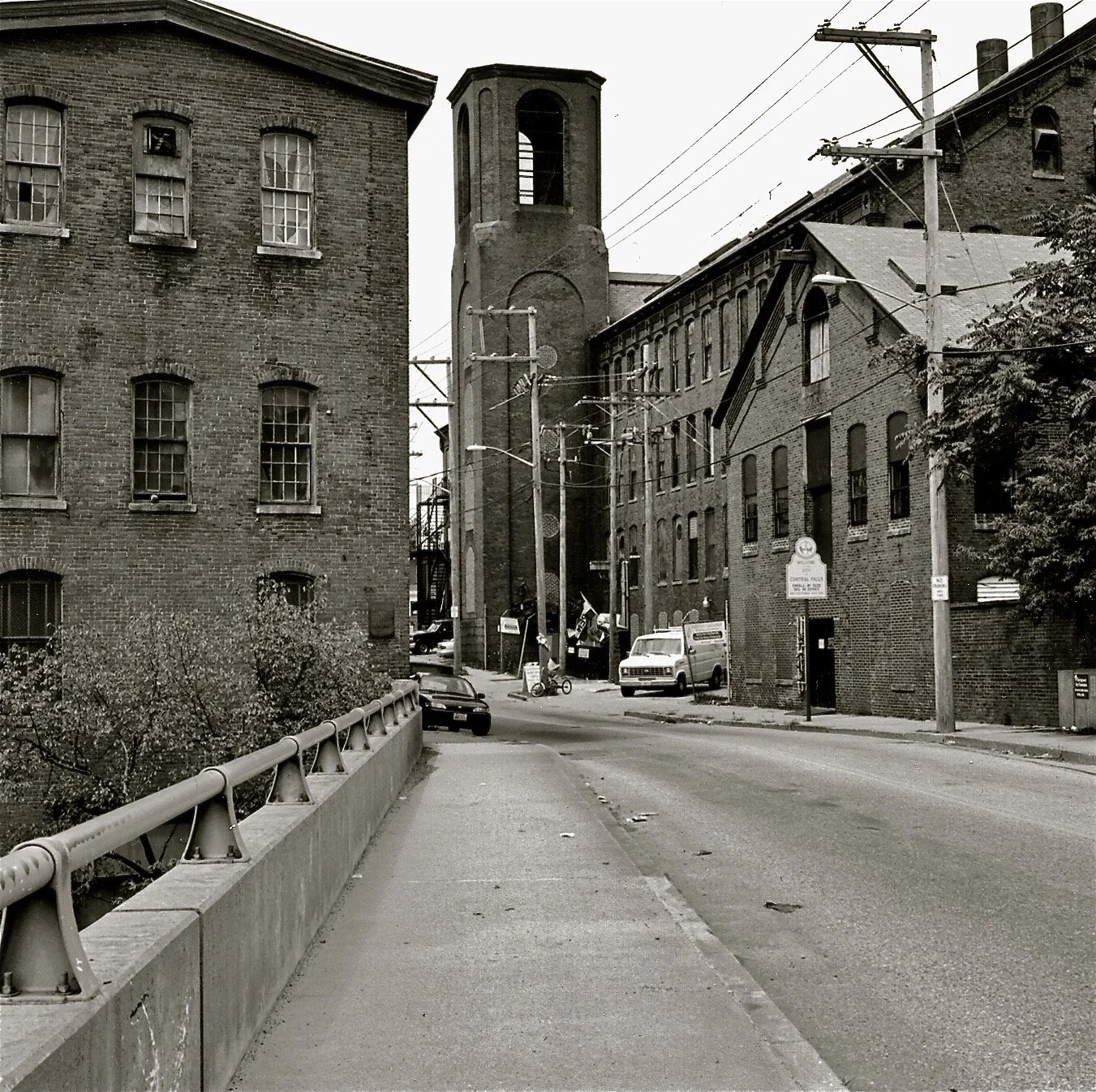
Central Falls Woolen Mill, 1870 (left); Pawtucket Hair Cloth Mill 1864 right).
— Photo by William Morgan
Central Falls has some magnificent mills. Recent transformation of some of them into housing is a positive development. When the MBTA's Central Falls/Pawtucket railroad stop reopens, apartments in renovated textile factories ought to be especially appealing to Bostonians looking for cheaper but capacious housing.
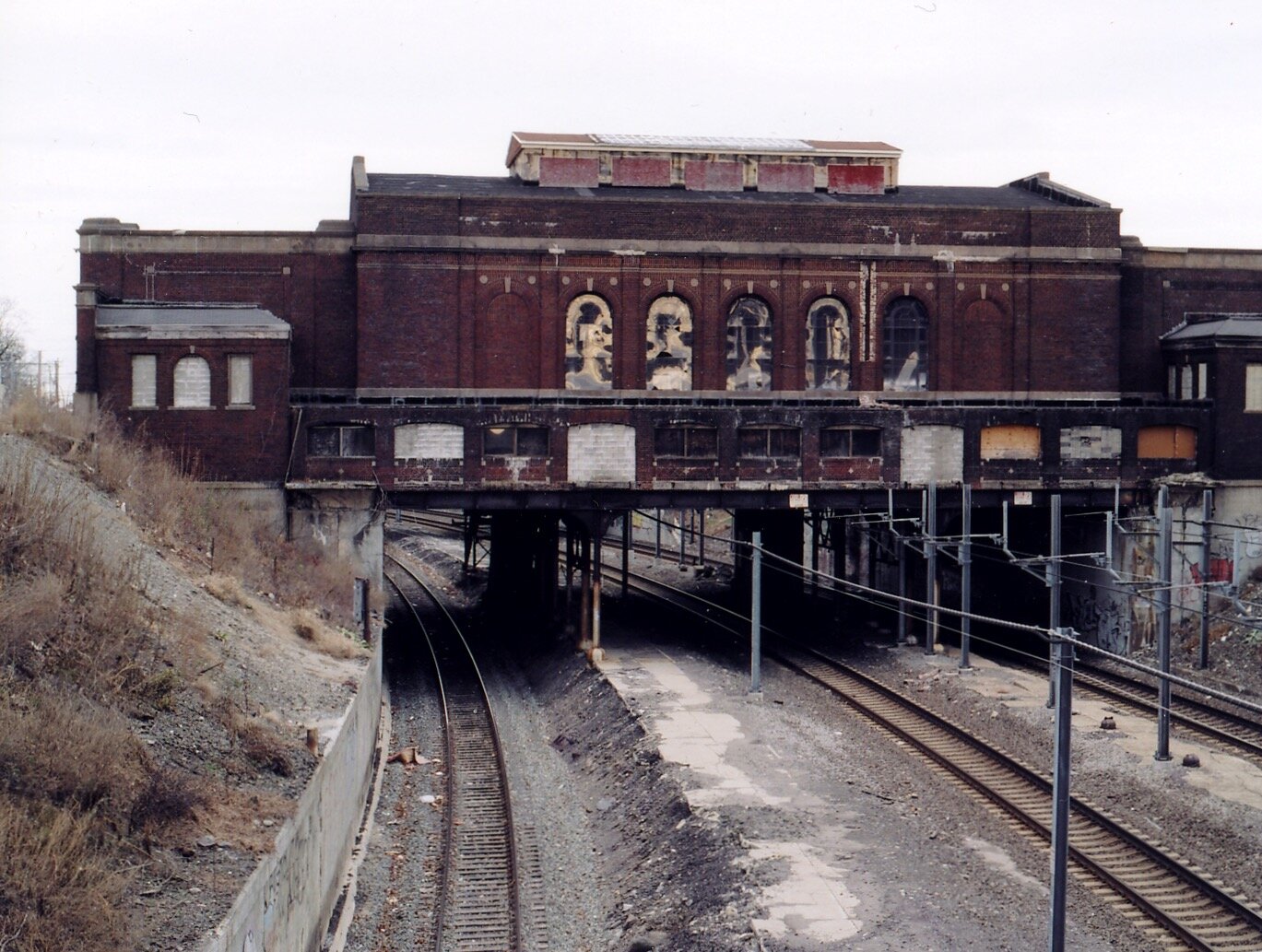
Abandoned Central Falls/Pawtucket railroad station, c1911. The proposed new train stop will only have a platform, as there are no plans to restore this magnificent temple of transport.
—Photo by William Morgan
One can imagine tours of Central Falls that would appeal to historians of architecture, engineering, labor relations, immigration and the textile industry. But that alone will hardly turn the city's fortunes around.
How about some immodest proposals to make all of Central Falls a national laboratory for the study of architecture and urban design, and much more?
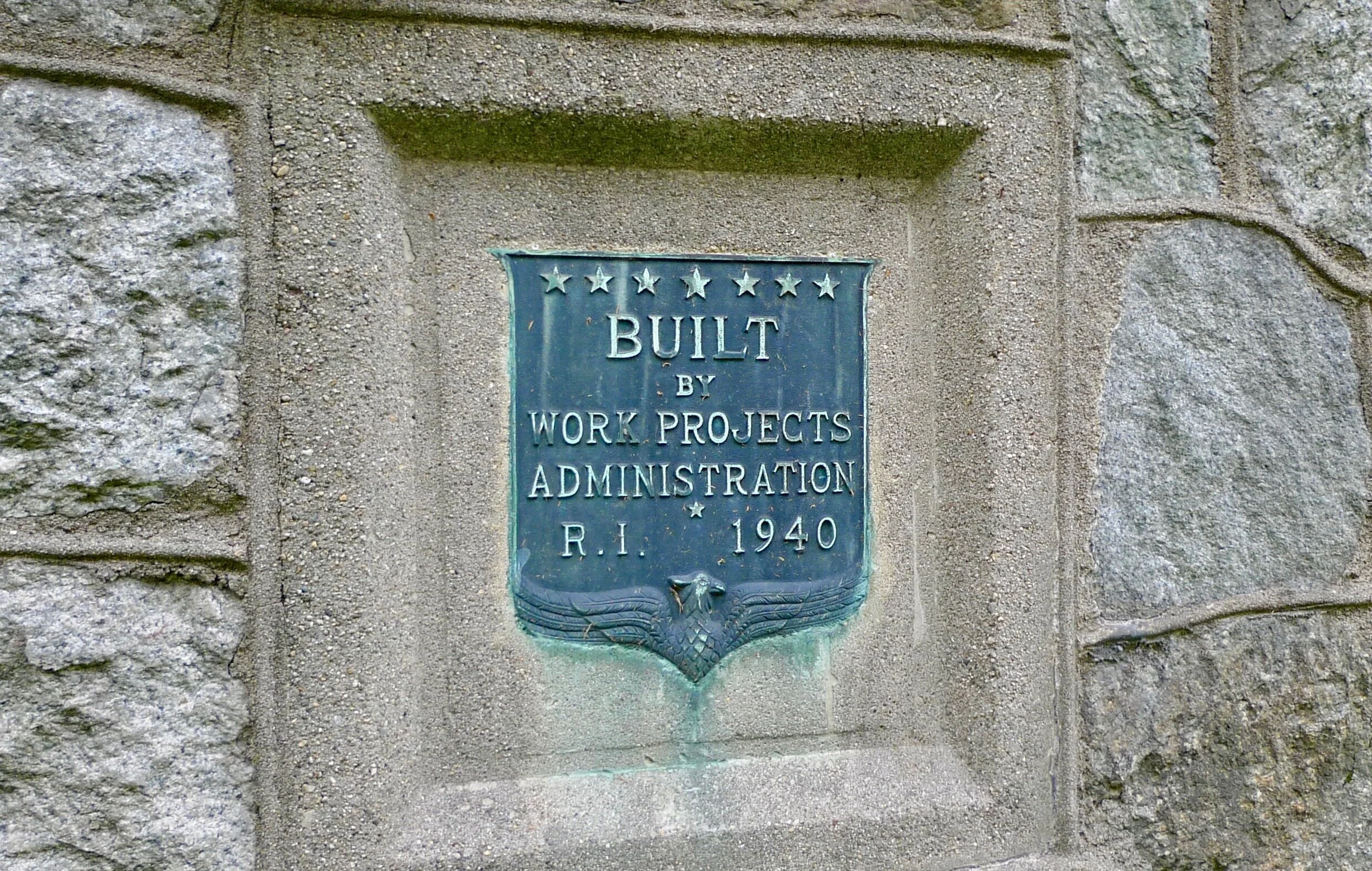
On a Blackstone River bridge built by the Works Progress Administration
— Photo by William Morgan
This New Deal-like project could attract national corporations, foundations and think tanks, but let's begin with Rhode Island colleges and universities. (Ideally, the state should be involved, but it is doubtful that it has the resources or the inclination to invest much more in Central Falls.)
Possible avenues of support and study might include:
- Brown to study and teach languages and government.
- RISD, perhaps in concert with MIT and Harvard, to work on planning and design issues.
- The education school at Rhode Island College to work on improving the schools, joining the nationally recognized Learning Community already in place.
- URI engineering to explore how to revive the mills – to manufacture goods, attract technology and provide employment.
- Johnson and Wales to expand upon and encourage the diverse ethnic cuisines (and perhaps revive the chocolate factory). Their hospitality program could create B and B's with a genuine triple-decker experience.
And consider tiny Monaco, with its grand prix races. So how about a road race–maybe vintage cars overseen by New England Tech–along the Blackstone from Roosevelt Boulevard to Valley Falls Pond.
Given its density and smallness, Central Falls could become a model cooperative experiment, showing the region and the nation how to create an urban renaissance in a post-pandemic world.
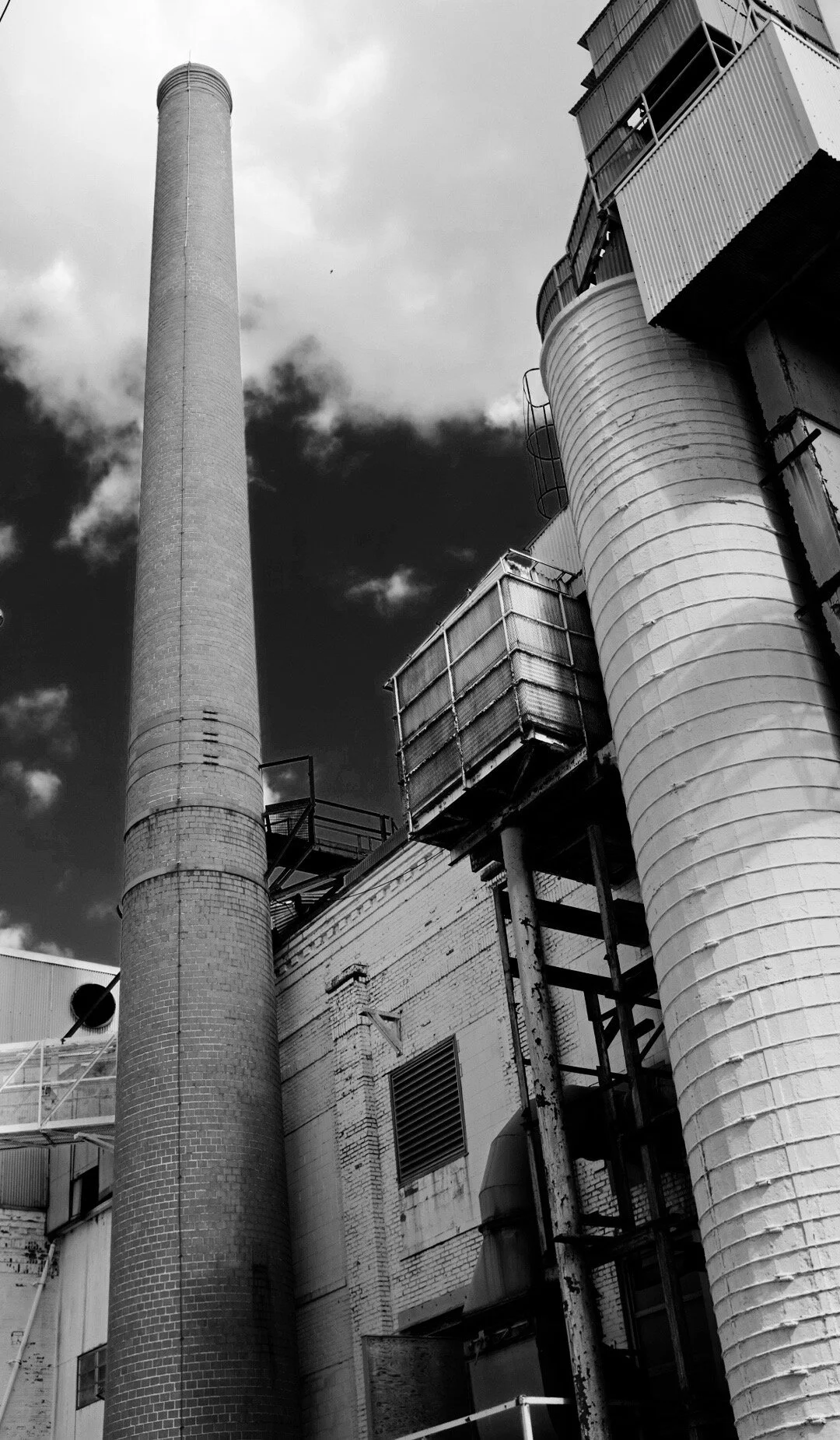
A factory that speaks of Central Falls’s legacy of industrial prowess
—Photo by William Morgan
Providence-based architectural writer William Morgan has a degree in the restoration and preservation of historic architecture from Columbia University. He’s the author of many books.

Llewellyn King: COVID-19 has jump-started a revolution in how and where we live, work, shop

Many malls will empty out.
WEST WARWICK, R.I.
Dimly through the fog of the future some structures are emerging.
Some of the purely physical are becoming discernible. The changes in work, collective consciousness and play are harder to bring into focus.
We -- call us a ravaged generation -- will face a future, the future indicative, radically different from that past which we have known.
The obvious is that work is changed, rearranged and at times lost. A lot of real estate will be begging for a mission or will have to face the wrecker’s ball. Shopping centers will see huge change, maybe devastation.
Those big-box stores that anchored shopping centers will be fewer. Some might be converted to gyms or old-fashioned markets with dozens of small stalls. But these uses are limited, and those cinder-block behemoths are many.
Some have suggested that big-box stores can be converted to affordable housing. But architects say it is easier to knock them down and build new homes on their sites. Like the bomb craters that dotted London after World War II, these will be a kind of ruin for some time, a reminder as to how life was.
After the shopping centers, come the office buildings -- the very symbol of a modern city, from the grand Empire State Building, in New York, to the flashy, mostly glass Shard skyscraper, in London, to the wildly imaginative buildings that were built as symbols around the world as much as needed work space. Now they’ll be sentinels of the city of the past.
The short story is that fewer people will be going back to work in offices. Telecommuting has rapidly come of age; it is acceptable and even desirable. Many, like myself, won’t like it.
Human contact has been part of work since urbanization began. Indications are that we’re going to be less urbanized, more suburbanized and ruralized.
People who have commuted vast distances into cities -- like those who left home at 4 a.m. in Connecticut to be at their desks in Manhattan at 8 a.m. -- will sleep in without guilt.
It isn’t just that COVID-19 has forced us to work differently, at home and separated, it’s that digitization has matured enough to make it possible, almost in confluence with the demands of life under the virus. Magically, Zoom has changed just about everything. It’s been not only a liberating force, but also a force for change.
But huge change and the innovation that will accompany it will have a price.
One survey found that 53 percent of the nation’s restaurants will never reopen, and a lot of wonderful people will be out of work -- for a long time. Restaurateurs are the most entrepreneurial of people, and many will open new venues. But that takes time and capital.
This loss of traditional work, which applies across the hospitality industry, will have deleterious impacts elsewhere. For example, the fishing industry can’t sell all its catch. It has always heavily depended on restaurants.
COVID-19 isn’t alone in reshaping the future. For years digitization and artificial intelligence, which have made telecommuting possible, have been subtracting jobs.
Farming, for example, is undergoing relentless change. Today’s farmer is more a systems manager than the renaissance figure of the past who could help a cow give birth, repair a tractor, taste soil to determine its pH, and handle the harvest with migrant help. Now tractors and farm equipment are fully digitized and can operate from a laptop on a kitchen table, and the harvest is increasingly automated by sensitive robots with multiple sensors guiding kind claws.
It's a new world and we need to be brave and imaginative to master it.
Llewellyn King is executive producer and host of White House Chronicle, on PBS. His email is llewellynking1@gmail.com and he’s based in Rhode Island and Washington, D.C.
See:
whchronicle.com
A very moving show
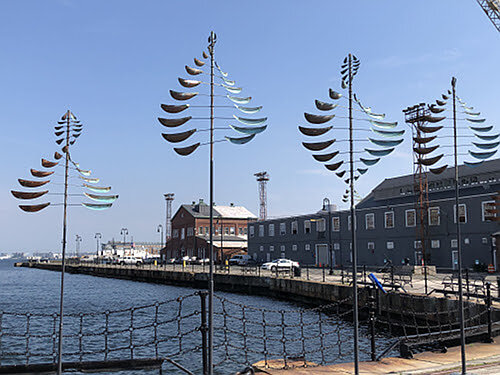
Part of “WOW: Wind on Water,’’ a free public art exhibit along Boston Harbor in the city’s Charlestown section. It features 31 of artist Lyman Whitaker's metal Wind Sculptures. With usually plenty of wind along the Boston waterfront, you can be pretty sure these works will usually be moving.
See:
https://www.whitakerstudio.com/
The show is hosted by the Navy Yard Garden Association in partnership with the Boston Planning & Development Agency and also made possible by a grant from the Boston Mayor's Office of Arts and Culture.
Food trucks again serving Boston neighborhoods

— Photo by Jeangagnon
“As Boston moves into the third phase of Massachusetts Gov. Charlie Baker’s reopening plan, food trucks are now coming to Boston neighborhoods.
“The pilot program began on July 17 and allows food trucks to operate at 23 different locations across the city. The program is headed by the city’s Office of Economic Development, in partnership with the Inspectional Services Department.
“‘This summer we are piloting temporary food truck sites across our neighborhoods, including in city parks, playgrounds, and public spaces,’ Mayor Marty Walsh said during a press briefing last week.
“Mayor Walsh has touted the program as a way for small businesses to continue to operate during the COVID-19 pandemic, as well as bring some new amenities to Boston neighborhoods after months of lock-down. The trucks will be open seven days a week from 12 to 7 p.m. Mayor Walsh emphasized that while the city appears to have the COVID-19 virus under control, the next few weeks will be critical to Boston’s success in fighting the virus.
“‘We need to do everything that we can to avoid going down that same path that many of these states and other cities are going down,’ Mayor Walsh said, noting that officials continue to monitor the public health data closely.
Beach bathos; save our shellfishermen
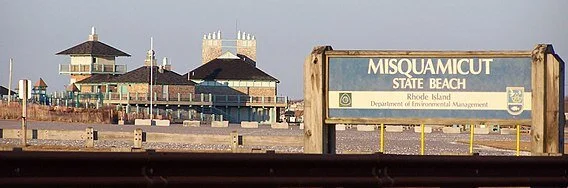
From Robert Whitcomb’s “Digital Diary,’’ in GoLocal24.com
Rhode Island Gov. Gina Raimondo has rightfully cut back parking at Scarborough and Misquamicut state beaches because of overcrowding, especially by young adults (many from out of state) who ignore social-distancing and face-mask directives. But anyway, I have always been surprised by the number of people who want to crowd together on a hot humid day on a beach, pandemic or not. A nice seat in an air-conditioned room or a walk in the mountains seems more inviting in mid-summer.
Meanwhile, it’s depressing to see the number of jerks who give retail people, such as at ice-cream stores, a hard time when the latter try to enforce pandemic guidelines. There are enough such people to have led a few store owners to decide to close for the duration. Selfish people making a tough period worse!
Of course mask-wearing is capitulation to the “liberal elite”!

New Shell Games
The shellfish industry – both wild-caught and aquaculture-grown -- is over-dependent on the restaurant industry and thus has been slammed during the pandemic. Many restaurants are reopening, but only at 50 percent or less capacity, and some have closed permanently.
So the oyster, quahog, soft-shell clam and mussel collectors are working hard to develop direct relations with consumers, with the latter going directly to oyster and other cooperatives to buy the stuff, to farmers markets and supermarkets or even have them delivered to homes and places of business. It reminds me of the fish man who would peddle his stuff, right off the boat and put on ice and covered with canvas, at the back of his truck, around our coastal town when I was a kid. (Was that illegal?)
Shellfishermen are just so New England. Let’s support them.
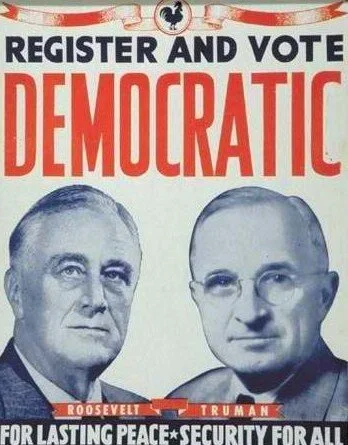
Don Pesci: Will Biden pick a Wallace or a Truman?
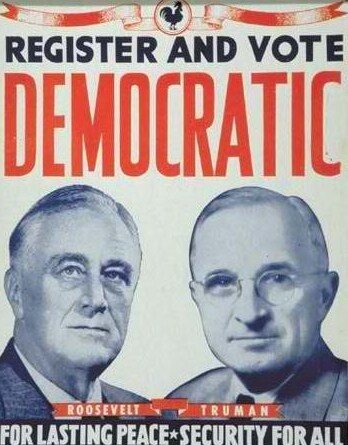
1944 election poster
VERNON, Conn.
President Franklin Roosevelt had three vice presidents, John Nance Garner, who broke with Roosevelt in 1940 and high-tailed it to Texas; Henry Wallace, whom Roosevelt chose as his running mate during the contentious 1940 Democratic National Convention over the objections of many delegates, and Harry Truman, chosen in 1944 and who occupied the presidency upon the death of Roosevelt.
Garner was once asked to evaluate the office of vice president. He said it wasn’t worth a warm bucket of spit. Actually, Garner used a different word, but sensibilities would not allow its appearance in the public media of the day – so, spit it was. Since Roosevelt’s day, sensibilities have evolved.
Sen. Edward Kennedy -- denominated “the Lion of the Senate” by fellow Democrats who willingly overlooked the significant part that Kennedy played in the drowning of Mary Jo Kopechne on Chappaquiddick Island -- served Massachusetts in the Senate for 47 years, until he joined the angels in Heaven. At the time of his death, Kennedy was the longest continually serving senator. By 2009, when Kennedy died, there were few or no Edwardian sensibilities left to ruffle.
The deaths while in office of such political lions as Roosevelt and Kennedy are reminders to the rest of us that politics holds out to privileged politicians no special immunities from the Grim Reaper. Lions also are mortal. When the great politician and cleric Cardinal Richelieu died, the pope of the day, a lesser politician than Richelieu and a better cleric, was asked to comment. He said, “If there is no God, Richelieu will have lived a good life; and, if there is a God, he will have much to answer for.”
The American populace is not God and, increasingly, politicians are not answerable to the always disorganized democratic mob, so strong are the usufructs of incumbency at a time when individual politicians have become mini-political parties, raising their own campaign funds from Big Business, influential PACs and mass-marketing techniques. And, of course, the media, sometimes lost in adoration of incumbents, also boost the power of political power players.
It’s been ages since Joseph Pulitzer, after whom the coveted Pulitzer Prize is named, said that good reporters should have no friends. Good reporters should ask themselves when was the last time that an incumbent with whom they regularly did political business refused to return their calls as a result of a displeasing story.
The top of the ticket candidates in 2020, Republican President Donald Trump and likely Democrat presidential nominee Joe Biden, are both incumbent politicians with records to defend. It is generally conceded – perhaps most especially by Democrats – that former Vice President Biden’s choice of his second in command will be extremely important. Biden, so far, has not been truly tested on the presidential campaign field of battle because, it has been said, the Coronavirus infestation, perhaps on the wane by Election Day, has forced his campaign underground.
Old campaign warhorses, such as former Connecticut senator Chris Dodd, have stepped forward to assist Biden in choosing his running mate. Few doubt that Trump’s choice for 2020 will be current Vice President Mike Pence.
It may seem to some commentators ironic that Biden’s choice may mirror that of Franklin Roosevelt’s. Garner obviously was wrong in his estimation of the vice presidency. Roosevelt was wrong in choosing Wallace as his vice president, a man further to the left than Roosevelt on many matters important to Democrats and the country. And Truman, perhaps considered at the time a throwaway choice for vice president, was the right man at the right time after Roosevelt had left the stage. During Truman’s 82-day vice presidency, Roosevelt never discussed major policies with his vice president. Truman, for instance, learned of the atomic bomb only after he had become president. But he knew what to do with the bomb and clearly had Stalin’s number. The Truman Doctrine was the central pillar of an ultimately successful U.S. Cold War policy.
Among some Democrats, Biden is considered a safe moderate at a time when his party has been for some time caroming down dark and eccentric political corridors. As in Roosevelt’s case, there may not be many more years left in Biden’s hour glass. Biden is 77 and, like Roosevelt, he does have underlying health issues, such as two brain-aneurysm operations.
The important question up for discussion is: Will the moderate wing of the Democrat Party, now a bare remnant of what it was the glory days of the John F. Kennedy Camelot, be swept away by the current progressive movement, or will people like Dodd be able convincingly to appeal to the angels of Biden’s better nature?
Don Pesci is a Vernon, Conn.-based columnist.
Maine's big garden

The Coastal Maine Botanical Gardens (CMBG), in Boothbay, are open to visitors until their season closes, on Oct. 31. At 295 acres, CMBG is New England’s largest botanical garden, with beautiful flora, nature trails and nearly a mile of tidal saltwater marshes. Thank you, Artscope, for passing this along

Foreign students are a boon for New England
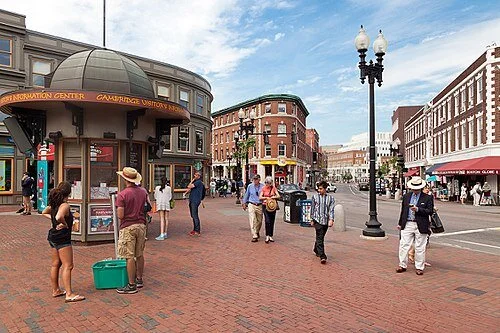
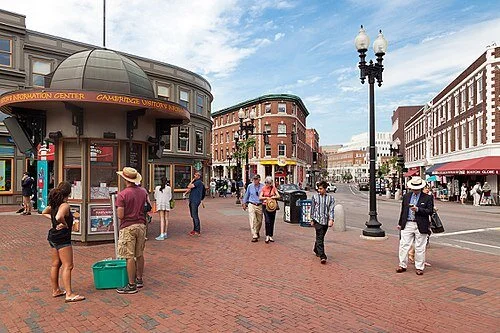
Harvard Square
From Robert Whitcomb’s “Digital Diary,’’ in GoLocal24.com
It was good news that the Trump administration has rescinded an order that would have stripped visas from foreign students whose courses are moved exclusively online because of the pandemic. Various institutions, led by Harvard and MIT, had sued to block the order, which seemed to many to be obviously illegal. There are hundreds of thousands of such students in America, with tens of thousands in New England.
Trump pushed the visa ban, which would have caused administrative and financial chaos, to try to force colleges and universities to reopen all in-person courses despite the raging pandemic, presumably because he thought that it would be a signal that things were returning to normal, thus boosting the pre-election economy? And he doesn’t like immigrants anyway.
Foreign students are particularly important in New England – economically and otherwise – because of the region’s world-famed colleges and universities. They bring a lot of energy, ambition and a hefty work ethic and help connect us with, and teach us about, the rest of the world. That makes our region more competitive. And some of the best stay and become Americans. Look at all the foreign-born health-care professionals dealing with COVID-19 and the large number of foreigners who have stayed in New England to create successful, high-paying companies based here, most notably in technology.
.
‘Parts the air of summer’

“Evening falls. Someone’s playing a dulcimer
Northampton-style, on the porch out back.
Its voice touches and parts the air of summer….’’
From “Northampton {Mass.} Style,’’ by Marie Ponsot (1921-2019)
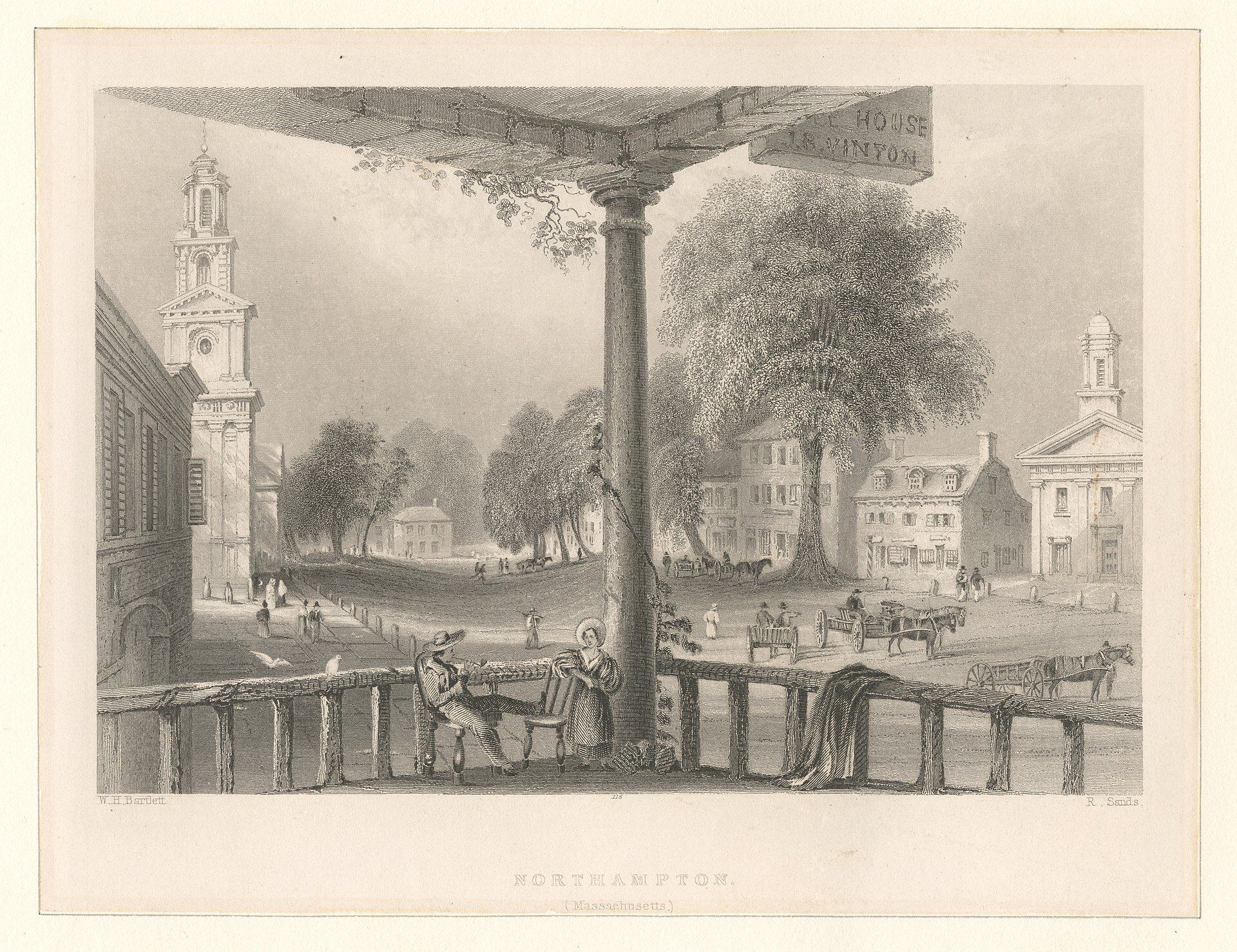
Northampton in the 19th Century
A robot that disinfects surfaces

The Stata Center houses CSAIL, at MIT. No, the building isn’t collapsing; it’s supposed to look like this…
From The New England Council (newenglandcouncil.com)
“The Computer Science and Artificial Intelligence Laboratory (CSAIL) at the Massachusetts Institute of Technology (MIT) collaborated with Ava Robotics and the Greater Boston Food Bank to design a new system to disinfect surfaces and neutralize airborne contaminants. The system uses a UV-C light fixture to kill the virus, however, the light is not safe for human interaction. Fortunately, the new robot is completely autonomous and can be used for the disinfection of restaurants, factories and supermarkets. Given the stress that food banks are under to reduce food insecurity, the robot could be a helpful tool to keep essential workers safe.’’
To see picture and read more, please hit this link.
But they'll find you there

"Untitled" (willow branches and saplings), by Patrick Dougherty, at Alnoba Sculpture Park, Kensington, N.H., in the southeast corner of the Granite State.
—- Photograph by Linda Chestney
See:
http://www.stickwork.net/featured
and:
https://alnobaartpark.org/about-us/