
Vox clamantis in deserto







Chris Powell: Hartford mayor confronts the mob while legislators pander
MANCHESTER, Conn.
Maybe black lives matter a little more now, but mainly, it seems, when they are taken by white cops. When they are taken by anyone else, that seems to be nobody's business.
For where are the protests of the murder of New Haven high school basketball star Kiana Brown, 19, shot to death a week ago as she slept at her home, apparently killed by a stray bullet fired from outside? And who is protesting the fatal shooting of Luis Nelson Perez, 27, on a New Haven street a few days later?
New Haven may be the most indignant city in the world but it gives its own social disintegration a pass. Indeed, the social disintegration underlying most wrongful deaths in Connecticut gets a pass not only in New Haven but throughout the state amid the clamor to end racism and defund the police.
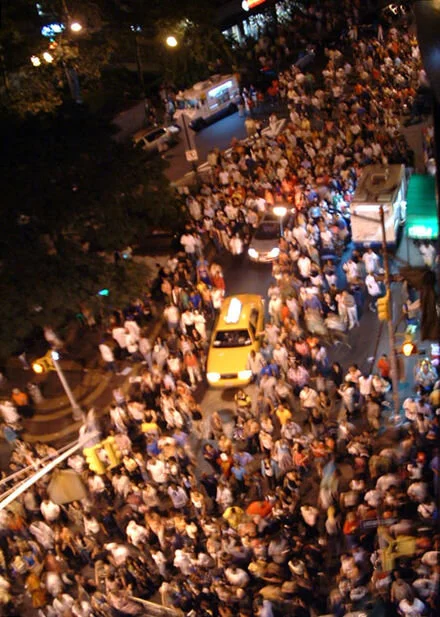
At least Hartford Mayor Luke Bronin last weekend became the first elected official in Connecticut to talk back to the mob. Hundreds of protesters descended on his home, demanding that he take their wrath out on the city's cops. The mayor tried to explain why law enforcement should not be abolished but he was interrupted, jeered, and largely drowned out. The protesters wanted only to intimidate.
But Bronin's plan to create a civilian agency to respond to seemingly noncriminal incidents such as mental breakdowns and drug overdoses, eliminating police response, won't appease the mob and is not realistic anyway. For the mentally ill and the druggies are not always harmless. They quickly can become violent.
Does the mayor not remember the nearly fatal stabbing of a Hartford police officer two years ago as she responded to a commotion caused by a mentally ill woman resisting eviction from her apartment? Any social worker or therapist responding to the incident would have faced the same threat. Police already try to reduce tensions at incident scenes. Their authority to use force is more a help than a handicap. Social workers and therapists get less respect.
While Bronin got the mob treatment, Connecticut's state legislators are being let off too easily -- and not just by the protesters to whom they have been pandering. Nobody is asking legislators who was in charge while Connecticut's police became so unaccountable and social disintegration worsened, especially in the cities.
Last week state Senate President Pro Tem Martin M. Looney, D-New Haven, at least was asked if legislators would do anything about the provision in the state police union contract that allows concealment of brutality complaints. Looney replied that the current contract can't be revised but the law might be changed someday to forbid similar provisions in future contracts.
This was a dishonest dodge. For the General Assembly and Governor Lamont could nullify the secrecy provision by repealing the law authorizing state employee union contracts to supersede the open-government law, as the state police contract does. Then the contract wouldn't have to be changed. The legislature and governor also could repeal collective bargaining for the state police. Such a threat might induce the union to concede the secrecy provision immediately.
No one asked Looney how the state police contract provision came about and how it so easily got past the governor and those legislators who now are insisting that black lives matter. Just whom were the governor and legislators serving when they agreed to conceal complaints of police brutality? Not the public.
Feigning impotence, Looney and his colleagues still think that the contentment of government employees matters more than black lives.
Chris Powell is a columnist for the Journal Inquirer, in Manchester.
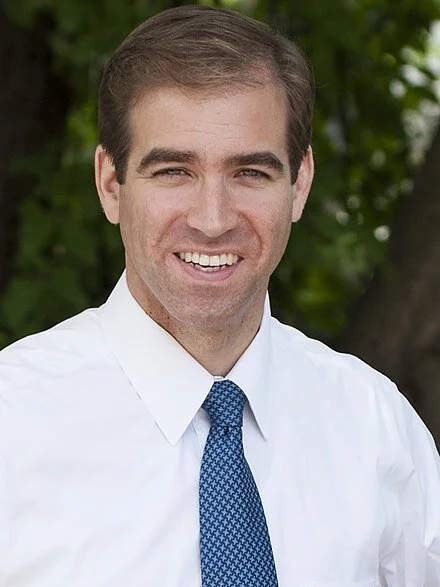
Mayor Luke Bronin
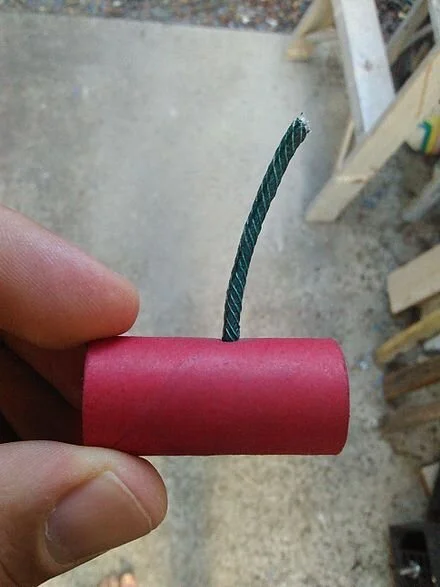
Explosive evenings
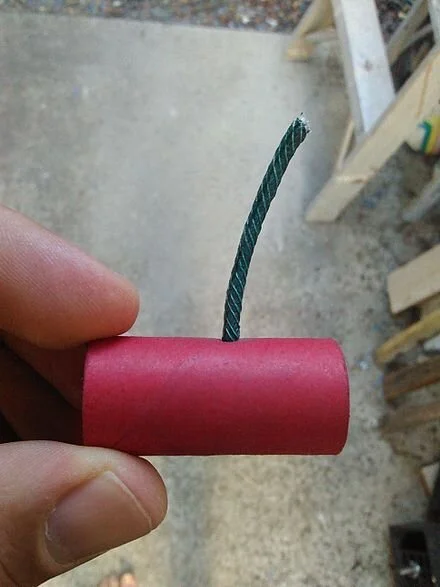
M-80
From Robert Whitcomb’s “Digital Diary,’’ in GoLocal24.com
Residents of Providence are being increasingly disturbed by fireworks and firecrackers being set off for hours every night, especially in poorer neighborhoods. Lots of these are being illegally used, since in Rhode Island only ground fireworks and sparklers can be legally ignited – in other words, quiet displays -- with firecrackers, rockets and mortars or other devices that launch projectiles banned, except, I assume, for professionally run public fireworks displays that we used to enjoy on special occasions, especially The Fourth and New Year’s Eve.
The racket, injuries and fire threat from illegally used fireworks is one of those quality-of-life issues, like graffiti, that can drive people away from a city. The police must crack down hard. And the explosives are hurting the sleep we need, especially in these tenser-than-usual times. If some folks see the fireworks as an expression of personal or political liberation many more see them as reminders of entrapment in an urban dystopia.
Knock it off.
Ah, if only people were as interested in reading the Declaration of Independence as in making a lot of noise.
The fireworks frenzy is happening in other cities, too. Please hit this link.
The year-round fireworks dilutes the excitement that we used to feel as we approached the public celebrations of the Glorious Fourth of July, which I suppose won’t happen this year in most places. When I was a kid we lived on the coast and so most of the fireworks spectacles we enjoyed were on beaches. But we also, probably illegally, had our private shows, mostly involving devices such as M-80s, cherry bombs and Roman candles, in backyards – with the nearby thick woods muffling the noise a bit. But that was only on the Fourth, when the local cops, who seemed to know everyone in town, would look the other way.
My father would stock up several years worth of fireworks in Southern states, where laws were lax. (Now the laws are very lax in New Hampshire — Live Free and Blow Off Your Hand.
Then there was the little cannon he set off every year on the Fourth. We had a loud old time for several hours.
A few boys would light and throw M-80s and cherry bombs at each other (but only on The Fourth!), displaying the same sort of idiocy as in the BB-gun wars they had through the year, in which it was possible to lose an eye or two. Cheap thrills indeed!

Early morning gull

See www.nivaartwork.com and galateafineartcom
“Lobster Co-Op in Stonington {Maine} ‘‘ (oil) , by Niva Shrestha in Galatea Fine Art’s online gallery. This text ran with it:
“The first sound one hears is the gull calling the morning. It has been a long work day, and it seemingly was never over. The dawn calls to duty, to awaken todoing-ness, sleep and rest a dim memory. But the day is a blessing, a legacy to generations past and future.’’

Rocket science
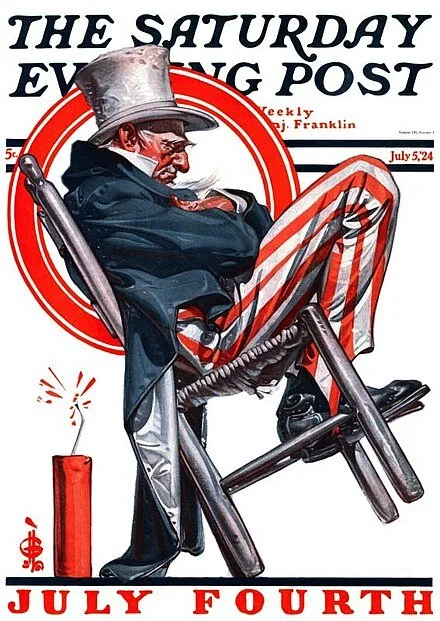
“Freedom is a rocket,
isn’t it, bursting
orgasmically over
parkloads of hot
dog devouring
human beings….’’
— From “Fourth of July,’’ by John Brehm
From away
“I find it funny how people from Boston and New York hate each other because of pro teams. But, like, everyone on the Red Sox is a random millionaire athlete from somewhere else.’’
— Julian Casablancas, musician

Invasive little pet turtles

Red-Eared Sliders
From ecoRI News (ecori.org)
They are the most popular pet turtle in the United States and available at pet shops around the world, but because Red-Eared Sliders live for about 30 years, they are often released where they don’t belong after pet owners tire of them. As a result, they are considered one of the world’s 100 most invasive species by the International Union for the Conservation of Nature.
Southern New England isn’t immune to the problems they cause.
“I hear the same story again and again,” said herpetologist Scott Buchanan, a wildlife biologist for the Rhode Island Department of Environmental Management. “‘We bought this turtle for a few dollars when Johnny was 8, he had it for 10 years and now he’s going to college, so we put it in a local pond.’ That’s been the story for hundreds and thousands of kids in recent decades.”
Red-Eared Sliders are native to the Southeast and south-central United States and northern Mexico, where they are commonly found in a variety of ponds and wetlands. Buchanan said they are tolerant of human disturbance and tolerant of pollution, and they are dietary generalists, so they can live almost anywhere. And they do. They breed throughout much of Australia as a result of pets being released, and in Southeast Asia they are raised as an agricultural crop and have displaced numerous native species. In the Northeast, they live in the same habitat as Eastern Painted Turtles, one of the area’s most common species, but they grow about 50 percent larger. Numerous studies suggest that sliders outcompete native turtles for food, nesting, and basking sites.
Despite concerns about their impact on native turtle populations, red-eared sliders are still legal to buy in Rhode Island and most of the United States, though Buchanan said that in the Ocean State they may only be sold by a licensed pet dealer and can’t be transported across state lines. Those who buy a slider must keep it indoors and must never release it into the wild, including into a private pond.
“But people often aren’t aware of the regulations, or they don’t bother to look at them, or they just don’t follow them,” Buchanan said. “We see lots of evidence of sliders, especially in parts of the state where there are lots of people. The abundance of Red-Eared Sliders in Rhode Island is tied to human population density, which means mostly Providence and the surrounding communities. But I’ve also found them in Newport and Narragansett and elsewhere.”
Sliders are especially common in the ponds at Roger Williams Park, in Providence, and in the Blackstone River.
While conducting research for his doctorate at the University of Rhode Island from 2013 to 2016, Buchanan surveyed ponds throughout the state looking for spotted turtles, a species of conservation concern in the region. During his research, he also documented other turtle species, including many red-eared sliders.
“The good news was that while spotted turtles can occupy the same habitat as red-eared sliders, I found a greater probability of occupancy by spotted turtles at the opposite end of the human density spectrum as I found sliders,” he said. “Spotted turtles tend to occur where human population density is low, so at least at this moment in time, we would not expect red-eared sliders to be directly competing with populations of spotted turtles.”
Nonetheless, Buchanan advocates what he calls a “containment policy” to keep the sliders from expanding their range in the state.
“It’s mostly about public education,” he said. “We want to make sure people know not to release them in their local wetlands. If we found sliders in an important conservation area — Arcadia, for example — we might consider removing them, though we’re not doing that now.
“They’re well-established in Rhode Island now, so the thought of eradicating them does not seem like a feasible management solution. We just have to live with them, but we also have to try to minimize their spread and colonization of new wetlands.”
No other non-native turtle from the pet trade besides the Red-Eared Slider has been found to be a common sight in the wild in Rhode Island, though Buchanan said he recently had a report of a Russian tortoise — another popular pet — that was discovered wandering around Coventry.
For those who want to get rid of a pet Red-Eared Slider, Buchanan doesn’t offer any easy alternatives.
“You’ve got to be committed to housing that turtle for 30 or 40 years until it dies,” he said. “That’s why this is such a problematic issue. It’s easy to buy a teeny turtle for ten bucks and think it’s no big deal, but that animal is going to live for a long time. When you purchase it, you have to be responsible for it for the rest of the turtle’s life.”
Rhode Island resident and author Todd McLeish runs a wildlife blog.
Little towns that made things

In Haverhill. The town has become an arts center in recent years.
— Photo by Magicpiano
From Robert Whitcomb’s “Digital Diary,’’ in GoLocal24.com
While driving up and down the Upper Connecticut River Valley the other week I came through several towns – Orford and Haverhill, N.H., stand out the most – with grand houses, beautiful churches and lovely commons. And they were all developed in the late 18th and early 19th centuries very soon after people arrived to take land long used by Native Americans! How did they afford it?
Well, because these very entrepreneurial and energetic Yankees used the region’s natural resources to maximum benefit – its good grass for sheep raising for the burgeoning wool trade, the wood from its forests (especially white pine to make buildings), its very arable land along the river and its water power --- to very early on create thriving businesses. Consider that by 1859, when Haverhill had 2,405 inhabitants, it had 3 gristmills, 12 sawmills, a paper mill, a large tannery, a carriage manufacturer, an iron foundry, 7 shoe factories, a printing office, and several mechanic shops! Those industries helped finance well run local schools and cultural institutions.
The lesson is that it’s good to have nearby enterprises that make things.

“The Mall,’’ in Orford, in 1907
New Bedford ‘Kinetic Grid’

“Kinetic Grid Over New Bedford,’’ by Bobby Baker. Copyright Bobby Baker Fine Art.
Artist note: “What may appear to be a double-exposure image is really just the artist seizing the opportunity to create a piece featuring both the unique art exhibit, ‘Kinetic Grid,’ and New Bedford architecture all in one space. This piece was created using late-day light and what would normally be considered bothersome reflections in the glass store front surrounding the exquisite work of artist of Soo Sunny Park. The distinct reflections are that of the building across Union Street, on the corner of Purchase Street.’’
Self-portraiture in the pandemic

From Ashley Pelletier’s show “Reflections,’’ at Periphery Space @ Paper Nautilus, Wayland Square, Providence. through Aug. 15.
The gallery says:
“Because of the coronavirus pandemic, we have all had to figure out how to deal with feelings of stress that isolation has caused. For many artists, time in the studio has been a way to cope. Pelletier found that creating work during this time has expanded her practice of self-portraiture. The 14 paintings in “Reflections’’ show her process as it starts with the exterior of the body and goes to the interior — from the representational to the abstract.’’
Sacrilege
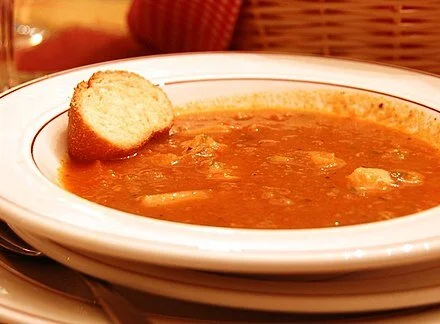
Manhattan Clam Chowder — fake chowder
“There is a terrible pink mixture (with tomatoes in it and herbs) called Manhattan Clam Chowder that is only a vegetable soup, and not to be confused with New England Clam Chowder, nor spoken of in the same breath. Tomatoes and clams have no more affinity than ice cream and horse radish. It is a sacrilege to wed bivalves with bay leaves, and only a degraded cook would do such a thing.’’
— Eleanor Early, in A New England Sampler (1940)
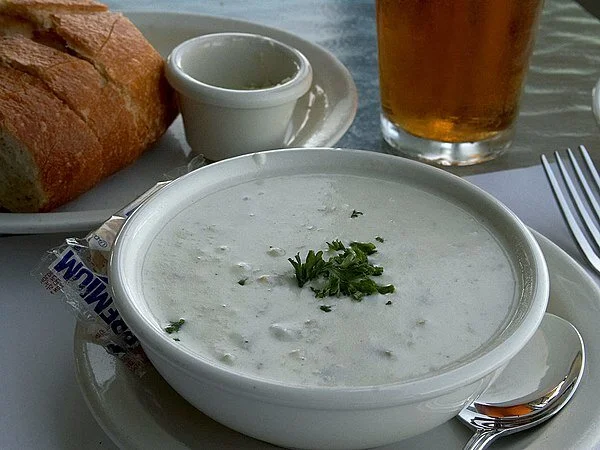
New England Clam Chowder — a real chowder
'Too damn cold'

Old Orchard Beach in 1914
“{It’s) the only fault I have with Maine, the water is just too damn cold.’’
— Arthur Griffin, in New England: The Four Seasons (1980)
Editor’s Note: But the Gulf of Maine is now one of the world’s fastest-warming bodies of salt water. Still, the water on the south coast of New England (particularly Buzzards Bay) can be as much as 20 degrees warmer than the Gulf of Maine in the summer.
The absurdity of mowing

“Shoving such a machine
around a fairway of dandelions,
it is easy to feel absurd.
The average lawn, left alone
one hundred years, could become
a hardwood forest. ‘‘
—From “Mowing,’’ by Robert Wrigley
Treating ‘air hunger’

From The New England Council (newenglandcouncil.com):
“A new study published by Harvard University in conjunction with Beth Israel Deaconess Medical Center (BIDMC), in Boston, shows the importance of treating ‘air hunger,’ or severe breathlessness, in COVID-19 patients. The paper debunks the myth that sedation—such as that used for patients on ventilators—eliminates air hunger and offers solutions to truly relieve the often-traumatic feeling of severe breathlessness. Read more here.’’
“Massachusetts General Hospital (MGH) has launched a COVID-19 hotline for patients who have any questions regarding the virus, believe they may have been exposed, or need treatment. In addition to providing advice and offering telemedicine service, the hotline is available in several languages to accommodate non-English-speaking residents of Boston. Read more.’’
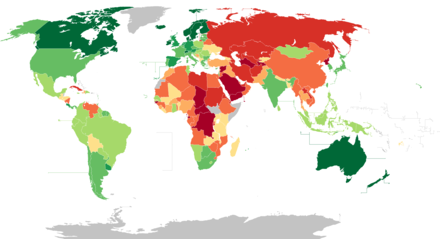
David Warsh: Democracy vs. autocracy -- what's ahead?
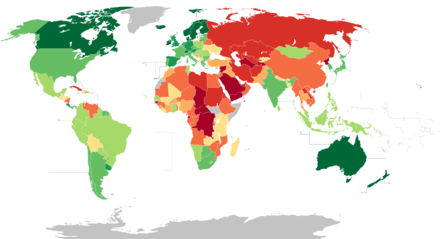
Dark green: Most democratic (closest to 10)
Red: Least democratic (closest to 0)
Democracy's de facto status in the world as of 2019, according to Democracy Index by The Economist.
SOMERVILLE, Mass.
The Decline and Rise of Democracy: A Global History from Antiquity to Today (Princeton, 2020), by David Stasavage, of New York University, gives the impression of being an easy read. Three hundred pages of text present a powerful narrative delivered with disarming clarity, with no showier claim to authority than the precision of its arguments.
But then come 37 pages of notes and a bibliography of 850 items, adding another hundred pages to the book. Stasavage has mastered so much history, and located it so deftly in recent controversies of social science, that he covers nearly everything that I have so much as glimpsed going on as an economic journalist these past 50 years, and a great deal more that I hadn’t. No wonder I missed on the couple of previous swings I took at it. I’ve got a bead on it now.
We won’t know for a while, but my hunch is that Decline and Rise will turn out to be the most compelling work on grand strategy since The End of History, by Francis Fukuyama, and The Clash of Civilizations and the Remaking of World Order, by Samuel Huntington, in the euphoria of the early ’90s. Since then there’s been Destined for War: Can America and China Escape Thucydides’ Trap? (2017), by Graham Allison, but that was somehow less helpful than the much earlier The Weary Titan: Britain and the Experience of Relative Decline 1895-1905 (1988), by Aaron Friedberg. Meanwhile, Decline and Rise is differently grounded from the agendas of realists such as John Mearsheimer (The Great Delusion: Liberal Dreams and International Realities, 2018) and Stephen Walt (The Hell of Good Intentions: America’s Foreign Policy Elite and the Decline of U.S. Primacy, 2018). The Narrow Corridor: States, Societies, and the Fate of Liberty (2019), by Daron Acemoglu and James Robinson, is somewhat similar to Decline and Rise.
Stasavage begins by rehearsing the narrative familiar to anyone who has taken a course in world history: how democracy was invented in Greece, and how it died out after a very short time – “about as much time as the American republic has existed.” Resurrected in such Italian city republics as Venice and Genoa, after more than a thousand years, thanks to the rediscovery of Aristotle; and in the England of Magna Carta, democracy then resumed its long slow evolution to the present day.
That takes no more than a paragraph. The “problem with this story,” Stasavage writes (a phrase that occurs many times in the book) is that it is highly misleading. When Europeans in the 16th Century began fanning out across the world they often found themselves dealing with systems of government in which consent of the governed played a greater role than the ones that prevailed at home. These included tribes like the Huron people, of southwest Ontario, whom Jesuit missionaries studied intently; and the Tlaxcala people, of Mesoamerica, whose government Hernan Cortez described as resembling that of Genoa or Pisa, because there was no king.
These early democracies, as Stasavage calls them, flourished wherever states were weak, which as recently as five hundred years ago, was most of the Earth. They involved tribal chiefs who ruled collectively with the aid of assemblies and councils that constrained their power. These bodies were in turn responsive to the ordinary people whom they led, at least a subset of them, and they were to be found all over the world in communities that shared three characteristics: small scale; leaders who lacked knowledge of what their subjects were producing; and an option for the disaffected to flee into the forest or otherwise “light out for the territory.” Fans of the saga of King John and Robin Hood will recognize the situation. Leaders who lacked dependable tax systems were more likely to govern consensually.
Early democracies existed in contradistinction to autocracies, which prevailed wherever a state could get a leg up on the citizenry, chiefly by knowing whom to tax and how much, in settlements from which there was no easy exit. China, with its fertile plateau of loess soil, was the first state. From at least the beginning of the second millennium BCE, dynasties in northwest China were able to support armies and build proto-bureaucracies by levying taxes on farmers whose productivity was more or less visible. Rulers were hereditary. Councils had no say in the matter. Other autocracies emerged out of similar geography: the Third Sumerian Dynasty of Ur, the Aztec Triple Alliance, the Incas, the Mississippian chiefdoms, the Azande kingdom in central Africa. Islam inherited a state when it burst out of Arabia to conquer the Sasanian Empire in the Fertile Crescent. Islam retained the local bureaucracy and converted it to its use.
Then came “the great divergence.” Everyone seems to agree that the different economic trajectory that Europe pursued began with representative government. But if the economic divergence has political origins, where did the politics come from? Representative government in Europe stemmed from the backwardness of its state bureaucracies, Stavasage argues. Rulers had no alternative but to seek consent from Europe’s growing towns. China and the Islamic world were far better off than Europe for five centuries or more; autocracy served development well. But at a certain point the Renaissance commenced, followed by the Enlightenment and the Industrial Revolution.
Modern democracies had their beginnings in England, not the Dutch Republic, as has often been argued, England borrowed many Dutch institutions, so what made England different? A new kind of parliamentary government, in which representatives could be bound by voter mandates, nor were they required to report back to their constituencies before making decisions. The Dutch retained institutions that permitted vested interests to forestall technological innovations; England sprinted ahead economically.
If the English went halfway to modern democracy, building a centralized state in which kings had powers as well as the newly-animated parliament, American colonists took the process to the next level, creating the broad suffrage for white males as a means of maintaining the consent of the governed necessary to the existence of a strong executive state. But the same conditions that produced democracy for European immigrants produced slavery for Africans and disaster for native American peoples. Stasavage is especially acute on the forces binding today’s Americans together – and those driving them apart.
The picture that emerges is of a world divided into two deep traditions, democracy and autocracy, the U.S., the European Union, India, Japan, on the one hand; China and Russia on the other, neither system innately superior to the other in all times and circumstances. A lengthy contest portends, not a cold war so much as an economic competition with values at its core.
A great deal has happened in the last 30 or 40 years that favors Stasavage’s cross-regional perspective. It may not be too much to speak of a second golden age of social science. The 19th Century was the first: We remember Smith, Tocqueville, Marx, Durkheim, Weber, and Freud, in particular. And the second? The departments of knowledge have become more complex and deepened considerably. A great many streams have begun to flow in parallel. Almost all have one thing in common: they began to flow after Darwin had a chance to sink in.
There are, of course, other pathways to thinking about America’s place in the world. One of the best is biography. As it happened, I spent part of last week reading The Inevitability of Tragedy: Henry Kissinger and His World (Norton, 2020) by Barry Gewen. Same questions, different methods, a high degree of skill applied in each case. Same answers. Social theory may point the way to peace, but the life of politics requires action. For a skeptical view, see Thomas Meaney .
David Warsh, an economic historian and veteran columnist, is proprietor of Somerville-based economicprincipals.com, where this column first ran.
Blogs
Bookshelf
Letters
Search for:

And crossing fingers

“Blessing the Fleet,’’ (oil on panel), by Philip Riesman (1904-1992) in the Collection of the Cape Ann Museum. Gloucester.

Llewellyn King: Requiem for men's fashion

It was ailing before; now in the age of the coronavirus, it’s at death’s door.
I write about men’s fashion. Long before we’d ever heard the dread word COVID-19, the decline in man’s way of dressing had begun.
Fans of old movies can marvel at how we once togged ourselves out: hats, suits with vests or double-breasted suits and, at night, black or white dinner jackets. In movies and real life, people smoked cigarettes as though the very act of lighting a cigarette was a fashion statement. Yes, good guys (and gals) smoked cigarettes, now it’s only bad guys.
We were never quite as dress-conscious as the British, but we had our standards: always a hat, a necktie and a jacket. You couldn’t get into a decent restaurant, club or social gathering without a tie and jacket. Restaurants and hotels maintained loner-jacket closets for patrons.
Church meant Sunday best: a suit, no matter how worn and bedraggled. These days men go to church dressed for the gym or the beach, wearing cutoff jeans, Hawaiian shirts, and sandals.
This dressing demise began, I’m afraid to say, with President John F. Kennedy. JFK had a fine head of hair and seemed to want us to know it, so he went bareheaded, everybody else followed. This must have thrown tens of thousands out of work: feltmakers, hat designers, milliners and shops that sold only headgear. Gone without even a shout in Congress, a mention on the stump or a bring-back-the-hat movement.
One could say baseball caps have taken over, but really! What is a baseball cap compared to a fine Homburg, a derby, or a sporty tweed cap? Not in the same league, you might aver. Brim up or brim down, hats counted, defined, identified, and introduced the wearer.
You lifted your hat to women, to superiors or older people and took it off and cradled it indoors. Hats had their own rules and standards. The place where you now put your rollaboard on planes started as a “hat rack.”
As to the tie, it died slowly at first and then fast. It was pop musicians who gave it a huge shove in the 1970s. They didn’t wear ties. Then high-tech honchos in the 1980s dressed down. Think Steve Jobs in those turtlenecks.
In the past year, ties have gone the way of hats. Only evening newscasters still wear them, and not all of those. Ties are out on most television shows and were going out in business before the lockdown.
Who decried that a man would be a fossil if he wore a tie? Who thought we’d look better without them? The shirts men wear are clearly designed to be worn with ties, so all those tieless men you see everywhere look robbed, incomplete, underdressed, as though they forgot something when they left the house in the morning. Or were disturbed doing something naughty.
Why make life so hard for those who love men? What are they to give us for birthdays, Christmas, anniversaries? The tie served magnificently. They were the perfect gift: easy to give, easy to receive, and nearly always welcome. They eased the social ritual of thanking dad, husband, or boyfriend for being there.
There is, I notice, some attempt to save the day because those who feel it's now old-fashioned to wear a tie are sporting showy pocket squares. Maybe this works. To me it just emphasizes the nakedness around the neck, where something is missing.
Of course, ties have no use whatsoever except to vary the sameness of suits and, for the odd philistine, to be pressed into service to wipe eyeglasses.
After the coronavirus what? Suits may not come back at all, we may all wear only those things that can go into the washing machine and be worn without pressing. Fashion for men seems to have been hanged by the neck.
Llewellyn King is executive producer and host of White House Chronicle, on PBS. His email is llewellynking1@gmail.com and he’s based in Rhode Island and Washington, D.C.
Linda Gasparello
Co-host and Producer
"White House Chronicle" on PBS
Three steps in passing them
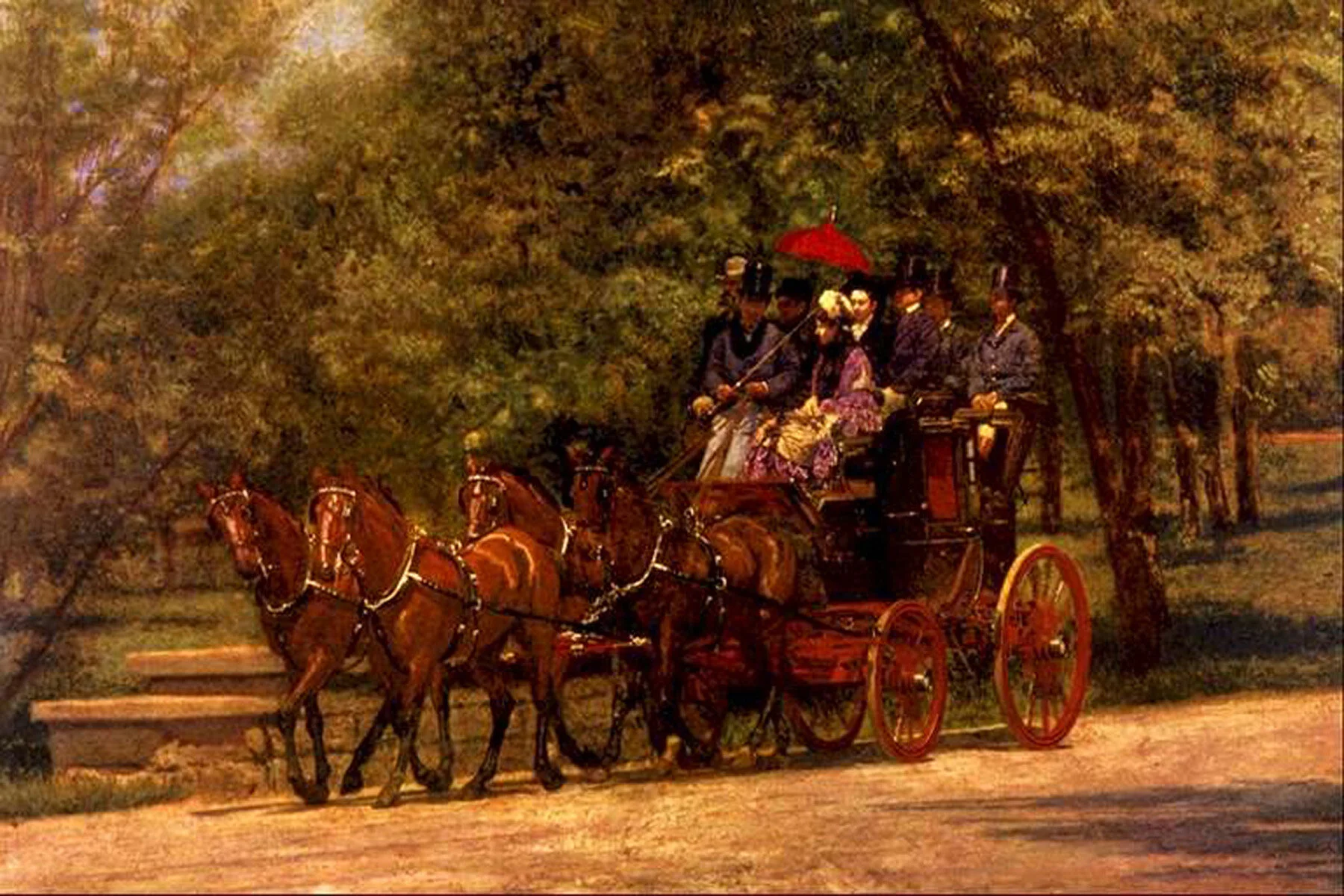
“The Fairman Rogers Four-in-Hand,’’ by Thomas Eakins, (1880)
“Between five o’clock and sunset, society drove up and down Bellevue Avenue and Ocean Drive….The two-way procession passed and repassed. It was said: The first time you met a friend, you make a ceremonious bow; the second time, you smiled; the third you look away.’’
— Bertram Lippincott, on Newport, R.I., in the early 20th Century, in Indians, Privateers and High Society (1961)

Karen Gross: How small private colleges can adapt to pandemic
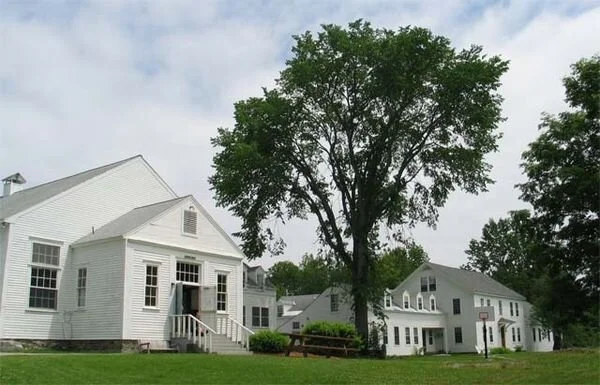
The dining hall and Mather Building at Vermont’s Marlboro College, whose campus may be repurposed into a new kind of higher-education facility.
From The New England Journal of Higher Education, a service of The New England Board of Higher Education (nebhe.org)
Pre-pandemic, a good number of us lamented the demise of small colleges. Let’s define these here as non-elite colleges with enrollment of fewer than 1,500 full-time undergraduate students. For the most part, these institutions have few graduate programs, a handful at most.
Some of these colleges have closed; some have merged; some have partnered. Whatever the structure, it feels to me still like small colleges are failing and closing in droves. Just look at the recent debacle in Vermont concerning its fiscally fragile state college system.
For some small institutions, it certainly seemed like a premature and even unnecessary death. The four main causes for closure (or its equivalent) proffered publicly by campus personnel were straightforward: changing demographics with accompanying declining enrollment; high tuition costs leading to steep discounting and concerns regarding rising student debt loads; campus personnel costs (think tenure or long-term contracts) and accompanying retirement benefits; and absence of a large endowments to withstand and be buffered from shifting and changing tides.
Some of us saw other deficiencies that the colleges and their boards were less keen on referencing or addressing out loud: poor presidential leadership (as in really poor judgment and decision-making or failure to decide anything); lack of institutional vision and innovation, particularly in a fashion that anticipated trends and currents that were on the horizon; weak board oversight and failure to ask the tough questions; board fear of litigation (think Mount Ida College, in Newton, Mass.); and growth in administrative personnel leading to bloat and higher-than-needed costs.
Some folks are fighting back and some are wondering why others aren’t fighting harder to save colleges, not just for the students, faculty, staff and alums but for the local communities where these colleges are located and who depend on them for revenue. There’s been no shortage of suggestions for how to save the many small colleges that dot our landscape, especially in New England.
And we can and should continue these conversations about these failures and the wasted salvation efforts; they are instructive for future thinking and reflection. They offer clues and insights for the remaining small colleges.
Along came the pandemic
Then along came COVID-19 and with it, institutional closures due and a quick shift to online learning (which might be a misnomer in some instances in terms of whether learning actually occurred). The higher education landscape changed in a nanosecond. More closures are expected.
Admissions and retention for fall 2020 has become a guessing game as it remains unclear if existing students will return to campus and whether new students will enroll. Deposited new students can and might well melt in substantial numbers. We just don’t know.
And each passing month, using metrics from the past (as if they have continued applicability), we fail to reliably predict the future. For some small colleges, a loss of 10 or 20 students can make the difference between a balanced and unbalanced budget. And accreditors are watching fiscal stability like hawks. (The reasons for that need their own article.)
The debate has raged about reopening and if it happens, how it can be done safely, thoughtfully and wisely. New models and schedules are being considered; institutions are hedging their bets as if they foresee when a second “wave” (assuming we even characterize new cases as a wave) of the pandemic could hit. Scheduling courses of limited size and ensuring social distancing in residential halls, dining halls and activities are subjects for planning. The CDC has offered some guidance (quite generalized) as have others—individuals and organizations alike.
Despite these resources, everyone seemed to be fumbling around for reopening solutions for students, faculty and staff. What institutions are saying publicly and what they are feeling in privacy about the reality of reopening is not in concert. For example, some colleges still are running two-track planning: planning for online and planning for brick-and-mortar learning. And the idea here is that as the date for reopening approaches, both approaches will be ready to launch, depending on which is most suited to the moment.
And racial tensions ….
And then, racial tensions boiled over and as of this writing, have not ceased. Street protests—peaceful and non-peaceful—highlight anger, centuries in the making, at the lack of equality in our nation. With police gunning down or kneeing down minority men, police departments almost everywhere are coming under fire, including campus police forces. Folks are asking if we should even have police forces (on and off campus) as we knew them or should we defund and restart with new structures, new goals, new training, new personnel? All of these issues are boiling over as reopening plans are being crafted.
For some students, already worried about starting college online or in some newly designed format with no track record, a gap year seems like an idea with credibility. With the protests and racial tensions, the idea of using a gap year to focus on advocating for racial justice becomes increasingly appealing and, in fact, a worthy alternative to a bumpy college start. This happened in the 1960s too.
For colleges, the responses to racial tension are a critical issue for the fall, with or without brick-and-mortar reopening. Consider how campuses will need to adjust to and handle protests and ensure both freedom of speech and safety? What changes will campuses make to recognize their own histories of racism and some of their current approaches that fail to reflect the need for racial equality?
In this context, I am reminded of the disconcerting encounters (via email and then in person) of house masters at Yale and students residents about types of Halloween costumes that passed muster even if offensive to some. The net result was that the master and his wife ceased being house masters at the time and stopped teaching the next semester. We can debate how the story got such traction and how it ended; some of us still can’t quite believe that a valued and respected faculty member, with deep experience, behaved in such a disrespectful manner.
A salvation strategy
In reflecting on the myriad of issues just described in all their complexities, I read a recent tweet from Prof. Susan Dynarski, a well-respected professor who regularly comments insightfully on issues in higher education. In the context of her concerns about campuses reopening and the reasons higher education institutions may be so keen on brick-and-mortar courses (they want the money), she suggested that perhaps the only places where COVID safety and education can coexist are rural small college campuses.
Bells went off in my head. She is largely right and those of us who have spent time thinking about these campuses can attest to their ability, with innovative thinking and bold leadership, to respond to COVID and offer in-person education. Here are some concrete approaches, including references to the plans of Degrees of Freedom to open on the Marlboro (Vt.) College campus in September 2020. Yes, a new college opening during the pandemic.
Three important notes before turning to concrete ways small campuses can operate effectively and safely and with deep change:
First, some larger campuses can try some or even the majority of the ideas proffered here. And they may be able to do so with success but their efforts will not be easy or cheap or natural extensions of prior approaches. What small colleges offer is experience.
Second, the items identified are not in order of importance and there is some inevitable overlap in solutions and approaches. For many, starting with academics seems right. For me, focusing on land and what can be done on it and with it is a better starting point. And don’t misunderstand me; land is not more important than learning. Land (and its use) is what in a COVID-19 era makes real learning (broadly defined) possible.
Third, the ambiguity in the title to this article is intended: The pandemic will be a savior for small colleges because small colleges may be the only safe places in which quality in-person education can happen.
A sampling of how small rural colleges could adapt
Land. The pandemic has struck both urban and rural environments and the idea that rural communities are immune from COVID-19 is just not accurate. And the impact on rural places—with their lack of resources—can be worse for patients than urban sites. So just reopening in rural environments is not the answer.
To be sure, we seem to know less each day as new information and data surface. But rural small college campuses often sit on hundreds of acres, meaning there is a legitimate way to create a COVID-free bubble-like environment. Note that the NBA is trying a similar bubble approach in Orlando. It is too early to know whether this approach will create herd immunity.
To add to the benefits of new ways to use large plots of rural land, we now have community-by-community data on COVID-19 cases; and, when we plumb the data, there are small towns where the pandemic has not invaded or has invaded minimally. If you eliminate nursing homes from the calculations and people who were affected over the age of 75, there are communities with low incidence of COVID.
For this article, let’s focus on campuses with at least 25 acres of open land that is usable—land without buildings or sports fields or parking lots.
Access to healthcare. Now, an immediate reopening concern and question with the idea of remote/rural environments: Were the pandemic to come to campus, how would the students get healthcare? We need to focus, then, on reopening campuses that have hospitals within close proximity and ways nearby smaller hospitals connect to larger hospital networks. Take, for instance, a college in or near Bennington, Vermont. The town has an established hospital that has partnered with Dartmouth’s well-known medical facilities; there is even a helipad to transport ill patients from Bennington to Hanover in minutes. Literally.
Small colleges reopening in rural settings need a partnership with the nearest and best medical facility, ideally one with transport and easy access to larger health facilities. This will matter to the families of students who may think rural means absence of access to quality medical care. Based on conversations with Seth Andrew, the founder of Degrees of Freedom, this is the precise approach they are planning when they open on the Marlboro campus. And we are talking here not about reopening an existing college, but rather opening a new college in the era of COVID.
One critical and too often-ignored part of healthcare is mental health, a critically important topic in our COVID and race-tense world. Trauma and its symptomology abound and campuses need to become trauma responsive, something in which they have little or no training and experience. The social distancing, the omnipresence of death and dying, experienced discrimination and harassment, separation based on going off to college for the first time and in uncertain times—these are all tough issues.
We need to question whether our current campus mental health personnel are sufficient and how we can meet the inevitable needs of students. (Faculty and staff will have their own needs in this regard with respect to primary and secondary and vicarious trauma.)
Several solutions emerge: faculty and staff development in trauma responsiveness before students arrive on campus and thereafter; telemental health opportunities for all campus personnel; and added hiring of social workers or counselors. We need trauma-informed orientations for all returning and new students; these should not be one-off events but ongoing efforts to process the transition to college and the world around us.
These are not all cost-free solutions but they are critical to student academic and psychosocial success. It is not enough for students to survive; they need to thrive.
Activities. A rural environment also allows for a series of non-academic activities that can be done safely and provide important avenues for student engagement with social distancing well in place. Hikes in the woods, classes held outdoors (during certain seasons), activities on outdoor fields. Learning about nature, the environment, drawing and painting and writing outdoors could all happen with ease and social distancing.
Imagine an outdoor movie theater or outdoor concerts, with music blasting across the acreage. And picture an artistic way of creating social distancing that builds off the “wrapping” approaches of the recently deceased installation artist Christo. Picture many brightly colored mats, each 6 –8 feet apart, placed across a huge lawn. If one took a drone photo of the area, it would like painted spots on an enormous lawn—signaling color and festivity!
Then consider a return to “old-fashioned” games like bocce and croquet and even putting golf courses with 6 holes. Think about beanbag tosses done with teams. Picture single person ping-pong and tennis. These can all be done in wide-open spaces, created at little cost.
In terms of more “formal” and traditional sports (and one hopes the NCAA will see the light and allow for fewer official sports in DI, DII and DIII during this time without colleges risking eligibility), think about track and field, with staggered race starts. Think about golf. Think about tennis. In some rural communities, these resources are available and could be cleaned and dedicated to a college’s use.
Think about swimming or sailing or kayaking (instead of more expensive sculling) if a campus has access to water close by. Indeed, many rural campuses have their own ponds, often not used in the past for student activities. But they could be converted to student use. I am thinking about the pond at Smith College (to be sure, not a small rural college as defined here); the pond was once the place where Smith students got engaged. Now, it could be populated with small single person pedal boats.
Housing. Consider residential halls that can provide only single rooms with toilets shared among very small numbers of students. Yes, there is some risk in common areas (more on that in a minute) but small campuses can function with only single-room occupancy. For example, Southern Vermont College, were it still in existence, could have housed well over 300 students in single rooms.
An added option, well worthy of consideration, is building yurts to install on a campus for housing. Imagine small yurts dotting the campus landscape. And the creation of toilet facilities would come at a cost but not excessive (there are even portable toilet/shower trailers). And the facilities could be limited to small numbers of students accessing them. Some students would find living in a yurt or pod appealing and adventurous.
Another option to consider is motels that dot rural college communities and must currently be struggling with occupancy. These can be single-occupancy units with individual bathrooms, something that may appeal to parents and caregivers who think their students would be safer at home or in off-campus housing with one roommate. One can only assume that motels would be more than willing to partner for these purposes; indeed, Southern Vermont College partnered with such a motel close to campus during a short-term housing shortage.
One additional option to consider and one being used by Degrees of Freedom: short stints on a campus (say two weeks) several times a year rather than a semester-long session (even if compressed). The idea is that while on campus during these residential stays, no one goes on or off campus. Students would be tested pre-arrival and then “bubbled” thereafter. Others are pondering even shorter stays on campus with hybrid learning using the same faculty to do the in person and online learning—all options worth considering.
Food Service. Large dining halls and buffets are out. So are crowded dining tables. But on a small campus, especially one with several cooking facilities, there could be dining areas and shifts. Consider different eating times or outdoor eating or take out, just the way some restaurants are now doing now.
Imagine food service delivery carts driving around a campus. Add in an ice cream truck that goes from area to area within the campus boundaries.
There could be food cooking that is then shared consistent with social distancing. Several students could prepare a meal with a recipe from a particular culture and distribute the meals across campus. Then another group would cook something from another nationality. In some communities, different families make enough food to share on a designated weeknight; then, they talk about the different meals they are receiving and sharing online. Call it once-a-week dining together, so to speak. There could be baking contests and tastings of various sorts. There are many variations on these themes.
In the right environment, there could be food gardens. We have edible schools; why not create edible colleges? And unused grown food or food prepared in the just described manner could be distributed (safely) to low-income families to seniors who are housebound or unable to cook.
All of this can be boiled down to this notion: Campus Meals on Wheels.
One added idea to deal with seating that complies with social distancing, picture Adirondack chairs, perhaps painted in the college colors, that are linked together by rope that knots them at seven-foot intervals. Having abundant space makes this possible. Imagine 12 connected chairs. They could be configured into the circle or a “U” shape or a line. These Adirondack chairs could be brought inside when the weather shifts with dining in large open indoor spaces like gyms. See this image for a sense of the vitality of these chairs. This idea that can be used in academic settings as well.)
Academics. Small campuses regularly have small classes. Having class sizes under 15 is the norm. And it would be possible to break larger classes on a small campus into sections, perhaps with an online lecture/discussion and then breakout groups without any change. Classrooms are right-sized for this now without any adjustments.
Support services, if needed, could be provided with individualized online access to meet these needs. Think the support equivalent of telehealth appointments.
Materials used in courses could be open-access resources so students wouldn’t need to buy books in a store or online. As such, there would not be concerns about sharing materials and viral transmission on surfaces. Colleges would not need to run a bookstore (often not a money maker). Other course materials could all be purchased or available online for free through the web. Faculty assignments could be tailored to online free resources.
Faculty (since most small colleges do not use teaching assistants other than more advanced students to serve as tutors or mentors) could meet individually with students in open environments, not closed-in offices. These could be in open spaces with few people nearby. On a rural campus with huge open spaces and places, this approach is feasible.
Two added academic-related ideas to test out during this period.
First, students (and faculty and staff) could document the entire range of campus COVID responses. They could photograph activities and classes; they could tape interviews; they could write stories and reports. In other words, the COVID responsiveness would, in and of itself, be an academic activity. What is gathered could be used to help other campuses; it could document history; it could engage students in what is truly an extraordinary period in American history; students could get copies of some document/report/visual product that they could have for decades to come. Like the academic equivalent of a home run ball from Babe Ruth.
Second, efforts to help the local community could be front and center of a campus’s focus. Courses could be designed to provide assistance to those within the community, whether that is food or tutoring or conversation. Consider these empathy-generating courses. There could also be appropriate campus-community activities where the community virtually engages with students, say, a musical performance or a shared movie.
One final idea within the academic arena: What if faculty and students took a free online course together? Picture a course not offered by the small college but credit worthy and available from another institution and, critically, of considerable interest. Suppose it was a course on pandemics through time or public health approaches to disease spread and control or a course on the history of protest movements in the U.S. and abroad. (Yes, these could be offered on campus if there are experts in these fields with the courses ready for fall 2020.) Then faculty and students could do the work together; call it collaborative learning where the learners are teachers and the teachers are learners. In-person discussions would accompany the online course. On-campus faculty could design assignments and do grading.
Maintaining the bubble. Instead of cars on campuses (which would be disallowed), there could be daily runs by the college personnel to food stores, drug stores and Walmart-like places. Students could submit lists of what they want and need. Then, these items could arrive back on campus and students could retrieve (and pay for) what they ordered. This would work with privacy respected.
Picture a car lot off campus so that students could access in emergencies or at the end of short semesters. But the key is that the cars could not come to campus and students could not exit campus. In many rural communities, there is actually no place to go within easy walking distance. So the campus has to create the access to needed products (in addition to online resources) and the engagement options.
Students, faculty, staff and administrators would all be required to wear masks, even though some might question their necessity. The idea is that they are needed because faculty and staff and administrators likely live off campus and need health checks daily to return to campus. Or, for willing employees, there could be on-campus housing provided for them and their families.
The life outside the bubble of faculty, staff and administrators does present risk. They may have children or partners who become infected from schools and workplaces and other types of engagement. I think we have to rely here on responsibility and decency and the collective, shared effort to enable safety coupled with innovation and creative learning and engagement.
Input channels. This article is a sampling of the initiatives a rural small college could advance if it reopened in fall 2020 or January 2021. But there are critical ways to generate further ideas, namely getting input from faculty, staff, students and alums. These could be in response to particular COVID issues that arise or they could be ideas that individuals have. This is a call for innovation and creativity and engagement.
Ponder shared solutions to hygiene. Ponder germ lotion distribution at set locations in creatively designed stands. Ponder rules for what happens if students do not social distance (or faculty/staff and administrators for that matter). Ponder new ways to engage across campus. Ponder courses that would have new importance in this era of COVID.
Communications. If ever there were a time for quality, transparent, truthful communications, it would be when a college prepares for and then reopens and progresses through a semester. This communication would be directed to those on campus. It would also need to include outreach to alums, parents/caregivers and the community. Communication with other campuses, accreditors and employers would also be needed.
We need to use different channels: emails; social media; phone (as in talking); webinars and call-in numbers. A hotline makes sense too.
For this to work, the communicators need to wear a different headset from that to which they are accustomed. Words, tone, style, content matter more than ever. Trauma-responsive terminology, psychological sensitivity, cultural sensitivity are all critical components of a COVID-era communications plan.
When the world is filled with confusion and uncertainty and instability and frequent events that rattle even the most stable individuals, we need outreach that is calming, accurate and forthright. No dancing around issues; no avoidance of hard topics; no pretending all is as it was.
Just imagine the inverse of communications now and one can get a sense of what is needed.
Creativity, innovation and risk modulation
For those of us who care about education, small colleges and student success, the pandemic may be the needed opening for enabling these institutions to remain a part of the educational landscape.
We are living in times where the old ways can’t and don’t and won’t work. Being small, with quality leadership, enables fast, nimble and creative approaches. The risk of reopening for small colleges isn’t all that great given that their very livelihood is in question.
Change in education is notoriously slow. We are wed to what we have done and what has gone on for decades or centuries before the world changed. It would be absurd to suggest that small colleges needed the pandemic and racial tensions to survive. But it is fair to say that we shouldn’t let a crisis (actually many crises) go to waste. They may just be a way to save some of our small colleges and enable in-person education to proceed in fall 2020. It might be a way to enable student success and implement changes that actually stick because they work.
The risk is in not doing anything. We can’t afford that now. In a world of uncertainty, of this I am sure: Education needs to change, and small colleges can be a big part of the solution.
Karen Gross is former president of Southern Vermont College and senior policy advisor to the U.S. Department of Education. She specializes in student success and trauma across the educational landscape. Her new book, Trauma Doesn’t Stop at the School Door: Solutions and Strategies for Educators, PreK-College, was just released in June 2020 by Columbia Teachers College Press.