
Yap Seng Chong/Swaine Chen: Get ready for the next pandemic

SINGAPORE
Outbreaks of infections have long plagued humanity, and changed history. The Black Death ripped through Europe in the middle of the 14th Century, killing a third of the population. Smallpox brought by European explorers helped seal the fate of the Americas 400 years ago. And in a mere four months, COVID-19 has transformed much of life in the 21st Century.
The mortal impact of infections is undeniably important. But even more dramatic are the victories that humanity has won against them. These are less sensationalized, likely because they require sustained, steady effort.
The understanding of aseptic technique began a long battle against surgical bacterial infections; the modern fruits of our success in this battle range from life-saving organ transplantation to cosmetic day surgery. Vaccines have slashed rates of childhood mortality from bacterial and viral infections; this provides reproductive security, driving modern economic development by enabling couples to have fewer children while increasing their education and productivity.
Thus, infectious diseases continue to be enormously significant. Not only can they disrupt cultures and countries, but countering them is a necessary prerequisite to unleash society’s innovative and productive capacity. It behoves us, then, to learn diligently from all infectious diseases.
COVID-19 is the most powerful infectious disease we have seen in the past 100 years. We refer to “power” here not as the speed with which it kills, but its integrated impact on society and the economy. Whole continents have been locked down. The energy of entire industries is being redirected to combat the SARS-CoV-2 virus. This response has been inspiring and further testifies to COVID-19’s unique position in the compendium of infectious threats.
This sweeping mobilization is again supported by sustained past investments in research and technology. In the next pandemic, we will have even more tools at our disposal, some generated during this period. Our response will be even swifter and more definitive, hopefully, but only if we learn from the current crisis, for there will indeed be a next outbreak, a next pandemic, and then others after that. We need to continue steady investment in research and technology. We also need full alignment within society, including politics and economics.
Several large-scale trends have contributed to COVID-19, trends that will make future outbreaks and pandemics more frequent and, possibly, more severe. One such trend is larger urban populations, increasing both density and interactions. A second is increasing global connectivity – both digital and physical. Finally, urban development drives two further complementary trends -- encroachment on previously undeveloped areas, where indigenous animals, plants and microbes previously held sole dominion; and increased demand for and specialization of food production, driving increased agricultural density and efficiency, and the search for alternative foods. There are doubtless other biological and non-biological factors that contributed to COVID-19, but we focus on these as they highlight aspects of a formula that cannot be ignored: Density + Mobility + Ecological Disruption = Outbreak Risk
Looking forward, then, what lessons can we take from COVID-19?
Researchers and policy makers should look at pandemics as a negative externality in which we all suffer the consequences. Countries have used diverse strategies to tackle the COVID-19 pandemic. Even within countries, such as the United States, different regions have responded in dramatically different ways, ranging from vigorously active measures to rather passive ones.
In the short term, we will learn which policies were most effective. In the longer run, we need to incorporate the strategies that worked best into preparations for future pandemics. We observe that, among the many policy debates occurring across the globe, economic imperatives are often placed in opposition to the advice of medical and scientific professionals. We believe that the recognition of negative externalities provides a path towards alignment of the economic and medical perspectives, which could then better recruit political support.
To cement the global learning curve and drive these policy innovations, we further propose that the World Health Organization be deliberately bolstered to organize the global infrastructure for pandemic preparedness in the “peacetime” when COVID-19 subsides. Emerging infectious diseases are a global problem, and we must act collectively as a planet. The next pandemic is just around the corner. We must learn, quickly, from the past and the present to ensure our collective future.
Yap Seng Chong is Lien Ying Chow Professor in Medicine and Dean of the National University of Singapore Yong Loo Lin School of Medicine.
Swaine Chen is an associate professor at the National University of Singapore Yong Loo Lin School of Medicine, and group leader for infectious diseases at the Agency for Science, Technology and Research’s Genome Institute.

Yong Loo Lin School of Medicine
Jim Hightower: No, we're not 'all in this together'
Via OtherWords.org
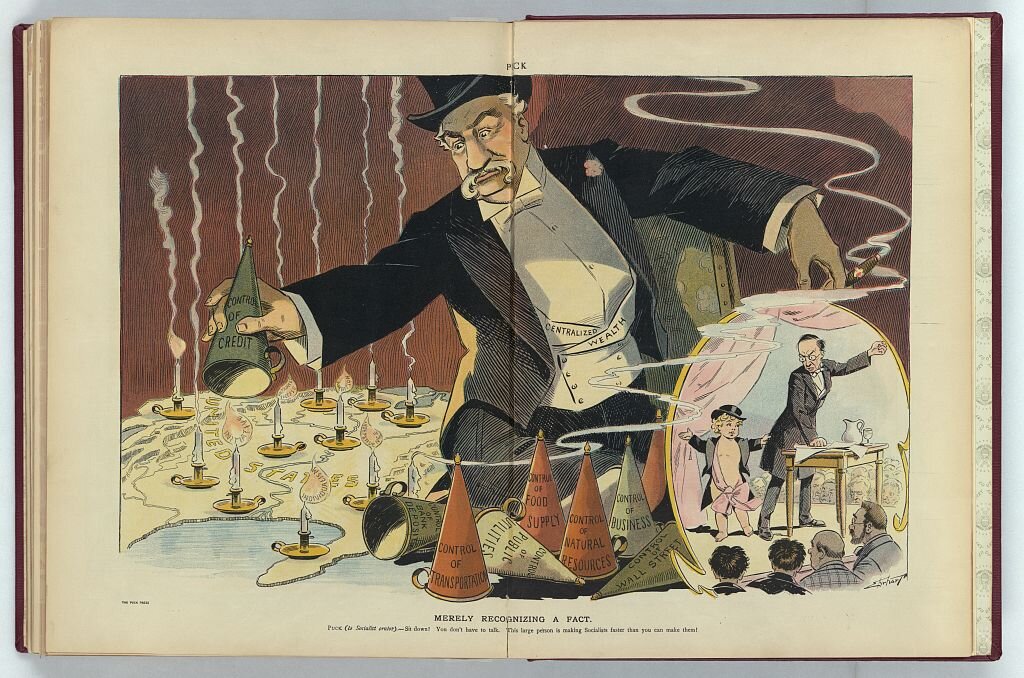
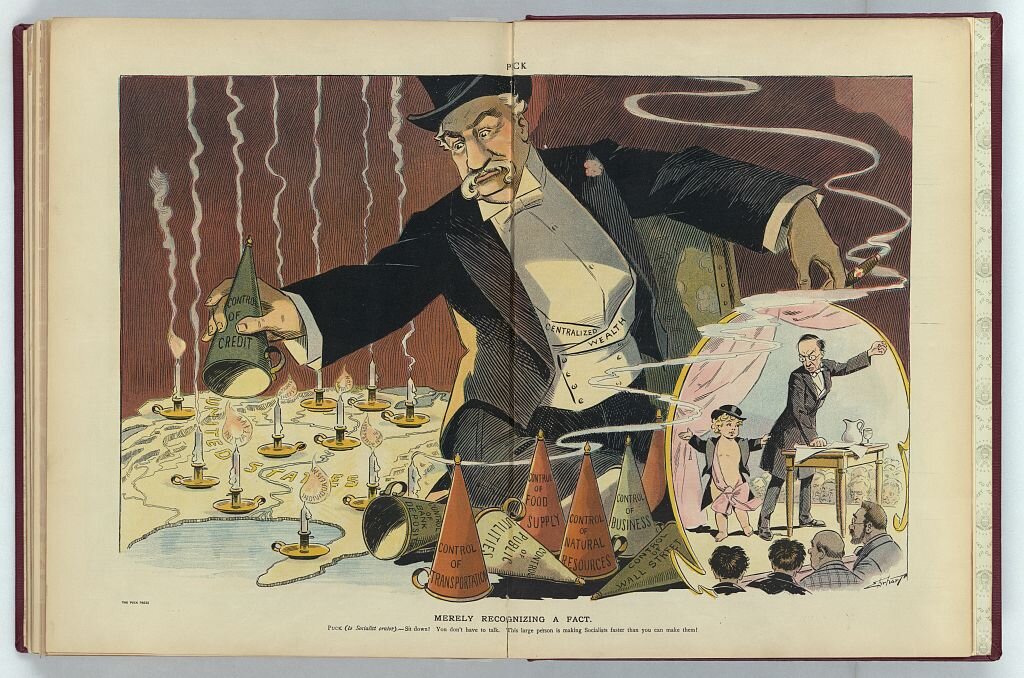
In this horrible time of economic collapse, it is truly touching to see so many corporate chieftains reaching out in solidarity with the hard-hit working class.
We know they’re doing this because they keep telling us they are. Practically every brand-name giant has been spending millions of dollars on PR campaigns in recent weeks asserting that they’re standing with us, declaring over and over: “We’re all in this together.”
Except, of course, they’re really not standing anywhere near us. While we’re waiting in endless lines at food banks and unemployment offices, the elites are still getting fat paychecks and platinum-level health care.
The severity and gross disparity of our country’s present economic collapse is not simply caused by a sudden viral outbreak, but by a decades-long plutocratic policy of intentionally maximizing profits for the rich and minimizing everyone else’s wellbeing. As the eminent economist Joseph Stiglitz rightly put it, “We built an economy with no shock absorbers.”
Jobs, once the measure of a family’s economic security, have steadily been shriveled to low-wage unreliable work, untethered to a fair share (or any share) of the new wealth that workers create. In a relentless push for exorbitant, short-term profits, today’s executives have abandoned any pretense that a corporation is a community of interdependent interests striving to advance the common good.
Instead, while the honchos are richly covered, they’re washing their hands of any responsibility for the health, retirement, and other essential needs of their workforce. “Rely on food stamps, Obamacare, and other publicly-funded programs,” they say, even as their lobbyists and for-sale lawmakers slash the public safety nets so rich shareholders and speculators can take evermore profit.
These forces of American greed have shoved millions of working families to the economic precipice — and all it takes is a virus to push them over.
OtherWords columnist Jim Hightower is a radio commentator, writer and public speaker.
'Repository of joy and pain'

"Simpler Times," by Chelsea Revelle, in the show (which you can see online) “The New Nostalgia,’’ at Fountain Street Fine Art, Boston, through May 24.
The gallery says:
“These days, with mundane freedoms temporarily off-limits, it’s tempting to reminisce, to dwell on rosy ephemeral memories of a better time. The ways we remember affect us as we experience the uncomfortable present and forge ahead into an uncertain future.
“For artists Brenda Cirioni, Patty deGrandpre, Chelsea Revelle, Alexandra Rozenman, Rebecca Skinner, Sylvia Vander Sluis, the past is a reservoir, a repository of joy and pain in a complex relationship with our own private histories. Their work illuminates the cracks in the veneer of idealized past emotions and experiences and creates space for us to re-examine our relationship with the past and inform our experience of the present.’’
Heavier Boston
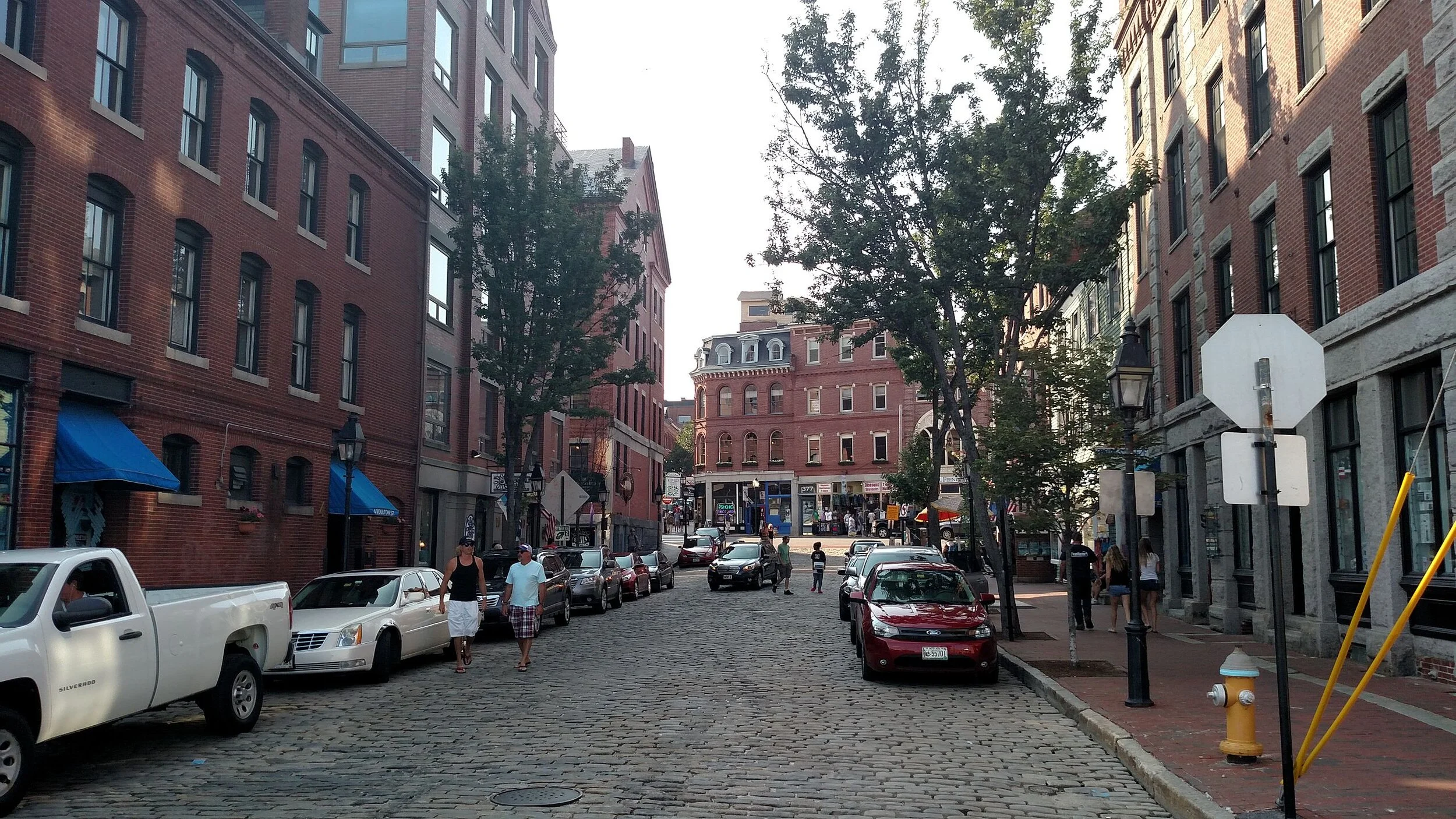
Moulton Street in the Old Port section of Portland
Photo by Bd2media
“I had loved Portland {Maine}. It was a clean city, with weather so delicate that at night you had to look at the streetlights to tell whether it was raining or snowing. Everything was heavier near Boston: air, accents, women.”
― Elizabeth McCracken, American writer and editor, in her short-story anthology Here's Your Hat What's Your Hurry
Chris Powell: Do legislators have courage of grocery clerks?

MANCHESTER, Conn.
When, in March, the leaders of the Connecticut General Assembly suspended its regular session and then, last month, canceled it entirely, they were frightened of the virus epidemic. But now, after weeks of doing nothing except watching impotently, legislators are starting to seem more frightened of their own responsibilities.
After all, the state budget is a shambles, epidemic-mitigation expenses having exploded and tax revenue having collapsed. So what legislator isn't happy to let Gov. Ned Lamont rule by decree, shuffle the money around desperately as best he can, decide whom to help and whom to short, and determine how much longer to keep commerce closed? There is no fun in that, only risk and potential resentment.
But somehow the supermarkets, pharmacies, gas stations, hospitals, nursing homes and various other businesses officially deemed "essential" have managed to remain open with little more augmentation than makeshift face masks and bleach. Other government agencies have continued to meet through electronic means, even complying with public accountability rules via the internet.
This situation implies that the General Assembly isn't more "essential" than barber shops or hair salons, which become more essential every day as hair tickles ears and collars and gray roots start glaring. While the barber shops and hair salons may reopen in two weeks, this may not be so encouraging, since at that point people may start to realize how long returning to normality will take, with barbers and hairdressers needing many months to work off their customers' inventory. (People may do best to start lining up outside now, as for tickets for a Beatles reunion concert.)
As the saying goes, "No man's life, liberty, or property are safe while the legislature is in session," so maybe cynics will figure that the longer the legislature is suspended, the better. Tireless as Governor Lamont has been during the virus emergency, and as much as he is suddenly held in much higher esteem because of his efforts, public dissatisfaction with him can only grow the longer ordinary life remains disrupted.
Of course the emergency is not the governor's fault. But with the General Assembly self-suspended even as legislators, like many other government employees, continue to be paid and insured for not working, the public's normal mechanism for expressing discontent is broken and the governor has no one to share responsibility with.
So while Connecticut's law on declaring emergencies is similar to the laws of other states, it may be too broad. It has enabled the governor to commandeer the state even though the legislature was in session and not threatened with dispersal by any enemy. While Lamont has been sensitive to civil liberty, some other governors invoking the emergency laws of their states have not been, and Connecticut's law could be similarly abused in the future.
With an issue as important as reopening commerce, why shouldn't the legislature claim a say? Except for cowardice, why shouldn't legislators go on record about whether the big raises due for unionized state employees on July 1 should be postponed or canceled?
Lamont has been a benevolent dictator, but benevolent dictatorship should not become Connecticut's form of government.
The General Assembly disbanded itself needlessly and should reconvene immediately. Legislators will just have to summon a little of the courage being shown by nursing home aides, grocery clerks and the governor himself.
Chris Powell is a columnist for the Journal Inquirer, in Manchester.

'Ugly as they may seem'

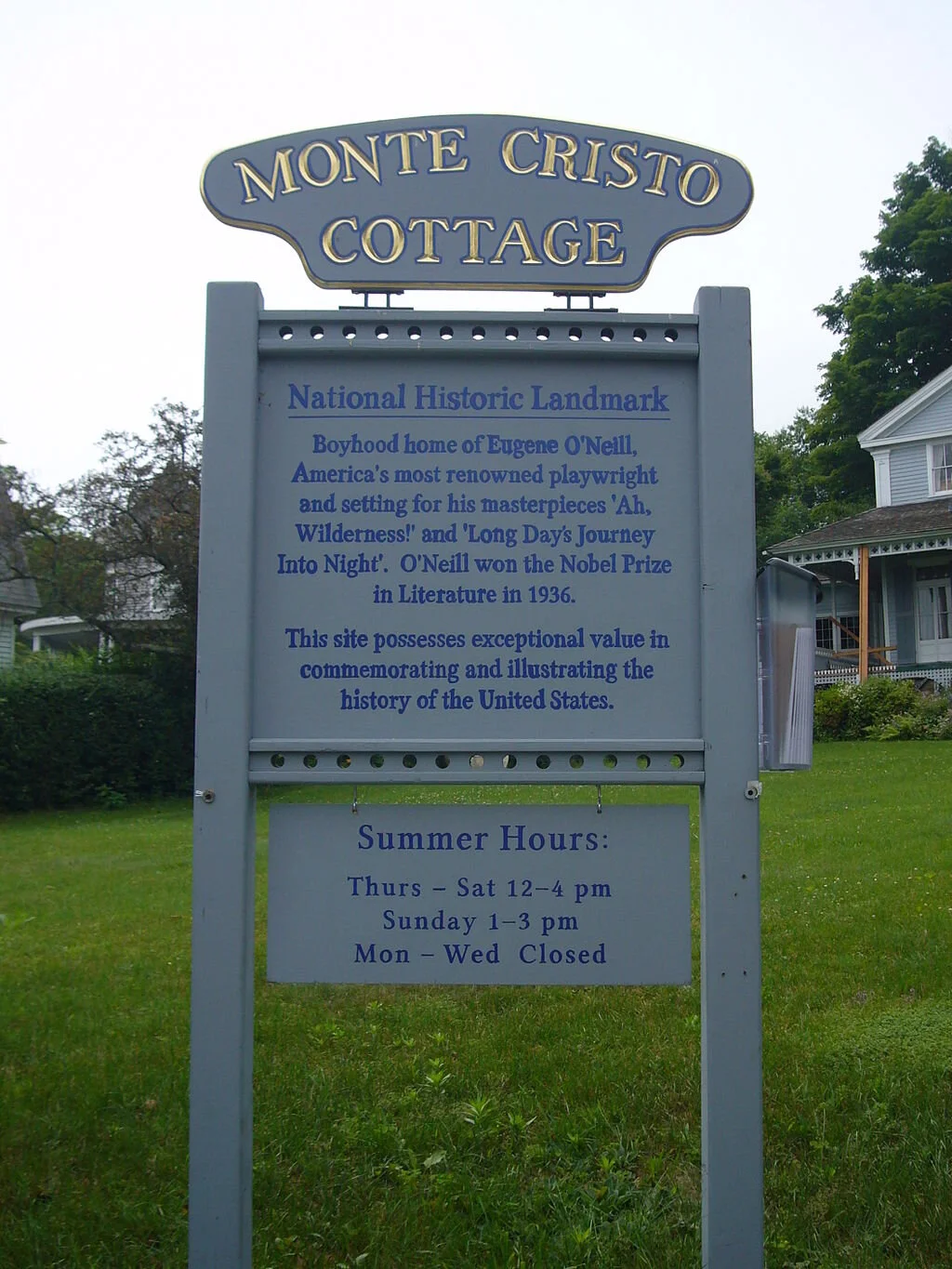
Monte Cristo Cottage, in New London, Conn., used mostly as a summer place by playwright Eugene O’Neill’s family when he was growing up. The name of the house, the first part of which was built in 1840s, came from the fact that the most popular and lucrative role of Eugene O'Neill's father, the actor James O'Neill, was as Edmond Dantès in The Count of Monte Cristo.
— Photo by Ntiprog
— Photo by Staib
“If a person is to get to the meaning of life, he must learn to like the facts about himself — ugly as they may seem to his sentimental vanity — before he can lay hold on the truth behind the facts; and that truth is never ugly!”
Eugene O’Neil (1888-1953), Nobel Prize-winning playwright. He was born in New York City and is buried in Boston’s Forest Hills Cemetery.

'Subtle sounds'

“The pleasant, subtle sounds of Spring, awaken you;
The madrigal of birds, the unmistakeable sway of a slight zephyr,
May combine, to ensure that you are taken to
Thought of a brand-new start….’’
From “Springtime in New England,’’ by Maurice Harris
Resist, resist!

Henry Adams in 1885
“Resistance to something was the law of New England nature.’’
—From The Education of Henry Adams, by Henry Brooks Adams (1838-1918), an historian and member of the Adams political family.
His posthumously published memoir, The Education of Henry Adams, won the Pulitzer Prize and is considered a classic.

Now we can all be narcissists

“Selfie, Downtown Crossing (Boston),’’ by Russell duPont, famed New England artist. Hit this link and this link for more excitement.
Combining COVID-19 forecasts

The UMass School of Public Health
Nicholas Reich, a professor at the University of Massachusetts School of Public Health, in Amherst, has created a forecast center to bring together multiple models to create an ensemble forecast to project COVID-19’s spread and effects. The Influenza Forecasting Center of Excellence projections will include hospitalizations and new cases at state and national levels. Hit this link to learn more.

Mail call

The central U.S. Postal Service office in downtown Taunton, Mass. Built in 1930 with funding from the Works Progress Administration, it’s a lovely example of Classical Revival architecture, and is listed on the National Register of Historic Places in 1987.
Adapted from Robert Whitcomb’s “Digital Diary,’’ in GoLocal24.com
Trump and some other bogus “conservatives’’ seem to want to kill the U.S. Postal Service. As I noted here a couple of weeks ago, in the case of our leader it’s because he’s hates Jeff Bezos, the Amazon mogul/monopolist whose Washington Post insists on reporting on him in more rigorous ways than Pravda covered Stalin. Amazon is a big Postal Service customer. Trump has suggested forcing the Postal Service to boost its delivery prices so much so that they might exceed those of UPS and FedEx. But then, the GOP, especially since the rise of the anti-government Tea Party (anti-government except for Medicare and Social Security, which disproportionately benefit its members), has long been gunning for the service, which goes back to the writing of the U.S. Constitution.
The share of the nation’s workers represented by federal employees has fallen to record lows in the past decade, which is one reason that service has declined at some agencies – e.g., even before the pandemic you often had to wait more than an hour to ask a question of an IRS agent on the phone. Now, during the COVID-19 crisis, the agency takes no calls. Of course, Tea Party types hate the IRS, but how do they propose to fund the government? And remember, it’s Congress, not the IRS, that makes the tax laws. Then there’s the sorely understaffed Social Security Administration.
The argument is that the Postal Service should always be profitable, a demand not made of Trump Organization operations…. But the agency, like, say, the Defense Department, the Food and Drug Administration and the Interstate Highway System, is a necessary public service that also helps tie together the country. It’s a mostly reliable entity that’s essential for the private sector – both individuals and businesses.
Look at the 2006 law pushed through by the GOP that requires the Postal Service to prefund its employee retirement health-care cost for 75 years into the future! Imagine a private company having to deal with that. And do we really want to have the mail controlled by private companies (which might be big campaign contributors)?
There are some services that only government can provide on a broad and coordinated enough fashion to adequately serve the public outside the vagaries of the market.
Tougher than the Devil
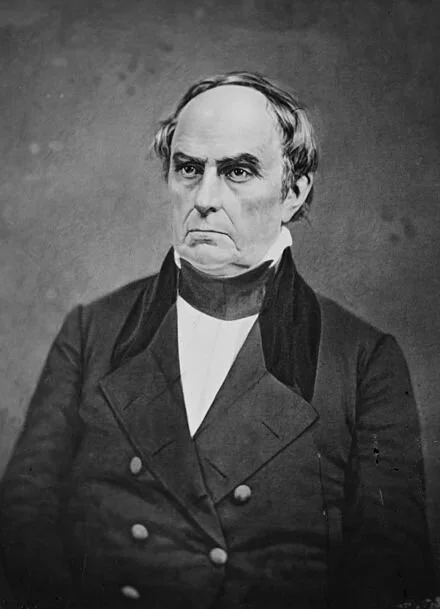
Daniel Webster
“If two New Hampshiremen aren’t a match for the Devil, we might as well give the country back to the Indians.’’
Stephen Vincent Benet (1898-1943), in his short story “The Devil and Daniel Webster’’. The tale centers on a New Hampshire farmer who sells his soul to the Devil and is defended by Daniel Webster (1782-1852), a fictional version of the 19th Century American statesman, lawyer and orator.

Mr, Benet’s gravestone in the Evergreen Cemetery in Stonington. Conn.
Sit there until I say you can leave

Oil and acrylic painting by Sabine Clark, with Zhanna Cantor, at New Art Center, Newton, Mass.
Boston in the quiet part of the Sixties

Boston, at the Park Street subway station, at left, in 1963. All those long-gone stores and restaurants!
USPS collapse would slam Maine particularly hard

Lookout Point in Harpswell, on Casco Bay.
Scott Klinger, a resident of Harpswell, Maine, writes in The Portland Press Herald:
“Even as the U.S. Postal Service is straining to meet demand for deliveries of medicine, food and other essentials, they are facing potential collapse as the recession crushes mail revenue.
“A postal bankruptcy would be devastating for the entire country, but particularly for Maine – the state with the oldest population and the largest share of residents in rural areas. Only USPS has the capacity to get mail and packages six days a week to 160 million addresses, from urban neighborhoods to remote Maine islands.
“Without a major cash infusion, the Postal Service faces financial collapse by the end of summer.
“It didn’t have to come to this. In March, congressional leaders agreed to a bipartisan postal relief plan that would’ve given the Postal Service the same type of direct aid offered to the airlines, small businesses, hospitals and Amtrak. But President Trump intervened to block the postal bailout…”
To read his whole article, please hit this link.
Tart but sustainable
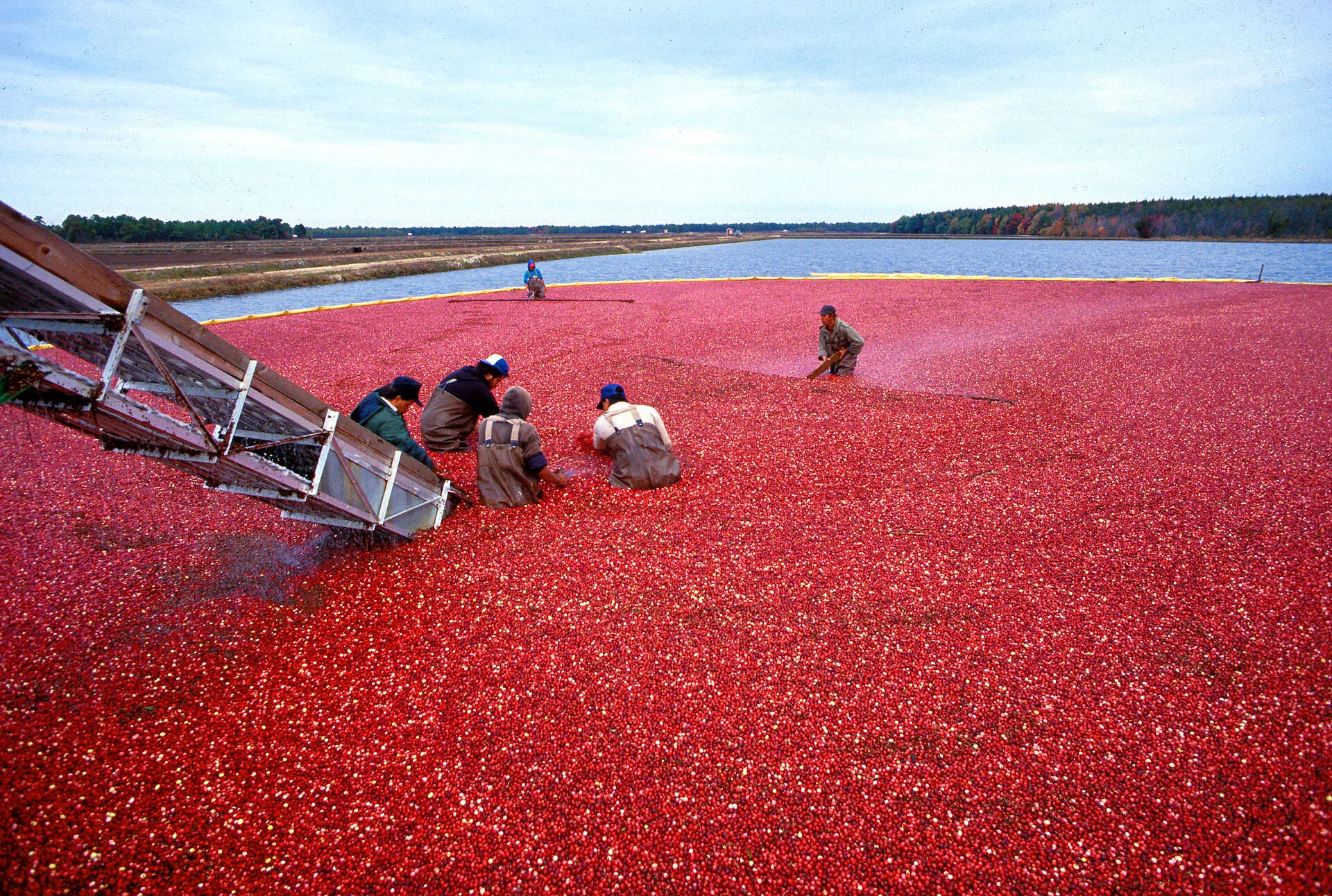
— Photo by Keith Weller
From Robert Whitcomb’s “Digital Diary,’’ in GoLocal24.com
With New Englanders looking to expand local agriculture, and make the region a little less dependent on supplies from far away, the cranberry industry long concentrated in Southeastern Massachusetts is a good model of how to operate. (Current food-supply-chain problems caused by the pandemic are a reminder of the perils of over-dependence on far-away agribusinesses.) The Sustainable Agriculture Initiative has recognized the Ocean Spray cooperative, which represents about 65 percent of the Bay State’s growers, as engaged in sustainable farming.
Ocean Spray said:
“SAI validated Ocean Spray’s sustainable agriculture program and on-farm practices at a representative number of its farmer-owners’ farms against the FSA’s [Farm Service Agency] 112 questions, which measure farm sustainability holistically from soil health, to water conservation practices, to health and safety of farm workers and local communities.’’
The co-op is also working with the National Geographic Society to support the expansion of sustainable agriculture around the world. Ocean Spray said it “will support National Geographic fieldwork across the globe to aid in agriculture practices that help preserve the health of the planet. The field work includes projects such as bee-friendly agriculture, automated land-use, insect collection and biodiversity discovery, and global mapping of center pivot {irrigation} agriculture.’’
Hit this link to learn more:
Summer discovery

— Photo by Mark Siciliano.
That summer in Misquamicut, when boys
as ripe as roadside corn shot pool in darkened
eighteen-over bars, I found the joy
they buried deep in denim straight-front pockets—
— From “Rhode Island,’’ by Amy Miller