How to tell COVID-19 symptoms
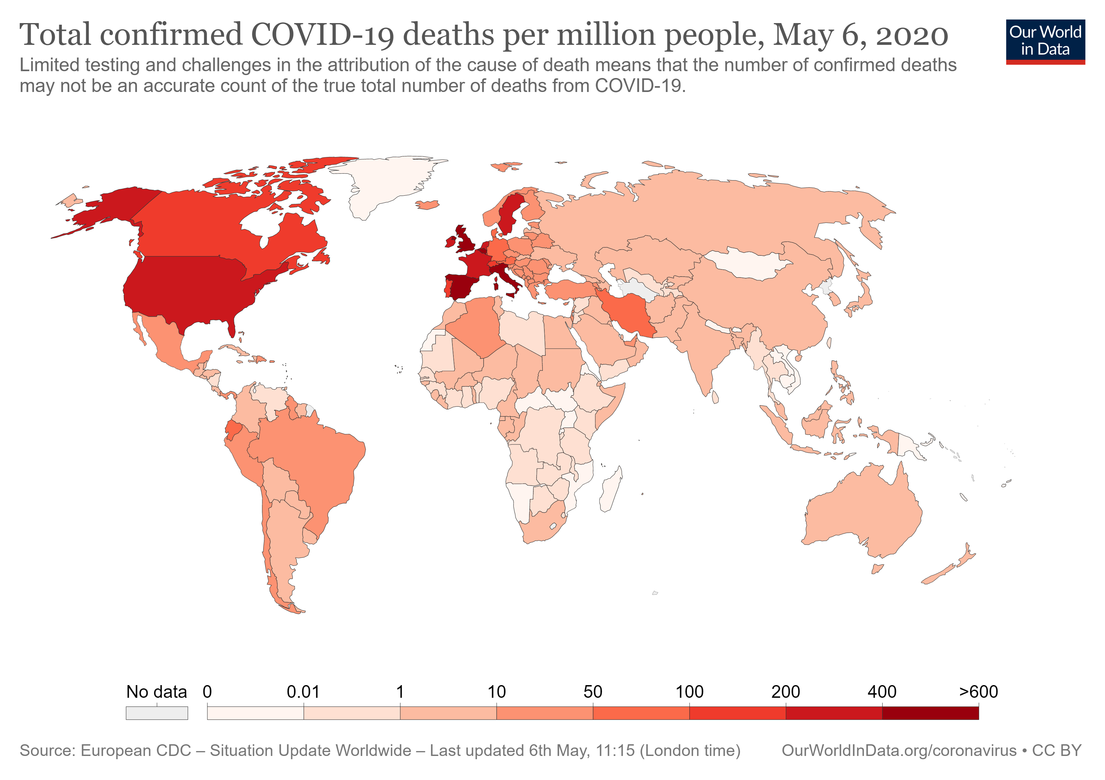
A new guide from Harvard University helps providers differentiate common COVID-19 symptoms—such as shortness of breath and fever—from other symptoms to help health-care workers avoid false negatives.
This could be very useful indeed!
Hit this link to read The Boston Globe’s story.
As with medical matters in general, New England is a world center of research and treatment of COVID-19. Of course, Greater Boston and Connecticut are among the hardest hit by the disease.

The Harvard Medical School quadrangle, in the Longwood Medical Area, in Boston.
Photo by SBAmin
His favorite place to live and die

Oliver Ellsworth house, in Windsor, Conn.
I have visited several countries, and I like my own the best. I have been in all the States of the Union, and Connecticut is the best State; Windsor is the pleasantest town in the State of Connecticut and I have the pleasantest place in Windsor. I am content, perfectly content, to die on the banks of the Connecticut.
-- Oliver Ellsworth (1745-1807), the third chief justice of the United States
Check out New England Council's daily updates on region's COVID-19 response
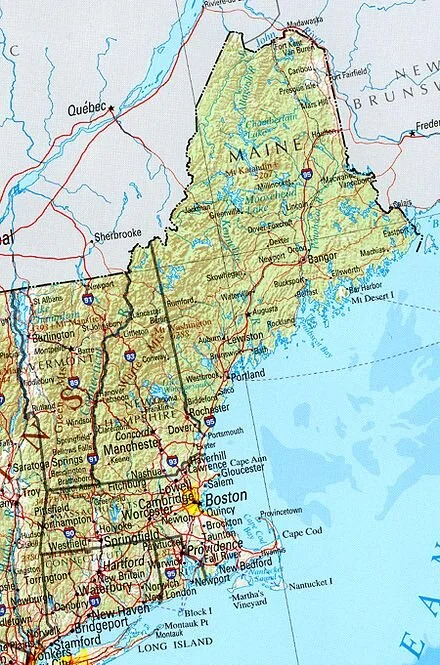
For the best roundup of news about New England’s response to the COVID-19 crisis, please look at The England Council’s Web site — newenglandcouncil.com — where there are updates on most days.

Todd McLeish: The decline of other N.E. pollinators

Rusty patched bumblebees, listed on the U.S. Fish & Wildlife Service’s Endangered Species List, once occupied grasslands and tallgrass prairies of the Northeast and Upper Midwest, but most of these habitats have been lost or degraded.
— U.S. Fish and Wildlife Service
From ecoRI News (ecori.org)
Most of the many news reports about the decline of bees and other pollinators focus on only one side of the story: the drop in honeybee numbers because of colony collapse disorder and its impact on food crops. Yet, as important as that issue is to human food security, it only affects one pollinator species, the European honeybee, a non-native species that is managed by commercial beekeepers.
The decline of native pollinators, of which there are thousands of species in North America that affect thousands of additional species of plants and animals, is largely ignored. Robert Gegear is trying to change that.
The assistant professor of biology at the University of Massachusetts at Dartmouth has launched a citizen science program called the Beecology Project to learn more about the ecology of native pollinators, starting with bumblebees, to better understand why some species are doing so poorly while others remain common.
“The survival of native pollinators has a positive cascading effect on so many other species, both the wild plants they pollinate and the other wildlife using those plants for food, shelter, and nest sites,” Gegear said. “Collectively, those relationships are increasing ecosystem health. But as we start to remove pollinators, we start to affect all these other species.
“Certain pollinators are heading toward extinction, but an equal or greater number have not been affected and are increasing. In ecology, it’s about diversity — not how many individuals you see but how many species you see, since each species has a connection with a flowering plant that has a connection to other species.”
For example, Gegear noted that Bombus impatiens, the common eastern bumblebee, is abundant, expanding, and easy to attract to flower gardens, but many other bumblebee species that used to be common are declining rapidly. Why that is happening is unknown.
“It could be that whatever we’re doing to the environment to drive declines in many species of bumblebees is having a direct positive impact on Bombus impatiens,” he said. “We use a lot of non-native plants in our gardens, and Bombus impatiens loves non-native plants, but other bumblebees don’t like non-natives. That’s one possibility. Or impatiens could be more flexible in its use of nest site habitat. We may be removing habitat that supports species that are less flexible in their nesting requirements. We have evidence for both explanations.”
Among the species formerly common in southern New England and are now quite rare are the yellow-banded bumblebee, the yellow bumblebee, the half-black bumblebee and the rusty patched bumblebee. The U.S. Fish & Wildlife Service recently added the rusty patched bumblebee to the Endangered Species List.
The populations of some of these rare species declined especially fast. When Gegear was conducting his doctoral research in the late 1990s, the yellow-banded bumblebee was so abundant that he considered it a pest. Five years later, however, and he couldn’t find it for miles around his research sites.
“The problem is that we don’t know enough about the natural history of most of these species,” he said. “We know virtually nothing about their nesting preferences, about their overwintering preferences, their floral preferences. They have those preferences for a reason, but if you look at plant lists for bumblebees, everything is equal for all species, and that’s not the case.”
Since little is known about which flowers the rare species prefer, many of the growing number of pollinator gardens being installed around the region aren’t benefitting the species most in need. Instead, they’re just helping the species that are already common.
“People want to help, and they have good intentions, but the science isn’t there to tell them what they should be planting,” Gegear said. “I’m trying to fill in those gaps and change the focus of pollinator research by taking more of an ecological approach.”
To do so, he needs large amounts of data. To collect that data, he has turned to the general public. He teamed with computer scientists at Worcester Polytechnic Institute to develop a web-based app to enable anyone to take photos and videos of bumblebees they see, identify them to species, identify the flowers they are visiting, and submit to Gegear’s database.
Based on the data he has already received, new populations of the rare bumblebee species have been found that will enable him to establish new research sites to learn more about those species. Many participants in the program are even planting gardens with the flowers those rare species prefer to boost those bumblebee populations.

Female monarch butterfly.
From ecoRI News
It’s not just bumblebee preferences that are little known. The same is true of the floral preferences of other pollinators. Gegear plans to expand his app to include observations of butterflies and other types of bees. Eventually, he hopes to expand it further so it can be used to conserve pollinators across the country.
“I put a plant on my property last year that we learned one species prefers, and as soon as it came into bloom, the threatened species came in,” he said. “So this approach really does work.”
Gegear is seeking to recruit more Beecology Project volunteers from throughout the region.
“And if you don’t want to use the app, just take a 10-second video of any bumblebee you see and send it to me,” he said. “That’s just as good.”
Rhode Island resident and author Todd McLeish runs a wildlife blog.
Flowing from Framingham

A typical flow battery has two tanks of liquids that are pumped past a membrane held between two electrodes.
From Robert Whitcomb’s “Digital Diary,’’ in GoLocal24.com
We in the Northeast tend to be more enthusiastic about renewable energy than most Americans, in part because we tend to be more educated, including about global warming, and also because there’s no fossil fuel to be extracted in our region. But a big hurdle is boosting the capacity to store energy from solar- and wind-power facilities.
And so it was good to hear that Framingham, Mass.-based Ameresco has completed Phase 1 of Defense Department-funded research on flow battery technology as an alternative to lithium ion batteries, which degrade over time. The hope is that flow batteries may be more efficient than lithium ones and thus reduce the need for, say, diesel generators (with their pollution) used in microgrids. These new batteries might also cut utility bills.

'Poetic suggestion'

“New England Village,’’ by Henry Ward Ranger (1858-1916). Many of his paintings, including this one, came from his years along the Connecticut shore. He once said: “I feel that my little bit of New England, which I know and love so well, is reeking with poetic suggestion.
Llewellyn King: Business dating introduces start-ups to big potential suitors

WEST WARWICK, R.I.
The lovelorn have computer dating: Cupid is digitized. But computer dating is not just for romantic love anymore.
An intriguing new company, founded by two computer professionals, is helping start-up companies find love with big enterprises. The results, so far, are wedding bells for a great variety of companies.
The matchmaker is Hunterz.io (yes, spelled with a “z”) and the proposition is straightforward: Start-ups register and are connected with the all-important “hunterz” -- people who have worked for large enterprises and know the lay of the land inside. They are people who have been laid off or have retired or are consultants; they make introductions and direct the start-up to the right people and right part of the large enterprise. Sometimes a hunterz is employed by a large entity, but mostly they are or were associated or employed there.
The co-founders of Hunterz.io are Noam Weisman, a veteran of giant Cisco Systems, and Yuval Shalev, who used to work for Deutsche Telekom, one of the world’s leading integrated telecommunications companies.
Weisman told me that things were going well for the matchmaker before the coronavirus crisis, but there has been stratospheric growth since it began. “We have more than 10,000 hunterz on the platform, and we are active in 69 industries in 55 countries,” he told me. Although as a New York-based company, the emphasis is on North America, Weisman said.
An example of Hunterz.io at work is the successful linkup between Intellivisit, a Madison, Wisc.-based virtual health diagnostics company, and Rush Hospital, in Chicago. A hunterz made the introduction and Intellivisit found a role at the hospital. Weisman says that kind of linking is happening all the time to the benefit of the large enterprises and the start-ups. No more banging on closed doors, shooting off emails to unknown players who, as likely as not, will trash them. This way willing start-ups and willing partners -- investors or purchasers -- meet each other.
“It was great to connect with some of the more innovative start-ups I have met,” said Kevin Serfass, manager of Global Telecom Partners. “My contacts appreciated me introducing these start-ups to them as they were in the process of looking for such solutions for a while now.”
Another hunterz, Othmar Knoll, an executive heath-care consultant said, “Being a full-time consultant, it was a welcome change of pace to have vendors contact me for my services. Instead of me having to look for new vendors. It was simple and quick.”
To my mind Hunterz.io is the wave of the future -- a wave I have been anticipating. New start-ups are likely to flood the market as we get to the “new normal.” That presumes that we will not suddenly revert to the status quo ante; that U.S. and global business will be dramatically restructured with new players, technologies and vision.
Since the beginning of business linking within the business sphere has been a problem. With Weisman’s company a new kind of efficiency has entered the marketplace.
Most of us have heard the plaintive, “Do you know anyone at this company? I think they would love my start-up, but I don’t know how to get their attention?” Or the equally sad, “I used to know someone whose wife worked there. Maybe she could help.”
As dating went from happenstantial to computer-matching so, too, businesses have always needed to know of each other. The big need the innovation of the small, and the small need the patronage of the big.
How many start-ups with wonderful product ideas have failed and left the field for want of an introduction? Introductions are the oxygen of business and the more efficiently they can be made, the brighter the future looks -- particularly at a time when, in so many ways, the future is cloudy.
After upheaval, like the current one, there is always innovation. But innovation needs to be known for it to find partners, patrons, purchasers.
When I was publishing magazines in New York in the 1960s, the struggle was to get a new magazine displayed on the 110,000 newsstands in the United States. We more-or-less bribed our way onto them.
Business has always had the equivalent of the newsstand problem: How do you tell them you are there? Now they can find each other.
Llewellyn King is executive producer and host of White House Chronicle, on PBS. His email is llewellynking1@gmail.com and he’s based in Rhode Island and Washington, D.C.
'The city is rigid'
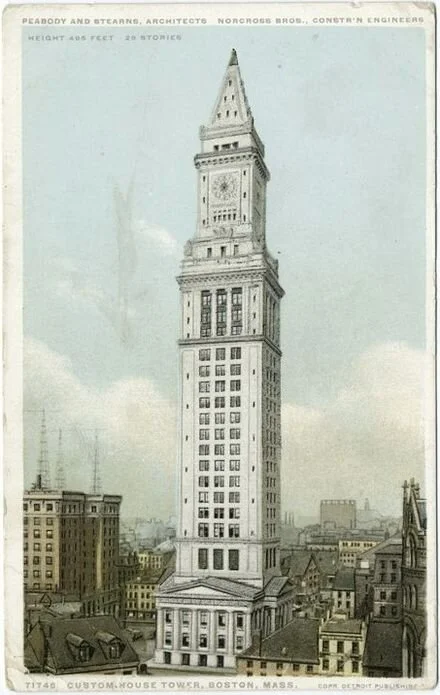
Custom House Tower in the early 20th Century.
Cross-hatchings of rain against grey walls,
Slant lines of black rain
In front of the up and down, wet stone sides of buildings.
Below,
Greasy, shiny, black, horizontal,
The street.
And over it, umbrellas,
Black polished dots
Struck to white
An instant,
Stream in two flat lines
Slipping past each other with the smoothness of oil.
Like a four-sided wedge
The Custom House Tower
Pokes at the low, flat sky,
Pushing it farther and farther up,
Lifting it away from the house-tops,
Lifting it in one piece as though it were a sheet of tin,
With the lever of its apex.
The cross-hatchings of rain cut the Tower obliquely,
Scratching lines of black wire across it,
Mutilating its perpendicular grey surface
With the sharp precision of tools.
The city is rigid with straight lines and angles,
A chequered table of blacks and greys.
Oblong blocks of flatness
Crawl by with low-geared engines,
And pass to short upright squares
Shrinking with distance.
A steamer in the basin blows its whistle,
And the sound shoots across the rain hatchings,
A narrow, level bar of steel.
Hard cubes of lemon
Superimpose themselves upon the fronts of buildings
As the windows light up.
But the lemon cubes are edged with angles
Upon which they cannot impinge.
Up, straight, down, straight -- square.
Crumpled grey-white papers
Blow along the side-walks,
Contorted, horrible,
Without curves.
A horse steps in a puddle,
And white, glaring water spurts up
In stiff, outflaring lines,
Like the rattling stems of reeds.
The city is heraldic with angles,
A sombre escutcheon of argent and sable
And countercoloured bends of rain
Hung over a four-square civilization.
When a street lamp comes out,
I gaze at it for fully thirty seconds
To rest my brain with the suffusing, round brilliance of its globe.
“Afternoon rain in State Street’’ (Boston), by Amy Lowell (1874-1925)

Chuck Collins/Helen Flannery: America needs emergency charity stimulus

Andrew Carnegie's philanthropy a Puck magazine cartoon by Louis Dalrymple, 1903.
From OtherWords.org
BOSTON
We are living through a time of unprecedented challenges: a major public health crisis and a deepening recession.
Congress has already authorized trillions in stimulus funds. But millions of Americans are still relying on the support of local nonprofits such as food banks and human services. These nonprofits are going to need major infusions of support from charitable donations and foundations.
Fortunately, Congress can help them come up with $200 billion — without costing taxpayers another dime.
We have heard many heartening stories of charitable foundations and individual donors stepping up to fund emergency responses to the COVID-19 pandemic. But this moment has also unmasked a basic design flaw in the U.S. charity system: Donors can contribute to charitable intermediaries that then may sideline the funds for years — or forever.
Right now, there’s an estimated $1.2 trillion in wealth warehoused in private foundations and donor-advised funds. While the donors to these funds have already taken substantial tax breaks for their contributions — sometimes decades ago — there are few incentives to move the money out to charities doing urgent, necessary work.
In fact, America’s 728,000 donor-advised funds, or DAFs — which hold an estimated $120 billion — aren’t legally required to pay out their funds at all, ever. While some DAFs, especially those administered by community foundations, pay out in a timely way, other accounts can languish for years.
America’s 86,000 foundations, which hold over $1 trillion in assets, are mandated by tax law to pay out 5 percent of their assets each year. But many treat that 5 percent as a ceiling, not a floor. And even that 5 percent can include overhead expenses and investments in profit-making companies, rather than direct support for nonprofits.
Remember: these donations are subsidized by ordinary taxpayers. For the wealthiest donors, every dollar parked in their foundation or DAF reduces their tax obligations by as much as 74 cents, leaving people of more modest means to cover public programs.
These wealthy donors have already claimed their tax breaks. Now — in a crisis — ordinary taxpayers need to see the benefit of the funds they subsidized flowing to charities on the ground.
Over 700 foundations have signed a pledge to “act with fierce urgency” to support nonprofit partners and communities hit hardest by COVID-19. And the community foundation sector has set up emergency response systems in all 50 states to channel donations to COVID-19 response efforts.
These are inspiring voluntary efforts. But in this unprecedented emergency, it’s time to mandate an increased flow of funds.
As part of the CARES Act stimulus, Congress increased incentives for charitable giving. In the same spirit, we urge Congress, as part of its next relief bill, to support an “Emergency Charity Stimulus” to inject more than $200 billion into the economy, protect jobs in the nonprofit sector, and help fight the coronavirus disaster.
For three years, Congress should require private foundations to double their annual required payout, from 5 percent to 10 percent. For each one percent increase in payout, an estimated $11 billion to $12.6 billion will flow to charities annually. The same standard should apply to donor advised funds as well.
America’s taxpayers have already effectively paid for these funds. Now we need them deployed to working charities.
Chuck Collins directs the Program on Inequality and the Common Good at the Institute for Policy Studies. Helen Flannery is an Associate Fellow at the Institute for Policy Studies. This op-ed was adapted from Inequality.org and distributed by OtherWords.org.
Like going to another country

The harbor of Matinicus island, Maine. It’s the easternmost inhabited island in the United States.
New Englanders like to visit their many islands in the summer, especially Block Island, Martha’s Vineyard, Nantucket and those seemingly innumerable islands along the Maine Coast. Even visiting a big if often over-crowded island such as Martha’s Vineyard can give a nice sense of escape, almost like going to another country. Unlike a lot of travel, just getting there, mostly by boat, is part of the pleasure. On the other hand, this year many of us feel that we’ve long been trapped on our own little islands on the mainland.
— From Robert Whitcomb’s “Digital Diary,’’ in GoLocal24.com
Disappearing act

“The Preparation” (photograph on textured surface), by David Lee Black, at Galatea Fine Art’s (in Boston) online gallery.
See:
A certain ripeness

“Hypotenuse,’’ the Newport home of Richard Morris Hunt (1827-95), who designed many houses for the Gilded Age elite, including his own.
“The atmospheric tone, the careful selection of ingredients, your pleasant sense of a certain climatic ripeness— these are the real charm of Newport, and the secret of her supremacy.’’
—-Henry James (1843-1916), in “Newport’’
Plant-based art

”Art de la Mer’’ (Falmouth, on Cape Cod) (archival pigment print), by Bobby Baker. Copyright Bobby Baker Fine Art
Philip K. Howard: Create panel to streamline government in wake of virus, including fixing extreme pensions, work rules

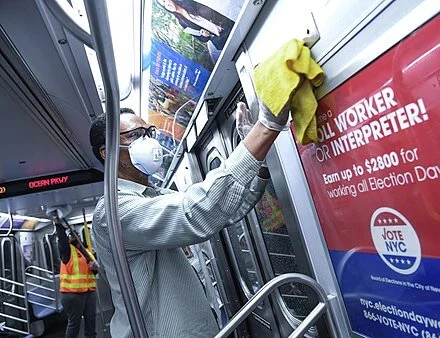
Worker disinfects a New York City subway car in the current pandemic. New York State’s Metropolitan Transportation Authority operations are rife with astronomically expensive and outdated work rules and extravagant pensions. Ditto at the Massachusetts Bay Transportation Authority.
NEW YORK
Howls of outrage greeted Senate Majority Leader Mitch McConnell’s (R.-Ky.) suggestion that Congress should resist further funding of insolvent state and local governments because the money would be used “to bail out state pensions” that were never affordable except “by borrowing money from future generations.” Instead, Senator McConnell suggested, perhaps Congress should pass a law allowing states to declare bankruptcy.
New York Gov. Andrew Cuomo immediately countered that the bankruptcy of a large state would lead to fiscal chaos, and called McConnell’s suggestion “one of the saddest, really dumb comments of all time.”
Indeed, the lesson of the 2008 Lehman Brothers bankruptcy was that a bail-out would have been far preferable, less costly as well as less disruptive to markets.
But McConnell is correct that many states are fiscally underwater because of irresponsible giveaways to public unions. About 25 percent of the Illinois state budget goes to pensions, including more than $100,000 annually to 19,000 pensioners, who retired, on average, at age 59. These pensions were often inflated by gimmicks such as spiking overtime in the last years of employment, or by working one day to get credit for an extra year.
In New York, arcane Metropolitan Transportation Authority work rules result in constant extra pay — including an extra day’s pay if a commuter rail engineer drives both a diesel and an electric train; two months of paid vacation, holiday and sick days; and overtime for workdays longer than eight hours even if part of a 40-hour week. In 2019, the MTA paid more than $1 billion in overtime.
Cuomo has thrown out rulebooks to deal with COVID-19, and recently mused about the need to clean house: “How do we use this situation and …reimagine and improve and build back better? And you can ask this question on any level. How do we have a better transportation system, a …better public health system… You have telemedicine that we have been very slow on. Why was everybody going to a doctor's office all that time? Why didn't you do it using technology? … Why haven't we incorporated so many of these lessons? Because change is hard, and people are slow. Now is the time to do it.”
Cut red tape, reform entitlements
Perhaps McConnell and Cuomo are not that far apart after all. While bankruptcy makes no sense now, since states can hardly be blamed for COVID-19, federal funding could come with an obligation by states to adopt sustainable benefits and work practices for public employees.
Why should taxpayers pay for indefensible entitlements? How can Cuomo run “a better transportation system” when rigid work rules prohibit him from making sensible operational choices?
Taxpayers are reeling from these indefensible burdens. The excess baggage in public institutions is hardly limited to public employees. The ship of state founders under the heavy weight of red tape and entitlements that have, at best, only marginal utility to current needs.
Bureaucratic paralysis is the norm, whether to start a new business (the U.S. ranks 55th in World Bank ratings) or to act immediately when a virulent virus appears (public health officials in Seattle were forced to wait for weeks for federal approvals).
Well-intended programs from past decades have evolved into inexcusable entitlements today — such as “carried interest” tax breaks to investment firms and obsessive perfection mandated by special-education laws (consuming upward of a third of school budgets).
Partisanship blocks reform
Government needs to become disciplined again, just as in wartime. It must be adaptable, and encourage private initiative without unnecessary frictions. Dense codes should be replaced with simpler goal-oriented frameworks, as Cuomo has done. Red tape should be replaced with accountability. Excess baggage should be tossed overboard. We’re in a storm, and can’t get out while wallowing under the heavy weight of legacy practices and special privileges.
McConnell and Cuomo each have identified the madness of tolerating public-waste-as-usual. But toxic partisanship drives them apart. Nor would ad hoc negotiations work to restore discipline to government; too many interest groups feast at the public trough.
The only practical approach is for Congress to authorize an independent recovery commission with a broad mandate to relieve red tape and recommend ways to clean out unnecessary costs and entitlements. This is the model of “base-closing commissions” that make politically difficult choices of which states lose military bases.
Recovering from this crisis will be difficult enough without lugging along the accumulated baggage from the past. A streamlined, disciplined government would be a godsend not only to marshal resources for social needs, but to liberate human initiative at every level of society. That requires changing the rules. But change is hard, as Cuomo noted. Broad trust will be needed. That’s why the new framework should be devised by an independent recovery commission. =
Philip K. Howard, a New York-based lawyer, writer, civic leader and photographer, is founder of Common Good. His latest book is Try Common Sense. Follow him on Twitter: @PhilipKHoward. This piece first ran in USA Today.
Chris Powell: Alleged Biden, Kavanaugh victims took easy way out; is due process sexist?
MANCHESTER, Conn.
How times change. Two years ago the loudest and most politically correct voices in the country were proclaiming that all women accusing men of sexual misconduct were to be believed without question, no matter how dated, uncorroborated and opportunistic the accusations, no matter even if the accuser and accused were minors at the time of the alleged misconduct.
No, ordinary due process of law was sexist and anyone who believed in it should just shut up.

Brett Kavanaugh
Of course what those voices really meant two years ago was that basic fairness was not so important amid the stakes involved, political control of the Supreme Court -- that basic fairness should be waived to prevent the appointment of another conservative Republican to the Supreme Court, Brett Kavanaugh.
Now that the presumptive presidential nominee of the Democratic Party, former Vice President Joe Biden, has been accused of sexual misconduct by a woman who was on his Senate staff 27 years ago, many of the politically correct voices from two years ago are silent. Their silence means that preventing President Trump's re-election is infinitely more important than fairness to Biden's accuser and any exploration of Biden's character.
If the politically correct voices could have been candid about this with Kavanaugh and if they could be candid about it now with Biden, they might be persuasive. People who very much wanted a conservative majority on the Supreme Court were not inclined to grant credibility to Kavanaugh's accuser or to let the nominee's fitness for office be defined by something he may have done before he was old enough to vote. Similarly, people who consider Trump reprehensible personally and his policies abhorrent have reason to support Biden regardless of his personal deficiencies.
After all, the accusers of Kavanaugh and Biden never came forward contemporaneously -- never followed the rules of fairness and due process whose benefit they now seek for themselves, never complained to the police. Yes, that might have made their burden heavier, but due process isn't a mere personal convenience. It is fairness to all society.

Joe Biden on the stump.
— Photo by Michael Stokes
Besides, politics has always been a matter of judgment, degree, and tradeoffs and often a matter of the lesser of two evils. Even if the accusers of Kavanaugh and Biden have told the whole truth about the misconduct they allege, when it happened they took the easy way out, if understandably enough, and then, decades later, tried to overturn national politics and policy with their personal grievances. What they allege cannot be proven to judicial standards, so construing it is left to politics, which is now so riven that the character of officeholders means little and the results of policy almost everything.
Who cares much anymore if your candidate is a rapist or even a mass murderer as long as you get what you want from the government?
Sad as all this is, it is funny to watch the leading women prospects for the Democratic vice presidential nomination proclaiming their belief in Biden's denial of misconduct, and funny to watch Connecticut's senior U.S. senator, Richard Blumenthal, ignore the accusation.
Two years ago Blumenthal was the most fervent in the “believe all women without question” mob. Now the best he can do is to delay his endorsement of Biden. With the tables turned, Blumenthal can offer only "social distancing."
Chris Powell is a columnist for the Journal Inquirer, in Manchester.
N.E. responds: Beth Israel-B.U. gear project; Dartmouth sets up COVID-19 ICU
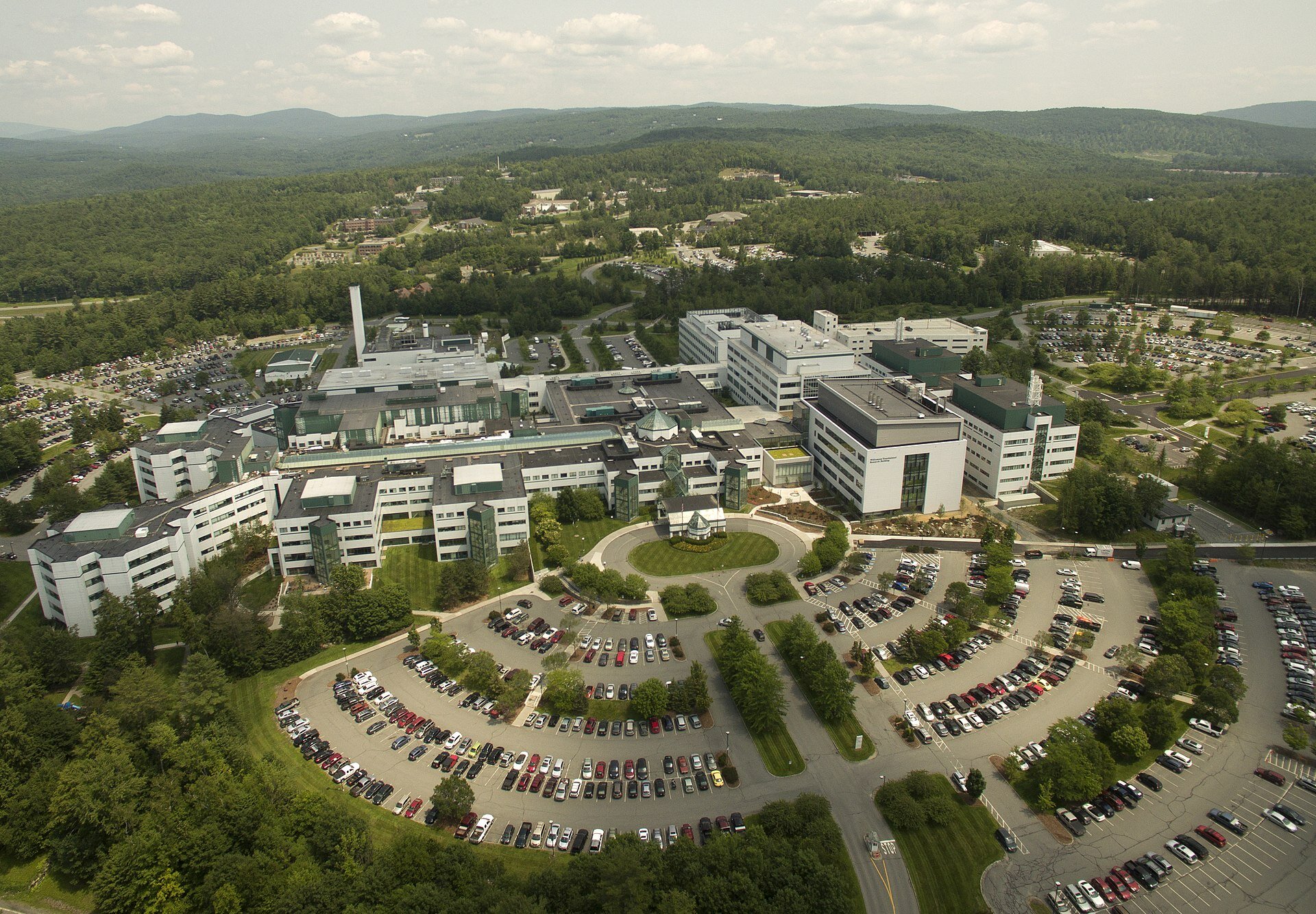
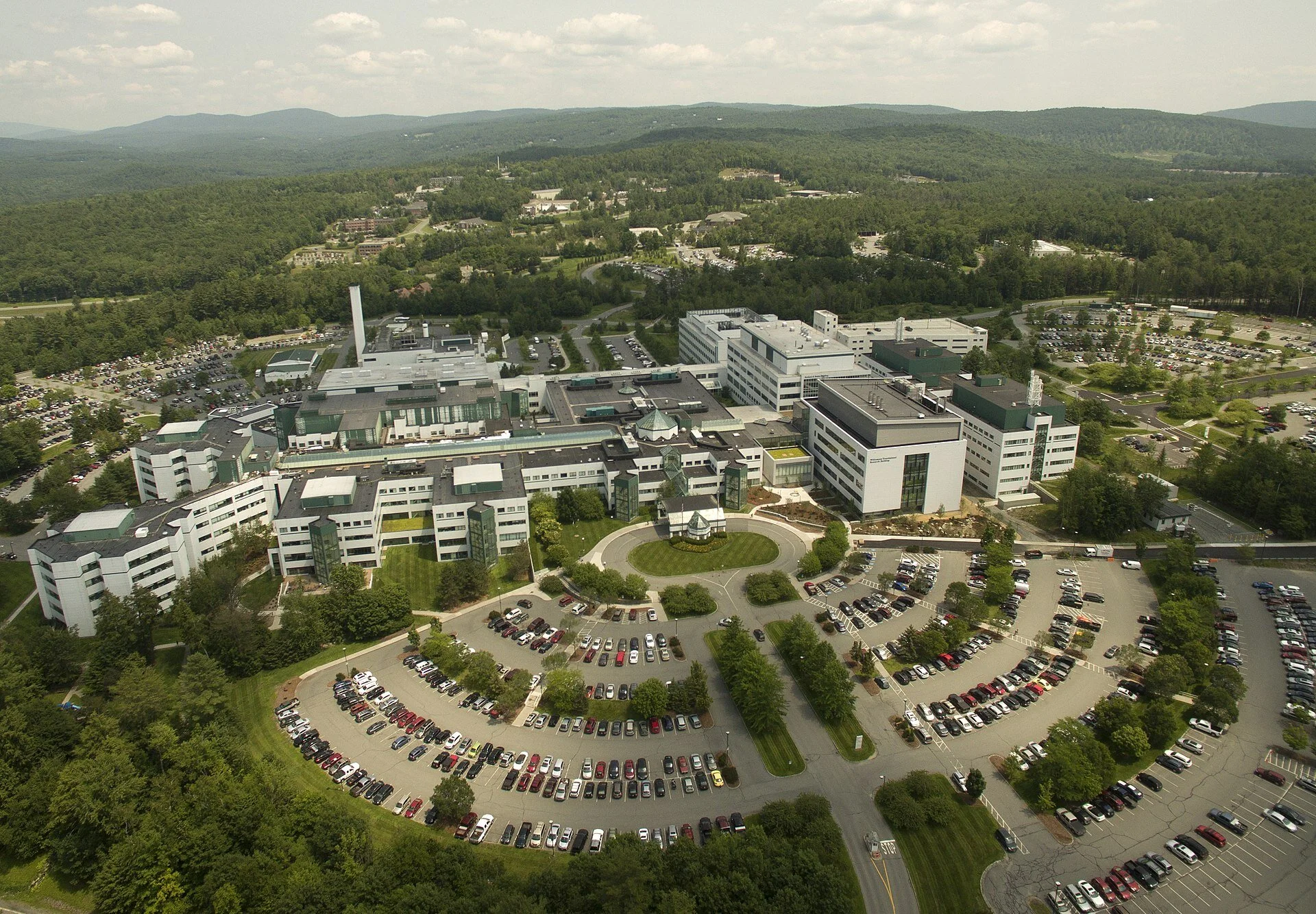
Dartmouth Hitchcock Medical Center, in Lebanon, N.H.
— Photo by Jared C. Benedict
From The New England Council (newenglandcouncil.com)
BOSTON
As our region and our nation continue to grapple with the Coronavirus Disease (COVID-19) pandemic, The New England Council is using our blog as a platform to highlight some of the incredible work our members have undertaken to respond to the outbreak. Each day, we’ll post a round-up of updates on some of the initiatives underway among Council members throughout the region. We are also sharing these updates via our social media, and encourage our members to share with us any information on their efforts so that we can be sure to include them in these daily round-ups.
You can find all the Council’s information and resources related to the crisis in the special COVID-19 section of our website. This includes our COVID-19 Virtual Events Calendar, which provides information on upcoming COVID-19 Congressional town halls and webinars presented by NEC members, as well as our newly-released Federal Agency COVID-19 Guidance for Businesses page.
Here is the May 4 roundup:
Medical Response
Boston University, Beth Israel Develop Improved Medical, Testing Equipment –Boston University (BU) and Beth Israel Deaconess Medical Center (BIDMC) are collaborating to improve the equipment used to diagnose and treat COVID-19 patients. The partnership has already produced a more rapid diagnostic test, an improved ventilator design, and new models for testing swabs. The Brink reports.
Dartmouth Hitchcock Establishes COVID 19 Intensive Care Unit – The neurocritical care unit at Dartmouth-Hitchcock Medical Center has been transformed into a new intensive care unit for COVID-19 patients. This change will ensure that the hospital does not exceed capacity for patients or deplete its existing stockpile of medical supplies and protective equipment. Read more in the Sentinel Source.
Economic/Business Continuity Response
Framingham State Moves Elderly Learning Program Online – Framingham State University is transitioning its learning program for senior citizens online to provide a social outlet and educational opportunities to the most vulnerable, and most isolated, during the pandemic. The program had been postponed due to stay-at-home orders but will now offer the free courses in literature, songwriting, and more. The Worcester Business Journal has more.
Northern Essex Community College President Calls for More Aid – President Lane Glenn of Northern Essex Community College (NECC), in a virtual event with Senator Ed Markey (D-MA), called for more aid to community colleges in Massachusetts as they support 100,000 students in the state during this crisis. President Lane noted that community college students are more likely to be low-income and minority residents and are experiencing housing and food insecurity at higher rates. Read more in the Boston Business Journal.
Community Response
Ascentria Care Alliance Provides Support for Resettling Refugees – More than 100 refugees living in Concord, N.H., are receiving support and care from Ascentria Care Alliance as they resettle in the United States. The healthcare provider, through its Services for New Americans department, is helping these families navigate the resources available to them amid these challenging times. Read more in the Nashua Telegraph.
TD Bank Launches Community Resilience Initiative –TD Bank has announced the TD Community Resilience initiative, dedicating $25 million to organizations supporting community response and recovery efforts from the pandemic. From healthcare workers in community health centers to local banking offices in the United States and Canada, the initiative will seek to support communities as they recover from the virus. Read more from CSRwire.
Turkey Sends Medical Equipment to United States – Turkey sent a plane of medical equipment to the United States to aid the response to COVID-19. The Consulate General of Turkey in Boston shares that country provided 500,000 masks, over 500 gallons of disinfectant, and other essential materials in a continuation of its humanitarian aid around the world. ABC News has more.
Stay tuned for more updates each day, and follow us on Twitter for more frequent updates on how Council members are contributing to the response to this global health crisis.
Gray matter

“Dance in Charcoal,’’ by Jo Ellen Reinhardt, co-founder of The New England School of Fine Art, in Worcester.
With COVID-19 having temporarily closed her school, she has started creating YouTube videos to keep teaching.
What you would have missed

In downtown Darien.
“This is the day. You might have died
And never seen Rowayton in the rain,
Or morning glories bloom in Darien.
This is the day you might have died.’’
Dick Allen (1939-2017) , in his poem “On the New Haven Line’’
'Too perfect'

An arial view of Woodstock, Vt.
“A sinking feeling that here is a transient, a tourist, a caretaker, and not the householder; that men live in New England as the Venetian lives in Venice….All this white and green and blue is precariously too perfect.’’
Robert Lowell (1917-77), in “New England and Further,’’ a long essay on New England poets.