
Vox clamantis in deserto





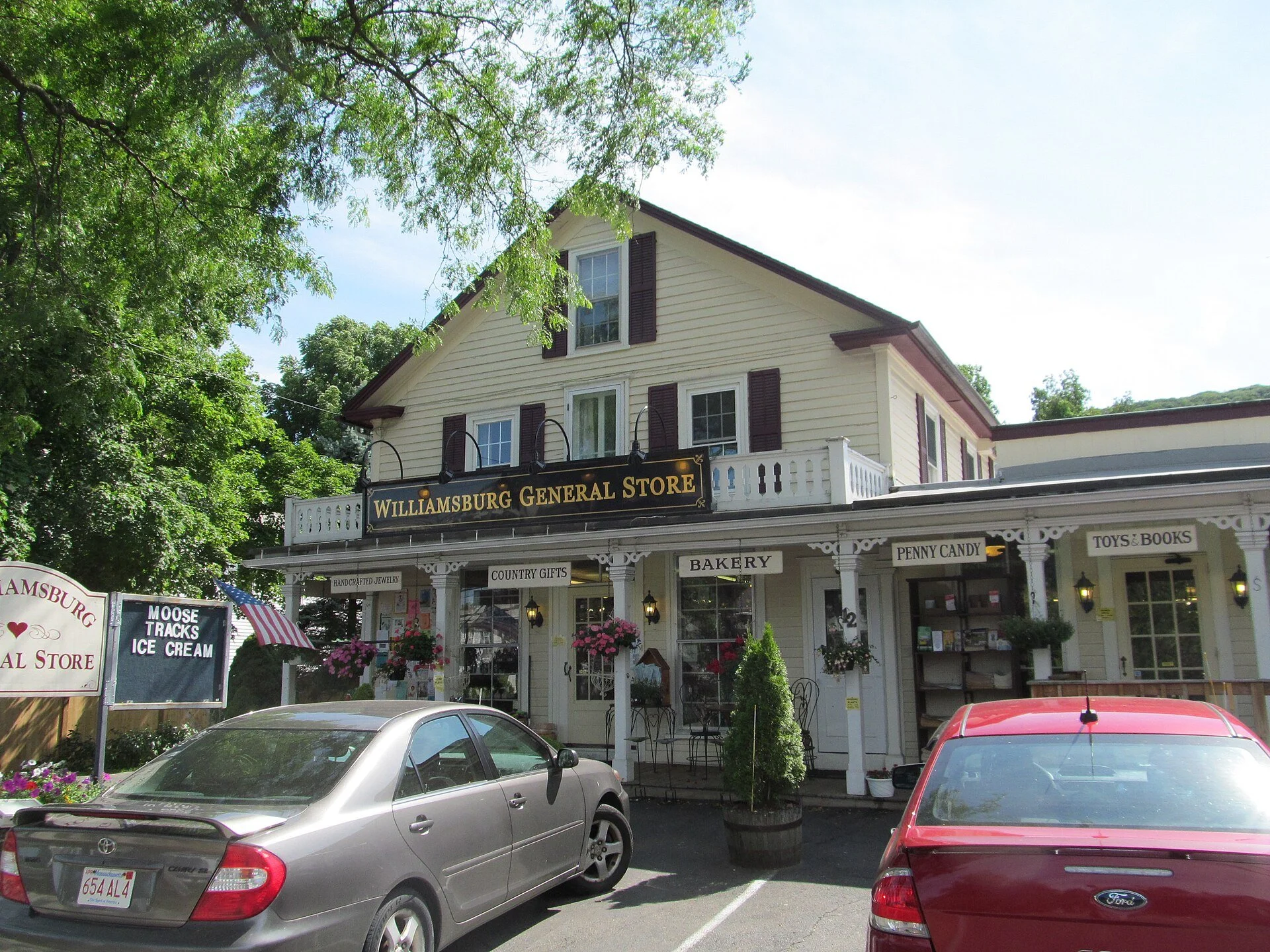
Resist, resist!
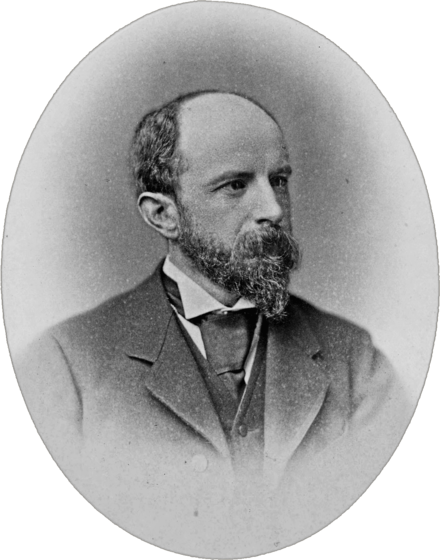
Henry Adams in 1885
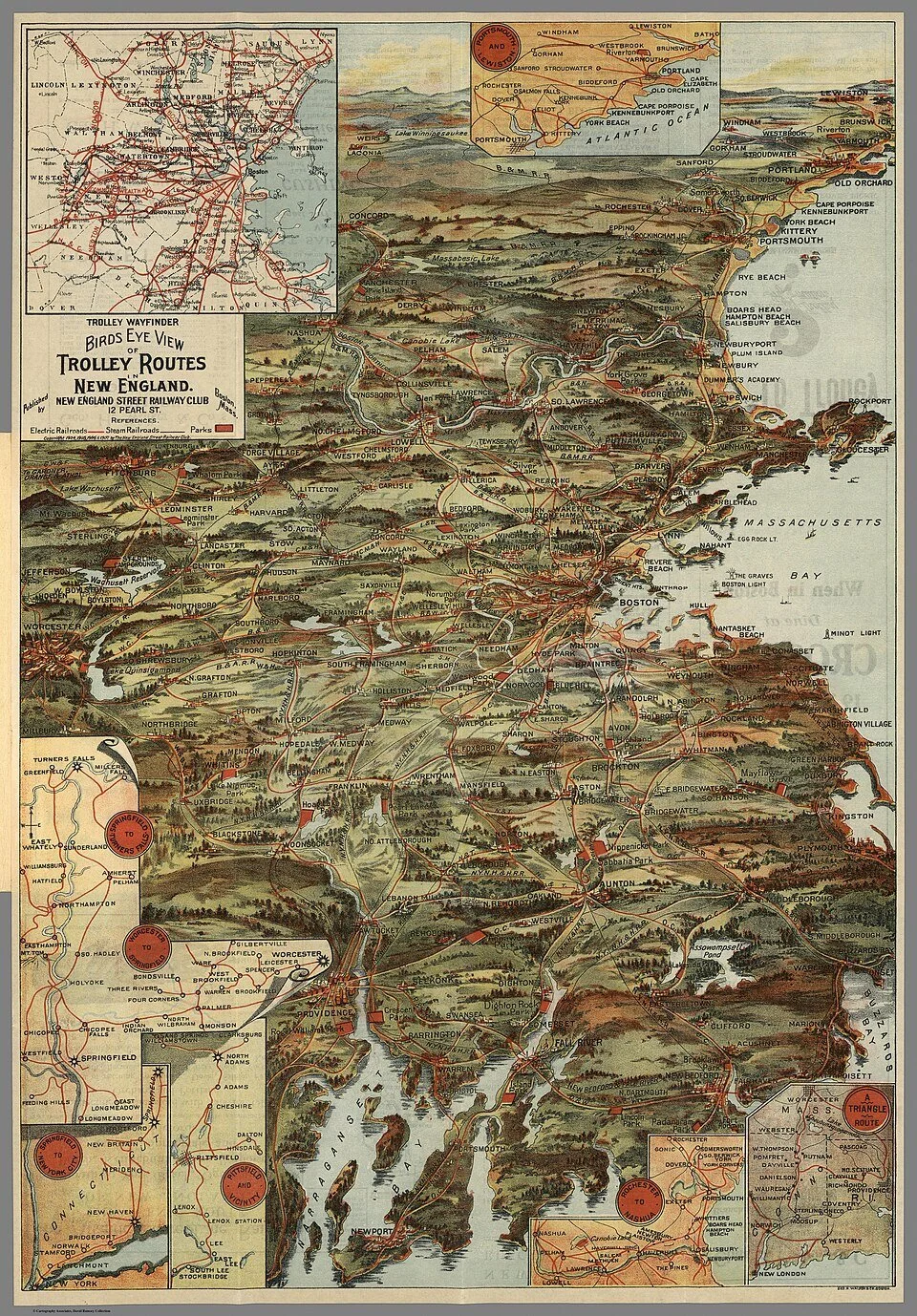
“Resistance to something was the law of New England nature.’’
—From The Education of Henry Adams, by Henry Brooks Adams (1838-1918), an historian and member of the Adams political family.
His posthumously published memoir, The Education of Henry Adams, won the Pulitzer Prize and is considered a classic.

Now we can all be narcissists

“Selfie, Downtown Crossing (Boston),’’ by Russell duPont, famed New England artist. Hit this link and this link for more excitement.
Combining COVID-19 forecasts

The UMass School of Public Health
Nicholas Reich, a professor at the University of Massachusetts School of Public Health, in Amherst, has created a forecast center to bring together multiple models to create an ensemble forecast to project COVID-19’s spread and effects. The Influenza Forecasting Center of Excellence projections will include hospitalizations and new cases at state and national levels. Hit this link to learn more.
Mail call
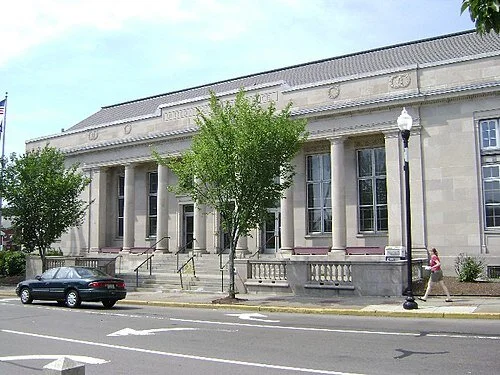
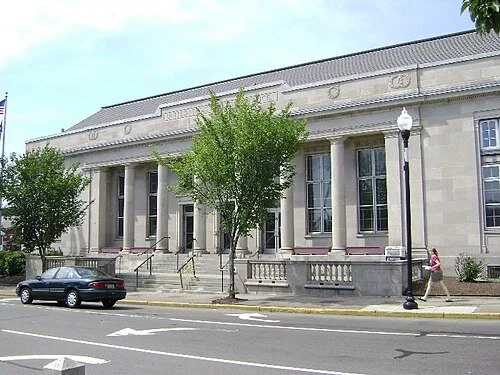
The central U.S. Postal Service office in downtown Taunton, Mass. Built in 1930 with funding from the Works Progress Administration, it’s a lovely example of Classical Revival architecture, and is listed on the National Register of Historic Places in 1987.
Adapted from Robert Whitcomb’s “Digital Diary,’’ in GoLocal24.com
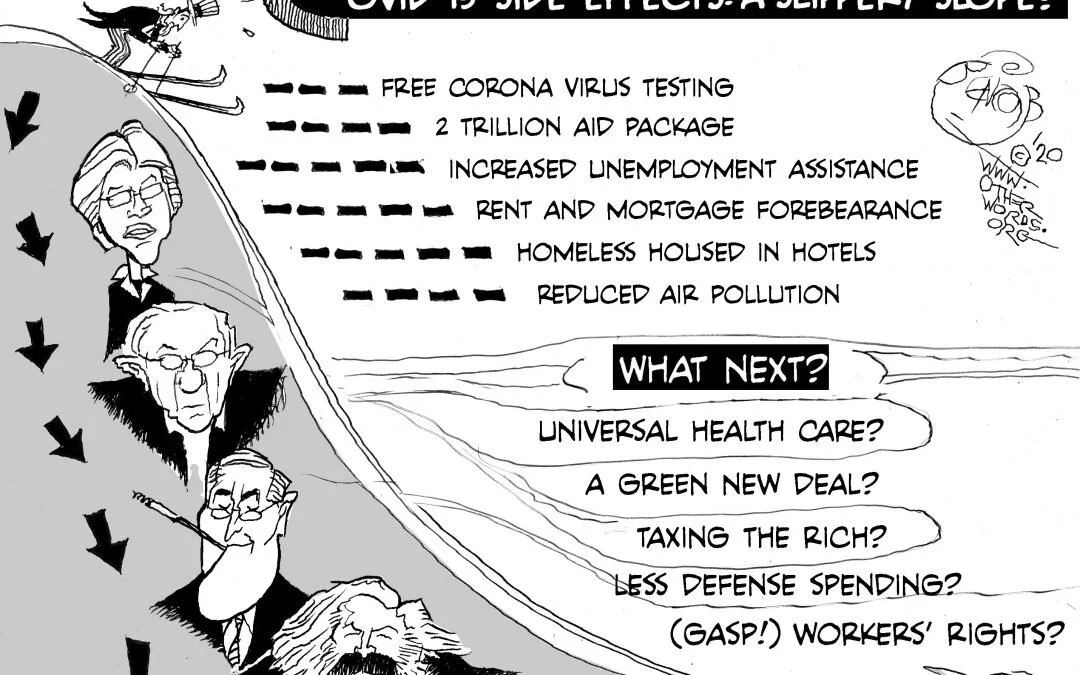
Trump and some other bogus “conservatives’’ seem to want to kill the U.S. Postal Service. As I noted here a couple of weeks ago, in the case of our leader it’s because he’s hates Jeff Bezos, the Amazon mogul/monopolist whose Washington Post insists on reporting on him in more rigorous ways than Pravda covered Stalin. Amazon is a big Postal Service customer. Trump has suggested forcing the Postal Service to boost its delivery prices so much so that they might exceed those of UPS and FedEx. But then, the GOP, especially since the rise of the anti-government Tea Party (anti-government except for Medicare and Social Security, which disproportionately benefit its members), has long been gunning for the service, which goes back to the writing of the U.S. Constitution.
The share of the nation’s workers represented by federal employees has fallen to record lows in the past decade, which is one reason that service has declined at some agencies – e.g., even before the pandemic you often had to wait more than an hour to ask a question of an IRS agent on the phone. Now, during the COVID-19 crisis, the agency takes no calls. Of course, Tea Party types hate the IRS, but how do they propose to fund the government? And remember, it’s Congress, not the IRS, that makes the tax laws. Then there’s the sorely understaffed Social Security Administration.
The argument is that the Postal Service should always be profitable, a demand not made of Trump Organization operations…. But the agency, like, say, the Defense Department, the Food and Drug Administration and the Interstate Highway System, is a necessary public service that also helps tie together the country. It’s a mostly reliable entity that’s essential for the private sector – both individuals and businesses.
Look at the 2006 law pushed through by the GOP that requires the Postal Service to prefund its employee retirement health-care cost for 75 years into the future! Imagine a private company having to deal with that. And do we really want to have the mail controlled by private companies (which might be big campaign contributors)?
There are some services that only government can provide on a broad and coordinated enough fashion to adequately serve the public outside the vagaries of the market.
Tougher than the Devil
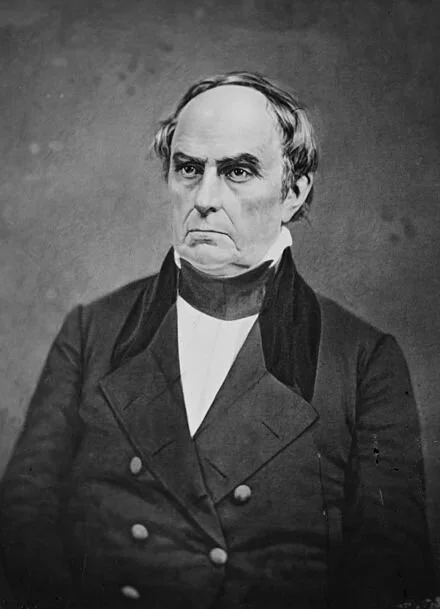
Daniel Webster
“If two New Hampshiremen aren’t a match for the Devil, we might as well give the country back to the Indians.’’
Stephen Vincent Benet (1898-1943), in his short story “The Devil and Daniel Webster’’. The tale centers on a New Hampshire farmer who sells his soul to the Devil and is defended by Daniel Webster (1782-1852), a fictional version of the 19th Century American statesman, lawyer and orator.
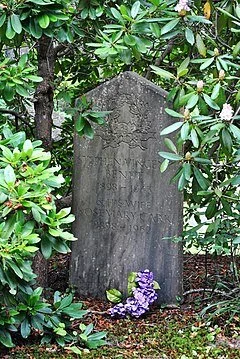
Mr, Benet’s gravestone in the Evergreen Cemetery in Stonington. Conn.
Sit there until I say you can leave

Oil and acrylic painting by Sabine Clark, with Zhanna Cantor, at New Art Center, Newton, Mass.
Boston in the quiet part of the Sixties
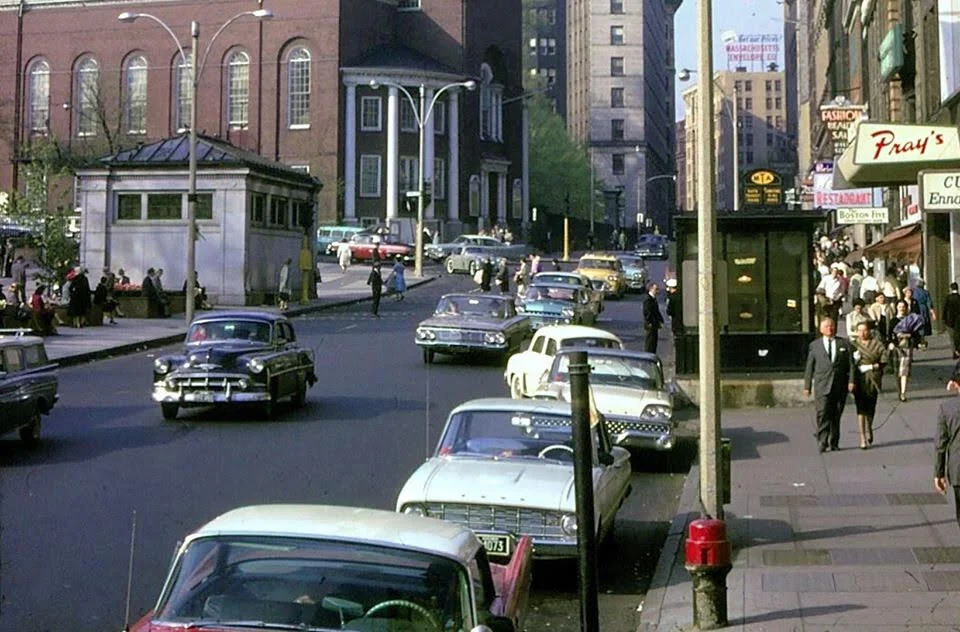
Boston, at the Park Street subway station, at left, in 1963. All those long-gone stores and restaurants!
USPS collapse would slam Maine particularly hard
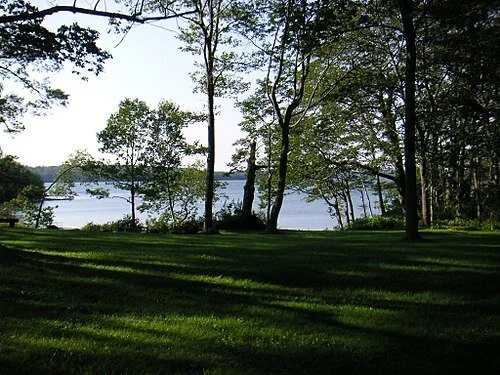
Lookout Point in Harpswell, on Casco Bay.
Scott Klinger, a resident of Harpswell, Maine, writes in The Portland Press Herald:
“Even as the U.S. Postal Service is straining to meet demand for deliveries of medicine, food and other essentials, they are facing potential collapse as the recession crushes mail revenue.
“A postal bankruptcy would be devastating for the entire country, but particularly for Maine – the state with the oldest population and the largest share of residents in rural areas. Only USPS has the capacity to get mail and packages six days a week to 160 million addresses, from urban neighborhoods to remote Maine islands.
“Without a major cash infusion, the Postal Service faces financial collapse by the end of summer.
“It didn’t have to come to this. In March, congressional leaders agreed to a bipartisan postal relief plan that would’ve given the Postal Service the same type of direct aid offered to the airlines, small businesses, hospitals and Amtrak. But President Trump intervened to block the postal bailout…”
To read his whole article, please hit this link.
Tart but sustainable
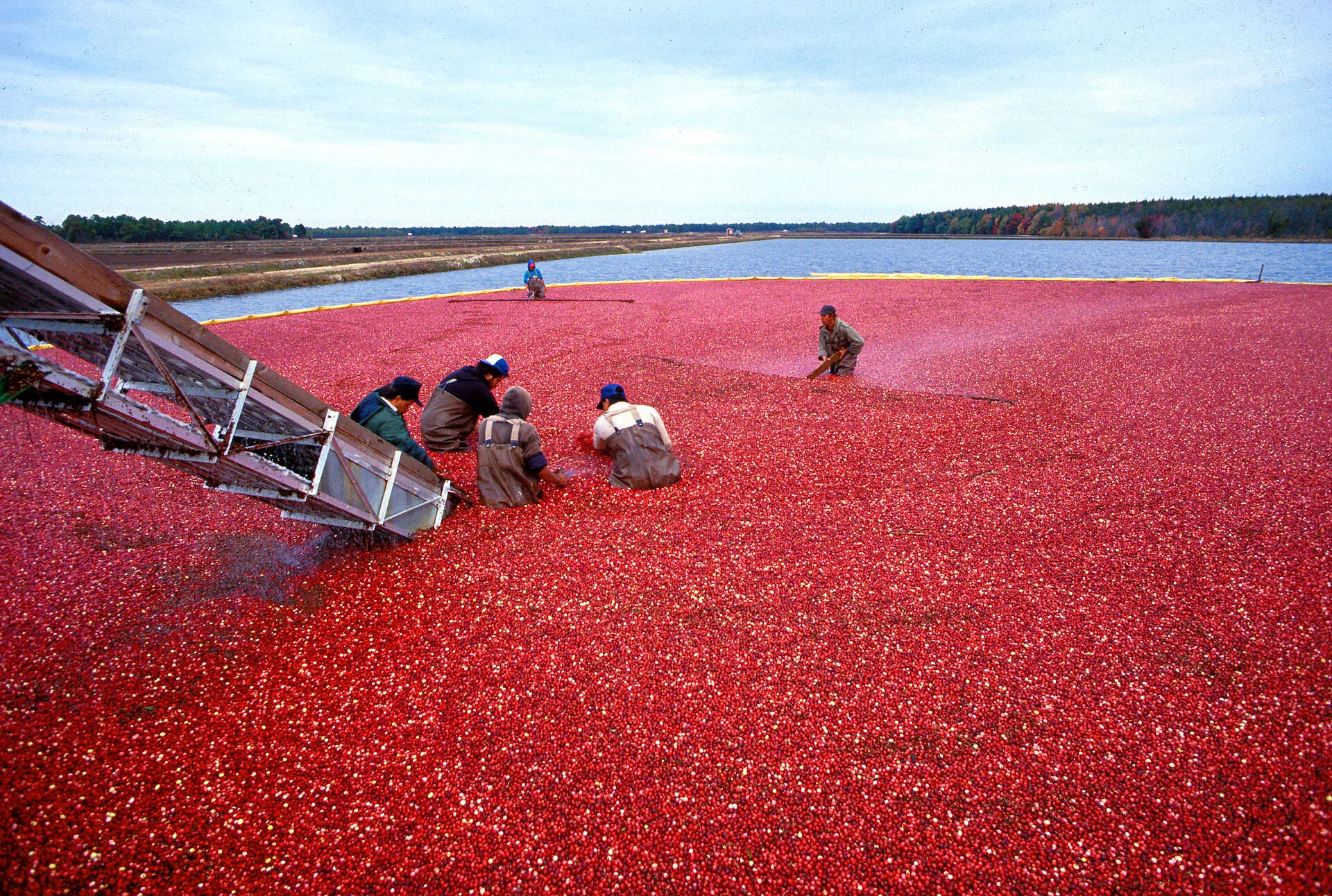
— Photo by Keith Weller
From Robert Whitcomb’s “Digital Diary,’’ in GoLocal24.com
With New Englanders looking to expand local agriculture, and make the region a little less dependent on supplies from far away, the cranberry industry long concentrated in Southeastern Massachusetts is a good model of how to operate. (Current food-supply-chain problems caused by the pandemic are a reminder of the perils of over-dependence on far-away agribusinesses.) The Sustainable Agriculture Initiative has recognized the Ocean Spray cooperative, which represents about 65 percent of the Bay State’s growers, as engaged in sustainable farming.
Ocean Spray said:
“SAI validated Ocean Spray’s sustainable agriculture program and on-farm practices at a representative number of its farmer-owners’ farms against the FSA’s [Farm Service Agency] 112 questions, which measure farm sustainability holistically from soil health, to water conservation practices, to health and safety of farm workers and local communities.’’
The co-op is also working with the National Geographic Society to support the expansion of sustainable agriculture around the world. Ocean Spray said it “will support National Geographic fieldwork across the globe to aid in agriculture practices that help preserve the health of the planet. The field work includes projects such as bee-friendly agriculture, automated land-use, insect collection and biodiversity discovery, and global mapping of center pivot {irrigation} agriculture.’’
Hit this link to learn more:
Summer discovery

— Photo by Mark Siciliano.
That summer in Misquamicut, when boys
as ripe as roadside corn shot pool in darkened
eighteen-over bars, I found the joy
they buried deep in denim straight-front pockets—
— From “Rhode Island,’’ by Amy Miller
How to tell COVID-19 symptoms
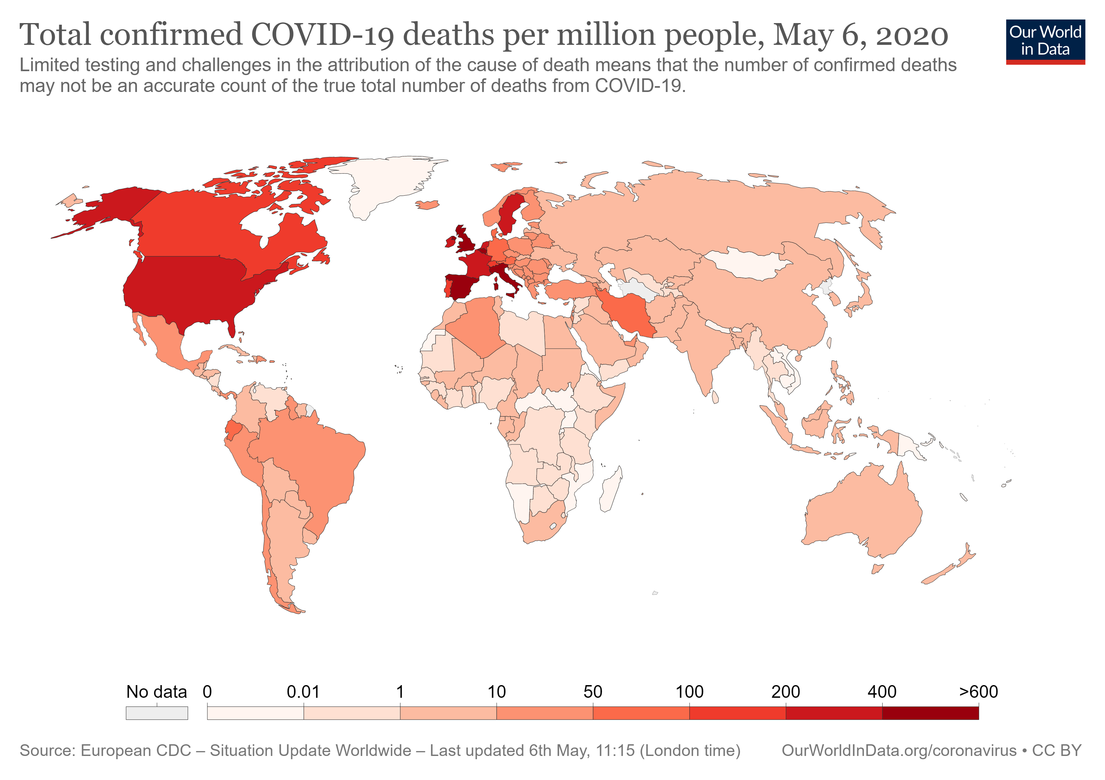
A new guide from Harvard University helps providers differentiate common COVID-19 symptoms—such as shortness of breath and fever—from other symptoms to help health-care workers avoid false negatives.
This could be very useful indeed!
Hit this link to read The Boston Globe’s story.
As with medical matters in general, New England is a world center of research and treatment of COVID-19. Of course, Greater Boston and Connecticut are among the hardest hit by the disease.
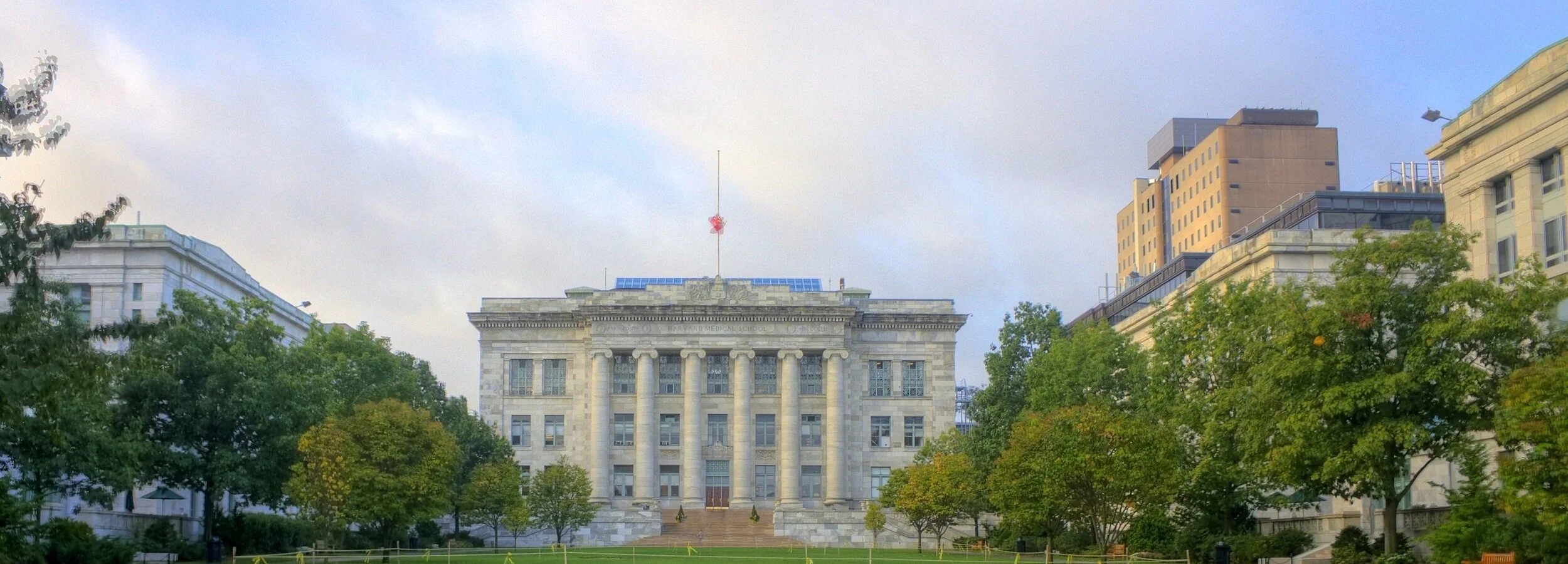
The Harvard Medical School quadrangle, in the Longwood Medical Area, in Boston.
Photo by SBAmin
His favorite place to live and die

Oliver Ellsworth house, in Windsor, Conn.
I have visited several countries, and I like my own the best. I have been in all the States of the Union, and Connecticut is the best State; Windsor is the pleasantest town in the State of Connecticut and I have the pleasantest place in Windsor. I am content, perfectly content, to die on the banks of the Connecticut.
-- Oliver Ellsworth (1745-1807), the third chief justice of the United States
Check out New England Council's daily updates on region's COVID-19 response
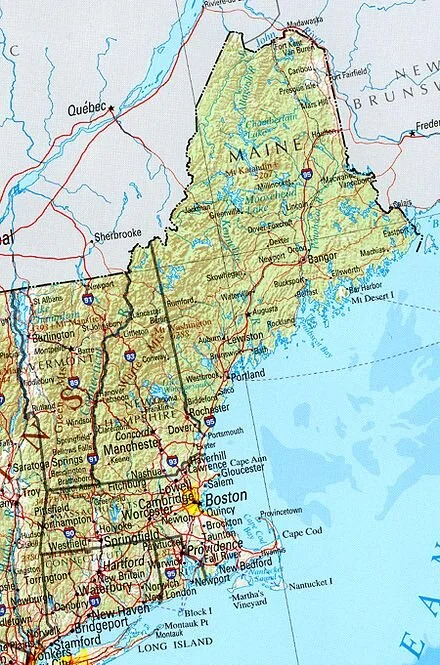
For the best roundup of news about New England’s response to the COVID-19 crisis, please look at The England Council’s Web site — newenglandcouncil.com — where there are updates on most days.

Todd McLeish: The decline of other N.E. pollinators

Rusty patched bumblebees, listed on the U.S. Fish & Wildlife Service’s Endangered Species List, once occupied grasslands and tallgrass prairies of the Northeast and Upper Midwest, but most of these habitats have been lost or degraded.
— U.S. Fish and Wildlife Service
From ecoRI News (ecori.org)
Most of the many news reports about the decline of bees and other pollinators focus on only one side of the story: the drop in honeybee numbers because of colony collapse disorder and its impact on food crops. Yet, as important as that issue is to human food security, it only affects one pollinator species, the European honeybee, a non-native species that is managed by commercial beekeepers.
The decline of native pollinators, of which there are thousands of species in North America that affect thousands of additional species of plants and animals, is largely ignored. Robert Gegear is trying to change that.
The assistant professor of biology at the University of Massachusetts at Dartmouth has launched a citizen science program called the Beecology Project to learn more about the ecology of native pollinators, starting with bumblebees, to better understand why some species are doing so poorly while others remain common.
“The survival of native pollinators has a positive cascading effect on so many other species, both the wild plants they pollinate and the other wildlife using those plants for food, shelter, and nest sites,” Gegear said. “Collectively, those relationships are increasing ecosystem health. But as we start to remove pollinators, we start to affect all these other species.
“Certain pollinators are heading toward extinction, but an equal or greater number have not been affected and are increasing. In ecology, it’s about diversity — not how many individuals you see but how many species you see, since each species has a connection with a flowering plant that has a connection to other species.”
For example, Gegear noted that Bombus impatiens, the common eastern bumblebee, is abundant, expanding, and easy to attract to flower gardens, but many other bumblebee species that used to be common are declining rapidly. Why that is happening is unknown.
“It could be that whatever we’re doing to the environment to drive declines in many species of bumblebees is having a direct positive impact on Bombus impatiens,” he said. “We use a lot of non-native plants in our gardens, and Bombus impatiens loves non-native plants, but other bumblebees don’t like non-natives. That’s one possibility. Or impatiens could be more flexible in its use of nest site habitat. We may be removing habitat that supports species that are less flexible in their nesting requirements. We have evidence for both explanations.”
Among the species formerly common in southern New England and are now quite rare are the yellow-banded bumblebee, the yellow bumblebee, the half-black bumblebee and the rusty patched bumblebee. The U.S. Fish & Wildlife Service recently added the rusty patched bumblebee to the Endangered Species List.
The populations of some of these rare species declined especially fast. When Gegear was conducting his doctoral research in the late 1990s, the yellow-banded bumblebee was so abundant that he considered it a pest. Five years later, however, and he couldn’t find it for miles around his research sites.
“The problem is that we don’t know enough about the natural history of most of these species,” he said. “We know virtually nothing about their nesting preferences, about their overwintering preferences, their floral preferences. They have those preferences for a reason, but if you look at plant lists for bumblebees, everything is equal for all species, and that’s not the case.”
Since little is known about which flowers the rare species prefer, many of the growing number of pollinator gardens being installed around the region aren’t benefitting the species most in need. Instead, they’re just helping the species that are already common.
“People want to help, and they have good intentions, but the science isn’t there to tell them what they should be planting,” Gegear said. “I’m trying to fill in those gaps and change the focus of pollinator research by taking more of an ecological approach.”
To do so, he needs large amounts of data. To collect that data, he has turned to the general public. He teamed with computer scientists at Worcester Polytechnic Institute to develop a web-based app to enable anyone to take photos and videos of bumblebees they see, identify them to species, identify the flowers they are visiting, and submit to Gegear’s database.
Based on the data he has already received, new populations of the rare bumblebee species have been found that will enable him to establish new research sites to learn more about those species. Many participants in the program are even planting gardens with the flowers those rare species prefer to boost those bumblebee populations.

Female monarch butterfly.
From ecoRI News
It’s not just bumblebee preferences that are little known. The same is true of the floral preferences of other pollinators. Gegear plans to expand his app to include observations of butterflies and other types of bees. Eventually, he hopes to expand it further so it can be used to conserve pollinators across the country.
“I put a plant on my property last year that we learned one species prefers, and as soon as it came into bloom, the threatened species came in,” he said. “So this approach really does work.”
Gegear is seeking to recruit more Beecology Project volunteers from throughout the region.
“And if you don’t want to use the app, just take a 10-second video of any bumblebee you see and send it to me,” he said. “That’s just as good.”
Rhode Island resident and author Todd McLeish runs a wildlife blog.
Flowing from Framingham
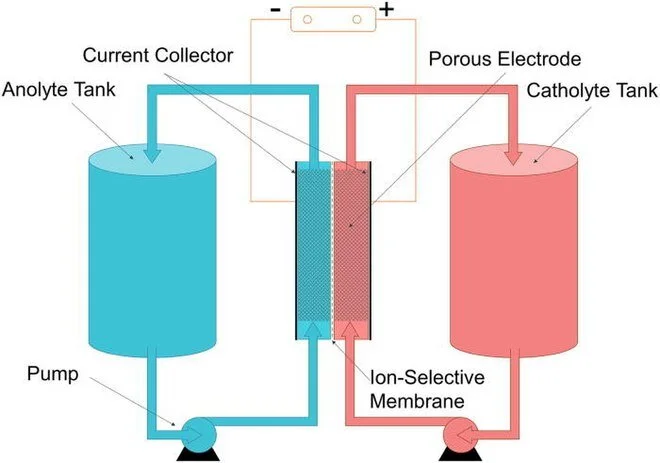
A typical flow battery has two tanks of liquids that are pumped past a membrane held between two electrodes.
From Robert Whitcomb’s “Digital Diary,’’ in GoLocal24.com
We in the Northeast tend to be more enthusiastic about renewable energy than most Americans, in part because we tend to be more educated, including about global warming, and also because there’s no fossil fuel to be extracted in our region. But a big hurdle is boosting the capacity to store energy from solar- and wind-power facilities.
And so it was good to hear that Framingham, Mass.-based Ameresco has completed Phase 1 of Defense Department-funded research on flow battery technology as an alternative to lithium ion batteries, which degrade over time. The hope is that flow batteries may be more efficient than lithium ones and thus reduce the need for, say, diesel generators (with their pollution) used in microgrids. These new batteries might also cut utility bills.

'Poetic suggestion'

“New England Village,’’ by Henry Ward Ranger (1858-1916). Many of his paintings, including this one, came from his years along the Connecticut shore. He once said: “I feel that my little bit of New England, which I know and love so well, is reeking with poetic suggestion.
Llewellyn King: Business dating introduces start-ups to big potential suitors

WEST WARWICK, R.I.
The lovelorn have computer dating: Cupid is digitized. But computer dating is not just for romantic love anymore.
An intriguing new company, founded by two computer professionals, is helping start-up companies find love with big enterprises. The results, so far, are wedding bells for a great variety of companies.
The matchmaker is Hunterz.io (yes, spelled with a “z”) and the proposition is straightforward: Start-ups register and are connected with the all-important “hunterz” -- people who have worked for large enterprises and know the lay of the land inside. They are people who have been laid off or have retired or are consultants; they make introductions and direct the start-up to the right people and right part of the large enterprise. Sometimes a hunterz is employed by a large entity, but mostly they are or were associated or employed there.
The co-founders of Hunterz.io are Noam Weisman, a veteran of giant Cisco Systems, and Yuval Shalev, who used to work for Deutsche Telekom, one of the world’s leading integrated telecommunications companies.
Weisman told me that things were going well for the matchmaker before the coronavirus crisis, but there has been stratospheric growth since it began. “We have more than 10,000 hunterz on the platform, and we are active in 69 industries in 55 countries,” he told me. Although as a New York-based company, the emphasis is on North America, Weisman said.
An example of Hunterz.io at work is the successful linkup between Intellivisit, a Madison, Wisc.-based virtual health diagnostics company, and Rush Hospital, in Chicago. A hunterz made the introduction and Intellivisit found a role at the hospital. Weisman says that kind of linking is happening all the time to the benefit of the large enterprises and the start-ups. No more banging on closed doors, shooting off emails to unknown players who, as likely as not, will trash them. This way willing start-ups and willing partners -- investors or purchasers -- meet each other.
“It was great to connect with some of the more innovative start-ups I have met,” said Kevin Serfass, manager of Global Telecom Partners. “My contacts appreciated me introducing these start-ups to them as they were in the process of looking for such solutions for a while now.”
Another hunterz, Othmar Knoll, an executive heath-care consultant said, “Being a full-time consultant, it was a welcome change of pace to have vendors contact me for my services. Instead of me having to look for new vendors. It was simple and quick.”
To my mind Hunterz.io is the wave of the future -- a wave I have been anticipating. New start-ups are likely to flood the market as we get to the “new normal.” That presumes that we will not suddenly revert to the status quo ante; that U.S. and global business will be dramatically restructured with new players, technologies and vision.
Since the beginning of business linking within the business sphere has been a problem. With Weisman’s company a new kind of efficiency has entered the marketplace.
Most of us have heard the plaintive, “Do you know anyone at this company? I think they would love my start-up, but I don’t know how to get their attention?” Or the equally sad, “I used to know someone whose wife worked there. Maybe she could help.”
As dating went from happenstantial to computer-matching so, too, businesses have always needed to know of each other. The big need the innovation of the small, and the small need the patronage of the big.
How many start-ups with wonderful product ideas have failed and left the field for want of an introduction? Introductions are the oxygen of business and the more efficiently they can be made, the brighter the future looks -- particularly at a time when, in so many ways, the future is cloudy.
After upheaval, like the current one, there is always innovation. But innovation needs to be known for it to find partners, patrons, purchasers.
When I was publishing magazines in New York in the 1960s, the struggle was to get a new magazine displayed on the 110,000 newsstands in the United States. We more-or-less bribed our way onto them.
Business has always had the equivalent of the newsstand problem: How do you tell them you are there? Now they can find each other.
Llewellyn King is executive producer and host of White House Chronicle, on PBS. His email is llewellynking1@gmail.com and he’s based in Rhode Island and Washington, D.C.
'The city is rigid'
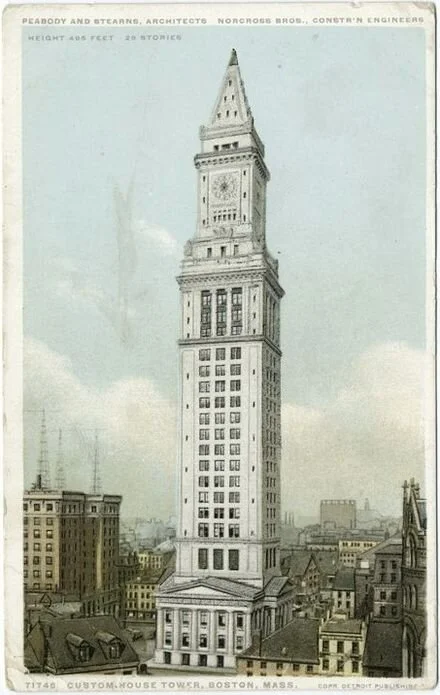
Custom House Tower in the early 20th Century.
Cross-hatchings of rain against grey walls,
Slant lines of black rain
In front of the up and down, wet stone sides of buildings.
Below,
Greasy, shiny, black, horizontal,
The street.
And over it, umbrellas,
Black polished dots
Struck to white
An instant,
Stream in two flat lines
Slipping past each other with the smoothness of oil.
Like a four-sided wedge
The Custom House Tower
Pokes at the low, flat sky,
Pushing it farther and farther up,
Lifting it away from the house-tops,
Lifting it in one piece as though it were a sheet of tin,
With the lever of its apex.
The cross-hatchings of rain cut the Tower obliquely,
Scratching lines of black wire across it,
Mutilating its perpendicular grey surface
With the sharp precision of tools.
The city is rigid with straight lines and angles,
A chequered table of blacks and greys.
Oblong blocks of flatness
Crawl by with low-geared engines,
And pass to short upright squares
Shrinking with distance.
A steamer in the basin blows its whistle,
And the sound shoots across the rain hatchings,
A narrow, level bar of steel.
Hard cubes of lemon
Superimpose themselves upon the fronts of buildings
As the windows light up.
But the lemon cubes are edged with angles
Upon which they cannot impinge.
Up, straight, down, straight -- square.
Crumpled grey-white papers
Blow along the side-walks,
Contorted, horrible,
Without curves.
A horse steps in a puddle,
And white, glaring water spurts up
In stiff, outflaring lines,
Like the rattling stems of reeds.
The city is heraldic with angles,
A sombre escutcheon of argent and sable
And countercoloured bends of rain
Hung over a four-square civilization.
When a street lamp comes out,
I gaze at it for fully thirty seconds
To rest my brain with the suffusing, round brilliance of its globe.
“Afternoon rain in State Street’’ (Boston), by Amy Lowell (1874-1925)