
Vox clamantis in deserto









N.E. responds to COVID-19: A testing site for uninsured; policy-change simulator; in-state tuition for out-of staters

The First Congregation Church in Boston’s Hyde Park neighborhood, whose unofficial motto is “A Small Town in the City.’’ A mobile COVID-19 testing site has been opened there for the uninsured.
From The New England Council (newenglandcouncil.com)
BOSTON
As our region and our nation continue to grapple with the Coronavirus Disease (COVID-19) pandemic, The New England Council is using our blog as a platform to highlight some of the incredible work our members have undertaken to respond to the outbreak. Each day, we’ll post a round-up of updates on some of the initiatives underway among Council members throughout the region. We are also sharing these updates via our social media, and encourage our members to share with us any information on their efforts so that we can be sure to include them in these daily roundups.
You can find all the Council’s information and resources related to the crisis in the special COVID-19 section of our Web site. This includes our COVID-19 Virtual Events Calendar, which provides information on upcoming COVID-19 Congressional town halls and webinars presented by NEC members, as well as our newly-released Federal Agency COVID-19 Guidance for Businesses page.
Here is the April 27 roundup
Medical Response
Brigham and Women’s Hospital Opens Mobile Testing Site for Uninsured – In Hyde Park—one of Boston’s emerging virus hotspots—Brigham and Women’s Hospital has opened a mobile testing site to serve those with coronavirus symptoms but without health insurance. Testing at the site will be free of charge, and providers will not ask patients about immigration status. The testing site will also provide masks, boxes of food, and educational materials for those who qualify. Read more from CBS Boston.
Massachusetts General Hospital Researchers Develop Simulator to Predict Policy Change Effects – As states weigh when and how to begin re-opening nonessential businesses, Massachusetts General Hospital (MGH) has built a COVID-19 simulator to predict infections, hospitalizations, and deaths from coronavirus in the state under different plans of action. The model uses virus data to create statistical predictions of the its spread to inform state and local leaders on when it will be safe to ease physical distancing regulations. WBUR has more.
Economic/Business Continuity Response
The University of Maine Offers Tuition Break for Students Affected by Coronavirus – To support students across the country facing educational uncertainty, the University of Maine (UMaine) has launched a new initiative, The Maine Welcome, to allow all students—regardless of state origin—to pay in-state tuition to continue their studies. The program aims to help students as they navigate potential school closures and revenue losses. More from Mainebiz
PwC Makes Digital Fitness App Free Worldwide – To allow workers across sectors and around the world to develop digital skills, PricewaterhouseCoopers (PwC) has made its technological training app free globally. The app offers courses and learning assessments to instruct workers to learn important skills in a workforce increasingly dependent on technology. Cyprus Mail has more.
Community Response
AAA Northeast Uses Service Fleet to Deliver Protective Gear – In partnership with a West Haven, Conn., manufacturer, AAA Northeast is utilizing its fleet of service vehicles, deemed essential, to deliver gowns and other protective equipment made by Thermaxx to first responders and Connecticut state agencies. Read more in WTNH.
Harvard Pilgrim Health Care Enters Partnership to Provide Meals to Families – Harvard Pilgrim Health Care has donated $52,000 to sponsor a month of free meals for families through the Dimock Center. The Dimock Center will provide meals twice a week for families for one month using the donation, but Harvard Pilgrim has committed to additional funding as needed. The Jamaica Plain Gazette has more.
Boeing Transports 1.5 Million Masks to Aid Response – Continuing its relief missions around the world, Boeing delivered 1.5 million face masks from Hong Kong to the United States. The protective equipment will be used by healthcare providers across the country to combat shortages of the equipment necessary to keep healthcare workers safe. Read the release here.
Stay tuned for more updates each day, and follow us on Twitter for more frequent updates on how Council members are contributing to the response to this global health crisis.
'Like a blue cloud'

“Monadnock Orchard,’’ by Richard Whitney
“From the eastern brow of the mountain {in western Massachusetts}…we had a view over the tops of a multitude of heights, into the intersecting valleys of which we were to plunge --- and beyond them the blue and indistinctive scene extended, to the east and north, to the distance of at least sixty miles. Beyond the hills, it looked almost as if the blue ocean might be seen. Monadnock was visible, like a blue cloud against the sky.’’
-- Nathaniel Hawthorne in The American Notebooks (1838)
Bad Lyme disease season on its way

From ecoRI News (ecori.org)
Physical distancing because of COVID-19 has caused cabin fever to reach an all-time high, and people are seeking solace in the great outdoors. And while physical distancing rules still apply outside, the Rhode Island departments of environmental management and health are hoping that people will add another practice to their outdoor excursions: keeping an eye out for ticks.
With a mild winter in which many more ticks than usual likely survived and with more people expected to be outside this year because of the pandemic, 2020 is shaping up to be a bad year for tick bites and the transmission of Lyme and other diseases, according to the Rhode Island Department of Environmental Management (DEM).
Rhode Island already has the fifth-highest rate of Lyme disease in the country, with 1,111 people diagnosed in 2018.
To help mitigate this problem, DEM and the Department of Health are again promoting the state’s Tick Free Rhode Island campaign.
“At a time when the COVID-19 crisis has forced us into closing state parks and campgrounds, it might seem incongruous to sound the alarm about Lyme disease,” DEM Director Janet Coit said. “Yet, Lyme is a very dangerous disease. So, all of us, whether we’re taking a walk around the block, spending time in our backyards, or going fishing, should do our best to prevent tick bites along with respecting social distancing norms.”
Here are the agencies’ three keys to tick safety:
Repel. Avoid wooded and brushy areas with high grass and leaves. If you are going to be in a wooded area, walk in the center of the trail to avoid contact with overgrown grass, brush, and leaves at the edges. Wear long pants and long sleeves. Tuck your pants into your socks. Wear light-colored clothes so you can see ticks more easily.
Check. Take a shower after you come back inside from a wooded area. Do a full-body tick check in the mirror; parents should check their kids for ticks and pay special attention to the area in and around the ears, in the belly button, behind the knees, between the legs, around the waist, and in their hair. Keep an eye on you pets as well, as they can bring ticks into the house.
Remove. If possible, use tweezers to remove a tick; grasp the tick as close to the skin as possible and pull straight up. If you don’t have tweezers, use a tissue or gloves. Keep an eye on the tick bite spot for signs of rash, or symptoms such as fever and headache.
Most people who get Lyme disease get a rash anywhere on their body, though it may not appear until long after the tick bite. At first, the rash looks like a red circle, but as the circle gets bigger, the middle changes color and seems to clear, so the rash looks like a target bull’s-eye.
Some people don’t get a rash, but feel sick, with headaches, fever, body aches, and fatigue. Over time, they could have swelling and pain in their joints and a stiff, sore neck; or they could become forgetful or have trouble paying attention.
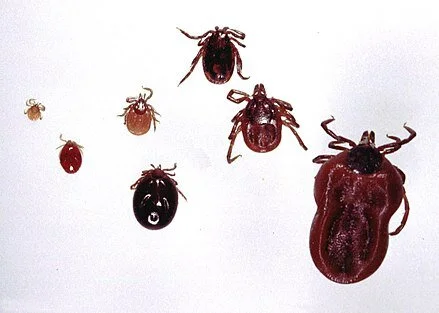
Deer ticks in their developmental progression
Mainiacal independence

“Henry {of Maine} was his own man: in his battered old truck, with tottering load of hay on it … he implied an old-fashioned resourcefulness and independence, which we would praise even if we could’t emulate.’’
— From “Of Moose and Moose Hunter,’’ by Franklin Burroughs, in his book of essays called Billy Watson’s Croker Sack
Robert P. Alvarez: We must protect the 2020 election
States’ Electoral College votes
Via OtherWords.org
First, it was a public health crisis. Now, it’s decimating the economy. And for it’s next trick, the coronavirus is threatening to undermine the 2020 election.
Unless, that is, Congress steps in to ensure we can vote by mail.
If you’re curious what the worst case scenario is, look no further than Wisconsin, where a gerrymandered GOP legislature forced voters to the polls over the orders of the Democratic governor — and against the advice of public health officials.
Wisconsin Republicans not only declined to send every voter an absentee ballot. They also appealed — successfully — to the conservative-majority U.S. Supreme Court to prevent voters who received their ballot late (through no fault of their own) from having their votes counted.
It was a transparent ploy by Wisconsin Republicans to support a conservative incumbent on the state Supreme Court by suppressing the vote. It failed — his liberal-leaning challenger won — but they struck a huge blow to voting rights in the process.
Fallout from the coronavirus exposed structural weaknesses in everything from our health care and education systems to market supply chains and labor rights. It also made painfully obvious the fragility of our electoral process.
Unfortunately, states have received little help from Congress in shoring up their elections. Just $400 million of the $2.2 trillion stimulus bill was earmarked for helping states cover new elections-related expenses stemming from the pandemic.
When it comes to providing the financial support necessary to ensure our elections are safe, accessible, fair, and secure, the last coronavirus response bill was a dereliction of duty.
Will it be safe to gather in large numbers by November? And even if it is, will voters feel comfortable standing in line, for up to six hours in some cases (thanks to GOP poll closures, but that’s another story), next to strangers?
If not, it’s fair to assume some voters will elect not to vote due to safety concerns. And that should undermine public confidence in the outcome.
The obvious solution is expanding voting by mail.
Unfortunately, Donald Trump is fiercely opposed to this. “They had things, levels of voting, that if you’d ever agreed to it, you’d never have a Republican elected in this country again,” he said.
Let that sink in. The president — who himself voted by mail — openly views the right to vote as a threat to his presidency and party.
Americans shouldn’t have to choose between their health and their right to vote. In the midst of this pandemic, states with overly cumbersome processes for absentee voting are complicit in voter suppression. Period.
To fix this, we need to ensure no-excuse absentee voting in the next coronavirus bill — and that’s the bare minimum. Beyond that, we also need pre-paid postage for mail-in ballots and an extended early in-person voting period.
We need accessible, in-person polling places with public safety standards that are up to snuff. That means election workers must know they’re safe, and must have access to personal protective equipment.
We also need to develop and bolster online voter registration systems, and run public information campaigns giving voters localized, up-to-date voting guidelines.
To complete this nationwide, we’re looking at a $2 billion price tag. That’s just 0.1 percent of the $2 trillion package Congress already passed — and if it ensures our democracy doesn’t die in this pandemic, it’s worth every penny.
Robert P. Alvarez is a media relations associate at the Institute for Policy Studies, where he writes about criminal justice reform and voting rights.
'Everything flowers'

“The bud
stands for all things,
even for those things that don’t flower,
for everything flowers, from within, of self-blessing….’’
— From “Saint Francis and the Sow,’’ by Galway Kinnell (1927-2014), a Vermont-based poet
Frugal or just cheap?

A print of John Gay's "The Miser and Plutus," by William Blake (1793). Plutus was the Greek god of wealth.
“All Yankees are known for their frugality, I suppose, but well-to-do Yankees most perfectly embody the idea. In no other part of the country are the rich cheap.’’
— John Sedgwick, in the September 1991 Yankee Magazine
Carpe diem

Gravestone of Emily Dickinson, in West Cemetery, Amherst, Mass.
That it will never come again
Is what makes life so sweet.
Believing what we don’t believe
Does not exhilarate.
That if it be, it be at best
An ablative estate —
This instigates an appetite
Precisely opposite.
— Emily Dickinson
”An ablative estate’’ refers to ablation, an operation involving removing body tissue — something that heals but that also involves losing part of the patient.

Chris Powell: Could Feds buy fewer junk bonds and more food for the needy?

Scene in 1933 in Sioux City, Iowa, during The Great Depression
MANCHESTER, Conn.
Connecticut's crazy political left hasn't been completely sidelined by the epidemic-caused suspension of this year's session of the General Assembly. The crazy left was out in force again the other week on Prospect Street in Hartford, driving a caravan of cars past the Executive Residence, honking horns and waving signs calling on Gov. Ned Lamont to release all inmates in the state's prisons to diminish their risk of contracting the virus, the prison environment being crowded.
Yes, the demand was for the release of all prisoners, including those convicted of murder, rape, robbery, and the like -- even the murderers of the Petit family in Cheshire, Steven Hayes and Joshua Komisarjevsky.
Almost simultaneously with that protest, Florida announced the arrest for murder of a prisoner who had been released early to protect him against contagion. He had been deemed low-risk but now he is accused of killing someone the very day after his release.
Meanwhile the left in Connecticut is silent about the plutocratic nature of the federal "stimulus" legislation, which was supported by the state's members of Congress, all liberal Democrats. Most of the trillions of dollars in relief is not devoted to sustaining the suddenly unemployed and their families or treating the sick but to restoring the value of financial assets, which are owned almost entirely by the rich. The Federal Reserve will even be buying "junk" bonds, the debt obligations of less solvent corporations, thereby protecting them against bankruptcy -- that is, protecting stockholders against losing their equity to the corporation's lenders.
The political right in Connecticut is also silent about the plutocratic nature of the "stimulus" legislation though just a couple of years ago the political right was complaining about the "corporate welfare" that was being portrayed as economic development by the previous state administration.
Meanwhile, what is happening in the country is starting to evoke The Great Depression. With restaurants closed to regular dining, farmers who have been growing food for the restaurant trade can't sell their produce and are dumping it, just as, with schools closed, dairy farmers are dumping milk because that market has disappeared too.
But as this food is being dumped, the newly unemployed are queuing at food banks, as they did last week at one in Danbury, where supplies were exhausted long before everyone in a long line of cars got something. Police had to tell people to turn around.
Could the federal government buy fewer junk bonds and more vegetables and milk and pay trucking companies to deliver it to food banks? While the extra unemployment insurance promised by the "stimulus" legislation -- $600 a week per beneficiary for four months -- should start arriving soon and reduce food insecurity, sending to food banks the food that otherwise would be discarded would make the unemployment insurance money go farther.
From the unemployed to the merely homebound, nearly everybody would like to blame someone or something in government for the country's appalling predicament. The federal government wasn't prepared and neither were state governments, and now they are dealing with it on the fly. But then the people themselves long have tolerated all sorts of nonsense from their government and hardly anyone demanded that it be prepared for an epidemic.
In any case government will never be able to do everything well. It's great at creating and distributing money and pretty good at waging war, if not winning it, but not as good at public health. So when this epidemic ends, don't throw your face masks away.
Chris Powell is a columnist for the Journal Inquirer, in Manchester.
Who wouldn't be?

“Am I Blue” (encaustic with saral tracings and transfers), by Angel Dean, a Providence-based painter and musician

The mobster vs. the monopolist

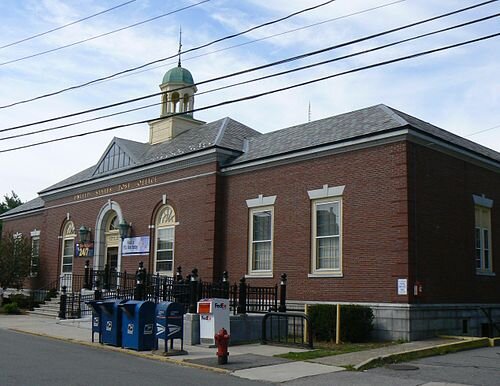
Mural "Purchase of Land and Modern Tilling of the Soil" (1938), by William C. Palmer, in the lobby of the Arlington, Mass., Post Office, a Colonial Revival building (see exterior below) that was opened in 1936. Many post offices erected or renovated during the New Deal’s Works Progress Administration had art work such as this mural, in part to help keep artists employed during the Great Depression.
From Robert Whitcomb’s Digital Diary, in GoLocal24.com:
Maximum Leader Trump hates the U.S. Postal Service, which he alleges undercharges Amazon, run by Jeff Bezos, whom Trump envies and so detests And Mr. Bezos owns The Washington Post, which tries to vigorously report on the Trump mob. So the mobster-in-chief rejects a bailout of the Postal Service, which is far more essential to America than many of the institutions being bailed out. And he would love to hamstring efforts to encourage voting by mail this pandemic year in lieu of the usual crowds at polling places, because he thinks, correctly, that those votes will tend to be against him.
Oh yes. Trump votes by mail himself. I myself think that voting in person is better – except in a pandemic. That’s not only because it might be less vulnerable to fraud but also because showing up to vote at a polling place is a celebration of democracy.
In any event, the Postal Service, whatever its flaws, is an important part of America’s connective tissue, especially for the underprivileged, and needs to be protected.
By the way, none of this is to say that Amazon, like Google, Facebook and some other tech-based companies that have become so huge in the past two decades, aren’t too powerful and shouldn’t be broken up, as the now hollow Antitrust Division of the U.S. Justice Department would have done a half century ago.
Variations on weather themes
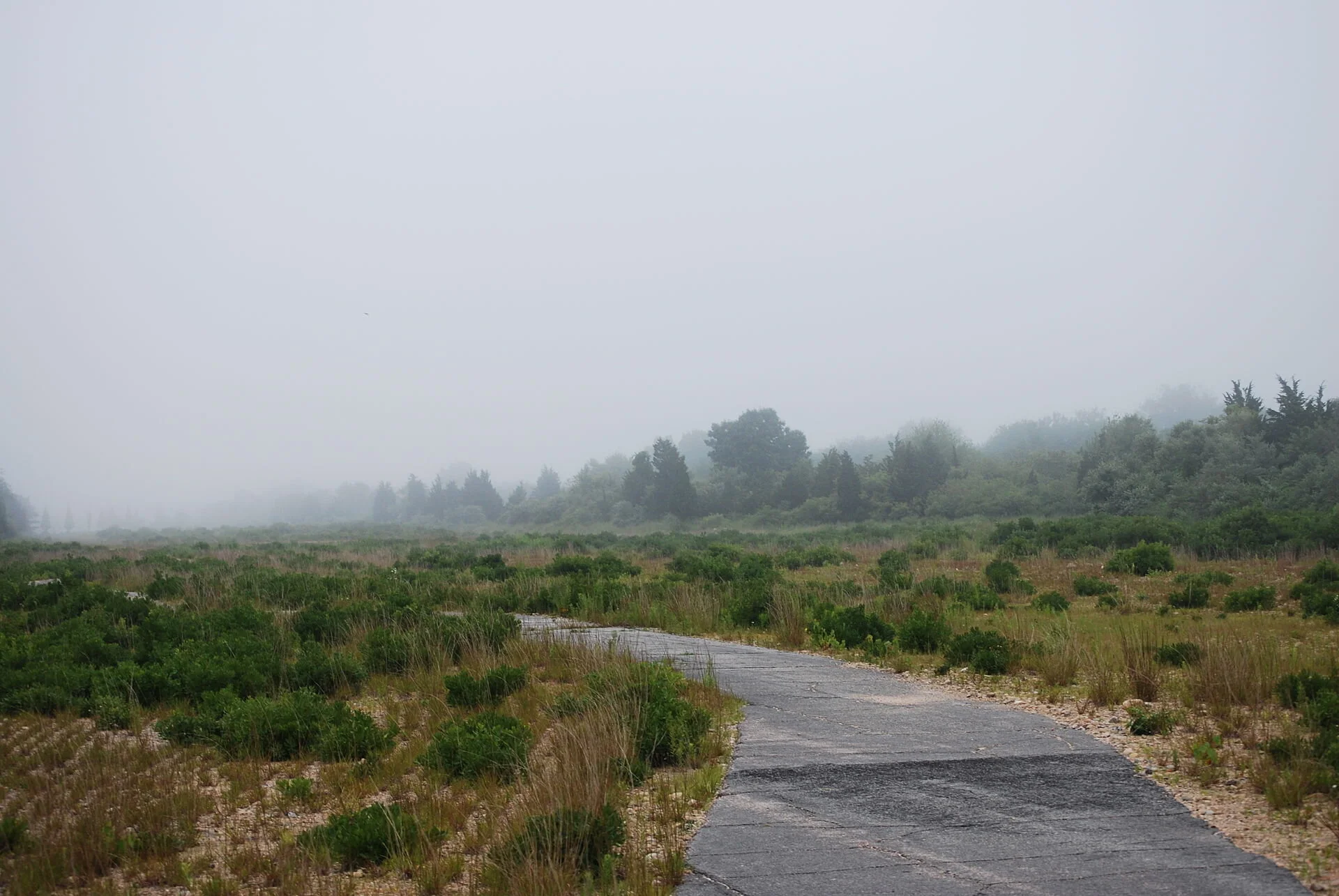
Ninigret Pond National Wildlife Refuge, in southern Rhode Island
— Photo by Juliancolton
“Without going against Nature and absolutely defying the seasons, Rhode Island climate has as many variations as the solar system will permit.’’
— From WPA Guide to Rhode Island (1937)
'Controlled panic'

Sandpiper
“The roaring alongside he takes for granted,
And that every so often the world is bound to shake.
He runs, he run to the south, finical, awkward,
In a state of controlled panic, a student of Blake….”
— From “The Sandpiper,’’ by Elizabeth Bishop (1911-79). A Worcester native, she travel widely, and lived abroad for stretches but always returned to New England.
'All that is good and noble'

The Rogers Building, in Boston’s Back Bay district, was opened in 1865 as MIT’s first building erected specifically for the institution. MIT, founded in 1861 and often called “Boston Tech’’ in its earlier years, was moved to Cambridge in 1916.
“I never fully realized how much a New England birth in itself was worth, but I am happy that that was my lot. I have felt it so keenly these last few days. Dear old New England, with all her sternness and uncompromising opinions; the home of all that is good and noble.”
― Matthew Pearl, in his novel The Technologists, set in the early years of the Massachusetts Institute of Technology.
Perfectly clear

Here's one thing Trump has made perfectly clear:
Nixon was hardly this country's nadir.
— Felicia Nimue Ackerman

N.E. responds to pandemic: Spot the robot helps out; Vermont Teddy Bear switches to PPE's

Spot helping out at Brigham and Women’s Hospital
From our friends at The New England Council (newenglandcouncil.com)
As our region and our nation continue to grapple with the Coronavirus Disease (COVID-19) pandemic, The New England Council is using our blog as a platform to highlight some of the incredible work our members have undertaken to respond to the outbreak. Each day, we’ll post a round-up of updates on some of the initiatives underway among Council members throughout the region. We are also sharing these updates via our social media, and encourage our members to share with us any information on their efforts so that we can be sure to include them in these daily round-ups.
You can find all the Council’s information and resources related to the crisis in the special COVID-19 section of our website. This includes our COVID-19 Virtual Events Calendar, which provides information on upcoming COVID-19 Congressional town halls and webinars presented by NEC members, as well as our newly-released Federal Agency COVID-19 Guidance for Businesses page.
Here is April 24 roundup:
Medical Response
UMass Memorial Receives $120,000 Grant for Telemedicine – UMass Memorial Health Center has received a $120,000 grant to implement and expand telemedicine technology during the pandemic. The hospital aims to specifically prioritize spending on pediatric and emergency units as well as on remote primary response areas. The Worcester Business Journal has more.
MIT, Beth Israel Collaborate to 3-D Print Testing Materials – Faced with a shortage of essential testing materials such as swabs, researchers at the Massachusetts Institute of Technology (MIT) and Beth Israel Deaconess Medical Center (BIDMC) entered into a partnership to 3-D print the necessary materials. Four prototypes have since been clinically validated, and the hospital expects to soon be able to produce more than a million swabs per day Boston.com has more.
Economic/Business Continuity Response
Brigham and Women’s Hospital Using Robot to Reduce Staff Exposure – To reduce infections of COVID-19 among staff, Brigham and Women’s Hospital has begun using a four-legged robot (named Spot) from Boston Dynamics to allow providers to remotely video conference with patients in triage tents. The technology allows for reduced exposure between patients and providers and streamlines the testing process. Read more from Boston.com.
Vermont Teddy Bear Factory Producing Equipment for Essential Businesses and Healthcare Providers – With production halted, the Vermont Teddy Bear Factory, in Shelburne, has pivoted operations to produce face masks and other personal protective equipment (PPE) for both healthcare providers and essential workers. In addition, the company will make the masks from recycled materials to remain sustainable. More from WCBS
Community Response
Blue Cross Blue Shield of Massachusetts Pledges $107,000 for Community Relief – Health insurance provider Blue Cross Blue Shield of Massachusetts (BCBS) has announced more than $107,000 to support nonprofits in the Commonwealth, including the United Way of Massachusetts Bay and Merrimack Valley, that provide relief and aid. The additional support comes after BCBS had previously announced over $1.1 million in other relief measures. Read more in the Lynn Journal.
UnitedHealth Group Donates $5 Million for Treatment Development – UnitedHealth Group has pledged $5 million to support a federally-sponsored program that aims to develop a plasma treatment for the virus,. The effort is led by the Mayo Clinic and utilizes the plasma from recovered COVID-19 patients as a potential treatment. Read the release here.
Webster Bank Commits $100,000 to Support Efforts – Webster Bank has donated $100,000 to United Way to support efforts to aid communities affected by the pandemic. The funds will be used to provide food, childcare, and other services to organizations strained by revenue losses. The Hartford Business Journal reports.
Stay tuned for more updates each day, and follow us on Twitter for more frequent updates on how Council members are contributing to the response to this global health crisis.

'A certain coolness from him'

Panther Mountain in the Adirondacks
“Besides the wear of iron wagon wheels
The ledges show lines ruled southeast-northwest,
The chisel work of an enormous Glacier
That braced his feet against the Arctic Pole.
You must not mind a certain coolness from him
Still said to haunt this side of Panther Mountain.’’
— From “Directive,’’ by Robert Frost (1874-1963), who lived much of his last decades on the western slope of the Green Mountains; the Panther Mountain probably referred to here is in New York state.
Grace Kelly: Warm-water fish have been moving into Narragansett Bay

Sea robins are one of the species that have been moving in as Narragansett Bay warms.
From ecoRI News (ecori.org)
On a normal Monday morning, University of Rhode Island graduate student Nina Santos would head to the Wickford Shipyard, in North Kingstown, R.I., pull on some waterproof gear, and board the Cap’n Bert.
“My dad was a fisherman, so I grew up around fishing and boats but I had never been out on the water on a fishing boat before,” she said. “I had been on my dad’s fishing boat when it came to port but never out on the water, so now I feel like I’m getting to experience what he did for a living.”
Santos and the boat’s captain, Stephen Barber, would normally set sail around 8:15 a.m., measuring the water temperature, oxygen, and salinity levels, and then casting a net out at various checkpoints. They would pull up the net after 30 minutes of cruising at 2 knots, then identify, group, measure, and weigh the fish they caught before tossing them back. This would continue for about 4 hours, before Barber would turn the Cap’n Bert around at Whale Rock and slip back into the Wickford Shipyard around 12:15 p.m.
But the past month or so of Mondays have been anything but normal. The coronavirus hasn’t only shuttered universities around the world, it’s also shuttered much of researchers’ field work, and for Santos, that means a gap in URI fish-trawl records dating back to 1959.
“It’s kind of sad to have this big data gap in the trawl survey but it’s not the first time it’s happened,” Santos said. “So, I don’t think it will change too much, but it is a little bit sad because now is when we would actually see things moving back into the bay.”
Before the coronavirus derailed the weekly trawl, Santos was continuing a 61-year legacy of scooping fish out of Narragansett Bay to paint a picture of its inhabitants.
The story of the fish trawl starts, appropriately, with a couple by the name of Fish.
Charles Fish and his wife, Marie, were longtime members of the marine biology community with a long list of accomplishments: Marie collected and studied fish and marine sounds; Charles was a pioneer in the study of zooplankton. In 1925, the couple were a part of an expedition to study the Sargasso Sea led by naturalist and explorer William Beebe.
Charles and Marie Fish attending the dedication of the Narragansett Marine Laboratory in 1948. (URI)
But their lasting legacy lies in the creation of the Narragansett Marine Laboratory, which opened 72 years ago, as a part of the School of Arts and Sciences at Rhode Island State College — what would become URI — and in a fish trawl that has collected an astounding amount of data.
“The goal was to measure the seasonal occurrences and abundance of fish in the bay,” said Jeremy Collie, a professor of oceanography at URI who runs the program today. “Part of it was to catch the fish that were in the bay from week to week and actually be able to identify them, and perhaps link that with the soundscape that Marie Fish was hearing.”
Collie took the helm of the program in 1998, after H. Perry Jeffries retired. Jeffries was one of Fish’s original assistants, who took over the program in 1966 after Fish retired.
“Jeffries was one of the first assistants, and when he got the job here as a professor, he decided he would keep the program going. It was really Perry who started looking at the longer-term trends of the fish populations,” Collie said. “When he retired, I took over and the longer we keep going, the more interesting it becomes. It’s a very rich data center.”
While the program has noticed changes in local marine populations, including a shift from fin fish species to more invertebrates such as crabs and lobsters, one of the biggest differences over time has been the introduction of many more warm-water species.
“Since the year 2000, it’s become more and more obvious that it’s the changing climate that is affecting fish populations,” Collie said. “The community is shifting because the cold-water species are less abundant than the warm-water species, which are way more abundant. That’s the big signal that we are measuring.”
Santos has noticed this shift, especially during her wintertime trawls.
“We’re not really catching much right now; it’s surprising how little we do catch. There’s such a disparity between the winter catch and the summer catch, and I think that part of that is the shift that Narragansett Bay has had towards warm-water species,” she said. “There’s not really anything left once winter hits; all the species that would have been here in the winter in the cold waters are not around anymore. They’ve moved north.”
Some flashy examples of warm-water visitors include orange tilefish, sand tiger sharks, and an errant sailfish. There also are two warm-water residents of Narragansett Bay that are so common you might think they were native species: striped sea robin and scup.
“We’ve been studying the striped sea robin in particular because we’re interested in the impact they have on the fish community,” Collie said. “Sea robins kind of swim around on the bottom, vacuuming up everything that’s in their path, and so we’re trying to estimate their impact on the community, on the invertebrates and the fish they may be eating. So, it’s not only that these species are changing in abundance and increasing, they are also having an effect on the food web.”
As for scup, there is a healthy population of the fish also known as porgy in Rhode Island waters. In 2017, the state landed more than 6 million pounds of the bony fish.
For Collie, the reason for its abundance lies in the warming of Narragansett Bay.
“The easy answer to why there are so many is that they’re a warm-water species, and the water is getting warmer so there are more of them,” he said. “The scup population as a whole, coast-wide, is in good shape. There’s a healthy scup population out there.”
As the bay has warmed, with the surface temperature on Jan. 25, 1959 registering 33 degrees Fahrenheit and on the same day in 2017 registering 40 degrees Fahrenheit, the URI trawlers have been there to document it, and they will continue to do so — once the pandemic is squashed.
Grace Kelly is a journalist with ecoRI News.
A Cadillac of a view
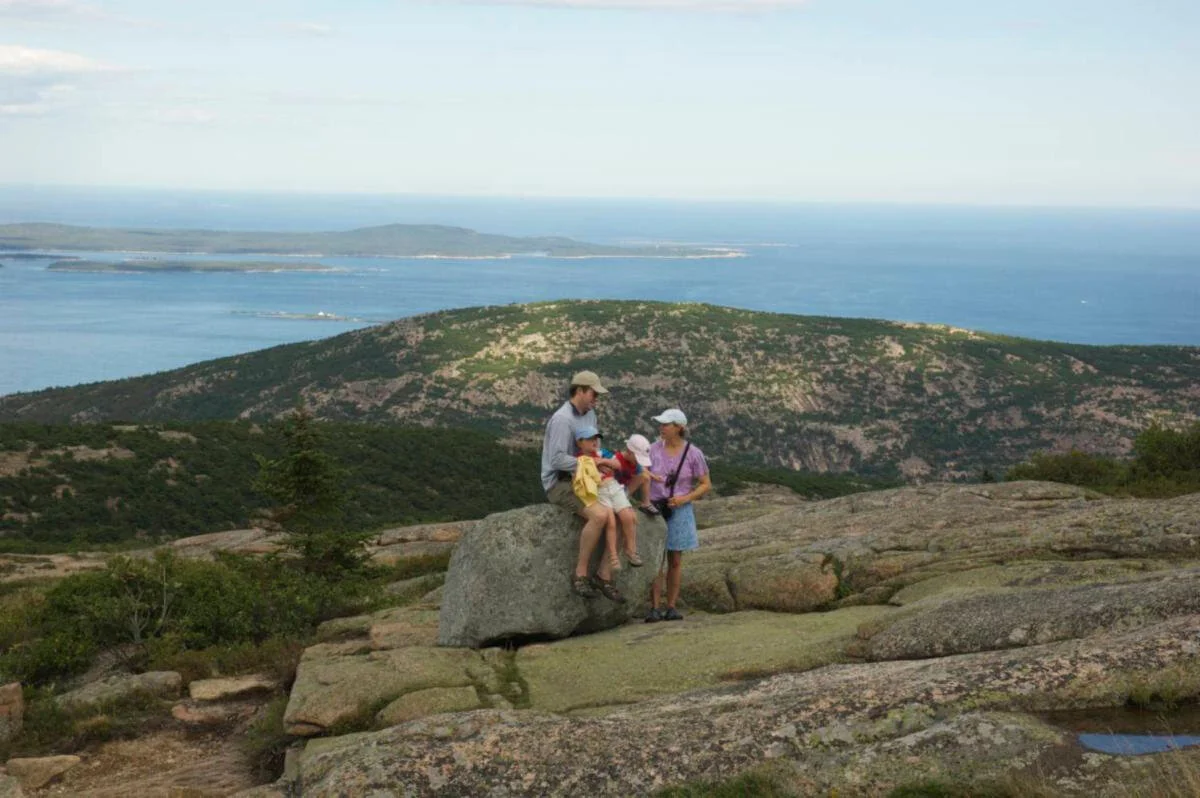
“The Holy Family of Cadillac Mountain,’’ by Eleanor Steinadler (Lambda print), at Galatea Fine Art, Boston. The mountain, 1,530 feet high, and in Acadia National Park, Maine, is the highest point within 25 miles of the Atlantic shoreline of North America between Cape Breton Highlands, Nova Scotia, and peaks in Mexico. During part of the year, it’s the first place in the U.S. from which you can see the sunrise.
Don Pesci: Those gubernatorial Caligulas

Decisive executive: A marble bust of Caligula restored to its original colors, identified from particles trapped in the marble
VERNON, Conn.
Gore Vidal – deceased, but not from Coronavirus complications – was once asked whether he thought the Kennedy brood had exercised extraordinary sway over Massachusetts. He did. And what did he think of the seemingly unending reign of “Lion of the Senate” Edward Kennedy, who had spent almost 43 years in office?
Vidal said he didn’t mind, because every state should have in it at least one Caligula.
The half-mad Roman emperor Caligula, who reigned in 37-41 A.D., considered himself a god, and the senators of Rome generally deferred, on pain of displeasure, to His Royal Deity. Caligula certainly acted like a god. The tribunes of the people deferred to his borderless power, which he wielded like a whip. They deferred, and deferred, and deferred… .Over time, their republic slipped through their fingers like water. Scholars think Caligula may have been murdered by a palace guard he had insulted.
Here in the United States, we do not dispose of our godlike saviors in a like manner. At worse, we may promote them to a judgeship, or they may be recruited after public service by deep-pocket lobbyists or legal firms, or they may remain in office until, as in Edward Kennedy’s case, they have shucked off their mortal coil and trouble us no longer
.Coronavirus has produced a slew of Vidal Caligulas, all of them governors. In emergencies, when chief executives are festooned with extraordinary powers, the legislature is expected to defer to the executive, and the judiciary remains quiescent.
This deference to an all-powerful executive department is not uncommon in war, but even in war, the legislative and judiciary departments remain active and viral concerning their oversight constitutional responsibilities.The war on Coronavirus, however, is a war like no other. Here in Connecticut, the General Assembly remains in a state of suspended animation. Every so often, an annoying constitutional Cassandra will pop up to remind us that we are a constitutional republic, but constitutional antibodies in Connecticut are lacking. Our constitutions, federal and state, are still the law of the land, and even our homegrown Caligulas are not “above the law,” because we are “a nation of laws, not of men.”
These expressions are more than antiquated apothegms; they are flags of liberty that, most recently, have been waved under President Trump’s nose. However, in our present Coronavirus circumstances, no one pays much attention to constitutional Cassandras because --- do you want to die? Really, DO YOU WANT TO DIE?Every soldier who has ever entered the service of his country in a war has asked himself the very same question. And we are in a Coronavirus War, are we not? Pray it may not last as long as “The War on Drugs.” Drug dealers won that one, and Connecticut has long since entered into the gambling racket; the marijuana racket looms in our future.
Then too, in the long run, we are all dead. Even “lions of the Senate” die. The whole point of life is to live honorably. And this rather high-falutin notion of honor means what your mama said it meant: don’t cheat; don’t lie; treat others as you expect them to treat you. Bathe every day and night in modesty, and remember – as astonishing as it may seem -- sometimes your moral enemy may be right. Put on your best manners in company. “The problem with bad manners,” William F. Buckley Jr. once said, “is that they sometimes lead to murder.” Caligula forgot that admonition.
Once Coronavirus has passed, we will be able honestly and forthrightly to examine closely the following propositions, many of which seem to be supported by what little, obscure data we now have at our disposal: that death projections have been wildly exaggerated; that reports of overwhelmed hospitals were exaggerated; that death counts were likely inflated; that the real death rate is magnitudes lower than it appears; that there have been under-serviced at-risk groups affected by Coronavirus; that it is not entirely clear how well isolation works; that ventilators in some cases could be causing deaths. These are open questions because insufficient data at our disposal at the moment does not permit a “scientific” answer to the questions that torment all of us.
At some point, a vaccine will be produced that will help to quiet our sometimes irrational fears, but vaccine production lies months ahead. The question before us now is: what is more dangerous, the wolf or the lion? New York Gov. Andrew Cuomo, and allied governors in his Northeast compact, cannot pinpoint a date to end their destructive business shutdown because of insufficient data. According to some reports, Cuomo has hired China-connected McKinsey & Company to produce “models on testing, infections and other key data points that will underpin decisions on how and when to reopen the region’s economy.”
If the economy in Connecticut collapses because Gov. Ned Lamont accedes to the demands of those in his newly formed consortium of Northeast governors that business destroying restrictions should remain in place for months until a vaccine is widely distributed, the effects of the resulting economic implosion will certainly be more severe than a waning Coronavirus infestation. After Connecticut has reached the apex of the Coronavirus bell curve, it is altogether possible that a continuation of the cure – a severe business shutdown occasioned by policies rooted in insufficient data – will be far worse than the disease it purports to cure.
Don Pesci is a Vernon-based columnist.