
Fence us in; flags like daffodils; white roofs
Fence Us In
Adapted from Robert Whitcomb’s “Digital Diary,’’ in GoLocal24.com

Some businesses plow on. Our cedar back fence blew down in Monday’s southerly gale. The fence is more important than ever because it provides us with a protected (including for our sometimes-volatile dog) outdoor green space in these claustrophobic times. Better that old barrier collapsing than the dead tree in an adjoining yard crashing down on our roof in a tropical storm (which Monday’s extratropical tempest reminded me of). When I was a kid we looked forward to tropical storms for providing us with new supplies of firewood.
Anyway, the fence guy, whose little company also deals with tree threats, showed up the next morning perhaps more eager to help than in less recessionary times. Government predictions call for a hefty hurricane season this year, and so he may have more customers than he can handle come August, September and October.
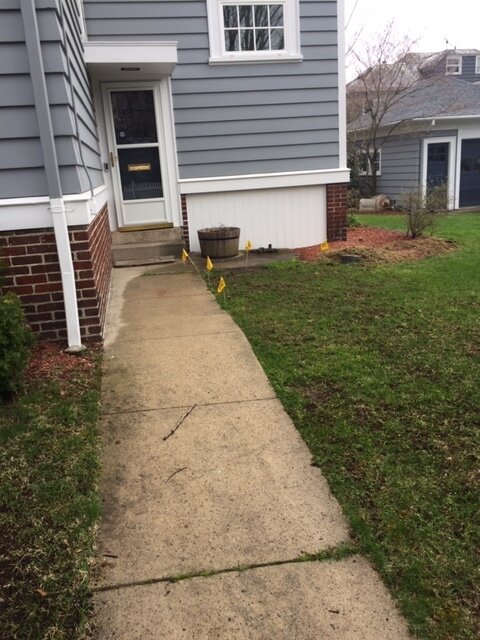
National Grid (the “nation,’’ by the way, is the United Kingdom) has planted little warning flags, looking from a distance like daffodils, all over the place in our neighborhood warning of gas lines below. Colorful warnings everywhere these days amidst the proliferating flowers.

A 35 °C (95 °F) heat reduction was observed on this modified bitumen roof with a white, reflective roof coating.
My younger daughter, who lives in, and is now trapped in, Brooklyn, sent some photos of rooftops that looked as if they’re covered with pristine snow. In fact, they’re simply painted white to reflect heat in the summer, in a reminder of a bigger problem than COVID-19 – global warming. A nice effect, as is the evening cheering of health-care workers from windows and front stoops.
Maybe it's better that we don't now

“Laptop Icon - We Used to Talk to Each Other ‘‘ (plaster), by Christine Palamidessi, at Galatea Fine Art’s (in Boston) online gallery
N.E. virus response: MIT leads smartphone tracking; Sanofi joins vaccine partnership; more

“Contact Tracing” ( encaustic monotype), by Nancy Whitcomb
From The New England Council (newenglandcouncil.com)
BOSTON
As our region and our nation continue to grapple with the Coronavirus Disease (COVID-19) pandemic, The New England Council is using our blog as a platform to highlight some of the incredible work our members have undertaken to respond to the outbreak. Each day, we’ll post a round-up of updates on some of the initiatives underway among Council members throughout the region. We are also sharing these updates via our social media, and encourage our members to share with us any information on their efforts so that we can be sure to include them in these daily round-ups.
You can find all the Council’s information and resources related to the crisis in the special COVID-19 section of our Web site. This includes our COVID-19 Virtual Events Calendar, which provides information on upcoming COVID-19 Congressional town halls and webinars presented by NEC members, as well as our newly-released Federal Agency COVID-19 Guidance for Businesses page.
Here is the April 20 roundup:
Medical Response
MIT Leads Global Efforts for Smartphone Tracking – Around the world, the Massachusetts Institute of Technology (MIT) is supporting and leading efforts to track COVID-19 infections. Using Bluetooth signals emitted from smartphones to conduct “contact tracing” on those with access to phones could eliminate much of the work for state and local governments to identify infected individuals. Read more in The Boston Globe
Sanofi Enters Partnership to Speed Development of Vaccine Prototype – Sanofi has partnered with GlaxoSmithKline (GSK) to work together in developing a vaccine for the coronavirus. The two pharmaceutical companies will combine their existing supply chains and resources to expedite both clinical trials of their vaccine candidate and production should theirs prove effective. BioPharma Dive has more.
Boston University Medical School Students Graduate Early to Aid Local Hospitals – Students from Boston University’s medical school have graduated early to begin their residencies in the midst of the global pandemic. Those newly-minted doctors who choose to remain in Massachusetts will receive automatic 90-day provisional licenses to allow them to begin practicing immediately. Read more in The Boston Business Journal.
Economic/Business Continuity Response
MEMIC Releases Workforce Guidance Hub – The Maine Employers Mutual Insurance Company (MEMIC) has launched a resource center for employees to inform them of proper safety precautions and legal protections offered to them as they navigate working during the pandemic. Additionally, the site offers additional aid to policyholders, including the suspension of non-renewals and adjustments to payment plans. Read more.
UMass Memorial Launches Employee Monitoring Program – To ensure that the hospital can remain open safely, UMass Memorial Medical Center has initiated a new program requiring all staff to log if they are experiencing any symptoms of COVID-19 before starting a shift. The measures aim to protect patients and staff as they work to contain the spread of the virus. The Worcester Business Journal has more.
Verizon Continuing to Expand 5G Network – Despite suspending marketing launches, Verizon is still on-track to launch 5G internet service in 60 cities by the end of the year. The provider will be using state-of-the-art technology to expand and improve access across the country, with cities such as Providence and Chicago already seeing 5G being implemented. Read more from PC Magazine.
Community Response
Assumption College, in Worcester, Establishes $3 Million Financial Aid Fund for Students – As its families and students are affected by the pandemic, Assumption College has established a $3 million fund to help its community offset tuition and room costs. The Assumption Coronavirus Financial Aid Relief Fund provides grants for those affected by the virus through job loss, furloughs, reduced hours, or caring for someone with COVID-19. Read more from The Worcester Business Journal.
Bank of America Gives $100,000 to Nonprofits Serving Homeless Population – Bank of America has provided a grant of $100,000 to Father Bill’s and MainSpring, a nonprofit based in Brockton, MA that operates a shelter for the homeless. The funds will be used to maintain the 60 beds in heated tents for shelter clients. The Enterprise has more.
Stay tuned for more updates each day, and follow us on Twitter for more frequent updates on how Council members are contributing to the response to this global health crisis.
The Boston Guardian
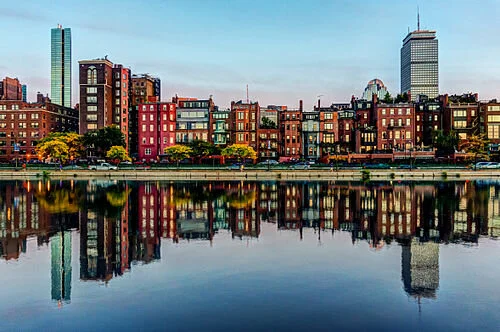
Looking across the Charles River to the Back Bay neighborhood, where The Boston Guardian is based.
For exciting and thorough coverage of Boston, please hit this link to The Boston Guardian.
Robert P. Alvarez: Don't let pandemic ravage the November election, too

The Balsams, a fancy resort hotel in Dixville Notch, N.H., in the White Mountains, and the site of the "midnight vote" that makes it the first place to vote in U.S. primary and general elections in every election year.

A ballot from the 1936 elections in Nazi Germany — nice and simple!
Via OtherWords.org
First, it was a public-health crisis. Now, it’s ravaging the economy. And for it’s next trick, the coronavirus is threatening to undermine the 2020 election.
Unless, that is, Congress steps in to ensure we can vote by mail.
If you’re curious what the worst case scenario is, look no further than Wisconsin, where a gerrymandered GOP legislature forced voters to the polls over the orders of the Democratic governor — and against the advice of public-health officials.
Wisconsin Republicans not only declined to send every voter an absentee ballot. They also appealed — successfully — to the conservative-majority U.S. Supreme Court to prevent voters who received their ballot late (through no fault of their own) from having their votes counted.
It was a transparent ploy by Wisconsin Republicans to support a conservative incumbent on the state Supreme Court by suppressing the vote. It failed — his liberal-leaning challenger won — but they struck a huge blow to voting rights in the process.
Fallout from the coronavirus exposed structural weaknesses in everything from our health care and education systems to market supply chains and labor rights. It also made painfully obvious the fragility of our electoral process.
Unfortunately, states have received little help from Congress in shoring up their elections. Just $400 million of the $2.2 trillion stimulus bill was earmarked for helping states cover new elections-related expenses stemming from the pandemic.
When it comes to providing the financial support necessary to ensure our elections are safe, accessible, fair, and secure, the last coronavirus response bill was a dereliction of duty.
Will it be safe to gather in large numbers by November? And even if it is, will voters feel comfortable standing in line, for up to six hours in some cases (thanks to GOP poll closures, but that’s another story), next to strangers?
If not, it’s fair to assume some voters will elect not to vote due to safety concerns. And that should undermine public confidence in the outcome.
The obvious solution is expanding voting by mail.
Unfortunately, Donald Trump is fiercely opposed to this. “They had things, levels of voting, that if you’d ever agreed to it, you’d never have a Republican elected in this country again,” he said.
Let that sink in. The president — who himself voted by mail — openly views the right to vote as a threat to his presidency and party.
Americans shouldn’t have to choose between their health and their right to vote. In the midst of this pandemic, states with overly cumbersome processes for absentee voting are complicit in voter suppression. Period.
To fix this, we need to ensure no-excuse absentee voting in the next coronavirus bill — and that’s the bare minimum. Beyond that, we also need pre-paid postage for mail-in ballots and an extended early in-person voting period.
We need accessible, in-person polling places with public safety standards that are up to snuff. That means election workers must know they’re safe, and must have access to personal protective equipment.
We also need to develop and bolster online voter registration systems, and run public information campaigns giving voters localized, up-to-date voting guidelines.
To complete this nationwide, we’re looking at a $2 billion price tag. That’s just 0.1 percent of the $2 trillion package Congress already passed — and if it ensures our democracy doesn’t die in this pandemic, it’s worth every penny.
Robert P. Alvarez is a media relations associate at the Institute for Policy Studies. He writes about criminal justice reform and voting rights.
A Hub of fanaticism
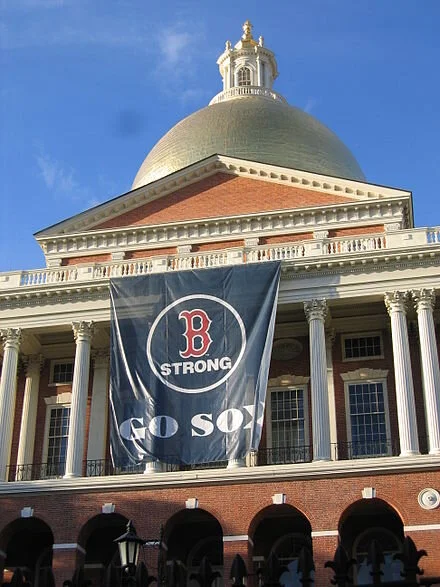
The Massachusetts State House displaying a banner in honor of the Red Sox's 2013 World Series appearance
“Boston is so laced with jerseys that you can be dressed head to toe in team apparel and no one will look twice. ‘‘
— David Walton, an actor and Boston native
Read more: https://www.wiseoldsayings.com/boston-quotes/#ixzz6KAmmfWZK
'At the feet of my hatred'

Marina in Stamford, Conn.

Buds on an oak tree. The species is one of the most common in southern New England
“Connecticut lays itself at the feet of my hatred.
The accent the Ischians use when not among themselves
does not point to but is Connecticut.
Red by oak. Blue by May.
White by sailcloth
jacketed on the booms in the marinas.
— From “One Connecticut,’’ by D.H. Tracy
Chris Powell: In the COVID-19 crisis, both sides threaten liberty; block those raises!

MANCHESTER, Conn.
Fortunately it was just another brief bout of MAGA-lomania the other day when President Trump declared that he would decide when states lift the health and safety restrictions they have imposed because of the virus epidemic. Several governors, including Connecticut's Ned Lamont, quickly protested that the Constitution reserves such power to the states. New York's Andrew Cuomo protested most colorfully, noting that the president is not a king.
But amid the epidemic constitutional rights are under assault by many elected officials throughout the country, Democratic as well as Republican. Several states are imposing or threatening to impose penalties on religious services that exceed recommended attendance levels, in spite of the First Amendment's guarantees of freedom of religion and assembly.
Connecticut isn't immune to such assaults. Lamont skirted the Second Amendment's guarantee of the right to bear arms by telling gun shops they could remain open only by appointment. State Attorney General William Tong has joined other state attorneys general in a lawsuit to suppress publication of plans for guns that can be made by 3D printers, and this week Tong urged the federal government to criminalize such publication -- that is, to criminalize mere information, as if the First Amendment doesn't also guarantee speech and press rights.
The objection to making guns with 3D printers is that they can be manufactured without legally required serial numbers. But any gun can be, and the designs for many weapons have been published. If mere information can be criminalized in regard to gun designs, it can be criminalized for whatever government doesn't want people to know. Of course there would be no end to that.
Trump can't tell states when to lift their health and safety restrictions. But neither can Tong tell people what they can publish and read, no matter how politically incorrect it may be.
xxx
Yankee Institute investigative journalist Marc Fitch this week reminded Connecticut that as of July 1 state government employees are due to start receiving raises costing at least $353 million a year. Fitch noted that Democratic governors in New York, Pennsylvania and Virginia are suspending state employee raises until the immense financial cost of the epidemic can be calculated.
So the Yankee Institute urged Governor Lamont to suspend the raises as well, but it's not clear that he can. For the raises are part of state government's current contract with the state employee union coalition, one of the many lamentable legacies of Connecticut's previous administration, and the federal Constitution forbids states from making any law impairing the obligation of contracts.
It's bad enough that the wages and benefits of state and municipal government employees have been completely protected even as the governor's own orders have thrown tens of thousands of people out of work in the private sector. For state government to pay raises while unemployment explodes in the private sector and state tax collections collapse would be crazy, more proof that nothing matters more to state government than the contentment of its own employees, whose unions long have controlled the majority political party.
But the governor is not helpless here. Using his emergency powers he could suspend collective bargaining for state employees and binding arbitration of their contracts for six months at a time or "modify" those laws to strengthen public administration during the emergency. He should do so, for as the treacle on television says, we're all supposed to be in this together.
Chris Powell is a columnist for the Journal Inquirer, in Manchester.
David Warsh: Getting beyond despair: Three prongs to address climate change
— By Adam Peterson

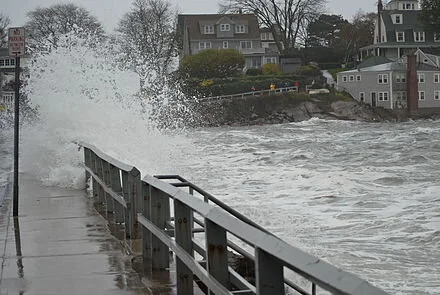
Flooding caused by Super Storm Sandy in Marblehead, Mass., on Oct. 29, 2012
From economicprincipals.com
SOMERVILLE, Mass.
Weighed down by not knowing what to expect of the coronavirus timetable, I spent a day last week reading about climate change. Specifically, I read Three Prongs for Prudent Climate Policy, by Joseph Aldy and Richard Zeckhauser, both of Harvard University’s Kennedy School of Government.
Paradoxically I came away feeling better. Grim though the situation they describe is, theirs is anything but a counsel of despair.
For three decades, advocates for climate change policy have simultaneously emphasized the urgency of reducing greenhouse gas emissions and provided unrealistic reassurances of the feasibility of doing so. It hasn’t worked out, say Alby and Zeckhauser.
The Kyoto Protocol of 1997 imposed binding commitments on industrial nations to reduce emissions below 1990 levels in a decade. They exceeded them. Even so, global carbon dioxide emission grew 57 percent over the same ten years, because developing nations hadn’t joined the accord.
So the Paris Agreement of 2015 established “pledge and review” commitments by from virtually every nation in the world, designed to prevent warming of more than 2 degrees centigrade by 2030. But even if every country honors its pledge, the policy is unlikely to succeed in meeting the target, say Aldy and Zeckhauser,
That’s because what’s already in the atmosphere is a stock, not a flow. From the pre-industrial period to 1990, carbon dioxide concentration increased by about 75 parts per million. Since 1990, CO2 has increased by another 55 parts per million, and despite the agreements, the rate of increase is apparently accelerating.
Meanwhile, global temperature have increased around half a degree centigrade in the last 30 years. They are likely to rise faster in the years ahead. Storms, droughts, floods, fires, melting will increase. Mass migrations in response to these weather events have barely begun.
So, the authors say, after 30 years of single-minded stress on emission reductions in climate change discourse, two other policy prongs are urgently needed.
One of these headings, adaptation, is well-known and uncontroversial, except that it costs a lot in more complicate applications than in simple adjustments. Moving heating plants from basements to upper stories so that equipment is not damaged by flooding is simple and relatively cheap. Sea barriers and storm gates to protect coastal cities are another. The sea wall to protect the Venice lagoon is almost finished, but the Army Corps of Engineers plan to protect New York City would take 25 years to construct.
The other strut, amelioration, is considerably less discussed, mainly for fear of the ease with which the remedy may be embraced, once the cost differences are better understood. “Solar radiation management” means putting a sunscreen into the sky – most likely sulfur particles injected into the upper atmosphere by specially built airplanes. Major volcanic eruptions over the centuries have proven that the principle will work, though myriad details of its practical application are hazy. What’s clear is that so-called “geo-engineering” would cost considerably less than emissions reduction or adaptation, especially if time were of the essence.
The only place I see radiation management brought up regularly in the things I read is in Holman Jenkins’s twice-a-week column in the editorial pages of The Wall Street Journal. The other day Jenkins noted Amazon’s Jeff Bezos’s intention to spend $10 billion to fight climate change. Don’t spend it touting nuclear power, Jenkins advised; Bill Gates is already working on that. And never mind carbon taxation; that must come, if it comes, from the Left. Instead, why not atmospheric aerosol research?
Right though Jenkins may be about the possibilities of solar-radiation mitigation, he is preaching to those ready to be converted. That’s why I was interested in the Aldy-Zeckhauser paper: they are several steps closer to the mainstream. Aldy served as the Special Assistant to the President for Energy and Environment in 2009-2010. Zeckhauser works in in the tradition of tough-minded cooperation pioneered by his mentor, the policy intellectual (and Nobel laureate) Thomas Schelling.
But if we can’t handle a virus, what hope is there of devising effective policies against climate change? That’s just the point: we can handle a virus. It just takes a year, or, probably, two. The problem of arresting global warming is much more difficult, but if you believe the science, there can be no doubt that disastrous events will sooner or later cause public opinion around the world to come around
Wisdom begins with the recognition that there are three policy prongs with which to address the problem of greenhouse gases, not just one. Slowing the effects of carbon dioxide emissions – while continuing to slow emissions themselves – turns on the next election, and the two or three elections after that.
David Warsh, an economic historian and a veteran columnist, is proprietor of economicprincipals.com, where this essay first appeared.
© 2020 DAVID WARSH, PROPRIETOR
web design by PISH P

Monumental way to start and end a train trip

Back when the public wanted grandeur in its infrastructure, Boston’s North Station in 1910. The building was opened in 1893 and was torn down in 1928.
The 'irresistibly touching' Concord River

The iteration of the Old North Bridge over the Concord River in 1900, a bit before Henry James’s visit. The original bridge (see picture below) was the site of the Battle of Concord, on April 19, 1775, at the opening of the American Revolution. The bridge was frequently replaced in Colonial times because of flooding.
“I hung over Concord River then as long as I could, and recalled how Thoreau, Hawthome, Emerson himself, have expressed with due sympathy the sense of this full, slow, sleepy, meadowy flood, which sets its pace and takes its twists like some large obese benevolent person, scarce so frankly unsociable as to pass you at all. It had watched the Fight, it even now confesses, without a quickening of its current, and it draws along the woods and the orchards and the fields with the purr of a mild domesticated cat who rubs against the family and the furniture. Not to be recorded, at best, however, I think, never to emerge from the state of the inexpressible, in respect to the spot, by the bridge, where one most lingers, is the sharpest suggestion of the whole scene—the power diffused in it which makes it, after all these years, or perhaps indeed by reason of their number, so irresistibly touching.’’
— Henry James, in The American Scene (1907)

A 1775 drawing by Amos Doolittle of the engagement at the North Bridge based on witness accounts his own inspection of the bridge

The present bridge, built in 1956, is an approximate replica of the bridge, built in 1760, that stood in the battle.

Stretches of the Concord River are gorgeous.
Drawn to power
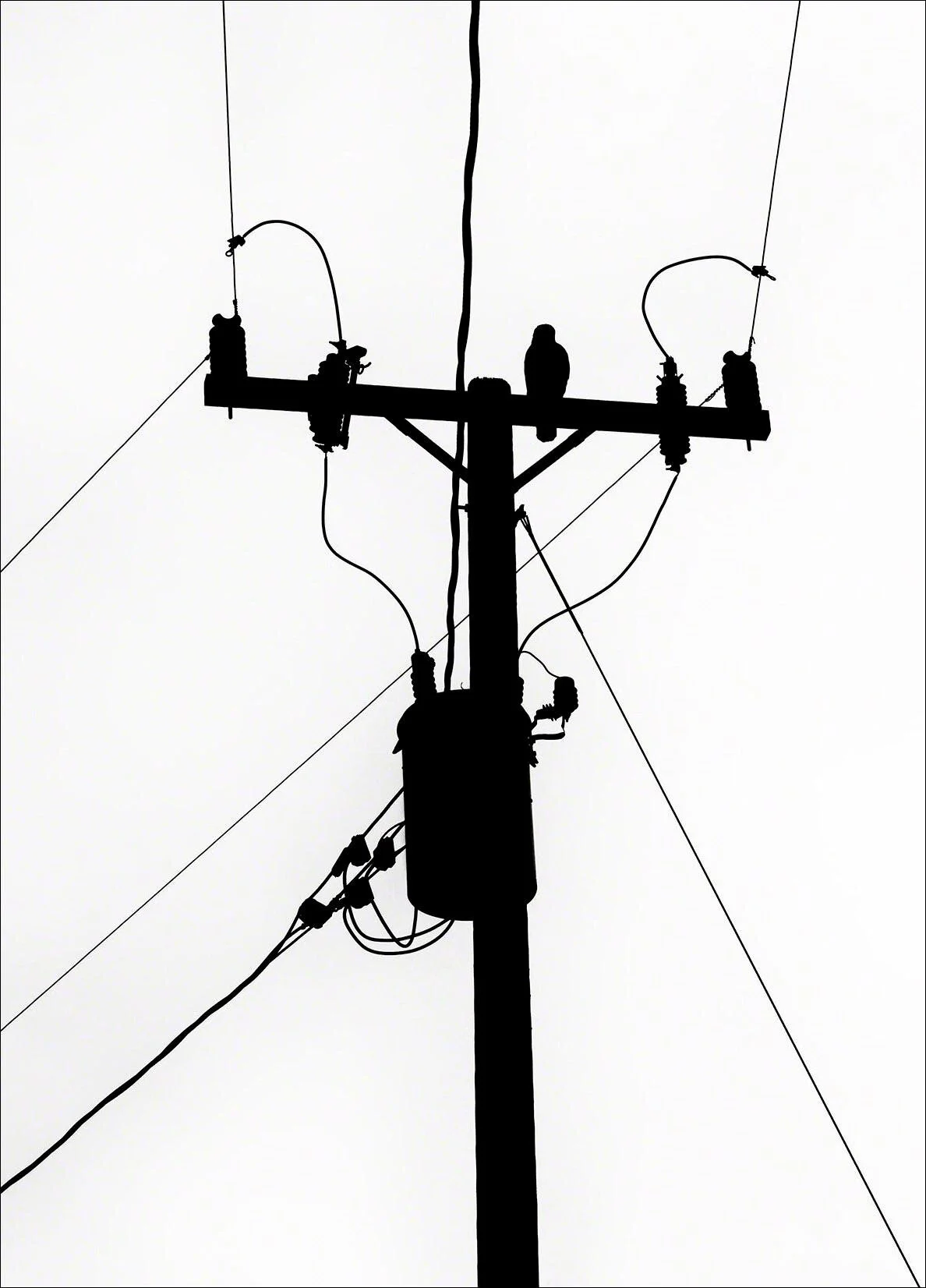
“Power: Chatham on Cape Cod” (archival pigment print), by Bobby Baker. Copyright Bobby Baker Fine Art Photography

Lindsey Gumb: Pandemic means now is the time to widen access to learning materials

Open Access logo, originally designed by Public Library of Science
From The New England Journal of Higher Education, a service of The New England Board of Higher Education (nebhe.org)
BRISTOL, R.I.
Residential college and university campuses across New England abruptly closed their doors last month during the COVID-19 outbreak, and while some schools were in session and students were asked to vacate, many others were on spring break and students were asked not to return. In both situations, students found themselves at home or in new environments where they waited to see how their education would progress online and remotely.
Among many variables associated with the chaos and stress of the pandemic, a lack of direct access to learning materials like textbooks has arisen as one of the major roadblocks to student learning in the era of COVID-19.
As a nation, we have continued to observe a sharp rise in textbook prices since 1977, which leaves many students enrolled at postsecondary institutions, public or independent, unable to afford the required learning materials for their courses. As a Band-Aid solution, students often rely on borrowing a copy of the book or material from a classmate or the campus library—options that became obsolete overnight when campuses closed and we entered this new world of social distancing and online learning and course delivery. When access barriers to learning materials like textbooks exist, either financial or circumstantial (as in the case of COVID-19), we know that students’ grades and academic trajectory suffer, and ultimately institutional retention can take a hit. Having been laid off from part-time jobs, denied unemployment and mostly left out of the COVID-19 stimulus package, college students have enough stress and anxiety right now—the last thing they should be worrying about is not having access to their textbooks. Enter OER (Open Educational Resources).
Are those “solutions” really OER?
Textbook prices are only part of the access barrier issue. As teaching and learning shifts fully online during the COVID-19 pandemic, educators have been forced to more closely consider and analyze how copyright restrictions set by publishers may limit their students’ access to these essential learning materials. The last few weeks have shown more than ever why true OER have significant value in ensuring students have access to their learning materials, because they are free and have licenses that allow for reuse and retention without limitation. This is not the case with publisher content like textbooks or the many online learning “solutions” they offer in which access is only semester-long, not in perpetuity like OER. These materials, even if offered free of charge by the publisher right now during the pandemic, will inevitably shuffle back behind a paywall at the end of the semester, disproportionately harming students affected by conditions out of their control brought on by COVID-19 (displacement, illness, caretaking responsibilities, etc.) and who may need to retake courses and need access to the materials again.
OER providers such as Lumen Learning, Saylor Academy and the Open Course Library have full online courses ready to be adopted and easily integrated into learning management systems with very little effort needed by faculty members. The content is customizable. Students have immediate, free access, and unlike publisher content, access to the content won’t be lost when the semester ends.
OER, however, is not and cannot be the blanket solution for ensuring students have access to their learning materials during a time like this. In fact, we’ve heard stories from across the region of institutions handing out technology and hotspots to help address the digital inequities that exist for so many students. The Community College of Rhode Island awarded nearly 700 students grants to acquire computers or gain internet access with an additional 61 iPads distributed to students who requested them. OER are primarily digital resources, and students need an Internet connection to at least initially download the resource onto a device. While they are free, OER will still require other institutional support systems to make sure our students have everything they need to equitably participate in their remote learning.
Freeing information
This isn’t just about students’ access to textbooks. Also at issue is the current publishing industry’s suppression of access to information. SPARC (the Scholarly Publishing and Academic Research Coalition) defines Open Access (OA) as the “free, immediate, online availability of research articles coupled with the rights to use these articles fully in the digital environment. OA ensures that anyone can access and use these results—to turn ideas into industries and breakthroughs into better lives.” The American Library Association and academic librarians have long been advocating for OA policies that remove barriers to scholarly, peer-reviewed research that are typically only accessible to those who have an active academic affiliation such as faculty, students, staff at colleges and universities. Institutions pay outrageous annual subscription fees on behalf of their community members to access this content, and those who have no affiliation pay a fee to access each article.
We’ve seen recently that many news organizations, such as The New York Times, Bloomberg News and The Atlantic, have removed the paywall on articles pertaining to COVID-19 so that the public has access to pertinent information that could potentially be lifesaving. OA fosters the same spirit except, instead of news, the information is peer-reviewed research, often generated by researchers through federal grant funding, aka “your tax dollars.” New research, particularly in the medical field, can have an immediate impact on public health. If that information is behind a paywall, only the privileged will have access to that potentially life-saving research. In January, a Washington Post article, Scientists are unraveling the Chinese coronavirus with unprecedented speed and openness, strongly illustrated this point. The genome sequence of the coronavirus was posted in an open access repository for genetic information and literally overnight, Andrew Mesecar, a professor of cancer structural biology at Purdue University, got a hold of it and started analyzing the DNA sequence. The immediate domino effect of having this information freely available has led to an international collaboration of scientists working together to aid in this public health crisis. Victoria Heath and Brigitte Vézina’s recent blog post for Creative Commons, Now is the time for Open Access Policies—here’s why, reminds us that “we must cooperate effectively to respond to an unprecedented global health emergency. The mantra “when we share, everyone wins” applies now more than ever.”
Robin DeRosa, director of the Open Learning & Teaching Collaborative at Plymouth (N.H.) State University, notes “there is a link between public health and Open. The open sharing of research and data can help us quickly collaborate to find medical solutions. Open pedagogy can help us involve our students in our fields’ responses to the pandemic and remind us that the digital divide can complicate remote learning. And OER can remove barriers for students and faculty who need to shift to more ubiquitously available resources. Open is about public infrastructure more than it is a set of free textbooks.”
For more on the basics and supporting research of OER, check out Open Matters: A Brief Intro and see additional resources at the Open Education and Open Educational Resources page on NEBHE’s website.
Lindsey Gumb is an assistant professor and the scholarly communications librarian at Roger Williams University, in Bristol, where she has been leading OER adoption, revision and creation since 2016, focusing heavily on OER-enabled pedagogy collaborations with faculty. She co-chairs the Rhode Island Open Textbook Initiative Steering Committee and the is Fellow for Open Education at the New England Board of Higher Education. She was awarded a 2019-20 OER Research Fellowship to conduct research on undergraduate student awareness of copyright and fair use and open licensing as it pertains to their participation in OER-enabled pedagogy projects.
(Editor’s note: New England Diary’s editor, Robert Whitcomb, is a former member of The New England Board of Higher Education’s Editorial Advisory Board.)

Clock tower at Roger Williams University, in Mount Hope Bay
— Phtoto by Notyourbroom
'Sanity of stone'

The Barre (Vt.) World War 1 Memorial, "Youth Triumphant", by sculptor C. Paul Jennewein. The Barre area is known for its granite and marble industries.
“There under elms in glacial light
Survival forced me to atone:
The heart exchanged its rich excess
For starker sanity of stone.’’
— From “Sojourn in Vermont,’’ by Israel Smith

The Rock of Ages quarry, in Barre, Vt.
— Photo by Mfwills
Hope and doubt on the beach

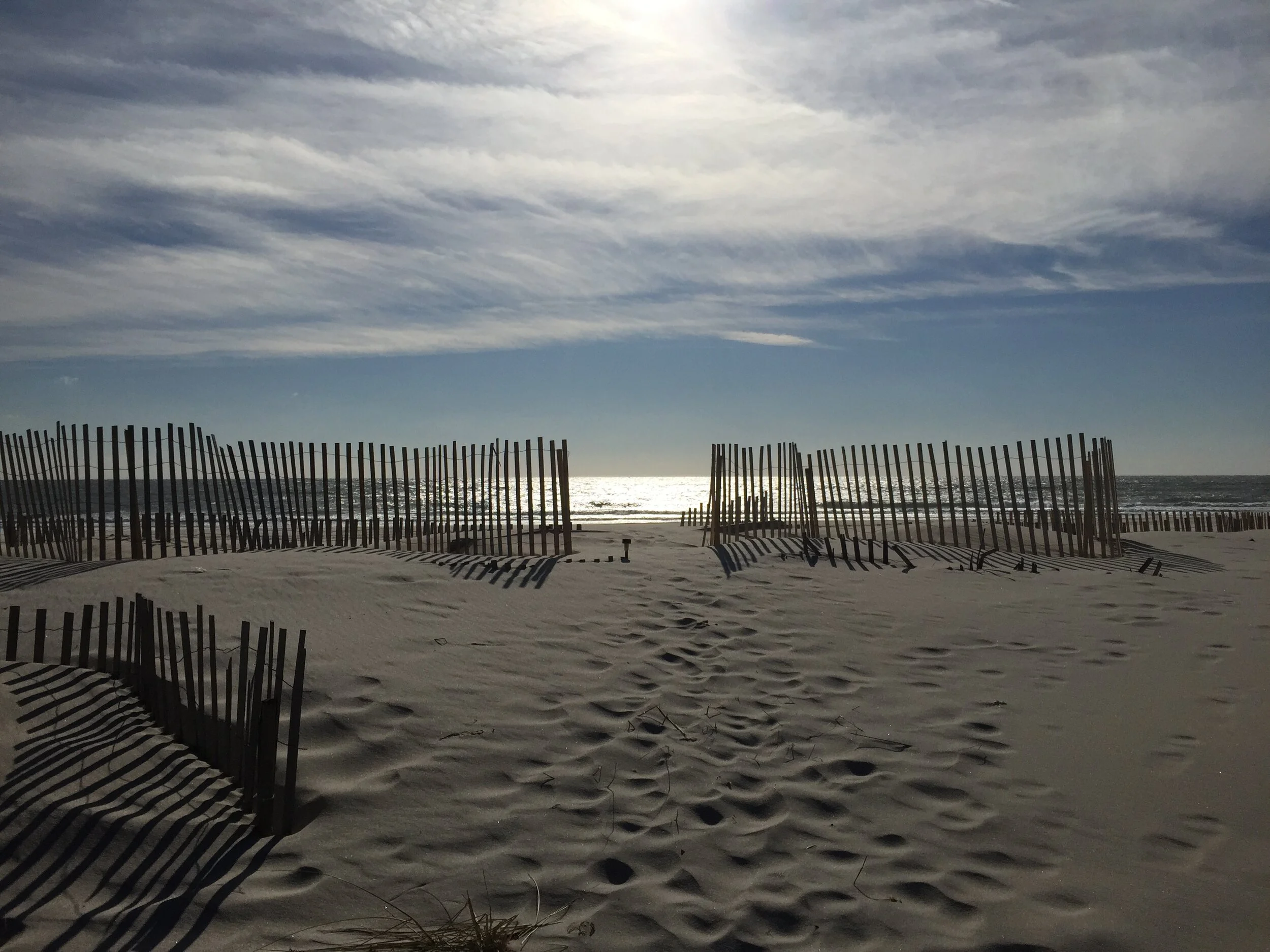
On Westhampton Beach, on Long Island
— Photos by Jacob Aaron Schiffman
Phil Galewitz: Harvard study sees social distancing maybe extending into 2022
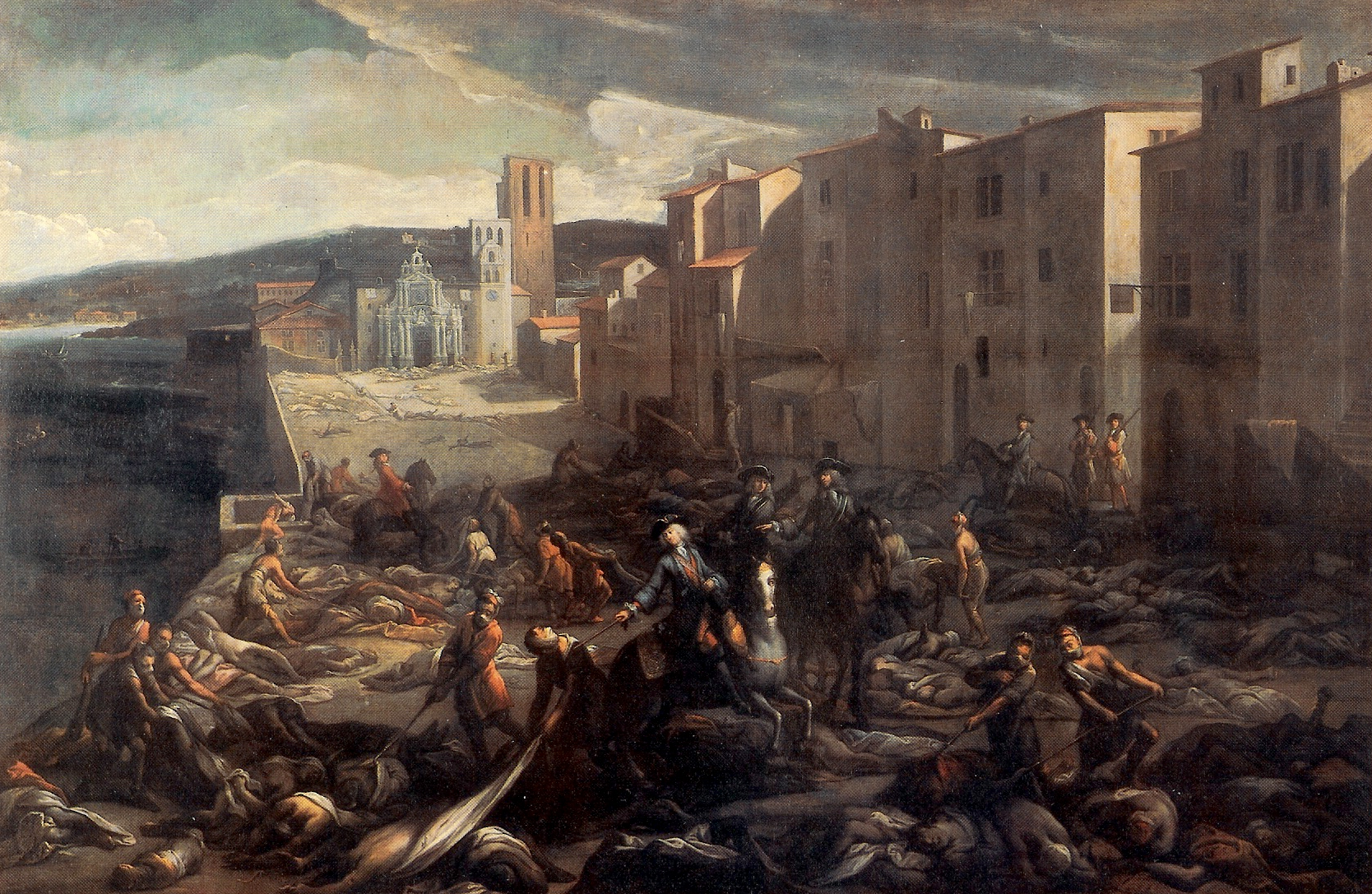
Contemporary engraving of Marseille during the Great Plague of Marseilles in 1720–1721
As New York, California and other states begin to see their numbers of new COVID-19 cases level off or even slip, it might appear as if we’re nearing the end of the pandemic.
President Donald Trump and some governors have pointed to the slowdown as an indication that the day has come for reopening the country. “Our experts say the curve has flattened and the peak in new cases is behind us,” Trump said Thursday in announcing the administration’s guidance to states about how to begin easing social distancing measures and stay-at home orders.
But with the national toll of coronavirus deaths climbing each day and an ongoing scarcity of testing, health experts warn that the country is nowhere near “that day.” Indeed, a study released this week by Harvard scientists suggests that without an effective treatment or vaccine, social distancing measures may have to stay in place into 2022.
Kaiser Health News spoke to several disease detectives about what reaching the peak level of cases means and under what conditions people can go back to work and school without fear of getting infected. Here’s what they said.
It’s Hard To See The Peak
Health experts say not to expect a single peak day — when new cases reach their highest level — to determine when the tide has turned. As with any disease, the numbers need to decline for at least a week to discern any real trend. Some health experts say two weeks because that would give a better view of how widely the disease is still spreading. It typically takes people that long to show signs of infection after being exposed to the virus.
But getting a true reading of the number of cases of COVID-19, the disease caused by the coronavirus, is tricky because of the lack of testing in many places, particularly among people under age 65 and those without symptoms.
Another factor is that states and counties will hit peaks at different times based on how quickly they instituted stay-at-home orders or other social distancing rules.
“We are a story of multiple epidemics, and the experience in the Northeast is quite different than on the West Coast,” said Esther Chernak, director of the Center for Public Health Readiness and Communication at Drexel University in Philadelphia.
Also making it hard to determine the peak is the success in some areas of “flattening the curve” of new cases. The widespread efforts at social distancing were designed to help avoid a dramatic spike in the number of people contracting the virus. But that can result instead in a flat rate that may remain high for weeks.
“The flatter the curve, the harder to identify the peak,” said William Miller, a professor of epidemiology at Ohio State University.
The Peak Does Not Mean The Pandemic Is Nearly Over
Lowering the number of new cases is important, but it doesn’t mean the virus is disappearing. It suggests instead that social distancing has slowed the spread of the disease and elongated the course of the pandemic, said Pia MacDonald, an infectious disease expert at RTI International, a nonprofit research institute in North Carolina. The “flatten the curve” strategy was designed to help lessen the surge of patients so the health care system would have more time to build capacity, discover better treatments and eventually come up with a vaccine.
Getting past peak is important, Chernak said, but only if it leads to a relatively low number of new cases.
“This absolutely does not mean the pandemic is nearing an end,” MacDonald said. “Once you get past the peak, it’s not over until it’s over. It’s just the starting time for the rest of the response.”
What Comes Next Depends On Readiness
Although Trump said the nation has passed the peak of new cases, health experts cautioned that from a scientific perspective that won’t be clear until until there is a consistent decline in the number of new cases — which is not true now nationally or in many large states.
“We are at the plateau of the curve in many states,” said Dr. Ricardo Izurieta, an infectious disease specialist at the University of South Florida. “We have to make sure we see a decline in cases before we can see a light at the end of the tunnel.”
Even after the peak, many people are susceptible.
“The only way to stop the spread of the disease is to reduce human contact,” Chernak said. “The good news is having people stay home is working, but it’s been brutal on people and on society and on the economy.”
Before allowing people to gather in groups, more testing needs to be done, people who are infected need to be quarantined, and their contacts must be tracked down and isolated for two weeks, she said, but added: “We don’t seem to have a national strategy to achieve this.”
“Before any public health interventions are relaxed, we better be ready to test every single person for COVID,” MacDonald said.
In addition, she said, city and county health departments lack staffing to contact people who have been near those who are infected to get them to isolate. The tools “needed to lift up the social distancing we do not have ready to go,” MacDonald said.
You’re Going To Need Masks A Long Time
Whether people can go back out to resume daily activities will depend on their individual risk of infection.
While some states say they will work together to determine how and when to ease social distancing standards to restart the economy, Chernak said a more national plan will be needed, especially given Americans’ desire to travel within the country.
“Without aggressive testing and contact tracing, people will still be at risk when going out,” she said. Social gatherings will be limited to a few people, and wearing masks in public will likely remain necessary.
She said major changes will be necessary in nursing home operations to reduce the spread of disease because the elderly are at the highest risk of complications from COVID-19.
Miller said it’s likely another surge of COVID-19 cases could occur after social distancing measures are loosened.
“How big that will be depends on how long you wait from a public health perspective [to relax preventative measures]. The longer you wait is better, but the economy is worse off.”
The experts pointed to the 1918 pandemic of flu, which infected a quarter of the world’s population and killed 50 million people. Months after the first surge, there were several spikes in cases, with the second surge being the deadliest.
“If we pull off the public health measures too early, the virus is still circulating and can infect more people,” said Dr. Howard Markel, professor of the history of medicine at the University of Michigan. “We want that circulation to be among as few people as possible. So when new cases do erupt, the public health departments can test and isolate people.”
The Harvard researchers, in their article this week in the journal Science, said their model suggested that a resurgence of the virus “could occur as late as 2025 even after a prolonged period of apparent elimination.”
Will School Bells Ring In The Fall?
Experts say there is no one-size-fits-all approach to when office buildings can reopen, schools can restart and large public gatherings can resume.
The decision on whether to send youngsters back to school is key. While children have been hospitalized or killed by the virus much less frequently than adults, they are not immune. They may be carriers who can infect their parents. There are also questions of whether older teachers will be at increased risk being around dozens of students each day, MacDonald said.
Another factor: The virus is likely to re-erupt next winter, similar to what happens with the flu, said Jerne Shapiro, a lecturer in the University of Florida Department of Epidemiology.
Without a vaccine, people’s risk doesn’t change, she said.
“Someone who is susceptible now is susceptible in the future,” Shapiro said.
Experts doubt large festivals, concerts and baseball games will happen in the months ahead. California Gov. Gavin Newsom endorsed that view Tuesday, telling reporters that large-scale events are “not in the cards.”
“It’s safe to say it will be a long time until we see mass gatherings,” MacDonald said.
Phil Galewitz is a Kaiser Health News journalist (pgalewitz@kff.org, @philgalewitz)
Cape's mild countenance

Dunes on Sandy Neck on Cape Cod.
“Although it can be violent and fierce in a gale, or inscrutable and even threatening when shrouded in fog, the familiar countenance of Cape Cod is general and moderate, even touchingly vulnerable, like a set of cherished features deteriorating in the rain of time.’’
-- Robert Finch, in The Cape Itself (1991)
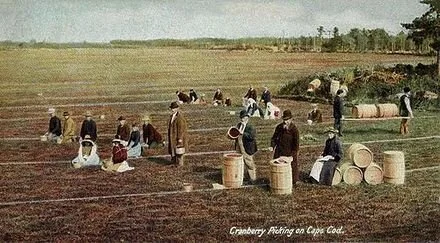
Cranberry picking on Cape Cod in 1906

Marsh in Chatham
When it was much worse
From Robert Whitcomb’s “Digital Diary,’’ in GoLocal24.com:
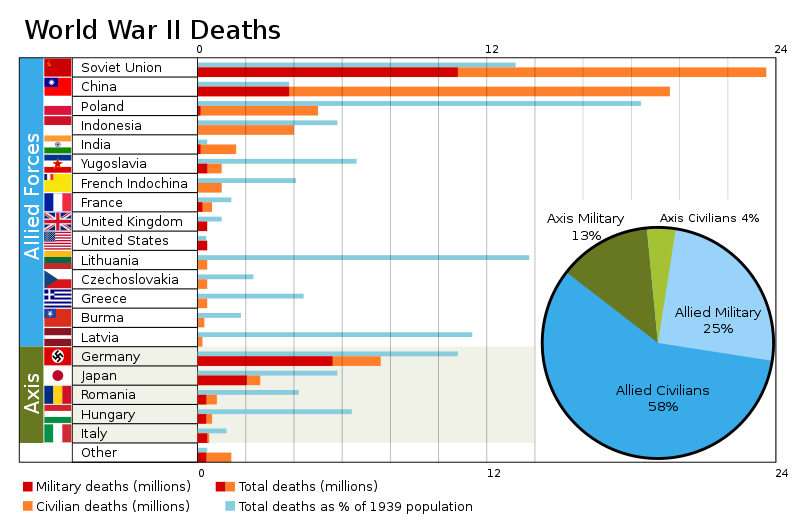
It sometimes verges on soap opera but the drama World on Fire, the new British TV series about World War II now being broadcast on PBS, is often very effective at getting across what it might have been like for participants and onlookers in the 1939-45 conflict, which killed perhaps 60 million people. And it reminds viewers that what people in my parents’ and generation called “The War’’ was much worse than COVID-19. As teaching and knowledge of history continue to dangerously fade in America, we tend to present current or very recent events as far more momentous than much more important ones in the past. You can see this in how many people rank recent U.S. presidents as “greater’’ than obviously more important ones deeper in the past. Call it recency bias.
Whatever. The 1970s British documentary series The World at War remains, in my view, the best and most moving series on that horrific conflict. (The war created many of us – e.g., my parents met in a naval officers club in New York in 1943. They married late that year, and a few weeks later my father was on destroyer used to support the American landings at Anzio, Italy, where a long and epic battle took place.)

U.S. infantry landing at Anzio
N.E. responds: B.U. starts experimental COVID-19 treatment; companies give more relief money
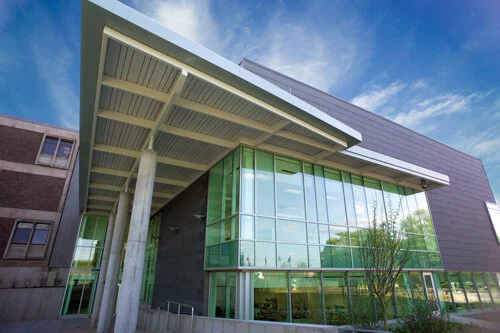
The stunning Dana Hall-Integrated Science, Engineering, and Technology Complex at the University of Hartford. The university is offering free housing to first responders.
From our friends at The New England Council: (newenglandcouncil.com):
As our region and our nation continue to grapple with the Coronavirus Disease (COVID-19) pandemic, The New England Council is using our blog as a platform to highlight some of the incredible work our members have undertaken to respond to the outbreak. Each day, we’ll post a round-up of updates on some of the initiatives underway among Council members throughout the region. We are also sharing these updates via our social media, and encourage our members to share with us any information on their efforts so that we can be sure to include them in these daily round-ups.
You can find all the Council’s information and resources related to the crisis in the special COVID-19 section of our website. This includes our COVID-19 Virtual Events Calendar, which provides information on upcoming COVID-19 Congressional town halls and webinars presented by NEC members, as well as our newly-released Federal Agency COVID-19 Guidance for Businesses page.
Here is the Friday, April 17, roundup:
Medical Response
Boston Hospitals Begin Using Experimental Treatment on COVID-19 Patients – Doctors at Massachusetts General Hospital (Mass General) and Beth Israel Deaconess Medical Center have begun using hydroxychloroquine, the now-famous anti-malarial drug, as a potential treatment on COVID-19 patients. Mass General is sponsoring a controlled study with the drug that plans to test patients around the country in order to assess its effectiveness beyond initial, anecdotal reports of success. The Boston Globe has more.
Brandeis University, Boston University Collaborate on Coronavirus Research – Researchers at Brandeis University and Boston University are working together to study how the coronavirus penetrates cells and causes infection. Labs at the two universities are working to visualize how COVID-19 affects humans at a cellular level to better understand how it operates and to measure the effectiveness of varying antibodies in combating the virus. Read more.
MilliporeSigma Prepares for Large-Scale Production of Potential Vaccine – MilliporeSigma, in partnership with The Jenner Institute, has announced the foundation for large-scale production of a vaccine candidate. With the potential treatment in clinical trials, the partnership will ensure that the manufacturing and distribution processes—which would normally take up to a year—can be ramped up should the vaccine prove effective. Read the press release here.
Economic/Business Continuity Response
University of Hartford Providing Free Housing to First Responders – In an effort to support those working on the front lines of the pandemic, the University of Hartford has announced free temporary housing for 200 first responders. The school’s residence halls will be used to house the essential workers who are self-isolating while they work to combat the virus. WTNH has more.
Tufts Health Plan Offers Healthcare Service Information Hub – To provide its members with information on available resources during the pandemic, Tufts Health Plan has created a resource page outlining what services are available to them from the insurance provider. The page addresses a variety of concerns and questions, such as the cost of testing and treatment, availability of telehealth services, and increased access to prescriptions.
Community Response
Stanley Black & Decker Launches $10 Million Relief Program – Manufacturer Stanley Black & Decker has launched a charitable outreach program, providing over $10 million to support populations most heavily affected by the COVID-19 pandemic. The program will support emergency relief funds for employees and families impacted by the crisis, as well as nonprofit organizations around the world. The company also plans to purchase 3 million face masks and additional protective equipment for essential workers in locations where it operates. The Hartford Business Journal has more.
Eversource Donates $1.2 Million to United Ways Agencies in New England – Eversource is hastening its annual donation of $1.2 million in New England to s in the region. The energy company will also donate funds to Connecticut’s statewide relief fund. Read more in The Hartford Business Journal.
UMass Medical School Produces Hand Sanitizer for Local Hospitals – At the University of Massachusetts (UMass) Medical School, students in the Graduate School of Biomedical Sciences have begun producing hand sanitizer for hospitals in the area. The students have already produced almost 130 gallons in three days, and plan to make another 100 along with distributing their procedure to expedite production. Read more.
Stay tuned for more updates each day, and follow us on Twitter for more frequent updates on how Council members are contributing to the response to this global health crisis.