
Vox clamantis in deserto









Boston hospitals unite to handle influx; UMaine offering online campus tours for prospective students; race track speeds PPE’s

This is from our friends at The New England Council (newenglandcouncil.com):
As our region and our nation continue to grapple with the Coronavirus Disease (COVID-19) pandemic, The New England Council is using our blog as a platform to highlight some of the work our members have undertaken to respond to the outbreak. Each day, we’ll post a round-up of updates on some of the initiatives underway among Council members throughout the region. We are also sharing these updates via our social media, and encourage our members to share with us any information on their efforts so that we can be sure to include them in these daily round-ups.
You can find all the Council’s information and resources related to the crisis in the special COVID-19 section of our Web site. This includes our COVID-19 Virtual Events Calendar, which provides information on upcoming COVID-19 Congressional town halls and webinars presented by NEC members, as well as our newly-released Federal Agency COVID-19 Guidance for Businesses page.
Here is today’s (April 10, 2020) roundup:
Medical Response
Boston Hospitals Launch Citywide Group to Manage Influx – To better coordinate the handling of incoming patients, Massachusetts General Hospital (MGH) and Beth Israel Deaconess Medical Center (BIDMC) are jointly leading a response group across Boston. The group streamlines the flow of patients to hospitals in the group to avoid moving staff and resources, with support from The Massachusetts Health & Hospital Association as well as a growing network of the city’s hospitals. WBUR has more.
MIT Contact Tracing App Adopted by Local Governments – Three local government entities plan to introduce Private Kit, an app developed by Massachusetts Institute of Technology (MIT) researchers. The app allows for extensive – yet still private– “contact tracing” using users’ Bluetooth signals. Other counties and municipalities around the country are considering introducing the app in their communities in the coming weeks. Read more in Reuters.
Beth Israel Doctors Begin Testing Drug to Reduce Need for Ventilators – Doctors at Beth Israel Deaconess Medical Center have launched clinical trials to test tPA to treat COVID-19 related respiratory failure, thereby reducing the demand for ventilators. The anti-clotting drug is usually reserved for heart attack and stroke patients, but after some initial success in treating coronavirus patients, will now enter a two-phase clinical trial. Read the press release here.

A tree-lined path through the Lyle E. Littlefield Ornamental Gardens, at the University of Maine’s flagship campus, in Orono. The university provides online tours to prospective students.

The New Hampshire Motor Speedway, in Loudon, the biggest such operation in New England by far. It’s donating PPE’s.
Economic/Business Continuity Response
UMaine Utilizing Virtual Programming for Prospective Students – While high school seniors are unable to visit campuses as they choose where to attend college, the University of Maine (UMaine) is offering virtual programs, such as campus tours and videoconferencing options with professors, to highlight the resources of the university. Read more in the Bangor Daily News.
New England Center for Children Maintains Residential Program – The New England Center for Children (NECC) in Framingham continues to operate its residential educational program for children with autism amid the pandemic. Many of the students who reside at the center cannot safely return to their homes To support these students and ensure they have adequate resources and assistance during the pandemic, NECC’s residential program—with the support of the state of Massachusetts—continues to keep their students safe while meeting their diverse needs. Read more from WBUR
Community Response
Massachusetts Hospitals Receive Part of $38 Million Relief Donation – UMass Memorial Medical Center, in Worcester, and Massachusetts General Hospital in Boston are among the recipients of $2.3 in aid to Massachusetts relief efforts from insurance company MAPFRE. The funds are part of a $38 million aid package donated by the Spanish insurer to aid in COVID-19 relief efforts. Several other Massachusetts hospitals will also receive a share of the funds. Read more in The Worcester Business Journal.
New Hampshire Motor Speedway Donates Protective Equipment – The New Hampshire Motor Speedway has donated 800 units of personal protective equipment (PPE) for local health-care workers in the state. The NASCAR track donated the items directly to the city of Loudon, N.H., where the track is situated. Read more from NBC Sports.
UnitedHealth Group Pledges $50 Million for Relief Efforts – Supporting those most directly affected by the pandemic—ranging from hard-hit states to seniors and those experiencing food insecurity—UnitedHealth Group has committed $50 million toward relief efforts. Funds will be spread across the country to alleviate financial strain on these vulnerable populations. Read the release here.
Stay tuned for more updates each day, and follow us on Twitter for more frequent updates on how Council members are contributing to the response to this global health crisis.T
And all sides lose

“Ocean Battleground’’ (charcoal on paper), by Moon Hee Kim, at Galatea Fine Art, Boston. Only viewable online now.
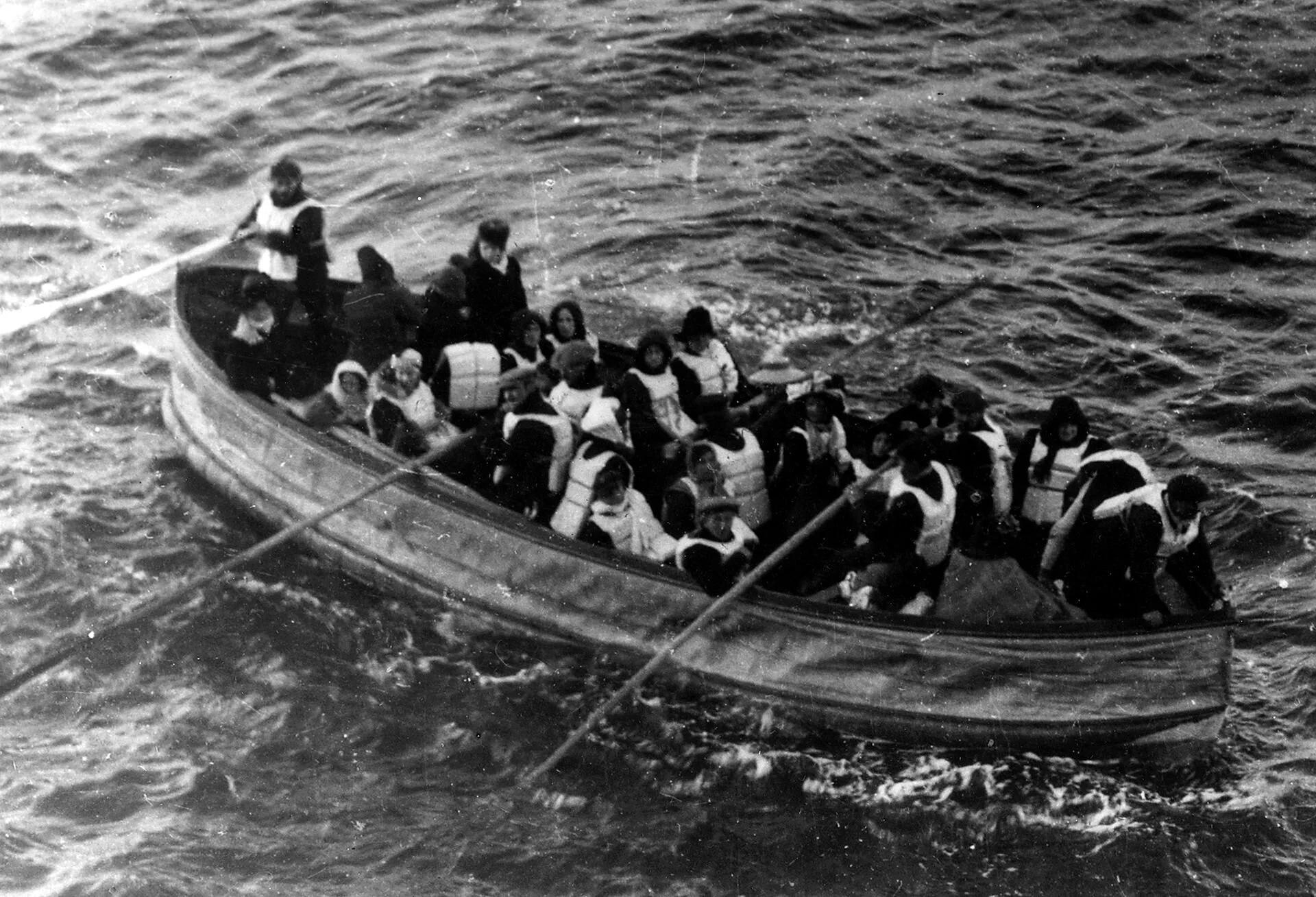
Chris Powell: In Conn. (and elsewhere), the vast unfairness of responses to COVID-19
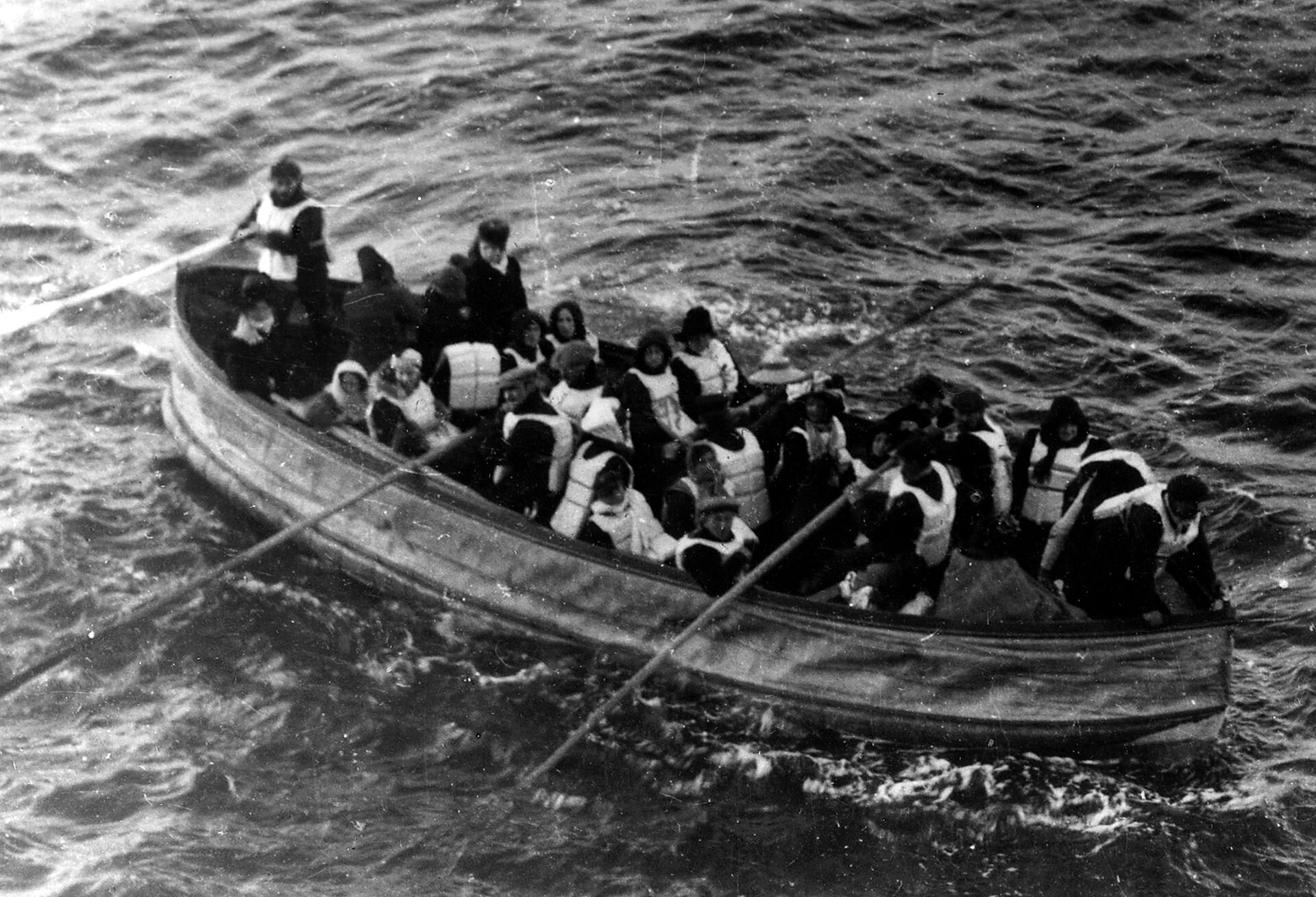
The last lifeboat launched from the Titanic
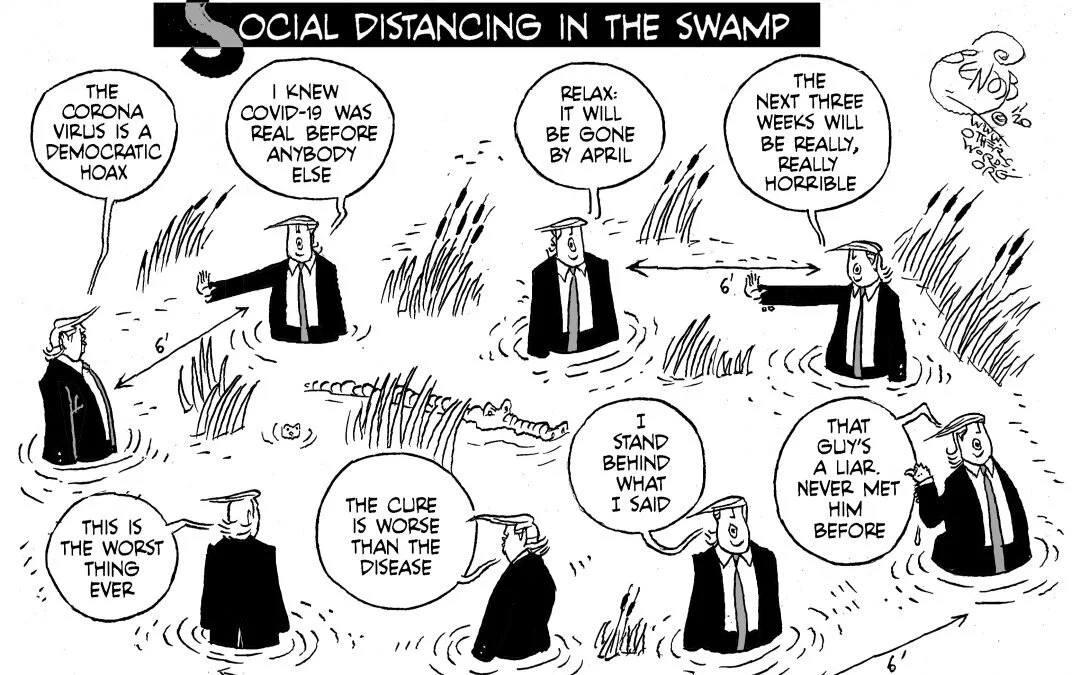
With all the patronizing piety they can muster, newscasters and commercials on television keep telling viewers, "We're all in this together," as if this will provide consolation and build national unity. It might if it were true.
A better service would show how, because of government policy, some people are surviving the COVID-19 epidemic comfortably while others, even though not infected, are being ruined.
Many government employees in Connecticut -- police and correctional officers, firefighters, child-protection social workers, and doctors and nurses -- are not just still working but risking their lives. Other government employees are not working as much as usual if at all but still being paid and insured though they are no more essential than many of the private-sector workers who have been furloughed or laid off because their employers have had to reduce or suspend operations.
Those private-sector workers who have lost their jobs and now face losing their housing and insurance still incur their usual tax obligations. While they will have less state income tax to pay, nobody is waiving property, sales, and gas taxes for them, and even renters pay property taxes indirectly, through their rent.
Of course, government's response to the epidemic was not calculated to penalize the private sector. But the consequences of its response are a reminder that most of the time government takes far better care of itself than it takes care of the public.
The huge if yet-uncounted cost of the epidemic requires confronting this unfairness.
While it may be hoped that the federal government will reimburse state government for most of its extraordinary expenses in the epidemic, by one estimate the epidemic still may cost state government $1.5 billion in tax revenue. That's almost 15 percent of the state budget, about half of which is spent on state and municipal government employees. How can such a deficit be closed without economizing with government employee compensation? Maintaining government employee compensation at current levels will be achieved only by reducing public services or raising taxes again, though Connecticut's high taxation already has cost it much population and business.
Since the General Assembly has been unable to convene and conduct normal business amid the epidemic, legislators should start contemplating this challenge on their own. The emergency powers claimed by Gov. Ned Lamont under Section 28-9 of the Connecticut General Statutes would enable him to suspend collective bargaining and binding arbitration for government employees, and thereby enable state and municipal government to begin to regain control of personnel expenses. But any such suspension could last for no more than six months at a time. Only regular legislation can regain that control for the long term.
Connecticut and the country won't be getting back to normal for many months. The epidemic soon may be slowed but the virus will linger into the summer and threaten to flare again when cold weather drives people back indoors.
Many smaller businesses are not likely to survive this -- not just restaurants and entertainment-oriented businesses but retailers and professional offices as well. The capital of those businesses will have been wiped out, along with the jobs they provided, and society may need years to regain income before it can support them again.
Temporarily bigger government likely will save Connecticut from the worst of the epidemic. But what remains of the state won't be able to afford as much of the government it had.
Chris Powell is a columnist for the Journal Inquirer, in Manchester, Conn.
-END-
'Names are elegies'
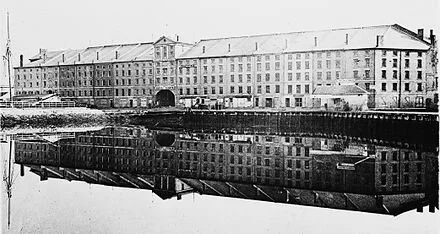
Boston’s India Wharf in the 19th Century. It was torn down in the 1960s.
“Something in the air allures the heartbeat:
Salt wind off the harbor; the smell of spice.
Even the names are elegies: India Wharf
(A lost Cathay); bow window in the slums.’’
-- From “Postcard From Boston” (1948), by William Abrahams (1909-90), who was born and raised in the Boston area. He was a famed editor as well as distinguished writer himself.
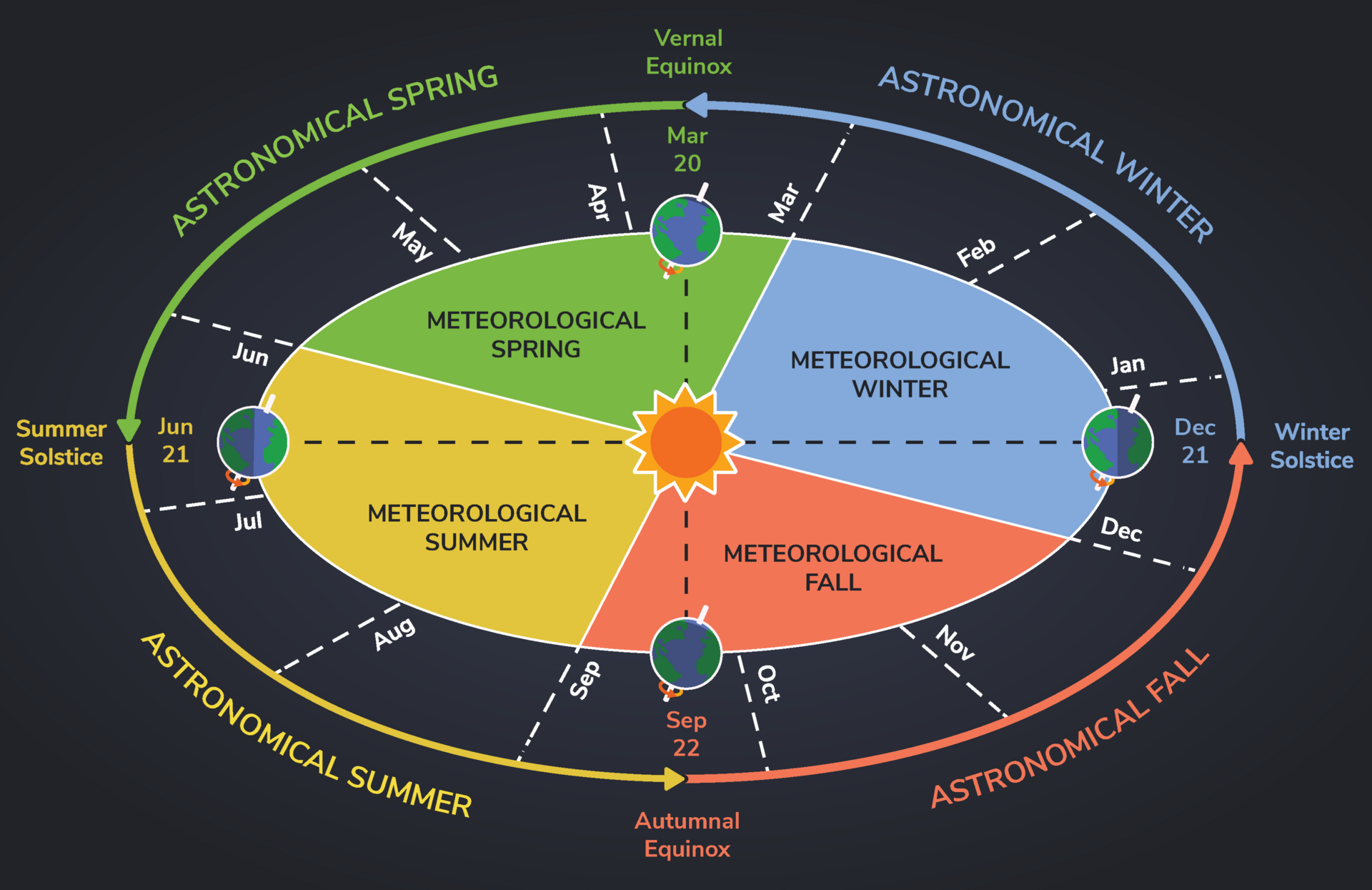
Planting peas in a so-called spring month

Pea flowers in spring

The crop
“All gardening is an act of faith, but in no work in the garden is the chasm that faith must leap wider or deeper than in planting peas. In the North, where peas grow best, they are planted in April, which around here is called a spring month only out of courtesy to the equinox, much as you might call a mean, stingy and detested family acquaintance ‘Uncle’ Adolf.’’’
-- From Spring Snow: The Seasons of New England: from the Old Farmer's Almanac, by Castle Freeman Jr., a fiction and nonfiction writer who has lived in Newfane, Vt., since 1975
Newfane has good soil for cultivation in the valleys, and for grazing livestock on its hills, while its streams once provided water power for mills. And so by 1859 industries included makers of leather products and linseed oil, as well as two flour mills, two lumber mills and a carriage factory. So Newfane became prosperous during the 19th Century, when many buildings with Federal, Greek Revival and Victorian architecture went up, helping make it a tourist destination and favorite place for photographers since then.
The town’s natural and manmade beauty has drawn numerous well-known people who have made it their weekend/vacation abode (and help spawn some fancy restaurants and inns in the area). Perhaps the best know Newfane celeb was economist, writer and frequent TV talking head the late John Kenneth Galbraith.
When fellow famed economist the late Milton Friedman was asked what he thought of Galbraith as an economist, he answered: “Well, he’s the tallest economist I know.’’
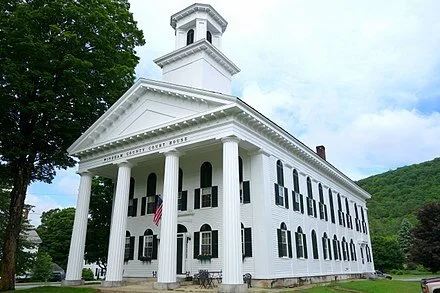
Windham County Courthouse, in Newfane.
A quarter for art

From Robert Whitcomb’s “Digital Diary,’’ in GoLocal24.com
In these times, we need art more than ever to take us to new places. Thus it was very pleasant to learn that the U.S. Mint has chosen to create a new quarter to honor the Weir Farm National Historic Site, in Ridgefield and Wilton, Conn. It’s the first quarter to honor the visual arts.
The site commemorates American impressionist painter J. Alden Weir and other artists who stayed at the site and/or lived there, such as Childe Hassam, Albert Pinkham Ryder, John Singer Sargent and John Twachtman.
Only two sites run by National Park Service are devoted to the visual arts, and they’re both in New England. The other one is the Saint-Gaudens National Historic Site, in Cornish, N.H., the site of famed sculptor Augustus Saint-Gaudens’s estate and art colony. (J.D. Salinger – the reclusive writer lived in Cornish, too.)

Studio of J. Alden Weir at the National Historic Site
Mostly innocent fun

Norumbega Park opened in June 1897. It was built at the behest of the directors of the Commonwealth Avenue Street Railway to try to increase patronage and revenues on the trolley line between Boston and the Auburndale section of Newton. The park's name was taken from the Norumbega Tower, a stone structure that Eben Norton Horsford had built in Weston to mark the purported Norse settlement called Norumbega. The amusement park was closed in 1963 and the ballroom in 1964. The park was a great place for Baby Boomer kids. I went there in 1962 when I was a student in Newton.
— Robert Whitcomb
Don Pesci: Sanders may press his campaign for socialism to the convention

Bernie Sanders last month
VERNON, Conn.
The last word, or the next to the last word, on Vermont socialist Sen. Bernie Sanders’ ill-fated run for the presidency may be that of communist evangelist Karl Marx. In The Eighteenth Brumaire of Louis Bonaparte Marx writes, “Hegel remarks somewhere that all great, world-historical facts and personages occur, as it were, twice. He has forgotten to add: the first time as tragedy, the second as farce.”
This is the second time that Sanders has run for president, succumbing the first time to Barack Obama’s former secretary of state, Hillary Clinton, and this time to former Vice President Joe Biden. This, his second and one suspects last run for the presidency – Sanders is getting on in years -- may be a tragedy to the youth of the nation, who hung on his every word, but it is a farce for most grownups.
Sanders announced that he was leaving the Democrat primary race on April 8, but his announcement only meant that Sanders was out, not down. In Connecticut, he may remain on the ballot because under state law, according to a story in CTMirror, “Secretary of the State Denise Merrill cannot cancel a primary without the written permission of candidates who have qualified for the ballot.” Merrill is yet awaiting permission from Sanders to suspend the costly Democrat presidential primary.
Even though Sanders has thrown in the sponge, the socialist millionaire (in assets) still wants to amass a minor fortune in Democrat delegates. Sanders is determined to use his delegates to the Democratic Convention to bend his party toward a glorious socialist future, and some within the party of Jefferson, Jackson and the late Connecticut Democratic leader John Bailey are now wondering whether the man ever wanted to be president. There are two broad reasons why men and women of good will enter the Democratic primary presidential lists: 1) to become president and, 2) to make a point. Sanders has now conceded for the second time that he has not enough delegate votes to deny his presidential primary opponent the nomination. Presumably, after the nominating convention, Sanders will throw his support to Biden, as previously he had done with Clinton.
But there is a thorn in the rose bouquet, or the shadow of a thorn. It’s obvious that Sanders wants to be a commanding presence at the Democrat nominating convention. Will he withhold an endorsement of Biden if the Sanders gang is not adequately represented in the nominating convention plank? If Democrats move to the traditional Democratic center in hopes of retaining votes in the general election, will Sanders open a campaign as an independent, socialist candidate for the presidency?
Though these questions have not been asked of Sanders, they begged to be answered, largely because of the manner in which Sanders has conceded a primary win to Biden. Sanders is running to score ideological points – and, more importantly, to move his sluggish party to a socialist position from which it cannot easily withdraw. Unlike Eugene Debs, for instance, Sanders is not now, and perhaps has never been, interested in running the country as socialist president.
Sanders’s thumbprint on his party have caused some agita in Connecticut’s Democratic Party, which has been trending progressive/socialist for many years. Merrill notes that Sanders has ceded the nomination to Biden. “That for me,” she has said, “effectively ends the justification for holding a primary in Connecticut. Now, the results are predetermined. Then comes the announcement he [Sanders] will remain on the ballot, which hopefully he will reconsider.”
But acknowledging that he has not enough delegates to win the nomination does not mean that Sanders has pledged his delegates to Biden. That could happen at the Democratic convention – if the Democrat platform incorporates Biden’s ideological predispositions. And if not – well, there’s the thorn in the rose. It’s altogether possible that Sanders might flee the convention with his deluges in hand and challenge Biden as an independent candidate for president in the general election. Progressive ex-president Teddy Roosevelt did just that when the Republican nominating convention in 1912 gave its presidential endorsement to William Howard Taft. Roosevelt’s defection from the Republican Party marked a major step for progressivism in the United States.
If Sanders is a serious socialist, why should he not follow the same course?
Merrill, a faithful Democrat in arms, is justifiably concerned with the cost to her party of what she regards as an unnecessary Democratic presidential primary in Connecticut.
Don Pesci is a Vernon, Conn.-based columnist.
Lois Gibbs: Under cover of COVID-19, EPA just gave polluters a license to kill

The best-seller (followed by a movie) about an infamous industrial water-pollution case in Woburn, Mass. , in the 1980s.
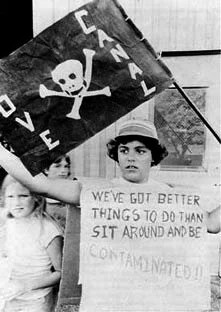
Protestors at Love Canal in 1978
Via OtherWords.org
Our government just told polluters they are free to pump deadly chemicals into our air and water. That’s because the Environmental Protection Agency (EPA) has suspended all enforcement indefinitely, until the COVID-19 crisis is over.
This terrifies me. I know firsthand that giving polluters free rein will cost thousands, even millions, of lives.
As a young mother in Niagara Falls, N.Y., in the 1970s, I watched toxic chemicals bubble up through our lawns, poisoning our children. When my neighbors and I discovered that our neighborhood, Love Canal, was built on a toxic waste dump, our advocacy led to the creation of the first Superfund site by Congress in 1980.
Today the EPA acknowledges more than 40,000 communities across the United States are dangerously polluted with toxic chemicals, from rural areas to major cities like Birmingham and Detroit. At the 1,344 sites targeted for cleanup by Superfund, polluters are required to pay — at least when they can be found.
But there are tens of thousands more communities where the pollution continues unabated. These are known as “sacrifice zones” — places where the health of residents is permanently sacrificed to industrial contamination.
Already, 36 percent of all school-age children — over 19.6 million — live in sacrifice zones. But if the EPA abandons its oversight of polluting industries now, this number of dangerously uninhabitable communities will grow exponentially. Many more people will die.
In short, the EPA just gave polluters a license to kill.
On March 26, the EPA said it will not “seek penalties for noncompliance with routine monitoring and reporting obligations” from polluters until further notice. This came days after the American Petroleum Institute sent a 10-page letter to the EPA, asking them to suspend enforcement.
And while the EPA now claims the pandemic is the reason, this change has been coming for months. Last November, they rolled back requirements that companies take safety measures to prevent chemical releases, calling these regulations “burdensome,” “costly,” and “unnecessary.”
If we told drivers there are no more traffic rules, most would still do the right thing and drive safely. But a handful will drive drunk, blow through stop signs, and run over pedestrians. A few scofflaws make our country a much more dangerous place.
That’s especially true in sacrifice zones where residents are being told to shelter in place because of COVID-19 — they can’t leave. Often this may apply to communities they had previously been told were toxic.
Imagine how a shelter in place order must feel to people like Eddie Ramirez.
He’s one of the 60,000 Texans who were ordered to leave — then return, and stay home — after a petrochemical plant explosion in Port Neches last November released dangerous amounts of butadiene, which causes nervous system damage. After Eddie returned home, authorities realized dangerous chemicals were still in the air, so they ordered residents to evacuate a second time.
TCP Group, the Houston-based petrochemical company that owns the Port Neches plant, had to pay more than $378,000 in penalties for more violations last year. If the EPA suspends even minimal penalties like these, polluters have no incentive to do the right thing.
Dozens of refinery fires and factory explosions emit toxic chemicals into the environment every year. If we remove penalties and enforcement, there will be more.
And right now, because of COVID-19 and our government’s refusal to protect our environment, the residents of sacrifice zones like Port Neches are like sitting ducks. They have no place to go. It is our responsibility to keep them safe.
Lois Gibbs is the founder of the Center for Health and Environmental Justice, part of the People’s Action network of grassroots groups. She helped win recognition for the first Superfund site at Love Canal in Niagara Falls, N.Y., in 1980.
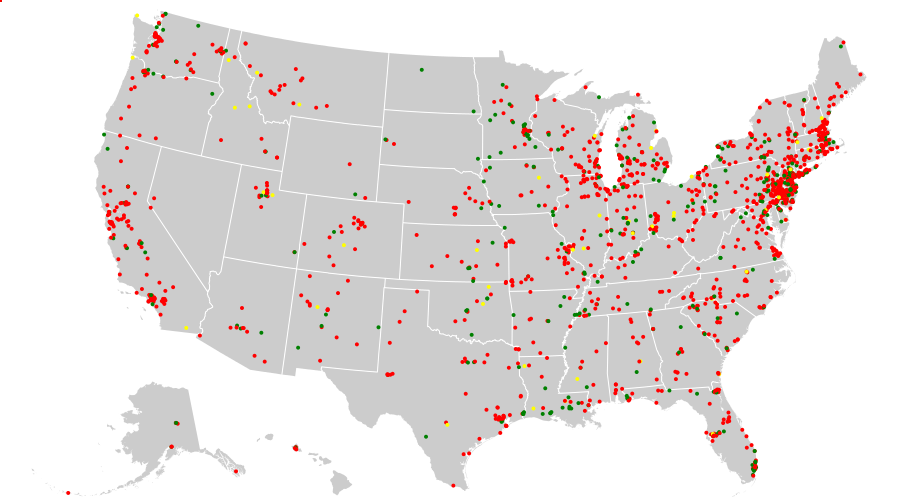
Locations of Superfund sites

Llewellyn King: COVID-19 will start new era of innovation


The Infinite Corridor at MIT, a major route through the university, which is a big center for innovation.
WEST WARWICK, R.I.
I’m just old enough to remember Victory in Europe Day (May 8, 1945), formally recognizing the end of World War II in Europe. My family was in Cape Town: My father served in the Royal South African Navy, then under the command of the Royal Navy.
The jubilation was intense; nothing I’ve seen has touched it in its unrestricted joy. Strangers really did hug and kiss each other. I was hugged and kissed as though I’d personally borne the battle as a toddler.
Apart from joy and relief, the end of war in the free world had another consequence: It liberated people from class and economic structures that had inhibited creativity.
Under the pre-war rigidities, those lower in the social system didn’t have the temerity or the opportunity to add to the innovation which created the peace prosperity that marked the 1950s.
The working class -- now regarded as being part of the middle class -- had been thought as destined to a lesser social standing; certainly not expected to invent, create and go into business. After the war, more things were possible.
Innovation was for everyone and it showed in everything, from the building of Levittown on New York’s Long Island and its descendants, to the civilian uses of nuclear power, the arrival of FM radio and color television, revolving credit and, oh, the miniskirt.
In the last 30 years the universal nature of innovation has come to mean advances, incredible advances, in computing and industries transformed by computing -- take public transportation and scooters and ride-sharing.
The creation of wealth through innovation has been largely in the province of computing. But in the last several decades it was the innovation of bringing Greek yogurt to the United States that led to a billion-dollar fortune.
When the scourge of COVID-19 has passed, the nation will be a different place, changed dramatically from the way it was. It won’t have -- to use the business school analogy -- a classic V-curve recovery where things bounce back to where they’d been before.
Many weak industries will be severely contracted, including movie theaters, retailers, restaurants and small colleges and universities. This will throw a great deal of talent out of work. Those are the people, I believe, who will create a new innovative wave in society and bring about a new prosperity, after some very hard times.
The internet provides new entrepreneurs an opportunity to draw attention to products and services which would have faced a marketing roadblock in another generation.
Big industry, too, will innovate, not the least to shore up its defenses against another national crisis.
The electric utilities, which have been on the front line of the essential services during the COVID-19 horror, will be seeking to further harden their systems against disruptions from cyberattack, physical attack or other failure, which could produce a huge crisis. Already, Michelle Fay of the forward-looking consulting firm Guidehouse is looking to this innovative future to strengthen the electric industry. She says, “Innovation will emerge as an even bigger opportunity as we look to improve the resiliency of the critical infrastructure and further enhance our ability to provide business continuity in times like this.”
Michael Short, associate professor of nuclear science and engineering at MIT, points out an accompanying development. He says on a recent edition of my television program, White House Chronicle, the current crisis looks as though it’ll bring back respect for expertise.
It seems to me that this disrespect has been prevalent since the 1960s, when so many of our social troubles -- environment, civil rights, women’s rights and the Vietnam War -- were laid at the feet of experts and the institutions which employed them.
The crisis has shown that hearsay medicine and what I call “voodoo science” won’t help in a crunch. Solid science and good medicine are the only way.
Now I’m seeing the shoots of new businesses sprouting, from people making jewelry at home to sell on Etsy to grocery delivery services. Expect a surge of books and plays. Crisis produces new product, creates new business, causes new thinking.
My friend Morgan O’Brien, who is well-credentialed in innovation as the co-founder of Nextel and now at the helm of Anterix, a critical communications network provider, says innovation doesn’t come easy. “The inertia that pulls all human efforts earthward, and the pain of looking past the ‘very difficult’ to spy the ‘barely possible’; these are the obstacles to bringing innovation into the world, bloody and bruised, only to be immediately beset by doubts and fears,” he says.
Innovation is coming on a grand scale, some of it as complex as O’Brien’s vision for cell phones or as simple as, my favorite, wheels on luggage. Get ready.
Llewellyn King is executive producer and host of White House Chronicle, on PBS. His email is llewellynking1@gmail.com. He’s based in Rhode Island and Washington, D.C.
'Not to be wrenched into meaning'

View of Camel’s Hump from Vermont's Long Trail
— Broken Images
“My objectives this morning were vague.
As always I'd hike these hills—
a way to keep going
against the odds age deals….
“Whatever this trance,
I treasured it as a wonder
not to be wrenched into meaning,
as in Every second counts,
as in You should count your blessings,
though of those there seems no doubt.’’
— From "Mahayana in Vermont," by Sydney Lea
More of New England's urgent medical, business response to pandemic
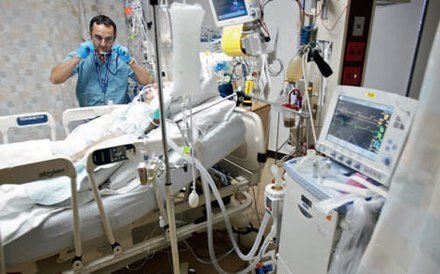
A respiratory therapist (RT) examines a mechanically ventilated patient on an intensive care unit. RTs are responsible for optimizing ventilation management, adjustment and weaning. See Southern Maine Community College item below.
From The New England Council (newenglandcouncil.com)
BOSTON
As our region and our nation continue to grapple with the Coronavirus Disease (COVID-19) pandemic, The New England Council is using our blog as a platform to highlight some of the incredible work our members have undertaken to respond to the outbreak. Each day, we’ll post a round-up of updates on some of the initiatives underway among Council members throughout the region. We are also sharing these updates via our social media, and encourage our members to share with us any information on their efforts so that we can be sure to include them in these daily round-ups.
You can find all the Council’s information and resources related to the crisis in the special COVID-19 section of our Web site. This includes our COVID-19 Virtual Events Calendar, which provides information on upcoming COVID-19 Congressional town halls and webinars presented by NEC members, as well as our newly-released Federal Agency COVID-19 Guidance for Businesses page.
Here is the April 8 roundup:
Medical Response
Southern Maine Community College Students Learn on Front Lines of Pandemic – Students studying respiratory therapy at Southern Maine Community College (SMCC) are gaining important and meaningful experience working alongside therapists in local hospitals treating COVID-19 patients. The students are performing breathing treatments and administering medication that will alleviate the strain on the state’s medical providers. The Bangor Daily News has more.
Brigham and Women’s Hospital to Begin New Plasma-Based Therapy Clinical Trial – At Brigham and Women’s Hospital, researchers are turning to a promising potential treatment from a Chinese study for the novel coronavirus. The therapy, which utilizes plasma from recovered COVID-19 patients, is entering clinical trials after the FDA gave the hospital a green light to test it. Boston 25 News
Boston University Scientists See Breakthrough in COVID-19 Research – The National Emerging Infectious Diseases Laboratories (NEIDL) at Boston University has successfully utilized glowing antibodies to illuminate the virus that causes COVID-19 infections. Now that NEIDL has the ability to “see” the virus, the team can test its inventory of thousands of drugs to detect which are most effective at reducing or stopping the spread of infection. Read more in The Brink.
Endicott College Creates Protective Equipment – Endicott College is now using its 3-D printing equipment, as well as its existing supplies, to create and donate protective equipment to healthcare workers. While the equipment is considered “homemade” and cannot be accepted by hospitals, the supplies produced at Endicott is being donated to non-front line workers such as oncology clinics and funeral home, freeing up the supply of professional, medical-grade equipment for front-line workers. More information here.
UMass Boston Labs Donate Protective Equipment – Scientists at the University of Massachusetts Boston (UMass Boston) School for the Environment are donating their unused personal protective equipment (PPE) to Boston hospitals. The school hopes this practice will spread to other labs whose research has been suspended. Read more here.
Economic/Business Continuity Response
UMaine Converts Planetarium into Supercomputer for Research –With its campus currently closed to students, the University of Maine (UMaine) has transformed its planetarium into a supercomputer to run visualization programs for researchers across the country. The data from the use of the planetarium’s conversion could be used to develop new diagnostic tests or even potential therapies. The Bangor Daily News
UPS Dedicates Facilities and Operations to Equipment Delivery – In partnership with FEMA, shipping company UPS has committed a 450,000 square-foot facility to the agency, along with 25 chartered flights, to expedite delivery of necessary medical and protective equipment to U.S. hospitals. The effort, named Project Airbridge, is expected to deliver over three million pounds of materials. GlobeNewswire has more.
Community Response
Easterseals Rehabilitation Services Transitions to Virtual Therapy – Easterseals Massachusetts is offering three virtual therapy sessions to patients who make a one-time donation of any amount. The sessions aim to assist children who are missing occupational or speech-language therapy due a switch to remote learning. Read more.
Boston Celtics Forward Pledges to Match $250,000 in Donations to Greater Boston Food Bank – Despite being sidelined by quarantine for the remainder of his season, forward Jayson Tatum of the Boston Celtics has committed to match up to $250,000 to support the Greater Boston Food Bank. Tatum, a Missouri native, has also partnered with the St. Louis Area Foodbank to contribute another $250,000. com reports.
UnitedHealth Group Provides $2 Billion in Financial Support to Healthcare Providers – UnitedHealth Group is accelerating almost $2 billion in financial support and payments to its care network. The funds will be distributed to healthcare systems in the group’s network, and builds upon the company’s earlier action to expand access to care and accreditation. Read the press release here.
Stay tuned for more updates each day, and follow us on Twitter for more frequent updates on how Council members are contributing to the response to this global health crisis.
It wants out too

“Taking Flight” (mixed media), by Barbara Eskin, at Galatea Fine Art, Boston. Only online now.
Harvardians at the trough

Drawing by F.G. Attwood for the Harvard Lampoon (1877): "Manners And Customs Of Ye Harvard Studente". Wrote Donald Harnish Fleming: "If you are stuck with a friend or relative who wants to see the sights of Cambridge ... treat him to a view of the animals feeding in Mem. Hall."
Emily P. Crowley/Robert M. Kaitz: N.E. colleges must consider labor laws in the pandemic

College lecture halls are now empty.
— Photo by ChristianSchd
From The New England Journal of Higher Education, a service of The New England Board of Higher Education (nebhe.org)
BOSTON
As COVID-19 rapidly changes the economic landscape throughout the country, higher education institutions (HEIs) are facing new, constantly evolving challenges. To address these challenges, federal and state governments are quickly drafting laws and regulations that are impacting colleges and universities, and their employees.
Wage and hour challenges
As HEIs grapple with COVID-19 fallout, including the cancellation of in-person courses, commencements, freshman orientations and other events in the upcoming months, they must remain cognizant of existing wage and hour laws when rolling out reductions in hours or furloughs for employees due to the diminished workload. Under the Fair Labor Standards Act (FLSA), employers need to pay only non-exempt, hourly employees for actual time worked, rather than for time employees are regularly scheduled to work. As a result, reduced-hour schedules or unpaid furloughs are relatively straightforward for these employees, with institutions obligated to compensate them for all hours worked, and nothing beyond that. Perhaps due to public relations concerns, some HEIs have gone beyond their obligations by continuing to pay employees who can neither come to work nor work remotely. Harvard initially offered full pay and benefits for 30 days to direct employees who could not work in light of the campus closure. But in the face of a social media campaign and other negative press, Harvard agreed to provide paid leave and benefits through May 28, 2020, to all direct employees, plus subcontractors. Many schools have enacted similar policies.
Unlike hourly, non-exempt employees, a reduction in hours or furlough may have significant ramifications for exempt, salaried employees. The FLSA exempts these “white collar” salaried employees from overtime premium pay, as their salary is considered remuneration for all hours worked in a week, whether more or less than 40 hours. As a result, employers must pay exempt employees their full week’s salary if they perform any work during that workweek, including work from home. This remains true even while an employee is on furlough, so colleges and universities must communicate clearly to all exempt employees that they cannot perform any work while on furlough—even small tasks like sending work emails—without prior written approval of a supervisor, because any such work would trigger the employer’s obligation to pay that employee a full week’s salary. Where an exempt employee is not furloughed but is working a reduced schedule, employers should be aware that if the reduction in hours causes the employee’s salary to fall below $684 per week, the employee will lose their exemption from overtime premium pay under the FLSA.
Higher education institutions must also consider two other wage and hour requirements. First, any reduction in compensation must only apply prospectively, and employers should give affected employees notice of the impending reduction, in writing. Second, under Massachusetts law, employers must pay furloughed employees all wages owed on the date the furlough is announced, including accrued, unused vacation time. However, the Massachusetts Attorney General’s Office has stated that furloughed employees can defer their accrued, unused vacation time until after the furlough ends. Any such deferral agreement should be obtained in writing. Other New England states may have similar payment obligations when furlough is announced.
Families First Coronavirus Response Act
On March 18, 2020, Congress passed the Families First Coronavirus Response Act, which took effect on April 1. The act’s two provisions relevant to employers pertain to paid sick time (PST) and Emergency Family and Medical Leave (EFML). Private employers with fewer than 500 employees and public employers of any size must provide PST and EFML. Employers will receive dollar-for-dollar federal tax credits for the PST and EFML benefits they pay.
The act requires covered employers to provide 80 hours of PST to an employee unable to work due to:
COVID-19 symptoms and seeking a medical diagnosis;
an order from a government entity or advice from a healthcare provider to self-quarantine or isolate because of COVID-19; or
an obligation to care for an individual experiencing COVID-19 symptoms or a minor child whose school or childcare service is closed due to COVID-19.
The employee’s reason for taking PST will determine their rate of pay during leave. Employees are eligible for PST regardless of how long they have been on payroll.
Covered employers must also provide up to 12 weeks of job-protected EFML to all employees on payroll for at least 30 days who are unable to work because their minor child’s school or childcare service is closed due to COVID-19. The first 10 days of EFML are unpaid, though an employee may use PST during this period. Eligible employees are thereafter entitled to two-thirds of their regular rate for up to 10 weeks, based on the number of hours they would otherwise be scheduled to work. However, the act caps EFML benefits at $200 daily and $10,000 total, per employee.
Notably, the act contains a broad, discretionary exclusion from PST and EFML coverage for healthcare providers, which may affect higher education institutions. “Health care provider” is defined under the act as any employee of various types of medical facilities, including a postsecondary educational “institution offering health instruction,” a “medical school” and “any facility that performs laboratory or medical testing.” This provision, which forthcoming regulations will likely clarify, ostensibly means that an institution that performs medical research or offers classes in healthcare may exclude any employees from PST and EFML benefits.
Emergency expansion of Mass. unemployment insurance
Employees subject to a furlough or reduction in hours may qualify to take advantage of expanded unemployment insurance (UI) benefits. Massachusetts, for example, has waived the usual one-week waiting period for UI benefits, allowing Massachusetts employees affected by COVID-19 (including those permanently laid off) to collect benefits immediately.
The Massachusetts Department of Unemployment Assistance (DUA) has also published emergency regulations to address the onslaught of new UI claims and provide more flexibility for prompt financial assistance to employees affected by COVID-19. All employees who temporarily lose their jobs due to COVID-19 are deemed to be on “standby status” and are eligible for UI benefits, provided they meet certain criteria. A claimant is on “standby” if he or she “is temporarily unemployed because of a lack of work due to COVID-19, with an expected return-to-work date.” The claimant must:
take reasonable measures to maintain contact with the employer; and
be available for all hours of suitable work offered by the claimant’s employer.
The DUA will contact employers to verify its employees are on standby status and ask for an expected return date. An employer can request that an employee go on standby status for up to eight weeks, or longer, if the business is anticipated to close or have operations severely curtailed for longer than eight weeks and the DUA deems the requested time period reasonable.
Other New England states have likewise implemented similar emergency regulations to ease the burden on employees who have been furloughed, subject to a schedule reduction, or otherwise affected by COVID-19. For example, Maine enacted emergency legislation with many of the same provisions as the Massachusetts emergency UI expansion, but went an extra step in extending UI eligibility to employees on a temporary leave of absence due to a quarantine or isolation restriction, a demonstrated risk of exposure or infection or the need to care for a dependent family member because of the virus.
Federal and state lawmakers are considering additional legislation to address the workplace ramifications of the COVID-19 pandemic and will likely continue to do so as new and unanticipated challenges develop. HEIs should actively monitor recent developments and speak with counsel as needed to discuss the impact of additional legislation on their workplaces.
Emily P. Crowley and Robert M. Kaitz are employment and trial attorneys at the Boston law firm of Davis Malm.

'Think you're smat with that accent?'

“Take my first job in Boston,
the outgoing typist said, ‘You’ve got
to know the foms, we use so many foms.’
And I said O why farms?
I thought law firms had torts.
A tort, I thought, was like vous avez tort.
But I was wrong about the farms,
and after the Cardinal’s Vietnam speech
one of the girls said, ‘Think you’re smat with that accent?’’’
— From Anne Winter’s “Day and Night in Virginia and Boston
Wampanoags' bad gamble

The Old Indian Meeting House, in Mashpee, built in 1684 and the oldest church on Cape Cod as well as the oldest Native American church in the eastern U.S.
From Robert Whitcomb’s “Digital Diary,’’ in GoLocal24.com
The U.S. Interior Department has rescinded the reservation status of the Mashpee Wampanoag Tribe, which has been seeking permission to build a casino on land it owns in Taunton. The Cape Cod-based tribe itself will be allowed to keep federal recognition as a Native American tribe but the federal action presumably kills the plan for a casino.
The casino business is inherently sleazy and casinos (which aren’t open now because of you-know-what) are cannibalizing themselves. Far better to create a highly diversified long-term economic development plan, but gambling revenues continue to look alluring as a quick fix.
The fewer casinos the better. But I still feel sorry for the tribe, especially knowing that their casinos would have competed with Twin River’s two nearby casinos, in Lincoln and Tiverton, R.I. Twin River has close connections with the Trump administration, ruled by a former and failed Atlantic City casino mogul. Surely politics had nothing to do with the decision…..?