
Vox clamantis in deserto




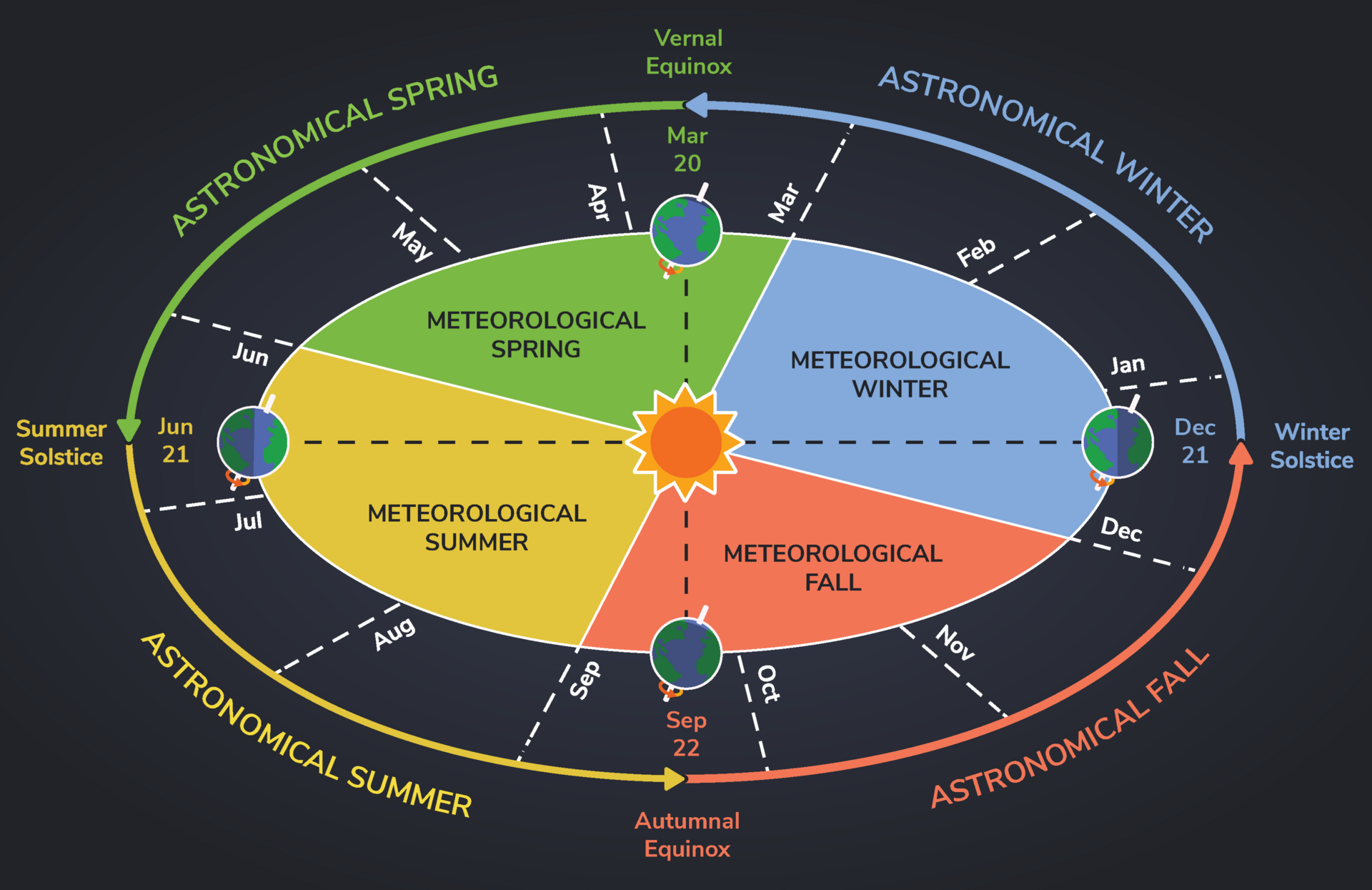
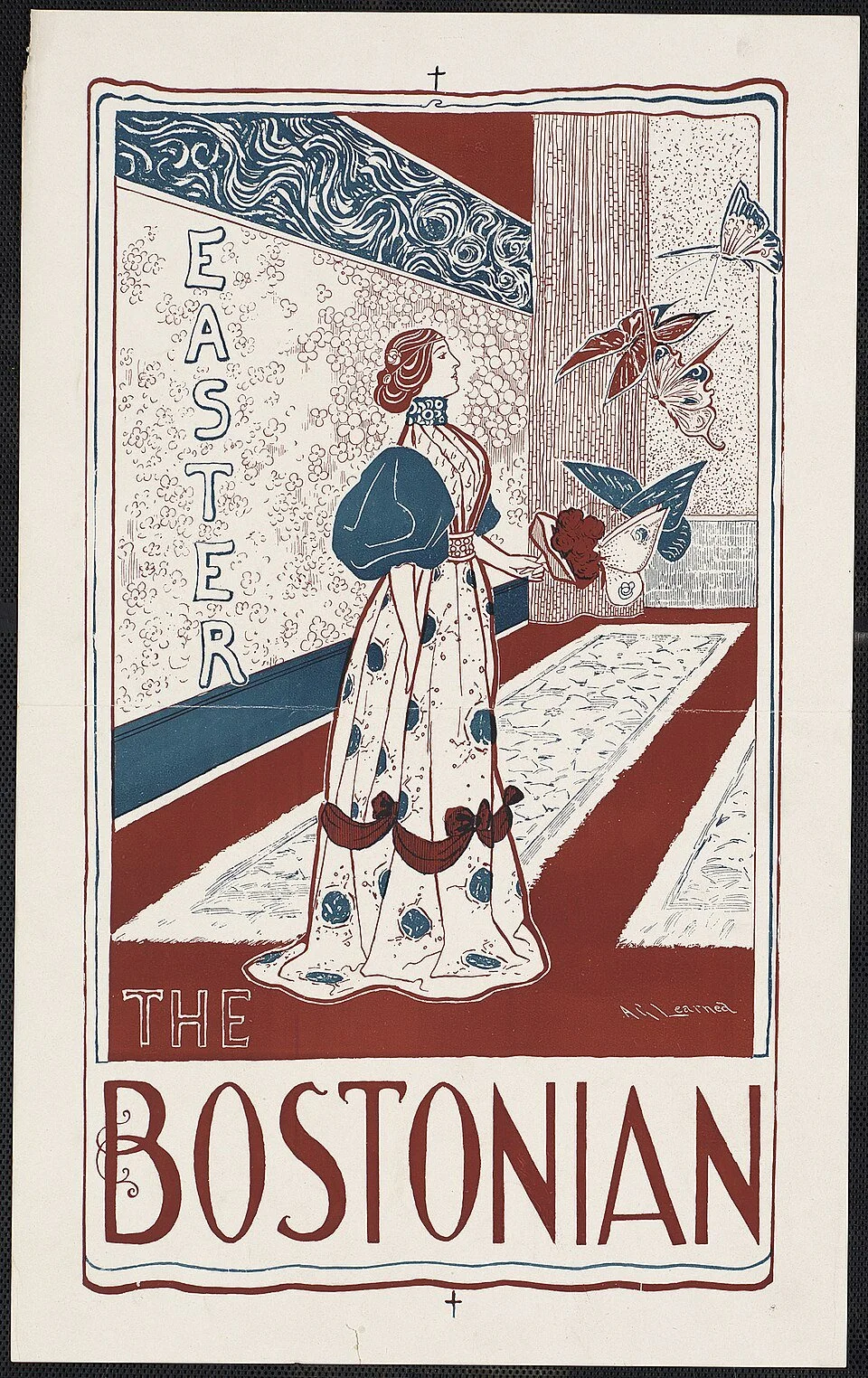



Elms' gorgeous tunnels

Lafayette Street in Salem, Mass., from a 1910 colorized postcard — an example of the high-tunneled effects of American Elms planted along streets in New England towns. Most of them were gone by the 1950s.
“The elms of New England! They are as much a part of her beauty as the columns of the Parthenon were the glory of its architecture.”
— Henry Ward Beecher (1813-87)
Then came Dutch Elm Disease
'Bright with April's buoyancy'

On the summit of Monadnock
Photo by Shiva shankar,
Cloud-topped and splendid, dominating all
The little lesser hills which compass thee,
Thou standest, bright with April’s buoyancy,
Yet holding Winter in some shaded wall
Of stern, steep rock; and startled by the call
Of Spring, thy trees flush with expectancy
And cast a cloud of crimson, silently,
Above thy snowy crevices where fall
Pale shrivelled oak leaves, while the snow beneath
Melts at their phantom touch. Another year
Is quick with import. Such each year has been.
Unmoved thou watchest all, and all bequeath
Some jewel to thy diadem of power,
Thou pledge of greater majesty unseen.
— “Monadnock in Early Spring,’’ by Amy Lowell (1874-1925)
And that was before they cleaned it up

Spectacle island in Boston Harbor. Behind it is Thompson Island.
— Photo by Don Searls
“America, the new world, compares in glamour and romance with the old, and Boston Harbor is one of the most delightful places in America.
— From The Islands of Boston Harbor (1935), by Edward Rowe Snow (1902-82), historian and prolific author.

Edward Rowe Snow memorial plaque on Georges Island, in Boston Harbor

Georges Island is dominated by Fort Warren, built in 1833-61.
Time to repurpose?

“Inside Bunker Door,’’ by Roy DiCosta, in the show “Obsolete Military Structures,’’ at 6 Bridges Gallery, Maynard, Mass. Only visible now on its Web site.
The gallery says that since 2002, Mr. DiTosti “has been venturing through Massachusetts and Florida photographing old military facilities, bunkers and forts, some dating back to the 1800s or World War II. Some of these structures have been repurposed while others sit abandoned, growing moss and collecting dust. Yet the buildings offer an intriguing glimpse into the past where war was a tangible, ever-present struggle. Those who saw these structures in their heyday likely could not have conceived of a future where they were allowed to go empty and rust over. Now, however, the buildings stand as pieces of history and reminders of a fraught and bloody past. There are lessons to be found in each decaying structure, lessons that Mr. DiTosti's photography aims to uncover for the viewer to learn. There's even a level of familiarity in the old buildings when juxtaposed with today's quiet, empty streets in the face of a different sort of war, one against disease. ‘‘
New England Council update on region's COVID-19 response

New England has no official flag, but there have been many historical and modern banners used to represent the New England Colonies and then the six states of New England. There are some variations, but common designs include a colored field (usually red) with a pine tree. The eastern white pine is the most common symbol of New England and harkens back to the tree's former importance in shipbuilding in particular and and New England's maritime culture in general.
Update from The New England Council (newenglandcouncil.com). Kudos to the Council for performing this service.
BOSTON
As our region and our nation continue to grapple with the Coronavirus Disease (COVID-19) pandemic, The New England Council is using our blog as a platform to highlight some of the incredible work our members have undertaken to respond to the outbreak. Each day, we’ll post a round-up of updates on some of the initiatives underway among Council members throughout the region. We are also sharing these updates via our social media, and encourage our members to share with us any information on their efforts so that we can be sure to include them in these daily round-ups.
You can also check our COVID-19 Virtual Events Calendar for information on upcoming COVID-19 related programming – including Congressional town halls and webinars presented by NEC members.
Here is the April 1 roundup:
Medical Response
Anthem Blue Cross Blue Shield in New Hampshire Enters Partnership to Increase Testing – To supplement the efforts to expand testing in New Hampshire, Anthem Blue Cross Blue Shield in New Hampshire (BCBS) is partnering with ConvenientMD to open a COVID-19 testing site in Portsmouth, NH. The support provided by BCBS will expand testing in the state and aid efforts to identify positive cases. SeacostOnline has more.
UMass Holds Commencement Early to Send Doctors to Front Lines of Pandemic – On Tuesday, the University of Massachusetts held a virtual commencement for its medical school for its 135 students. As they spread out across the country for their residencies, the newly-minted doctors head to the center of the pandemic, as they pledged, over video, to “turn to our calling.” The Boston Globe
Dartmouth-Hitchcock Launches Clinical Trial for Potential Treatment – Operating at incredible speed, Dartmouth-Hitchcock has begun two therapeutic trials of the now-famous drug remdesivir in just six days. Now one of the nearly 100 clinical sites around the world testing the drug’s efficacy on COVID-19 symptoms, Dartmouth-Hitchcock’s trials focus on both moderate and severe symptoms and remdesivir’s ability to prevent progression of the virus. Read more in the Manchester Ink Link.
Economic/Business Continuity Response
Rockland Trust Offers Flexibility, Support for Customers Community – Joining other institutions in a joint client-community response, Rockland Trust is providing both flexibility and support for both personal and business customers. For personal banking customers, the bank is increasing ATM withdrawal limits, waiving late charges on payments, and issuing a 90-day foreclosure moratorium on residential loans. Rockland Trust is also offering assistance with access to government-sponsored support and loan payment relief for its business users. The bank has also committed $500,000 to support relief efforts. Read more in Yahoo Finance.
Massachusetts Technology Collaborative to Oversee Manufacturing Emergency Response Team – Governor Charlie Baker (R-MA) of Massachusetts has chosen the Massachusetts Technology Collaborative to lead the new Manufacturing Emergency Response Team (MERT), an effort by the state to utilize its manufacturing industry to produce more necessary equipment to combat the pandemic. The agency will oversee MERT and coordinate the need for supplies with the almost 200 manufacturers who have been in contact with agency. The Boston Business Journal has more. Those interested in donating to or collaborating with the Manufacturing Emergency Response Team can do so here.
Community Response
Boston College High School Praised for Virtual Learning Transition – Featured in a Boston Globe article for moving “seamlessly in delivering daily, high-quality academic online lessons,” Boston College High School is continuing to provide an excellent education (that still begins at 8 AM daily) and ample resources for its students as they adjust to remote instruction. Read the article here.
Travelers Makes $5 Million Donation – Insurance company Travelers has donated $5 million to COVID-19 relief efforts. The largest-ever charitable donation by the company to a crisis, the money will be distributed in three parts among North America, the United Kingdom, and Ireland to aid families and communities. The Hartford Business Journal has more.
United Way Support Fund Distributes $378,000 to Relief Organizations –Less than two weeks since launching a fundraising effort to support those affected by the pandemic, United Way of Massachusetts Bay and Merrimack Valley announced over $378,000 in donations. Distributed to 36 community-based nonprofits across the region, the money will help those in need meet basic needs as they navigate an evolving pandemic and economic uncertainty. Read more.
Edesia Provides Support Worldwide to Those Most Affected by Virus – Continuing a tradition of global leadership in promoting food security, Edesia has committed to providing thousands of care packages, snack boxes, and meals to organizations and families across all ages and around the world. Aiming to assist both local and global communities, the organization has also pledged 115,000 boxes of its world-renowned, lifesaving products to children from Venezuela to Yemen to Nigeria.
Cooperative Credit Union Association Donates $25,000 to Support MA Coalition for the Homeless – On behalf of all Massachusetts credit unions, the Cooperative Credit Union Association has committed $25,000 to the Massachusetts Coalition for the Homeless. People experiencing housing, income, or food insecurity are the most vulnerable to the pandemic, as they often lack resources to adequately self-quarantine or socially distance. The donation will be used to support not only the homeless population, but also families and unaccompanied youth. Read the release here.
Stay tuned for more updates each day, and follow us on Twitter for more frequent updates on how Council members are contributing to the response to this global health crisis.
Llewellyn King: Lessons from the Energy Crisis to address the COVID-19 challenge

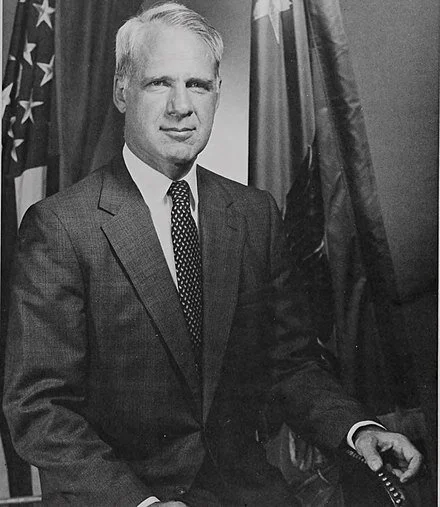
James Schlesinger (1929-2014), the first U.S. energy secretary and a leader in confronting the Energy Crisis of the 1970s.
There are lessons to be learned in the COVID-19 crisis from the Energy Crisis, which broke in the winter of 1973 and extended into the early 1980s. Projections were dire. At a session of the Aspen Institute’s energy section one year, we looked at how the country could deal with an economic downturn to a negative growth rate of 23 percent. Aspen may want to look at that again.
In Washington, first under President Nixon, then under presidents Gerald Ford and finally under Jimmy Carter, there was what might be called mobilization. It had two aspects: one was intellectual and the other was scientific. The brainy one was centered in the Federal Energy Office, which attracted some extraordinarily gifted economists, geologists and managers. The rest of the government, from the Interior Department to the State Department, was also in the game.
Particularly there was mobilization of the system of national laboratories where, to my mind, the scientific muscle of the country could be found then and now. They had been primarily nuclear labs, led by the three big players in the atomic arsenal: Los Alamos, Lawrence Livermore and Sandia.
Everything was tried and not everything worked. Who remembers in situ coal gasification, ocean thermal gradients, magnetohydrodynamics, hot rocks, low-head hydro or wave power?
In the mix were solar, wind and efforts to loosen oil in tight formations. These were the winners, but it was not clear at all then.
Gifted leadership emerged first at the Federal Energy Office, then at the successor to the Atomic Energy Commission, the Energy Research and Development Administration. Under Carter, all the energy agencies were rolled into the Department of Energy with its first secretary, a star in the Washington firmament, James Schlesinger.
That kind of mobilization is needed now, talent plus science.
The national labs, 17 strong, have some biological capability -- several having had some role in the Human Genome Project, and others looking at the treatment of cancer with radiation.
The COVID-19 virus will not be defeated just by medical science but by the whole panoply of science, including what might at first sound like kooky ideas. I recall the derision that greeted solar and wind concepts back in 1974. Now they are mother’s milk in the energy mix.
One of the highest challenges facing hospitals and medical facilities is to save the lives of their staff with superior sanitation of protective gear like respirators, the now well-known N95 masks and the ambient air itself.
I was excited to learn about a McLean, Va.-based company, airPHX, which has an off-the-shelf, air-scrubbing system using a cold plasma as the scrubbing agent. The units are about the size of a computer and each unit – they operate continuously from a three-prong plug — will clean the air of a 15,000-square-foot room, according to the company’s CEO William Pommerening.
The airPHX units, which were developed to combat mold, odors and pathogens in gyms and elsewhere, are in production on a modest scale, but this is set to ramp up with a new contract manufacturer in Tennessee.
Pommerening told me that he believes his machines will effectively destroy the COVID-19 virus both in the air and on surfaces. He said, “We have lab testing showing efficacy on over 30 health care-associated pathogens including bacteria, viruses and mold showing a 4 log [a technical measure in sanitation which equates to 99.99 percent effectiveness] reduction, or greater, in surface organisms in 30 minutes.” This, he said, included testing on a sister virus to COVID-19. For the air, the effectiveness was between 92 percent and 96 percent, he said. New masks are rated at 95 percent, hence their N95 designation.
If this proves out, it will be a boon across the spectrum of indoor trouble spots and will one day have a wide application in workplaces and recreation areas.
In my view, it needs government scientific review to confirm the data. But it is as promising as anything I have heard of, including hydrogen peroxide and ultraviolet light.
The need to be sure is paramount.
Llewellyn King is executive producer and host of White House Chronicle, on PBS. His email is llewellynking1@gmail.com. He’s based in Rhode Island and Washington, D..C.
And toxic now

“Vapors” (woodcut), by Patrick Casey, at Galatea Fine Art, Boston. Gallery is closed for the time being for the obvious reason.
Dense with people -- and hospitals
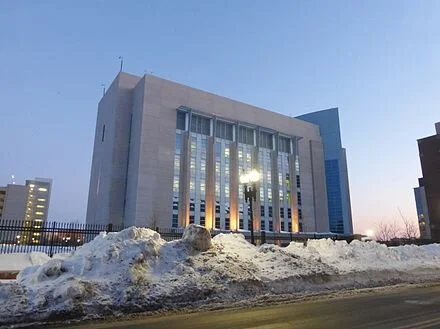
The National Emerging Infectious Diseases Laboratories (NEIDL) building, in Boston’s South End, where they’re working on the COVID-19 challenge
Adapted from an item in Robert Whitcomb’s “Digital Diary,’’ in GoLocal 24.com
Much has been made of the dangers of living in cities in times of epidemics because of the density. Quite a few people, mostly rich folks, have, for example, left New York in the past couple of weeks to “shelter in place’’ in rural and/or summer resort places – angering many of the locals. But too little has been made of cities’ advantages during such times.
The biggest is having lots of hospitals and other health-care facilities, and thus lots of health-care professionals, of which there are obviously far fewer in exurban and rural areas. Indeed, many rural hospitals have been closed in recent years. (So have some urban hospitals, such as Pawtucket’s Memorial Hospital. Can and should Memorial be reopened? Its closure has put intense pressure on nearby Miriam Hospital.) The fragmented, inefficient and astronomically expensive U.S. health-care system is a mess. The failure to have adequate testing systems and equipment in place to address the current crisis is yet another symptom of how disordered it is.
COVID-19 will be popping up big time in plenty of rural areas soon enough.
The failure to have enough testing kits, and protective gear for health-care professionals, has resulted in a huge undercount in the number of people with COVID-19. So many of us have it now, but have no, or mild, symptoms. Development of extensive “herd immunity’’ through mass exposure, is probably well underway. The surge in reported cases probably mostly just reflects belated testing. Speaking of “reported” cases, don’t believe numbers from China (or Russia).
Ironically, as my friend Vermont insurance executive Josh Fitzhugh noted: “New York City may be one of the first places that could reopen for business because most residents will have been infected and either recovered or unfortunately passed away.’’
In any event, with our health-care “system’s’’ inadequacies, we must focus even more on the most vulnerable populations – the immuno-compromised and the elderly – and limit our ambitions regarding the wider population. Eventually herd immunity will bring the pandemic to heel, although there will be, as with flu epidemics, recurrent waves of sickness. But a vaccine, and better treatments, will probably be available within a year or so to stop or at least mitigate such epidemics. Be it “by Easter,’’ as per Trump, or later, when social-distancing rules are to be loosened, they should be eased gradually, not all at once, so that the sudden resulting increases in real or suspected cases don’t further overwhelm health-care personnel and institutions.
Throughout the crisis, the core emphasis should be on tracking cases by testing so that medical resources can be most effectively geographically deployed and the most at-risk populations isolated. Then whack-a-mole, maybe for years
Meanwhile, watch this this extended interview by an old friend at The Press and the Public Project with Dr. John Ioannidis of Stanford University. Dr. Ioannidis cautions that we do not have reliable data to make long-term decisions about COVID-19, and that an extended lockdown could have far graver effects than the disease itself.
Dr. Ioannidis is C.F. Rehnborg Chair in Disease Prevention, Professor of Medicine, of Health and Research Policy, of Biomedical Data Science, and of Statistics, and is the Co-Director of the Meta-Research Innovation Center at Stanford.
To see/hear the interview, please this link.
By the way, some major work on researching COVID-19 to develop a vaccine is being done at Boston University’s National Emerging Infectious Diseases Institute in Boston’s South End and elsewhere in Greater Boston. Yes, it’s supposed to be a very secure location though it unsettles some of the neighbors. To read more, please hit this link.

Elisabeth Rosenthal/ Emmarie Huetteman: He got tested for COVID-19; then came a flood of medical bills
By March 5, Andrew Cencini, a computer-science professor at Vermont’s Bennington College, had been having bouts of fever, malaise and a bit of difficulty breathing for a couple of weeks. Just before falling ill, he had traveled to New York City, helped with computers at a local prison and gone out on multiple calls as a volunteer firefighter.
So with COVID-19 cases rising across the country, he called his doctor for direction. He was advised to come to the doctor’s group practice, where staff took swabs for flu and other viruses as he sat in his truck. The results came back negative.
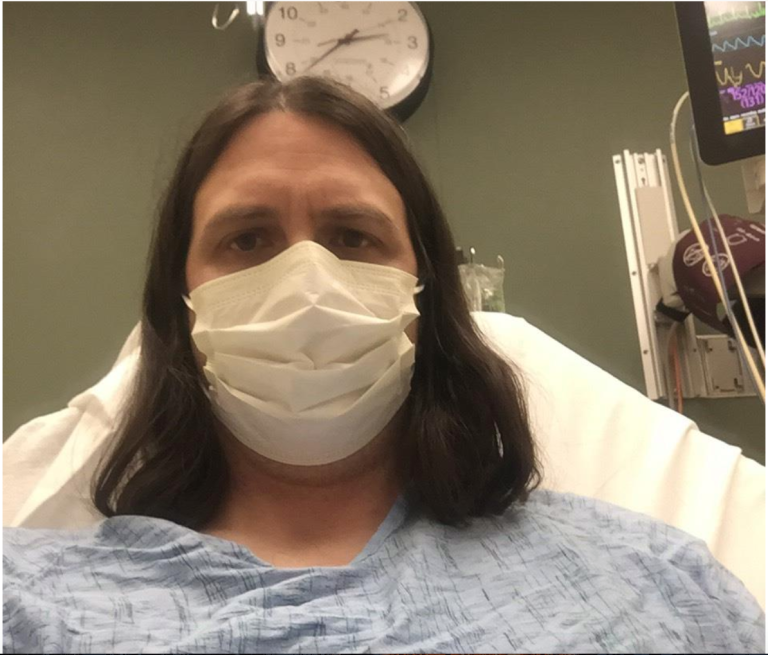
In an isolation room, the doctors put Andrew Cencini on an IV drip, did a chest X-ray and took the swabs.
— Photo courtesy of Andrew Cencini
By March 9, he reported to his doctor that he was feeling better but still had some cough and a low-grade fever. Within minutes, he got a call from the heads of a hospital emergency room and infectious-disease department where he lives in upstate New York: He should come right away to the ER for newly available coronavirus testing. Though they offered to send an ambulance, he felt fine and drove the hourlong trip.
In an isolation room, the doctors put him on an IV drip, did a chest X-ray and took the swabs.
Now back at work remotely, he faces a mounting array of bills. His patient responsibility, according to his insurer, is close to $2,000, and he fears there may be more bills to come.
“I was under the assumption that all that would be covered,” said Cencini, who makes $54,000 a year. “I could have chosen not to do all this, and put countless others at risk. But I was trying to do the right thing.”
The new $2 trillion coronavirus aid package allocates well over $100 billion to what Senate Minority Leader Chuck Schumer of New York called “a Marshall Plan” for hospitals and medical needs.
But no one is doing much to similarly rescue patients from the related financial stress. And they desperately need protection from the kind of bills patients like Cencini are likely to incur in a system that freely charges for every bit of care it dispenses.
On March 18, President Trump signed a law intended to ensure that Americans could be tested for the coronavirus free, whether they have insurance or not. (He had also announced that health insurers have agreed to waive patient copayments for treatment of COVID-19, the disease caused by the virus.) But their published policies vary widely and leave countless ways for patients to get stuck.
Although insurers had indeed agreed to cover the full cost of diagnostic coronavirus tests, that may well prove illusory: Cencini’s test was free, but his visit to the ER to get it was not.
As might be expected in a country where the price of a knee X-ray can vary by a factor of well over 10, labs so far are charging between about $51 (the Medicare reimbursement rate) and more than $100 for the test. How much will insurers cover?
Those testing laboratories want to be paid — and now. Last week, the American Clinical Laboratory Association, an industry group, complained that they were being overlooked in the coronavirus package.
“Collectively, these labs have completed over 234,000 tests to date, and nearly quadrupled our daily test capacity over the past week,” Julie Khani, president of the ACLA, said in a statement. “They are still waiting for reimbursement for tests performed. In many cases, labs are receiving specimens with incomplete or no insurance information, and are burdened with absorbing the cost.”
There are few provisions in the relief packages to ensure that patients will be protected from large medical bills related to testing, evaluation or treatment — especially since so much of it is taking place in a financial high-risk setting for patients: the emergency room.
In a study last year, about 1 in 6 visits to an emergency room or stays in a hospital had at least one out-of-network charge, increasing the risk of patients’ receiving surprise medical bills, many demanding payment from patients.
That is in large part because many in-network emergency rooms are staffed by doctors who work for private companies, which are not in the same networks. In a Texas study, more than 30 percent of ER physician services were out-of-network — and most of those services were delivered at in-network hospitals.
The doctor who saw Cencini works with Emergency Care Services of New York, which provides physicians on contract to hospitals and works with some but not all insurers. It is affiliated with TeamHealth, a medical staffing business owned by the private equity firm Blackstone that has come under fire for generating surprise bills.
Some senators had wanted to put a provision in legislation passed in response to the coronavirus to protect patients from surprise out-of-network billing — either a broad clause or one specifically related to coronavirus care. Lobbyists for hospitals, physician staffing firms and air ambulances apparently helped ensure it stayed out of the final version. They played what a person familiar with the negotiations, who spoke on the condition of anonymity, called “the COVID card”: “How could you possibly ask us to deal with surprise billing when we’re trying to battle this pandemic?”
Even without an ER visit, there are perilous billing risks. Not all hospitals and labs are capable of performing the test. And what if my in-network doctor sends my coronavirus test to an out-of-network lab? Before the pandemic, the Kaiser Health News-NPR “Bill of the Month” project produced a feature about Alexa Kasdan, a New Yorker with a head cold, whose throat swab was sent to an out-of-network lab that billed more than $28,000 for testing.
Even patients who do not contract the coronavirus are at a higher risk of incurring a surprise medical bill during the current crisis, when an unrelated health emergency could land you in an unfamiliar, out-of-network hospital because your hospital is too full of COVID-19 patients.
The coronavirus bills passed so far — and those on the table — offer inadequate protection from a system primed to bill patients for all kinds of costs. The Families First Coronavirus Response Act, passed last month, says the test and its related charges will be covered with no patient charge only to the extent that they are related to administering the test or evaluating whether a patient needs it.
That leaves hospital billers and coders wide berth. Cencini went to the ER to get a test, as he was instructed to do. When he called to protest his $1,622.52 bill for hospital charges (his insurer’s discounted rate from over $2,500 in the hospital’s billed charges), a patient representative confirmed that the ER visit and other services performed would be “eligible for cost-sharing” (in his case, all of it, since he had not met his deductible).
Last weekend he was notified that the physician charge from Emergency Care Services of New York was $1,166. Though “covered” by his insurance, he owes another $321 for that, bringing his out-of-pocket costs to nearly $2,000.
By the way, his test came back negative.
When he got off the phone with his insurer, his blood was “at the boiling point,” he told us. “My retirement account is tanking and I’m expected to pay for this?”
The coronavirus aid package provides a stimulus payment of $1,200 per person for most adults. Thanks to the billing proclivities of the American health care system, that will not fully offset Cencini’s medical bills.
Elisabeth Rosenthal: erosenthal@kff.org, @rosenthalhealth
Emmarie Huetteman: ehuetteman@kff.org, @emmarieDC
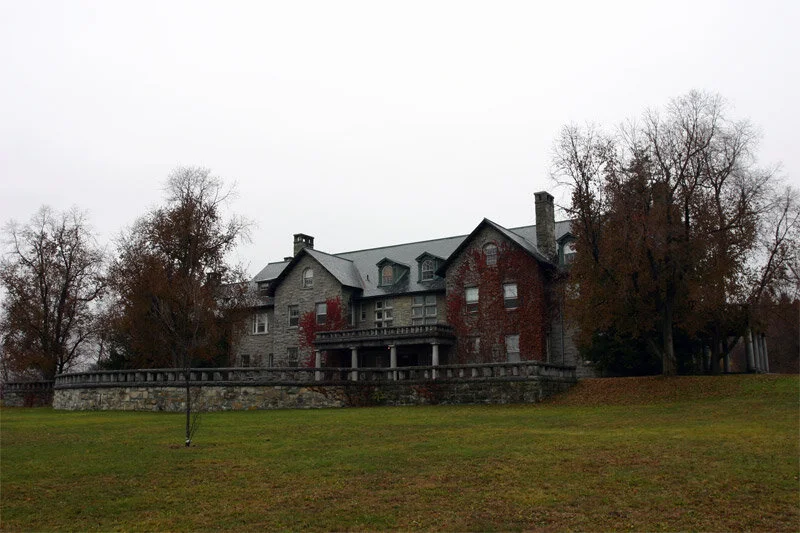
On the Bennington College campus on a dreary day

Todd McLeish: Think of the animals when you flee to the woods this strange spring

From ecoRI News (ecori.org)
The ready access to a large number of local parks and nature preserves in southern New England has been a boon to the many thousands of people seeking a safe way to get out of the house and enjoy the outdoors while also maintaining proper physical distancing during the COVID-19 pandemic.
Parking lots have been full at the Audubon Society, The Nature Conservancy, land trust properties, state wildlife management areas, and national wildlife refuges, especially on weekends. (On March 31, the Rhode Island Department of Environmental Management announced that beginning April 3 it would close state parks and beaches because of the COVID-19 crisis until further notice.)
The increase in human visitors to these properties isn’t likely to have a positive impact on local wildlife. Research from around the world repeatedly finds that the more people that visit natural areas, the more the wildlife that lives there must change their behaviors, move elsewhere, or otherwise expend energy to avoid the human invaders.
As Scott McWilliams, a University of Rhode Island ornithologist, said, “more people usually equals more disturbance.”
To reduce the impact on local wildlife when visiting area parks and refuges, experts encourage visitors to stay on the marked trails, keep noise to a minimum, avoid walking on beach dunes, and always keep dogs leashed.
Much of the research on this topic focuses on what scientists call “the weekend effect,” in which the greater number of visitors to natural areas on weekends and holidays causes greater disturbances and forces wildlife to shift from prime feeding habitat to lesser quality habitat. The result is that, at least on weekends, many animals have difficulty finding proper nutrition and may become less healthy overall. During the breeding season, frequent disturbance of nest or den sites may lead to the abandonment of breeding efforts.
A study published last year tracked 30 eagles in eastern Spain that were living in two national parks. After 18 months, the researchers determined that the birds flew much farther from their typical home range during weekends because of increased human disturbance during those days.
It’s unknown how long the coronavirus pandemic will last or how long local wildlife refuges will experience greater-than-normal visitation levels, but area biologists note a number of concerns that wildlife populations may face during this time.
Nancy Karraker, a URI herpetologist who studies frogs, toads, turtles, and salamanders, is especially worried about the possibility that native species discovered unexpectedly may become someone’s pet.
“For the creatures I care most about, the greatest potential impact of more people out and about during the warm times of the day is the probability they will encounter a box turtle, spotted turtle, or wood turtle and decide to take it home,” she said.
All three turtle species are rare in the state, and one of the greatest threats facing area turtle populations is collection for the pet trade.
Karraker also noted the problem of snakes or turtles basking in the sun and having to escape to a less conspicuous location when people walk by.
“That’s an important concern especially for female snakes or turtles that bask to speed development of eggs or young internally,” she said. “Plunging into the water or fleeing frequently will also be an energetic concern that will have a larger effect on gravid females than on males.”
Another way wildlife can be impacted by increased visitation to natural areas is the disturbance caused by the noise made by visitors. David Gregg, executive director of the Rhode Island Natural History Survey, pointed to research indicating that birds often have to sing louder to attract mates and take other steps when adapting to living in noisy areas.
Although the intermittent noises from visitors to parks isn’t likely to require long-term changes to the behavior of area wildlife, if noise levels remain high for extended periods, some species may depart the area entirely to find less noisy locales.
Charles Brown, a wildlife biologist for the Rhode Island Department of Environmental Management whose office is at the Great Swamp Wildlife Management Area in Kingston, has noticed a significant increase in visitors to the Great Swamp in recent weeks. He said most resident animals are probably used to some level of human activity, and many, such as squirrels and robins common in urban parks, will be unfazed by an increase in human visitation.
But, like Karraker, he is concerned that those species that bask in the sun could be negatively impacted by the disturbances caused by increasing numbers of visitors. He noted that the ringed boghaunter, the state’s rarest dragonfly, is among the sun-worshippers that could be impacted.
Brown’s greatest worry, however, is his observation that many people bring dogs to local refuges and let them run off their leash, which is illegal at state management areas between March 15 and Aug. 15. Free-running dogs can cause great stress and harm to wildlife.
“I think we’re seeing many more neophytes [visiting local refuges], people using these areas for the first time and not familiar with or knowingly disregarding regulations,” he said.
The good news is that the timing of the COVID-19 pandemic may help to avoid the most serious of impacts to local wildlife from increased refuge visitation.
“Luckily most — but not all — birds start breeding in late May and June, so the large numbers of people in the woods will likely have calmed down by then,” URI ornithologist Peter Paton said.
We all hope at the least that the worst of the crisis will be over by then.
Rhode Island resident and author Todd McLeish, a frequent ecoRI News contributor, runs a wildlife blog.
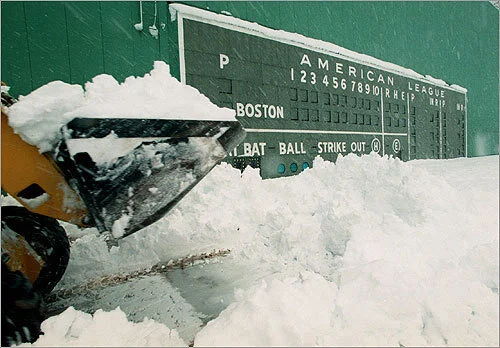
Thought for the Day

An April Fools' Day prank in Boston's Public Garden in 2011 warning people not to photograph sculptures. It refers to Make Way for Ducklings, the 1941 children’s book written and illustrated by Robert McCloskey. It’s the story of a pair of mallards who decide to raise their family on an island in the lagoon in the park.
Eating sprees improve your health.
Shopping sprees increase your wealth.
Drinking sprees enhance your cool.
Lovely news, but — April fool!
— Felicia Nimue Ackerman

A ticket to "Washing the Lions" at the Tower of London. No such event ever took place.
Live off the land?
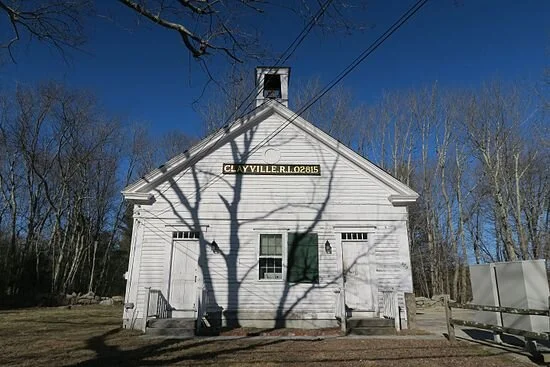
The Clayville, R.I. Post Office

From Robert Whitcomb’s Digital Diary, in GoLocal24.com
The last few days have seemed abnormally cold, and they certainly have been mostly gloomy.
But in fact temperatures have generally been at, or even a little above normal for most of the past few weeks. We’d been spoiled by the extraordinarily warm winter, and thus find the normally hesitant New England spring more depressing than usual. Well, yes, there’s the other thing, too…
The current emergency may be making far more people aware of early-spring Nature because far more are walking around outside to battle claustrophobia and to get exercise, partly because most gyms have been closed. But it’s not a very social experience, as, for example, people tend to keep on the other side of the street from fellow walkers. Still, at least they’re looking at the flowers and trees more than they might have in a “normal spring.’’
I’ve been thinking that this would be a good time to head up to New Hampshire and Vermont, get a room at a Motel 6 and check out maple-syrup-making operations for a few days. Yeah, COVID-19 will be circulating up there too but the scenery is therapeutic.
An old friend of ours who lives in Florida part of the year has several dozen acres of field and woods in the Clayville section of Scituate, R.I. She only half-jokingly suggested that she’d move full time back to Clayville and “live off the land,’’ as people there (mostly) did 250 years ago. It wasn’t that long ago, historically speaking, that many of our ancestors lived on farms. My maternal grandfather’s family had a couple of farms in Upstate New York, and even some of my New England ancestors in the great-grandparent generation had working farms in Massachusetts. Those who didn’t might have had a couple of cows and some chickens.
Dead or alive, we're in this together

“Circle Round “ (encaustic, acrylic, cardboard, paper, wood panel, rusty bicycle wheel), by Sue Katz, an artist living in the Pioneer Valley area of western Massachusetts. Her Web site is suekatzart.com. She is a member of newenglandwax.com

The Pioneer Valley (part of the Connecticut River Valley) from space, with Springfield toward the bottom of the photo and Northampton-Amherst toward the top.

The front entrance to The Bookmill, in Montague, Mass., in the Pioneer Valley
David Warsh: 'How do economic crises end?' and other mega-questions

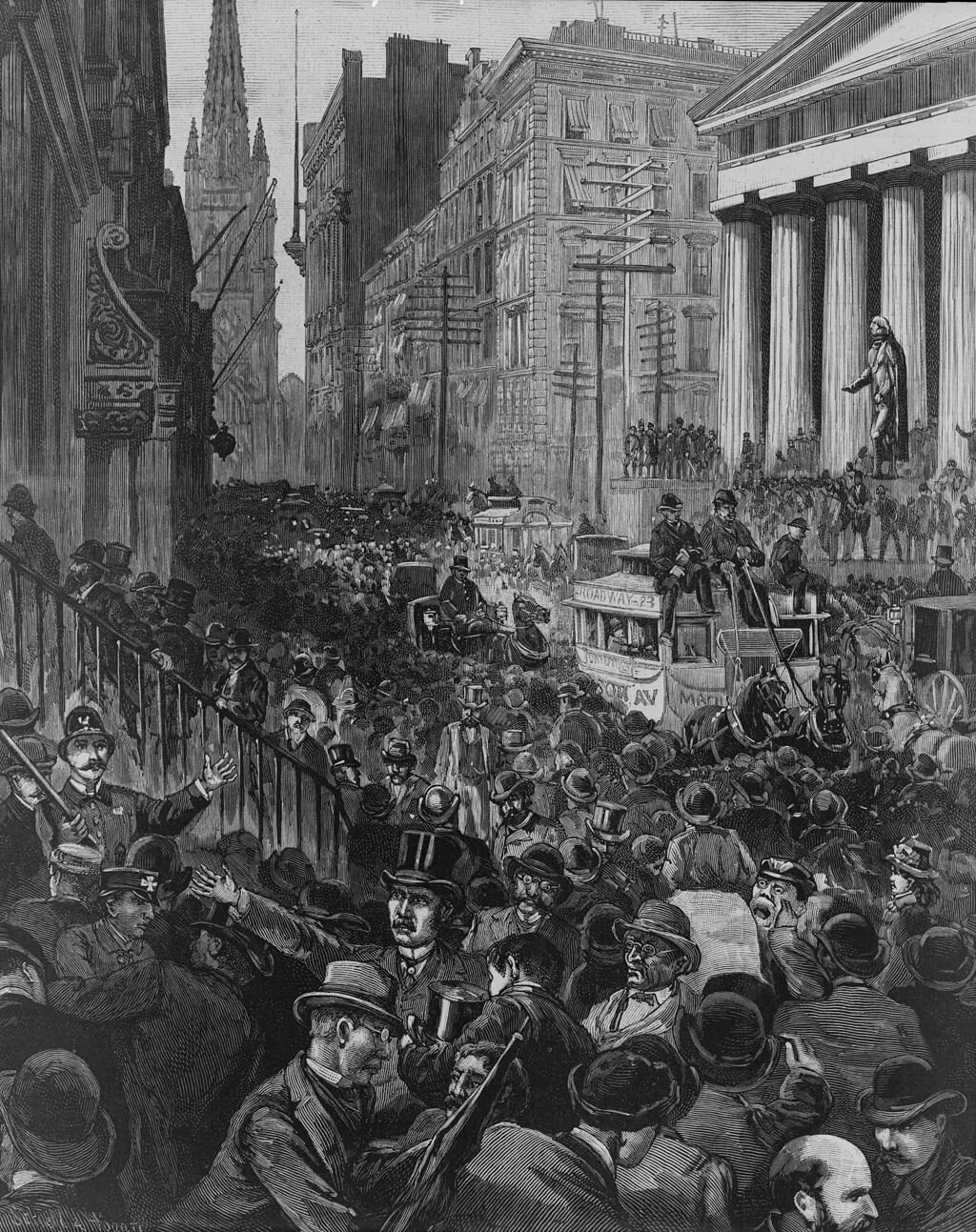
Wall Street on May 14, 1884 during a panic
— From Harper’s Weekly
SOMERVILLE, Mass.
Economists are occasionally accused of physics envy, because some of the mathematical language they use to describe, say, the interdependence of supply and demand was originally devised to explain equilibrium in celestial mechanics.
In the current crisis, economists may be suffering from physician envy. Every day brings reassuring new evidence of the depth of knowledge that life scientists, public health experts and medical doctors are bringing to bear on the COVID-19 pandemic.
Economists have ample reason to be proud of themselves. I can’t prove it, but I can demonstrate to anyone willing to learn, thanks to a regular series of short analytic memoranda published by a non-partisan Web site with the slightly in-your-face name of EconoFact.
EconoFact, published by the Edward R. Murrow Center of the Fletcher School of Tufts University, was founded in January 2017 by Michael Klein, of Tufts, and various colleagues. A former chief economist in the Office of International Affairs of the U.S. Treasury Department, Klein was accustomed to writing policy briefs laying out options for decision-makers, So were many of his friends.
Dissatisfied with what they regarded as overmuch weight being given to fringe views by news accounts and op-ed pages striving for balance, they aimed to convey to key journalists and others affecting policy in Washington and state capitals the scope of differences among mainstream views. Contributors, many of them with government experience, have since grown to a network of nearly a hundred economics professors.
Unlike the National Bureau of Economic Research, the leading U.S. consortium of research professors, the charter of which specifically forbids advocacy in its sponsored research, EconFact authors begin with the premise that action is required and then briefly lay out possibilities. Project Syndicate, an online op-ed page promoting the work of some 75 leading economists, makes interesting reading; so does Vox-EU, edited by Richard Baldwin, of Geneva’s Graduate Institute, and published by the Centre for Economic Policy Research, the European counterpart of the NBER.
Compared to these, EconoFact has a much tighter focus. Its headings include
Immigration Policy, Federal Budget Deficit, Jobs and Employment, and Coronavirus. Nine briefs on the COVID-19 crisis have been published in the last two weeks, each around 1,300 words. You can read them individually below, or scan them serially here.
When will the US be able to lift social distancing restrictions and begin to restore its economy? by Hoyt Bleakley, University of Michigan (March 26)
How many workers are likely to need cash income assistance during this economic slowdown? by Melissa Kearney and Luke Pardue, University of Maryland (March 26)
What do interpretations of the Great Depression and the Financial Crisis of 2008 suggest about how the current crisis might end?, by Dan Sichel·
Wellesley College (March 23)
How much additional funding and what modifications to the system of unemployment might be required in the current crisis?, by Patricia M. Anderson and Phillip Levine, Dartmouth College and Wellesley College (March 22)
What is the appropriate infrastructure to disburse cash payments rapidly and fairly, given that those most desperately in need are often the hardest to reach?, by Lisa A. Gennetian, Sanford School of Public Policy, Duke University (March 20)
How to rate speed as a factor in an economic policy response? by Megan Greene and Michael Klein, Harvard Kennedy School Fletcher School, Tufts University (March 17)
What lessons can be drawn from experience of the 1918 influenza pandemic? by Phillip Levine and Robin McKnight·Wellesley College (March 17)
What is the Federal Reserve doing to stabilize market affected by closures and quarantines? by Kenneth Kuttner, Williams College (May 15)
My favorite of these is “How Do Economic Crises End?” because of its obvious sophistication. Sichel, its author, retired from the Fed in 2012, having been part of its senior analytic team in the years before and after the 2008 crisis. The comparison he makes between the unaddressed banking panics that ushered in the Great Depression and the quickly confronted Panic of 2008 has not yet become a standard feature of Coronavirus crisis discussion.
It opens the door for more careful attention to resemblances and dissimilarities of current shutdowns to the events of 1929-1933 and their aftermath. And it identifies common denominators in the ends of both major crises: “two ingredients are needed to stanch the acute phase of an economic crisis,” it states: “a resolution of the underlying cause and a dramatic economic policy response that mitigates the economic damage and causes a shift in sentiment.”
About that slightly pugnacious name: It may be just me, but at a time when claims to deliver “truth” are being bandied about in marketing campaigns as if it were something easy to know, even a claim to having assembled the relevant facts seems a little immodest.
Executive editor Klein demurs: “We back up everything we publish with lots of hyperlinks to sources; so maybe EconoFact is not so much in-your-face as accurate, perhaps even revelatory, that is “revealing something hitherto unknown.” The work we publish is probably not news to trained economists, but may be so to the public who are regularly fed a diet of “Experts disagree about ...” (fill in the blank) when, in fact, there is often broad consensus among economists.
“Too often news media treat economic matters like a sports event with a lonely and unsupported economist on one side and someone else (who represents the consensus view of economists who have spent their professional careers studying these issues) on the other.”
EconoFact is looking for long-term funding. It wouldn’t cost a fortune to keep a couple of editors and an intern employed. Here’s hoping those deep pockets can be found. The name, no doubt, is here to stay. Long may the enterprise continue to ask and answer pointed questions.
David Warsh, an economic historian and veteran columnist, is proprietor of economic principals.com, where this essay originated.
N.E. Council update on COVID-19-related activities

“Brother Jonathan’’ was a 19th Century personification of New England.
BOSTON
COVID-19 briefing from The New England Council (newenglandcouncil.com)
“As our region and our nation continue to grapple with the Coronavirus Disease (COVID-19) pandemic, The New England Council is using our blog as a platform to highlight some of the incredible work our members have undertaken to respond to the outbreak. Each day, we’ll post a round-up of updates on some of the initiatives underway among Council members throughout the region. We are also sharing these updates via our social media, and encourage our members to share with us any information on their efforts so that we can be sure to include them in these daily round-ups.
You can also check our COVID-19 Virtual Events Calendar for information on upcoming COVID-19 related programming – including Congressional town halls and webinars presented by NEC members.
Here is the March 30 roundup:
Medical Response
Novartis Anti-Malaria Drug Gets Emergency Approval from FDA – Following emergency approval from the Food and Drug Administration (FDA) of two anti-malaria drugs for the potential treatment of COVID-19, Novartis, along with Bayer, is contributing millions of doses of the drugs, hydroxychloroquine and chloroquine. The drugs have previously received much attention following some anecdotal evidence to support the benefits to relieve respiratory symptoms of infected patients, and could be a potential treatment to reduce symptoms and strain on healthcare providers. The Washington Post has more.
Sanofi Expands Clinical Trial – After announcing the beginnings of its clinical trials in the United States last week, Sanofi—along with Regeneron Pharmaceuticals—has expanded the trial in Italy, Spain, Germany, France, Canada, and Russia. The trials will test the rheumatoid arthritis drug Kevzara as a potential treatment for patients around the world. Read more in CNBC.
Economic/Business Continuity Response
New Balance Shifts to Producing Masks – At its Lawrence, Mass., manufacturing facility, New Balance has begun producing prototypes for face masks to distribute around the region and country. As hospitals and those exposed to the virus begin to see shortages of protective gear such as face masks, New Balance has joined other local manufacturers in an “all hands on deck” response to the need. Read more in WCVB Boston.
Harvard University Guarantees Pay for All Workers Through End of Semester – To ensure that those who are willing and able to work are paid, Harvard University updated its policies to include payment and benefits for all workers through May 28. The updated policy includes those employed in dining, security, and custodial services across the university, as well as those in administrative and contract roles. Harvard is also providing stabilization funds to the six independent childcare centers on campus to allow the employees to work. The Boston Business Journal
Community Response
Suffolk University, Pine Street Inn to Repurpose University Residence Hall to House Homeless Population – In light of its switch to remote learning, Suffolk University has offered a residence hall to the homeless population of Boston. The residence hall will provide 172 beds, and will be managed by both Pine Street Inn and the city’s Public Health Commission to reduce congestion and increase social distancing in shelters. The Boston Business Journal has more.
AARP Launches Platform to Connect Volunteers with Those in Need – AARP announced its new online platform, AARP Community Connections, to organize and mobilize volunteer groups and connect them with people and families who need assistance. From groceries to financial assistance to emotional support, users of the platform can receive a wide variety of support in the age of social distancing. Read more in KTVZ.
Amgen Donates $12.5 Million to Relief Efforts – Amgen has committed $12.5 million to support the efforts of local emergency and patient-focused services. In addition to the funds, Amgen is supporting online learning platforms to provide resources to students as they transition to remote instruction. Read more.
Tufts Health Plan Announces $500,000 for Food-Insecure Elderly People – Tufts Health Plan has committed the first half of its $1 million donation in relief efforts to combat food insecurity among in the New England region. Tufts has identified 21 organizations that provide meals and other support to individuals we well as food banks and other businesses coordinating a regional response as the recipients of the first wave of funding. Read more in the Portsmouth Press.
Stay tuned for more updates each day, and follow us on Twitter for more frequent updates on how Council members are contributing to the response to this global health crisis.’’
Now comes babbling April

Stream in Southbury, Conn.
— Photo by Karlfonza
To what purpose, April, do you return again?
Beauty is not enough.
You can no longer quiet me with the redness
Of little leaves opening stickily.
I know what I know.
The sun is hot on my neck as I observe
The spikes of crocus.
The smell of the earth is good.
It is apparent that there is no death.
But what does that signify?
Not only under ground are the brains of men
Eaten by maggots.
Life in itself
Is nothing,
An empty cup, a flight of uncarpeted stairs.
It is not enough that yearly, down this hill,
April
Comes like an idiot, babbling and strewing flowers.
— “Spring,’’ by Edna St. Vincent Millay (1893-1950), a Maine native
Solar panels best on roofs and abandoned parking lots

From Robert Whitcomb’s “Digital Diary,’’ in GoLocal24.com
I hope that solar-energy firms in New England are constantly on the lookout for already open land, such as parking lots around moribund shopping centers, as alternatives to cutting down woodlands to make space for solar panels. The recession we’re now in may well make more moribund shopping center parking lots available.
Trees, after all, are also important in addressing climate change, not to mention wildlife and green aesthetics that help humans’ health. There’s a natural temptation to use a lot of that woodland in, for example, exurban southern and western Rhode Island for solar farms. But there’s plenty of asphalt open space in our urban areas, and wide flat roofs on big-box stores.