
Vox clamantis in deserto




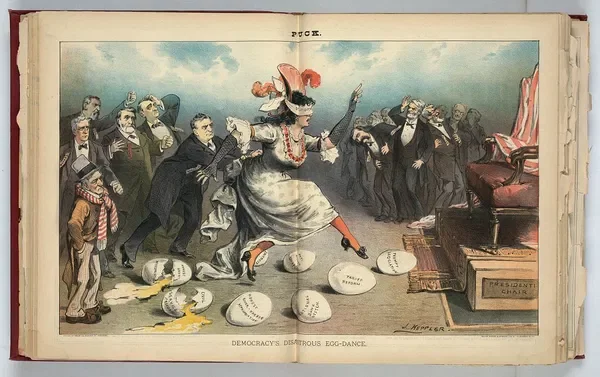
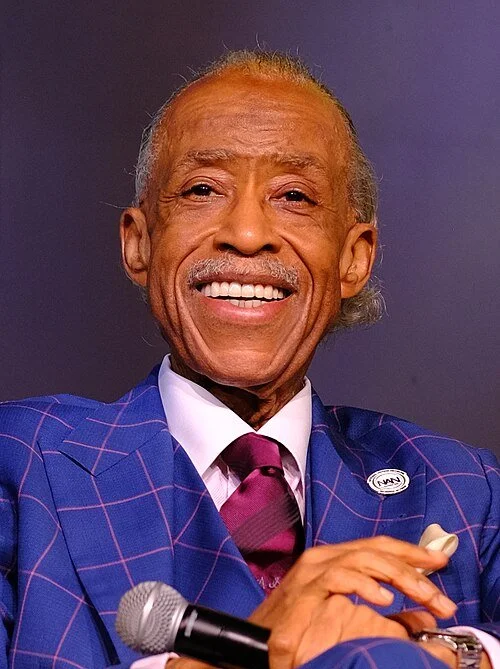
'(Re)Generation' sounds good these days

Work by Ellen Schön in her current solo exhibition “(Re)Generation” at Boston Sculptors Gallery, by appointment only because of the COVID-19 emergency. The show features a new series of ceramic totems.
The gallery explains:
“Originally inspired by her daughter's pregnancy, the series evolved during the artist's residency at the Guldagergaard International Ceramics Research Center, in Skaelskor, Denmark.
“Schön's practice has embraced the capacity of ceramic vessels to evoke the gesture and stance of the human figure. Now departing from the vessel tradition (though indebted to it), these totems simultaneously explore the limits of abstraction, express contemporary feminist sensibilities, and reference archaic fertility figures such as Cycladic idols and the Venus of Willendorf. ‘The idea of regeneration affirms our connection to the past, while discovering what we carry forward,’ Schön explains.
”Harbingers of an unknown future, the totems simultaneously sing out and quietly listen, beseeching each other and us. Only the next generation will know whether their message is hopeful or dystopian.’’
Stick with stasis

“How many Vermonters does it take to change a lightbulb?
Three. One to change it and two to argue over why the old one was better.’’
—Old Vermont joke
“An old man is sitting on the steps of the general store on a fine spring day. A stranger comes along and tips his hat and comments on the beauty of the day. He pauses, searching for something more to say, and finally he says, “Bet you’ve seen a lot of changes around here.’’ To which the old man replies, ‘Ayup. And I’ve been against every one of them.’’’
— From “Pure Vermont,’’ by Edie Clark, in the October 1996 Yankee Magazine.
Open-heart surgery made easy

“Verily I Say Unto Thee’’ (oil on panel), by Procheta Mukherjee Olson, in her show of miniature paintings at the University of Massachusetts at Amherst Museum of Contemporary Art, March 26-April 26 — or not, depending on COVID-19.

James P. Freeman: Negative interest rates? Be careful what you wish for


“You OK?” -- Clay Easton, from the film Less Than Zero (1987)
BRAINTREE, Mass.
Last fall, as markets were reaching Everest heights, President Trump began calling for below-zero interest rates in the United States, a phenomenon that has beset many European countries and Japan, to little positive effect. While appealing on the surface, supporters of such an interest-rate environment should temper their enthusiasm and take caution: Be careful what you ask for.
On Sept. 11, 2019, President Trump tweeted, “The Federal Reserve should get our interest rates down to ZERO, or less, and we should then start to refinance our debt.” The president renewed such calls last November, during a speech at the Economic Club of New York. He claimed that comparatively higher interest rates in the United States “puts us at a competitive disadvantage to other countries.” And, more recently, at the World Economic Forum in Davos, Switzerland, in January, he echoed similar sentiments. Other nations, Trump said, “get paid to borrow money, something I could get used to very quickly. Love that.”
Negative interest rates are not normal, and they have never occurred in America.
So, what exactly is going on here?
Typically, in any given lending arrangement, the borrower pays back principal and compensates the lender with interest for use of the money. A loan with a longer duration usually fetches higher rates; a loan with a shorter duration usually fetches lower ones.
But in some sectors of the global credit markets something strange has happened -- the underlying mechanics of that understandable and long-held lending model have changed. It is the borrower who is compensated, not the lender. In other words, a lender who lent $100 with a 3 percent interest rate received a $103 return. Now, that same lender may be receiving -- theoretically, in a market with negative rates -- only $97, not $103.
For nearly 40 years interest rates in the United States and around the world have dropped dramatically (in 1980 the U.S. Prime Rate peaked at 21.50 percent; today it stands at 4.25 percent, according to “FRED,” the economic research arm of the Federal Reserve Bank of St. Louis). Both consumers and corporations have been the beneficiaries of the low cost of borrowing money. It fueled what some see as the greatest period of prosperity in America history. Causally and conversely, however, it acted as the catalyst for massive levels of borrowing, as the government for decades has spent more than it received. In addition, government -- at all public-sector levels, federal, state and local -- likewise has been a beneficiary, financing massive levels of debt at low cost. But the federal government is different.
The federal government is granted the authority to control both monetary policy (interest rates and money supply) as well as fiscal policy (taxes and spending). Created in 1913, the Federal Reserve (the “Fed”) is the country’s quasi-independent central bank, and responsible for supervising the nation’s banks, overseeing the stability of the financial system, conducting monetary policy and, perhaps most importantly, maintaining the dollar as a store of value. On the other hand, fiscal policy is determined mostly by Congress with input from the president. For decades, both the legislative and executive branches have agreed to increase the size and scope of government without paying for it (deficits and debts). And tax rates have trended downwards for decades too (most recently with the Tax Cuts and Jobs Act of 2017).
Ostensibly economic tools, fiscal and monetary policies are nevertheless dictated by political actors, and prone to political motivations. Nevertheless, such polices, when effected sensibly and even harmoniously, can promote economic growth and stability. Of course, global disruptions and market imbalances coupled with bad decisions have, at times, wrought havoc. Such events are mostly garden-variety downturns while others are more severe, like The Great Depression, which started in 1929, and The Great Recession of 2008-2009.
Policymakers took extraordinary measures in 2008-2009 to stave off a total collapse of the financial system and a real depression. Of particular import was unprecedented monetary policy. The Fed brought short-term rates close to zero and greatly expanded the money supply by injecting trillions of dollars into the financial system. As a result, markets recovered, and the U.S. economy went on to the greatest bull run in history. Notably, though, the Fed largely kept these extraordinary polices intact, even as the stock market rose to record highs and unemployment fell to near-record lows.
Therein lie the problems.
Some market observers have opined that the market rally in 2019 and early 2020 was a perversion precisely because of constant Fed intervention. They argue that this was a Fed-induced asset bubble. These same observers cite the central bank’s maintenance of artificially low interest rates (three reductions in the Federal Funds Rate in 2019), flooding the market with trillions of dollars in cash or liquidity (by buying U.S. Treasury securities, known as Quantitative Easing, “QE”), and what is called “Repo” (supporting overnight lending among big banks, a form of money flow or plumbing for Wall Street) -- all during a roaring market and booming economy. It was reasonable to ask, observers wondered, why the Fed was doing all this during good times. Such actions were historically reserved only for extreme market disruptions that threatened the American economy.
The Fed was not alone in its actions.
Most European countries did not see economic expansion of the size of the American one in the 2010s. Their recovery was much more muted. As a result, in order to spur economic activity, European interest rates were set even below American rates. In June of 2014, a stunning event occurred. The European Central Bank (ECB) introduced negative rates by lowering its deposit rate to minus 0.1 percent to stimulate the economy. It proved to be overall futile. Eurozone countries (and Japan) never fully recovered and economic growth remained anemic at best.
By 2019, 14 countries had sovereign debt with negative yield as markets and governments drove down rates. Today, the global pool of such securities is about $12 trillion, and includes some corporate debt. Last September, the ECB cut its already negative deposit rate to minus 0.5 percent. In fact, 56 central banks cut rates 129 times last year, according to data from CBRates, a central bank tracking service. Some market participants have questioned the efficacy of such monetary policy, given little to no economic growth as a result. And policy makers are perhaps finally realizing that monetary policy alone has its limits.
There’s a growing negative perception of negative rates reflecting the negative impact.
Still, there are other reasons why yields have plunged. Think of the basic supply-demand equation. While governments have been issuing an enormous supply of low-yielding debt there has also been an enormous demand for government securities. Most government bonds are known to be a safe harbor for investors in times of turbulence, as they can be used to hedge against all sorts of risk (market, political, etc.). Of course, the safest of safe harbors has been and continues to be the United States.
In times of crisis, global investors have always sought protection by buying U.S. Treasury securities, as these securities offered a reasonable rate of return and penultimate safety. But even in times of relative tranquillity these securities have been attractive for domestic investors, particularly pension plans, senior citizens, and financial institutions. Over time and into early 2020, a convergence of market dynamics -- heavy demand, along with heavy Fed buying and issuing of large quantities of Treasuries (supply) -- have brought yields down substantially and have made government securities very expensive. Even before the novel Coronavirus called COVID-19.
The long-term average yield of the U.S. 10-Year Treasury Note, the American bellwether security, is 4.49 percent. A year ago, the 10-Year yielded 2.64 percent. It has fallen steadily since (ycharts.com and FRED). Now, with the global pandemic, the yield recently hit an intra-day record low of 0.31 percent.
The Coronavirus has, if anything, exposed the fragility of current markets. In classic crisis mode, investors have been fleeing global stock markets and stampeding the U.S. government bond market. Yields across the spectrum of treasury maturities (3-month to 30-year) have set record lows, driven by record demand and Fed intervention with barrels of liquidity.
Just over a week into a global stock sell off, on March 3, the Fed cut the Federal Funds Rate by half a percentage point (for a targeted range of 1.0 percent to 1.25 percent) in response to the threat posed to the economy by the Coronavirus. This emergency action was the first time that the Fed cut rates for a public-health challenge, not a financial one.
And in another emergency move on Sunday, March 15, following two weeks of market carnage, the central bank set this rate to effectively zero as markets continue to roil -- matching similar action taken during the financial crisis in 2009, along with more massive QE. It is now entirely possible that the Fed Funds Rate may be set in a negative range and U.S. Treasury yields could turn negative for the first time as well. Even despite the slow lurch to negative yield, on a conference call on the same day of the latest action, Fed Chairman Jerome Powell dismissed the likelihood of using such a tool.
“We do not see negative policy rates as likely to be an appropriate policy response here in the United States,” Powell told reporters.=
Well.
As the robot in Lost in Space warned: “Danger Will Robinson! Danger!”=
No one in America quite knows how to navigate the unchartered frontier of negative yields. There is no play book or history book. Or Book of Revelation.
Some of the consequences of rates marching to zero are already apparent. One is that the government via the Fed (monetary policy) has incentivized undue risk-taking. Lower government bond yields have forced otherwise conservative investors to chase higher returns in stocks and corporate bonds, creating unmanageable asset bubbles. (Will Treasuries in 2020 become the tulips of 1637?)
Congress and the president (fiscal policy) have been incentivized to borrow even more money (under the absurd assertion that the country can “grow” its way out of debt; during the bull run debt grew significantly). Remember, candidate Trump in 2016 promised to not only reduce the national debt, but actually eliminate it. At over $23 trillion today (CNBC reported last February), the debt has grown by $2 trillion under President Trump.
Arguably, disastrous monetary policy has financed even more dreadful fiscal policy.
America used to borrow for the future. We now borrow from the future. Record low yields have fueled record amounts of debt. One unintended consequence of this predicament is that it unwittingly gives legitimacy to the absolutely ludicrous idea of “Modern Monetary Theory” (MMT). Properly understood, the theory allows that government can and should print as much money as it needs to spend because it can not become insolvent, unless there is a political reason to do so. MMT treats debt simply as money that the government has placed into the economy and did not tax back. Furthermore, and rather dangerously, MMT advocates believe that there are no consequences to staggering levels of debt. They simply ignore abundant evidence to the contrary (history is littered with examples of sovereign default).
There are more tangible and immediate consequences to consider as well. In a simpler time, the bond market was known as the “fixed-income” market. For a good reason. Most bonds paid a fixed amount of interest, usually every six months. A steady stream of interest provided investors with income. Negative yield penalizes savers who have relied upon Treasury securities for safety and some rate of return. Why would seniors want to pay borrowers for the use of their money?
Negative yield also affects banks and other financial institutions, such as insurance companies. These entities rely upon yield to fund operations. Annuities, for instance, are financial contracts whose rates of return depend on market instruments, such as fixed-income securities. And pension plans assume a certain future return for actuarial purposes.
JPMorganChase Chairman and CEO Jamie Dimon has expressed concern. At the same Davos event that the president spoke at in January, the head of America’s biggest bank expressed “trepidation” about “negative interest rates.” He added that, “It’s kind of one of the great experiments of all time, and we still don’t know what the ultimate outcome is.” Last October he told a group attending the Institute of International Finance he would “not buy debt at below zero.” And with a sense of gravitas, Dimon concluded, “There is something irrational about it.”
If the government started issuing negative-yielding debt, banks would need “to find other ways to replace the income they need to generate from their deposits at the Fed,” believes Michael Hennessy, chief executive of Harbor Crest Wealth Advisors. One way to do that would be to raise fees on consumers. Another option -- a nuclear option? -- would be for banks to offer negative deposit rates to the average saver and consumer. That outcome is nearly unimaginable.
Then there is the tax code. Writing for The Wall Street Journal last November, Paul H. Kupiec said he believed that the tax code can’t handle negative rates. “Should negative interest rates one day become reality,” he writes, “the tax code will need to be amended.” Kupiec also says that negative rates would effectively be a “new federal tax levied by the Fed on banks.” Negative interest rates are treated as a consumer expense, and right now current law doesn’t allow such an expense to be deducted when calculating taxable income.
Finally, there is the general perception that negative yield carries: People feel poorer. They would be drained of income. They would not be paid for the use of their money. On the contrary, they may be paying people for the use of their money. Marked deflation is just as bad as marked inflation. Besides, such a precipitous drop in Treasury yields and the corresponding inversion of the yield curve (when yields in longer maturities are lower than yields in shorter maturities) portend recession. Recessions are normal and natural. Yet, with twisted irony, the federal government -- with all its extravagant intervention -- has exacerbated not only the likelihood of a recession but perhaps its severity, too.
Joseph Brusuelas, RSM chief economist and a member of The Wall Street Journal’s forecasting panel, strikes a cautionary tone. He reasons: “Because the U.S. economy is so highly ‘financialized’ [meaning it is reliant on big banks to provide liquidity], negative rates wouldn’t yield a good outcome in the long-term.”
James P. Freeman is the director of client relations at Kelly Financial Services LLC, based in Greater Boston. This content is for informational purposes only and does not constitute an offer to sell or a solicitation of an offer to purchase any interest in any investment vehicles managed by Kelly Financial Services, LLC, its subsidiaries and affiliates. Kelly Financial Services, LLC does not accept any responsibility or liability arising from the use of this communication. No representation is being made that the information presented is accurate, current or complete, and such information is at all times subject to change without notice. The opinions expressed in this content and or any attachments are those of the author and not necessarily those of Kelly Financial Services, LLC. Kelly Financial Services, LLC does not provide legal, accounting or tax advice and each person should seek independent legal, accounting and tax advice regarding the matters discussed in this article.
Chris Powell: Kick religion excuse out of the childhood-vaccination question

Child being given oral polio vaccine
Despite the nastiness the other day at the marathon hearing on the bill in the Connecticut General Assembly to repeal the religious exemption for vaccination of schoolchildren, there are fair and even compelling questions about vaccination policy. Unfortunately the discussion gets detoured by silly denials that the government has the right to regulate not only health standards in public schools but also parental treatment of children.
Too much is claimed for “freedom of religion’’. It does not authorize spreading communicable diseases any more than it authorizes disciplining children by lashing or caging them or denying them medical care. Crucial as parents are, they are not the ultimate guardians of children -- the government is. Indeed, Connecticut is full of child neglect and abuse, which are the primary causes of the state's social problems, including educational failure, mental and physical illness, and crime. That's why the state maintains its Department of Children and Families and its medical insurance for poor kids.
"My child, my choice," a slogan of the anti-vaxxers, is nonsense.
If government's ultimate responsibility for children can't be acknowledged, the vaccination argument is over. But if government's responsibility could be acknowledged and if people could lower their voices, there might be a lot to discuss.
For example, while vaccines are said to be perfectly safe, they're not. They are overwhelmingly safe but a few people do suffer bad reactions to them, even disabling reactions, as did a young East Hartford, Conn., woman whose story was reported at length by the Journal Inquirer's Will Healey last October. That's why federal law exempts vaccine manufacturers from liability for bad reactions to properly made vaccines and why a federal agency compensates people injured by them.
So it is fair to ask how much vaccination is worth how much risk.
Since there are many vaccines, some for diseases that are more severe than others, the entire vaccination schedule for schoolchildren is fairly questioned too. Are all the vaccines on the schedule essential for "community immunity" and individual health, or are some merely desirable? The General Assembly seems to have accepted the state Public Health Department's recommendations without any review of its own. Experts should be heard but questioned too.
Additionally, some vaccines are more effective than others, a variable that affects their desirability and necessity -- another issue that could be worth legislative review.
But issues involving the safety and efficacy of vaccines are not really religious in nature and thus don't properly fall under the legal exemption being claimed for them. That claim is a convenient pretext for those who consider vaccines too dangerous.
The use of fetal tissue from elective abortions in the invention of some vaccines is also cited for a religious objection. But this objection argues that knowledge obtained through a bad act should be disqualified for use in a good purpose. The Catholic Church, a leading religious opponent of abortion, approves vaccination despite the distant connection.
After all, the world would lose much if inventions were allowed or banned according to the character or purposes of inventors.
If the opposition to the vaccination of schoolchildren dropped the religious pretext and concentrated on safety and necessity, it would deserve a more sympathetic audience.
Chris Powell is a columnist for the Journal Inquirer, in Manchester, Conn.
-END-
Nimbys vs. needed new housing
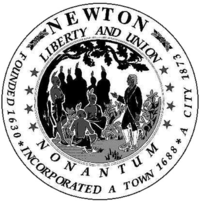
Maybe not that much union these days
From Robert Whitcomb’s “Digital Diary,’’ in GoLocal24.com
Newton, Mass., has provided a strong example of why housing costs are so high: It’s tough for developers who propose projects that would increase local density in a nation where many still see the ideal as the one-family house.
While 60 percent of voters in Newton (an affluent and very liberal town) supported, in a referendum, the Northland Newton project, which will provide 800 units of housing, 140 of which will be classified as “affordable,’’ the road to the development has had a lot of potholes. Although the City Council also supported it, the developers had to go through an 18-month permitting process, and make many concessions, among other torments. Such delays drive away many developers and thus prevent the construction of new housing that could moderate housing costs by increasing supply, especially in places like Greater Boston and the San Francisco region, where these costs are astronomical.
In a Boston Globe essay, Katherine Levine Einstein and Maxwell B. Palmer, assistant professors of political science at Boston University, wrote:
“Across Massachusetts towns, from 2015 to 2017, only 14 percent of those speaking at permitting meetings about multifamily housing were in favor of the development. As the Northland referendum shows, true public support is much higher.’’ Opponents tend to be older and richer.
“Indeed, recent election results underscore an unfortunate liberal inconsistency on housing policy. On Super Tuesday, Democratic primary voters flocked to the polls to endorse candidates with robust plans to improve and increase the nation’s housing stock. The platforms of former vice president Joe Biden and Senators Bernie Sanders and Elizabeth Warren all advocate for housing policies that would make it easier to build more housing. In Newton, more than 90 percent of voters cast a vote in the Democratic primary. A sizable portion of those voters opposed those same principles when it came to their own backyards: At least 35 percent of Newton Democratic voters opposed the Northland project.’’
“Sanders’s positions illustrate this disjoint between national and local housing preferences. Sanders’s housing plan outlines regulatory and funding measures that would increase the supply of national housing for residents at a variety of income levels. Yet, he opposes local housing developments and endorses politicians in local races who fight critical zoning reform.’’
It’s a variant of the old “don’t tax me, don’t thee, tax the man behind the tree.’’
Forget rent control, which worsens housing costs by discouraging construction and expansion of multifamily owner-occupied or rental property. The way to control housing costs is to build more housing.
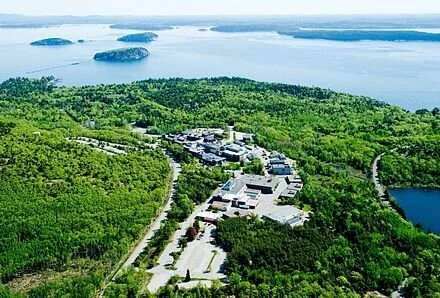
Jackson Lab partnering to build employee housing on expensive tourist mecca Mount Desert Island
From The New England Council (newenglandcouncil.com):
“The Jackson Laboratory, the world-famed biomedical research institution, is partnering with Developers Collaborative, based in Portland, Maine, to build employee apartments near the laboratory’s Bar Harbor, Maine, facility, on Mount Desert Island.
“Because of the close proximity to Acadia National Park, tourism in the area has driven real estate prices up, making affordable housing for employees scarce on the island. The first phase of development, called the Schooner Head Housing Project, will consist of five buildings with 44 apartments, and is expected to be complete by the summer of 2021. The finished project will include 100 additional units. Developers Collaborative has overseen other housing projects in the Hancock County area, including a 50-unit complex completed in 2018 and fully occupied by mid-2019.
“I go to every new employee coffee [gathering] in Bar Harbor,” says Catherine Longley, Jackson Lab’s Chief Operation Officer, “And the No. 1 issue the employees say is, ‘I can’t find a place to live.’”
Llewellyn King: Now that the pandemic has shut us in what will we do with our time?
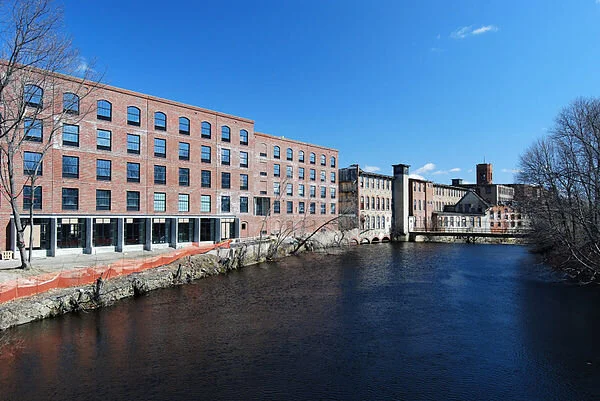
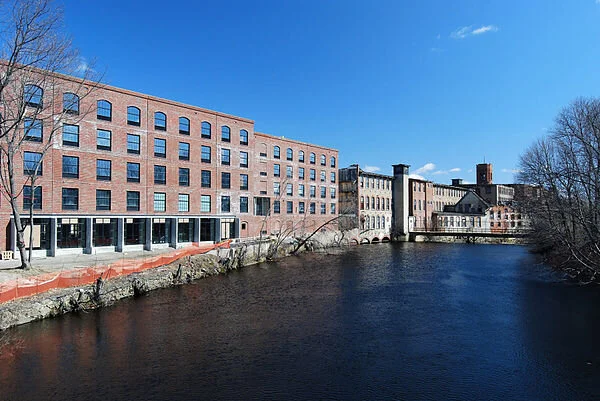
Centreville Mill, on the Pawtuxet River, in West Warwick, R.I. Llewellyn King lives in a converted mill on the same river in West Warwick.
For more than a decade, I’ve been writing about the isolated, the lonely, the abandoned: Those who feel that the world has no place for them. Now all of us will know something of their isolation and, in the case of people who live on their own, loneliness.
Those I’ve been writing about are the luckless hundreds of thousands in the United States – millions around world -- who suffer from Chronic Fatigue Syndrome, now known as Myalgic Encephalomyelitis (ME). They are sentenced to live separately by their illness and its debilitating fatigue. They are a kind of living dead. Now I have a glimmer, no more to be sure, of how it must be every day for these sufferers
What will it be like for the rest of us in two weeks when we’ve exhausted the pleasures of home life and yearn to see our friends, go to a restaurant, a play or a concert? Just to live normally?
I’ve always tried to console myself with what I call “adventure therapy.” Like most pop psychology it isn’t very profound, but it does help. Will it help now? I have no idea.
Anyway, the therapy is that you try to find the adventure in any situation you’re in, which can include some hairy ones, like facing surgery. (Who will you meet? What’s all the equipment? How will they perform the surgery? Do the doctors like doctoring? What kind of life do the nurses live?)
In my own home -- mercifully which I share with my ever-cheerful wife -- I wonder where the adventure lies in this crisis.
First, I know I won’t write the Great American Novel or any work of fiction. I won’t write my life story, as I’m constantly advised to do. My ego is robust, but I’m not sure it’s robust enough for that.
Oscar Wilde worried about “third-rate litterateurs” picking over the lives of dead writers. Of course, it seems to me some lives are lived with an eye to posterity.
I’m always amazed at people who in the middle of great trauma or great events have time to sit down and write what they think and feel. I’m glad they do, but I don’t think we’re entitled. The world loves Shakespeare’s works and knows little about him.
We know too much about people of minor achievement whom we call celebrities. We watch them and their petty lives with the attention of a fakir watching his snake. Yeah, I’m no better. I want to know what’s to become of Meghan and Harry, where will Lindsay Lohan settle and, only somewhat less trivially, what are the late-night comedians doing with their spare time now that we learn that they need huge staffs to be funny?
I do think that we need a record of our times, often informed by memoirs. Unfortunately, and inexcusably, when the Trump era is behind us, we’ll know too little about what went on in the inner councils of the White House. President Trump has shown near contempt for the Presidential Records Act, inspired by the fall of President Richard Nixon. Trump writes little and destroys much that it written, we’re told.
One has always dreamed of a time when there was enough leisure to read, maybe plow through Tolstoy, give Proust another go, or try to understand Chinese literature. But I think that won’t happen. I’ll read the same kind of books I always read: biographies and crime stories. Most likely I’ll read a bit more, curse television a bit more, and squander my time watching and reading the news about COVID-19.
As I struggle to avoid the temptations of the refrigerator and that reproving word processor (It whispers, “Write a book.”), I’ll wonder about those who existed before this pandemic in a long, dark tunnel of isolation without hope of light at the end: Those who can hardly hope to break out one day into what Winston Churchill called the “sunlit uplands.”
Llewellyn King is executive producer and host of White House Chronicle, on PBS. His email is llewellynking1@gmail.com. He’s based in Rhode Island and Washington, D.C.
It's safe: Fewer than 10 screens together

“Opecean Wounds & We Are Still Alive Like Hydrogen and Oxygen” (multi-channel video), by Kasem Kydd, at the Thompson Gallery of the Cambridge School of Weston, Weston, Mass., March 23-June 11, virus permitting.

And we loved those little umbrellas!

Ah, those prices in the ‘50s! Bob Lee’s Islander was a very popular Boston restaurant back then.
Using eminent domain to drive folks from flood zones

Watch Hill Harbor, on the coast of southern Rhode Island, which is very vulnerable to flooding, especially in hurricanes
— Photo by Stephg82988
Adapted from Robert Whitcomb’s “Digital Diary,’’ in GoLocal24.com
The New York Times reports that the Trump administration is commendably letting the Army Corps of Engineers tell localities to use the threat of eminent domain to get people to move away from increasingly flood-prone areas or else lose federal flood-mitigation money.
This is part of a shift toward the Corps paying local governments to buy and demolish homes at clear risk of flooding.
The Corps, with the agreement of the administration, realizes that building sea walls, levees and other protections, such as ordering that houses be put on stilts– for which the Corps pays two-thirds of the cost and localities and states the rest – is very expensive and often have to be repeated. Better for safety, and the taxpayers, that people be forced from these places, which are increasingly inappropriate for buildings because of global warming’s effects. But people naturally love being along the water, so such threats get much pushback.
The barrier beaches of South County would be places where we could expect the Corps to get tough like this. Whatever Trump’s manmade-global-warming denials, it’s heartening that his administration is taking this unpopular but needed approach.
But what will they do about such urban flood-prone places as Boston’s Seaport District?
To read The Times’s story, please hit this link.

New England Council update on the response to COVID-19

Beth Israel Deaconess, in Boston, is teaming up with Johnson & Johnson to work on COVID-19 vaccine.
From The New England Council (newenglandcouncil.com):
BOSTON
“As our region and our nation continue to grapple with the Coronavirus Disease (COVID-19) pandemic, The New England Council has been heartened to learn of the incredible steps that so many of our member businesses and organizations are taking to address the crisis and its impact in our communities. If there is one thing that we have learned over the years, it is that in times of crisis, the New England business community never fails to step up to the plate and to draw on its knowledge and expertise to develop innovative strategies and solutions to address the problem at hand.
“And so, we will be using our blog as a platform to highlight some of the incredible work our members have undertaken to respond to the COVID-19 outbreak. Each day, we’ll post a round-up of updates on some of the initiatives underway among Council members throughout the region. We’ll also be sharing these updates via our social media, and encourage our members to share with us any information on their efforts so that we can be sure to include them in these daily round-ups.
“Check back here each day for new updates and you can follow us on Twitter @NECouncil, where we will post a link to the daily update, as well as individual stories.
“Here is the March 16, 2020 roundup:
Beth Israel Teams up with Johnson & Johnson on Novel Coronavirus Vaccine; Provides Glossary of Terms – Beth Israel Deaconess Medical Center (BIDMC) is partnering with the drug-producing branch of Johnson & Johnson (Janssen Pharmaceutical) to develop a potential vaccine for the new coronavirus. Using a common cold virus that delivers coronavirus antigens to stimulate an immune response, BIDMC hopes it will be successful in developing a vaccine for the virus. Read more in the Boston Globe.Also from BIDMC, Doctor Kathryn Stephenson of the Center for Virology and Vaccine Research provided a comprehensive glossary of terms used in describing the novel coronavirus.
Jackson Laboratory Becomes Crucial in Developing Treatments – Jackson Laboratory (JAX) in Bar Harbor, ME, has been “overwhelmed with requests” for mice that produce the protein that the virus is using to enter cells. Originally bred for SARS research, the mice born at Jackson Labs are in high demand, with around 50 labs from around the world ordering more than 3,000 mice for use in their efforts to combat COVID-19. Nature has more.
South Shore Health Provides Information on Exposure to the Virus – South Shore Health has been updating its patients on how those who have been exposed to the virus are notified and how they’re working to keep their patients and community healthy.
Boston Hospitals Prepare for COVID-19 – Boston hospitals—from Beth Israel to Massachusetts General to Tufts Medical Center—are training workers, readying rooms, monitoring supplies in preparation for the continued spread of the novel coronavirus. “We really have been preparing for an outbreak like this for the last five years or more,” one doctor said.
Sanofi Also Ramps up to Begin Testing Drug to Treat COVID-19 – Sanofi, along with Regeneron Pharmaceuticals, is testing whether or not drugs used for patients with immune disorders already on the market—such as their own arthritis drug—can be effective in treating the novel coronavirus.
Northeastern Lab Uses Location as a Case Study in American Response – At Northeastern University’s Emergent Epidemics Lab, researchers are using Boston’s unfortunate status as one of the major sites of novel coronavirus infection to begin early predictions on the scope of the virus’ spread and aid hospitals in estimating what supplies they’ll need as infections spread
“Have your own news you’d like us to highlight? Please email eheisig@newenglandcouncil.com with information.’’
It only looks contagious

Work by Kay Hartung — encaustic monotype, encaustic, pastel on panel on wood panel. This artist lives in Acton, Mass.
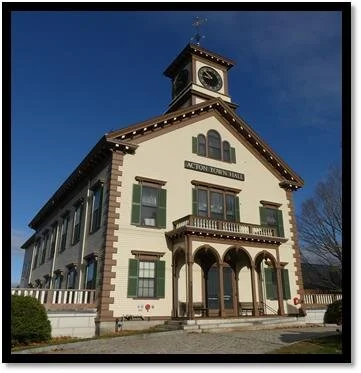
Acton Town Hall
Among the attractions of Acton, an affluent town northwest of Boston: The Discovery Museums, which are two separate science museums on the same site. The Children's Discovery Museum has exhibits for younger children, while the Science Discovery Museum focuses on older ones. The location is guarded by Bessie, the large dinosaur statue and museum mascot, in the front grounds.
Iron Work Farm: Settlement of South Acton; ‘'Iron Work Farm in Acton, Inc.'‘ is a non-profit, historical corporation that operates two historic houses: Jones Tavern and Faulkner House. Each is open to the public on the last Sunday of the month from May to October. The facilities are also open as part of the local Patriots' Day holiday observance each April (probably cancelled this year).
Hosmer House: This Revolutionary War-era home, owned and maintained by the Acton Historical Society, is typically open to the public on Patriots' Day, on Sept. 27 ('‘Crown Resistance Day’'), as well as on May 27 and June 24, from 2 to 4.

Children’s Discovery Museum, in Acton
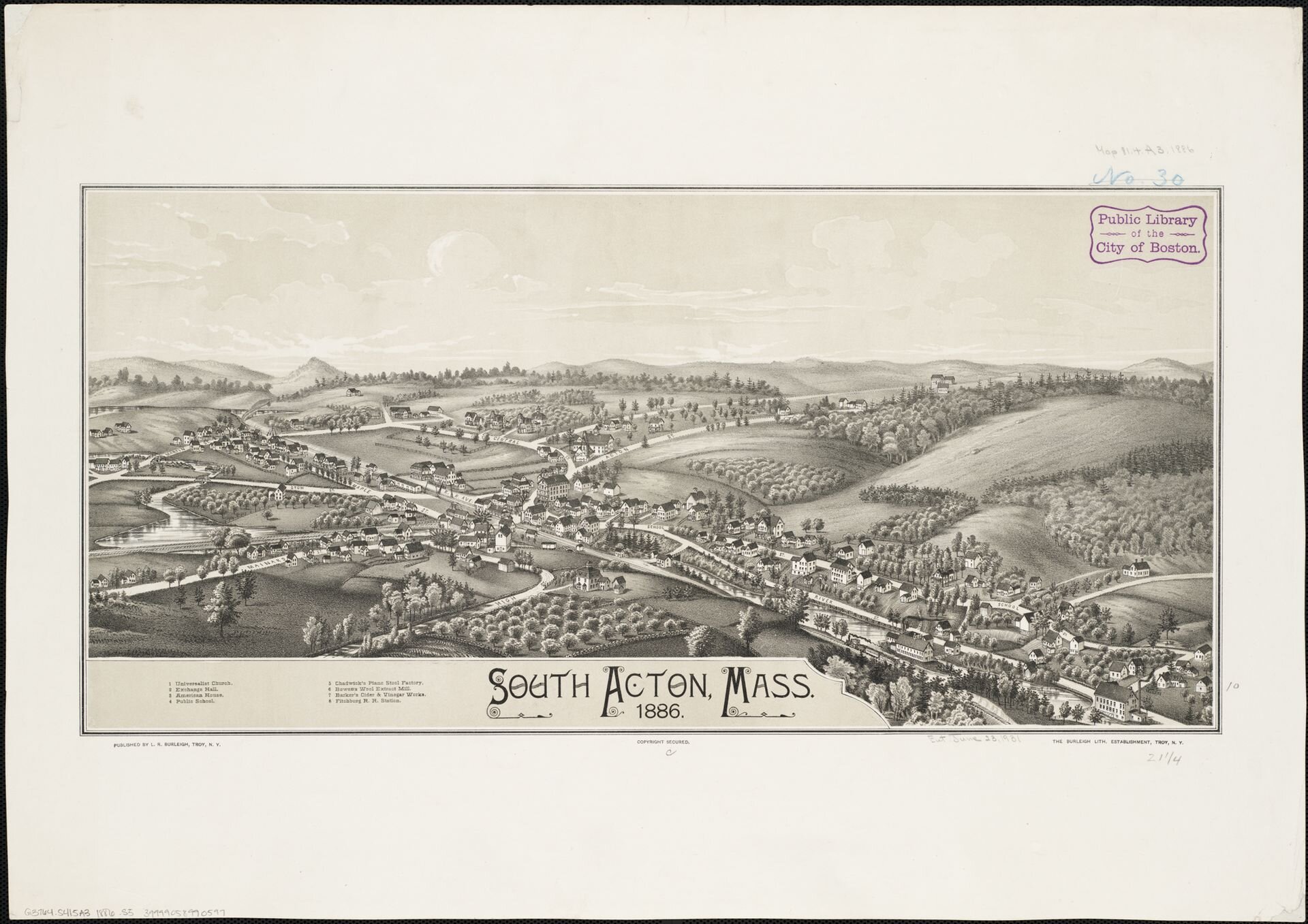
— Map by J.R. Burleigh
Green hell

“There are bogs and bogs but none to equal a Kennebec {Maine} spruce swamp. Whoever has walked in one will find the hot asphalt of Tophet {Hell} a pleasant lawn.’’
— From “Kennebec,’’ by Robert P. Tristram Coffin (1937)
'Grubs all day'

”….he screeches, this is my no-good, barren,
motel-infested spit of sand—on which
he neither toils or spins, but grubs all day
on webbed feet and clever back-hinged knees,
now skittishly sidestepping a gusty
piece of plastic blown against his legs,
hopping to get it off, now shaking it
once or twice to make sure it's worthless
before he turns his face to the wind,
letting it smooth those fine fractious feathers.’
— From “Gulls in the Wind,’’ by Betsy Sholl, a former Maine poet laureate
”…he screeches, this is my no-good, barren,
motel-infested spit of sand—on which
he neither toils or spins, but grubs all day
on webbed feet and clever back-hinged knees,
now skittishly sidestepping a gusty
piece of plastic blown against his legs,
hopping to get it off, now shaking it
once or twice to make sure it's worthless
before he turns his face to the wind,
letting it smooth those fine fractious feathers.’’
—From “Gulls in Wind, ‘‘ by Betsy Sholl
Can only be worn inside

“Intervisible,’’ installation (detail), (hand-dyed cotton batting, watercolor paper, thread, string), by Caroline Rufo, at Bromfield Gallery, Boston, through March 29.
Michael Zimmerman: Dying to protect Trump's ego

From OtherWords.org
My granddaughter’s school had planned a trip to Thailand.
Two things worried me. First, that she or her classmates might be exposed to or catch the coronavirus. Second, that if they did, President Trump would try his best to keep them from returning to the United States.
In my view, if any of them became sick, the first priority should be getting them home where they can have access to the best medical care. In Trump’s view, the first priority is to make things look good for him, no matter what happens to the people he’s stranded.
Therefore he fought having Americans who were stuck on the Grand Princess cruise ship off Japan return home to the United States. His concern? How the number of infected Americans would make him look. “I like the numbers being where they are,” he candidly (and shamelessly) explained.
National health professionals believe that COVID-19 is a serious threat. Every state that’s had an outbreak takes it seriously. So do cities, schools, event organizers, airlines, shipping companies, bus and train operators, museums, and businesses of all kinds — and not to mention the stock market.
Everyday life is changing across the country as millions of Americans adjust to the possible presence of the virus. But facing harsh realities isn’t in Trump’s skill set. “It’s going to all work out,” he assures us instead. “We have it under control. It’s going to be just fine.”
Indeed, he has gone so far as to call the coronavirus threat a “hoax.”
In Trump’s view, it’s all part of a great conspiracy to make him look bad. That real people might die if we fail to face the problem squarely — because no scientist believes COVID-19 is “under control” — doesn’t seem to count for much with him.
The idea that real scientists should guide our response to the pandemic is unacceptable to Trump, because who knows what they might say? Instead, he has made Vice President Mike Pence, a man with little experience in public health, the head of the coronavirus task force.
And consistent with Trump’s main priority — making sure that he looks good no matter what is really happening — U.S. government health officials and scientists have been barred from making public statements about the disease unless okayed by Pence’s office. This is called “controlling coronavirus messaging.”
In one recent instance of “controlled messaging,” the White House overruled a CDC recommendation that the elderly not fly on commercial airlines because of the virus. That would sound too much like there’s a crisis, and Trump is running for re-election on the assertion that everything is wonderful in our country, and it’s all thanks to him.\
Better that more seniors be put at risk of Covid-19 than that the virus be seen as a grave, unfolding danger.
Of course, this is not the only — and probably not the most serious example — of the lethal dangers flowing from Trump’s rejection of inconvenient science. That distinction rests with the other catastrophe Trump calls a “hoax,” climate change. But in either crisis, the worst is yet to come.
Perhaps my granddaughter’s school will cancel their trip. But Covid-19 is already here at home, and it’s not about to disappear just because Trump pretends everything will be “just fine.” She and all of us remain at risk wherever we may be.
Trump says that by April, “when it gets a little warmer,” the virus “miraculously goes away.” Waiting for a miracle when faced with a pandemic is not leadership — it’s insanity. But as long as Trump is in charge, praying for miracles might be the best we can hope for.
Mitchell Zimmerman is an attorney and author of Mississippi Reckoning, a thriller and historical novel about the death penalty and the civil rights movement.

The lack of ornamentation, or other breaks along the surface, on Boston’s 200 Clarendon Street (aka Hancock Tower) skyscraper here, the city’s tallest, is said to worsen the local wind-tunnel effect.
From Robert Whitcomb’s “Digital Diary,’’ in GoLocal24.com
What a nice feeling it is after a windy cold morning to feel the sun on your face after the wind drops off.
Boston is the windiest major city in the United States, partly because it’s on a stretch of ocean frequented by intense storms. The blasts sure hit you in the wind-tunnel effect in the mix of skyscrapers and much older buildings downtown, and in the growing but perhaps eventually imperiled-by-sea-level-rise Seaport District. Very off-putting. The wind-tunnel effect is serious enough that building codes and designs may have to be adjusted in downtown Boston. Architects and city planners are working on the problem. I love many skyscrapers but…
Call him provincial, but...

The Somerset Club, on Beacon Street, Boston, remains a center of Boston Brahmin life.
“Boston is a good place to live in, taken all in all. Probably the best place in this neurotic world, with the possible exception of London, although I am not even sure about this. At any rate, it is the only place I care to live in.
— From The Late George Apley, by John P. Marquand (1937). This novel in the form of a memoir is a satire of Boston Brahmin (WASP upper class) life in the first part of the 20th Century.