
The same old, cold day
“The waiting room was bright
and too hot. It was sliding
beneath a big black wave,
another, and another.
“Then I was back in it.
The War was on. Outside,
in Worcester, Massachusetts,
were night and slush and cold
and it was still the fifth
of February, 1918.’’
— From “In the Waiting Room,’’ by Elizabeth Bishop (1911-79)

Three deckers on Houghton Street, Worcester.
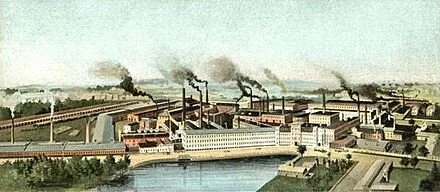
American Steel & Wire Company, c. 1905, employer of about 5,000 during Worcester’s industrial heyday.
We all swim in politics
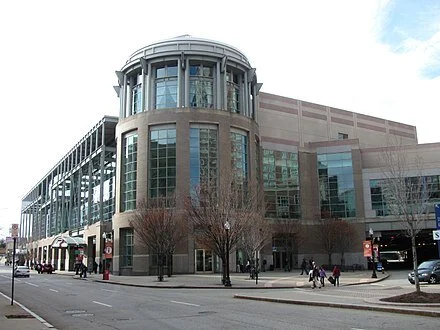
Rhode Island Convention Center
From Robert Whitcomb’s “Digital Diary,’’ in GoLocal24.com
With possible scandals swirling in and around the Rhode Island Convention Center – and such problems seem to eventually arise in every such facility -- we shouldn’t forget that having this attractive complex has been important in the revival of downtown Providence since the capacious facility was opened in 1993 during the visionary administration of the late Gov. Bruce Sundlun. For one thing, the building of the Convention Center led to a big increase in downtown hotel rooms, with all sorts of economic spinoffs, such as new restaurants. The only major drawback to its construction was that city’s main commercial inter-city bus terminal was moved from the Convention Center site to a depressing, wind-swept site on the edge of Providence, outside of walking distance for most people.
And yes, politics always enters into the running of facilities like the Convention Center. For that matter, politics (including nepotism) enters into the operations of pretty much all large organizations, in the public and private sectors. Much, maybe most, of human life is “politics’’.

'Inconsistencies of memory'
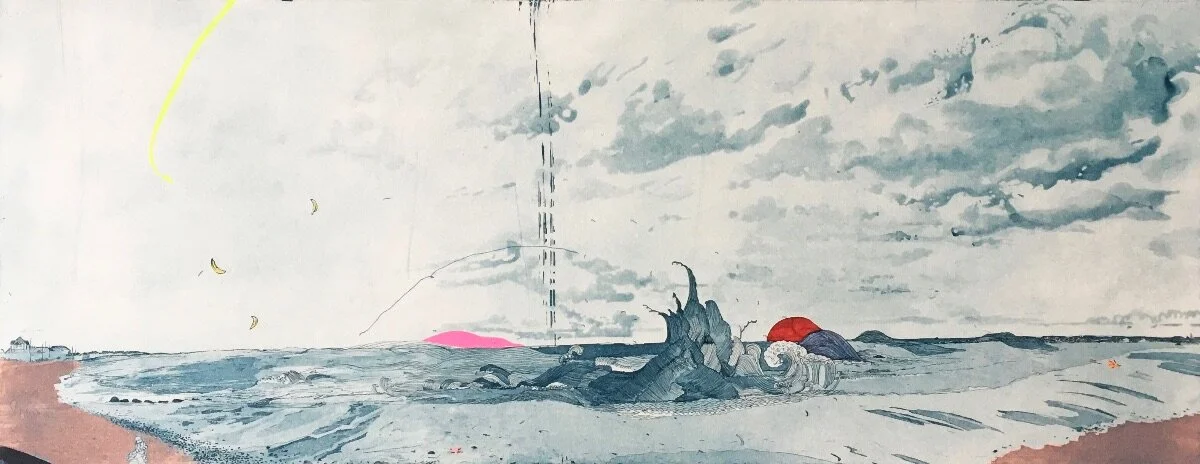
Work by Allison Bianco, in her show “Forget About It,’’ at Cade Tompkins Projects, Providence, May 9-July 31. The gallery says: “Allison Bianco is a printmaker who uses a combination of intaglio and screen print to depict landscapes diminished by massive oceans and infinite skies. Her vibrant prints explore nostalgia and inconsistencies of memory. ‘‘
'Joy shivers in the corner'
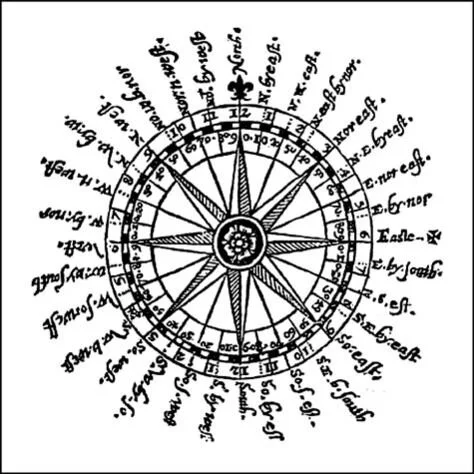
Here where the wind is always north-north-east
And children learn to walk on frozen toes,
Wonder begets an envy of all those
Who boil elsewhere with such a lyric yeast
Of love that you will hear them at a feast
Where demons would appeal for some repose,
Still clamoring where the chalice overflows
And crying wildest who have drunk the least.
Passion is here a soilure of the wits,
We're told, and Love a cross for them to bear;
Joy shivers in the corner where she knits
And Conscience always has the rocking-chair,
Cheerful as when she tortured into fits
The first cat that was ever killed by Care.
“New England,’’ by Edwin Arlington Robinson (1869-1935), a Maine native and winner of three Pulitzer Prizes for Poetry.
‘How in the hell did I wind up’ in Springfield?

In happier times? “View of Springfield, Massachusetts, on the Connecticut River,” c. 1840–45, by Thomas Chambers, in the Springfield Metropolitan Museum of Art.
“ route … brings me down and around to the city proper, a long, straight street in another country, with homemade shop signs in Spanish, blocks of Third World decay, citizens of many colors draped in windows, doorways, on corners, in parked cars, often with a look in their eyes that asks what you’re asking – is this right place, how in the hell did I wind up here?’’
-- John Edgar Wideman, on Springfield, Mass., in his 1994 memoir, Fartheralong
Chris Powell: Enough of Fotis, please, and cheaper housing needed in suburbs
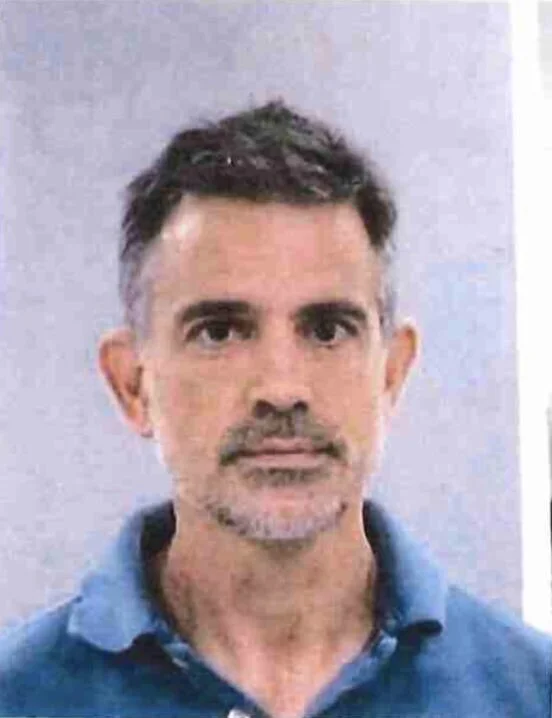
Fotis Dulos’s police booking photo
For eight months most television evening newscasts and newspaper front pages in Connecticut have highlighted the disappearance of Jennifer Dulos and the suspicion cast on her estranged husband, Fotis. Now Fotis has killed himself and Jennifer remains missing and presumed dead and her body may never be found. Yet the TV newscasts and the newspapers are still full of them. Why?
In the last few days it has been because of the jostling by relatives over the couple's mansion in Farmington. The couple's general estates may be contested as well, not just by relatives but also by bondsmen and even Fotis Dulos's lawyer, Norm Pattis, who imagines the state prosecuting Fotis's estate for murder to oblige the lawyer's wish to clear his late client's name -- or maybe just to keep the lawyer's meter running.
It is hard to see how news organization should consider Connecticut so interested in probate details that are not only without relevance to anything that matters but also without the horror, heartbreak, and prurience that sustained attention to the Dulos case for so long.
While the substantial wealth of the Duloses may have made the case more interesting, Connecticut remains horrifyingly full of domestic violence among people of all economic classes and ethnicities. Several such cases lately have involved illegal immigrants who should have been deported long before they killed their girlfriends or romantic rivals. News organizations pay little attention to seemingly ordinary domestic violence cases, though any of these cases might have more relevance to how Connecticut and the country operate than who ends up with the Dulos mansion.
xxx
For racial and economic class integration, Connecticut needs more inexpensive housing in its suburbs. Rising housing prices may seem great for those who already own their homes but they are bad for society generally, since housing is as much a necessity of life as food and electricity. Rising housing prices are less a sign of prosperity than of worsening economic inequality.
But government's sometimes awful operation of inexpensive housing is often why suburbs want no part of it, as the New Haven Independent inadvertently demonstrated the other day.
The newspaper told how city police officers had gone to a public housing project and bravely subdued a mentally ill man who threatened his wife with a knife and then brandished it at the officers, daring them to kill him. The police could have shot him but managed to disarm him short of that. He was taken by ambulance to a hospital.
It turned out that the man had caused a similar incident with a knife elsewhere in the city last year. In that one it took an hour for the cops to persuade him to put the knife down.
Since the state no longer operates institutions of confinement for the chronically mentally ill, except for those who have already killed someone, people like the chronic case in New Haven increasingly are placed not just in public housing projects and other subsidized units but also in projects meant for the frail elderly. So advocates of putting more such inexpensive housing in the suburbs should explain why anyone should want to live near chronic cases state government fails to handle properly.
One of the heroic cops in New Haven said he hoped that the mentally ill guy would get "the help he needs." It sounds wonderfully humane but that mentally ill guy is a chronic case precisely because "the help he needs" doesn't exist. The help society and his neighbors in New Haven need is protection from him. He'll be back soon.
Chris Powell is a columnist for the Journal Inquirer, in Manchester, Conn.
Raking it in at Harvard, Yale, etc.

The Harvard seal
Adapted from an item in Robert Whitcomb’s “Digital Diary’’ in GoLocal24.com
Consider the FBI’s arrest of Charles Lieber, chairman of Harvard University’s Chemistry Department, on charges of making false statements to the Defense Department and to Harvard investigators about his hugely lucrative participation in China's Thousand Talents Program, created by the Chinese government to strengthen China's scientific competitiveness. It’s a reminder of how much the Second Gilded Age money culture has infected academia. With multimillion-dollar payouts to football and basketball coaches and university presidents and huge paydays via outside contracts to professors in the sciences, engineering and business faculties, what had been a calling has been turned too often into a business, instead of a “vocation,’’ in this “nonprofit’’ sector.
And now the U.S. Department of Education is investigating Harvard, Yale and other elite universities for failing to disclose hundreds of millions of dollars in gifts and contracts from foreign donors. How much of this is an honest probe and how much is politically instigated by the fact that most of the leaders of these institutions and their professors oppose the Trump regime is unknown.
For more on Professor Lieber, please hit this link.
'Between intention and accident'

“Introvert” (archival pigment print), by Daniel Feldman, in show “Commotion,’’ at Bromfield Gallery, Boston, through March 1. The show features digital works in which, the gallery says, elements “vibrate between intention and accident.’’
Daniel Feldman, Introvert, 2018, archival pigment print, 36" x 29".
From February 5 through March 1, Bromfield Gallery presents "Commotion" by Daniel Feldman, digital works in which elements vibrate between intention and accident; and "Plus One," showcasing guest artists invited by Bromfield Gallery artists. The opening reception is Friday, February 7, from 6:00𔃆:30 p.m

Llewellyn King: Ditch your optimism: U.S. democracy is imperiled

We are an optimistic people. And in today's world, there's the rub.
By nature, we are sure that the extremes of any given time will be corrected as the political climate changes and elections bring in new players. The great ship of state will always get back on an even keel and the excesses, or omissions, of one administration will be corrected in the next.
Maybe not this time.
The norms uprooted by President Trump are possibly too many not to have left lasting damage to this Republic.
Consider just some of his transgressions:
· We have abandoned our place as the beacon of decency and the values enshrined in that.
· America's good name has gone up in smoke, as with the Paris climate agreement and the Intermediate-Range Nuclear forces (INF) treaty.
· The president has meddled in our judicial system by intimidating prosecutors and seeking to influence judges.
· The president has blown on the coals of prejudice and sanctioned racial antagonism.
But above all, Trump has tested the constitutional limits of presidential power and found that it can be expanded exponentially. He has expanded executive privilege to absolute power.
Trump has done this with the help of the pusillanimous members of the Senate and the oh-so-malleable Atty. Gen. William Barr – his new Roy Cohn.
The most pernicious of Trump’s enablers, the eminence grise behind the curtain, gets little attention. He is Rupert Murdoch, a man who has done a lot of good and incalculable harm.
The liberal media rails -- indeed enjoys -- railing against Fox News but has little to say about the 88-year-old proprietor who, with a single stroke, could silence Sean Hannity and tame Tucker Carlson (whom I know and like).
But Murdoch remains aloof and silent. The power of Fox is not its editorial slant but that it forms a malignant circle of harm. It is Trump’s daily source of news, endorsement, prejudice, and even names for revenge.
There are two other conservative networks, OAN and Newsmax. But neither has the flare that Fox has as a broadcast outlet, nor acts as the eyes and ears and adviser to the president.
I am an admirer of Murdoch in many ways. But like a president, maybe he should get a lot of scrutiny.
Murdoch’s newspapers in Australia, where they dominate, have rejected climate change, and possibly played a role in the country not being prepared for the terrible wildfires.
In Britain, he has stirred feeling against the European Union for decades. His Sun, the largest circulation paper, is Fox News in print and was probably the template for Fox having campaigned ceaselessly and vulgarly against Europe.
After long years of watching Murdoch in Britain and here, I know the damage he can do and why he should be named. I must say, though, that Murdoch's Wall Street Journal is a fine newspaper, better than before he bought it.
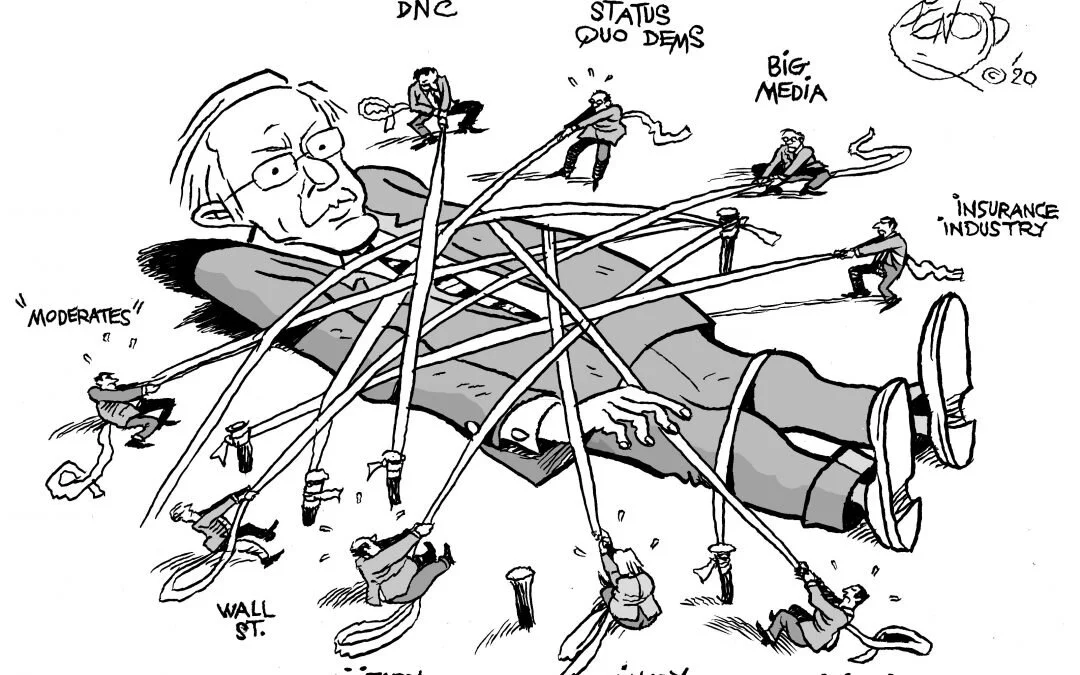
The Democrats, to my mind, present a sorry resistance. None of their presidential candidates has delivered a speech of vision, capturing the popular imagination.
Democrats search the news for the latest Trumpian transgressions and get a kind of comfort by seeing, by their lights, how terrible he is. But there is none of the old confidence that the president will be trounced in the next election and the ship of state will right itself because it always does.=
Maybe it will list more.
Llewellyn King is executive producer and host of White House Chronicle, on PBS. His email is llewellynking1@gmail.com. He is based in Rhode Island and Washington, D.C.
Will entertain for food
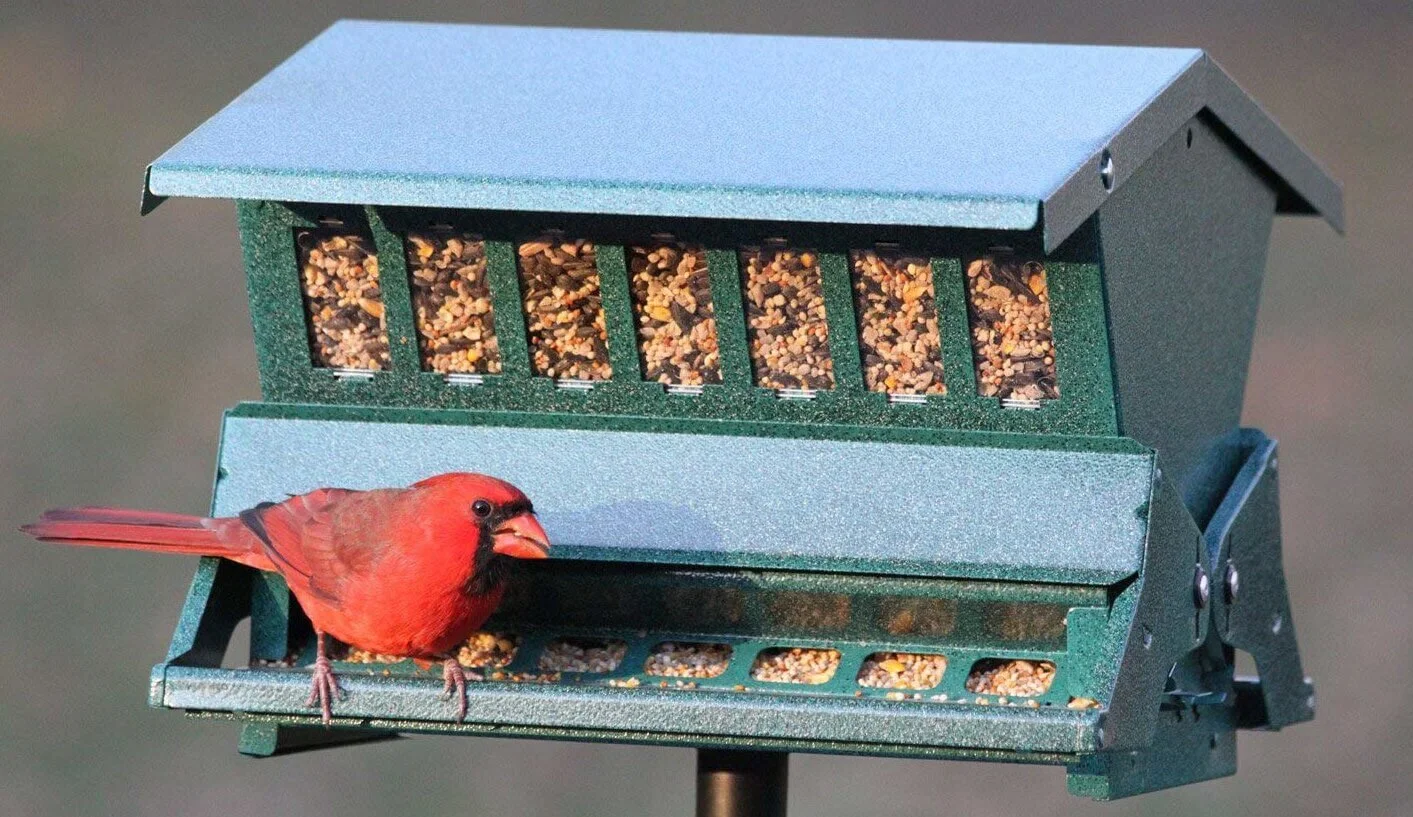
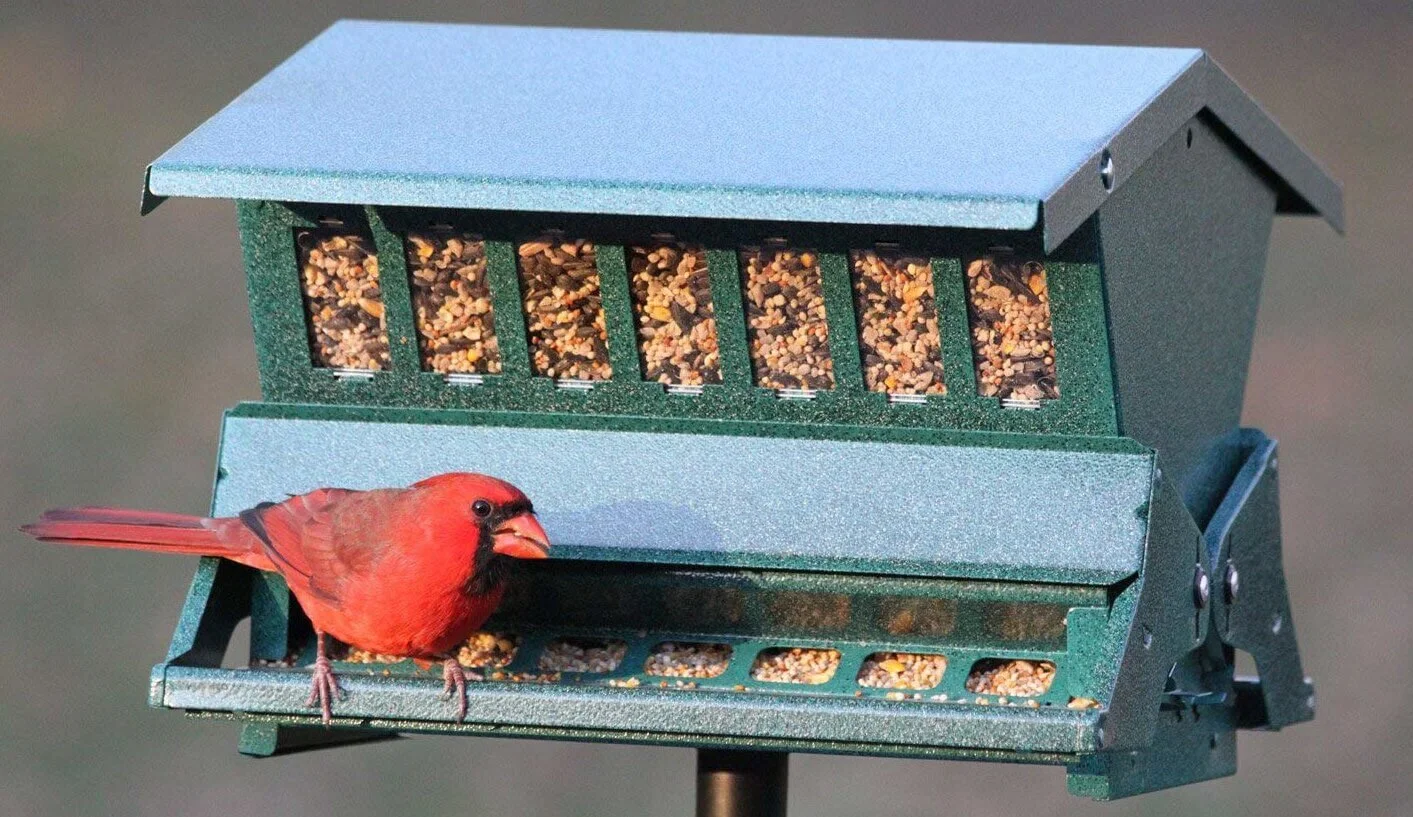
The Absolute II Cardinal Bird Feeder
From Robert Whitcomb’s “Digital Diary’’ in GoLocal24.com
This winter, I’d like one big nightime snowstorm, preferably with high winds (creating gorgeous drifts) and silent lightning, in which one could tramp along the roads in muffled magic. No traffic. Then, bright and early the next day, I’d like all the snow to evaporate in an hour, without congealing into a frozen mess, and the crocuses to commence popping. But wait! We’re better off letting the snow melt gradually into the water table
We fill bird feeders in the winter not so much to feed the birds per se as to bring them close to us so we can enjoy their colors (e.g., cardinals) and movement, to strengthen our sense that we’re part of Mother Nature and to tell ourselves we’re helping to keep beautiful creatures alive, as marginal as are the benefits of bird feeders. (Keeping cats indoors, where they can’t kill birds, is better.)
Our day after day of clammy, cloudy days, in the 40s, recall London. It makes one want to pull down a long Dickens or Trollope novel, pour a Guinness Stout and throw some coal on the fire.
xxx
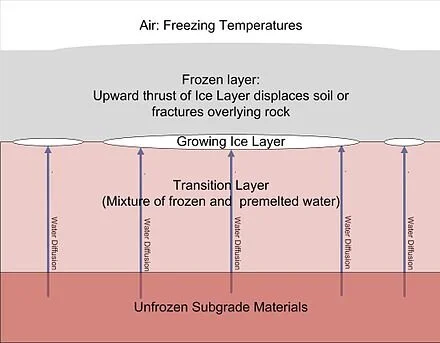
We’re in frost-heave season. That reminds me to write that mixing regular asphalt with crumb rubber made from recycled tires both reduces frost heaves –and thus the expense of road repair – and cuts road noise. It also increases skid resistance. Perfect for New England.
Boost for Maine's innovation economy
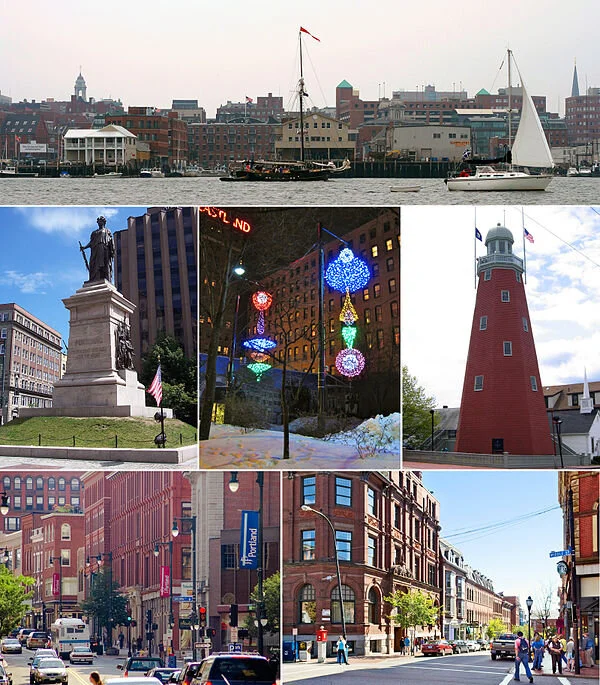
Collage of Portland scenes from Wikipedia
The New England Council’s (newenglandcoincil.com) comments on Northeastern University’s plan to use a $100 million gift to open a new research institute in Portland:
“The new center, named the Roux Institute after its benefactors David and Barbara Roux, will focus on the application of artificial intelligence and machine learning in the digital and life sciences. Citing the Boston-based university as ‘an elite university that’s not elitist,’ Roux selected Northeastern after a two-year search for the right fit to lead the institute. The new campus will offer graduate degrees and certificate programs in order to help create a tech hub in the largest city in Maine. Additionally, the Roux Institute will feature partnerships with leading employers in Maine and across the country. The move highlights Northeastern’s continuing expansion, with regional campuses in Charlotte, San Francisco, Seattle, Toronto, and London already established by the university in recent years.
“‘The Roux Institute at Northeastern University brings a new vision, critical investment and proven research capacity to the Portland region,’ said Dannel Malloy, University of Maine system chancellor. ‘It can be a game-changer for Maine’s participation in the innovation economy and create new opportunities for Maine’s students and entrepreneurs.’’’
“Because Northeastern’s new campus will offer only graduate programs, it won’t be directly competing with many of Maine’s higher education institutions, according to Malloy. The new venture can, however, provide both school systems with a potential new influx of students and opportunities for joint programs and fellowships between them, Malloy said. A rural state with an aging population, Maine has subsequently been facing enrollment challenges in higher education; the Roux Institute is a bet that the new Portland research institute can change that.
“‘The impact of the Roux Institute will reverberate across the region for generations to come. It will serve as a national model for expanding growth and innovation, and reducing inequality,’ Northeastern President Joseph E. Aoun said.’’
Keep it plain, please

“Pilgrims Going to Church ,” by George Henry Boughton (1867)
“Down to the Puritan marrow of my bones
There’s something in this richness that I hate.
I love the look, austere, immaculate,
Of landscapes drawn in pearly monotones.’’
— From “Puritan Sonnet,’’ by Elinor Wylie (1885-1928)
Leap year at the Chazan Gallery

“Total Lunar Eclipse November 8, 2003 “ (photo), by Robert Horton, in the group show “Intercalary Event 2020,’’ at the Chazan Gallery at the Wheeler School, Providence, Feb. 13 through March 4. Robert Horton grinds and polishes optics for telescopes and has spent over 40 years photographing the night sky.
The gallery notes:
”An 'intercalary event’ refers to a day or month inserted into a calendar to allow said calendar to align with the solar year. Feb. 29, more often known as Leap Day, is a intercalary event that will be occurring this year.
“Intercalary Event 2020” shows the artwork of, besides Mr. Horton, Katie Bullock, Sean Salstrom and Jocelyne Prince.
Tim Faulkner: Future of region's fossil-fuel plants looks shakier

From ecoRI News (ecori.org)
The latest auction price for the ISO New England electricity contracts dropped to a historic low, signaling an uncertain future for power plants that run on fossil fuels.
The cost of $2 per kilowatt-month marks the steady decline of wholesale electricity since it reached a peak of $17.73 per unit in 2015. The price has been in free fall ever since, dropping to $4.63 in 2018 and $3.80 per unit last year.
Rhode Islanders learned about forward capacity auctions during the contentious permitting hearings for the Clear River Energy Center (CREC) proposed for the woods of Burrillville. In 2016, the developer, Invenergy Thermal Development LLC, was awarded an electricity purchase agreement from ISO New England for $7.03.
The capacity supply obligation, or CSO, became a point of debate as Invenergy argued that earning the contract from ISO New England proved the power plant was vital to the region’s energy needs and therefore the project deserved a license to operate.
However, the CSO was awarded to only one of CREC’s two proposed electricity generation units. Project opponents argued that the limited CSO proved that only a portion of the power plant had a place in the regional electric grid and therefore the project was too large to approve.
Invenergy argued that it could still sell the electricity from the second power unit on the open market and earn a profit.
But the Chicago-based company was no doubt in a bind because reducing the size of the project from two power units to one would require a new application, an expensive and time-consuming process.
Problems over cooling water and other setbacks in the application proceedings forced Invenergy to sell its CSO capacity during the years the energy facility was supposed to be producing power. The delays prompted ISO New England to suspend Invenergy from participating in the CSO auctions for its second power unit. In 2018, Invenergy was dealt another blow, when ISO New England rescinded the first CSO contract.
All the while, the CSO unit prices continued to drop as electricity capacity grew and demand held steady, due in part to the success of energy-efficiency programs and new renewable-energy projects feeding into the regional power grid.
The falling auction unit price gave CREC opponents further conviction that the fossil-fuel project was redundant. This reasoning was part of the argument the state Energy Facility Siting Board used to ultimately reject the CREC application in June 2019.
ISO New England, the operator of the six-state power grid, also forecasts energy needs and trends for the region. The nonprofit sees the drop in CSO price as a win for ratepayers.
“New England’s competitive wholesale electricity markets are producing record low prices, delivering unmistakable economic benefits for consumers in the six-state region,” said Robert Ethier, ISO New England’s vice president for system planning.
The pricing also reflects the growing flow of renewable energy into the grid. Of the some 600 megawatts of new electricity approved in the auction, 317 were from land-based and offshore wind, solar, and solar paired with batteries.
Behind-the-meter solar is also reducing demand for utility-scale power. According to the U.S. Energy Information Administration, New England added 493 megawatts of rooftop solar last year.
“This is good news for consumers all over New England,” said Bill Eccleston, a former activist against the Invenergy power plant. The lower auction price “also contradicts the propaganda that we need to be building more fossil-fuel power plants.”
“There’s a glut of (electricity) supply on the market,” said Jerry Elmer, senior attorney for the Conservation Law Foundation (CLF).
Elmer and CLF opposed the Burrillville proposal and as intervenors argued before the EFSB. Elmer and CLF staff are steeped in local energy markets because they serve on ISO New England’s working committees.
“The big lesson there is there no need for new fossil fuel plants and I don't think you’ll see any in the near future,” Elmer said.
New Connecticut solar facility to benefit Ocean State
Rhode Island is fulfilling one of its renewable-energy goals by acquiring power from a Connecticut solar facility.
To help reach 1,000 megawatts of renewable power by 2020, the state is making another deal with New York City-based hedge fund D. E. Shaw & Co. In 2008, D. E. Shaw was the financial backer of Deepwater Wind, the Providence-based developer that won the contract to build the Block Island Wind Farm.
D. E. Shaw sold Deepwater Wind to Danish energy company Ørsted in October 2018 for $510 million.
This time, D. E. Shaw Renewable Investments, a division of D. E. Shaw, has won a contract for a 50-megawatt solar facility at a gravel mine in East Windsor, Conn. The state will not release the precise location of the project, called Gravel Pit Solar II LLC.
Without offering specifics, D. E. Shaw has offered to pay $300,000 for renewable-energy workforce development in Rhode Island.
Although it’s promoted by the state as a deal for Rhode Island’s three electric utilities, the agreement awards 99 percent of the energy generated to National Grid. The remaining 1 percent, or 0.5 megawatts, is credited to the Pascoag Utility District and the Block Island Utility District.
The 20-year contract must be reviewed and approved by Rhode Island’s Public Utilities Commission.
National Grid is asking the state to buy renewable-energy credits (RECs) for 5.3 cents per kilowatt-hour. By comparison, the state is paying between 24 and 50 cents per kilowatt-hour for electricity from the 30-megawatt Block Island Wind Farm.
National Grid selected D. E. Shaw from 41 bids. The Rhode Island Office of Energy Resources and the Rhode Island Division of Public Utilities and Carriers served as advisors for the selection process. Of the 19 projects that offered to sell the electricity below market rates, none were based in Rhode Island.
Ratepayers are expected to pay $30.8 million for the electricity over 20 years. Based on energy price forecasting models, ratepayers will save $101 million over the term of the contract.
Gravel Pit Solar II LLC is expected to be commercially operational by March 31, 2023. More details of the project can be found in the PUC docket. The proposed ground-mounted solar facility is estimated to displace 41,000 tons of carbon dioxide annually.
Ferry funds
Rhode Island Fast Ferry Inc. recently received up to $30,000 from the Rhode Island Commerce Corporation to expand its offshore wind shuttle services at the Port of Quonset and along the East Coast.
The grant pays for costs associated with acquiring permits from the Coastal Resources Management Council, the Rhode Island Department of Environmental Management, and the Army Corps of Engineers.
Tim Faulkner is an ecoRI News journalist.
Proper places for gossip
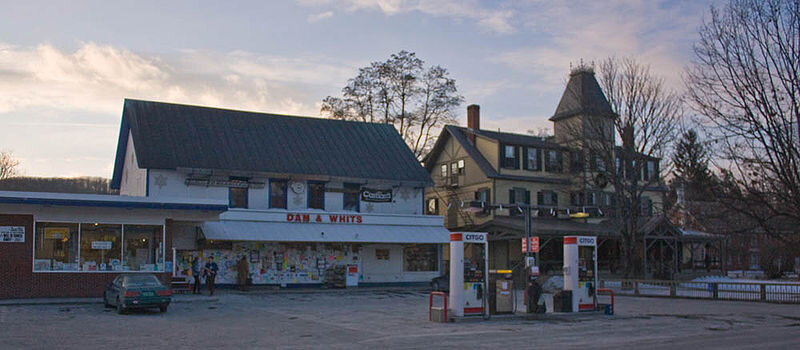
Dan & Whit’s general store, in Norwich. Vt. It’s one of the rural area’s best known meeting places.
“I see no truth at all in the myth that rural New Englanders are taciturn — they love gossip as well as anyone I ever knew — the talk takes place mostly on neutral ground: in stores and barnyards, at auctions and church suppers. Your home is private”
— From The Amateur Sugar Maker (1973), by Noel Perrin
Emotional storm

“I’m your natural disaster, your
rush of water and salt,
your last light on the rocks
as the sun disappears
and the electric air moves in.’’
— From “Storm,’’ by Jennifer Bates, inspired by “Storm after Approaching Storm: Beach near Newport,’’ by Martin Johnson Heade — above
Trying to get Green Airport up to speed
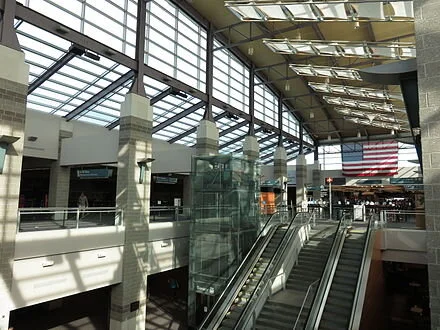
In Green Airport ‘s terminal
From Robert Whitcomb’s “Digital Diary,’’ in GoLocal24.com
In other travel news, T.F. Green Airport has seen declines in passenger traffic and has lost service that had been provided by several airlines in the past couple of years. That’s in part because of the grounding of the Boeing 737 Max, an airplane particularly efficient for small and medium-size airports.
Depressingly, except for flights to Toronto, Green no longer has international flights; nor does it yet have nonstop service to the West Coast. The big growth potential once seen in the longer Green runway built, after far too long a delay because of Warwick nimbyism/local politics, to lure bigger planes to serve these distant places, is still unfulfilled.
But part of the problem is simply marketing. Too few travelers know how pleasant and convenient Green is. Far too few people realize that Green is usually far easier to use for those traveling to all of southeastern New England than is Logan International Airport, in often gridlocked Boston. Or that there’s an MBTA station to serve Green, which is right off Route 95, the main street of the East Coast. Green should also be more heavily promoted as an entry point for Cape Cod and the Islands, and even for eastern Long Island, via the New London-Orient Point ferry. And Rhode Island has a large college-student population, many of whom come from outside New England. Can Green’s charm and conveniences be better promoted to them? And shouldn’t the name be changed to something more likely to draw travelers? New England International Airport? Southern New England International Airport? As with Connecticut’s Bradley International Airport, it’s important to get “International’’ in there.
I don’t think I’d use “Rhode Island’’ in the name – too many from far away confuse it with Long Island – or Providence – too many confuse it with Provincetown.
Given the density of population in its current and potential markets and its companies and institutions (including the Navy complex on Aquidneck Island) with national and global interests, Green, not Bradley, should be the second-biggest airport in New England, after Logan.
'We do not need'
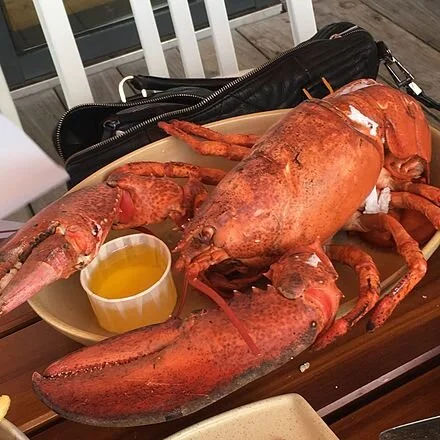
“The hunger for exotic things
For things we do not need
We coldly take the little lives
Our taste buds supersede.’’
From “The Fresh New England Lobster,’’ by Jeffrey Tillery
The blinding light from Robert Frost
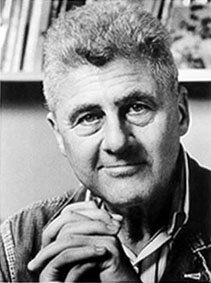
Howard Nemerov
“When Robert Frost was alive, I was known as the other New England poet, which is to be barely known at all.’’
— Howard Nemerov (1920-91)