
Don Pesci: The state of Lamont's state
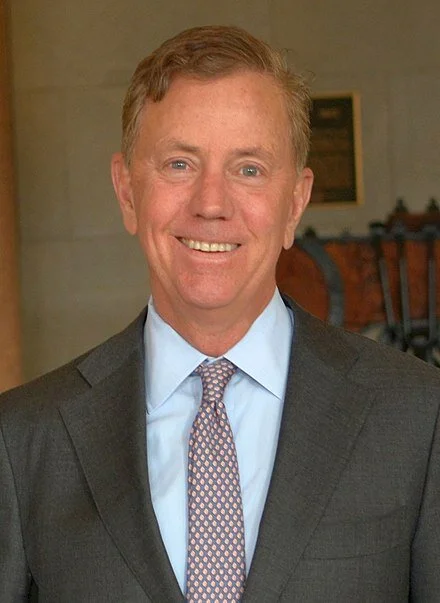
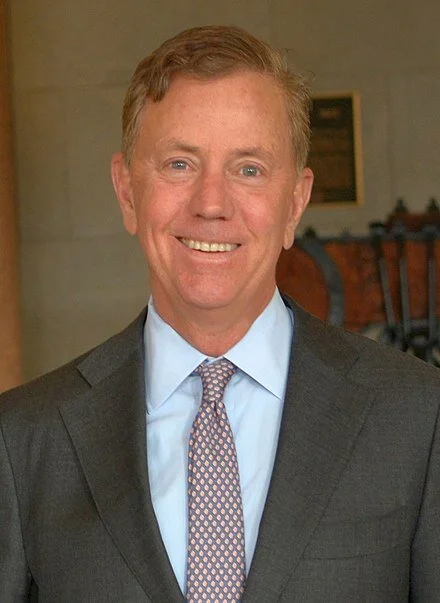
Connecticut Gov. Ned Lamont delivered his second State of the State address on Feb. 5 to a General Assembly bulging with eupeptic progressives. Democrats have been in charge of the budget-writing General Assembly for the last few decades. It is true in Connecticut, as elsewhere in the nation, that the governor proposes budgets to the legislature, but it is the legislature that disposes of budgets, usually in close consultation with governors of the same party.
Lamont’s State of the State address was launched two days after President Trump delivered before a bitterly divided Congress his State of the Union address. Trump failed to shake House Speaker Nancy Pelosi’s proffered hand at the beginning of the hostilities, and Nancy Pelosi ripped up the presidentially signed address at the end of the hostilities, which show no sign of abating.
The handshake has an interesting history. It developed in 5th Century Greece as a means of indicating non-hostile relations. An empty, outstretched hand offered in greeting showed that the greeter was unarmed. In the Middle Ages, a vigorous handshake was deployed to shake from loose clothing any concealed weaponry.
Pelosi’s quickly withdrawn outstretched hand concealed no dagger because the downward thrust of the Democrat’s impeachment bill was still to be deflected by Republicans. It is uncertain that the end of the process, a dismissal of the bill of impeachment by the Republican controlled Senate, will end attempts by Democrats to force Trump from office and so symbolically repeal the president’s 2016 election victory over an aggrieved Hillary Clinton. Pretty much everyone, including Trump, thinks the Democrats will be back at the same corner, should Trump win re-election, hawking the same impeachment elixir.
In Connecticut, there is no such deadly animosity between Democrats and Republicans, possibly because Democrats have been ruling the roost in the General Assembly for a good long while, longer than the young college age progressives in the state, many of whom are working feverishly to elevate to the White House the nation’s first socialist president, have been alive. Familiarity with the run of things does not breed contempt among Connecticut Republicans; it breeds familiarity. Over long periods, the creaking and worn back benches begin to feel like plush divans. Republicans in the state have never known how to campaign. Elections in the northeast are won on social rather than economic issues.
Democratic leader of the Senate Martin Looney liked the tone of the State of the State address – upbeat. And Democrat leader in the House Joe Arisimowicz thrilled to Lamont’s optimism. “I loved the idea of being the champions of Connecticut,” he said. “At some level, we all raise our hand and take an oath of office and we’re going to not only observe the Constitution but we’re going to act in the taxpayers’ behalf. And every time that you say that you can’t trust government, that’s a direct slap at the people’s trust in the government. We need to be out there and start talking positively about Connecticut.”
If majority Democrats were to board a CTFasttrack bus to Hell, the trip down would be considerably relieved with Lamont as the Devil’s co-pilot. He has a way of triumphing through shear exuberance over the most depressing news by inflating himself with gobs of optimism. Three years ago, Lamont noted, the Wall Street Journal was asking, “What’s the matter with Connecticut?” But today, after Lamont jaw-jawed the opinion editors of the Journal, the paper had changed its tone – “The state has dug a deep hole--maybe it has now stopped digging.”
Lamont’s enthusiasm, we are told by CTMirror, “was briefly rewarded with a bipartisan standing ovation. “The rest of the country is looking at our state in a new light — so should you. Optimism is contagious!” Lamont intoned.
But the hole cannot be conjured away through eupeptic incantations. The way UP is the same as the way DOWN – only in reverse. And there is no indication in Lamont’s directional map that the drivers, at long last, have got the message. If high taxes, burdensome regulations and the renting out to unelected commissions of the constitutional getting and spending obligations of the greatest deliberative body in the state point downwards, then way up is plain. Reverse everything – control runaway spending, moderate destructive ambitions, withdraw the crushing tentacles of state management from a creative and independent marketplace, discontinue investing in failed processes and invest in successful governance -- and Connecticut will begin to revive. It will stop digging its own grave.
Don Pesci is a Vernon, Conn.-based columnist.
Llewellyn King: If only Trump had a dog

Collage from Wikipedia
How different President Trump’s State of the Union speech would’ve been had he included something like this: “At the White House, we are overjoyed at the arrival of a new friend and counselor, Lancelot, a stray from a Washington animal shelter.”
He could, of course, have gone on about what a joy the dog would be to his 13-year-old son Barron; how the boy could learn about perfect love, forgiving adoration, uncritical companionship and eternal job approval -- things otherwise missing from the political upbringing and life in Washington.
But Trump didn’t. He didn’t care about all the wonders that enter a human life when four feet come through the door, intent on forever residence.
Barron won’t know those wonders. And the president won’t get the one-issue dog voters.
Trump has said that he’s too busy to have a dog. Well, having watched presidential dogs from Richard Nixon’s King Timahoe, an Irish Setter, to the hypoallergenic Portuguese Water Dogs favored by the Obamas, I can attest there’s help aplenty at the White House for a dog. They needn’t inhibit an arduous golf schedule. They’re always the darlings of the media, the Secret Service and pro-pet cabinet members and dignitaries. Queen Elizabeth used to get though meetings with people she had nothing in common with otherwise with a few words about her Welsh Corgis.
Trump’s doglessness is, in my view, a cold heart problem. How he could’ve warmed his self-aggrandizing State of the Union speech with a line or two about a dog. Dogs are so humbling: It’s hard to be pompous when cleaning up after a puppy accident.
Clearly Trump’s love of Trump is so compleat there’s no room for a bundle of furry joy in his heart, filled as it is with self-regard.
In our house, Valentine’s Day is Dog Day. My wife Linda Gasparello says Feb. 14 is the birthday of all dogs with no known day of birth. Love, you see.
It all began because one Valentine’s Day, I gave her a shelter dog of uncertain age and parentage. She had some German Shepherd in her, definitely some Airedale terrier, and a pinch of this and dash of that.
What she had was a deep commitment to taking over running the house and stable -- and disciplining our Siberian Husky. Her love and loyalty were total: Even when she was old and arthritis had slowed her, as it does so many dogs, she would drag herself up the staircase to sleep in our bedroom.
We named her Valentine, although the shelter workers in Leesburg, Va., told me the family who turned her in named her Gal. She was no gal. She was a dame, made to preside.
Of the many dogs we’ve had, I believe Valentine was the cleverest. She thought and she worried. The cure for her anxieties was routine and order; things in their places and activities at given times, like going on a hack or hosting a dinner party. Whenever she would hear Linda speaking on our PBS program “White House Chronicle,” turned on in the living room, and speaking at the same time in the kitchen, she was distraught: This couldn’t be. She ran to Linda in the kitchen to be assured and back into the living room to be unassured, and back again into the kitchen, deeply upset that someone could be in two places at the same time.
To go through life without a dog, a Valentine of your own, is to miss one of the great dimensions of love: that between dog and owner, although it’s debatable who owns whom. Valentine owned us.
So, The Donald has no dog and the White House is, in that sense, incompletely furnished. No great bounding down the driveway to meet visitors coming through the Northwest Gate (where reporters enter too), no conversation starter with heads of state, and no care for the Dogs Come First voters.
Of course, there are those, like House Speaker Nancy Pelosi, who hope that come November, Trump will need a dog: a comfort dog.
Llewellyn King is executive producer and host of White House Chronicle, on PBS. His email is llewellynking1@gmail.com. He’s based in Rhode Island and Washington, D.C.
'My silence ... their music'

I saw the civil sun drying earth’s tears —
Her tears of joy that only faster flowed,
Fain would I stretch me by the highway side,
To thaw and trickle with the melting snow,
That mingled soul and body with the tide,
I too may through the pores of nature flow.
But I alas nor tinkle can nor fume,
One jot to forward the great work of Time,
‘Tis mine to hearken while these ply the loom,
So shall my silence with their music chime.
— “The Thaw,’’ by Henry David Thoreau (1817-1862)
Betting on soccer's future

From Robert Whitcomb’s “Digital Diary,’’ in GoLocal24.com
It’s important to remember that Fortuitous Partners’ plan to build a soccer stadium as a key part of a $400 million mixed-use project is not necessarily based on the current audience for soccer in southeastern New England as much as where it might be in five or ten years. While Major League Baseball’s audience has been slipping, professional soccer is clearly growing, and various factors, including the love of soccer in various national and ethnic groups, make this growth likely to continue or even accelerate. It is, after all, the leading world sport.
xxx
The Worcester Business Journal reports that more that over half of that city’s renters want to move to another city. Quoting Renter Migration Report, it cited Boston, at 43 percent, as the top destination for Worcester refugees. Providence – embarrassingly? -- came in a very distant second, at 4.3 percent, and the old mill town of Norwich, Conn., at 4.2 percent. Ah, the magnetism of New England’s only world city! But maybe the WooSox will hold back a few of these dissatisfied residents.
Love before and since the digital era started

“Unrequited Love 2,’’ by Jeroen Nelemans, in the show “Love Letters,’’ at Helen Day Art Center, in the famous ski town of Stowe, Vt., through April 18.
”’Love Letters’ celebrates love and relationships through the lens of the digital era, contrasting the works of artists working before it began with those of artists working currently,’’ says the gallery.

The Trapp Family Lodge , in Stowe. The Trapps are the family that The Sound of Music is based on.
— Photo by Royalbroil

Mount Mansfield, Vermont’s highest mountain and the primary ski area for Stowe.

In downtown Stowe
— Photo by Dudesleeper

Shefali Luthra: Single-payer health insurance looks good to this Providence restaurant owner, some other small-business people

In Big King
PROVIDENCE
Last winter, James Mark was a 2018 James Beard Award finalist. A few months later, both GQ and Bon Appétit ranked Big King, his newest Rhode Island restaurant, as one of the country’s best places to eat.
But in 2018, the chef and restaurateur spent almost double his personal income on health insurance for his employees: $54,000 to cover a dozen or so people, compared with the $35,000 he paid himself.
Mark spends most of his time at the self-identified “small and strange” Big King, his experimental Asian restaurant on Providence’s trendy West Side, where the handwritten menu changes daily. At downtown’s Dean Hotel, he runs the small cocktail bar and the no-reservations North, which serves dishes like smoked shiitake ice cream and crab and fried kabocha with pumpkin miso. He employs fewer than 50 people, so he isn’t required to provide health benefits. But he thinks it helps with staff retention and is the right thing to do.
After all, if a sous-chef needed an emergency appendectomy, the bill without insurance could be financially devastating. A health benefit, he said, is crucial to treating his employees’ jobs as “viable long-term work.”
That’s why Mark, who studied at nearby Johnson & Wales University and trained in restaurants both here and in New York City, has joined a growing chorus of small-business owners to support “Medicare for All” or some type of government-sponsored universal health plan.
The beef is not just about the financial burden. “I could make a lot more money if I didn’t have to pay that,” he said from Big King, a narrow eating space where bottles of golden Japanese whisky and clear sake glimmer against the dark wood paneling. It’s also the confounding choices and hours of administration for which Mark feels, at best, underqualified. Though he tries to pick a good option, he reflected: “I have no idea if it’s a good [health] plan or a bad plan, in comparison to everything else.”
While industry groups have largely opposed the idea of a single-payer system, worrying it would mean tax hikes, some individual owners are increasingly open to the idea. Big companies can hire benefits consultants and managers who arrange and administer employee insurance. Owners of small businesses and restaurants might otherwise decide to let employees fend for themselves.
Mark — and others of his ilk — conclude they would accept higher taxes if the government would take over the herculean task of insuring their workers.
As premiums and health costs rise, the broader industry seems to be eyeing the option with a mix of new curiosity and old concerns.
The National Restaurant Association, for instance, opposed the Affordable Care Act and other Democratic reform efforts that were less sweeping than the single-payer approach but did require employers with 50 or more workers to offer insurance. Today, the trade group doesn’t have a specific stance on Medicare for All, though a spokesperson pointed to concerns about the eventual tax burden its members could face.
The National Federation of Independent Business, a Washington, D.C.-based advocacy organization that represents small-business owners, offered similar worries about the tax hikes likely paired with this system. An internal survey of NFIB members showed 75% opposed single-payer, often citing payroll tax increases as their concern.
Aaron Frazier, the National Restaurant Association spokesperson, suggested that members could get a better health insurance deal by using the organization’s association health plan, which is collectively negotiated by the trade group.
Association health plans — a longtime favorite Republican concept — are a cornerstone of the current White House’s health policy. But they remain controversial and are often held to less stringent coverage standards than other forms of insurance since they may have caps on coverage spending and may not cover some of the Affordable Care Act’s “essential benefits,” such as maternity care and prescription drugs.
A middle ground, proposed by many of the Democratic presidential candidates, might be a “public option,” a government-run health plan that individuals — or their employers — could pay to join if they didn’t like their other options.
That approach could still “go a long way” in addressing some of the concerns restaurant owners outlined, said Linda Blumberg, a health policy fellow at the Urban Institute, a Washington think tank.
The way the Bureau of Labor Statistics tracks health coverage among service-industry workers makes it impossible to determine how many small restaurants offer health insurance to their employees.
Those that do usually face a hefty expense and hours navigating the byzantine world of health insurance.
“It was a lot of bureaucratic stuff that I didn’t really understand. My focus is in the kitchen,” said Richard Wall, who owns Both Ways Café and Catering, in Seattle. He hired a broker but reviewed only a few plans before picking one to offer employees. The process was “confusing.”
On the 2020 campaign trail, presidential candidates Bernie Sanders and Elizabeth Warren talk about how their plans would replace the current, private insurance system with a single, government-run program. Their proposed systems would eliminate most cost sharing, so patients pay very little out-of-pocket, and would be financed through taxes. Warren, a Massachusetts senator, would implement her plan through two legislative steps, while Vermont’s Sanders would do so in one.
Rather than focusing on these details, these restaurateurs emphasized the result: having the government step in and guarantee coverage to everyone.
“We would all, everyone involved, be positively affected,” argued Daniel Myers, who co-owns Loyal Nine, a spacious cafe by day and restaurant by night, in Cambridge, Mass.
Loyal Nine insures about a dozen employees, who must meet a $3,000 deductible before coverage kicks in. It also employs fewer than 50 people. But, Myers argued, subsidizing coverage makes sense. Employees are more likely to stay because of health insurance.
Take Jen Wittlin, who manages Providence’s Dean Bar and has worked on and off with Mark since 2012. Health insurance is non-negotiable. She previously had medullary thyroid cancer and needs daily medication and regular endocrinology checkups.
“I didn’t have the option of working somewhere that didn’t offer health care,” she said.
Before realizing that Mark would subsidize insurance, she worked at North but also had a full-time gig at the YMCA, to access its employer-sponsored health care. Upon learning about Mark’s health benefit, she said, she quit her second job.
“People are forced to sacrifice their creative abilities and go into corporate positions because those are guaranteed benefits,” she said. “To have it paid for! That’s the lure of this place.”
It’s a big expense, though. Myers estimates 10% of his payroll goes to health care. His business is too small to bargain with the insurance company. So each year, the price goes up. The variable is by how much.
“You’re pushed up against a wall,” he said. “We have no ability to negotiate our prices. They are what they are.”
Bigger businesses have the purchasing power to wrangle a favorable deal with an insurance company. Smaller ones don’t, said Paul Ginsburg, an economist who directs the USC-Brookings Schaeffer Initiative for Health Policy. That leaves many restaurateurs in a perilous position, he said.
Such pressures fuel these restaurateurs’ support for Medicare for All, even though the cost and financing remain but pencil sketches.
Mark said he doubts he would pay more in taxes than he spends on health care now. Even if he did, he said, it would be a plannable expense. That — and the knowledge that everyone else shares in the burden — would justify the increase, he said.
Still, Wall at the Both Ways Café has questions. How would Medicare for All’s coverage compare with the insurance he gets through his wife’s employer? He’s unsure. And Adam Orman, who co-owns L’Oca d’Oro in Austin, Texas, and subsidizes his employees’ health care with a direct primary care contract and other additional benefits, worried there would still be “so many layers of bureaucracy.”
Still, no longer having the current system and knowing his employees are covered “sounds really good,” Wall said. Orman called it “a step in the right direction.”
The choice between plans and doctors, which is cited as a benefit of the current market-based system, often doesn’t seem an asset to small restaurateurs and their workers.
Recently, Mark decided to explain to his staff how their insurance works. In response, he got “glazed looks — it’s a system that’s really confusing.”
Shefali Luthra is a Kaiser Health News reporter.
Offshore fish farming in Gulf, then....?

Almaco jack
From Robert Whitcomb’s “Digital Diary,’’ in GoLocal24.com
Next stop: Off New England?
The federal government is considering authorizing the proposed Kampachi Farms aquaculture project in federal waters off southwest Florida, resembling the Velella Farm demonstration pen in Kona, Hawaii. The project, the first like it in the contiguous United States, would raise 20,000 almaco jack fish for human consumption. The fish would be raised in a chain-link mesh pen anchored to the bottom of the Gulf of Mexico.
The Washington Post reports that “the pen would be 17 meters across and 7 meters deep, sunk to 40 meters below the surface, anchored to the bottom and with a feed barge tethered to its side.’’
Such aquaculture could be a boon.
After all, demand for seafood is constantly growing and America imports around 80 percent of its seafood, with about 50 percent of that raised through aquaculture. Much of this fish is from Asian and other nations where health regulations lag. We’re rapidly emptying the oceans of wild-caught fish. And catching them kills much bycatch, such as dolphins and whales, while fishing boats’ fuel pollutes waters in many places and adds to global warming.
Inevitably, some residents of southwest Florida (with many affluent and politically powerful winter and year-round residents) assert that the fish farm, about 45 miles southwest of Sarasota, would hurt the eco-system (as if massive fishing of wild fish doesn’t do that). And some complain that the project would involve privatizing federal waters. But the Feds have always rented out massive tracts of government land for such private enterprises as timber harvesting, cattle raising and mining.
It strikes me that this project would probably be too small to substantially impact the local eco-system. In any event, I hope that (biological and chemical?) ways can be found to ensure that such promising enterprises succeed environmentally as well as commercially. Call the Marine Biological Laboratory in Woods Hole for advice. This project could become a model for fish farming off New England.=
To read a Washington Post article on this, please hit this link.
Peter Certo: Some 'great American comeback'!

From OtherWords.org
There’s an image burned into my brain from childhood: the graffitied train tracks along the intersection of Fifth and Patterson in downtown Dayton, Ohio.
It’s a slightly shabby landscape dotted by warehouses, churches, fast food restaurants, and — at the margins — an old arthouse theater. If you look closely, you can see the building where I went to kindergarten, and maybe even the dive bar where my wife and I had our first date.
A photo of this familiar landscape greeted me recently in an unfamiliar place: at the top of a New York Times feature headlined, “How the G.O.P. Became the Party of the Left Behind.”
It followed an out of work union teamster in nearby Moraine who’d voted Democratic for years, only to shift to Republicans in the wake of plant closures that left him adrift. In 2016, the story goes, Dayton’s Montgomery County — population 530,000 — swung narrowly for Trump. It was the first time the county had gone red in nearly 30 years.
We’ve met these voters in countless articles since 2016. And they’re exactly who President Trump was pitching in his recent State of the Union address, where he boasted of “a great American comeback” and a “blue collar boom,” crediting himself generously.
First, let’s be clear: There’s no “great American comeback.”
Low overall unemployment means little when half of Americans now work low-wage jobs. Manufacturing remains in decline, farm bankruptcies are spiraling, and union membership just hit an all-time low. Even as 140 million Americans are poor or low-income, the administration is working relentlessly to shred Medicaid, Social Security, and the food stamp system.
Trump has little to offer this class but half-truths about the economy and hateful lies about immigrants. Still, he’s only accelerated a partisan realignment along class lines for white voters.
In the 1990s, the Times story observed, Republicans “received roughly the same share of the vote in richer and poorer counties.” Yet by 2016, the GOP “won almost twice the share of votes in the nation’s most destitute counties… than it won in the richest.”
And the Democrats? After their sweeping midterm victories, GoBankingRates.com reported, they found themselves in control of each of the 10 wealthiest U.S. congressional districts — and 41 of the top 50.
Democrats still outperform Republicans among voters making under $50,000 a year, while Republicans still dominate the $100,000-plus crowd. Yet the gaps have narrowed since 2012, as Democrats have seemingly traded many white working class voters for more affluent ones.
It speaks to the power of Trump’s nativist scapegoating that he’s accomplished this working class coup even as the GOP has embraced its most overtly plutocratic agenda ever.
Thanks to Trump and the GOP, those blue collar Moraine workers now pay higher tax rates than Trump and his fellow billionaires. Republican lawmakers made millions off the corporate tax cuts they passed, while companies like GM took their tax cuts and laid off tens of thousands of workers anyway.
These are huge vulnerabilities. Yet to date, the most visible Democratic case against Trump has focused on comparatively arcane subjects like abusing aid packages to Ukraine — an issue that plays better in affluent suburbia than in lagging Montgomery County.
As Trump made clear in his speech, he will almost certainly try to get the Democrats’ left on trade and jobs — and cover his tracks with nativist nonsense — if they let him. They shouldn’t. With the Ukraine mess ignobly disposed of in a sham Senate trial, what progressives need is a multiracial, working class-led case against the administration’s policies.
That would be a “blue collar boom” to be proud of
Peter Certo is the editorial manager of the Institute for Policy Studies and editor of OtherWords.org.

Tim Faulkner: R.I. commercial fishermen endorse partial balloon ban

From ecoRI News (ecori.org)
Rhode Island commercial fishermen aren’t happy with the amount of balloons they constantly find floating in the ocean and support a bill that places restrictions on their use.
Rhode Island House bill H7216 doesn’t ban or prohibit the use of balloons but forbids the intentional release of balloons containing helium.
At a Jan. 28 hearing of the House Judiciary Committee, commercial fisherman Norbert Stamps gave emotional testimony recounting the endless presence of balloon and balloon strings floating at sea between Canada and Virginia.
“This is not some bullshit pollution legislation,” Stamps said. “This is the biggest piece of plastic commercial fishermen in New England see in our ocean and New England coast.”
Balloons, he said, are the most common waste fishermen encounter, most often as a bunch of balloons that have been released from weddings, graduations, and other events.
Balloons threaten filter feeders such as endangered North Atlantic right whales, Stamps noted. A 2019 study out of Australia found that soft plastics such as balloons accounted for only 5 percent of the items ingested by seabirds but are responsible for 42 percent of seabird deaths. Balloons floating in water also resemble jellyfish and are often consumed by seals and turtles.
Stamps, a 45-year Rhode Island-based longshore lobster and crab fishing boat captain, is vice president of the Atlantic Offshore Lobstermen’s Association and a member of several other fish and lobster research associations. Using his extensive network of fishermen and groups from the Mid-Atlantic to Maine, Stamps collects photos of balloons found at sea and along the shoreline. He has secured verbal commitments of support for the Rhode Island balloon bill from various lobster and fishing associations in the Northeast.
The legislation won't solve the problem of plastics in the ocean, but “balloon release is a big environmental hazard,” Stamps said. “This is the real deal … there are a lot of balloons released. And they don’t go to heaven, they go in the ocean.”
Save The Bay reported that it collected 737 balloons during local beach cleanups in 2018.
Other fishermen said they encounter balloon bunches daily in Block Island Sound.
Bans in parts of Long Island, N.Y., and New Jersey, Stamps said, may be reducing the number of balloons he’s encountering. Balloon bans have been enacted in Little Compton and on Block Island.
The House bill bans the intentional release of balloons, a distinction noted by the bill’s sponsor, Rep. Susan Donovan, D-Bristol.
“It does not ban balloons altogether or punish anyone for their accidental release,” said Donovan, who is sponsoring the bill for a second year.
Rhode Island state Rep. Lauren Carson, D-Newport, a co-sponsor of the bill, said the ban “may be interpreted as taking toys away from kids.“ But, she said, the public needs to understand the limited restriction of the prohibition while manufactures should be asked to produce less harmful toys.
Geoff Dennis of Little Compton submitted photos of piles of balloons he has collected while cleaning local beaches. In 2019, Dennis collected 900 mylar balloons and 595 latex balloons.
If passed this year, the ban would take effect Nov. 1.
No one spoke against the bill, but a bill to ban the sale of helium-filled balloons in Massachusetts was opposed by the Retailers Association of Massachusetts.
Tim Faulkner is an ecoRI News journalist.
'De Wind is Op!'

“Whaleship D'Vergulde Walvis” ("The Golden Whale") passing the tollhouse at Buiksloot on the IJ River, north of Amsterdam, 1759, (oil on canvas), by Johanes de Blaauw, in the Kendall Whaling Museum (Sharon, Mass.) Collection. This is in the show “De Wind is Op! Climate, Culture and Innovation in Dutch Maritime Painting,’’ through May 15 at the New Bedford Whaling Museum.
The museum says:
“The exhibition includes up to 50 paintings, prints, and other artifacts from the museum's extensive Dutch collections. ‘De Wind is Op!‘ explores the work of the Dutch and Flemish Golden Age, themed around the wind, climate, and sea.
“The Dutch were pioneers in the genre of seascape painting, and the works in the museum's collection speak to a uniquely Dutch national identity. The Dutch were shaped by the sea, prospering as a maritime superpower through the 17th Century. One in ten men in the country was at sea at any given time, resulting in a country with an intimate connection to the ocean.
“At the same time, the demand for fine art was at an all-time high as collecting became popular. This created a surge of seascapes painted with refined compositions and exquisite detail, but also with reality kept in mind. There was little need or want to embellish the ocean when it was already larger than life to Dutch culture. ‘De Wind is Op!’ offers a unique portrait of national identity and a new perspective on the ocean.’’
Through the maze of local property taxes

For very useful guidance through the Providence property-tax maze, and, by extension, property-tax mazes in many places, please hit this link to businessman Jordan Frank’s explanations in a Providence Business News article.
Judith Graham: What to do if your home health-care agency ditches you
Craig Holly, of Connecticut, was determined to fight when the home health agency caring for his wife decided to cut off services Jan. 18.
The reason he was given by an agency nurse? His wife was disabled but stable, and Medicare was changing its payment system for home health.
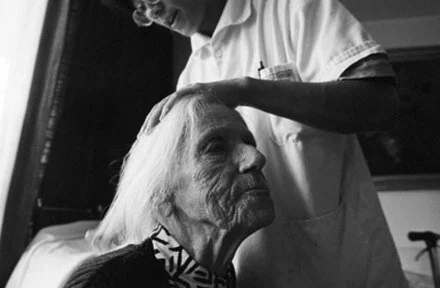
Euphrosyne “Effie” Costas-Holly, 67, has advanced multiple sclerosis. She can’t walk or stand and relies on an overhead lift system to move from room to room in their house.
Effie wasn’t receiving a lot of care: just two visits every week from aides who gave her a bath, and one visit every two weeks from a nurse who evaluated her and changed her suprapubic catheter, a device that drains urine from a tube inserted in the abdomen.
But even that little bit helped. Holly, 71, has a bad back and is responsible for his wife’s needs 24/7. Her urologist didn’t have a lift system in his office and had told the couple it was safer to have Effie’s catheter changed regularly at home.
Holly wasn’t sure what to do. Call his congressman and lodge a complaint? Write a letter to the director of the home health agency owned and operated by Hartford HealthCare Corp., one of the largest health care systems in Connecticut?
Things snapped into focus when Holly attended a late November presentation about Medicare’s home health services by Kathleen Holt, associate director of the Center for Medicare Advocacy.
If you’re told Medicare’s home health benefits have changed, don’t believe it: Coverage rules haven’t been altered and people are still entitled to the same types of services, Holt told the group. (For a complete description of Medicare’s home health benefit, click here.)
All that has changed is how Medicare pays agencies under a new system known as the Patient-Driven Groupings Model (PDGM). This system applies to home health services for older adults with original Medicare. Managed-care-style Medicare Advantage plans, which serve about one-third of Medicare beneficiaries, have their own rules.
Under PDGM, agencies are paid higher rates for patients who need complex nursing care and less for people with long-term chronic conditions who need physical, occupational or speech therapy.
Holly got lucky. When he reached out to Holt, she suggested points to bring up with the agency. Tell them your wife’s urologist wasn’t consulted about a possible discharge from home health, doesn’t agree with this move and is willing to recertify Effie for ongoing home health services, Holt advised.
Within hours, the agency reversed its decision and said Effie’s services would remain in place.
A Hartford HealthCare spokesman said he couldn’t comment on the situation, citing privacy laws. “Our goal is to continue to provide the right care at the right place at the right time with the orders reflecting the specific treatment goals and medical needs of each patient,” he wrote in an email.
“No patients have had services reduced as a result of Medicare’s implementation of the PDGM program.”
But therapists, home health agencies and association leaders say that patients across the country are being told they no longer qualify for certain services (such as vitamin B12 injections or suprapubic catheter changes) or that services have to be cut back or discontinued.
What should you do if this happens to you? Experts have several suggestions:
Get as much information as possible. If your agency says you no longer need services, ask your nurse or therapist what criteria you no longer meet, said Jason Falvey, a physical therapist and postdoctoral research fellow in the geriatrics division at Yale School of Medicine, in New Haven.
Does the agency think skilled services are no longer necessary and that a family member can now provide all needed care? Does it believe the person receiving care is no longer homebound? (To receive Medicare home health services, a person must be homebound and in need of intermittent skilled nursing or therapy services.)
“If the therapist or the agency says that Medicare doesn’t cover a particular service any longer, that should raise red flags because Medicare hasn’t changed its benefits or clinical criteria for home health coverage,” Falvey said.
Enlist your doctor’s help. Armed with this information, get in touch with the physician who ordered home health services for you.
“Your physician should be aware if you feel you’re not getting the services you need,” said Kara Gainer, director of regulatory affairs for the American Physical Therapy Association.
“Doctors should not be sitting on the sidelines; they should be advocating for their patients,” said William Dombi, president of the National Association for Home Care and Hospice.
Take it up the chain of command. Meanwhile, let people at the home health agency know that you’re contesting any decision to reduce or terminate services.
When someone begins home health services, an agency is required to give them a sheet, known as the “Patient Bill of Rights,” with the names and phone numbers of people who can be contacted if difficulties arise. Contact the agency’s clinical supervisor, who should be listed here.
“Call us and trigger a conversation,” said Bud Langham, chief strategy and innovation officer at Encompass Health, which provides home health services to 45,000 patients in 33 states.
Also, contact the organization in your state that oversees home health agencies and let them know you believe your agency isn’t following Medicare’s rules, said Sharmila Sandhu, vice president of regulatory affairs for the American Occupational Therapy Association. This should be among the numbers listed on the bills of rights sheet.
Contact Medicare’s ombudsman. Unlike nursing homes, home health agencies don’t have designated long-term ombudsmen who represent patients’ interests. But you can contact 1-800-Medicare and ask a representative to submit an inquiry or complaint to the general Medicare ombudsman, a spokesman for the Centers for Medicare & Medicaid Services said. The ombudsman is tasked with looking into disputes brought to its attention.
File an expedited appeal. If a home health agency plans to discontinue services altogether, staff are required to give you a “Notice of Medicare non-coverage” stating the date on which services will end, the reason for termination and how to file a “fast appeal.” (This notice must be delivered at least two days before services are due to end.) You have to request an expedited appeal by noon of the day after you receive this notice.
A Medicare Quality Improvement Organization will handle the appeal, review your medical information and generally get back to you within three days. In the meantime, your home health agency is obligated to continue providing services.
Shop around. Multiple home health agencies operate in many areas. Some may be for-profit, others not-for-profit.
“All home health agencies are not alike” and if one agency isn’t meeting your needs “consider shopping around,” Dombi said. While this may not be possible in smaller towns or rural areas, in urban areas many choices are typically available.
Contact an advocate. The Center for Medicare Advocacy has been hearing from patients who are being given all kinds of misinformation related to Medicare’s new home health payment system.
Among the things that patients have been told, mistakenly: “Medicare ‘closed a loophole’ as of Jan. 1 so your care will no longer be provided after mid-January,” “Medicare will no longer pay for more than one home health aide per week,” and “We aren’t paid sufficiently to continue your care,” said Judith Stein, the center’s executive director.
Some agencies may not understand the changes that Medicare is implementing; confusion is widespread. Advocates such as the Center for Medicare Advocacy (contact them at here) or the Medicare Rights Center (national help line: 800-333-4114) can help you understand what’s going on and potentially intervene on your behalf.
Judith Graham is a Kaiser Health News journalist.
Ready for a pandemic?

Warning signs at DeGaulle Airport, the Paris region’s primary airport
From Robert Whitcomb’s “Digital Diary,’’ in GoLocal24.com
Back in 2003 I flew to Taiwan (one of my favorite nations) during the epidemic of Severe Acute Respiratory Syndrome— the SARS virus that started, as do so many viruses, in very crowded China. Inconveniently, I was coming out of a bad cold, with bronchitis, and was doing my fair share of coughing on the plane, most of whose passengers were wearing face masks (even without a public-health threat like SARS, many East Asians wear face masks as a matter of course). My coughing clearly distressed my fellow passengers; some moved to vacant seats further away from me.
So I feared that I’d be stopped at the Taipei airport and quarantined for 10 days. Luckily, my guide (who told me “no worries!”) for the series of meetings I had planned for my week on the island, managed to get me through -- or was it around? -- the passport and other controls, and the week went well as my cough subsided. I didn’t have SARS, and the epidemic was eventually stopped after some weeks.
The experience impressed on me how fast epidemics can spread in a time of international jet travel, ever-bigger cities (especially in the Developing World) and, particularly in much of Asia, because of the close proximity of hundreds of millions of people to domesticated and wild animals that can carry dangerous viruses that can rapidly mutate and threaten humans. Still, there’s hope that the decline in the number of rural (and not so rural) Chinese keeping pigs, poultry and other animals in their backyards as the country becomes more urbanized might reduce the spread of dangerous viruses. And of course medicine marches on.
But it seems inevitable that a true worldwide virus pandemic will eventually kill millions.
How ready are we? The World Health Organization, part of the United Nations, needs more resources to plan for and coordinate the battle against epidemics. (By the way, Taiwan is not a member of the WHO; it only has “observer’’ status because China, throwing its weight around in its claim that it owns the island democracy, keeps it out.)
The U.N. hosts assorted hypocrisies, idiocies and corruptions. But real and threatened epidemics is just one huge reason why we need it.
And the Trump administration, which doesn’t particularly like international coordination, has shut down an office charged with responding to global pandemic threats, curtailed the Centers for Disease Control and Prevention’s foreign-disease-outbreak-prevention efforts and ended a surveillance program set up to detect new viral threats. Perhaps it will reconsider in an election year.
Shared spaces in tension

“I Doubled My Sleep Shirts When We Met’’ (house paint and oils on vinyl), by Hilary Tait Norod, in her March 5-30 show, “If You’re a Chair, I’m a Chair,” in the Chandler Gallery at Maud Morgan Arts in Cambridge. The gallery says:
“The exhibition investigates the dichotomy of two individuals joining in marriage or domestic partnership and their shared spaces. Its explores the romantic tensions of a loving relationship with an autobiographical and feminist lens, utilizing a thinking-as-making process to navigate gender roles, and familial and societal expectations of partnership. The title represents two conversations I hope to foster in the work. Love = the desire and commitment to your forever person and the balance of gender equity in relationships today. ‘‘
Dreams from before

“Three Vestiges’’ (triptych, encaustic mixed media), by Otty Merrill, who has homes in Tenants Harbor and Portland. Maine.
She says in her bio in newenglandwax.com
“My artwork tells a story that often begins with an image, a memory or an impression. Though I am surrounded by a magnificent landscapes on the Maine coast, and special light that has drawn artists to the coast for centuries, my visions and subject matter originates in kind of interior solitude. From places and people I remember or see in old photographs.
“Though my medium has changed from time to time, my style and approach is consistent and I hope, distinctive. I started my art career in pottery, then silkscreen and when I discovered the process of working with encaustic wax, about 20 years ago, that medium has dominated my senses. I often use photographs and found objects to translate my message. I love color, texture and added elements like metal, wood or a special, and often humble fragments…old tin, script, lost objects.’’

Tenants Harbor lighthouse was purchased in 1978 by Andrew Wyeth, the painter. His painter son Jamie now owns it.

The town of St. George, of which Tenants Harbor is the leading village, is indicated in red.
Former Mass. Gov. Swift talks about education/career innovation and New England challenges

Jane Swift during her governorship
From The New England Journal of Higher Education (NEJHE), a service of the New England Board of Higher Education (NEBHE.ORG)
Massachusetts Gov. Jane Swift became president of the education innovation organization LearnLaunch in July 2019.
In 1998, Swift was elected lieutenant governor of Massachusetts. Three years later, when Gov. Paul Cellucci resigned to become U.S. ambassador to Canada, Swift became the youngest female governor in U.S. history. She served from April 10, 2001 to Jan. 2, 2003.
Besides being recognized for her work in education and innovation, Swift is a leader on women’s issues and work-family integration. At the time of her elevation to governor, Swift was eight months pregnant with twins.
As governor, Swift is credited with improving public education through strong accountability and high standards and by aligning statewide curriculum while implementing remediation programs for struggling students.
Recently, Swift was appointed Jerome Lyle Rappaport Visiting Professor in Law and Public Policy at Boston College Law School for the spring 2020 semester, where she teaches a seminar on “Governing in the Facebook Era: Privacy, Propaganda, and Public Good.”
In the following Q&A, NEJHE Executive Editor John O. Harney asks Swift about her insights on higher education, technology and more.
Harney: What have you learned so far since taking over LearnLaunch?
Swift: The five founders of LearnLaunch created a vibrant ecosystem with enormous potential. We have significant mindshare, particularly among early-stage entrepreneurs in edtech and the most innovative education leaders in the K-12 systems in Massachusetts—the early adopters, if you will. LearnLaunch has provided high-quality services to those early-stage companies and early adopters. We also established a vibrant conference that brings together a diverse set of education innovation stakeholders. Our challenge now is to extend our reach to achieve sustained leadership impact across the education technology and innovation ecosystem.
Harney: What are real examples of ways ed tech can help close the equity gap?
Swift: It is critical to remember that technology is only a tool. Serving all students requires excellent teaching which can be enhanced and augmented by tools and innovations, technology tools being one example. There is research from MIT demonstrating the efficacy of middle-school math edtech tools. Oftentimes, we forget that implementation requires training that is not only as important but perhaps more important when using innovative new teaching tools.
Harney: In addition to the marquee sessions at Across Boundaries events, what are some of the “sleepers” this year?
Swift: We’ve convened a “Future of Work” showcase for the first time where some of the most innovative providers of adult-learning opportunities will be gathering. We’ll be pulling together table conversations during that time, and what happens there will be fairly organic. With some advance planning, I’ve found that the partnerships, synergies and solutions that can be formed and sustained after the conference is packed up for another year often happen when people have the time to discuss issues in-depth with like-minded individuals. This is where the real progress happens. We are hoping to seed some of that magic.
Harney: What are some of the other important things happening in the LearnLaunch “community”?
Swift: You will see the first event of our new partnership with ASA (American Student Assistance) at the conference with some keynotes, panels and activities. We will be following up later in the year with a summit we are co-hosting with them around helping students to discover their passions and possible pathways to careers and training opportunities as early as middle school. It is something I have done a lot with my three daughters, so it is an area of personal passion but also incredibly important in this dynamic, technology-driven economy we live in. We are also hoping to secure final funding to support the development of a strategic plan that will help LearnLaunch take advantage of its many assets, refocus our efforts, and better assert our leadership in Boston, in Massachusetts and in New England.
Harney: What are some of the key topics in your BC course?
Swift: Social media and the speed of innovation more generally are challenging government in ways we have never experienced before. This is happening in education where the tools available to students and teachers like AI (artificial intelligence) and AR (augmented reality) are flying at them fast and furiously, and where the demands on our system to prepare the next-generation workforce are dizzying. But really, it is happening in every sector of the economy and it is happening fast. Yet, government isn’t designed to work fast. So the class, called “Governing in the Era of Facebook: Privacy, Propaganda & Public Good” will explore how that plays out at a really practical level: in campaigns and communication for elected officials at the state and local level and in many different policy areas. One reason I love to teach is that I find that a well-constructed course can lead to the teacher learning as much as teaching and that is certainly an outcome I am aiming for this semester.
Harney: What do you make of the recent travails of higher education, including closings of several New England institutions under pressure from declining enrollment, state and federal cuts and changing perceptions of value?
Swift: As a parent of three traditional college students, I am not sure your article is long enough for me to answer this question. As parents and students, we know the world is changing quickly and I see that in ways that have important implications. Innovators have jumped in to respond to the gaps that have developed where learners feel their needs may not be met in the traditional system. The capacity of the traditional system to pivot is constrained by myriad factors. Change creates uncertainty and that combined with the demographic shifts in New England will reshape the landscape of higher education for a generation. Traditionally, New England has been at the forefront of the leading innovations in education and I am hopeful we will give birth to some exciting new models again that will deliver value to learners and meet the needs of our economy.
Harney: You’re from North Adams, Mass., and you went to Trinity College in Hartford. How have those communities informed your outlook? How important is a sense of regionalism and “New Englandness” to today’s challenges? How has technology changed the importance of “place”?
Swift: You are asking tough questions that are difficult to address with short answers. My journey from North Adams to Trinity College to the professional success I’ve had inform everything I do. My hometown did not have the highly rated public school system that many of my classmates at Trinity were privileged to attend. I had to work hard to catch up—but, I still was very, very fortunate to have access to a top-notch college education with the assistance of lots of financial aid—that gave me unlimited opportunity. I have worked throughout my life to democratize access to excellence in education and to have that equate to unfettered access to opportunity to find a job that you love, that can be rewarding, and to break down class barriers. We have made advances in education excellence in Massachusetts and that has been a national model, but there is still a lot of work to be done particularly on the equity front. And yet, at the same time, on the issues of access to affordable postsecondary options which provide limitless opportunity and, yes, upward mobility, I feel like we’ve hit some real roadblocks.
Harney: What do you make of the recent Boston Globe piece about women’s places in the top-paying Massachusetts jobs?
Swift: Progress for women has been slower than I would like in many areas. We still have gaps in our childcare system and in offering maternity leave. But I do see progress and one of things I am most excited to do in my return to Massachusetts is to keep working with women and men to nurture the next generation of leaders. My appointment at Boston College is just one way I am hoping to do that.
Harney: What’s next for you?
Swift: I have been lucky to find platforms in my career that allow me to work on issues I care about. I have a pretty good number of those right now—the ability to implement and drive change at LearnLaunch, to teach and learn at BC Law, and to work with great entrepreneurs and leaders, many of whom are women, through the board work I do. I find it tremendously rewarding and sometimes a little chaotic.
Irony vs. Mammon

View from Castle Hill in Ipswich, Mass., one of the North Shore towns that John Updike called home
“I moved to New England partly because it has a real literary past. The ghosts of Hawthorne and Melville still sit on those green hills. The worship of Mammon is also somewhat lessened there by the spirit of irony. I don’t get hay fever in New England either.”
— John Updike ( 1932-2009), famed novelist and long-time resident of the Massachusetts North Shore, in the Observer of London, 1979

Study is aimed at protecting right whales in offshore windpower areas

North Atlantic right whale mother with calf
From ecoRI News (ecori.org)
Ørsted is funding a project to study and protect endangered North Atlantic right whale during surveys, construction and operation of its U.S. offshore wind facilities such as Bay State Wind and Revolution Wind.
Using data collected from an aerial, unmanned glider and two sound-detection buoys, researchers from the University of Rhode Island, Rutgers University and the Woods Hole Oceanographic Institution will examine the habitat and behaviors of right whales in the wind-lease areas awarded to Ørsted.
An estimated 400 North Atlantic right whales remain, fewer than 100 are breeding females.
The oceanographic data will help studies of additional fish species and improve forecasting for severe storms and other weather, according to Ørsted. The three-year initiative is called Ecosystem and Passive Acoustic Monitoring (ECO-PAM).
Vineyard Wind watch
A key offshore wind report is expected this week from the Coast Guard. The draft of the Massachusetts and Rhode Island Port Access Route Study (MARIPARS) will recommend wind farm layouts, spacing, and transit lanes for vessel safety, navigation, and search-and-rescue operations.
The draft report will be followed by a 45-day comment period. The Coast Guard is expected to finalize the report in April.
At its nearest point, the Vineyard Wind project is about 14 miles from the southeast corner of Martha’s Vineyard and a similar distance from the southwest side of Nantucket. (BOEM)
At its nearest point, the Vineyard Wind project is about 14 miles from the southeast corner of Martha’s Vineyard and a similar distance from the southwest side of Nantucket. (BOEM)
The recommended wind-facility grid is expected to inform the forthcoming draft environmental impact statement (EIS) from the Bureau of Ocean Energy Management (BOEM) for the Vineyard Wind project. If adopted by BOEM, MARIPARS will accelerate other wind proposals in the federal lease areas off southern New England.
BOEM won’t give any hints about when it will release the expanded EIS for the Vineyard Wind project. BOEM media representatives will only say to look for updates at its Vineyard Wind Web site.
The expanded EIS will focus on fishing and other impacts of offshore wind development in the region. The initial EIS was expected by the end of last year but pushed until early 2020.
The initial EIS was delayed last summer after the National Marine Fisheries Service and the National Oceanic and Atmospheric Administration declined to endorse the report.
After hearings and a public comment period on the upcoming EIS, a record of decision from BOEM on the Vineyard Wind project isn’t likely until December. If approved, major work on the 800-megawatt wind facility, such as pile driving, can’ commence until May 1, 2021. An agreement to protect North Atlantic right whales with three environmental groups signed last year prohibits such work between January and April.
Foster wind moratorium
The Foster (R.I.) Town Council recently approved a 180-day moratorium on wind-turbine development. There are no proposals before the town, but the council wants to give the Planning Board time to write an ordinance for future wind development.
“There’s speculation whether companies would be interested in coming into our town and we want to make sure we had things in order,” Town Council president Denise DiFranco said at the council’s Jan. 23 meeting.
The council can extend or shorten the moratorium. Residential wind systems less than 100 kilowatts are still permitted.
Virginia wind
Virginia is upping its involvement in offshore wind with a vision to reach World War II levels of maritime industrial activity. Last September, Dominion Energy, the owner of natural-gas pipelines and power plants, including the Manchester Street Power Station, in Providence, announced plans for a 2,600-megawatt wind facility off Virginia Beach. Gov. Ralph Northam has since set a state energy target of 30 percent renewable power by 2030 and 100 percent by 2050.
Dominion is also developing a two-turbine offshore test site called the Coastal Virginia Offshore Wind Project with Ørsted. The project could be operational by late this year.
Like many states in the Mid-Atlantic and Northeast, Virginia wants to expand its ports to build maritime centers for wind turbine construction, maintenance, and shipping. An estimated 14,000 jobs could be created by the new maritime industries in the state.
Tim Faulkner is an ecoRI News journalist.
'Enduring odor'
“In late winter
I sometimes glimpse bits of steam
coming up from
some fault in the old snow
and bend close and see it is lung-colored
and put down my nose
and know
the chilly, enduring odor of bear.’’
-- From “Bear,’’ by Galway Kinnell (1927-2014)

Kinnell reading his poetry in the Grindstone Cafe in Lyndonville, Vt., on March 16, 2013. He lived in tiny (population about 700) Sheffield, Vt., in the state’s Northeast Kingdom. Kinnell, a Pulitzer Prize winner, served a stretch as Vermont’s poet laureate.

Labor Day parade at Sheffield Field Day 2017