
Vox clamantis in deserto



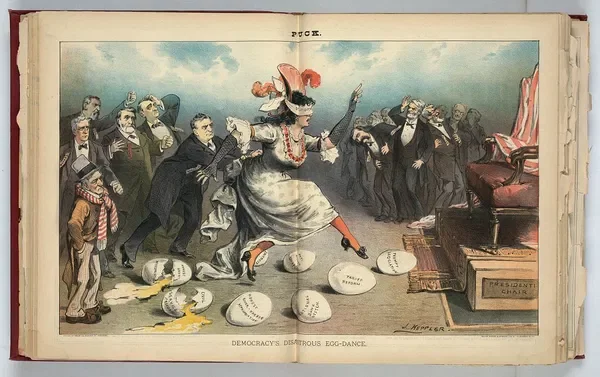
Pay the companies bribes AFTER they create jobs?
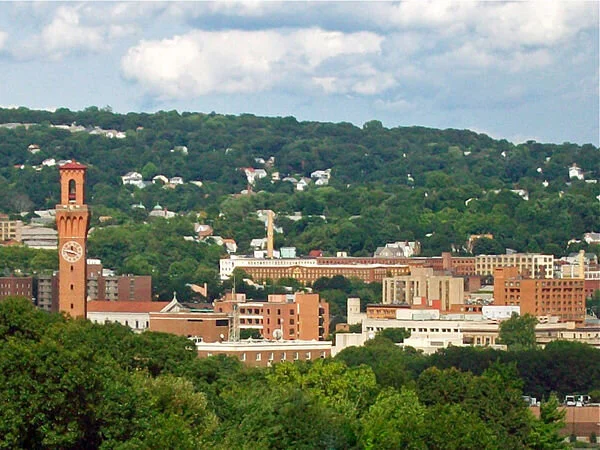
Waterbury, Conn., once famous for the manufacture of brass products, clocks and watches. But as with all of the state’s cities, most manufacturing has departed, taking a lot of well-paying blue-collar jobs with it. The train station’s Italianate tower is at the left.
From Robert Whitcomb’s “Digital Diary,’’ in GoLocal24.com
David Lehman (perhaps unfortunately a former Goldman Sachs partner) has some interesting ideas about how to boost still rich Connecticut’s economy and, particularly, how to lift its troubled cities. Gov. Ned Lamont, a Democrat, has named Mr. Lehman to be commissioner of the Nutmeg State’s Department of Economic and Community Development. He may have some lessons for Rhode Island and Massachusetts.
Some of his ideas are predictable, such as improving commuter rail service and the roads, more and closer partnerships with colleges and universities and boosting job-training for growing occupations, such as health care, software and engineering.
But what has jumped out is that instead of handing out tax breaks and other financial incentives to get companies to move to, or expand in, the Nutmeg State, he’d have the state hand out these goodies only after they created well-paid jobs. Bloomberg News noted that would be a gamble in the current relentless arms race among states and localities to lure jobs. But Connecticut, with its location between the two thriving (at the moment) economic powerhouses of New York and Boston, might be better placed than most states to succeed with this new strategy.
Mr. Lehman also wants to encourage a resurgence of the state’s cities, which, with exceptions in some parts of them (e.g., the area around Yale in New Haven) are in poor shape. He wants policies that would double the populations of its cities -- which now range from 100,000 and 150,000 -- over a 25-year period. He told Bloomberg: “We’ve got the suburban and rural thing covered.’’ New economic growth will be “in these higher density transit-oriented developments.” Note that as in Massachusetts (and a lesser extent in Rhode Island) the growing emphasis is on using mass transit to maintain and spur prosperity.
Back when I lived in Connecticut, in the ‘60s, its cities still had large and stable middle-class populations, in large part because of a still thriving industrial sector. Mr. Lehman will be a hero if he can bring the middle class back to these places.
Meanwhile, the rhetoric continues about masses of millionaires said to be fleeing Connecticut and other high-tax states to move to Florida. Of course, some people do move because of taxes but the phenomenon is exaggerated (I know a bunch of these folks.) As this commentary from the left-leaning Institute on Taxation and Economic Policy notes:
“most millionaires are married, are more likely to have children, and are economically and socially tied to where they made their money. {In Connecticut’s case many in nearby Manhattan} They benefit from where they are living because they have ‘home field advantage’: they know the area, have connections, and most are ‘working rich’ and moving could actually set them back in their career and productivity. There is a reason they chose to live there in the first place, whether that be career opportunities, the education and public services offered, or overall quality of life. By the time they are making enough to think about moving to save on their taxes they are already deeply embedded into their communities and living comfortably enough that the state tax savings at stake would not fundamentally change their quality of life even if they somehow did find a way to continue earning a very large income in a new locale.’’
“The people who do tend to move most frequently are young college graduates and the lowest income residents looking for higher pay and a better quality of life, and state tax rates are not central in these groups’ decision making.’’
Of more interest to me is what the long-term impact of all these people moving to Florida will be on the Sunshine State’s taxes. Will a growing demand for services lead it to impose an income tax to pay for them? And what will be the effect of rising seas from global warming on property values (and property-tax collections) there?
To read more about Mr. Lehman’s plans, please hit this Bloomberg link.
To read more about high-end tax refugees, please hit this link.
Being cool in Vermont

The Mad River, in Vermont
“I'm from Vermont, where to be stylish and cool is to have a dirty pair of hiking boots and know how to change a tire, hang drywall, and bale hay. Those people are my home, and every time I come home, it reminds me that there's something to be said for being in the spotlight, but it can never be a whole part of me.’’
— Grace Potter, singer, songwriter and actress. She’s from Waitsfield, in the Mad River Valley.

Downtown Waitsfield, Vt. It’s busier in the winter because of two nearby ski areas, Mad River Glen (whose motto is “Ski It If You Can’’) and the much bigger and fancier Sugarbush.
For three decades, the nonprofit Friends of the Mad River, created to protect the recreational, ecological and aesthetic resources of the Mad River Valley, has performed water-quality monitoring, river restoration, land conservation, public education and outreach on behalf of the watershed.
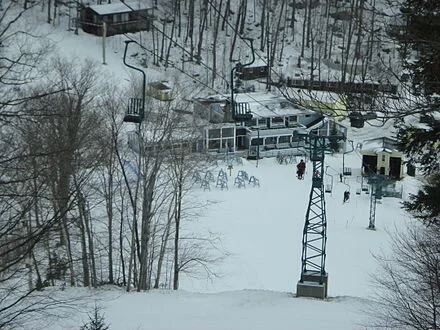
At the vertiginous Mad River Glen
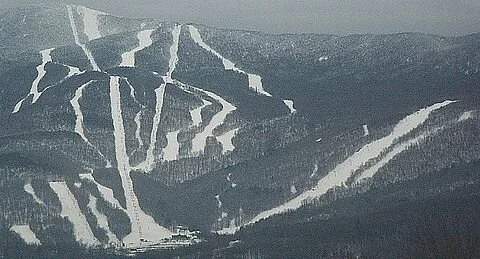
The huge and rather fancy Sugarbush resort

Todd McLeish: Finding rare species in Marine Monument off N.E.

From ecoRI News (ecori.org)
A team of scientists from the New England Aquarium, in Boston, has been conducting periodic aerial surveys of the Northeast Canyons and Seamounts Marine National Monument, some 130 miles off Nantucket, and has documented an impressive list of marine mammals and fish that illustrates why conservation organizations have been advocating for its protection for years.
A late-October survey, for instance, documented three species of rare beaked whales, three kinds of baleen whales, four species of dolphins, several ocean sunfish — the largest bony fish in the world — and two very unusual Chilean devil rays
“We’re out there documenting what’s out there to show that the area is important and should continue to be protected,” said Ester Quintana, the chief scientist of the aerial survey team. “Every survey is different, and you never know what you’re going to see, so it’s always exciting.”
The beaked whales were particularly notable, since they are rare and difficult to observe. Beaked whales are deep-diving species that can remain under water for more than an hour and only surface briefly to breathe.
“If you’re not at the location where they come to the surface, then you’re not going to see them,” Quintana said. “There are probably more of them out there that we were just not seeing.”
The survey team observed two Cuvier’s beaked whales, three Sowersby’s beaked whales, and four True’s beaked whales, the latter of which hadn’t previously been documented in the 4,900-square-mile monument during an aerial survey, though a ship-based group of researchers from the National Oceanic and Atmospheric Administration had seen several there last year.=
Also observed were large numbers of Risso’s dolphins, plus groups of bottlenose dolphins, common dolphins and striped dolphins, along with nine fin whales, two sperm whales, and one humpback.
“We didn’t see many individual whales, but that’s just the difference between an October survey and the surveys we’ve done in the summer,” Quintana said.
Of special note were the two Chilean devil rays observed, the first time Quintana had ever seen the species.
“Last year we saw a big manta ray, which was a surprising sighting because we were unaware that they could be sighted this far north,” she said. “So when we saw the Chilean devil ray at the site, it was another unexpected ray. They’re not that uncommon, but in the seven surveys we’ve conducted, it was the first we saw at the monument.”
About the size of Connecticut, the only Atlantic Ocean marine monument includes two distinct areas, one that covers three canyons and one that covers four seamounts. (NOAA).
Chilean devil rays can swim about a mile deep, and since they don't have to come to the surface to breathe, it’s unusual to see them.
The survey team flies transect lines back and forth over the three underwater canyons in the monument — Oceanographer Canyon, Gilbert Canyon and Lydonia Canyon — with most of the wildlife observed at Gilbert and Lydonia canyons. As soon as team members observe wildlife to document, they depart from their transect and circle the animal to identify and photograph it. The plane is equipped with a belly camera that takes photographs every 5 seconds during the survey in case the two observers miss anything.
Quintana said the team was unable to survey the waters around the monument’s four seamounts (underwater mountains), because those sites are farther away and their small plane can’t carry enough fuel to reach them.
The wide variety of marine life observed during the survey are attracted to the monument because of its diversity of habitats.
At a lecture last February describing the monument, Peter Auster, senior research scientist at Mystic Aquarium, in Mystic, Conn., said: “Those canyons and seamounts create varied ecotones in the deep ocean with wide depth ranges, a range of sediment types, steep gradients, complex topography, and currents that produce upwelling, which creates unique feeding opportunities for animals feeding in the water column.”
The Northeast Canyons and Seamounts Marine National Monument was designated by President Obama in September 2016. It’s the only marine national monument in the Atlantic Ocean. Early in President Trump’s administration, he threatened to revoke the site’s designation, despite uncertainties as to whether he could legally do so. Those threats triggered efforts by conservation groups to document the value of the site to wildlife.
The next aerial survey by the New England Aquarium team will take place as soon as the weather cooperates. Conditions must be calm to allow for a safe flight and smooth seas so conditions are optimal for observing marine life.
“We’ve never done a survey in the winter because it’s hard to plan one because of the weather,” Quintana said. “No one has ever done a survey there in the winter, so we don’t know what to expect once we get there.”
Rhode Island resident and author Todd McLeish runs a wildlife blog.

A beaked whale
Tearing up
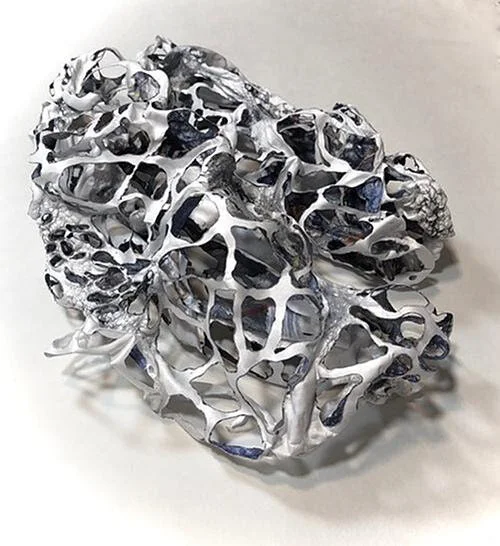
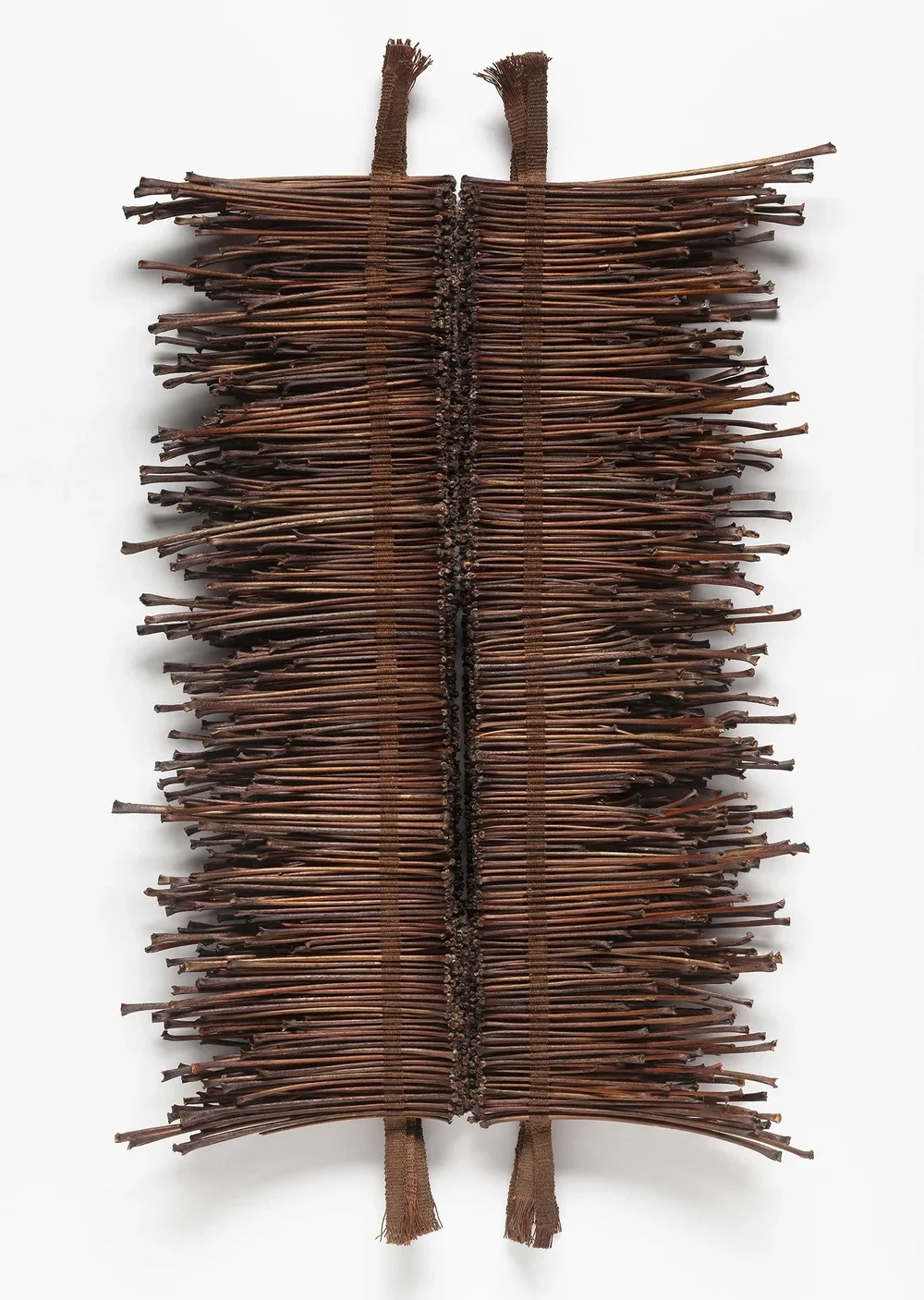
“Tears Along the Edge” (installation detail) (acrylic on cut and molded Tyvek), by Susan Emmerson, M.D., at Kingston Gallery, Boston, through Feb 2.
She explains on her Web site:
“My work is an exploration of the picture plane; it delves into that surface between wall and the environment and expands that surface for the viewer to follow. My drawings and paintings rise off the wall into three dimensions, forming shadows and caverns which in turn incorporate themselves into the the work itself. Using surfaces of paper, Tyvek (a plastic paper), and canvas I explore below these surfaces and expand them outward by heating, sanding, cutting, gluing and plastering and incorporating the structure into the imagery. I use unexpected materials to examine our emotional connection to both the external built environment and the internal environment of the human body.
“In my most recent body of work my imagery is that of creating and destroying; of depicting the horrible violence that natural storms, worsened by human mistakes, can do to our structural environment and to our fellow humans. My wall sculptures depict disheveled, broken surfaces where Tyvek painfully peels away like paint or skin, exposing a raw inner core. Everyday objects become precious; I use their bits and pieces as signifiers of the lost reassurance of a safe and intact home. I manipulate Tyvek so that it jumps off the wall to become an object; its organic shapes echo waves, wind, and the contortions of the earth as visits another storm on its human inhabitants. My work exists in the space between image and object; between the picture and the palpable.’’
'All day long on the coast of Maine'
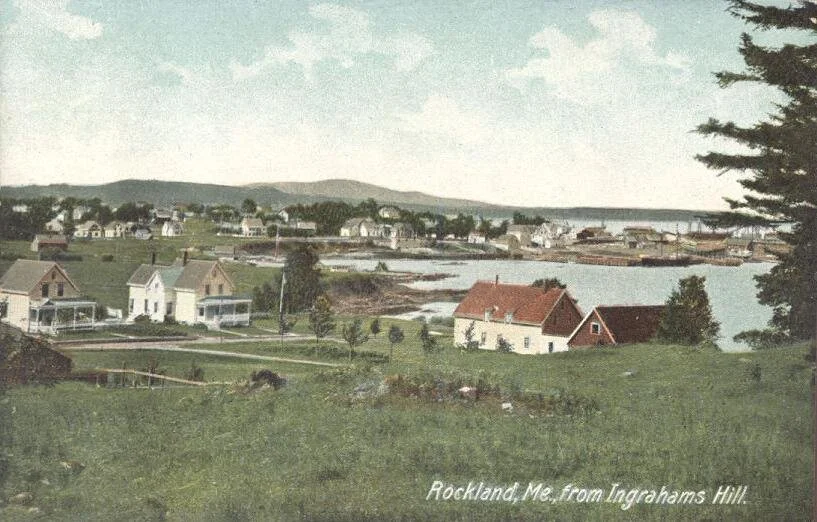
Rockland around 1908. It was Edna St. Vincent Millay’s birthplace.
“If I could see the weedy mussels
Crusting the wrecked and rotting hulls,
Hear once again the hungry crying
Overhead, of the wheeling gulls;
Feel once again the shanty straining
Under the turning of the tide,
Fear once again the rising freshet,
Dread the bell in the fog outside,
I should be happy!—that was happy
All day long on the coast of Maine.
I have a need to hold and handle
Shells and anchors and ships again.’’
— From “Exiled,’’ by Edna St Vincent Millay (1892-1950), a native of the Maine Coast
'An example to the world'
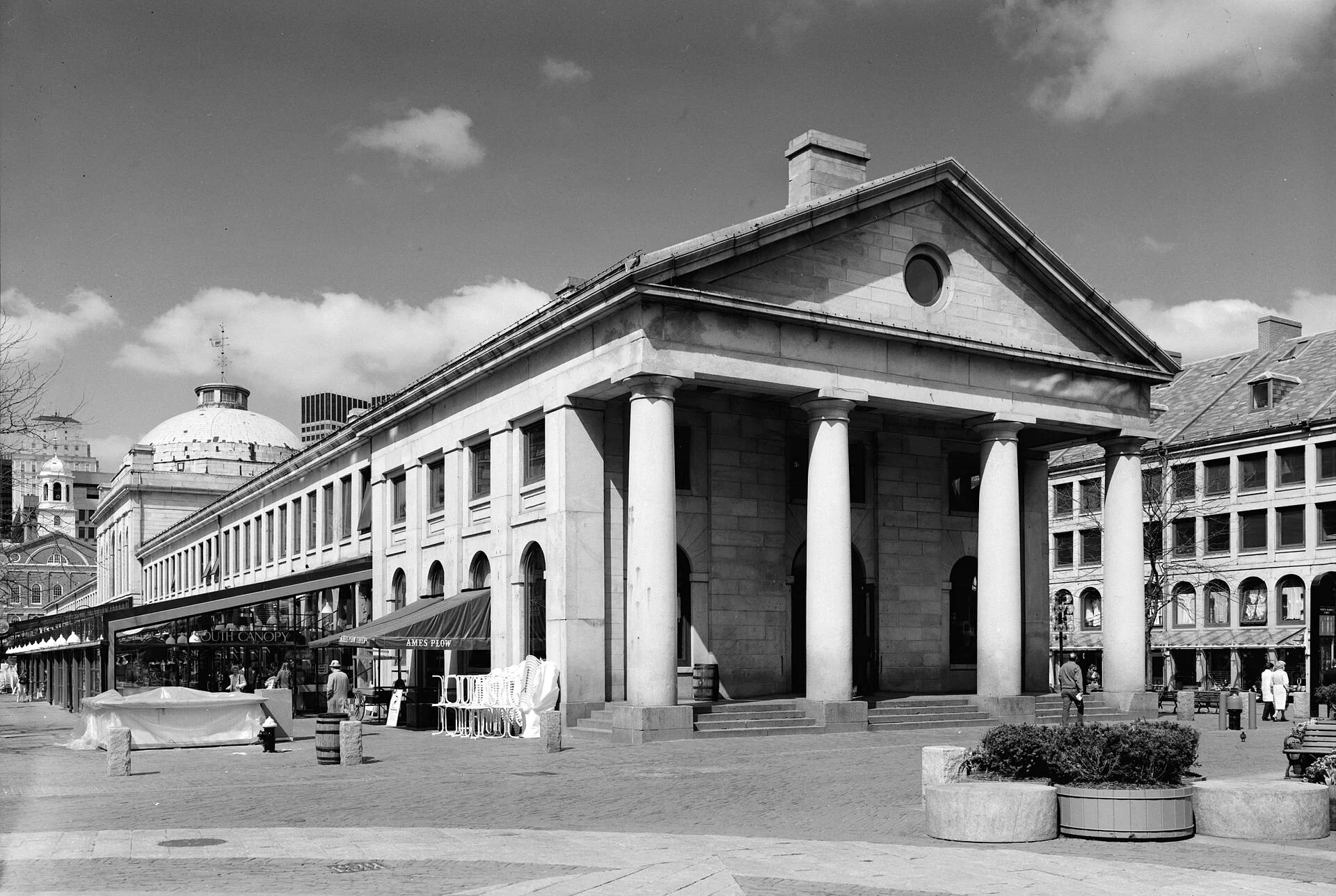
Quincy Market
— Photo by Back Boucher
"Citizens of Boston! ..... Consider your blessings; consider your duties. ..... Let New England continue to be an example to the world of the blessings of free government, and of the means and capacity of man to maintain it. ..... In all times to come as in all times past, may Boston be among the foremost and the boldest to exemplify and uphold whatever constitutes the prosperity, the happiness, and the glory of New England.''
— Speech in 1830 by Josiah Quincy III (1772- 1864), member of the U.S. House (1805–1813), mayor of Boston (1823–1828), and president of Harvard University (1829–1845). The historic Quincy Market in downtown Boston is named in his honor.
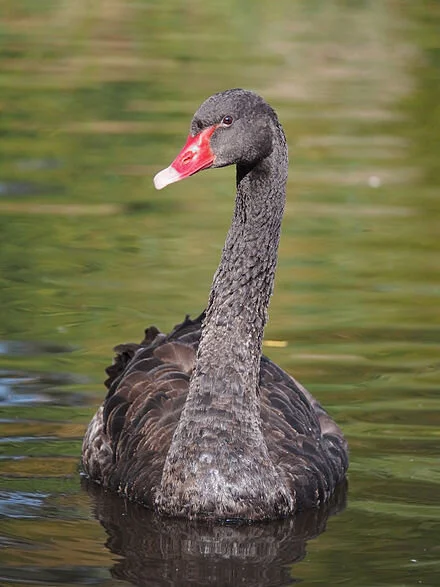
What will be the black swans of 2020?
From Robert Whitcomb’s “Digital Diary,’’ in GoLocal24.com
“Past performance is not indicative of future results.’’
-- Mandatory warning in investment documents
About New Year’s predictions: Many of them are based on creatures called the “conventional wisdom’’ or “the general consensus’’. Most turn out to be wrong in varying degrees because there are so many variables in real life.
Although we have computers that process data at astonishing speeds, they obviously can’t fully account for the effects of people acting unpredictably and/or irrationally, which, in varying degrees, is how they often (usually?) act. And that there are more people than ever adds to the complexity. Then there’s that Nature does its thing without consulting us. What if Hurricane Dorian, which hit the Bahamas with winds up to 220 miles an hour, had moved only slightly west and hit South Florida head on? The, say, $200 billion or more in damage would have hammered the U.S. economy.
Some readers might remember the “black swans’’ made famous by Nassim Nicholas Taleb: He looked at how it’s impossible to get at the probability of some rare events that are beyond normal expectations in science, finance, technology and history
Mr. Taleb is an essayist, scholar, statistician, former options trader and risk analyst who has deeply studied randomness, probability and uncertainty. Read his 2007 book The Black Swan.
Consider the black swan called 9/11, which changed so much: It caused wars, reduced our civil liberties, made travel more difficult and encouraged already dubious U.S. fiscal and monetary policies that helped create the Crash of 2008 and the Great Recession, which helped set the table for Donald Trump.
And digitization continuously speeds up changes, which affects all of life. Back in the ‘60s, British Prime Minister Harold Wilson was quoted as saying “a week is a long time in politics.’’ Now you can say that a day is a long time in politics, in the economy and elsewhere.]
2020 will feature lots of dramatic headlines and near-hysterical “breaking news’’ on electronic media. Most of it will end up forgotten in days, except by a few people most directly affected, such as relatives of those killed in plane crashes. The vast majority of such headlined stories have no effect on the course of history. The article that may turn out to have the most long-term significance might be buried on the bottom of page 13 of a newspaper.
I always liked the crazy poet Ezra Pound’s remark that “literature is news that stays news.’’
Olivia Alperstein: LNG poses grave risks

A member of the Coast Guard escorts an LNG tanker into Boston Harbor in 2016
From OtherWords.org
Liquefied natural gas (LNG) is a potential disaster in the making. That’s the conclusion of a new report by Physicians for Social Responsibility, which surveyed an abundance of research on LNG’s threats to public health.
LNG is natural gas that is filtered and supercooled to -260° F, turning it from gas to liquid. That makes it easier to transport in special cryogenic tankers when pipelines aren’t an option, such as for overseas shipping.
But while the fracking that extracts the gas, and the pipelines that often move it, have generated well-deserved controversy, the risks of LNG haven’t gotten as much attention. They deserve more.
The new report finds significant risks from the extraction process (including gas leaks and air pollution), further pollution from the liquefaction process, and serious risks of fires and explosions.
And I mean serious. A full LNG tanker carries the energy equivalent of 55 atomic bombs. If one caught fire or exploded in a populated area, it could make an oil spill look like a picnic.
Even without exploding, the gas poses serious risks to our climate and healt
LNG is primarily composed of methane, a greenhouse gas that is 84–87 times more powerful than carbon dioxide over a 20-year period, which makes it a major contributor to climate change. And the fracking process, the report adds, injects a further “slurry of chemicals” into the surrounding environment. Many are known to contribute to strokes, cancer, and asthma.
LNG export facilities are often located in areas already plagued by dangerous levels of pollution from energy and industrial facilities — often areas with mostly African American, Native American, Hispanic, or low-income families. Facilities may also be sited close to schools and nursing home
“Such proximity, often reflecting these communities’ lack of political power, intensifies the impact on vulnerable populations and people with pre-existing health conditions,” the report notes. These communities are also more likely to lack the resources to address environmental health concerns.
Despite these dangers, there has been a boom in LNG production in the United States over the past 15 years. According to federal regulators, there are over 110 LNG facilities operating in the United States.
The United States is exporting record amounts of LNG to the global market right now, and there are plans to expand LNG facilities in many parts of the country. Meanwhile, the Trump administration is pushing an ill-advised proposal to transport LNG by rail.
Expanding these projects would increase pollution, put human health at risk, and increase the risk of catastrophic fires and explosions. It would also sink billions of dollars into infrastructure that would lock the United States into greenhouse emissions for decades to come.
Thanks to the Trump administration’s systematic rollback of critical health and safety protections, we simply don’t have the safeguards to protect ourselves or our planet from fracking, pipelines, or LNG
As PSR’s new report makes clear, LNG poses a grave risk to our planet, our health, and our future. Instead, we need to demand healthy solutions for our communities. Our health needs to come first — before fossil fuel corporations’ bottom line.
It’s time for decision-makers at all levels to protect their constituents, before it’s too late.
Olivia Alperstein is the media relations manager at Physicians for Social Responsibility.
But everyone is out of place

“A Crying Shame’’ (acrylic on canvas), by Johh Murdock, in the show “Out of Place,’’ at Fountain Street gallery, Boston, Jan. 2-Feb. 2
The gallery says that the show “reveals and repositions what it means to belong. Twenty-eight artists offer an expansive interpretation of the theme—spanning several mediums, scales, and forms. The work featured in ‘Out of Place’ could easily be construed as disparate or fragmented. Yet, presented together, these artists contend with structure, familiarity, and acceptance while pushing the boundaries of what it means to belong.’’
'Happy Feast of the Circumcision!'
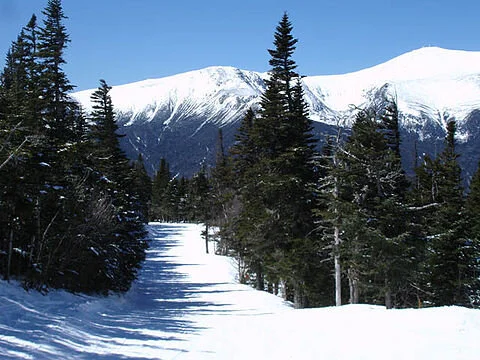
Mt. Washington from the Wildcat Mountain ski area, near Jackson
From Robert Whitcomb's "Digital Diary,'' in GoLocal24.com
Back when I was around 12, my parents, a couple of my siblings and I spent the New Year’s weekend in Jackson. N.H., in the White Mountains, where we skied (clumsily) a bit and stayed at a B&B (but called an inn). The place was owned by an Episcopal minister. He was quite funny. On New Year’s morning he greeted everyone with a boisterous “Happy Feast of the Circumcision!” But it was clear how hard the couple had to work to keep their little business going, ministering, so to speak, to the almost 24/7 needs and desires of their about 15 guests – e.g., directions to local ski areas and other attractions, drugstores and doctors, cocktails (but not too many) for the adults and huge breakfasts for all. It was an early introduction to the challenges of running a small business.
But it's already there
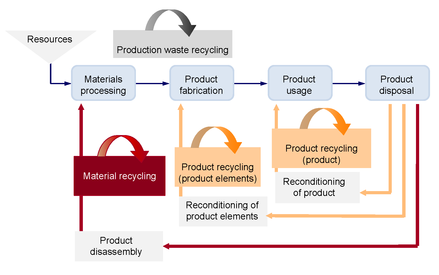
The section along Allens Avenue in the Port of Providence has been an industrial and port area for a couple of hundred years. Now Allens Providence Recyling LLC wants to put a facility there to process and recycle construction and demolition materials, such as asphalt, wood, concrete and gypsum, in the industrially zoned area, which already hosts other materials-processing plants. It would also process solid waste. The processing work at the site, which the company has been clearing of contaminants, would take place entirely indoors and include, as with such facilities in general, dust-suppression systems. Not that anything is perfect…
As usual with such projects, there’s understandable neighborhood pushback, which reminds me a bit of the past opposition of homeowners near T.F. Green Airport, in Warwick, R.I., to a long-needed runway extension, which has since been built. The airport has been there since 1928 -- long before most or all of the complaining homeowners moved in. Surely they knew that airports tend to expand. And the proximity of the airport had probably made it cheaper to buy their houses in the first place – in part because of the noise.
The Allens Providence Recycling project is another example – and apparently an environmentally responsible one – of the sort of enterprise that has long been in that industrially zoned area, made attractive to certain kinds of companies by the proximity of water, road and rail transport and by the simple fact that the area has long housed such businesses.
Recycling (which is good for environment) and other materials processing has to be done, of course under rigorous oversight. And there are well-paying jobs in this industry.
A healthy local economy depends on having a mix of service and industrial jobs, in manufacturing and such functions as recycling.
— Robert Whitcomb
Homelessness and grapes in ConcordC
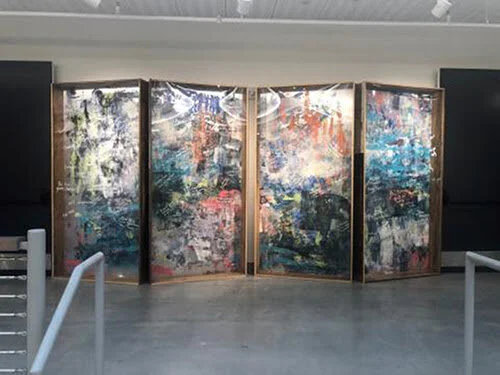
“She4She” (shadowboxes made of reclaimed wood, metal and plexiglass, acrylic paint), by Pauline Curtiss and Rose Leitner, in the show “She4She’’ in the Umbrella Arts Center, Concord, Mass., through Jan. 2
This installation was inspired by Heading Home, a homeless-serving agency that serves individuals and families. The gallery says the artists used the contrasting dark and bright colors of the installation to reflect the struggles and triumphs experienced of the women at Heading Home.
Since Concord is a rich Boston suburb you don’t often think of homelessness in connection with it.
Besides its fame as site of a battle that helped launch the Revolutionary War and a center of intellectual life in the mid-19th Century, Concord is also where In 1849 Ephraim Bull developed the Concord grape (beloved of grape-juice fans) at his home on Lexington Road, where the original vine still grows. Welch's, the first company to sell juice made from Concord grapes,, is headquartered in the town.
The Boston-born Bull developed the grape by experimenting with seeds from some of the local native species. On his farm, down the road from the the literary households of Ralph Waldo Emerson, Henry David Thoreau, Nathaniel Hawthorne and Alcott (as in Louisa May Alcott and the new movie version of Little Women), he planted some 22,000 seedlings before producing the ideal grape. But he never made much money from them.
In 1853, his grape won first place at a Boston Horticultural Society exhibition. It was introduced to the market in 1854. The Rev. Thomas Bramwell Welch developed the first Concord grape juice in 1869. Through pasteurization, the juice did not ferment into wine. That was important to him because he opposed drinking alcoholic beverages, including at the Holy Communion table.
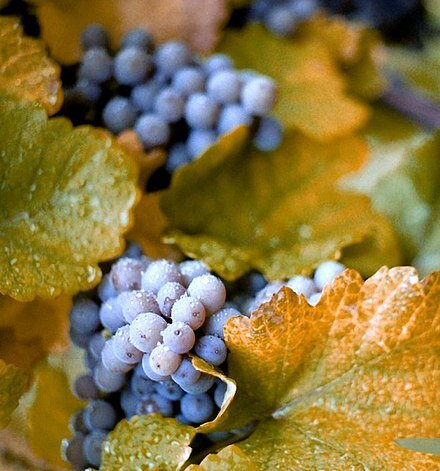
Concord grapes
Grace Kelly: The heavy side-effects of salting roads
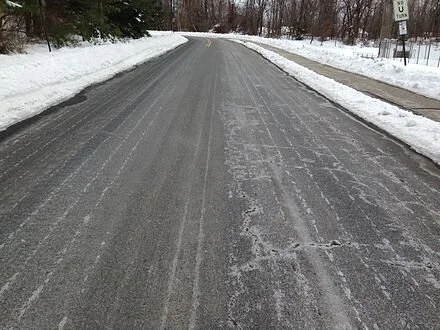
This road has been treated with salt brine.
From ecoRI News (ecori.org)
Winter is here, and with it the tried and true method for keeping roads from becoming slippery: salt.
Salting roads as a method of preventing ice from forming began in 1938 in New Hampshire and has become the go-to method for safe winter driving. It’s effective. According to a 1992 study from Marquette University, salting the roads reduced winter car accidents by 87 percent.
While it’s an effective method for safer winter driving, throwing tons of salt down comes with side effects. When cavalries of trucks start to season the roads, they also inadvertently contaminate freshwater wetlands.
“Road salt can travel up to 170 meters [558 feet] from the road across the landscape into wetlands like vernal pools,” said Nancy Karraker, an associate professor of wetland ecology and herpetology at the University of Rhode Island.
Karraker has been studying the impacts of road salt on vernal pools and freshwater wetlands for years and has concerns about salt’s effects on the invertebrates that make fresh water their home.
“Through experiments, I found that wood frogs’ eggs and their tadpoles were only affected at the highest salinity concentration, so they were a little bit more resilient,” she said. “But with the spotted salamanders, there was a significant decline in survival of both eggs and tadpoles with the average concentration of salt we were seeing at vernal pools near roads.”
And getting an average, or even high, concentration of salt in the water is easier to do than you might think.
“If you think about the head of a penny, if you cover half of the head of that penny with rock salt, dump that into a quart of water and stir it until it dissolves, that’s the salt concentration that is harmful to spotted salamanders,” Karraker said. “And if you completely cover the head of a penny and let a little bit spill over the side, and dump that in a quart of water, that’s the amount that harms wood frogs. So it’s a tiny amount of salt, it’s a very low concentration that impacts these animals.
Rhode Island doesn’t just use a pinch of salt to season its roads. From 2005 to 2013, Rhode Island roads received an average of 516 pounds of salt per lane mile annually, according to a 2014 report by the Rhode Island Department of Administration’s Division of Planning.
Nationwide, an estimated 10 million to 20 million tons of salt is dumped on roads annually — about 120 pounds for every American. Though many states, including Rhode Island, are turning to brine — a mixture of water and salt — instead of chunky crystals, for Karraker a salt by any other name still tastes as salty.
“A salt is a salt is a salt — it doesn’t matter if you’re talking about sodium chloride, magnesium chloride, potassium chloride, and brining just means that you’ve got a salt solution that’s been diluted a bit with water so you can spray it on the road so it acts more quickly to limit ice buildup.”
Karraker hopes that the state departments of environmental management and transportation will consider having “no salt” designations for roads that are near freshwater wetlands.
“You see these signs that say, ‘low road salt use’ near public drinking water sources and I wish they would do the same for biodiversity,” she said. “Why couldn’t we designate certain roads around our wildlife management areas as low road salt use areas to protect biodiversity? Why can’t we start to think about protecting biodiversity like we think about protecting our drinking water? I think it’s important.”
Thanks for this important and timely article. Don't forget about the impact of road salts on our groundwater! Just in case amphibians or infrastructure don't motivate us, this story eventually comes full circle through our wells, drinking water, and back to us. Our state needs a coherent database of wells contaminated with road salts! We also need to be exploring other solutions to safer winter driving....
Grace Kelly is an ecoRI News journalist.
'A mollusk of mist'
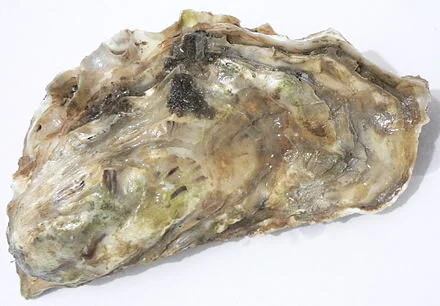
“The color of silence is the oyster's color
Between the lustres of deep night and dawn.
Earth turns to absence; the sole shape's the sleeping
Light — a mollusk of mist. Remote,
A sandspit hinges the valves of that soft monster
Yawning at Portugal. …’’
— From ”Earliness at the Cape,’’ by Babette Deutsch
At least it's quiet
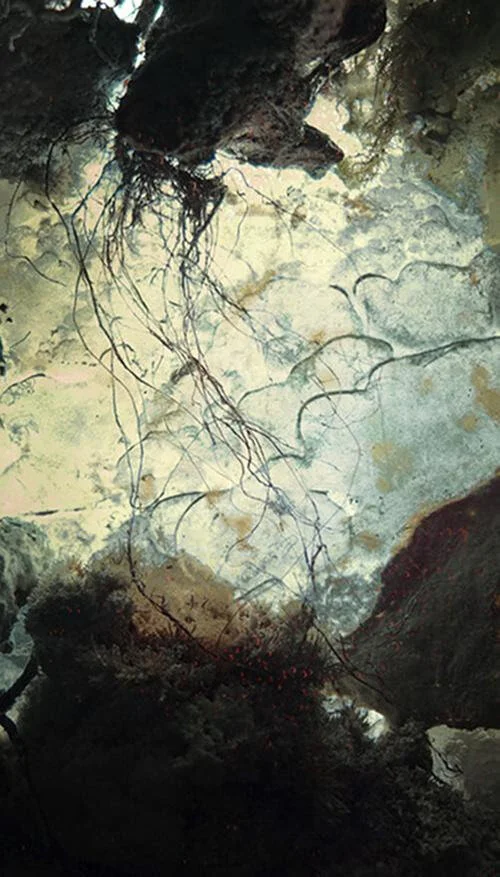
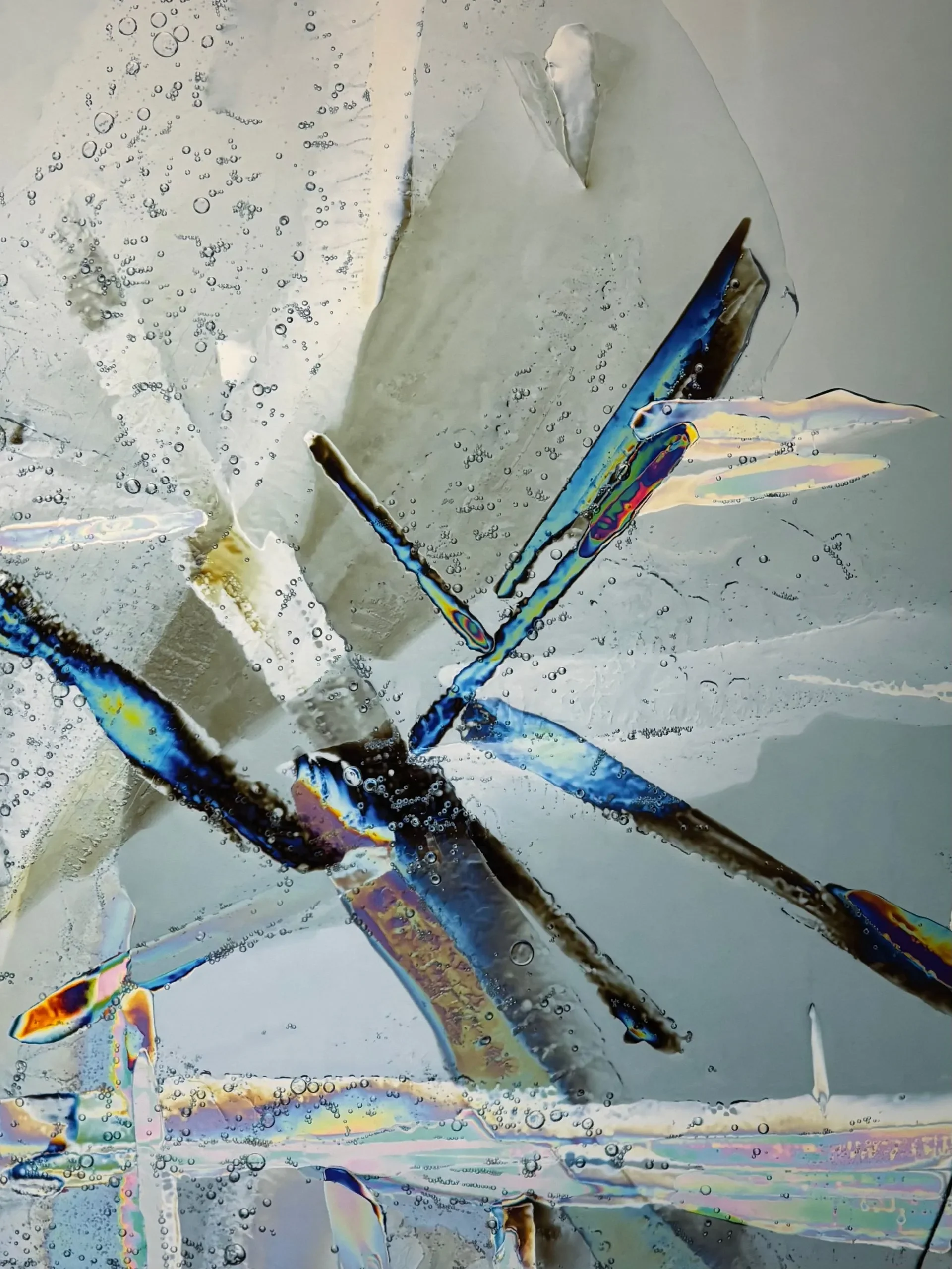
“Beneath the Ice” (archival inkjet print), by Nat Martin, in his show “Nat Martin - Studio Views,’’ at Kingston Gallery, Boston, Jan. 2-Feb. 2
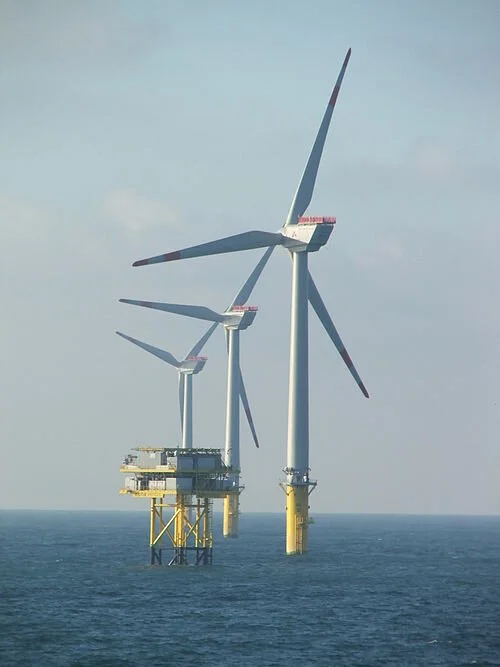
Eversource promises to become carbon-neutral by 2030
From The New England Council (newenglandcouncil.com):
“Eversource has pledged to become carbon-neutral within the next 10 years. Eversource, based in Hartford, and Boston, offers retail electricity, natural gas,and water to about 4 million customers in Connecticut, Massachusetts and New Hampshire.
“The company’s promise comes as a response to growing climate threats, such as heat waves and intensifying storms. Eversource has promised to take targeted steps across all departments and operations to reduce its overall corporate emissions. The plans include cutting energy use by improving the efficiency of its 69 facilities, reducing fleet emissions of its over 5,000 vehicles, lowering the greenhouse gas used in gas-insulated electric switch gear, and replacing bare steel and cast iron natural gas distribution lines to improve safety and eliminate methane leaks. If accomplished, the company would become the first investor-owned utility company to be carbon neutral.
“In 2018, Eversource took its first steps to reduce its carbon emissions by divesting its remaining fossil generation facilities, partnering with, fellow NEC member, Orsted to build wind turbines off the coast of Massachusetts, and developing renewal energy stations and sources.
“As New England’s largest utility, we are proud to partner with our states and communities to achieve regional clean energy and carbon reduction goals,” said Eversource chairman, president and CEO Jim Judge. “Today, we are going one step further by setting a goal for our own operations to help demonstrate that carbon neutrality is achievable.”
The Council commends Eversource on this ambitious and important goal to reduce their carbon emissions.
At PCFR, novelist physician, coastal erosion, Antarctica, Iranian quandaries, Italian populism, God and geopolitics

The jumbled downtown of Monrovia, the capital of Liberia, where writer/public-health leader Michael Fine, M.D., worked
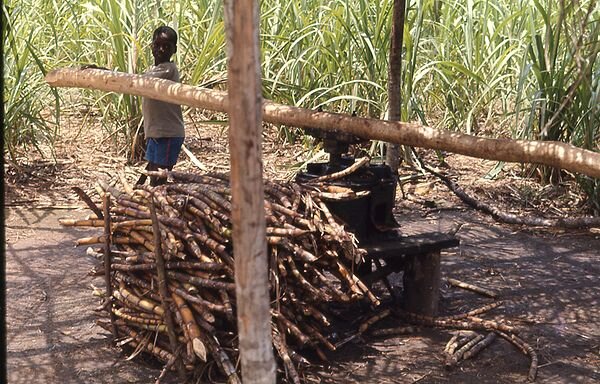
A Liberian boy cuts sugar cane
The next dinner of the Providence Committee on Foreign Relations (thepcfr.org; pcfremail@gmail.com) comes on Wednesday, Jan. 8, with Michael Fine, M.D., the speaker. He'll talk about his novel Abundance, set in West Africa, and the challenges of providing health care in the developing world. He’s also a short story writer and essayist.
Dr. Fine has been an advocate for communities, health-care reform and the care of under-served populations worldwide for 40 years. He is a former director of the Rhode Island Department of health.
His career as a community organizer and family physician has led him to some of the poorest places in the United States, as well as dangerous, war-ravaged communities in third-world countries. He is a former director of the Rhode Island Department of health.
Please let us know if you're coming to the Jan. 8 event by registering on our Web site, thepcfr.org, or emailing us at pcfremail@gmail.com. You may also call (401) 523-3957.
Please go to thepcfr.org, or email to pcfremail@gmail.com or call (401) 523-3957 for information on how to join the PCFR. (It’s very simple.)
xxx
And for the rest of the PCFR season, subject to the vagaries of weather, flu epidemics and so on:
On Wednesday, Feb. 5, we will welcome Cornelia Dean, book author, science writer and former science editor of The New York and internationally known expert on coastal conditions. She’ll talk how rising seas threaten coastal cities around the world and what they can do about it.
xxx
On March 18 comes Stephen Wellmeier, managing director of Poseidon Expeditions. He’ll talk about the future of adventure travel and especially about Antarctica, and its strange legal status.
xxx
News to come about an early-April speaker
xxx
On Wednesday, April 29, comes Trita Parsi, founder and current president of the National Iranian American Council, author of Treacherous Alliance and A Single Roll of the Dice. He regularly writes articles and appears on TV to comment on foreign policy. He, of course, has a lot to say about U.S. Iranian relations.
xxx
On Wednesday, May 6, we’ll welcome Serenella Sferza, a political scientist and co-director of the program on Italy at MIT’s Center for International Studies, who will talk about the rise of right-wing populism and other developments in her native home of Italy.
She has taught at several U.S. and European universities, and published numerous articles on European politics. Serenella's an affiliate at the Harvard De Gunzburg Center for European Studies and holds the title of Cavaliere of the Ordine della Stella d'Italia conferred by decree of the President of the Republic for the preservation and promotion of national prestige abroad.
xxx
On Wednesday, June 10, the speaker will be Dr. Elizabeth H. Prodromou, who directs the Initiative on Religion, Law, and Diplomacy, and is visiting associate professor of conflict resolution, at The Fletcher School of Law and Diplomacy at Tufts University. She titles her talk "God, Soft Power, and Geopolitics: Religion as a Tool for Conflict Prevention/Generation". She was originally scheduled for Dec. 5 but had to postpone because of illness.
'Levity and crime'

“Now at the turn of the year this coil of clay
Bites its own tail: a New Year starts to choke
On the old one's ragged end. I bite my tongue
As the end of me--of my rope of stuff and nonsense
(The nonsense held, it was the stuff that broke),
Of bones and light, of levity and crime,
Of reddish clay and hope--still bides its time.’’
— From “The Mad Potter,’’ by John Hollander (1929-2013), a celebrated poet, critic and Yale professor. He served as Connecticut’s poet laureate. He lived in Woodbrige.

Below Wepawaug Falls, in Woodbridge
Llewellyn King: The scary potential of cyberattacks on utilities make microgrids look better

In engineering there are credible and incredible failures. Nuclear-power plants were designed against what was believed to be a “maximum credible accident.” Then came Fukushima, incredible.
In early December, a report from the National Infrastructure Advisory Council (NIAC) raised the possibility that a huge electric failure, the result of a concerted cyberattack or other event, could knock out electric supply in large swathes of the country for an extended period, weeks even months. A failure with consequences which would have been beyond thinkable before the computer age.
The report, which comes from an advisory council whose mission is to inform the president, has a weight that a think-tank study, for example, would not have. Here, it is the voice of the energy establishment speaking.
I found in reading this report and talking to people in the industry and in academia, it is easy to predict the end of social order as we know it.
It is a painful mind game to try to think how long families could survive without electricity. First off, you would be hot or cold, every appliance in the home would not work. Even if you have a generator, in short order the fuel, natural gas or gasoline, would be gone. How much non-perishable food do you have? I suspect most families would be going hungry after a few days. I would. Cell phones would run down and stay down, and the networks would collapse.
We would be reduced to living like animals without the skills that are inherent to animals. In bad scenarios, families with guns would outlast families without – for a few days.
Survivalists would be proven right as they hung on, maybe for a few months, hunting for fresh food, hoping for clean water, and living off the non-perishable food they have stockpiled. Rumor would dominate as communications failed.
Electric utilities live in a world in which their realities are changing. Wildfires in California and Australia have pointed to a new liability for the companies: accidental ignition through falling lines, likely to get more serious as weather gets more aberrant and droughts become the normal in a time of climate change. That, together with cyberattack, puts them in a place of vulnerability they never anticipated.
Utilities are proud of their expertise – and justifiably so -- in responding to short-term outages, even major ones. They rush crews to the scene, and with military zeal get the lines up and the power flowing.
Then came Puerto Rico after hurricanes Irma and Maria, which gave an inkling of what happens when the grid fails: total devastation and maybe as many as 2,975 lives lost.
The NIAC report cites Puerto Rico and emphasizes cascading, blackouts as the grid begins to fail. As it is, utilities fend off daily cyberattacks, and every executive I have interviewed has emphasized that cyberattack is “what keeps me awake at night” – as Jacqueline Sargent, general manager and CEO of Austin Energy, told me recently.
The utility industry, often keen to be reassuring, was part of the preparation of the NIAC report. Scott Aaronson, point man in the industry’s trade organization the Edison Electric Institute, was involved in the report and has been raising the alarm in interviews since its release.
A new seriousness in the federal government, particularly in the Department of Homeland Security, the Department of Energy and the Pentagon, shows that the threat is real and credible. The White House has said nothing.
Changes not dictated by cyberattack defense, but which might aid it, are on the way. Small entities known as microgrids are cropping up. Think of the old utility model with central power stations as a city. The new one is a series of microgrids, more like villages, loosely connected and isolatable, and depending on local generation from solar and wind.
Also, the technology of defense against cyberattack is growing; There is a large cyber-defense industry. It is an escalating battle in which the defenses improve as the threat multiplies, a kind of cold war with weaponized computers.
In the new year, the invisible enemy will be engaged more than ever. But who knows what is enough? In the NIAC report, insiders have sounded the alarm about their own defenses. That is serious, credible.
On Twitter: @llewellynking2
Llewellyn King is executive producer and host of White House Chronicle, on PBS. He’s based in Rhode Island and Washington. D.C.
Watch the latest White House Chronicle:
The nation’s democracy crisis, with Joe Madison and Hedrick Smith
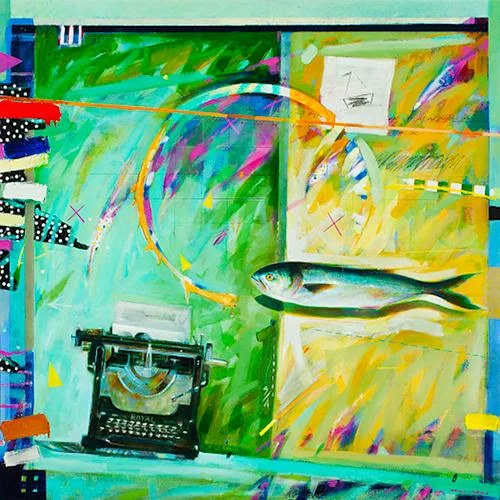
'Something fishy' in canal-city Lowell

“Something Fishy’’ (acrylic), by Patrick McCay in the Whistler House Museum of Art’s (in Lowell, Mass.) members’ exhibition, which features art from members of the Lowell Art Association, the nation’s oldest incorporated art association. The Whistler House is the birthplace of famed painter and etcher James McNeill Whistler (1834-1903), probably best known for the painting nicknamed “Whistler’s Mother.’’
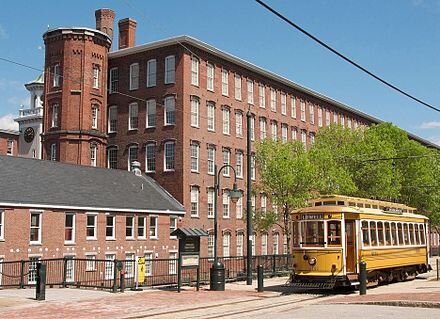
The Boott Cotton Mill Museum and Trolley, in the Lowell National Historical Park
Incorporated in 1826 to serve as a mill town, Lowell was named after Bostonian Francis Cabot Lowell, a major early figure in the American Industrial Revolution. The city soon became famous for its textile mills and other factories. Many of Lowell's historic but long closed manufacturing sites are now part of the Lowell National Historical Park, which is also well known for its canals, on which you can take tours by boat.
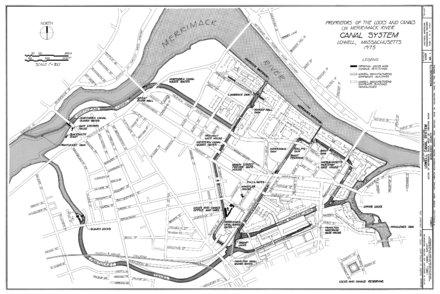
1975 map shows Lowell canals.