
Vox clamantis in deserto




Flagging Boston Harbor
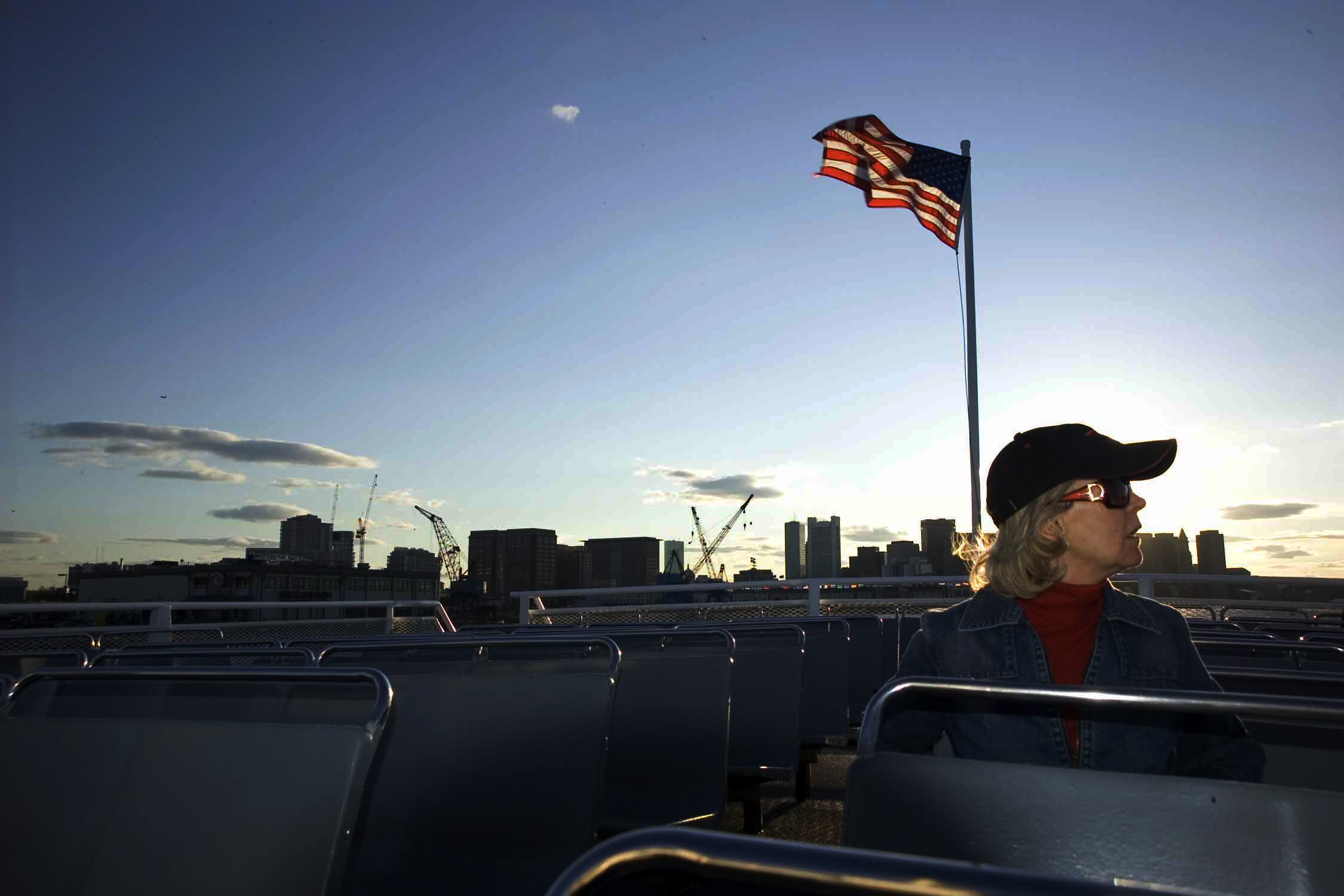
Kate Driesen on a Boston Harbor boat tour on a relatively warm winter’s day
— Photo by C. Davis Fogg
Don Pesci: My 1957 Christmas

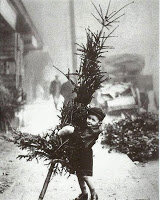
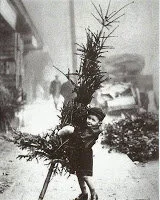
The author and his Boy Scout Christmas tree
VERNON, Conn.
The snow seemed deeper in those days because you had to shovel it in preparation for Christmas, when the guests would be coming. The Pertusi boys, John and Anthony, generally arrived early, full of smiles and hellos, and the winter of '57-’58 was obliging in our town of Windsor Locks, Conn. We hadn’t had much snow prior to Christmas.
There was always lots of glad-handing and, if I may say so, just plain glad-handling within our family because we were Italians, and Italians never really know a thing until they have handled it. Well, think of it: When you hug a person, you’re drawing him or her into your open heart. Now, this never presented a problem if the two huggers were male, though some people frown on that sort of thing. And for us, there was no problem hugging or bussing an aunt on the cheek, provided you were really happy to see her, which was nearly all the time. But we drew a line with female cousins. I won’t say we were stand-offish – not at all. But we were cautious.
In 1957, we were a dozen years on the other side of World War II, marching steadfastly towards prosperity. My twin sister and I were 14, she feeling like 18, that mystical age in which suddenly you became a grown-up and could do pretty much whatever you like, provided your dad approved. There was never a question of keeping secrets from him.
Christmas began with the arrival of the Pertusis by train, which deposited them at the old station on Main Street, shortly after my father bought a tree from the Boy Scouts, who always set up at the bottom of the intersection of South Main and Suffield Streets, a hop, skip and a jump from our house.
My twin sister, Donna, insists to this day that the Scouts sold the worst trees ever, perhaps a sleight exaggeration. Somehow I was under the impression that my father was averse to having strange trees and strangers in the house – plumbers particularly -- and his choice of trees may have been a way of grudgingly satisfying the wants of my mother, who was a stickler for tradition and propriety. In any case, our Christmas tree, even after it had been decorated, always seemed to want fullness.
Many years later, when I was as shorn of branches as those bygone trees, Donna circulated a picture of me embracing a Boy Scout tree before hauling it up the short incline to our house, painted at the time a forest green to compliment the two giant blue spruce trees that fronted 1 Suffield St. in Windsor Locks.
My mother, Rose, a practical woman, admired those spruce trees, which provided a barrier from prying eyes when we all gathered on the Pesci porch on spring and summer evenings, just as the sun was kissing the horizon.
Our house and porch was the Grand Central Station of our family. The back door -- the front door being reserved for less frequent visitors -- was a turnstile that admitted nearly every close and distant relative in town, as well as near and distant acquaintances of my father, such as the superintendent of the town dump. On occasion, the family, most especially my uncles Tommy and Charlie, went dump-picking, dragging home items, such as the shutters that still adorn the Suffield Street homestead, unappreciated by the owners who had deposited them in the dump, people who, as Oscar Wilde once said of the unsentimental cynics of his day, knew the price of everything and the value of nothing.
We should try to remember the people we love in their beauty and strength.
My mother’s kitchen was the site of many an evening poker gathering of raucous uncles and aunts. Getting the kids out of the way was an art rather than a science, and this always required a certain amount of misdirection. Poker days were scheduled for the weekends, usually on a Friday late at night when Don, Donna and Jim were abed.
My bedroom, shared with brother Jim until he was married and moved out of the house, was near enough to the kitchen so that, pressing my ear to the wall, I could hear, though never distinctly, the shouts of triumph and moans of despair piercing the slats and plaster as the poker game proceeded. To say the truth, Rose and Aunt Nellie, married to my uncle John, were better poker players than any of my uncles – Tommy, Charlie or John. A fourth uncle, Ray, was already tucked away in Long Island, New York, living the good life, along with his wife, Leatrice, who was partial to fox-fur, mink and Cadillacs.
The Christmas of 1957 was mild by New England standards. It was cold and gray, but the snow, a paltry 7 inches in December-January, was easily managed. We were used to the train hooting at night, when all our senses were alive to the surrounding sounds: cars, headed in the direction of Hartford or Springfield, passing on the main thoroughfare, Mr. Curtie’s mutt longing for the lost sun and barking in the distance, laughter coming from the kitchen, someone asking someone else “Pass the butter,” the someone else replying curtly, “Get it yourself.” On the table was a large pot of steamers, small dishes of melted butter, ashtrays filling with butt ends, and family familiars – the boys, Tommy, Johnnie and Charlie, and the girls, Rose, Dottie, Mary and Nellie – laughing, boasting, telling stories, cracking jokes, gleefully spreading doubtful rumors, all of them refusing to pass the butter, concentrating fiercely on their cards and trying to read in human faces who among them might win the hand.
My father had gone to bed early after having left near the table an alarm clock set at twelve PM, at the ringing of which everyone at table would be expected to go poof, like Cinderella at the stroke of midnight. The festivities usually concluded at one or two.
It was Friday the 20th, and Christmas Day was twinkling in all eyes. The kitchen was suffused with the odors of Christmas: traditional turkey with all the fixings, stuffing, cranberries, gravy the color of my father’s Sunday shoes, potatoes and turnips, greens and salad, wine red and white, fresh bread from the Italian bakery in Agawam or Hartford, Ann Bollea’s apple and mince pies. The small living room was bursting with laughter and conversations whispered and shouted. Such family gatherings were not rare, and everyone was there gathered around the table, elbow to elbow, but for the children, who were settled in the kitchen where we usually took our supper.
The turkey arrived, hefted by my father, who had left his alarm clock in his bedroom. When everyone had their fill, my mother, who had been watching the proceedings with the attention of a master sergeant, asked this or that feaster why they had not had seconds or, in the case of the gluttons, thirds.
My mother’s earlier injunction, “Now, there will be no talk of politics or religion at this table, at this time,” was generally widely disregarded.
Dwight Eisenhower had ascended to the presidency in 1953 and held that office until 1961. Pasting “I Like Ike” political posters over the bridge near Stony Brook was my introduction to politics. I believe my father had the first framed picture of Barry Goldwater in Connecticut. Barry and I shared a bedroom together, most likely because my mother – who grievously disappointed my father by voting for Senator Jack Kennedy over Richard Nixon for president in the 1960 – didn’t want a stranger glaring down on her in her bedroom. My father was a Republican in a town that was blanketed with Democrats, and these included many of my uncles, as well as Buzzy Bollea, my brother’s father-in-law. Quicksand, my mother knew, was everywhere. But the family managed to get along despite sharp political differences. Buzzy was a molecular Democrat, my father a molecular Republican, yet they were lifelong friends who admired each other for the best of reasons.
On the religious front, there were no atheists in the town and few publicly professed agnostics. My father and mother sent their children to St. Mary’s parochial school within shouting distance of our house. The Sisters of Saint Joseph were the teaching order that pulled us from first to eighth grade. My grandfather’s depreciation of the nuns was legendary. Whenever he saw a cluster of them proceeding from the school down Center Street during their frequent peregrinations, he would dive for cover into his house. But he was a man in whose brain superstition wrestled with rationality. One of those sisters taught me how to draw, and I will be forever grateful for her attentions.
Following the Christmas meal, the women floated into the kitchen, the table was cleaned, and the men, loosening their belts, retired to the living room to continue their confabulations. Someone was sure to fall asleep. Turkey has that effect on people. Somewhere around 11:00, nearly all the relatives departed to their own homes under a starless, cold, December sky. In the bedroom, the alarm clock would go off. Another Christmas had been tucked into bed.
In the morning, Mrs. Bianchi’s cock would crow and set off a riff of barking from Mr. Curtie’s old, nearly hairless, blond mutt.
Don Pesci is a Vernon-based columnist.
World within world
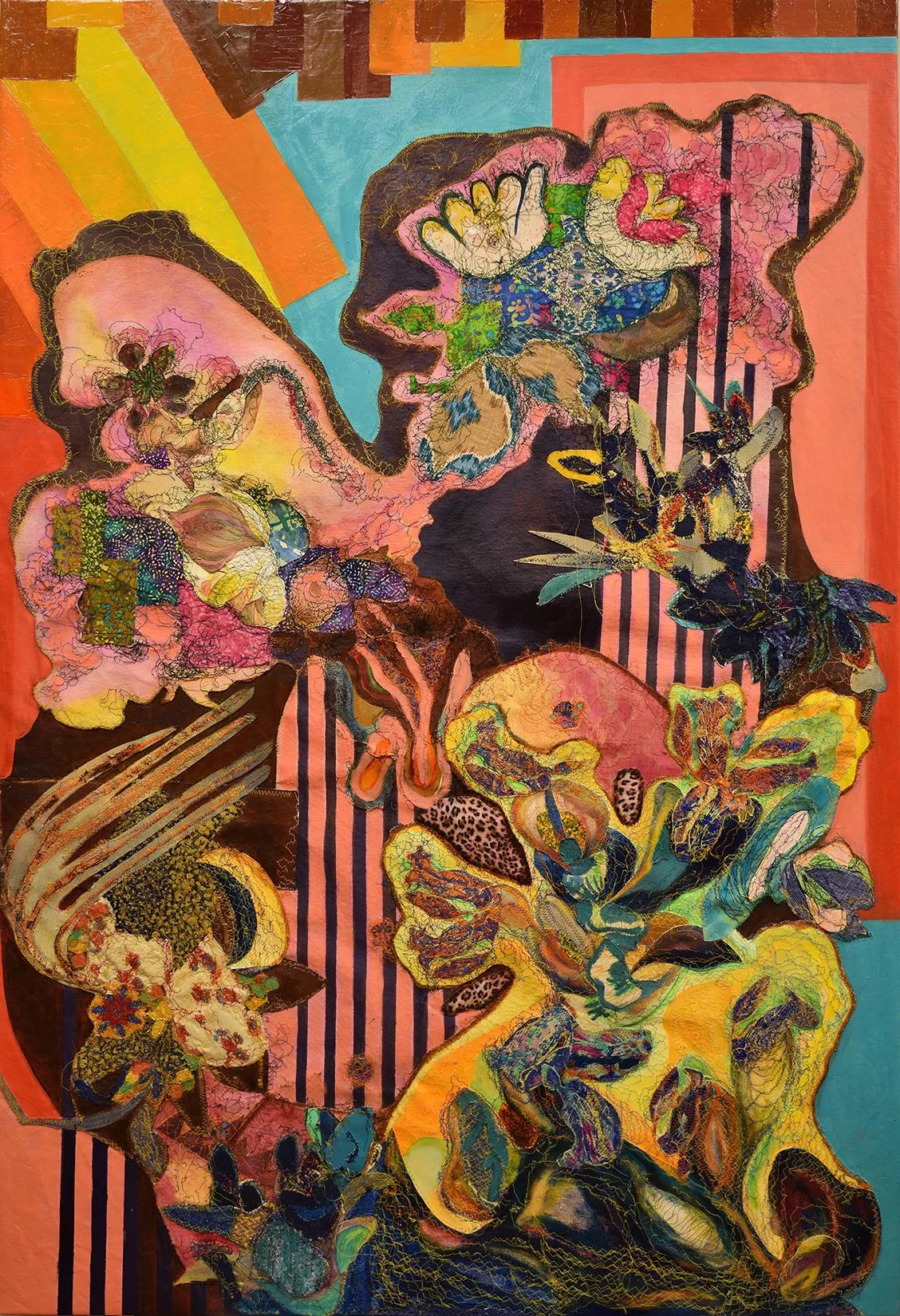
From On-Kyeong Seong’s show “Embedment,’’ at Kingston Gallery, Boston, Feb. 5-Feb. 29. The gallery says:
“Known for her sumptuous, colorful works, the pieces on view highlight her idiosyncratic artistic practice of sewing directly onto unstretched canvas. She is fascinated by our universe’s delicate balancing act of creating a human world within a biological one. Her mixed media paintings, with layers and textures created by the process of pushing the canvas through the sewing machine, demonstrate the changes and influences created by human intervention.’’
Should have waited for Rudolph

This illustration might be the first visual reference to Santa's sleigh being pulled by a reindeer. It appears in "Old Santeclaus with Much Delight", an 1821 illustrated children's poem published in New York.
“A dwarf invented reindeer on his own.
He was Santa’s favorite. He
hadn't known
they already existed.’’
— From Landis Everson’s (1926-2007) "Before Christmas"
Right wing battles effort to reduce carbon emissions from cars and trucks
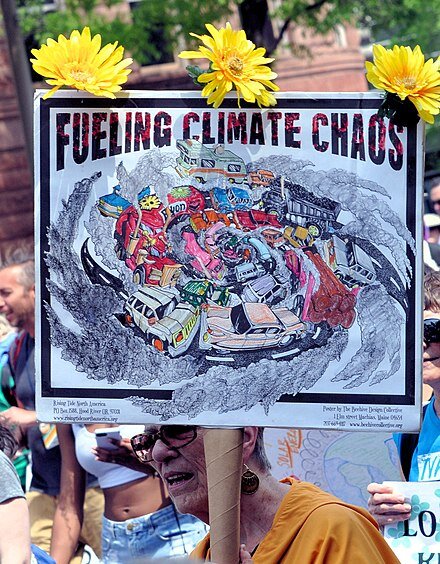
From ecoRI News (ecori.org)
Be prepared for stiff right-wing opposition to the latest effort to curb carbon emissions across New England.
The multi-state Transportation & Climate Initiative (TCI) is set to unveil a plan to address the largest source of greenhouse gases in the Northeast and Mid-Atlantic: the transportation sector. It’s expected that this “cap-and-invest” plan will require distributors of gasoline and on-road diesel fuel, such as fuel terminals, to buy carbon credits to offset their fossil-fuel pollution.
The public comment period has been open since a draft of the regional plan was issued in October. A 60-day comment period will be offered for the Rhode Island program.
Proceeds from the sale of these allowances will fund incentives and programs for electric vehicles, low-polluting buses and trucks, and bicycle and pedestrian projects. The selection process will give consideration to low-income communities, communities of color, people with limited mobility, and those at risk of health and other consequences of the climate crisis.
The TCI program emulates the nine-state Regional Greenhouse Gas Initiative (RGGI) that requires power plants to buy allowances for exceeding climate-emission limits. Former Rhode Island Gov. Donald Carcieri, a Republican, joined the accord in 2007. Since 2009, RGGI has accumulated $3.3 billion from auction proceeds. Rhode Island has received nearly $73 million, most of which has funded energy-efficiency efforts such as a streetlight replacement program. About 20 percent of the proceeds has funded renewable-energy projects.
Unsurprisingly, Republican-led groups, conservative media and organizations with ties to the fossil-fuel industry are getting out ahead of the planned TCI launch, with letter-writing campaigns, opinion pieces, and talk-radio blather attacking efforts to reduce harmful climate emissions.
In an email blast, Mike Stenhouse, CEO of a Rhode Island-based conservative group, called the TCI program a regressive fuel tax and a “green-new-deal type government mandate.”
Similar anti-TCI campaigns are happening in Massachusetts and Maine. A group led by former Maine Gov. Paul LePage is battering the issue. The Massachusetts Republican Party has made unfavorable remarks about the proposal, as has Boston-based talk-show host Howie Carr.
The American Petroleum Institute, the largest trade group for the U.S. oil and gas industry, wants the revenue raised through existing road taxes.
“As proposed, the draft TCI framework appears to be a regressive tax on commuters and truckers who rely on their vehicles for their livelihoods,” according to the Consumer Energy Alliance, a fossil-fuel front group
Rhode Island’s Executive Climate Change Coordinating Council (EC4), a 12-member committee of state agency heads, is well aware of the coordinated opposition.
The day after the Providence Journal published an opinion piece by Stenhouse criticizing TCI, EC4 members emphasized the need to be ready with a convincing message for the public.
The “strategy really needs to be rock-solid because there is going to be opposition to this,” said James Boyd, coastal policy planner for the Rhode Island Coastal Resources Management Council, an EC4 member agency.
Carol Grant, commissioner of the Rhode Island Office of Energy Resources, noted that legislators and the public will need to support any bills that authorize Rhode Island to participate in TCI.
“If we’re going to win hearts and minds, it’s not just people at the Statehouse,” Grant said. “We have to kind of win people over generally to the importance of this.”
Terrence Gray, deputy director for environmental protection at the Department of Environmental Management (DEM) and Rhode Island’s TCI representative, urged an emphasis on the facts, such as the public, health, and economic benefits of injecting money into projects that curb climate emissions and other air pollutants.
“There’s going to be an investment program that’s going to be the best use of this money for Rhode Island,” Gray said. “And that’s going to be a key selling point in terms of getting public acceptance and political acceptance for the program.”
EC4 chair and DEM director Janet Coit said the regional approach is best because it gives the scale necessary to make meaningful emissions reductions.
“We need to have a lot of options and this could be the mechanism to move faster on that,” she said.
A final memorandum of understanding (MOU) is planned to be made public this spring. Each state will then decide whether to sign the final MOU and participate in the regional program. Once implemented, the initial phase of the TCI program will run from 2022-2032.
Let's table this
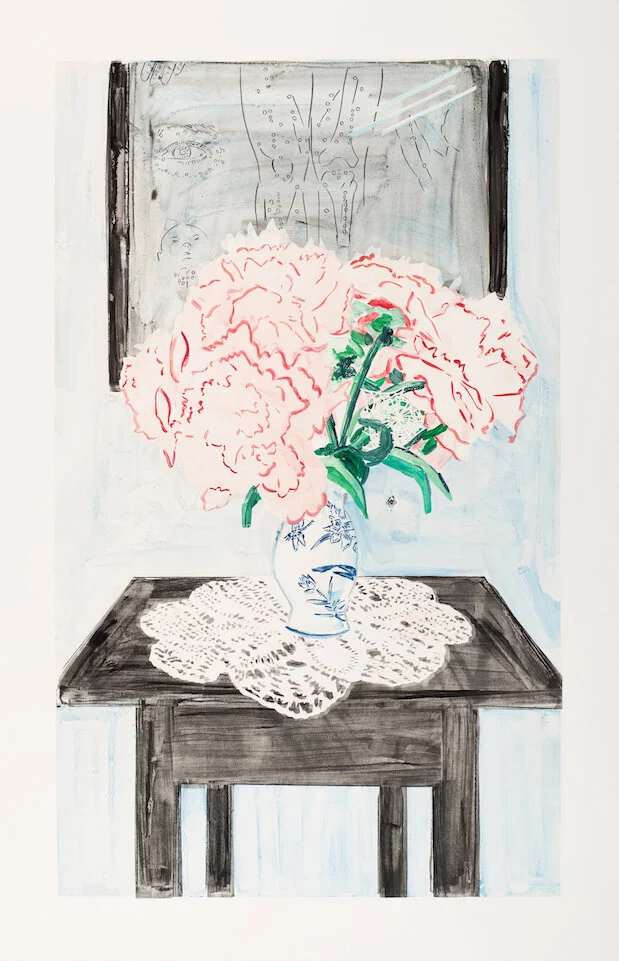
“Peonies, Dragonfly Vase, and Common House Spider (at the Acupuncturist) “ (watercolor monoprint), by Stella Ebner, at Cade Tompkins Projects, Providence, through Jan. 23. The gallery is in the College Hill neighborhood, dominated by Brown University.
Trade deal called great for New England
“The House’s vote to approve the United States-Mexico-Canada Agreement (USMCA) is a huge win for the New England economy. With over 600,000 jobs in our region supported by trade with Canada and Mexico, and nearly $13 billion in exports in 2018 alone, the importance of this agreement for our region’s continued growth and prosperity cannot be understated. Beyond the numbers, the USMCA makes important updates to modernize our trade relationship with these key partners to take into account modern day technology and innovation. From provisions to allow for cross-border data flow, to clear guidance on data localization, to protections for intellectual property, this is truly a 21st Century trade deal and hopefully a template for future free trade agreements.”
“The New England Council has a long history of support for free trade, and approval of the USMCA has been a top legislative priority for the organization in 2019. The council has written to members of the region’s congressional delegation and published op-eds in regional publications expressing its support for the agreement and outlining its impact on the region, and has brought members representing an array of industries to meet with policymakers on Capitol Hill to advocate for the multi-lateral agreement, which updates the 25-year-old North American Free Trade Agreement (NAFTA)..
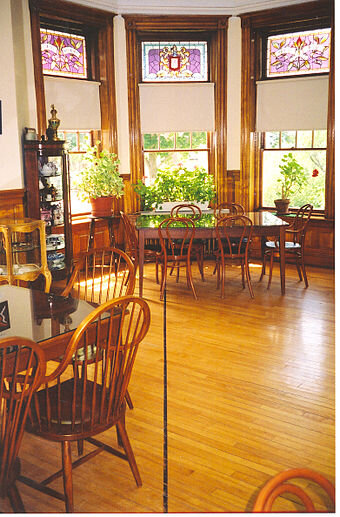
The Haskell Free Library and Opera House straddles the international border (note the line in the floor) in Rock Island, Quebec, and Derby Line, Vt. The Opera House opened on June 7, 1904, and was deliberately built on the border between Canada and the United States as a sign of friendship.
Ease Canada Border Crossings, Please
From Robert Whitcomb’s “Digital Diary’’ in GoLocal24.com
The new U.S.-Mexico-Canada Trade Agreement, which has won bipartisan support in Washington, may well be an improvement over NAFTA. But it will take a couple of years to know how well it’s working out for our economy. Still, I wish something could be done to make it faster and easier to cross the U.S.-Canadian border, which has become so much more awkward since 9/11. It used to be almost as easy as crossing from Vermont into New Hampshire. Things are far more fraught these days but I think that only a modest increase in U.S. and Canadian border officers would result in much faster crossings.
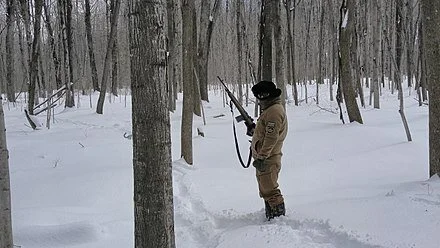
A U.S. Border Patrol officer patrols the North Woods along the Canadian border.
Under a guttering sun
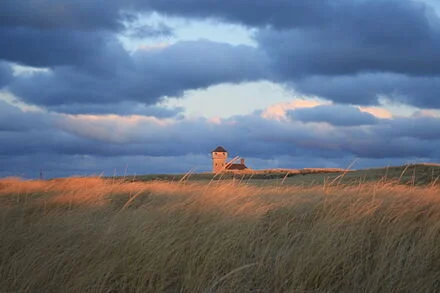
Old Harbor Life Saving Station, in the Cape Cod National Seashore
“We drive to the Cape. I cultivate
myself where the sun gutters from the sky,
where the sea swings in like an iron gate
and we touch. In another country people die.’’
— From “The Truth the Dead Know,’’ by Anne Sexton (1928-74)
Llewellyn King: In the snow or semitropics, Christmas seems universal
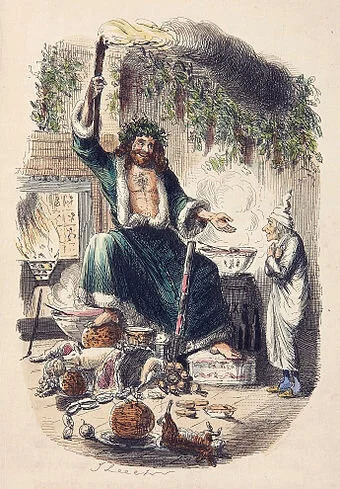
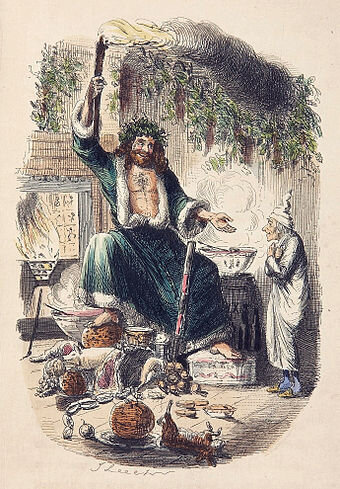
Ebenezer Scrooge and the Ghost of Christmas Present. From Charles Dickens's A Christmas Carol, 1843.
This just in: the Grinch didn’t steal Christmas. Europe executed the heist.
It was surely filched by the cold-weather dwellers of Europe, and the theft was completed by the Victorians who loved all the paraphernalia of the festival – frost, snow, holly, mistletoe, festooned trees, Christmas puddings, wassail, mulled wine, mince pies (which had a combination of meat and fruit), sugarplums, fruitcake, cakes shaped like yule logs and, of course, pervasive red in everything, from poinsettias to front door bows.
All this was lovely fun in the time of Victoria Regina, and it gave us what is now the indisputable seasonal story. Where would we be without “A Christmas Carol” with Scrooge, Bob Cratchit, Tiny Tim and those fabulous characters which sprang from Charles Dickens’s rich imagination, when the spirit of Christmas gripped the great writer?
All this is wonderful and totally joyous. But what has it to do with the original Christmas in Bethlehem, where a woman gave birth to a baby in a barn stall? We can be sure that family didn’t need to be gathering fuel like Good King Wenceslas, who took pity on a poor fellow, “When the snow lay round about/Deep and crisp and even.”
Sorry, dear people, before you sip another eggnog, think about this: How did Christmas, celebrated around the world, get a snowy complexion? In the Southern Hemisphere, when it’s summer in the season of joy, nary a flake of snow falls. And why does the world fake snow when nature doesn’t provide?
My mother was a purest, a conservative about Christmas. We lived in a semitropical climate, in what is now Zimbabwe, where snow is unknown except by reputation. We were snow-deprived, sun-drenched.
When decorating for Christmas, Mum refused to use cotton wool, shaving cream, or anything else that is commonly used to suggest snow. She was all-in for Christmas but hung straw around the house to remind us of Christ’s manger and local ferns, which she believed grew along the River Jordan at the time of the Nativity. Mum had never been to the Holy Land, so I didn’t know why she thought that green stuff which grew in Central Africa also grew along a legendary river in the Middle East.
Truth is, I’ve examined the banks of the Jordan and I’ve never seen any of the ferns which Mum swore were authentic to Christ’s birth.
The wonderful thing about Christmas is that it’s universal. Everyone loves Christmas and complete with ersatz snow, tinsel, ribbons, artificial holly berries, Santa Claus (Mum wasn’t too keen on that interloper), it’s celebrated with gusto from its beloved place of origin in the contested West Bank (of the Jordan) to the farthest reaches of the world, where it isn’t expressly forbidden by local religious preference.
Another thing about a conservative Christmas as practiced by my mother: She didn’t let my brother and I start our Christmas revelry until Christmas Eve. Then it was as though a cannon had been fired and Christmas lasted 12 days, as in the carol.
The last of the 12 days was grand affair, which we loved as kids just a smidgen less than Christmas Day. The cause of this second celebration was a ceremony called a “snapdragon.” Dried fruit – mostly yellow and brown raisins -- was soaked in brandy and ignited. As the flame wasn’t very hot, we children thrust our hands into the fire to grab the fruit. One year, I tried making this on television. I spilled the burning brandy and nearly burned down the studio, according to the fire marshal. “No more,” he said. I’m sure his name was Ebenezer.
Drat, nobody stole Christmas. It’s where it has always been, safe in our hearts. It’s joy, laced with thrill, overflowing with love and tempered by a thought for the lonely, the sick, the hungry, the homeless, the incarcerated, and those wounded in all the ways people get wounded through the year
A very merry Christmas to you.
Llewellyn King is executive producer and host of White House Chronicle, on PBS. His email is llewellynking1@gmail.com. He’s based in Rhode Island and Washington. D.C.
Novelist, public-health leader Michael Fine, M.D., to speak at Jan. 8 PCFR

The next dinner of the Providence Committee on Foreign Relations (thepcfr.org; pcfremail@gmail.com) comes on Wednesday, Jan. 8, with Michael Fine, M.D., the speaker. He'll talk about his novel Abundance, set in West Africa, and the challenges of providing health care in the developing world.
Dr. Fine has been an advocate for communities, health-care reform and the care of under-served populations worldwide for 40 years. He is a former director of the Rhode Island Department of health.
His career as a community organizer and family physician has led him to some of the poorest places in the United States, as well as dangerous, war-ravaged communities in third-world countries. He is a former director of the Rhode Island Department of health.
Please let us know if you're coming to the Jan. 8 event by registering on our Web site, thepcfr.org, or emailing us at pcfremail@gmail.com. You may also call (401) 523-3957.
Please go to thepcfr.org, or email to pcfremail@gmail.com or call (401) 523-3957 for information on how to join the PCFR. (It’s very simple.)
As you know, our speaker who had been scheduled for Dec. 5, Dr. Elizabeth Prodromou, who was to speak on “God & Geopolitics,’’ had to cancel because of illness. We now have her signed up for Wednesday, June 10.

In Monrovia, Liberia, during the 2015 Ebola epidemic
Small town glow
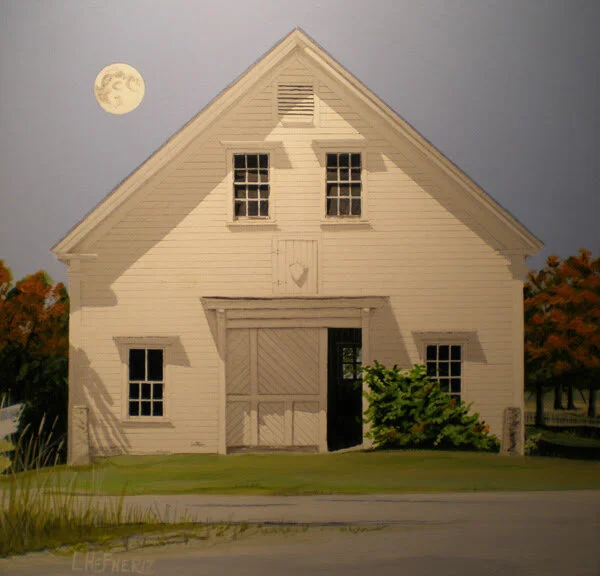
“Moon Over Effingham (N.H.)” (acrylic), by Linda Hefner, in the Duxbury Art Association’s 2020 Annual Winter Juried Show at the Art Complex Museum, Duxbury, Mass., Feb. 2-April 18.
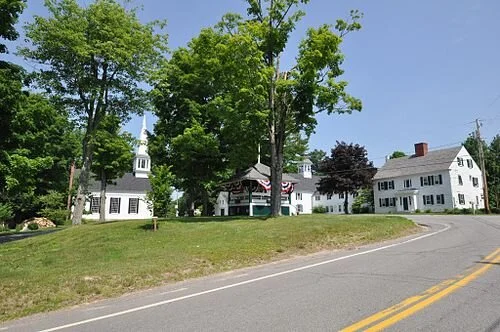
The Lord's Hill Historic District, one of the village centers of Effingham

Chris Powell: Worried kids in college aren't ready for life

While most high school graduates these days, in Connecticut and throughout the country, never master high school English and math, social-promotion policies advance them anyway. Many are admitted to public colleges only to take remedial high school courses. And now, the Connecticut Mirror reports, public and private colleges in the state are being overwhelmed by students needing mental health therapy.
Southern Connecticut State University's counseling services director, Nicholas Pinkerton, explains: "What we provide students is time. Forty-five to 50 minutes of undivided personal time is something that is very difficult to scale, so the question is: How many staff do you need to facilitate that?"
Of course, everyone may benefit occasionally from speaking confidentially with someone else about personal concerns. But the explosion of anxiety among college students emphasizes what educators are starting to recognize as unpreparedness for higher education. This unpreparedness is the inevitable consequence of social promotion.
Because of social promotion, students are unprepared not just for higher education but for adult life itself. Mental-health counseling may calm them down temporarily but it is no cure for their ignorance.
xxx
REFUGEES IN AND OUT: Responding last week to the Trump administration's inquiry to all states to find out if they want the federal government placing refugees with them Connecticut Gov. Ned Lamont proclaimed Connecticut's virtue. The state, he said, “will continue welcoming those escaping persecution and upholding the long tradition of the United States as a place that treats every human being with dignity and respect.”
Most illegal immigration in the United States is economic. Little of it involves persecution, though persecution is often claimed because it is hard to disprove. So scapegoating refugees is just more of the Trump administration's demagoguery about immigration.
But then Connecticut's acceptance of refugees isn't so virtuous either, since the state generates far more refugees than it accepts -- refugees from overtaxation and domination of government by special interests.
While the governor may welcome people fleeing Afghanistan, Iraq, Burma, Cuba and similarly unfortunate places, Florida, the Carolinas, Texas and other states are welcoming many departing Connecticut residents who have realized that the state's current regime promises them little more than ever-increasing taxes to finance pension benefits for government employees. Indeed, as long as those pension benefits remain the highest purpose of government in Connecticut, the more successful refugees from persecution who settle in the state in time may become economic refugees as well.
xxx
SCOLD OF THE YEAR: Time magazine has designated 16-year-old Swedish climate policy protester Greta Thunberg as its person of the year. She may be the right choice but not for Time's reasons.
For Thunberg has neither discovered nor told the world anything new about climate change. She has not persuaded anyone who did not already have an opinion. She has not argued a case. Instead she has merely spread hysteria, arrogance, contempt, and self-righteousness in pursuit of intimidating anyone who might disagree with her.
At the United Nations she shrieked: "How dare you! You have stolen my dreams and my childhood with your empty words." But without argument all words are empty.
So a teenager can be as obnoxious as any adult in politics today. At least in that respect it may be clear enough that the climate is getting worse.
Chris Powell is a columnist for the Journal Inquirer, in Manchester, Conn.
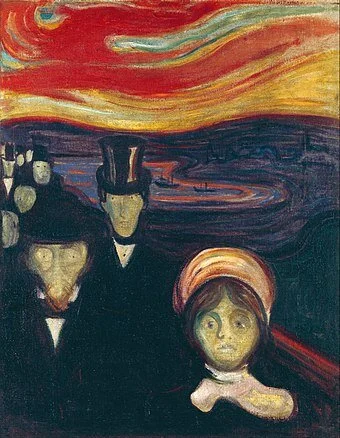
“Anxiety” 1894), by Edvard Munch
Verizon's Boston 5G network concentrated in the Fenway area

Aerial view of West Fenway and Kenmore showing the Back Bay Fens (lower left), Fenway Park (center) and the edge of Kenmore Square (right)
From The New England Council (newenglandcouncil.com)
“As of Nov. 19, customers have been able to access Verizon’s 5G Ultra-Wideband network in various parts of Boston. The telecommunications company made a promise to bring 5G to mobile customers in more cities by the end of 2019.
“Verizon’s 5G network will be concentrated in the Fenway area of Boston, along Brookline Avenue and near Beth Israel Deaconess Medical Center. The service will also be available near Harvard Medical School, Northeastern University, Fenway Park, and Emmanuel College. 5G has a greater bandwidth than 4G, allowing for the transfer of more data in the same amount of time at a lower latency. The network also allows for more devices to be connected at the same time. Verizon began its rollout of 5G in Providence earlier this year.
“We are building our 5G Ultra-Wideband network to support the type of transformative breakthroughs people imagine when they think of next-generation connectivity, and we’re working to build those services with leaders in manufacturing, publishing and entertainment, and in our 5G Labs,” said Kyle Malady, Verizon’s chief technology officer.’’
Ledgy fields
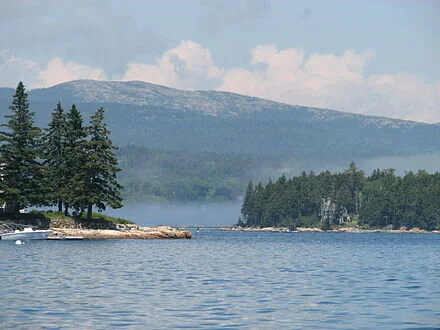
The shore of Mount Desert Island, Maine
“She was the one who lived up country
Half in the woods on a rain-washed road
With a well not near and a barn too far
And the fields ledgy and full of stones
That the crows cawed over and liked to walk in…’’
From “After Reading The Country of the Pointed Firs,’’ by Jean Garrigue (1912-1972)
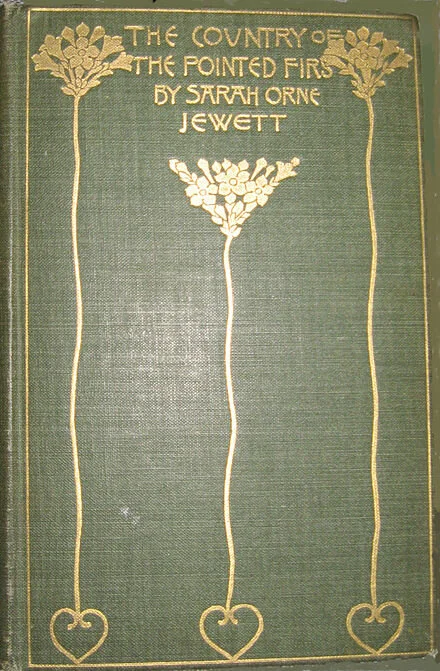
The Country of the Pointed Firs (1896) was Sarah Orne Jewett’s (1849-1909) most successful novel. It’s about a woman novelist who travels to Maine to find peace in order to finish a book.’’
Set in the fictional fishing community of Dunnet Landing, based on villages on Mount Desert Island, the novel reads rather like a collection of sketches, Like Jewett, the narrator is a woman, a writer, unattached and genteel. Anxious to protect her writing time, she works in an empty schoolhouse. Still, she also spend a lot of time with her landlady, Mrs. Todd, a herbalist, and the latter’s family and friends.
Ballet Russes in Clinton
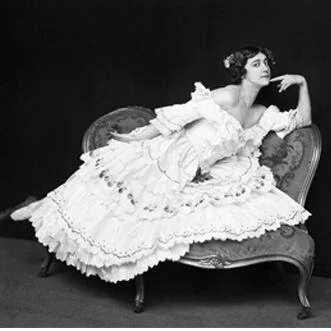
“Tamara Karsivina as Columbine in Le Carnaval, ‘‘1912, (platinum palladium print ©Curatorial Assistance Inc. / E.O. Hoppé Collection), by Emil Hoppé, in the show “Emil Hoppé: Photographs from the Ballet Russes,’’ at the Museum of Russian Icons, Clinton, Mass., through March 8.
The museum says: The exhibition “pays homage to the genius of two men: famed Russian impresario Sergei Diaghilev, who founded the Ballets Russes; and renowned photographer Emil Otto Hoppé, who photographed the champions of that illustrious company.’’

In Clinton, Mass., the Wachusett Reservoir, the second-largest body of fresh water in the Bay State.
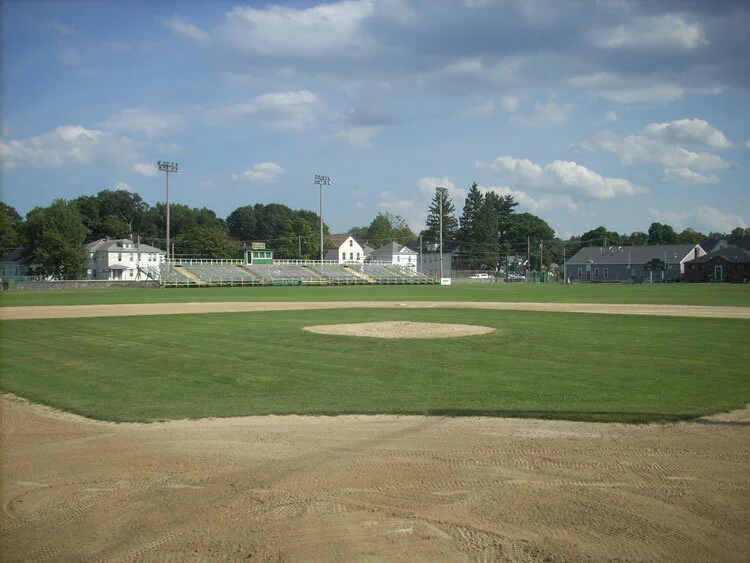
Fuller Field, in Clinton, is said to be the oldest ballpark in continuous use, since 1878.
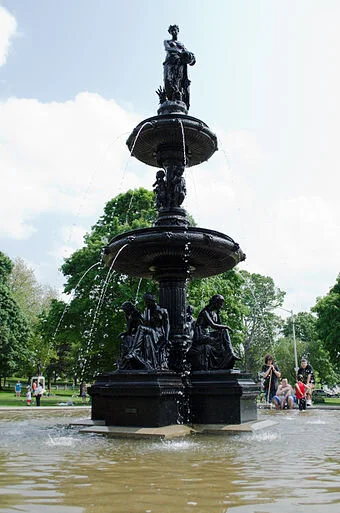
The Foster Fountain in Clinton’s Central Park. As with many New England mill towns that flourished in the 19th Century, Clinton has a lovely public park.
This from the town:
“Central Park was established in 1852 when the land was donated to the town by Horatio N. Bigelow. The four-acre lot contains two war monuments, one for Clinton residents who served in the Spanish-American War, and the other a Civil War monument. A sundial can also be found on the south side of the park, and the ‘Foster Fountain’ on the north side of the park. The Foster Fountain was given to the town by John R. Foster in 1890 and later was destroyed in the hurricane of 1938. A replica fountain was fabricated from the original Fiske Iron Works patterns and re-dedicated by the Town of Clinton on September 9, 2000.’’
Stores out, restaurants in
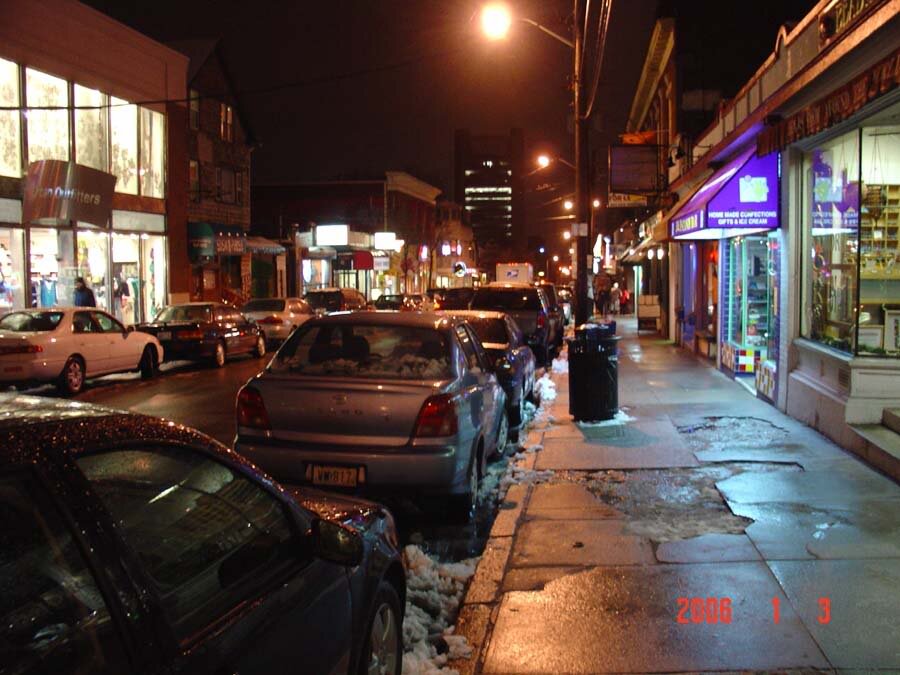
On Thayer Street, in Providence
From Robert Whitcomb’s “Digital Diary,’’ in GoLocal24.com
Chris and Jennifer Daltry opened a store, What Cheer Records and Vintage, on Thayer Street, on Providence’s College Hill in June 2012. “here was a lot of optimism; there were still enough little independent places on the street,” Jennifer Daltry told The Brown Daily Herald’s Isabel Inadomi. But changes, such as tougher parking and a rent increase, led then to close in May 2017.
Chris Daltry noted: “This used to be a shopping district, and now it’s an eating district.’’ This is a situation replicated all over the country, as the Internet and big chains kill many small independently owned stores. It must be -- in general -- what the public wants, but it’s sad that we’re losing that local texture. Meanwhile, more than ever, people go out to eat.
To read Ms. Inadomi’s article, please hit this link.
David Warsh: Two heroes -- Volcker and Comey
Paul Volcker

James Comey
SOMERVILLE, Mass.
It’s difficult to explain heroics of the past to young leaders of the present day. Circumstances change so swiftly, new perils mount with such sudden speed that what was required even forty years ago in terms of preparation, ingenuity, and courage may fail to impress – especially if it happens to involve monetary policy.
Former Federal Reserve Board Chairman Paul Volcker died recently at 92. In recognition of his passing, I read the superbly detailed “The Reform of October 1979: How It Happened and Why,’’ by David Lindsey, Athanasios Orphanides and Robert Rasche. Their article was written for a conference of the Federal Reserve Bank of St. Louis on the twenty-fifth anniversary of a momentous change.
It was on a Saturday evening — Oct. 6, 1979 — that Volcker summoned reporters to the Fed, the first such press conference in the central bank’s history. Volcker had recently been appointed to the job by President Jimmy Carter. The atmosphere in financial markets was one of crisis. A climactic meeting of the system’s policy-making Federal Open Market Committee had ended three hours before.
Volcker announced that, after decades of seeking to control inflation by manipulating the price of money, meaning the short-term interest rates it controlled itself, the Fed would henceforth begin targeting the quantity of money instead. After decades relying entirely on Keynesian doctrine, the Fed would capitulate to its monetarist critics and see what would happen. Whatever the change meant in theory, policy-makers knew that in practice they were tying their hands with respect to interest rates. Monetary stringency meant that market rates would move to heights that the FOMC never would have dared to have explicitly voted.
A crushing recession followed, complicated by much political byplay. To make a long and scary story short, market participants of all sorts gradually revised downward their expectations of future price increases. Convinced that the Fed’s governors would not relent, world markets began a financial asset boom. By 1985 inflation had declined to 3.4 percent, from the 12 percent annual rate during Volcker’s first year on the job.
Meanwhile, the FOMC quietly gave up on the policy of seeking to manage “the money supply” and returned to targeting interest rates. As Fed chairman Ben Bernanke would later explain, deregulation and financial innovation meant that they couldn’t get a handle on the behavior of the monetary aggregates, no matter which one they chose.
There are accounts of Volcker’s story for every taste and attention span. The best is William Silber’s narrative of his friend’s career, Volcker: The Triumph of Persistence (Bloomsbury, 2012). Stephen Axilrod’s Inside the Fed: Monetary Policy and its Management, Martin through Greenspan (MIT, 2011). Volcker’s autobiography, Keeping at It: the Quest for Sound Money and Good Government (Public Affairs, 2018), written with Christine Harper, gives the fullest flavor of the man. For a short course, you can’t beat the obit in The New York Times.
I particularly admire The Great Inflation and Its Aftermath: The Past and Future of American Affluence, by Robert Samuelson (Random House, 2009), Samuelson covered the events of those years as a newspaper reporter and columnist, first for Newsweek, then for The Washington Post. He decided to write the book, he explained, because no one else had, or apparently would. He began
History is what we say it is. If you asked a group of scholars to name the most important landmarks in the American story of the past half-century, they would some or all of the following: the war in Vietnam; the civil rights movement; the assassinations of John Kennedy, Robert Kennedy, and Martin Luther King, Jr.; Watergate and President Richard Nixon’s resignation; the sexual revolution; the invention of the computer chip; Ronald Reagan’s election in 1980; the end of the Cold War; the creation of the Internet; the emergence of AIDS; the terrorist attacks of September 11, 2001; and the two wars in Iraq (1991 and 2003). Looking ahead, these scholars might include other developments: the rise of Japan as a major economic power in the 1970s and 1980s’ the emergence of China in the 1980s from its self-imposed isolation’ and the spread of nuclear weapons (to China, India, Pakistan, and others.) But missing from any list would be the rise and fall of double-digit US inflation. This would be a huge oversight.
Many of Volcker’s efforts after leaving office, in 1987 were devoted to improving the lot of public servants. Instead, their standing has continued to degrade. Especially striking therefore was the afterword for the paperback edition of Keeping at It, which he finished in September. It appeared Friday as a column on the op-ed page of the Financial Times, under the headline “Paul Volcker’s Final Warning for America’’.
Increasingly, by design or not, there appears to be a movement to undermine Americans’ faith in our government and its policies and institutions. We’ve moved well beyond former President Ronald Reagan’s credo that ‘government is the problem.’ with its aim of reversing decades of government expansion.
Today we see something very different and far more sinister. Nihilistic forces are dismantling policies to protect our air, water, and climate. And they seek to discredit the pillars of our democracy: voting rights and fair elections, the rule of law, the free press, the separation of powers, the belief in science, and the concept of truth itself.
That brought the story forward to last week. As I listened, on a long drive, to congressional Republicans defend Donald Trump on a long drive, I thought about another civil servant, this one a hero of the present day. It always seemed to me that Volcker’s attitude towards his job had something to do with his physical stature. He was 6 feet 7 inches tall. His seriousness may have derived in part from his height (and, of course, in part from his parents), but his authority stemmed from his seriousness. In the end being tall simply helped.
Similarly tall, and, as far as I can tell, similarly motivated, is former FBI Director James Comey. If Comey is not as slyly funny as was Volcker, he is at least as high-minded, or perhaps more, by as much as an inch – he is 6 feet 8 inches tall. He is also scrupulously honest (an undesirable trait in a central banker), yesterday acknowledging that the FBI had loaded the dice when they sought court permission to eavesdrop on former Trump campaign adviser Carter Page.
Today the battles of the Trump presidency present a complicated landscape. In another forty years, though, my hunch is that it will be Comey who will be seen to have symbolically slain the dragon.
David Warsh, an economic historian and long-time columnist, is proprietor of Somerville-based economicprincipals.com, where column first appeared.
Holes to the heart
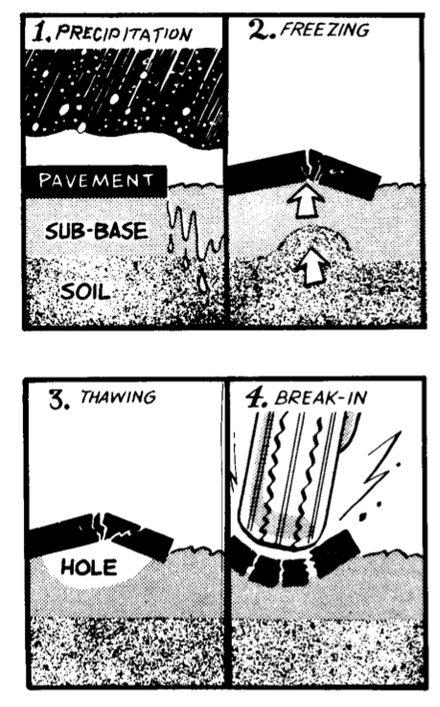
“Testing the soul's mettle,
the frost heaves
holes in the roads
to the heart…’’
— From “New England Winter,’’ by Erica Jong