
Vox clamantis in deserto
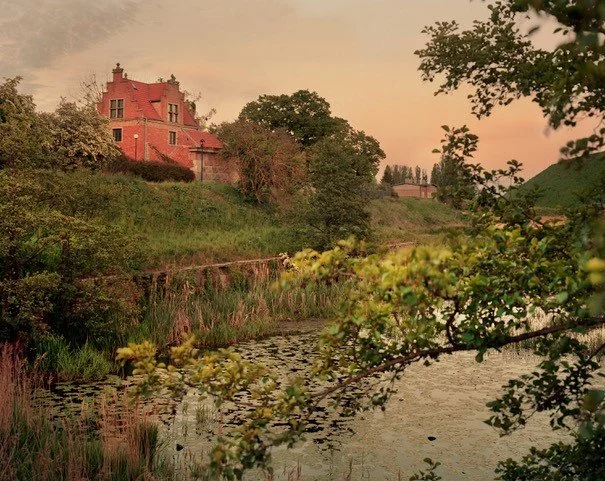






'A small brown flame'

Eastern Chipmunk
“This autumn when trees bolt, dark with the fires
Of starlight, he’ll curl among their roots,
Wanting nothing but the slow burn of matter
On which he fastens like a small, brown flame.’’
— From “The Chipmunk in My Yard,’’ by Robert Gibb
Revolutionary roads
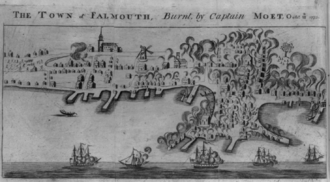
1782 engraving showing the British burning of Falmouth, Maine, in October 1775.
From Robert Whitcomb’s “Digital Diary,’’ in GoLocal24.com
There’s lots of stuff that even many American history buffs didn’t know in Rick Atkinson’s superbly researched The British Are Coming: The War for America, Lexington to Princeton, 1775-1777.
I particularly admired the detail on the battles of Lexington and Concord and Charlestown (aka “The Battle of Bunker Hill’’) and the British destruction of Falmouth, Maine, marred only by the sometimes tortured use of florid and obscure language, and too many technical military terms.
The Revolutionary War started in Massachusetts in 1775, or some might argue, several years before, and quickly drew in fighters from neighboring states, and so this book will presumably be of particular interest to New Englanders.
High and low

“Worm Contemplates Mountain” (oil on canvas), by Rina Goldfield, in her show “Mythologies,’’ at Hampden Gallery, Amherst, Mass., through Nov. 6
Her show has paintings of “totems and monuments: huge mountains, blocky buildings, ancient columns with small onlookers and co-habitors offering a sweep of hugeness, but also of wonkiness and humor.’’
Don Pesci: Of understanding and forgiveness
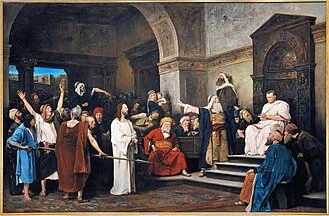
“Christ before Pilate,’’ by Mihály Munkácsy, 1881
VERNON, Conn.
Longtime Hartford Courant columnist Frank Harris III is not happy with President Trump. In his latest production, “Impeach the Vampire,” Harris plumbs the depth of his dissatisfaction:
“America has never been less great than it is today. Like a vampire, the president has plunged his fangs deep into the Constitution. His fangs are sharp, and he won’t let go as he sucks the blood out of the very meaning of America. He has sunk them into the flag, sucking away the red stripes, turning them against the stars of blue. He has sunk them into the Justice Department, making it his own right arm to administer his justice rather than the justice of the land. He has sunk them into the Republican Party, turning them into wind-up vampires, hissing the Trumpian line.”
Trump supporters are not spared Harris’ op-ed lash: “For Trump supporters who voted for this man who has brought a cloud upon the land, you are forgiven. But you know now what you have done. The light of dawn has exposed this president. You see now who he is. There are no mitigating factors. No rationales. No excuses. Continued support makes you complicit in the continuing criminal acts of this crooked, conniving president.”
Was forgiveness ever so quickly withdrawn?
Forgiveness figures prominently in Douglas Murray's latest book, The Madness of Crowds: Gender, Race and Identity, an exploration of the breakdown of Western culture. Decades earlier Julian Benda identified one cause of the breakdown in La trahison des clercs, the treason of the intellectuals. Pointing to the wreckage he saw all about him in 1920, Benda asked “Was it for this Christ and Socrates died?
There are two problems with the postmodern world, Murray argues. Leftists in our time have turned a failed Marxism, the perpetual war against the proles and the bourgeois, into a multifaceted war of all against all. They’ve done this by dividing mankind into oppressors and oppressed: men oppress women, whites oppress blacks, teachers – said Paulo Freire, the author of Pedagogy of the Oppressed, first released in English in 1970 – oppress students. Freire’s book was used as a textbook in teacher education classes during the silly seventies. The oppressed in our time -- they are legion -- are viewed as having the only correct appreciation of racism, feminism, identity politics, gender, transsexualism, ad infinitum. With the nod of treasonous intellectuals, students are now taught by their teacher-oppressors to defer to oppressed classes, always and everywhere.
The second problem concerns what scientist and philosophers used to call objective truth, the truth that lies outside one’s own subjective experiences; the truth that remains true apart from our apprehensions of it. Some postmodern philosophers -- Murray mentions Foucault as a noxious example – have quite done with truth. There is no such thing. The world and everything in it may be explained in terms of post-Marxian power struggles. Just as pseudo-science in the post- Nietzsche period had murdered the Christian God, so objective truth in the postmodern age has been murdered by its false philosophers. And what we have now are various power struggles of a world at war with itself. Since everything is a power struggle, including such fanciful pre-postmodern notions as love and marriage, it is passion, loud voices, rather than reason, rational argument, that decide important issues of the day.
There is only one way out of this maze of irrational passion, violence and hatred Murray says – the way of forgiveness. That was the way paved by Martin Luther King Jr. in matters of race when he insisted that blacks should be judged by the content of their character rather than the color of their skin. “The only means that we’ve ever come up with as a species for the undoability of our actions is forgiveness,” Murray says in a recent interview. “And our culture is obsessed with punishing any and all erroneous action in the world -- often an erroneous action that was only made erroneous 24 hours ago -- but spends no time thinking about forgiveness.”
Forgiveness is incommensurate with ignorance: To forgive is not to unknow or to forget; it is to forego infinite repetition. Forgiveness may never be an affirmation of evil. The evil is not to be ignored or soft peddled or defined away. It is to be wrestled to the ground and defeated through forgiveness and rational thought.
The postmodern mind insists everything is a power struggle rather a search for enduring truths. Pilate speaks to Christ in the language of the postmoderns. Pilate asks Christ, “Are you a king?” And Christ answers, “You say that I am a king. In fact, the reason I was born and came into the world is to testify to the truth. Everyone on the side of truth listens to me,” at which Pilate, dressed in robes of power, scoffs, “What is truth?”
No, no, the postmodern power-worshiper replies, Pilate is right. Power is all.
Don Pesci is a Vernon, Conn.-based essayist.
at October 05, 2019
Llewellyn King: Perhaps better to censure rather than impeach corrupt would-be dictator Trump
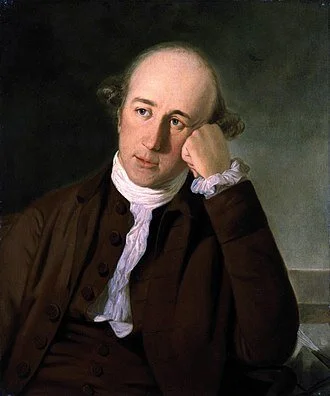
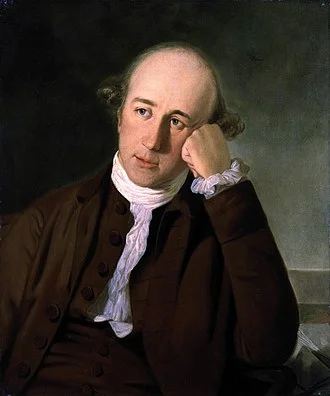
Warren Hastings (1732 –1818), impeached and acquitted
WEST WARWICK, R.I.
Impeachment is a procedure of last resort. It is for when those governed are unable to abide the excesses of one or more persons doing the governing. It owes its genesis to England and was a remedy for the Parliament to remove, or have removed, agents of the Crown (the King) whose conduct was egregious and contrary to the public good.
It goes back to the 14th Century. The language is the language of the day, peculiarly vague in today’s proceedings. “High crimes and misdemeanors” was one of those phrases which everyone in the context of the day knew what it meant. “Conduct unbecoming an officer and gentleman” is another such phrase loaded with meaning but deliberate in its obscurity.
It was not until 1788 that Edmund Burke, the great Anglo-Irish orator, moralist and member of Parliament, really put flesh on the skeleton of impeachment. During the impeachment of Warren Hastings, the first governor-general of Bengal and employee of the marauding British East India Company -- which had been acting as a government in India before it was annexed by Britain. He was the agent of what was little more than a criminal enterprise.
Hastings claimed that he was given arbitrary power by the East India Company to act in any way he chose. It was this arbitrary power, this concept that he was above the law and above all norms of decency, that inflamed Burke. “We have no arbitrary power to give, because arbitrary power is a thing which neither any man can hold, nor any man can give. No man can lawfully govern himself according to his own will – much less can one person be governed by the will of another,” he said.
Burke stated that there was no entitlement to arbitrary power in any human institution, and it could not be conferred on a governor by anyone because there was no entitlement under heaven for arbitrary power.
It can be argued in today’s crisis it is the exercise of arbitrary power by President Trump that lies behind the U.S. House’s move to impeach. Arbitrary power in diverting funds not approved for that purpose to building a wall on the southern border. Arbitrary power in restricting Congress’s entitlement to investigate the executive branch. On and on the use of what many would call arbitrary power, from abrogating treaties, abandoning allies, trashing traditions, and reversing previous settled issues, like the Deferred Action for Childhood Arrivals
All this, Trump asserts, is constitutional under Article 11. In essence, he has said, “Arbitrary power is mine.”
That is what lies behind the urge to impeach Trump. He is claiming to be, in conduct and statement, above the Constitution and the law. Ergo, he should be impeached.
But no. Impeachment, as Burke and his allies found, is a trap unless followed by conviction. In Hastings’ case, impeachment was up to the House of Lords and, despite the pleading of Burke and others, it declined to impeach after the procedure had dragged on for seven years.
Given the pusillanimous nature of the Republican-controlled U.S. Senate, its seeming preparedness to overlook damage to the constitutional order of governance and all the cascading damage to come down through the years, Trump’s acquittal is to be feared.
Trump in a second term, with the sense that he had been vindicated, would have no regard for law. He would feel emboldened to exercise arbitrary power in the most egregious way, rewarding his business interests and punishing his enemies, real and imagined.
As others have suggested, a better path for Democrats to pursue in the present constitutional crisis might have been to censure Trump, while looking to the courts to restrict him where possible. A less dramatic indictment, but also less of a future danger.
Republicans have developed an interesting defense of their own. Call it “the eye-rolling, tut-tutting.” They do this whenever Trump is raised in conversation, but they will not curb him in the Senate or speak out in public. Political cowardice.
These lily-livered legislators might find courage if they read on in Burke’s pleading in the matter of Hastings: “Those who give and those who receive arbitrary power are alike criminal; and there is no man but is bound to resist it in the best of his power, wherever it shall show its face to the world.”
There is much more from Burke. It is meaty, relevant stuff.
Llewellyn King is executive producer and host of White House Chronicle, on PBS. His email is llewellynking1@gmail.com. He’s based in Rhode Island and Washington.
Sam Pizzigati: Inequality of life expectancy exploding in the U.S.
Via OtherWords.org
BOSTON
What do the folks at the U.S. Census Bureau do between the census they run every 10 years? All sorts of annual surveys, on everything from housing costs to retail sales.
The most depressing of these — at least this century — may be the sampling that looks at the incomes average Americans are earning.
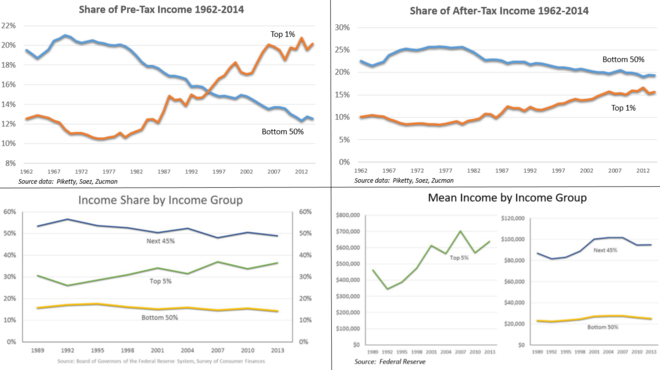
The latest Census Bureau income stats, released in mid-September, show that most Americans are running on a treadmill, getting nowhere fast. The nation’s median households pocketed 2.3 percent fewer real dollars in 2018 than they earned in 2000.
America’s most affluent households have no such problem. Real incomes for the nation’s top 5 percent of earners have increased 13 percent since 2000, to an average $416,520.
The new Census numbers don’t tell us how much our top 1 percent is pulling down. But IRS tax return data shows that top 1 percenters are now pulling down over 20 percent of all household income — essentially triple their share from a half-century ago.
Should we care about any of this? Is increasing income at the top having an impact on ordinary Americans? You could say so, suggests a just-released Government Accountability Office study.
Rising inequality, this federal study makes clear, is killing us. Literally.
The disturbing new GAO research tracks how life has played out for Americans who happened to be between the ages of 51 and 61 in 1992. That cohort’s wealthiest 20 percent turned out to do fairly well. Over three-quarters of them — 75.5 percent — went on to find themselves still alive and kicking in 2014, the most recent year with full stats available.
At the other end of the economic spectrum, it’s a different story.
Among Americans in the poorest 20 percent of this age group, under half — 47.6 percent — were still waking up every morning in 2014. In other words, the poorest of the Americans the GAO studied had just a 50-50 chance of living into 2014. The most affluent had a three-in-four chance.
“The inequality of life expectancy,” as economist Gabriel Zucman puts it, “is exploding in the U.S.”
The new GAO numbers ought to surprise no one. Over recent decades, a steady stream of studies have shown consistent links between rising inequality and shorter lifespans
The trends we see in the United States reflect similar dynamics worldwide, wherever income and wealth are concentrating. The more unequal a society becomes, the less healthy the society.
On the other hand, the nations with the narrowest gaps between rich and poor turn out to have the longest lifespans.
And the people living shorter lives don’t just include poorer people. Middle-income people in deeply unequal societies live shorter lives than middle-income people in more equal societies.
What can explain how inequality makes this deadly impact? We don’t know for sure. But many epidemiologists — scientists who study the health of populations — point to the greater levels of stress in deeply unequal societies. That stress wears down our immune systems and leaves us more vulnerable to a wide variety of medical maladies.
We have, of course, no pill we can take to eliminate inequality. But we can fight for public policies that more equally distribute America’s income and wealth. Other nations have figured out how to better share the wealth. Why can’t we?
Sam Pizzigati, based in Boston, co-edits Inequality.org for the Institute for Policy Studies. His latest book is The Case for a Maximum Wage.
Country running

From Robert Whitcomb’s “Digital Diary,’’ in GoLocal24.com
Wiry and a glutton for punishment, I was a pretty good cross-country runner in a Connecticut boarding school. (This was before the unfortunate term “preppy’’ became so popular.)
Cross country is, of course, mostly an autumn sport. When we started the season, in the middle of September, it was often hot and humid, few of the leaves had turned and we sweated gallons. Then, first slowly, then faster, it got cooler and cooler, the leaves of the maples in the Litchfield Hills turned to flame, and then wind and cold rain would take them down – in some years it seemed all at once -- after the first hard freeze. By November snowflakes would mix with the rain. Then, we’d almost look forward to starting the race just to get warm, although it was always by its nature a test of pain tolerance. There was the taste of what seemed to be blood in your mouth when you were running the hardest, coming up from your throat.
We ran at schools all over the southern half of New England, up and down muddy or rocky trails through woods, along streams, across golf courses, around ponds and beside country roads, sometimes dodging dogs and slipping on wet leaves. Almost all of the courses were hilly, and often steep.
Most of the schools were in the country or exurbia. So being on the team impressed on me again just how beautiful much of New England is, even when you’re seeing it while gasping for breath on a November Saturday when it’s blowing a gale and pouring, and the landscape is mostly brown.
Our coach was a short, solid, bald man with piercing blue eyes who didn't look like a runner himself (more like Mr. Clean) called John Small, who also taught Latin and German. An Army veteran of the Battle of the Bulge, he was the perfect coach – (outwardly) calm and persistent, innovative in training methods and usually perceptive about the psyches of adolescent males.
As I came to know him a bit I learned that the most traumatic events of his life were, not unexpectedly, during the Battle of the Bulge, in which Mr. Small, barely out of boyhood, was ordered to do some lethal and desperate things in violation of the Geneva Conventions. A bachelor, he lived alone in a small apartment at the school and often seemed reclusive. You could often hear through his door Bach being played on his hi-fi. But most Sundays he could be seen in his Porsche with an attractive lady of about his age – 38-40 or so.
Maybe he had dealt with his trauma by taking cover in the soothing routine of a boarding school. But all in all, he was a very complicated man of mystery.

Caitrin Lynch: 30 years later, of memory and forgetting

Bates College's oldest academic building, Hathorn Hall , was built in 1856 by Boston architect Gridley J. F. Bryant.
From The New England Journal of Higher Education, a service of The New England Board of Higher Education (nebhe.org)
With all the discussion about what best prepares students for work and life, two candidates are interdisciplinary thinking and international awareness. This past summer, exactly 30 years after I graduated from college, my favorite professor at Bates College (in Lewiston, Maine) retired, which led me to think about my own early experiences with these ways of thinking and being.
To prepare for Steve Kemper’s retirement party, I dug through a box of college notebooks and papers that I had moved unopened from one apartment and city to the next for the past three decades. I found a pastel pink exam book, with my name in pencil on the cover. Inside, I saw my handwriting, no different than today’s. As I began to read, I didn’t remember writing or knowing any of what was on these pages. My 19-year-old self possessed deep specific knowledge that is long gone from my memory, 30 years on. But I did recognize that this exam was for a course Steve taught my sophomore year, on culture and politics in South Asia.
Steve’s name doesn’t show up anywhere, but his handwriting is unmistakable. A cursive like no other: loopy, ornate, enthusiastic, and generous, with tails on letters like x, p, and y flowing down with a flourish. Steve had written comments in the margins, including a correction when I wrote “bride price” instead of “dowry.”
I learned from my exam that back when I was only 19 years old, I knew a lot about what might be considered pretty esoteric things. Before this class, I knew nothing about South Asia. I enrolled by accident, thinking “South Asia” referred to what I now know is Southeast Asia. My father is a Vietnam War vet, and I wanted to learn more about Vietnam. Instead, on the first day of class, Steve had pulled down a map from a roller above the chalkboard and drew me quickly into learning about India and its neighboring countries—including Sri Lanka, where I eventually spent many years and learned two of the languages spoken there.
Memories can be triggered by a whiff of an odor, a snippet of a song, or a bit of food: events, experiences, and emotions long-ago tucked away spring up at a resonant prompt. Holding the exam book in my hand, I suddenly remembered working in the college library; studying for hours for Steve’s tests; re-reading books, articles and lecture notes; taking new notes and writing practice responses to questions he had provided in advance.
When I remembered the library study sessions, I had an epiphany. There was something about the esoteric nature of the exam topics, and my absence of memory of the details of the materials but clear memory of studying for the test, that led me to really understand—just in time for my 30th reunion—what I learned in college.
Back then, I was focused on the details of the societies Steve instructed me about. I am sure I didn’t appreciate what was at stake, why this kind of learning matters so much. I now see that Steve helped me to have a genuine interest in people unlike me, and to understand the necessity and value of the hard work of reading, researching, interviewing, seeing, feeling, talking, listening: all in the interest of making sense of how we live in the world, what matters most for people and why. In learning about the efforts toward justice by Mahatma Gandhi or by unionized workers in Calcutta, or in learning about menstruation practices among Tamils in Sri Lanka, I developed a lifelong attention to the values, customs, aspirations and struggles of people near to and far from my daily life. Steve taught me that this kind of learning and understanding is hard but essential work.
Nowadays, I use that conviction to learn and understand, and to make sense of everyday conversations, first-hand experiences and news items—say, about the Indian government’s revocation of special status for Indian-controlled Kashmir, debates about the separation of migrant families at the US-Mexican border, or the causes and impacts of last spring’s Easter Sunday bombings in my beloved Sri Lanka. From Steve, I learned how to identify what I know and what I don’t know. I learned why it matters that I spend time to learn, humbly and with deep curiosity and respect.
Today I’m an anthropology professor, like Steve. I teach my students how to understand and respect people unlike themselves, and I teach them how this is the road to creating experiences of equity and justice. Steve has retired from 45 years of transformative education. And yet, his work is not done. During this moment in American life where misunderstanding across communities reigns, educators of my generation and the next must step up and do more of this work.
Caitrin Lynch is a cultural anthropologist at Olin College of Engineering, in Needham, Mass.
Tags: anthropologist, Bates College, Olin College of Engineering
Leave a Reply
Your Name*
Your E-Mail*
Got a website?
Moving the problem down the beach


Sandbags on beach after Hurricane Sandy, in 2012
From Robert Whitcomb’s “Digital Diary,’’ in GoLocal24.com
’“Climate change poses risks to real estate that homebuyers may not be able to predict. As sea level rises, coastal properties, for example, may be subject to increased flooding and intensifying storm surges. First-time homebuyers often lack the expertise to evaluate these new risks, and thus tend to underestimate them and overpay for increasingly exposed properties.’’
— Matthew E. Kahn, professor of economics and business and the director of the 21st Century Cities Initiative at Johns Hopkins University, and Amine Ouazad, an associate professor in the Department of Applied Economics at HEC Montreal, in a Bloomberg column. To read it, please hit this link:
https://www.bloomberg.com/opinion/articles/2019-10-03/when-climate-change-leads-to-mortgage-defaults
The Cape Cod Times reports that for mysterious reasons, the Massachusetts Department of Environmental Protection has overruled the National Park Service and the Town of Wellfleet’s Conservation Commission and is allowing a 241-foot rock revetment to be built to protect (for a while….) a McMansion owned by James Hoeland (of Newtown, Pa., and Vero Beach, Fla.) from sliding into the sea from its current position on top of a rapidly eroding bluff. (Remember that Cape Cod is but a giant glacial moraine, which is washing away at ever faster rates because of sea-level rise linked to global warming caused by our burning fossil fuel.
The property is within the Cape Cod National Seashore.
The revetment will worsen erosion down the beach. And one huge storm may make it far less effective than Mr. Hoeland hopes. As coastal flooding and erosion worsen, especially along sand, gravel and boulder heaps such as on the Cape, we’ll see more demands from rich summer property owners that such rock structures be built but they won't be effective for long and will hurt the property of neighbors.
To read the story, please hit this link.
Maine gets grant for aquaculture research

The Damariscotta River is the center of Maine’s burgeoning oyster farming sector.

Baskets used to grow juvenile oysters
— Photo by Saoyster
From The New England Council (newenglandcouncil.com)
The University of Maine (UMaine) has been selected to receive a $123,735 grant from the National Oceanic and Atmosphere Administration (NOAA). The grant will be given to UMaine’s Aquaculture Research Institute, which was established in 2009 and has completed more than 50 aquaculture projects in the past five years.
The grant is a part of NOAA’s Sea Grant National Aquaculture Initiative to donate over $16 million to 42 projects nationwide. NOAA’s grant will fund UMaine’s pilot program, “Aquaculture Workforce Development: Certificate in Applied Sustainable Aquaculture,” which was designed to address the aquaculture industry workforce needs by introducing and developing alternate career opportunities for traditional fishing communities. In addition, the project incorporates UMaine’s internship program to create an industry and academic partnership pipeline.
“Maine’s history of innovation, collaboration and economic development in this sector positioned institutions in the state to compete successfully for almost one-third of the federal funds awarded,” says Gayle Zydlewski, director of Maine Sea Grant and a professor in the UMaine School of Marine Sciences.
Shading the departed

“Passage: Forest Hills Cemetery #2 “ (gouache on panel), by Vivki Kocher Paret, in her show “Among Trees,’’ at Galatea Fine Art, Boston, Oct . 31-Dec. 1
The gallery says:
She “studies the visual pathways created by filtered light in environmental settings. Whether it be on the woodland floor, through water, or city buildings, the beauty inspired by the ephemeral nature of trees is found to be an uplifting feature in her work.’’

Philip K. Howard: Action, not moderation, is the salve for American polarization

Polarizer in chief
Polarized politics is a formula for public failure, a downward spiral of distrust and greater paralysis. Pulling out of this spiral is difficult because polarization is good business for politicians and pundits. Political coffers fill up with contributions from people who loathe the other side. President Trump has a unique genius for sowing division — playing to people’s fears and attacking the weaknesses of his opponents. Social media fans the flames of the latest outrage.
Some think the cure to polarization is more moderate politicians. By fixing electoral machinery that appears to favor extremists, such as gerrymandering and restricted primaries, reformers hope to return to the happy days when leaders from both parties could sit down and work things out. They long for Ronald Reagan and House Speaker Tip O’Neill.
Moderation is just happy talk, however, without a new vision of how to govern better. How would moderate leaders fix schools, or reduce health care costs, or issue permits within a year’s time instead of a decade? None of the candidates in the 2020 presidential election offers a cure to the alienation that Americans feel towards Washington.
Washington, meanwhile, plows forward, a giant bureaucratic state crammed with red tape and obsolete programs. Democracy has degenerated into a kind of legal perpetual-motion machine, taking upwards of a decade to approve vital infrastructure projects. Bureaucracy is everywhere. According to the World Bank, the U.S. ranks 53rd in ease of starting a business. Practical choices throughout society are stymied by overbearing law — whether maintaining order in the classroom, being candid with an employee, or letting children walk to school alone. Is your paperwork in order?
Reformers have confused cause and effect: Paralyzed government, not polarization, is the original sin of modern government. Bureaucratic densification since the 1970s has made government beyond human control. Government’s inability to respond to public needs is the chicken that laid the egg of polarized politics. The inability of Americans to roll up their sleeves and fix things leads inexorably to extremism. Political leaders who can’t get things done compete instead by pointing fingers and screaming louder.
Populism thrives on fear and anxiety. A collective sense of powerlessness spawns the instinct to vilify “the other.” Government is toothless to deal with dislocations of global commerce, new technology and waves of immigrants. Self-reliance is stymied by faceless bureaucracy. Unresponsive government prompts anxious citizens to embrace populist solutions.
In 1939, the organizational expert Peter Drucker wrote that fascism had taken root because the establishment had offered “no new order” to counteract the dislocation of the Great Depression. But fascism was doomed to fail, Drucker argued, because its popularity was based on attacking scapegoats, not a positive governing vision. The solution to a destabilized society in which people feel powerless, Drucker argued, must be “built upon a concept of the nature of man and of his function and place in society.” People must be able to help themselves and their society.
The way out of America’s downward spiral is not moderation but a radical spring-cleaning of government to re-empower Americans at every level of responsibility. Liberating people to act, not top-down solutions, is the cure to paralysis.
The only cure for alienation is ownership. This requires not wholesale de-regulation, but rebooting government with simpler, open frameworks that set goals and governing principles. Simpler codes will allow Americans to understand what is expected of them and afford them flexibility to get there in their own ways. Only then will officials and citizens have the freedom to make sense of daily choices.
Action, not moderation, is the salve for polarization. Conventional wisdom is that letting individuals use their judgment will exacerbate social conflict. Evidence suggests the opposite: A study in Britain found that professionals with opposed ideological views generally arrive at similar solutions when confronting concrete problems. Studies of American judges and of German bank regulators also found remarkable consistency.
Local communities must be able to run schools in their own ways. Health care providers must be accountable for overall quality, not to compliance police playing “gotcha.” Officials must be empowered to set up and give permits in “one-stop shops.” Governors must have freedom to try new ways to manage unemployment relief and other public services. Citizens must have someone to call, and to blame, when things aren’t working.
Reviving human responsibility does not solve societal challenges such as income stagnation, climate change, or immigration. But it reinvigorates a culture of practical action that is the antidote to corrosive polarization. Empowering people to be practical in their daily challenges will likely rub off in their political views. Polarization will fade away when Americans, waking up each morning, feel that both they and their officials in Washington can make a difference again.
Philip K. Howard is chair of Common Good and author of the new book Try Common Sense (W.W. Norton, 2019). Follow him on Twitter @PhilipKHoward. He’s also a friend and occasional colleague of New England Diary editor Robert Whitcomb. This piece first ran in The Hill.
TAGS DONALD TRUMP POLITICAL POLARIZA
Recipes from the roof

Photo by Jean-Pierre Dalbéra
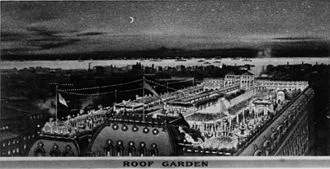
Hotel Astor (in New York) roof garden in 1905
From Robert Whitcomb’s “Digital Diary,’’ in GoLocal24.com
There’s lots of wasted space on the flat roofs of some big buildings, such as hospitals and old factories. They can be put to use for such things as solar panels -- or rooftop farms. That’s what the Boston Medical Center has been doing for the past three years.
EcoWatch reports that the hospital’s rooftop farm produces about 6,000 pounds of food a year, with 3,500 pounds slated for its Preventive Food Pantry, which provides free food to low-income patients. The rest goes to Boston Medical’s other patients, its cafeteria, a “teaching kitchen and an in-house portable farmers market,” the publication reports. More than 25 crops grow in the 2,658-square-foot rooftop garden, said to be the biggest in Boston.
The hospital even offers some courses to patients, employees and their families in how to grow their own healthy food. I love it when previously wasted space – rooftops, parking lots of closed stores and factories, etc. -- is used so productively.

'Telling and hiding volumes'

From Anthony Goicolea’s show “Pose,’’ at the Montserrat College of Art, Beverly, Mass., through Nov. 9. Montserrat says he explores “the stranger side of portraiture, with pieces that are sometimes beautiful and sometimes intentionally grotesque. The figures in these portraits are both revealing and secretive, telling and hiding volumes with coded body language.’’
Sarah Puschmann: Striped bass are being overfished

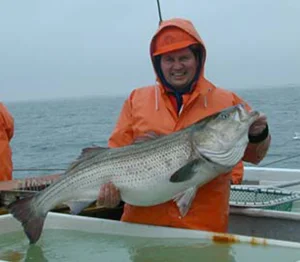
Researcher with a striped bass
Via ecoRI News (ecori.org)
A new assessment has revealed that striped bass off the Atlantic Coast are being depleted faster than they can replenish, and have been since 2013.
In response, the Atlantic States Marine Fisheries Commission in August issued a collection of possible management options for recreational and commercial fishing, with the goal of reducing the rate of Atlantic striped bass killed by fishing to 18 percent less than the 2017 rate by 2020
This isn’t the first time striped bass have stared the Grim Reaper in his piscine eyes. Back in the 1980s, the population of striped bass that the Atlantic States Marine Fisheries Commission manages — which ply the coastal waters between North Carolina and Maine in search of menhaden, a type of herring — declined so drastically that the commission called a complete moratorium on striped bass fishing.
It worked. By 1995, the population had climbed to record levels. That year 540,000 fish were caught commercially, a sharp increase from the 272,000 caught in 1983. A New York Times article from June of that year jubilantly announced the fish’s “comeback.” With the population restored, restrictions were lifted, and the fish’s numbers remained relatively stable.
To keep tabs on the health of a fish population, biologists check two key indicators. One is the rate of death due to fishing, known as fishing mortality, and the other is the combined weight of all females in a population capable of spawning, known as spawning stock biomass — so, one indicator to judge rate of death and another to judge the potential for birth. After 1995, the death indicator hovered just around the threshold of concern, while the birth indicator was steadily worsening, it didn’t yet trip the worry-wire
Then, in 2013, the mortality rate exceeded the level of concern, leading the Atlantic States Marine Fisheries Commission two years later to decrease the number of fish anglers could take per day from two to one. But it wasn’t until 2018, when the model that biologists use to determine the health of fish populations, the Marine Recreational Information Program, was recalibrated that a startling discovery was revealed.
The most recent data showed that the spawning stock biomass was only 151 million pounds in 2017, far below the newer, higher threshold of 202 million pounds.
“Previously, we thought we were actually above the threshold and now we add in these new numbers, we run the model and we found out wow, we’re not only below [the threshold] but we’ve been below it for five years,” said Nicole Lengyel Costa, biologist for the Rhode Island Department of Environmental Management’s Division of Marine Fisheries.
This has prompted the Atlantic States Marine Fisheries Commission to propose Draft Addendum VI, a set of management options designed to protect the population. One way to do this could be to decrease the number of dead releases by tackling the types of hooks that cause them.
Currently, anglers are allowed to take one fish of a minimum length of 28 inches per day. Quite often, though, the first, second, or third catch is too small to be legal, so the angler throws it back. Of the released striped bass, which the Atlantic States Marine Fisheries Commission estimates this to be 9 percent of all striped bass caught, most don’t actually rejoin the population. They die. In fact, in 2017, 91 percent of releases were dead.
“There are more fish that die that way than anglers taking them out of the water bringing them home to eat,” said Dave Monti, second vice president of the Rhode Island Saltwater Anglers Association and charter boat captain who takes anglers out into Narragansett Bay to fish for striped bass in the spring.
“That’s how dramatic it is,” he said.
Dead releases mainly occur when a fish is hooked not in the mouth but in an internal organ as a result of swallowing the hook. This is why the Atlantic States Marine Fisheries Commission hopes to steer anglers away from using the more easily swallowed J-hooks and toward using circle hooks, which are more likely to puncture a fish in the mouth, not the gut.
This provision, plus other options to decrease the mortality rate of striped bass, including increasing the minimum size allowance or restricting the fish anglers can keep to within a particular size range, are outlined in Draft Addendum VI.
The public comment period for this addendum closes Oct. 7. The Striped Bass Management Board will then consider the public comments and is scheduled to meet Oct. 30 to select which management options to implement.
Sarah Puschmann is a reporting fellow with ecoRI News.
David Warsh: on 'Transaction Man' and the decline of the American Dream

Nicholas Lemann’s The Promised Land: The Great Black Migration and How it Changed America (Knopf, 1991), was a remarkable success. The effect on the South in the 1930s of the mechanization of cotton picking and the phasing out of the share-cropping system was made vivid, thanks to James Agee, Walker Evans, and Richard Wright.
Incredibly, Lehmann’s was only the second book to appear in all the years since about the journey of nearly a million African-American men, woman and children from the Mississippi Delta to the South Side of Chicago in the years after World War II. The Warmth of Other Suns: The Epic Story of America’s Great Migration, by Isabel Wilkerson, added to the story in 2010. (There were even more white sharecroppers, but their diaspora was more diffuse.) Lemann constructed a three-way triangle with which to tell his story: Clarksdale, Miss.; Lawndale, Chicago; and Washington, D.C. He found flesh-and-blood characters to populate his story. And he turned it into a parable of race relations in America since the 1960s.
Before Lemann’s book, what college sophomores interested in race relations knew about the background to race relations was likely Harlem, the Brotherhood of Sleeping Car Porters, and, maybe, the first volume of Taylor Branch’s biography of Martin Luther King Jr., and Common Ground: A Turbulent Decade in the Lives of Three American Families, by J. Anthony Lukas (Knopf, 1985). Afterward, Marquette Park, the Robert Taylor Homes, the Blackstone Rangers, and the Moynihan Report became part of the vernacular. I re-read most of The Promised Land last week. It is a journalistic masterpiece.
Success propelled Lehmann into the stratosphere, in which he wrote two more books: The Big Test: The Secret History of the American Meritocracy (Farrar Straus, 1999), about changing college admission policies over seven decades; and Redemption: The Last Battle of the Civil War (Farrar Straus, 2006), about the mostly successful repression of newly emancipated slaves during the Reconstruction Era. He had moved from The Atlantic to The New Yorker in 1999, and served two five-year terms as dean of the Columbia Graduate School of Journalism, retiring in 2013
So it is not surprising that, in retirement, Lemann should seek to tell the story of another great migration, this one a journey in time rather than a geographical trek. He describes Transaction Man: The Rise of the Deal and the Decline of the American Dream (Farrar Straus, 2019) as “the history of our move from an institution–oriented to a transaction-oriented society.” His narrative begins, he writes,
[W]ith Americans of the early twentieth century confronting the powerful new realty of concentrated economic power and debating how to constrain it. This was an intense, all-consuming, highly consequential battle, fought not just here but worldwide. Out of these intense dissatisfactions and disagreements and conflicts, the institution-based order, with a much bigger national government and the corporation at its anchors, emerged. Then another set of dissatisfactions and disagreements, this one directed against governments and corporations, produced another set of big changes, which in turn,, created the new transactions-based order. And today, a third vision of society based on Internet-enabled networks – which might restore some of what the age of transactions destroyed –is emerging.
In other words, it is a zig-zag story. And as such, Transaction Man makes consistently interesting reading. Lemann is an awfully polished writer after all these years. But the book is not as successful on its own terms as The Promised Land.
The familiar techniques are here. The locations: Chicago Lawn, a formerly thriving industrial neighborhood on Chicago’s South Side, steadily being hollowed out, by white, then black flight to the suburbs, and by the deindustrialization of the Midwest; the offices of Morgan Stanley, a Wall Street fixture, until the company moved its headquarters to midtown Manhattan, in 1973; and, more or less tacked on to complete the triptych structure, Silicon Valley.
There are fully drawn personalities, too, to represent each era.
There is Adolf Berle, 1895-1971, whose name is mostly forgotten now. As author, with Gardner Means, of The Modern Corporation and Private Property, in 1931, a thinker who for a time outranked Peter Drucker, John Kenneth Galbraith, James Burnham, Karl Polanyi, and Alfred Chandler s as a prophet of corporate hegemony. Berle took one side of an argument with family friend Louis Brandeis — regulate corporate planning and control of markets as opposed to break ’em up – an argument that Brandeis eventually won. An early member of President Franklin Roosevelt’s “Brains Trust,” Berle was eventually fobbed off as wartime ambassador to Cuba, where he oversaw the formation of the rate-setting International Air Transit Authority.
There is Michael C. Jensen, born in Minneapolis in 1939, who in 1962 entered the University of Chicago as a graduate student just as the university’s golden age in economics was beginning. Harry Markowitz had left, but Merton Miller had arrived at the Business School, and Roald Coase the law school, and Jensen shared offices with Eugene Fama and Myron Scholes. All but Jensen would be recognized with Nobel Prizes. Jensen went off to the University of Rochester, and in 1976, with William Meckling, published “The Theory of the Firm: Managerial Behavior, Agency Costs, and Ownership Structure,” providing strong analytic bones to an argument that Milton Friedman had made in so many words half a dozen years before: the sole social responsibility of a business was to increase its profit. Berle and Means had argued that the separation of corporate ownership and control was both welcome and all but inevitable. Johnson and Meckling argued that the situation could and should be reversed simply by changing the rules of the game, in the name of competition and lower prices. It was the Brandeis approach to bigness, but with a twist: Rely on financial markets instead of government to facilitate the breaking-up.
Jensen and Meckling’s analysis of what was soon called the market for corporate control provided a public philosophy for the wave of corporate restructuring that had already begun. Instead of returning to Chicago, Jensen left Rochester for the Harvard Business School. Brash manners and high spirits had already cost him what might have been a Nobel medal of his own, but Jensen had enormous success in the classroom, until his daughter’s chance encounter with personal development guru Werner Erhard put him on a different path. Lemann labors valiantly to untangle the role that Chicago played in legitimizing the global market turn. But in his zeal to tell the story of Jensen’s apostasy, he somehow loses the thread of what the man believed.
And there is Reid Hoffman, born in Palo Alto in 1967, a personage suggested by Lemann’s literary agent as a suitable representative of the new age. Hoffman believes, above all else, in scale – that is, bigness that enables big firms to grow bigger. A co-founder – along with Peter Thiel and Elon Musk – of the online payment system PayPal, Hoffman went on to found LinkedIn, the professional networking firm. “Hoffman believed that people want to conduct different parts of their lives in different online communities,” Lemann writes. LinkedIn would became, Hoffman hoped, “the central place where three billion people in the world, including blue-collar workers and students, would MANAGE their careers.”
Microsoft bought LinkedIn in 2016 for $26.2 billion; Hoffman collected $2.5 billion of it. But aside from the fact that Microsoft, Amazon, Google and Facebook have found themselves in the cross-hairs of Sherman and Clayton antitrust statutes, thanks to their successful applications of the gospel of scale, there is little in Hoffman’s story to make you think that Silicon Valley has come up with a viable new way of organizing social governance.
Sandwiched in among these profiles, to provide color and connective tissue, are various victims and propagators of these historical forces: Nick and Amy D’Andrea, owners of a Buick dealership in Chicago Lawn that is eventually torn down to build a Wendy’s hamburger stand; Ann Collier, born in Jackson, Mississippi, who for thirty years has lived nearby; Robert Baldwin, the Morgan Stanley chief executive who in the 1970s put the firm on the course that has taken it to the present day; and Steven Rattner, a one-time Morgan Stanley executive who oversaw government restructuring of the auto industry after 2008.
Making an appearance in an afterword, as an alternative to existing visions, is one last profile, that of Arthur F. Bentley (1870-1957), an obscure Johns Hopkins University-trained political scientist-turned Chicago newspaper reporter. In 1908 Bentley published The Process of Government: A Study of Social Pressures, attracting little attention. He suffered a breakdown and moved to rural Indiana to grow apples. There he corresponded with the likes of Albert Einstein, Thomas Mann, and, especially, Columbia University philosopher John Dewey. By the time Bentley died in 1957, Lemann writes, The Process of Government had been discovered (presumably thanks to Dewey), and was “considered the most important study of politics and society ever produced by an American – required reading for anybody studying those fields seriously,” only to be lost again.
Today, Lemann reports, Bentley’s book is out of print, but its pluralist message, he says, is more relevant than ever. (It is freely available online.) Never mind those “little platoons of society” that Edmund Burke was on about; let government re-regulate industry, strengthen unions, foster a sense of institutional social responsibility, and otherwise bring about a return to the countervailing powers of the halcyon 1950s – when the wrong turn of the zig-zag got underway.
I have to end here. I must catch a plane. To be continued, sometime in the next few weeks. Transaction Man is an interesting book and there is something more to say.
David Warsh, an economic historian and veteran columnist, is proprietor of economicprincipals.com, where this essay first ran.
Chris Powell: 'Nonprofit' Yale, with its vast endowment, is overwhelming New Haven
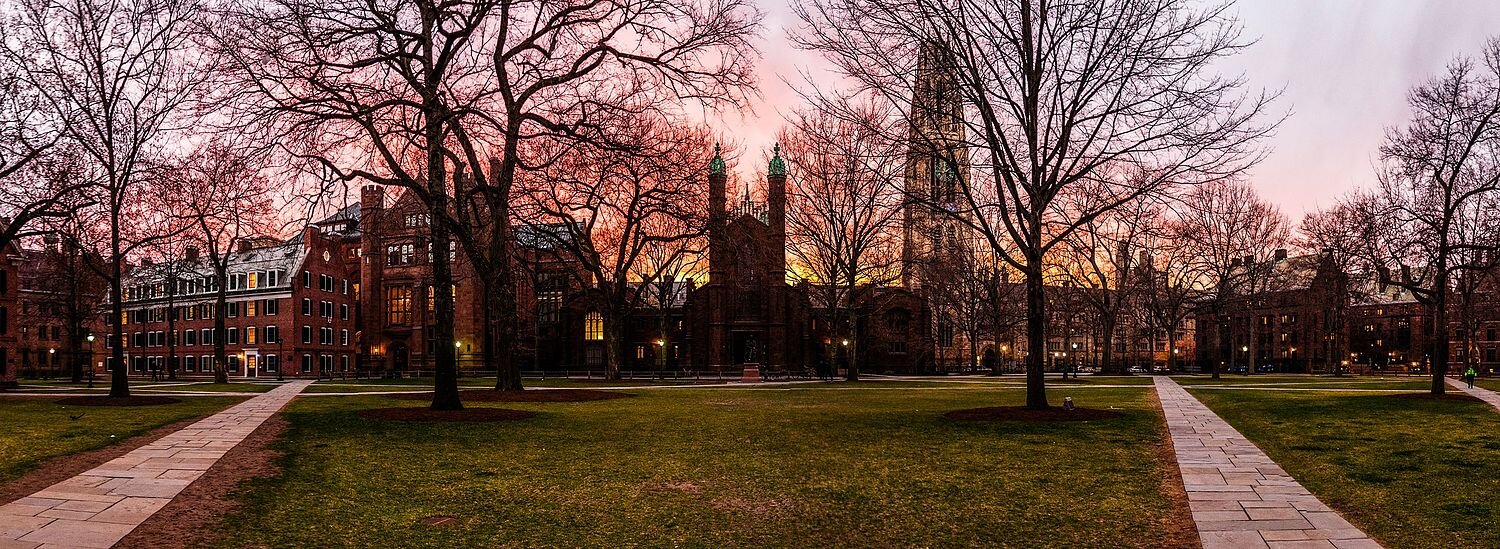
Yale’s Old Campus at dusk
Without Yale University, there might not be much left to New Haven beyond the daily shootings, drug overdoses, indignant demands for nullification of federal immigration law, and good pizza. Even so, Yale may be getting too big not just for New Haven but for Connecticut as well. Indeed, the university seems to be slowly taking over the city, which might be an improvement if it wasn't so undemocratic.
The New Haven Register reported the other day that the university this year converted six buildings from commercial to educational or medical use, thereby rendering them exempt from city property taxes and costing the city $3 million a year. Five months ago the university said it will build a neuroscience research center on the part of the Yale New Haven Hospital campus formerly owned by St. Raphael's Hospital, thereby keeping that prime property off the city tax rolls as well.
Meanwhile Yale's endowment has just broken $30 billion even as the finances of city government and state government remain a mess.
Sometimes nonprofit organizations fall too much in love with the endowments they amass from the tax exemptions conferred by state and federal law. Yale may be an egregious example of this. The university could not acquire much more property for nonprofit use in New Haven without demolishing the city's already weak tax base, and Yale's $30 billion endowment already might cover free or heavily discounted tuition for all ]the university's students for decades.
Unless it plans to acquire the rest of New Haven or even the state, how much larger an endowment does Yale really need?
According to the Register, Yale pays the city $5.6 million a year in property taxes on its nonexempt property and about $12 million more in a voluntary payment and a fee for fire protection. That's nice but still a fraction of what the university might pay without its property tax exemption.
From time to time state legislators and others have proposed taxing university endowments rather than repealing the property tax exemption for all colleges and hospitals, since Yale's endowment is so big that it easily could be taxed without touching any other endowments. The second largest such endowment in the state is said to be that of Wesleyan University in Middletown, only $1 billion. The endowment tax proposals have not gotten anywhere in the General Assembly.
But as Yale slowly consumes New Haven and as nonprofits and government agencies encroach more on the property tax bases of Connecticut's other cities, the rationale for tax exemption for nonprofits weakens, especially as crushing student loan debt shows that higher education is greatly overrated.
Bernie Sanders is not president yet, so any big stash of money is not automatically a target for communistic confiscation. But as long as donations to colleges and universities are tax-exempt and diminish the income tax revenue that otherwise would be collected from the donors by the state and federal governments, huge endowments like Yale's are fairly questioned. It's no matter that such endowments may be growing more from profitable investment than from fresh donations, since they originate mainly in donations that were tax-exempt.
But any revenue from taxing Yale's endowment should flow to state government, not city government, since state government already reimburses half the city's budget and city government is even less competent than state government. The best use of any new revenue for state government might be just to cut state taxes, since “property tax relief” is just a euphemism for raising municipal spending.
Chris Powell is a columnist for the Journal Inquirer, in Manchester, Conn.
-END-