
Vox clamantis in deserto




'A day of humiliation and prayer' needed

“The important point of this report [Montague, Massachusetts; July 7, 1774] may be summed up in six resolutions: 1. We approve of the plan for a Continental Congress September 1, at Philadelphia. 2. We urge the disuse of India teas and British goods. 3. We will act for the suppression of pedlers and petty chapmen (supposably vendors of dutiable wares). 4. And work to promote American manufacturing. 5. We ought to relieve Boston. 6. We appoint the 14th day of July, a day of humiliation and prayer.”
From Edward Pearson Pressey’s History of Montague; A Typical Puritan Town

Montague Center in 1907
Don Pesci: Food fight in Connecticut

VERNON, Conn.
Kevin Rennie wondered in his blog “Daily Ructions” why, under “the grocery tax set to take effect Oct. 1, six bagels won't be subject to the higher sales tax, but five bagels will, because they're considered to be prepared foods for immediate consumption.” And he then proposed a solution to the conundrum: “The legislature needs to change this law.”
Gov. Ned Lamont, Rennie wrote, is attempting “to erase the advantage grocery stores that sell prepared foods have over restaurants,” an alibi that seemed to him suspect. If Lamont were at all worried about the restaurant business in Connecticut, “he would not have singled it out for an increase in the sales tax from 6.35 percent to 7.35 percent. He wanted the money more than he cared about the cost of dining out and its consequences for restaurant owners, workers and patrons.”
And, truly, if Lamont and his handlers were worried about equity alone, the governor and the tax hungry crowd of Democratic progressives in the General Assembly could as easily adjust the disturbing inequity by eliminating both the restaurant and the grocery tax, leaving Rennie to buy his bagels at the grocery store without being harassed by Connecticut’s frothing tax man.
This is not likely because dominant Democrats in the General Assembly whose thirst for more tax dollars is never assuaged by tax increases are once again fighting a perpetual and losing battle against rising state employee salary and benefit increases and expanding “fixed costs,” according to the Yankee Institute.
Over at CTMirror, Mark Pazniokas honed in on the problem, which appears to have been caused by a statutory glitch: “At issue is the impact of two words in the new budget, ‘grocery store,’ on a longstanding interpretation by state tax collectors of one word, ‘meal.’
A June provision in the state budget “increases the sales tax on meals by one percentage point, from 6.35 percent to 7.35 percent.” Nothing untoward there; the Lamont administration consistently has raised or extended taxes far beyond the tolerance levels of most people. The erratic toll proposals championed by Lamont and his progressive abettors in the Democrat dominated General Assembly have been temporarily derailed by a populist uprising, the “No Tolls” movement, but hope springs eternal, and the move to plaster the state with toll gantries is still very much alive, though quiescent.
The problem, Pazniokas tells us, is that “the new law lumps in grocery stores with restaurants and caterers when it comes to the taxation of meals, and while the meaning of the word “meal” has not been changed, the new law offers a troubling gloss: “A meal as defined in this subsection includes food products which are sold on a ‘take out’ or ‘to go’ basis and which are actually packaged or wrapped.” Hence, a head of lettuce bought at a grocery store is not taxable, while lettuce in a bag is taxable.
Now, a workable solution to the problem would require a re-write of the law.
No, says president pro tem of the state Senate Martin Looney. “The call for a special session is just the Republicans being alarmist and grandstanding.” Looney is one of the two tax famished progressive gate-keepers in the General Assembly – the other is House Speaker Joe Aresimowicz – who determine which bills will clutter the legislative calendar. Both rather like ambiguous laws that provide masterful Democrat leaders with great maneuverability.
Lewis Carroll the author of “Through The Looking Glass,” provided some guidance to the problem of mis-definition in a discussion Alice has with Humpty Dumpty.
"I don't know what you mean by 'glory,' " Alice said.
Humpty Dumpty smiled contemptuously. "Of course you don't—till I tell you. I meant 'there's a nice knock-down argument for you!' "
"But 'glory' doesn't mean 'a nice knock-down argument'," Alice objected.
"When I use a word," Humpty Dumpty said, in rather a scornful tone, "it means just what I choose it to mean—neither more nor less."
"The question is," said Alice, "whether you can make words mean so many different things.
"The question is," said Humpty Dumpty, "which is to be master—that's all."
Democrat progressives in the General Assembly know and obey their masters, while some Democratic moderates silently resist the lash. But the problem outlined above is entirely political and statutory. Even progressives subscribe to the notion that whatever you tax tends to disappear, which is why they approve taxes on cancer causing cigarettes and fossil fuel products. Their faux “surprise” at the public uproar caused by their clever statutory gloss is entirely contrived.
But it now appears that any remedy short of throwing Humpty Dumpty down from the wall will not be sufficient. Legislative masters of the universe fear only votes, and they know they have a safe number of them in their pockets.
Don Pesci is a columnist based in Vernon.
Llewellyn King: Watch out for drone invasion of cities

WEST WARWICK, R.I.
There is a push to commercialize drones that equals any gold rush. Hundreds of drone makers, drone service companies and drone management firms are creating new machines, divining new uses, and planning to increase the penetration of their devices or services in a marketplace that is burgeoning. Although dominated by DJI, the giant Chinese drone company with seven locations in the United States alone, there are hundreds of drone companies keen to get in on the action.
The drone takeover of the skies is not a thing of science fiction and Popular Mechanics anymore. It is real and it has begun. Soon the skies in cities will be getting as crowded as the highways of Washington and Los Angeles.
In the world of drones, the big struggle now is to increase the payloads. But the real value maybe in their ability to collect and process huge amounts of data – an essential part of the “smart cities” of the future. Former Intel CEO Brian Krzanich said data is the new oil and drones are the new oil wells.
Drones and autonomous vehicles are destined to be integral to smart cities, with different entrants pursing different goals. Uber Eats wants dinners for families of four to be wafted aloft by drones. Amazon wants drones that can carry loads of various sizes and shapes. Google wants to own the control technology.
Everyone wants the data.
City managers, police departments, motor vehicle departments and first responders want data. Marketers and homebuilders want data about how we live and travel -- and even what we do when we are not between working and getting home.
Smart cities will run on data and drones will be part of the data-acquisition infrastructure. Morgan O’Brien, co-founder of Nextel Communications, Inc. and now president of Anterix, a company providing secure communications to utilities and others, tells me that data will be the foundation of smart cities.
“A smart city is ‘smart’ in the same way a smartphone is smart. Collecting and processing vast amounts of digital data in virtual real time, a smartphone collects a user to the internet for voice, texting, video and experiences of every sort,” O’Brien said, adding, “The smart city similarly will collect vast amounts of data and virtually simultaneously process that data to make the city safer, more livable, more green and more pleasant.”
This data will be collected from a myriad of sensors, including those on drones: the eyes in the sky.
Carl Berndtson, managing director of Confex Partners Ltd., a Concord, Mass.-based commercial conference organizer, expects 2,500 people at a drone conference which will be held on Oct. 28-30 in Las Vegas. Confex is part of the giant “Drone Week” early in December in Amsterdam, where 3,000 drone entrepreneurs and engineers are expected.
Of course, to keep all those goods-delivering, data-gathering, unmanned vehicles from crashing into each other, a sophisticated micro-air traffic control system will be needed -- something far beyond today’s macro system that keeps large aircraft safe. One company, AirMap of Santa Monica, Calif., claims to be well along the way in developing a control system, but there are others and governments will have the essential role.
Drones will come in many sizes and shapes, from drone taxis whipping us about to worker-bee drones, like the ones already employed to inspect electric power lines and hammer nails into shingles on roofs.
In the 1967 film The Graduate, Benjamin Braddock, a recent college graduate, was advised to go into plastics. Today he might be advised to go into drones.
The drone industry has taken off and is headed for where you live and work. Watch your head.
Llewellyn King is executive producer and host of White House Chronicle, on PBS. His email is llewellynking1@gmail.com and he’s based in Rhode Island and Washington, D.C.
Linda Gasparello
Co-host and Producer
"White House Chronicle" on PBS
Breast art in New Bedford

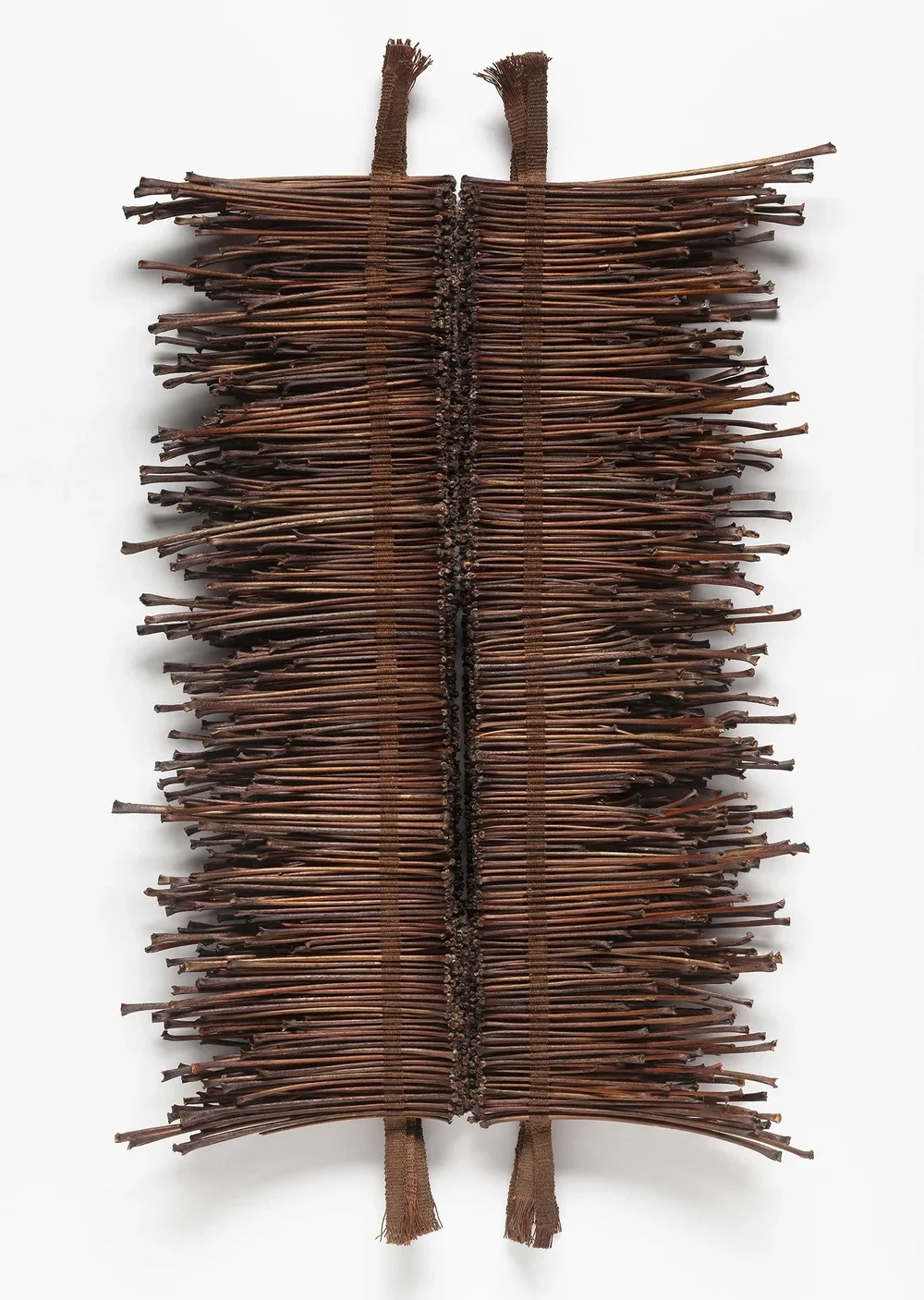
“Muro” (hand-embroidered breasts. site-specific installation), by Raquel Paiewonsky, in her show “InsideOut,’’ at the University of Massachusetts at Dartmouth Art Gallery (in New Bedford) through Oct. 28.
The gallery says:
“As an artist, Raquel Paiewonsky is both bold and subtle. She wraps the edges of heavy bricks in patterned fabric, softening the impact of the wall, perceived as a ‘male’ element. Connections, community, softness, all seen as female attributes are a part of her work, while the ‘Muro’ tells a story about gender imbalance within society or within ourselves. This soft sculpture/installation, which has its own space at the University Art Gallery, consists of 2,000 hand-embroidered breasts of different skin tones. It is the super-mother of all mothers, the feminine wit, a critical commentary towards a society that she describes as driven by economic need and greed. Raquel is also questioning stereotypes and expectations in her photography. Her images are surprising, imaginative, personal, playful, as well as thoughtful. A tall dress made out of cleaning rags monumentalizes the woman, the cleaner, so often overlooked. Her video ‘Isopolis ‘ invites viewers for an unexpected journey to sand dunes and a beach, following a group of performers telling a story of inclusion and conventions, full of symbolism without words.
Even though Paiewonsky draws from her experience as an artist in the Dominican Republic, her message rings loud and clear to a perceptive visitor of any origin, race, or gender. We invite you to immerse yourself in the magic world of ‘InsideOut’ — to experience, to question, to feel Paiewonsky’s (and now also your) imaginary world. “

Negin Owliaei: No one should have to bargain for health care

Via OtherWords.org
Nearly 50,000 members of the United Auto Workers began striking earlier this month, demanding that General Motors pay them their fair share of the billions in profits the company raked in last year.
The response from General Motors was shocking. The automaker, which accepted billions in government bailouts during the last recession, cut off its payment of insurance premiums for the striking workers.
As the news broke, former Vice President Joe Biden was at an AFL-CIO event, campaigning against a single-payer Medicare for All plan that would replace employer-provided insurance. “You’ve broken your neck to get it,” Biden told the crowd. “You’ve given up wages to keep it. And no plan should be able to take it away.”
But what if that’s actually the problem? Why should union workers — or anyone — be breaking their necks to get health care, a basic human right?
Health care has been a constant subject of debate among Democratic presidential candidates. Biden and others have argued that a single-payer system would be unfair to union workers who’ve taken pay cuts in exchange for better health care plans.
But, as GM showed, our current system turns health coverage into leverage for employers. What could unions could fight for if they didn’t have to constantly play defense against employers trying to gut their health care?
If we already had Medicare for All, the United Auto Workers could be using their collective power to fight for higher wages and better benefits. Instead, GM gets to use the health of its employees as a bargaining chip.
Auto workers aren’t the only union workers fighting for health coverage.
West Virginia teachers kicked off a strike wave last year thanks, in large part, to their own fight over insurance. The state offered educators two options: use a fitness-tracking app that forced them to earn a certain number of fitness points, or watch their premiums rise. They chose to strike instead.
Meanwhile, Americans already lose their health insurance all the time. That’s actually one of the biggest problems with the health care system as it stands.
Tying health care to employment is a terrible idea. In addition to failing anyone without a full-time job, it forces people to stay in bad positions just to keep their coverage. And when workers lose their jobs, they lose their insurance too.
That wouldn’t happen under Medicare for All, which would allow workers to make decisions about leaving a job or working part-time without panicking over their insurance coverage.
Then there’s the cost.
Health insurance alone makes up, on average, 8 percent of total wages and benefits, according to the Bureau of Labor Statistics. But workers are seeing their share of the costs rise at a higher rate than their wages. They’re getting stuck with a larger chunk than ever before.
Data shows that this burden falls heaviest on low-wage workers, who are already forced to spend a much higher share of their income on extra costs like premiums and out-of-pocket expenses.
By contrast, the Medicare for All plan now before Congress would cover all medically necessary services without co-pays and deductibles — an advantage critics like Biden rarely address.
Right now, the U.S. spends about two times as much as other high-income countries on health care, only to have poorer health outcomes. It’s obvious that the current system isn’t working — for union workers, or for anyone else.
No one should have to bargain for a human right.
Negin Owliaei is a researcher and co-editor of Inequality.org at the Institute for Policy Studies.
Using AI to manipulate “news’’ video and other threats to fact-based journalism

To members and friends of the Providence Committee on Foreign Relations
(thepcfr.org; pcfremail@gmail.com):
PLEASE LET US KNOW NO LATER THAN MONDAY, SEPT. 3O, IF YOU PLAN TO ATTEND THE OCT. 2 DINNER, WITH INTERNATIONAL JOURNALIST JONATHAN GAGE THE MAIN SPEAKER.
HE’LL TALK ABOUT SUCH THINGS AS THE THREAT TO FACT-BASED JOURNALISM POSED BY ARTIFICIAL INTELLIGENCE BEING USED TO DISTORT VIDEO.
THE HOPE CLUB NEEDS TO KNOW TWO DAYS BEFORE AN EVENT.
YOU CAN REGISTER FOR THE DINNER ONLINE AT
Thepcfr.org
or send a message on your plans to:
pcfremail@gmail.com
The PCFR meets at the Hope Club, 6 Benevolent St., Providence.
PCFR evenings start at 6 with drinks, dinner by about 6:40, the talk (usually 35-40 minutes) by about dessert, followed by Q&A. Evening ends by no later than 9. People can repair to the bar after that if they wish.

Roger Warburton: Images of a flooded Nantucket

Marty Hylton’s image of Easy and Broad streets, Nantucket, in 2040

His image of the same intersection in 2100
From ecoRI News (ecori.org)
NEWPORT, R.I. — Marty Hylton is an architect by training. Therefore, unlike many climate scientists, his images are visually arresting.
Consider Hylton’s image of Easy and Broad streets in Nantucket, Mass.
The audience at the Sept. 18 lecture was stunned to learn that the above image and those below weren’t photographs, but digital reconstructions of Hylton’s data.
Hylton was lecturing in Newport, aka “The City by the Sea,’’ about the lessons learned from the Resilient Nantucket model. His lecture was co-sponsored by the city and the Newport Restoration Foundation.
He was charming with a dry sense of humor that kept the audience enthralled. He admitted that his family owned a coal mine in Kentucky and that he is now working to pay off the carbon dioxide debt he feels responsible for.
Resilient Nantucket is an initiative to digitally document the historic town, its waterfront, and Brandt Point. The initiative is a collaboration of the town of Nantucket, the Nantucket Preservation Trust and the University of Florida’s Preservation Institute Nantucket.
Nantucket has one of the nation’s largest historic landmark districts, with more than 800 structures from before 1860. Hylton is working with Nantucket to protect its valuable historical, cultural, and architectural assets. This work requires identifying and understanding threats from sea-level rise, raising awareness, and engaging residents and stakeholders.
Hylton and his students spent the summer on Nantucket using laser scanners to collect data on building and land coordinates and elevations. These are augmented by students traipsing around and visually collecting data on foundations, structural materials, utility systems and the age and condition of the buildings.
These data inform the development and implementation of adaptation strategies. The 3-D visualizations, in particular, help to communicate sea-level rise projections, their impacts, and to raise awareness of threats.
The project has already resulted in a series of striking sea-level rise visualizations.
The above scenario is based on conservative National Oceanic and Atmospheric Administration (NOAA) climate projections that are considered the gold standard in climate models.
The dramatic images here are just part of the story. An equally important aspect of Hylton’s work is to help the Town of Nantucket assess flood vulnerabilities of the various building types.
After his lecture, Hylton was peppered with questions about how his work applied to Newport. He patiently answered questions for another hour.
In the room, there was palpable sense that Newport was behind Nantucket. Hylton had provided valuable lessons.
Roger Warburton, Ph.D., is a Newport resident.

Chris Powell: Plenty of voter fraud in Bridgeport; piling on Purdue Pharma

Iranistan, the residence of P.T. Barnum, in 1848
According to Connecticut Secretary of the State Denise Merrill, the Nutmeg State has too little voter fraud to worry about. But she doesn't really know, because until last week few people had ever seriously looked.
But last week Connecticut's Hearst newspapers looked into the extraordinary level of absentee voting in Bridgeport's recent Democratic mayoral primary election, in which the challenger, state Sen. Marilyn Moore, won on the voting machines but was defeated as Mayor Joe Ganim overwhelmingly carried the absentee ballots.
The Hearst investigation found that fraud was extensive among its limited sample of voters. Ineligible people -- including people who were not registered to vote, people who were not Democrats, and felons and parolees -- received and cast absentee votes. Elderly people were coerced or pressured to complete absentee ballots for the mayor by Ganim supporters who came to their homes. Absentee ballots were sent to people who did not request them. Record-keeping by Bridgeport election officials is sloppy, maintaining incorrect birthdates for some voters and mistaken receipt dates for absentee ballots.
Secretary Merrill has forwarded the Hearst report to the state Elections Enforcement Commission and asked it to investigate because her office lacks the commission's powers. But the secretary should be chastened by what already has come out, for she has been advocating legislation to deny public access to voter registration data
With her legislation Merrill claims to be supporting individual privacy. But voters are not entirely private citizens, for they hold the most basic public office -- elector -- an office established by the state Constitution. Nobody has to become an elector. You volunteer, and election fraud cannot be detected by the public or news organizations unless the names, addresses, and birthdates of electors are as public as they long have been in Connecticut.
Since, as her legislation signifies, the secretary denies the possibility of voter fraud, the law should not hinder the press and public in detecting it as the Hearst papers have just done.
* * *
PILING ON PURDUE PHARMA: If there was an award for piling on, Connecticut Atty. Gen. William Tong would be a leading contender. Practically every day he announces a lawsuit his office is joining to challenge some policy of the Trump administration.
Those policies may be questionable but it is also questionable how much Tong's office is really doing with the lawsuits beyond providing pro-forma endorsements that get publicity for him.
Tong has worked up his greatest indignation for the lawsuit he has joined with many states against Stamford-based Purdue Pharma, manufacturer of the painkiller OxyContin, to which many people have gotten addicted, many of them dying from their addiction. Tong wants the company liquidated and the proceeds somehow distributed to the drug's supposed victims.
But the country's worsening addiction problem long preceded OxyContin, and nobody could have gotten addicted to it if the U.S. Food and Drug Administration hadn't approved it 24 years ago and if thousands of doctors had not prescribed it too heavily to their patients. The FDA and those doctors bear the immediate responsibility for abuse of the drug, not the manufacturer, since from the beginning OxyContin has been a controlled substance.
Of course suing those who uncontrolled the drug would be a tougher and fairer fight for any attorney general who enjoys piling on.
Chris Powell is a columnist for the Journal Inquirer, in Manchester, Conn.

They're dying. Good. I need the rest

“Autumn’’ (1896), by Art Nouveau artist Alphonse Mucha
"I love the fall. I love it because of the smells that you speak of; and also because things are dying, things that you don't have to take care of anymore, and the grass stops growing."
- - Mark Van Doren (1894-1972, poet , critic and professor at Columbia University and long-time resident of Cornwall, Conn.). Cornwall is on the east bank of the Housatonic River in the midst of the mostly bucolic Litchfield Hills. Mr. Van Doren wrote a poem, “The Hills of Little Cornwall,’’ about the town in 1939. It starts:
“The hills of little Cornwall
Themselves are dreams.
The mind lies down among them,
Even by day, and snores....”
The Housatonic, by the way, is much cleaner now than when I lived near it in the ‘60s, when General Electric and other companies were pouring toxic chemicals into it upstream.
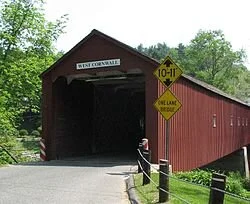
West Cornwall (part of Cornwall) Covered Bridge.
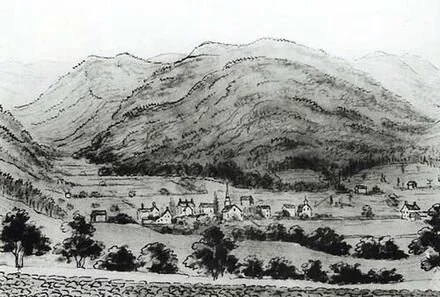
A sketch of Cornwall by John Warner Barber (1835) shows the buildings that had been used by the Foreign Mission School, to the right of the church at center. The school, which was only open in 1817-26, trained young foreign men to be Christian missionaries.
Robert E. Johnson: How to accelerate southeastern New England's blue economy
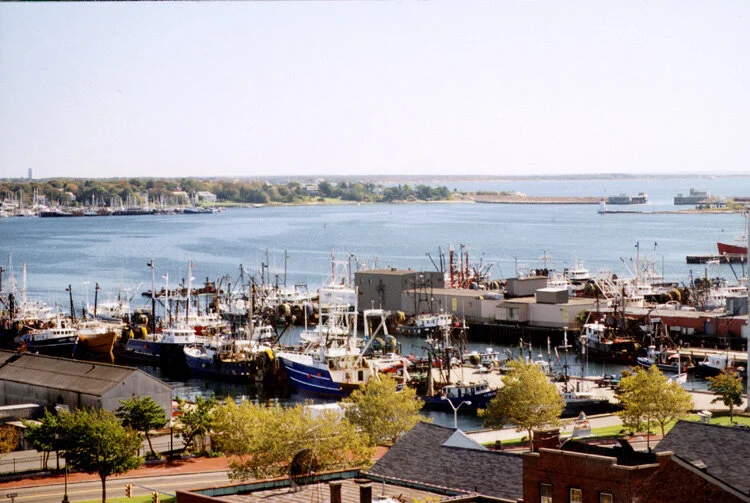
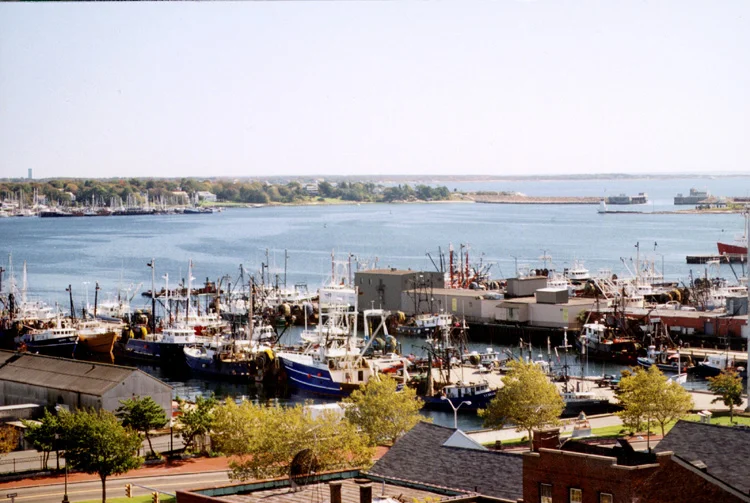
Ships in the Port of New Bedford
]
DARTMOUTH, Mass.
From The New England Journal of Higher Education, a service of The New England Board of Higher Education (nebhe.org)
“It is an interesting biological fact that all of us have, in our veins the exact same percentage of salt in our blood that exists in the ocean, and, therefore, we have salt in our blood, in our sweat, in our tears. We are tied to the ocean.” —President John F. Kennedy, Sept. 14, 1962, Newport, R.I.
Half a century after President Kennedy made those remarks, our collective future as a planet, as regions, and as communities is tied closer to the ocean than ever before. There is a fast-emerging consensus—at the global, national and local levels—that the ocean, which covers two-thirds of the Earth’s surface, offers real economic opportunity beyond the centuries-old industries of commercial fishing and shipping, but also imposes a solemn obligation to protect it and coastal environments from rapid degradation.
“The blue economy concept seeks to promote economic growth, social inclusion and the preservation or improvement of livelihoods while at the same time ensuring environmental sustainability of the oceans and coastal areas,’’ states the World Bank’s 2017 report, The Potential of the Blue Economy.
The Organization for Ocean Cooperation and Development projects that from 2010 to 2030, the blue economy will double in size to $3 trillion and account for 40 million jobs worldwide. The National Oceanic and Atmospheric Administration reports that coastal counties (not including Alaska) comprise just 10% of the U.S. land mass, they are home to 40% of the population.
Leaders in government, industry and academia in southeastern Massachusetts, including Cape Cod and the Islands, and Rhode Island now understand that we have a once-in-a-century opportunity to reinvent our own coastal economic ecosystem and set an example for other communities around New England and the nation.
The University of Massachusetts at Dartmouth is leading a regional effort funded by the U.S. Economic Development Agency, area banks and the Commonwealth of Massachusetts to grow a marine-technology corridor that spans I-195 from Narragansett Bay, through the urban centers of New Bedford and Fall River, and across the Cape Cod Canal.
Massachusetts Congressman Bill Keating, whose district includes the nation’s leading fishing port, New Bedford, and the prime seaside tourist destination of Cape Cod, is pushing for the subregions on both sides of the Cape Cod Canal to collaborate. Congressman Joe Kennedy, whose Massachusetts district borders Rhode Island, has called on leaders on both sides of the state line to leverage their economic and cultural affinities.
The Fall River and New Bedford Chambers of Commerce, rivals for decades, recently announced plans to formally integrate as the SouthCoast Chamber, essentially one chamber representing the interests of 1,600 businesses from the Rhode Island state line to the Cape Cod Canal.
The first step in building our regional blue economy is a UMass Dartmouth Public Policy Center analysis of the marine technology industry to be released this fall. Step two will be a coordinated engagement of marine technology firms in the development of a real strategy to grow their industry in our region. This will include marketing the region as fertile ground to grow marine technology enterprises.
These efforts illustrate a new belief that it is better to grow the region’s economic pie so that all can eat rather than fighting over the slices.
The cornerstones of a vibrant regional blue economy exist and are ready to be built upon:
Commuter rail service from Boston to the SouthCoast begins in 2023.
The area is home to world-class public and independent higher education and research institutions.
New Bedford, the top commercial fishing port in the nation, is an emerging leader in offshore wind development, and a cargo-shipping powerhouse.
Fall River is re-engineering its waterfront and attracting commercial and residential development related to offshore wind and expanded commuter rail service.
Vibrant marine technology companies, such as Lockheed Martin, Raytheon, General Dynamics, Ocean Server, Teradyne and Aquabotix, have a presence in the region.
A vibrant cultural scene leverages our connection to the sea (think the New Bedford Whaling Museum, Fall River’s Battleship Cove, Cape Cod’s National Seashore and Newport for starters).
Tangible signs of progress abound. A long-dormant, 14-acre parcel of waterfront property in New Bedford was just purchased to be redeveloped as a shipbuilding facility. Just 20 miles away at Somerset’s Brayton Point, Anbaric has announced plans to invest $645 million in a waterfront energy conversion and storage facility.
UMass Dartmouth’s School for Marine Science and Technology is leading research related to the impacts of offshore wind development on commercial fishing, and recently completed an analysis of how commercial fishing ports will need to adapt to the movement of fish stocks due to climate change.
The next steps need to be:
Form the regional marine technology industry alliance to guide strategy.
Invest in higher education and research to attract, develop and retain faculty, staff and student talent.
Proactively match university research expertise with industry need.
Create an environment for entrepreneurs, innovators and investors to interact and create.
Improve STEAM (Science, Technology, Engineering, Arts and Math) education in local schools, especially those schools with high numbers of students for whom English is a second language.
Streamline pathways from community college to four-year universities. UMass Dartmouth, Bristol Community College and Diman Regional Vocational Technical High School in Fall River recently launched a partnership in which Diman students earn an engineering degree in three years.
Develop incentives for college graduates to remain in the region. In other parts of the country, communities are using tactics ranging from college debt payments to direct sales pitches from mayors to retain young people.
Identify individuals across the region who have started their college education but stopped and help them complete their degree or secure a credential that positions them to succeed.
Southeastern Massachusetts and Rhode Island as a region must come together to create a hub of innovation and entrepreneurship in the Blue Economy to create the next wave of business development in the Northeast.
Robert E. Johnson is the chancellor of the University of Massachusetts at Dartmouth.
Share This Page
Filed under Commentary, Demography, Economy, Financing, International, Journal Type, Regionalism, Students, Technology, The Journal, Topic, Trends.
Tags: blue economy, economic development, marine science, ocean, SouthCoast, University of Massachusetts Dartmouth
Leave a Reply
XHTML: You can use these tags: <a href="" title=""> <abbr title=""> <acronym title=""> <b> <blockquote cite=""> <cite> <code> <del datetime=""> <em> <i> <q cite="">
Smells from the past

In Riverside Park, Manhattan
From Robert Whitcomb’s “Digital Diary,’’ in GoLocal24.com:
As we slide into fall and the rays of the sun slant lower, I’ve been thinking of the past more, and especially about New York City, where I lived in 1971-75. I especially remember the smells, such as the unexplained (to me) whiff of old wet bread almost every day when I walked up and down Riverside Park, on Manhattan’s West Side. The park is dramatically sited along the Hudson River, but in my time could be a tad dangerous and “exotic’’ (Haitian Voodoo specialists sacrificed animals there.) I always walked fast. Other New York smells: rotting garbage during sanitation workers’ strikes, the stink in hot weather off the East River, which is now much cleaner, and hot dogs and pretzels at those food carts.
Indeed, smells send one back deep into the past. When I smell diesel, I think of Paris in the ‘70s and ‘80s, where most vehicles were/are powered by that foul fuel. When I smell oysters and crabs at restaurants, I think of Delaware, where I worked for a few months and nearby Chesapeake Bay – what H.L. Mencken called “the immense protein factory.’’ Then there’s the smell of wet green leaves ripped off trees in tropical storms in the early fall and, later in the season, the sweet aroma of burning dried-up leaves that we’d raked (creating whispering sounds) into piles – a practice now banned in most places; too much air pollution. And wood smoke takes me back to New Hampshire, especially in those damp, corn snow March days.
As for Providence, I’ll always associate it with the seaweedy scent of Narragansett Bay when the wind starts coming in from the south and crooked but “colorful’’ Buddy Cianci’s powerful cologne as he walked into my office at The Providence Journal.
Todd McLeish: And now, invasive worms

Snake worm
Just hearing the name of one of Rhode Island’s newest invasive species is enough to make local residents queasy: snake worms.
Even though snake worms look similar to the region’s more common earthworms and they’re not much larger, their behavior easily identifies them. Not only do they slither through the grass like snakes, they also jump away if you try to pick them up. In their native Korea and Japan, they are called Asian jumping worms.
“That jumping is how they get away from predators,” said worm expert Josef Gorres, an associate professor of plant and soil science at the University of Vermont who formerly taught at the University of Rhode Island. “It scares them.”
It scares people, too.
“They can be a bit of a pest when you have a Fourth of July party and you have a new patio and they crawl around like snakes,” said Gorres, who has found the worms in his home garden in Vermont. “They make people squeamish.”
This invader has probably been in the United States for more than 50 years. The story told about their arrival involves a shipment of cherry trees from Japan that was sent to Washington, D.C., and the worms were in the soil around the tree roots. Whether that’s true, Gorres isn’t sure, but he believes the worms have probably been in Rhode Island for a decade or more. Residents are just now beginning to notice them.
A survey of URI master gardeners conducted by Gorres in 2015 found snake worms in Slater Park in Pawtucket and in gardens and mulch piles in Barrington, Jamestown, North Kingstown, South Kingstown and Richmond. Today, the worms are common at URI’s East Farm, where master gardeners maintain several gardens and greenhouses, and they have been reported at other scattered locations around the state as well.
Nan Quinlan, who coordinates the master gardeners’ vegetable demonstration garden at East Farm in Kingston, said the worms may have arrived there in deliveries of mulch, soil, or potted plants, or even on the tires and fenders of cars and trucks.
“There are so many possibilities here that I strongly hesitate to blame any one source,” she said. “What makes the most sense is that the Asian worms were already present in the soil at East Farm for a long time and found their way to areas like mulch piles and the compost pile we built and maintain inside the garden.”
Quinlan’s speculation that they may have come from deliveries of soil or potted plants aligns with Gorres’ understanding that they are commonly transported in plant material via the horticulture and nursery industry.
“Folks in horticulture should worry because the worms can negatively affect their stock of plants,” Gorres said. “The castings the worms produce are very granular, very loose, so if anything tries to grow in the castings, the roots will have a hard time getting a foothold. Plants need something more stable to hold onto. It makes the plant wilt and look like they’re experiencing drought symptoms.”
Snake worms can be a problem in forests as well. They consume the top layer of the soil and dead leaves — called the duff layer — where the seeds of plants germinate.
“Once that layer is gone, the plants don’t have a place to put their seeds where they will survive until the following year,” Gorres said. “You end up with a forest with fewer understory plants, and all that’s left are saplings of trees that deer will feed on. The end result is a lack of regeneration of the forest.”
This concern is also true of the other earthworms found in the Northeast, all of which are non-native and could be impacting forests in a similar way. Any native earthworms in the region were crushed by glaciers during the last ice age. Most of the worm species found in New England today arrived following European colonization of the area.
“We’re now experiencing the second wave of earthworm invasions,” Gorres said. “One of the things I’m especially worried about is that the loose castings will make the soil highly erodible. Castings from European worms stick together. The soil on a slope where snake worms are found might easily erode away.”
To reduce the likelihood of the spread of snake worms, Gorres suggested that consumers ask vendors selling plants, mulch, or soil whether the worms have been found in their products.
“They’ll probably say they haven’t been, but if they’re truthful they may say it’s the new normal, which it may be,” he said.
Gorres is studying several varieties of insect-killing fungi that may control the worms.
David Gregg, director of the Rhode Island Natural History Survey, cautioned that those investigating whether they have snake worms in their gardens shouldn’t confuse them with worm snakes, which are native to New England and may be Rhode Island’s rarest snake. Worm snakes grow only about 10 inches long and may look like a large scaly worm.
“Worm snakes = good, snake worms = bad,” he wrote in an email.
Rhode Island resident and author Todd McLeish runs a wildlife blog.
'Encaustic shrouds' in Cambridge
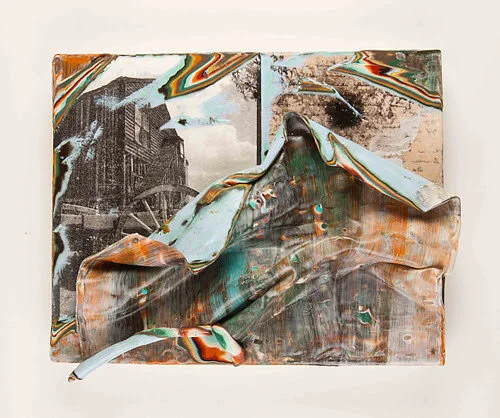
Encaustic painting by Stephanie Roberts-Camello, in her show “Many Miles,’’ Sept. 30-Oct. 8 at Maud Morgan Arts Chandler Gallery, Cambridge, Mass.
She says: “Discovering a box of old family letters in my family's basement would change the way I painted and how I thought about my work. There were stacks of letters bound in twine according to who sent them. They dated back as far as 1919 through 1946. Many of these letters reference the dust bowl days of Texas and the Great Depression.
”Encaustic is a medium that can be worked flat or sculpturally. One of its many attributes is it can retain any stress mark or scrape once it cools. It has an innate feature for documentation. These letters; represent a period of suffering, loss and endurance in our country, and for me, the intricately worked encaustic shrouds became metaphors for struggle and change.’’
A menu from the '50s to savor

Howard Johnson’s was founded and based in Quincy, Mass., in 1925.
A tunnel and strip-joint strip in Providence's Atlantis
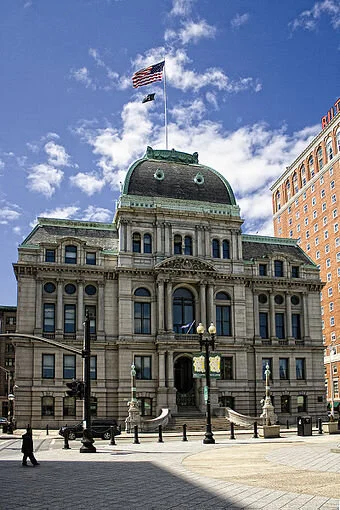
On Kennedy Plaza, Providence City Hall, built in 1978
From Robert Whitcomb’s “Digital Diary,’’ in GoLocal24.com
Rhode Island officials propose to have a tunnel for buses built under Kennedy Plaza, in downtown Providence, to reduce vehicular (and human?) density in the plaza area and better connect it with Burnside Park. We need to study the engineering plans for this but it seems that it would be very expensive to construct such a tunnel in such an area, which is virtually at sea level.
To take some of the vehicular pressure off the plaza why not create a secondary bus hub in the Route 195 relocation area? This would be within walking distance of Kennedy Plaza, and perhaps small buses could be used in a shuttle service between the hubs, or perhaps electric trolleys.
Kennedy Plaza has the bones to be one of America’s most beautiful squares – not quite up to the glory of Boston’s Copley Square, but impressive. Creating a nearby transit hub would makes its improvement easier to achieve, and would be a lot cheaper than a tunnel.
Having said that, I’d add that while police activity could be stepped up to stop rowdy and worse behavior among a few of those using buses at Kennedy Plaza, the environment is not as problematical as has been presented. And there is a police station there.
xxx
Dylan Conley, chairman of the Providence Board of Licenses, has suggested creating a 24/7 entertainment district in the form of a strip of bars and nightclubs on gritty Allens Avenue. The idea is to draw away and concentrate some of the establishments now dispersed around downtown Providence. Their sometimes raffish activities can antagonize neighbors, scare tourists, lure some folks looking for trouble, and distress citizens worried about the reputation of Rhode Island’s capital.\
A hoped-for benefit of Mr. Conley’s idea would be creating a larger source of sales- and property-tax revenue from this sector by promoting the new district as a sort of Bourbon Street, New Orleans, attraction. However, by intensifying Providence’s (exaggerated) reputation as a sleazy and unsafe place, such a district might have the opposite effect in the long term by scaring away more respectable and conventional -- and affluent -- businesses and individuals. As for New Orleans as a model: It’s infamous for the high crime rate in its entertainment strips.
And you can imagine the number of drunk drivers that such an Allens Avenue entertainment district would put on Route 95. Few customers there would want to just drink one glass of heart-healthy red wine….
Is this really the sort of industry Providence wants to expand? And Allens Avenue, for all its grittiness, is along the water. Surely there are classier ways to take better advantage of that than creating what would probably become a new Mecca for many dubious people. Before, of course, global warming puts Allens Avenue underwater.
Tracey Aikman: I'm one of those factory workers Trump lied to
From OtherWords.org
My entire working life has been dictated by offshoring. I’ve spent my career jumping from one factory closing to another.
When President Trump was elected, he said: “Companies are not going to leave the United States anymore without consequences.” His promises ring hollow to me after I got my latest layoff notice.
My first job out of high school was at a factory owned by United Technologies in Wabash, Ind. I showed up to work in March 1991 and a sign on the door read: “Moved to Mexico.” My mother, who worked for a sister factory, also lost her job when her factory was sent south of the border.
I eventually got a union job at Chrysler in Kokomo, Indiana, which allowed me to give my family a middle-class life and build our dream house on five acres of land. In 2008, I got laid off. I lost my house and had to start over financially.
When I got my job at Schneider Electric’s “Square D” plant in Peru, Ind., five years ago, making electrical boxes and equipment, I hoped that this job would sustain me until I was ready to retire.
Unfortunately, the multinational corporation that owns our plant announced this summer that they would be moving our work to Mexico and other plants. Once our plant closes, all of Schneider Electric’s North American factories will be non-union.
Now I’m facing another layoff, even though our Peru plant was profitable. In fact, the same week I was laid off, Schneider Electric announced profits of $2.2 billion for the first half of 2019.
I’m not alone. Workers across the Midwest are suffering the same fate. And President Trump continues to fail us. Instead of punishing companies like Schneider Electric, he has rewarded them with $120 million in federal contracts and a massive tax break. The closure of my factory is sad proof that Trump’s lies have consequences.
Trump’s broken promises have become a broken record destroying our communities, even though here in Miami County, we gave him the vast majority of our votes in 2016.
Right now, Our Revolution, a political advocacy organization inspired by Sen. Bernie Sander’s historic presidential run in 2016, is helping to organize a miracle effort to save our plant. Joined by workers from the shuttered GM plant in Lordstown, Ohio, and workers from the Carrier plant in Indianapolis, we are calling on Trump to sign an executive order that would prevent taxpayer dollars from going to companies that are shipping American jobs overseas.
With the next round of layoffs scheduled for Sept. 27, there is no time to waste.
We have one request for President Trump: Use the power of the government over federal contracts to stop our jobs from leaving the United States. Show us that you mean what you said when you promised to be a workers’ champion.
We need your help now — and we’ll remember if we don’t get it.
Tracey Aikman has been laid off by global corporations United Technologies, Chrysler and now Schneider Electric. He is married and is a father of two.
The fight for Mass. offshore wind goes on
From The New England Council (newenglandcouncil.com)
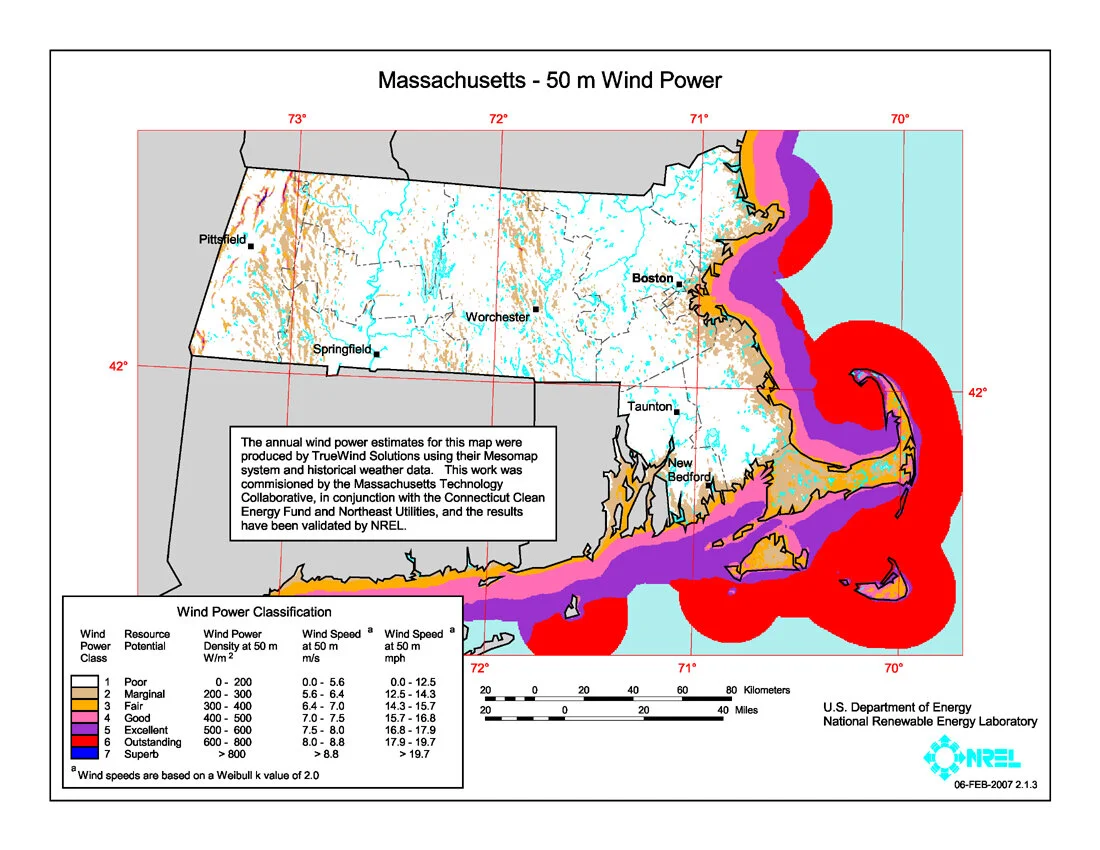
Orsted and Eversource have submitted a proposal to construct an wind energy farm off the Massachusetts coast. The proposed project, named Bay State Wind, includes a 400-megawatt project and an 800-megawatt project.
The companies’ proposal for Bay State Wind comes after Orsted’s federally approved offshore wind farm, Vineyard Wind, was put on hold for further review of its impact on fish and fisherman. Orsted, however, has been working closely with various commercial and local fisherman to accommodate their practices and projects in their own wind-turbine proposal. The companies said the project would bring hundreds of construction jobs to the state and, if selected, they plan to commit hundreds of millions of dollars to direct community investments.. Orsted and Eversource have worked together before, most recently on the Revolution Wind project planned for Rhode Island.
“We are thrilled to once again help Massachusetts take the next step to grow its clean energy economy,” said Lee Olivier, Eversource executive vice president for enterprise energy strategy and business development, in a statement. “Our team has been in the local communities, meeting with residents and stakeholders, to ensure their feedback is built into Bay State Wind’s proposal, which is the most mature, comprehensive and thorough offshore wind project available.”
Trying to go with the flow

“All I want is to be the river though I return again and again to the clouds. (detail) (etching, paper, fabric, mahogany), by Nancy Diessner, in the show “Memory, rivers and urban debris,’’ at Bromfield Gallery, Boston, in October.