
Vox clamantis in deserto





Chris Powell: Plenty of voter fraud in Bridgeport; piling on Purdue Pharma

Iranistan, the residence of P.T. Barnum, in 1848
According to Connecticut Secretary of the State Denise Merrill, the Nutmeg State has too little voter fraud to worry about. But she doesn't really know, because until last week few people had ever seriously looked.
But last week Connecticut's Hearst newspapers looked into the extraordinary level of absentee voting in Bridgeport's recent Democratic mayoral primary election, in which the challenger, state Sen. Marilyn Moore, won on the voting machines but was defeated as Mayor Joe Ganim overwhelmingly carried the absentee ballots.
The Hearst investigation found that fraud was extensive among its limited sample of voters. Ineligible people -- including people who were not registered to vote, people who were not Democrats, and felons and parolees -- received and cast absentee votes. Elderly people were coerced or pressured to complete absentee ballots for the mayor by Ganim supporters who came to their homes. Absentee ballots were sent to people who did not request them. Record-keeping by Bridgeport election officials is sloppy, maintaining incorrect birthdates for some voters and mistaken receipt dates for absentee ballots.
Secretary Merrill has forwarded the Hearst report to the state Elections Enforcement Commission and asked it to investigate because her office lacks the commission's powers. But the secretary should be chastened by what already has come out, for she has been advocating legislation to deny public access to voter registration data
With her legislation Merrill claims to be supporting individual privacy. But voters are not entirely private citizens, for they hold the most basic public office -- elector -- an office established by the state Constitution. Nobody has to become an elector. You volunteer, and election fraud cannot be detected by the public or news organizations unless the names, addresses, and birthdates of electors are as public as they long have been in Connecticut.
Since, as her legislation signifies, the secretary denies the possibility of voter fraud, the law should not hinder the press and public in detecting it as the Hearst papers have just done.
* * *
PILING ON PURDUE PHARMA: If there was an award for piling on, Connecticut Atty. Gen. William Tong would be a leading contender. Practically every day he announces a lawsuit his office is joining to challenge some policy of the Trump administration.
Those policies may be questionable but it is also questionable how much Tong's office is really doing with the lawsuits beyond providing pro-forma endorsements that get publicity for him.
Tong has worked up his greatest indignation for the lawsuit he has joined with many states against Stamford-based Purdue Pharma, manufacturer of the painkiller OxyContin, to which many people have gotten addicted, many of them dying from their addiction. Tong wants the company liquidated and the proceeds somehow distributed to the drug's supposed victims.
But the country's worsening addiction problem long preceded OxyContin, and nobody could have gotten addicted to it if the U.S. Food and Drug Administration hadn't approved it 24 years ago and if thousands of doctors had not prescribed it too heavily to their patients. The FDA and those doctors bear the immediate responsibility for abuse of the drug, not the manufacturer, since from the beginning OxyContin has been a controlled substance.
Of course suing those who uncontrolled the drug would be a tougher and fairer fight for any attorney general who enjoys piling on.
Chris Powell is a columnist for the Journal Inquirer, in Manchester, Conn.

They're dying. Good. I need the rest

“Autumn’’ (1896), by Art Nouveau artist Alphonse Mucha
"I love the fall. I love it because of the smells that you speak of; and also because things are dying, things that you don't have to take care of anymore, and the grass stops growing."
- - Mark Van Doren (1894-1972, poet , critic and professor at Columbia University and long-time resident of Cornwall, Conn.). Cornwall is on the east bank of the Housatonic River in the midst of the mostly bucolic Litchfield Hills. Mr. Van Doren wrote a poem, “The Hills of Little Cornwall,’’ about the town in 1939. It starts:
“The hills of little Cornwall
Themselves are dreams.
The mind lies down among them,
Even by day, and snores....”
The Housatonic, by the way, is much cleaner now than when I lived near it in the ‘60s, when General Electric and other companies were pouring toxic chemicals into it upstream.
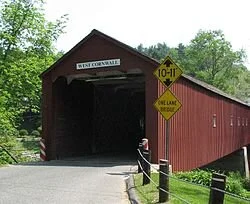
West Cornwall (part of Cornwall) Covered Bridge.
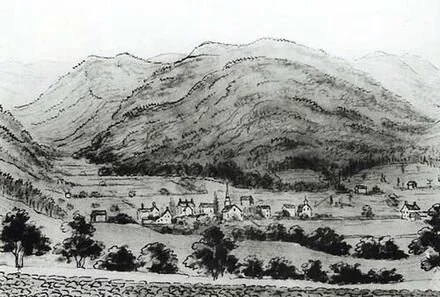
A sketch of Cornwall by John Warner Barber (1835) shows the buildings that had been used by the Foreign Mission School, to the right of the church at center. The school, which was only open in 1817-26, trained young foreign men to be Christian missionaries.
Robert E. Johnson: How to accelerate southeastern New England's blue economy
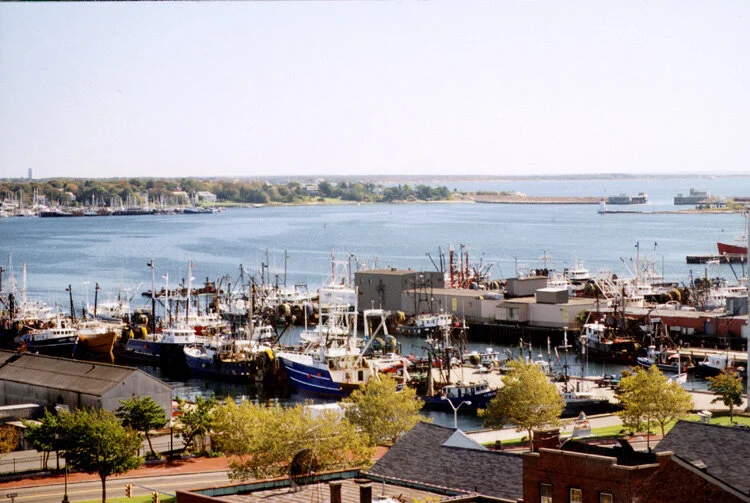
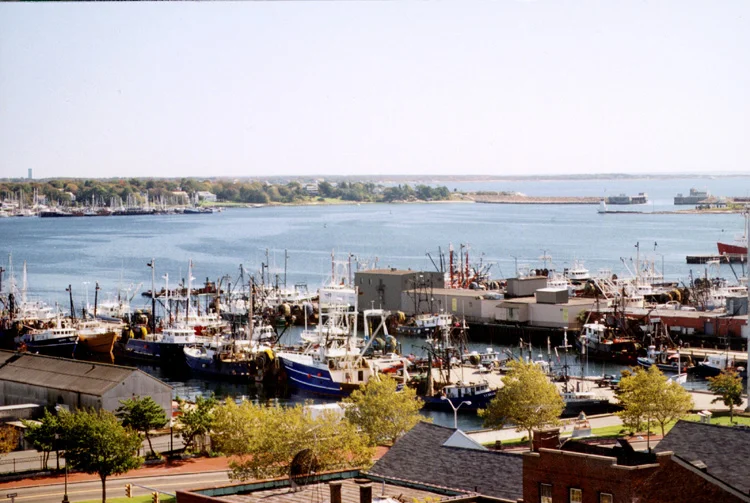
Ships in the Port of New Bedford
]
DARTMOUTH, Mass.
From The New England Journal of Higher Education, a service of The New England Board of Higher Education (nebhe.org)
“It is an interesting biological fact that all of us have, in our veins the exact same percentage of salt in our blood that exists in the ocean, and, therefore, we have salt in our blood, in our sweat, in our tears. We are tied to the ocean.” —President John F. Kennedy, Sept. 14, 1962, Newport, R.I.
Half a century after President Kennedy made those remarks, our collective future as a planet, as regions, and as communities is tied closer to the ocean than ever before. There is a fast-emerging consensus—at the global, national and local levels—that the ocean, which covers two-thirds of the Earth’s surface, offers real economic opportunity beyond the centuries-old industries of commercial fishing and shipping, but also imposes a solemn obligation to protect it and coastal environments from rapid degradation.
“The blue economy concept seeks to promote economic growth, social inclusion and the preservation or improvement of livelihoods while at the same time ensuring environmental sustainability of the oceans and coastal areas,’’ states the World Bank’s 2017 report, The Potential of the Blue Economy.
The Organization for Ocean Cooperation and Development projects that from 2010 to 2030, the blue economy will double in size to $3 trillion and account for 40 million jobs worldwide. The National Oceanic and Atmospheric Administration reports that coastal counties (not including Alaska) comprise just 10% of the U.S. land mass, they are home to 40% of the population.
Leaders in government, industry and academia in southeastern Massachusetts, including Cape Cod and the Islands, and Rhode Island now understand that we have a once-in-a-century opportunity to reinvent our own coastal economic ecosystem and set an example for other communities around New England and the nation.
The University of Massachusetts at Dartmouth is leading a regional effort funded by the U.S. Economic Development Agency, area banks and the Commonwealth of Massachusetts to grow a marine-technology corridor that spans I-195 from Narragansett Bay, through the urban centers of New Bedford and Fall River, and across the Cape Cod Canal.
Massachusetts Congressman Bill Keating, whose district includes the nation’s leading fishing port, New Bedford, and the prime seaside tourist destination of Cape Cod, is pushing for the subregions on both sides of the Cape Cod Canal to collaborate. Congressman Joe Kennedy, whose Massachusetts district borders Rhode Island, has called on leaders on both sides of the state line to leverage their economic and cultural affinities.
The Fall River and New Bedford Chambers of Commerce, rivals for decades, recently announced plans to formally integrate as the SouthCoast Chamber, essentially one chamber representing the interests of 1,600 businesses from the Rhode Island state line to the Cape Cod Canal.
The first step in building our regional blue economy is a UMass Dartmouth Public Policy Center analysis of the marine technology industry to be released this fall. Step two will be a coordinated engagement of marine technology firms in the development of a real strategy to grow their industry in our region. This will include marketing the region as fertile ground to grow marine technology enterprises.
These efforts illustrate a new belief that it is better to grow the region’s economic pie so that all can eat rather than fighting over the slices.
The cornerstones of a vibrant regional blue economy exist and are ready to be built upon:
Commuter rail service from Boston to the SouthCoast begins in 2023.
The area is home to world-class public and independent higher education and research institutions.
New Bedford, the top commercial fishing port in the nation, is an emerging leader in offshore wind development, and a cargo-shipping powerhouse.
Fall River is re-engineering its waterfront and attracting commercial and residential development related to offshore wind and expanded commuter rail service.
Vibrant marine technology companies, such as Lockheed Martin, Raytheon, General Dynamics, Ocean Server, Teradyne and Aquabotix, have a presence in the region.
A vibrant cultural scene leverages our connection to the sea (think the New Bedford Whaling Museum, Fall River’s Battleship Cove, Cape Cod’s National Seashore and Newport for starters).
Tangible signs of progress abound. A long-dormant, 14-acre parcel of waterfront property in New Bedford was just purchased to be redeveloped as a shipbuilding facility. Just 20 miles away at Somerset’s Brayton Point, Anbaric has announced plans to invest $645 million in a waterfront energy conversion and storage facility.
UMass Dartmouth’s School for Marine Science and Technology is leading research related to the impacts of offshore wind development on commercial fishing, and recently completed an analysis of how commercial fishing ports will need to adapt to the movement of fish stocks due to climate change.
The next steps need to be:
Form the regional marine technology industry alliance to guide strategy.
Invest in higher education and research to attract, develop and retain faculty, staff and student talent.
Proactively match university research expertise with industry need.
Create an environment for entrepreneurs, innovators and investors to interact and create.
Improve STEAM (Science, Technology, Engineering, Arts and Math) education in local schools, especially those schools with high numbers of students for whom English is a second language.
Streamline pathways from community college to four-year universities. UMass Dartmouth, Bristol Community College and Diman Regional Vocational Technical High School in Fall River recently launched a partnership in which Diman students earn an engineering degree in three years.
Develop incentives for college graduates to remain in the region. In other parts of the country, communities are using tactics ranging from college debt payments to direct sales pitches from mayors to retain young people.
Identify individuals across the region who have started their college education but stopped and help them complete their degree or secure a credential that positions them to succeed.
Southeastern Massachusetts and Rhode Island as a region must come together to create a hub of innovation and entrepreneurship in the Blue Economy to create the next wave of business development in the Northeast.
Robert E. Johnson is the chancellor of the University of Massachusetts at Dartmouth.
Share This Page
Filed under Commentary, Demography, Economy, Financing, International, Journal Type, Regionalism, Students, Technology, The Journal, Topic, Trends.
Tags: blue economy, economic development, marine science, ocean, SouthCoast, University of Massachusetts Dartmouth
Leave a Reply
XHTML: You can use these tags: <a href="" title=""> <abbr title=""> <acronym title=""> <b> <blockquote cite=""> <cite> <code> <del datetime=""> <em> <i> <q cite="">
Smells from the past

In Riverside Park, Manhattan
From Robert Whitcomb’s “Digital Diary,’’ in GoLocal24.com:
As we slide into fall and the rays of the sun slant lower, I’ve been thinking of the past more, and especially about New York City, where I lived in 1971-75. I especially remember the smells, such as the unexplained (to me) whiff of old wet bread almost every day when I walked up and down Riverside Park, on Manhattan’s West Side. The park is dramatically sited along the Hudson River, but in my time could be a tad dangerous and “exotic’’ (Haitian Voodoo specialists sacrificed animals there.) I always walked fast. Other New York smells: rotting garbage during sanitation workers’ strikes, the stink in hot weather off the East River, which is now much cleaner, and hot dogs and pretzels at those food carts.
Indeed, smells send one back deep into the past. When I smell diesel, I think of Paris in the ‘70s and ‘80s, where most vehicles were/are powered by that foul fuel. When I smell oysters and crabs at restaurants, I think of Delaware, where I worked for a few months and nearby Chesapeake Bay – what H.L. Mencken called “the immense protein factory.’’ Then there’s the smell of wet green leaves ripped off trees in tropical storms in the early fall and, later in the season, the sweet aroma of burning dried-up leaves that we’d raked (creating whispering sounds) into piles – a practice now banned in most places; too much air pollution. And wood smoke takes me back to New Hampshire, especially in those damp, corn snow March days.
As for Providence, I’ll always associate it with the seaweedy scent of Narragansett Bay when the wind starts coming in from the south and crooked but “colorful’’ Buddy Cianci’s powerful cologne as he walked into my office at The Providence Journal.
Todd McLeish: And now, invasive worms
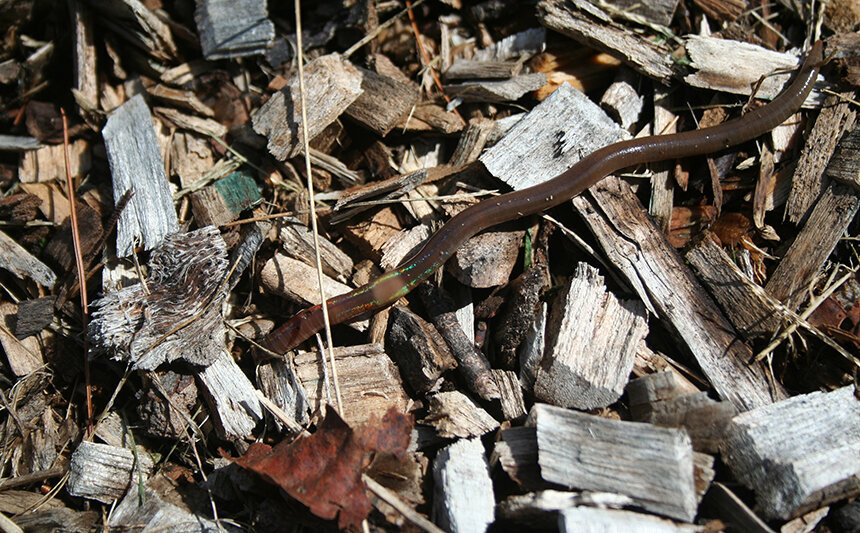
Snake worm
Just hearing the name of one of Rhode Island’s newest invasive species is enough to make local residents queasy: snake worms.
Even though snake worms look similar to the region’s more common earthworms and they’re not much larger, their behavior easily identifies them. Not only do they slither through the grass like snakes, they also jump away if you try to pick them up. In their native Korea and Japan, they are called Asian jumping worms.
“That jumping is how they get away from predators,” said worm expert Josef Gorres, an associate professor of plant and soil science at the University of Vermont who formerly taught at the University of Rhode Island. “It scares them.”
It scares people, too.
“They can be a bit of a pest when you have a Fourth of July party and you have a new patio and they crawl around like snakes,” said Gorres, who has found the worms in his home garden in Vermont. “They make people squeamish.”
This invader has probably been in the United States for more than 50 years. The story told about their arrival involves a shipment of cherry trees from Japan that was sent to Washington, D.C., and the worms were in the soil around the tree roots. Whether that’s true, Gorres isn’t sure, but he believes the worms have probably been in Rhode Island for a decade or more. Residents are just now beginning to notice them.
A survey of URI master gardeners conducted by Gorres in 2015 found snake worms in Slater Park in Pawtucket and in gardens and mulch piles in Barrington, Jamestown, North Kingstown, South Kingstown and Richmond. Today, the worms are common at URI’s East Farm, where master gardeners maintain several gardens and greenhouses, and they have been reported at other scattered locations around the state as well.
Nan Quinlan, who coordinates the master gardeners’ vegetable demonstration garden at East Farm in Kingston, said the worms may have arrived there in deliveries of mulch, soil, or potted plants, or even on the tires and fenders of cars and trucks.
“There are so many possibilities here that I strongly hesitate to blame any one source,” she said. “What makes the most sense is that the Asian worms were already present in the soil at East Farm for a long time and found their way to areas like mulch piles and the compost pile we built and maintain inside the garden.”
Quinlan’s speculation that they may have come from deliveries of soil or potted plants aligns with Gorres’ understanding that they are commonly transported in plant material via the horticulture and nursery industry.
“Folks in horticulture should worry because the worms can negatively affect their stock of plants,” Gorres said. “The castings the worms produce are very granular, very loose, so if anything tries to grow in the castings, the roots will have a hard time getting a foothold. Plants need something more stable to hold onto. It makes the plant wilt and look like they’re experiencing drought symptoms.”
Snake worms can be a problem in forests as well. They consume the top layer of the soil and dead leaves — called the duff layer — where the seeds of plants germinate.
“Once that layer is gone, the plants don’t have a place to put their seeds where they will survive until the following year,” Gorres said. “You end up with a forest with fewer understory plants, and all that’s left are saplings of trees that deer will feed on. The end result is a lack of regeneration of the forest.”
This concern is also true of the other earthworms found in the Northeast, all of which are non-native and could be impacting forests in a similar way. Any native earthworms in the region were crushed by glaciers during the last ice age. Most of the worm species found in New England today arrived following European colonization of the area.
“We’re now experiencing the second wave of earthworm invasions,” Gorres said. “One of the things I’m especially worried about is that the loose castings will make the soil highly erodible. Castings from European worms stick together. The soil on a slope where snake worms are found might easily erode away.”
To reduce the likelihood of the spread of snake worms, Gorres suggested that consumers ask vendors selling plants, mulch, or soil whether the worms have been found in their products.
“They’ll probably say they haven’t been, but if they’re truthful they may say it’s the new normal, which it may be,” he said.
Gorres is studying several varieties of insect-killing fungi that may control the worms.
David Gregg, director of the Rhode Island Natural History Survey, cautioned that those investigating whether they have snake worms in their gardens shouldn’t confuse them with worm snakes, which are native to New England and may be Rhode Island’s rarest snake. Worm snakes grow only about 10 inches long and may look like a large scaly worm.
“Worm snakes = good, snake worms = bad,” he wrote in an email.
Rhode Island resident and author Todd McLeish runs a wildlife blog.
'Encaustic shrouds' in Cambridge
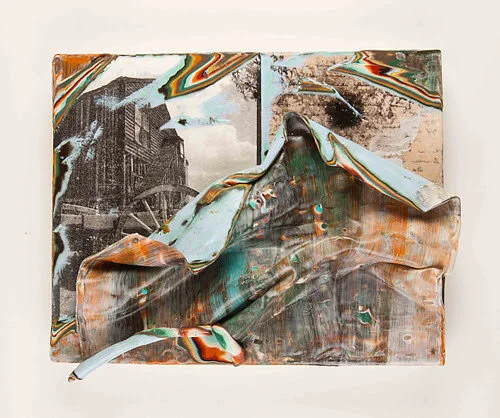
Encaustic painting by Stephanie Roberts-Camello, in her show “Many Miles,’’ Sept. 30-Oct. 8 at Maud Morgan Arts Chandler Gallery, Cambridge, Mass.
She says: “Discovering a box of old family letters in my family's basement would change the way I painted and how I thought about my work. There were stacks of letters bound in twine according to who sent them. They dated back as far as 1919 through 1946. Many of these letters reference the dust bowl days of Texas and the Great Depression.
”Encaustic is a medium that can be worked flat or sculpturally. One of its many attributes is it can retain any stress mark or scrape once it cools. It has an innate feature for documentation. These letters; represent a period of suffering, loss and endurance in our country, and for me, the intricately worked encaustic shrouds became metaphors for struggle and change.’’
A menu from the '50s to savor

Howard Johnson’s was founded and based in Quincy, Mass., in 1925.
A tunnel and strip-joint strip in Providence's Atlantis
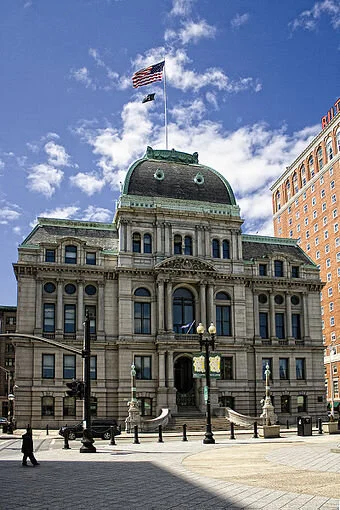
On Kennedy Plaza, Providence City Hall, built in 1978
From Robert Whitcomb’s “Digital Diary,’’ in GoLocal24.com
Rhode Island officials propose to have a tunnel for buses built under Kennedy Plaza, in downtown Providence, to reduce vehicular (and human?) density in the plaza area and better connect it with Burnside Park. We need to study the engineering plans for this but it seems that it would be very expensive to construct such a tunnel in such an area, which is virtually at sea level.
To take some of the vehicular pressure off the plaza why not create a secondary bus hub in the Route 195 relocation area? This would be within walking distance of Kennedy Plaza, and perhaps small buses could be used in a shuttle service between the hubs, or perhaps electric trolleys.
Kennedy Plaza has the bones to be one of America’s most beautiful squares – not quite up to the glory of Boston’s Copley Square, but impressive. Creating a nearby transit hub would makes its improvement easier to achieve, and would be a lot cheaper than a tunnel.
Having said that, I’d add that while police activity could be stepped up to stop rowdy and worse behavior among a few of those using buses at Kennedy Plaza, the environment is not as problematical as has been presented. And there is a police station there.
xxx
Dylan Conley, chairman of the Providence Board of Licenses, has suggested creating a 24/7 entertainment district in the form of a strip of bars and nightclubs on gritty Allens Avenue. The idea is to draw away and concentrate some of the establishments now dispersed around downtown Providence. Their sometimes raffish activities can antagonize neighbors, scare tourists, lure some folks looking for trouble, and distress citizens worried about the reputation of Rhode Island’s capital.\
A hoped-for benefit of Mr. Conley’s idea would be creating a larger source of sales- and property-tax revenue from this sector by promoting the new district as a sort of Bourbon Street, New Orleans, attraction. However, by intensifying Providence’s (exaggerated) reputation as a sleazy and unsafe place, such a district might have the opposite effect in the long term by scaring away more respectable and conventional -- and affluent -- businesses and individuals. As for New Orleans as a model: It’s infamous for the high crime rate in its entertainment strips.
And you can imagine the number of drunk drivers that such an Allens Avenue entertainment district would put on Route 95. Few customers there would want to just drink one glass of heart-healthy red wine….
Is this really the sort of industry Providence wants to expand? And Allens Avenue, for all its grittiness, is along the water. Surely there are classier ways to take better advantage of that than creating what would probably become a new Mecca for many dubious people. Before, of course, global warming puts Allens Avenue underwater.
Tracey Aikman: I'm one of those factory workers Trump lied to
From OtherWords.org
My entire working life has been dictated by offshoring. I’ve spent my career jumping from one factory closing to another.
When President Trump was elected, he said: “Companies are not going to leave the United States anymore without consequences.” His promises ring hollow to me after I got my latest layoff notice.
My first job out of high school was at a factory owned by United Technologies in Wabash, Ind. I showed up to work in March 1991 and a sign on the door read: “Moved to Mexico.” My mother, who worked for a sister factory, also lost her job when her factory was sent south of the border.
I eventually got a union job at Chrysler in Kokomo, Indiana, which allowed me to give my family a middle-class life and build our dream house on five acres of land. In 2008, I got laid off. I lost my house and had to start over financially.
When I got my job at Schneider Electric’s “Square D” plant in Peru, Ind., five years ago, making electrical boxes and equipment, I hoped that this job would sustain me until I was ready to retire.
Unfortunately, the multinational corporation that owns our plant announced this summer that they would be moving our work to Mexico and other plants. Once our plant closes, all of Schneider Electric’s North American factories will be non-union.
Now I’m facing another layoff, even though our Peru plant was profitable. In fact, the same week I was laid off, Schneider Electric announced profits of $2.2 billion for the first half of 2019.
I’m not alone. Workers across the Midwest are suffering the same fate. And President Trump continues to fail us. Instead of punishing companies like Schneider Electric, he has rewarded them with $120 million in federal contracts and a massive tax break. The closure of my factory is sad proof that Trump’s lies have consequences.
Trump’s broken promises have become a broken record destroying our communities, even though here in Miami County, we gave him the vast majority of our votes in 2016.
Right now, Our Revolution, a political advocacy organization inspired by Sen. Bernie Sander’s historic presidential run in 2016, is helping to organize a miracle effort to save our plant. Joined by workers from the shuttered GM plant in Lordstown, Ohio, and workers from the Carrier plant in Indianapolis, we are calling on Trump to sign an executive order that would prevent taxpayer dollars from going to companies that are shipping American jobs overseas.
With the next round of layoffs scheduled for Sept. 27, there is no time to waste.
We have one request for President Trump: Use the power of the government over federal contracts to stop our jobs from leaving the United States. Show us that you mean what you said when you promised to be a workers’ champion.
We need your help now — and we’ll remember if we don’t get it.
Tracey Aikman has been laid off by global corporations United Technologies, Chrysler and now Schneider Electric. He is married and is a father of two.
The fight for Mass. offshore wind goes on
From The New England Council (newenglandcouncil.com)
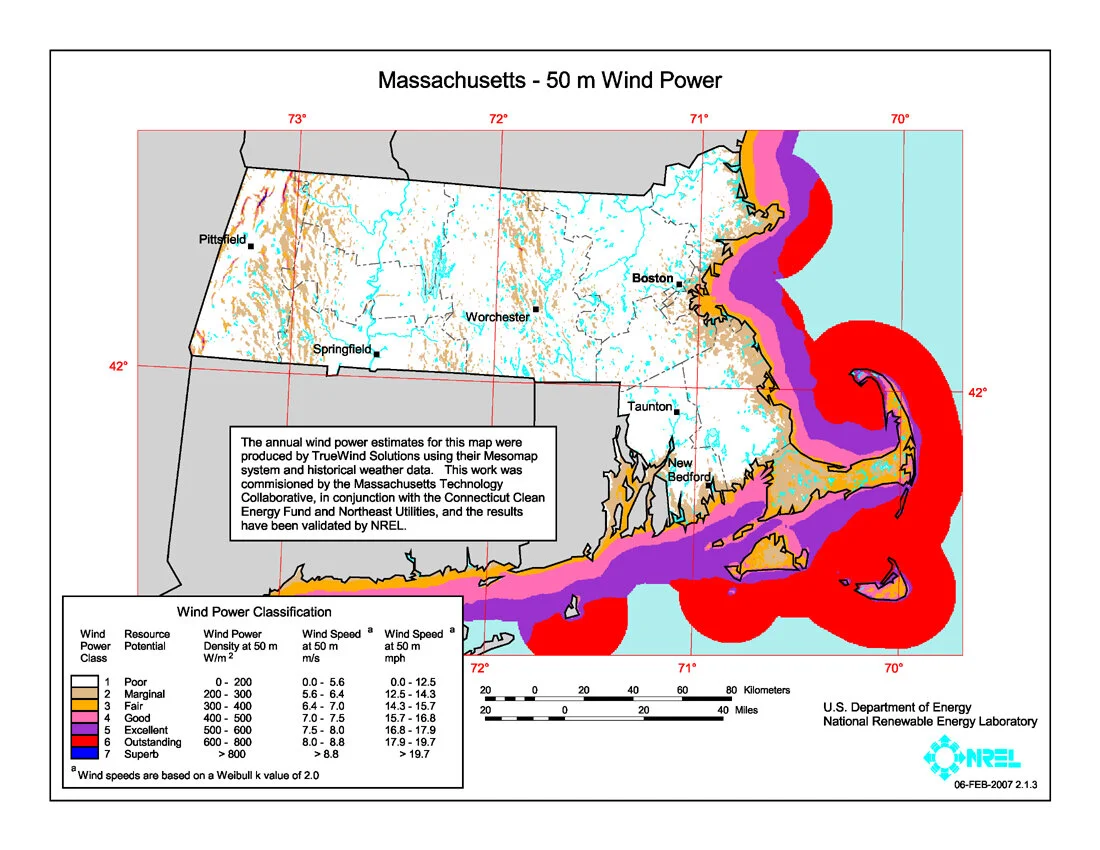
Orsted and Eversource have submitted a proposal to construct an wind energy farm off the Massachusetts coast. The proposed project, named Bay State Wind, includes a 400-megawatt project and an 800-megawatt project.
The companies’ proposal for Bay State Wind comes after Orsted’s federally approved offshore wind farm, Vineyard Wind, was put on hold for further review of its impact on fish and fisherman. Orsted, however, has been working closely with various commercial and local fisherman to accommodate their practices and projects in their own wind-turbine proposal. The companies said the project would bring hundreds of construction jobs to the state and, if selected, they plan to commit hundreds of millions of dollars to direct community investments.. Orsted and Eversource have worked together before, most recently on the Revolution Wind project planned for Rhode Island.
“We are thrilled to once again help Massachusetts take the next step to grow its clean energy economy,” said Lee Olivier, Eversource executive vice president for enterprise energy strategy and business development, in a statement. “Our team has been in the local communities, meeting with residents and stakeholders, to ensure their feedback is built into Bay State Wind’s proposal, which is the most mature, comprehensive and thorough offshore wind project available.”
Trying to go with the flow

“All I want is to be the river though I return again and again to the clouds. (detail) (etching, paper, fabric, mahogany), by Nancy Diessner, in the show “Memory, rivers and urban debris,’’ at Bromfield Gallery, Boston, in October.
David Warsh: 'The Book of the Grotesque'
SOMERVILLE, Mass.
I returned to the office Saturday from a reporting trip to read a week’s-worth of the four English-language newspapers I follow. The fat was back in the fire, what with the so-far anonymous whistle-blower and President Trump’s July 25 telephone conversation with Ukrainian President Volodymyr Zelensky,
Having watched a couple of hotly contended soccer games on television while in Europe I had been thinking about referees and what we expect of them.
What caught my attention in those couple of hundred pages of newsprint I read yesterday were the lofty claims in which the various stories were situated. I always wince at The Washington Post’s portentous flag: “Democracy dies in darkness.” The Financial Times’s “without fear and without favour” is suitably restrained. The Wall Street Journal’s presentation is the least heavily inflected; the NYT’s the most strident these days. {The NYT’s motto is “All the News That’s Fit to Print’.’)
It was a two-page house ad in the Saturday Sept. 20 NYT, under the headline “The Truth Has a Voice,” that brought me up short. “Capturing the full story on every story we report takes diligence, persistence and an unwavering commitment to the truth,” the advert copy began.
In this case was the truth was that of gender equality. The ad stated, “New York Times journalists have long reported on the specific challenges and inequalities women face – and the strides women have taken towards change. We are committed to covering gender inequality, whether elevating women’s voices, debunking misconceptions or producing deeply-reported stories on pressing issues.”
It concluded, “Your support of today’s independent press is and investment in tomorrow. Thank you.”
On the page opposite, NYT gender editor Jessica Bennett put it this way: “We want gender coverage to exist across sections, platforms and subject matter. It is a lens through which we cover the world. It’s all part of our larger mission to pursue the truth, shine a light on overlooked stories and hold power to account.”
What struck me was the tension between competing views in the ad behind its definite and indefinite articles: “the” truth. vs. “a” lens. The NYT’s “Truth” campaign has bothered me from the beginning, because of the immodesty of its claims. The boast of “truth” goes far beyond what most journalists know themselves to be pursuing: a provisional, partial kind of truth, the best that can be said quickly.
The NYT ad yesterday reminded me of the prologue to Winesburg, Ohio (1919), by Sherwood Anderson, a book of 21 short stories I read as a copy-boy at the City New Bureau of Chicago, in 1964. I looked at the hundred-year-old book again this morning. It seemed as germane as ever. Winesburg is in the public domain; the prologue is 1,200 words long. I am appending it here:
. The Book of the Grotesque
The writer, an old man with a white mustache, had some difficulty in getting into bed. The windows of the house in which he lived were high and he wanted to look at the trees when he awoke in the morning. A carpenter came to fix the bed so that it would be on a level with the window.
Quite a fuss was made about the matter. The carpenter, who had been a soldier in the Civil War, came into the writer’s room and sat down to talk of building a platform for the purpose of raising the bed. The writer had cigars lying about and the carpenter smoked.
For a time the two men talked of the raising of the bed and then they talked of other things. The soldier got on the subject of the war. The writer, in fact, led him to that subject. The carpenter had once been a prisoner in Andersonville prison and had lost a brother. The brother had died of starvation, and whenever the carpenter got upon that subject he cried. He, like the old writer, had a white mustache, and when he cried he puckered up his lips and the mustache bobbed up and down. The weeping old man with the cigar in his mouth was ludicrous. The plan the writer had for the raising of his bed was forgotten and later the carpenter did it in his own way and the writer, who was past sixty, had to help himself with a chair when he went to bed at night.
In his bed the writer rolled over on his side and lay quite still. For years he had been beset with notions concerning his heart. He was a hard smoker and his heart fluttered. The idea had got into his mind that he would some time die unexpectedly and always when he got into bed he thought of that. It did not alarm him. The effect in fact was quite a special thing and not easily explained. It made him more alive, there in bed, than at any other time. Perfectly still he lay and his body was old and not of much use any more, but something inside him was altogether young. He was like a pregnant woman, only that the thing inside him was not a baby but a youth. No, it wasn’t a youth, it was a woman, young, and wearing a coat of mail like a knight. It is absurd, you see, to try to tell what was inside the old writer as he lay on his high bed and listened to the fluttering of his heart. The thing to get at is what the writer, or the young thing within the writer, was thinking about.
The old writer, like all of the people in the world, had got, during his long life, a great many notions in his head. He had once been quite handsome and a number of women had been in love with him. And then, of course, he had known people, many people, known them in a peculiarly intimate way that was different from the way in which you and I know people. At least that is what the writer thought and the thought pleased him. Why quarrel with an old man concerning his thoughts?
In the bed the writer had a dream that was not a dream. As he grew somewhat sleepy but was still conscious, figures began to appear before his eyes. He imagined the young indescribable thing within himself was driving a long procession of figures before his eyes.
You see the interest in all this lies in the figures that went before the eyes of the writer. They were all grotesques. All of the men and women the writer had ever known had become grotesques.
The grotesques were not all horrible. Some were amusing, some almost beautiful, and one, a woman all drawn out of shape, hurt the old man by her grotesqueness. When she passed he made a noise like a small dog whimpering. Had you come into the room you might have supposed the old man had unpleasant dreams or perhaps indigestion.
For an hour the procession of grotesques passed before the eyes of the old man, and then, although it was a painful thing to do, he crept out of bed and began to write. Some one of the grotesques had made a deep impression on his mind and he wanted to describe it.
At his desk the writer worked for an hour. In the end he wrote a book which he called “The Book of the Grotesque.” It was never published, but I saw it once and it made an indelible impression on my mind. The book had one central thought that is very strange and has always remained with me. By remembering it I have been able to understand many people and things that I was never able to understand before. The thought was involved but a simple statement of it would be something like this:
That in the beginning when the world was young there were a great many thoughts but no such thing as a truth. Man made the truths himself and each truth was a composite of a great many vague thoughts. All about in the world were the truths and they were all beautiful.
The old man had listed hundreds of the truths in his book. I will not try to tell you of all of them. There was the truth of virginity and the truth of passion, the truth of wealth and of poverty, of thrift and of profligacy, of carelessness and abandon. Hundreds and hundreds were the truths and they were all beautiful.
And then the people came along. Each as he appeared snatched up one of the truths and some who were quite strong snatched up a dozen of them.
It was the truths that made the people grotesques. The old man had quite an elaborate theory concerning the matter. It was his notion that the moment one of the people took one of the truths to himself, called it his truth, and tried to live his life by it, he became a grotesque and the truth he embraced became a falsehood.
You can see for yourself how the old man, who had spent all of his life writing and was filled with words, would write hundreds of pages concerning this matter. The subject would become so big in his mind that he himself would be in danger of becoming a grotesque. He didn’t, I suppose, for the same reason that he never published the book. It was the young thing inside him that saved the old man.
Concerning the old carpenter who fixed the bed for the writer, I only mentioned him because he, like many of what are called very common people, became the nearest thing to what is understandable and lovable of all the grotesques in the writer’s book.
David Warsh, an economic historian and veteran columnist, is proprietor of Somerville-based economicprincipals.com, where this column first ran.
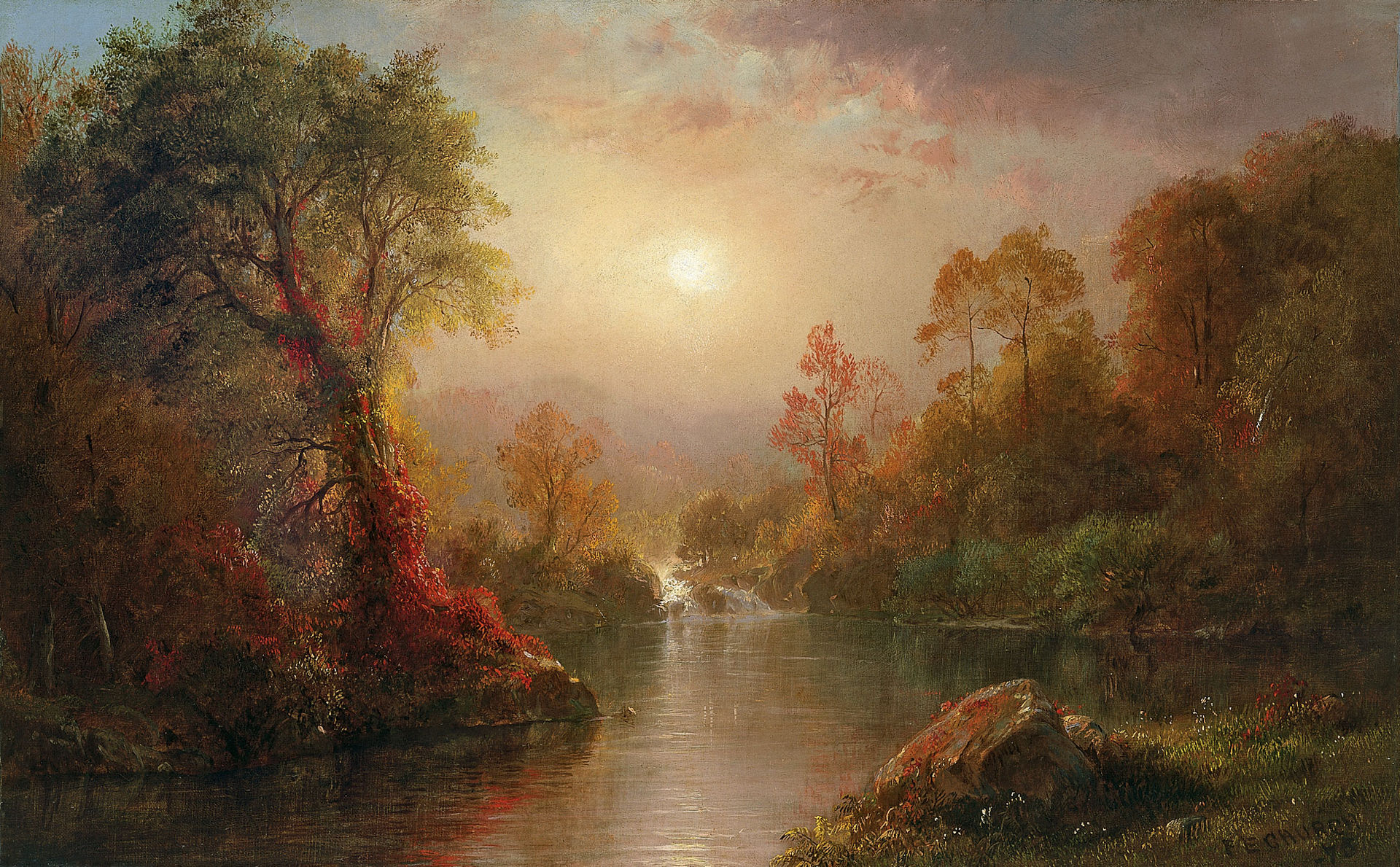
'On its hinge'
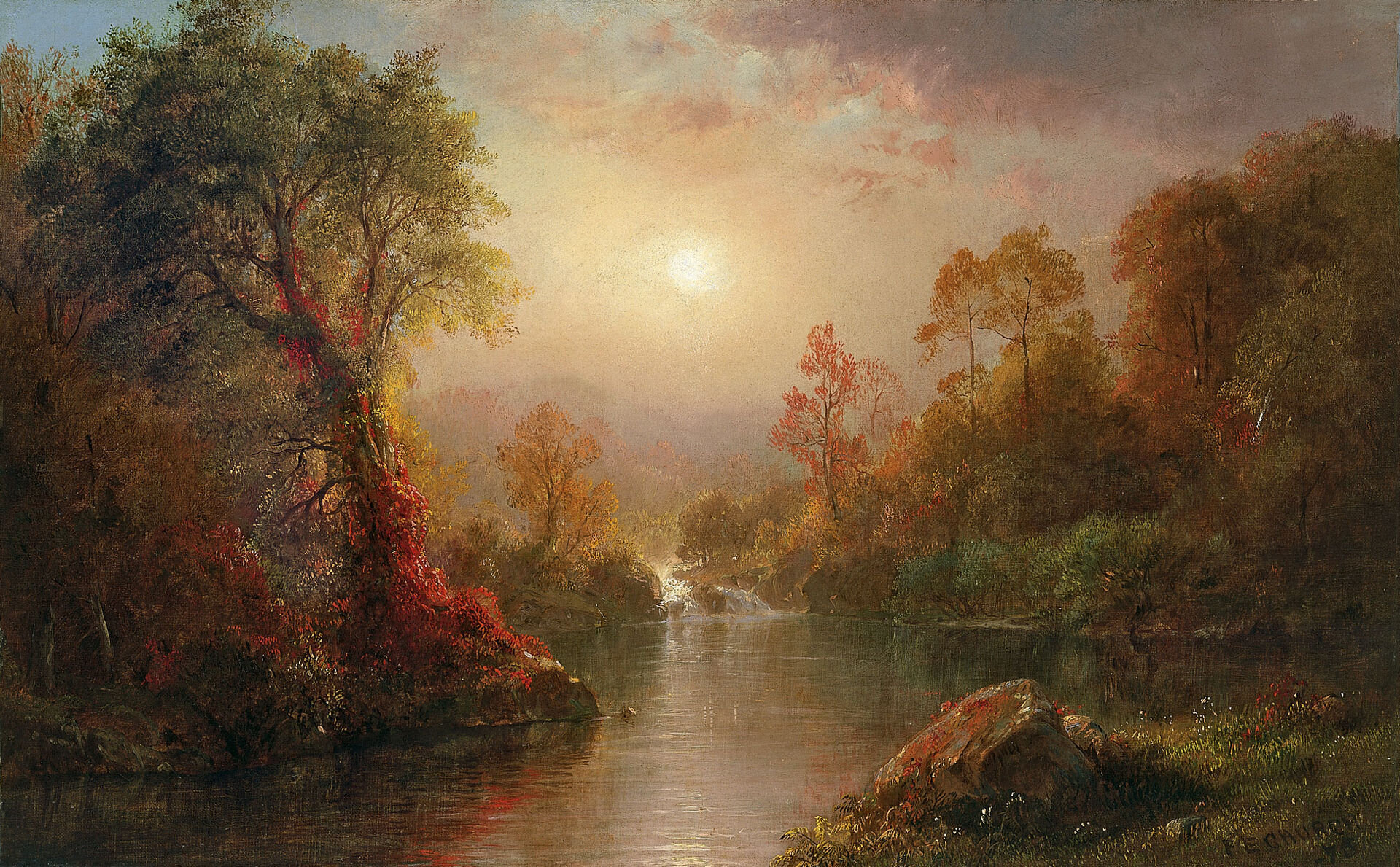
“Autumn,’’ by Frederic Edwin Church
“An agitation of the air,
A perturbation of the light
Admonished me the unloved year
Would turn on its hinge that night.’’
— From “End of Summer,’’ by Stanley Kunitz
Llewellyn King: Drones pose growing menace to energy infrastructure

Launching a drone
Energy company executives went to bed Sept. 14 with a new existential worry: drone attacks. These are added to general fear of a cyberattack that could hobble an oil company or bring down the electric grid, or parts of it.
Final details are not in yet, but it is believed that an army of drones hit two Saudi oil processing facilities early on the morning of Sept. 14, causing huge fires.
Heretofore energy companies, especially pipelines and electric utilities, found drones to be a gift. Drones have enabled oil and gas companies to monitor pipelines and electric utilities to monitor their transmission lines.
They are doing the jobs that were done initially by men on horses, then by teams in trucks and jeeps and by line technicians in helicopters. Less expensive, less dangerous and more efficient, drones have been a godsend.
Much of this surveillance is now done by these small electric aircraft, not appreciably different than those the general public can buy in a sophisticated toy store.
The attack on the Saudi oil installations, with its resultant destructive fires, harbors horrors for the future that haven’t been part of the portfolio of future uncertainties faced by companies with large installations or thousands of miles of exposed lines and, in some cases, over-the-ground pipes.
The traditional posture of utilities to this kind of physical threat has been not to try and meet every possibility with a tailor-made defense, but rather to respond quickly.
In fact, rapid response is in the utility DNA -- and honed in foul weather events. If lines come down, the utilities, with military precision, try to get them up again. They stock replacement parts and have a network of crews from neighboring utilities on call. Worst case, they hope, will be a short blackout.
“It’s like a military operation. Think of action stations aboard a ship,” a utility executive says.
But as climate change has increased expectations for extreme weather events, and as the digital society has put new demands on electricity resilience, rapid response is inadequate going forward.
Undergrounding electric lines, previously thought to be prohibitively expensive, is now on the table in the C-suites of some utilities. Worry about drones is another endorsement of that option, where possible. But undergrounding is only a limited defense and it is very expensive and not suitable for major lines carrying vast amounts of power.
Oil and gas companies are more worried about the central facilities than they are about the distribution systems, as far as drone attacks are concerned. Oil refineries have always been vulnerable and now that vulnerability is exposed. While most refineries won’t go up in flames because a small drone with an ignition source hits them, this threat will increase as weaponized private drones grow in power and carrying capacity.
There is a growth industry in protecting vulnerable infrastructure. From secure communications to shields against drone attack, the battle for safety on the home front has been joined.
Drone terrorists have the advantage that drones are cheap, anonymous and the threat is disruption and panic, even if the actual damage is trivial. Off-the-shelf terrorism has arrived.
The public will worry about the security of nuclear plants. Actually, these are probably the safest of large energy facilities from aerial attack. The nuclear vitals are encased in feet of concrete, steel and lead that protects them from bombs and cruise missiles, let alone the new threat coming from those once-fun toys: drones.
The departments of Homeland Security and Defense are acutely aware of the threat from drones and are examining ways to defend against these, sources say. They see a battlefield where the location of the enemy might not be known and where it will be harder to determine whether the perpetrator of an attack is a state player or a terrorist organization.
Warfare is going retail.
Llewellyn King is executive producer and host of White House Chronicle, on PBS. His email is llewellynking1@gmail.com.
Fall River's electorate: Corrupt or delusional?
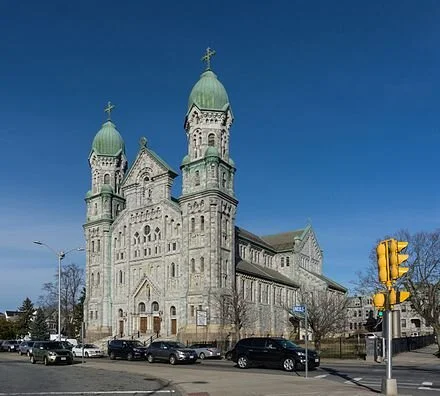
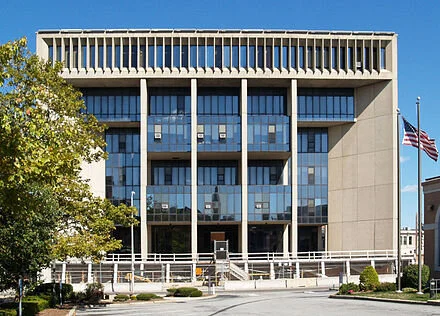
St. Anne’s Church in Fall River. The church, whose membership had been declining for years, had recently been the topic of demolition talks but now seems safe. The hilltop church, once home to a large French Canadian parish, may be the best loved building in the city. The brutalist City Hall, below, may be the most hated.
From Robert Whitcomb’s “Digital Diary,’’ in GoLocal24.com
Massachusetts’s system of local control over marijuana businesses that apparently often gives a single municipal official, such as Fall River’s brazen, sleazoid and perhaps crazy mayor, Jasiel Correia II, power to authorize a pot business to open is of course a wide-open door for corruption. In the latest scandal involving the 27-year-old statesman, he’s been arrested on charges that he extorted cannabis companies for hundreds of thousands of dollars. Mr. Corriea has long displayed a love of a fancy, glitzy lifestyle; his wants seem to far exceed his needs.
So it was good to hear Gov. Charlie Baker tell The Boston Globe last week:
“Maybe the state needs to put something in place that says, ‘It needs to actually be a governing entity, not a single person’ because that’s a legit concern.” Yes, a “governing entity’’ acting with transparency.
As disturbing as Mayor Correia is, much blame also goes to those citizens of Fall River who voted for him despite impressive intimations of his greed, immaturity and megalomania and to those who didn’t vote at all in the elections that put him in and kept him in office. Not voting has the effect of a vote – usually for someone you don’t like. Corrupt politicians often reflect a corrupt and/or lazy electorate. Or maybe just depressed….
Animals in Middlebury

“The Messenger,’’ by Dana Simson, in her show “the animals are innocent,’’ at the Henry Sheldon Museum, Middlebury, Vt., through Jan. 11.
The museum says that the exhibit features the mixed-media work of artist, ceramist, author and illustrator Simson. “Her ceramic boat sculptures with their animal passengers, along with her paintings of animals, appear whimsical and charming at first glance. However, there's a more serious side to the works, as they're meant to represent the potential effects of climate change on animals.’’
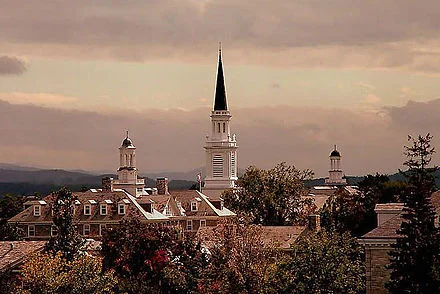
Middlebury is best known as the home of Middlebury College and, especially for the college’s Bread Loaf School of English, a graduate school associated with many celebrated writers, but especially the great poet Robert Frost, who lived part of the year in nearby Ripton, Vt. , in a homestead now owned by MIddlebury College. The area also has many beautiful and highly productive farms. The Green Mountains rise to the east of Middlebury.
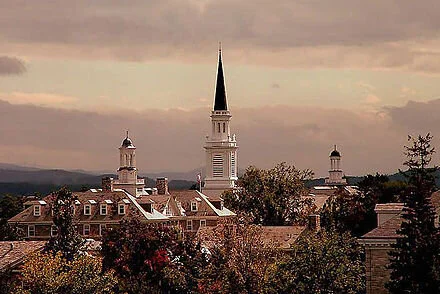
Middlebury College, which is considered elite
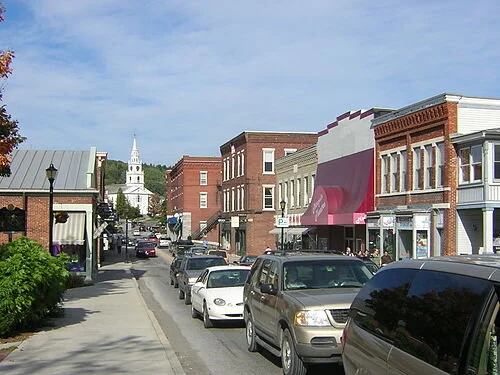
Downtown Middlebury

Lithograph of Middlebury from 1886 by L.R. Burleigh with list of landmarks
Chris Powell: Racism doesn't explain why the white guys won these mayoral primaries

In downtown Hartford
Since sometimes, as Freud is supposed to have said, a cigar is just a cigar, maybe sometimes an election for mayor in Connecticut is just an election, not part of a longstanding scheme to keep uppity women and minorities in their place.
But more than ever these days such complaints of prejudicial discrimination can intimidate, and last week Connecticut's Hearst newspapers pandered to them. The papers proclaimed disappointment that white men had won the Democratic primaries for mayor in Connecticut's three biggest cities -- Hartford, New Haven, and Bridgeport -- even though those cities are full of women and minorities.
The most mistaken complaint about the primary results came from state Rep. Robyn Porter, D-New Haven. "It's just hard for people to accept change," Porter said. "White men have ruled this country since its inception, so the barriers we're talking about bringing down are so entrenched that it's going to take time. That it's going to be all white men representing majority-minority cities is something that needs to be addressed."
But as even Porter acknowledged, in those three cities white men themselves are a minority, since barely a third of the population of the three cities is white and only about half of that third is male.
Yes, Hartford Mayor Luke Bronin, a white guy, defeated a black candidate and a Hispanic one, but Bronin did not win because the two minority candidates split the minority vote. Instead Bronin won with 59 percent, signifying he had support from many blacks and Hispanics. Of course it helped Bronin that one of his rivals, former Mayor Eddie Perez, had been convicted of corruption in office. But good for Hartford that integrity could trump mere ethnicity.
Besides, Hartford already has had black, Hispanic and women mayors. Despite Porter's hallucination, nobody in Hartford is being excluded because of race, ethnicity, or gender.
Yes, New Haven Mayor Toni Harp, a black woman, was defeated in the Democratic primary by another white guy, Justin Elicker, after a campaign in which Elicker was challenged about his ability to represent black people when he doesn't look like them. This challenge was racist but it was taken seriously. To oblige his doubters should Elicker have put on blackface instead of sticking to the issues?
Like Bronin in Hartford. Elicker could not have won in New Haven without support from blacks and Hispanics, and there was plenty of reason for everybody to vote for him, from Harp's recent 11 percent tax increase to the frequent reports of expensive incompetence and arrogance in her administration. Harp long has seemed to think that facilitating illegal immigration is what her constituents care about most. While Elicker probably will pose as politically correct, too, at least he may realize that good public administration is more compelling.
"Hard for people to accept change"? But change is exactly what New Haven's Democrats voted for.
And yes, Bridgeport Mayor Joe Ganim, another white guy, narrowly won renomination in his primary with state Sen. Marilyn Moore, who is black. But Ganim won because Moore's campaign failed to corral absentee ballots as well as everyone knew Ganim's would, being backed by the city's Democratic machine.
Moore still would have had an excellent chance to become mayor if her campaign could have obtained 207 valid petition signatures to gain an independent ballot line in the general election. That should have been easy, but Moore's campaign submitted only 168. That wasn't racism but incompetence.
Chris Powell is a columnist for the Journal Inquirer ,in Manchester, Conn.
Portland mulls building higher on its waterfront

The Portland waterfront. It’s a favorite port for cruise ships plying waters between New York, the Maritime Provinces and Quebec in the summer and fall.
From Robert Whitcomb’s “Digital Diary,’’ in GoLocal24.com
City planners in Portland, Maine, have come up with some interesting ideas for adapting that city’s waterfront, much of it a real “working waterfront’’ (fishing boats, etc.), to rising seas. Their proposed Coastal Resiliency Overlay Zone would, The Portland Press Herald reports, let developers “build taller buildings in those areas if they prove the additional height is being used to prepare for sea-level rise and storm surges associated with a changing climate.’’
Design of such buildings would include “the elevation of the first floor above highest adjacent grade building design that allows for future modification of the ground elevation.’’ And in some cases, “the new rules would allow developers to build an extra floor.’’
Of course, some people whose view of the water might be limited by higher buildings would complain, but Portland’s planners are just being realistic. The National Oceanic and Atmospheric Administration (NOAA) projects that some now low-lying areas of Portland might be under a under a foot of water at normal high tide in 2100, but 6 to 10 feet underwater when high tide and storm surge combine, probably during a Nor’easter.
To read the Press Herald story, please hit this link.
To look at NOAA’s “Sea Level Rise Viewer’’ please hit this link.

Watery Portland from above