
Vox clamantis in deserto


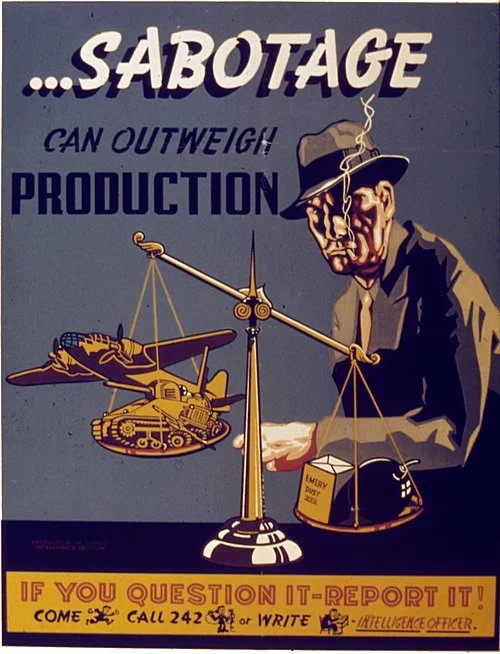
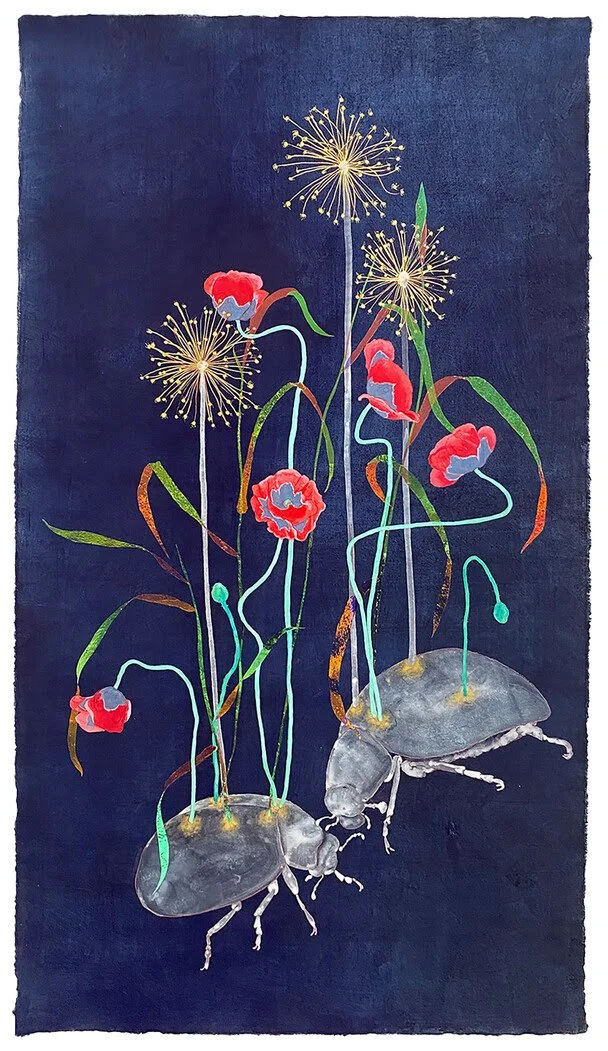
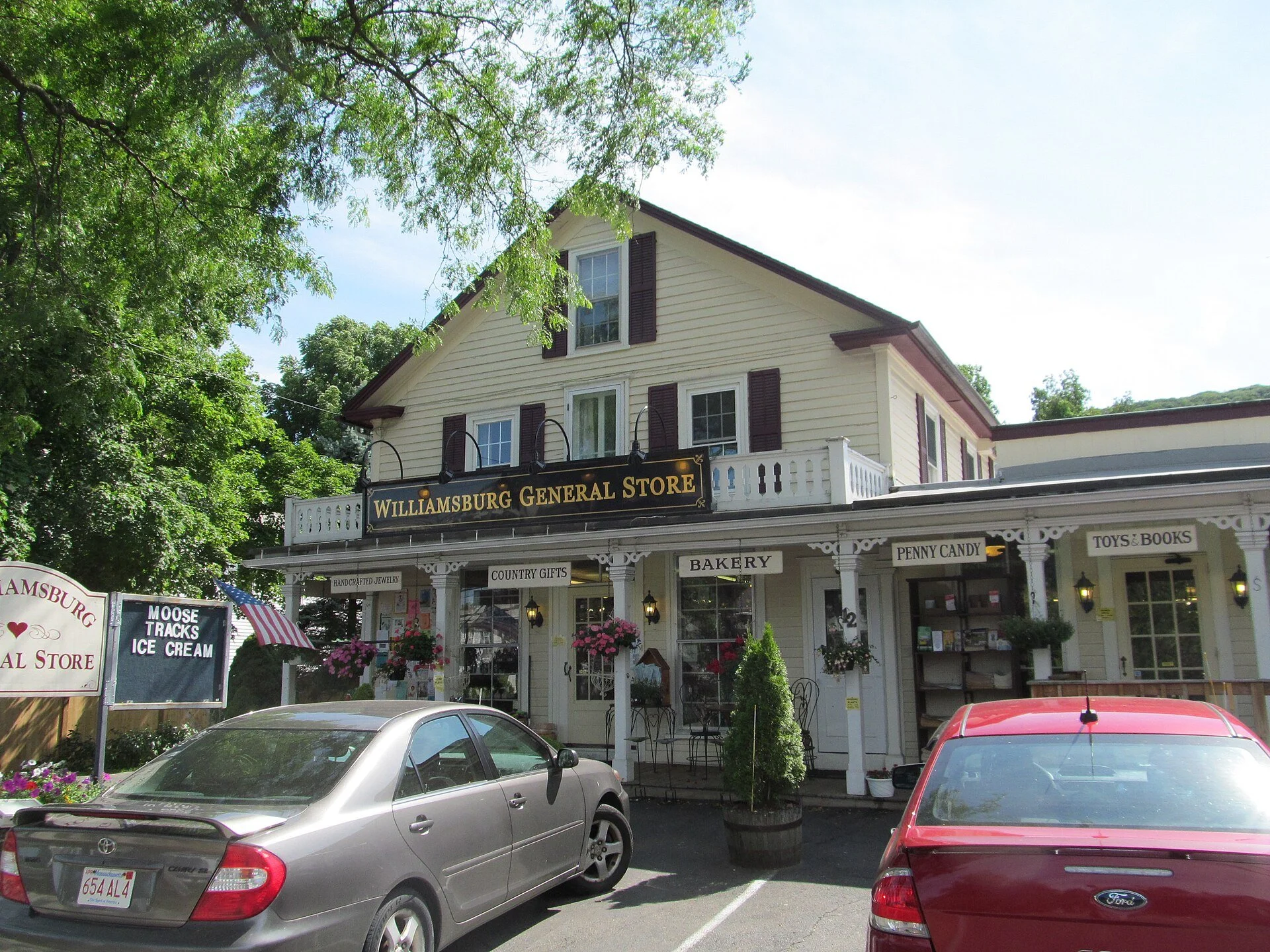
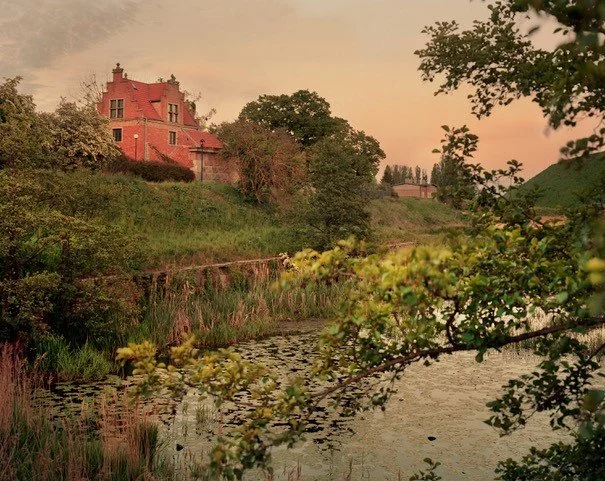

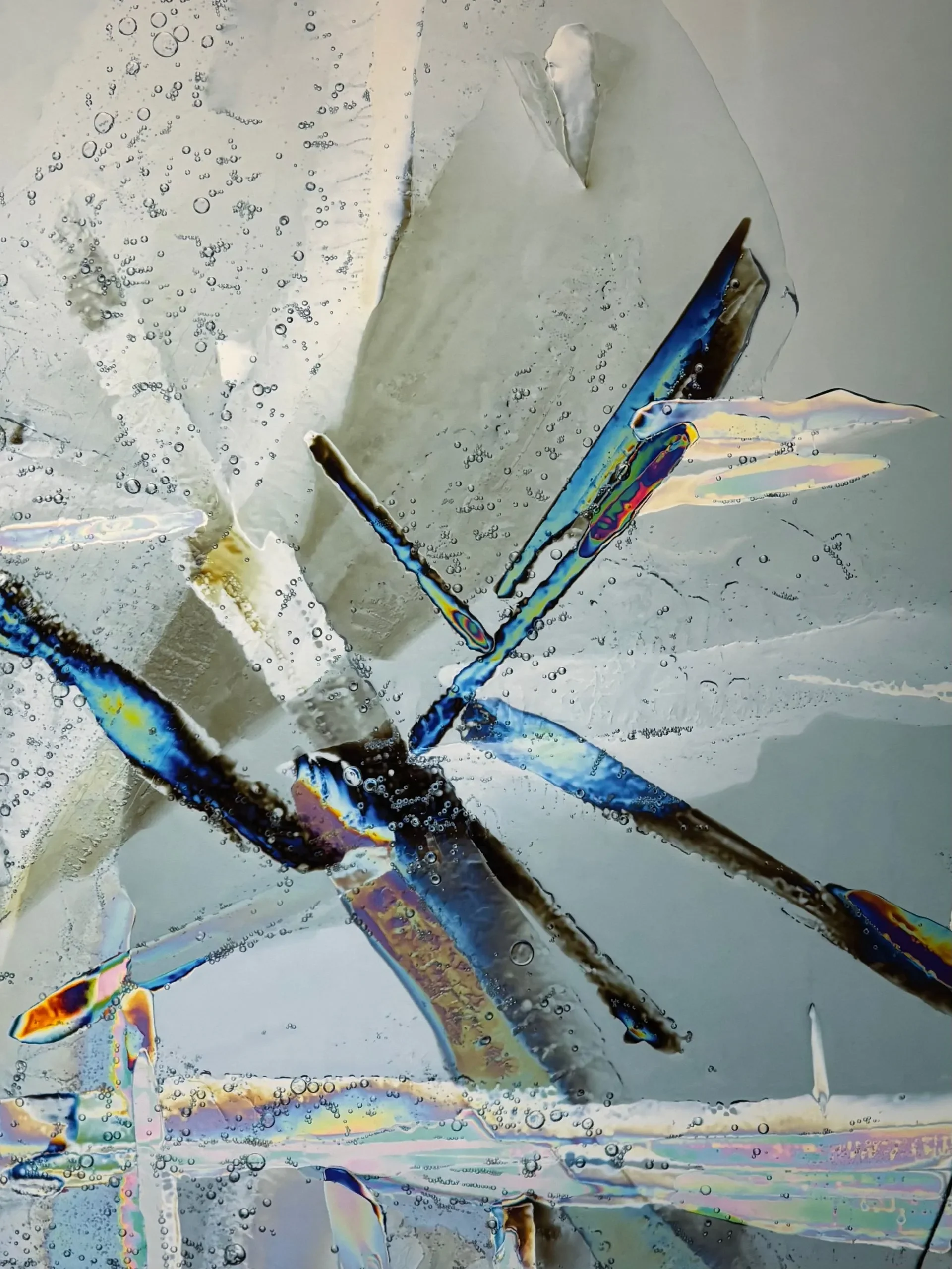

'Equinoctial tears'

“September rain falls on the house.
In the failing light, the old grandmother
sits in the kitchen with the child
beside the Little Marvel Stove,
reading the jokes from the almanac,
laughing and talking to hide her tears.
She thinks that her equinoctial tears
and the rain that beats on the roof of the house
were both foretold by the almanac,
but only known to a grandmother.’’
From “Sestina,’’ by Elizabeth Bishop (1911-1979), who traveled widely but was basically a New Englander.
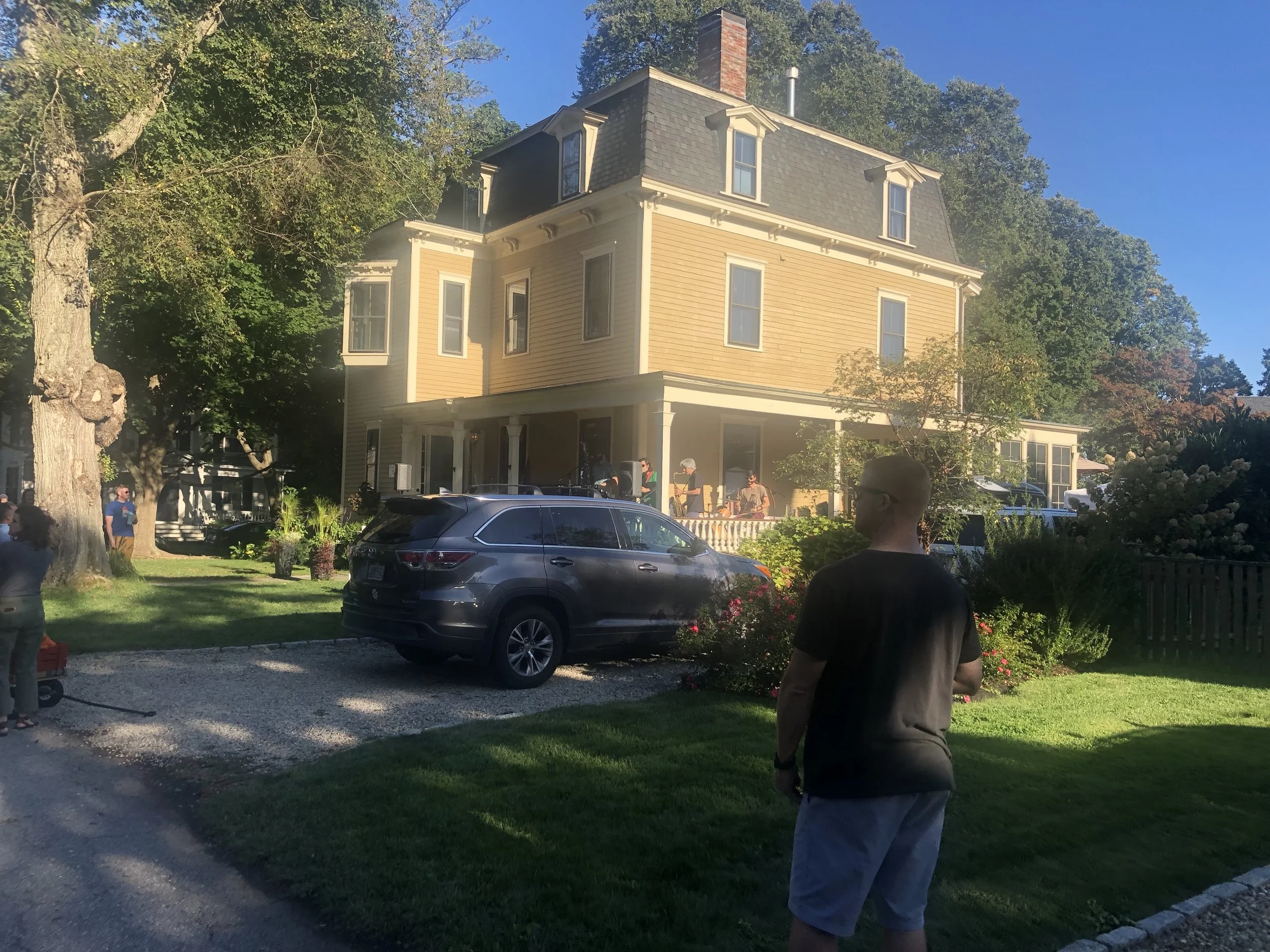
On Sunday, Sept. 15: People enjoying themselves at the annual Bristol PorchFest
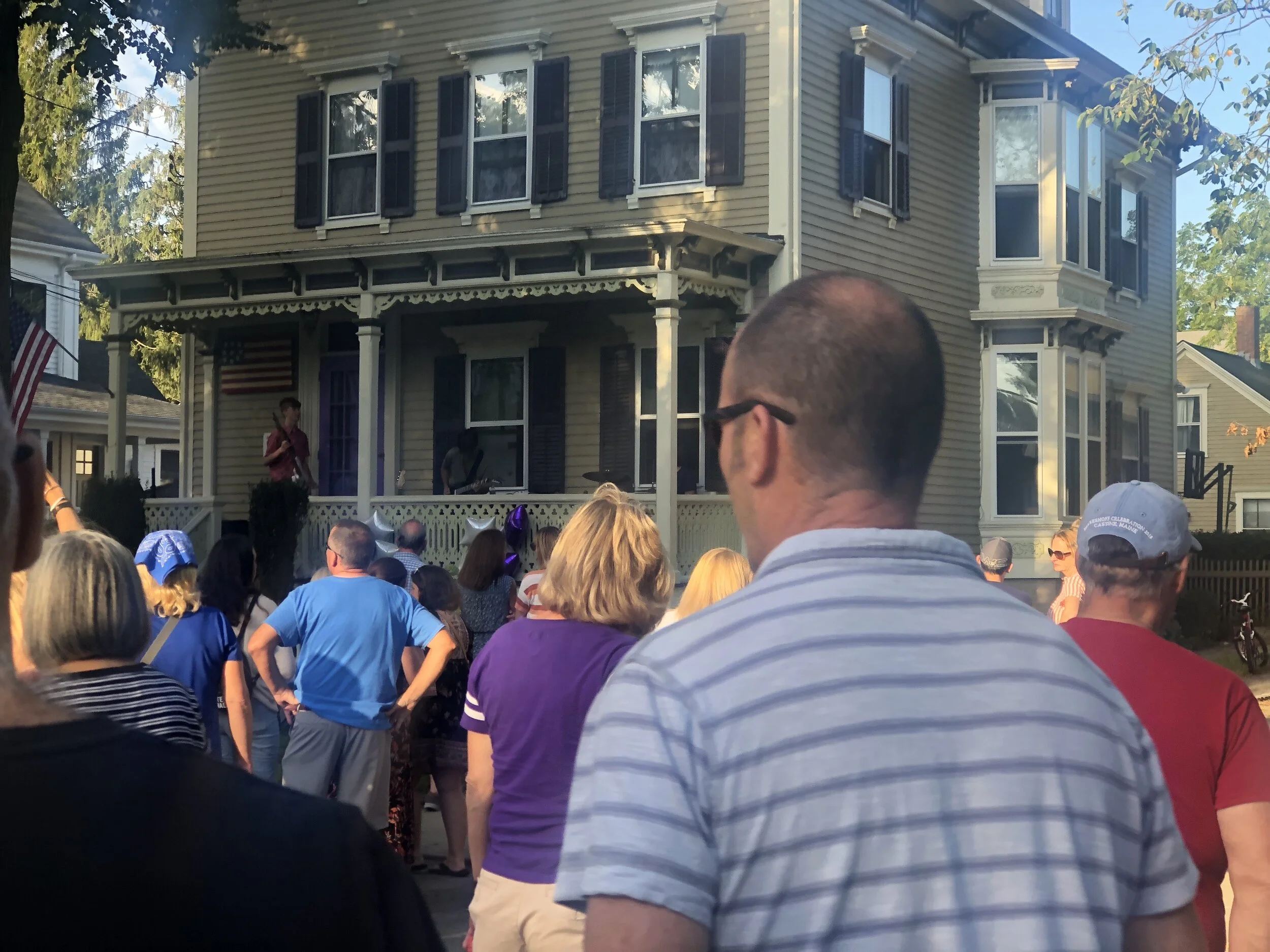
Video by Lydia Davison Whitcomb
Hampshire soldiers on

Hampshire’s Latin motto, “Non Satis Scire,’’ means “To Know is Not Enough’’.
From Robert Whitcomb’s “Digital Diary,’’ in GoLocal24.com
More than a few of New England’s small private colleges are in deep trouble because of changing demographics and economics. Perhaps the most famous one is Hampshire College, in Amherst, Mass. Hampshire is well known nationally for its intimacy and for its experimental, innovative and, as they say, “student-driven’’ system. It opened in 1970 and still has a bit of its original quasi-hippie vibe from that era.
It looked as if the college would die in the academic year that ended in May but its board has managed to keep it going, under its new president, Ed Wingenbach. There was talk of merging Hampshire into a neighboring college in the Connecticut River Valley but the school, after some agonizing, decided otherwise. “That debate (over a merger) has been resolved. We will now do the hard work to have an independent Hampshire – or we will close.’’ Mr. Wigenbach came to Hampshire from the very well-respected Ripon College, in Wisconsin, where he was vice president and dean of the faculty.
Other colleges should carefully watch as Hampshire first tries to stay afloat through this academic year, and then to regain the strength it once had despite its small endowment
Water view

“Large Tree Reflection “ (oil on canvas), by Gillian Frazier, in her show “Nature Reflected,’’ at the Groton (Mass.) Public Library, through Nov. 24
She says: “Using nature as the springboard, I love to use the abstract nature of ‘water reflections’ as a design element and subject matter. The paintings are from a series I have been working on for the past 4-5 years. I live on a river in Lowell and have a view of water from my home….
”I like to incorporate images of water lilies, trees and other elements of nature that can be reflected in the water. I typically work in oils and enjoy the luminosity of color and the many possible application techniques.’’
A little jewel of a library in tiny Conway
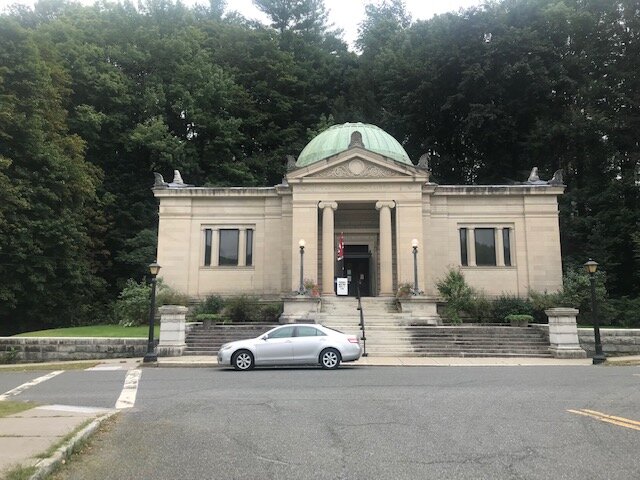
— Photo by Friedrich St. Florian
Many small New England towns have some impressive public and private buildings. Consider this one — the Field Memorial Library, in Conway, Mass. (population about 1,900). The building , finished in 1901, was financed by the great Chicago retailer Marshall Field and named in memory of his parents, John and Fedelia Nash Field. Marshall Field was born on his parents’ Conway farm in 1834. He rose to become one of America’s richest men.
Shepley, Rutan and Coolidge of Boston were the architects of this jewel of a public library, working with Norcross Builders ,of Worcester, builders of the New York Public Library.
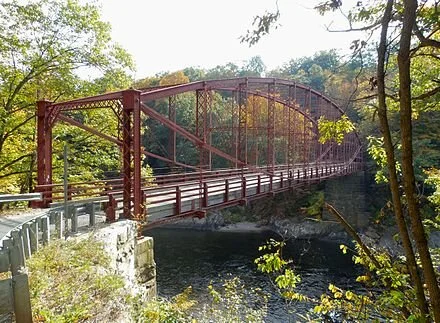
Bardwell's Ferry Bridge, built in 1882, is an historic lenticular truss bridge over the Deerfield River between Conway and Shelburne. It’s listed on the National Register of Historic Places.
Conway is still something of a farming community (now with lots of “organic’’ crops). But this “Massachusetts Hilltown” has also lured some celebrities, most notably Archibald MacLeish (1892-1982), a Modernist poet as well as a playwright, essayist and critic, and speechwriter for President Franklin Roosevelt. Besides the area’s rugged beauty, its proximity to the colleges in the Connecticut Valley just to the east has been a lure for writers, as has the Field Memorial Library.
— Robert Whitcomb
Tim Butterworth: Some impressive examples of American 'socialism'

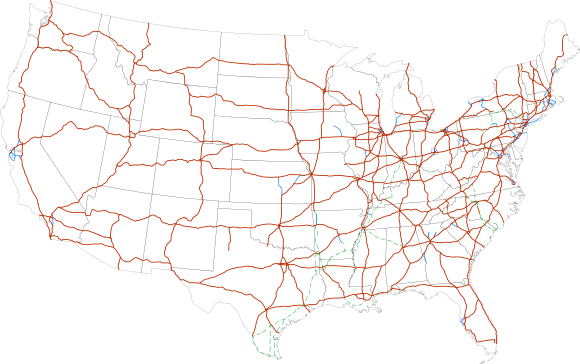
Socialist system? Map of the Interstate Highway System in the 48 contiguous states. Alaska, Hawaii and Puerto Rico also have Interstate Highways.
From OtherWords.org
CHESTERFIELD, N.H.
From single-payer health care to climate change, the 2020 Democrats have ambitious plans. But these new, grand, and green deals aren’t as radical as some make them sound. In fact, big public projects are what made America great.
When President Dwight Eisenhower first took office ,in 1953, America had been buffeted by the Great Depression of the 1930s and World War II in the 1940s. The Cold War put us in competition with Soviet “five-Year Plans” and Chinese “Great Leaps Forward.”
Eisenhower was concerned that soldiers would return home to closing factories. So Ike pushed for massive infrastructure spending, creating what was ultimately named the “Dwight D. Eisenhower System of Interstate and Defense Highways.”
Congress funded a half-century of highway construction, building 47,000 miles — the biggest public works project in the history of the world. It cost $500 billion in today’s dollars, with 90 percent coming from Washington and 10 percent from the states.
The Interstate Highways transformed America
In 1919, it took a month or more to drive cross-country; the record today is a little over 24 hours. Automobile ownership skyrocketed, gasoline sales jumped, motels mushroomed, the suburbs flourished, and malls were built. Construction companies, automakers, and oil companies flourished, too, along with their workers.
There was a downside, of course. Rail and other mass transit were marginalized, urban sprawl spread across the land, the daily commute grew longer, and our carbon footprint grew bigger, as multi-lane highways destroyed urban communities.
Still, it puts lie to the chant that “the U.S. has never been a socialist country!” After all, we drive on socialist, government-owned roads.
Meanwhile there’s almost universal support for Social Security, our government social insurance. And half the country — including Medicare and Medicaid recipients, veterans, and federal elected officials — receives some form of socialist, government-funded health care.
Consider also the Tennessee Valley Authority, a federally owned corporation created by Congress in 1933. Tennessee and five nearby states were devastated by poverty, hunger and ill health. Only 1 percent of farm families had indoor plumbing, and about a third of the population in the valley had malaria.
Starting in 1933, our taxes paid to build TVA power plants, flood control, and river navigation systems. In 1942 alone, the construction of 12 hydroelectric and one coal steam plant employed a total of 28,000 workers.
Today the TVA is a federally owned corporation with assets worth over trillions. And while Republican Senate Majority Leader Mitch McConnell rails against socialism, half of his constituents in Kentucky buy cheap, publicly produced TVA electricity. Free-market, for-profit, capitalist power states often pay twice as much.
Like our highway system, we need to change our TVA to meet the challenges of climate change. But that means better priorities and more investment, not less.
Federal taxes paid for the highways and the TVA, which are now supported by gasoline taxes and electric bills. In those years of great public works projects, the wealthy elite paid a much greater share of their income in taxes, with the highest marginal tax rate reaching 94 percent.
Claiming that government is the problem, not the solution, administrations since the 1970s have reduced that top rate over and over. The 2017 tax law again reduced the top rate for billionaires, creating great fortunes for a few, and great national debt, but not great public works.
Let’s get past the S-word — socialism — and have a real discussion on how to build an America that’s great for all of us.
Tim Butterworth is a retired teacher and former state legislator from Chesterfield, N.H.
Stoned in Grafton

Grafton, in Worcester County, incorporated in 1735, hosts a Nipmuc Indian village known as Hassanamisco Reservation, the Willard House and Clock Museum, Community Harvest Project, and the Tufts University Cummings School of Veterinary Medicine.
Here’s a excerpt from Blackstone Daily about the history of the town:
“Grafton has been a significant contributor in the success and progress of the American Industrial Revolution that was started in 1793 by Samuel Slater with his cotton mill in Pawtucket [Rhode Island]. North Grafton's Upper Mill, now known as the Washington Mills complex, that still produces abrasives, was once known as the New England Manufacturing Company. This was part of the New England Village, as North Grafton was known for generations. This part of the mill was built in 1826 and was part of a much larger complex, but most of that is now gone, mainly due to serious fires. Mill housing was built at 12, 14 and 16 Overlook Street. These central-chimney-style homes were boarding houses with ornate trim that has since been lost.’’
Don Pesci: A refugee's continuing search for freedom
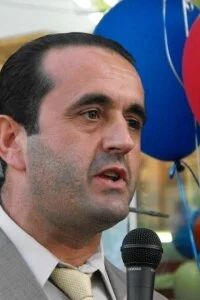
Peter Lumaj
VERNON, Conn.
My Father’s Prayers: A Refugee’s Continuing Search for Freedom, by Peter Lumaj (Page Publishing, New York, $25.95/softcover, 208 pages; available at Amazon)
Samuel Johnson once said that the prospect of execution in a fortnight “concentrates the mind wonderfully.” So did communism in Albania, and elsewhere among captive nations, during Peter Lumaj’s formative years.
Lumaj is precisely the storm-tossed refugee that the Statue of Liberty in upper New York bay welcomes with her lifted torch: “Give me your tired, your poor/ Your huddled masses yearning to breathe free,” Lady Liberty boasts, “I lift my lamp beside the golden door!”
Albania, in the Balkans, is washed by the Adriatic and lies opposite Italy. Following World War ll and the defeat of Nazi Germany, Albania was forced into the Soviet orbit.. Stalin smiled on Enver Hoxha, who emerged as the leader of the newly established People's Republic of Albania. It was not until Stalin’s death, in 1953, that the country began its painful march towards liberty. Albania’s convalescence was long and wearying.
In 1945, the country initiated an Agrarian Reform Law that allowed the state to nationalize (read: expropriate) all property owned by religious groups. Resistance was futile; many believers were arrested and executed. In 1949, a new Decree on Religious Communities required that all religious activities be sanctioned by the state alone, and in 1967 Hoxha proudly boasted that Albania had become the world’s first atheist state. Churches were converted into cultural centers for young people. That same year, a law banned all fascist, warmongerish, antisocialist groups. In 1990, Hoxha’s statute was toppled by students in Tirana, the capital city.
Soviet Stalinism was the crucible within which the Lumaj family – Catholic and, before Albania was throttled by Stalinist stooges, one of the largest family groups in northern Albania – was constantly tested.
The orbit of Lumaj’s father, a strong-willed but cautious anti-communist, was more powerful than that of that of the communist ruling class in Albania. It was under his father’s influence that Lumaj and two of his brothers decided to escape and strike a path to America. In such cases, there are always casualties. Lumaj’s father and others in his family disappeared into an Albanian concentration camp, and it seemed that the last remains of the once proud and independent Lumaj clan had been nearly wiped out.
In so many ways, Lumaj’s love of America parallels that of filmmaker Elia Kazan, an Anatolian Greek born in Istanbul (Constantinople) who fled to America and was able to impress the pain endured by his family upon a film, highly autobiographical, titled America America. One of the refugees says to another that America, seen from the hungry hearts of immigrants searching for liberty, is “an emotive idea” or, in Lumaj’s formulation, the prayers of his father.
Crossing the border into the Socialist Republic of Yugoslavia, Lumaj was and sentenced to 30 days in jail for having illegally crossed the Yugoslav border. Transported later to a refugee camp in Belgrade that had been penetrated by CIA agents, Lumaj met John, who invited him to take a meal at a restaurant when Lumaj was on work furlough. It was John who told him that Lumaj’s family had been taken to a concentration camp in Albania soon after his escape. Under his father’s guiding star, he told that John the endpoint of his journey would be America.
On the way back to the camp, he was apprehended by two Yugoslav secret police agents. He was beaten so badly he ended up in the hospital. Later, at the American Embassy in Belgrade, where Lumaj and his brothers were filling out immigration forms, he once again encountered John, who was in charge of the refugee- screening process.
“As he came to the end of my application, he asked me only one simple question. Why did I choose the United States three times in the section where it asked me to rank my relocation choices? Why hadn’t I chosen a second or third choice? I told him firmly that we had left Albania with the intent of becoming Americans, and that we didn’t want to go anywhere else.
“John smiled, knowing the misery we had suffered thus far to get to this point, and said simply, ‘Welcome to America.’”
Owing to his father’s prayers, Lumaj began his assimilation into the United States , in, a route traveled by many other immigrants. A few years after having landed in New York, he became a lawyer, and in 2014 he ran on the Republican ticket for secretary of state in Connecticut, losing by a slim margin.
Don Pesci is a Vernon-based columnist.
Don Pesci is a writer who lives in Vernon
E-mail: donpesci@att.net
The new Kennedy king?
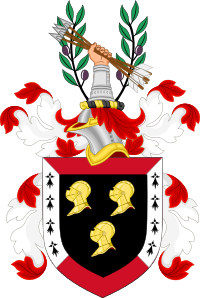
Coat of arms granted to President John F. Kennedy in 1961 by the Chief Herald of Ireland Gerard Slevin
From Robert Whitcomb’s “Digital Diary,’’ in GoLocal24.com
"If your name was Edward Moore instead of Edward Moore Kennedy, your candidacy would be a farce."
-- The bitter comment of then-Massachusetts Atty. Gen. Edward McCormick in 1962 while debating 30-year-old Edward (“Ted”) Kennedy in the Democratic primary for a U.S. Senate seat, which of course Mr. Kennedy won. At the time, his brother John was president and his brother Robert U.S. attorney general.
Given how long ago was the political golden age (around 1946-1990) of the Kennedy family, I was surprised that Congressman Joseph P. Kennedy III, 38, leads Sen. Edward Markey, 73, by double digits in a possible primary fight for Mr. Markey’s seat. Mr. Kennedy, with his famously red hair, is certainly well-spoken, intelligent and good-looking and beats the cadaverous-looking Ed Markey in the charisma department. But ideologically they’re pretty much the same and Mr. Markey has been an effective senator for his constituents. There does seem to be a movement by energized (especially by hatred of Trump) younger Democrats to erode the gerontocracy that currently runs Washington to the primary benefit of the old and affluent.
Llewellyn King: In health-care reform the simplest solution may well be the best
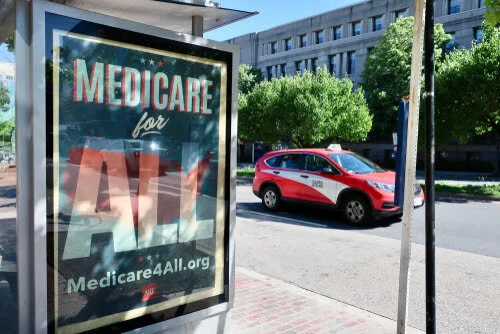
Complex problems cannot be fixed with simple solutions — unless the problems have become so intricate and intractable that only a simple solution will work.
That may be where we are now with health care.
To some, the simple solution that unties the complicated knot is a single-payer system: Replace the whole complex, expensive and teetering system with something new and simpler.
Yet in the intellectual debate — where ideas are discussed long before they are codified into law — there are powerful forces aligned against real health care overhaul.
These are not just on the right, although conservative thinking is opposed to anything that suggests a larger government or even a community role in health care. Unions, which gain strength when they provide health care, do not want to see that leak away, nor do employees who are happy with the health care provided as part of their employment. Better keep that job.
There is also a phalanx of conservative economists who calculate that universal health care will be too expensive and bankrupt the country. This I find dubious because single-payer health care works. There is evidence. It is not uncharted territory. It works from Australia to Britain, from France to Japan.
In short, the advanced countries of the world all have a single-payer system. It costs them about half of the 18 percent of GDP we spend on health care. You might reasonably think something is wrong when you spend more and get less.
The fact is those who experience tax-paid health care like it. No one who has permanent health care, as in Canada or Britain, is asking for it to be ended. National health systems are fiercely defended by those who have them, bar none.
One organization that is fully committed to a single-payer system — also known as Medicare for All in the political debate — is Physicians for a National Health Program (PNHP). It is a national group with headquarters in Chicago and 23,000 health care professional members. It is adamant in its advocacy of a single-payer system and takes aim at the health insurance companies as the source of what ails health care in America.
It rejects partial measures, such as beefing up the Affordable Care Act, improving Medicaid and lessening the effect on the poor in various ways. These, PNHP says, avoid the question at the center of the health care debate: What are the insurance companies for? What wound do they bind? The answer, according to PNHP, is none. They just add cost.
Every hospital, whether a for-profit or a community institution, employs huge staffs, sometimes well in excess of 100 people, for negotiating claims with insurance providers. That is a great burden on hospital costs right there, let alone the costs inside the insurance companies.
In decades of dealing with health insurance, which includes looking at it as a reporter, paying for it as an employer, and occasionally, receiving treatment under private insurance, I can tell you that Medicare is now one of the great improvements in my quality of life and peace of mind. I am also one of the few with the temerity to offer an opinion on health care who has received care, and watched members of my family receive it, under the British system.
I am a free-market person, someone who has and still runs his own business, albeit a very modest one, so I am not in love government for government’s sake.
But neither am I in love with state-sanctioned monopolies in insurance. The health-insurance companies do not provide health care. They make it more expensive. They do not contribute to wellness. They make it more problematical.
We do not have a health-care system. We have a lack of a system: a savage garden full of weeds, where medicine endeavors to grow while the gardeners stand around arguing over money.
PNHP may not have all the answers, but at least it is a pressure group trying to put something on the table, something that serves the rest of the developed world well: single-payer health care.
On Twitter: @llewellynking2
Llewellyn King is executive producer and host of White House Chronicle, on PBS. He’s based in Rhode Island and Washington, D.C.
See sculptures, pick apples
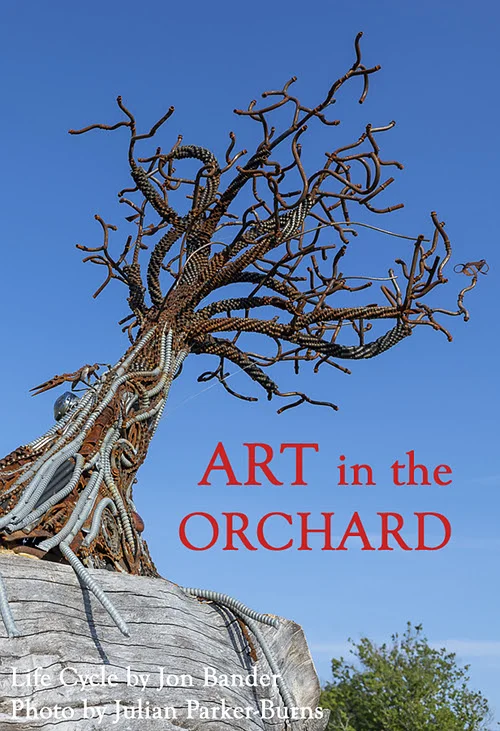
This Fifth Biennial Sculpture Exhibition, running through Nov. 25, features 30 juried sculptures and Installations in beautiful Park Hill Orchard, in Easthampton and overlooking Mt. Tom and the Pioneer Valley. There are music and theater workshops most weekends, and the Full Moon Poetry Sculpture Walk. Park Hill Orchard is a working fruit farm, where visitors can pick their own apples and peaches, and watch seasonal farm activities.
P Town's jarring juxtapositions

“Herring Cove Bathhouse Provincetown’’ (archival pigment print), by Jane Paradise, in her show “Classic Provincetown: Photographs of Provincetown and the Province Lands,’’ through Sept. 29, at Galatea Fine Art, Boston.
The gallery says:
“Provincetown is a jarring combination of natural beauty and thriving commercial enterprise. It is incongruous in its landscape and culture. Parts are so pristine that your eyes hurt with the raw beauty, but in summer it is sometimes so crazy with throngs of people that one can get lost and life can slip by quicker than sand in an hourglass. Two irreconcilable sides. Where the human and natural landscapes mingle to tell a unique story.’’

On Commercial Street in Provincetown.
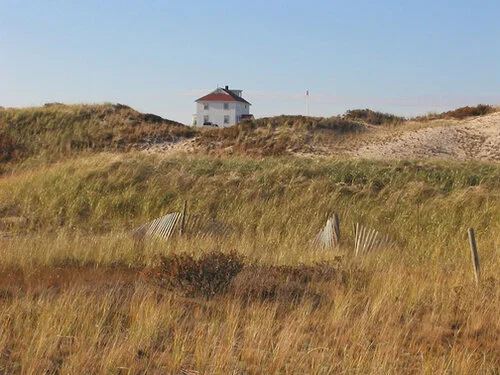
In the Province Lands
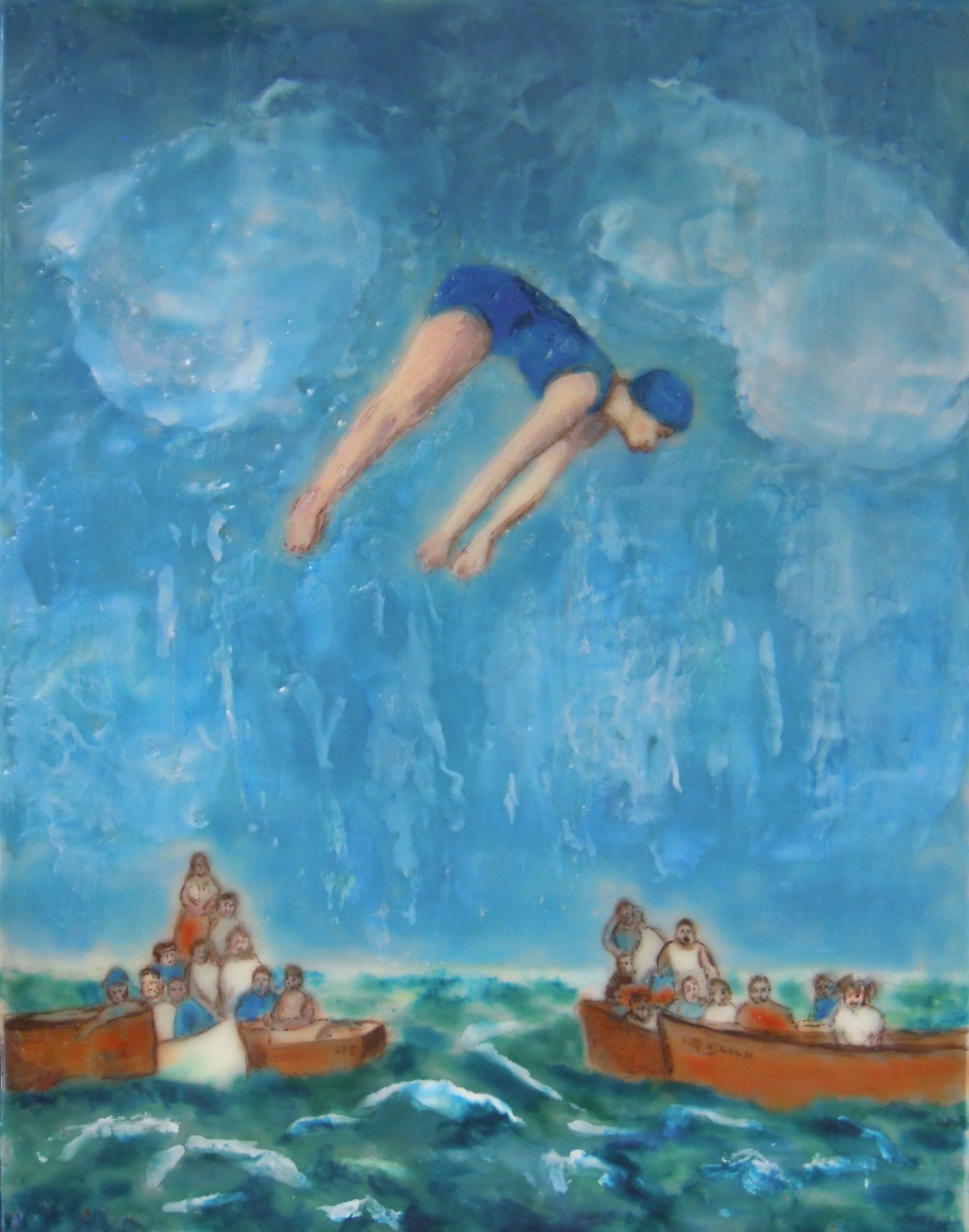
Sayonara summer
From Robert Whitcomb’s “Digital Diary,’’ in GoLocal24.com
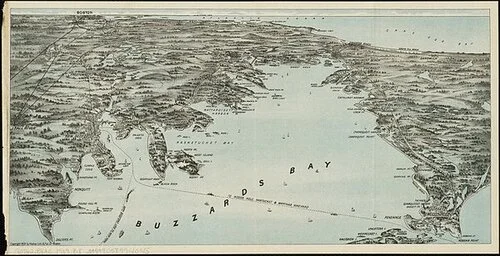
I took a youngish couple and their children -- one who is three, the other six -- to a beautiful beach on Buzzards Bay last weekend and watched the family play on the sand and in the almost-lukewarm water. The children were oblivious to time and unstressed by worrying about such things as the looming school year and the coming of colder weather. They were, as people say, “in the moment’’ -- in a kind of paradise of beauty and safety. Would both remember the day, if hazily, decades hence?
An old friend of mine, who lives near the beach, happened to be there staring out toward Cuttyhunk. His wife recently died. We talked a lot about the passage of time as clouds moved in from the west to obscure the blue skies we had enjoyed for the first couple of hours on the beach and the kids shouted and splashed with joy.

“Summer, “ by Joaquín Sorolla (1904)
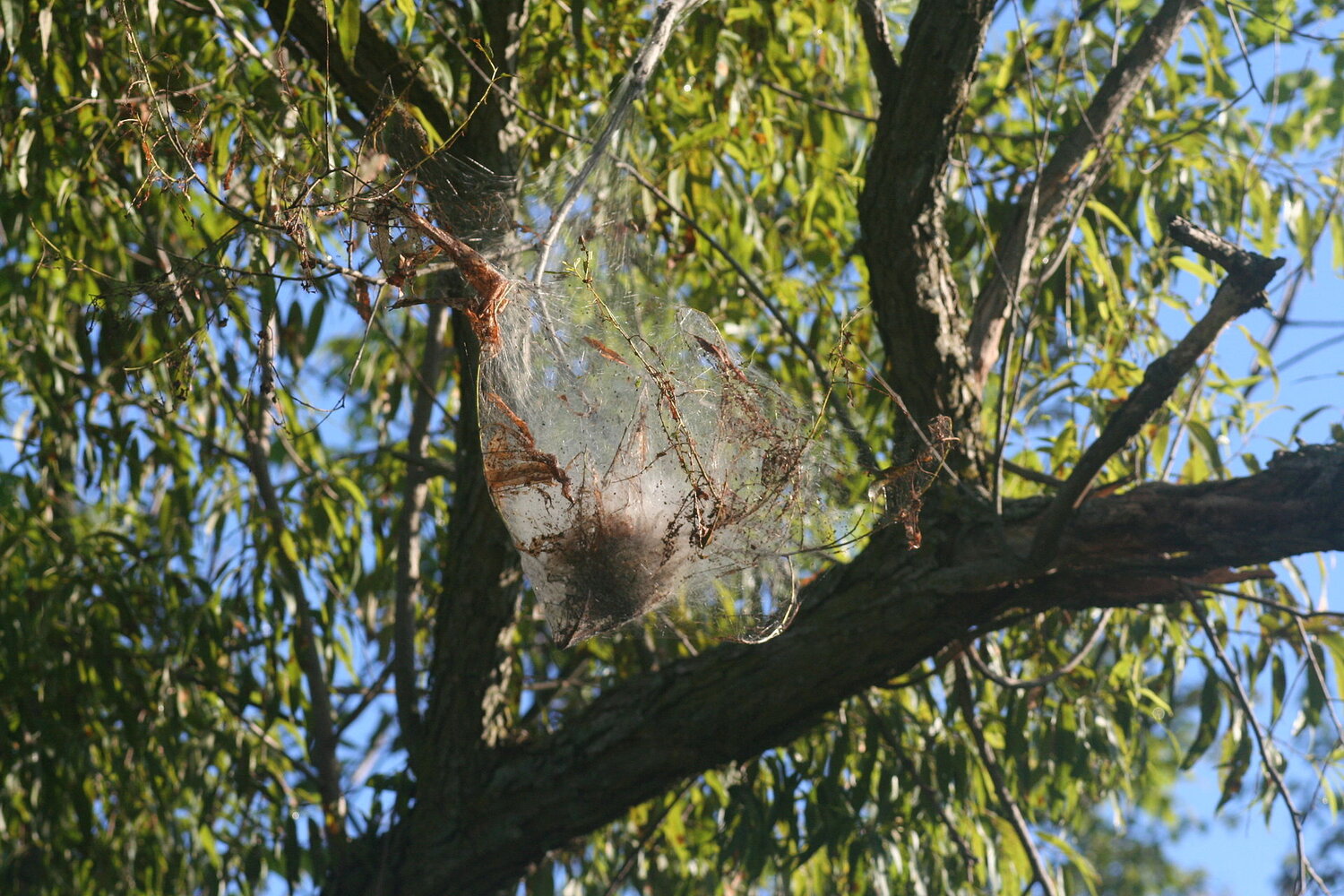
Fall Webworm nest
I love New England’s quirky seasonal signs, such as the Fall Webworm, a moth that in its larval stage creates bizarre webbed nests on tree limbs in the late summer and early fall. Some people hate them but they don’t hurt trees and look very pretty when dew and rain drops are on them. They’re like acorns on the sidewalk, goldenrod along the roads and asters in the gardens – a first course of autumn before the leaves begin turning colors.
Todd McLeish: Looking at sea life's sensitivity to underwater electric cables

Skates apparently move differently than they usually do near electromagnetic fields.
From ecoRI News (ecori.org)
Little is known about how marine life will respond to the electromagnetic fields emanating from the spiderweb of cables carrying electricity from the Block Island Wind Farm and the many other offshore wind-power installations planned for the East Coast. But a new series of studies by a team of oceanographers at the University of Rhode Island suggests that some organisms will definitely be impacted.
“The concern is that DC [direct] currents generate permanent electromagnetic fields, and we don’t really know how organisms will relate to them,” said John King, a professor at URI’s Graduate School of Oceanography. “We know that some organisms, like sharks and skates, are sensitive to these things. So the question becomes, if you build offshore power facilities, will migratory organisms cross the cables or not. Will it affect eels that migrate to the Sargasso Sea or lobsters that have an onshore-offshore annual migration?”
To find out, King and postdoctoral research fellow Zoe Hutchison conducted a series of field experiments around the Cross Sound Cable that carries electricity from New Haven, Conn., to Long Island, N.Y. They attached acoustic tags to skates and lobsters and placed them in an enclosure around the cable. An array of hydrophones in the enclosure detected the animals’ movements. Additional animals were placed in a second enclosure farther from the cable to compare the results.
“We definitely saw effects in behavior in both lobsters and skates, though it was more dramatic in the skates,” said King, who serves on the Rhode Island Coastal Resources Management Council’s Habitat Advisory Board for offshore wind development. “The skates liked to spend time in the areas that had the highest EMFs. Their swimming behavior was definitely altered as they approached the cable. We didn’t see any evidence that a single cable is a migratory barrier, but they could definitely detect it and reacted to it.”
“The skates moved slower around the cable but also moved more often and covered a longer distance,” Hutchison said. “They did a lot more turning, like an exploratory behavior, as if they were looking for food.”
Sharks and skates have a sensory ability to detect the electromagnetic fields (EMF) generated by the circulatory system of their prey, according to King, and they may also use it to find mates.
“They might think the cable indicates a food source, so they spent time around the cable thinking they’re going to get fed,” he said.
The experiment found that lobsters moved less freely around the cable, but the electromagnetic fields didn’t prevent them from crossing it.
“The lobster response was much more subtle than the skates,” Hutchison said. “They had an increased exploratory behavior, too, but it wasn’t as pronounced as the skates. We know that spiny lobsters in the Caribbean use the Earth’s magnetic field to orient themselves and to figure out where to go, so we postulate that American lobsters may have a similar ability to detect magnetic fields.”
King and Hutchison will conduct a similar study with migratory eels this fall, to assess how they are affected by the cables. (They attempted it last year, but little electricity was traveling through the cable at the time.)
Rather than placing the eels in an enclosure around the cable like they did with the skates and lobsters, they will release tagged eels to see how they behave as they cross the cable on their way to the Sargasso Sea, where they spawn.
“Previous studies have shown that eels slow down and investigate every cable they cross,” King said. “One study found that when eels had to cross multiple cables, they slowed down every time. So we wonder if they have a whole bunch of cables to cross, does it slow them down enough that they never get to the Sargasso Sea.”
The researchers noted that just because the behavior of the animals they tested was affected by the cables, it doesn’t necessarily mean they were negatively impacted by them. They are, however, worried about the cumulative impacts of the electromagnetic fields from the numerous cables that will likely be installed for many offshore wind turbines in the future.
“There’s going to be hundreds or thousands of turbines off the East Coast, so it would be nice to understand these effects and how it translates into impacts before they get built,” King said. “Right now the government is pushing full speed ahead to get these things built, and I don’t think they really care that much about their impacts. The environmental reviews are being done really fast.”
King is also worried that the results of his studies are being downplayed by the Bureau of Ocean Energy Management, which funded the research, because of political pressure.
“They hired a consulting company to produce a public document about our studies, and they minimized EMF as a concern and misinterpreted our study,” he said. “We didn’t say that we saw something that needed to be addressed immediately, but we also didn’t say that what we saw is OK and not to worry about it.”
King believes more studies need to be done before any conclusions can be drawn about the effect of electromagnetic fields from power cables on marine life.
“From a marine spatial planning context, it probably makes sense to have cable corridors rather than randomly distribute the cables all over, and that would probably have different results than studies of just a single cable. So we still have some questions to answer.”
Rhode Island resident and author Todd McLeish runs a wildlife blog.
Old Boston going new
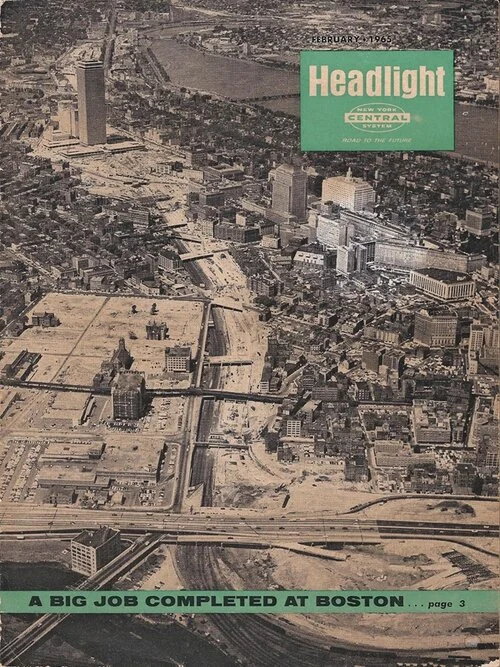
An aerial photograph of the Boston Extension of the Massachusetts Turnpike in the New York Central Railroad employee magazine Headlights, February 1965. The New York Central is long dead. In the era of the photo, it was providing deteriorating passenger service, which later was provided by its successor company, the Penn Central (created by merging the New York Central and the Pennsylvania Railroad) taken over by Amtrak in the early ‘70s.
Lovely or ominous

Work by Alfred Glover in his “On the Grounds’’ show at the Art Complex Museum, Duxbury, Mass., Sept. 15-Jan. 12.
Chris Powell: Wallowing in the politically correct in Conn.

Politically correct LED bulb.
Listening to Connecticut Gov. Ned Lamont and U.S. Sen. Richard Blumenthal last week, Connecticut might have thought that government has roundly succeeded in all its important functions and now doesn't have enough to do.
The governor issued a statement opposing President Trump's relaxing of federal energy-efficiency standards so that traditional incandescent light bulbs can continue to be manufactured and used. More modern bulbs, the governor noted, consume much less electricity and work longer than traditional bulbs and thus can save a lot of money.
But the new bulbs also cost more money than the old ones, and while the old ones generate more heat than light, that heat is not all wasted energy, since it is welcomed when the weather is cold.
In any case if the new bulbs really save so much money, people shouldn't need the government to coerce them with regulation or legislation. If, as such coercion suggests, the new bulbs can't put the old ones out of business on their own, people apparently find something undesirable about the new ones.
But the governor did not address that point. Instead he said he wants the General Assembly to pass Connecticut's own coercive legislation to prohibit choice in light bulbs.
Meanwhile Connecticut keeps deteriorating with daily shootings in its anarchic cities, tax increases, neglect of transportation infrastructure, dismal educational performance, child neglect, and so on. As a result inefficient light bulbs don't make even the top 50 on a list of the state's problems. But that may be why the governor is so interested in them and other trivia -- to distract from state government's failure with any problem that matters much, and, of course, to do some politically correct posturing against the insufferable Trump.
As the governor busied himself with light bulbs, Senator Blumenthal seemed to be aspiring to become commissioner of the National Football League. The senator held a press conference at the state Capitol to complain again that the league isn't tough enough on players accused of domestic violence.
But domestic violence does not involve misconduct on the job. It is criminal and thus a matter for law-enforcement authorities.
Nor does the federal government have any jurisdiction over football players particularly. While the NFL has a business exemption from federal antitrust law, an exemption shared with other pro sports leagues, the appropriateness of those exemptions has nothing to do with domestic violence. The exemptions probably should be repealed regardless of any off-the-job misconduct by players.
People in all occupations commit domestic violence. So why is domestic violence by pro football players of special concern to Senator Blumenthal? Does he think that pro football players are uniformly heroes in the public eye? That cliche expired under a tidal wave of well-publicized thuggishness. As newspaper columnist Mary McGrory wrote decades ago: "Baseball is what we were. Football is what we have become."
If the NFL isn't tough enough on domestic violence for the senator, it may be because of concern for due process of law. Why should the league be tougher than a court? A court sentencing a pro football player can take him out of the game faster than the league can, and without the league's financial liability.
And is the senator really sure that government itself is tough enough on its own employees who commit domestic violence? Or would it be too politically incorrect for him to risk offending the government employee unions?
Chris Powell is a columnist for the Journal Inquirer, in Manchester, Conn.
Arcologist at Kingston Gallery
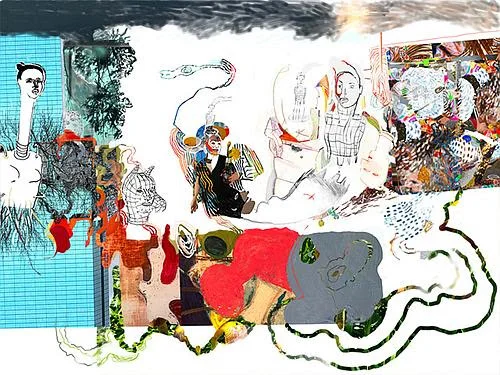
“Invisible Mending” (mixed media, size variable), in her show of the same name at Kingston Gallery, Boston, this month.
She explains her work:
“‘Arcology,’ coined by the late architect Paolo Soleri, is the fusion of architecture and ecology. It describes the tension between space and place, something I consider often, as my work conjures imagined worlds that evoke both the open, sun-filled spaces of South Africa, where I was born and raised, and the colder New England climate where I currently reside.
“My drawings are full of the familiar, the distant, unknown, imagined, and everyday. Bright lyrical vignettes of animals and people dance before us in a metaphysical picture plane, spilling across the walls into ever-building expanses. I weave the images into both linear and non-linear spaces, forming spatial contradictions that emphasize the vastness of space and the immediacy of our experience.
“All phenomena, no matter where they originate, may evoke a sense of curiosity about the unfamiliar and an appreciation of the constant fresh new moment.’’
5G vs. hurricane forecasts

— Source (WP:NFCC#4)

Weather map on the morning of Sept. 21, 1938. The hurricane, then just off Cape Hatteras, roared into Long island and southern New England that afternoon.
From Robert Whitcomb’s “Digital Diary,’’ in GoLocal24.com
Some experts, including Neil Jacobs, the acting head of the National Oceanic and Atmospheric Administration, are warning that the introduction of the much anticipated 5G wireless cellular network could slash weather forecasting accuracy by interfering with data transmission from weather satellites. This could have perilous effects, particularly with hurricane forecasting and especially for New England because hurricanes striking our region tend to move north very fast after they go by Cape Hatteras, N.C. (The infamous New England Hurricane of Sept. 21, 1938 moved more than 50 miles an hour into our region.)
Mr. Jacobs testified to the House Science Committee’s Subcommittee on Environment on May 16 that 5G wireless signals could cut forecast accuracy by 30 percent!
The telecommunications industry, which sees 5G as a vast bonanza, has so far done little to address this challenge.
To read more, please hit this link.