
Vox clamantis in deserto




Franklin's lightning rod and Mass. earthquakes

“When Benjamin Franklin {a Boston native who moved to Philadelphia} invented the lightning-rod, the clergy, both in England and America, with the enthusiastic support of George III, condemned it as an impious attempt to defeat the will of God. For, as all right-thinking people were aware, lightning is sent by God to punish impiety or some other grave sin—the virtuous are never struck by lightning. Therefore if God wants to strike any one, Benjamin Franklin [and his lightning-rod] ought not to defeat His design; indeed, to do so is helping criminals to escape. But God was equal to the occasion, if we are to believe the eminent Dr. Price, one of the leading divines of Boston. Lightning having been rendered ineffectual by the 'iron points invented by the sagacious Dr. Franklin,' Massachusetts was shaken by earthquakes, which Dr. Price perceived to be due to God's wrath at the 'iron points.' In a sermon on the subject he said, 'In Boston are more erected than elsewhere in New England, and Boston seems to be more dreadfully shaken. Oh! there is no getting out of the mighty hand of God.' Apparently, however, Providence gave up all hope of curing Boston of its wickedness, for, though lightning-rods became more and more common, earthquakes in Massachusetts have remained rare.”
― Bertrand Russell (1872-1970), from "An Outline of Intellectual Rubbish: A Hilarious Catalogue of Organized and Individual Stupidity''
Retail outlet business fading in N.E.

Street scene in 2012 during a street fair in Freeport, Maine, perhaps New England’s most famous retail outlet town. Business has been sliding since then.
— Photo by Dirk Ingo Franke
—
From Robert Whitcomb’s “Digital Diary,’’ in GoLocal24.com
Quite a few New England towns, such as Freeport (home of L.L. Bean) and Kittery, Maine, Westbrook, Conn., and Wrentham, Mass., have long positioned themselves as venues for higher-end retail outlets for national brands and gotten a hell of a lot of tax revenue from them. But Amazon and other online retailers are taking big bites out of them and many stores are closing. Some of the vacant space is being rented by local stores, but paying much lower rent than the prestige national brands did.
Housing is too expensive for many people. So how much of this dead retail space can be converted to housing; and if all or most of the stores now in these outlet malls close, can they be reconfigured into latter-day, mostly residential village centers or have to be demolished?
Don Pesci: Connecticut's identity crisis
“A rose by any other name,’’ Shakespeare wrote, “would smell as sweet.’’ However, we should never forget that naming is essential. No one appreciates this more than journalists and philosophers who are in the business of correctly naming people, things and ideas.
The name “Connecticuter” (pronounced Connetta-cutter) has cropped up recently as a possible name for people who live in Connecticut.
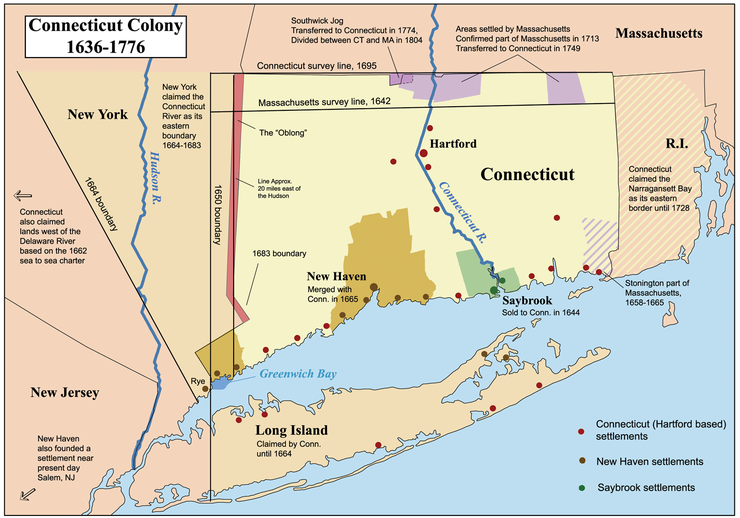
The name Connecticut itself, like other native-American place names, presents unique difficulties because they are tongue twisters. The tongue trips over Quinnipiac College; some talking heads invariably mispronounce it. Connecticut the place was named with reference to the river that flows through it, called by native-Americans Quinnehtukqut, which means "beside the long tidal river.
People who live in Connecticut have at various times been called Nutmeggers and Connecticuters. Research director for the nonprofit Public Religion Research Institute Natalie Jackson found this locution while searching through the U.S. Government Publishing Office Style Manual. The U.S. Government Printing Office conferred that title on Connecticut in 1945, and the Merriam-Webster Dictionary lists the definition of ‘Connecticuter’ as “a native or resident of the state of Connecticut.
The chief objection to this designation, a sour-tongued cynic might say, is that the name might have been proper in 1945, but currently the state is knee-deep in debt to the tune of $60 something billion, and progressives in the state’s General Assembly are loathed to balance their accounts by cutting labor costs; therefore, any nickname that hints at cutting -- Connetta-cutter – would be highly misleading, however politically useful.
Connecticut State historian Walt Woodward has put the state on the psychiatrist’s couch and suggested that Nutmeggers may have some difficulty naming themselves because of a longstanding identity and status problem: “For people who love Connecticut, and there are a lot of people who feel an intense connection to the state, they still have trouble coming up with — what is it that we love about Connecticut? What is our unique identity? Even though Connecticut has a definite identity and it is instinctively clear to people, it is hard for them to define. All that angst about identity sometimes gets focused on what we call ourselves.” Woodward prefers to call himself a Connectican.
U.S. Sen. Chris Murphy has promised to have a chat with Hartford Courant writers about this perplexing issue. One can only hope he will not propose a bill in the Senate formally nicknaming the Nutmeg State. That would only plunge in statutory cement the state’s angst, and most of us would still be wondering who we are. Actually, Connecticut had in the past defined itself rather modestly with respect to its contiguous states. We were less showy than Massachusetts, a haven from the angst-ridden lifestyle of the average New Yorker, and we were comfortable with our non-notoriety, provided we could hang on to our wealth and dignity.
Our sour cynic above might suggest “Conner’” as an appropriate nickname. Indeed, that is what the “Nutmegger” designation initially suggested. In the good old colonial days, Nutmegger vendors from Connecticut were known to spike their loads of nutmeg with wooden nuts cunningly fashioned in the form of nutmegs, a well know and under-appreciated con. Those folk from Connecticut, traders thought, were too clever by half. So long as the people of Connecticut were clever, the name stuck. It has long since gone out of fashion, as have other Connecticut designations: “The Constitution State” and “The Provision State”, so called because Connecticut was a provider of military wares to the fledgling government of the revolutionary republic.
Connecticut’s identity crisis, it should be noted, is of recent vintage. We have during the last three decades shed our historical identity as prudent and watchful guardians of the public purse. We have leveled the political playing field between Connecticut and contiguous states, New York and Massachusetts, by instituting an income tax, thus negating our political advantage as a tax haven and cost-conscious spender in New England. And we have lost a good deal of our bad-boy cleverness, except in the anarchical-sections of our cultural political barracks, where disruptive innovation is encouraged. Public school kindergarteners in once Puritan Connecticut may now enjoy in their classrooms the company of cross-dressing males. Pretty much all business activity in the state is encumbered with regulations and taxation, and we continue to pester with crippling and punishing regulations women’s health centers that will not allow abortionists to cross their lintels.
On the other hand, there are some enduring positives. We are still a small state, relatively speaking, and no politician can through legislation alter the state’s geographical location between Boston and New York. Despite the Connecticut’s rapid political change, we may still depend upon the four seasons visiting us at their appointed times. Even though all’s not right in the world, God is still in his Heaven and, as Otto von Bismarck used to say, “God has a special providence for fools, drunkards, and the United States of America.” Despite the reductionism of modern times, the state's motto still is "Qui Transtulit Sustinet" -- He Who Transplanted Still Sustains.
Don Pesci is a Vernon, Conn.-based essayist.

Jill Richardson: Race is a social construct invented for domination

From OtherWords.org
When I teach about race in sociology classes, I often begin by asking students how and when the idea of race came about.
Lesson one? Race is not a biological reality — it’s a social construct.
That doesn’t mean there’s no biological basis to it at all — anyone can tell the difference between different skin tones and understand the role that genetics play in passing on traits. However, if you were to try to divide the world into discrete racial categories based on genes, you couldn’t.
Where, exactly, in North Africa would you draw the line between black people and white people? Where in Central Asia is the split between Middle Eastern or European and Asian?
The racial categories we use today were created by humans, and they unfolded as they did because of our history. When Europeans came to this continent, taking land from (and often killing) Native Americans and enslaving Africans, they needed a justification and organization for their conquest and domination. They invented race to do that job.
Just because race is not a biological reality doesn’t mean it doesn’t matter — the consequences, after all, are all too real. One person could enslave another because of it.
Why do some racial groups do better than others in America? It’s not because one is genetically or culturally superior. It’s because people of color have been systematically disadvantaged throughout American history while white people have been advantaged over them.
When I teach this, I spend a lot of time detailing how as recently as a few decades ago, government programs facilitated white families owning their own homes in segregated neighborhoods while denying people of color opportunities for home ownership.
Many of the people who were helped or harmed by these policies are still alive, and they and their descendants are still affected in their wealth, health, education, and employment.
Obviously, America has come a long way from the 1600s — or even from the 1960s. But the El Paso shooter and the policies of the Trump administration show a continuity with America’s dark past.
In the first half of the 20th Century, our immigration policies reflected the notion of a white America, limiting or prohibiting people of color from coming to this country. The El Paso shooter believed in a white America. But Trump’s immigration policies validate that idea too.
Trump isn’t against all immigrants, seeing how he keeps marrying them. And his mom is one. But his Scottish mother and Czech and Slovenian wives fit within the notion of a white America. The people targeted in the recent ICE raids do not.
My great grandparents were poor, hardworking Eastern Europeans. The generations who came after them grew up attending American schools, holding jobs, and paying taxes. There’s no reason a Honduran, Filipino, or Mexican family arriving today cannot follow the same path my family did — no reason, that is, except discrimination on account of their skin color.
If we accept that Americans are people of all races, colors, and creeds, and if we accept America as a nation made up largely of immigrants, then all people can find a place here. If there is no “us” and “them,” then “we” don’t have to worry about “them.”
We can’t ignore the white supremacy baked into anti-immigrant notions that see people of color as un-American or as threats to America. When some advocate hateful ideas, others will act on them with violence.
Jill Richardson, a sociologist, is a columnist for OtherWords.org.
A project of the:
IPS logo
ABOUT
ARCHIVE
SYNDICATE
This is America: Make it an AK-47

“Carrot and Stick’’ (wood, paint), by Steve Novick, in his show “Approximation,’’ at the Art Complex Museum, Duxbury, Mass., Aug. 18-Nov. 10.
Beloved in our neighborhood

My sweet-sixteen dress was yellow as the daffodils
In the seamstress’s cramped but spotless living room,
Yellow as the sweet lemon bars she made each Christmas
For the neighborhood children.
Mrs. Mueller lived at the end of our block
In a little stone cottage near a field of flowers,
Like a grandmother in a fairy tale.
She was old and poor and crippled
But always tidy, always smiling,
Even as the marshals took her away
After it came to light that, once upon a time,
She was a guard at Auschwitz.
—“Light,’’ by Felicia Nimue Ackerman. This poem was first published in Free Inquiry
Exploring his Italian ancestry

Work by J.P. Terlizzi, in his show “Descendants,’’ a the Rhode Island Center for Photographic Arts, Providence, through Sept. 11.
The center says:
“‘Descendants’' explores the origins of personal identity as it relates to the artist’s Italian ancestry and is an attempt to preserve the artist’s past, connecting and honoring the generations that came before. Curiosity surrounding how the past relates to the present, and how the bloodline passed down through generations represents the passage of time are central to JP’s presentation of family and familial bonds. Terlizzi utilizes a digital composite photograph of his ancestors and then incorporates his own blood specimens onto microscope slides, stitching them on the image to create new family portraits as an archive and memorial.
Chris Powell: More realism needed in debating how to curb mass shootings in our crazy country

AK-47 Type 3A with ribbed stamped-steel magazine
Protesting President Trump's massacre condolence tour when it reached Dayton last week, a man held a sign reading, "You are why." But as objectionable as the president's demeanor often is, the protester's sign was just politically partisan wishful thinking.
For while the mass murderer in El Paso appears to have hated the illegal immigrants often disparaged by the president, the one in Dayton appears to have been a leftist, a supporter of Antifa and Democratic presidential candidate Bernie Sanders, as was the crazy who shot up the Republican congressional baseball team's practice in Arlington, Va., two years ago
On the weekend of the El Paso and Dayton massacres there were 50 shootings in Chicago, a city long under Democratic management in a heavily Democratic state. A few days ago two people were shot together in Hartford, and nearly every day produces shootings not just in Hartford but also in Bridgeport and New Haven, where there are hardly any Republicans. Shootings are now the way of life in Democratic urban America, and politicizing those shootings would impugn the president's most strident critics.
Good if the latest massacres induce Congress to pass legislation increasing background checks for gun purchases. But most purchases -- those made through licensed dealers -- already require background checks. The exceptions are guns sold privately, and these are seldom used in mass shootings. Indeed, most guns used in mass shootings have been obtained legally after background checks, and there does not seem to be anything in the records of the perpetrators in El Paso and Dayton that would have disqualified them from their guns. Most crazies are not criminals before their mass murders
Good also if Congress passes "red flag" legislation, establishing procedures for challenging a gun owner's fitness -- provided, of course, the procedures include sufficient due process. But a "red flag" law can work only if a gun owner advertises his guns, and few gun owners bent on mayhem are likely to do that.
Maybe large-capacity ammunition magazines should be prohibited, but empty magazines are easily replaced in two or three seconds
That leaves outlawing "assault weapons." But how are those to be defined other than by their ability to fire a series of bullets with repeated trigger pulls but without immediate reloading? Except for barrel size there is little difference in technology between "assault weapons" and ordinary handguns
For nearly all modern guns except shotguns are "semi-automatic." Fully automatic guns, guns that spray bullets by a single pull and hold of the trigger, are the only real military guns and their possession is already highly restricted. Few are in civilian hands.
Semi-automatic has been the norm with civilian guns since Connecticut's Sam Colt perfected the revolver almost two centuries ago.
As a practical matter an "assault weapon" is just any rifle that scares somebody.
So nearly all modern guns in civilian possession can be called "assault weapons," and if semi-automatic guns are to be outlawed, nearly all guns in civilian possession will be illegal. That would require more than tinkering with the Second Amendment. It would require repeal and confiscation.
The country is in a tough spot. It is full of both crazies and guns and the issue is far more difficult than its partisans let on. Whatever should be done, it will have to start with more clarity and honesty than the debate has provided so far.
Chris Powell is a columnist for the Journal Inquirer, in Manchester, Conn.
At a tabloid in the summer of '69
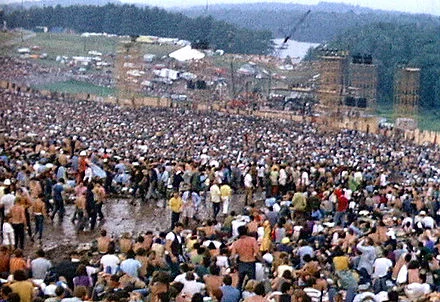
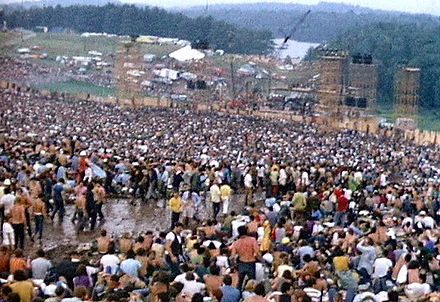
Fun in the mud in Woodstock
From Robert Whitcomb’s “Digital Diary,’’ in GoLocal24.com
Some of the elderly commentariat has turned to the 50th anniversary of “Woodstock,’’ that Aug. 15-Aug 18, 1969 musicale and bacchanal in Bethel, N.Y. The spectacle, which produced many, many photos of attendees in the mud as they listened to rock stars, has of course become listed as one of the great epochal events of the “Sixties’’ (which as a cultural phenomenon might be said to have begun after the assassination of John F. Kennedy, on Nov. 22, 1963, and ended with Richard Nixon’s resignation on Aug. 8, 1974). I can well imagine how boring many Millennials must find stories about Woodstock.
Woodstock, which happened at the tail end of Sixties prosperity, didn’t change much of anything. The late adolescents and young adults there moved on to get mostly conventional jobs and to raise families. Whatever the alleged “peace and love’’ elements, the “Woodstock Generation’’ turned out to be perhaps greedier and more self-absorbed, and less civic-minded, than their parents’ generation, if less bigoted on such matters as race and sexual preference and more open to equality for women. Still, Woodstock itself was admirably affable and peaceful, friends who were there told me. I suspect that some Boomers’ frequent references to the spectacle bespeak a desire to place themselves in a comforting cohort, and in history, a kind of anchoring, as they move into their last innings.
I am in that generation. Still in college, I had a summer job as a news assistant at the now long-dead tabloid the Boston Record American. I had no plans to go into journalism. The job, in the Record’s mostly unairconditioned (fans and salt tablets instead) but beautiful stone building in downtown Boston, was a lifeline for me when another summer job fell through at the last minute.
When word arrived in the smoky newsroom about “Woodstock,’’ the general reaction by the mostly gruff and Irish-and-Italian-American staff was that the event was just another stretch of idiocy by spoiled kids. “Why aren’t they working?” The reporters seemed to be far more interested in the continuing drama of what had come to be called simply “Chappaquiddick’’ on July 18 of that busy summer, in which Sen. Edward Kennedy drove off that infamous bridge, resulting in the drowning of his young woman passenger, Mary Jo Kopechne. (When I asked my father what Kennedy was up to, he replied: “He was looking for a soft dune.’’)
And my news room colleagues didn’t even seem to be very interested in the moon landing, which had come on July 18. Nothing could beat an old-fashioned scandal involving Massachusetts’s Royal Family.

Warming seas

Welcome to Cape Cod, circa 2100?
From Robert Whitcomb's "Digital Diary,'' in GoLocal24.com
'I read the other week that the water temperature at an observation buoy in Nantucket Sound was a tropical 77 degrees! That recalled a new study by the Gulf of Maine Research Institute, in Portland, reporting on how “marine ecosystems around the world are experiencing unusually high ocean temperatures more frequently than researchers previously expected. These warming events, including marine heatwaves, are disrupting marine ecosystems and the people who depend on them.’’ The Gulf of Maine, by the way, is warming faster than 99 percent of the world’s ocean water. That’s rapidly changing marine life there.
To read more on the report, please hit this link.
'And a little biology'

Work by Mark Adams in his show at the Schoolhouse Gallery, Provincetown, Mass., through Aug. 28.
The gallery notes that Mr. Adams is a painter, printmaker and a cartographer with the National Park Service who “creates images of animals using simple curiosity, wonderment and a little biology as a base.’’
Susan Jaffe: Medicare's frustrating post-hospitalization gap
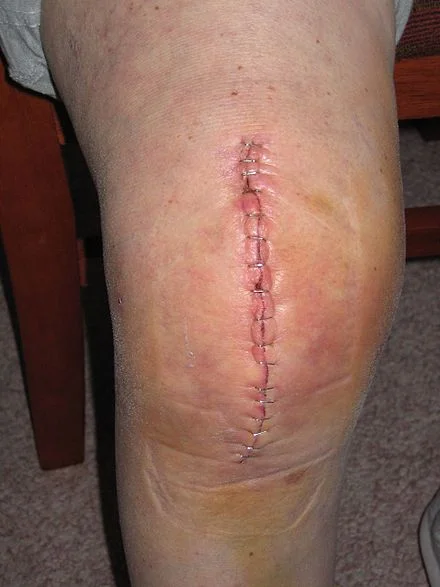
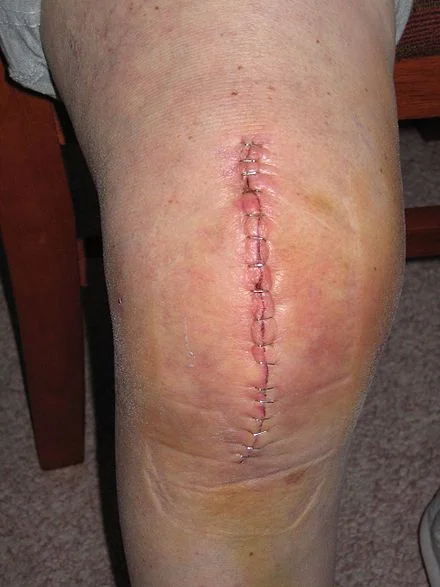
Incision from knee-replacement surgery
Medicare paid for Betty Gordon’s knee-replacement surgery in March, but the 72-year-old former high school teacher, a Rhode Islander, needed a nursing home stay and care at home to recover.
Yet Medicare wouldn’t pay for that. So Gordon is stuck with a $7,000 bill she can’t afford — and, as if that were not bad enough, she can’t appeal.
The reasons Medicare won’t pay have frustrated her and many others trapped in the maze of regulations surrounding something called “observation care.”
Patients, like Gordon, receive observation care in the hospital when their doctors think they are too sick to go home but not sick enough to be admitted. They stay overnight or longer, usually in regular hospital rooms, getting some of the same services and treatment (often for the same problems) as an admitted patient — intravenous fluids, medications and other treatment, diagnostic tests and round-the-clock care they can get only in a hospital.
After knee-replacement surgery, Betty Gordon needed to go to a nursing home but because she had been in outpatient care and not hospitalized as an admitted patient for three days, Medicare would not cover her care there.
But observation care is considered an outpatient service under Medicare rules, like a doctor’s appointment or a lab test. Observation patients may have to pay a larger share of the hospital bill than if they were officially admitted to the hospital. Plus, they have to pick up the tab for any nursing home care
Medicare’s nursing home benefit is available only to those admitted to the hospital for three consecutive days. Gordon spent three days in the hospital after her surgery, but because she was getting observation care, that time didn’t count.
There’s another twist: Patients might want to file an appeal, as they can with many other Medicare decisions. But that is not allowed if the dispute involves observation care.
Monday, a trial begins in federal court in Hartford, Conn., where patients who were denied Medicare’s nursing home benefit are hoping to force the government to eliminate that exception. A victory would clear the way for appeals from hundreds of thousands of people.
The class-action lawsuit was filed in 2011 by seven Medicare observation patients and their families against the Department of Health and Human Services. Seven more plaintiffs later joined the case.
.“This is about whether the government can take away health care coverage you may be entitled to and leave you no opportunity to fight for it,” said Alice Bers, litigation director at the Center for Medicare Advocacy, one of the groups representing the plaintiffs.=
If they win, people with traditional Medicare who received observation care services for three days or longer since Jan. 1, 2009, could file appeals seeking reimbursement for bills Medicare would have paid had they been admitted to the hospital. More than 1.3 million observation claims meet these criteria for the 10-year period through 2017, according to the most recently available government data.
Gordon is not a plaintiff in the case, but she said the rules forced her to borrow money to pay for the care. “It doesn’t seem fair that after paying for Medicare all these years, you’re told you’re not going to be covered now for nursing home care,” Gordon said.
No one has explained to Gordon, who has hypoglycemia and an immune disease, why she wasn’t admitted. The federal notice hospitals are required to give Medicare observation patients didn’t provide answers.
Even Seema Verma, the head of the Centers for Medicare & Medicaid Services, is puzzled by the policy. “Better be admitted for at least 3 days in the hospital first if you want the nursing home paid for,” she said in a tweet Aug. 4. “Govt doesn’t always make sense. We’re listening to feedback.” Her office declined to provide further explanation.
Patients and their families can try to persuade the physician or hospital administrators to change their status, and sometimes that strategy works. If not, they can leave the hospital to avoid the extra expenses, even if doing so is against medical advice
The requirement of three consecutive days as a hospital inpatient to qualify for nursing home coverage is written into the Medicare law. But there are exemptions. Medicare officials don’t apply it to beneficiaries in some pilot programs and allow private Medicare Advantage insurers to waive it for their patients.
Concerned about the growing number of people affected by observation care, Medicare officials created a “two-midnight” rule in 2013. If a doctor expects a patient will be sick enough to stay in the hospital through two midnights, then it says the patient should generally be admitted as an inpatient
Yet observation claims have increased by about 70 percent since 2008, to more than 2 million in 2017. Claims for observation care patients who stay in the hospital for longer than 48 hours — who likely would qualify for nursing home coverage had they been admitted —rose by nearly 159%, according to data Kaiser Health News obtained from CMS. Yet the overall growth in traditional Medicare enrollment was just under 9 percent.
Justice Department lawyers handling the case declined to be interviewed, but in court filings they argue that the lawsuit accuses the wrong culprit.
The government can’t be blamed, the lawyers said, because the “two-midnight” rule gives hospitals and doctors — not the government — the final word on whether a patient should be admitted.
The government’s lawyers argue that since Medicare “has not established any fixed or objective criteria for inpatient admission,” any decision to admit a patient is not “fairly traceable” to the government.
Like Gordon, some doctors also complain about observation care rules. An American Medical Association spokesman, who spoke on condition of not being named, said the “two-midnight” policy “is challenging and illogical” and should be rescinded. “CMS should instead rely on physicians’ clinical judgment to determine a patient’s inpatient or outpatient status,” he added.
HHS’s Office of Inspector General urged CMS to count observation care days toward the three-day minimum needed for nursing home coverage. It’s No. 1 on a list issued last month of the 25 most important inspector general’s recommendations the agency has failed to implement.
The Medicare Payment Advisory Commission, which counsels Congress, has made a similar suggestion.
However, Colin Milligan, a spokesman for the American Hospital Association, is more positive about the “two-midnight” rule. It “recognizes the important role of physician judgment,” he said.
Medicare isn’t dictating what physicians must do, said a physician who has researched the effects of observation care. “It’s a benchmark upon which to base your decisions, not a standard or a mandate,” said Dr. Michael Ross, a professor of emergency medicine at Emory University School of Medicine in Atlanta. He supervises observation care units at Emory’s five hospitals and was chairman of a CMS advisory subcommittee on observation care.
Other physicians claim that since HHS pays hospitals and doctors to treat Medicare patients, the agency’s policies weigh on their decisions.
“One of the hardest things to do is to get physicians to predict what will happen with patients — we like to hedge our bets and account for all possibilities,” said Dr. Tipu Puri, a physician adviser and medical director at the University of Chicago’s medical center. “But we’re being forced to interpret the rules and read between the lines.”
In the meantime, observation care patients who get follow-up care at a nursing home may soon receive a puzzling notice. A Medicare fact sheet issued last month “strongly encourages” nursing home operators to give an “advance beneficiary notice of non-coverage” to patients who arrive without the required prior three-day hospital admission.
But that notice says they can choose to seek reimbursement by submitting an appeal to Medicare — an option government lawyers will argue in court is impossible.
Susan Jaffe is a Kaiser Health News reporter. Jaffe.KHN@gmail.com, @SusanJaffe
Water chestnut plants have been invading New England
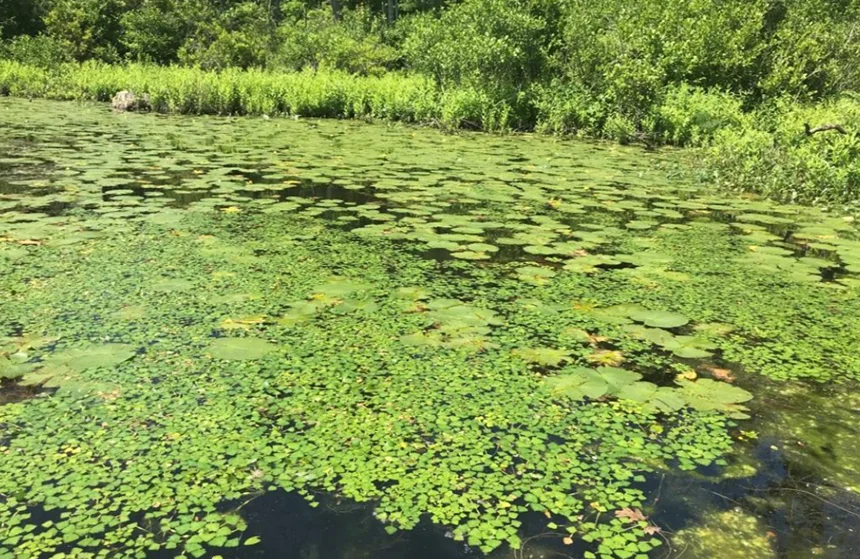
Water chestnuts are the smaller floating leaves, with water lilies in back.
— Rhode Island Department of Environmental Management photo
From ecoRI News (ecori.org)
The Rhode Island Department of Environmental Management (DEM) is surveying lakes, ponds, and rivers across the state this summer as part of an annual monitoring program to identify aquatic invasive species.
During a June 12 survey of Barney Pond, in Lincoln, DEM staff observed and removed several small water chestnut plants that were scattered throughout the pond. As water chestnut hadn’t been previously documented in Barney Pond or its watershed, DEM notified the town of Lincoln and searched for the source of the invasive plants.
Staff surveyed Olney Pond ,in Lincoln Woods State Park, which is upstream from Barney Pond, and found a large patch of water chestnut plants. The plants, which have likely been in the pond for at least a year, dropped seeds that floated down to Barney Pond and started new plants. In July, DEM staff removed the invasive plants as part of conservation efforts to manage and protect Olney Pond’s habitat from this non-native species.
Water chestnut is a rooted aquatic plant that forms dense, floating mats that cover the surface of the water, limiting light to other aquatic plants and quickly displacing native species and decreasing biodiversity. These dense mats may also impede recreation such as boating, fishing and swimming, and lower the dissolved oxygen in the water, creating the potential for fish kills.
Large and woody fruits containing four sharp barbs appear on the plants by late summer and are released as the water chestnut plants die off with the onset of frost. As the barbed fruits wash up along the shoreline, they pose a hazard for humans and pets, according to DEM.

Water chestnut’s barbed fruit.
Water chestnut was introduced to New England from Asia as an ornamental plant that spread into local waters. It was first observed in Rhode Island in 2007 in Belleville Pond, in North Kingstown. Once introduced, water chestnut establishes and spreads rapidly.
As of November 2017, the invasive plant has been documented in eight Rhode Island lakes and ponds: Valley Falls Pond in Central Falls; Central Pond and Turner Reservoir in East Providence; Porters Pond in Foster; Solitude Springs Farm Ponds in Hopkinton; Belleville Pond in North Kingstown; Chapman Pond in Westerly; and Sylvestre Pond in Woonsocket.
If you think you have spotted the plant or seed in a new location, take a picture and report it to DEM.WaterResources@dem.ri.gov.
“It is much easier and cost effective to remove a small patch of water chestnut than manage an entire lake covered with plants, so early detection is key,” said Katie DeGoosh-DiMarzio, environmental analyst with DEM’s Office of Water Resources. “Public awareness of invasive plants is the most effective way to combat the spread of aquatic invasive species from one lake to another by preventing the inadvertent transport of a hitch-hiking plant fragment. Many of the aquatic invasive plants in Rhode Island can reproduce from just one small plant fragment and do not need entire root systems to successfully establish in a new spot. Cleaning off every bit of plant from recreational gear used at one pond is essential before visiting another.”
Water-chestnut management costs in Lake Champlain and other Vermont waters exceeded $400,000 in 2009 and have totaled over $10 million since 1982, according to DEM. The agency noted that in 2017 the cost to treat a 1.3-mile stretch of the Sudbury River in Massachusetts was $60,000, but the river needs continual treatment and surveillance as water chestnut seeds can lie dormant for up to 12 years.
Water chestnut is just one of the aggressive, invasive species found in local waters, according to DEM.
DEM volunteers recently removed lotus leaves from a large, non-native lotus patch that was found in Meshanticut Pond, in Cranston.
Our fellow animals
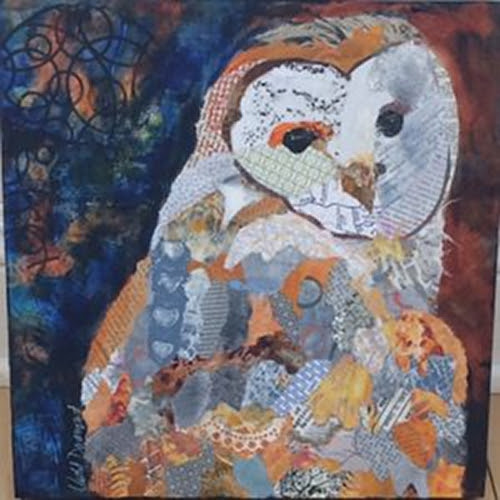
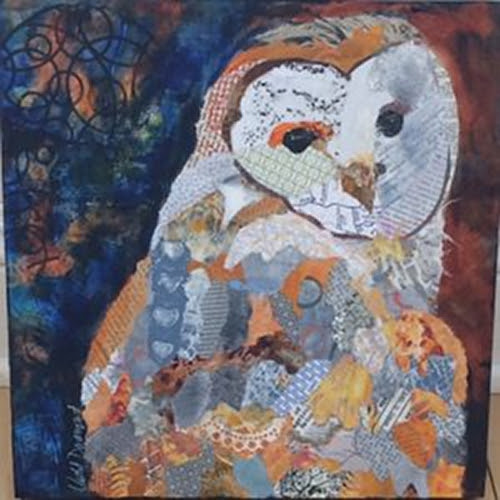
“Owl” (collage), by Violet Davenport, in the group show “Animalia,’’ at Art Center East, Vernon, Conn., through Aug. 18.
The show has dozens of works across various media, many of which are for sale, and focuses on the complex relationships that humans have with other members of the Animal Kingdom, which includes over 7 million species. Some we use for labor, some to milk or eat, some for companionship, and others we consider pests.

What an entrance!
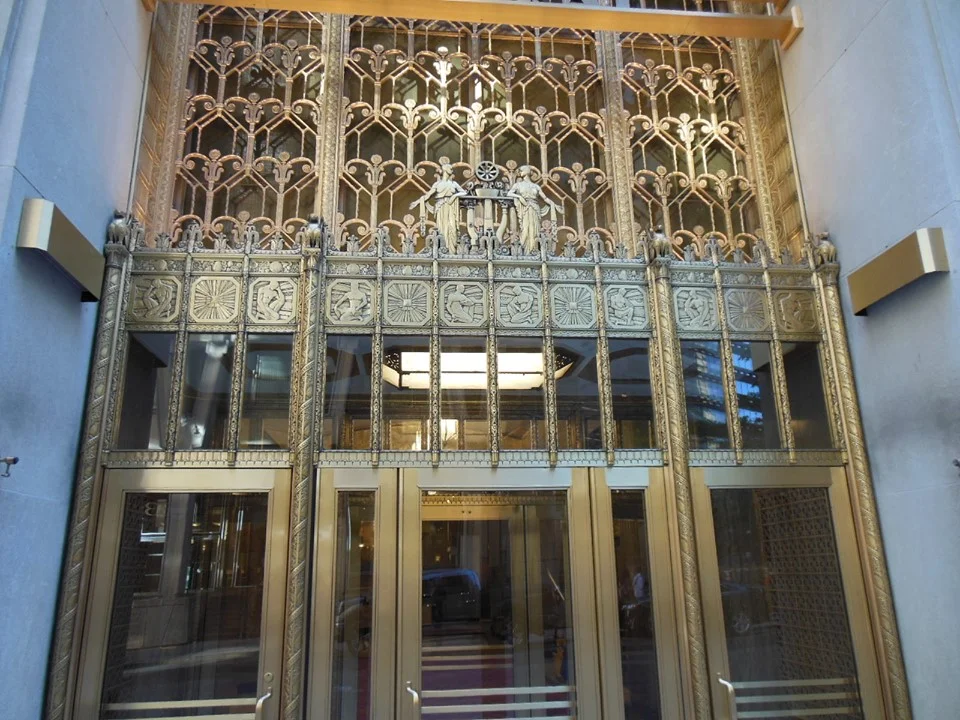
The wonderfully ornate main entrance to the glorious United Shoe Machinery Building, at 160 Federal St., in the Financial District of Boston. The steel-frame skyscraper has 24 stories and a penthouse, and was built in 1929–1930 and designed by George W. Fuller and Parker, Thomas & Rice to serve as United Shoe Machinery Corp.’s headquarters.
It is one of Boston's finest Art Deco buildings, including an elaborately decorated lobby. The long-dead United United Shoe Machinery (in Boston often just called “Shoe’’) was a huge manufacturer of a wide range of industrial goods, including many things for the defense industry. At one time it controlled 98 percent of the nation's shoe-machinery business and much of that business abroad, too. Of course the American shoe business was based in New England for many years.
Below see the tower with its famous gold top.


Don Pesci: The rhetorical career of Bernie Sanders, socialist

Sen. Bernie Sanders
It is no longer true, as your mother may once have told you, that you are judged by the company you keep. Former President Barack Obama had a few diamonds in the rough on his friends list. There were the Chicago terrorist bombers Bill Ayers, a former leader of the Weather Underground, now an American elementary education theorist, and his wife Bernadine Dohrn, responsible for bombings of the U.S. Capitol, the Pentagon and several police stations in New York, as well as the Greenwich Village townhouse explosion that killed three of its members. Dohrn left a position in 2013 as “Clinical Associate Professor of Law" at the Northwestern University School of Law.
Far from being a repentant sinner, Ayres told The New York Times in 2001 "I don't regret setting bombs. I feel we didn't do enough." Ayers and Obama served together on the board of directors for the Woods Fund of Chicago, their terms overlapping for three years, and Ayres is credited with helping to jump-start Obama’s political career. In 1995, Alice Palmer introduced Obama as her chosen successor in the Illinois State Senate at a gathering held in the Ayers home.
Obama also attended for 20 years the Rev. Jeremiah Wright’s Chicago church where, apparently, he snoozed through sermons such as "Confusing God and Government" in which Wright dammed America. Wright officiated at the wedding ceremony of Barack and Michelle Obama and baptized their children. The title of Obama's 2006 memoir, The Audacity of Hope, was inspired by a Wright sermon.
Wright claimed his offending message had been taken out of context, to which Salon editor-in-chief Joan Walsh responded: "the whole idea that Wright has been attacked over 'sound bites,' and if Americans saw his entire sermons, in context, they'd feel differently, now seems ludicrous. The long clips [Bill] Moyers played only confirm what was broadcast in the snippets… My conclusion Friday night was bolstered by new tapes of Wright that came out this weekend, including one that captures him saying the Iraq war is 'the same thing al-Qaida is doing under a different color flag,' and a much longer excerpt from the 'God damn America' sermon that denounces 'Condoskeezer Rice ...”
Obama’s past associations certainly presented no bar to his accession to the presidency.
It is doubtful that Vermont Sen. Bernie Sanders’ unsavory past and present associations will figure negatively in his own presidential bid. Assuming that Sanders wins the Democrat primary campaign and goes toe to toe with President Trump in a general election, he may find it difficult to grouse, after losing, that Russian spooks spiked his campaign because they preferred Trump to Sanders, the Hillary Clinton gambit.
Sanders, after all, spent his honeymoon in Russia in 1988 during the bad old days of Soviet Imperialism where, under the influence of vodka, he belted out Woody Guthrie’s ancient anthem “This Land Is Your Land.” Then too, Sanders is a socialist anti-capitalist dragon, belching fire out of his snout every half hour. One year after his Moscow honeymoon, Sanders visited Cuba, and his praise of Castro – a puff adder who was smoking gays and persecuting black Cubans at the time, not to mention the petite bourgeois small “d” democrats littering Castro’s jails -- was effusive.
Sanders, who was a congressman and the mayor of Burlington, Vt., before being elected to the Senate, did pause in his praise to note Cuba’s “enormous deficiencies” in human rights. How could he help but notice? In the United States, freedom-loving radicals like Sanders, longing to bow before the socialist shrine, bit their smothering tongues, but most of them were not shameless enough to throw bouquets at the feet of men like gods. Sanders declared he never saw a hungry child or a homeless person while in Cuba, but he did see a revolution “that is far deeper and more profound than I understood it to be.” One can hardly expect Russian President Vladimir Putin to disagree with Sanders’ pro-socialist leanings.
Senior adviser to Sanders presidential campaign Heather Gautney is convinced that “Today’s neoliberal capitalist system has become utterly incompatible with the requisites of democratic freedom.” High unemployment, Gautny said on an Iranian TV show, is a blessing because it gives people more down time to engage in protest movements. And Sanders speech writer David Sirota wrote glowingly about “Hugo Chavez’s Economic Miracle” in 2013, just as food shortages were “beginning to surface in Caracas and the countryside,” according to a piece in the Washington Times.
As a young man, Sanders should have been studying Churchill – “Socialism is the philosophy of failure, the creed of ignorance and the gospel of envy,” a near perfect description of the last ten stump-speeches of Sanders and Massachusetts Senator Elizabeth Warren. But Sanders’ ideological antennae were tuned to the Soviet Union, where he spent his honeymoon. The embrace of the indefensible is fatal in the long run, but in the short run, it is an indispensable element in the rise of autocrats. And in the long run, people who have lost an animating, democratic virtue long only to sleep under the warm, benevolent smile of a dictator.
Don Pesci is a Vernon, Conn.-based columnist.